HBOT Is Supportive Care, Not Graft Insurance
If hyperbaric oxygen therapy is offered after your hair transplant, start with a clear distinction. HBOT can be real supervised medical treatment, but routine chamber sessions after an uncomplicated FUE are not graft insurance. Skipping routine oxygen sessions after a careful transplant does not, by itself, put the grafts in danger. Diagnosis, donor planning, graft handling, recipient area work, and early aftercare still carry more weight.
HBOT becomes a different conversation when there is a real wound healing or tissue risk concern. Here, the first step is medical review, not buying a paid package upgrade because it sounds protective.
Medical HBOT is different from a growth promise
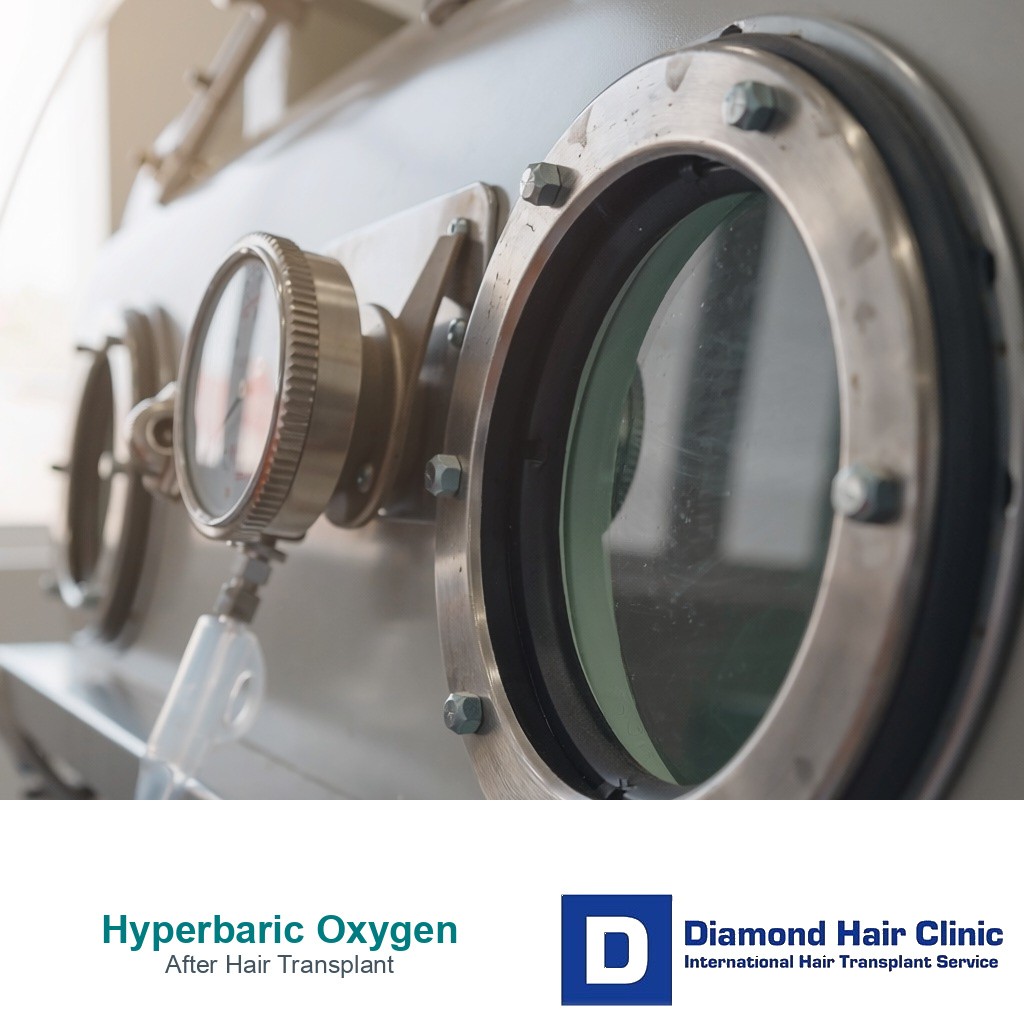
Hyperbaric oxygen therapy, or HBOT, means breathing oxygen inside a chamber where the pressure is higher than normal air pressure. It is not the same as a casual oxygen mask, a supplement, or a spa recovery shortcut. In medicine, HBOT has serious uses, especially around certain wound, tissue, decompression, carbon monoxide, radiation injury, and situations managed by specialists.
The risk starts when that medical seriousness is borrowed to make a routine hair transplant package sound more protective than it really is. Someone hears “oxygen therapy” and thinks, “If oxygen helps tissue, maybe refusing it means the grafts will die.” That is not a fair way to counsel anyone. A real treatment can still be optional in a routine case.
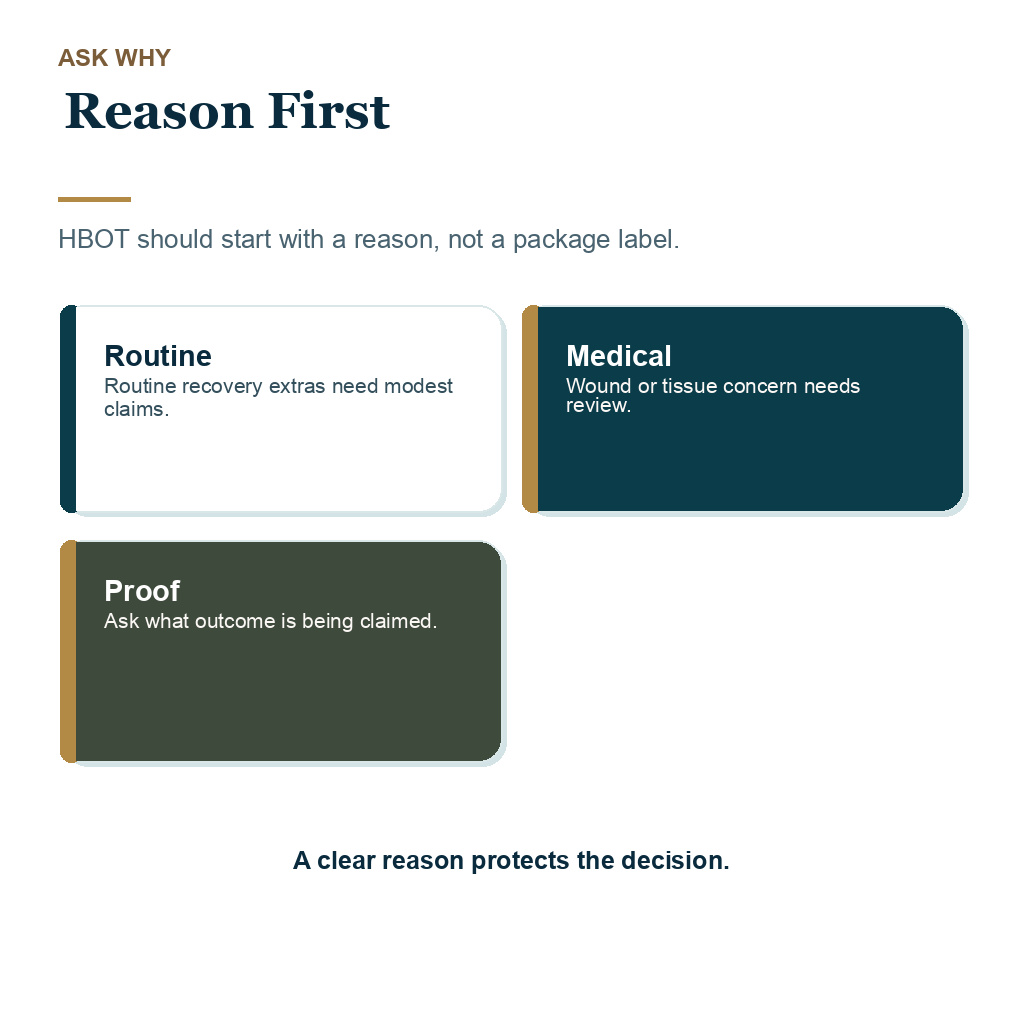
For a normal FUE recovery, the useful question is simple. What exact problem is HBOT being recommended to solve in my case? If the answer is vague, such as “better growth” or “maximum survival,” the claim needs to slow down. If the answer is a specific wound or medical issue, then it belongs in a medical review, not in a package upgrade conversation.
If chamber sessions are bundled into a package, separate the price from the reason. A real medical reason should name the wound problem or risk being treated, not only the number of sessions.
An outside recommendation should come with a written reason before you book sessions. The transplant team should know whether HBOT is being sold as routine recovery, suggested for a wound concern, or added as a separate wellness service.
Reasonable support from HBOT
The reasonable idea behind HBOT is oxygen delivery to tissues under pressure. In selected medical settings, that can matter. Tissue oxygenation, blood vessel response, inflammation, infection control, and wound healing are real medical topics. That is the reason I do not dismiss HBOT as fake.
But routine hair transplant recovery is not the same as treating a compromised flap, a wound that does not heal, or a radiation injury. In a normal hair transplant, the grafts need careful handling, moisture, gentle placement, and protection from unnecessary trauma. The recipient area then needs quiet, uncomplicated healing, not a stack of dramatic extras.
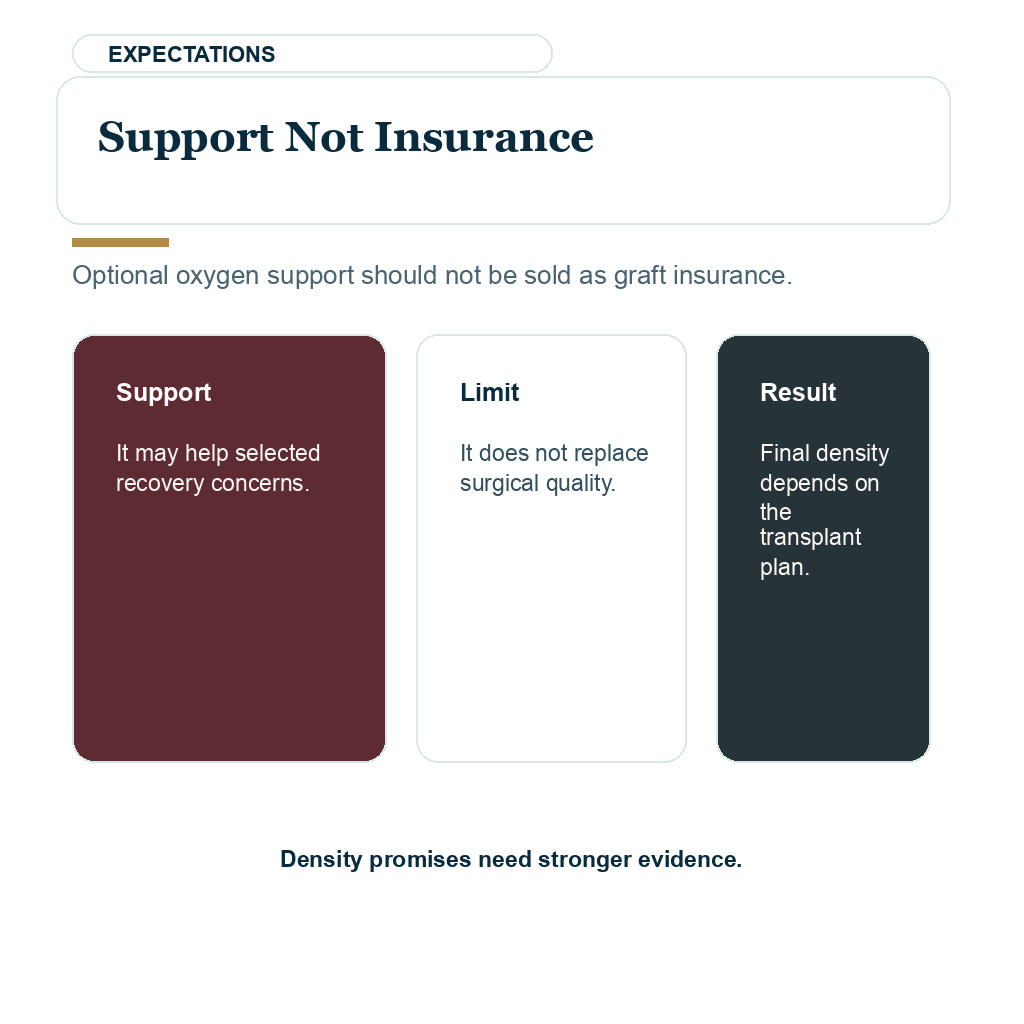
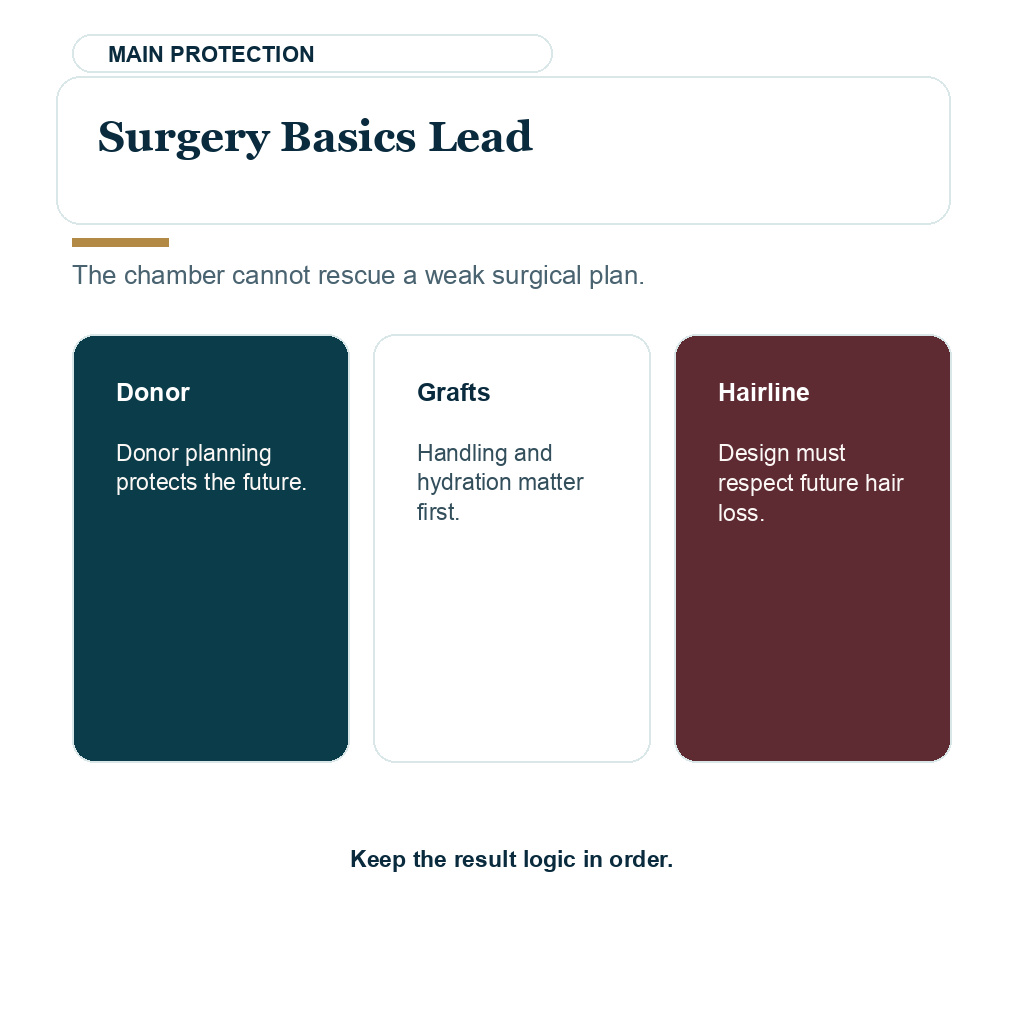
Keep this clinical distinction in mind. HBOT may be discussed as supportive care in selected contexts, but supportive care is not the foundation of the transplant. If the foundation is weak, optional oxygen sessions cannot rebuild it. If the foundation is strong, HBOT should not be used to make you feel the result depends on buying more sessions.
HBOT does not guarantee final density
The careful interpretation is narrower than the marketing. Some hair transplant evidence discusses early shedding, folliculitis, itching, comfort, or wound support. It does not prove better final density for every FUE patient.
Early shedding, itching, folliculitis, swelling, and comfort belong to a different category from final density. You may care about all of them, but they are different outcomes. It is one thing to say a treatment may support some early recovery signals. It is much stronger to say it protects every graft or improves final growth, and I do not make that promise.
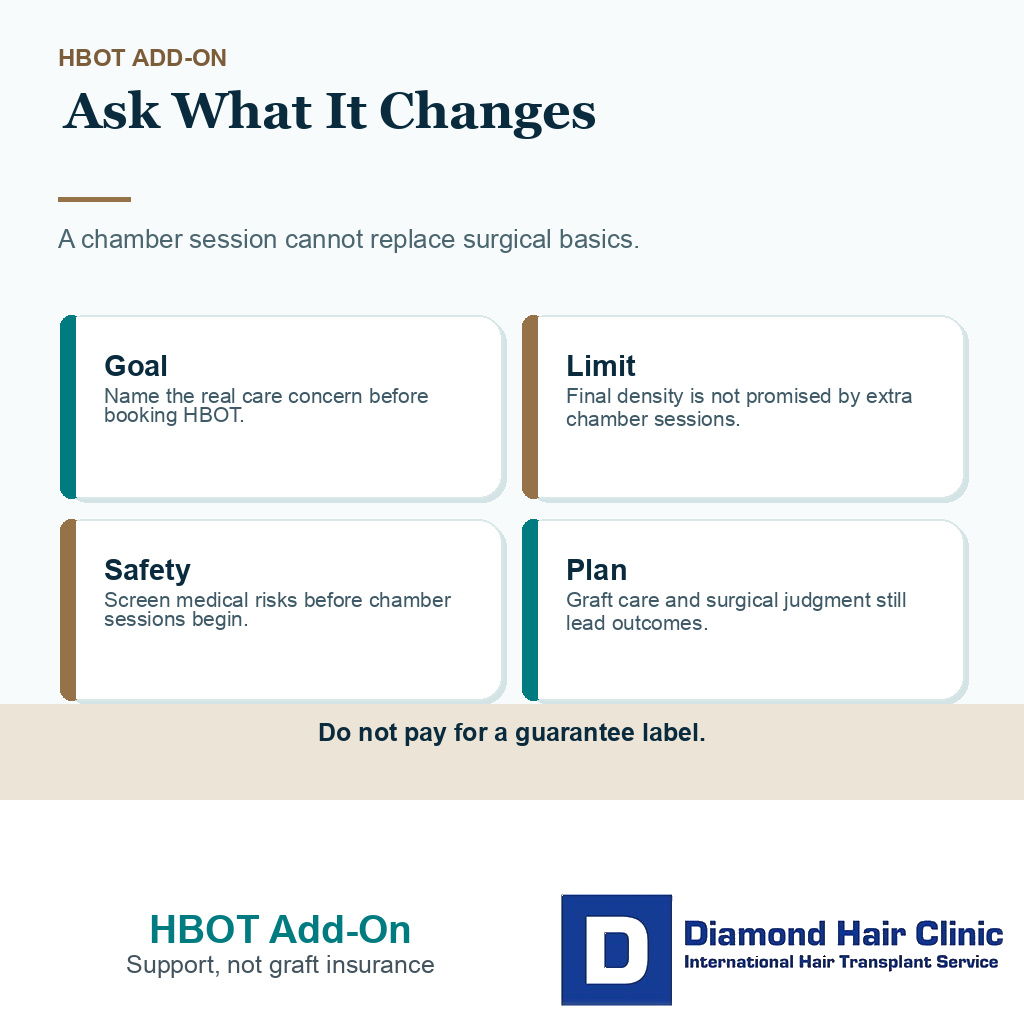
HBOT should meet the standard I expect from any extra treatment after surgery. Pages about PRP and exosomes after hair transplant or stem cell extras are useful only when the claim stays realistic. Technical language still needs a clear indication, a fair explanation, and plain limits.
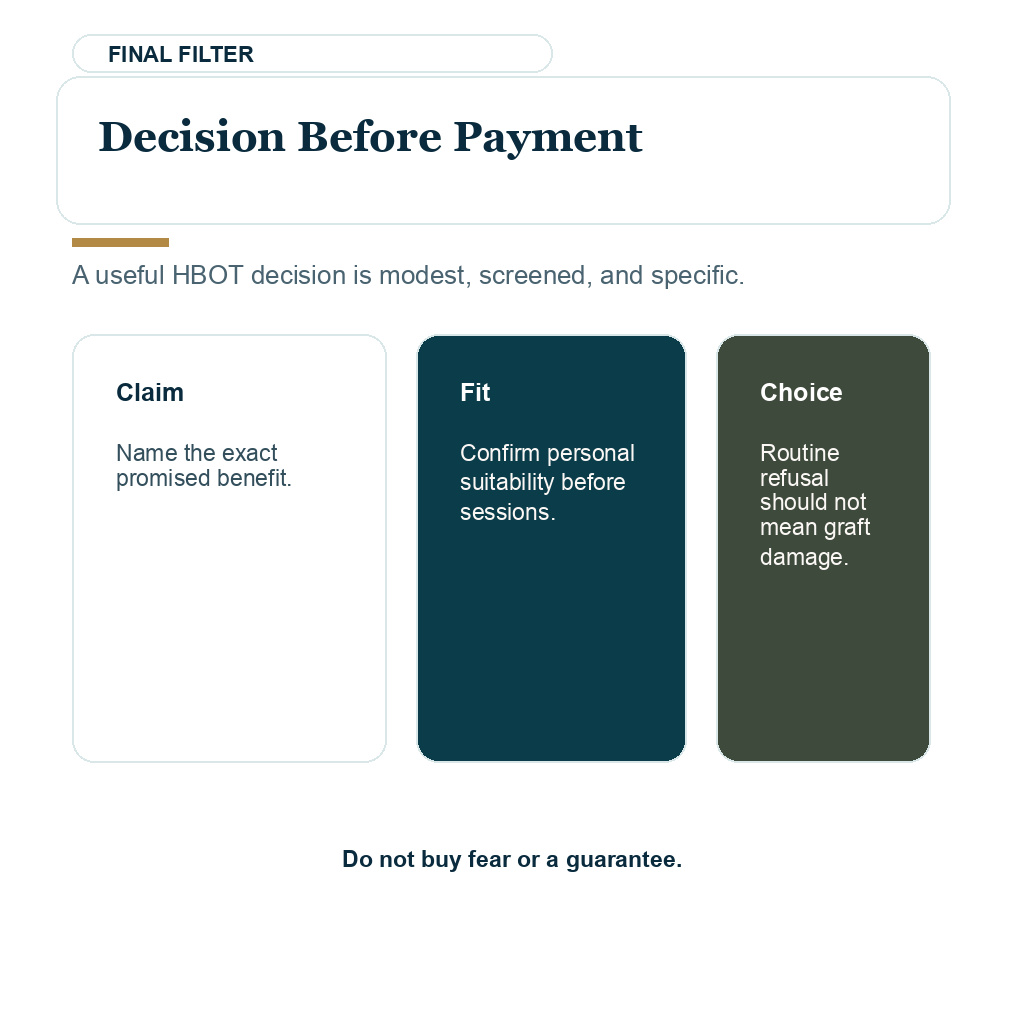
For HBOT, I use cautious wording. It may be considered in selected situations, but it is not a final density guarantee. If routine HBOT is presented as essential for graft survival, the exact evidence, the exact condition being treated, and the reason it applies to your case need to be clear.
When chamber treatment becomes medical?
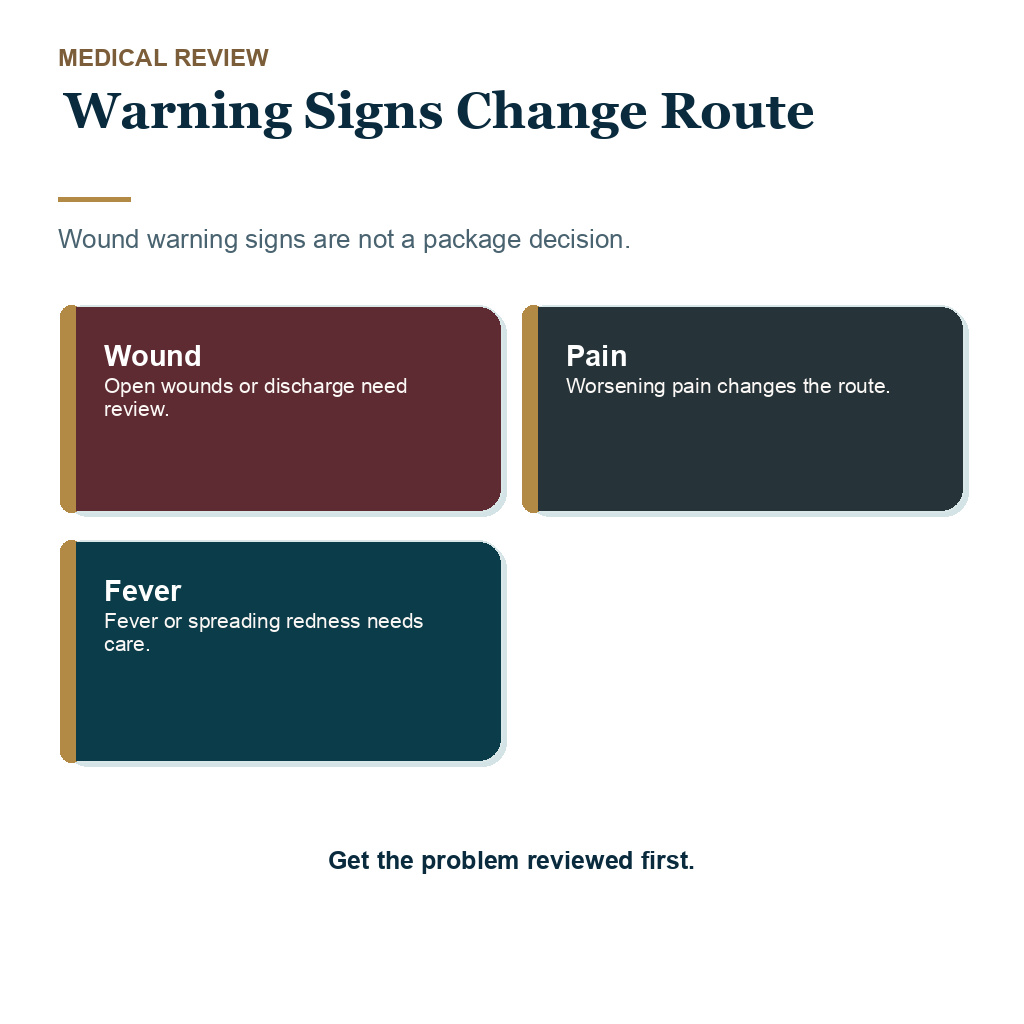
There is one situation where the tone changes. A wound or tissue concern belongs in a different category. Blackening skin, worsening pain, spreading redness, discharge, fever, an open wound, or any concern for tissue compromise needs prompt review rather than a routine extra explanation. Treat it as a medical problem until a doctor has assessed it.
HBOT may be part of a specialist conversation, but the first step is diagnosis. Do not try to treat a frightening wound sign by booking oxygen sessions yourself. I use the necrosis warning signs page for this boundary because tissue risk situations need clear escalation, not cosmetic reassurance.
Balance the HBOT offer before treating it as essential
Choose the situation that best matches the offer. The next question changes depending on whether HBOT is routine support, an evidence claim, a medical fit issue, a wound concern, or a distraction from surgical fundamentals.
The same chamber can mean different things depending on the reason it is offered. A routine extra, an evidence claim, a medical fit issue, a wound concern, and a weak surgery plan call for different questions. The decision becomes safer when those categories are separated before money is spent.
Patients who need caution before chamber treatment
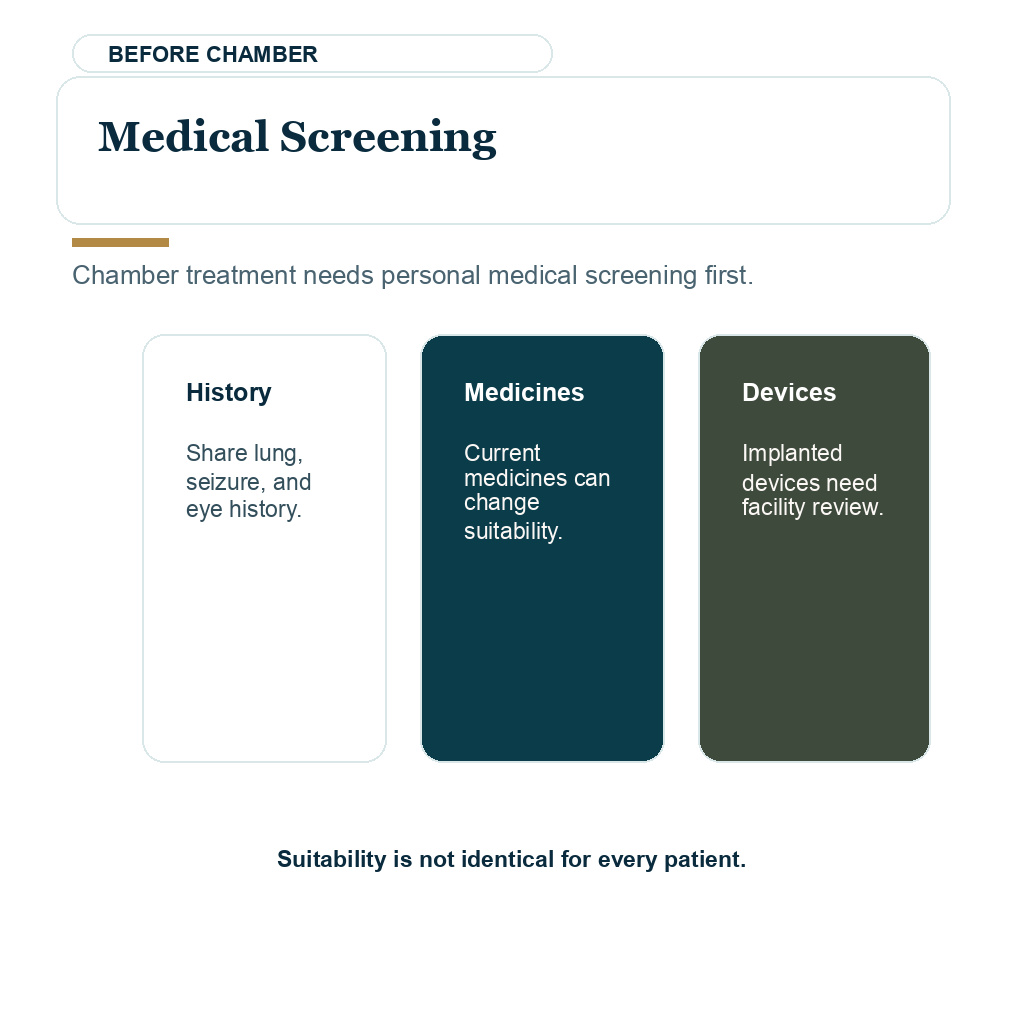
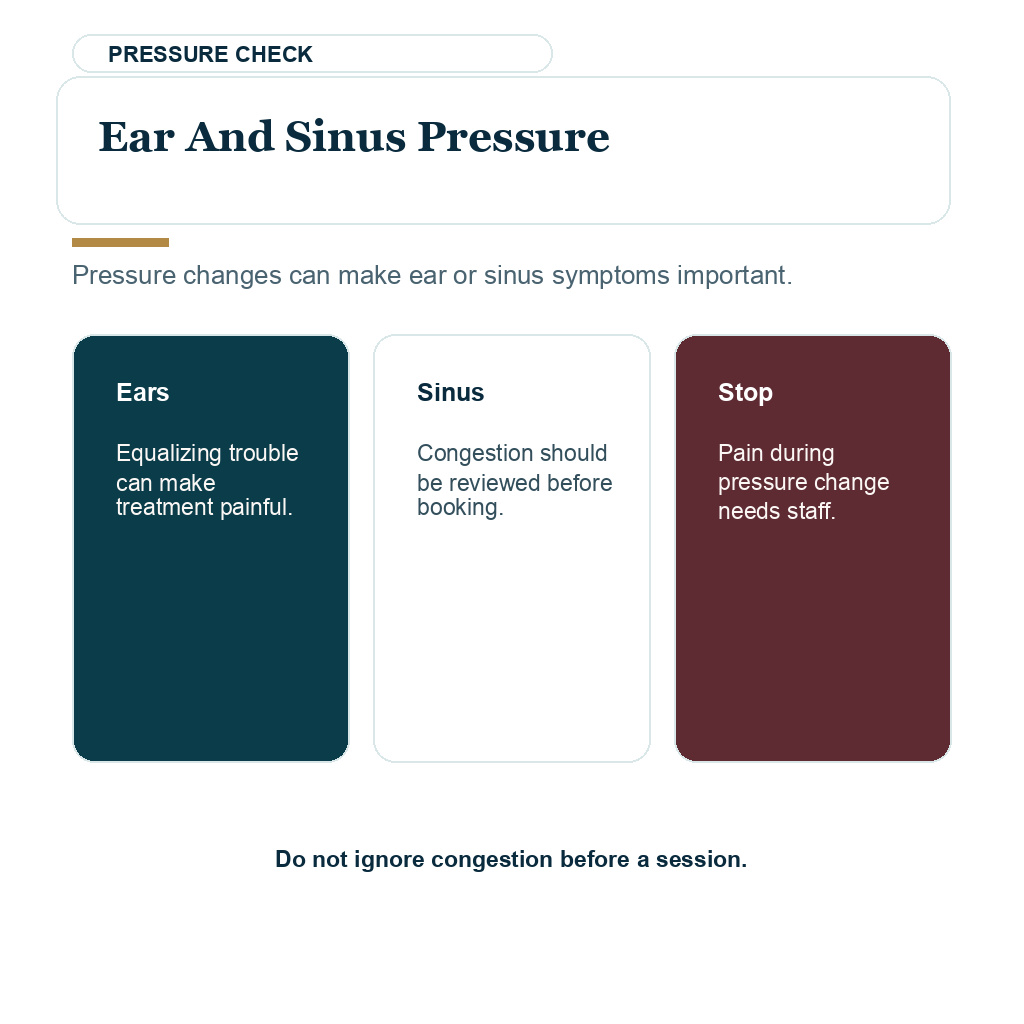
HBOT is generally performed with supervision, but it is not a casual treatment for every patient. Pressure can affect the ears and sinuses. People with nasal congestion, sinus symptoms, ear pressure problems, or difficulty equalizing pressure may find the chamber painful or unsafe until reviewed.
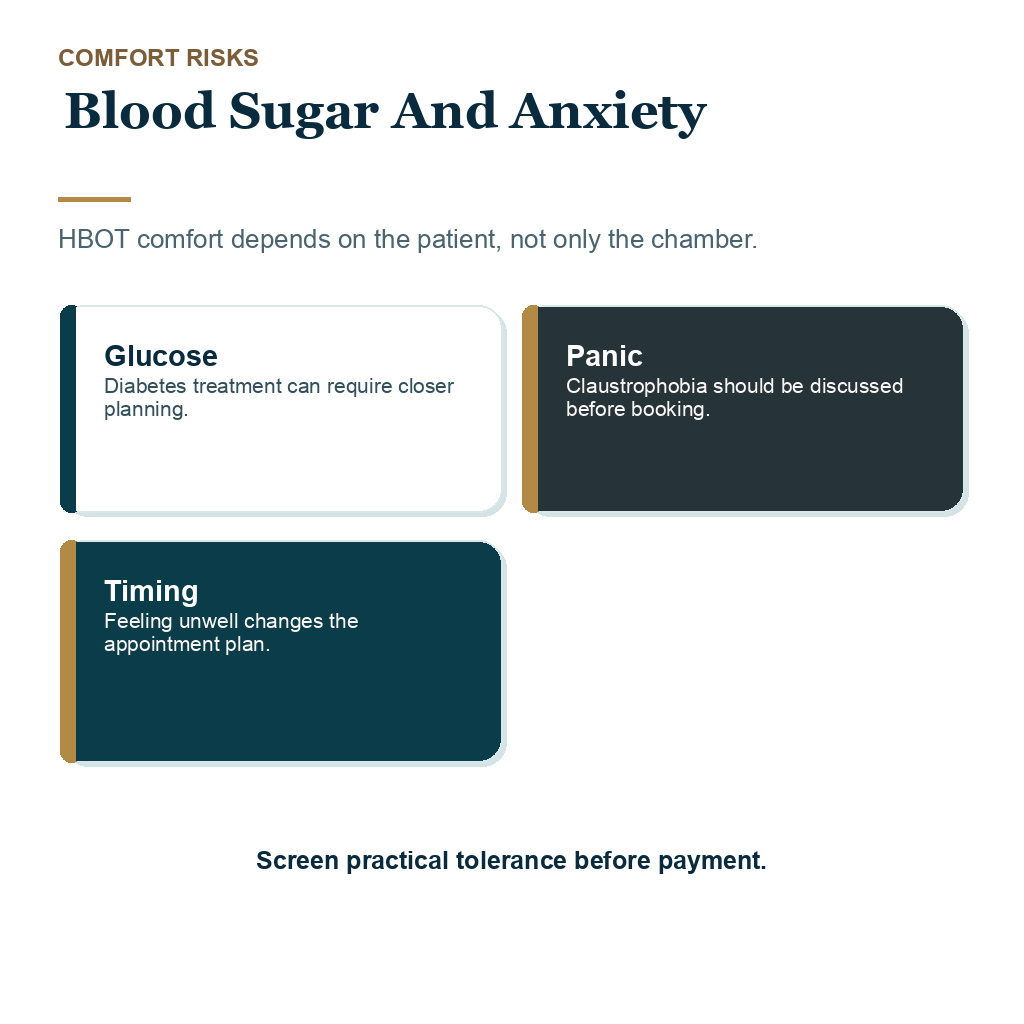
Diabetes also matters, especially when insulin or glucose lowering treatment is involved, because blood sugar can drop around treatment. Claustrophobia is not a small detail either. Some people lie comfortably inside a chamber. Others panic. That needs discussion before scheduling, not after payment.
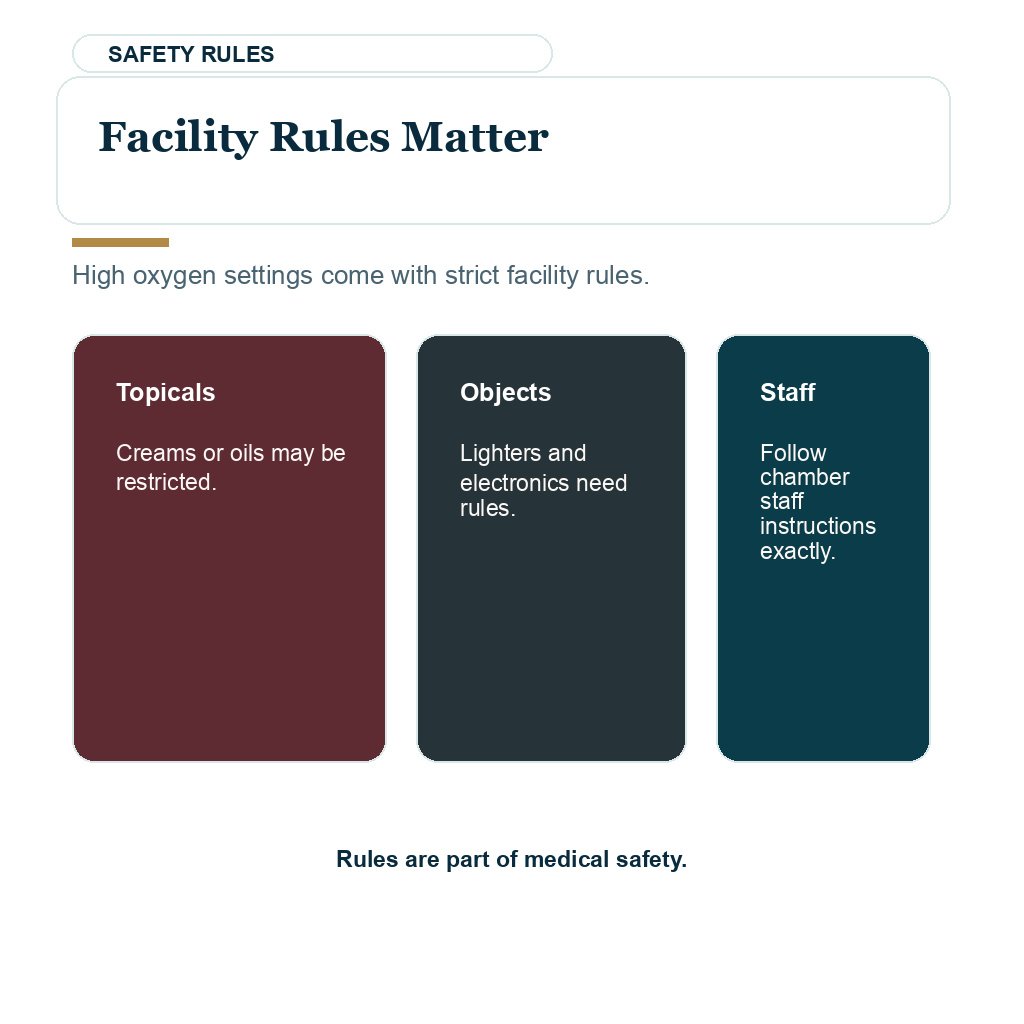
I would also want lung disease, past pneumothorax, recent chest procedures, seizure history, recent eye surgery, implanted devices, pregnancy, chemotherapy exposure, and current medications disclosed before any session is booked. The chamber environment has strict fire safety rules because high oxygen concentration changes risk. Hair sprays, oils, creams, electronics, lighters, certain clothing, and topical products after transplant may be restricted by the facility. Safety screening is part of the decision, not an afterthought.
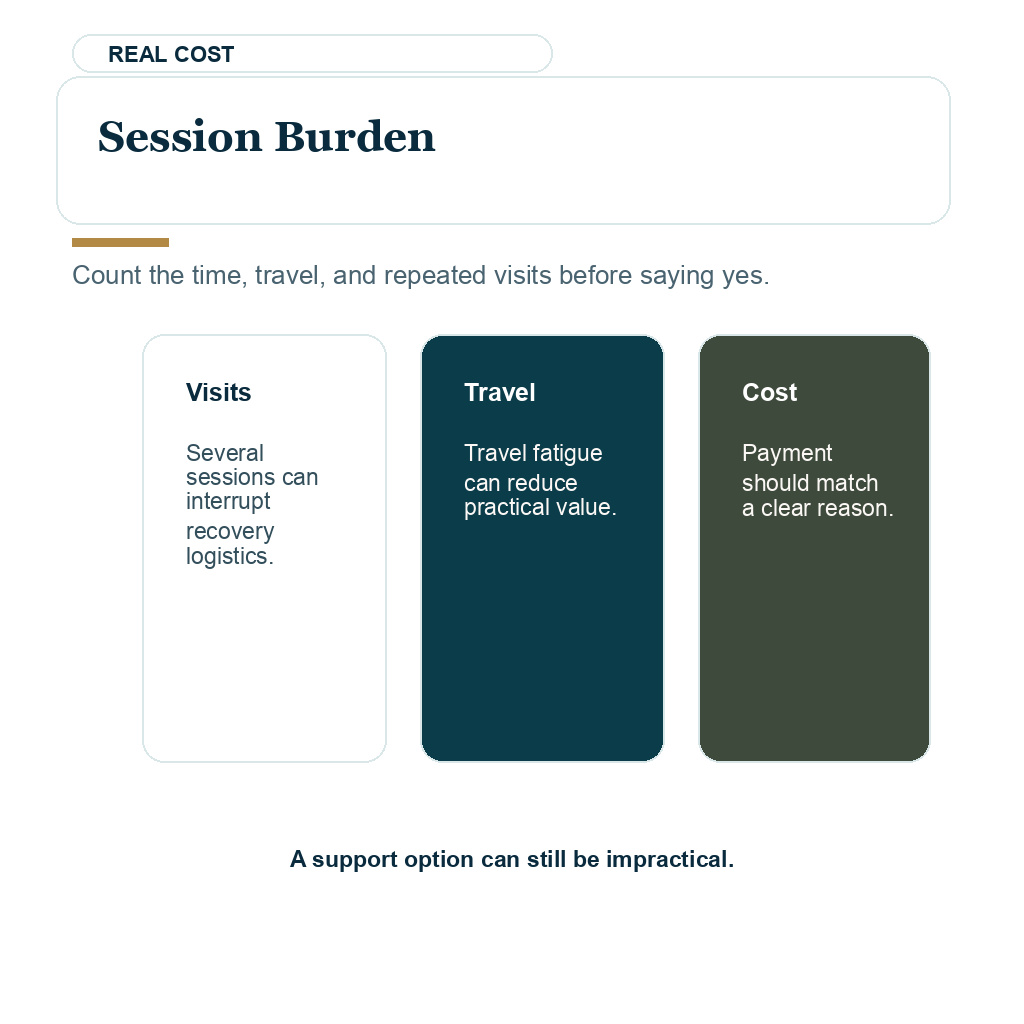
These 10 HBOT slides separate the reason for treatment, realistic support claims, medical screening, ear and sinus pressure, blood sugar or anxiety issues, facility rules, session burden, surgical fundamentals, warning signs, and the HBOT decision before payment. Swipe sideways, use the arrows one slide at a time, or choose a dot below the image.