


BPC 157 and TB 500 Need Medical Review After Surgery
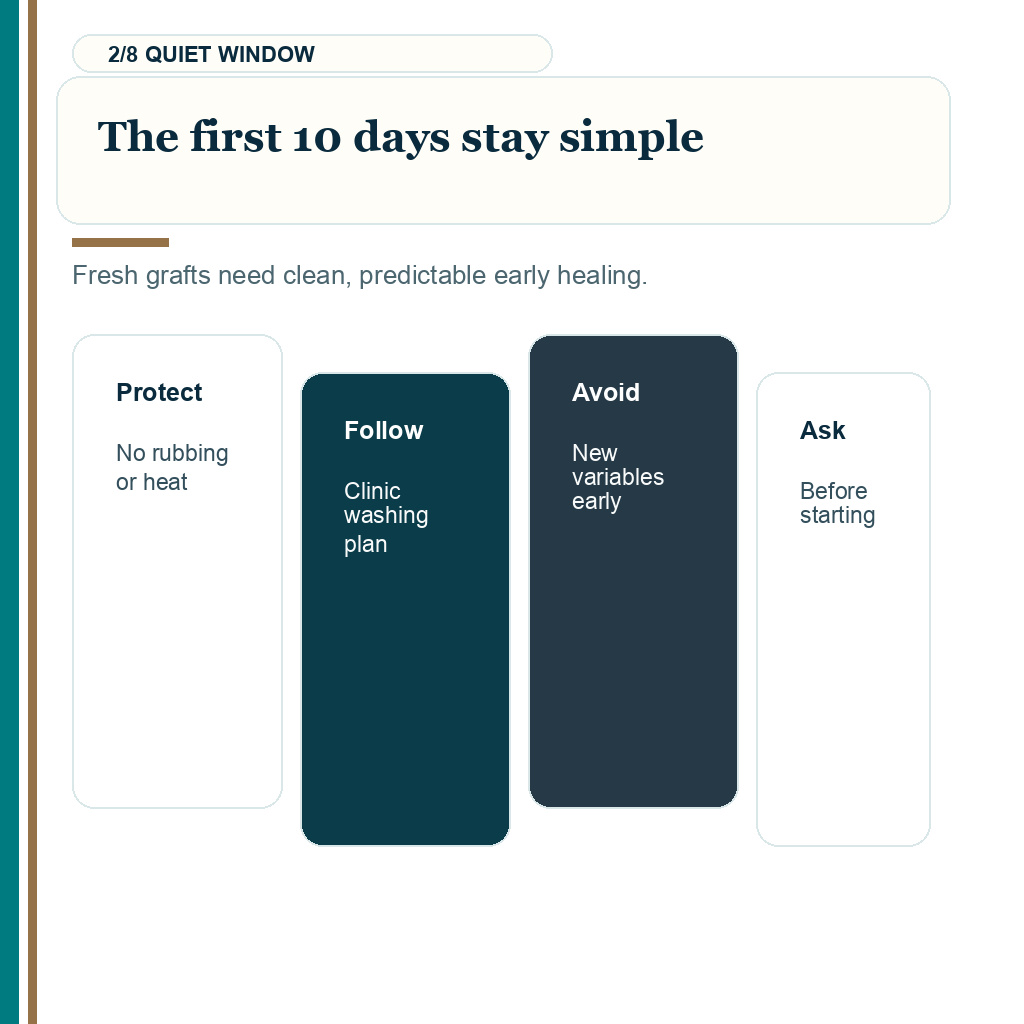
Do not start BPC 157, TB 500, GHK Cu injections, growth hormone peptides, or any similar recovery peptide in the first 10 days after a hair transplant unless your surgeon and medical doctor have specifically planned it. These products are often presented as healing shortcuts, but there is no strong hair transplant evidence that they improve graft survival. In the early healing period, the safer priority is to protect the scalp, keep the medication plan clear, avoid unnecessary injections, and remove anything that could confuse bleeding, swelling, infection signs, or follow up decisions. Fresh grafts do not need a recovery experiment added around surgery. They need fewer variables, so any peptide, injection, or supplement should be named before it gets mixed into the healing period. They need a quiet, clean, predictable healing window.
The temptation is easy to understand. You have just invested time, money, donor grafts, and emotion into surgery, so anything that promises faster healing can sound attractive. I keep the early period simple. The grafts need clean surgery, careful graft handling, an uneventful first 10 to 14 days, and proper follow up.
Oxygen therapy after hair transplant depends on the indication, not the label. If an extra treatment is presented as rescue for graft survival, ask whether it has a real medical indication or only a reassuring name.
Peptides can feel tempting after surgery
Most people ask about peptides because they are worried about healing and growth. They hear that BPC 157 may help tissue repair, that TB 500 may help recovery, or that copper peptides may support hair growth. The language sounds scientific, and the timing feels urgent because the scalp is healing in front of them.
The concern is that the decision is often being sold as a promise rather than explained as a medical choice. A bottle, vial, or injection plan may sound more active than waiting, washing correctly, sleeping carefully, and avoiding scalp trauma, but action is not always good medicine.
After a hair transplant, the first priority is not to add as many interventions as possible. The priority is to keep the recipient area stable and let the grafts settle without rubbing, pressure, heat, sweat, scratching, infection, or unplanned medication changes. I link this decision back to the basic hair transplant aftercare plan before I discuss any extra product.
Evidence limits for BPC 157 after hair transplant
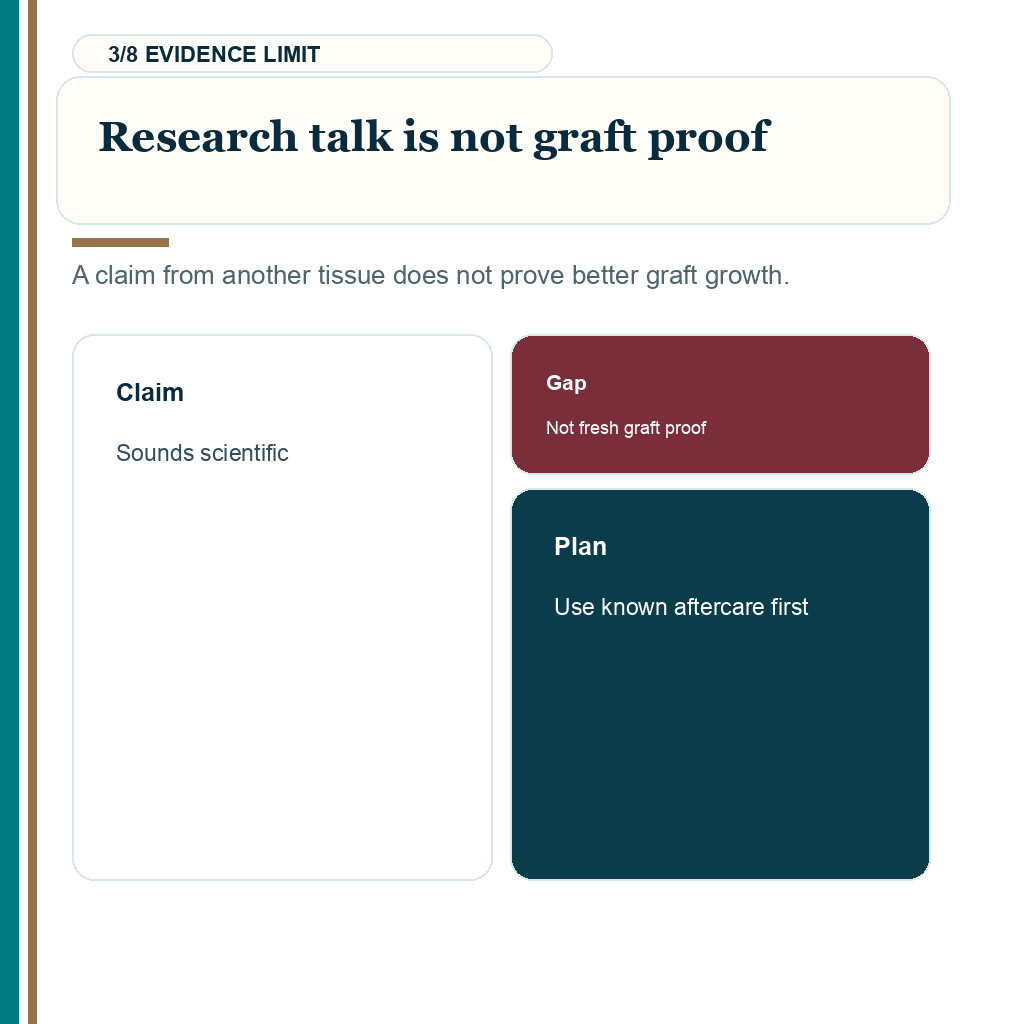
BPC 157 is discussed in healing research and online recovery communities, but that is not the same as proof that it improves hair transplant growth. A hair transplant is a very specific biological situation. Grafts are removed, handled, stored, implanted into tiny recipient area incisions, and then they need blood supply, oxygen, stable tissue contact, and time.
If a treatment has not been tested properly in this exact setting, I cannot treat it as a graft survival tool. Reading about tendon, muscle, stomach, or skin repair does not prove the same idea applies to transplanted follicles. That jump is too large for surgical planning.
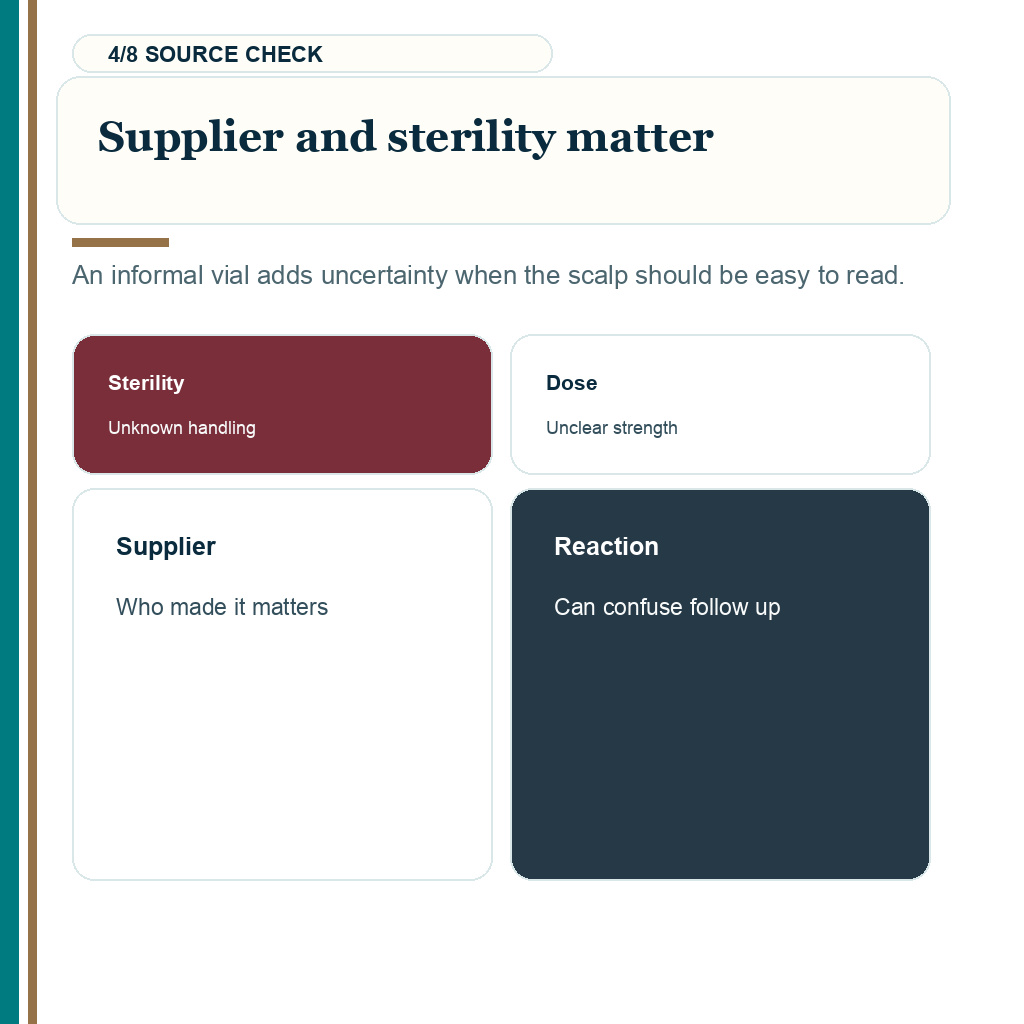
Accountability matters as much as the product claim. If a vial is bought from an informal supplier, I do not know the sterility, storage, concentration, contaminants, or what medical professional is responsible if a reaction appears. During the first recovery window, fewer unknowns are safer than more unknowns.
Easy access is not the same as hair transplant evidence. Even if a peptide is discussed in medical settings, I still need to know whether it has been tested for fresh grafts, whether the dose is known, whether it was prescribed for you, and who is responsible if healing becomes unclear.
I apply similar discipline with PRP and exosomes after a hair transplant. Supportive treatments may have a place in selected cases, but they do not replace diagnosis, donor management, clean technique, or realistic timing. BPC 157 and TB 500 sit even further from routine hair transplant planning because many people obtain them through informal supplier routes rather than through a clearly regulated medical pathway.
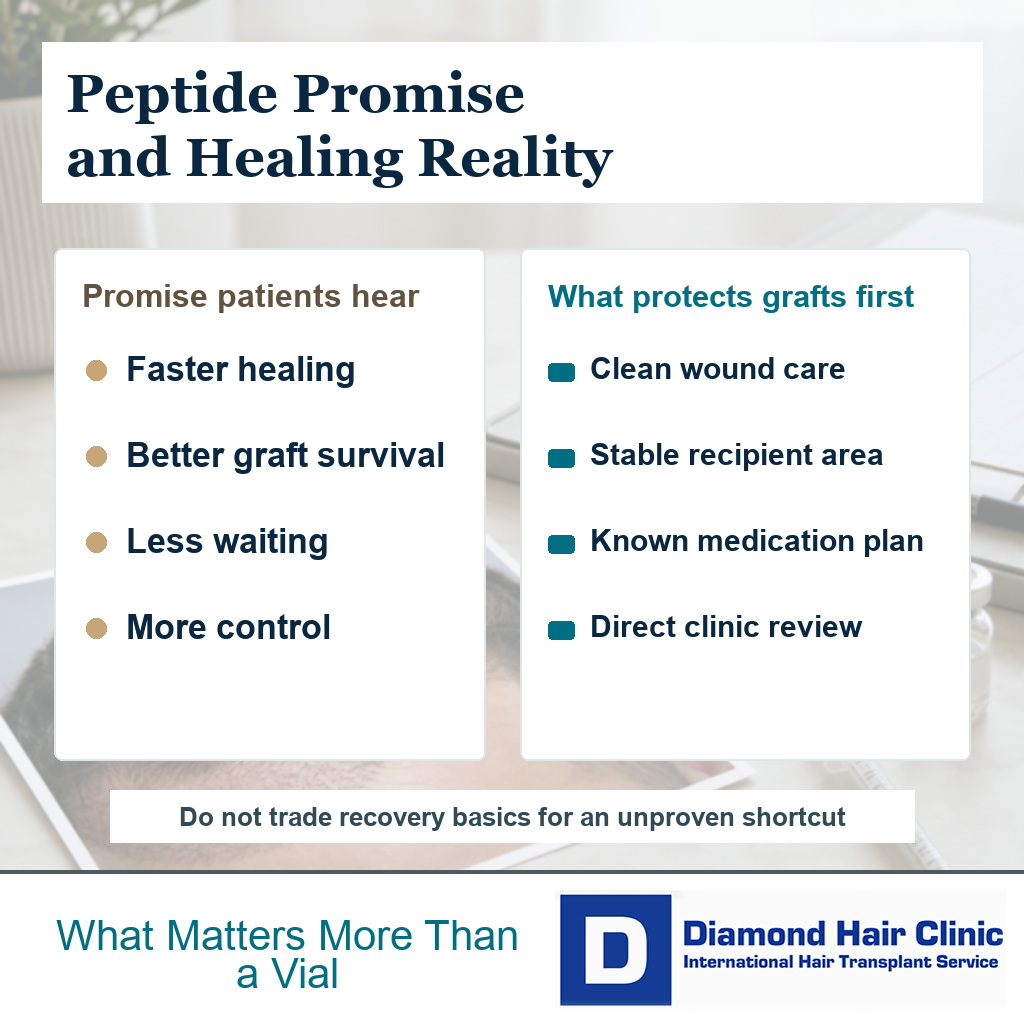
TB 500 and GHK Cu add uncertainty in early healing
TB 500, GHK Cu, growth hormone peptides, and peptide blends create the same practical issue. You may think the product is only helping healing, while I see a new variable entering a delicate recovery window. If swelling, redness, bumps, itching, or unusual tenderness appears, the clinic now has to ask whether the scalp is healing normally, whether there is infection, whether a topical or injection irritated the skin, or whether another medicine changed the picture.
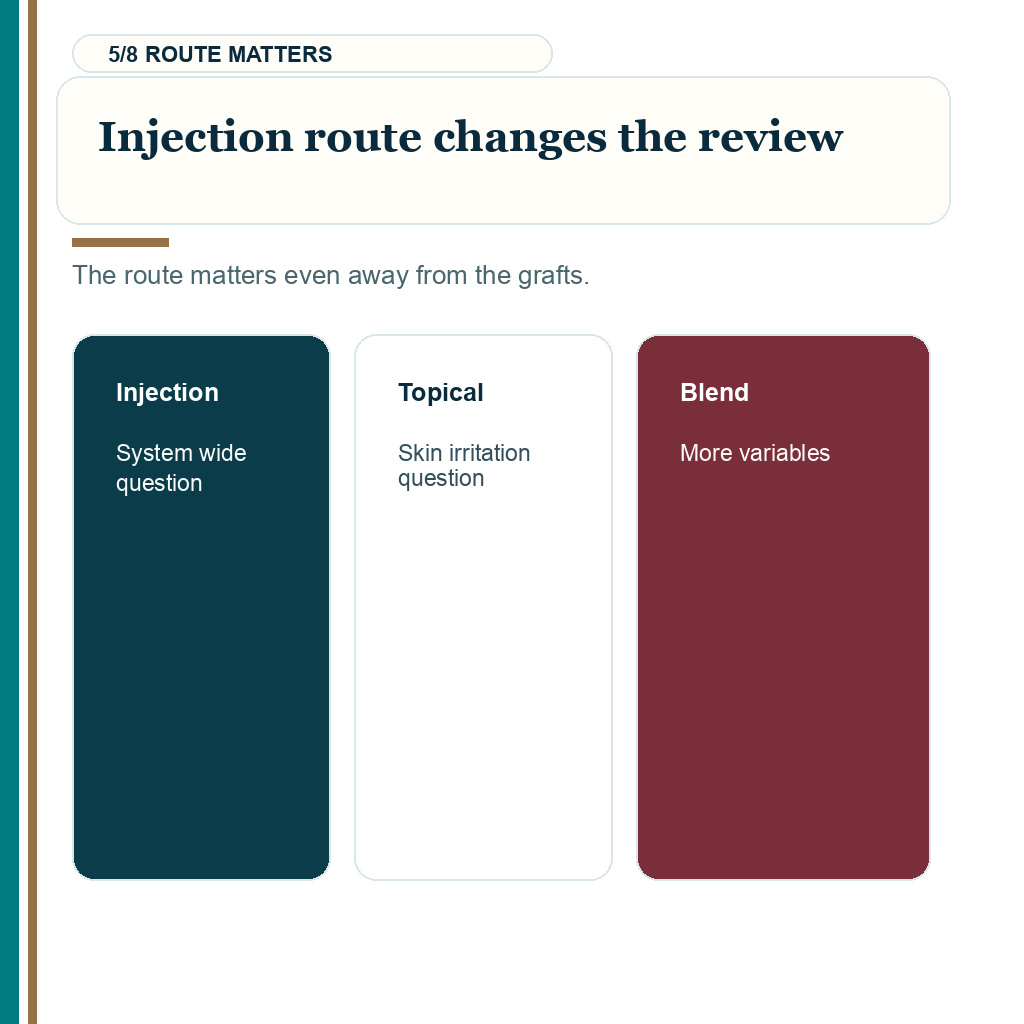
Stacked peptide routines create more than one unknown at once. A blend can add injection route, supplier, dose, and interaction questions before the scalp problem is even clear.
People who ask about recovery injections often ask about topical products too. Topical metformin after FUE donor scar claims belong in the same cautious, evidence first conversation.
That confusion matters. In the first days after surgery, the scalp already has redness, crusting, tightness, and sensitivity. Adding an unapproved injection or unknown compound can make the follow up less clear, not more controlled.
I also separate a treatment controlled by the clinic from a experiment directed by the patient. A clinic may have a defined protocol, sterile technique, medical responsibility, and follow up. Ordering a vial online, mixing it, injecting it, or applying it around healing scalp skin is a very different situation.
Peptides can interfere with the first 10 days
The first 10 days are mainly about physical protection and wound stability. The grafts are not judged by how many advanced products are used. They are protected by avoiding pressure, rubbing, scratching, heavy sweating, poor washing, and unnecessary trauma.
An injection outside the scalp may still affect the body as a whole. A topical product on or near the scalp may irritate the skin. A mixed product may introduce allergy, contamination, dosage uncertainty, or a reaction that looks like something else. Even when the product itself is not the direct cause of a problem, it can delay the correct interpretation of symptoms.
Early stimulant supplements need careful timing. Someone tempted by peptides may also be tempted to restart training, take pump products, or push recovery faster than the scalp is ready for. My guidance on pre workout after a hair transplant comes from that concern. The product matters, but the behavior around the product often matters more.
Basic recovery protection matters more than peptides
Focus on what has the highest value and the lowest confusion. Keep the scalp clean in the way your clinic instructed, sleep without rubbing the grafts, avoid heat and sweat early, take prescribed medication correctly, and send photos in steady lighting if something looks wrong. These steps sound less exciting than peptides, but they are the foundation of healing.
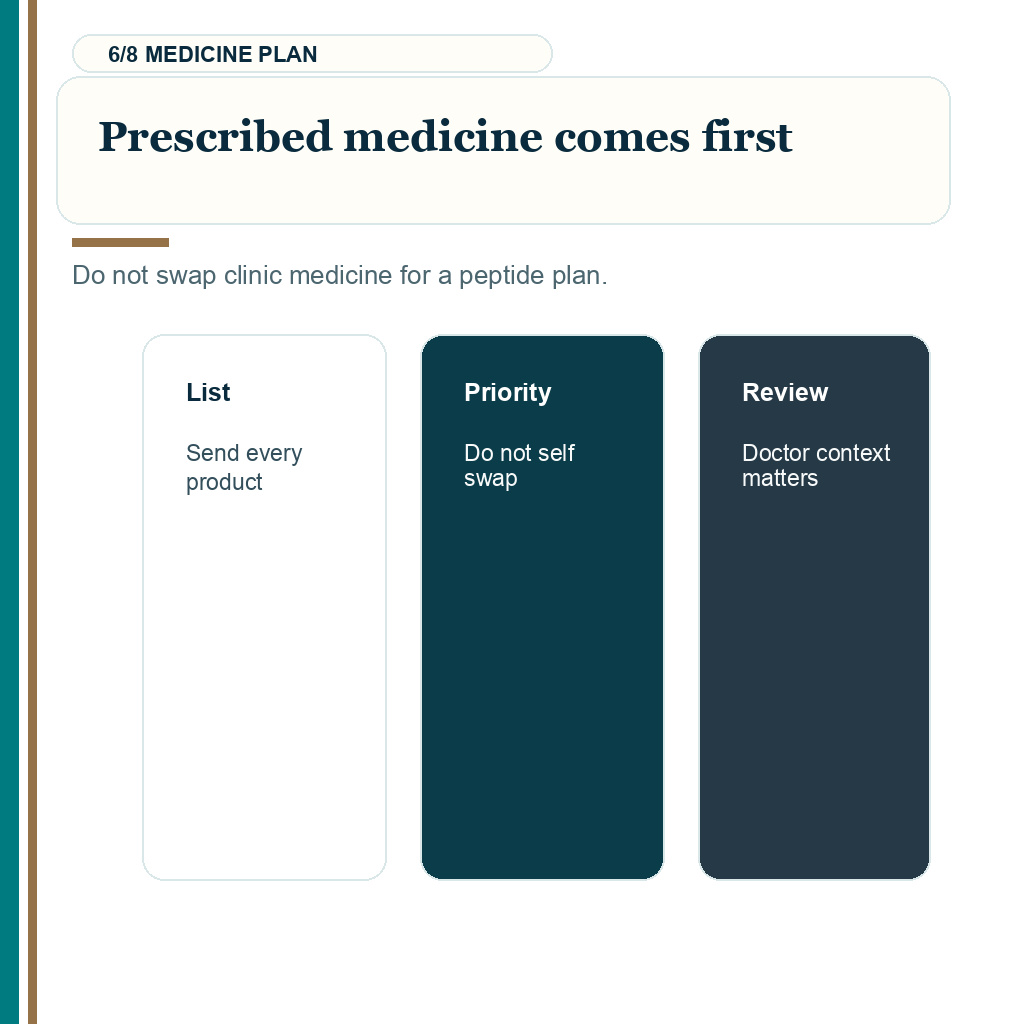
If the clinic has prescribed medication, do not replace it with a peptide plan. If antibiotics were prescribed, take them as instructed unless there is a medical reason to stop and you have spoken with the clinic first. Infection prevention is more than simply taking or avoiding tablets. That also matters for antibiotics after a hair transplant.
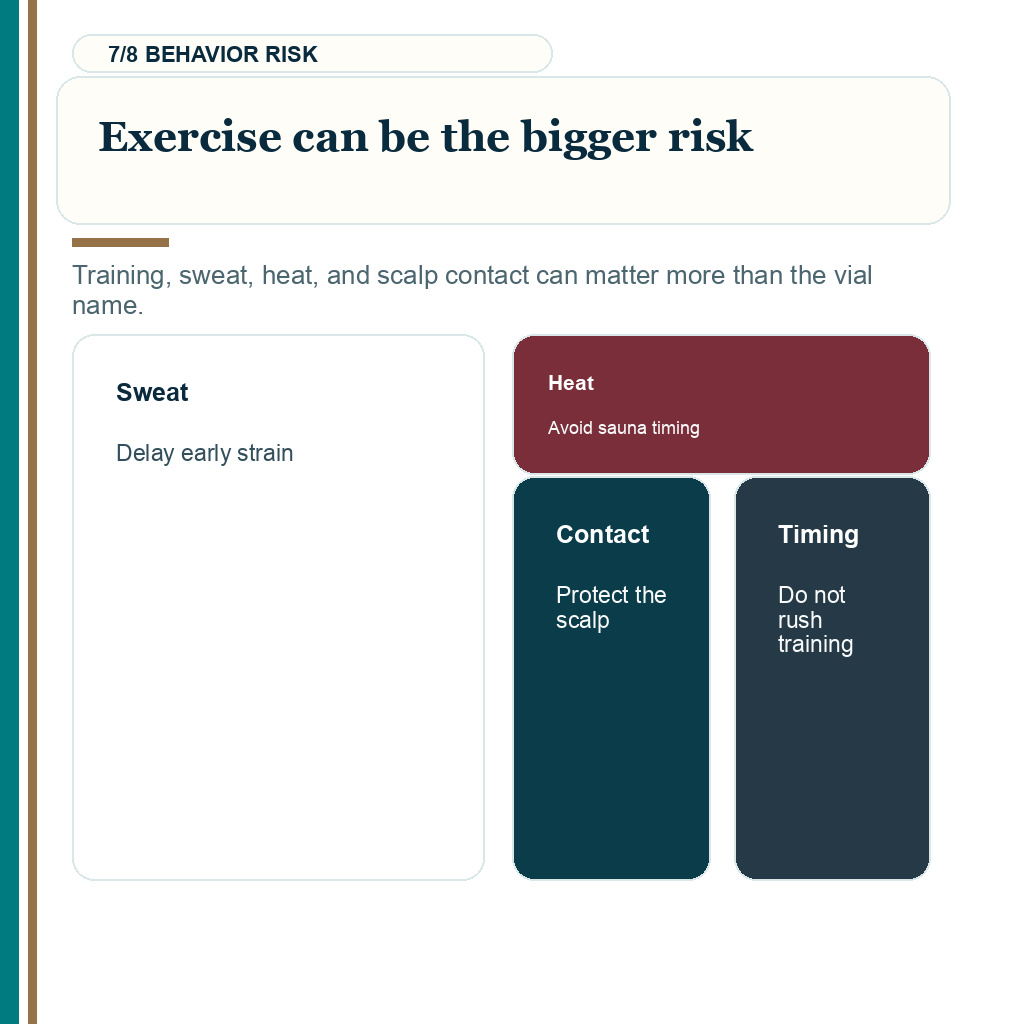
Exercise timing also matters. Hard training, sauna heat, sweating, and contact with the scalp can be more relevant to healing than the name of a supplement. With recovery peptides and heavy lifting planned only a few days after surgery, the bigger risk may be the behavior, not the vial. My guidance on exercise after a hair transplant is a better starting point than trying to medicate around early strain.
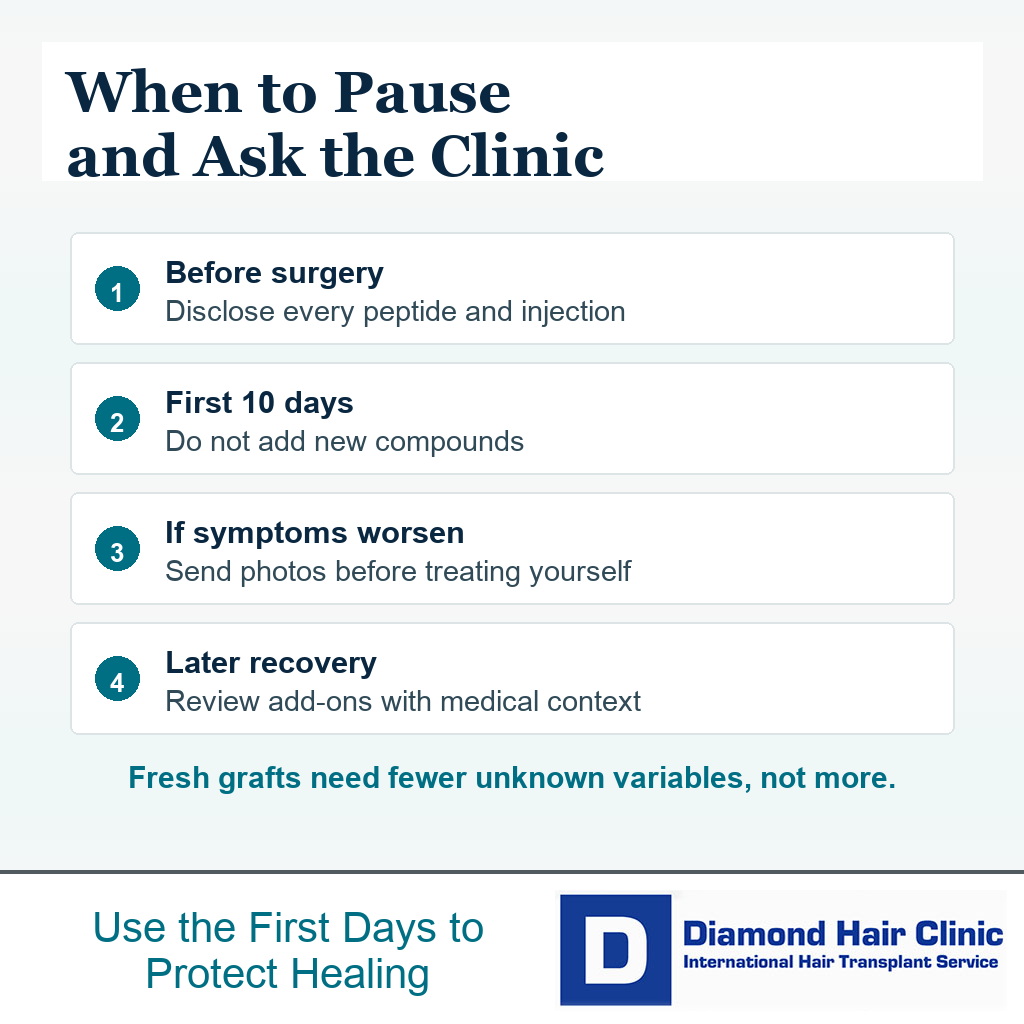
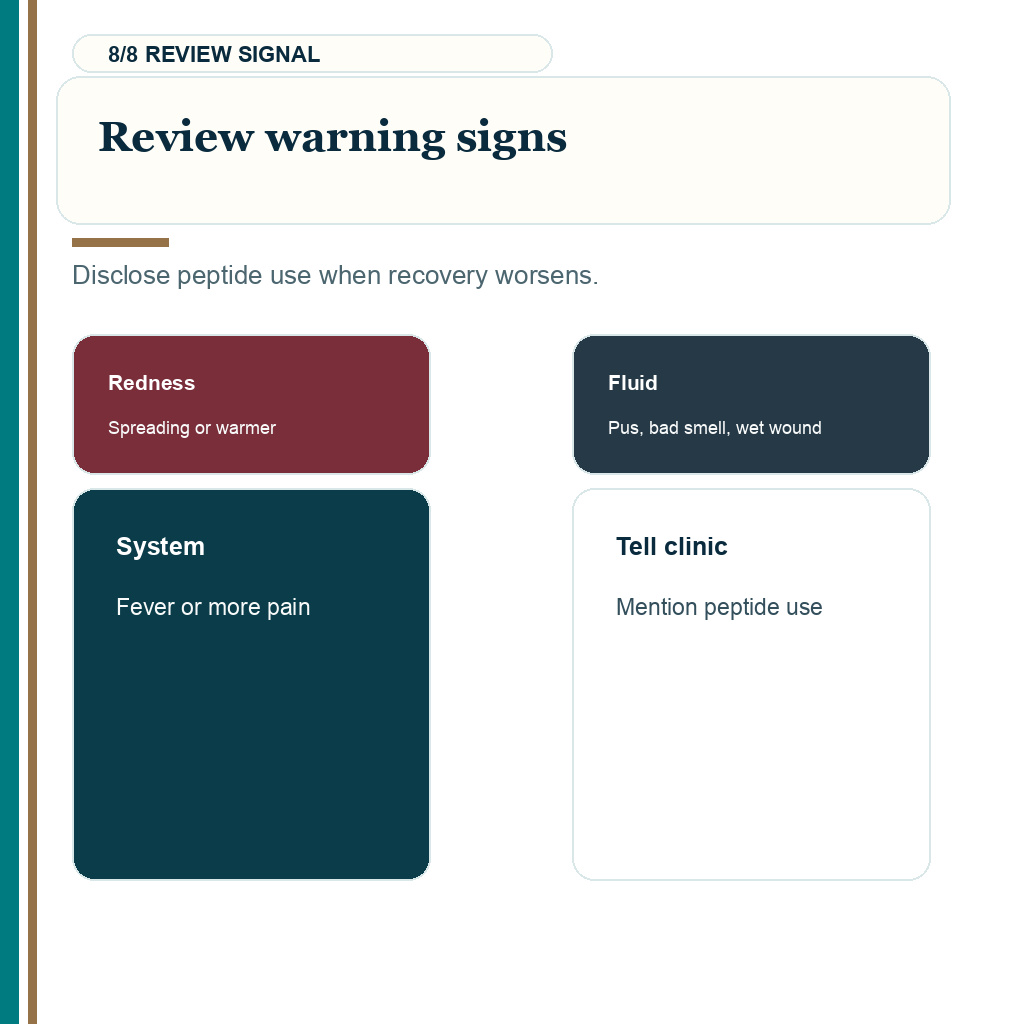
These 8 peptide review slides separate exact product disclosure, the first 10 day quiet healing window, evidence limits, supplier and sterility uncertainty, concerns specific to the route, prescribed medicine priority, exercise behavior, and warning signs that need clinic review. Swipe sideways, use the arrows one slide at a time, or choose a number below the image.
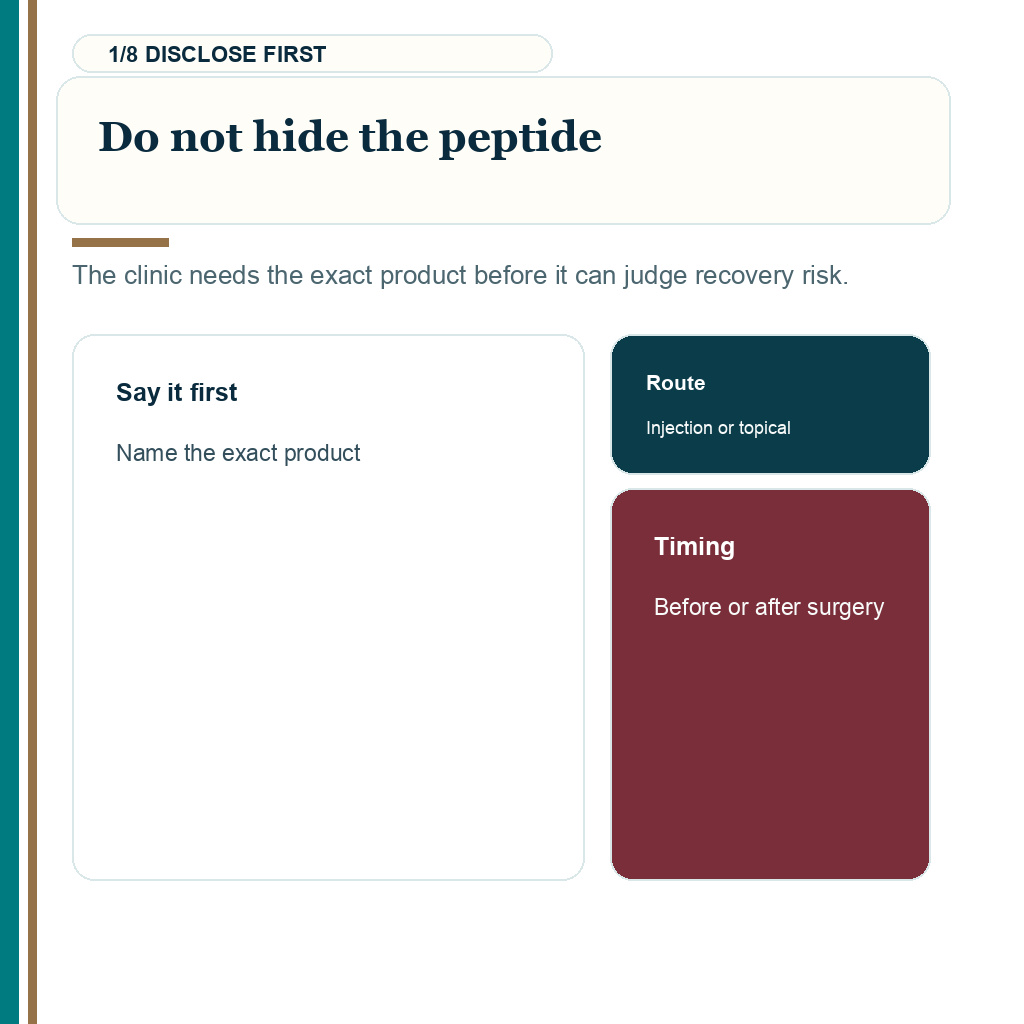
Prescribed medicines and peptides are different risk categories
A prescribed medicine has a named doctor, a reason, a dose, a known medical history, and a plan for what happens if there is a side effect. A peptide bought for recovery or hair growth may have none of those protections. A research use, wellness, or recovery support label is not medical clearance.
When a peptide or injectable product is prescribed for another condition, keep the prescribing doctor in the timing decision. Share who started it, why it is being used, the dose and route, and what that doctor recommends if surgery changes the schedule.
That difference matters when I review the medication plan after surgery. Pain relief, antibiotics, swelling medication, hair loss medication, and existing prescriptions all need to be understood together. A peptide is not harmless simply because it is called a peptide.
Some people already take medication for blood pressure, heart disease, clotting risk, hormones, anxiety, diabetes, or autoimmune disease. In those cases, extra compounds are not a small private detail. They can affect surgical timing, anesthesia planning, bleeding risk, and the way the clinic reads recovery signs.
Disclosure before surgery
Disclose them before the operation, not after. Tell the clinic the exact product name, dose, route, timing, supplier type, and whether it is prescribed or self directed. If you inject it, say so clearly. If it is a topical copper peptide, say where you apply it and how often. If you are a tested athlete, say that too, because anti doping rules can treat recovery peptides very differently from ordinary supplements.
Early disclosure is much safer than discovering the product after swelling, bleeding, irritation, or a delayed healing question appears. This disclosure rule applies to all medication before a hair transplant. A hidden product makes the plan less safe, even when you believe it is only a recovery aid.
The reason you are taking it matters. Muscle healing, tendon pain, bodybuilding recovery, hair regrowth, skin aging, and healing after surgery are different reasons. The reason often reveals the behavior around the product, such as heavy training, hormone use, stimulant use, or pressure to recover too fast.
If you take anticoagulants, antiplatelet medicines, or heart medication, coordination needs to be even cleaner. Hair transplant surgery while taking blood thinners cannot be planned as if medical safety is separate from the cosmetic operation. Any extra compound that the prescribing doctor does not know about undermines that coordination.
Peptides cannot replace proven hair loss treatment
No peptide should be used as a substitute for proper diagnosis. If native hair is still miniaturizing, the plan must account for future hair loss, not only the transplanted grafts. You may need medical treatment, observation, a more cautious hairline, or a different surgical plan.
Peptides can look attractive when finasteride, minoxidil, PRP, red light therapy, or another more familiar option feels uncomfortable. That is understandable, but replacing an uncomfortable decision with an unproven one does not make the plan stronger. Red light therapy after a hair transplant makes a similar point about extra products. A supportive treatment can only support a good plan. It cannot create one.
If hormones or performance compounds are involved, the discussion becomes more serious. Anabolic steroids after a hair transplant can involve body chemistry, acne, blood pressure, training, and native hair loss. Peptides sometimes appear in the same culture of self experimentation, so I ask about the whole picture rather than one vial.
Warning signs that need clinic review
Send photos for review if redness, swelling, warmth, pain, wet discharge, pus, fever, or a bad smell is getting worse rather than settling. Mild redness, itching, tightness, and dry crusts can be part of normal healing, but a worsening pattern deserves review.
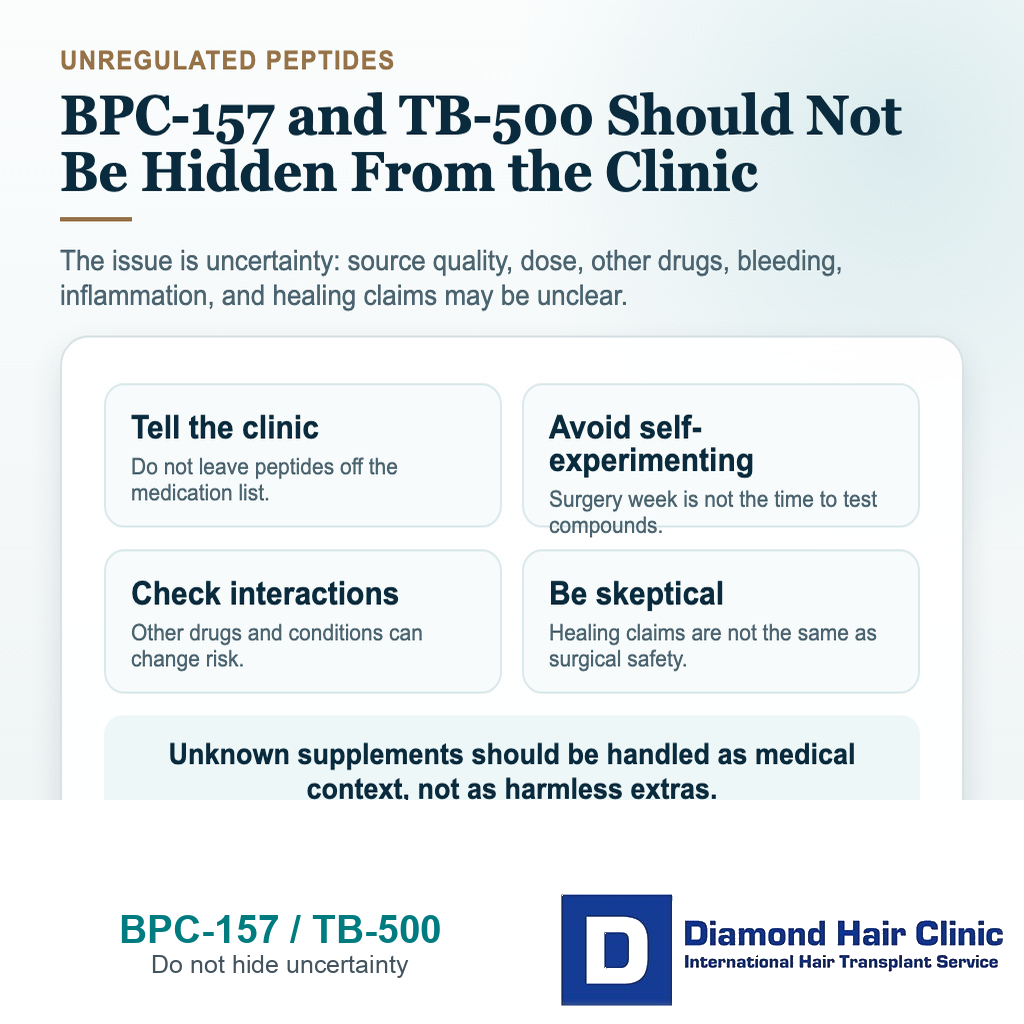
If you used a peptide, topical product, injection, or supplement around the same time, disclose it without embarrassment. The clinic needs the full picture to judge whether the scalp looks irritated, infected, inflamed, allergic, or simply within normal recovery. Infection after a hair transplant gives a clearer way to separate normal healing from warning signs.
Do not squeeze bumps, scrape crusts, inject near the scalp, or start random creams to fix a reaction. A small irritation can become a larger problem when more interventions keep being added. In early recovery, a clean photograph and direct clinic review are often safer than trying to solve everything privately.
Clinic promises that should slow the decision down
Treat it as a warning sign when a clinic or seller makes the peptide sound like the missing secret behind graft survival. Graft survival is not a shopping list of extra products. It depends on donor quality, extraction technique, graft handling, incision planning, recipient area blood supply, surgical timing, and aftercare.
An unsafe promise often hides the harder questions. Who examined the donor area? Who designed the recipient area? How were the grafts handled? Is the scalp ready for surgery? What happens if healing is delayed? What result is realistic if you have progressive hair loss?
The more a clinic sells certainty, the more carefully I listen. A useful consultation should leave you clearer about limits, timing, and responsibility. It should not make you feel that a vial can compensate for rushed planning or poor follow up.
Peptide use needs caution during healing
I start with the case, not the peptide. If the surgery was clean, the grafts were handled properly, the scalp is healing normally, and you are following instructions, I do not see a reason to add an unapproved recovery compound just to feel more active. The cleaner decision is to protect the healing process and judge growth at the correct time.
If you are already using BPC 157, TB 500, GHK Cu, or a growth hormone peptide, I need full disclosure and medical coordination before surgery. I do not build a hair transplant plan around hidden use, online dosing advice, or a seller’s promise. If the product is not medically necessary, pausing it around surgery may be the safer decision, but that should be decided with the right medical context.
When I protect a transplant result, fewer uncontrolled variables usually make the decision safer. That may feel less exciting than adding a new injection, but it is the more responsible surgical decision. The grafts already have enough biological work to do. My job is to keep the conditions around them clean, stable, and understandable.
My position is practical. Do not risk fresh grafts for an unproven shortcut. Use the first days to protect the scalp, follow the clinic plan, avoid unnecessary variables, and ask for review if healing does not move in the right direction. That gives the transplant a better chance than chasing a treatment that sounds advanced but has not earned that role in hair transplant recovery.

Read this review excerpt
Every single one of my questions was answered and they made sure I had all the details I needed to make an informed decision.