


Copper Peptide Serum Should Wait Until the Grafted Scalp Is Calm
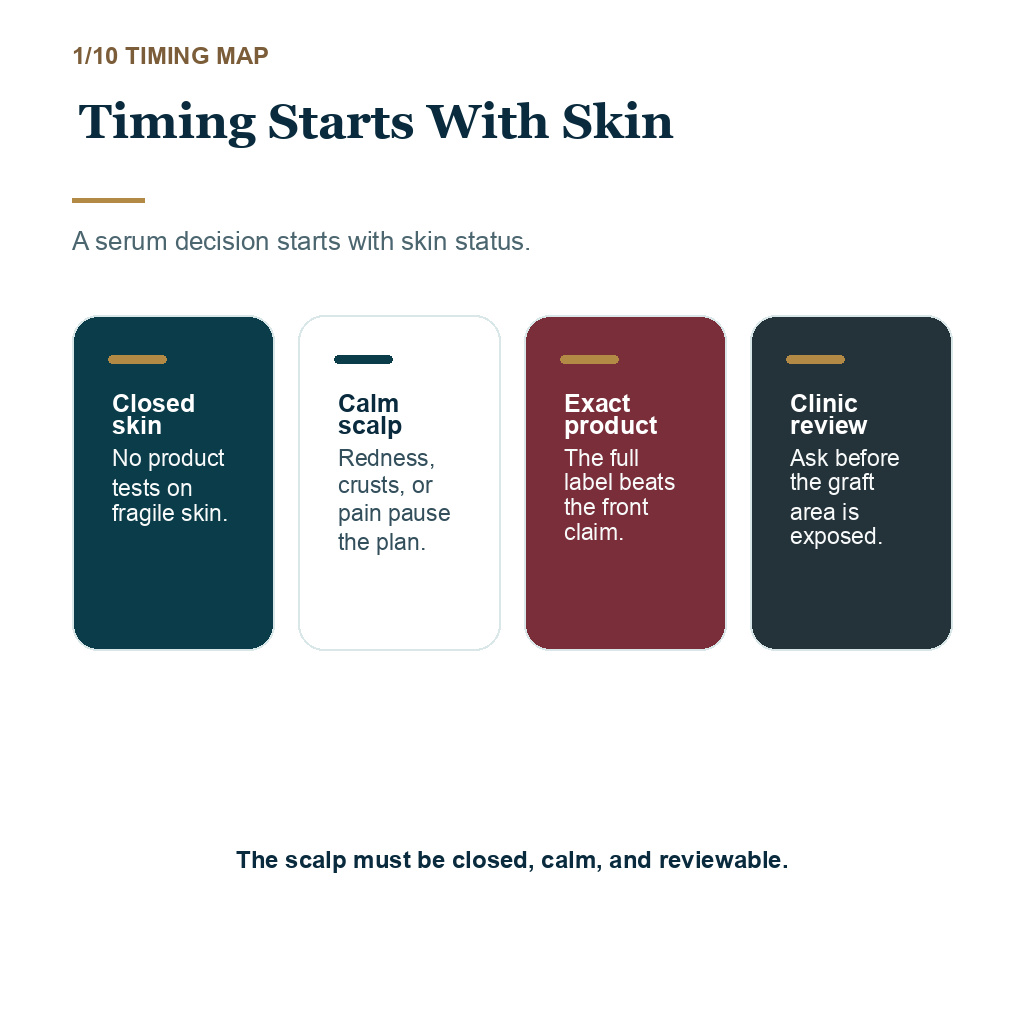
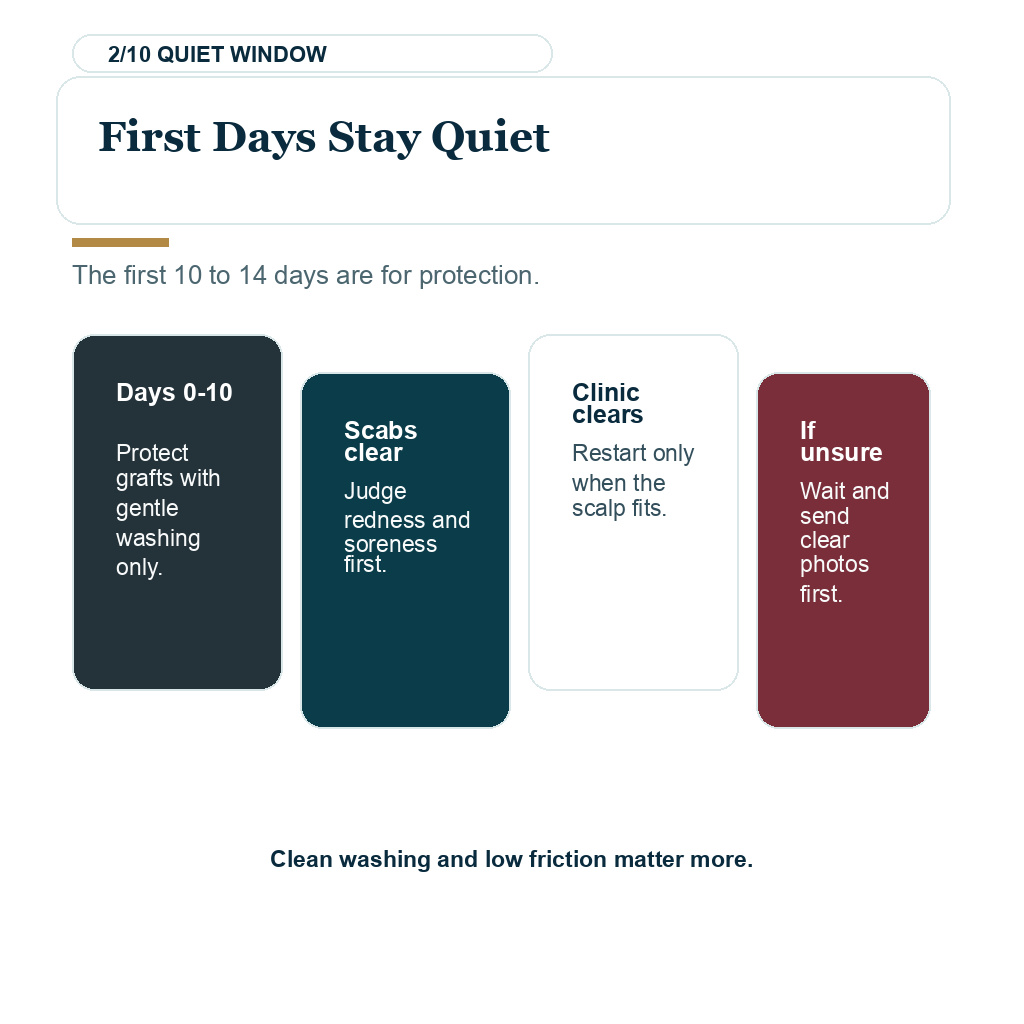
Keep copper peptide serum away from a fresh hair transplant simply because it sounds like a growth booster. In the first 10 to 14 days, the priority is closed skin, clean washing, and avoiding unnecessary product experiments. The promise on the label should not outrank the healing stage.
After the skin has closed and the scalp looks quiet on review, a topical serum may be discussed as an optional scalp product. It should not replace medication planning, donor management, or follow-up, and injections are a separate medical decision.
The same timing logic applies to other optional topicals, including topical metformin after FUE donor scar claims. Donor skin should be closed and reviewed before a cosmetic or experimental product is added.
I understand why people become interested in these products. After surgery, every graft feels valuable. A bottle that promises thicker hair, faster healing, or better growth can sound harmless. Early recovery is not the time to test unclear ingredients, very strong formulas, alcohol based products, fragrance, acids, or roller kits.
Recovery can make product claims feel tempting
Most people who ask about these products are not trying to be careless. They are trying to avoid wasting the surgery. They have paid for treatment, waited through swelling and scabs, and may already be worried about shedding. In that emotional state, a label that says copper peptide, growth factor support, or scalp recovery can feel like an extra layer of security.
The language around these products often mixes skin healing, collagen, hair growth, and skin aging claims. Those topics are not identical. A product that may improve skin feel has not proved that it improves a transplant result. A product that looks scientific is not the same as a surgical plan. The same confusion appears with mesotherapy kits after transplant surgery, where the word can mean injections, topical serum, or roller use at home.
Online growth stories often leave out the rest of the routine. In a healing scalp, the safer question is whether this exact formula belongs in your written aftercare at all. Send the ingredient label rather than the marketing name, especially if the formula includes acids, fragrance, alcohol, microneedling claims, or language that sounds like injections.
A healing transplant should not become a laboratory for every product trend. A simple first recovery period is more useful than adding a new variable every few days and then not knowing what caused redness, itching, shedding, or irritation.
Are topical serums and injections the same decision?
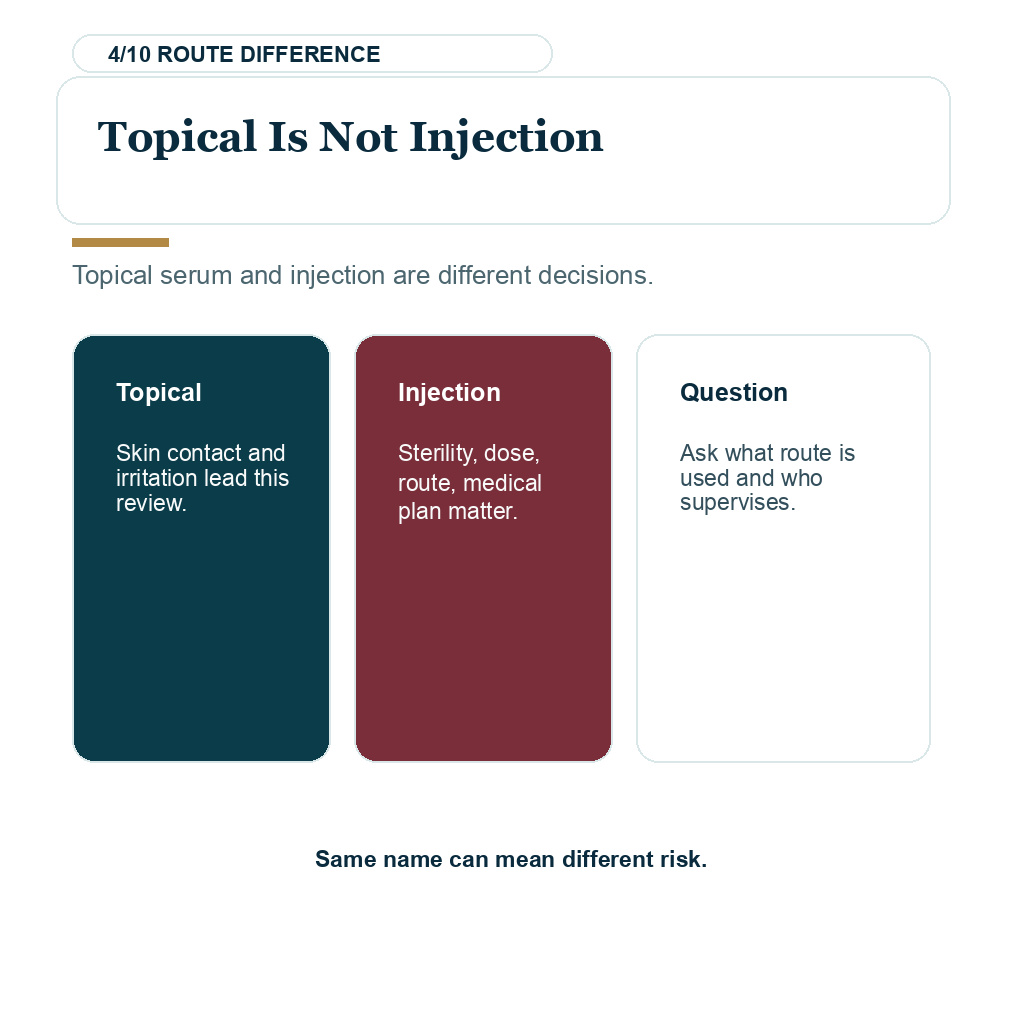
A topical copper peptide serum is applied to the skin surface. An injection places a product under the skin or into tissue. Those are completely different risk categories. You may see both discussed under the same copper peptide name, but the route, dose, sterility, medical supervision, and possible complications are not the same.
I separate topical scalp products from injectable peptide protocols. If you are considering injectable peptide protocols, that belongs with the broader medical discussion about recovery peptide claims. It should not be treated like a routine product upgrade after a transplant.
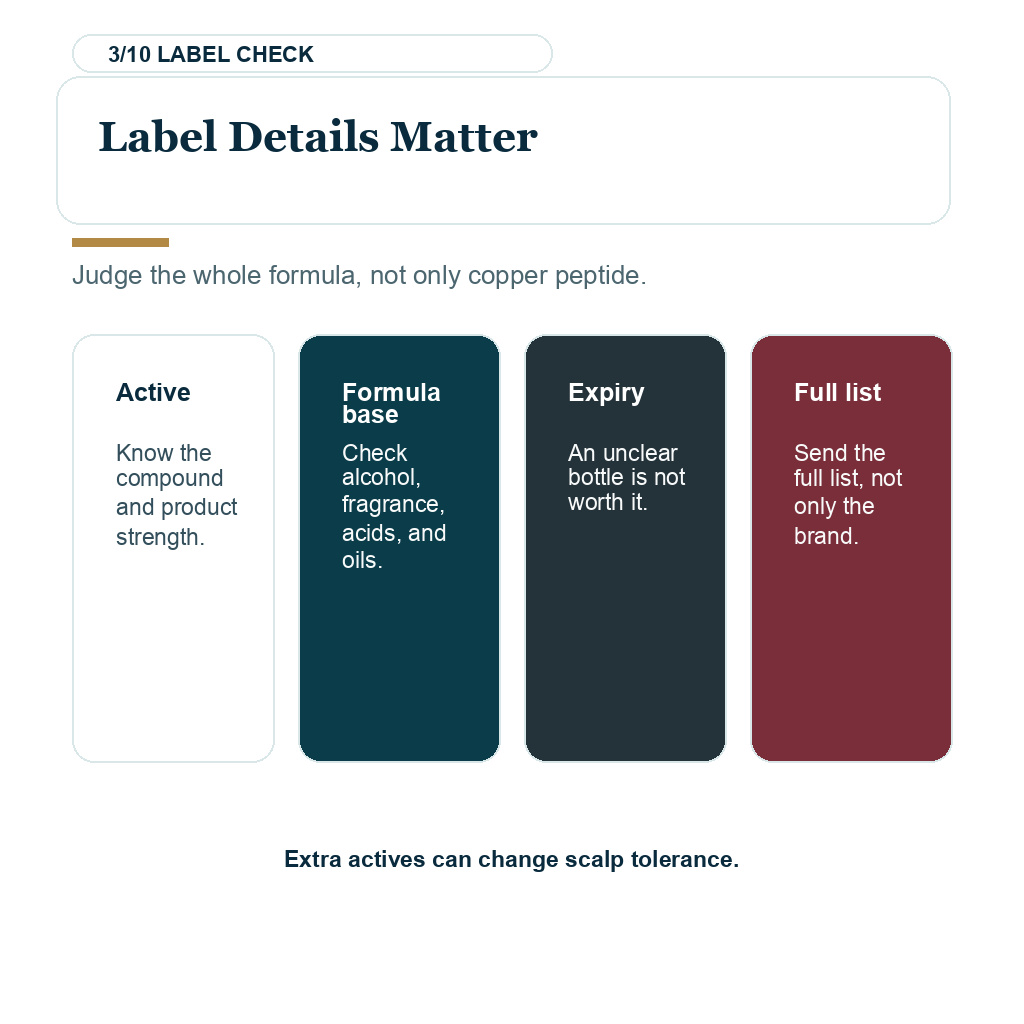
Topical formulas still need judgment. Judge the whole formula, not only the copper peptide name. Some contain alcohol, fragrance, acids, preservatives, minoxidil, saw palmetto, caffeine, salicylic acid, or other ingredients. A scalp that is dry, crusted, pink, tender, or recently washed after surgery may react differently from normal skin. Also separate the area before deciding. A healed donor area, an untouched native hair area, and the grafted recipient area are not the same skin problem. The recipient area gets the most conservative rule because it carries the new grafts and is easiest to irritate early. If a serum is only one part of a longer routine, too many treatments after FUE can blur which ingredient caused irritation.
Send the full label photo, not only the product name. The ingredient that irritates the scalp may be something added to make the serum smell, spread, or feel stronger.
Keep the recipient area quiet early on
The recipient area should be left alone during the earliest healing period unless that product is part of the written hair transplant aftercare. For most people, the first 10 to 14 days are not the time for copper peptide serum, growth drops, oils, styling products, or experimental scalp routines. A spray provided by the clinic after surgery is not the same decision as a cosmetic serum bought by the patient.
The grafted area has thousands of small channels that need to close. Even if the grafts are becoming more secure, the surface skin can still be reactive. Applying a new formula too early can add friction, moisture, stinging, contact irritation, or confusion when you later send photos for review.
A serum should not be used as a scab remover, scab softener, or washing substitute unless your clinic specifically told you to use that product. Scabs should be managed through the washing protocol, not by testing a growth product because the scalp looks dry. If crusts are heavy, painful, wet, or attached to irritated skin, send photos before adding anything.
Waiting before applying a new serum protects the healing scalp and keeps follow up photos easier to judge.
Did one early serum application damage the grafts?
If you already applied copper peptide serum to the recipient area before the scalp was ready, stop using it and do not try to correct the mistake by scrubbing, exfoliating, needling, or repeatedly washing the area. Send the clinic clear photos, the exact product name, the full ingredient list, when you applied it, how much you used, and whether there is burning, swelling, itching, pus, fresh bleeding, or increasing redness.
One accidental application does not necessarily mean graft damage, but the reaction and repetition matter. A small one time exposure on a settled scalp is different from repeated use on fragile skin, or from a stinging, wet, swollen, or rash pattern. Remove the extra variable, return to the clinic’s written washing instructions, and let the clinical team say whether direct review is needed. Contact the clinic urgently if redness spreads, warmth or pain increases, pus appears, swelling spreads beyond the expected pattern, or fever develops.
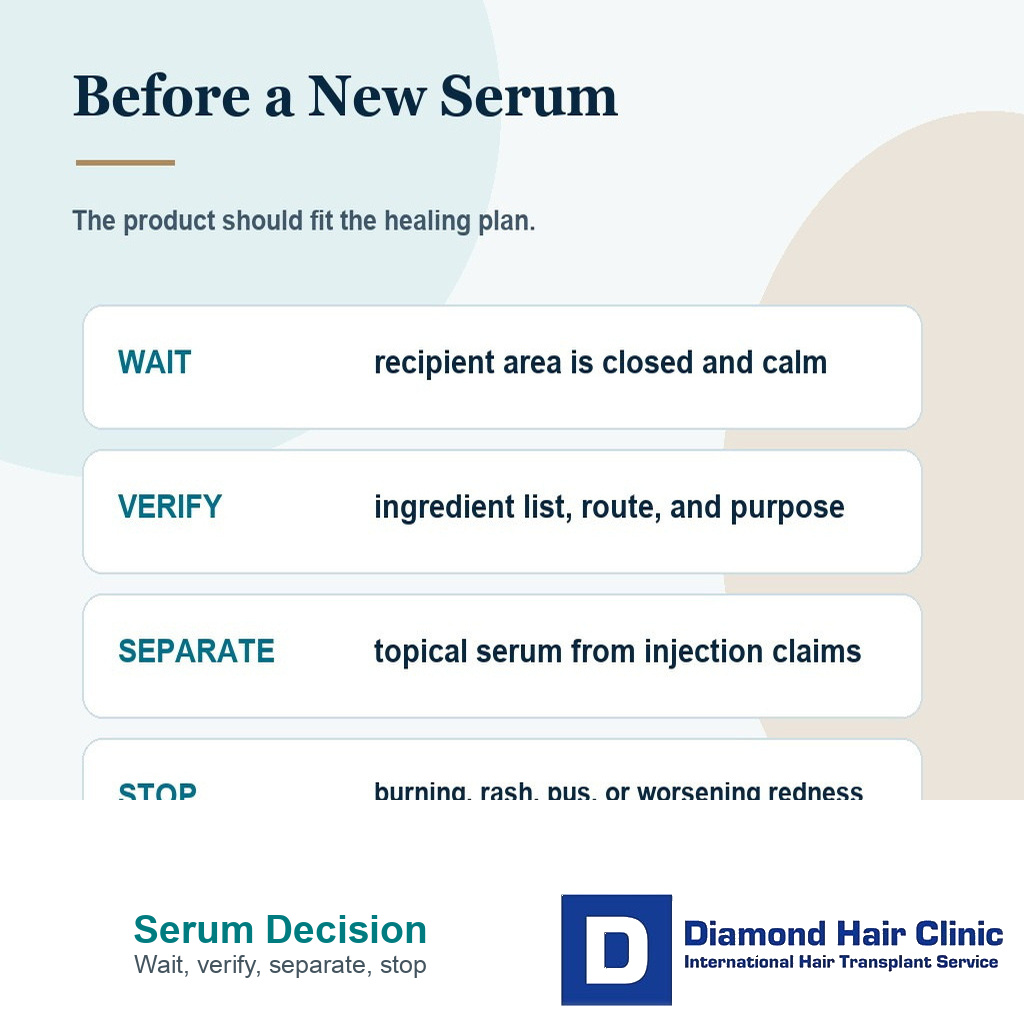
The ingredient name is only one part of the decision. Timing, route, scalp condition, and irritation signs matter.
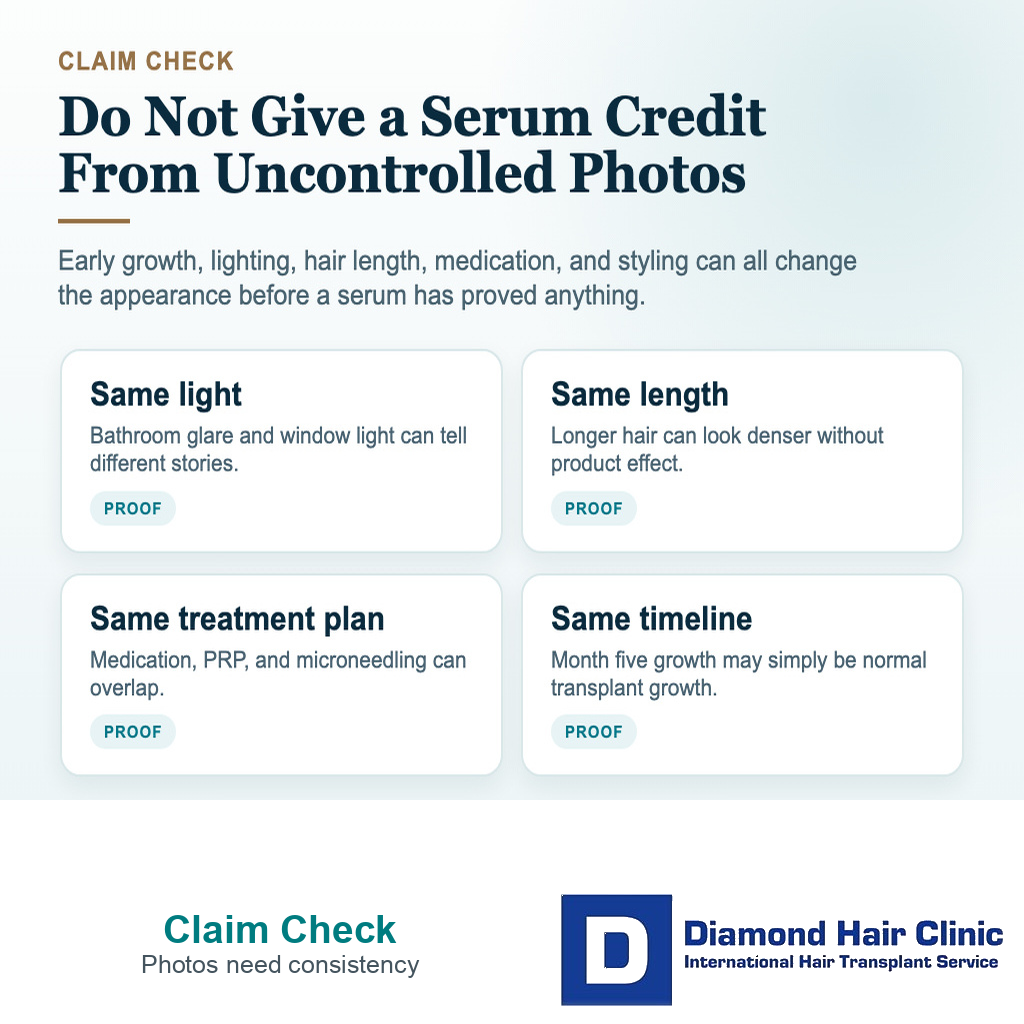
Check the full formula before it touches the scalp
Before you buy, clarify what the product is supposed to do and whether the claim is realistic. Before it touches the transplanted area, confirm the active ingredient, concentration, full ingredient list, base, expiry date, storage instructions, and whether the product is intended for broken or recently operated skin. Use the full ingredient list or product insert, not only a front label phrase such as copper peptide or repair complex. A promise that it supports growth is not enough.
I pay attention to alcohol based formulas, fragrance, acids, exfoliants, strong preservatives, unknown compounded mixtures, and products that tell the patient to apply immediately after needling. Those details can change the risk. The useful decision is whether that specific bottle is appropriate for that specific scalp at that specific time.
If the product has artificial looking reviews, dramatic before and after images, countdown timers, vague doctor images, or no clear medical information, slow down. A transplant patient is already emotionally invested. Marketing can exploit that urgency.
Can copper peptides replace minoxidil or finasteride?
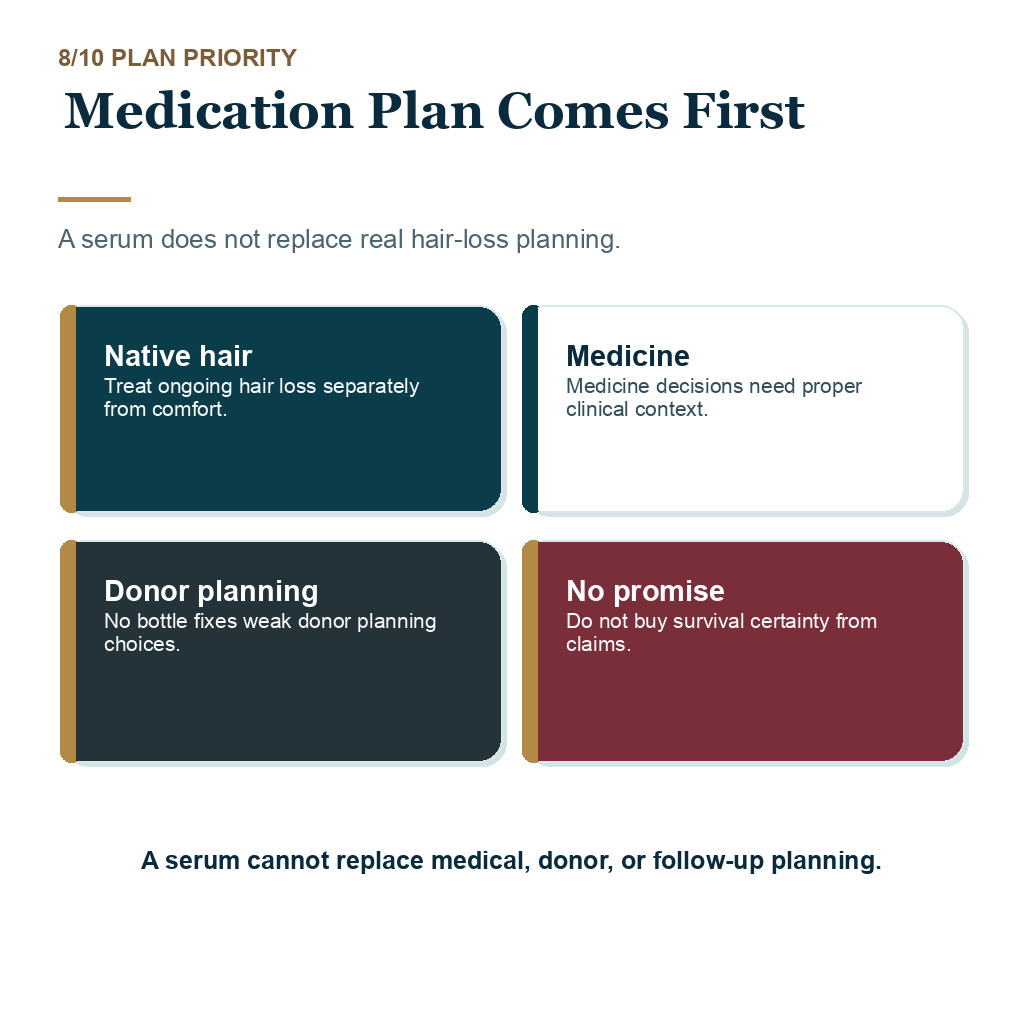
Copper peptide serum should not be treated as a replacement for medication planning when the patient still has vulnerable native hair. If minoxidil or finasteride is relevant, the decision should be made from hair loss pattern, tolerance, side effects, fertility plans, age, and future thinning risk.
A topical serum may make the scalp feel better in some patients. It may also do nothing meaningful for hair growth. That is different from the transplant decision. Transplanted grafts depend on surgical handling, recipient area planning, blood supply, healing, and time. Native hair depends on the ongoing biology of hair loss. Minoxidil after hair transplant can support surrounding hair in selected patients, while hair transplant without finasteride needs a separate risk discussion. The decision cannot be reduced to one product.
A serum is not a donor management strategy. It cannot correct an overly low hairline, overharvesting, poor graft handling, or a weak long term plan. If the surgical plan is wrong, no bottle fixes the foundation.
If the scalp is red, itchy, crusted, or pimply, review it first
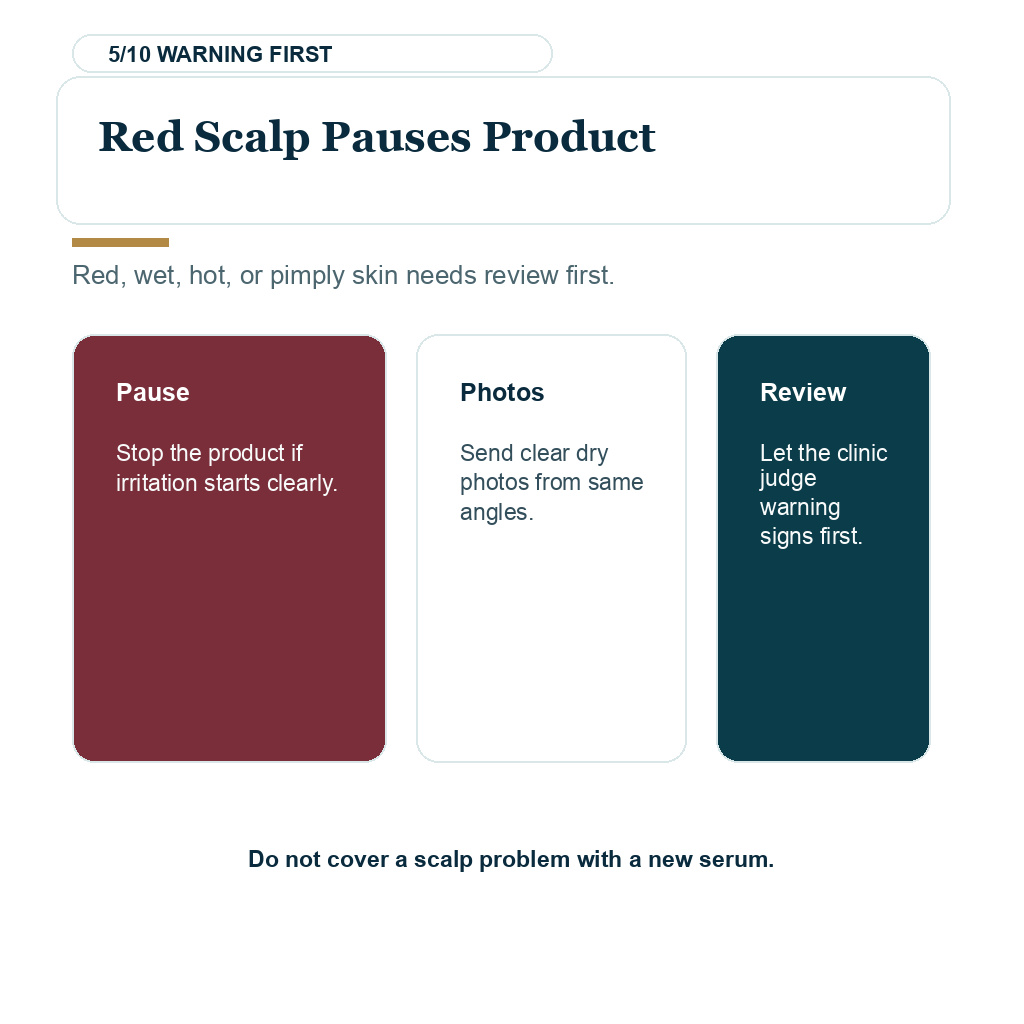
If the scalp is red, itchy, crusted, pimply, painful, wet, or hot, do not add copper peptide serum to see whether it helps. First decide whether the scalp is healing normally or showing a warning sign. The difference matters because irritation, folliculitis, infection, contact dermatitis, and ordinary crusting need different responses.
When the scalp has redness, scabs, or pimples after hair transplant, the first step is to understand the skin problem before adding another product. If the problem looks more like inflamed bumps or pus around hairs, review folliculitis after hair transplant and contact the clinic with clear photos.
A new symptom needs review before another product is added. A serum can make the photo look shinier, stickier, or more inflamed. It can also make it harder to know whether a symptom came from healing or from the bottle.
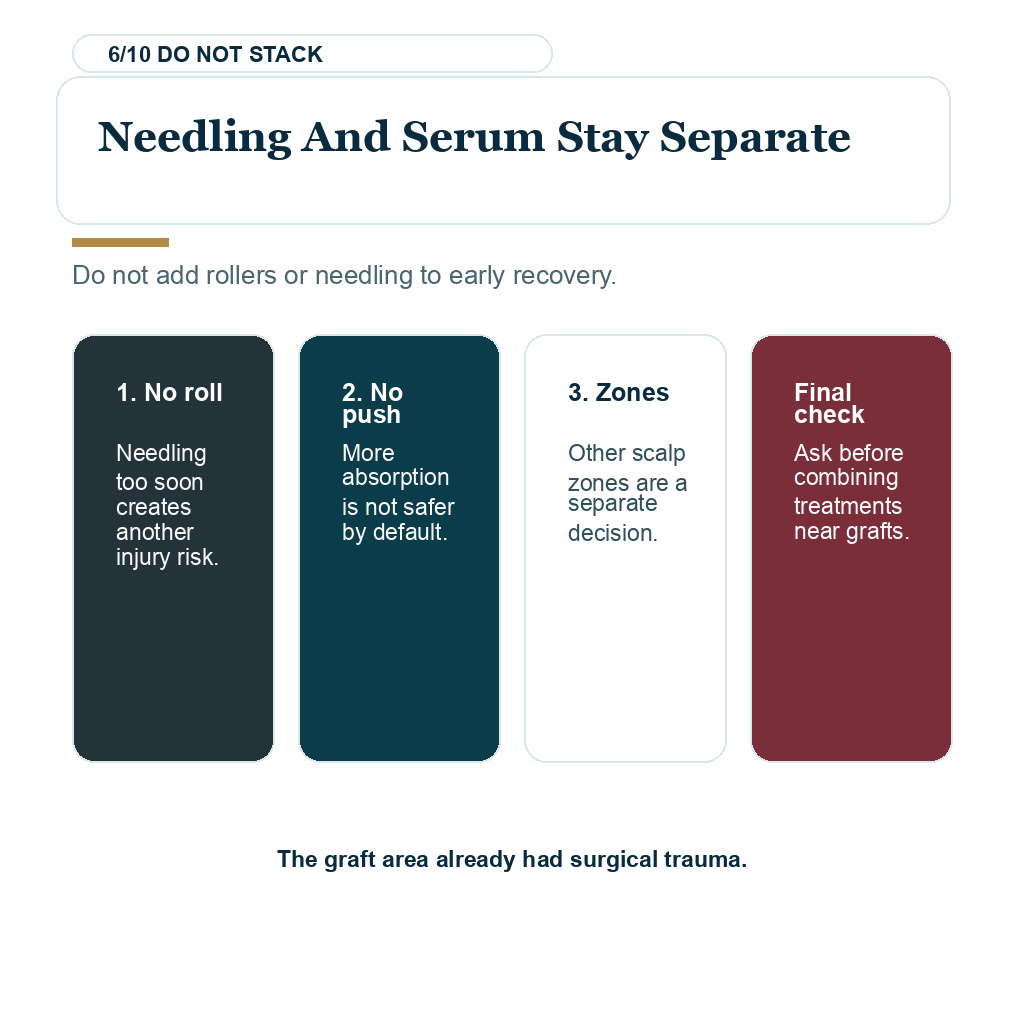
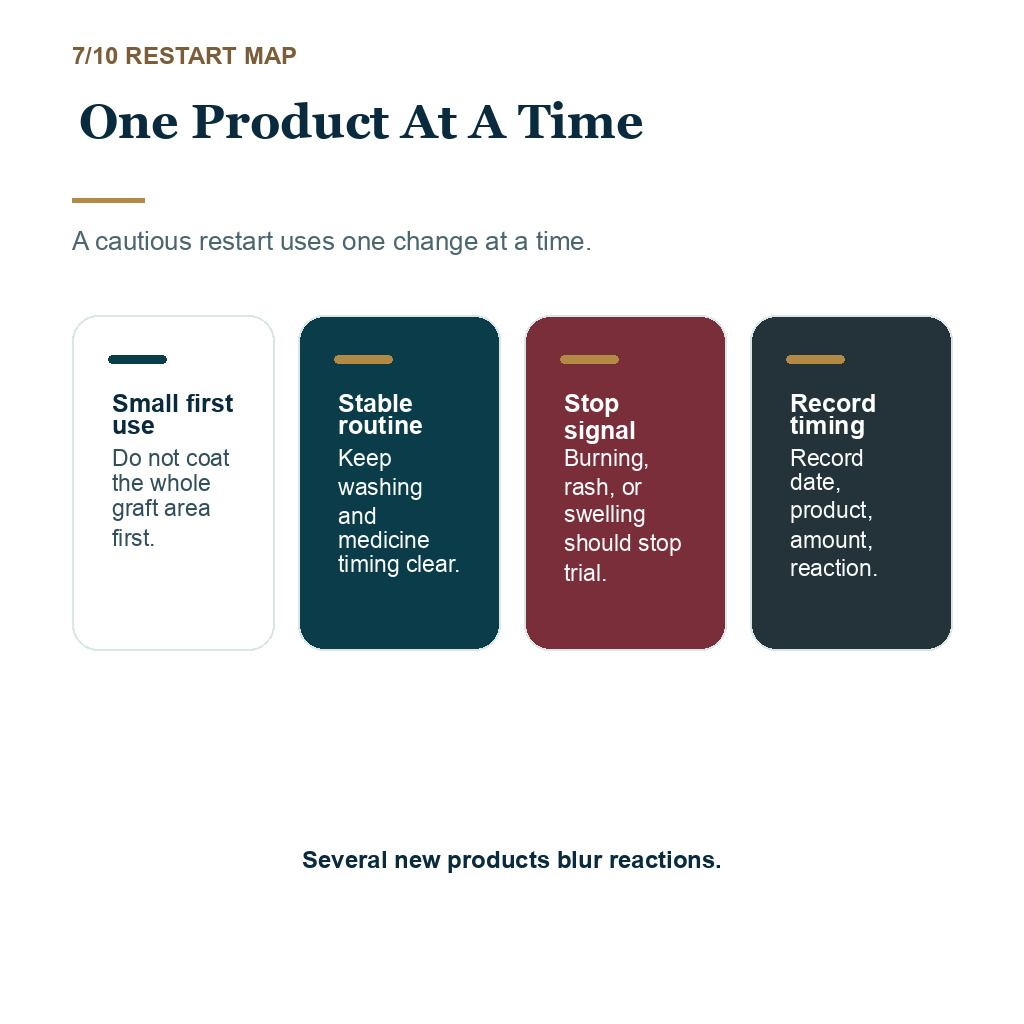
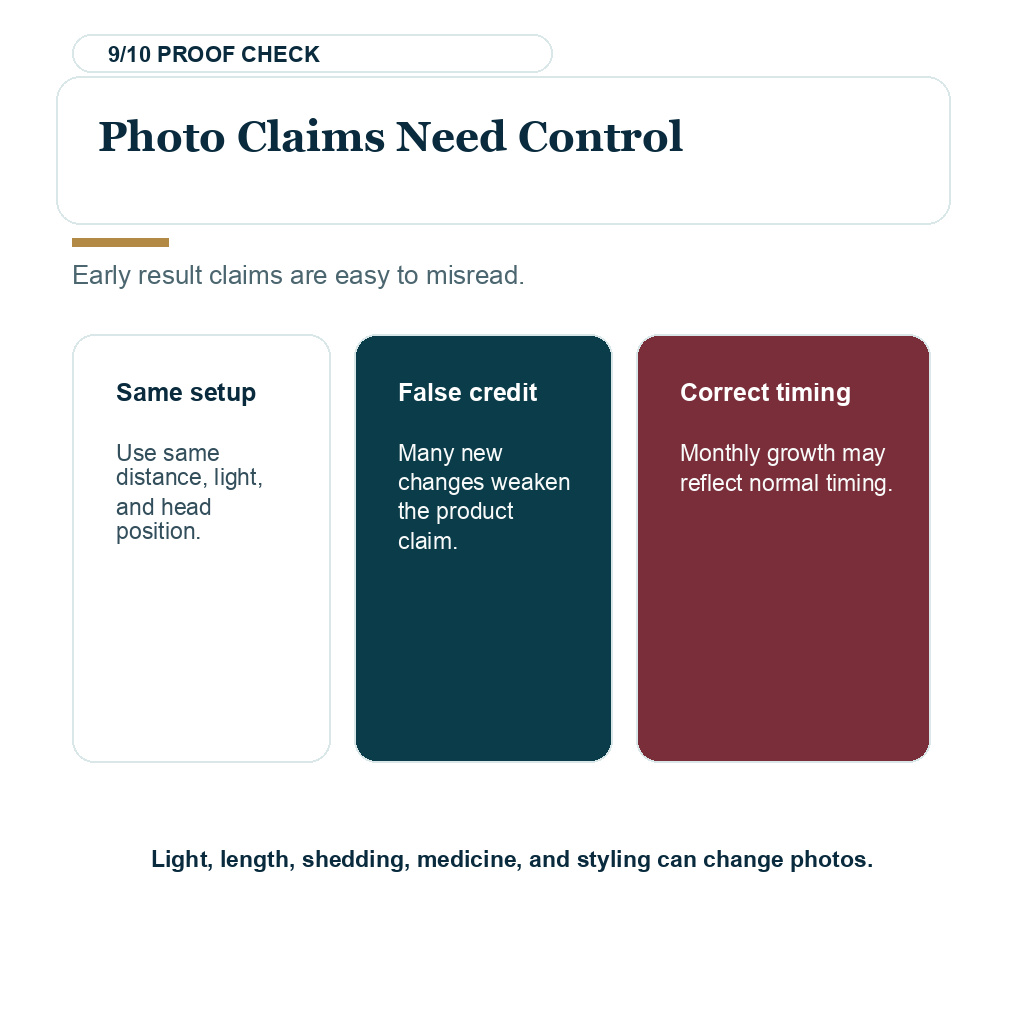
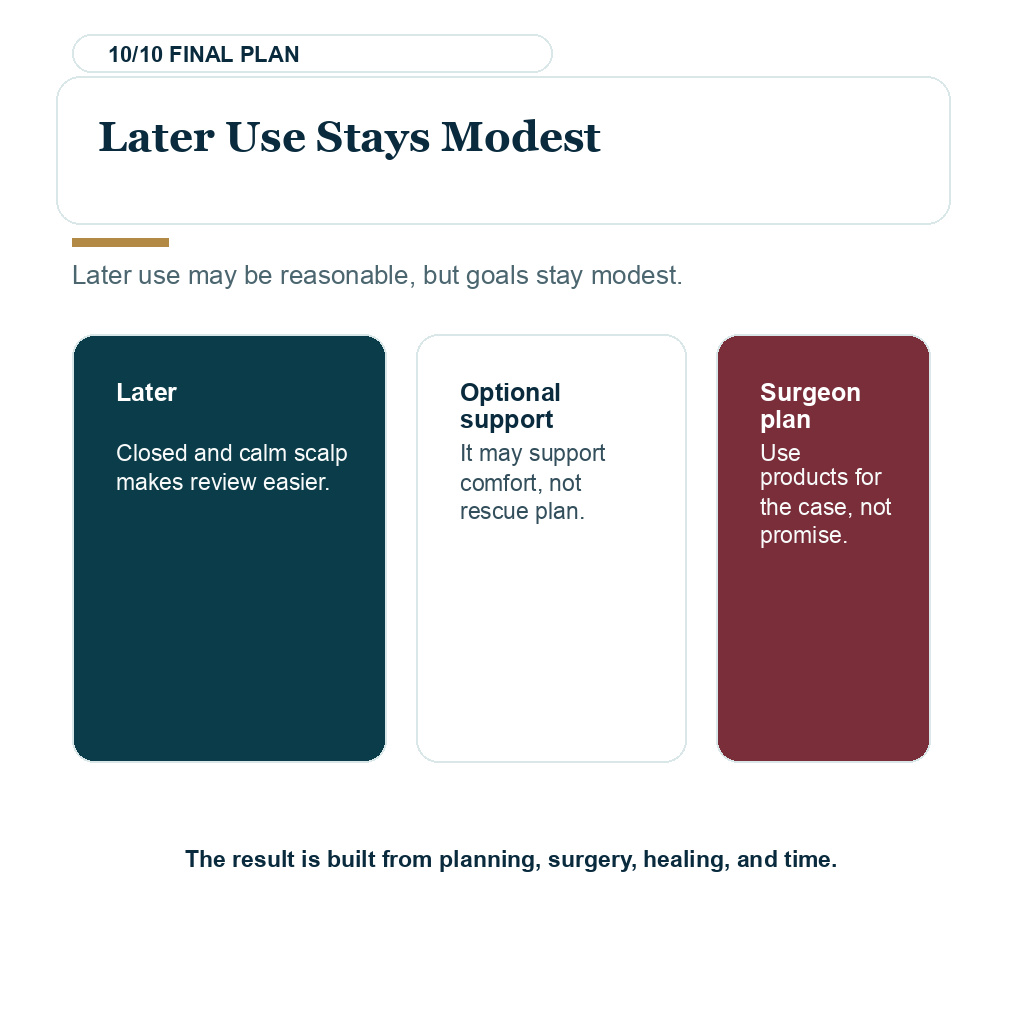
The serum timing review carousel below keeps the main decision points together. It separates skin closure, the quiet first 10 to 14 days, label review, topical versus injection routes, redness warnings, microneedling separation, cautious restart, medication planning, photo claims, and realistic later use. Move through it one step at a time when comparing products.
Keep microneedling, rollers, and serums separate during recovery
Copper peptide discussions often appear together with microneedling, derma rollers, and absorption advice. That combination can create trouble. The transplanted recipient area has already been injured in a controlled surgical way. Adding needles or rollers too soon is a second injury, not a stronger recovery plan. A home roller can drag crusts, introduce bacteria, or reopen irritated skin, and serum over freshly needled skin is a different exposure from serum on settled skin.
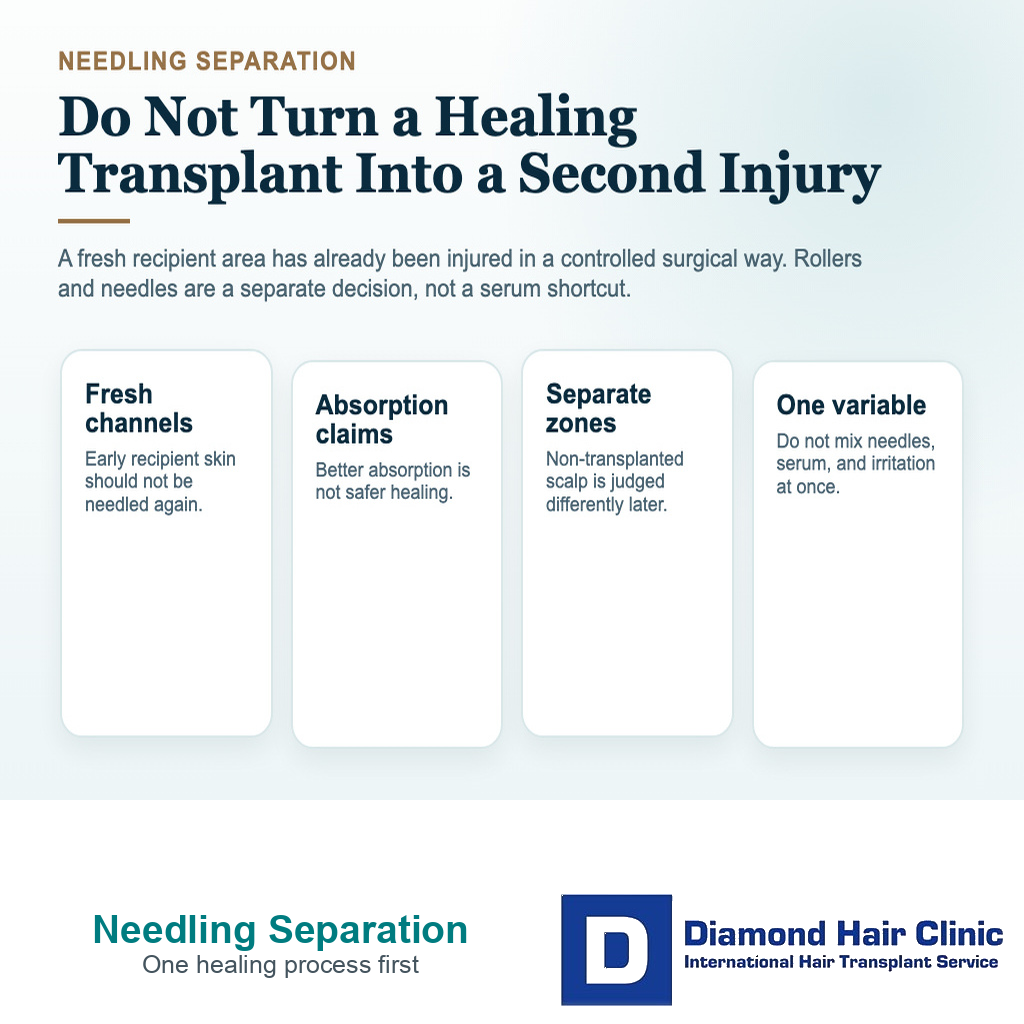
Needling the transplanted recipient area in the early months and then adding a serum is not a shortcut to better healing. Microneedling after hair transplant needs conservative timing, especially in the grafted zone.
If a non transplanted area is being treated later, that is a separate decision. The clinic should know the needle depth, frequency, product, timing, and whether the scalp is inflamed. Combining several active treatments makes it difficult to separate benefit from irritation.
Ask what the product is meant to do before paying
Clarify what the product is supposed to do, what evidence supports that purpose, when it can touch the recipient area, whether it is topical or injectable, who supervises it, and whether the transplant plan remains sound without it. If the product is being sold as essential, ask why it is essential rather than optional.
PRP or exosomes after hair transplant and broader stem cell add ons need the same separation from the main operation. The transplant plan has to come first. Add ons should never distract from diagnosis, hairline design, donor limits, graft handling, and realistic growth timelines.
A clear clinic can explain the product in plain language. It can also say no, wait, or skip it. Those answers may protect the patient more than a paid bottle.
Do early improvement claims prove the serum worked?
Early improvement claims after a transplant are hard to judge because many things are changing at once. Shedding can slow or speed up. Hair shafts can look thicker when styling changes. Lighting, wet hair, fibers, longer hair length, minoxidil, finasteride, oral minoxidil, PRP, microneedling, and normal transplant growth can all overlap.
If a patient starts copper peptide serum at month three and the hair looks better at month five, the serum may not be the cause. Month five can be the beginning of visible transplant growth for some patients. If the patient also changed medication, shampoo, styling, hair length, or lighting, the interpretation becomes even weaker.
Photographs should be consistent before a product gets credit. Use the same angle, distance, lighting, hair length, and dryness. If the scalp is compared under harsh bathroom light one day and soft window light the next, the conclusion may be about photography, not biology.
When can a copper peptide serum be reasonable?
Later use may be reasonable only when the scalp is closed, settled, not infected, not actively crusted, and the product has a clear ingredient list. Introduce one change at a time so irritation is easier to notice. For a first trial, do not coat the whole recipient area on day one. A small test area on intact, less sensitive scalp and a 24 to 48 hour watch period is more cautious than treating the grafted zone at once. It should stay away from broken skin, early scabs, and any area the clinic is still reviewing closely.
Keep the expectation modest. A topical serum may be part of scalp support for a selected patient. It should not be sold as a graft survival guarantee or a replacement for medical diagnosis. If a patient reacts with burning, rash, swelling, worsening itching, pus, or increased redness, the product should be stopped and the clinic should review the area.
Patients who are also using prescription or clinic recommended treatments need a written plan. Do not restart copper peptide serum, minoxidil, a new shampoo, and a new itch relief product on the same day unless the clinic has asked for that combination. Mixing products without a plan creates the same problem as mixing instructions from several clinics. Nobody knows which variable matters.
Scalp condition matters more than product claims
In consultation, I start with the scalp, not the bottle. The transplant and donor areas need to be healed and calm, without folliculitis, dermatitis, allergy signs, infection risk, or unresolved crusting. I also separate the purpose. The patient may be trying to support native hair, soothe the skin, or rescue a result that is still too early to judge.

Read this review excerpt
told me the quality of my donor hair and what he could take out and advised me what will the be best outcome with what donor hair I had.
For scalp comfort, the plan should be gentle and should not disturb healing. For native hair preservation, medication deserves a proper discussion. For anxiety, a product may only create more checking and more worry. The patient may need clearer follow up, not another serum.
Wait until the scalp is settled, confirm what is in the product, avoid injections or rollers unless medically supervised, and never let a copper peptide promise replace surgical judgment. A hair transplant result is built from planning, execution, healing, and time. Optional products should serve that plan, not take control of it.