


Research Topicals Need a Careful Restart Plan
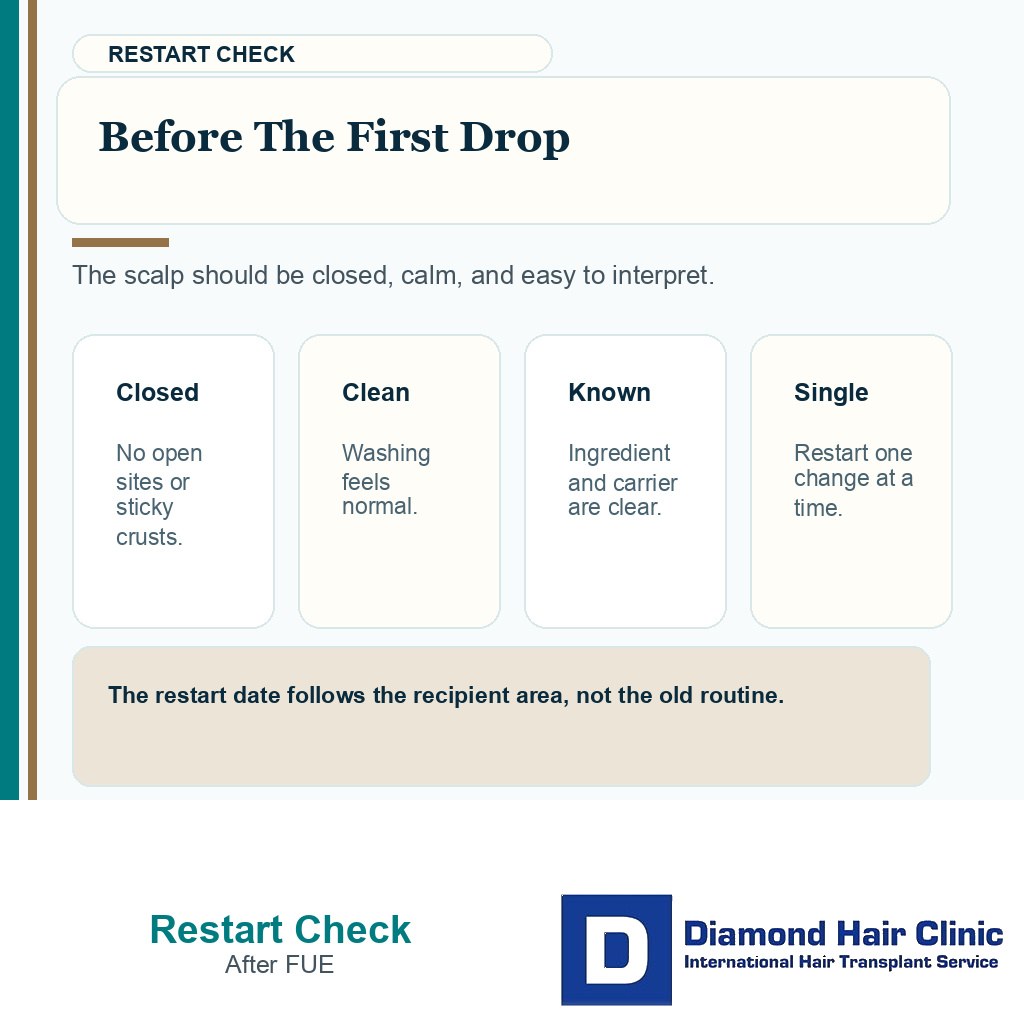
If you use RU58841, pyrilutamide, or another online research topical, do not put it on a fresh recipient area just because it belonged to your routine before surgery. After FUE, the recipient scalp needs time to close, clear crusts, tolerate normal washing, and settle before any optional topical is restarted. The exact date depends on the product, carrier, dose, scalp reaction, and healing speed.
I am not judging a patient for trying a treatment. I am trying to protect the graft environment while the scalp is healing and make sure that redness, itching, shedding, or dermatitis are not blamed on the transplant when a topical product is the real trigger.
Research topicals are not the same as a simple shampoo
Many patients talk about research topicals as if they are just another bottle on the bathroom shelf. In a hair transplant plan, I treat them differently. A product such as RU58841 or pyrilutamide may be used with uncertain sourcing, uncertain concentration, solvent carriers, added penetration enhancers, or other ingredients that are not obvious from the front label. Keep the bottle, ingredient list, and strength available, because the name alone may not show the carrier or dose.
A success story from another routine does not identify your bottle, carrier, dose, or scalp timing. Keep the product out of the healing area until the clinic can review exactly what it is and where you plan to apply it.
That uncertainty matters after FUE. The recipient area is not just ordinary scalp in the first days. It has thousands of small recipient sites, early crusting, inflammation, and a healing barrier that is still recovering. A liquid that felt harmless on intact scalp before surgery may sting, irritate, dry, or inflame the area after surgery.
Treat research topicals as optional until the surgical scalp is closed, clean, and easy to review. They are not graft survival medicine, and they do not replace clean washing, recovery instructions, donor protection, or a realistic long-term plan.
The first days are for healing, not experimenting
In the earliest phase after FUE, the priority is mechanical protection and clean healing. Patients are usually focused on grafts being dislodged, but chemical irritation can also make recovery harder to read. If a research topical causes burning, redness, flaking, or swelling, the clinic has to separate product irritation from normal healing, infection, allergy, folliculitis, or contact dermatitis.
The first recovery window is not the time to test new products. An old product should not be restarted just because the bottle was already part of the routine. The recipient area has changed. The timing must change with it.
If you want a simple rule, wait until the recipient area is closed, crusts have cleared, washing is normal, and the scalp has been reviewed. If there is still strong redness, soreness, open skin, sticky crusting, or unexplained itching, the restart conversation is premature.
Bring the full product history to the clinic
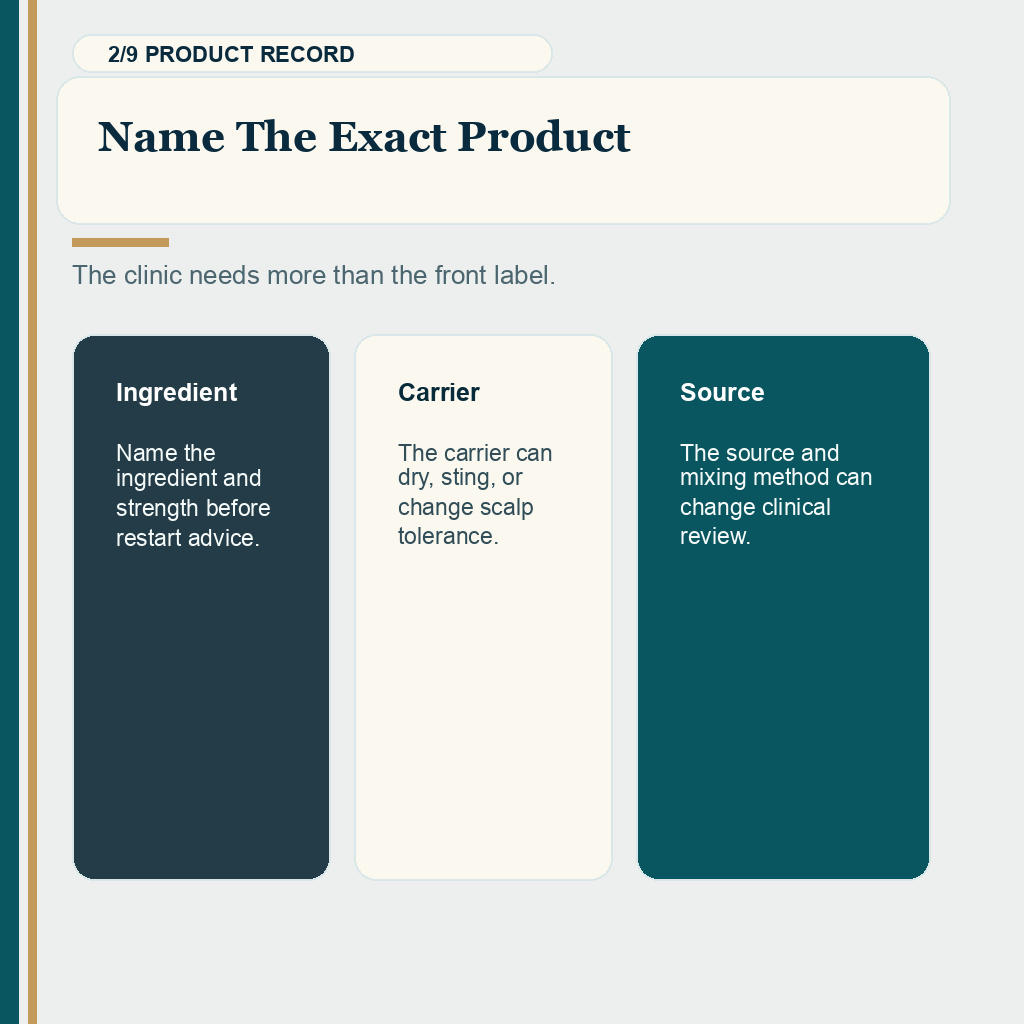
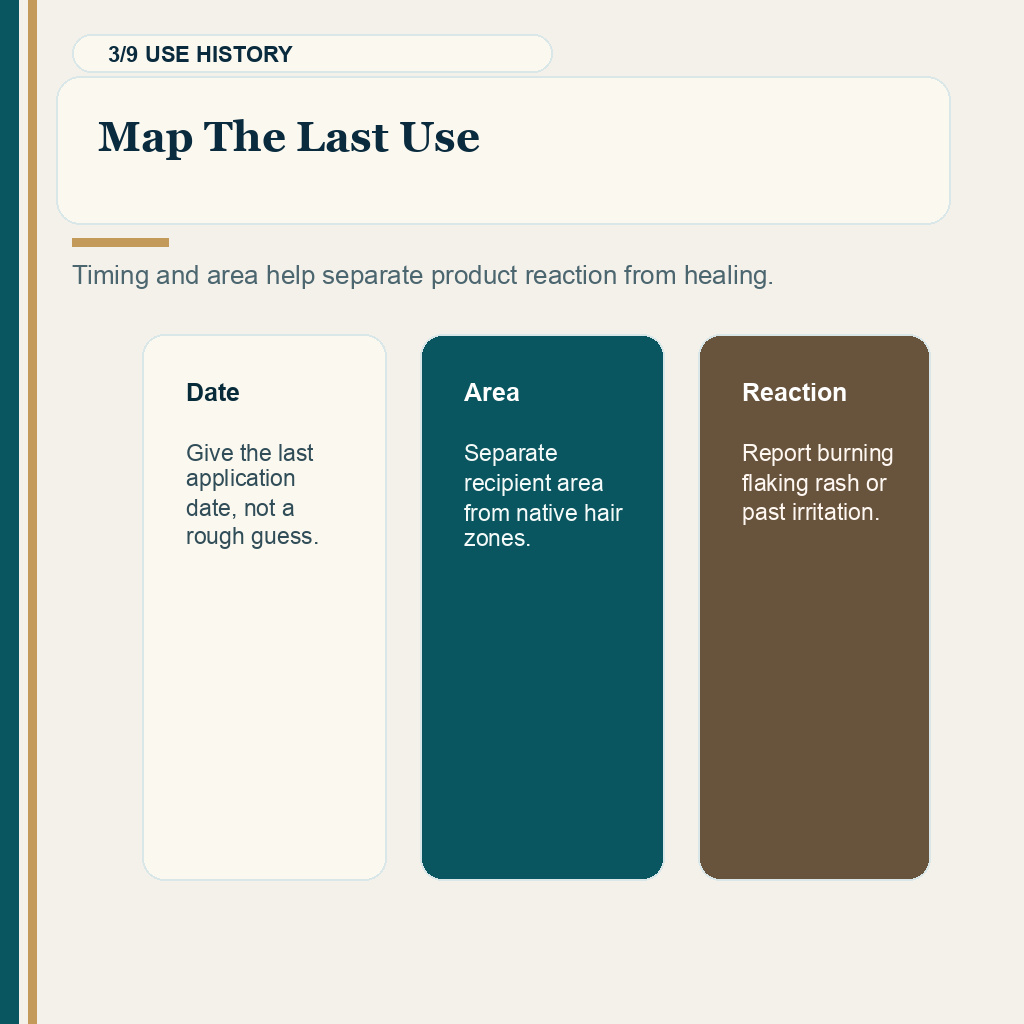
The most useful information is not only the product name. I want to know the active ingredient, concentration, carrier, supplier, start date, last use, application area, frequency, and any reaction you noticed before surgery. If the product was mixed at home, bought from a research chemical seller, or compounded with other ingredients, that should be stated clearly. When two products start together, the clinic may not be able to tell which one caused irritation. Keep an unidentified topical away from healing skin until the product, strength, and carrier are clear.
Before surgery, an online hair loss topical can change how I read your scalp and medical baseline. After surgery, the concern is whether the same product can irritate a healing recipient area or confuse recovery signs.
The exact topical stack needs to be named. Minoxidil, topical finasteride, topical dutasteride, tretinoin, microneedling, peptide serums, caffeine blends, oils, or dandruff shampoos can each affect the picture. One topical can be manageable. A stacked routine can make the clinical picture muddy.
Restart one product at a time
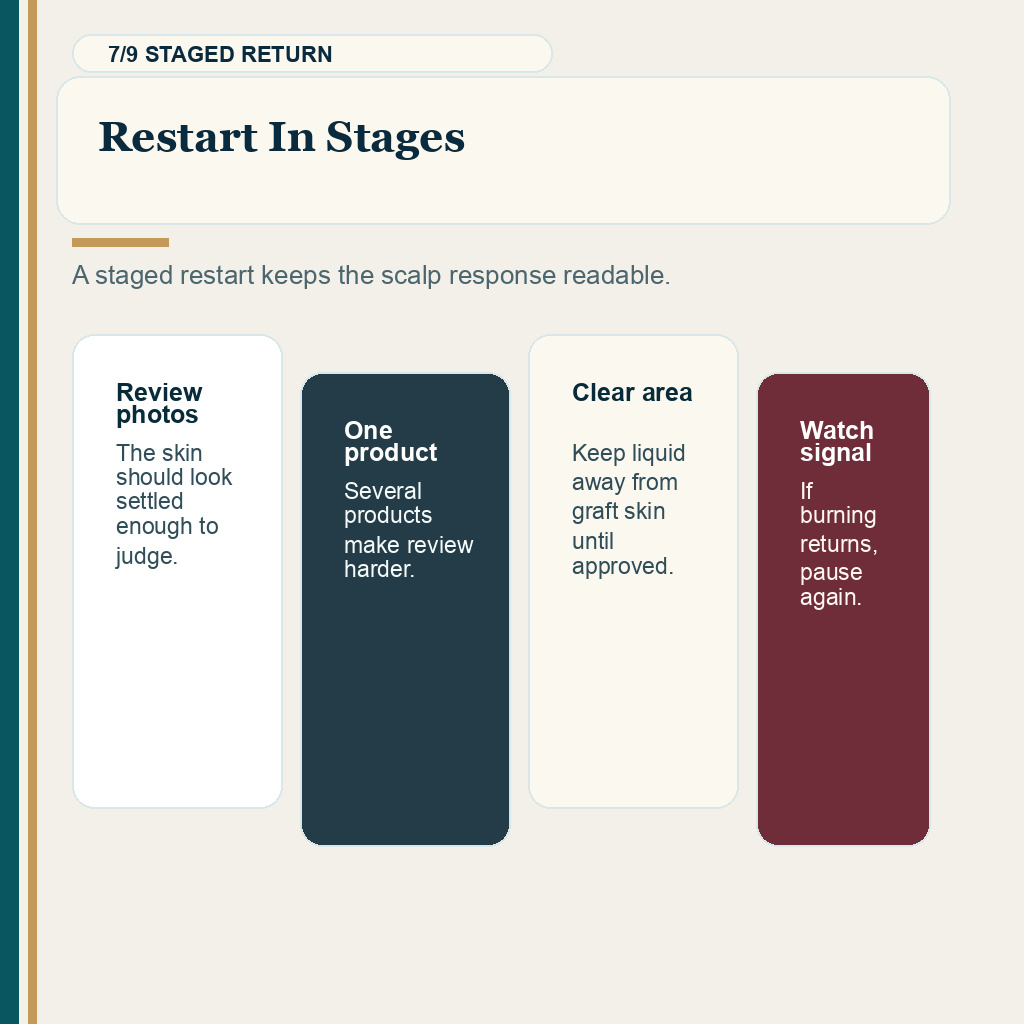
A restart plan works best when it is staged, not all at once. First, I want the scalp examined or reviewed with clear photos. Then restart only the product and area approved by the clinic. Do not add other new products at the same time. Watch for burning, persistent redness, swelling, flaking, rash, dizziness, chest symptoms, or any reaction that feels different from ordinary recovery.
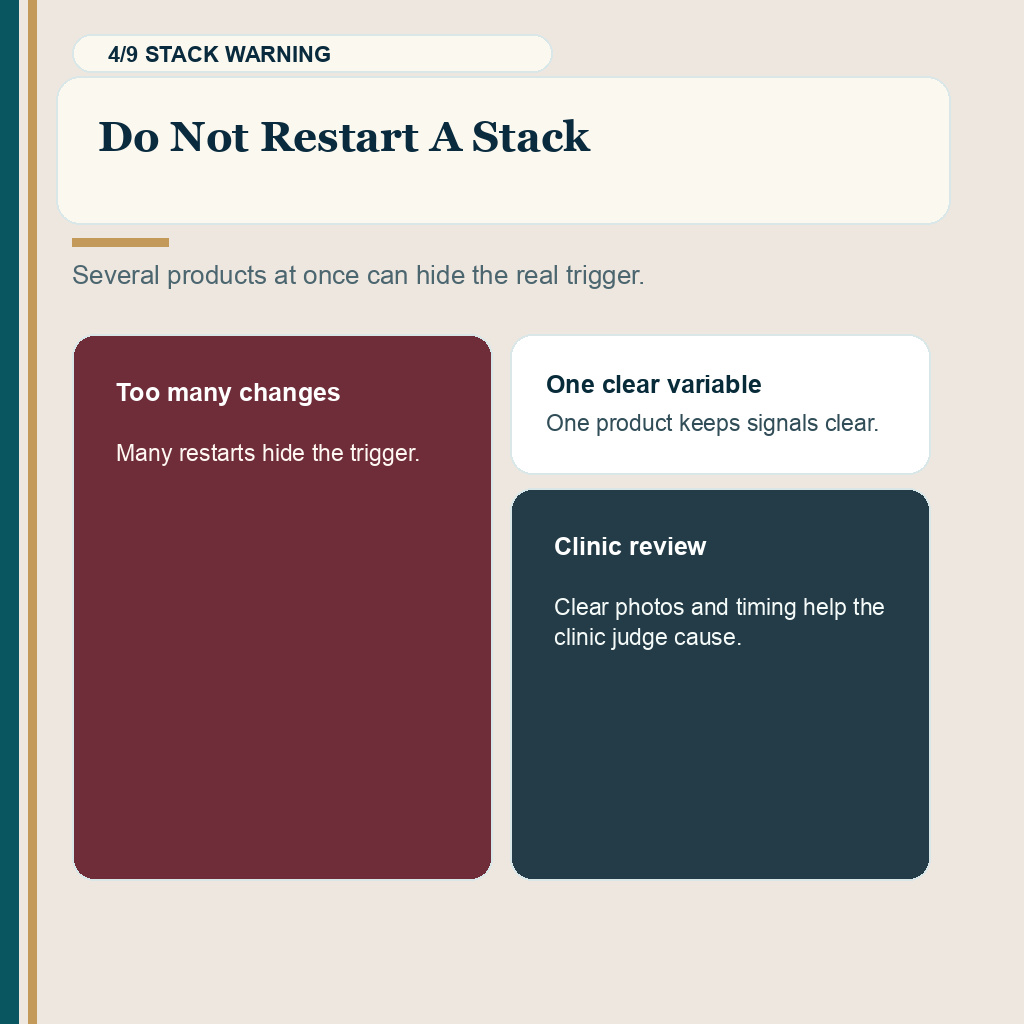
That sequence is slower than many patients want, but it prevents a common problem. If five products are restarted in the same week and the scalp becomes irritated, nobody knows which product caused the reaction. The broad article on too many treatments after FUE explains this larger stacking problem. Here, this point applies more strongly because research topicals often have less predictable sourcing and dosing.
Restart one product at a time. Keep the dose and area conservative unless your doctor gives a different plan. Do not restart microneedling, retinoids, or irritating combinations at the same moment as a research topical.
A recipient area restart proof check
Recipient Area Restart Gate
Should a research topical restart now?
Use this before asking whether to restart. I am checking whether the skin has healed, whether the product is clear, whether the restart is staged, and whether the scalp reacts after the first applications.
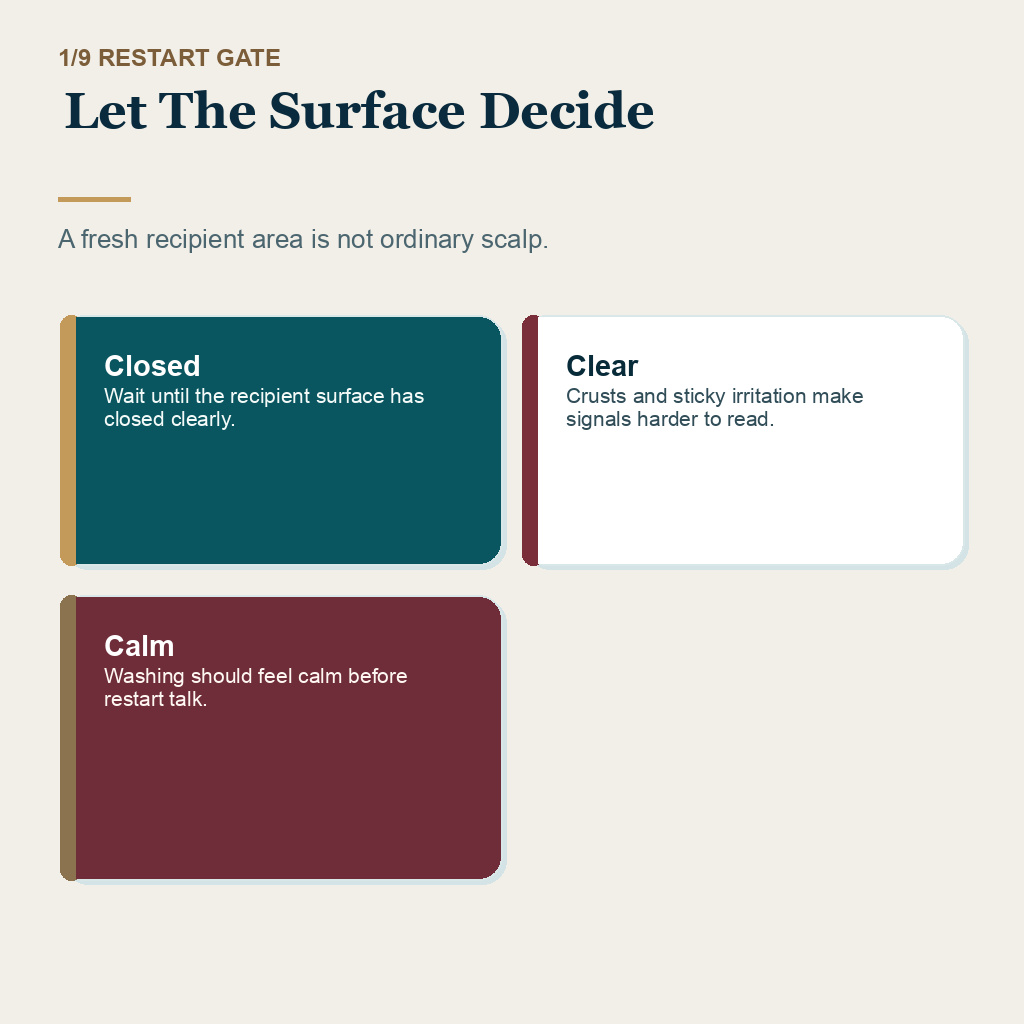
Healing surface comes first
Do not apply RU58841, pyrilutamide, or another research topical onto a fresh recipient area that still has open sites, sticky crusts, bleeding, wet irritation, or strong soreness with washing.
The practical move is to pause, keep the clinic aftercare plan, and ask for a restart date after the scalp surface is calm enough to examine.
Unclear products should not be treated like shampoo
Before I give restart advice, I need the ingredient, concentration, carrier, supplier, frequency, area of use, and last application date. A vague bottle label makes irritation and side effects harder to interpret.
If the product history is unclear, send the details first instead of testing it on healing skin.
A staged restart protects the interpretation
Restarting several topicals, tretinoin, microneedling, minoxidil, topical finasteride, and a research product together can hide the cause of redness, shedding, or burning.
When a restart is allowed, use one change at a time and keep the dose and area conservative unless the doctor gives a different plan.
The scalp response can change the plan
Burning, spreading redness, wetness, dermatitis, increasing itch, or a reaction that repeats after each application should make you stop and ask the clinic to review photos and timing.
Do not use a research topical to chase early shedding anxiety. First separate normal recovery from a product reaction.
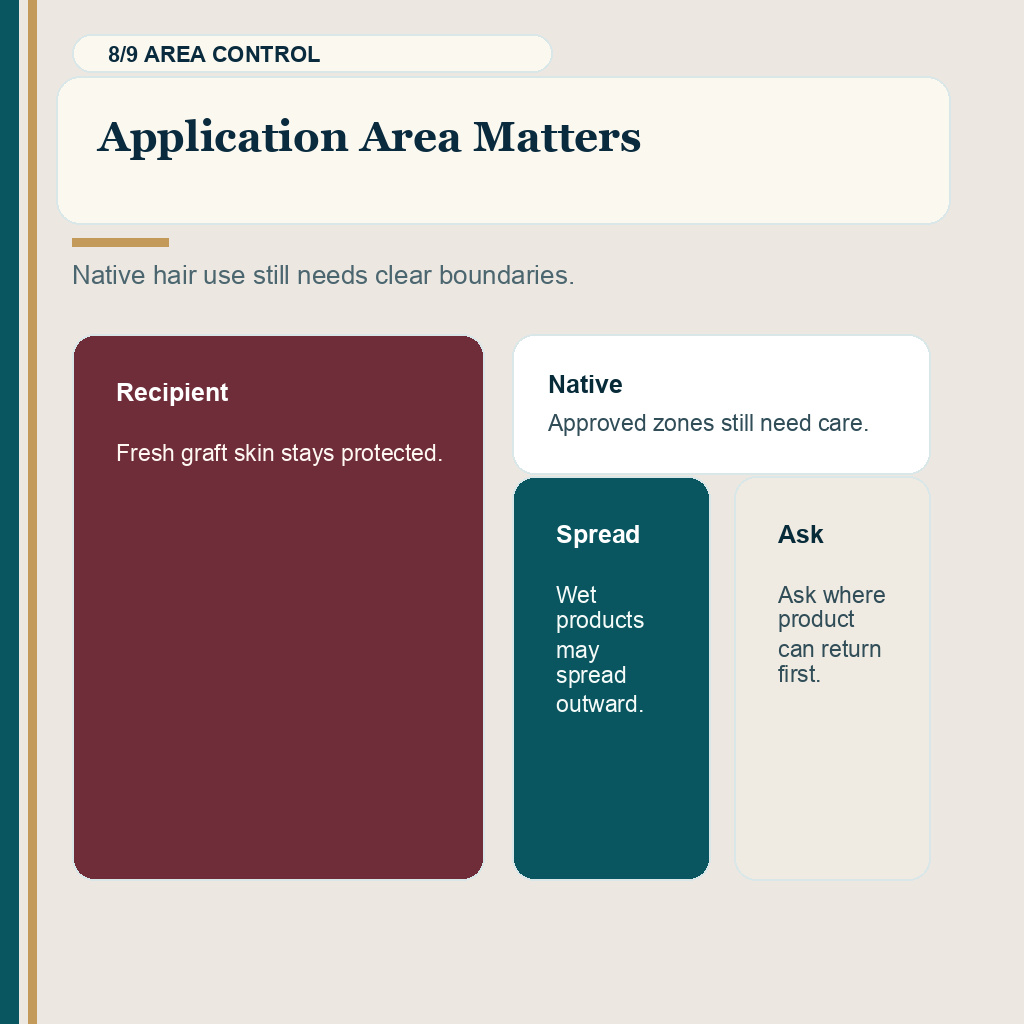
These 9 research topical restart slides show why surface healing, product details, timing, application area, and stop signals should be reviewed before a product returns. Swipe sideways, use the arrows one slide at a time, or choose a number below the image.


Minoxidil and topical finasteride are separate decisions
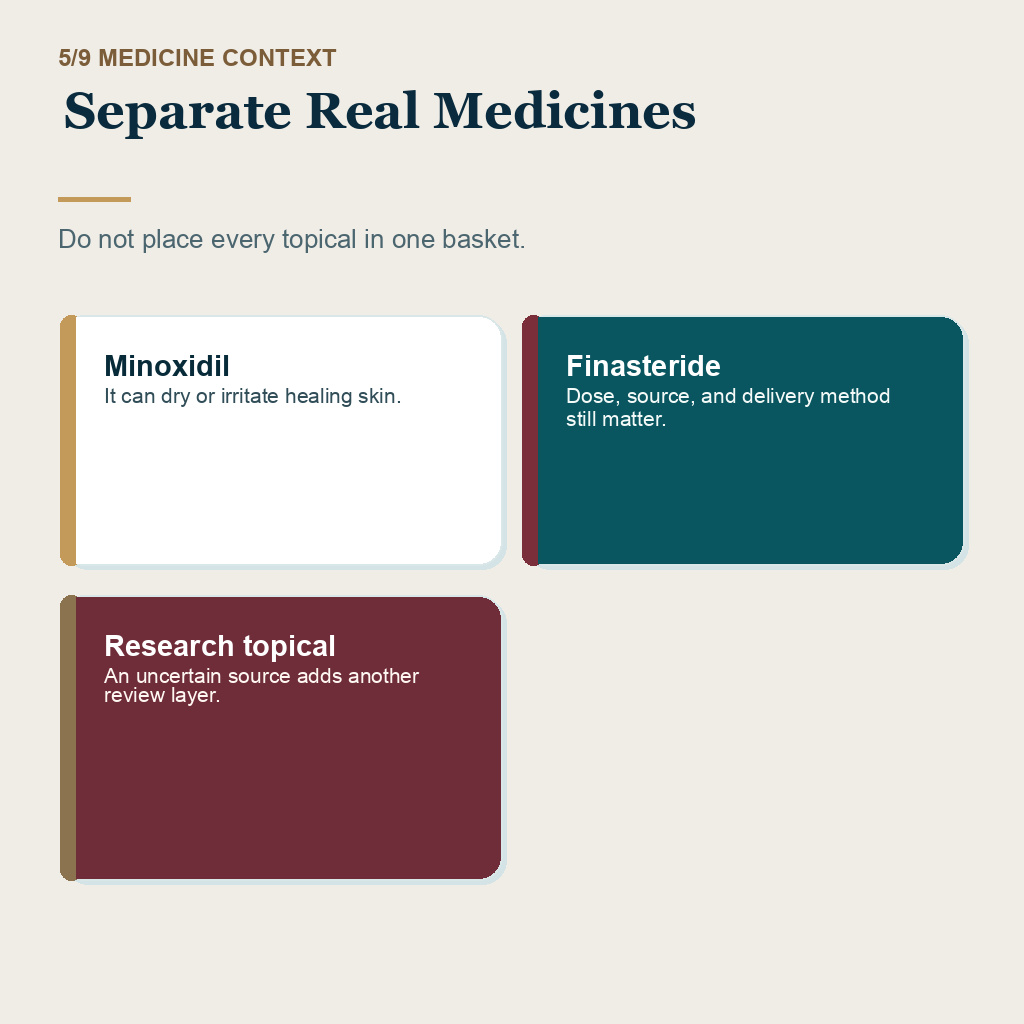
Patients often ask about RU58841 or pyrilutamide in the same sentence as minoxidil or topical finasteride. I separate those decisions. Minoxidil after hair transplant has its own timing because it can irritate the scalp, dry the skin, or create a shed that worries patients during recovery. The restart should wait until the scalp can tolerate it.
Topical finasteride also needs medical context. It is still a medication discussion, not a casual cosmetic product, because topical finasteride around FUE depends on prescription source, dose, exposure concerns, and timing.
Research topicals add another layer because the product may not come through a regulated prescription channel. I do not put all topicals in one basket. I ask what the product is, why it is being used, where it is being applied, and whether the scalp is healed enough to tolerate it.
Normal shedding anxiety is not a reason for a research topical
Early shedding after transplant is emotionally difficult. Patients see transplanted hairs shed and may try to rescue the result with more products. That is usually the wrong mental frame. Normal shedding does not mean the grafts have failed, and a research topical does not guarantee a better graft result.
If the worry is about native hair, the answer may be a long-term medical plan. If the worry is about transplanted hair, the answer is usually patience, photos, and follow-up. If the worry is irritation, the answer may be stopping the product, not adding more.
If shedding is the main fear, separate a treatment related shed from surgical failure anxiety before adding another product. That is this reasoning I use for hair transplant during a minoxidil shed.
Watch the scalp response after restarting
When a topical is restarted, the first week matters. Watch the skin, not only the hair. If burning symptoms after a hair transplant, spreading redness, rash, swelling, heavy flaking, sharp pain, discharge, or warmth appear after the product, report the timing. A mild sensation from a product may not be dangerous, but a healing transplant scalp deserves caution.
Itching can have many causes after FUE. Some itching is part of healing, while some is caused by dryness, crusting, product residue, dermatitis, or infection. With itching after hair transplant, timing is often the clue. Did it start with crusts, dryness, or washing, or did it begin right after the product came back?
Name the product even if it feels embarrassing or experimental. A surgeon can only help if the full timeline is visible.
Application site matters
A common workaround is to apply a topical only to native hair and avoid the recipient area. That may be safer in selected cases, but it still needs clear instructions. Liquids spread. Sweat, pillows, hats, and washing can move residue. If the product is applied close to the transplanted zone, the recipient area may still be exposed.
I also separate frontal hairline, midscalp, crown, donor, and beard donor areas. A product used on the crown may not belong near a newly implanted hairline. A product used on native hair behind the transplanted band should not run forward into fresh recipient sites.
A clear area map is better than a vague restart date. Where, how much, how often, and what to avoid are more useful than a calendar number alone.
Medication review is part of surgical planning
A hair transplant is not planned in isolation from a patient’s routine. Tablets, sprays, gels, oils, hormones, supplements, and research products can all change the risk conversation. When the bigger decision is medication first or surgery now, full disclosure matters before surgery. The same disclosure matters after surgery.
Some patients fear that if they disclose a research topical, the clinic will simply refuse the procedure. My approach is more practical. The real list lets me decide what must stop, what can wait, what needs a prescribing doctor, and what can be restarted later with a clean scalp and a clear reason.
The risky part is not the bottle by itself. The risk is applying an unknown or irritating product to a healing recipient area without telling the team, then trying to interpret every symptom alone.
Restart only when the scalp is quiet
RU58841, pyrilutamide, and other research or online topical products should not become automatic recovery products after FUE. The recipient area needs time to close and calm down, and I need the exact product, how it is mixed, where it will be applied, and what reaction history you have seen.
A safer restart has a clear reason and a clean sequence. Heal first. Review the product. Restart one change at a time. Watch the scalp response. Use the product for a native hair goal, not because normal shedding has made recovery feel frightening.

Read this review excerpt
First wash completed and visual instructions given to my daughter.