


Topical Finasteride Around FUE Needs Medical Context
Do not apply topical finasteride onto fresh grafts in the first days after surgery. It may become reasonable later, usually after the recipient area has closed, irritation has settled, and washing is normal again, but the restart date should come from the team that has seen your scalp.
Topical finasteride can be useful for native hair in androgenetic hair loss, but it is not a graft survival treatment. It does not make a weak donor plan safe, it does not increase donor capacity, and it does not replace careful surgery. I use this boundary when mesotherapy after hair transplant is offered as a topical or injected support. The support treatment is not the operation.
The word topical is not enough to make the decision. I look at the healing skin, the exact formula, previous side effects, native hair risk, pregnancy exposure at home, and whether too many treatments are being changed at once. When side effects are the main concern, the more useful starting point is how to plan a transplant around finasteride tolerance. If you donate blood or plasma, topical use also belongs in the discussion about finasteride, dutasteride, and blood donation before FUE.
Bring the bottle, prescription note, or product details rather than saying only topical finasteride. The strength, base, added medicines, last use, where you apply it, and whether it was prescribed or bought online can all change the restart conversation.
Topical tretinoin after FUE needs its own irritation check, because formula strength and scalp irritation matter as much as the medication name. If you are comparing finasteride with herbal support, saw palmetto and FUE planning should stay in a separate category because supplements do not answer medication tolerance questions.
Topical finasteride can be reasonable after surgery in selected cases
Topical products are easier to discuss after the first 10 to 14 days, when graft protection is no longer the same as the first fragile days. That is not an automatic restart rule. It only means the surface skin may be ready to be judged differently.
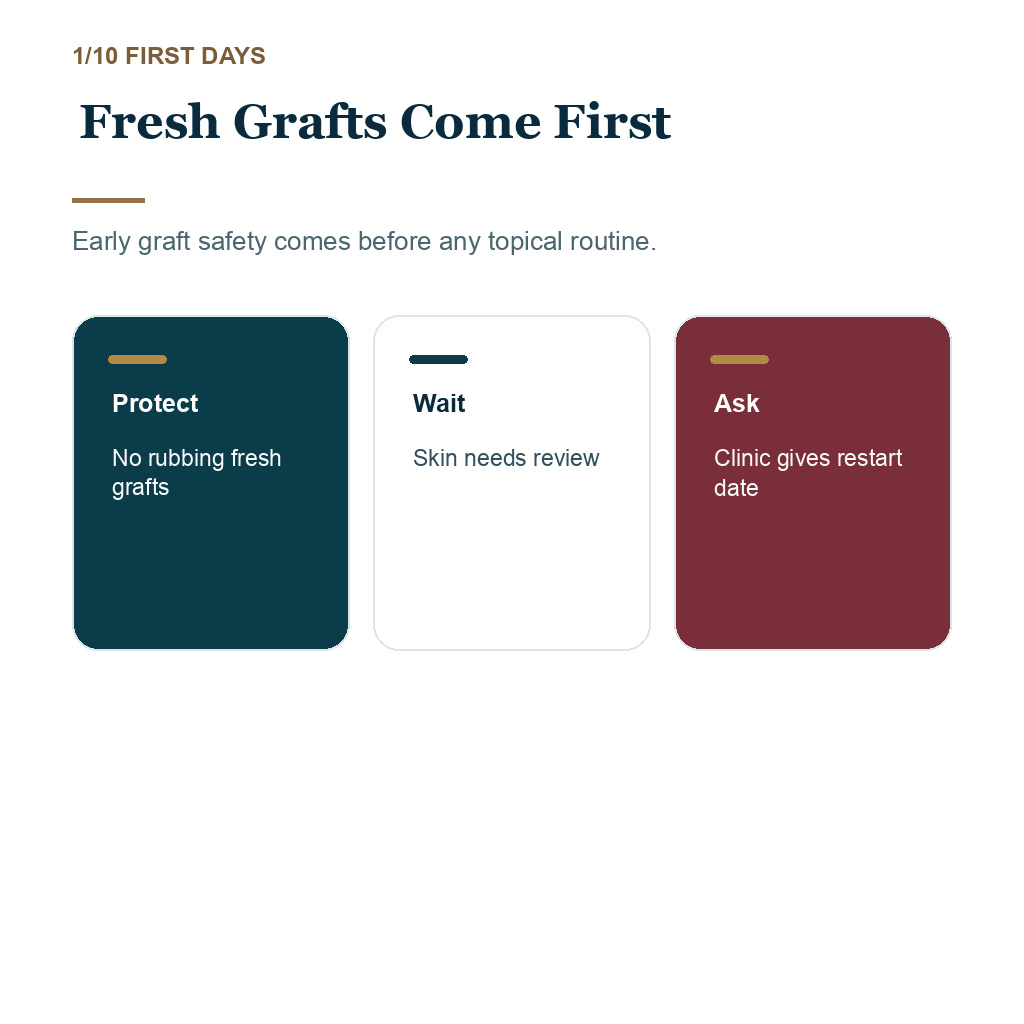
If there is strong redness, crusting, scratching, folliculitis, delayed healing, or burning from products, I delay topical medication. A liquid or spray can look harmless, but applying it too early can mean rubbing, dripping, alcohol irritation, or wet product reaching skin that is not ready.
There is also a practical difference between applying medicine to an unoperated crown and letting a spray run across fresh grafts. Even away from the recipient area, the routine should be controlled. Clean hands, no dripping, no rubbing across grafts, and no wet product on the pillow are basic rules.
The clinic’s own aftercare plan comes first. The logic is similar to minoxidil after a hair transplant, because topical products are judged by timing, skin tolerance, and how they are applied. If several products overlap, too many treatments after FUE can make irritation, shedding, or side effects harder to understand. That same staged logic is stricter for research topicals after FUE, where sourcing and concentration may be less predictable.
Stopping topical finasteride before surgery needs clinic guidance
Most people should avoid applying topical finasteride to the scalp immediately before surgery unless their surgical team gives a different instruction. The donor and recipient area should not have residue, liquid with alcohol, a heavy styling feel, or irritated skin on the day of surgery.
The exact pause depends on the product. A prescribed topical, a combined finasteride and minoxidil spray, a gel, and a compounded formula with a high concentration are different practical problems. The conservative plan is to tell the clinic the exact formula early and follow the instructions before a hair transplant.
I also avoid using the surgery week as a test period. Starting topical finasteride for the first time just before FUE can confuse the picture if redness, itching, shedding, anxiety, or sexual side effects appear during recovery.
Topical finasteride can still affect the body
Yes. Topical finasteride is placed on the scalp, but some absorption can still happen through the skin. The amount can vary with concentration, dose, scalp condition, frequency, treated surface area, and whether the skin barrier is irritated.
If sperm banking or semen testing is the reason you are considering topical treatment instead of oral finasteride, do not assume topical automatically means fertility neutral. Tell the prescribing doctor and fertility clinic the exact formula, concentration, dose, and treated area before changing routes.
Some men tolerate topical treatment better than tablets. Others can still notice sexual, mood, breast tenderness, testicular discomfort, or other symptoms because the medicine has not become purely local. A route change also needs review when a patient reports mental clarity or brain fog concerns with finasteride, because topical use does not clear the concern by itself.
Compounded or online products need extra caution. A high concentration or a mixture with minoxidil and other active ingredients can irritate the scalp, increase uncertainty, or make it hard to know which ingredient caused a reaction. A combined formula such as TH07 for hair loss belongs in this same careful category. The concentration, vehicle, prescriber, labeling, and medical supervision matter, not only the convenience of one bottle.
List topical finasteride as a real medication, not just a hair product. The clinic needs the formula, strength, application area, side effect history, and whether it is combined with minoxidil or another active ingredient.
Also record who prescribed it, when it was last applied, and how the scalp is being monitored. The restart plan may differ for an unoperated crown and a fresh recipient area, so the application map needs to be explicit rather than treated as one instruction for the whole scalp.
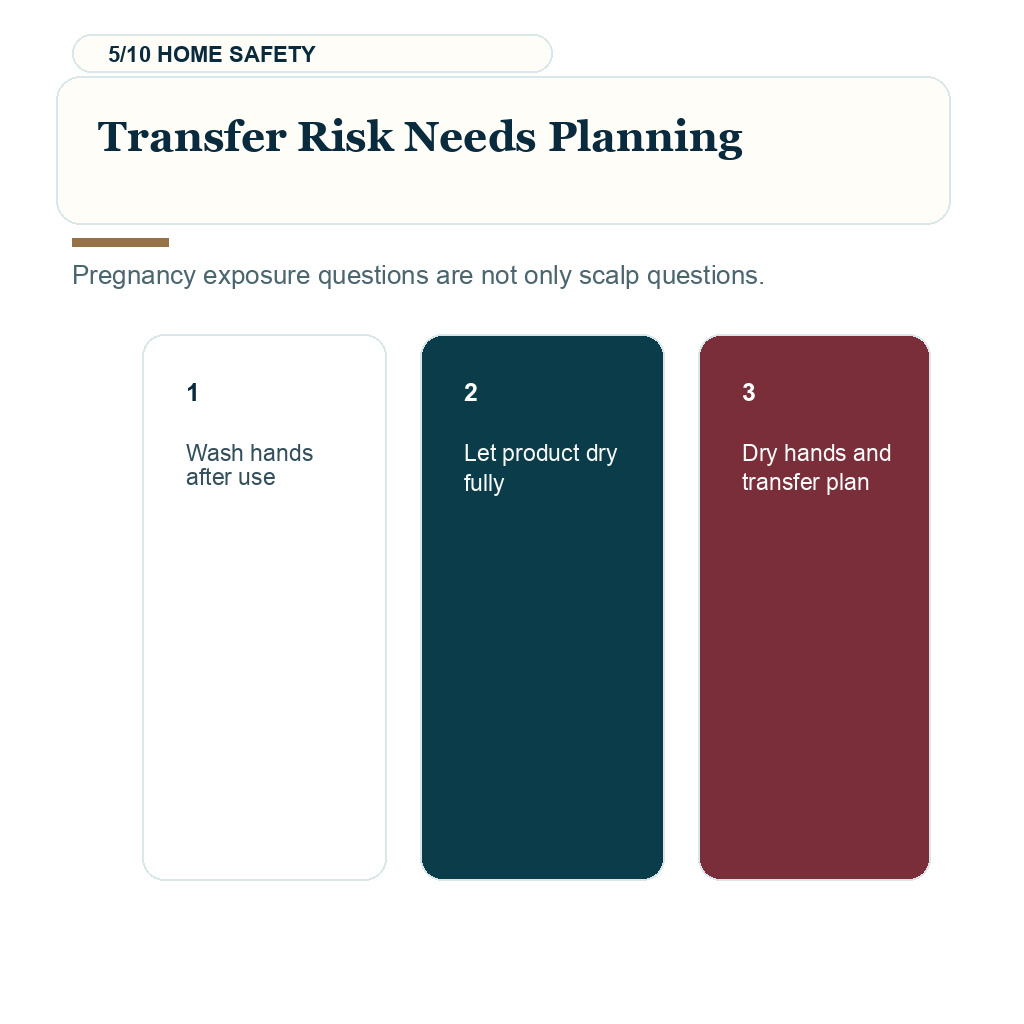
There is also a transfer issue. If a partner is pregnant or may become pregnant, topical medicine on the scalp, hands, pillow, or shared surfaces needs careful handling. Handwashing, drying time, storage, and pillow contact matter. These exposure questions also belong in the broader fatherhood planning discussion when finasteride or dutasteride is being used.
Switching from topical to oral finasteride around surgery needs caution
I keep the medication routine stable unless there is a clear clinical reason to change it. If topical finasteride has been working well and is tolerated, the better conversation is often how to pause and restart it safely, not how to create a new medical variable in the surgery month.
Some clinics stop topical products before surgery because the scalp must be clean. That is different from saying you must switch to oral tablets. A switch may be reasonable in selected cases, but I judge it from side effect history, age, native hair risk, anxiety level, fertility concerns, and the exact product being used.
If oral finasteride is already being used successfully, the discussion is different. I explain the broader role of finasteride before and after a hair transplant separately because oral and topical treatment solve related but not identical problems. Using oral and topical finasteride together means receiving the same medicine through two routes. Have your prescriber review both products before starting that combination.
Switching just before surgery can also make recovery harder to interpret. If shedding, scalp irritation, low mood, libido symptoms, or anxiety appears afterward, you may not know whether it came from surgery, shock loss, the medication change, or the normal early recovery cycle.
Topical finasteride can help protect native hair after a transplant
In the right diagnosis, the main purpose is native hair protection. Transplanted grafts are taken from the donor area because they are more resistant to androgenetic hair loss. The native hair around and behind the transplant can still miniaturize with time.
That distinction matters. A transplanted hairline can grow well and still look thinner later if the native hair behind it keeps weakening. Medication cannot guarantee stability, but it can be part of a long-term plan when male pattern hair loss is active.
Some men want surgery because they hope to avoid medication completely. That can be reasonable in selected cases, but it has to be planned clearly. A hair transplant without finasteride puts more pressure on donor management, age, hair loss pattern, and realistic expectations.
Topical finasteride does not create donor capacity. It does not make a low donor supply bigger. It does not justify careless dense packing in a young person with unstable loss. It may support the medical side of the plan, but the surgical plan still has to stand on its own.
Planning after side effects from oral finasteride
A previous side effect history changes the conversation. It may still leave topical treatment open, but the decision should come from a doctor, not a casual online experiment.
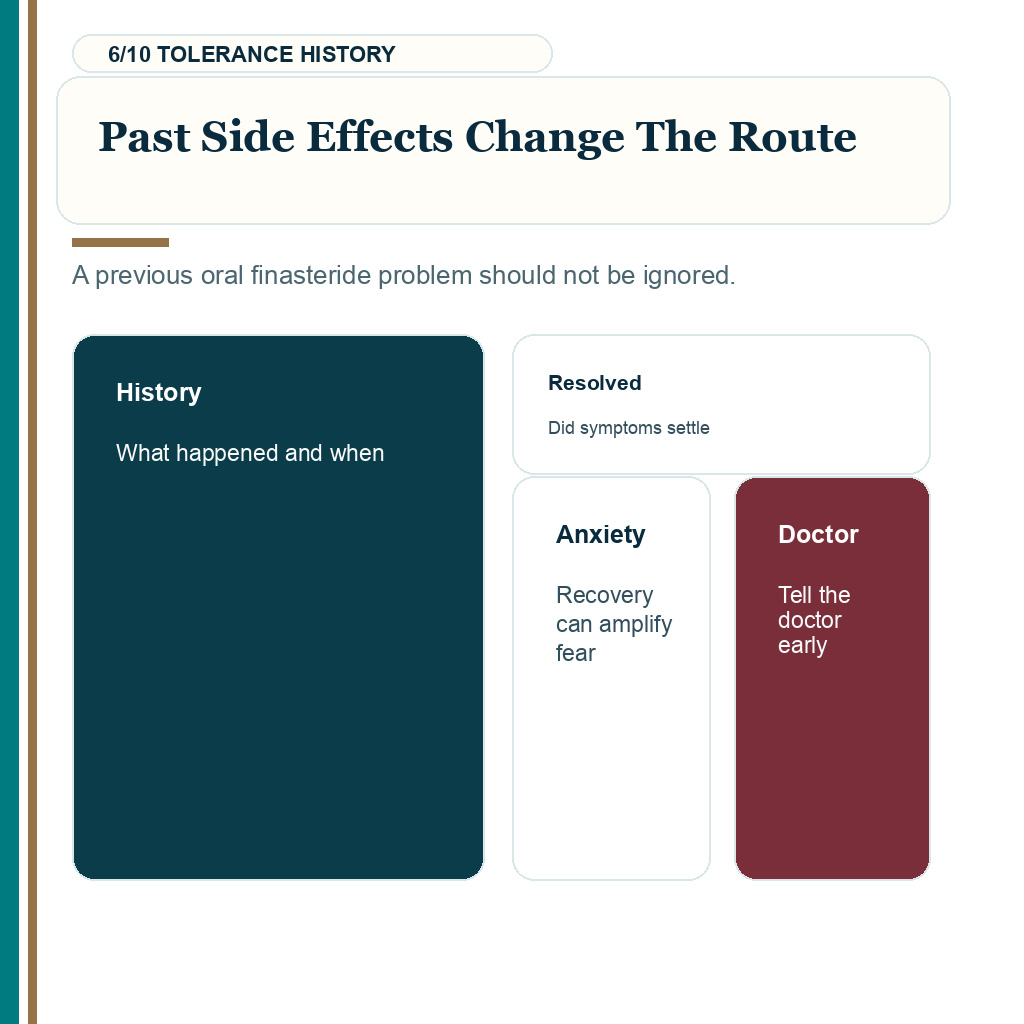
Be specific about what happened with oral finasteride, how long it lasted, whether symptoms resolved after stopping, and whether mood or sexual symptoms were involved. Stopping finasteride after a transplant, restarting it, switching forms, and changing dose can all affect both hair planning and emotional stability.
Topical treatment may reduce exposure for some people, but it does not remove every systemic risk. It can also add local problems such as dryness, burning, itching, flakes, or contact irritation. After a hair transplant, even mild irritation can lead to scratching, washing too aggressively, or panic checking.
A careful plan without finasteride can be better than a medication routine you fear every day. The transplant plan should fit your medical reality, not force you into a treatment that makes recovery harder to handle.
Information to tell the clinic before surgery

Tell the clinic the product name, concentration, how often you use it, where you apply it, whether it is mixed with minoxidil, and when you last applied it. Also mention side effects, scalp irritation, pregnancy exposure concerns at home, and whether the medicine was prescribed by a doctor or bought online.
If the product came from an online service, compounder, or research chemical seller, I review the full product history in online topicals before FUE planning before trusting the medication baseline.
This belongs with the wider medication review. I need to know about medications before a hair transplant because tablets, sprays, and liquids can affect bleeding, blood pressure, skin reaction, anxiety, or the surgical day.
If topical finasteride is combined with minoxidil, the minoxidil part also needs review. Some people use topical minoxidil, some use oral minoxidil around hair transplant surgery, and some use both at different times. The safety questions are not identical.
Put the medication on the timeline early instead of worrying the clinic may say no. Hiding it makes the plan less safe. A careful surgeon can often work around medication issues when the facts are known early.
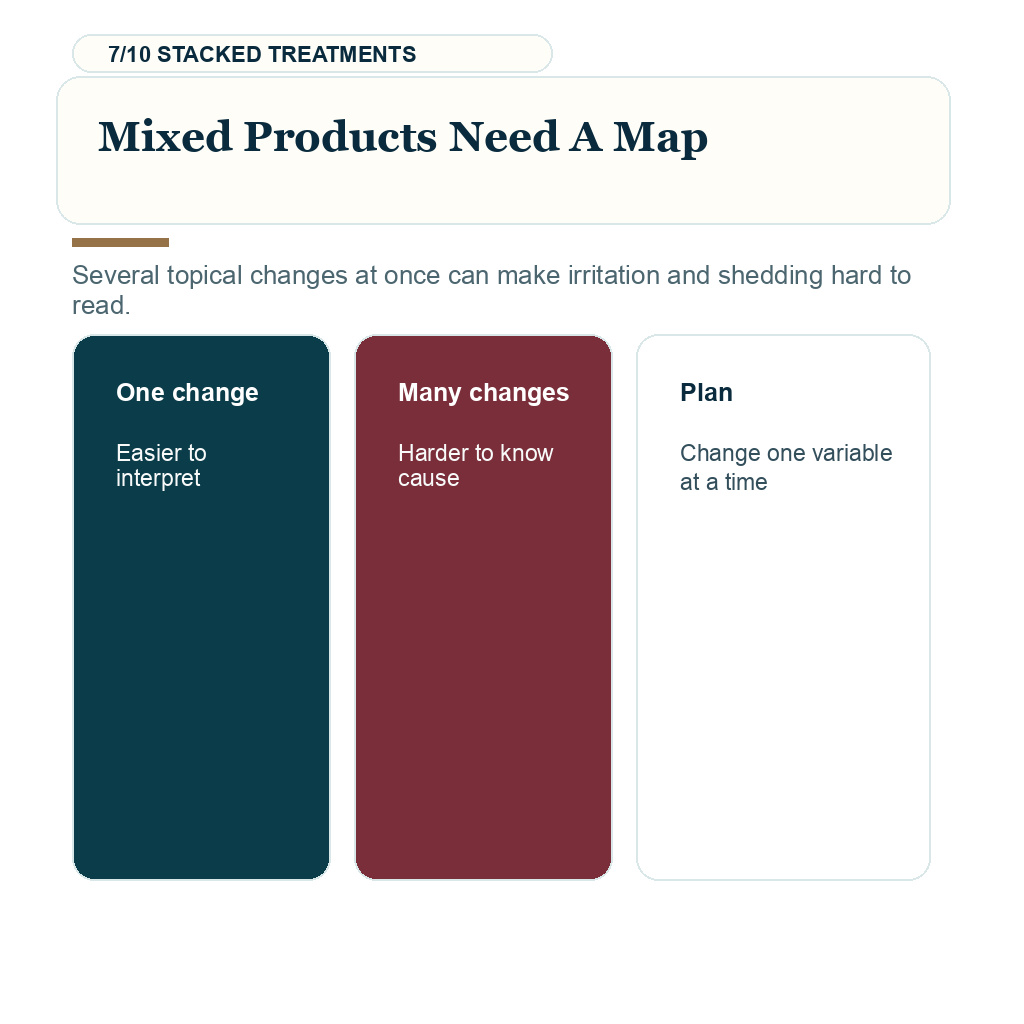
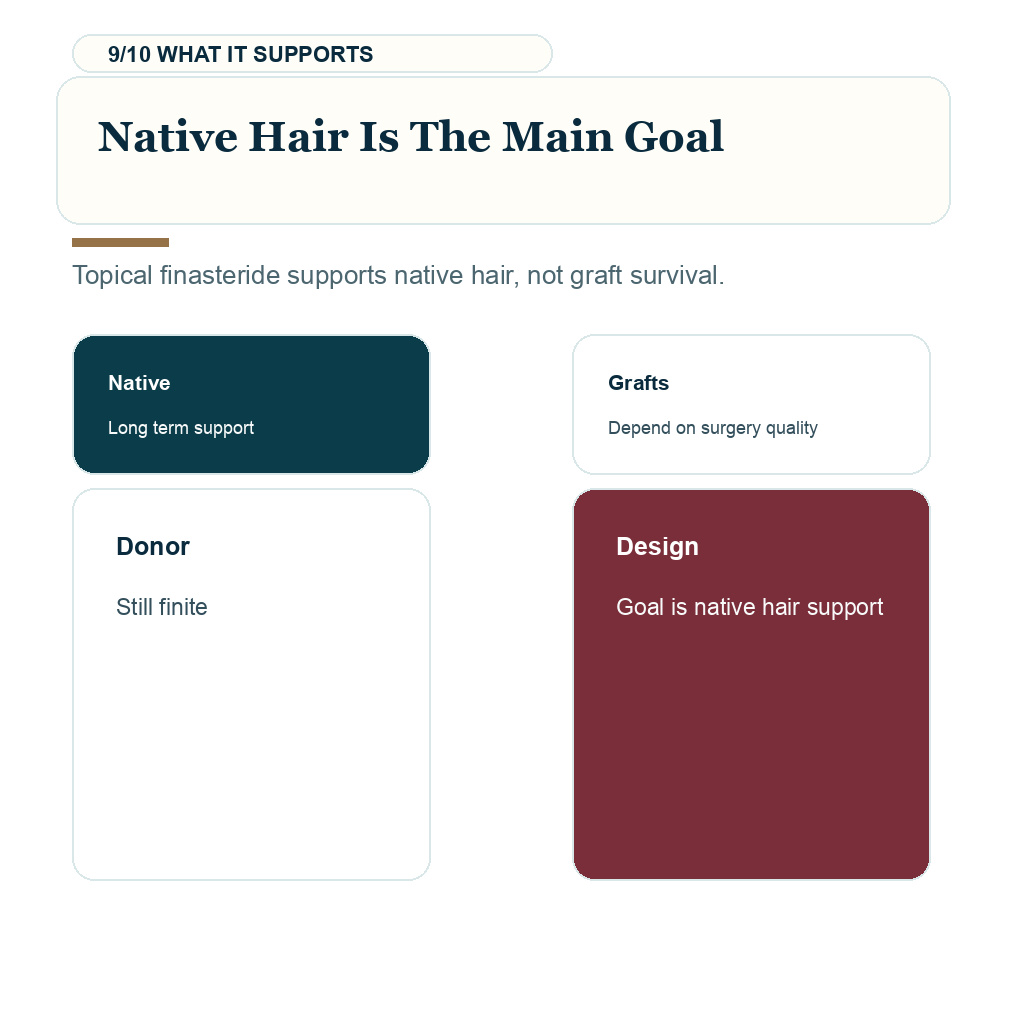
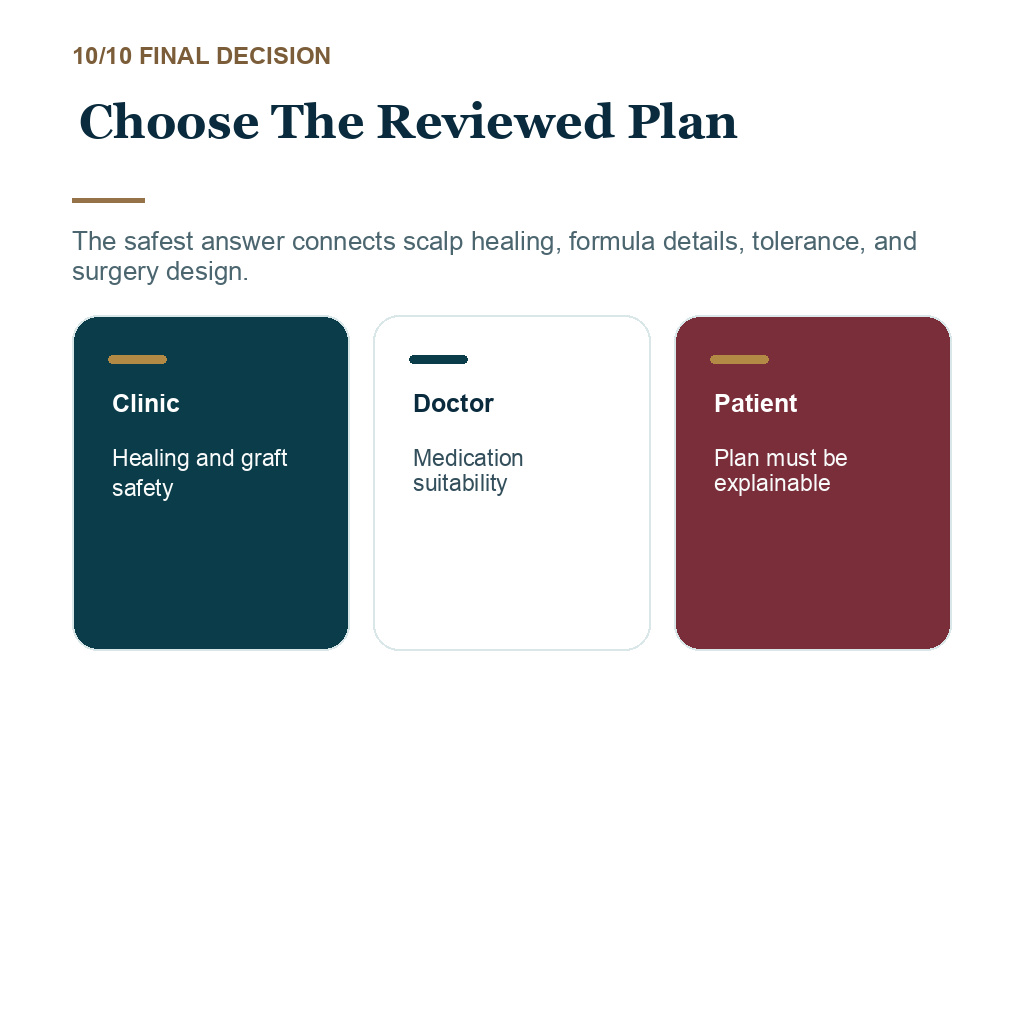
These 10 topical finasteride planning slides separate fresh graft timing, healed skin review, product formula, body effects, partner exposure, side effect history, mixed products, surgery month stability, native hair support, and final doctor reviewed planning. Swipe sideways, use the arrows one slide at a time, or choose a number below the image.



Topical finasteride does not directly change graft survival
No. Topical finasteride is not a graft survival treatment. Graft survival depends on surgical handling, graft quality, recipient area preparation, placement, bleeding control, hydration, aftercare, and the healing environment. Starting topical finasteride late in the growth timeline can help the native hair plan in selected patients, but it should not be used as a quick explanation for every thin transplanted area. I still judge graft growth, native hair support, and scalp tolerance separately.
The medication may help surrounding native hair stay stronger over time. That can make the final appearance more stable because transplanted and native hair work together. But that is different from saying the medicine makes grafts survive.
This distinction protects you from misleading marketing. If a clinic makes topical treatment sound like a guarantee, ask what is being avoided in the conversation. You still need donor assessment, hairline design, density planning, and a realistic view of future hair loss.
Situations where topical finasteride should be delayed
I delay it if the recipient area is still crusted, painful, strongly red, irritated, infected, or being scratched. I also delay it if the formula burns the scalp, leaves heavy residue, or makes you rub the grafts.
Delay can also make sense when too many things are changing at once. Starting topical finasteride, restarting minoxidil, adding supplements, changing shampoo, traveling home, and judging shedding in the same week can make recovery harder to interpret.
If shedding is already happening from a recent treatment change, I slow the decision down. Having a transplant during a minoxidil shed explains the same surgical problem. When hair is changing quickly, the operation should be planned from the stable pattern, not from panic.
I also delay if candidacy is not clear yet. Being a good candidate for a hair transplant still depends on donor capacity, age, diagnosis, hair caliber, expectations, and future hair loss risk. Topical finasteride does not erase those questions.
Judging clinic promises about topical finasteride
Be careful with two opposite promises. One says topical finasteride has no side effects because it is topical. The other says surgery will fail unless everyone uses it. Both are too absolute.
A better consultation explains what the medicine can and cannot do. It may help protect native hair that is sensitive to androgens. It may be useful when oral tablets are not acceptable. It may still cause side effects or irritation. It does not make a poor donor plan safe.
Medication should not become a substitute for planning. If the donor area is limited, hair loss is active, or the person is very young, medication may support a plan, but it should not justify an aggressive operation. Sometimes medication delaying surgery is wiser because the surgeon needs to see whether the hair loss stabilizes first.
Topical finasteride should not be sold like insurance. It is one possible part of a medical plan. The operation still needs careful design, protected donor budget, and realistic expectations about what surgery can and cannot cover.
Topical finasteride can be combined with other hair medicines only with a clear plan
It can be combined in selected cases, but the combination should not be random. Many formulas mix topical finasteride with minoxidil. Some people also ask about dutasteride injections after hair transplant, oral minoxidil, PRP, vitamins, or supplements at the same time.
The issue is not only medical. If five treatments begin together, you cannot tell which one helped, which one irritated the scalp, or which one caused shedding or side effects.
If topical finasteride is added after a disappointing minoxidil trial, keep the timeline simple. Changing the DHT medicine, minoxidil form, dose, shampoo, and surgery date together makes it harder to know what helped and what irritated the scalp.
A steady plan that can actually be followed is better than a crowded plan that changes every week. If finasteride is not tolerated, there may be another medication discussion. If you are comparing dutasteride and finasteride after a hair transplant, that decision belongs with a doctor who understands your risk profile and the local rules around these medicines.
PRP, vitamins, and topical products should not be used to cover a poor surgical idea. They may support hair quality or recovery in selected cases, but they are not a license to overuse grafts.
Topical finasteride belongs only when scalp tolerance is clear
Start with the diagnosis. If you have androgenetic hair loss and still have native hair at risk, medication may have a role. If thinning comes from another cause, the answer can change completely.
Then look at tolerance. A treatment you fear, forget, dislike, or react to will not support the plan well. Consistency matters more than an impressive product label.
Then look at the operation. If the transplant design is too aggressive, medication cannot rescue it. If the design is careful, the donor area is protected, and native hair risk is discussed clearly, topical finasteride may become one useful part of the long-term plan.
Keep the rule clear. Do not rub topical finasteride onto fresh grafts. Do not assume topical means safe for everyone. Do not switch routines around surgery without a reason. Use it only when the scalp is ready, the side effect discussion is clear, and the surgical plan still makes sense without pretending that a spray can replace judgment.
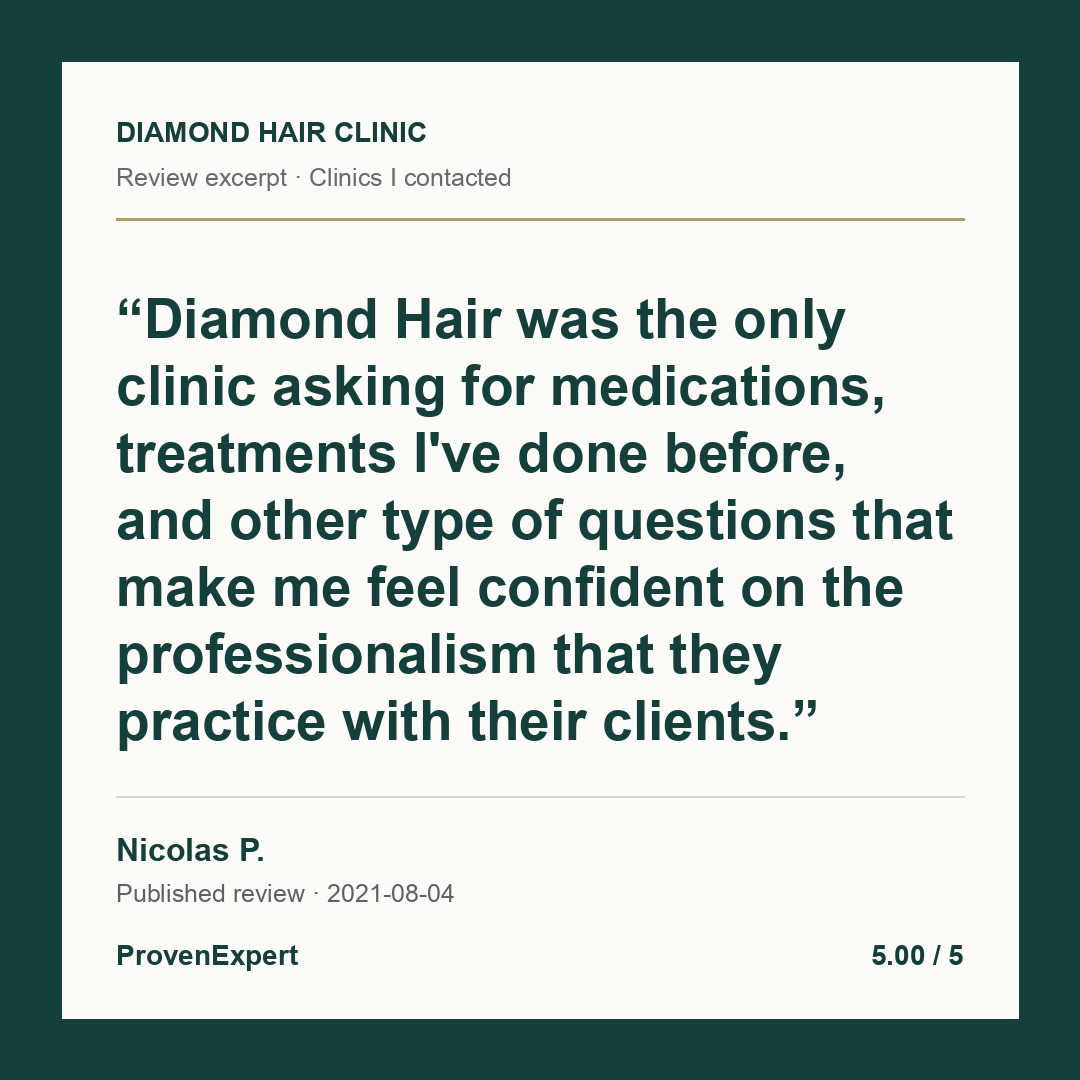
Read this review excerpt
Diamond Hair was the only clinic asking for medications, treatments I've done before, and other type of questions that make me feel confident on the professionalism that they practice with their clients.