



Medication to Delay Hair Transplant Timing
Medication can sometimes buy time when hair loss is still active and surgery would be premature. In a medically suitable patient, a review period of 6 to 12 months is often more useful than spending donor grafts too early. That period can show whether surgery should be smaller, delayed, or, for now, unnecessary. This is one reason cases where I say no to a hair transplant separates medical delay from permanent refusal. Young patients who already tried medication still need diffuse loss and travel recovery reviewed before I recommend immediate surgery.
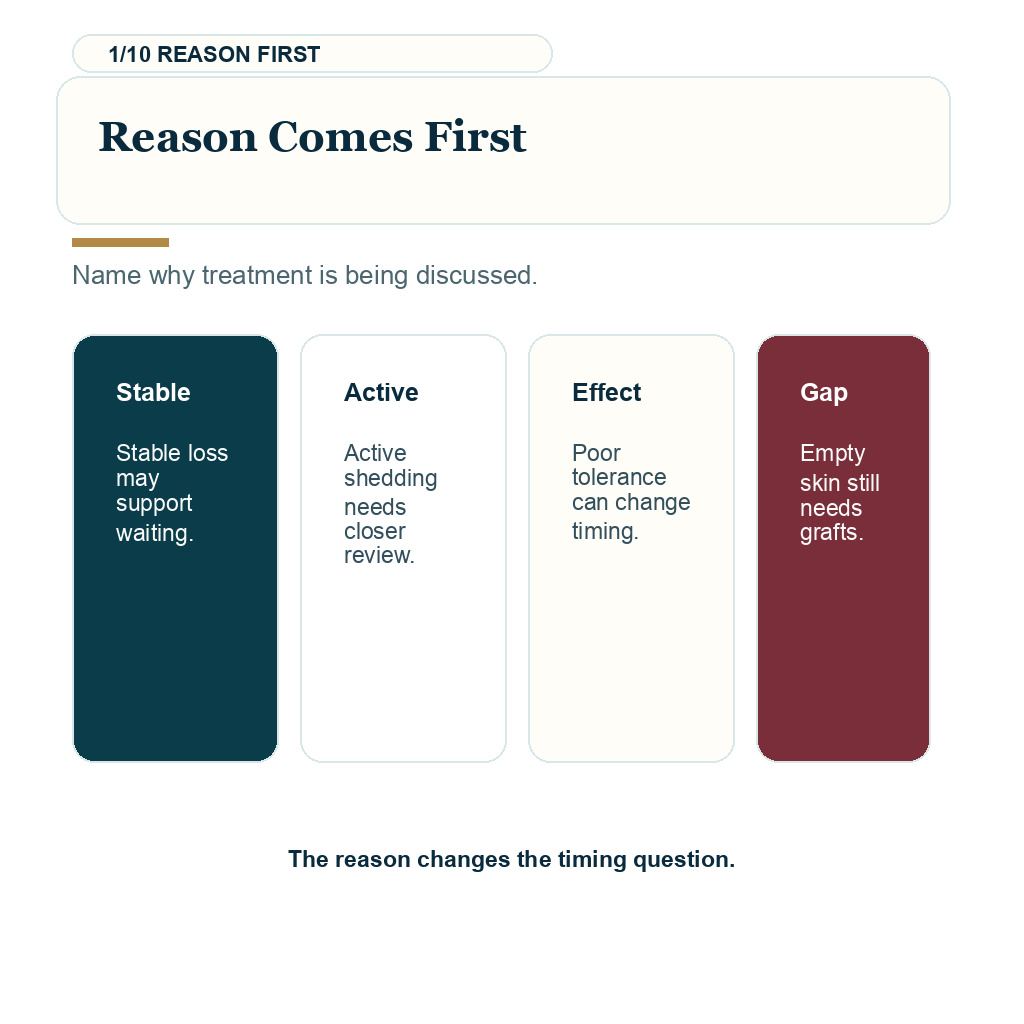
The limit is just as important. Medication can strengthen miniaturizing hair, but it cannot recreate a completely empty hairline or restore an area where follicles are already gone. The consultation has to separate a stable cosmetic gap from a loss pattern that is still moving. If the pattern is still moving, still losing hair on medication before a hair transplant changes the timing discussion.
Delaying surgery and avoiding surgery forever are different decisions. A strong treatment response may buy time, reduce the graft need, or make the plan safer, but it must not become a reason to ignore a stable empty area that genuinely needs surgical rebuilding. If your hair has already improved after booking surgery, use the separate guide on whether medication improvement should delay or reduce a planned hair transplant.
A delay should have a review point instead of becoming open ended. Surgery becomes safer to reconsider when the target change is clear, such as steadier shedding, a clearer diagnosis, a better treatment response, or a smaller graft plan.
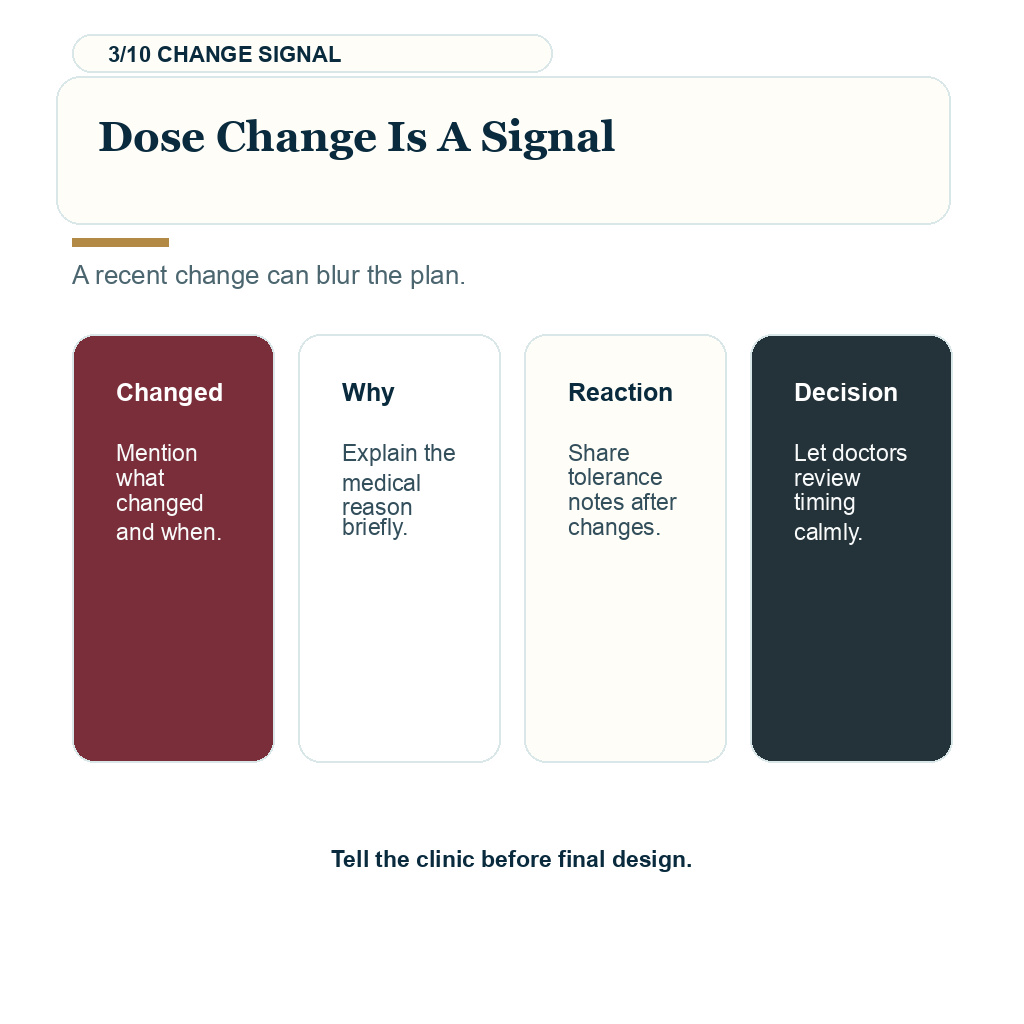
The related question of medication before a hair transplant belongs in the surgical plan because treatment and surgery solve different problems. Medication may stabilize native hair. Surgery rebuilds areas that medication cannot recover. Active shedding after a recent treatment change can make minoxidil shed and hair transplant planning part of the timing decision before donor grafts are spent.
I used the same distinction in a public Reddit reply about transplant planning for someone already taking Finasteride and Minoxidil.
If finasteride is stable but the temples are already empty
A patient can be stable on finasteride and still have temple corners that medication is unlikely to rebuild. I separate those two findings before I advise waiting. Finasteride may help protect native hair behind the hairline, but an almost empty corner is often a surgical design problem, not only a response to medication.
In Norwood 3 hair transplant planning, the question is whether the empty corners can be rebuilt while the donor area, crown risk, and hairline design still make sense. If the recession is stable, the donor area is strong, and the crown risk is understood, surgery can be reasonable without forcing a patient to try every possible medication first.
Oral minoxidil or dutasteride may still be useful for some patients after medical review, but I would not design the hairline as if every hair improved by medication will stay forever. If a treatment later has to stop because of side effects, poor tolerance, or a medical reason, the transplant should still look planned, conservative, and easy to manage.
Medication can delay surgery in selected patients
Medication can delay surgery when it stabilizes miniaturizing native hair enough to change the need for grafts. This is most common in younger patients, diffuse thinning, early crown loss, recent rapid shedding, or patients whose hair loss pattern is not yet clear.
If the patient responds well, surgery may become smaller. The hairline may be designed more conservatively. The crown may not need immediate surgery. In some cases, the patient may decide to wait because the daily appearance has improved enough.
Without meaningful response, or when the patient already has a clearly empty frontal area, medication may still support the surrounding native hair, but surgery may remain the correct option. The decision is not medication against surgery. It is choosing the right tool for the right problem.
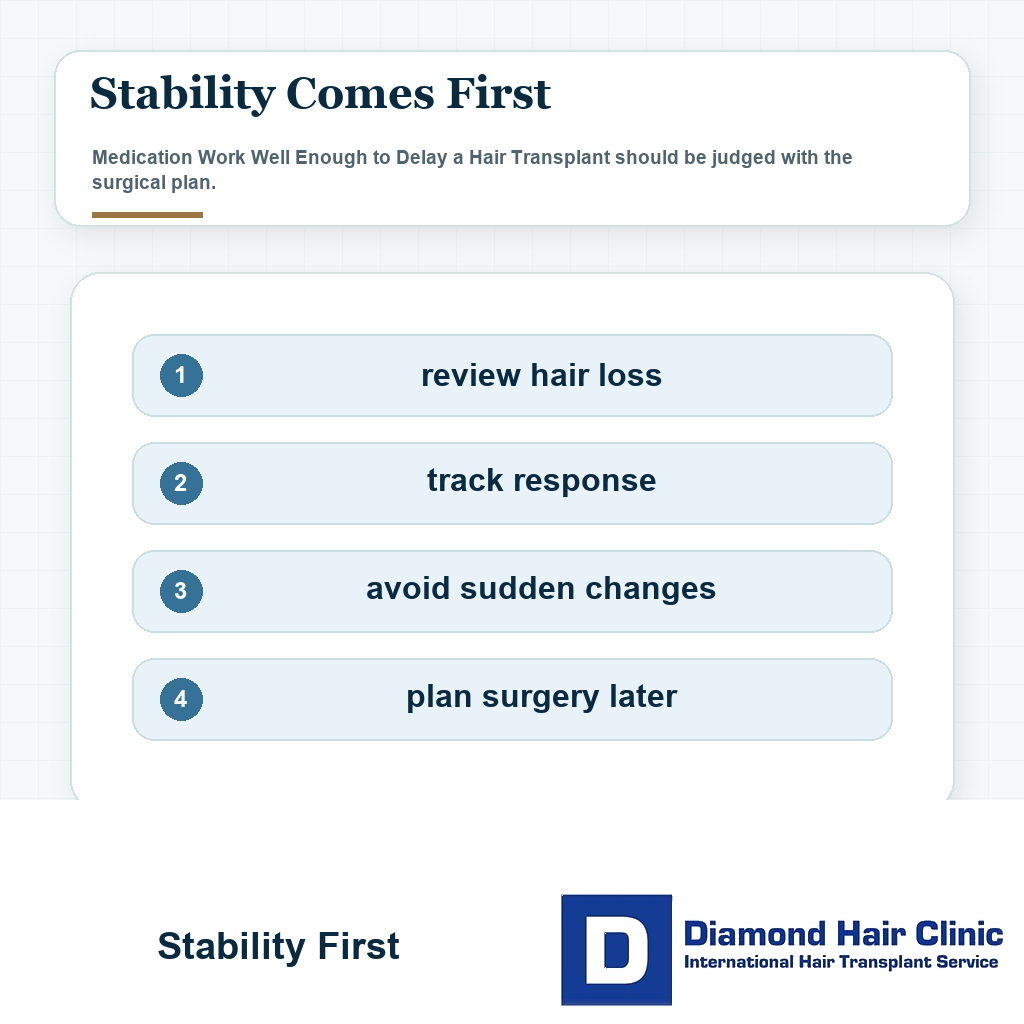
Waiting can protect the surgical plan
Waiting can protect the plan because it gives the hair loss pattern time to declare itself. A patient who rushes into surgery during active loss may have a result that looks good briefly and then becomes unbalanced as native hair continues to thin behind it.
When medication slows the loss, the stable frame becomes easier to judge. The graft number may become more responsible. The donor area can be protected. The hairline can be designed with better judgment because the surrounding native hair is less unpredictable.
When the patient is following a real medical plan, waiting is not the same as doing nothing. It becomes a diagnostic period. We learn whether the treatment is tolerable, whether shedding settles, whether miniaturized hairs strengthen, whether side effects are acceptable, and whether surgery is truly needed now.
Patients most likely to benefit from delaying surgery
Younger patients often benefit most from caution. Their final pattern may not be visible yet, and a low or aggressive hairline can become difficult to maintain later. Medication may help delay surgery until the plan is more mature and the donor reserve is easier to protect.
Patients with diffuse thinning also need careful timing. When miniaturization is spread through the top, the patient may look as if density is needed everywhere, but some of those hairs may still be salvageable. That is different from a clean bald area with no meaningful native hair left.
Early crown thinning is another situation where medication can matter. Crown surgery uses many grafts and the crown can continue expanding. If medication stabilizes the crown, the patient may avoid using donor grafts too early. The separate discussion of diffuse thinning and hair transplant planning explains why scattered miniaturization needs caution.
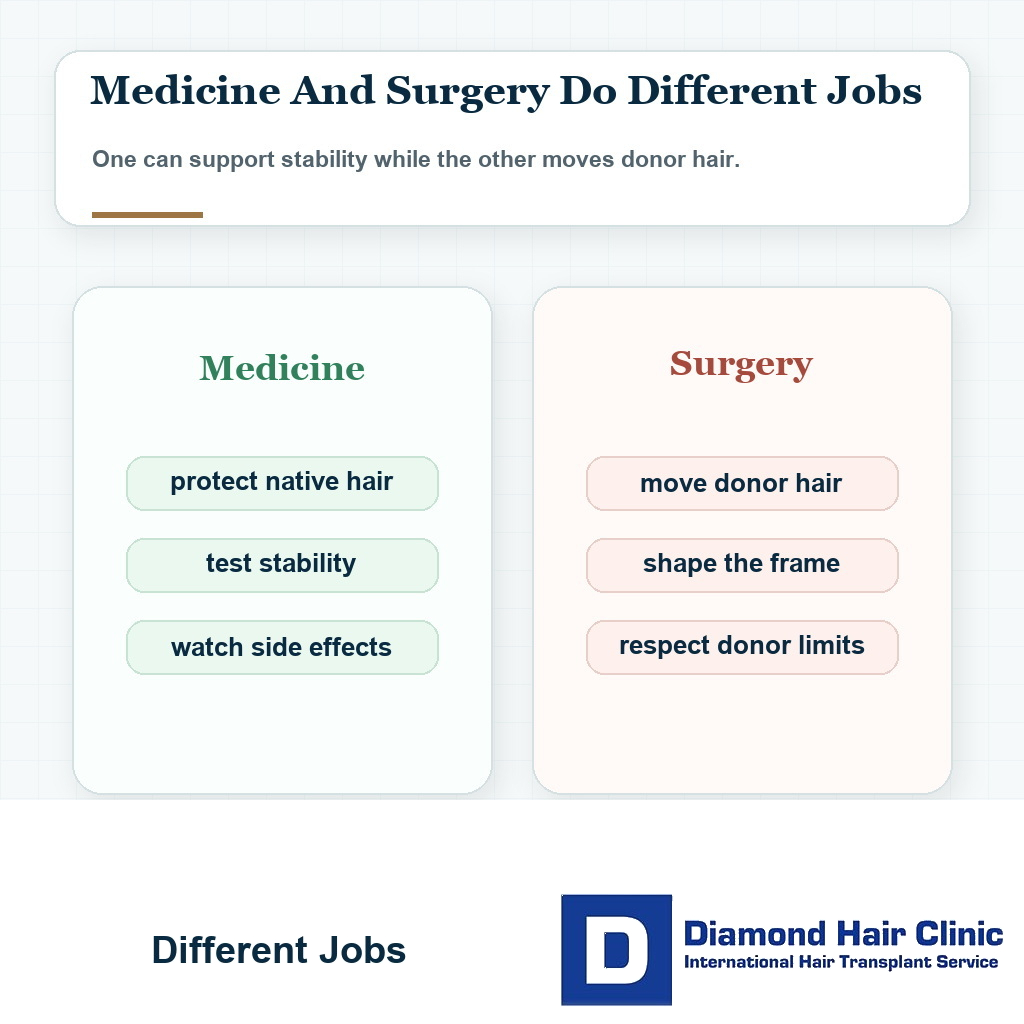
Limits of medication
Medication is not enough when the patient needs structural rebuilding. A missing hairline, a clearly empty temple, or a bald frontal band usually cannot be recreated with medication alone. Treatment may improve surrounding native hair, but it cannot reliably rebuild the face frame when follicles are already gone.
Medication may also be insufficient when the patient cannot tolerate it, does not want to stay with it, or has a medical reason to avoid it. Some patients do well on finasteride, dutasteride, or minoxidil. Others do not tolerate these treatments or do not want long term medication. When the question is specifically minoxidil after a hair transplant, the decision depends on native hair, healing, and tolerance rather than a fixed rule.
The separate issue of hair transplant without finasteride matters because medication can be useful, but it should not be treated as a moral test. A patient who cannot use a medication still deserves a careful surgical plan.
Clinic pressure can rush this decision
Surgery is easier to sell than patience. A patient frightened by recent hair loss may be ready to book quickly because they want the uncertainty to end. A clinic focused mainly on volume may accept that urgency instead of checking whether the pattern is still moving.
Delay should not become automatic. Some patients are ready for surgery. But if hair loss is clearly active, if the patient is young, or if the crown and mid scalp are changing quickly, immediate surgery can create a future mismatch.
The same concern appears when someone gets a hair transplant too early while hair loss is active. Operating before the pattern is stable can make the patient dependent on future surgery earlier than expected.
Judging response to treatment
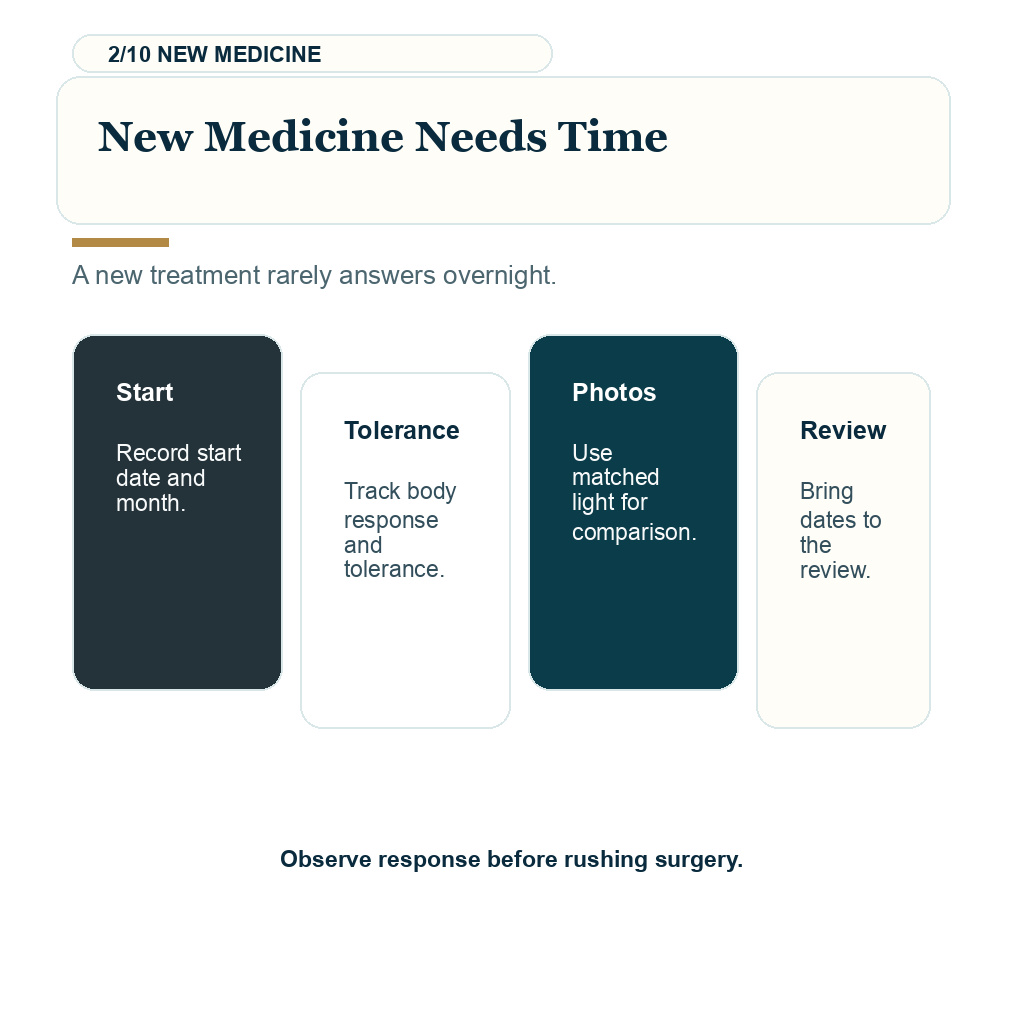
Response has to be judged with time, consistency, and comparable evidence. One good week or one bad month is not enough. Hair cycles move slowly, and the trial only becomes useful when the medication, dose, start date, missed doses, side effects, and photo conditions are all understood.
Baseline photos, the same lighting, the same hair length when possible, and monthly comparisons are more useful than daily mirror checks. Shedding, missed doses, side effects, scalp irritation, and the pace of loss all belong in the review.
True response also has to be separated from noise. A temporary shed, a change in hair length, different lighting, or better styling can make the scalp look different without proving that the surgical need has changed.
The best response is often stabilization, not dramatic regrowth. If the patient stops losing ground, the future transplant plan becomes smaller and more predictable. That can be more valuable than a short period of visible thickening that does not last.
If you already used finasteride, why might a surgeon still ask for more medication time?
Being on finasteride for two years can be useful information, but it is not the same as proof that the hair loss pattern is ready for surgery. I still need to know whether the dose was consistent, whether there were missed periods, whether side effects limited use, and whether the crown or mid scalp kept changing during that time.
A surgeon may ask for more medical review when the photos do not yet show a pattern that can be planned safely. This is more likely when the hairline is being rebuilt while the native hair behind it is still miniaturizing. If the crown or mid scalp is still moving, a lower or denser front can spend donor grafts before the future demand is clear.
Asking about dutasteride or minoxidil does not mean every patient must switch. It means the surgeon is trying to see whether a different medically supervised plan could stabilize the native hair, reduce the area that needs grafts, or make the hairline design safer. The decision belongs with the prescribing doctor and the surgeon who has reviewed the medical history.
That extra time should not be vague. It should have a review point, comparable photos, and a clear question to answer. Are we seeing a stable pattern, useful improvement, side effects that make the plan unrealistic, or an empty hairline that medication cannot recover? If the answer is clear, waiting becomes a planning tool rather than an endless delay.
Reviewing a proper treatment trial before surgery
A proper treatment trial needs enough time to be fair. For many suitable patients, 6 to 12 months gives a more reliable picture than a few weeks. Some patients may show early signs sooner, but the surgical decision should not depend on a very short trial.
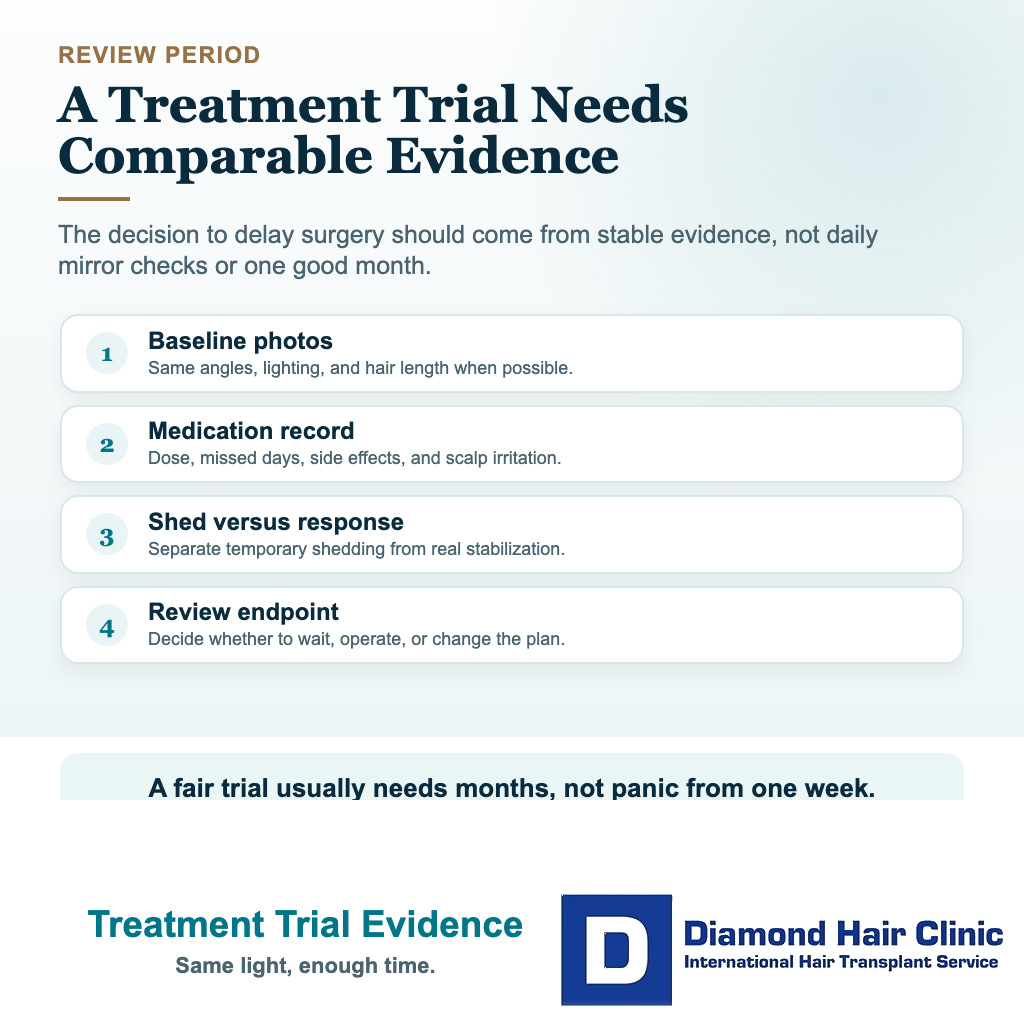
The trial needs clear medication details. We should know which treatment is being used, why it was chosen, what side effects need reporting, and when the response will be reviewed. A vague instruction to try something and see what happens is not enough.
The trial also needs a clear endpoint. At the review point, we decide whether to continue waiting, modify treatment, plan surgery, or avoid surgery. If side effects or anxiety make the treatment unrealistic, that is also useful information. Without a review point, waiting can become endless and confusing.
A weak response can still be useful if it tells us what medicine cannot change. If the photos show only slight thickening but the temple or frontal band remains empty, the review point should move toward a surgical design discussion instead of another vague waiting period.
Starting medication right before surgery
If surgery is already scheduled very soon, starting a new medication needs a clear reason. A new medication may cause early shedding, side effects, scalp irritation, or anxiety that makes the surgery period harder to interpret.
Topical and oral minoxidil create different timing problems. Topical minoxidil can irritate the scalp or complicate recipient area handling, while oral minoxidil is a systemic medicine, so blood pressure, swelling, dizziness, and heart symptoms need review. If the question is whether to stop or restart topical treatment near surgery, I separate minoxidil timing before a hair transplant from the oral medication decision because one affects the healing scalp and the other affects the whole body.
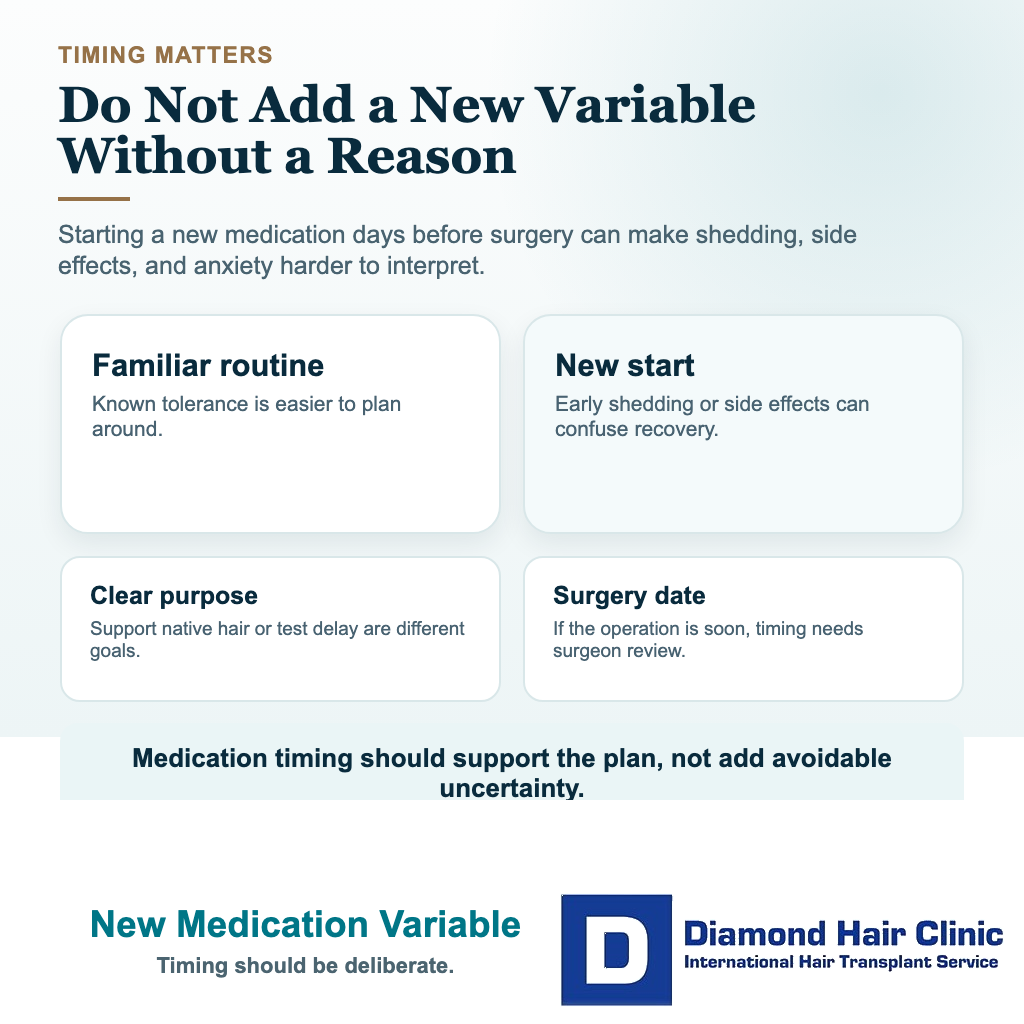
Medication is not wrong before surgery, but timing matters. Continuing a familiar routine is different from starting a new one. If the purpose is to judge whether medication can delay surgery, the trial needs enough time and comparable photos. Starting treatment to support native hair around an already appropriate surgery is a different discussion. If the operation is only a few weeks away, the decision needs to be made with the surgeon around whether starting now will truly help or simply add another variable.
Before surgery, it is better to know whether the patient tolerates the medication and whether the hair loss is stabilizing. If that information is not available yet, the operation needs planning with more caution rather than pretending the medication has already solved the progression problem.
Starting or changing medication close to surgery can show intention, but it does not yet prove stable hair loss or steady tolerance. If side effect worry is already strong, I plan the design with that uncertainty in mind rather than assuming medication will protect native hair later.
Medication can reduce the graft count in selected cases
Medication can sometimes reduce the graft count by stabilizing or strengthening native hair. If the surrounding hair improves, the surgical target may become smaller. This can protect the donor area and make the result look more natural.
Medication does not create free grafts. It may mean the patient needs fewer grafts from the donor because some native hair is still contributing to coverage. That distinction matters. The donor area remains limited.
The donor area needs this kind of planning because every graft should be used carefully. If medication helps save grafts for the future, that can be a major advantage, especially for younger patients.
Deciding between treatment and surgery
The main distinction is active miniaturization versus a stable empty area. If the issue is active miniaturization, treatment may come first. If the issue is a stable cosmetic gap, surgery may be reasonable.
The patient also has to live with the medication plan. If a patient dislikes the idea of long term treatment, the surgical plan must account for future native hair loss. If the patient tolerates treatment well, surgery can sometimes be planned more confidently.
If a patient does not want long term minoxidil, the transplant design should not depend on native hairs staying thick only because minoxidil is helping them. I separate the bare area that surgery can rebuild from the surrounding hair that medication may maintain, then plan density and donor reserve around that clearer map.
Candidacy is part of being a good candidate for a hair transplant. The visible hair loss is only one part of that judgment. Donor capacity, age, pattern stability, expectations, medication tolerance, and long term planning matter just as much.
Signs that medication is helping enough
Helpful signs include reduced shedding, stronger miniaturized hairs, improved coverage in comparable photos, slower crown expansion, less visible mid scalp thinning, and a patient who can stay with the treatment without unacceptable side effects.
Medication should not be expected to create a teenage hairline where the hairline is already gone. That expectation would be unfair. The purpose is to protect native hair and make the surgical plan more intelligent.
A strong response may justify waiting longer. A partial response may support conservative surgery. A poor response may show that medication is not changing the surgical need enough.
Limits of medication after surgery
Medication does not protect against poor hairline design, aggressive donor harvesting, wrong graft direction, or unrealistic density promises. A patient can be on a good medical plan and still receive a poor surgical plan if the clinic does not respect anatomy and donor limits.
Medication also does not freeze hair loss forever in every patient. It may slow progression, but native hair can still change over time. That ongoing risk is central to whether hair loss can continue after a hair transplant.
Medication does not make surgery free of risk. It may make the future more predictable. It should support good surgical judgment, not replace it.
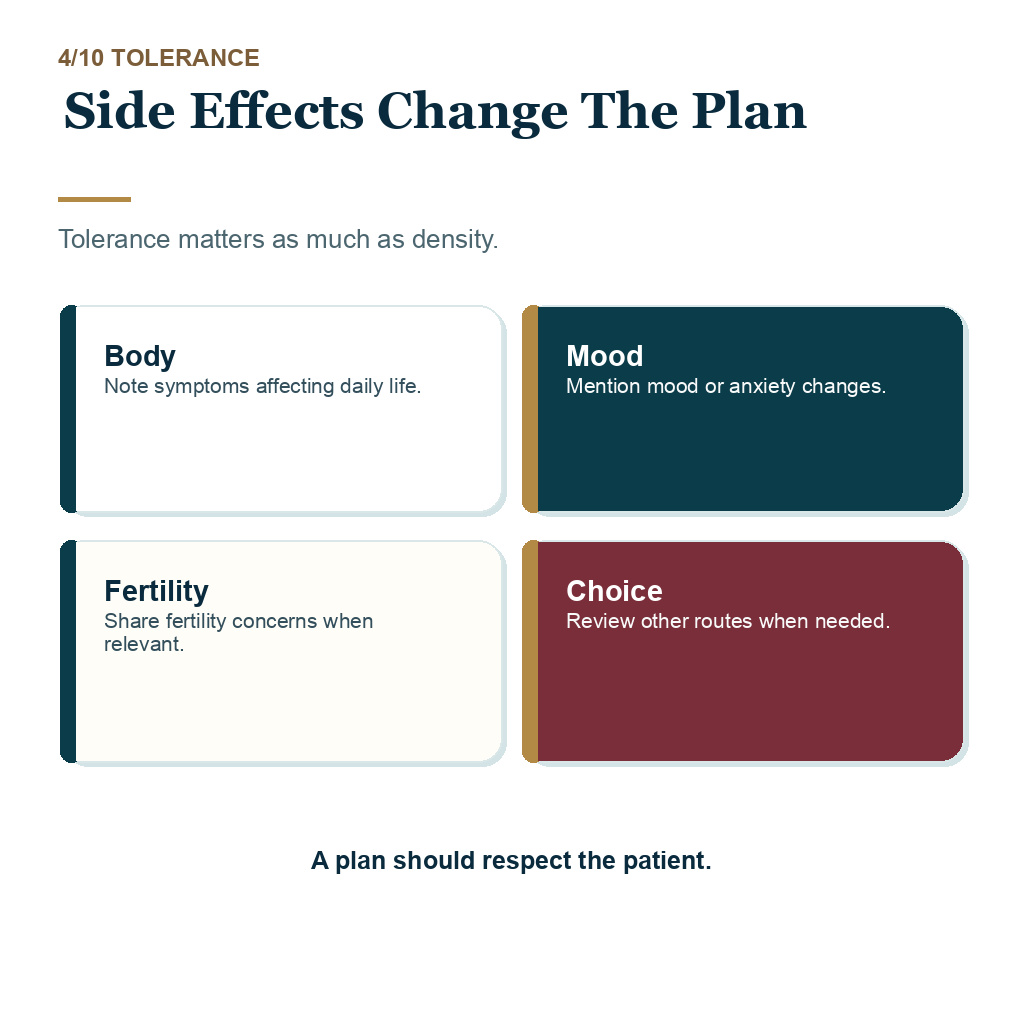
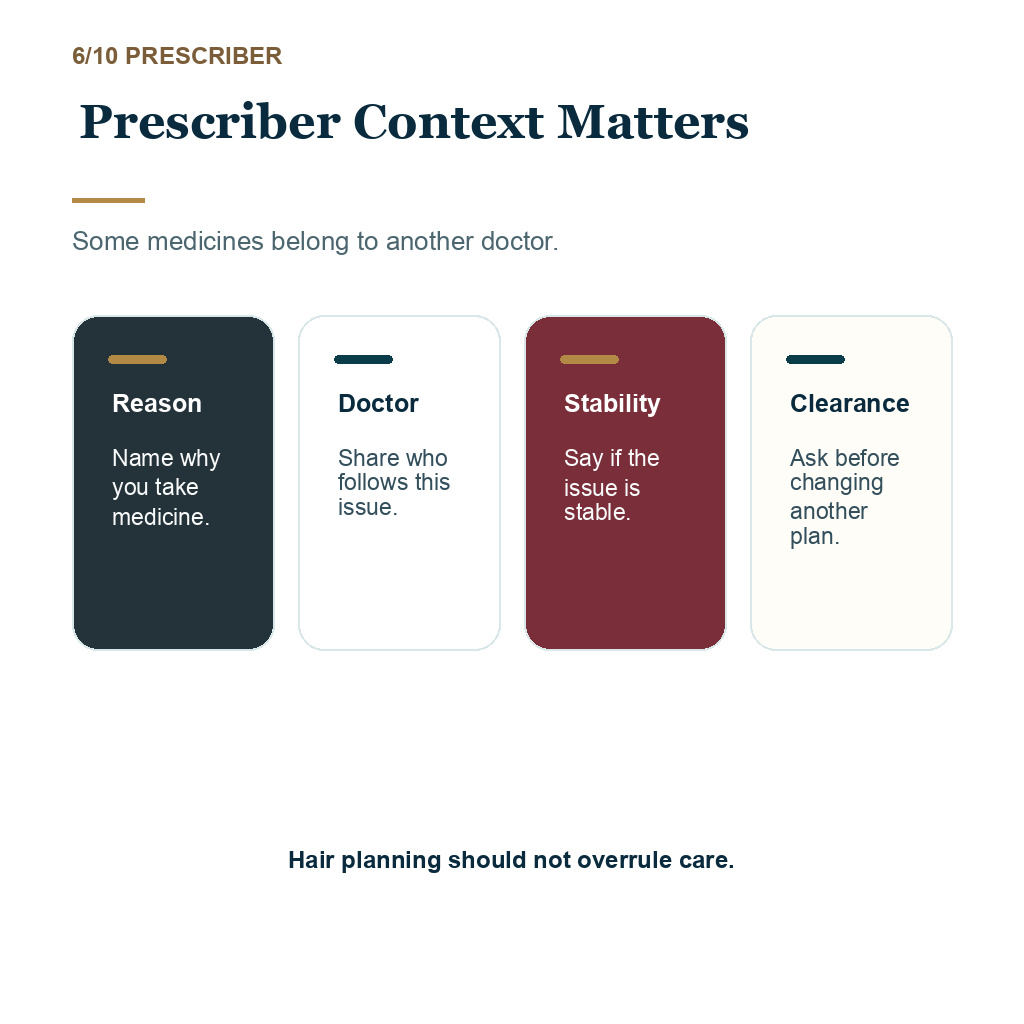
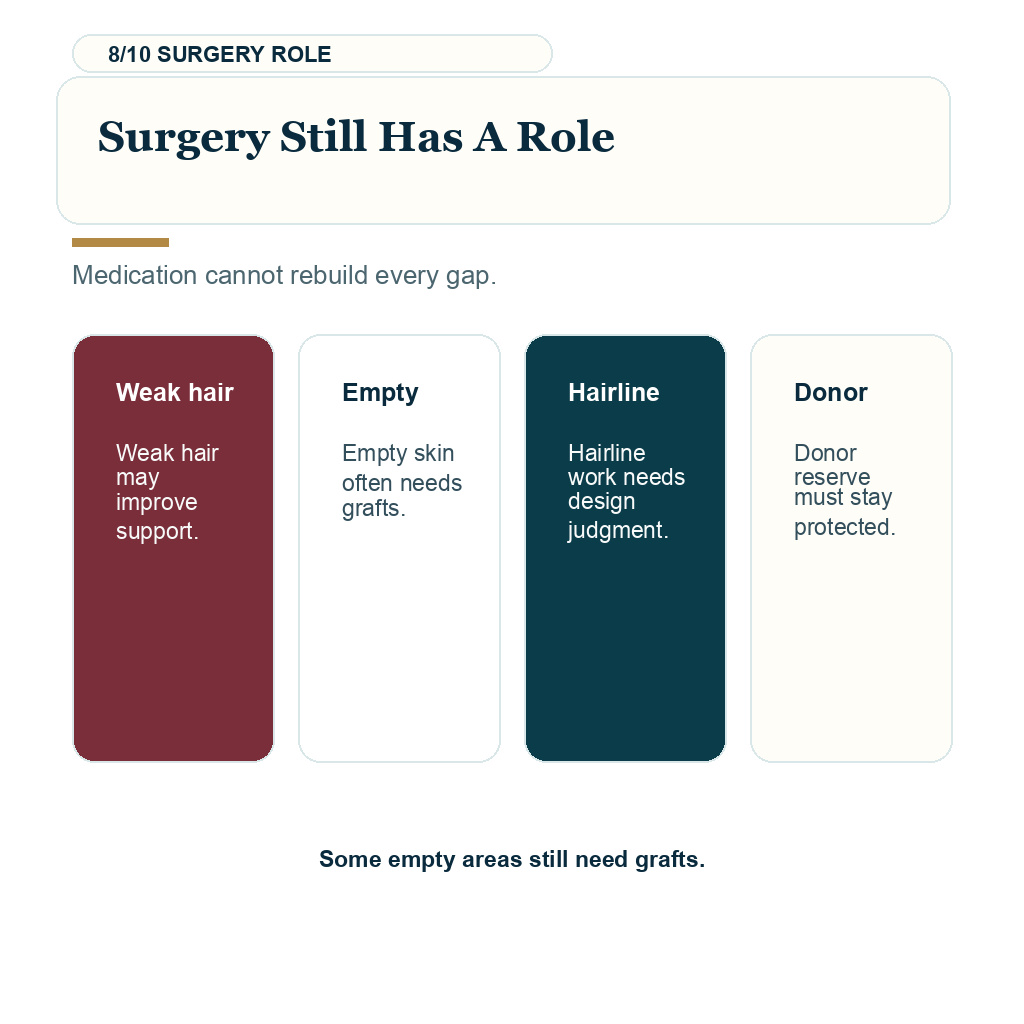
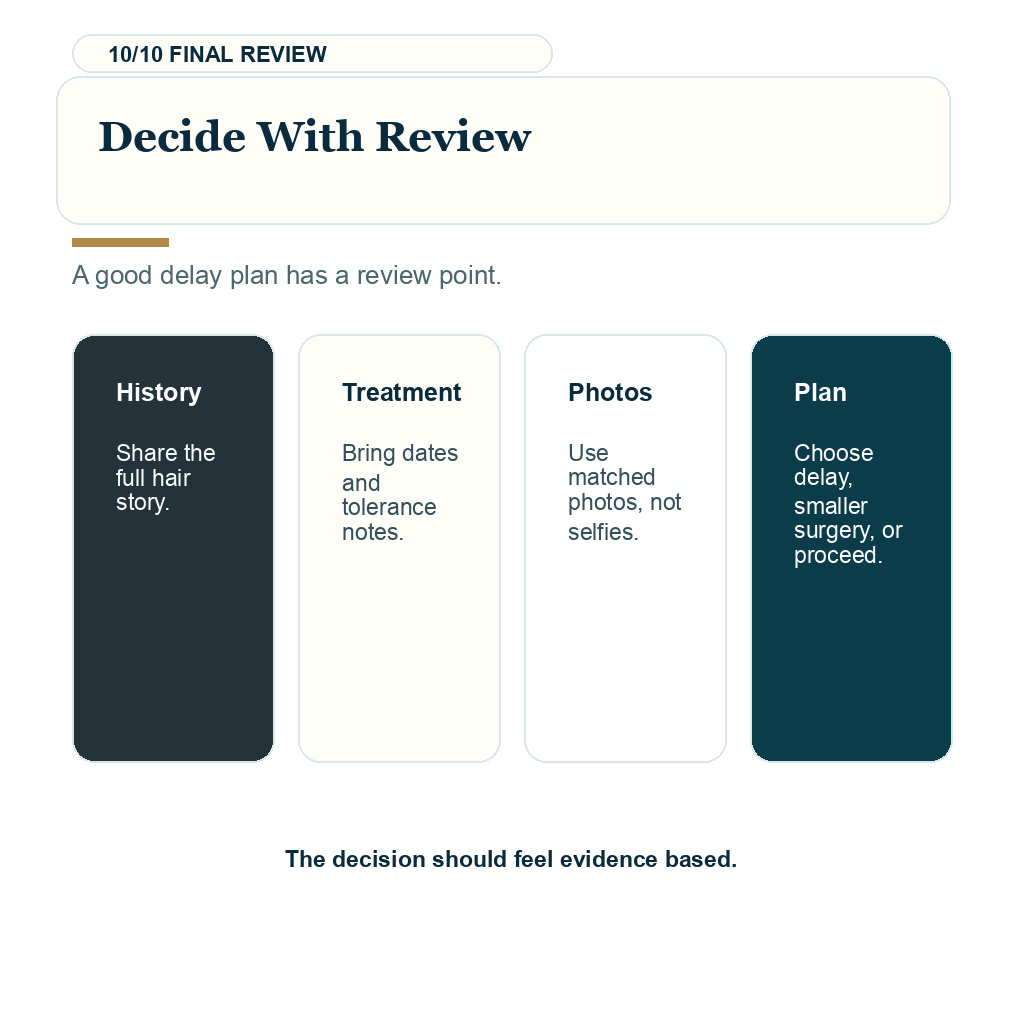
Use the 10 medication timing slides below to separate the reason for waiting, new treatment timing, recent changes, side effects, temporary illness, prescriber context, photo tracking, surgical limits, full disclosure, and final review before booking. Swipe the carousel, use the arrows one step at a time, or choose a number below the image to jump to that point.



Age changes the delay decision
Age changes the decision because younger patients have more future hair loss uncertainty. A patient in the early twenties with aggressive loss may not show the final pattern yet. Using too many grafts early can create a result that is hard to maintain later.
An older patient with stable loss may not need the same delay. If the pattern has been stable for years, the donor is strong, and expectations are realistic, surgery may be more straightforward.
There is no single timing rule for everyone. Two patients can have the same visible hairline and need different timing because their biology, age, donor area, family history, and medication tolerance are different.
Finasteride or dutasteride intolerance
If finasteride or dutasteride is not tolerated, that has to be respected. Sexual side effects, mood or anxiety concerns, medical history, fertility concerns, and personal preference all matter. The plan needs to be medically realistic, not forced.
Some patients may use topical minoxidil, oral minoxidil in selected cases, PRP, lifestyle support, or careful observation. These options are not identical to DHT blocking medication, but they may still have a role depending on the patient.
Oral minoxidil before or after a hair transplant needs medical supervision because it is a systemic medication, not a simple supplement. Dizziness, swelling, blood pressure issues, or cardiac symptoms need proper review. Any medication plan needs to be individualized rather than copied from another patient’s experience.
PRP and exosomes as delay tools
PRP or exosome treatments may support hair quality in carefully chosen patients, but they do not replace proper diagnosis or surgical planning. They may help some patients, but they must not be sold as a guaranteed way to avoid surgery.
If the patient has active miniaturization, the core question remains stability. If the patient has a bald area with no meaningful follicles left, supportive treatments will not create a full hairline. The plan needs to stay realistic, especially when supportive treatment is being offered as a way to postpone a clear surgical problem.
PRP and exosomes after a hair transplant are better understood as support tools, not substitutes for good surgery or proper medical treatment.
Waiting can become avoidance
Waiting becomes avoidance when the patient continues treatment for years even though the surgical problem is clear, stable, and bothers them every day. Medication may preserve surrounding native hair, but it may not solve the visible gap the patient wants corrected.
Some patients avoid surgery because they are afraid of making a mistake. That fear is understandable. But endless postponement can also become stressful. At some point, the decision should be based on the evidence rather than fear.
The consultation needs clarity, not pressure. If surgery is premature, say that clearly. If surgery is reasonable, explain why. The answer depends on pattern stability, donor capacity, expectations, age, and medication tolerance.
Keeping the decision from becoming emotional
Hair loss can make patients impatient, and impatience can lead to early surgery or endless postponement. The decision needs to come back to evidence from the scalp. Photos, miniaturization, response to treatment, age, donor capacity, and goals are more reliable than fear alone.
The patient concern needs to be named correctly. Trying to stop shedding anxiety, restore a hairline that is already gone, or avoid lifelong medication are different problems, and they need different answers.
If the patient later considers stopping finasteride after a hair transplant, review the plan again. Medication decisions and surgical decisions are connected over time.
Medical and surgical thinking belong together
Medical and surgical thinking belong together because hair loss is not only an empty area problem. It is also a progression problem. Surgery moves hair. Medication may slow the loss of native hair. The plan has to respect both sides.
Operating too early can spend grafts before the pattern is understood. Waiting too long without a reason can leave the patient living for years with a problem that could have been treated responsibly. Responsible timing sits between those extremes.
Medication can delay a hair transplant when it stabilizes the problem, but it must not become a way to avoid a surgery that is clearly needed. If the native hair is improving or the pattern is still unclear, waiting can protect the donor area and make the operation more exact. If the cosmetic gap is stable and genuinely empty, medication may still support the surrounding hair, but it must not keep the patient trapped in uncertainty. Hair loss biology, donor limits, and safe treatment adherence have to guide the timing decision.

Read this review excerpt
Every single one of my questions was answered and they made sure I had all the details I needed to make an informed decision.