


Constipation Needs Medical Review When Symptoms Worsen
Constipation after a hair transplant is usually not dangerous to the grafts by itself. It is more often related to pain medicine, reduced walking, travel, low fluid intake, changed food, stress, or the way the first recovery days are organized.
The graft risk is usually indirect, through straining, dehydration, or a fall. I worry more about hard straining, dizziness, vomiting, dehydration, falling in the bathroom, or changing medicine without review. If constipation comes with severe abdominal pain, repeated vomiting, fever, a swollen abdomen, inability to pass gas, blood in stool, fainting, very low urine, or symptoms that keep worsening, do not wait for a hair transplant answer. Get medical advice.
I see this question most often around day three or day four, especially when you are recovering in a hotel, taking tablets, drinking less water than usual, and walking very little. A delayed bowel movement does not mean the transplanted grafts have failed. By day three, though, bloating, pain, nausea, stronger pain medicine, or no ability to pass gas deserves a practical review.
Plan for constipation before travel if pain medicine usually affects you. Water, gentle walking, food choices, and a clinic approved stool plan are easier than solving the problem while straining. Stronger pain medicine can slow your bowels, so discuss that before surgery instead of waiting until travel, dehydration, and bathroom straining all happen together.
If you are prone to constipation, pack the simple items you already tolerate before the trip. Searching for a new remedy while bloated, tired, and far from home can create a second problem. Make sure any familiar remedy also fits the medication plan.
Common reasons constipation happens after a hair transplant
Constipation can happen after a hair transplant because several small recovery factors arrive at the same time. You may travel, sit for long periods, sleep poorly, eat less fiber, drink less water, take pain medicine, and avoid walking because you are focused on protecting the grafts. Each factor may be small, but together they can slow the bowel.
The sudden change in routine matters. Hotel food, skipped breakfast, delayed bathroom trips, anxiety about bending, and fear of touching the scalp can all change bowel habits. I ask about medicines, food, fluids, movement, sleep, pain level, and whether you are alone.
Medication timing matters when symptoms start after tablets are added. Choosing or combining painkillers after a hair transplant should not be casual, especially when tablets for sleep, nausea, anxiety, or another medical condition are already involved. With an opioid pain tablet in the plan, bring up bowel prevention before several quiet hotel days pass. For nausea without constipation, nausea after FUE separates medicine tolerance, hydration, and warning signs.
Constipation usually does not damage grafts
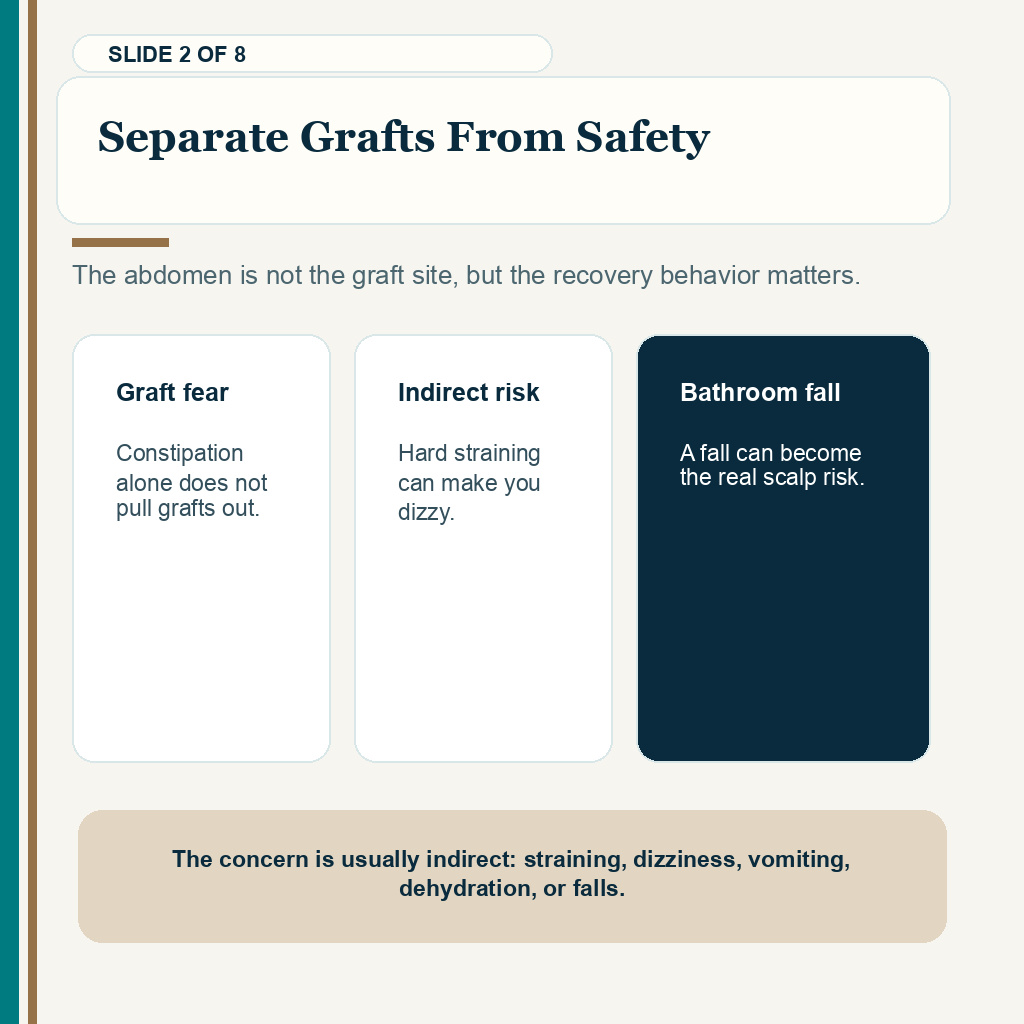
Constipation itself does not pull grafts out of the scalp. Grafts are mainly threatened by direct trauma, rubbing, scratching, infection, bleeding, or poor early aftercare. A bowel movement problem in the abdomen is not a direct graft loss mechanism.
The indirect risks are more realistic. Very hard straining can make you dizzy, sweaty, or faint. Abdominal pain can lead to vomiting. Dehydration can make you weak, reduce urine, disturb meals, and make hotel bathroom trips less safe. The focus is not bowel perfection. The focus is avoiding pressure, panic, falls, and unsafe improvisation.
Use the bathroom slowly. Keep the recipient area away from walls, towels, hands, and clothing. Do not bend sharply, do not rub the scalp, and do not sit there checking grafts with your phone. Protect the scalp, but do not freeze your whole body.
Medicines that can make constipation more likely
Stronger pain medicines, some opioid pain tablets, iron, some nausea medicines, sleeping pills after a hair transplant, and certain chronic medications can make constipation more likely. Not every clinic uses the same protocol, and not every person receives the same medicine. The exact names and doses matter.
Keep prescribed tablets unchanged until the prescribing doctor or clinic has reviewed the situation. Adding a laxative, stool softener, herbal product, or extra pain tablet also needs a medication plan check. A simple product can still be wrong when bowel disease, kidney problems, dehydration, allergy risk, or other medication is part of the case.
If antibiotics are part of your instructions, keep the discussion precise. Antibiotics after a hair transplant can cause digestive side effects in some patients, but stopping, doubling, or replacing them without review can create a different problem.
Patients given an opioid pain tablet should clarify early how long it is meant to be used and what bowel plan fits the case. If constipation starts after a new tablet, report the medicine name and timing before changing the dose or adding a laxative. Constipation from stronger pain medicine is easier to prevent than to rescue after several days of low fluid intake, hotel food, and little movement.
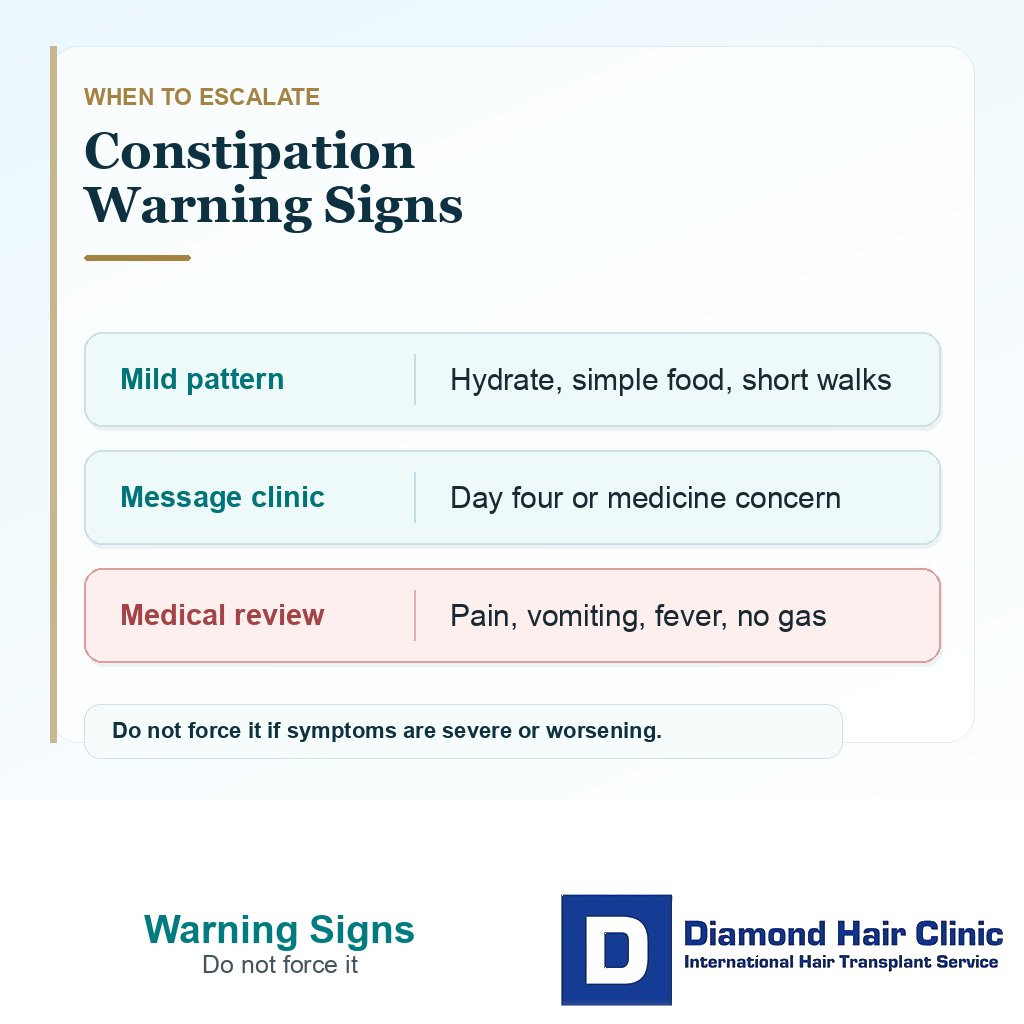
The key question is not only whether you passed stool, but whether constipation is paired with pain, vomiting, fever, or dehydration.
Day two or day three steps
On day two or day three, I first look for severity. If there is no severe pain, no vomiting, no fever, no abdominal swelling, and you can drink and pass gas, the first step is usually gentle routine correction. Drink water steadily, eat simple meals, avoid alcohol, take short safe walks, and do not ignore the urge to go to the toilet.
Food does not need to become complicated. A balanced recovery menu with protein, fruit, vegetables, soup, yogurt, rice, potatoes, and enough fluid is usually more useful than dramatic supplements. This is the same practical idea I use when discussing food after a hair transplant. The goal is to support recovery without creating a new problem.
A large fiber load can backfire when fluid intake is low. Fiber needs fluid, and adding a lot at once can make bloating or cramping worse. Add fiber gradually, keep water steady, and use foods you already tolerate. Steady water, simple meals, familiar fruit or vegetables, and gentle walking are safer than a panic purchase of several bowel products at once.
Movement should stay sensible. I am not asking you to exercise in the early recovery period. I am asking you not to lie still all day if you are medically stable. Short, quiet walking in the room or corridor may help circulation, stiffness, and bowel routine while still respecting graft protection.
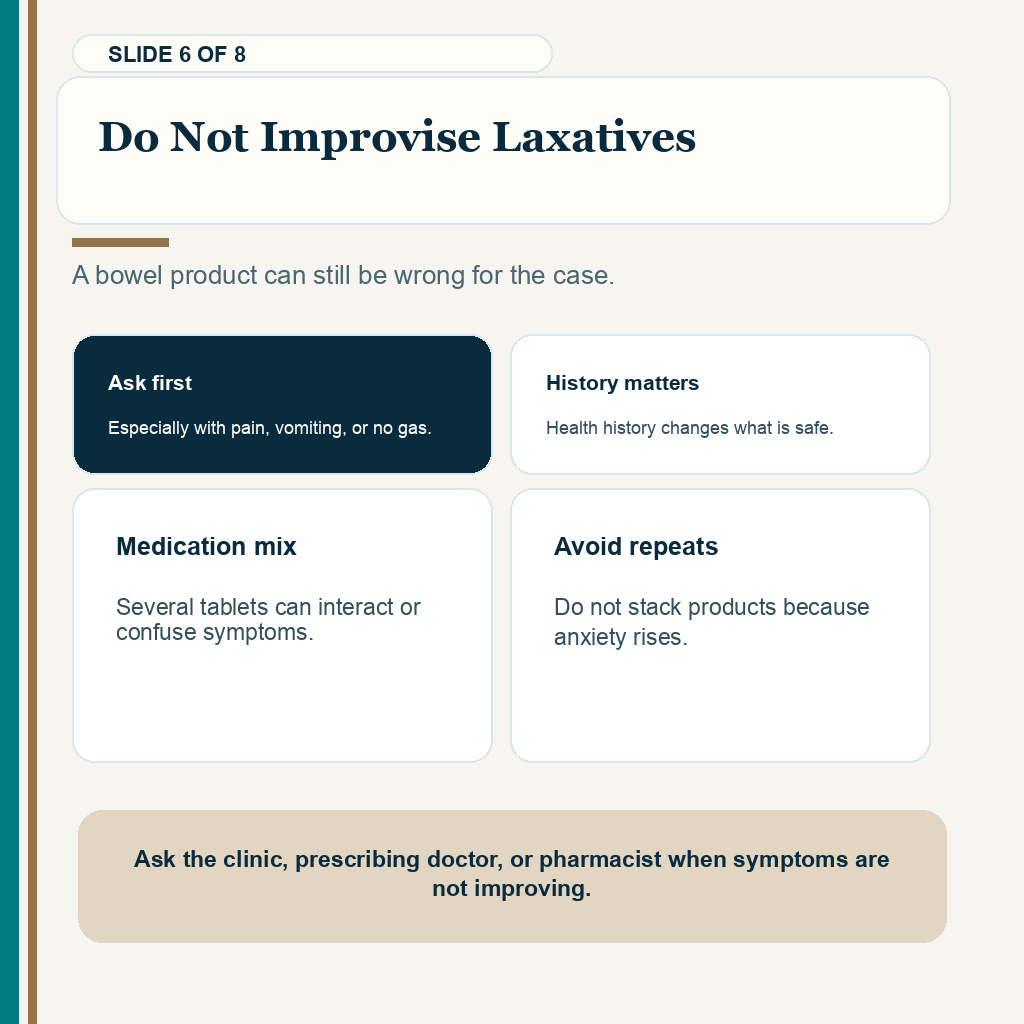
These 8 constipation recovery slides separate warning signs, graft fear, medicine names, hydration, bathroom safety, laxative review, travel routine, and the timeline to send the clinic. Swipe sideways, use the arrows one slide at a time, or choose a number below the image.




Signs that constipation needs medical advice
Constipation needs medical advice faster when it is severe, worsening, or combined with other symptoms. Severe abdominal pain, repeated vomiting, fever, inability to pass gas, a swollen abdomen, blood in stool, black stool, fainting, confusion, chest symptoms, or very low urine output should not be treated as a normal hair transplant recovery question.
No bowel movement for three days does not by itself mean emergency. No bowel movement for three days with bloating, stomach pain, nausea, vomiting, blood in stool, or inability to pass gas deserves medical advice rather than another day of guessing.
Review also matters sooner when you are taking stronger pain medicine, have bowel disease, had a previous bowel obstruction, use several medications, feel dehydrated, or are alone after international travel. The clinic can advise on hair transplant context, but some symptoms need local medical help near the hotel or at home.
Embarrassment should not delay the message. Send the clinic the practical facts, including the day after surgery, the last bowel movement, whether you can pass gas, pain level, vomiting, fever, urine amount, fluids taken, food tolerance, and every medicine or supplement used.
Constipation with vomiting or diarrhea
Constipation with vomiting changes the level of caution. Vomiting can cause dehydration, scalp rubbing, falls, and missed medication. If vomiting repeats or you cannot keep fluids down, that is not a small bowel routine problem anymore. With vomiting after a hair transplant, I judge scalp risk and patient safety together.
Constipation can also alternate with loose stool, especially when the bowel is irritated, medication is changing, or the patient starts treatment without guidance. Repeated watery stool, blood, fever, or weakness should be reviewed. Diarrhea after a hair transplant deserves the same practical symptom record, including timing, frequency, medicines, hydration, and warning signs.
Chasing every symptom with a new product can make recovery confusing. One tablet for pain, another for sleep, another for nausea, and another for the bowel can become difficult to judge very quickly. The medicine list must stay controlled.
Using laxatives after a hair transplant
Some people can use a short term laxative or stool softener after surgery, but the right choice depends on the person, medicines, hydration, medical history, and symptom severity. I would not reduce this to one universal hair transplant rule.
Mild constipation may first improve with fluids, simple food, gentle walking, and not delaying the toilet. When it is not improving, the clinic, prescribing doctor, or pharmacist should guide what is appropriate for your situation.
A pharmacy laxative should wait when severe stomach pain, nausea, vomiting, swollen abdomen, or inability to pass gas is present unless a clinician has cleared that decision. Avoid aggressive self treatment, repeated doses, enemas, or combining products because you are anxious. The wrong product can cause cramping, diarrhea, dehydration, or medicine interactions, which may disturb recovery more than the original constipation.
Severe abdominal pain, repeated vomiting, a swollen abdomen, or inability to pass gas are medical advice signals first, not problems to solve by buying laxatives. Forcing bowel medicine in the wrong situation can delay the review that actually matters.
Existing bowel or medical problems change the constipation discussion. Patients who already have bowel disease, kidney disease, heart disease, diabetes, recent abdominal surgery, or chronic constipation need the transplant recovery plan to respect their general health.
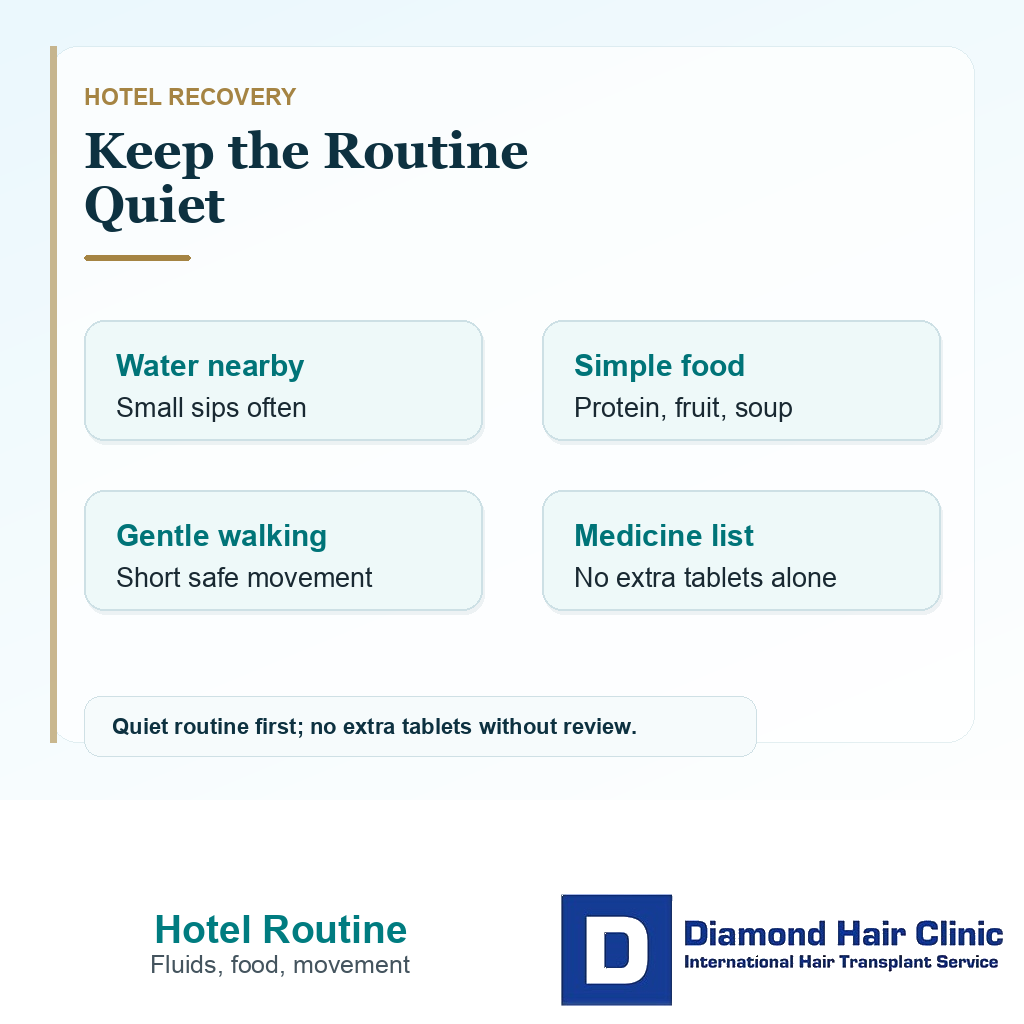
A quiet hotel routine, enough fluids, simple meals, and careful medicine review usually matter more than forcing a bowel movement.
Bathroom habits in the first days
Bathroom trips after a hair transplant should be slow and deliberate. Stand up gradually. Dizziness means sitting or lying down before walking. Keep the scalp away from the wall, towel, shower screen, low shelf, or door frame. Hotel help should come before you become weak.
Do not strain aggressively while holding your breath. If nothing happens, stop and try again later rather than forcing it. Put the phone down if it makes you inspect the grafts or sit for too long. Wash your hands, protect the scalp, and return to the recovery position without rushing.
If you feel lightheaded, sweaty, or weak, do not lock yourself into a long bathroom attempt. Sit down safely, call your companion or the hotel desk if needed, and update the clinic if dizziness is repeating. A fall can create a bigger graft risk than the missed bowel movement.
A bathroom trip can quickly become a dizziness problem. If constipation, low fluid intake, or pain medicine makes you lightheaded, treat fainting or dizziness around surgery as a fall risk, not a character test.
Travel can make constipation worse
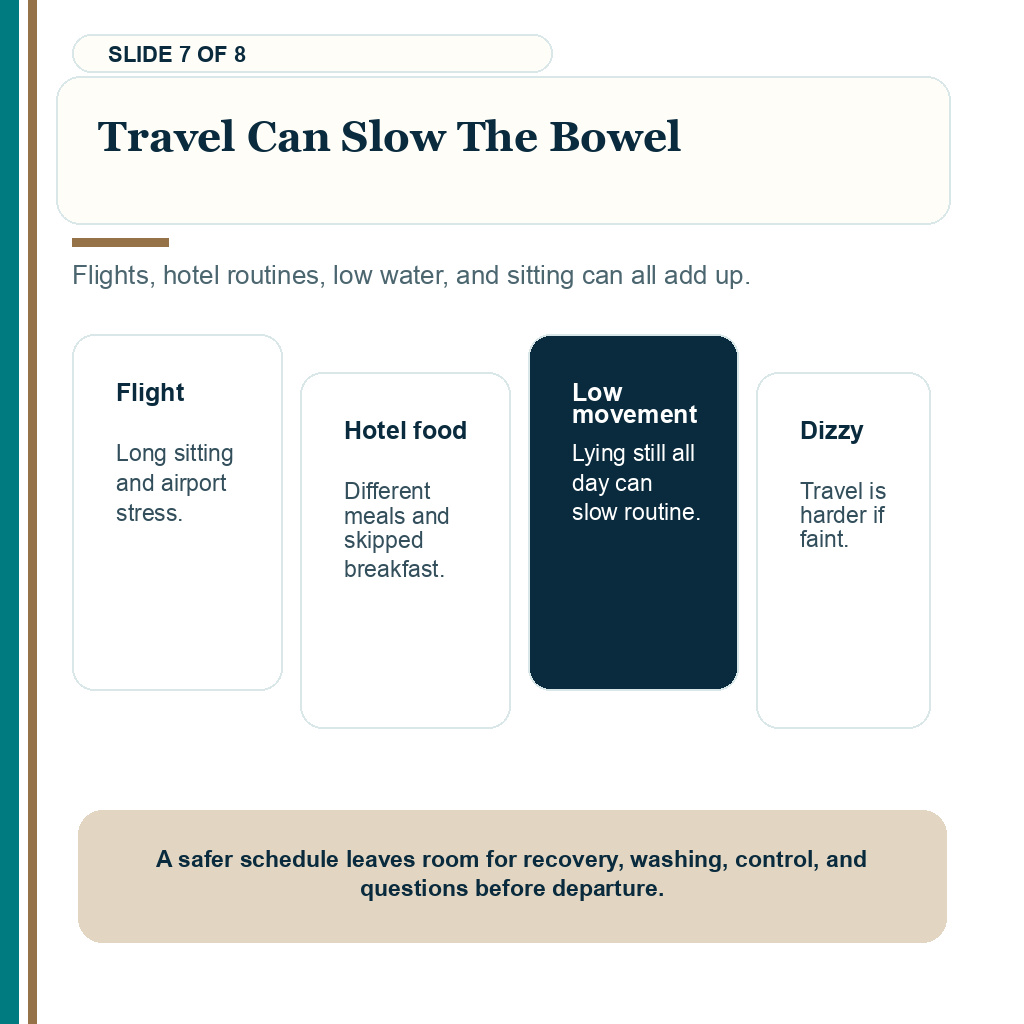
Travel can make constipation worse. Long flights, airport stress, different food, less water, poor sleep, hotel routines, and sitting for hours can all slow the bowel. I am cautious about recovery plans that treat the day after surgery as a sightseeing day.
If you are flying soon, plan hydration and movement sensibly, but do not overload yourself. Flying after a hair transplant is usually possible for stable patients, but it becomes less comfortable when the patient is dehydrated, dizzy, vomiting, in severe pain, or unable to follow instructions.
The stay in Turkey should leave room for recovery. A safer schedule gives room for surgery, one real hotel recovery day, washing, control, and questions before departure. The reason behind staying in Turkey after a hair transplant is often comfort and safety, not hotel time alone.
Details to send the clinic
Tell the clinic the exact day after surgery, when constipation started, when you last passed stool, whether you can pass gas, whether there is pain, fever, vomiting, bloating, blood, dizziness, or weakness, how much you drank, whether urine is normal or very low, what you ate, and every medicine you took. Also say whether a stronger pain tablet, iron, nausea medicine, sleep medicine, or supplement was started. A vague message like “I cannot go” is less useful than a short symptom timeline.
Photos of the scalp may still matter if you fell, rubbed the grafts, vomited hard, or noticed bleeding. But for constipation itself, I need a medical timeline more than a scalp photo. Follow up after surgery works best when you explain the whole recovery context, not only one symptom.
If the answer needs urgent local medical help, that is not a failure of the hair transplant clinic. It is proper triage. A remote clinic message should guide urgent decisions, not delay them.
Judging constipation after surgery
I judge constipation after surgery by separating graft fear from patient safety. If the scalp is protected and there are no warning symptoms, constipation is often handled by correcting the routine, reviewing medicines, and monitoring closely. If you have severe abdominal symptoms, repeated vomiting, fever, dehydration, inability to pass gas, or faintness, the priority changes.
I separate the graft fear from the symptom pattern. Do not panic about grafts because you missed a bowel movement. Do not strain hard to prove recovery is normal. Do not add medicines blindly. Send clear information early, keep fluids and simple food steady, move gently if you are stable, and seek medical review when the symptom pattern is not ordinary.
A steady recovery plan protects the grafts better than improvising from fear. Constipation after a hair transplant is usually manageable, but it should be managed with the same careful thinking as every other early recovery question.

Read this review excerpt
Every single one of my questions was answered and they made sure I had all the details I needed to make an informed decision.