



Dizziness or Fainting Needs a Pause and Review
If you feel dizzy, weak, or close to fainting around a hair transplant, sit or lie down immediately and alert the clinic. If possible, lie flat with the legs slightly raised. If not, sit with the head lowered until the feeling passes. Do not try to walk, drive, shower, or travel while the symptom is active. A brief lightheaded moment after standing is different from a true blackout, a fall, or dizziness with chest pain, shortness of breath, heart racing that does not settle together with repeated vomiting, heavy bleeding, confusion, weakness on one side, or loss of consciousness.
The grafts are not the only concern. A fall can injure the head, face, teeth, donor area, or recipient area. Fainting can also reveal a medical problem that needs checking before the procedure continues or before you leave the clinic.
My order is simple. First, prevent a fall. Then protect the grafts, check the likely cause, and adjust the plan if standing, walking, transfer, or travel is not safe yet.
The first time you stand after a long session should be slow, watched, and unhurried. Feeling fine while lying down does not prove you are ready for stairs, a hot shower, or a taxi ride.
Common causes around surgery
Fainting happens when the brain briefly receives too little blood flow. Around a hair transplant, the trigger can be standing after lying still for hours, seeing blood, pain, fear of injections, dehydration, a long procedure, low food intake, medication, or a sudden blood pressure change. Extra or hidden beta blocker use before hair transplant surgery can also change the dizziness picture.
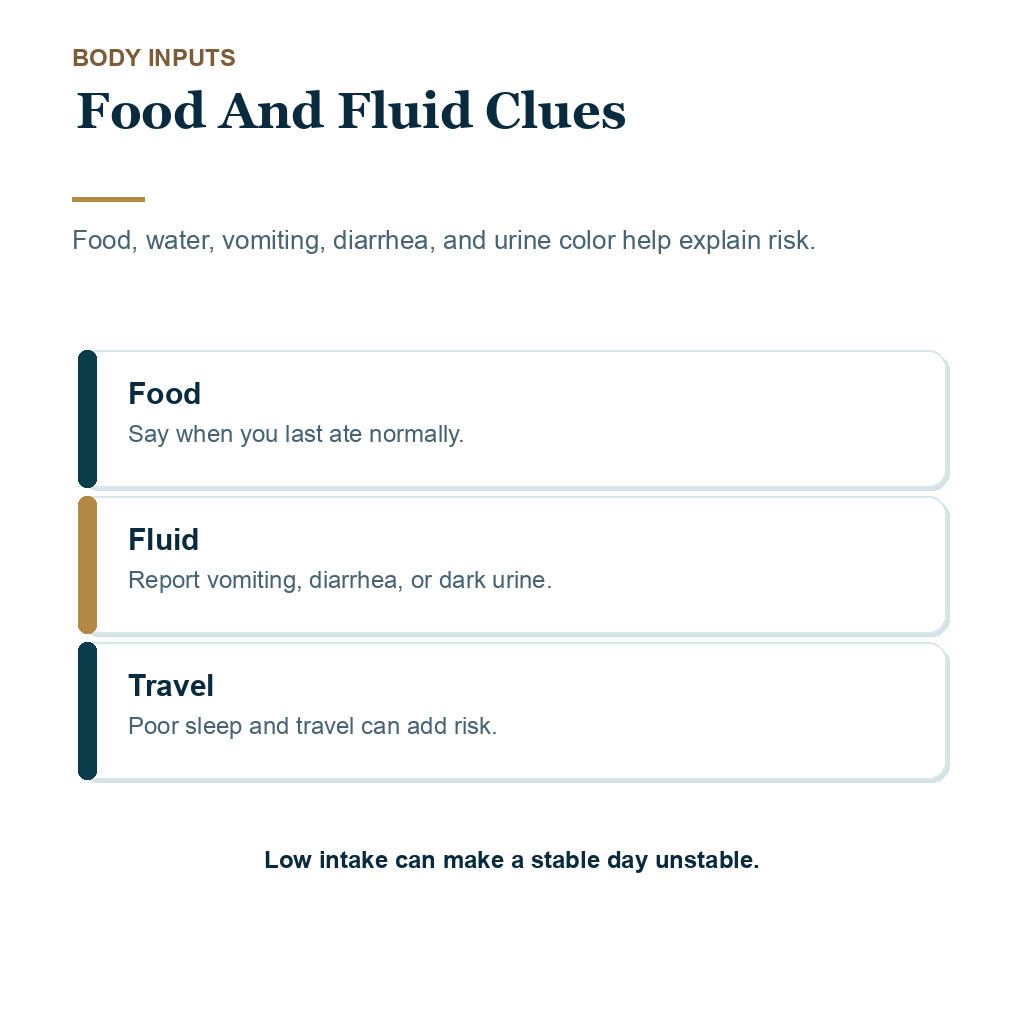
Some people feel hot, pale, sweaty, nauseated, shaky, or distant before they faint. Others describe a sudden blackout. An almost fainting episode still matters because the fall risk is real even if you never fully lose consciousness. When nausea appears before dizziness or fainting, nausea after FUE shows what fluids, medicines, and warning signs to report. If dizziness follows vomiting or diarrhea from a stomach illness, the surgery schedule becomes part of the safety review.
A hair transplant is usually performed with local anesthesia, but the body still goes through a long medical procedure. You may be nervous, short on sleep, fasting too strictly, or traveling in a different time zone. These details can make an otherwise healthy person feel weak.
The useful question is not whether the symptom is embarrassing. It is whether your body is stable enough to stand, continue surgery, return to the hotel, or travel. A careful clinic checks blood pressure and pulse when needed, reviews medication, and decides whether rest is enough or medical evaluation is needed.Warning signs make dizziness urgent
Dizziness needs urgent medical attention when it comes with chest pain, chest pressure, shortness of breath, irregular heartbeat, severe headache, confusion, weakness on one side, fainting with injury, repeated collapse, speech or movement difficulty, or symptoms that do not settle with rest.
It also needs more caution when there is heavy bleeding during a period before hair transplant, persistent vomiting, black or grey scalp tissue, fever, severe dehydration, or a known heart condition. In those situations, the symptom is no longer only a hair transplant recovery question.
If you actually faint, you should not be left to walk around alone immediately afterward, and the ride back after FUE should wait until the clinic has judged travel to be safe. You need time, observation, and a decision about whether the procedure, hotel transfer, flight, or drive is still safe.
A first true blackout, fainting with no warning, fainting while lying down, fainting during physical effort, or fainting after even a mild head or face injury should not be treated as an ordinary recovery worry. Even if you recover quickly, the clinic needs to decide whether local medical assessment is safer.
The advice to rest and report symptoms assumes you are awake and responding. If someone is unresponsive or is not breathing normally, call the local emergency number immediately and follow the emergency operator’s instructions. Do not wait for a transplant clinic reply or give drinks to someone who is not fully awake.
Medical judgment matters here. Reassurance without checking you can miss a real problem. Fear without examination can also create unnecessary panic. The symptom needs evaluation rather than guessing.
Respond to warning signs before standing or travelling
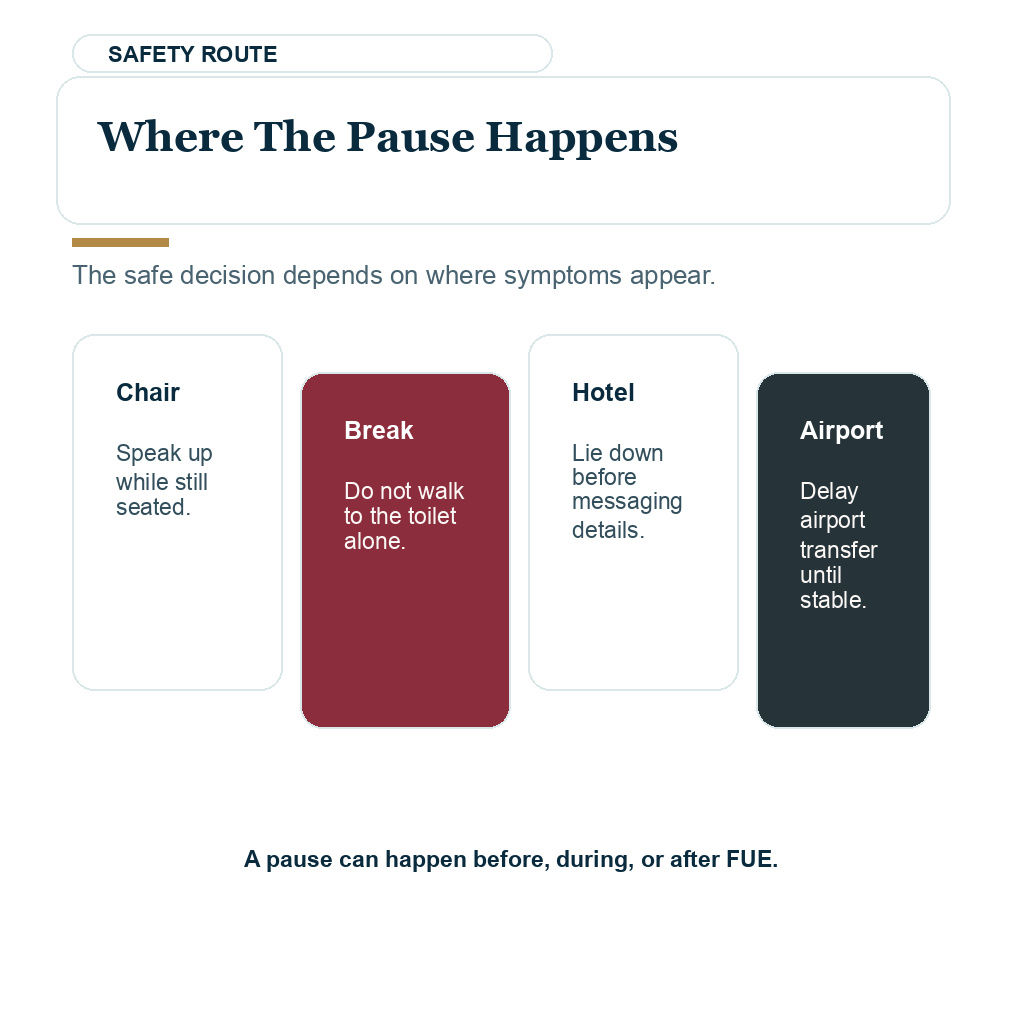
If you start to feel hot, sweaty, pale, nauseated, shaky, or as if your vision is narrowing, say it immediately. Do not try to be polite, finish a break, walk to the bathroom alone, or stand because you feel embarrassed. If you are already seated or lying in the clinic, call the team from that position instead of getting up to look for someone.
If you have already paid for a graft target, or extraction is not finished, that is not a reason to hide dizziness or push through it. The surgeon should reassess you before continuing, even if that means stopping before the planned graft count.
In the clinic, sit or lie down before the symptom becomes a fall. The team should protect the scalp, check blood pressure and pulse when needed, and restart movement slowly only after the symptoms settle. At the hotel, use the bed or floor first, then message the clinic with the time, medicines taken, food and fluid intake, bleeding, vomiting, and whether you lost consciousness. Dizziness linked with loose stools belongs in the same safety review, so diarrhea during early hair transplant recovery should be reported before travel or showering alone.
Before the first hotel night, keep water, prescribed medicine, and the phone within easy reach. The first unsafe moment is often not the symptom itself, but standing fast in the dark to find something.
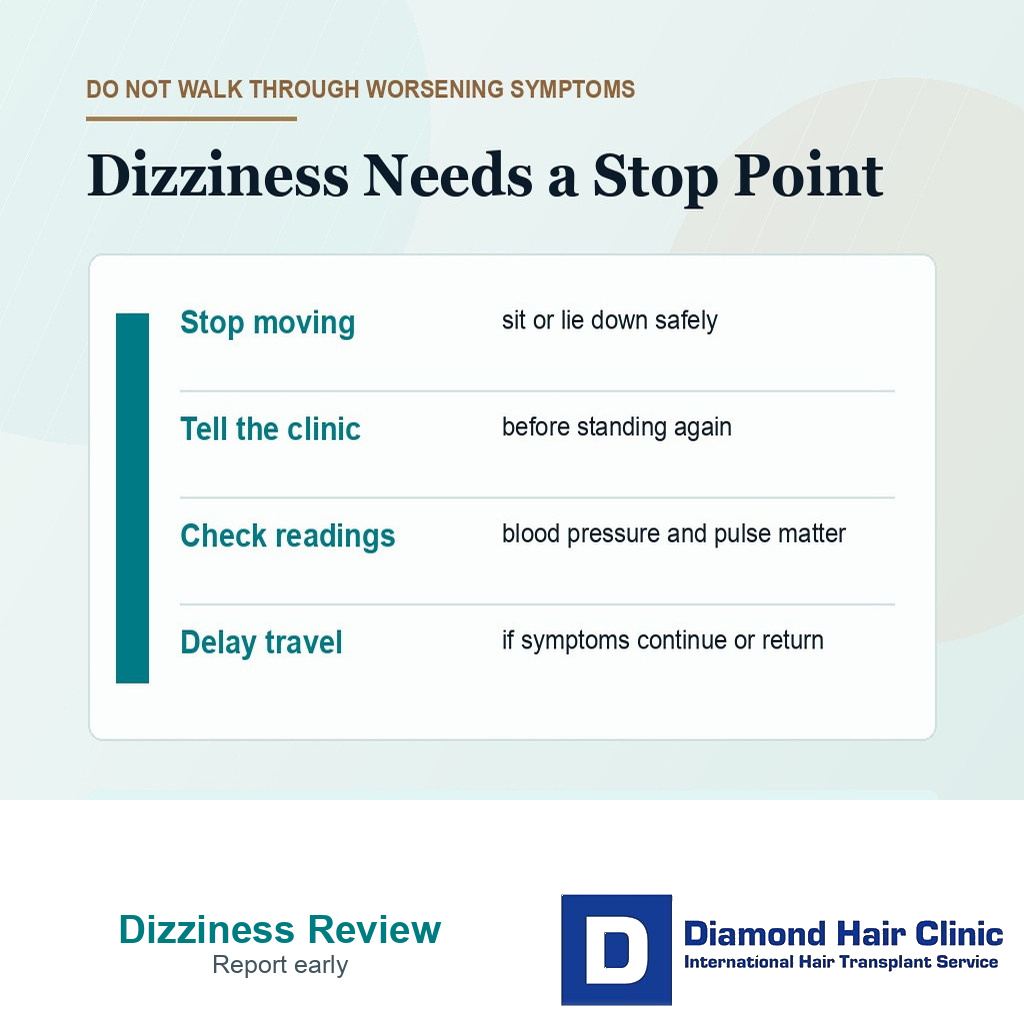
Dizziness around surgery should create a pause, a blood pressure check, and a clear decision before travel or standing again.
If the episode includes chest pressure, shortness of breath, severe headache, weakness on one side, confusion, injury, repeated collapse, or symptoms that do not settle, treat it as a medical problem first. The graft question can wait until you are safe.
Surgery day weakness can have more than one cause
Weakness on the procedure day often comes from a combination of factors rather than one single cause. Poor sleep, low food intake, little water, anxiety, pain, medication, a long session, and standing quickly after lying still can all meet at the same moment.
Strict fasting is a common contributor. Some procedures require specific fasting instructions, especially when sedation is planned, but unnecessary fasting can make you weak. The guidance on fasting after hair transplant needs individualized food and fluid instructions rather than guesswork.
Blood loss can also contribute. Minor bleeding is expected, but unusual bleeding deserves attention. If dizziness appears with active bleeding, review the guidance on bleeding after a hair transplant and message the clinic rather than waiting alone.
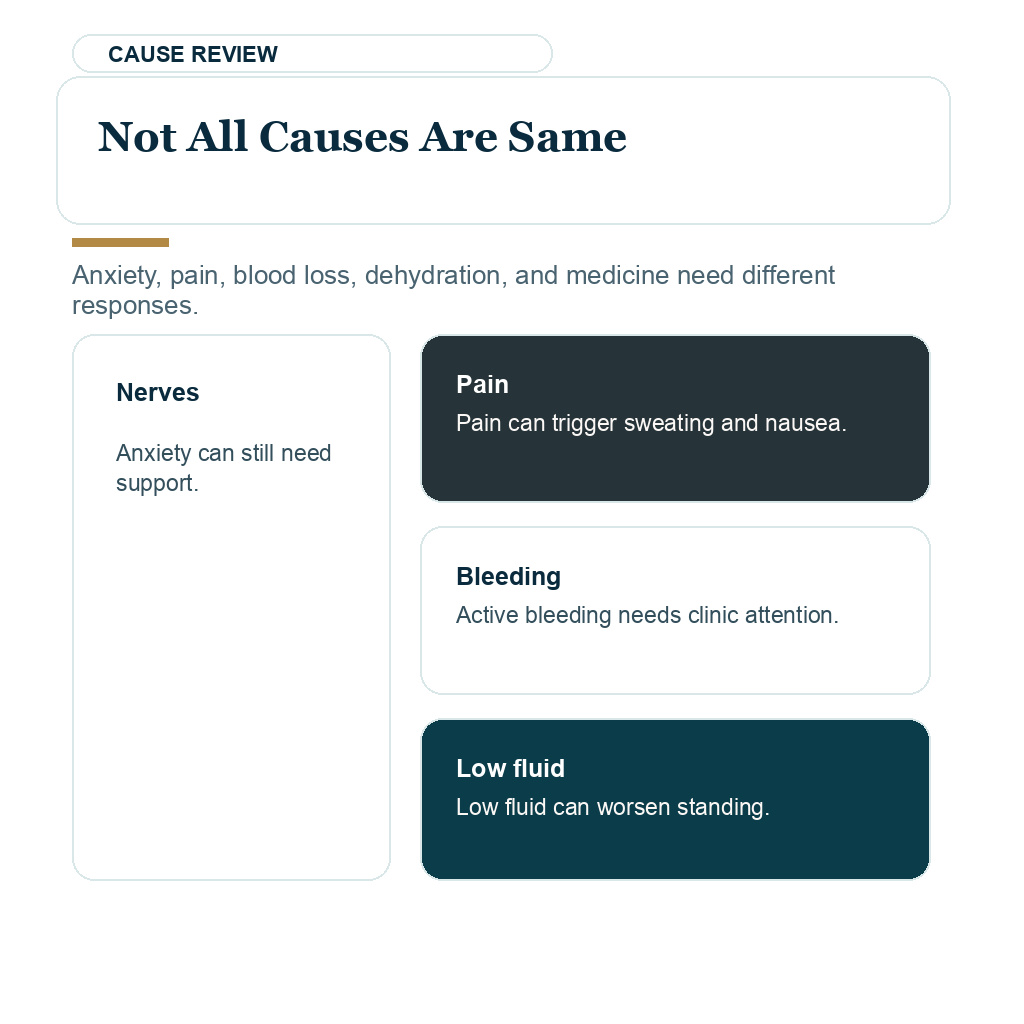
You can also become lightheaded because the procedure itself is frightening. That does not make the symptom fake. Anxiety can produce real sweating, nausea, shaking, and a blood pressure drop, so I still treat it as a physical safety issue.
The clinic’s first response is safety review
The first response is physical safety. Sit or lie down, keep the graft area protected, and avoid sudden standing. Someone from the clinic should stay nearby until you are stable enough to move slowly.
Then the clinic should check the likely causes. Blood pressure, pulse, hydration, bleeding, food intake, pain level, medication timing, and anxiety level all matter. If symptoms are strong, unusual, repeated, or linked with injury, the decision needs medical review rather than a quick answer from a staff member.
A fainting episode during a clinic break is different from a brief wave of nerves while already lying safely in the chair. If you fall, you can damage teeth, face, head, donor area, or recipient area. The clinic environment should reduce that risk.
If you are unstable, the procedure should pause until the cause is understood well enough to continue safely. Finishing fast is not the priority when your body is giving a warning.
Anesthesia, adrenaline, or sedatives can worsen unsteadiness
Local anesthesia itself is commonly used in hair transplant surgery, but the response can vary. Adrenaline in local anesthetic may make some people feel a faster heartbeat, shaking, or symptoms that feel like anxiety. Anesthesia and adrenaline in hair transplant are part of the safety discussion when you have dizziness, palpitations, or strong anxiety around procedures.
Sedatives add another layer. They can make you sleepy, unsteady, less aware, or slower to react. That is one reason I do not support routine sedation for every case. The decision should be medical, monitored, and conservative. Sedation during hair transplant should not be treated as a routine comfort extra. If sedation was used, the return to the hotel needs a clear escort and observation plan, not only a taxi reservation.
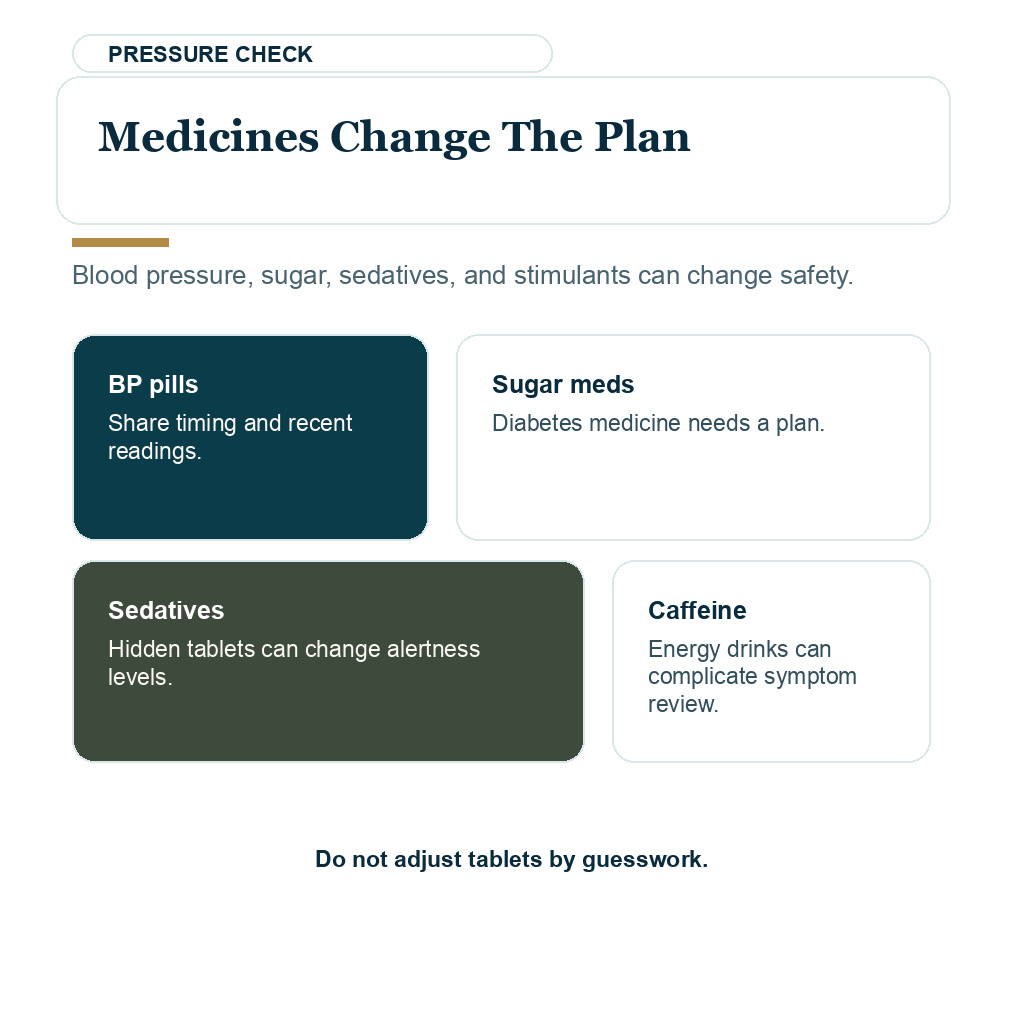
Disclose sleeping pills, anxiety tablets, stimulants such as caffeine or energy drinks, blood pressure medication, alcohol use, cannabis, and painkillers. A hidden tablet can change the safety picture. Even when the medicine seems unrelated, it may influence blood pressure, balance, alertness, or nausea.
When dizziness appears after medication, the answer is not to add another pill casually. The clinic should know exactly what was taken, when it was taken, and how you feel now.
Hotel dizziness needs observation and a clear plan
Dizziness at the hotel should be handled carefully, just as dizziness in the clinic would be. Sit or lie down first. Avoid the bathroom or shower alone if you feel unstable. Send the clinic clear details, including time since surgery, food and fluid intake, medicines taken, bleeding, vomiting, pain level, and whether you actually fainted. If you hit the head or face, cannot remember the fall clearly, or feel confused afterward, local medical assessment comes before graft checking.
At this point, follow up access after surgery is not administrative. You need a clear route for photo review, symptom review, and a decision about whether local medical assessment is safer.
If vomiting is part of the episode, the pressure and dehydration risk matter. Vomiting after hair transplant becomes more concerning when it is repeated, forceful, linked with bleeding, or leaves you weak and dehydrated.
Do not inspect the grafts obsessively while you are lightheaded. The immediate priority is not mirror checking. It is preventing a fall and deciding whether the symptom needs clinic review or emergency help.
Repeated dizziness, fainting, chest symptoms, or severe weakness should not be managed by waiting alone in a hotel room. Ask the clinic who should assess you and whether local emergency help is needed.
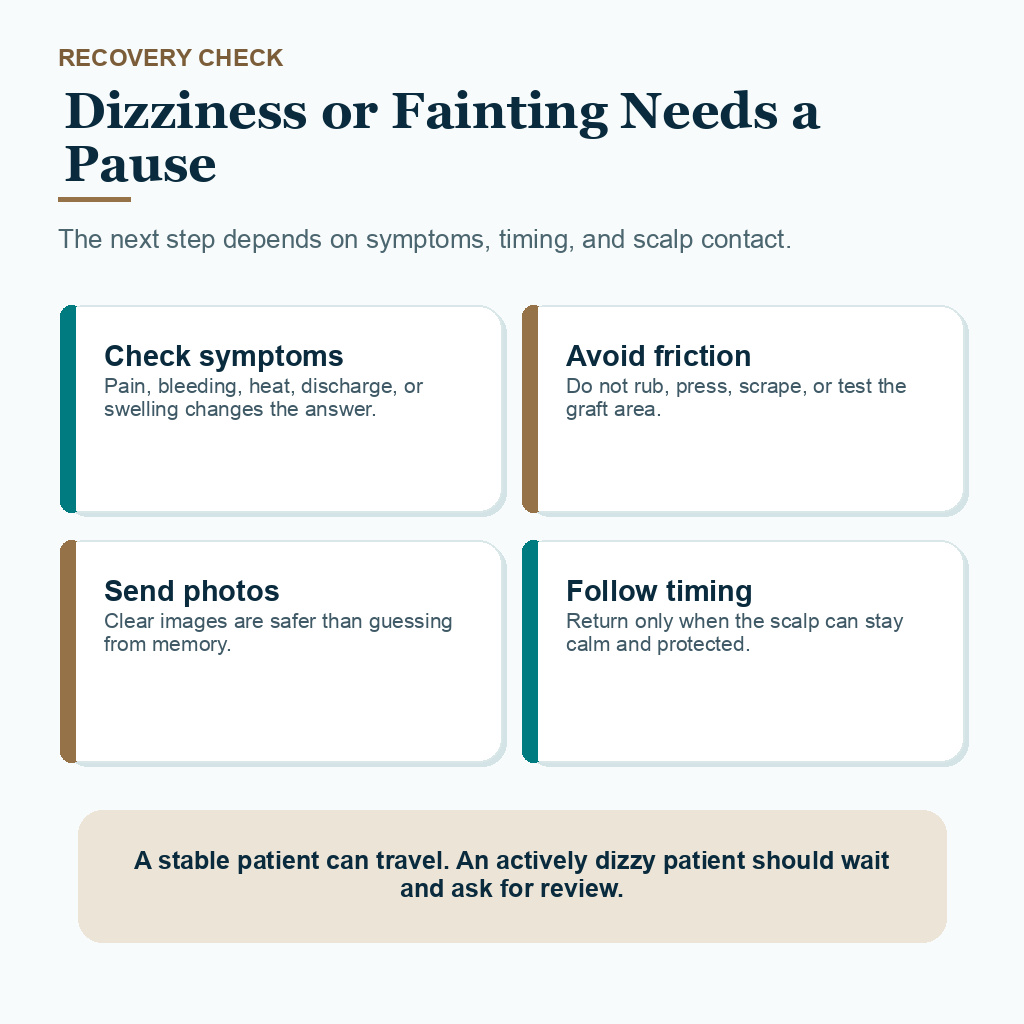
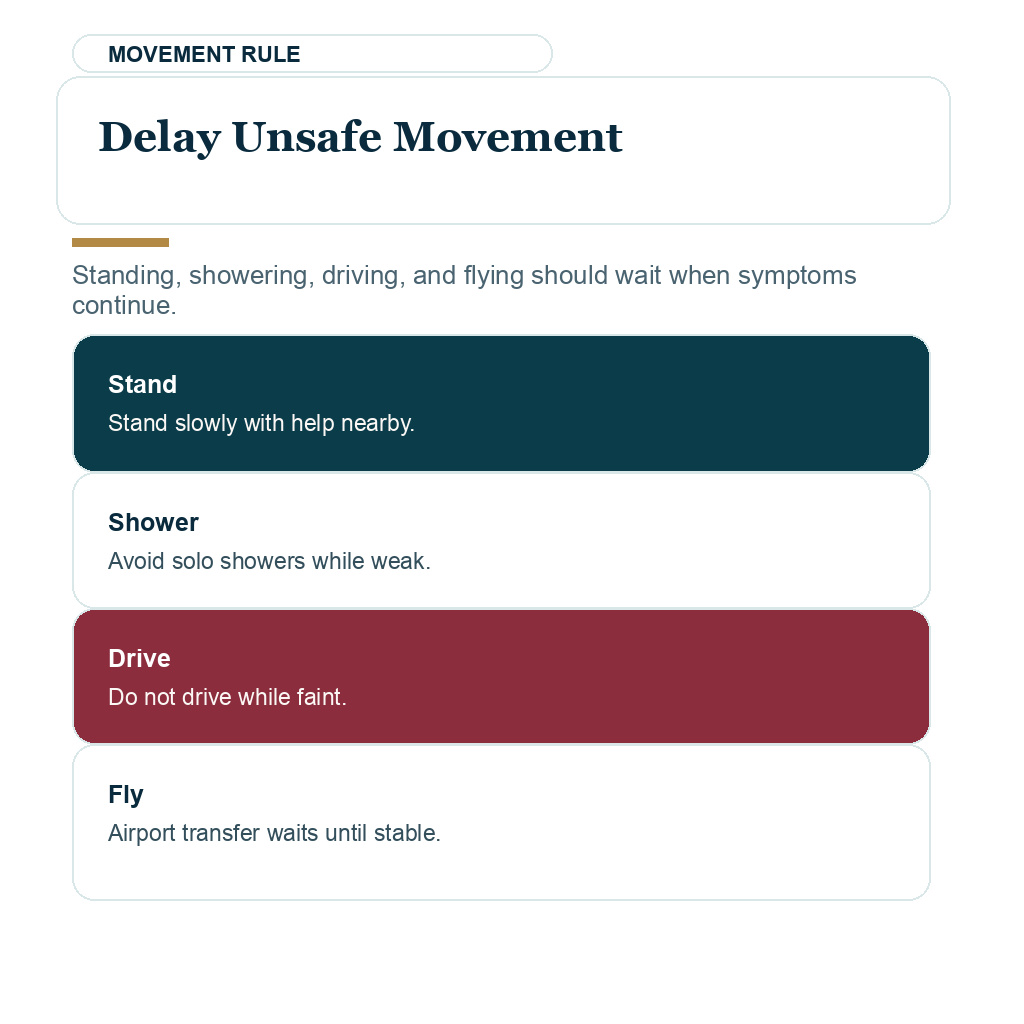
Dizziness after leaving the clinic should delay walking, driving, showering, or travel until you are stable.
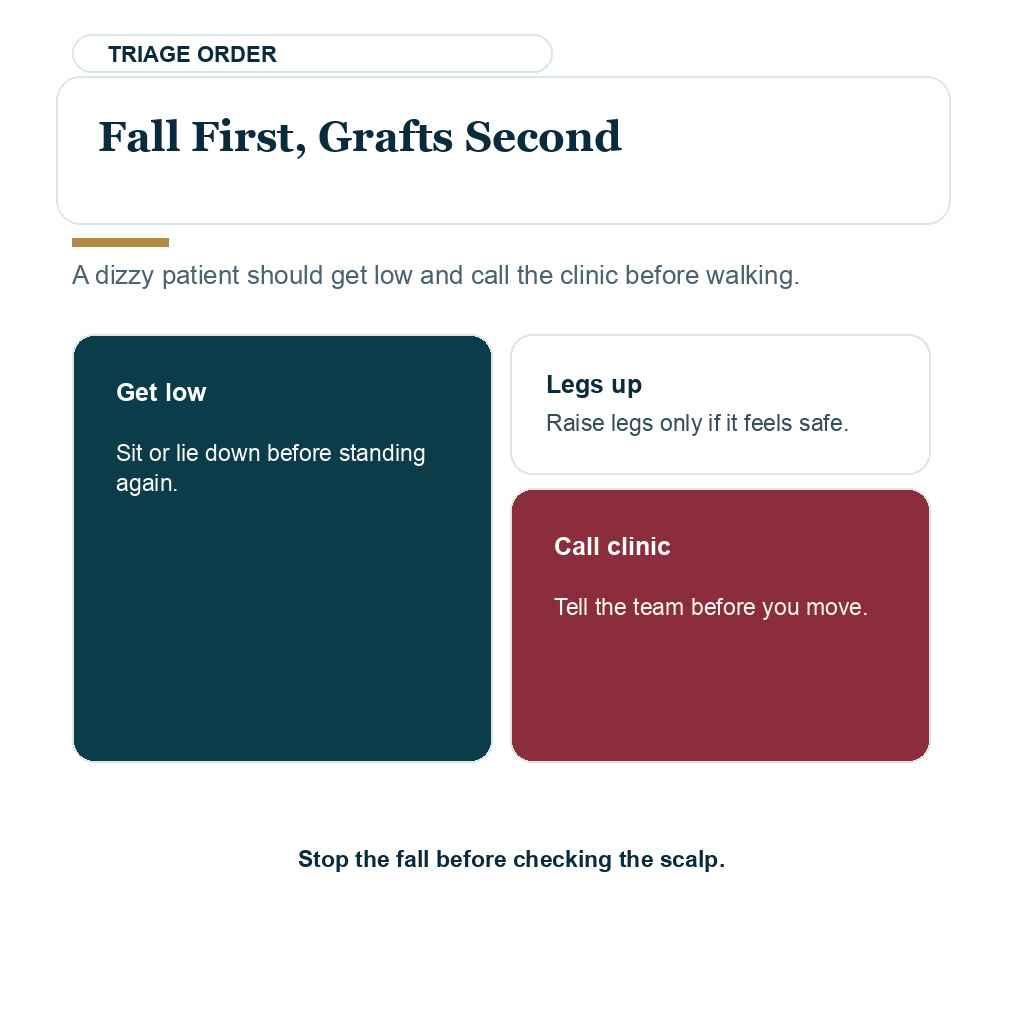
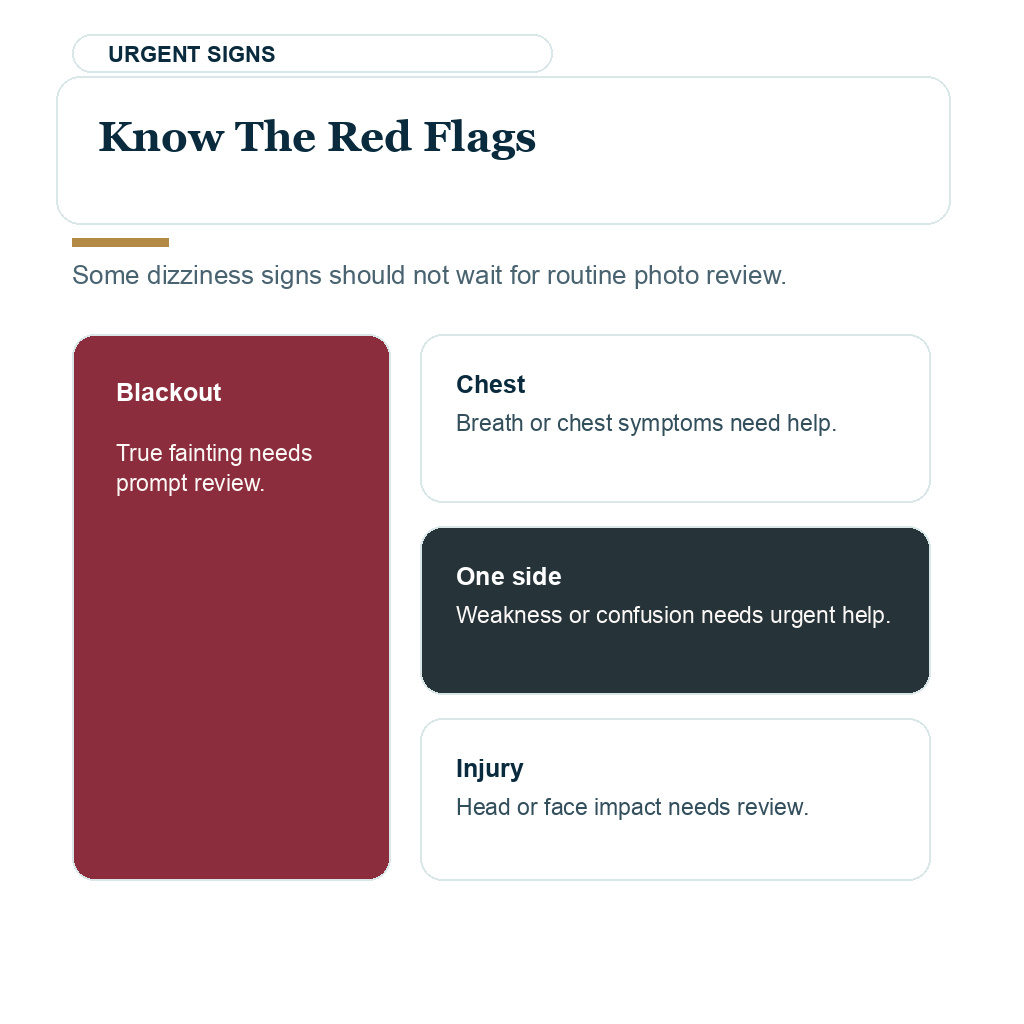
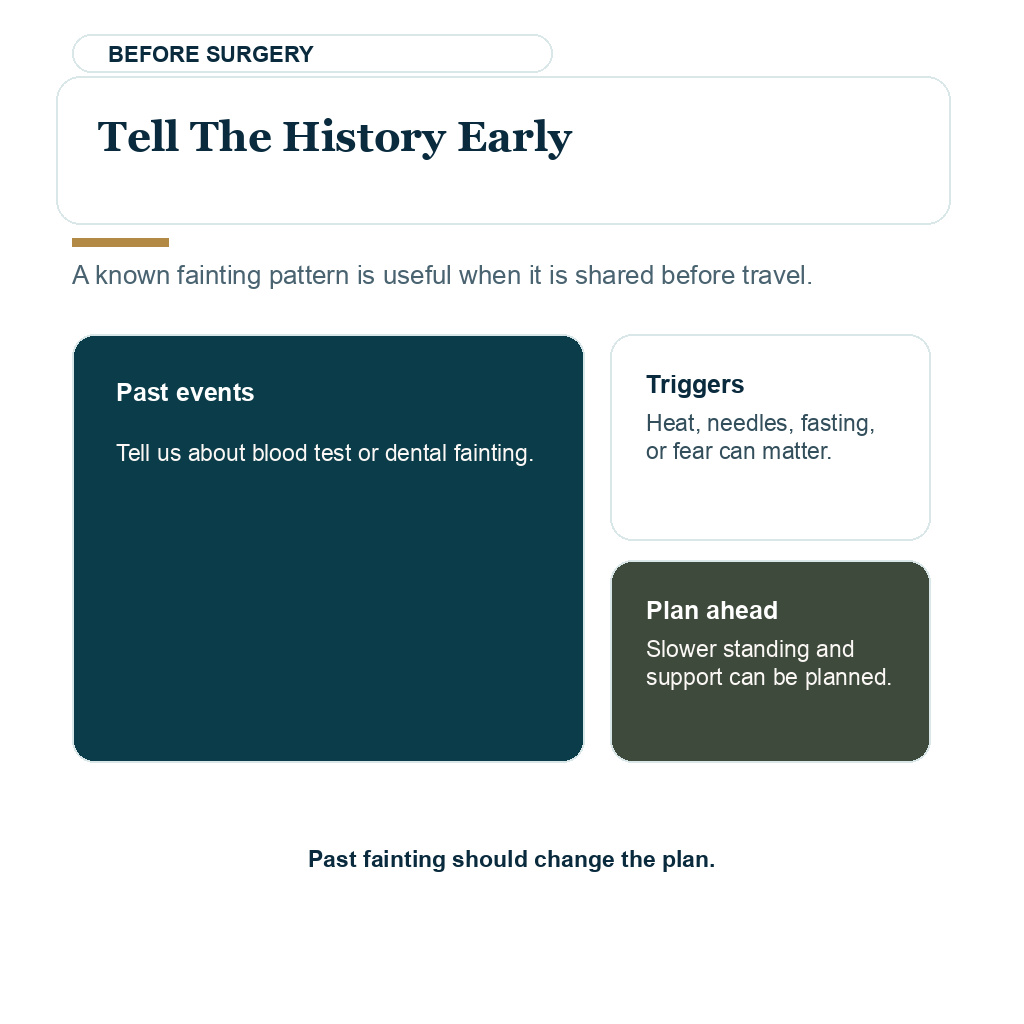
Use these 8 dizziness and fainting safety slides to separate fall prevention, urgent signs, food and fluid clues, medicine and pressure context, clinic or hotel pauses, likely causes, unsafe movement, and prior fainting history. Swipe sideways, use the arrows one slide at a time, or choose a number below the image.
Poor sleep, pain, or panic can feel similar
Poor sleep, procedure stress, pain, swelling, hunger, and panic can make you feel shaky or unreal. You may also misread ordinary scalp tightness as danger and then become more anxious.
That said, anxiety is a diagnosis of exclusion when the symptom is strong. Chest pressure, fainting, shortness of breath, heavy bleeding, weakness on one side, confusion, injury, or repeated vomiting should be checked medically before everyone decides it was only fear.
If you know you become very anxious before medical procedures, bring it up early. The answer may be better explanation, slower transitions, food and hydration planning, a support person, or a safer monitoring plan. It should not be hidden until you feel unwell.
Some people take medication to cope with nerves. If that includes tablets such as benzodiazepines or sleep medication, the clinic must know. Xanax or Valium before hair transplant can create safety problems when the clinic does not know the medicine name, dose, timing, or effect on alertness.
Travel should wait when symptoms are unstable
Travel should be delayed when dizziness is active, when you have fainted, when medication or sedation is still affecting alertness, when vomiting is repeated, when you were injured, or when the clinic has not checked a concerning symptom.
Driving is especially important. If you feel faint, you should not drive back to the hotel or airport. The usual guidance for driving after hair transplant becomes much stricter when dizziness is present.
Flying also needs judgment. Mild tiredness after surgery is different from unstable symptoms. If there is active bleeding, severe swelling, strong pain, repeated vomiting, chest symptoms, or dizziness that does not settle, review flying after hair transplant and speak with the clinic before leaving for the airport.
Traveling alone can make the decision harder. If you are alone, you need a clear plan for hotel return, clinic contact, food, water, medication timing, and emergency help. After a true fainting episode or sedative exposure, that plan may need an escort, an extra observation period, or a delayed airport transfer. Traveling alone to Turkey for hair transplant becomes less safe when fainting risk is part of the picture.
Medical safety comes before graft fear
People often ask first whether fainting can ruin the grafts. I understand that fear, but the better first step is to ask whether you are medically safe and whether any fall, bleeding, or scalp contact occurred.
If you felt dizzy but did not fall, did not hit the scalp, did not rub the grafts, and did not see fresh bleeding or graft tissue, the graft risk may be low. But the cause of dizziness may still need attention.
If you fell, hit the head, bled, vomited repeatedly, or cannot remember what happened, tell the clinic quickly. The usual timeline for when hair transplant grafts become secure is only one part of the decision. Fainting adds a different safety layer because trauma can occur during the fall.
A clear photo sent to the clinic is more useful than repeated touching, washing, or checking the area while you feel unstable. Protect the grafts, protect the head, and get the symptom assessed.
A fainting history needs supervision, not guesswork
If you have fainted with injections, blood tests, heat, fasting, dental work, or earlier surgery, tell the clinic while the day can still be adjusted. I want to know the trigger, warning signs, recovery time, medicines, blood pressure pattern, and whether there were chest symptoms, palpitations, confusion, injury, or features that looked like a seizure.
The plan may involve food and fluid timing, slower position changes, observation after standing, a support person, or medical assessment. When blood pressure, anemia, or medication history is relevant, blood pressure and hair transplant planning and blood tests before hair transplant belong in the safety discussion.
After surgery, dizziness changes travel decisions. Do not drive while lightheaded, and do not rush an airport transfer after fainting, repeated vomiting, heavy bleeding, chest symptoms, or a fall. Protecting the grafts matters, but first I need the patient upright, oriented, and safe.
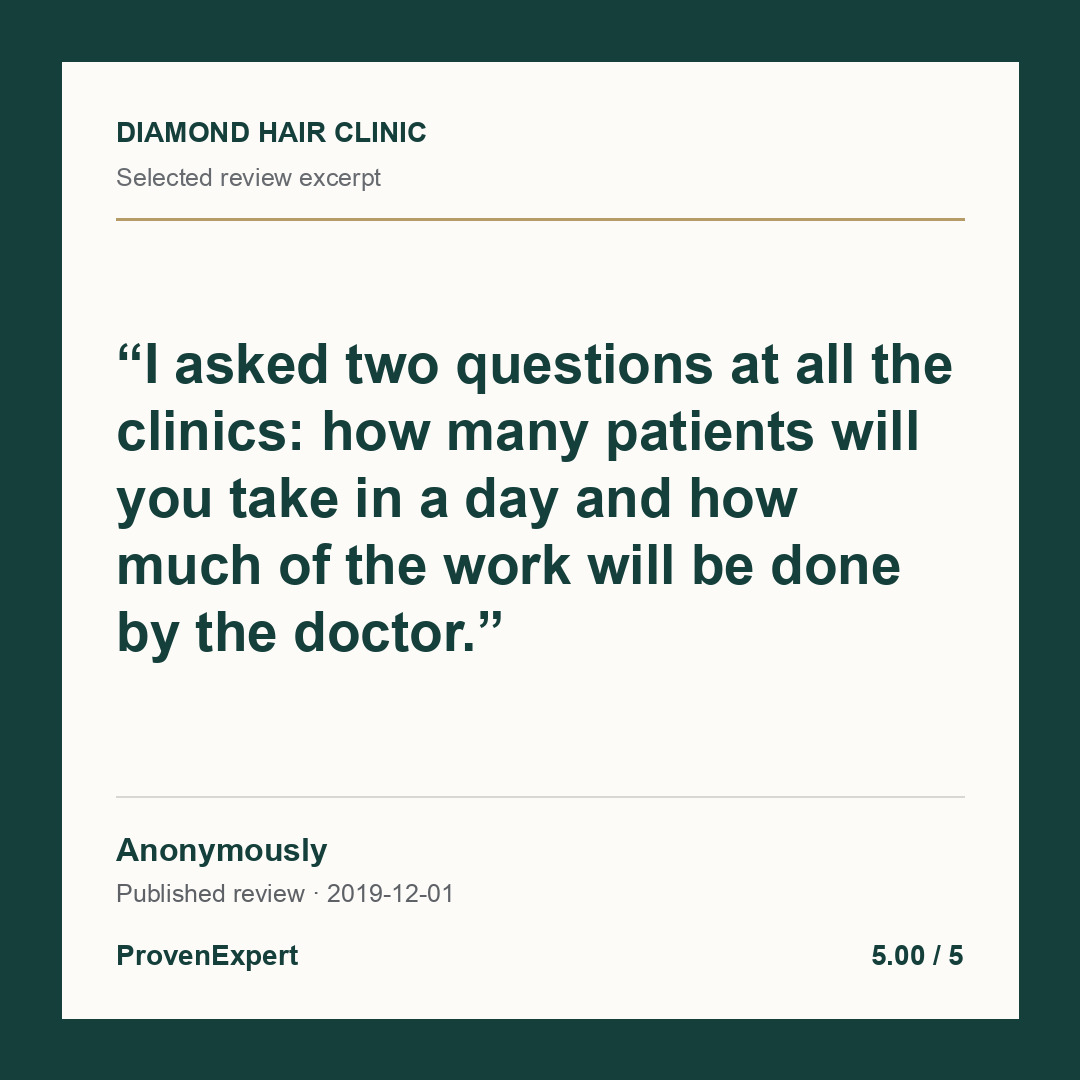
Read this review excerpt
I asked two questions at all the clinics: how many patients will you take in a day and how much of the work will be done by the doctor.