


Heart Racing Around Hair Transplant Safety
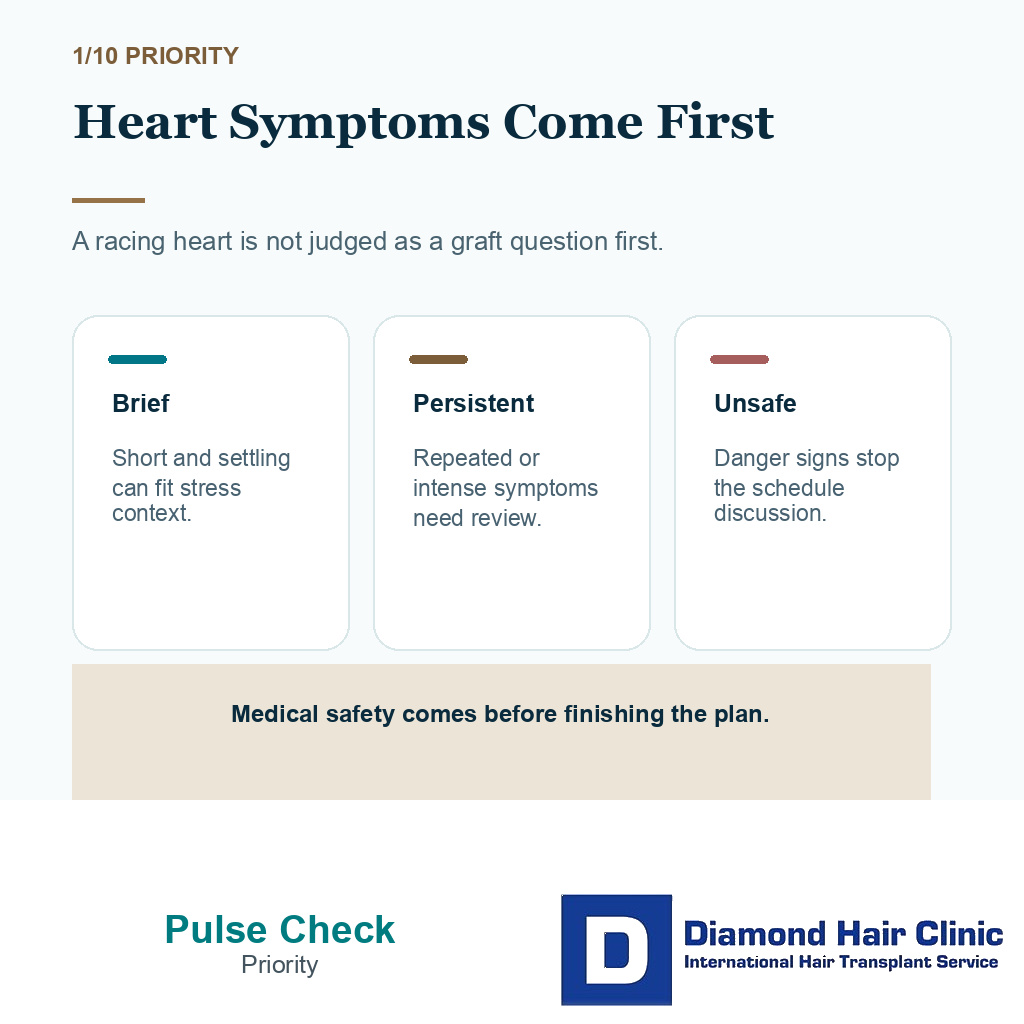
A fast heartbeat around a hair transplant can be harmless in some contexts, but I do not treat it as a graft question first. It can come from anxiety, caffeine, pain, dehydration, poor sleep, medication, or adrenaline used with local anesthesia. The practical question is whether it is brief, regular, and settling, or new, intense, persistent, irregular, or joined by chest pain, shortness of breath, fainting, severe dizziness, confusion, unusual sweating, weakness, or a known rhythm history.
Heart symptoms come before the schedule. If the pattern looks unsafe, the procedure should pause or medical review should happen before the transplant continues. The aim is not panic and not dismissal. It is to separate a settling stress response from a rhythm or circulation problem that needs real assessment.
I look at the pulse number, blood pressure, timing, medicine list, caffeine or stimulant use, anxiety level, hydration, pain, and heart history. A brief anxious episode before injections is different from a rhythm problem that keeps returning after surgery. A remote message can describe the pattern, but it cannot check an ECG, oxygen level, blood pressure trend, or abnormal rhythm in real time. If the racing heart follows cocaine, MDMA, speed, or another party drug after FUE, urgent physical symptoms should be handled before graft anxiety.
Do not judge the episode only by how frightened you felt. Write down the timing, pulse if known, rhythm feel, medicines, caffeine, and any chest or breathing symptoms so the clinic can decide what belongs to medical review. Also name recent oral minoxidil, topical medication, caffeine, or stimulant changes so the clinic has a trigger map before deciding whether this is ordinary anxiety or needs medical review.
Medication timing after a new drug or dose change is a different issue from ordinary surgery nerves. That history can decide whether the transplant continues, pauses, or needs medical clearance first.
Reasons the heartbeat can race around surgery
The heart can race around surgery because the day combines stress, travel, fasting or poor eating, local anesthetic injections, long procedure time, pain sensitivity, caffeine changes, and the emotional weight of finally having surgery. Some people arrive after a poor night of sleep and several weeks of overthinking. The pulse is already high before anything medical happens.
Local anesthesia is another part of the discussion. Adrenaline in hair transplant anesthesia can be useful for bleeding control and anesthetic effect, but it also needs precise dosing and monitoring in selected cases. A brief pounding feeling can happen in some people. Rhythm disease, unstable blood pressure, stimulant sensitivity, or previous strong reactions all make the anesthesia plan more cautious.
A safer plan starts with full disclosure. Previous palpitations at the dentist, fainting with injections, panic attacks, high blood pressure, abnormal ECG findings, thyroid disease, stimulant medicine, or a cardiologist’s warning about adrenaline all matter. ED medication before FUE surgery should be disclosed too, especially when palpitations, blood pressure medicine, stimulants, nitrates, or heart history are already part of the discussion. Decongestant cold medicine should also be included, especially when decongestants before FUE overlap with stimulants, pulse, and blood pressure. Do not simplify the medication list to what sounds relevant. Bring the full list. When the same history includes hives, swelling, breathing symptoms, or an unknown dental anesthetic reaction, local anesthetic allergy before hair transplant is the better planning route.
Warning signs that change the decision
Heart racing becomes an urgent warning sign when it comes with chest pain, chest pressure, shortness of breath, fainting, near fainting, loss of consciousness, blue lips, confusion, unusual sweating, weakness on one side, severe dizziness, heavy bleeding, a device warning for an irregular rhythm, or a pulse that stays very high at rest or feels irregular. Fainting or dizziness around surgery changes the decision because it can become a fall, travel, or emergency risk. In that moment, the question is no longer only about grafts. It is medical safety. A device alert, ICD shock, or rhythm episode recorded by a pacemaker or ICD before FUE belongs in the safety review before travel or local anesthesia.
If this happens before surgery, the procedure may need to stop. If it happens after surgery in the hotel or at home, call local emergency services or seek urgent local medical help rather than waiting only for a remote hair transplant message. Do not drive, shower alone, fly, or walk around the hotel while the symptom is active. If you are alone, call the clinic, hotel reception, or a companion so someone knows what is happening. Remote graft reassurance is secondary when the symptom could require a heart monitor or emergency assessment.
Some people minimize the symptom because they travelled far, paid a deposit, or feel embarrassed. That is the wrong pressure. An elective hair transplant can wait. A dangerous heart symptom should not wait.
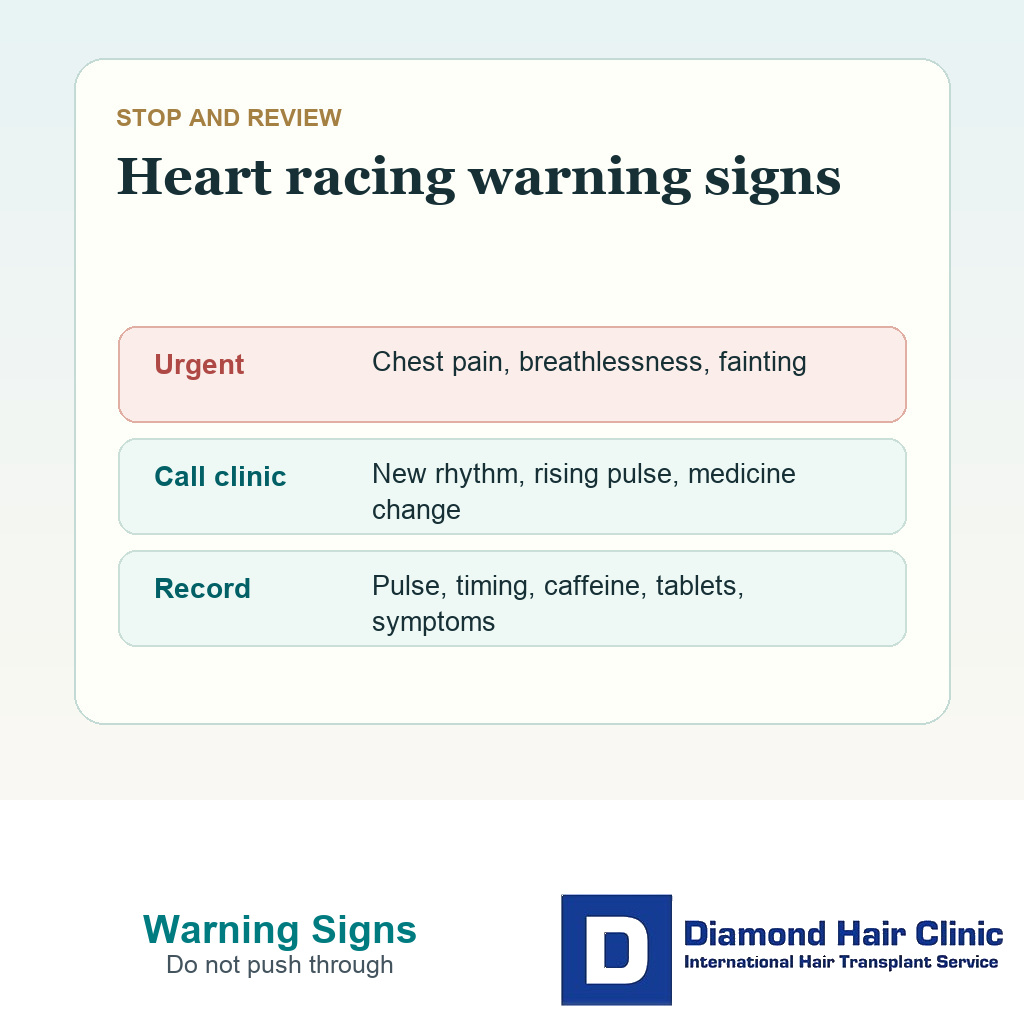
Some palpitations settle quickly. Warning symptoms need medical review without delay.
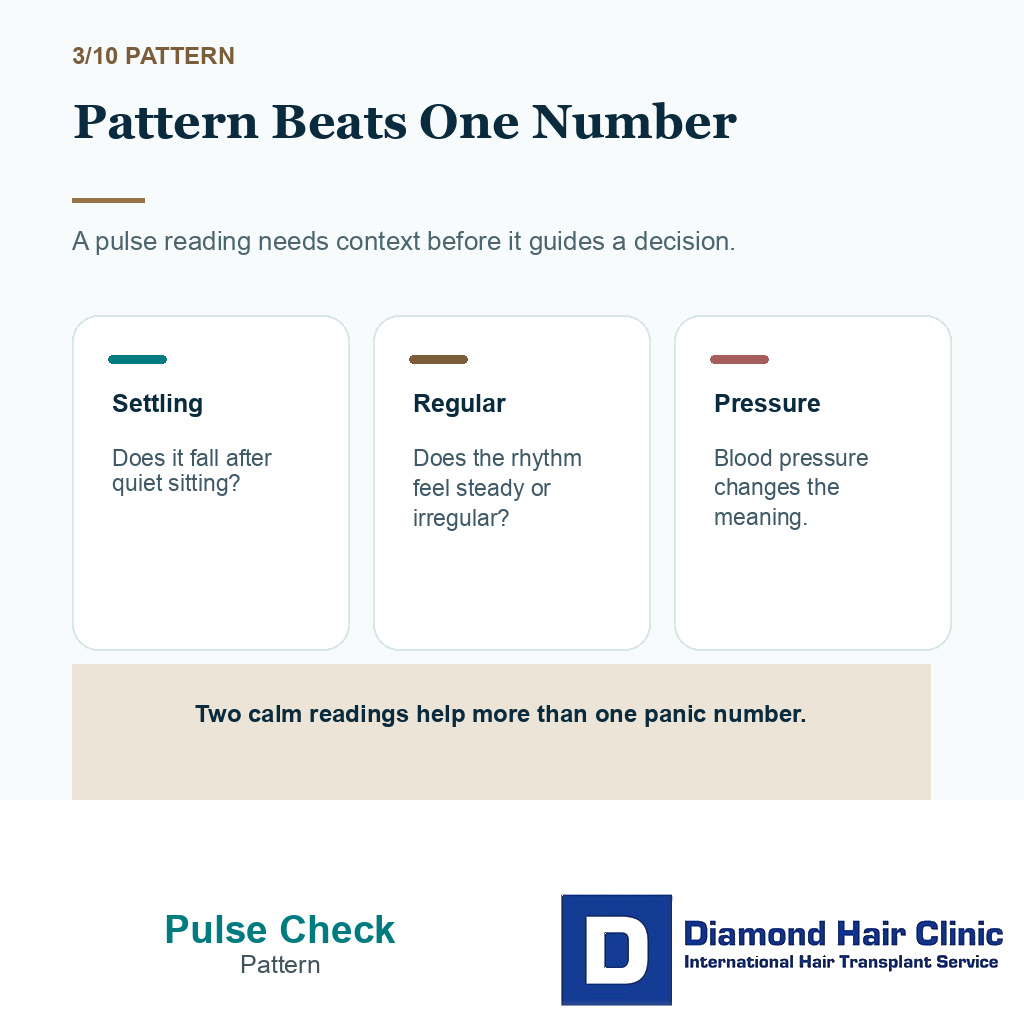
Pulse numbers alone do not decide surgery
There is no single pulse number that approves or cancels every hair transplant. A pulse of 105 after rushing upstairs is not the same as an irregular 105 with chest tightness. An athletic person with a usual resting pulse of 55 is not the same as a nervous traveller whose usual pulse is 85. A watch reading can help describe timing, but it should not be used to clear danger signs. I compare the number with the person in front of me. A resting pulse that remains above your normal range after quiet sitting deserves disclosure, especially when there is no exercise, fever, or clear anxiety trigger.
The pattern matters too. Is the rate settling after rest, hydration, and reassurance, or is it rising? Is the rhythm regular or irregular? Is blood pressure also high? Did caffeine, an energy drink, a gym stimulant product, or anxiety come first? Is there a medical reason such as thyroid disease, anemia, dehydration, fever, pain, low oxygen, electrolyte disturbance, or medication? Two readings taken after sitting quietly are more useful than one number taken during panic.
For high blood pressure before hair transplant surgery, one reading is not the whole story. Vital signs that stay unsafe cannot be brushed aside.
Local anesthesia adrenaline and palpitations
Adrenaline in local anesthesia can contribute to palpitations or a pounding heartbeat in some people, especially with sensitivity, anxiety, a previous reaction, interacting medication, or an injection pattern that creates a stronger systemic response. This does not mean adrenaline is automatically bad. It means it must be used with judgment, and the team should know if the feeling begins during injection rather than hours later.
In hair transplant surgery, adrenaline can help reduce bleeding and keep the anesthetic working in the local tissue. The benefit is surgical control. The risk is that the wrong medical history, dose, timing, or injection context can create symptoms that need attention. If palpitations begin during numbing, the practical step is to pause, measure, and reassess before continuing injections. If you already use heart medication, have rhythm symptoms, or had a strong reaction during dental anesthesia, say so before surgery.
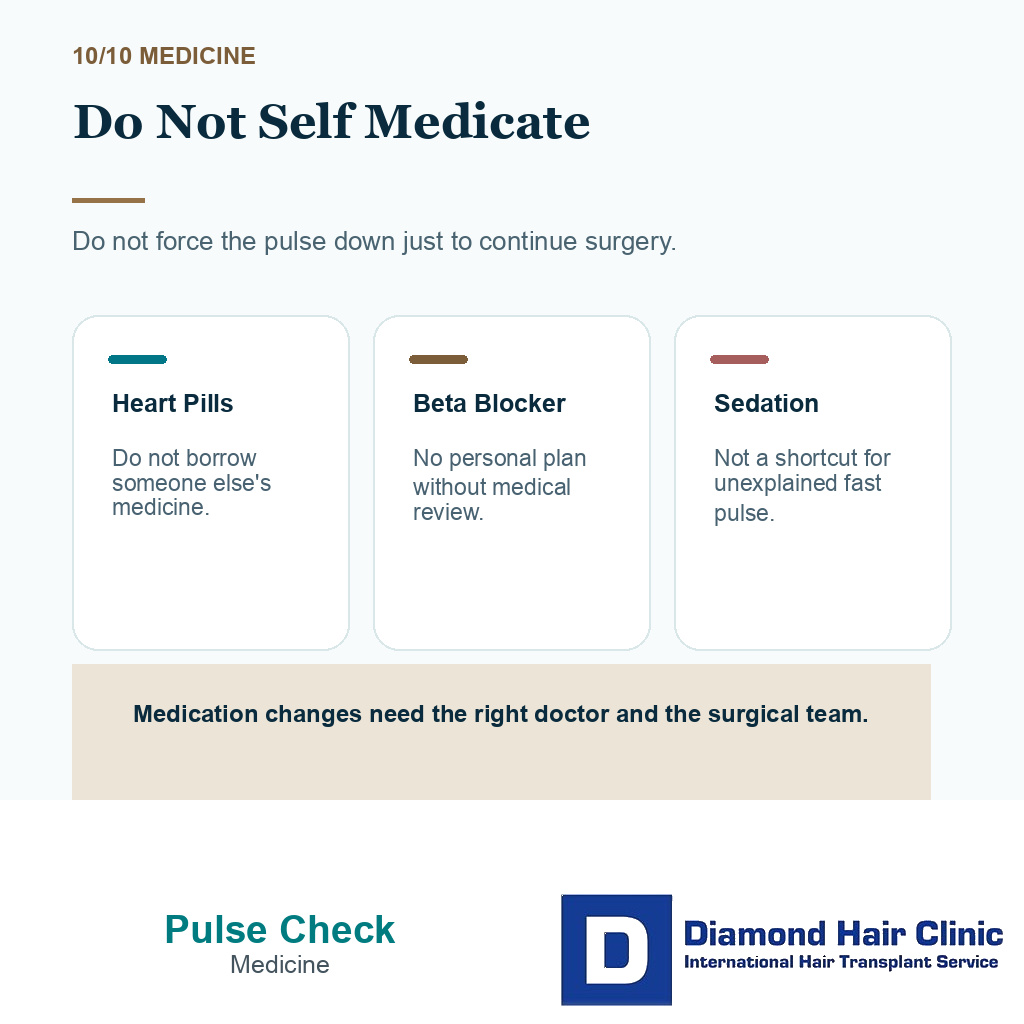
I also review beta blockers before hair transplant surgery with the medication history in front of me. If you already take a beta blocker, do not stop it casually. If you do not normally take one, do not take one on your own to force the pulse down on surgery day.
Anxiety still needs medical judgment
Anxiety or panic can create a racing heartbeat, shaking, sweating, tight breathing, and the feeling that something is wrong. I take that seriously because the feeling is real even when the heart itself is healthy. But I still separate panic from medical risk rather than guessing.
Pause and measure pulse, blood pressure, oxygen saturation when available, symptoms, timing, and response to rest. If the numbers settle and there are no danger signs, the team can continue the plan with more confidence. If danger signs are present, measurements should support medical review, not delay it. Panic disorder, previous fainting, needle fear, claustrophobia, or a bad anesthetic memory should be part of the plan before the procedure day, not discovered only after the chair is prepared.
Medication for anxiety is not something to improvise. If Xanax or Valium before a hair transplant is being considered, dose, timing, alcohol, sedation, breathing risk, and monitoring must be planned before surgery.
Caffeine energy drinks and stimulant role
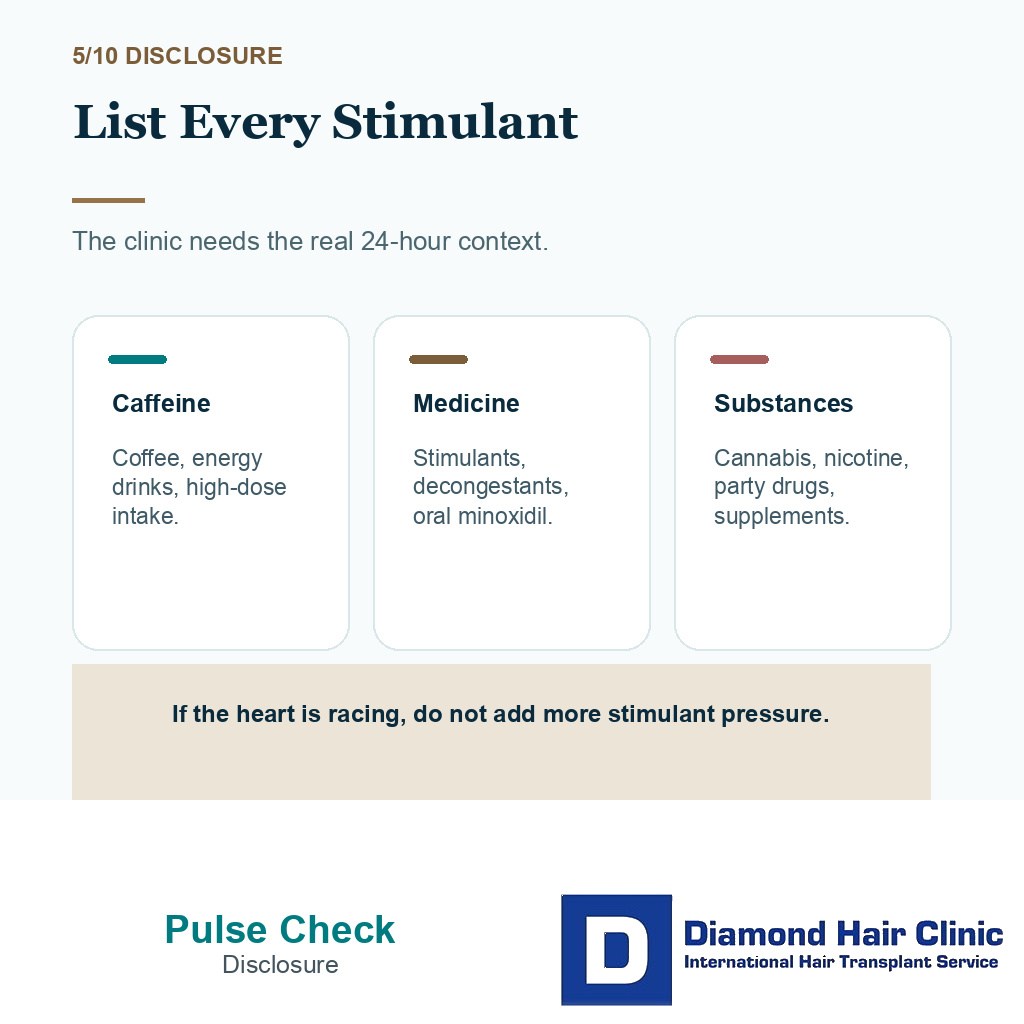
Caffeine and stimulants can make the heart feel fast or uncomfortable on surgery day. One familiar small coffee is very different from a strong energy drink, gym stimulant powder, new fat burner product, ADHD stimulant, or several coffees after poor sleep. The clinic needs the truth, not the version that sounds acceptable.
If you already feel your heart racing, do not add more caffeine to push through tiredness. Send the clinic exactly what you took and when. Coffee on surgery morning is judged by dose, timing, fasting instructions, blood pressure, and symptoms, not by the word coffee alone.
ADHD medication before hair transplant surgery also needs direct disclosure. Some patients can proceed safely with a clear medication plan, but hidden stimulant use makes pulse and blood pressure decisions harder.
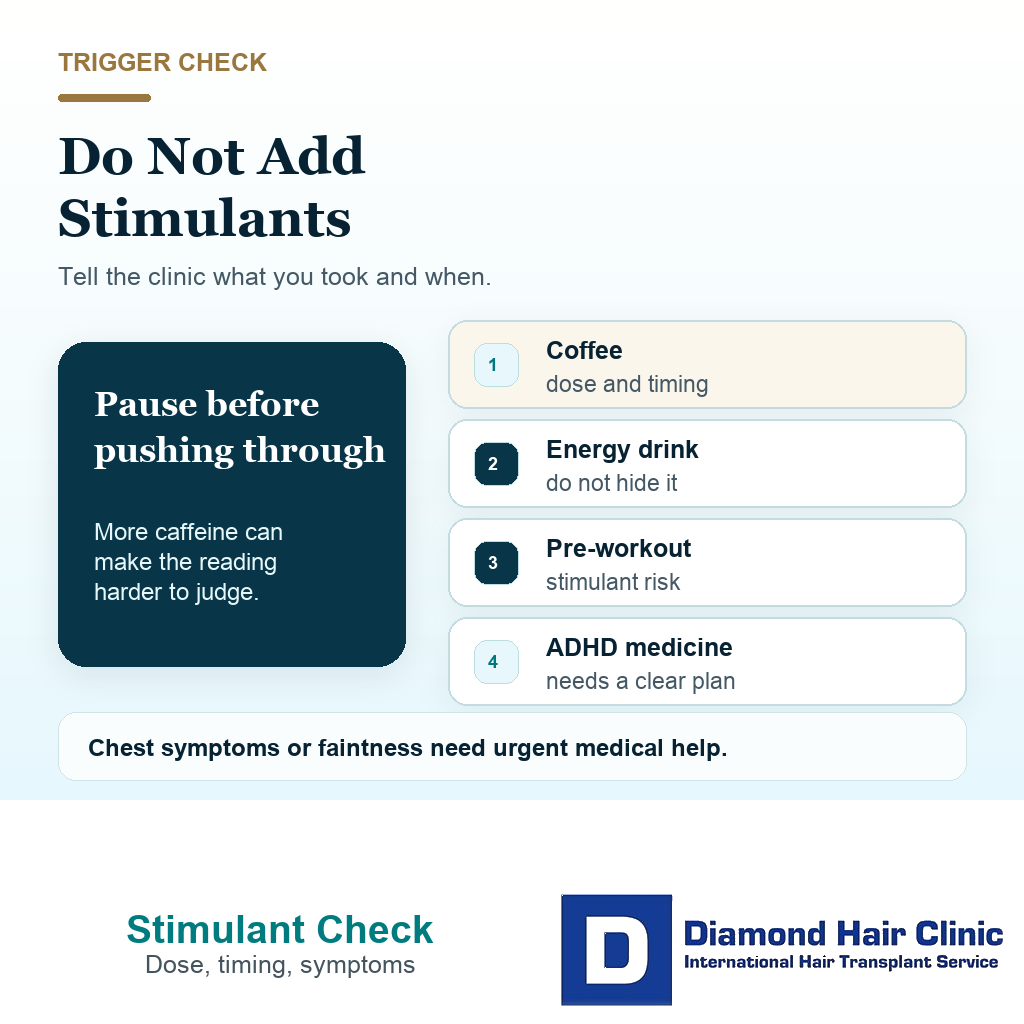
If your heart is racing, do not add more stimulants to push through. Tell the clinic exactly what you took and when.
Palpitations after the procedure
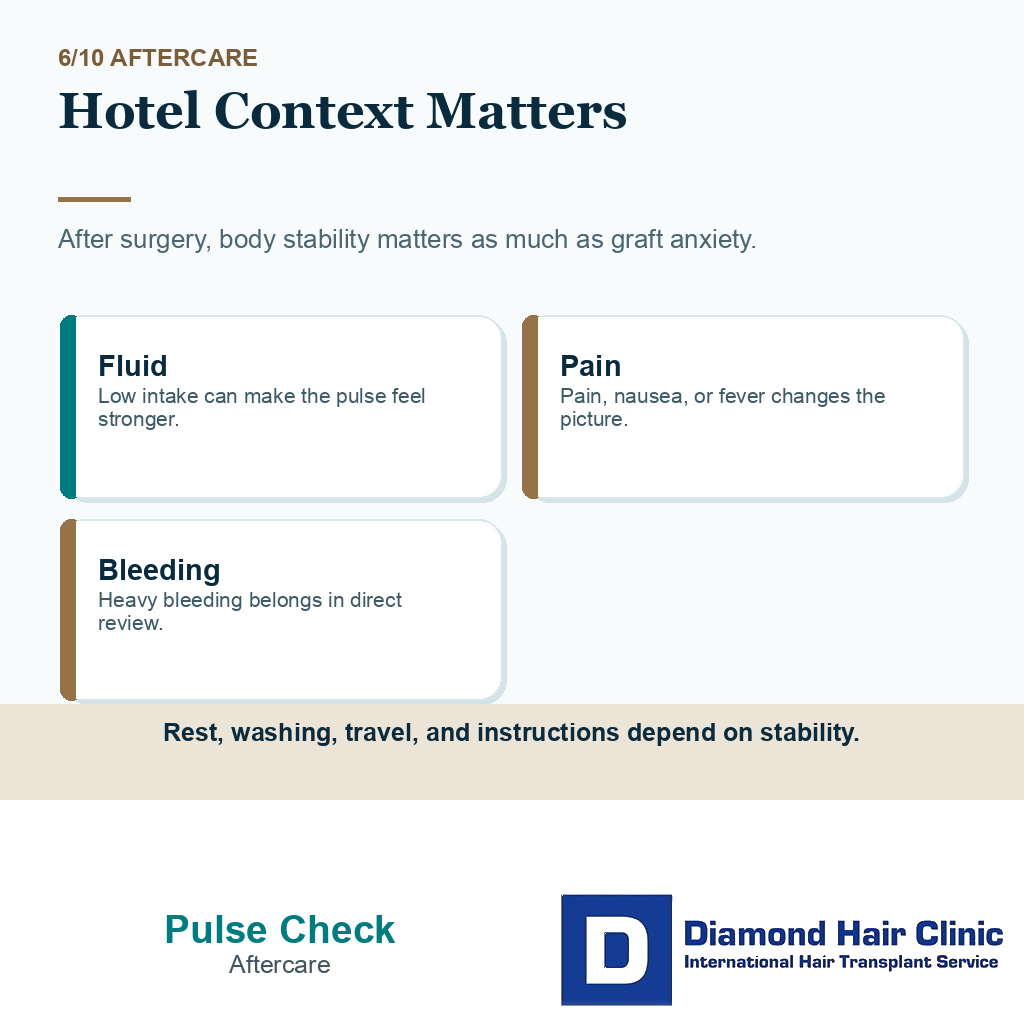
Palpitations after the procedure need context. If you are tired, dehydrated, underfed, short on sleep, and anxious in the hotel, you may feel the heartbeat more strongly. Pain, nausea, vomiting, low fluid intake, fever, bleeding, caffeine, nicotine, cannabis, stimulant medication, decongestants, or oral minoxidil can also change the picture. The aftercare question is not only whether grafts are safe. It is whether your body is stable enough to rest, wash, travel, and follow instructions safely.
If the symptom is brief, regular, settles with rest, and has no warning signs, send a clear update and keep monitoring the pattern. If it keeps returning, feels irregular, comes with chest symptoms, faintness, breathlessness, fever, heavy bleeding, weakness, or a feeling that you may pass out, seek urgent local medical help. A scalp photo is not enough when the main symptom is cardiac. Do not try to solve it with extra caffeine, alcohol, sleeping tablets, someone else’s heart medication, or a personal beta blocker plan.
With oral minoxidil around a hair transplant, palpitations, dizziness, swelling, and blood pressure symptoms need direct review with the prescribing doctor and the clinic. Do not restart, stop, or change the dose because of outside advice.
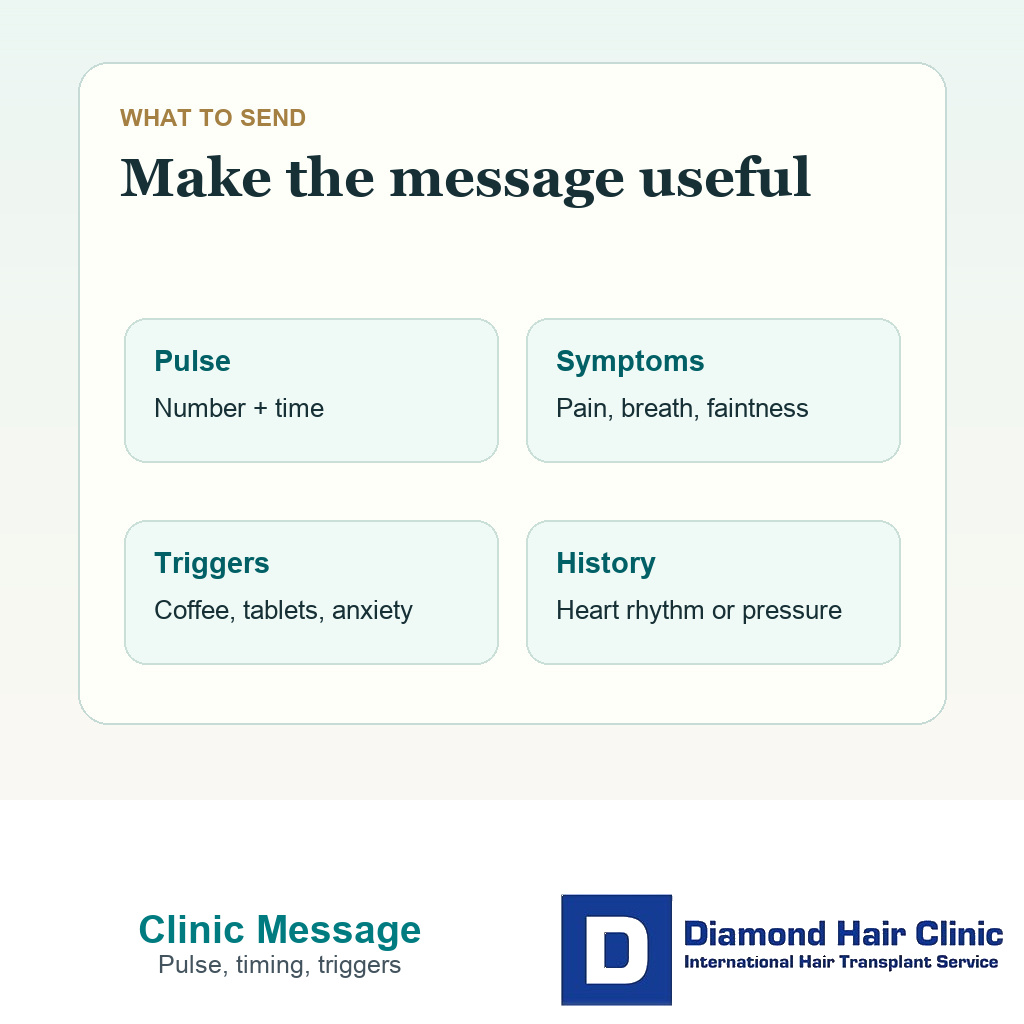
A useful message gives pulse, timing, symptoms, caffeine, medicines, and heart history.
Details to send to the clinic
Send the pulse number, whether it is regular or irregular, the highest number you saw, how long the episode lasted, whether a watch or device warned about an irregular rhythm, when it started, and what you were doing. Add blood pressure if available, oxygen reading if available, chest pain, shortness of breath, dizziness, fainting, sweating, nausea, fever, bleeding, pain level, and every medicine, supplement, stimulant, sleep tablet, cannabis product, nicotine product, or caffeine drink used in the last 24 hours.
If safe, include two readings taken several minutes apart after sitting quietly instead of sending only the most frightening number. A useful message is not dramatic. It is specific enough for the clinic to decide whether reassurance, monitoring, medication review, or local medical help is the next step.
A watch alert or pulse screenshot can help describe timing, but it cannot clear a rhythm problem or replace urgent care when warning symptoms are present.
Heart history matters as much as the current pulse number. Arrhythmia, SVT, PVCs, stent, heart attack, heart failure, valve disease, fainting episodes, panic attacks, thyroid disease, anemia, abnormal blood tests, cardiology advice, or previous reaction to dental anesthesia should be part of the same message. Blood tests before hair transplant surgery and medical history are not paperwork. They protect the procedure plan.
If you took a sleep tablet or sedative, say that directly. Sleeping pills after a hair transplant can affect alertness, breathing, dizziness, and judgment, especially when combined with travel fatigue or other medication.
Persistently high heart rate can postpone surgery
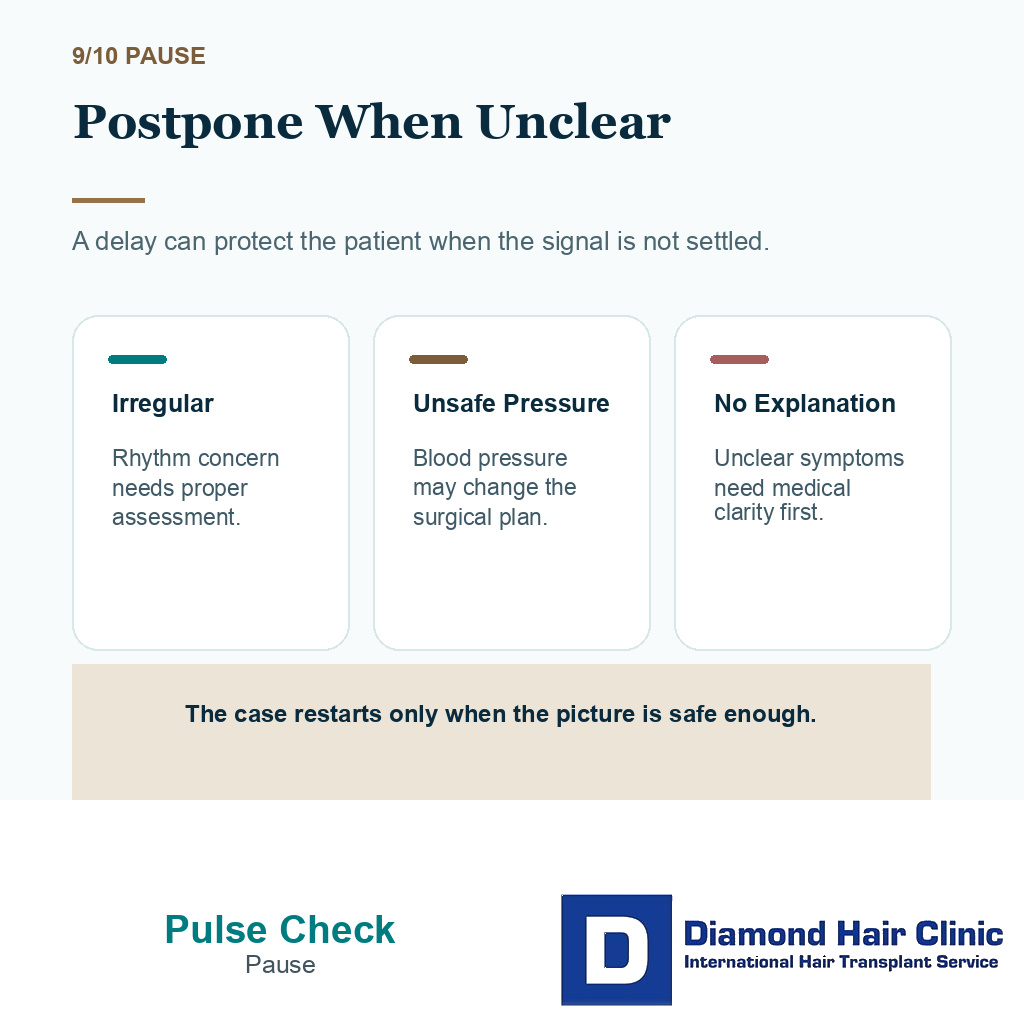
Postponement can be the correct decision when the heart rate stays high, the rhythm seems irregular, symptoms are concerning, blood pressure is unsafe, or the medical explanation is unclear. This can feel disappointing after travel and planning, but it is better than forcing an elective operation through a warning sign. The case should not restart just because you have travelled or paid. It should restart only when the medical picture is safe enough and any needed ECG, cardiology advice, medication clarification, or emergency review has been handled.
Sometimes rest and reassessment are enough. Sometimes the plan needs cardiology input, medication clarification, a different anesthesia approach, or a new date. A clinic that slows down for safety is not failing you. It is protecting you.
This is also why I am cautious about routine sedation during a hair transplant. Sedation can hide distress, affect breathing, and complicate monitoring. It is not a shortcut for an unexplained fast pulse.
Heart disease or a stent changes the plan
If you have heart disease, a stent, unstable chest pain, arrhythmia symptoms, heart failure, or a blood thinner plan, the heart racing question becomes more serious. The clinic needs cardiology context before surgery, not after a symptom appears in the chair.
With heart disease, stents, and hair transplant safety, stability, medication, anesthesia, and bleeding plans have to be aligned. Most hair transplants are done under local anesthesia, but that does not make heart history irrelevant.
Do not stop aspirin, beta blockers, blood pressure medication, rhythm medication, or blood thinners without the prescribing doctor and surgical team agreeing on the plan. Changing heart medicine alone can be more dangerous than the transplant question itself.
These 10 heart racing safety slides keep the decision focused on urgent symptoms, pulse pattern, anesthesia timing, caffeine or stimulants, hotel recovery, details to send the clinic, heart history, postponement, and medicine safety. Swipe sideways, use the arrows, or choose a number below the image.




My judgment on heart racing after a hair transplant
I judge heart racing after a hair transplant in layers. First I rule out emergency symptoms. Then I look at whether the rhythm is regular and settling, the pulse and blood pressure, recent changes, and any heart history. Caffeine, pain, dehydration, anxiety, medicine, anesthesia, sleep, fever, bleeding, and travel all change the reading. I also separate three moments before numbing, during injections, and later in the hotel. Each points to a different likely cause.
If the episode is mild, short, regular, and settles without warning signs, it may be part of the stress and recovery context. Still, send the details instead of hiding it. If the episode is intense, irregular, persistent, repeated, or joined by chest pain, breathlessness, fainting, severe dizziness, confusion, a known rhythm problem, or a device alert for irregular rhythm, medical safety takes priority.
A successful hair transplant is not only graft placement. It is also the discipline to pause when the body gives a real warning. The right decision may be reassurance, monitoring, medication review, local emergency assessment, cardiology input, or postponement. The decision should come from the symptom pattern, not from the pressure to finish the schedule.
Read this review excerpt
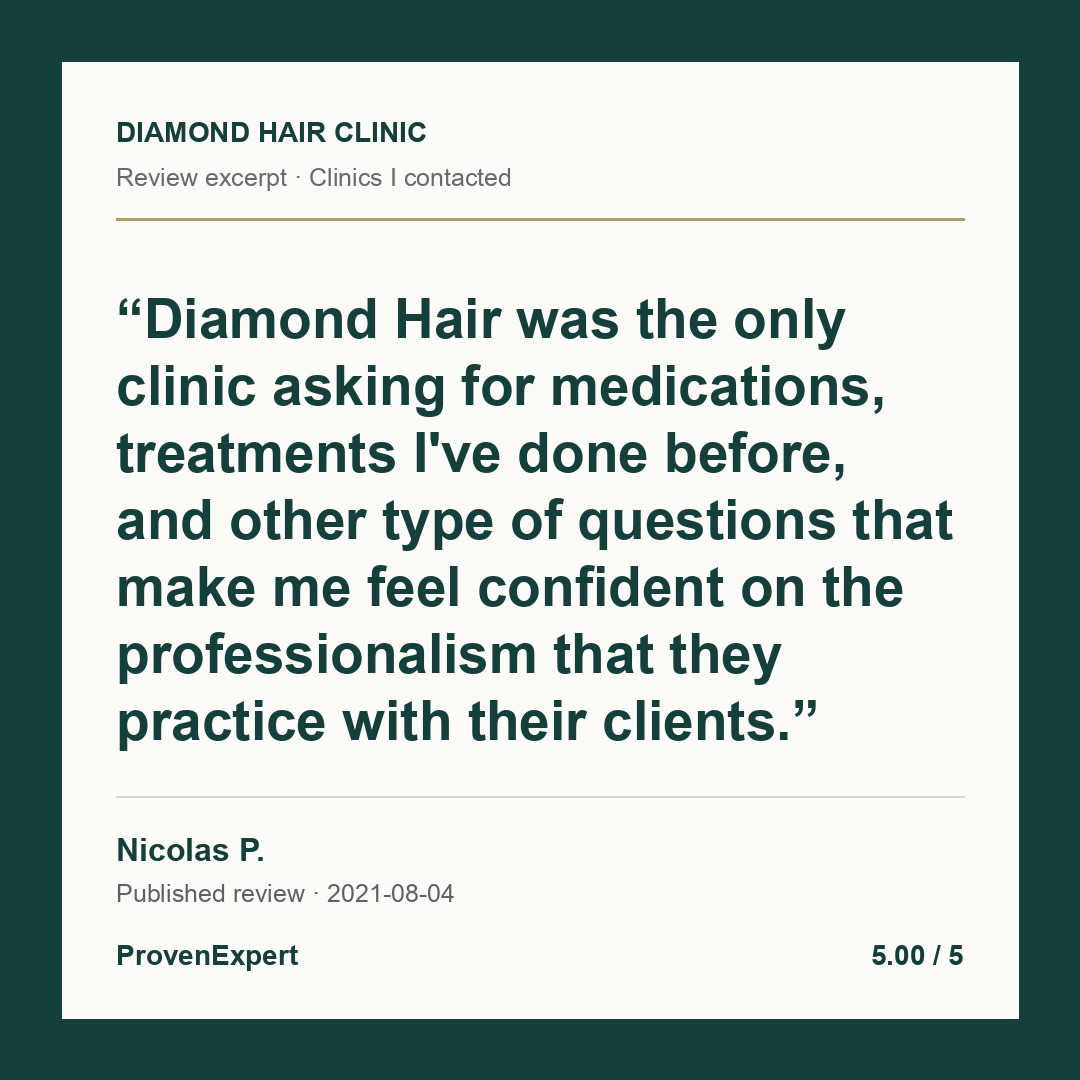
Diamond Hair was the only clinic asking for medications, treatments I've done before, and other type of questions that make me feel confident on the professionalism that they practice with their clients.