



Xanax Valium and Surgery Day Sedation Safety
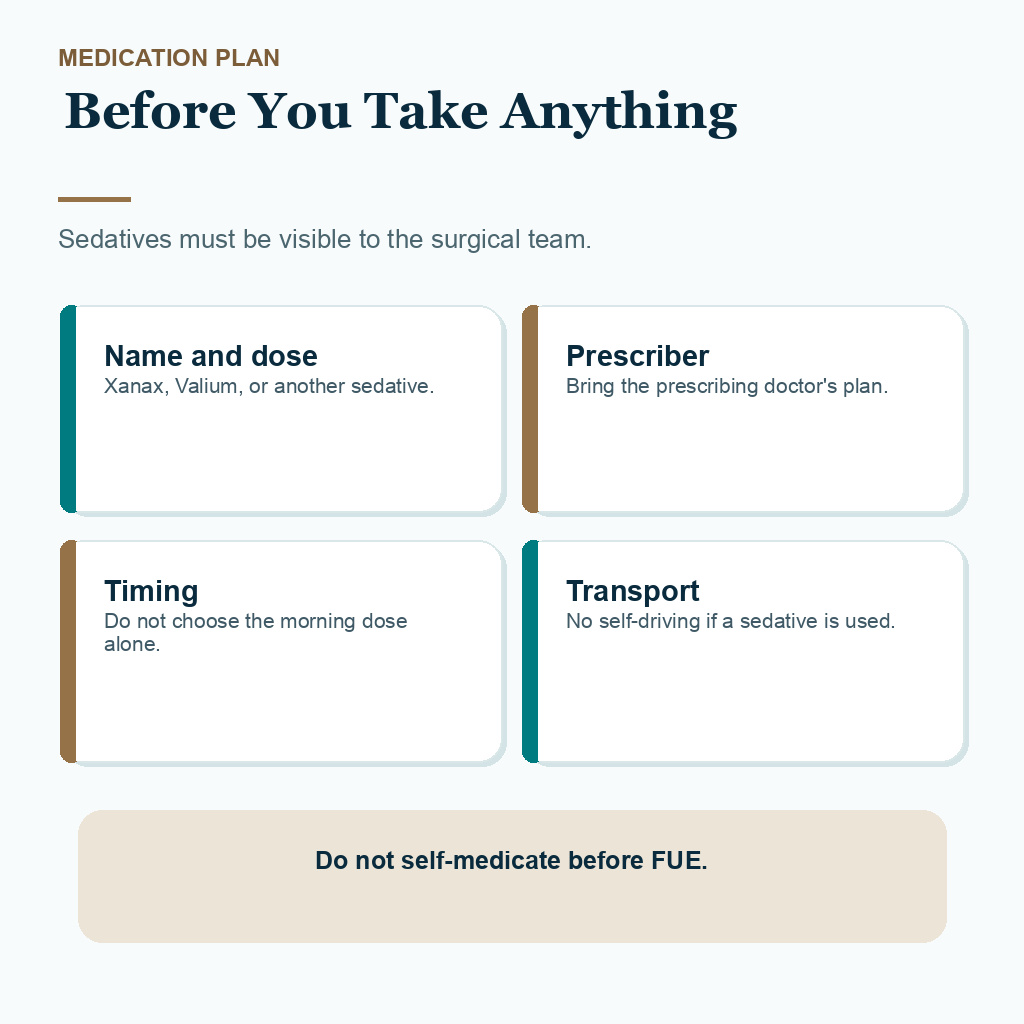
Do not take Xanax, Valium, alprazolam, diazepam, or another sedative before a hair transplant unless both the clinic and the prescribing doctor have approved the exact medicine, dose, timing, and travel plan. If you already take a benzodiazepine regularly, do not suddenly stop it on your own for surgery. If the urge to take a hidden sedative is part of wider panic or uncertainty, read final hair transplant doubts that need a pause before the surgical day continues.
The practical difference is between a known prescribed dose that has been planned in advance and a hidden tablet taken in the hotel because panic is rising. The first can sometimes be managed safely. The second can change consent, monitoring, transport, aftercare, and whether surgery should go ahead at all.
If anxiety rises the night before surgery, message the clinic instead of improvising with an extra tablet. The safe discussion needs the prescription name, dose, last use, prescriber, and who will accompany you afterwards.
Sedation has to be arranged before surgery because the same tablet affects the ride home, consent, blood pressure, and how well instructions are followed. Calming medication should have an approved prescriber, monitoring plan, escort decision, and no driving plan before it is taken.
A hair transplant is usually done under local anesthesia while you are awake. Anxiety can often be managed with preparation, clear communication, pauses, pacing, and a proper medical plan rather than taking a sedative on your own on the morning of surgery.
That anxiety is real. You may not be afraid of the final hair transplant result. You may be afraid of needles, lying still for several hours, a racing heart, or losing control during the procedure. I take that seriously, but the solution has to be planned before the surgical day.
Patients think about Xanax or Valium before surgery
Most people who ask about Xanax or Valium are trying to solve a practical fear. They may already live with anxiety, have a history of panic attacks, or feel worried after reading different stories about anesthetic injections. One tablet may make the day feel easier, but I also need to know whether you can stay safe, stay still, understand instructions, and remain in control.
I separate ordinary nerves from a medication decision. Mild worry before surgery is common. The anxiety described in anxious before a hair transplant is different from deciding to take a benzodiazepine. Benzodiazepines can affect alertness, breathing, coordination, memory, and how clearly you respond during a long procedure.
You may think, if one tablet settles me, why not take it? My answer is that the surgical team must know what is in your body before local anesthesia, blood pressure checks, pain medicine, aftercare instructions, and travel arrangements are planned. A tablet that feels small to you can still change the safety plan for the day.
Supervised sedative dose is different from improvising
A single planned sedative dose can be appropriate in selected cases, but it must be supervised. In the right medical situation, a tablet for anxiety may make the day easier. The risk begins when someone takes it without telling the clinic, borrows a tablet, takes more than the usual dose, tries a benzodiazepine for the first time, or combines it with alcohol, sleep medicine, or strong painkillers.
Anxiety relief is only one part of the medicine review. I need to know whether it fits your medical history, other medicines, procedure length, blood pressure, alcohol use, travel plan, and need for clear communication during surgery.
A person who has taken a sedative may not be safe to drive later that day. Someone who mixes it with alcohol or opioid pain medicine can create a more serious breathing and alertness risk. Someone who arrives looking quiet after an unreported tablet may actually be less predictable medically.
If you feel you need a sedative to tolerate surgery, raise it before the operation day. Then the plan can be reviewed properly. The prescribing doctor may need to be involved, a companion or transfer may be needed, and in some cases postponing is safer than pushing through.
Also separate consent from sedation. The hairline design, graft plan, risks, and aftercare instructions should be understood before any planned sedative dose. If the only way you can agree to surgery is after taking a pill, the plan needs more discussion before the operation starts.
If you already take a benzodiazepine regularly
If you already take alprazolam, diazepam, clonazepam, lorazepam, or another benzodiazepine regularly, share this during consultation, not on the day of surgery. Include the medicine name, dose, timing, how long you have used it, why it was prescribed, and whether you have ever had withdrawal symptoms when missing a dose.
For international patients, the generic name matters as much as the brand name. Bring a clear prescription label or medication list, not a loose tablet in a pocket. A photo of the box, bottle, or prescription can help the clinic understand the exact drug before local anesthesia, pain medicine, travel, and first night instructions are planned.
Do not suddenly stop a regular benzodiazepine because you want to look like a better surgical candidate. Abrupt stopping can be risky, especially after regular use. The decision should involve the prescribing doctor. A hair transplant clinic should not casually tell you to stop psychiatric, sleep, seizure, or anxiety medicine without understanding why it was prescribed.
This is similar to the way I approach antidepressants before a hair transplant. The issue is not whether medication makes you a good or bad candidate. The issue is whether the condition is stable, the medicine plan is known, and the surgery day can be managed safely.
An occasional tablet for flying is different from nightly use. Both are different from unpredictable use during panic attacks. These details decide whether surgery can proceed normally, needs a modified plan, or should wait.
Xanax or Valium can interfere with procedure day
During a hair transplant, you do not need to be deeply sedated. You need to be comfortable enough to stay still, report pain or pressure, follow position changes, eat or drink when instructed, and understand aftercare. Deep sedation during a hair transplant is a different medical decision from using a carefully approved calming tablet.
A benzodiazepine can make some people drowsy, less coordinated, forgetful, or slower to respond. That may sound harmless, but a hair transplant is a long day. The team needs to know if you feel pain, dizziness, nausea, chest discomfort, shortness of breath, or anything unusual. If you are too sedated, those signals can be harder to interpret.
The first night also matters. You need to protect the grafts, avoid rubbing, follow sleeping instructions, take only approved medicine, and ask for clinic review if warning signs appear. A sedative that leaves you groggy can make that harder, especially if you are alone in a hotel.
Some people ask about a sedative because they have read about anesthetic injection pain during a hair transplant. A benzodiazepine may reduce anxiety or make you drowsy, but it is not a painkiller and it does not numb the scalp. The injections can be uncomfortable, but they are brief. The answer is not to hide the experience with unsupervised medication. The answer is to plan the day carefully.
Local anesthesia can feel like panic
Hair transplant local anesthesia may contain adrenaline, also called epinephrine, because it can help reduce bleeding and prolong the numbing effect. In some people, adrenaline can create a racing heart, trembling, sweating, or a sudden anxious feeling. If you already fear panic, that body sensation can feel alarming even when it is expected.
This conversation should happen before surgery. If you have panic attacks, heart disease, high blood pressure, sensitivity to adrenaline, or previous fainting episodes, mention it early. That risk is why adrenaline in hair transplant anesthesia needs to be judged with the medical background and the way the procedure is planned.
If you have high blood pressure before a hair transplant, the team needs to know whether it is controlled, which medicines you use, and whether anxiety causes large spikes. If there is chest pain history, a stent, rhythm problems, or cardiology clearance, that belongs in the discussion before surgery. Do not try to solve those concerns privately with a sedative.
Surgery should wait when anxiety or medical risk is not controlled
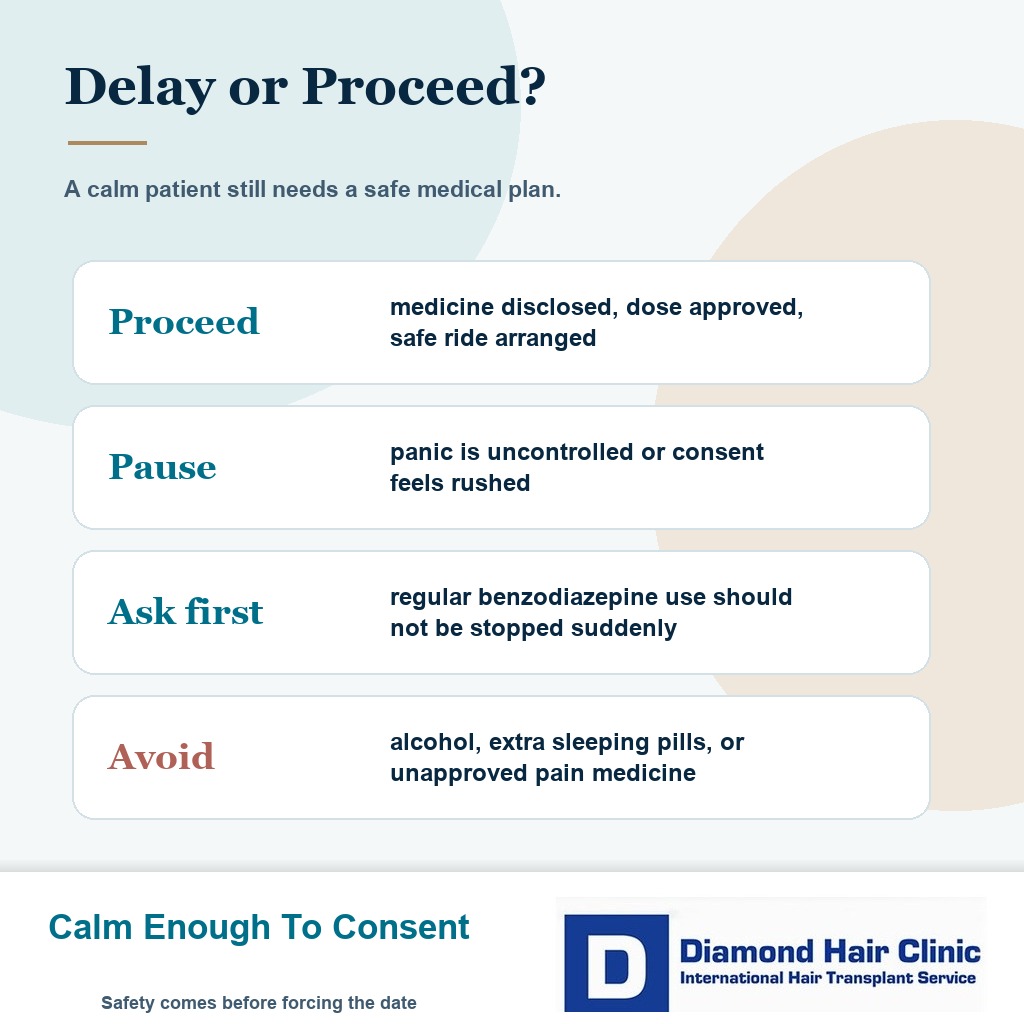
A sedative should not be used to force an elective surgery through when you are not medically or emotionally ready. Delay may be wiser if there are uncontrolled panic attacks, recent medication changes, heavy alcohol use, unstable blood pressure, fainting episodes, chest symptoms, breathing problems, or fear so intense that you cannot follow instructions.
There is no shame in delaying. A hair transplant uses donor grafts that cannot be spent casually. You need to give informed consent, understand the surgical plan, and protect the grafts afterward. If fear makes you feel trapped, rushed, or unable to think clearly, the right response is not to push harder. It is to slow down and reassess.
This matters even more for international patients. Travel, poor sleep, time pressure, deposits, and being in a different country can make anxiety stronger. If you are already struggling before arriving, the clinic should know. Sometimes a better plan is a smaller procedure, a delayed date, a medical clearance letter, or more time to decide.
For cardiac history, the threshold is stricter. A person with heart disease or a stent before a hair transplant should not treat a racing heart as only anxiety, and should not assume anxiety medicine makes the procedure safe. The medical background decides the risk.
Details to share with the clinic before travel
Share every medicine you take, even if you think it is unrelated to hair. This includes prescription tablets, occasional tablets, sleep aids, anxiety medicine, antidepressants, stimulants, painkillers, blood pressure medicine, herbal products, alcohol use, cannabis use, and anything you plan to take for the flight before surgery.
For benzodiazepines, be specific. Say whether it is Xanax, Valium, Klonopin, Ativan, or another name. Say whether it is prescribed to you, how often you take it, and whether you planned to take it on the morning of surgery. If the medicine is prescribed by a psychiatrist, family doctor, neurologist, or another physician, the clinic may need that doctor’s guidance before approving the plan.
The medication before a hair transplant discussion is not paperwork. It protects you from avoidable interactions, confusion, bleeding risk, blood pressure problems, sedation problems, and unsafe travel after the procedure.
If you are embarrassed to mention anxiety medication, mention it anyway. It is safer to plan from the truth than to discover the tablet later because you become too sleepy, too anxious, or medically unstable during the operation day.
If you already took Xanax or Valium before telling the clinic
If you already took Xanax, Valium, alprazolam, diazepam, or another sedative before telling the clinic, do not hide it and do not take another dose to stay calm. Share the exact medicine, dose, time taken, who prescribed it, whether you also took alcohol, sleeping pills, opioid pain medicine, antihistamines, or anxiety medicine, and whether you feel sleepy, confused, dizzy, slow, or short of breath.
This may change the surgery plan for that day. Sometimes we need to wait and reassess. The procedure should be delayed if you are too sedated to give clear consent, follow instructions, walk safely, travel alone, or protect the grafts after surgery.
Delaying an elective hair transplant is safer than proceeding with unclear sedation. Donor grafts are limited, and the procedure needs cooperation from you as well as technical work from the surgical team. Calm and cooperative is useful. Too sedated, impaired, or combining medicines without supervision is a different medical situation.
Combining sedatives with alcohol, painkillers, or sleeping pills is unsafe
Benzodiazepines should not be combined with alcohol around a hair transplant. Alcohol can increase sedation and make the procedure and first night less safe. It can also worsen dehydration, sleep quality, judgment, and recovery discipline. If you are asking about alcohol after a hair transplant, the answer becomes even stricter when sedatives are involved.
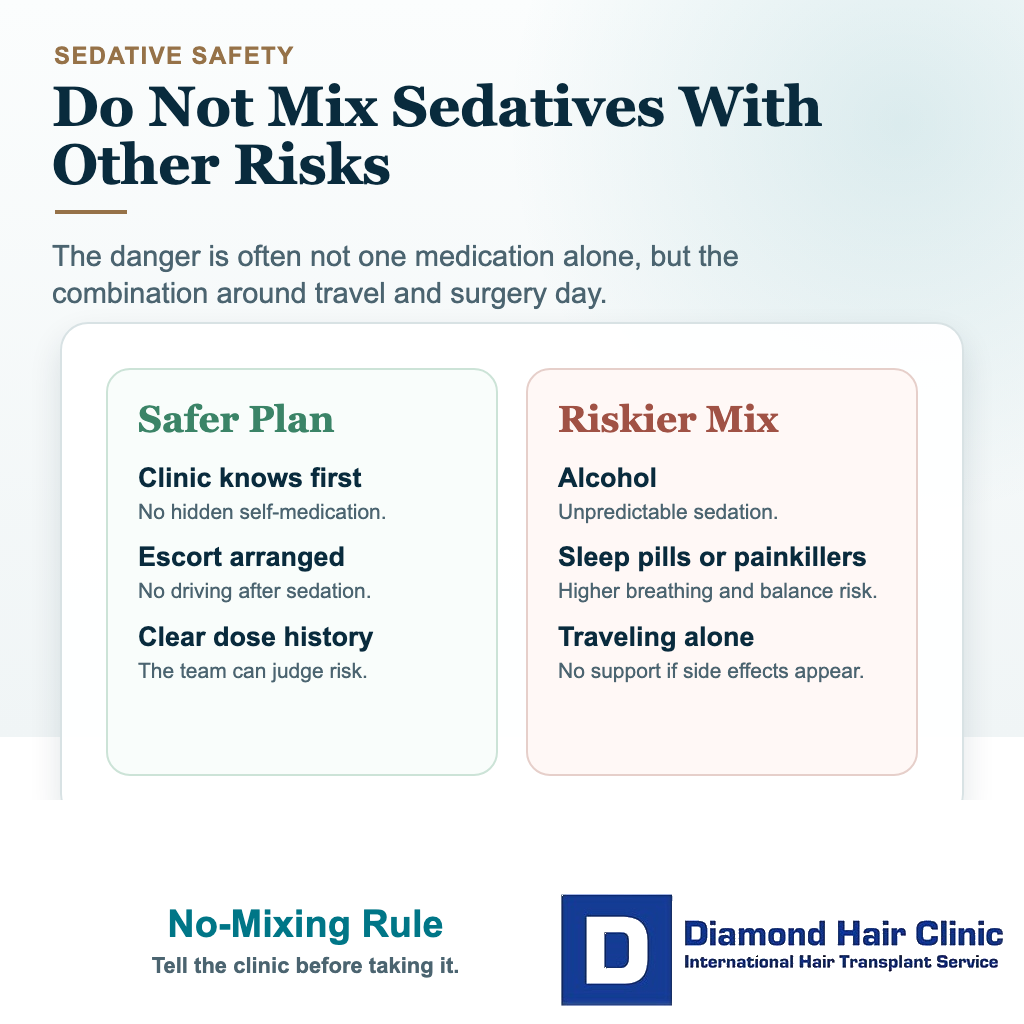
Be careful with pain medicine too. The clinic should decide which painkillers after a hair transplant are appropriate. Do not mix sedatives with leftover opioid tablets, strong prescription pain medicine, or unapproved drugs because you are worried about discomfort. That can create a breathing and alertness risk.
Sleeping tablets need review before surgery. Taking a benzodiazepine before surgery and then a separate sleep medicine at night may stack sedating effects. The same planning applies to sleeping pills after a hair transplant because the first night needs sleep, but it also needs clear judgment and graft protection.
Sedating antihistamines, muscle relaxants, gabapentin or pregabalin, strong cough medicines, and any unapproved substance taken to stay calm need review before surgery as well. These may sound unrelated to hair surgery, but they can add drowsiness, confusion, or breathing risk when combined with a benzodiazepine.
If medication is needed, it should be one planned medical decision, not several private decisions layered on top of each other. The clinic and prescribing doctor need to know what is being taken.
Driving or traveling alone after a sedative
If you take a sedative before or during the procedure, do not assume you can drive afterward. Even if you feel awake, reaction time, attention, balance, and judgment may be affected. A hair transplant day is already tiring, and the combination of local anesthesia, stress, a long procedure, and medication can make driving yourself a poor decision.
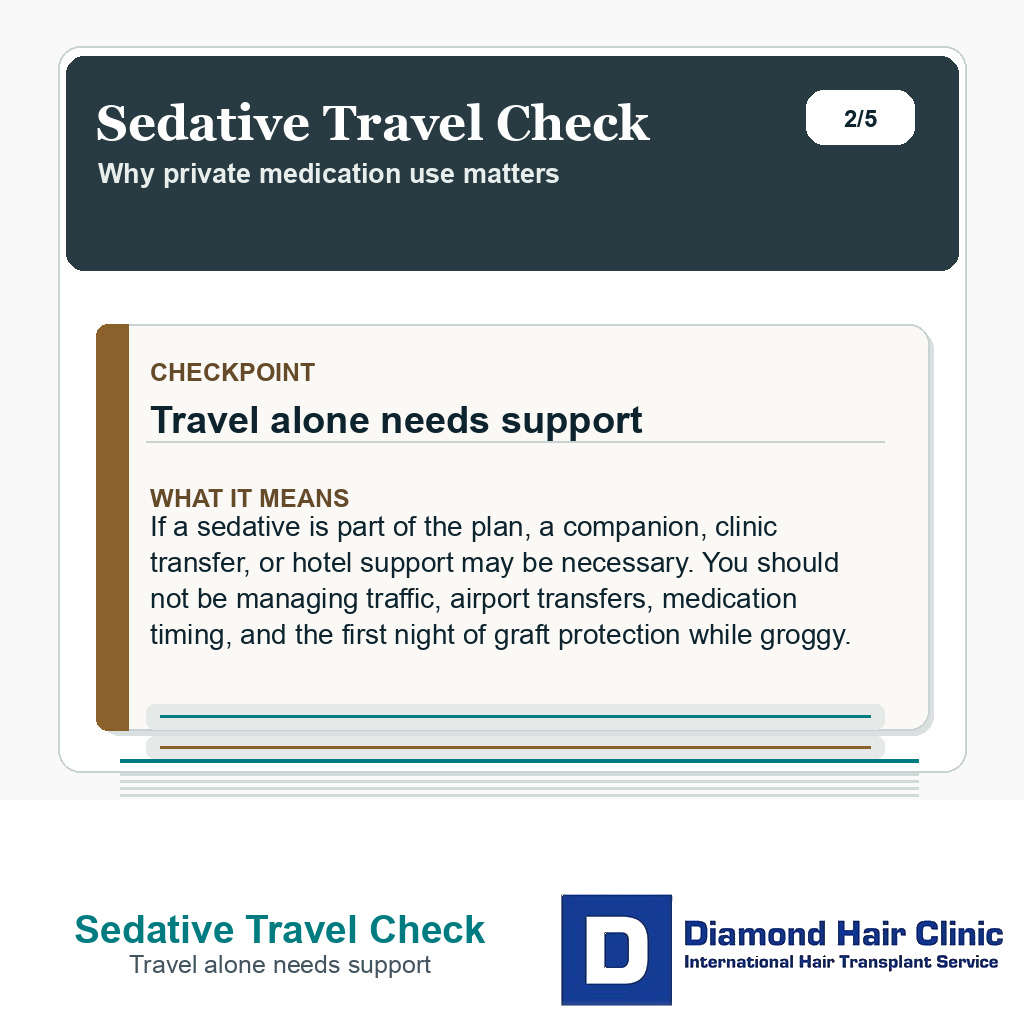
This also matters if you travel alone. If a sedative is part of the plan, a companion, clinic transfer, or hotel support may be necessary. You should not be managing traffic, airport transfers, medication timing, and the first night of graft protection while groggy.
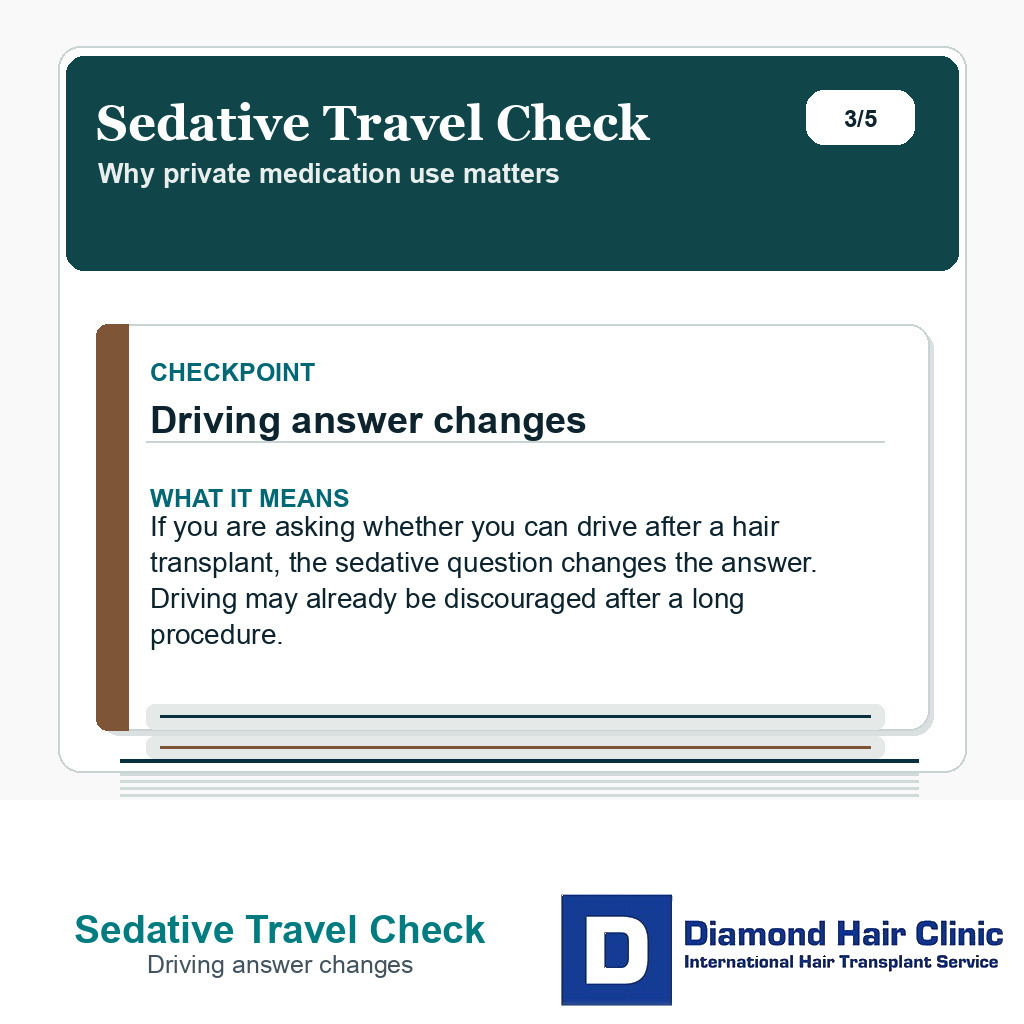
If you are asking whether you can drive after a hair transplant, the sedative question changes the answer. Driving may already be discouraged after a long procedure. It becomes even less appropriate when anxiety medicine, sleep medicine, or stronger pain medicine is involved.
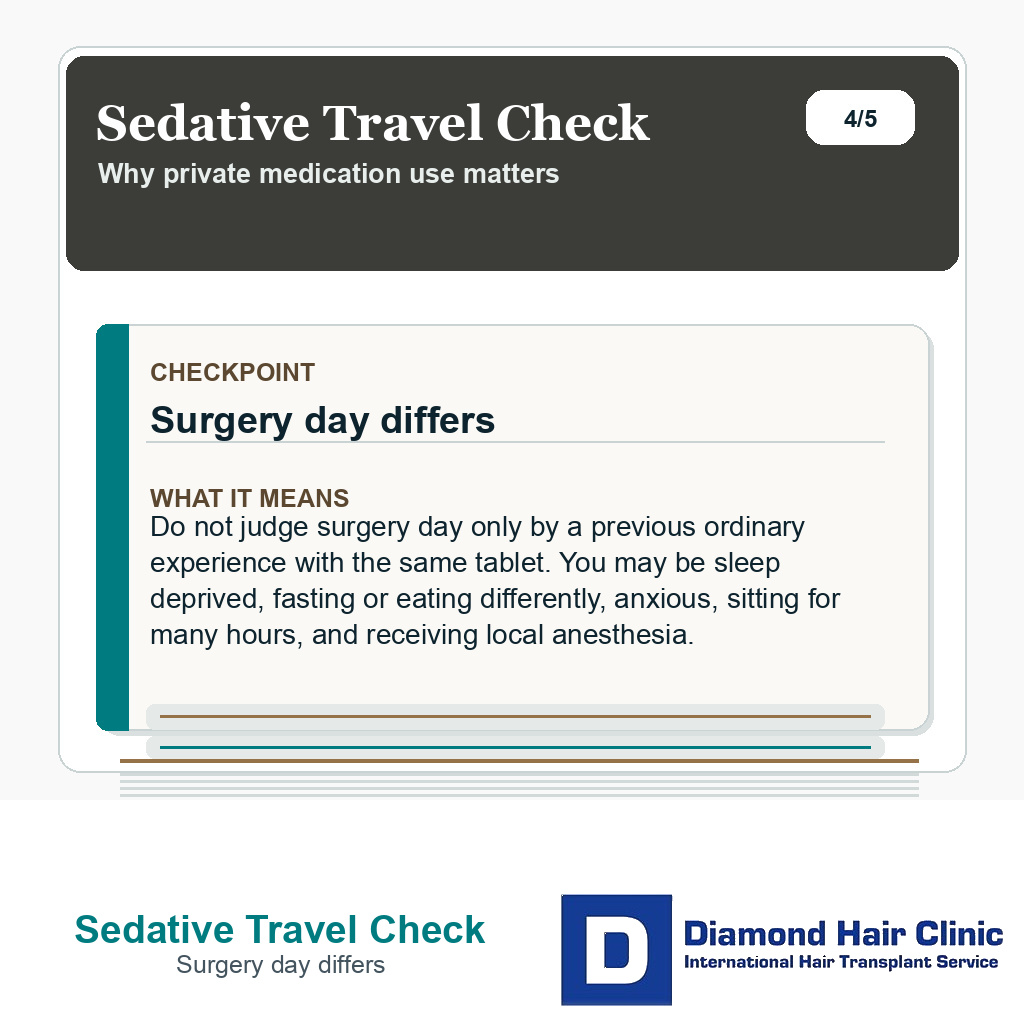
Do not judge surgery day only by a previous ordinary experience with the same tablet. You may be sleep deprived, fasting or eating differently, anxious, sitting for many hours, and receiving local anesthesia. A familiar medicine can affect you differently in that setting.
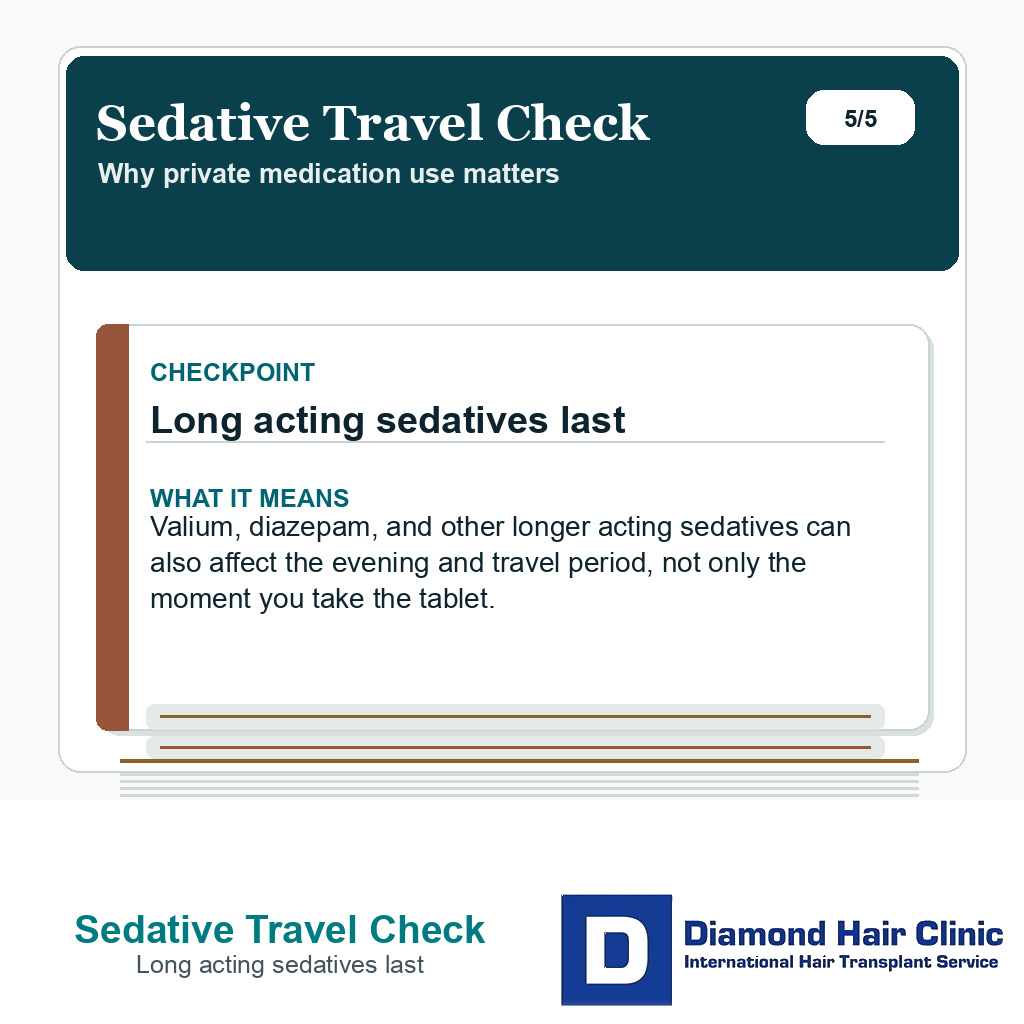
Valium, diazepam, and other longer acting sedatives can also affect the evening and travel period, not only the moment you take the tablet. If you are flying, using airport transfers, staying alone, or protecting fresh grafts overnight, the clinic needs to plan around that longer tail of drowsiness.
These 5 slides keep anxiety medicine, sedation, breathing safety, and disclosure in the same surgical review. Swipe sideways, use the arrows, or choose a number below the image.

Making the day manageable without taking medication privately
Start by telling the clinic what you are afraid of. Needle fear before a hair transplant, panic, lying face down, blood pressure, adrenaline sensations, and fear of a bad result are different problems. They need different answers.
If the fear is anesthetic pain, ask how the clinic makes local anesthesia more tolerable. If the fear is panic, ask whether pauses, slower explanations, breathing time, music, a companion before surgery, or medically supervised anxiety medication can be planned. If the fear is regret, you may need another consultation, not a sedative.
Sleep also matters. Arriving exhausted and then trying to control anxiety with medication is harder to manage than telling the clinic early and building a structured plan. Avoid alcohol before surgery. Avoid experimenting with a new tablet. Avoid taking advice from another person’s prescription.
If you are nervous because two clinics gave different plans, because the graft number changed, or because you feel pressured, medication is not the solution. A second opinion before a hair transplant may protect you better than a calming tablet.
Sedatives belong in the medical history
First, you must be able to understand the plan clearly, give informed consent, follow instructions, and protect the grafts after surgery. When you can do those things and the medication plan is known, anxiety by itself does not necessarily prevent a hair transplant.
Then I review whether the sedative is already prescribed, whether the prescribing doctor agrees with the plan, whether the dose and timing are clear, whether alcohol and other sedating drugs are avoided, and whether safe transport is arranged. If those details are unclear, surgery should not depend on guesswork.
The whole medical picture also matters. High blood pressure, heart disease, sleep apnea, heavy snoring, asthma, lung disease, liver disease, antidepressants, stimulants, blood thinners, alcohol use, substance use history, and panic symptoms can all change the plan. One tablet cannot be judged separately from the person taking it.
My decision is straightforward. You should not suffer through surgery in fear, but you should also not hide medication use to get through the day. If Xanax, Valium, or another benzodiazepine is truly needed, it should be part of a supervised medical plan. If the plan depends on improvising, waiting is safer.
Read this review excerpt
Overall, I underestimated how unpleasant the transplant would feel. But I am so grateful I chose Diamond and Dr. Mehmet and his team to guide me through the process.