



Needle Fear and Hair Transplant Anesthesia
Needle fear by itself does not rule out a hair transplant. Many people dislike injections and still complete surgery safely. I become more cautious when fear is hidden until surgery morning, when you have fainted with needles before, or when you try to manage the fear alone with alcohol, extra tablets, extra beta blockers, or a vague promise of sedation.
I judge needle fear by more than injection pain. I also look at whether fear could make you faint, move suddenly, hide medication use, arrive dehydrated, or ask for sedation that has not been planned safely. If I know this before booking, I can adjust the plan with slower pacing, safer positioning, clearer communication, medical review, or delay when waiting is the conservative choice.
Needle fear can change the surgical plan
Needle fear can be emotional, physical, or both. You may feel anxious but stay medically stable. You may also have a vasovagal reaction and become dizzy, faint, sweaty, shaky, or develop a sudden drop in blood pressure. A smaller group has panic attacks or becomes unable to stay still during injections.
The answer is different in each situation. Worry may be helped by pacing, explanation, and a clear pause signal. A fainting history needs positioning, monitoring, and preparation before the first injection. Telling someone to relax is not the same as a medical plan.
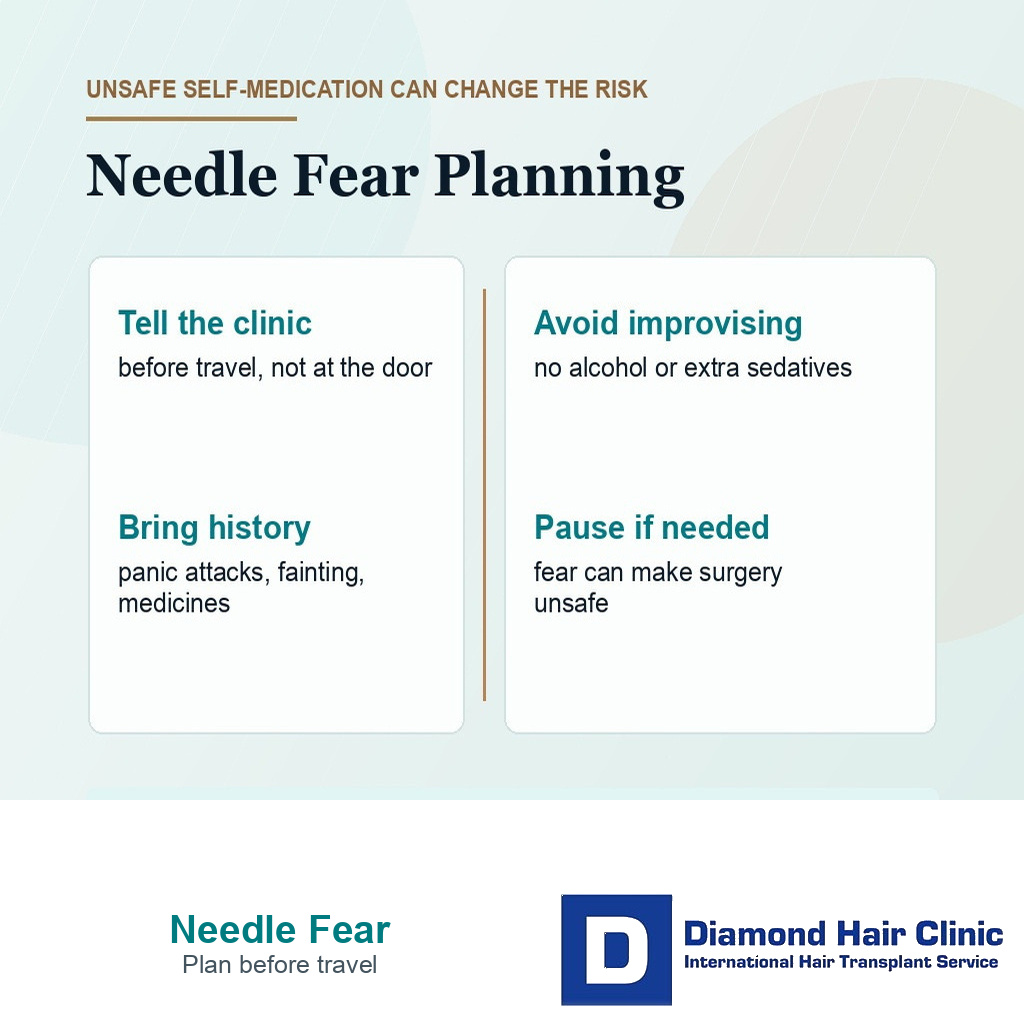
Needle fear can often be managed, but hiding sedatives, alcohol, or fainting history makes the plan less safe.
When you mention needle fear, describe the last medical episode rather than only saying that injections scare you. Fainting, vomiting, sudden movement, taking a tablet alone, or needing to lie flat all change the safety plan.
Hair transplant surgery requires steady cooperation. You have to lie still during anesthesia, donor extraction, and graft placement. Sudden movement during injections or recipient area work can create avoidable risk. If you know you faint during blood draws, say that before flights are booked, not after entering the operating room.
If you have fainted before, I treat fainting and dizziness around hair transplant surgery as part of the anesthesia plan, especially when anxiety, fasting, dehydration, and blood pressure changes are part of the story.
Needle phobia does not always rule out surgery
Often, surgery is still possible. The decision depends on severity. If you are anxious but can communicate, breathe slowly, and remain still, the operation may be manageable with explanation, pacing, positioning, and steady clinical support. If you lose consciousness with needles, have uncontrolled panic, or plan to take unapproved medication, the case needs a different review.
The distinction I care about is manageable fear versus behavior that could make the first injections unsafe. Manageable fear can often be planned around. Fear that causes sudden movement, unapproved medication use, or unstable vital signs means the operation should wait until the risk is understood.
Discuss this during consultation before the case is accepted. A difficult first five minutes can be managed. A hidden panic reaction on surgery morning can turn a planned operation into an avoidable cancellation.
Local anesthesia during FUE
Local anesthesia numbs the donor and recipient areas while you remain awake. The first injections can sting or burn briefly. Once the area is numb, the operation should not feel like sharp pain. Pressure, movement, and vibration can still be felt, but those sensations are different from pain.
Pain control tactics can help, but they do not replace proper local anesthesia. Numbing cream, cooling, vibration, slower injection, or delivery systems that reduce needle sensation may make the first sting easier for some people. They are not a guarantee of a painless transplant, and you should not apply numbing medicine yourself unless the clinic has approved it.
The injection stage can be paced. The team can pause, explain each step, check symptoms, and avoid rushing. You may do better when you know what is coming, or you may prefer fewer details and a simple signal system. The useful plan is the one that keeps you still and safe.
Local anesthesia may also include adrenaline, also called epinephrine, to reduce bleeding and prolong numbing. If you worry about palpitations, trembling, or a sudden racing heart feeling, adrenaline in hair transplant anesthesia is not judged only by the sensation itself. Your medical background and previous reactions need to be known before surgery.
The first injections are usually the hardest part
You may not be afraid of the whole operation. You may be afraid of the first few injections before the scalp becomes numb. That detail matters. Someone who settles after numbing needs a different plan from someone who becomes dizzy, panics, or moves suddenly before the first injection is finished.
The first injection stage should be planned, not improvised. Helpful measures may include lying flat before injections, slower pacing, a clear pause signal, simple explanation, not watching the needle, and selected skin preparation methods when they are medically suitable. Some clinics use pressure methods or devices that reduce needle sensation for the first stage, but these do not remove the need for local anesthesia completely.
A hair transplant should not be sold as painless or without needles if that is not medically true. If the only answer is “we can sedate you” without a medical review, the real problem has not been solved. Ask before booking what the first five minutes will look like, who will monitor symptoms, and what happens if you feel faint.
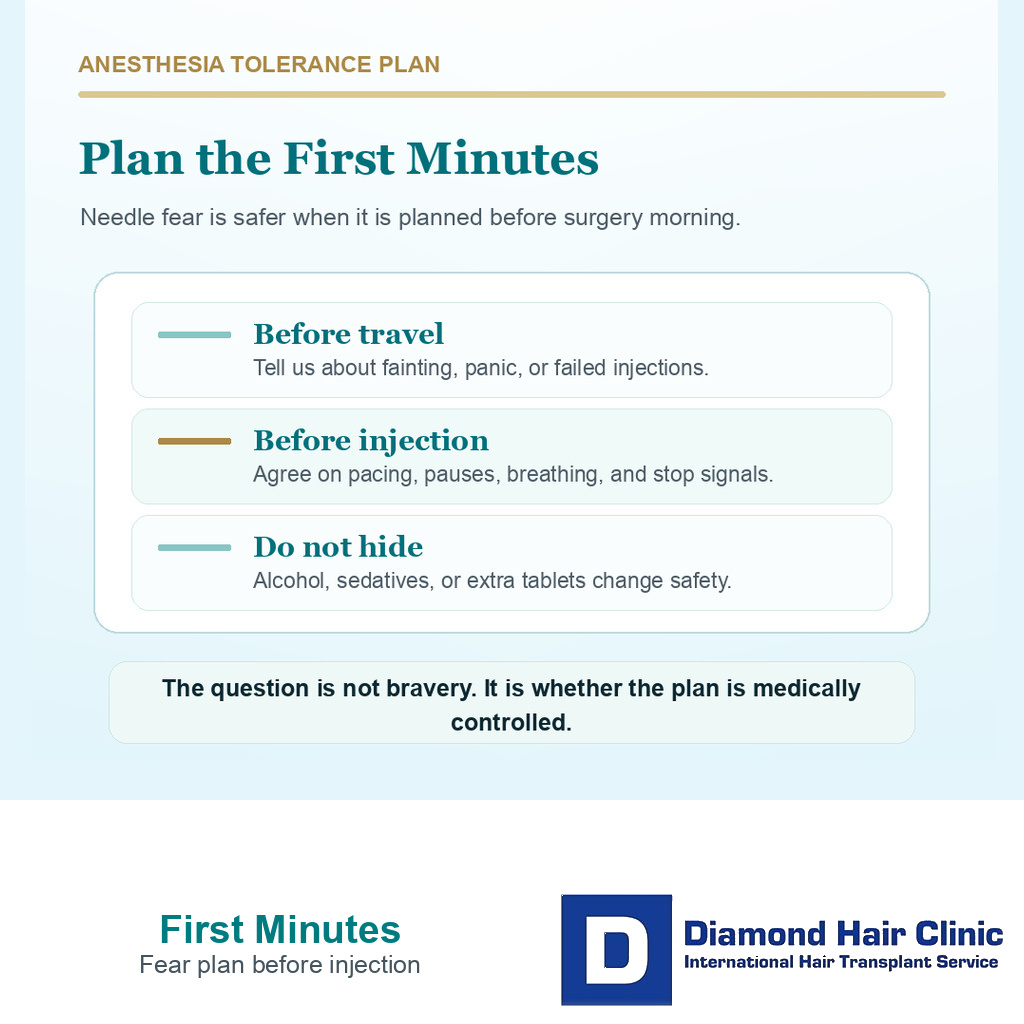
The first injection plan belongs in the surgical plan before the operation starts. It should cover injections, calming medicine, movement control, and monitoring if sedation is part of the plan.
Fainting and blood pressure history matter
If you faint during needle procedures, you may have a vasovagal tendency. That does not mean surgery is impossible, but it changes preparation. Food and hydration instructions, blood pressure review, positioning, breaks, and monitoring become more important.
You may react in the opposite direction. Blood pressure can rise because of anxiety, embarrassment, or trying to hide fear. A high reading on surgery morning is not something to force down with random tablets. Taking an extra dose of beta blockers before hair transplant surgery for a single high reading can create a new safety problem.
A history of fainting, panic, heart rhythm symptoms, chest pain, or uncontrolled blood pressure belongs in the plan before surgery. Stable vital signs matter more than bravery.
Sedation is not always the answer to needle fear
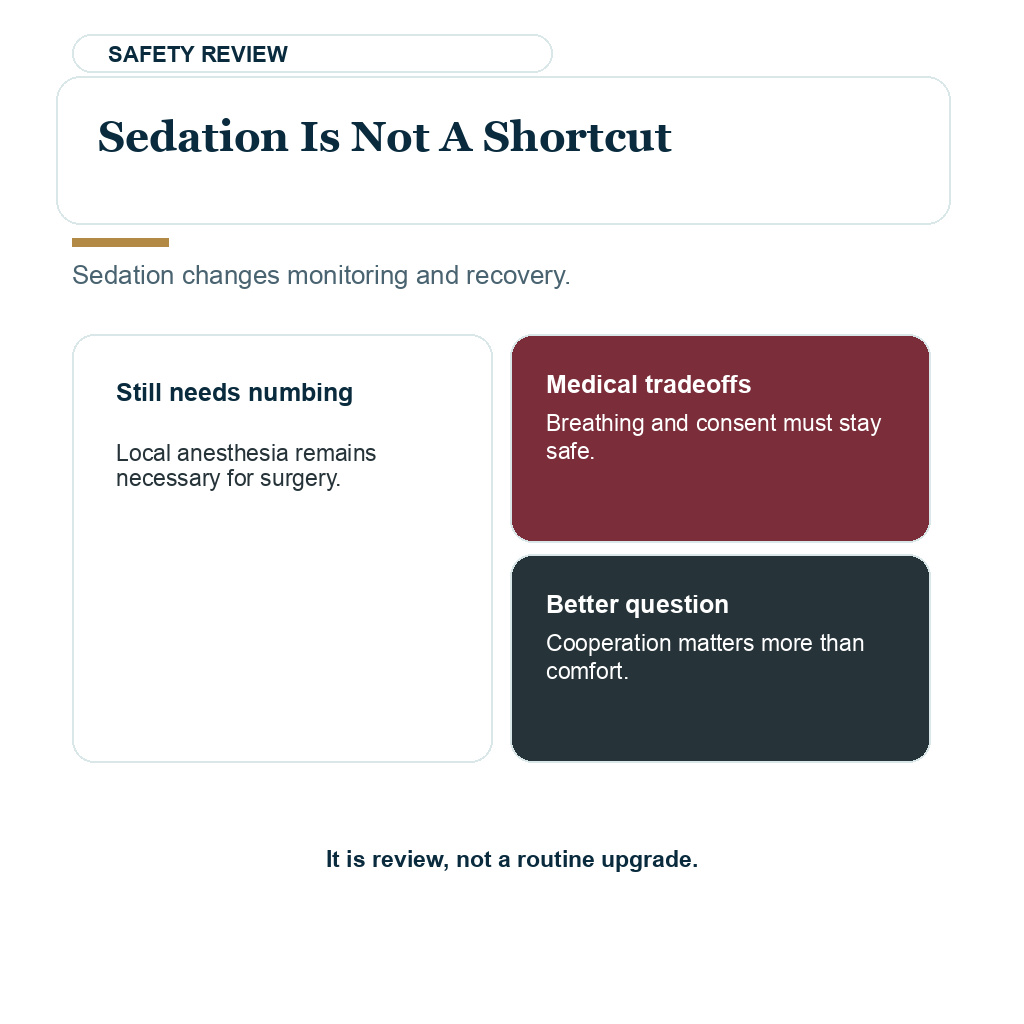
You may ask for sedation because you are afraid of injections. Sedation can sound like an easy answer, but it is not a cosmetic comfort upgrade without tradeoffs. It can affect breathing, alertness, blood pressure, recovery, and consent clarity. It also requires proper monitoring, fasting instructions when relevant, recovery observation, and medical judgment. A calming tablet in a hotel room is not the same as a planned sedation protocol.
Even when sedation is used, the scalp still needs local anesthesia. Sedation may change how aware or relaxed you feel. It does not remove the need to numb the donor and recipient areas properly.
Patients sometimes hear sedation and imagine they will be fully asleep for the whole hair transplant. That is not the right assumption. Sedation, when used, may reduce awareness or anxiety, but the scalp still needs local anesthesia and the team still needs cooperation, monitoring, and safe discharge planning. The practical consent issue is what the patient may feel, what may be remembered, and who monitors safety before discharge.
For most hair transplants, careful local anesthesia is enough. A clinic that treats sedation during hair transplant as a routine upgrade may be avoiding the harder question of whether you can safely tolerate the procedure, give clear consent, and protect the grafts afterward.
Needle fear deserves respect, but sedation is not a shortcut around evaluation. If fear is severe, the better answer may be medical preparation, psychological support, or postponement rather than deeper medication on the day. Consent, travel instructions, and the discharge plan should be clear before any sedating medication is given.
Xanax, Valium, beta blockers, or alcohol need disclosure
Do not take sedatives, beta blockers, alcohol, sleeping tablets, or other calming substances without the clinic’s medical approval. This includes cannabis and any other substance that can affect alertness, blood pressure, or breathing. These can interact with anesthesia, affect blood pressure, impair consent, increase sedation risk, or hide warning signs. Combining calming substances is especially unsafe because the team may not know which drug is causing drowsiness, dizziness, slow breathing, or confusion.
Benzodiazepines such as Xanax or Valium need careful disclosure. A tablet that feels familiar at home can behave differently during surgery, especially with travel, fasting, local anesthesia, and monitoring. The guidance on Xanax or Valium before hair transplant surgery matters because timing, dose, supervision, and travel safety all affect the plan.
Alcohol is also a poor solution for needle fear. It can affect bleeding, dehydration, judgment, and medication safety. If you need alcohol to face surgery, you are not ready for the operation that day.
Taking medicine because of fear also makes recovery symptoms harder to interpret. If you are unusually drowsy, dizzy, nauseated, or confused, the team must know whether this is anxiety, a medicine effect, dehydration, or another warning sign. Hair transplant surgery is very safe when planned properly, but hair transplant mortality risk still reminds us to respect rare emergencies.
Details the clinic should know before travel
Tell the clinic if you have fainted with needles, blood tests, tattoos, piercings, injections, or dental anesthesia. Mention panic attacks, severe nausea, previous emergency treatment, high or low blood pressure episodes, and any medication you use for anxiety. If another doctor or therapist already helps you manage panic or phobia, medication changes should be coordinated before travel, not improvised on surgery morning.
Also disclose allergies, reactions to local anesthetic, adrenaline sensitivity, heart disease, arrhythmia, sleep apnea, seizure history, and current medication. These details may sound unrelated to hair, but they affect anesthesia planning. Full disclosure about medication before hair transplant is part of safety, not paperwork. A patient who reports a lidocaine or dental anesthesia allergy can use local anesthetic allergy before hair transplant to prepare the exact reaction details before travel.
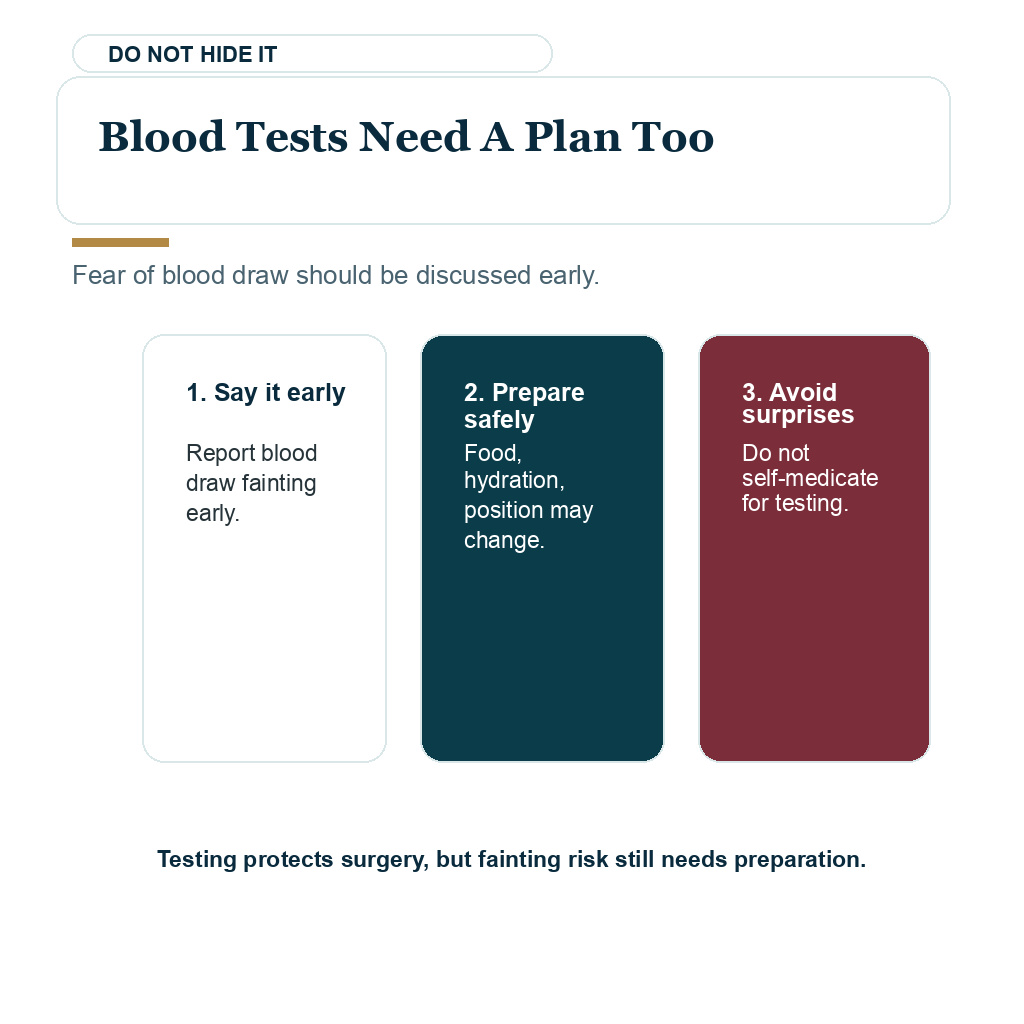
If blood tests are required, fear of blood draw should also be discussed early. Blood tests before hair transplant are meant to protect you, but if you are prone to fainting, you may need practical preparation.
If you are traveling internationally, you should also know who reviews symptoms after surgery. Needle fear is mainly a preoperative issue, but fainting, nausea, anxiety, and medication side effects can continue into recovery. International patients need clear hair transplant follow up after surgery when symptoms need review after they leave the clinic.
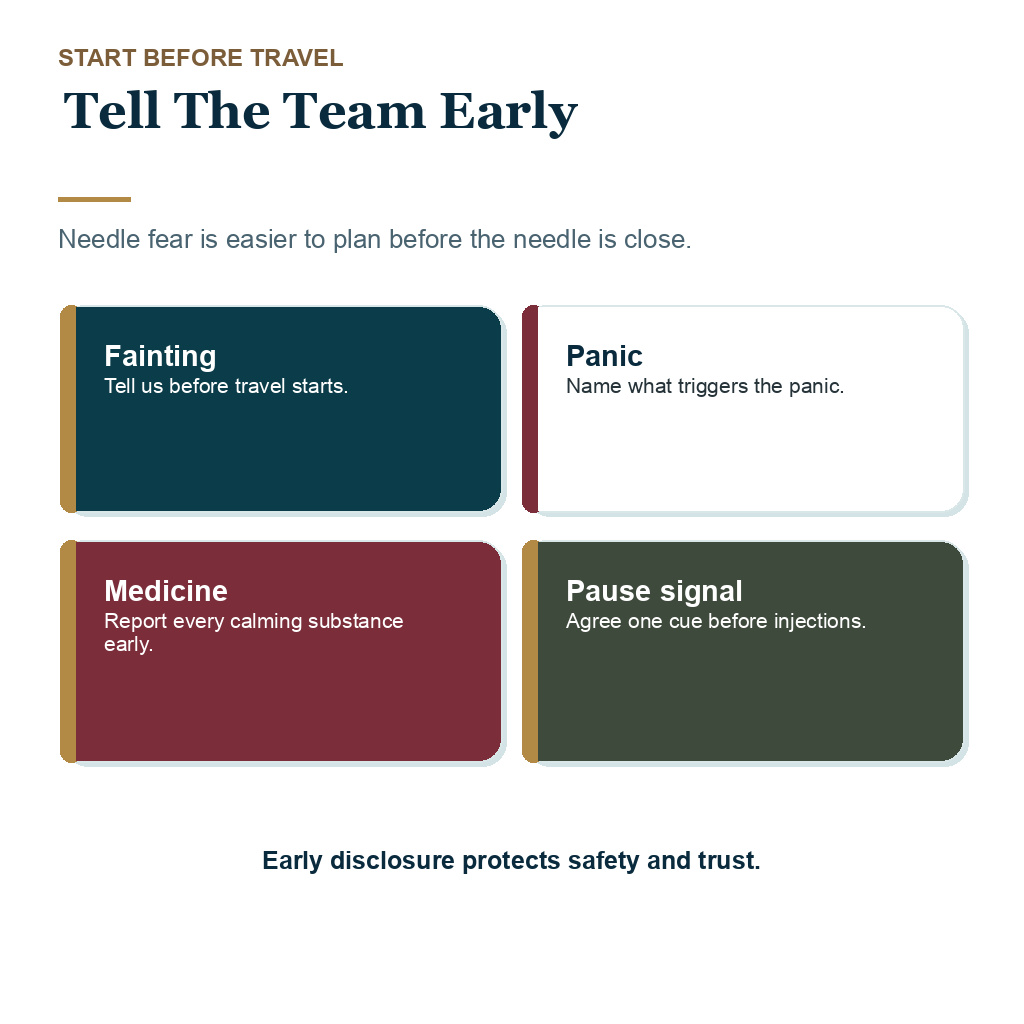
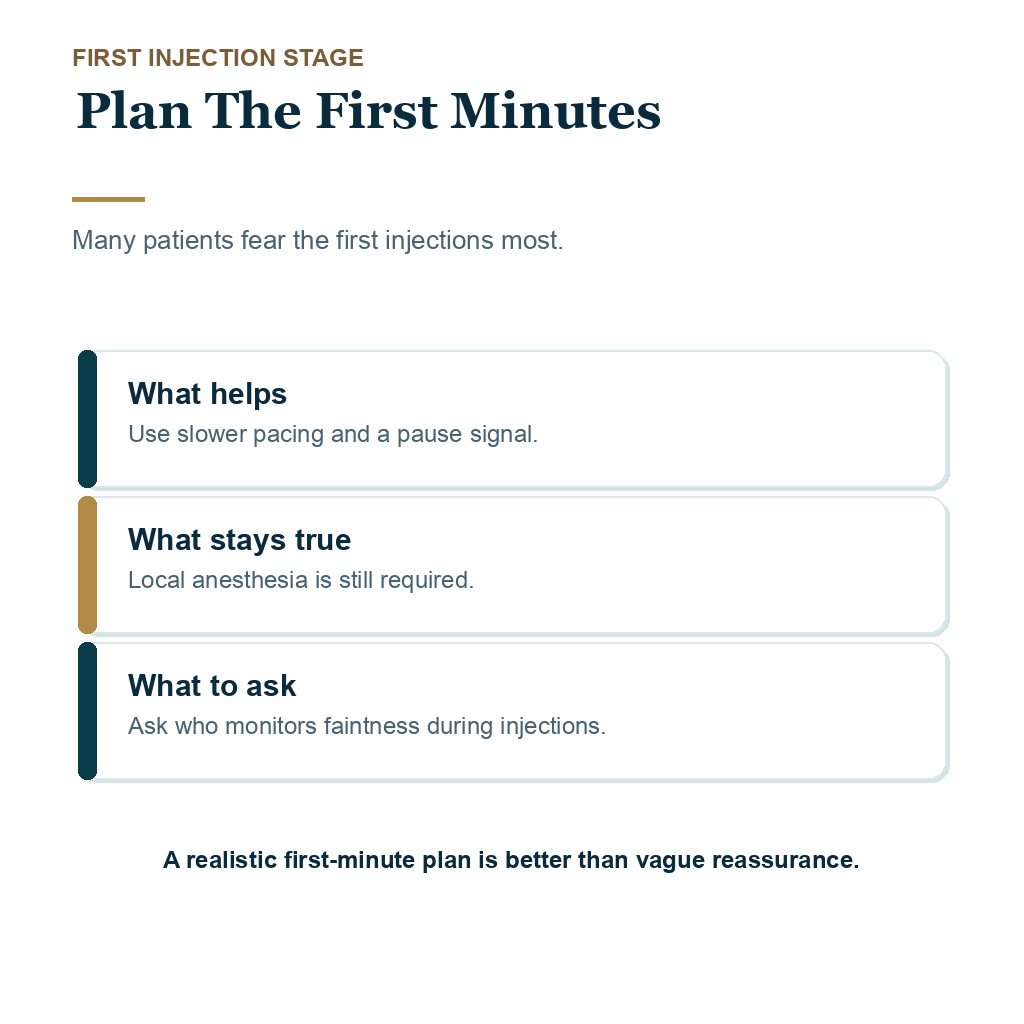
Use these 8 needle fear and hair transplant anesthesia slides to connect early disclosure, fainting history, first injection pacing, sedation limits, unapproved medicine risk, medical history, blood test fear, and delay signals. Swipe sideways, use the arrows one slide at a time, or choose a number below the image.



Measures that can help on surgery day
Small changes can make a real difference. You can arrive rested, follow food and hydration instructions, avoid new substances, and tell the team as soon as symptoms begin. The team can position you safely, pause during injections, use clear communication, and avoid unnecessary surprise. If approved calming medicine is part of the plan, the dose, timing, monitoring, and escort or hotel supervision should be agreed in advance.
If you have fainted with needles before, slow breathing alone may not be enough. You may do better lying flat before injections, with the team watching early signs such as sweating, nausea, pale color, or dizziness. Applied muscle tension can help some people who are prone to fainting. Mention it before surgery so the team can decide whether it fits the operating room position without creating sudden movement.
You may benefit from a clear hand signal that means pause, from not watching needles, from neutral conversation, or from slow breathing during the first injection stage. The day should feel controlled, not dramatic. You need a written anesthesia plan that everyone understands before the first injection.
Read this review excerpt
“Upon the day of the procedure Dr Mehmet Demircioğlu and his team walked me through everything, answered my questions and despite my squeamish nature around needles, blood and medical procedures generally, handled me with care and attentiveness.”
Reasons surgery should be delayed
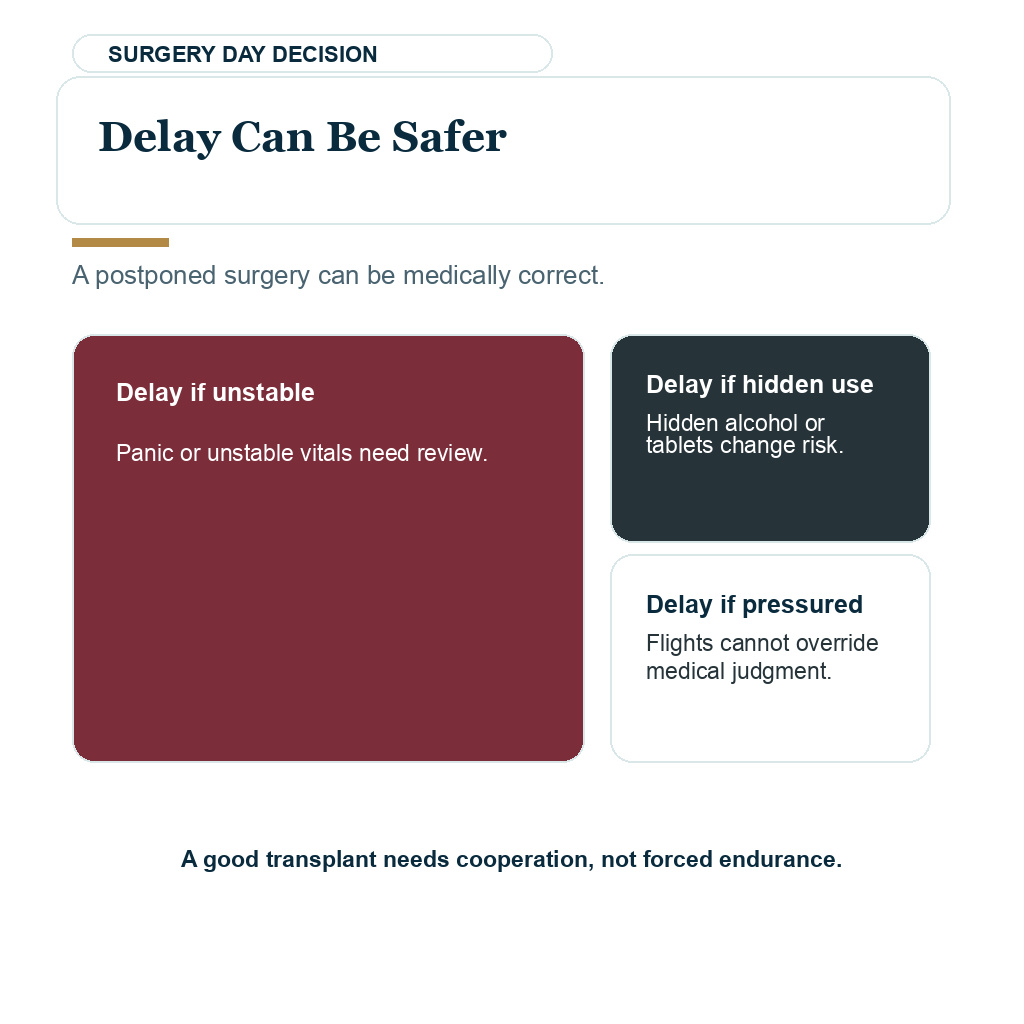
Surgery should be delayed if you cannot stay still, have uncontrolled panic, have repeated fainting without review, arrive after taking unapproved medication, have unstable blood pressure, or request sedation without a safe monitoring and discharge plan. It should also be delayed if you feel pressured to proceed because flights and deposits are already paid.
Booking pressure can make you hide medical information. That is dangerous. When medical details are not settled, hair transplant booking pressure can turn a rushed commitment into a warning sign.
Delay is not failure. It can be the responsible decision when fear creates safety risk. A successful transplant needs cooperation, not forced endurance.
Fainting history changes the anesthesia conversation
Tell the team if injections, blood tests, dental work, vaccines, tattoos, or previous procedures have caused fainting, sudden movement, panic, or hidden medication use.
Fear about needles is different from broader anxiety before a hair transplant. Result anxiety may improve when the surgical details are clearer. Injection fear needs pacing, positioning, local anesthesia detail, and a room prepared for the way your body reacts.
Many patients with needle fear can still proceed safely. The risk rises when past reactions are minimized, travel is already booked, and everyone discovers the problem only after the operating day has started.