


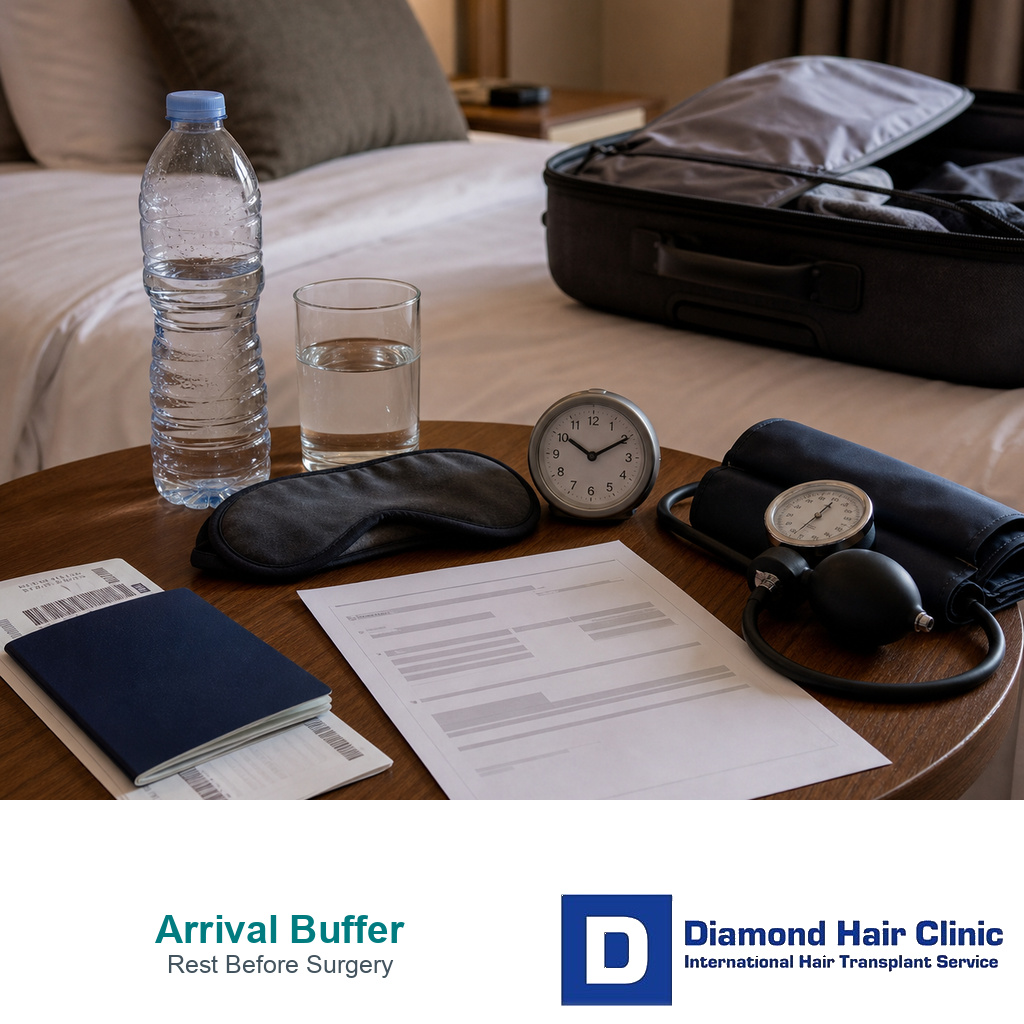
Jet Lag and Long Flights Before Surgery
Jet lag can affect hair transplant surgery when it leaves you exhausted, dehydrated, medically unstable, or unable to understand the plan clearly. By itself, jet lag is not a reason to cancel the operation. For most people crossing time zones, at least one full buffer day in Istanbul before surgery gives the consultation more room. After a very long route, poor sleep, several connections, or known blood pressure problems, two days is often the wiser plan. The ticket should not decide whether your body is ready for surgery.
If you travel alone, the buffer day has another job. It gives you time to eat, hydrate, sleep, find the hotel, and arrive for review clear enough to understand the plan instead of simply proving that the flight arrived.
This matters most after travel from North America, Australia, the Gulf, or any route that keeps you awake through the night. The surgery may have been booked months earlier, but the decision to proceed is still made when I examine you. A tired traveler who can eat, drink, think clearly, disclose medication clearly, and follow instructions is different from someone who arrives confused, dehydrated, hungover, heavily sedated, or repeatedly unsafe on blood pressure readings. If that same traveler also has vomiting or diarrhea from food poisoning after travel before a hair transplant, the schedule should be reviewed before surgery day feels fixed.
Safer arrival buffer before surgery
Arriving the day before consultation and surgery is the minimum for most international cases. It gives you time to reach the hotel, eat properly, drink water, sleep, and attend the review without rushing from the airport. For very long flights, large time zone changes, poor sleep during travel, anxiety, or a history of blood pressure problems, one full buffer day is usually wiser. If travel fatigue continues after surgery, sleepless nights after FUE separates ordinary rough sleep from medication and graft contact risks.
Do not book the first medical review so close to landing that one delay removes the rest window. The safer travel plan gives the clinic room to assess you as a patient, not only as an arrival time.
A buffer day is not wasted time. It lets the body settle enough for a more accurate medical reading. Blood pressure, alertness, hydration, swelling, medication disclosure, and the ability to follow instructions all matter before surgery begins. Documents and logistics belong in the Istanbul arrival checklist. Medically, I am asking whether you have arrived as a stable surgical candidate or as an exhausted traveler who needs more time. For a patient with previous DVT or pulmonary embolism, that readiness check also includes blood clot history and hair transplant planning, because long travel and medication history belong together.
A short direct route with normal sleep is different from a 20 hour route with two connections, missed meals, little sleep, and high stress. Build enough margin so the plan still works if the flight is delayed, the luggage arrives late, or the first night in the hotel is rough.

Readiness after a long flight is judged from sleep, hydration, blood pressure readings, medication disclosure, and clear judgment, not only from the calendar.
Long flights can affect the procedure day
A long flight can affect the procedure day because it changes sleep, fluid intake, food timing, circulation, stress level, and concentration. Some people land with a dry mouth, headache, neck stiffness, stomach upset, or the strange feeling of being awake but not fully clear. That does not mean surgery is unsafe for everyone. It means the pre surgery review has to be real, not automatic.
The operating day asks for cooperation. You need to understand the hairline discussion, donor planning, consent, local anesthesia, positioning, washing instructions, and aftercare. If you are too tired to process information, the consultation becomes weaker. If you are dehydrated or panicked, blood pressure may rise. If you used sedatives, alcohol, strong pain medicine, or repeated caffeine to get through the trip, the anesthesia plan may need review.
Many people focus only on the flight home, but the flight before surgery deserves the same respect. A tight schedule on both sides of the procedure should account for how many days to stay in Turkey for a hair transplant after surgery. Before surgery, the central issue is simpler. Are you rested and clear enough to make safe decisions?
Jet lag, poor sleep, and blood pressure readings
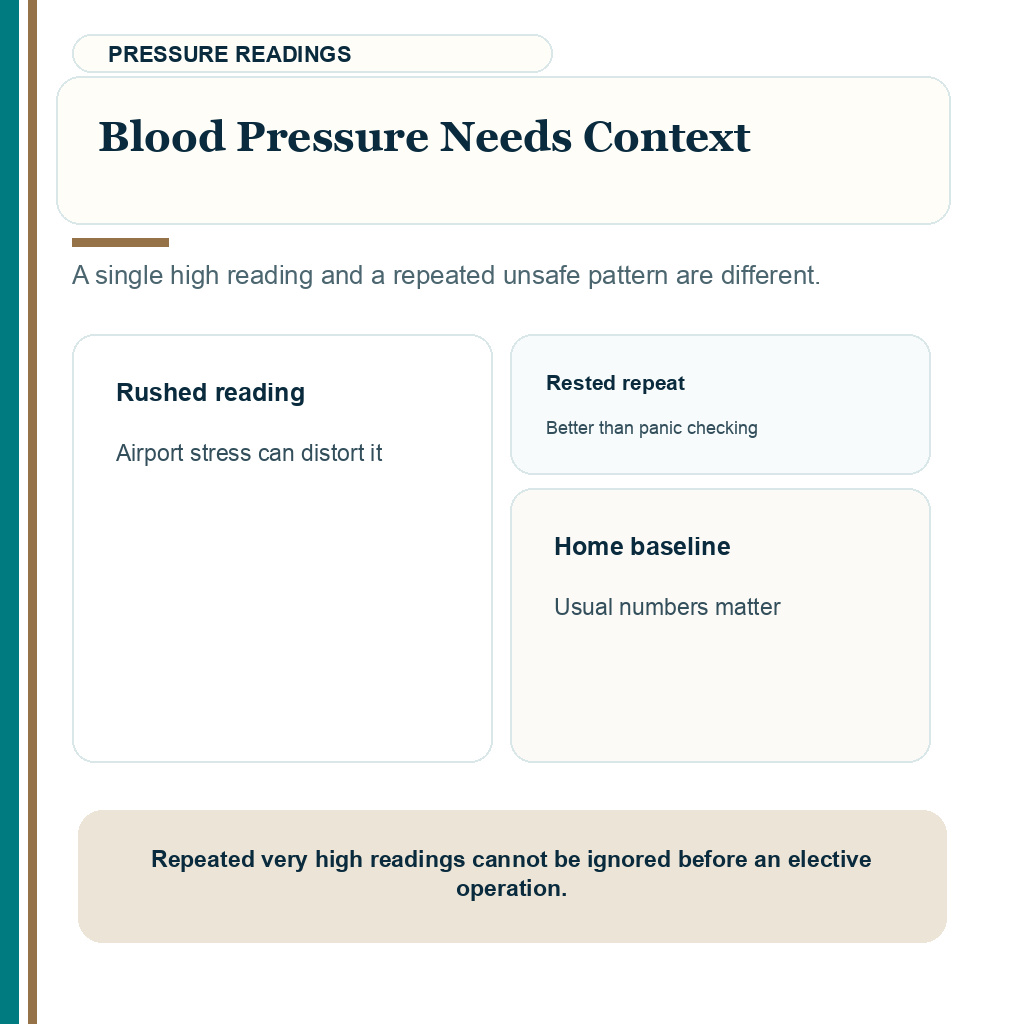
Jet lag and poor sleep can make blood pressure readings less predictable, especially if you are already anxious, dehydrated, affected by too much caffeine, or sensitive to travel stress. A single elevated reading does not define your usual baseline, but repeated very high readings cannot be ignored before an elective procedure. Blood pressure is not a cosmetic detail.
If an arrival day reading is high, do not keep checking it in panic. Sit quietly, empty the bladder, avoid extra caffeine or nicotine, and let the team repeat the measurement properly. A rested repeat reading gives better information than a rushed number taken while you are carrying luggage or stressed from the transfer.
After little sleep, I need a plain list of your usual readings at home, medication history, flight duration, caffeine intake, alcohol intake, panic symptoms, and any sedative or sleep aid use. One elevated reading is different from repeated unsafe readings. A nervous spike that settles after rest is different from a pattern that stays high.
If this is relevant to you, treat high blood pressure before hair transplant surgery as part of the travel plan, not as a late surprise. Travel fatigue can hide the real baseline. If rest, hydration, and proper repeat measurements bring the reading down, the plan may continue. If readings remain unsafe, delay can be the right medical decision.
Landing the night before surgery
If you land the night before surgery, keep the evening simple. Go to the hotel, eat a normal meal if permitted, drink water, prepare documents, avoid late sightseeing, and sleep at the local time. Do not experiment with alcohol, unfamiliar supplements, heavy caffeine, or a new sleep medicine because you are worried about jet lag.
If you normally use prescribed sleep medication, disclose it before surgery. If you took something on the plane, give the name, dose, and timing. If you used anxiety medication such as benzodiazepines, the anesthesia plan and consent discussion may change. Before travel, share any Xanax or Valium before hair transplant surgery so this medication question is not handled casually.
Also avoid trying to correct fatigue with repeated coffee or energy drinks. A usual small coffee may be acceptable for many patients, but high caffeine intake after a long flight can worsen palpitations, anxiety, dehydration, and poor sleep. The same distinction applies to coffee on the morning of hair transplant surgery. A routine habit is different from overuse.
Travel details the clinic should know before the procedure
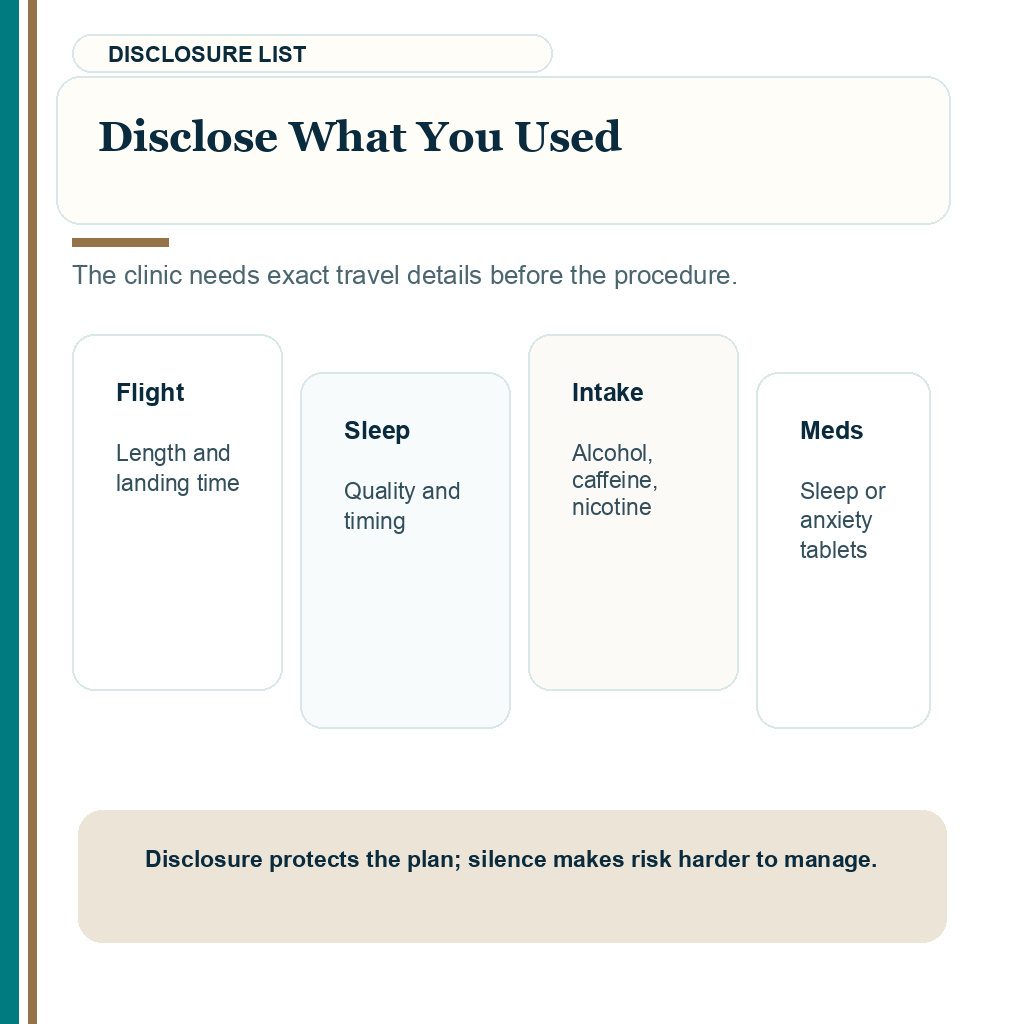
Flight length, landing time, sleep quality, blood pressure history, regular medications, alcohol use, nicotine use, caffeine intake, and anything taken to sleep or settle anxiety should be clear before the procedure. This information is not used to judge you. It is used to protect the surgical day.
Melatonin and other over the counter sleep aids still belong in the preoperative disclosure. Tell the clinic the name, dose, timing, and whether you felt drowsy during the morning review.
Some people hide travel details because they fear the operation might be delayed. That is the wrong instinct. If you are clear, the plan can often be adjusted safely. If alcohol, sedatives, panic symptoms, chest symptoms, fainting, or very poor sleep are hidden, the risk becomes harder to manage. Be exact about what you took and when.
It also matters whether you are traveling alone. If you are tired, anxious, and alone, you may need simpler instructions and more support around transport, hotel rest, and first washing. If you are coming without a companion, the practical side of traveling alone to Turkey for a hair transplant needs the same seriousness as the medical schedule.
Caffeine, alcohol, sleep aids, and travel fatigue
Caffeine, alcohol, and sleep aids can each make travel fatigue more complicated when they are used without medical judgment. A normal small coffee is different from several espressos, energy drinks, or pre workout caffeine after a sleepless flight. Alcohol may make you feel sleepy, but it can disrupt sleep quality and worsen dehydration. Sleep aids can help some prescribed users, but new or undisclosed use before surgery is unsafe.
You do not need to arrive perfectly rested. You do need to arrive clear, accurate, and medically stable. If you drank alcohol during travel, say so. If you used a sleeping tablet, say so. If you took anxiety medication, say so. With alcohol before a hair transplant, even a few drinks close to surgery can matter.
Sedation during the procedure is a separate topic. It should be planned by the clinic, with medication history known, not improvised by the patient after a stressful flight. If pain or fear during anesthesia worries you, discuss sedation during hair transplant surgery before travel instead of improvising after landing.
Surgery delay after travel
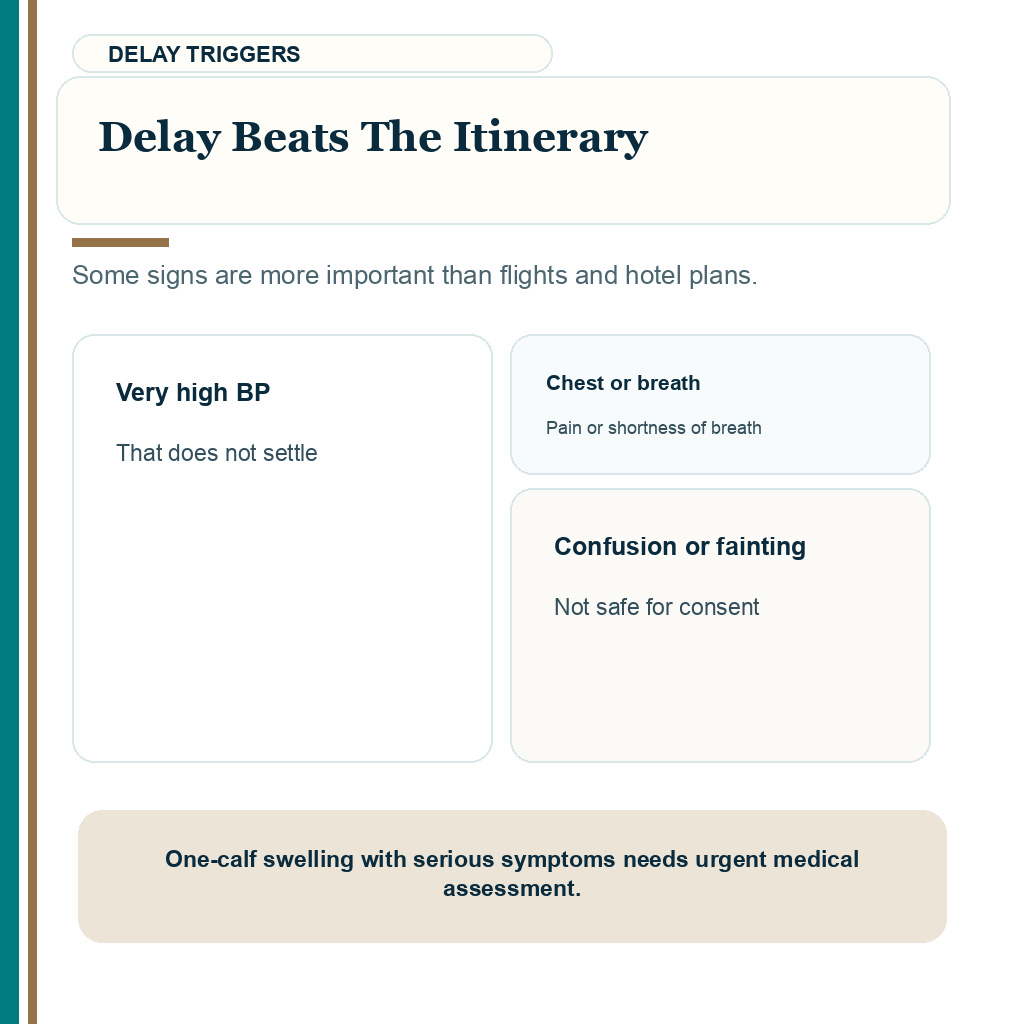
Surgery should be delayed when the travel state creates a real safety problem. That includes very high blood pressure that does not settle, chest pain, shortness of breath, fever, severe dizziness, fainting, confusion, heavy alcohol use, undisclosed medication use, or being too unwell to understand instructions clearly. These are not small inconveniences. They can change whether an elective operation is reasonable that day.
Heavy or tired legs after a long flight can be ordinary travel fatigue. New pain, warmth, redness, or swelling in one calf is different, especially if it appears with chest pain, shortness of breath, faintness, or coughing blood. That needs medical review before any elective procedure is considered.
Do not treat new swelling in one calf as ordinary jet lag. If it appears with chest pain, shortness of breath, coughing blood, faintness, or severe worsening symptoms, seek urgent medical assessment before going to the clinic. The transplant can wait. A possible clot or cardiopulmonary problem cannot.
Delay is frustrating, especially after expensive flights and hotel planning. I understand that. But the donor area is limited, the hairline plan is permanent, and the operation uses anesthesia. Very high blood pressure, dizziness, fever, chest symptoms, severe dehydration, or unclear medication use can delay surgery.
If dizziness is the main symptom, the cause has to be separated. It may be hunger, dehydration, anxiety, low blood sugar, medication, lack of sleep, or something unrelated to the hair transplant. With fainting and dizziness around hair transplant surgery, the clinic should not simply push through unclear symptoms.
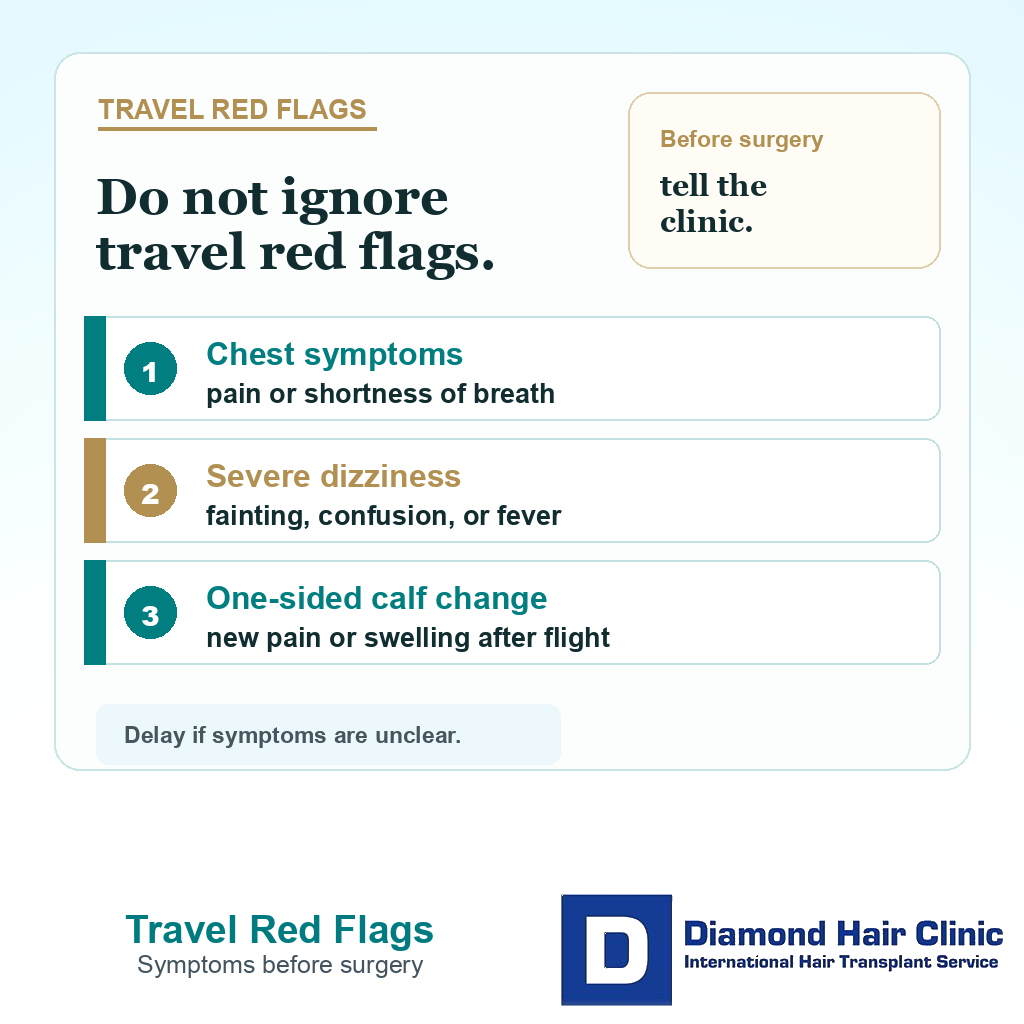
Chest symptoms, severe dizziness, fever, confusion, or new calf swelling after a long flight should be disclosed before any elective procedure.

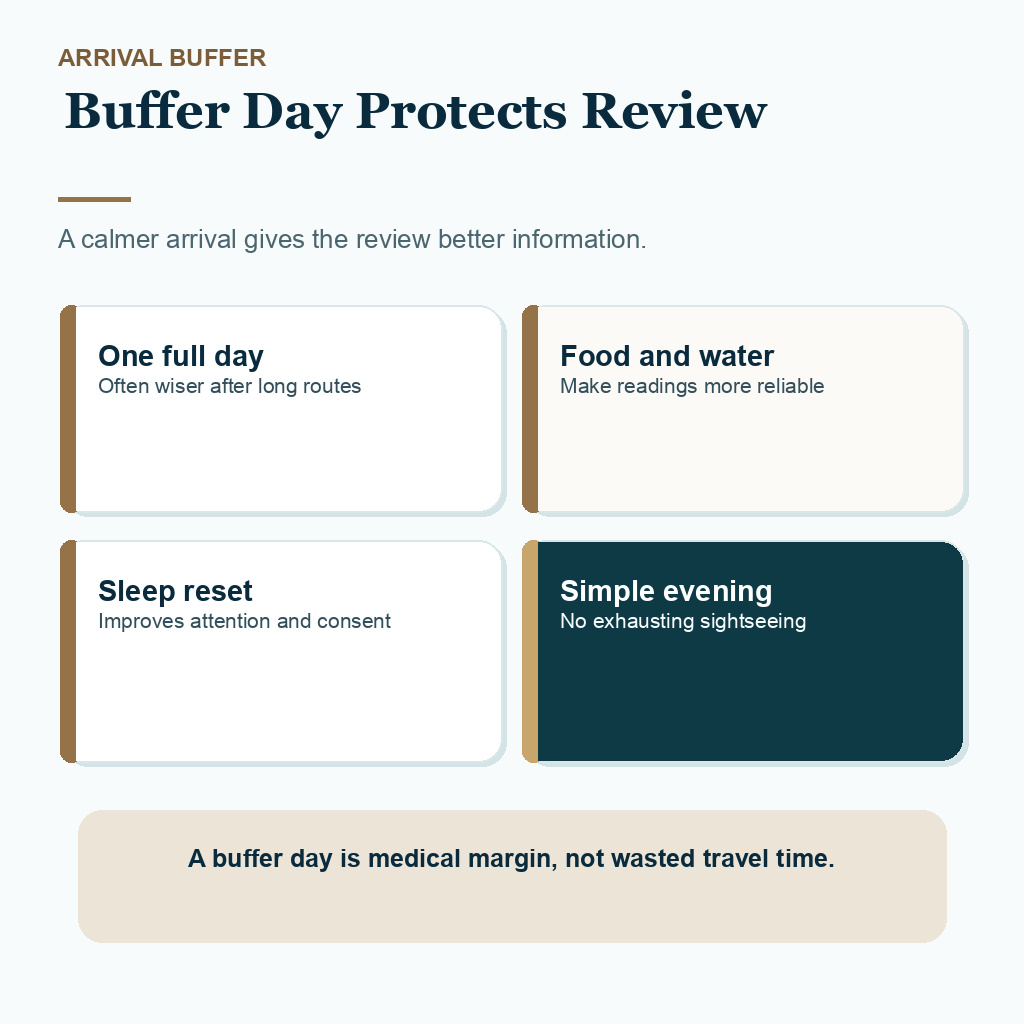
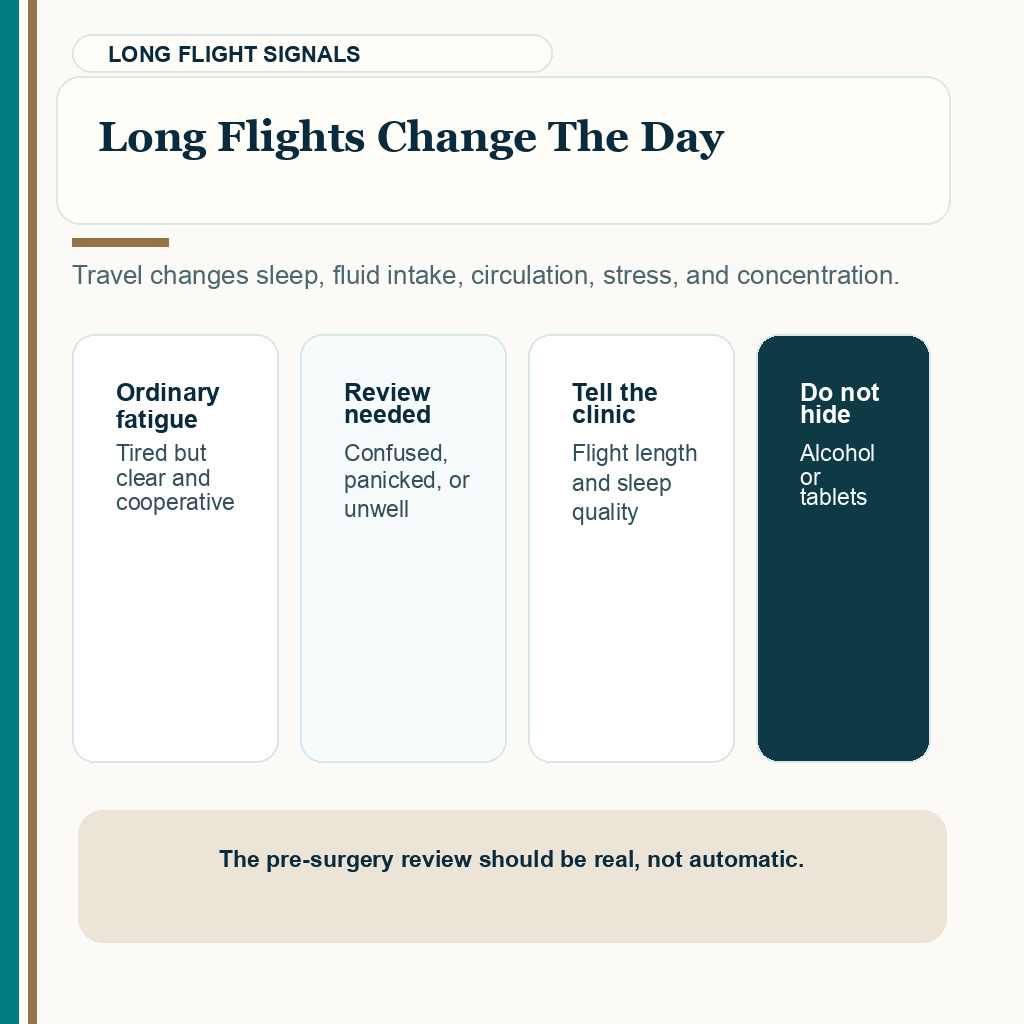


Istanbul arrival planning for a steadier procedure day
Plan Istanbul arrival as part of the surgery, not as a separate travel detail. Choose flights that leave space for delay. Avoid landing late at night before an early medical review when possible. Keep the first evening quiet. Prepare your passport, forms, medication list, and photos before sleep. Do not fill the buffer day with heavy walking, alcohol, shopping, or sightseeing that turns rest time into another stressor. After a long flight, the arrival buffer should give you real sleep before the morning medical review.
Keep prescribed medicines, blood pressure notes, allergy information, and the clinic’s latest instructions in hand luggage, not checked baggage. If luggage is delayed, the medical review should still have the information needed to make a safe decision.
The best buffer day stays simple. Use daylight exposure, normal meals, hydration, light walking if appropriate, clinic communication, and sleep at the local time. If you want to explore Istanbul, do it gently and avoid exhausting yourself before a long operation. A steadier procedure day starts before the airport.
If you are returning home soon after surgery, connect the before surgery and after surgery travel plan. After surgery, flying after a hair transplant brings graft protection, swelling, hats, and flight comfort into the plan. Before surgery, the same common sense applies. More margin gives the clinic more room to make a safe decision.
Changes when you are flying alone
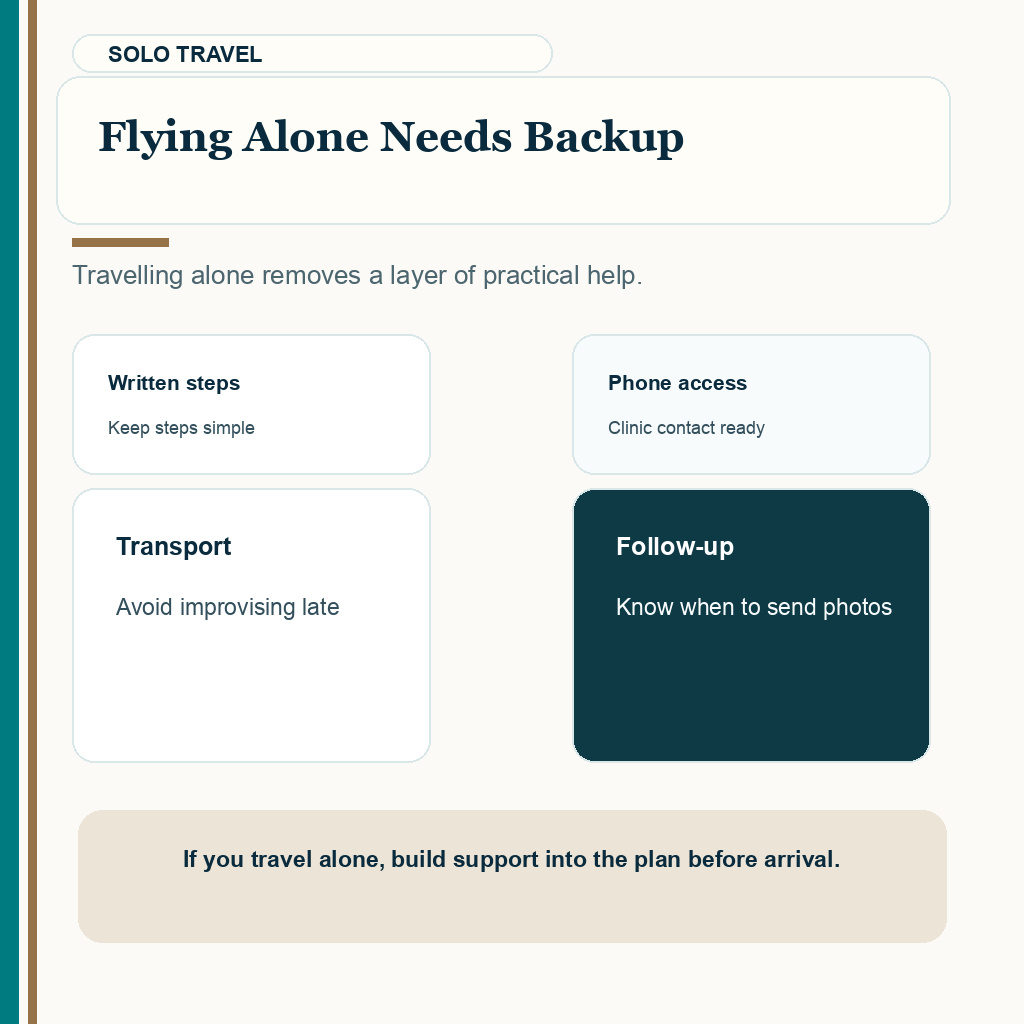
Flying alone does not make surgery impossible, but it removes a layer of practical help. After a long flight, a companion can notice if you are confused, dehydrated, dizzy, or too anxious. If you travel alone, build that support into the plan with written instructions, simple transport, enough hotel time, working phone access, and realistic meal and sleep planning.
If you know you become anxious during travel, mention it before arrival. Do not wait until you are sitting in the hotel at midnight searching for a solution. Some people need only a clear schedule and direct communication. Others need a more cautious medication review or a longer buffer before surgery. The decision depends on the person, not the airline ticket.
After surgery, alone travelers also need a clear follow up channel. You should know how to send photos, when the first wash happens, and which symptoms need urgent attention. Before leaving Istanbul, arrange hair transplant follow up after surgery so ongoing review is not improvised from the airport.

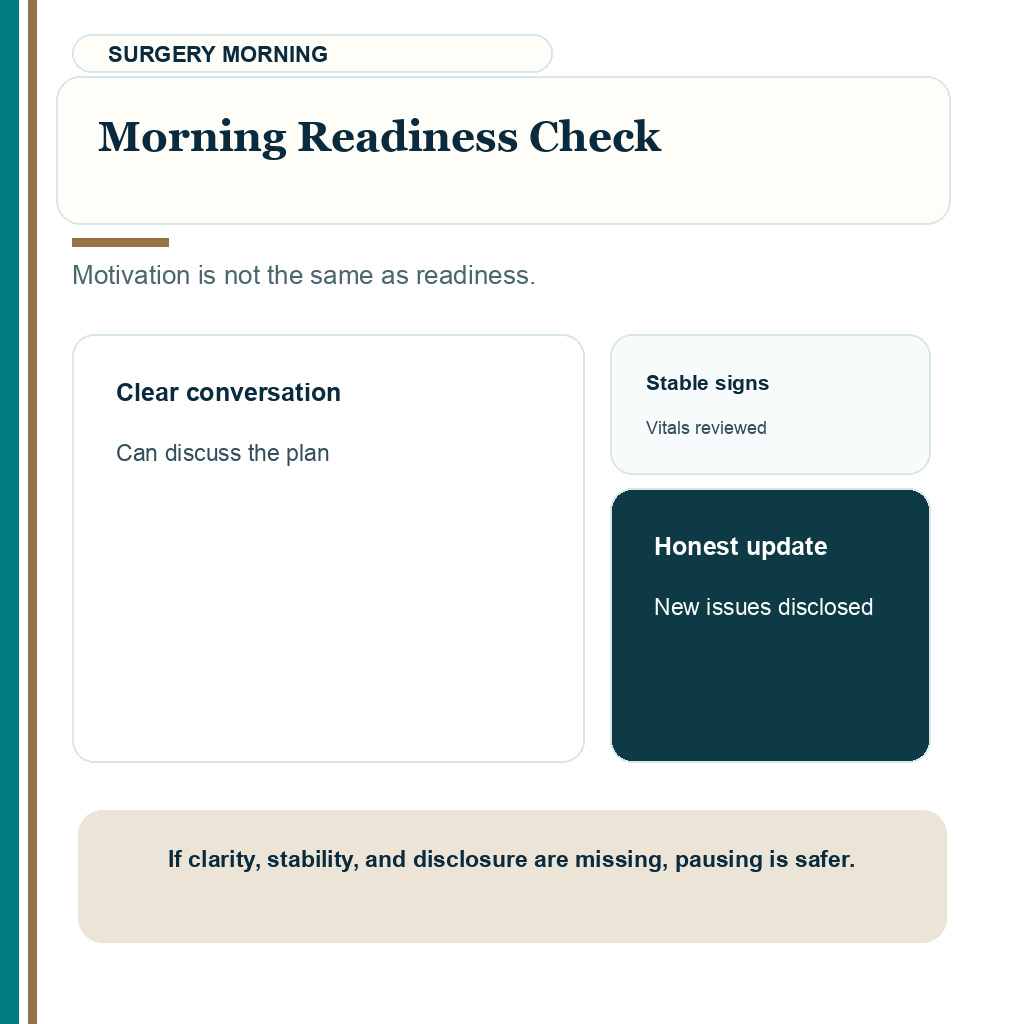
On the morning of surgery, the question is whether you are clear, stable, and safe enough to proceed.
Judging readiness on the morning of surgery
Readiness on the morning of surgery is not judged by motivation alone. A motivated person can still be dehydrated, sleep deprived, or medically unstable. The morning check needs clear conversation, complete medication disclosure, stable vital signs, realistic expectations, and the ability to understand aftercare. If those are present, travel fatigue can often be managed. If they are absent, pausing is safer.
Ask yourself practical questions before leaving the hotel. Did I sleep enough to think clearly? Have I eaten and drunk water as instructed? Did I take anything new, extra, or undisclosed? Do I feel faint, feverish, confused, panicked, or unwell? Can I listen carefully during hairline design and donor planning? These answers matter more than a rigid itinerary. If you are too tired to question the drawn hairline, the surgery morning should not be treated as routine.
People often worry that reporting symptoms will make the clinic cancel everything. Clear reporting usually does the opposite. It lets the team separate manageable travel discomfort from a genuine reason to delay. Silence creates more danger than disclosure.
Long flights belong in the medical picture
A long route changes sleep, hydration, blood pressure, swelling, anxiety, and how clearly you can take instructions. Those details belong to the surgical plan because the operation happens on the body that arrives at the clinic.
For a short regional trip, travel may need only a small margin. For an intercontinental route, arrive early enough to rest, drink normally, avoid alcohol, settle medicines, and let the medical review happen without rushing.
Do not let the ticket decide the operation day. If jet lag, illness, dehydration, sedative use, high blood pressure, or severe fatigue changes the picture, surgery timing has to remain a medical decision.
Read this review excerpt
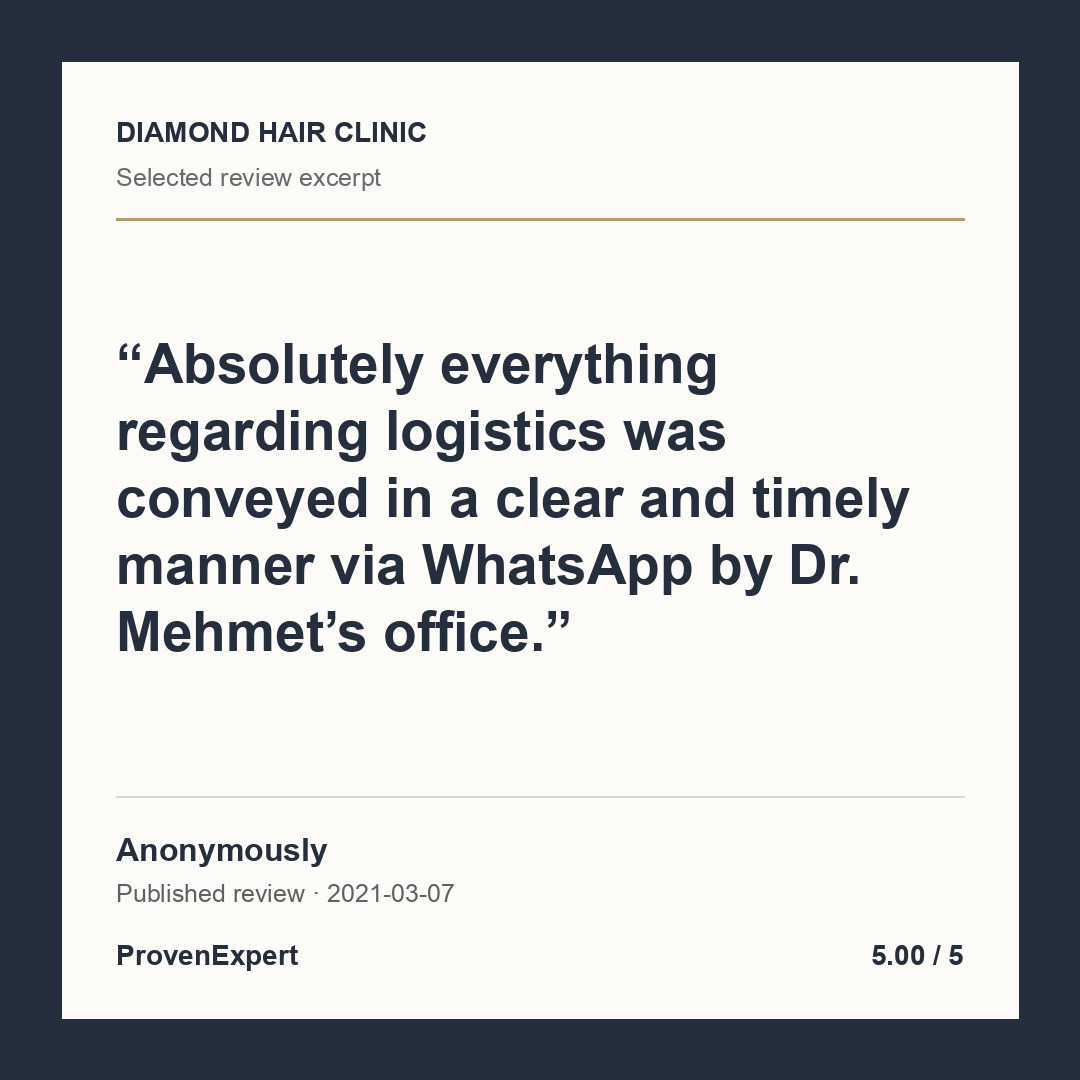
Absolutely everything regarding logistics was conveyed in a clear and timely manner via WhatsApp by Dr. Mehmet’s office.