


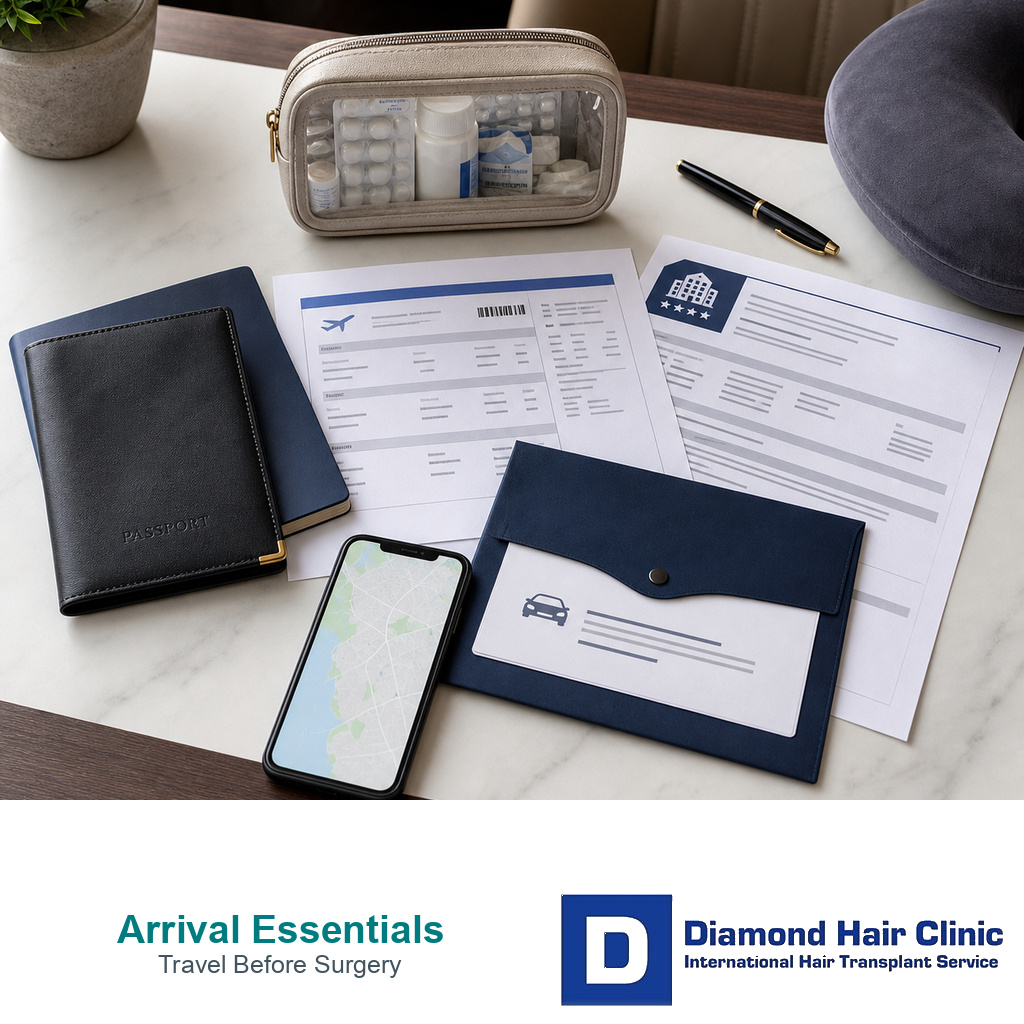
Istanbul Arrival Essentials for Hair Transplant Patients
Before you fly to Istanbul for a hair transplant, the essentials are simple but easy to miss. You need valid entry documents, confirmed clinic transfer, hotel details, medicine paperwork, clinic WhatsApp, emergency contacts, and a first night recovery setup. If those pieces are ready before departure, you arrive more organized and the medical team can focus on the surgery instead of solving travel confusion.
Istanbul receives many international medical travelers, but that does not make the trip casual. A hair transplant is still a medical procedure. Before surgery drinking should be avoided. If alcohol was part of the trip, review when to stop and share that with the clinic before the procedure. The flight, hotel, luggage, medicines, language, sleep, and return plan can all affect how safely the first days are handled. If the hotel spa is part of the arrival plan, sauna before hair transplant explains why the last preparation day should stay calm and hydrated.
Practical guide
Plan the trip around
the medical decision
Arrival details should protect the medical plan, not replace it. Use the route that matches the practical question you need settled before landing or going home.
This checklist is for arriving organized, avoiding preventable stress, and protecting the work that will be done on the scalp.
Before booking the flight
Before the ticket is paid, the basic plan should already be clear. Confirm the surgery date, the clinic address, the responsible doctor, the expected arrival day, the first wash or follow up timing, and the transport arrangement from the airport to the hotel. The travel plan should support the medical plan, not force the medical plan to fit a cheap flight. Save the clinic address and hotel address offline before the flight, because mobile data and battery problems usually appear at the worst moment.
Make the surgery date, arrival day, hotel nights, and illness contact path explicit before you fly. A calendar mistake or last minute sickness should be solved before travel pressure starts making the decision for you.
Verify passport and visa rules from the official Turkish government, electronic visa, consulate, or embassy source for your nationality. Many travelers are advised to keep at least six months of passport validity from the date of arrival, but the exact entry rule can depend on nationality, visa status, and length of stay. Do not rely on a social media answer for entry permission.
Before booking, the plan should be clear. A good trip starts with medical responsibility, not only a price, flight, and hotel package.
If the clinic offers a package, read the details instead of assuming every item is covered. Hair transplant packages in Turkey can be convenient when transport, hotel, procedure day timing, medication, and follow up responsibilities are written clearly.
What I want settled before you land in Istanbul?
After the surgical plan is accepted, flight ticket details are enough for Diamond Hair Clinic to reserve the surgery day on Dr. Mehmet Demircioglu’s schedule. At that point, the practical details should support the plan. The clinic should know your arrival time, flight number, hotel details if already arranged, phone access, and whether someone is travelling with you.
Before landing, it has to be clear who will meet the patient, what to do if the flight is delayed, where the consultation or clinic visit will happen, and which number to use after arrival. These details reduce stress, but they should never replace the medical decision.
If a patient arrives exhausted, unwell, or confused about the plan, the safer decision is not to rush because the flight already happened. The surgery day still needs a clear patient, a confirmed plan, and a safe donor decision.
Documents to keep with you during travel
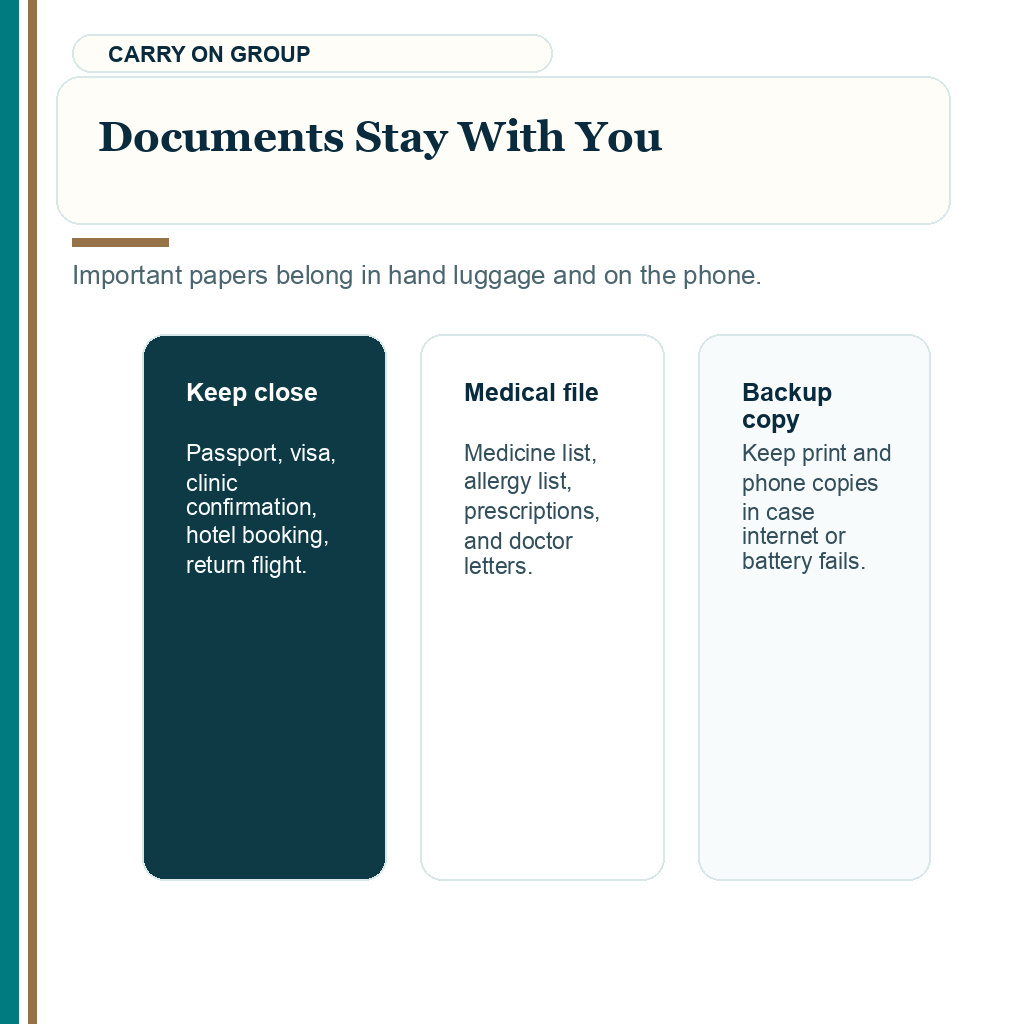
Your passport, visa or electronic visa confirmation when required, clinic confirmation, hotel booking, return flight, insurance details, medicine list, allergy list, and emergency contacts should stay in your hand luggage. Keep digital copies on your phone and cloud storage, but keep printed copies too because batteries, roaming, and airport internet connection can fail at the wrong moment.
One small folder or pouch should stay in the hand luggage. It should include the clinic address in Istanbul, the hotel address, the pickup instructions, the clinic phone or WhatsApp number, and a copy of any medical documents requested before surgery.
If you are traveling alone to Turkey for hair transplant, document access matters even more. Solo travel can be reasonable when support is organized, but it becomes weak when you have no clear communication or emergency plan.
Do not pack key documents only in checked luggage. If the bag is delayed, the surgery schedule should not be disrupted because the passport copy, prescription, or clinic details were inside it.
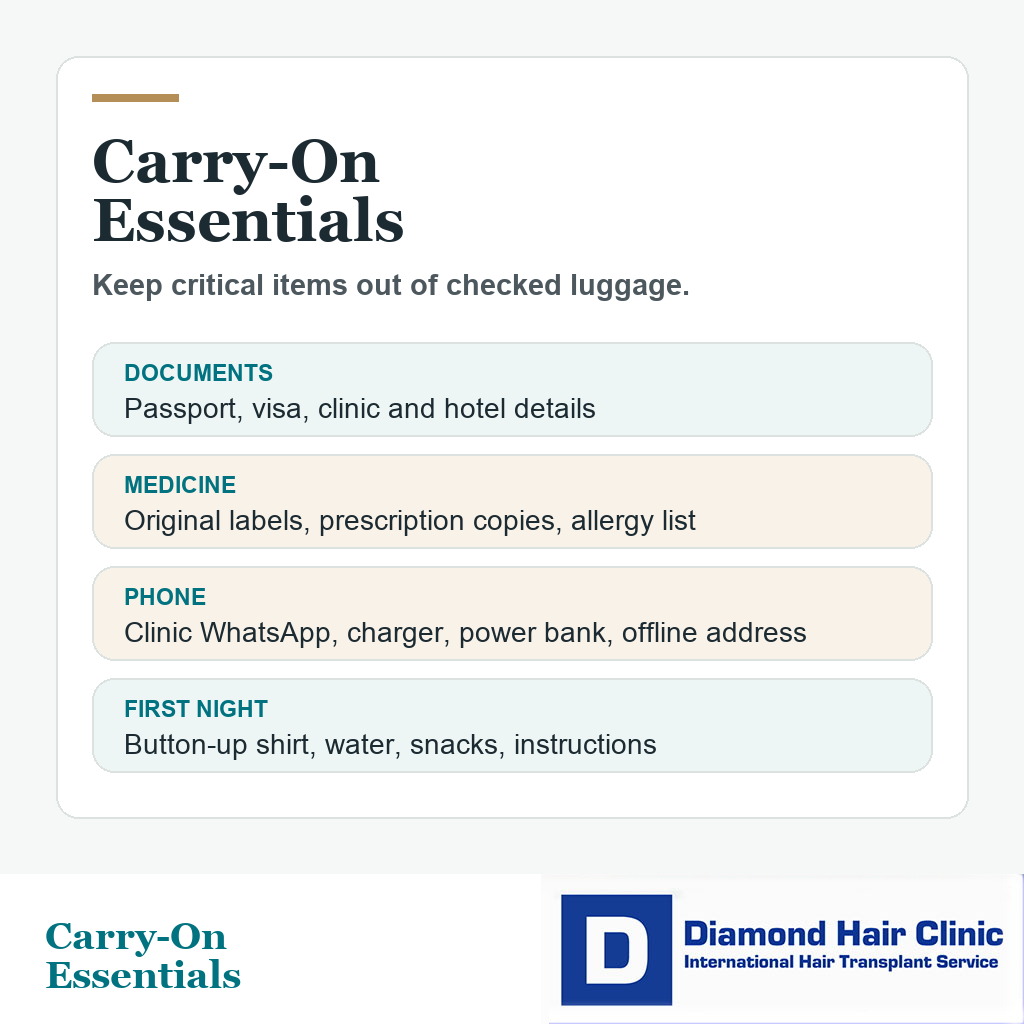
The hand luggage should hold the items you cannot safely lose. Keep documents, medicine paperwork, clinic contact, and first night basics with you. I would also think about the first hotel night setup, including fan and air conditioning use after hair transplant, before you are tired and trying to sleep.
Delayed checked luggage can affect surgery day
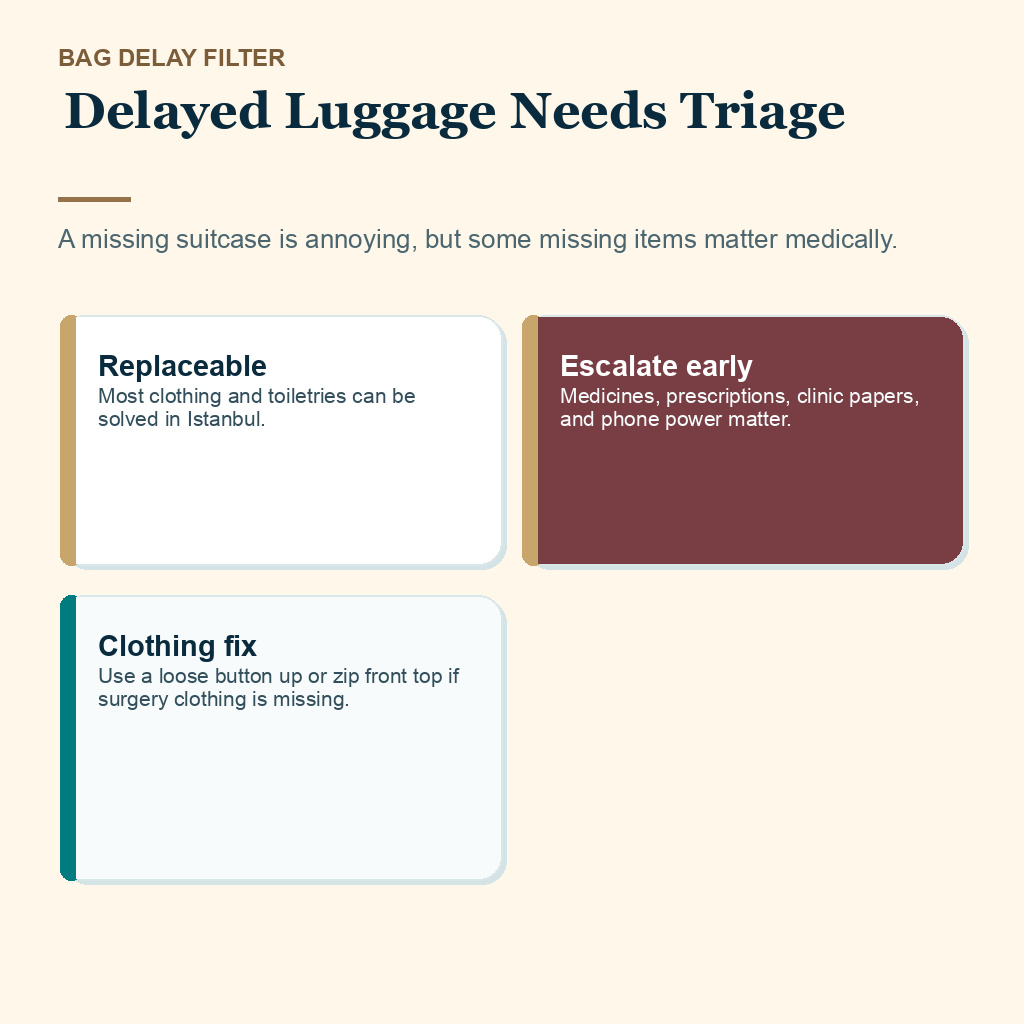
If checked luggage is delayed after landing, do not panic, but do not pretend it is irrelevant. Message the clinic if your clean shirt that opens at the front, prescription paperwork, regular medicines, charger, or first night basics are missing. Keep anything that could affect surgery day with you, not inside checked luggage. For aftercare liquids on the return trip, check bottle size before airport security.
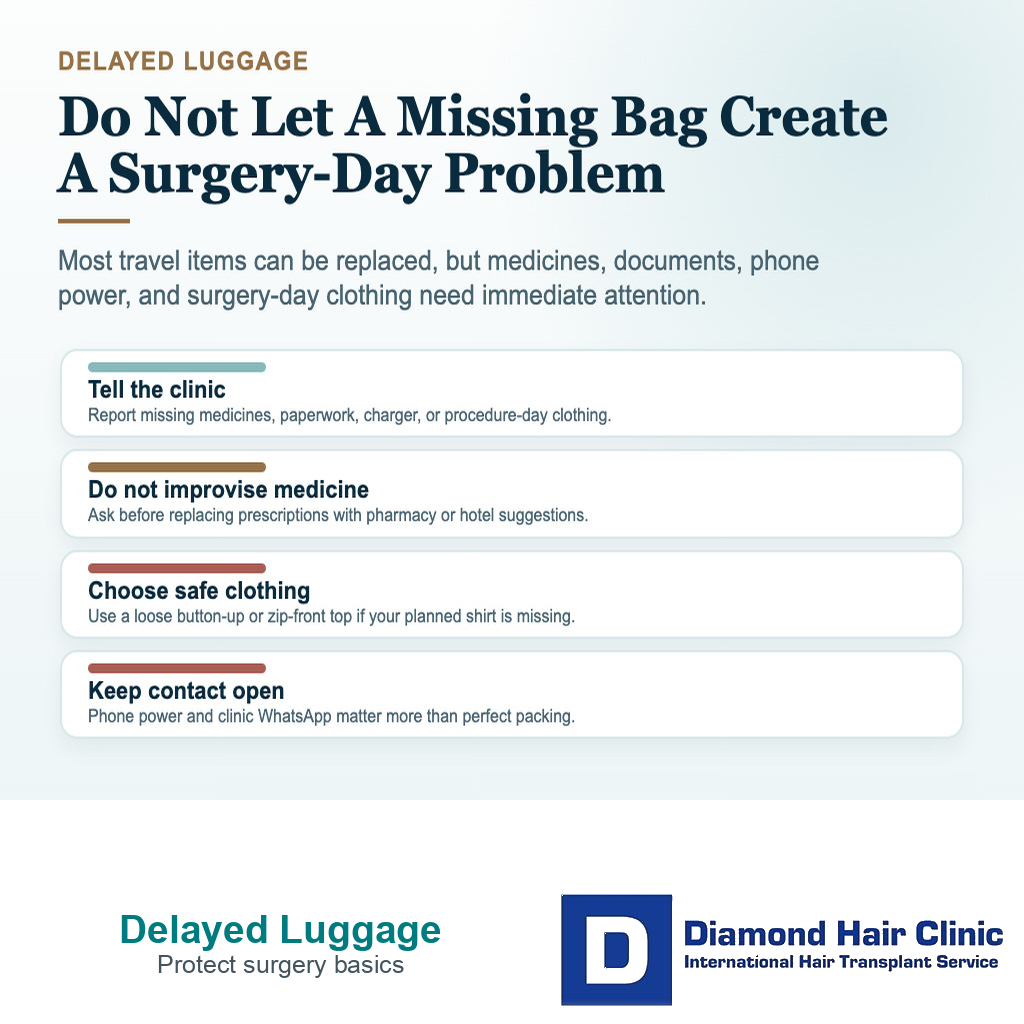
Most clothing and toiletry problems can be solved in Istanbul, but medication, documents, and clinic instructions are different. If an essential medicine is missing, share that with the clinic before taking substitutes from a pharmacy or hotel staff. If clothing for the procedure is missing, choose a loose button up or zip front top rather than anything that must be pulled over the grafts. Perfect packing is not the point. The safer aim is avoiding a rushed decision because a suitcase did not arrive.
Planning the airport arrival in Istanbul
Airport arrival should feel predictable, not improvised. The plan needs to include the airport, terminal, pickup point, driver or coordinator contact, hotel name, and what to do if the flight is delayed. Confirm whether you are landing at Istanbul Airport (IST) or Sabiha Gokcen (SAW), because they are not interchangeable for pickup timing. A transfer plan that depends on guessing after landing is not a plan. Arrival should leave room to solve luggage, medicine, or phone problems before the clinic chair.
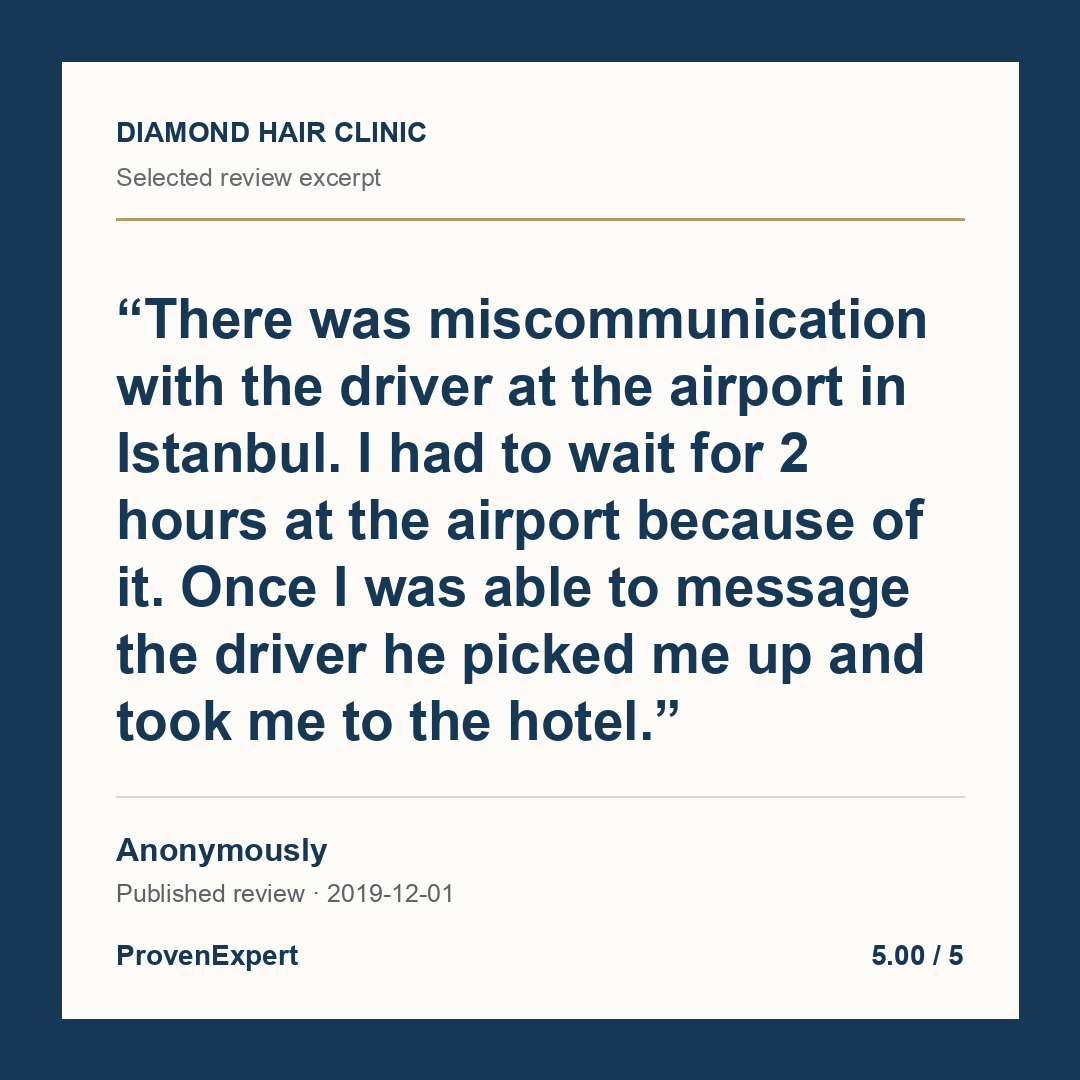
Read this review excerpt
There was miscommunication with the driver at the airport in Istanbul. I had to wait for 2 hours at the airport because of it. Once I was able to message the driver he picked me up and took me to the hotel.
Keep luggage manageable. Heavy bags create problems before and after surgery. Before surgery, they make arrival tiring. After surgery, they can lead to bending, straining, sweating, or bumping the scalp. If possible, use a rolling bag, keep medicines and documents in a small hand luggage, and avoid packing more than you can handle without strain.
You may think mainly about the return airport after the operation, but arrival day sets the tone. Airport security after hair transplant becomes more relevant after surgery, yet this point starts early. Avoid rushing, crowding, and careless luggage handling.
If your phone data does not work at the airport, the transfer can become stressful. Install an eSIM or roaming plan before departure when possible, and save the clinic and hotel details offline. Screenshot the pickup point, driver or coordinator instructions, hotel address, and clinic WhatsApp so a weak signal does not leave you searching through messages.

Read this review excerpt
“After the booking process I was shown the face & vehicle reg of my taxi transfer driver who picked me up from Istanbul airport & took me to the hotel.”
Practical hotel choice for the first nights
The best hotel is not always the most luxurious hotel. For hair transplant travel, the safer hotel is close enough for easy transfer, quiet enough for rest, and practical enough for the first night after surgery. Elevators, reliable room access, simple food, a quiet breakfast area, and easy communication matter more than nightlife or sightseeing. If possible, choose a smoke free room and set water, charger, medicines, and instructions at table height before leaving for surgery so you are not bending into luggage afterward.
Ask whether transport is arranged from hotel to clinic and back, and whether the hotel is used to guests recovering after a hair transplant. A hotel that understands medical travelers reduces embarrassment and confusion around bandages, pillows, breakfast timing, and pickup schedules.
If the clinic is arranging accommodation, review the Diamond Hair Clinic hotel accommodation information. If you book independently, the hotel should still be chosen around recovery and transfer, not only around a tourist map.
Staying too far away can look harmless before surgery and feel exhausting after surgery. Traffic, fatigue, swelling, and sleep disruption all feel heavier when the hotel plan is inconvenient.
Packing for surgery and the first night
Pack clothes that protect the grafts. Shirts that open at the front, front zip tops, loose collars, comfortable trousers, and shoes that are easy to put on are better than tight pullover clothing. Plan what to wear for travel and surgery before the suitcase closes, because clothing affects comfort, graft protection, and procedure day handling.
The first night should be simple. Keep phone chargers, water, snacks, medicines, documents, and the clinic contact within reach. Do not create a hotel room setup that forces bending, searching in bags, or moving heavy luggage after the operation.
Bring a travel adapter if needed, a power bank, a clean shirt that opens at the front for procedure day, and loose clothing for the return travel. Keep the procedure room items separate from the suitcase. A small FUE surgery day pouch is easier for staff to place safely than a full travel bag. If the clinic gives a neck pillow or specific sleeping instruction, follow that instruction instead of improvising with random hotel pillows.
The hand luggage should contain anything that would disrupt surgery or recovery if checked luggage is delayed. Documents, medicine paperwork, essential medicines, phone power, and a clean surgery day shirt belong there.
Medicine and pain control planning
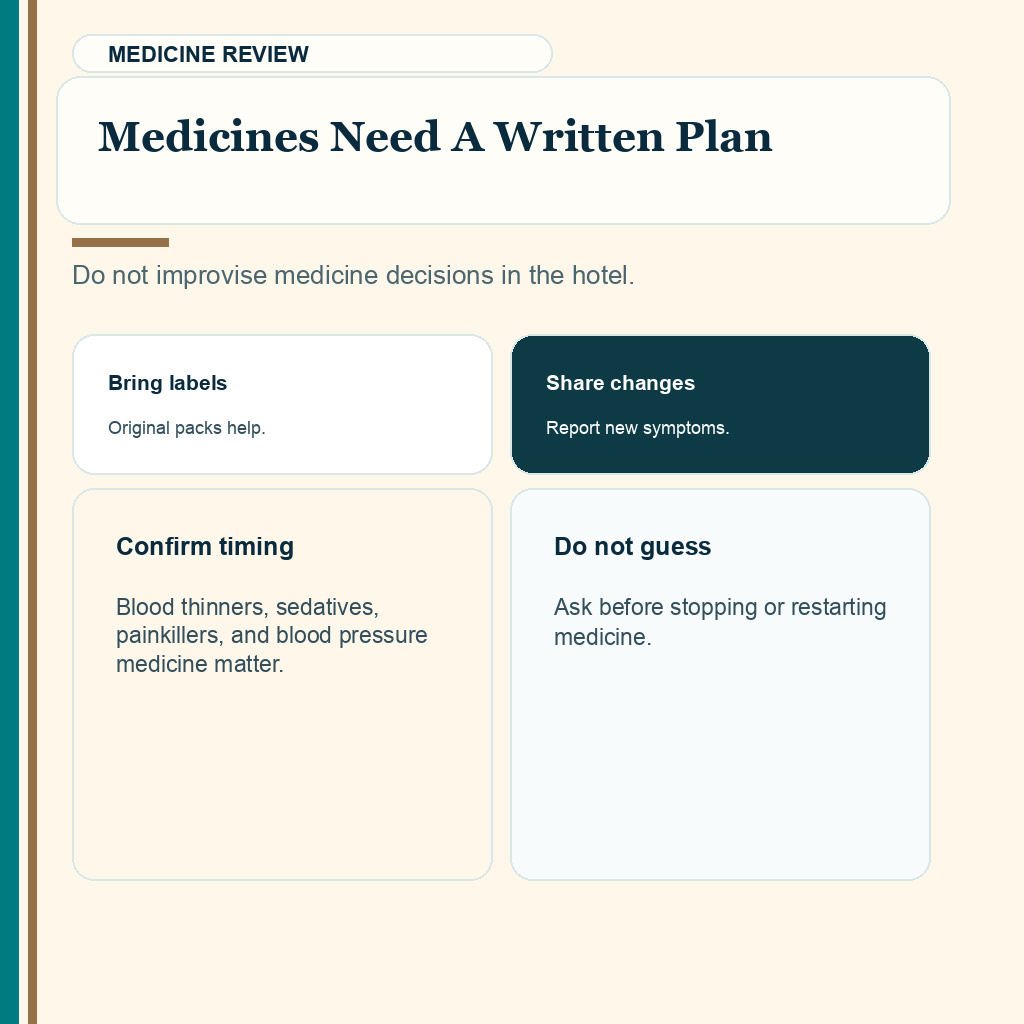
Bring prescription medicines in their original labeled packaging when possible, with a prescription copy or doctor letter for medicines that may be questioned. Controlled medicines, sedatives, strong painkillers, ADHD medicines, and products related to cannabis products need extra caution because rules differ by country and transit route. Check official Turkish and transit country rules before travel, especially if the medicine is restricted, injectable, or hard to replace abroad. If time zone changes affect your dosing schedule, write the plan down before travel and confirm any medicine relevant to surgery with the clinic instead of improvising after landing.
Do not hide regular medicines from the clinic, and do not stop them on your own because the trip has started. Blood thinners, anti inflammatory drugs, sedatives, supplements, and blood pressure medicines can matter for surgery planning. Medical readiness is checked before the operation rather than guessed on procedure morning. Blood tests before hair transplant are part of that safety check.
After surgery, follow the clinic’s instructions for essential medications after hair transplant. If pain control is needed, use only the medication plan approved by the medical team. Painkillers after hair transplant are not all the same, especially when bleeding risk, stomach irritation, allergies, or other medicines are involved.
Do not take extra tablets or extra medicine in the hotel because travel feels uncomfortable. Send a message to the clinic if pain, swelling, dizziness, nausea, or bleeding feels outside the instruction sheet.
Phone setup before landing
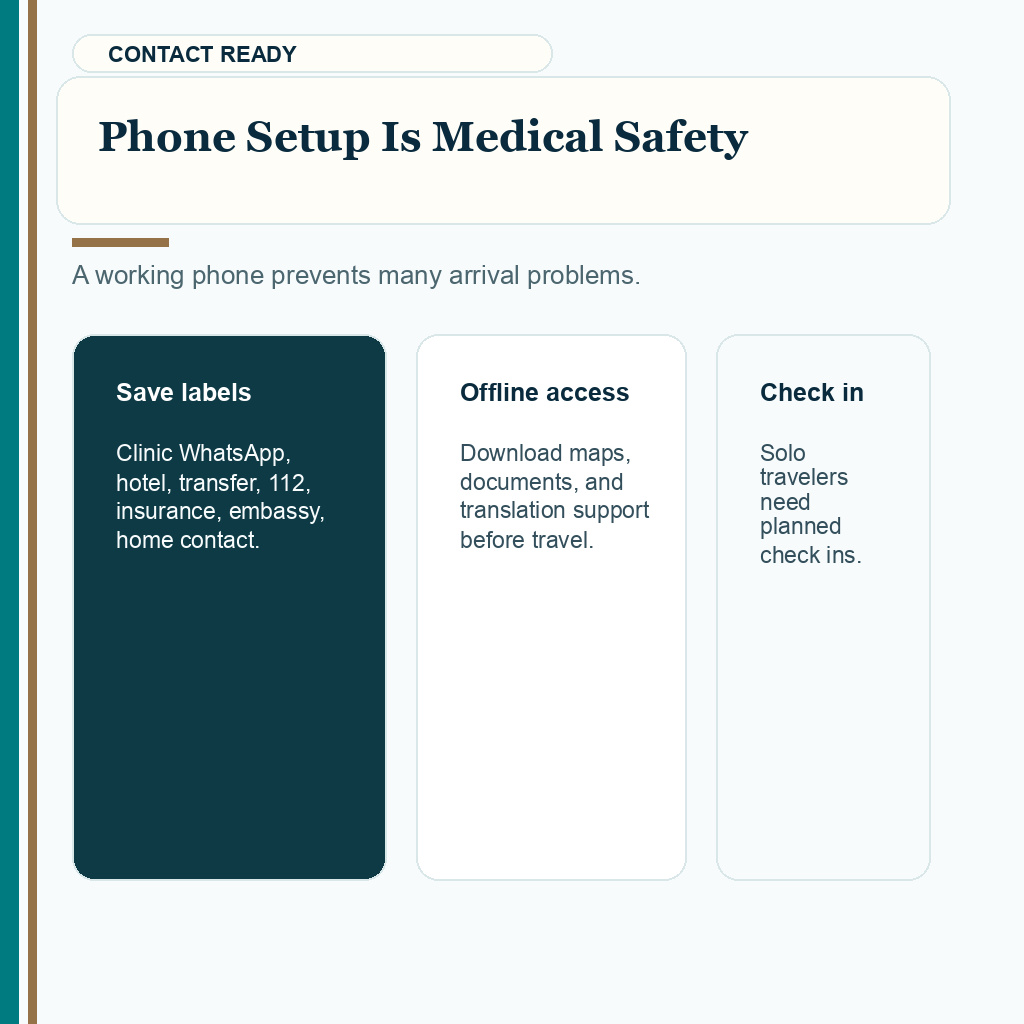
The phone is part of the medical safety plan. Save the clinic WhatsApp, coordinator number, hotel address, transfer instructions, local emergency number, embassy or consulate contact, insurance assistance number, and a home caregiver contact before flying.
Use simple labels. “Clinic WhatsApp,” “Hotel Istanbul,” “Emergency 112,” and “Insurance Assistance” are easier to find when tired than names buried inside old messages. Share the itinerary with a trusted person at home, including arrival time, hotel name, clinic appointment time, and return flight. If you travel alone, agree on one check in after arrival and one check in after surgery so silence does not become the first sign that something is wrong.
Download offline language packs before travel if translation apps are part of your plan. In Istanbul, many medical travelers manage well in English, but hotel, taxi, pharmacy, or airport communication can still become easier when translation is ready.
After surgery, photos are often the fastest way to ask a clear question. Make sure you know how to send one full view and one close view without repeatedly touching the scalp.
Details to confirm before procedure morning
The night before surgery should not be spent searching messages for basic instructions. Arrival time, fasting or meal instructions, medicine instructions, clothing, payment details, blood test timing when relevant, and transport pickup should already be clear. Charge the phone and power bank, set more than one alarm, lay out clothing that opens at the front, and keep the clinic instructions visible.
Follow the clinic’s before surgery instructions for hair transplant instead of mixing advice from different clinics. Instructions can differ because anesthesia approach, medication plan, graft number, medical history, and clinic protocols are not the same in every clinic.
Do not hide a medical change after booking, such as a new illness, fever, recent vaccine reaction, cold sore, skin problem, medication change, alcohol use, or unusual symptom, because the flight has already been taken. A tired flight, mild jet lag after a long flight, or normal travel stress is different from fever, active cold or flu symptoms, diarrhea, chest symptoms, a new infection, or a new medication started after booking. A delay is frustrating, but operating through a real medical warning can be worse.
Procedure morning should feel organized, not improvised. The surgeon should be reviewing the plan and scalp, not discovering preventable travel or medicine confusion.
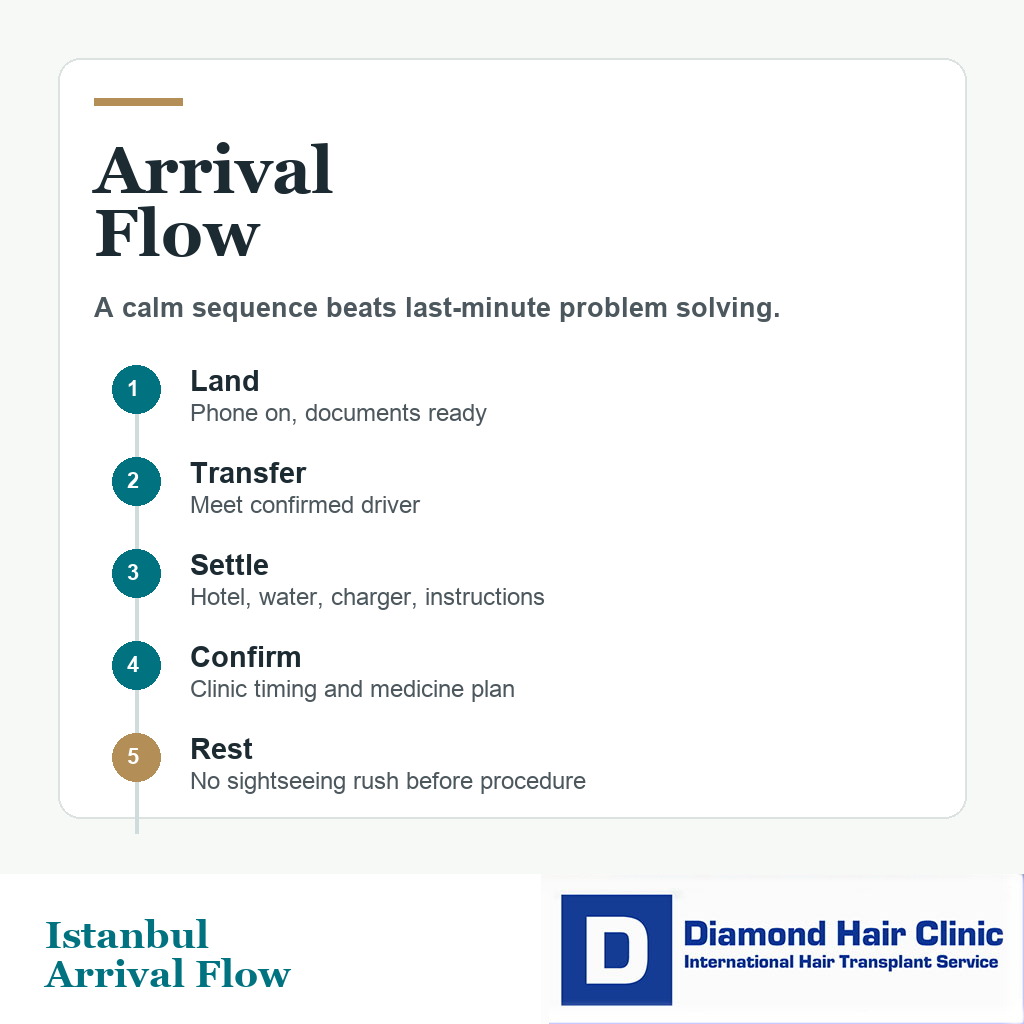
An organized arrival flow reduces risk. Land, meet transfer, settle at the hotel, confirm clinic timing, and protect the first night.
The 10 Istanbul arrival slides below separate medical plan timing, documents, delayed luggage, transfer, hotel setup, surgery clothing, medicines, phone access, procedure morning, and first night safety. Swipe sideways or use the arrows one slide at a time.




Protecting the first night after surgery
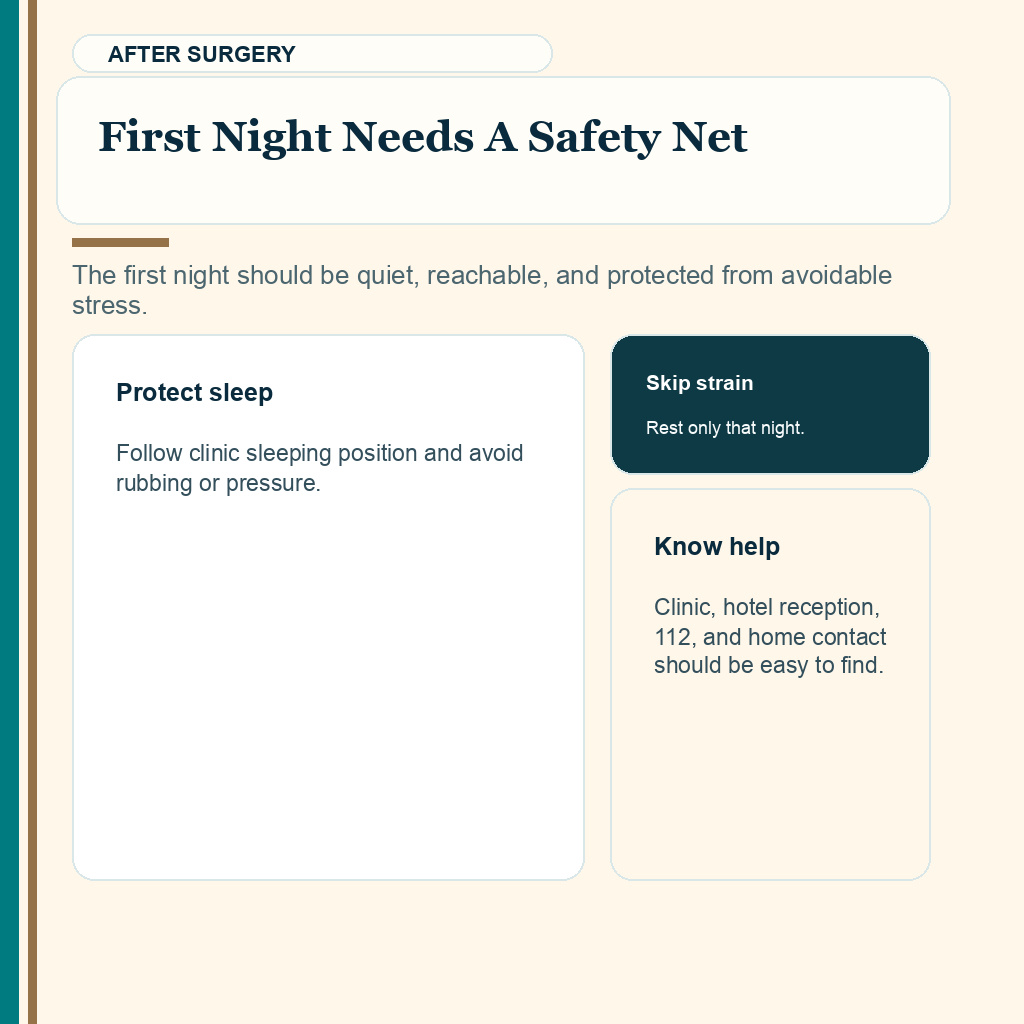
The first night is usually not dangerous, but it can be uncomfortable. Donor tenderness, swelling, numbness, anxiety, and sleeping position can make you restless. Plan the room before surgery so the bed, water, medicine, charger, and instructions are ready.
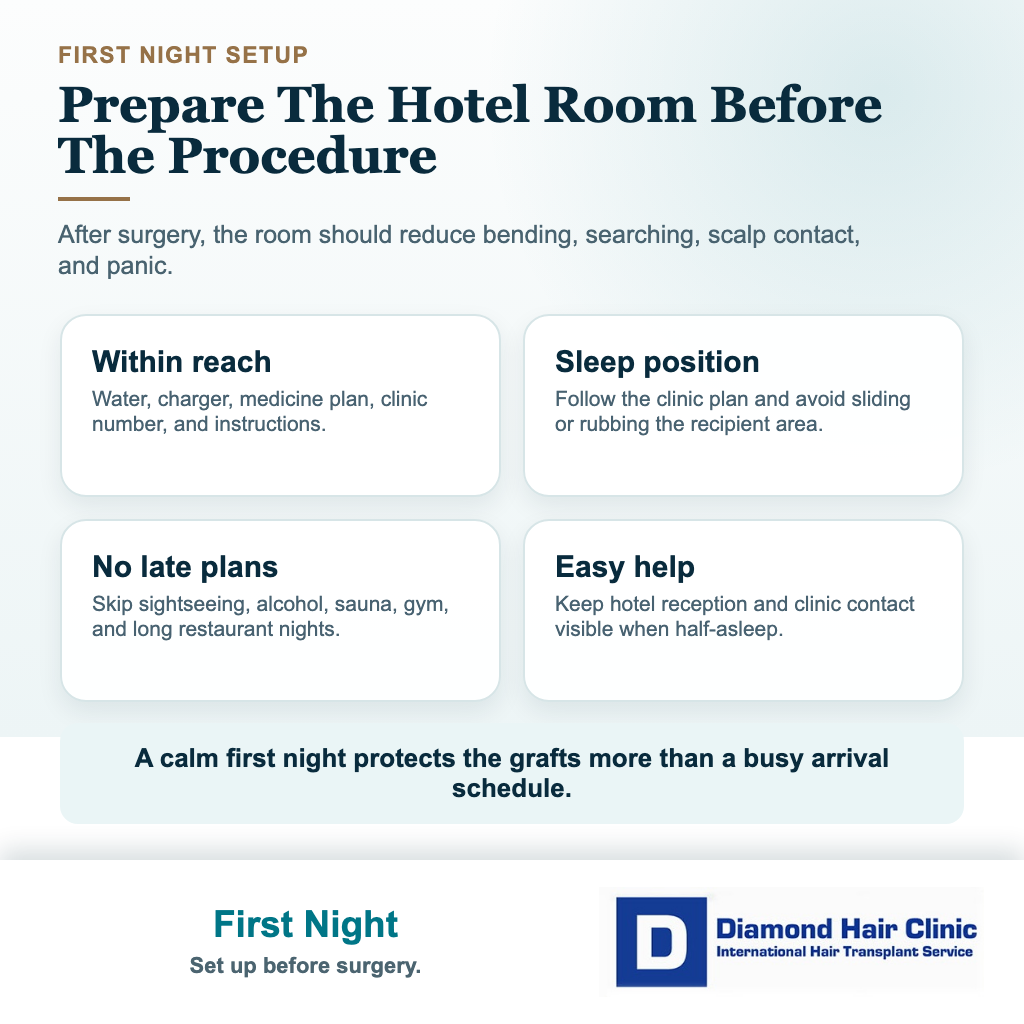
Follow the clinic’s sleeping position. The general idea is to reduce pressure on the recipient area and avoid rubbing, twisting, or sliding the scalp against pillows. After surgery, sleeping after a hair transplant is about position and graft safety, not only comfort.
Do not plan sightseeing, heavy walking, long restaurant nights, alcohol, sauna, steam room, or gym activity for the first night. The body needs a quiet recovery window, and the scalp needs protection from contact, sweat, and careless movement.
If you are staying alone, place the clinic number and hotel reception number where you can find them half asleep. A small detail like that can reduce panic if swelling, discomfort, or bleeding worries you during the night. If symptoms are worsening or you do not feel safe, ask for clinic review, hotel reception, emergency help, or your trusted person rather than waiting silently in the room.
Emergency contacts to save before travel
Save 112 for emergencies in Turkey, the clinic contact, hotel reception, insurance assistance, embassy or consulate information, and a home caregiver contact. Emergency planning does not mean expecting a problem. It means not losing time if a real problem appears.
Write down the hotel address in a format that is easy for Turkish staff to read, not only as a booking app pin. If you need help from hotel staff, pharmacy staff, a driver, or emergency services, a written address can be more useful than pointing at a phone screen.
Before travel, check travel insurance for a planned hair transplant abroad, especially if you need to understand medical treatment abroad, emergency treatment, evacuation, cancellations, and exclusions related to elective procedures. Insurance is not a substitute for choosing the right clinic, but it can protect you from travel and emergency costs that a clinic cannot control.
A good emergency flow is short. Call emergency services for emergencies, ask for clinic review for scalp questions after surgery, and tell a trusted person at home what is happening. Do not wait silently in a hotel room if symptoms are worsening.
Simple arrival checklist
Use this checklist before departure, then again when you land in Istanbul.
Keep the document group together. Your passport should be valid for the trip, and you should keep printed and digital copies. Check visa eligibility from an official source for your nationality. Save the clinic date, clinic address, hotel address, transfer details, clinic WhatsApp, hotel reception, 112, insurance assistance, embassy or consulate, and one home contact offline.
Pack the recovery group with surgery day in mind. Keep prescription medicines in their original labeled packaging when possible, with prescription or doctor documentation. Choose clothing that opens at the front for procedure day and the return trip. Place the phone charger, adapter, power bank, water, snacks, and documents within easy reach in the hotel room.
Before surgery, confirm the first wash, follow up, departure timing, sleep position, washing rules, sweating rules, and when to send photos. A quiet hotel with elevator access, easy transfer logistics, and practical recovery space matters more than sightseeing.
The number of nights also matters. When deciding how many days to stay in Turkey after a hair transplant, a less compressed schedule can be safer than forcing everything into the shortest possible trip.
Once surgery is complete, the return trip becomes a separate checklist. Plan flying after a hair transplant around graft contact, swelling, luggage, sleep, and the surgeon’s after surgery review.
On the last hotel day, fit the checkout deadline, any scheduled clinic visit and airport pickup into one confirmed itinerary. Decide where your luggage will stay during the clinic visit and whether you will return to the hotel afterward.
Arrival should make the operation easier to protect
A useful arrival plan starts with enough sleep, medicine information, contact details, and time for a proper consultation. That protects the operation before grafts are placed.
Heavy luggage, unclear transfers, missing paperwork, poor sleep, and unreachable phones are not small details when surgery is next. They make the first day harder than it needs to be.
The trip does not need to feel perfect. It needs to be calm enough that the medical plan, consent, aftercare, and first night are easy to follow.