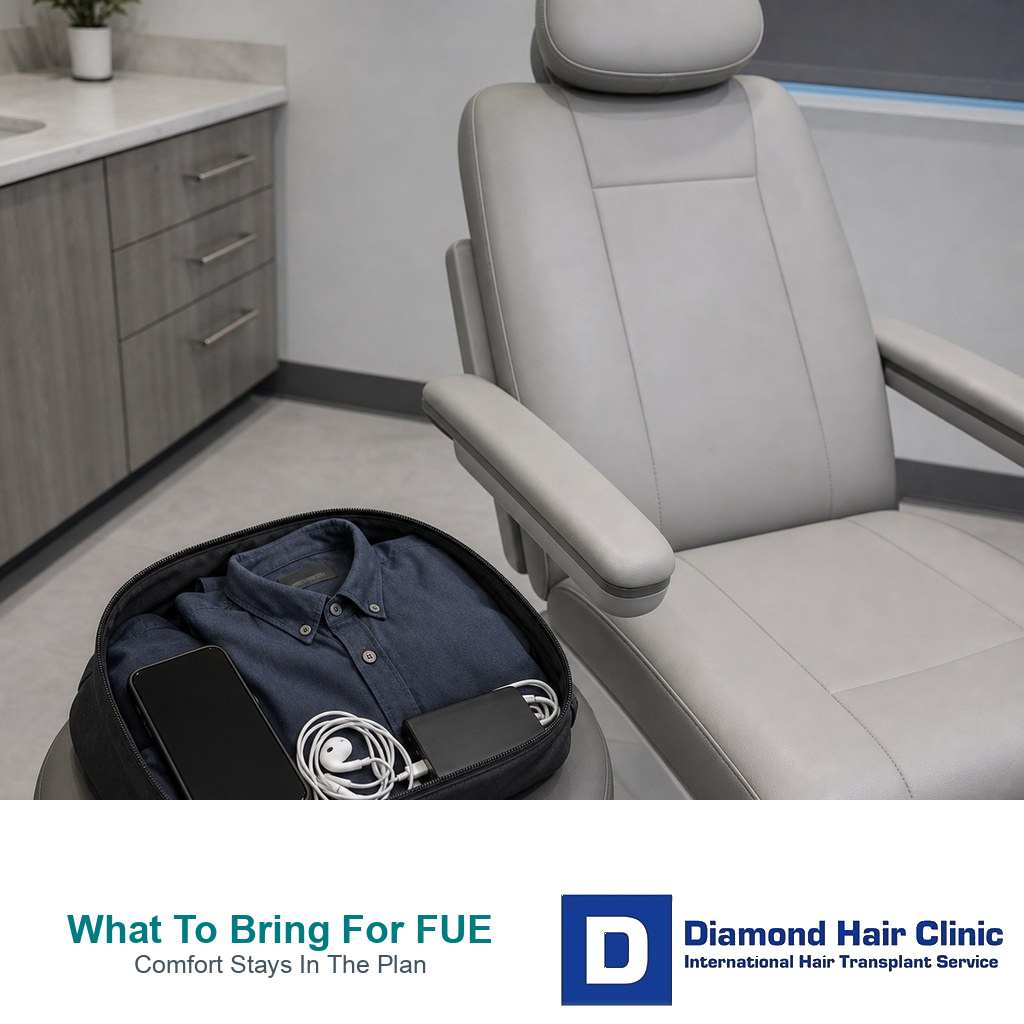
Packing for a Long FUE Surgery Day
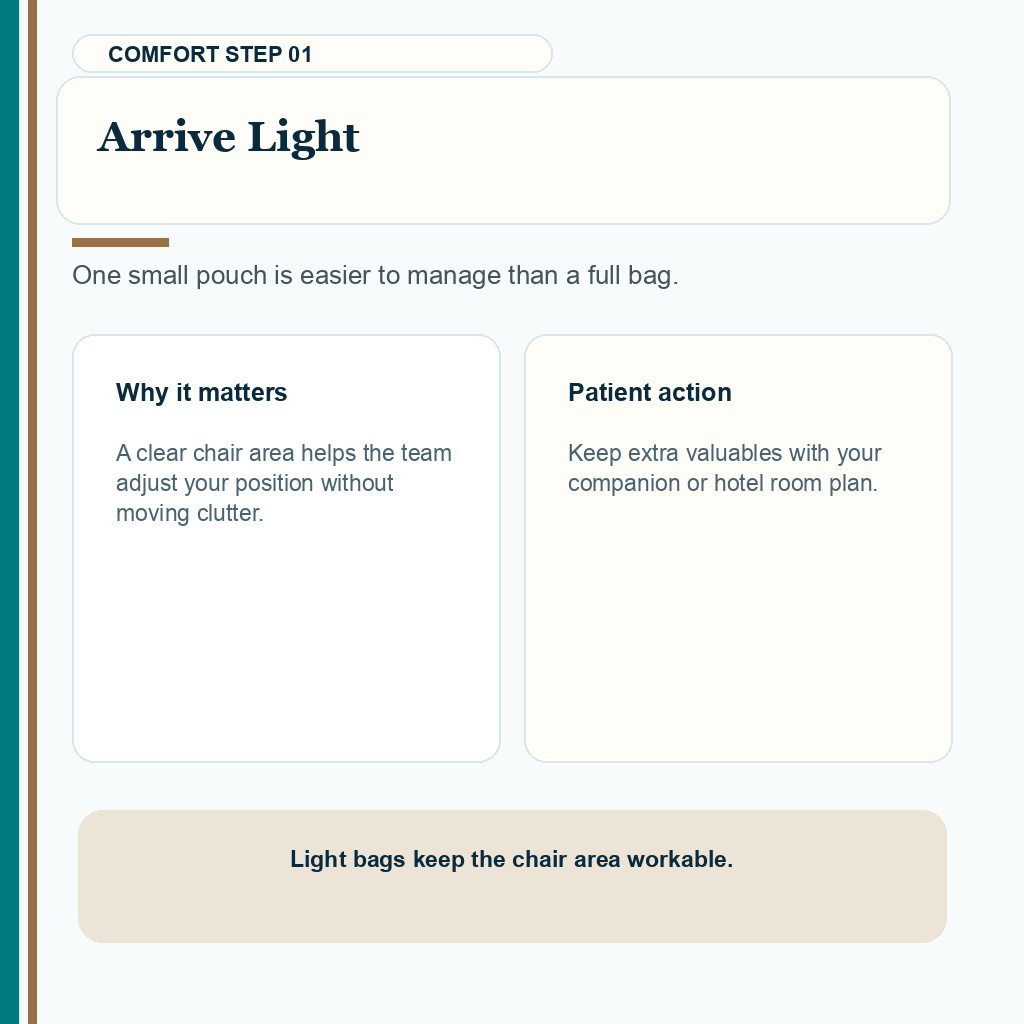
A long FUE surgery day can make small worries feel bigger. Patients think about being cold, hungry, bored, anxious, or unable to reach something while the team is working. The useful answer is small. Bring a small pouch, not a travel bag.
Keep that pouch for items that reduce friction. Your phone, simple earbuds, a charger, clothing that opens from the front, a written medicine list, and any food or drink only if the clinic has allowed it. Keep the rest in the hotel, waiting area, or main luggage. If you have someone to handle small tasks after surgery, that support should simplify recovery, not fill the procedure room. The surgery day pouch is separate from the aftercare baggage plan for the flight home, where liquids, records, and heavier items need a different split.
Pack the hotel recovery setup separately from the surgery day pouch. A fresh pillowcase, a soft clean towel for the donor side if your clinic allows it, front opening clothing, and the written wash instructions belong in the room plan, not beside the surgical chair. This keeps the operation room simple while still preventing avoidable fabric contact later that night. Keep travel comfort items such as a neck pillow or slippers out of the working space, but ready for the ride or flight home.
Keep recovery supplies out of the surgery day pouch unless the clinic specifically wants them there. A neck pillow, the shampoo approved by the clinic, saline spray, and medicines that are not part of the surgery day plan should stay in the hotel or travel kit until the clinic gives instructions. If you pack a loose cap for Istanbul sun before surgery, do not treat that cap as automatic permission to cover fresh grafts after surgery.
Ask the clinic for a short written list of what it provides and what you need to pack before travel. That keeps the first evening from depending on a late search for aftercare supplies.
Whether you recover at home or in a hotel, set up the room before surgery so the first evening does not require another shopping trip. Keep simple food and drinks, toiletries, clean pillowcases, and only the aftercare items or medicines approved by the clinic within easy reach. Decide who will collect anything missing and confirm the ride back from the clinic before the operation, because transport and small errands are harder to solve when you are tired and protecting the grafts.
The distinction matters. A useful item helps communication, comfort, or medical clarity without disturbing position, hygiene, graft handling, or instructions. An unhelpful item makes you reach, turn, guess about medicine, or keep checking a bag while the surgery is underway. If you use a hearing aid, cochlear processor, or similar device, add a case and written notes from the hearing device FUE communication plan before you travel. If you wear a removable dental appliance, add a clean case and disclose it early, as explained in the FUE dental appliance planning guide.
At Diamond Hair Clinic, packing is not a test. I only want the room to stay controlled before the first graft is handled, so the team can decide what stays near you, what is handed over, and what waits until a break.

Read this review excerpt
During the procedure itself, Dr. Mehmet and his team made sure I was comfortable and ready.
A small pouch is different from luggage
A long hair transplant day already has enough moving parts. Planning, shaving if needed, local anesthesia, extraction, graft handling, meals or breaks, implantation, washing instructions, and the final review all have to stay in order. The patient does not need to add a second project by bringing a full travel bag into the procedure space.
Think of the bag as a small comfort pouch, not luggage. Staff should be able to place it safely away from the working field and move it quickly when the room changes stage. This follows the comfort planning as long hair transplant session planning. A long FUE day works better when the steps have been planned, not when the patient brings every possible object.
Useful items fall into three groups. Communication means the phone, charger, emergency contact, and translation support if needed. Comfort means simple earbuds, a light layer, and clothing that does not touch the grafts. Medical clarity means medicine names, allergies, medical history, and travel details that are easy to show when asked. Some patients relax with a small stress ball during injections, but reaching for it after work begins creates the wrong kind of movement.
When do phone and earbuds help, and when do they distract?
Phone and earbuds are useful only when they make the day easier without taking attention away from the team. A long FUE session is not one fixed position. The head position, operation stage, sedation plan, local anesthesia, and need for stillness all change what is safe.
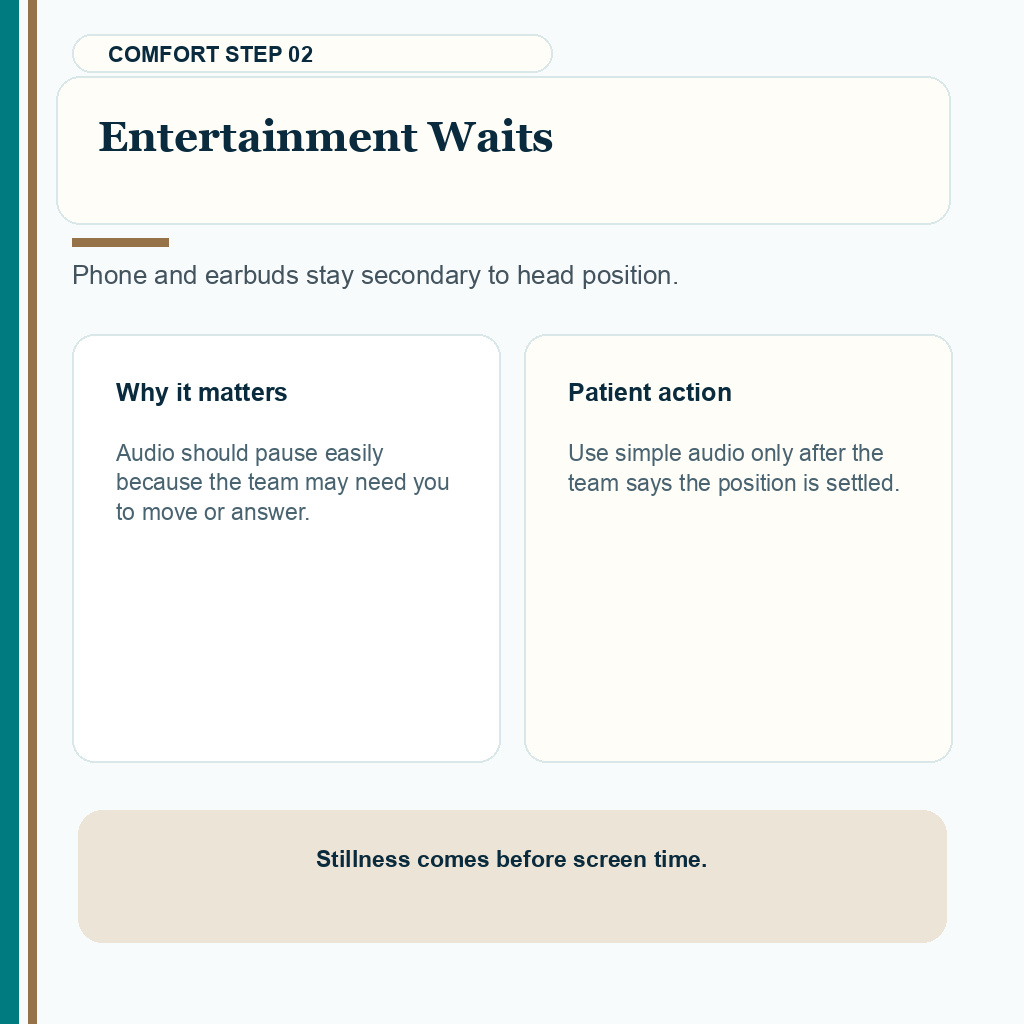
A phone can reduce friction when it holds contact numbers, hotel details, payment confirmation, translator access, or a ride plan. It becomes a problem when reaching for it moves the head or brings a hand near the recipient area. The same is true for earbuds. Small earbuds may be acceptable when they do not press on the scalp or block instructions. Headphones that cover the ear can create pressure, movement, or hygiene problems, which is why I separate simple earbuds from headphones after a hair transplant.
If you want music or a podcast, tell the team before work begins. Do not assume every stage is the same. During some parts of FUE, the useful comfort tool is not entertainment. It is staying relaxed, hearing instructions, and letting the team reposition you safely. If the team needs your head still or needs you to hear an instruction, entertainment waits.
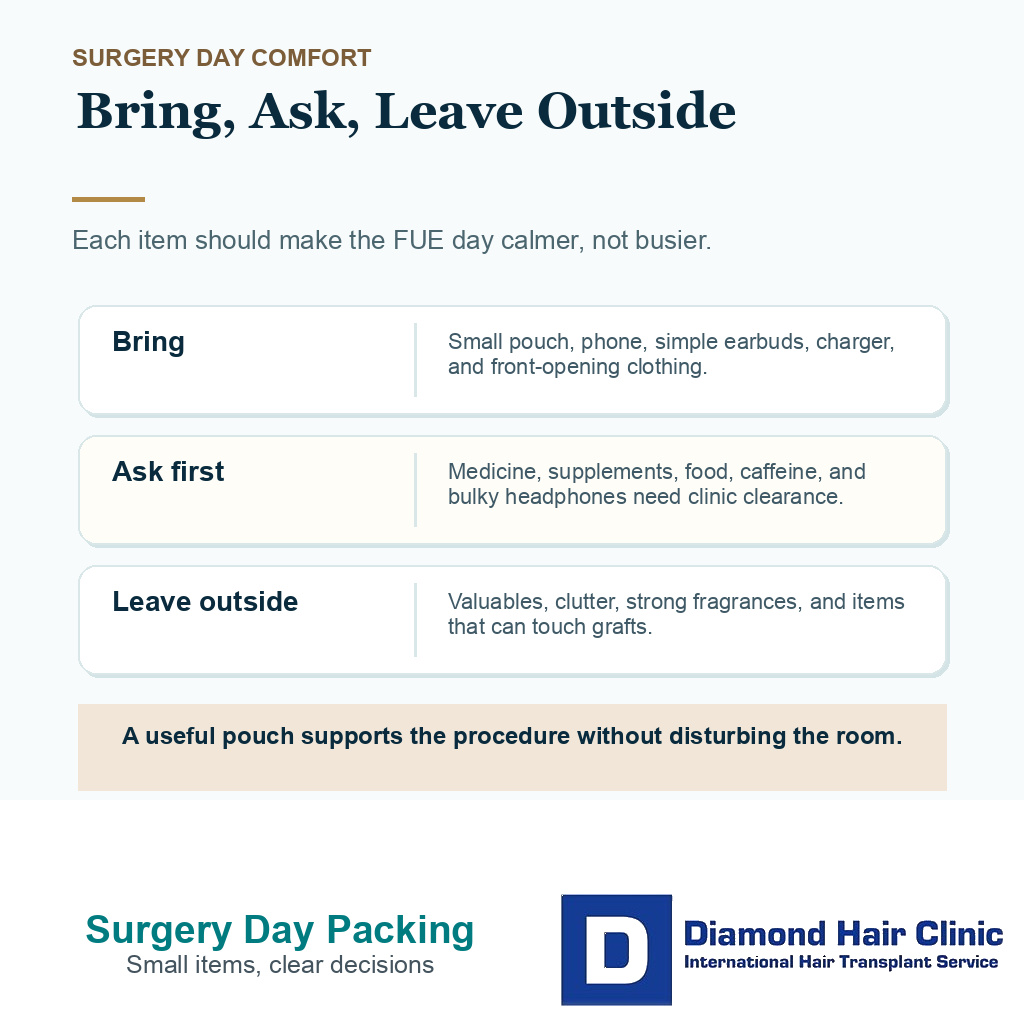
Surgery day clothing has one main job
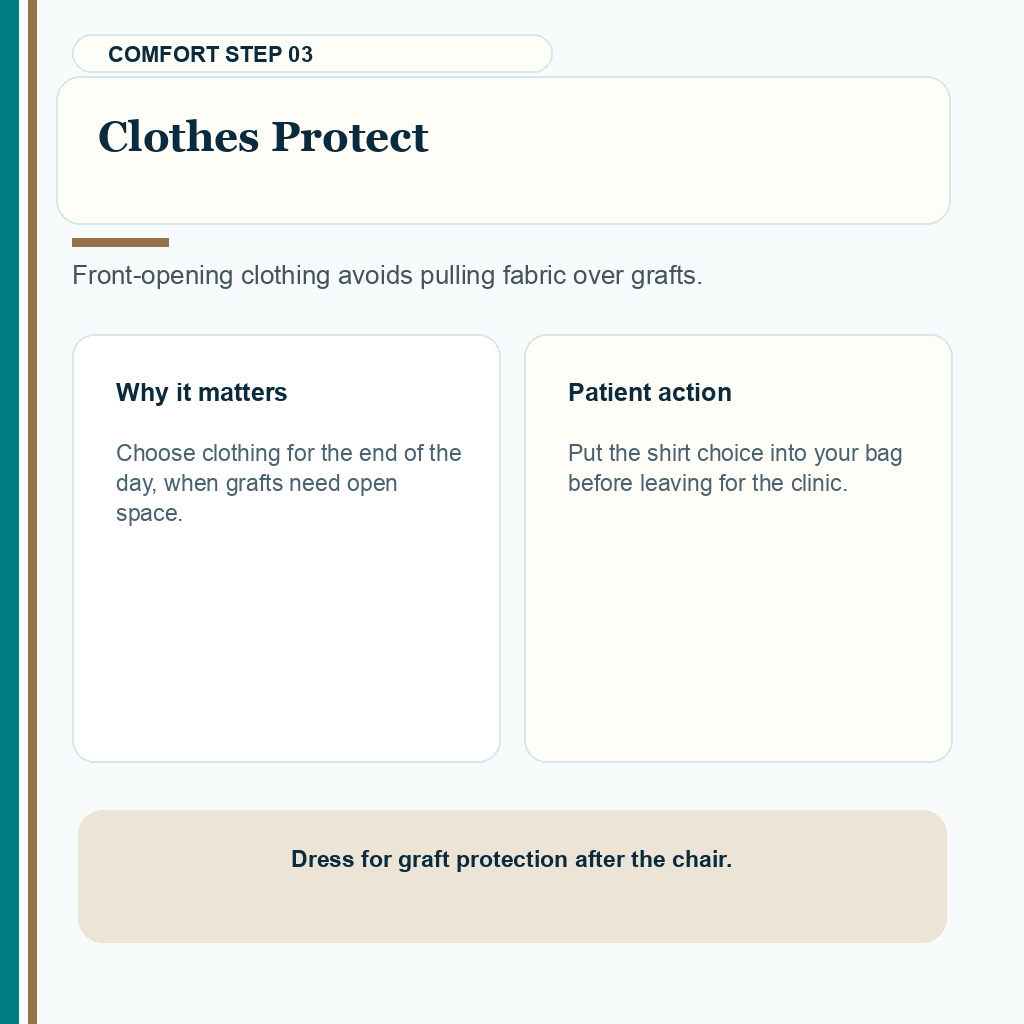
Clothing is one of the easiest details to get right before surgery day. A button up shirt, a zip top, or a loose garment that opens from the front is usually more practical than a tight tee shirt or hoodie. It helps before the operation, and it matters even more after the grafts are in place.
For recovery clothing, what to wear after a hair transplant covers the details more closely. For the surgery day itself, avoid clothing that rubs the scalp, catches on bandages, presses the donor area, or forces you to make awkward movements while dressing.
Also think about temperature. Some patients feel cold during a long day because they are still for many hours. A light layer that opens from the front is easier to manage than a thick hoodie. If you are unsure, bring the layer, but let the clinic decide where it can safely stay.
How should food, medicine, and caffeine be handled?
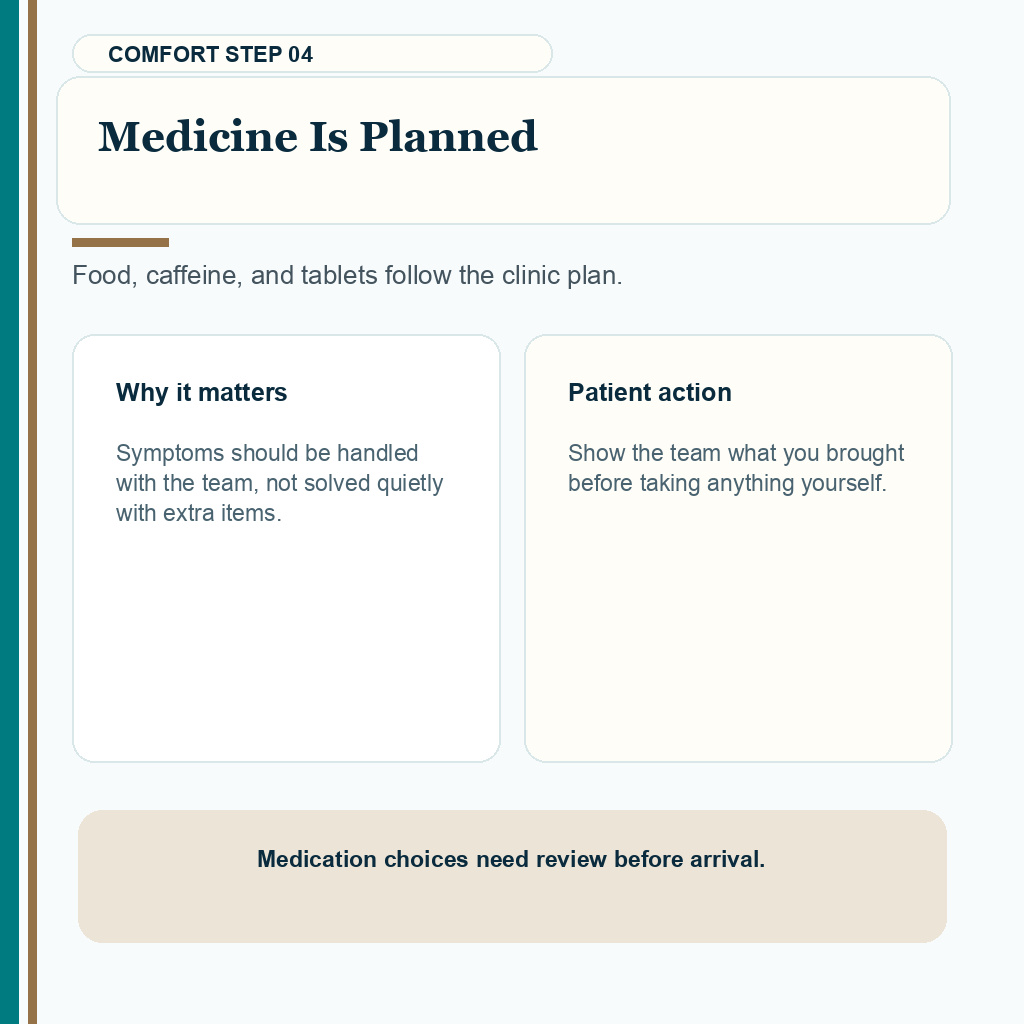
The pouch should not become a private medical plan. Usual medicines, supplements, caffeine, snacks, and drinks should follow the instructions you were given before surgery. If an item can affect blood pressure, bleeding risk, anxiety, sleepiness, glucose control, or nausea, the team needs to know before the day begins.
Separate useful comfort from unreviewed treatment. A phone charger or light layer can reduce friction, but tablets, supplements, snacks, caffeine, or anxiety aids should already be part of the clinic plan.
Patients sometimes think a snack, coffee, energy drink, or calming tablet is harmless because it is familiar. Familiar is not the same as cleared for surgery morning. Medicines and supplements belong in the preoperative review, which is why medication before a hair transplant should not be handled from the patient pocket on the day.
Food and caffeine need the same kind of planning. The fasting instructions before a hair transplant separate clinic instructions from casual snack planning, and coffee on the surgery morning should not be treated as an automatic comfort item. Do not use a snack or drink to work around the instruction you were given.
If you have diabetes, a tendency to feel faint, a history of nausea, or anxiety about the long day, send a message before surgery if you are unsure about diabetes medicine, anxiety tablets, caffeine, fasting, or comfort needs for a long session. The right answer may be a timing adjustment, a planned break, a meal plan, or a medical review. It should not be a hidden fix in your bag. If you already know that you get hungry, shaky, or faint before FUE, that belongs in the preoperative conversation.
The comfort item fit map
Use the map below as a practical filter. It is not a bigger packing list. It separates three routes. Useful beside you, needs clinic review, or stays outside the procedure flow. Medicine and food stay in one category because both can change the surgery morning plan.
FUE surgery day comfort fit map
Use this map to decide whether an item belongs in the room, needs a quick clinic review, or should stay outside the procedure flow.
Phone
It is on silent, easy to hand over, and used only when the team says the position allows it.
You expect urgent calls, translation help, or travel coordination during the day.
It pulls your hands toward the recipient area or makes you move while the team is working.
Which documents and chargers are actually useful?
Clear documents help when they answer a real clinic question quickly. A passport or ID, hotel address, emergency contact, allergy list, medicine list, and relevant medical notes can all be useful. A messy folder of unrelated screenshots and old results can slow the review instead of improving it.
I do not judge documents by volume. I check whether your hair transplant documents have a clear purpose. They should change care, timing, consent, communication, or safety, and the clinic should be able to find that detail before the room is busy.
A charger or small power bank is reasonable because the day is long and international patients often need their phones for contact. Keep it simple. If charging cables create clutter, staff may move them because the room has to stay workable. Test the charger and adapter in the hotel room before surgery. After the procedure, a low battery should not become a reason to reach around while tired.
What should stay outside the room?
Bulky bags, valuable jewelry, loose scarves, caps, headphones that cover the ear, strong fragrances, complicated food containers, and unreviewed medicine should not become part of the surgical area. Some of these items may be fine in the hotel or waiting area. Beside the chair, they add more distraction than value.
Remove jewelry before the room gets busy
If a ring, watch, earring, piercing, or nail product could distract the surgery day plan, handle it before arrival. Jewelry, piercings, and nails before FUE explains which details should be removed, disclosed, or simplified early.
If you use a regular sleep aid, anxiety medicine, blood pressure medicine, blood thinner, diabetes medicine, stimulant, or supplement, do not hide it and do not adjust it yourself. Sedation and comfort planning are medical decisions, and sedation during a hair transplant shows why relaxed does not mean uncontrolled.
Breaks follow the same clinic logic. If you need to stretch, use the toilet, drink water, or ask a question, say it clearly and wait for instructions. A break request is safer than sudden movement, which is why bathroom breaks during FUE belong in the plan.