


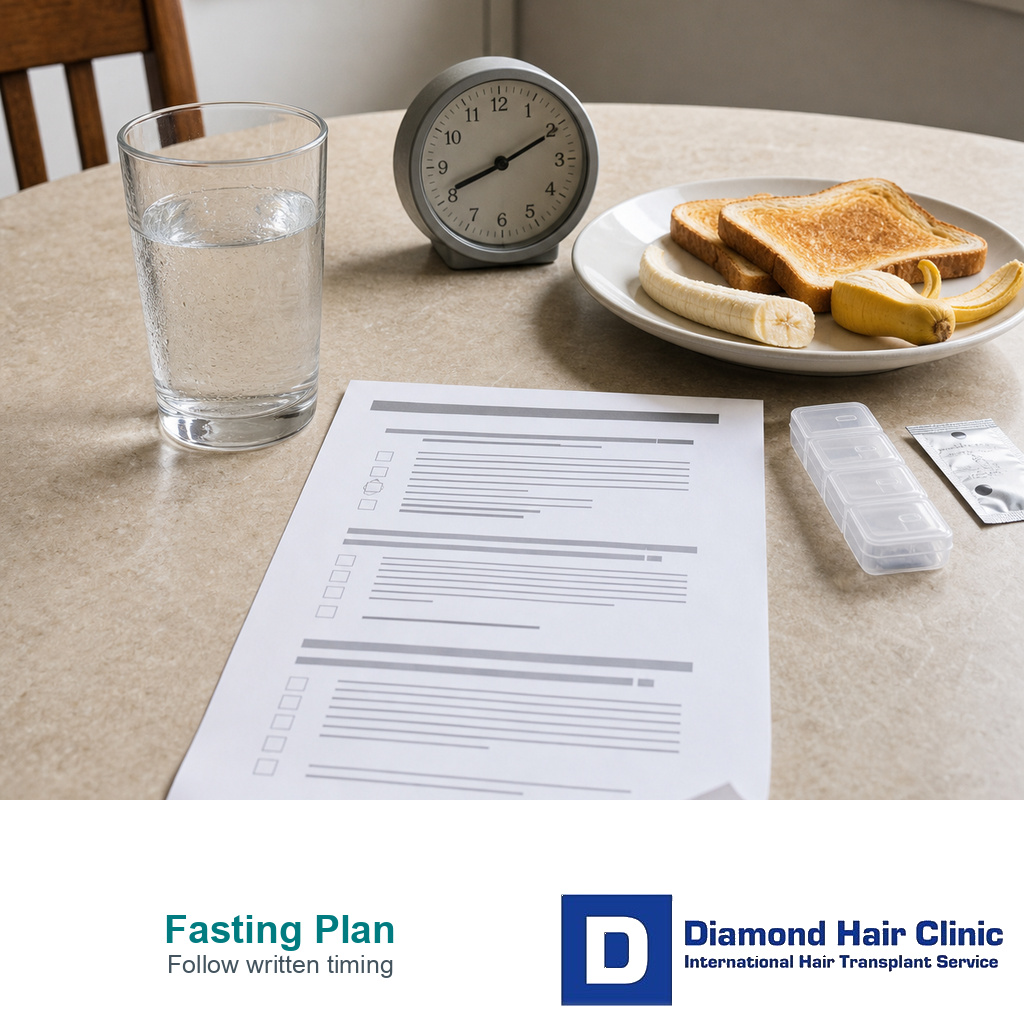
Fasting Before FUE Needs Written Instructions
Do not copy a midnight fasting rule from another operation before a hair transplant. FUE is usually performed with local anesthesia, so the food and fluid plan may be different from surgery under general anesthesia or deeper sedation. The right instruction depends on your anesthesia plan, medical history, medication timing, travel schedule, and whether sedation is involved.
I separate local anesthesia comfort from sedation or aspiration risk. Fasting can affect hydration, blood sugar, blood pressure, anxiety, dizziness, and how clearly you can participate in the last medical decisions before surgery. If you use an insulin pump or CGM during FUE, the device route and blood sugar check method should be written before the fasting instruction is treated as settled. A written instruction should separate food, clear fluids, milk coffee, energy drinks, and medicine timing instead of folding every fasting question into one line.
If you are fasting for religion or diet, do not silently combine that routine with the surgery instruction. The day needs one clear plan for food, water, and medicines that fits the procedure. Bring up religious fasting early so the food, water, and medicine plan is not decided on surgery morning. The aim is to respect the fast without making the operation day harder than it needs to be.
Written fasting instruction map
Check which fasting detail changes the plan
Fasting weakness, dizziness, or nausea belongs in the plan before surgery morning, so food and clear fluid instructions match the anesthesia route.
Local anesthesia check
Local anesthesia usually needs steadiness, not an extreme fast
Whether the plan is local anesthesia only and whether you normally tolerate long procedures while awake.
Last meal timing, clear fluid timing, and whether a light breakfast is allowed.
The clinic only says nothing after midnight without naming the anesthesia reason.
A steady patient is safer than a hungry, dehydrated, anxious patient who followed the wrong rule.
One fasting rule does not fit every case
Many people hear the word surgery and immediately think they must stop eating and drinking from midnight. That rule is common before operations that involve general anesthesia or deeper sedation. A hair transplant is usually different because the procedure is commonly performed under local anesthesia.
You may not know which anesthesia plan applies until the clinic explains it clearly. Some clinics use only local anesthesia. Some may add sedatives. Some medical conditions make ordinary instructions unsafe. For that reason, the fasting instruction should be specific to your procedure, not borrowed from a friend, a forum post, or another clinic.
Before travel, ask whether you should eat breakfast, whether clear fluids are allowed, when to take regular medicine, and whether planned sedation during hair transplant surgery changes the instruction. The answer should name times when timing matters, not only say “fast from midnight.” These are routine medical questions, not details to solve on the morning of the procedure.
Local anesthesia changes the fasting question
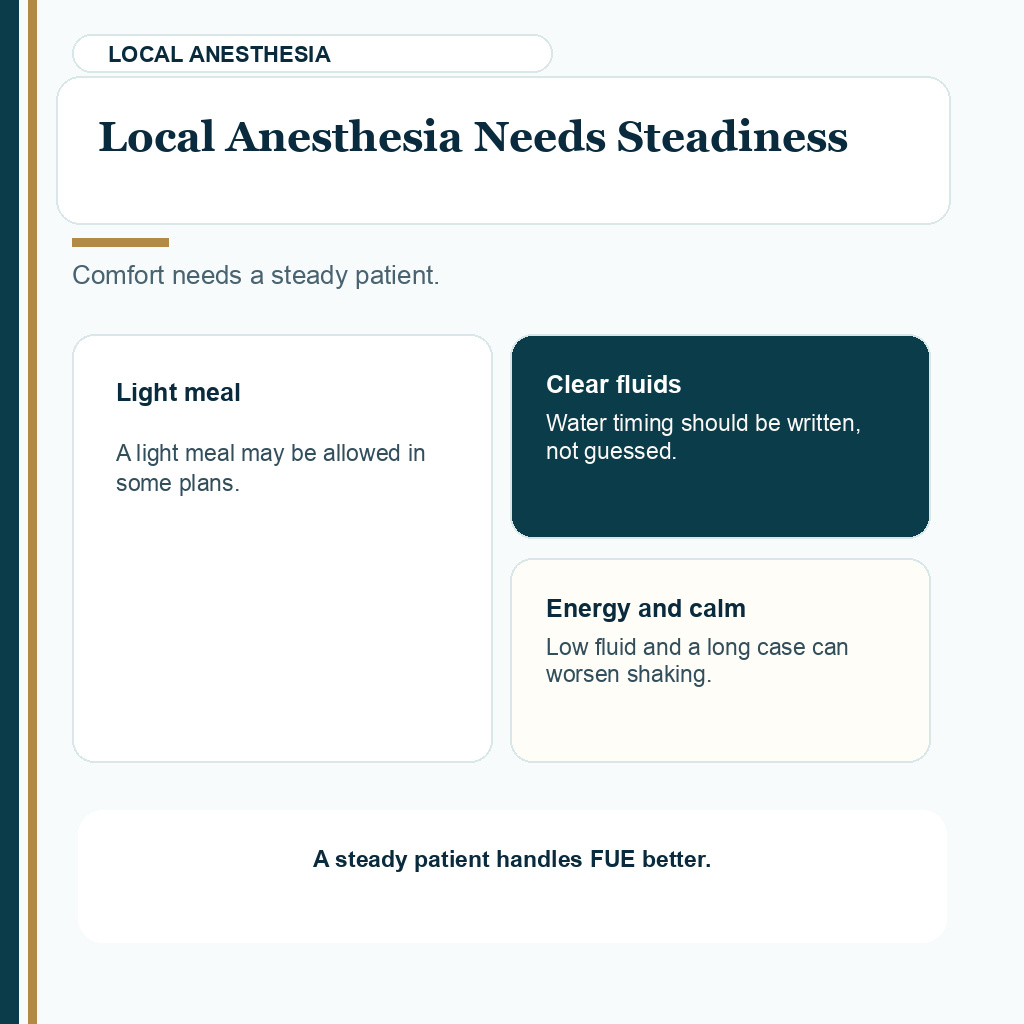
For many local anesthesia procedures, a normal or light meal may be allowed. That does not mean a heavy meal before surgery is sensible. It means the reason for fasting is different when local anesthesia is used, and the instruction should match the real medical plan.
During a long FUE procedure, you need to stay comfortable, steady, and able to understand the plan. Going too long without food or water can make dizziness, nausea, irritability, and stress sensitivity more likely. Arriving hydrated and medically prepared matters more than proving you can tolerate an unnecessary fast.
Local anesthesia can still affect how you feel. Some people notice a racing heart or shaking sensation when adrenaline is used with the anesthetic, which is covered in the guide to hair transplant anesthesia and adrenaline. If that feeling is combined with dehydration, poor sleep, and fasting, the day can feel harder than it needs to be.
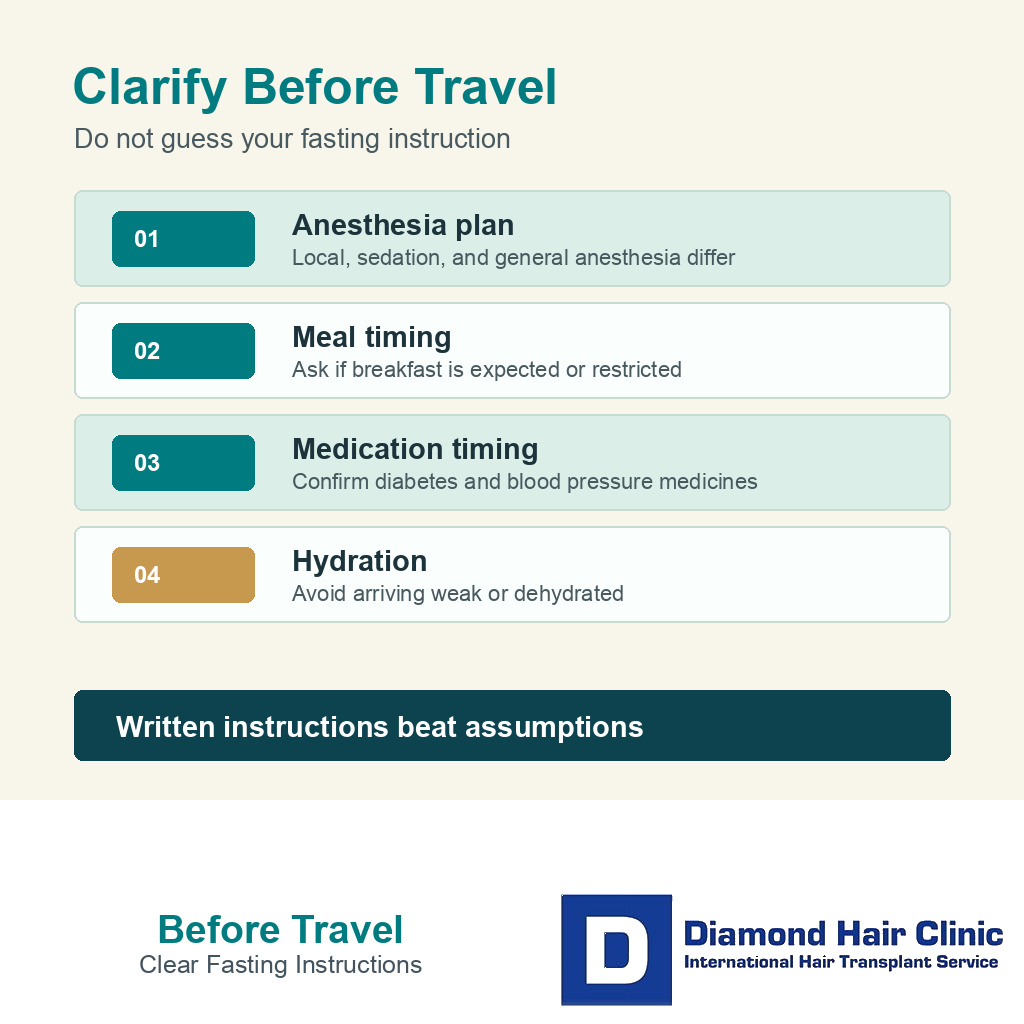
The fasting instruction should be clear before travel, especially when anesthesia or medicine timing changes the plan.
Dehydration can make surgery day harder
Dehydration is one of the practical problems hidden inside vague fasting advice. Avoiding water may feel disciplined, but dehydration can make blood pressure less stable, make dizziness more likely, and make the day more stressful. It can also make simple moments harder, such as standing up after a long session or following aftercare instructions clearly.
Hairline design, donor review, graft number confirmation, and consent discussion all need clear attention. If fasting has left you weak or foggy, that is not a better medical state. Hydration is part of surgical readiness, not a minor comfort detail.
A written fasting instruction still comes first. When the clinic limits food or fluids for a specific reason, follow that instruction and understand why it applies. It should be deliberate, not copied into your plan without checking your actual hair transplant day.
Diabetes and medication timing need named instructions
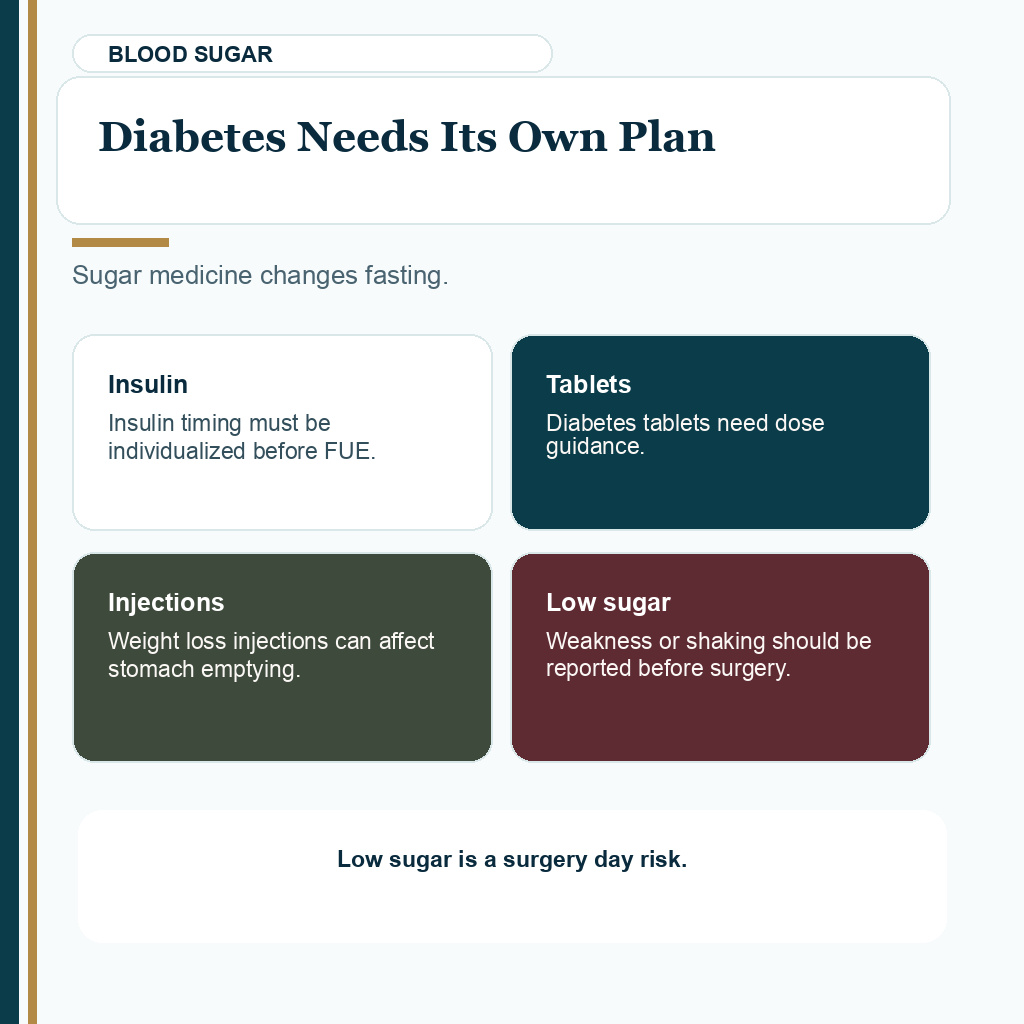
If you have diabetes, fasting before surgery should never be treated casually. The concern is not only graft growth. It is blood sugar stability, medication timing, meal timing, and whether you can safely go through a long procedure. Insulin, diabetes tablets, and weight loss injections need clear medical instruction before the day starts.
For patients with diabetes and hair transplant timing concerns, blood sugar control can affect surgical readiness. Fasting adds another layer. Skipping food while taking medicine as usual can be risky, and skipping medicine without medical advice can also be risky. I handle blood pressure medication, heart medication, and other regular prescriptions by name, dose, timing, and the reason for any pause.
Before surgery, share your medication list and recent health changes. New lab results, illness, a medication change, or unstable diabetes control can change the plan before booking or before travel. If you notice medical changes after booking a hair transplant, tell the clinic early because the original date may no longer be the safest date.
Blood tests and medical history should come first
Fasting instructions are easier to give when the medical picture is clear. Abnormal blood tests, anemia, infection markers, liver concerns, diabetes, high blood pressure, or medication that changes bleeding risk all affect the day before enthusiasm does.
I do not separate fasting from the wider medical review. Your blood tests before hair transplant surgery, medical history, and medication list help decide whether the day is straightforward. A healthy person having local anesthesia may receive different instructions from someone with diabetes, heart disease, fainting history, reflux, nausea risk, or several medications.
Tell the clinic early about the medical history that makes fasting less straightforward. Medicine timing, hydration, diabetes control, fainting history, reflux, and recent illness are exactly the details your surgeon should know before the operation day.
Ramadan fasting can be planned only with care
Ramadan fasting deserves respect and practical planning. It should not be handled with a careless sentence like, “fasting is fine” or “fasting is impossible.” The real medical issue is whether your surgery day, anesthesia plan, hydration needs, medication timing, and recovery period can be arranged safely around the fast.
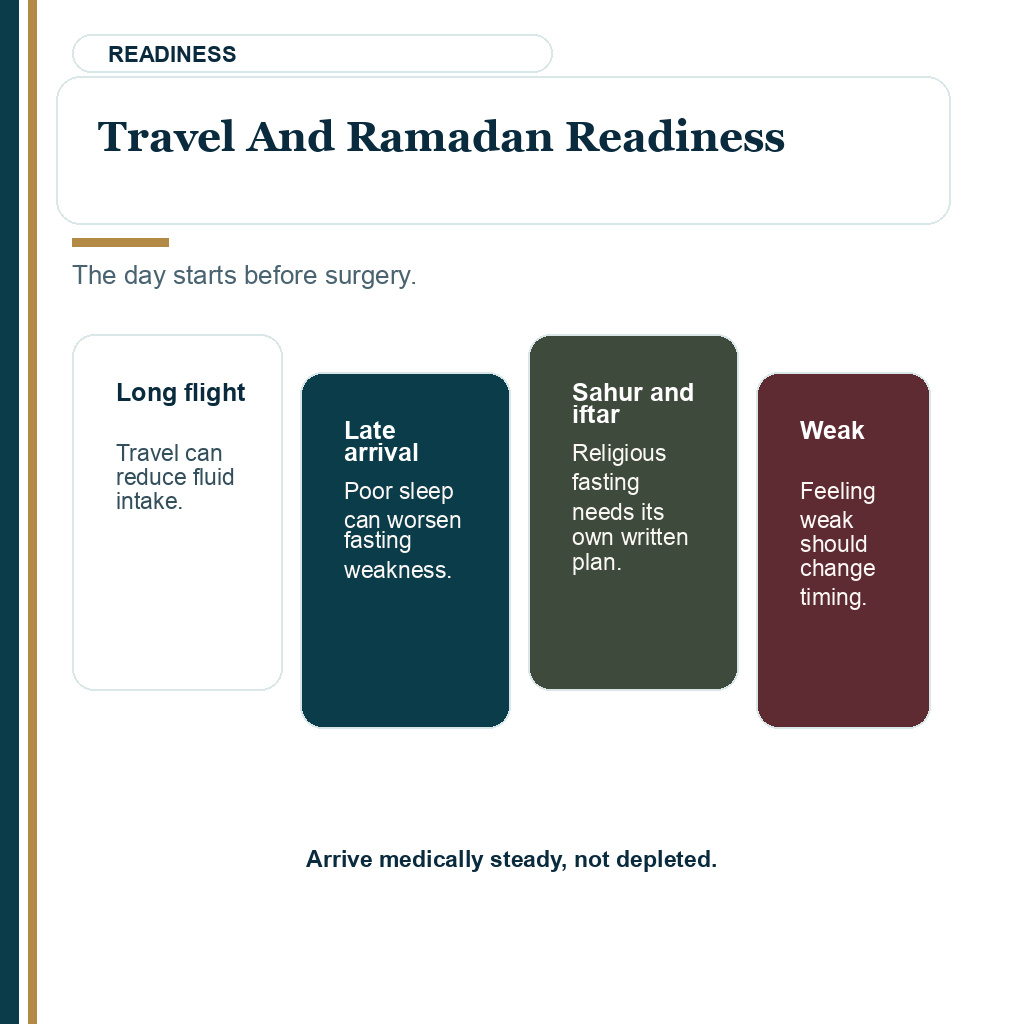
Some people prefer to schedule surgery outside the most demanding fasting days. Others may need an early or later appointment plan, clear meal timing around sahur and iftar, and a direct conversation about what to do if dizziness, low blood sugar, dehydration, or weakness appears. If diabetes is involved, the decision becomes more medical and should be reviewed with the clinician who manages that diabetes.
This conversation belongs before travel, not while you are already struggling on the procedure day. Religious fasting and surgical safety should be planned together. Nobody should feel pressured to hide fasting, break a fast without guidance, or continue fasting when a medical risk is becoming clear.
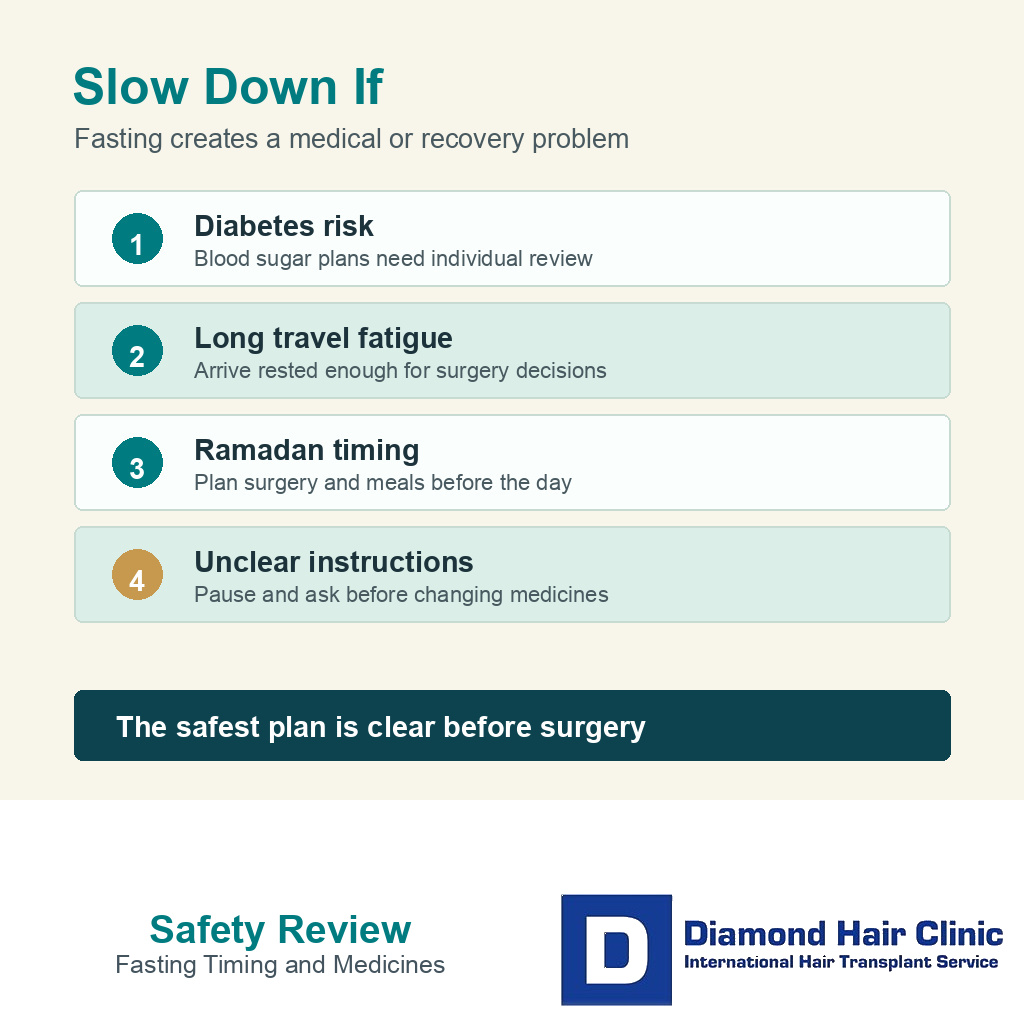
Fasting becomes a safety issue when blood sugar, long travel, Ramadan timing, or unclear medication instructions are involved.
Long travel can change the fasting decision
Many people travel to Istanbul from another country. That adds jet lag, airport stress, changed meal times, hotel sleep, and sometimes dehydration from the flight. If you arrive late, sleep badly, and then fast because you think all surgery requires fasting, you may start the procedure in a poor condition.
Travel planning is part of medical planning. A safe hair transplant travel plan to Turkey leaves enough room for medical review, not only the operation itself. The fasting instruction should fit that schedule. It should not make a tired person more vulnerable.
Written instructions help avoid mixed messages. A written plan reduces the risk of hearing one thing from a coordinator, another thing from a hotel driver, and something different from an old message. If the instruction is important enough to affect food, water, coffee, and medicine, it is important enough to be written clearly.
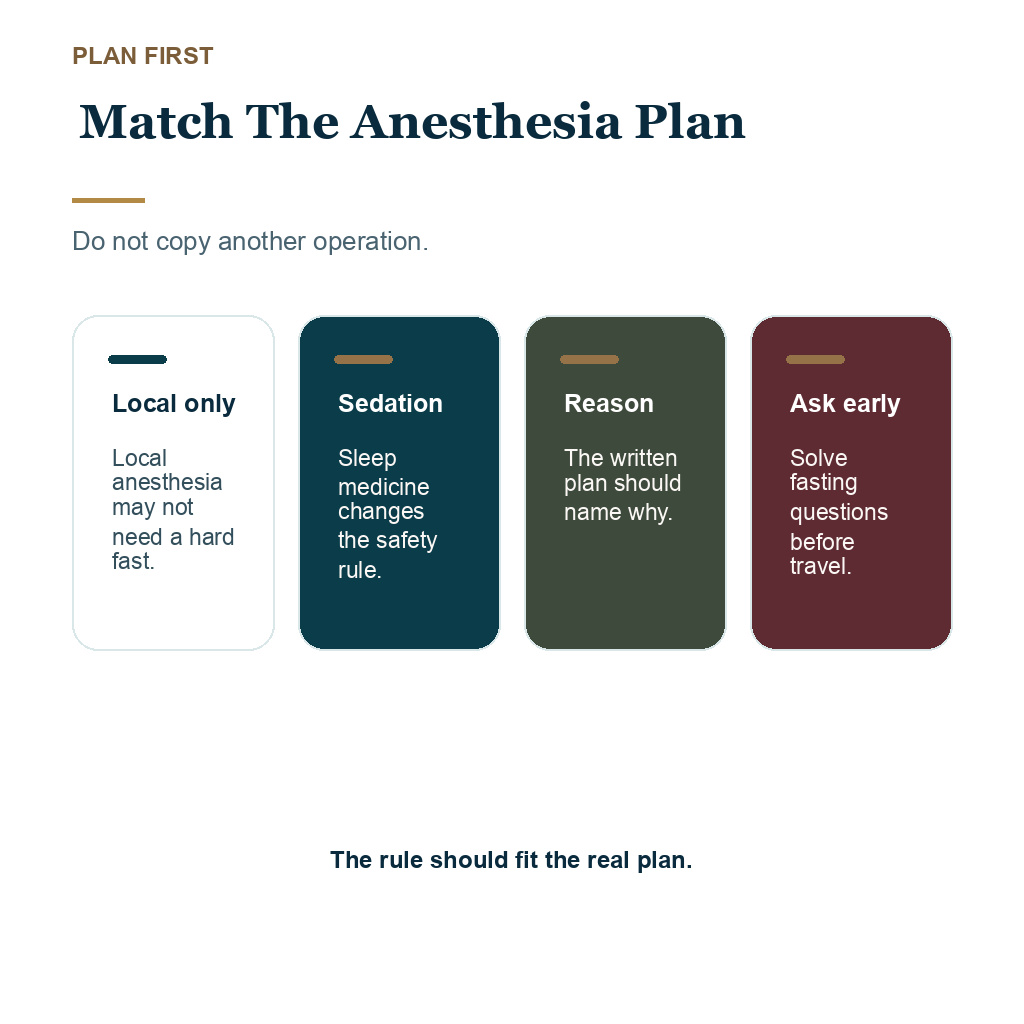
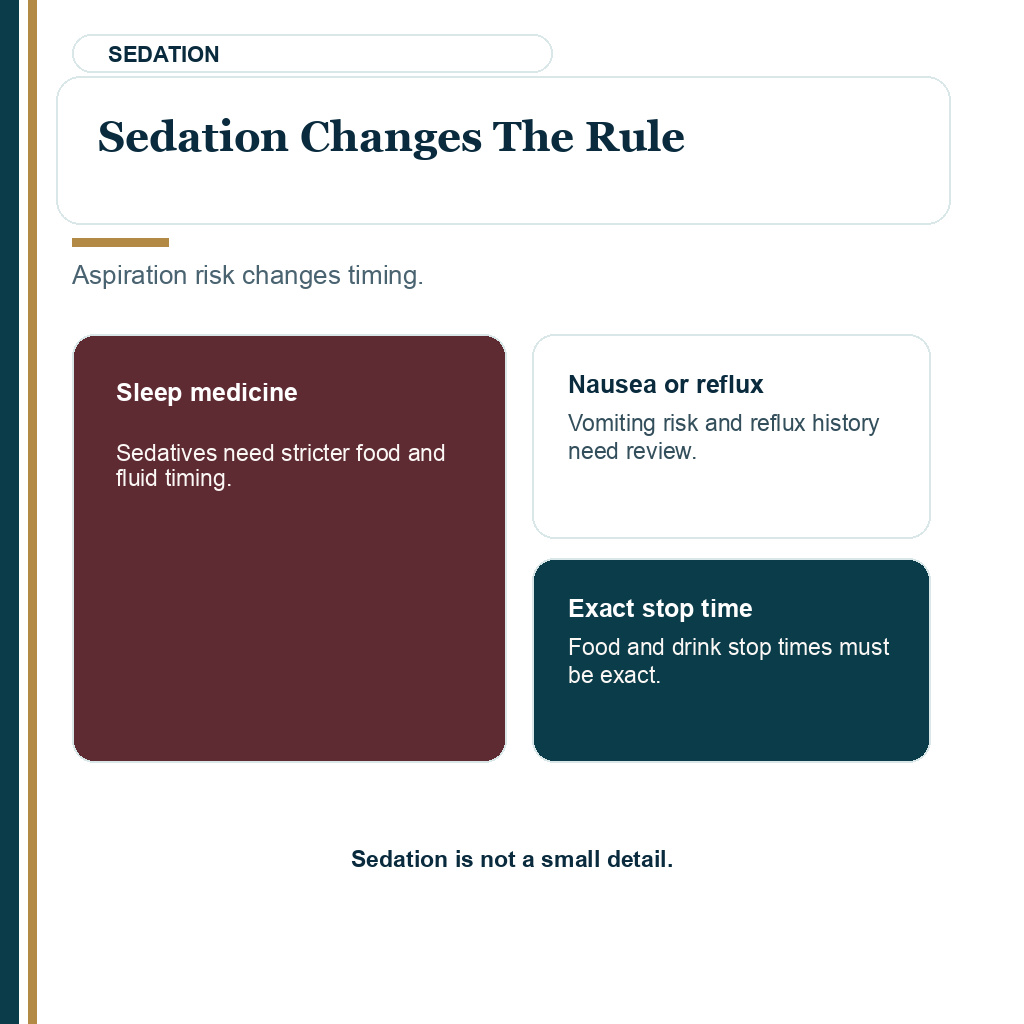
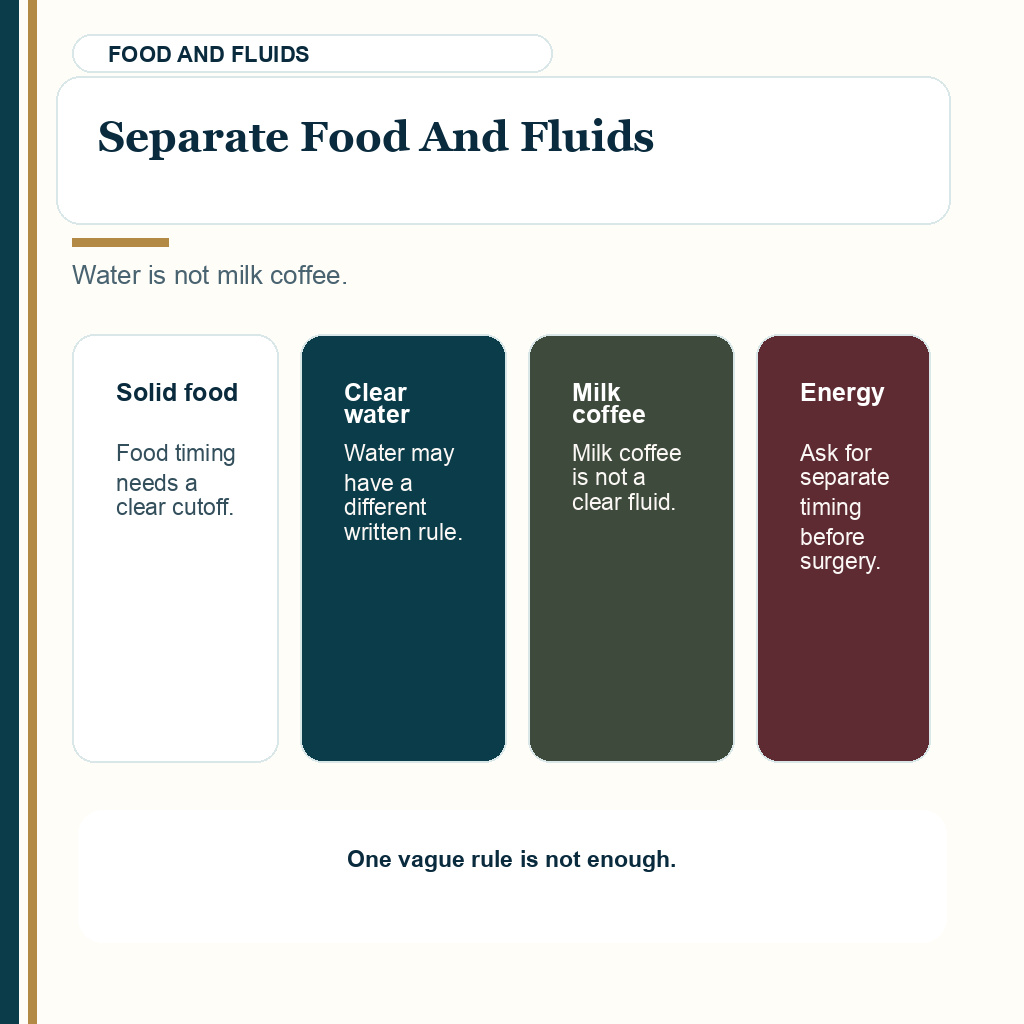
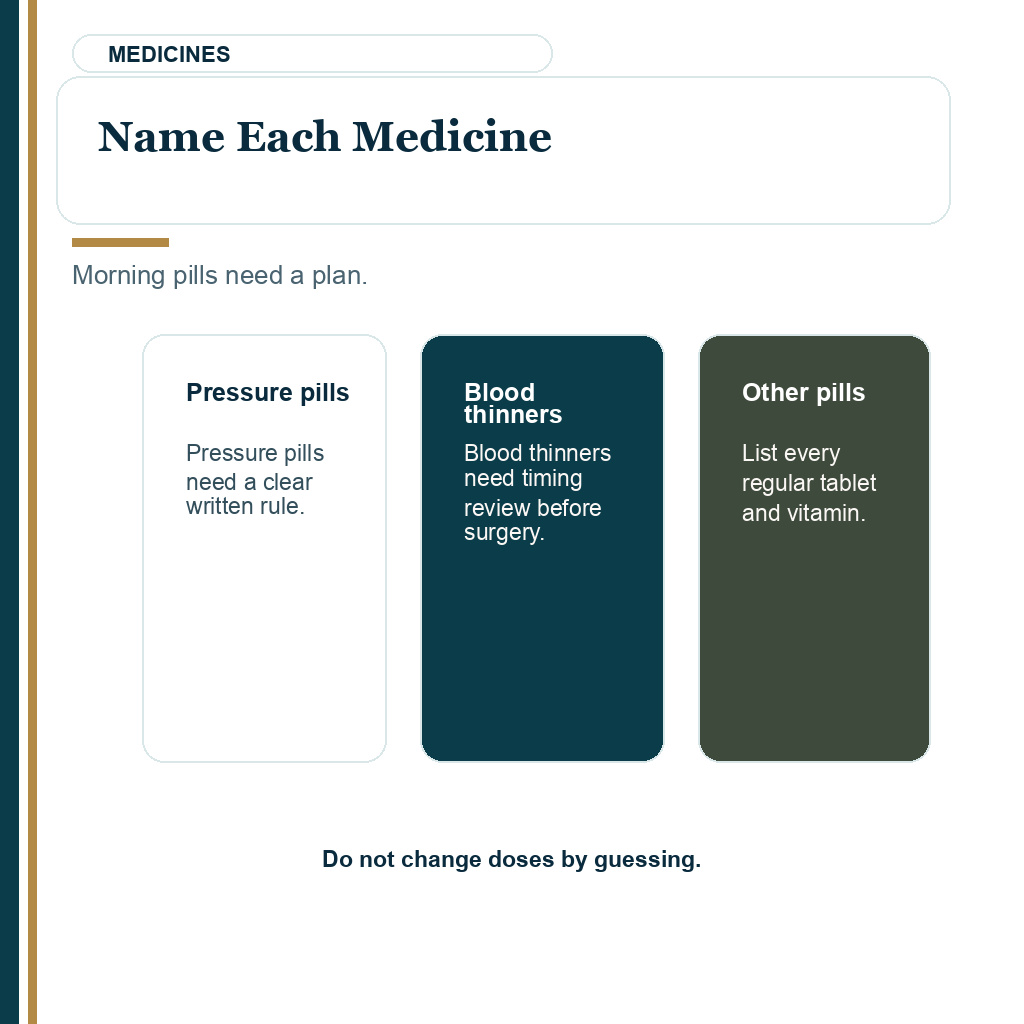
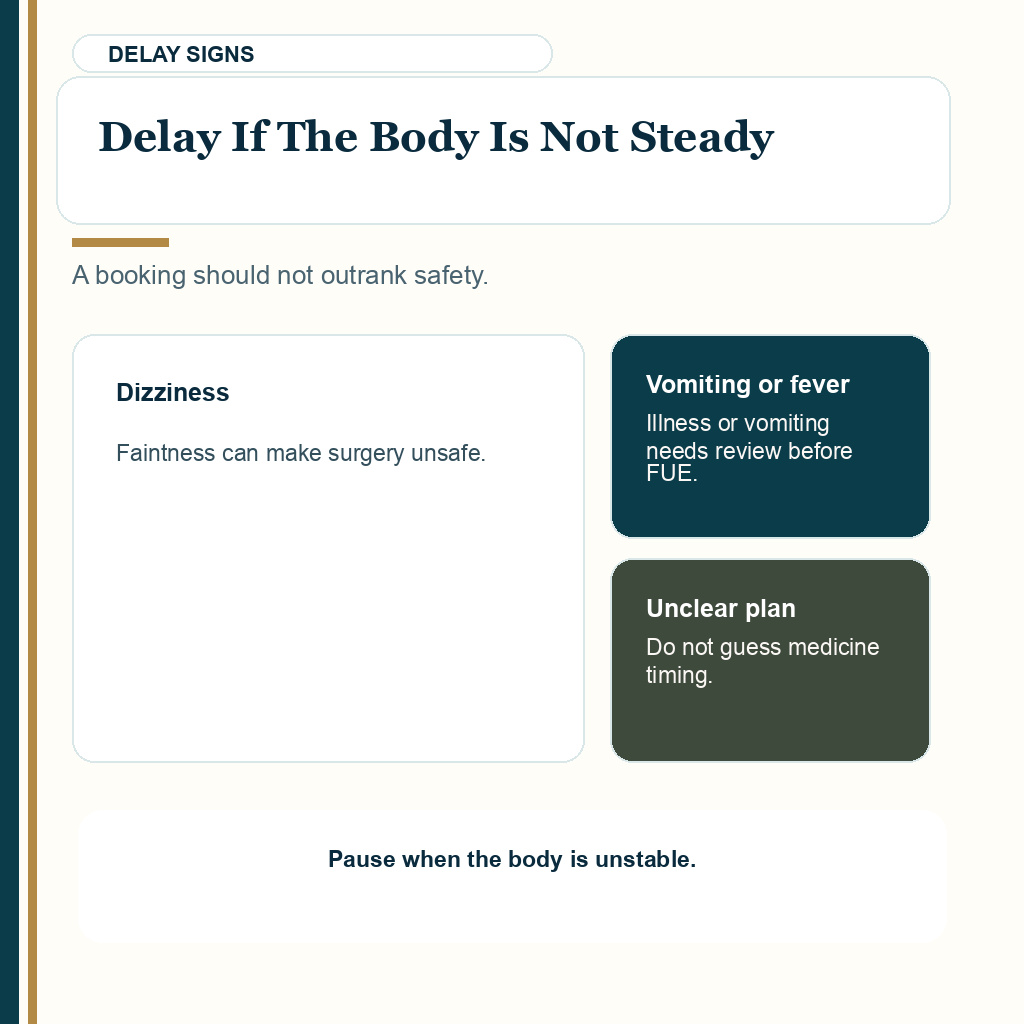
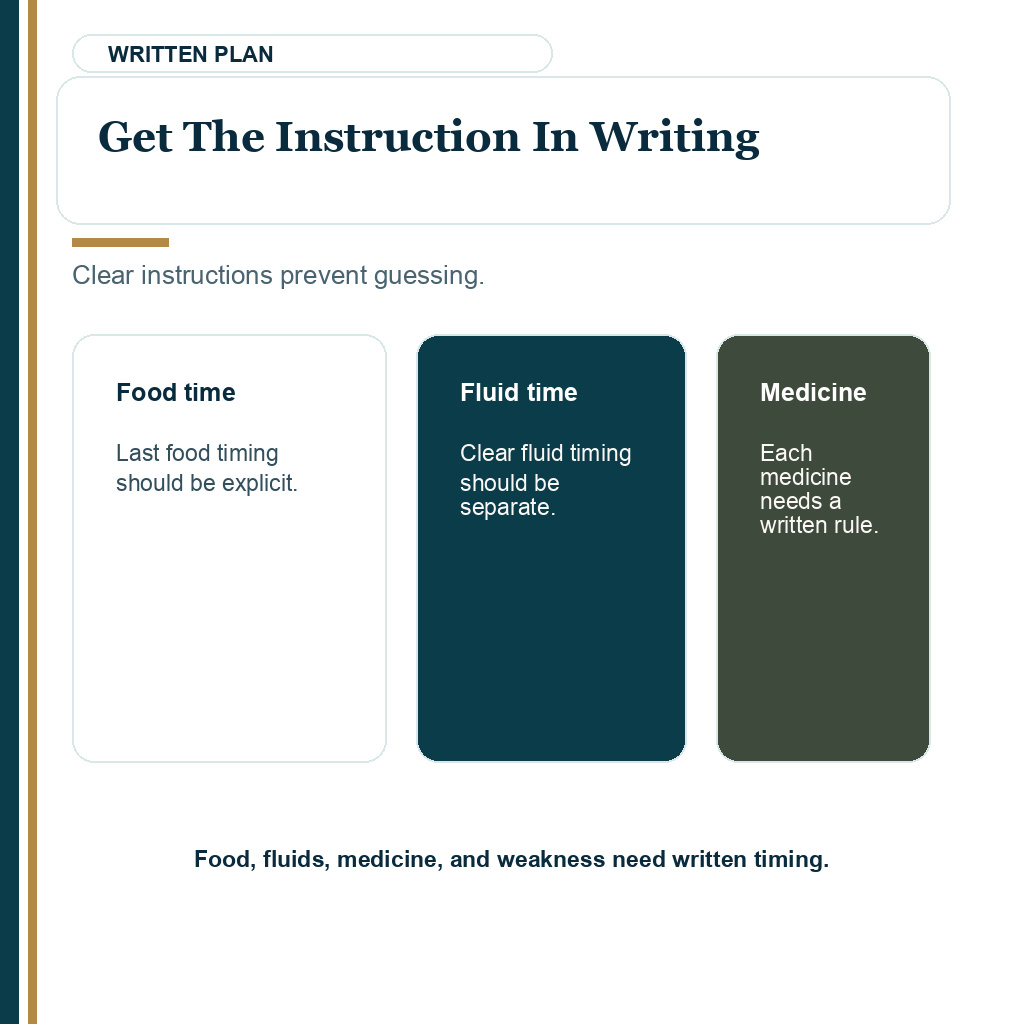
These 9 fasting before FUE slides separate anesthesia type, local anesthesia comfort, sedation risk, food versus clear fluids, medicine timing, diabetes or injections, travel and Ramadan readiness, delay signs, and written instructions. Swipe sideways, use the arrows one slide at a time, or choose a number below the image.
Coffee, supplements, and stimulants are separate questions
Some fasting questions are really questions about coffee, energy drinks, supplements, nicotine, or stimulant gym products. These are not all the same. A cup of coffee, a stimulant supplement, a blood pressure medicine, and a diabetic medication have different medical meanings.
Morning coffee needs its own instruction. The timing of coffee before hair transplant surgery is separate from a full food fast. Vitamins, herbal products, gym supplements, and hair loss products should follow the clinic’s written instructions and the guide to supplements before hair transplant.
Several changes at once can confuse the morning of surgery. Fasting, skipping coffee, changing medication, sleeping poorly, and travelling overnight can all cause dizziness or anxiety. Clear written planning prevents that confusion.
Medicine changes need direct review
A dangerous pattern is adjusting medication alone because you want to fast. This may mean skipping blood pressure medicine, changing diabetes medicine, stopping a regular prescription, or taking a painkiller differently. That can be more risky than the fasting itself.
High blood pressure needs the medication plan checked before fasting hours are set. Stable blood pressure control before hair transplant surgery matters before the operation begins. When medication timing conflicts with fasting hours, coordinate it with the prescribing doctor and the hair transplant clinic. Do not solve it by guessing.
Hair transplant planning includes more than the graft count. You have to go through the day safely and heal normally afterward. Medication timing should be confirmed, not improvised.
Fasting uncertainty can delay surgery
Some situations deserve a slower decision. Diabetes with unstable readings, repeated fainting, recent illness, vomiting, dehydration, fever, uncontrolled blood pressure, or unclear medication instructions can all justify a pause before surgery. A flight and hotel booking should not push the team past a medical concern.
An unclear anesthesia plan creates the same problem from another direction. If you expected local anesthesia only and then hear about sedation on the day, the fasting instruction may change. That should be settled before the last minute.
Asking these questions does not make you difficult. It helps the medical team keep the day controlled. The unsafe version is staying silent because you do not want to disturb the schedule.
Details that should be clear in writing
Before a hair transplant, I want four details written clearly. First, what anesthesia is planned. Second, whether food and clear fluids are allowed, and until what time. Third, what to do with regular medicines. Fourth, what to do if fasting is part of a religious practice or travel routine. Water, milk drinks, energy drinks, and tablets with a sip of water should not be guessed into the same category.
The instruction should also explain its reason. Local anesthesia comfort, sedation, diabetes, blood pressure, nausea risk, and other medical conditions lead to different advice. Patients should not have to guess the medical logic behind a fasting instruction.
This is part of choosing a clinic responsibly. The questions in what to clarify before booking a hair transplant apply here because medical details should be handled before the operation becomes a travel package. Fasting is one of those details. It may sound small, but it can reveal whether the clinic is giving individualized medical care or only generic instructions.
After surgery, fasting becomes a recovery question
Once the transplant is finished, the question is different. Then we are thinking about early healing, fluid intake, swelling, meal quality, medicine timing, and how to avoid making the first recovery days harder. That recovery topic belongs with the guide to fasting after hair transplant surgery.
After surgery, you do not need a perfect diet to make grafts grow, but you do need enough fluid, protein, and regular meals to feel well and follow aftercare instructions. The recovery side is mainly about keeping the first days steady enough to follow aftercare clearly.
Before surgery, do not fast from habit, fear, or vague instructions. Ask early, get the plan in writing, and make sure the answer fits your anesthesia, health history, travel schedule, and medication needs. A better controlled hair transplant day starts before you enter the operating room.

Read this review excerpt
He was very thorough in every little detail and I never felt pressure to do anything I wasn’t sure of.