Heartburn Medicine Timing for FUE Safety
If you use omeprazole, famotidine, antacid tablets, alginate liquid, or another heartburn medicine before hair transplant surgery, write it on your medical form before surgery day. Do not change the timing on your own on the morning of FUE.
For most patients with stable reflux, this is a disclosure and timing question, not a graft growth treatment. I need the exact medicine name, when you last took it, and whether you have active burning, nausea, vomiting, chest pain, or trouble swallowing.
I separate two questions when I review this with a patient. One is whether the medicine itself affects the surgical plan. The other is whether the symptom behind the medicine means the body is not ready for a long local anesthetic FUE day. A familiar reflux pattern is different from new severe pain, repeated vomiting, black stool, or chest pressure before travel.
Why does reflux medicine matter before a long FUE day?
A hair transplant is not stomach surgery, and a proton pump inhibitor, H2 blocker, alginate, or simple antacid does not decide whether grafts grow. The practical issue is comfort, fasting instructions, tablet timing, and safety review. A long FUE session asks you to lie still, eat according to the clinic’s instructions, take only approved medicines, and keep the day predictable.
Some patients think heartburn tablets are too ordinary to mention. That is the mistake I want to prevent. The clinic may ask you to list prescribed medicines, nonprescription tablets, stomach protection medicine given with other drugs, supplements, and recent symptoms. I also ask for medicine details in my medication before hair transplant guidance. A complete list is more useful than guessing which medicine will matter on surgery day.
Reflux can also overlap with other procedure day questions. If you are told to fast, eat a light breakfast, avoid certain drinks, or delay a tablet, follow the written plan from your surgical team. If your reflux medicine is usually taken with food, ask before travel rather than discovering the conflict while you are already in the clinic.
Do not increase reflux medicine on your own to get through travel sickness or fasting discomfort. If symptoms feel new or stronger than your usual pattern, say that before the day is treated as routine.
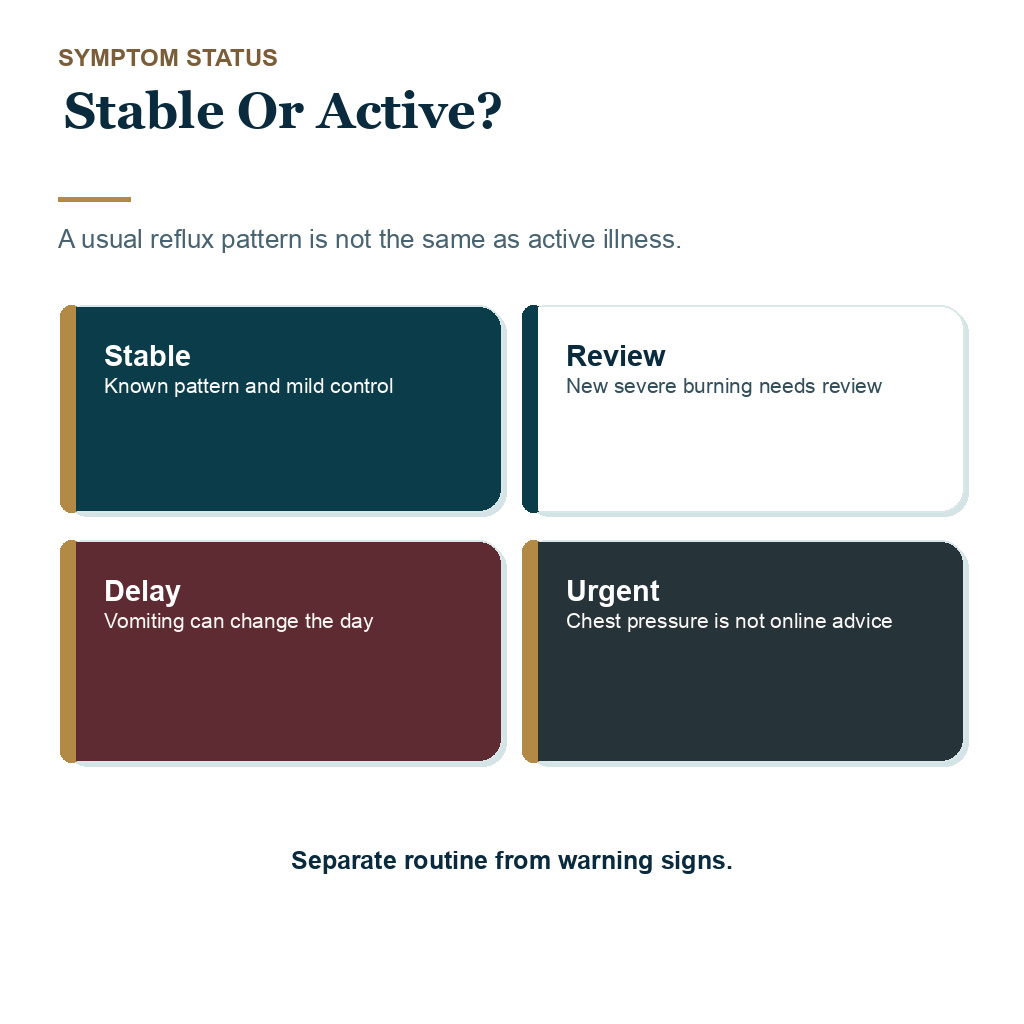
Stable heartburn is different from active illness
Stable reflux means you know the pattern, the medicine is already part of your usual care, and symptoms are controlled or mild. The review is usually about timing and interactions with other medicines. It is still worth listing on the medical form, but stable reflux is not a cancellation by itself.
Active illness is different. New severe burning, chest pressure, repeated vomiting, fever, black stool, blood in vomit, trouble swallowing, unexplained weight loss, or pain that feels unlike your normal reflux needs medical review. I cannot responsibly turn those signs into a hair transplant timing answer. They belong with your treating doctor, urgent care, or emergency service depending on severity.
Not every reflux flare is dangerous. The point is simpler. A long elective procedure is the wrong place to discover that a symptom was not reflux at all, or that dehydration, vomiting, or chest pain has made the day unsafe.
Medicine details to send to the clinic

Patients often say, “I take something for my stomach.” That is not enough. Bring the exact name, dose, how often you take it, whether it is prescribed or bought over the counter, and when you last used it. If the package is not in English, a photo of the box or active ingredient can help the medical team understand it.
The names matter because “heartburn medicine” can mean different categories. Some medicines reduce acid production. Some neutralize acid briefly. Some create a barrier after meals. Some tablets are given as stomach protection when antibiotics or painkillers are prescribed. Those products are not identical, and timing advice can change when other tablets are involved.
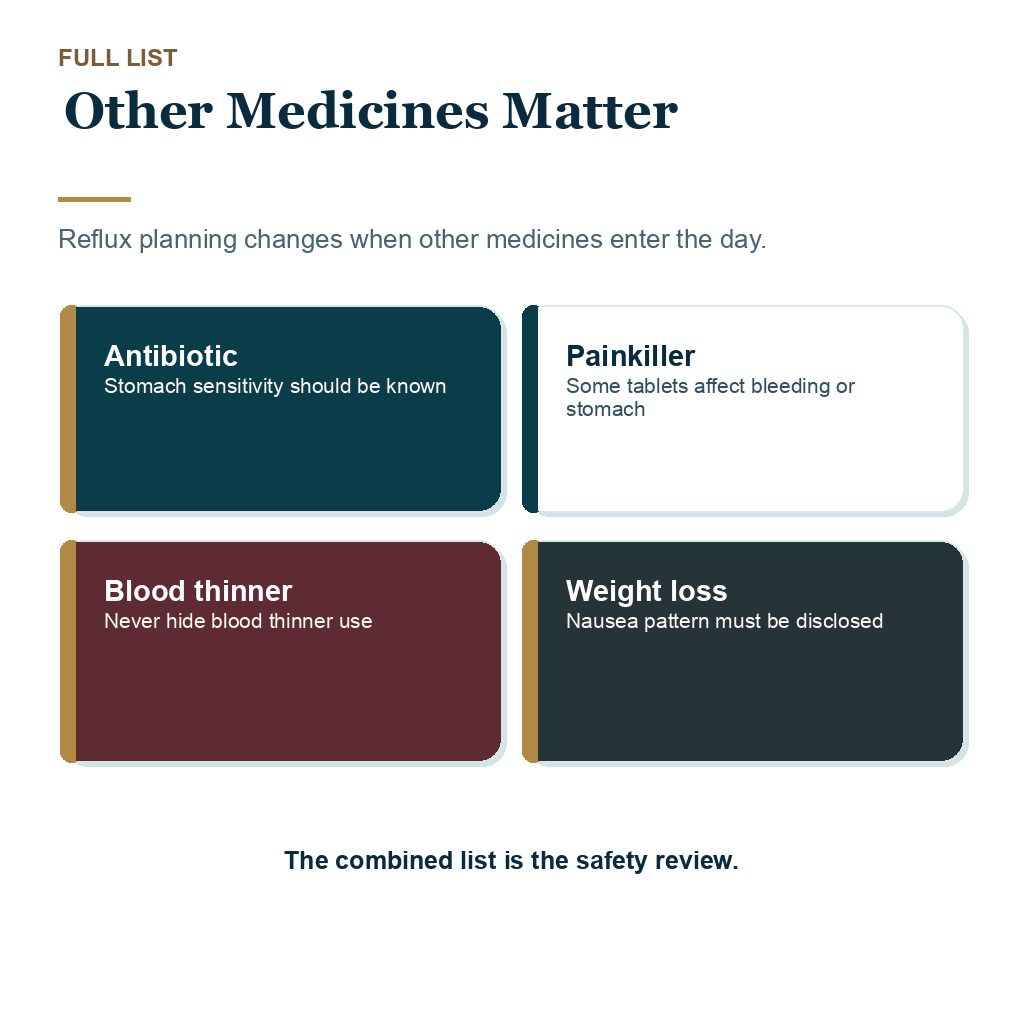
Also mention aspirin, blood thinners, blood pressure tablets, diabetes medicine, weight loss injections, herbal products, and frequent painkiller use. A reflux tablet may be simple by itself, but the combined list can change how the day is planned. That is especially true if you are also asking about ibuprofen before hair transplant, antibiotics, nausea medicine, or blood pressure control.
Why should you not start or stop it alone?
Last minute medicine experiments create avoidable confusion before a hair transplant. A usual dose that has already been disclosed is different from taking extra tablets to push through travel food, changing brands because of online advice, or stopping a medicine that keeps reflux controlled. A new tablet can hide a symptom that deserves review, and stopping a familiar medicine can make procedure day less comfortable.
Ask before the surgery date, especially if the medicine was prescribed by your own doctor. Keep that doctor involved before stopping it or replacing it. If Diamond Hair Clinic gives a written instruction about what to take on the morning of surgery, follow that exact plan instead of advice from search results or friends. A real medicine list is safer than an edited version that hides tablets or extra doses.
This becomes more important when the hair transplant plan includes other medicines. Antibiotics can irritate the stomach in some patients, and pain medicines can do the same. If you have a history of gastritis, ulcers, severe reflux, or vomiting with tablets, say that before the procedure. It gives the team time to plan, not just react.
Food and fasting instructions come first
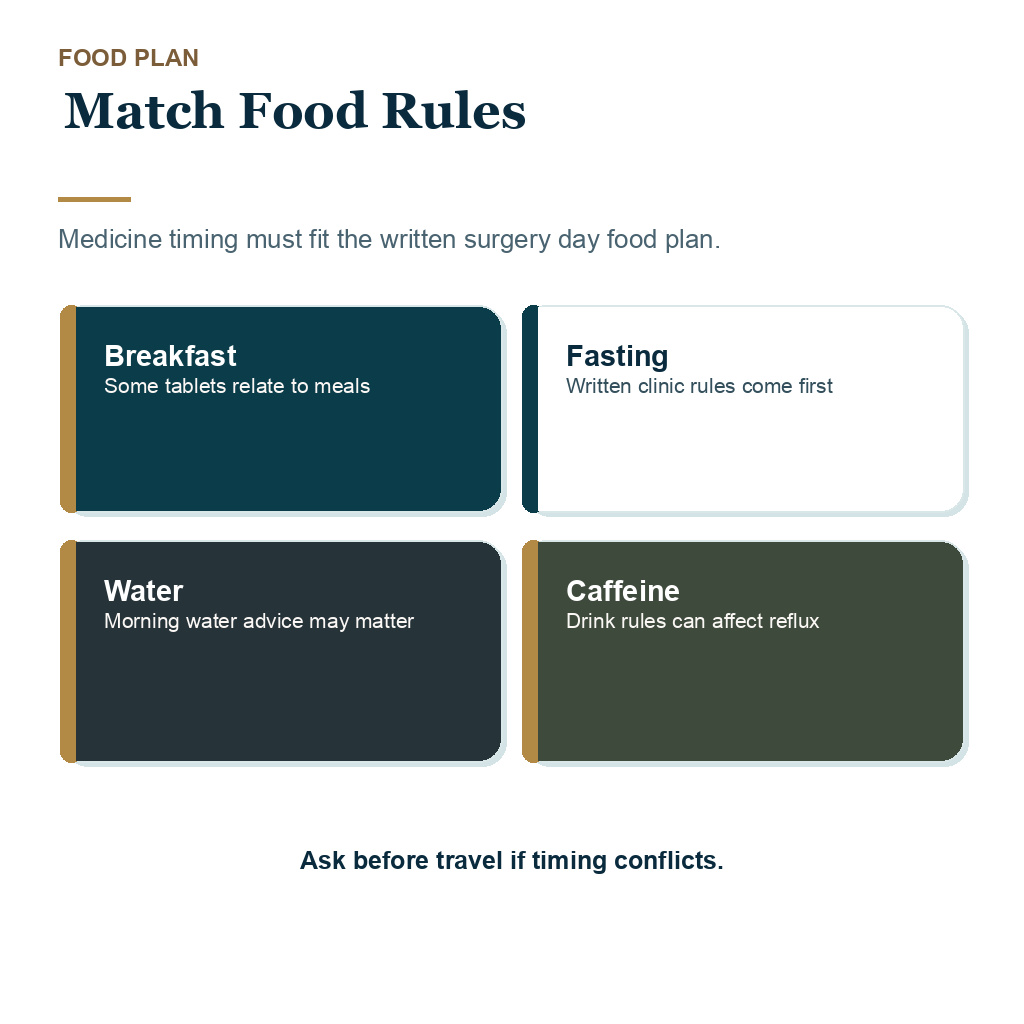
Many reflux medicines are linked to food timing. Some are taken before breakfast. Some are taken after meals. Some are used only when symptoms appear. At the same time, clinics may give specific instructions about breakfast, caffeine, water, or fasting before the procedure.
Do not assume one rule overrides the other. If you were given a written food plan, compare your reflux medicine timing with it and ask the clinic before the surgery date. The fasting before hair transplant guidance treats procedure day food instructions as medical planning, not a casual preference.
Travel makes this easier to forget. Late flights, hotel breakfast, unfamiliar meals, and poor sleep can all flare reflux. If this commonly happens to you, write the medicine name into your pre-op message instead of waiting until you are in Istanbul.
If the product is from another country, send a photo of the front and ingredient panel. Brand names change by country, and the clinic needs the active ingredient rather than a familiar local name.
Reflux medicine check before travel
Complete this quick check before flying. It is not a dosing tool. It is a way to make sure the right information reaches the clinic before surgery morning.
Stable routine or active symptom?
Check the reason, not only the tablet
This check is not a dosing tool. It separates a familiar reflux routine from symptoms that may make a long FUE day unsafe. Use it before travel so the clinic sees the medicine, the symptom pattern, the food instructions, and any reason to delay.
When can nausea or vomiting change the decision?
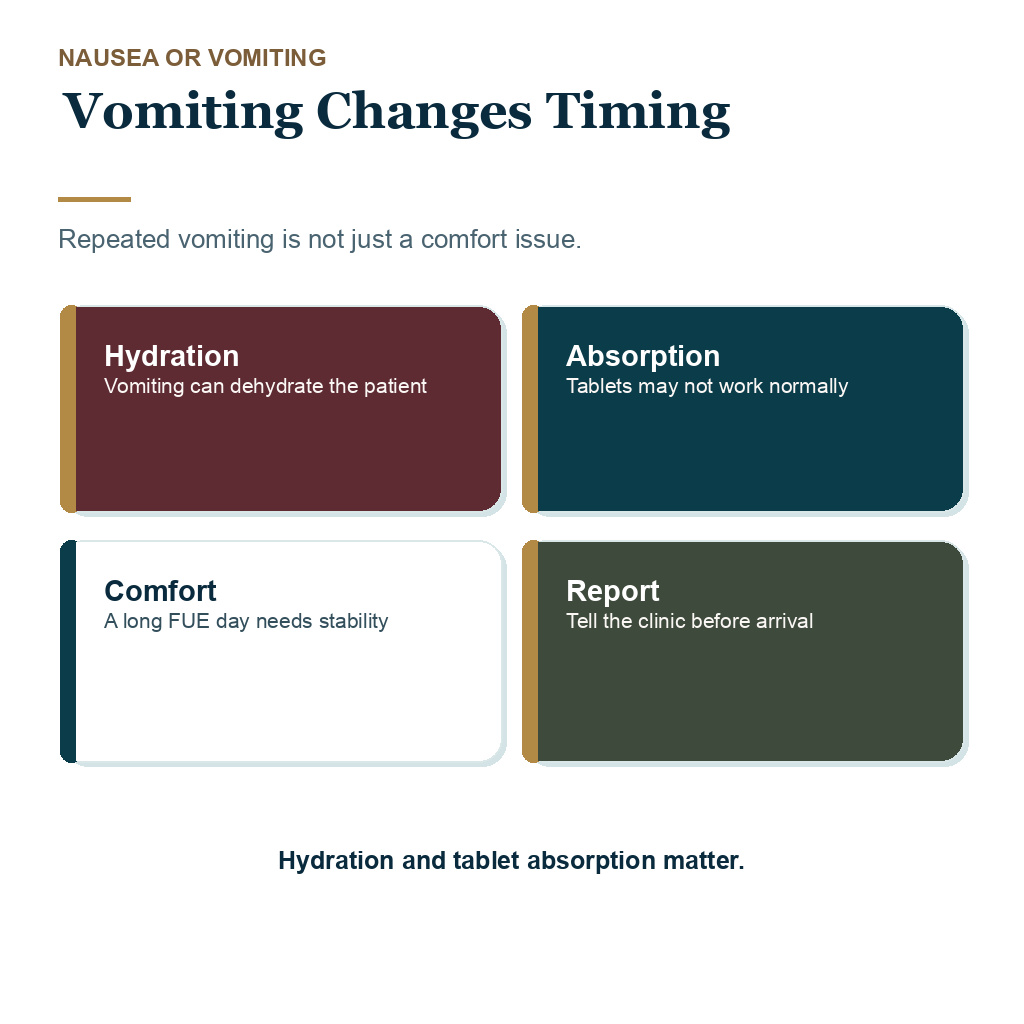
Heartburn, nausea, and vomiting can sit close together in real life, but they do not have the same meaning on the procedure day. Mild familiar burning after a spicy meal is one thing. Repeated vomiting before surgery is another. Vomiting can affect hydration, comfort, tablet absorption, and whether the patient can safely complete a long day.
If nausea starts after travel, after a new medicine, or after a meal, report it before the procedure. Nausea before surgery deserves early review, even though nausea after FUE is usually discussed during recovery. If vomiting is present, report it early. The same concerns behind vomiting after hair transplant can apply before surgery too, including hydration, tablet absorption, and whether the patient can safely complete a long day.
Do not use extra tablets to push through an elective surgery day. A hair transplant is planned medicine. Repeated vomiting before surgery changes the plan. It should not be performed on top of a hidden acute illness.
Other medicines can make reflux planning more important
Reflux medicine often becomes relevant because another medicine is being discussed. Antibiotics before or after surgery may be part of the clinic’s protocol, and stomach sensitivity should be mentioned before they are prescribed. If you already know that antibiotics upset your stomach, say so when reviewing antibiotics before hair transplant.
Painkiller questions matter too. Some patients use anti inflammatory tablets for headaches, dental pain, back pain, or travel discomfort. Those medicines may be restricted before surgery for bleeding or stomach reasons, depending on the drug and the timing. List them even if you also use a stomach protection tablet.
Weight loss injections can add another layer because they may change appetite, nausea, or reflux patterns. If you use semaglutide, tirzepatide, or a similar medicine, the Ozempic and hair transplant timing discussion is a better home for that specific planning question, but still mention reflux symptoms in your pre-op review.
Chest pain is not simple heartburn online
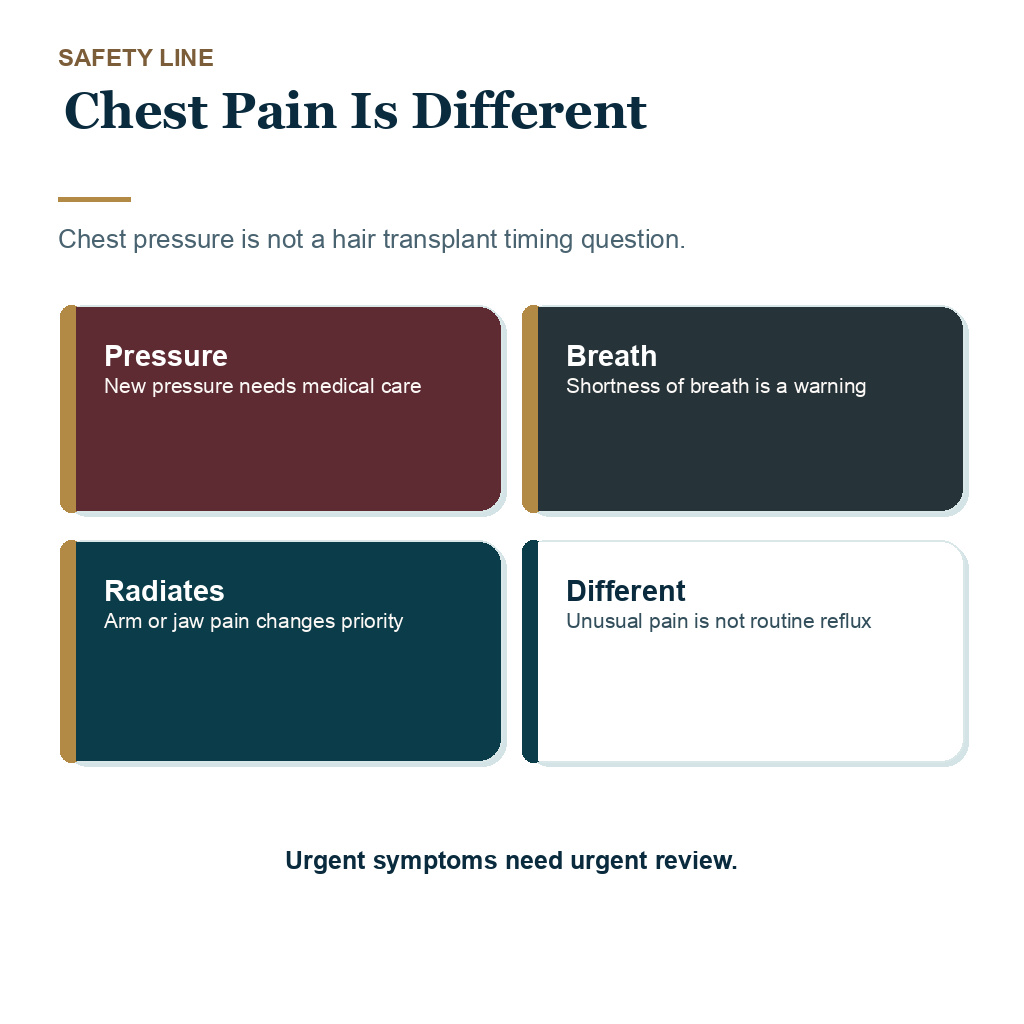
This is the safety line I do not want patients to blur. Reflux can burn behind the breastbone, but chest pain is not something to diagnose through a hair transplant article. If the pain is severe, new, feels like pressure, is linked with shortness of breath, sweating, faintness, left arm or jaw pain, or simply feels different from your usual reflux, seek urgent medical care.
Blood pressure and heart history also matter. A patient with uncontrolled blood pressure, chest symptoms, or recent cardiac evaluation needs medical clearance thinking, not “take an antacid and continue” thinking. I often connect medication questions with high blood pressure and hair transplant planning when the history points that way.
The transplant team can plan around many stable medical histories. What we cannot plan around safely is a symptom that is hidden, minimized, or reframed as normal when it is not normal for you.
Details to send before travel
A useful message is short and concrete. Send the medicine name, dose, timing, reason for taking it, how long you have used it, whether symptoms are controlled, and whether any red flags are present. Add a photo of the package if the name is unfamiliar or written in another language.
A short structured message is better than a long essay or a universal rule from a social media comment. Your timing plan depends on your symptoms, other medicines, written food instructions, and medical history. The earlier the clinic has that list, the easier it is to keep the surgery day predictable.
These 10 heartburn medicine slides separate medicine type, stable versus active symptoms, dose and timing, food instructions, last minute self changes, other medicines, vomiting, travel flares, chest pain warning signs, and the message to send before travel. Swipe sideways, use the arrows one slide at a time, or choose a number below the image.

Read this review excerpt
Diamond Hair was the only clinic asking for medications, treatments I've done before, and other type of questions that make me feel confident on the professionalism that they practice with their clients.