


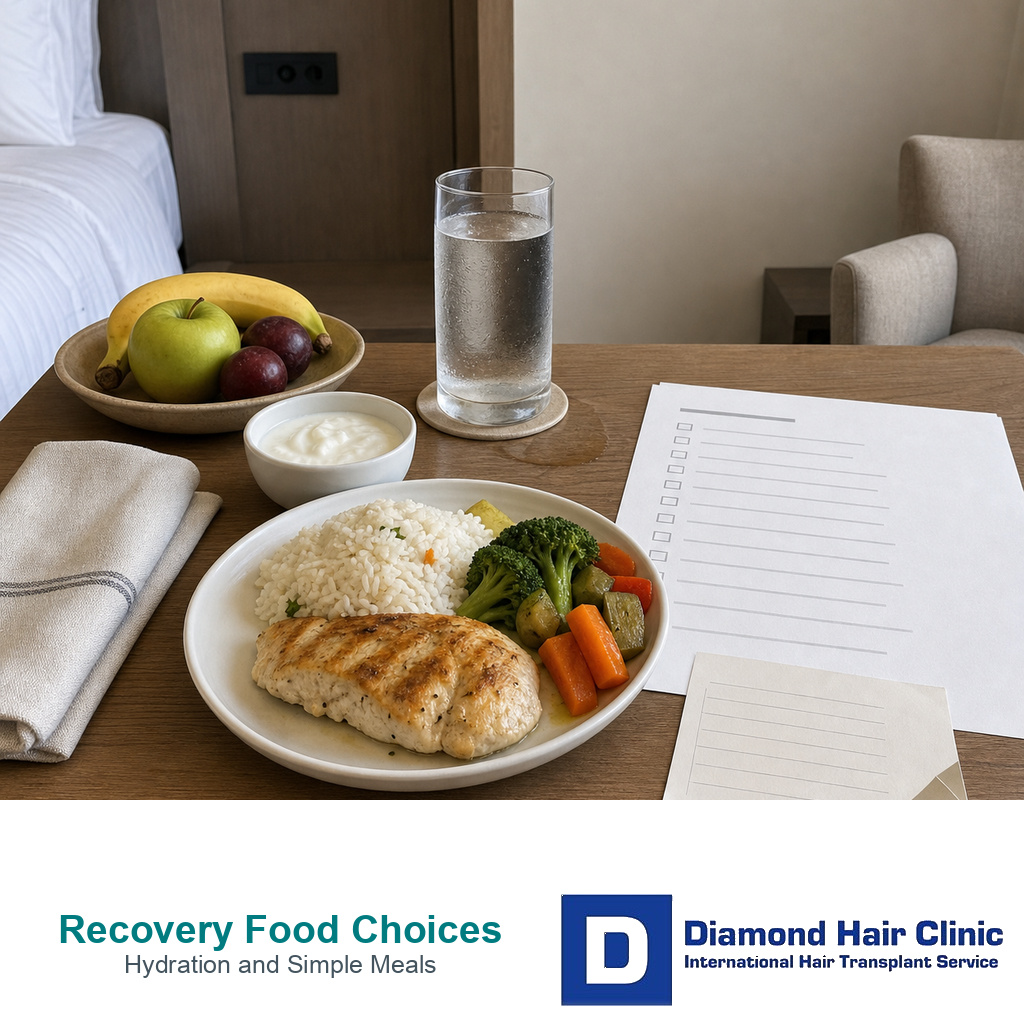
Recovery Food Choices That Support Healing
After a hair transplant, eat simple meals that give your body protein, fluids, minerals, and steady energy. In the first days, choose food that is easy to digest, not too salty, not too greasy, and not tied to alcohol or heavy caffeine. Food will not make a weak surgical plan, poor graft handling, or unrealistic density become a strong result. Poor eating, dehydration, fasting after a hair transplant without planning, extreme dieting, or missed medical problems can make recovery harder than it needs to be.
The worry behind food is usually simple. One wrong meal, spicy food, fast food, or a missed vitamin can feel as if it might damage the grafts. When I look at this clinically, I separate that anxiety from the real issue. The grafts are mainly protected by careful surgery, gentle aftercare, and avoiding rubbing, pressure, scratching, infection, and poor healing conditions. Nutrition supports that recovery. It does not replace it.
Food in the first days after FUE
In the first 24 to 48 hours, the recovery period should stay quiet. A good meal is usually plain and balanced. Protein, water, vegetables, fruit, and a normal amount of carbohydrate are enough for most people. Chicken, fish, eggs, yogurt, lentils, beans, rice, soup, potatoes, whole grain bread, and cooked vegetables are all reasonable choices if they suit your stomach. If appetite is low and a shake is easier than a meal, keep it plain. I discuss protein powder after hair transplant separately because some products include caffeine, creatine blends, or stimulant extras that do not belong in the early recovery period.
A perfect menu is unnecessary. What matters is hydration, tolerating food, avoiding skipped meals, and not putting the body under stress immediately after surgery. If prescribed tablets upset the stomach, food timing may also matter, so follow the medication instructions given by your own clinic and avoid copying someone else’s routine. If food and fluid tolerance become the main issue, treat nausea after FUE as a symptom to review before blaming the grafts.
Meals also have to fit hair transplant aftercare. If the food makes you sweat heavily, bend repeatedly over a low table, rub your scalp with a napkin, or forget your washing and sleeping instructions, the food is not the only issue. The recovery situation around the meal matters too.
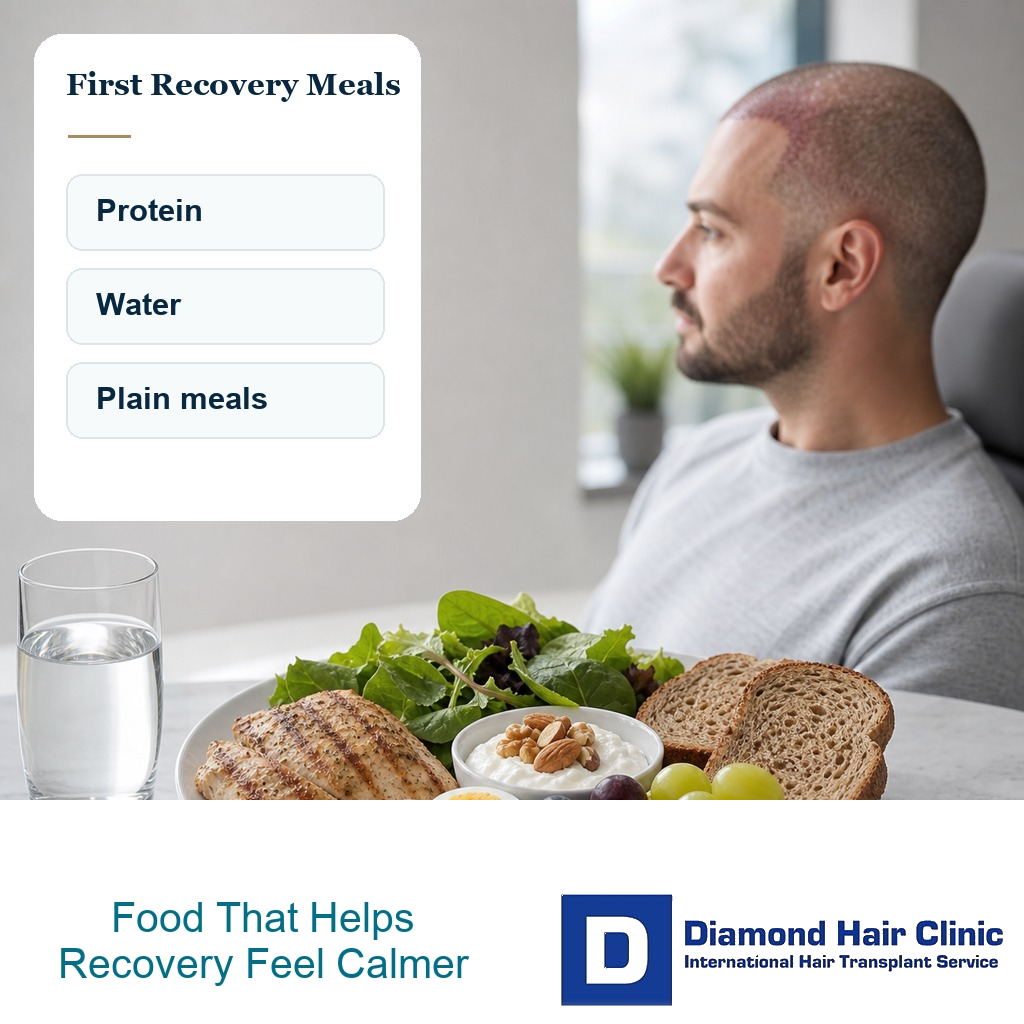
Food supports healing more than it controls growth
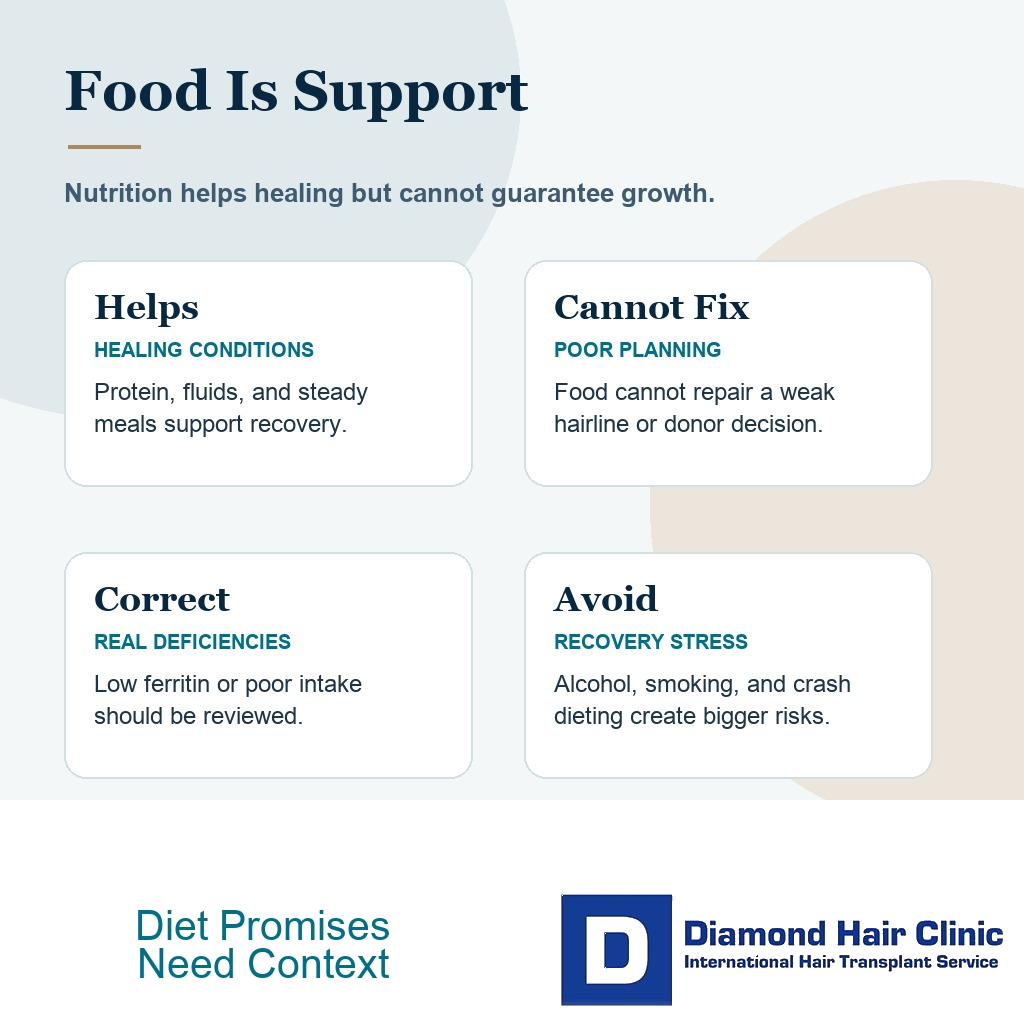
Food affects healing, energy, and the general condition of the body. It should not be sold as a guarantee for graft growth. A transplanted graft needs correct handling, correct placement, blood supply, clean healing, and time. A good meal cannot correct poor direction, excessive trauma, overharvesting, weak donor planning, or an unrealistic graft number.
Still, nutrition is not meaningless. Surgery creates many small healing points in the donor area and recipient area. The body needs enough building material to repair skin and settle inflammation. Eating very little, dieting aggressively, vomiting, dehydration, or living only on snacks does not give the body the same recovery environment as steady meals.
That is the line I try to hold. I do not scare someone about a single imperfect meal, and I do not pretend food has no role. Nutrition supports the healing environment, while surgical planning and graft handling remain the foundation of the result.
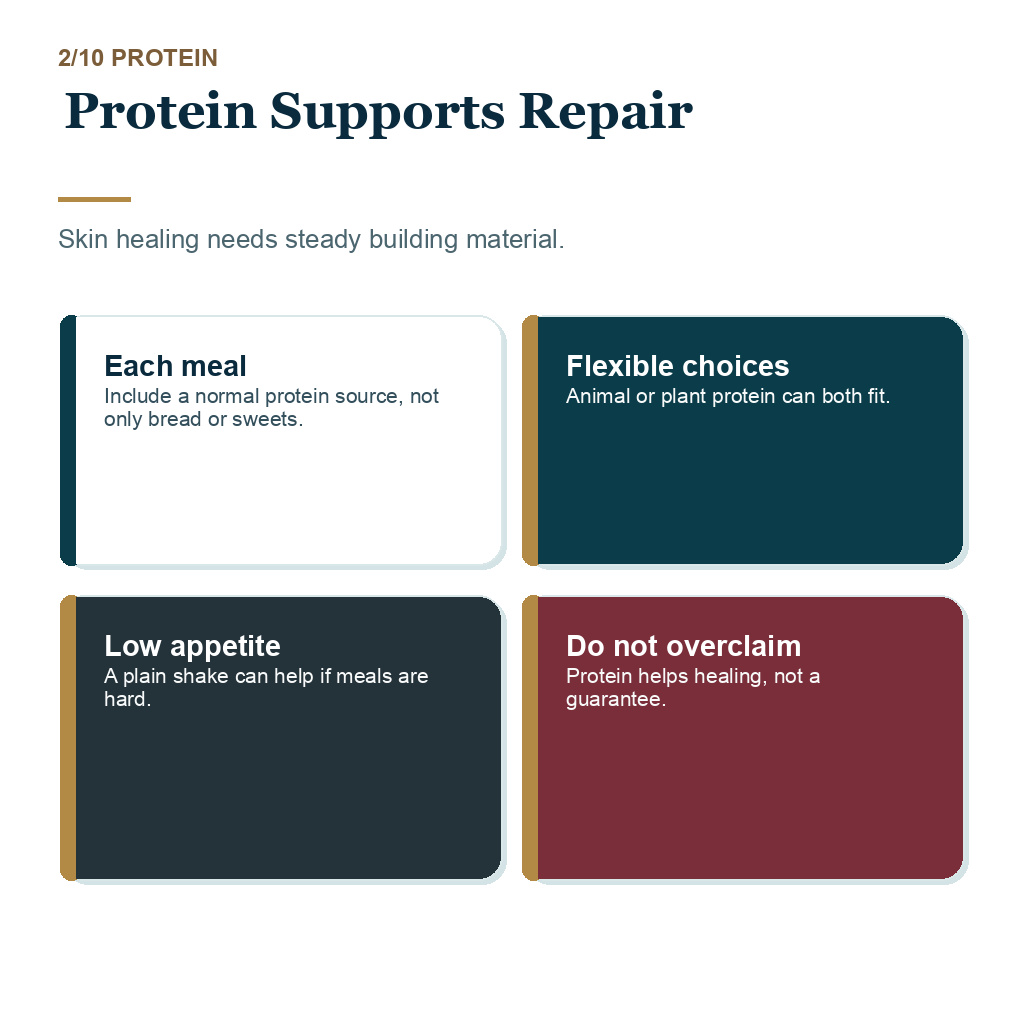
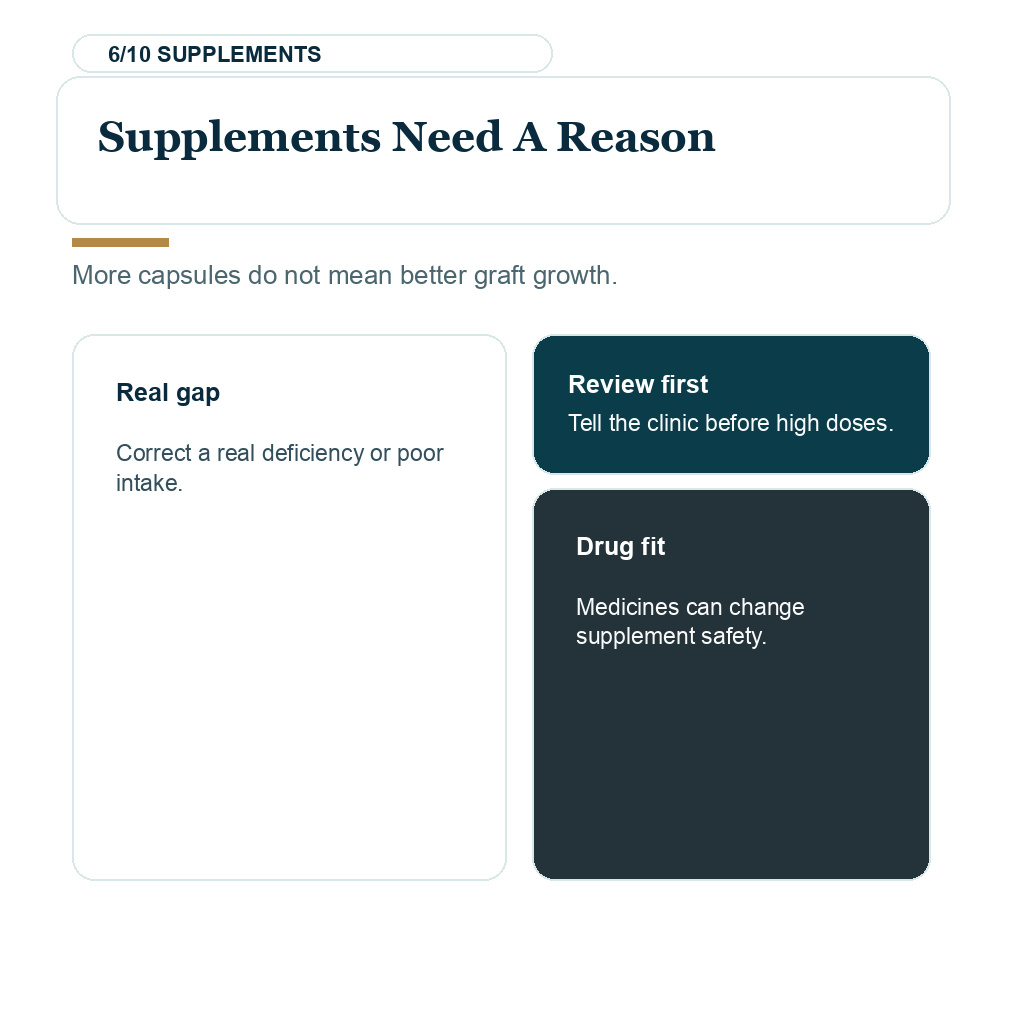
Use the 10 recovery food slides below to separate first day meal basics, protein, hydration, heavy foods, one imperfect meal, supplements, weight loss or GLP-1 nausea, differences between coffee, alcohol, and nicotine, medical conditions, and hotel meal planning. Swipe the carousel, use the arrows one step at a time, or choose a number below the image to jump to that point.






Foods that make early healing easier
Protein matters because skin healing requires repair. For most people, each meal should contain a normal protein source rather than only bread, sweets, or coffee. Eggs, fish, chicken, meat, yogurt, cheese, legumes, tofu, and other protein foods can all be reasonable depending on diet, culture, and medical background.
Fluids matter because dehydration can make the first days feel more uncomfortable. Water is usually enough. Soup, herbal tea without heavy caffeine, and foods with a lot of water can help if the stomach is sensitive. If you are dizzy, vomiting, or unable to drink normally, that is not just a nutrition question. It should be reviewed by the clinic or a doctor. If dehydration is coming from loose stools, diarrhea during early recovery needs symptom review rather than only changing the menu.
Vegetables, fruit, and ordinary whole foods are useful because they make the diet less narrow. There is no need to chase one miracle fruit or one expensive supplement. Steady meals, enough protein, enough fluid, and no extreme restriction are more useful than a dramatic food rule. Bring supplement labels into the review, because a healthy routine can still contain ingredients the surgery team needs to know about.
Patient food tips are useful only when they solve a real recovery problem for you. After surgery, a plain meal you tolerate is better than adding a new supplement or unfamiliar food that makes your stomach unsettled.
If you are taking prescribed tablets after surgery, food may also affect stomach comfort. I also connect eating habits with medications after a hair transplant, especially if pain relief, antibiotics, stomach protection, or other medical instructions are involved.
Spicy, salty, or greasy food needs moderation
Spicy food does not simply destroy grafts. One spicy meal is not a transplant emergency. What matters is whether it causes sweating, flushing, stomach upset, reflux, poor sleep, or a feeling that makes you scratch, rub, or become careless with the scalp. I discuss spicy food after a hair transplant separately because heat, sweat, and stomach tolerance decide the practical risk.
Very salty food is also worth moderating in the first days. Salt is not poison, but heavy salty meals can make some people feel puffier. If you are already worried about forehead or eye swelling, it makes sense to keep meals lighter and avoid pushing the body toward more fluid retention. With swelling after a hair transplant, timing and warning signs matter more than food anxiety alone.
Very greasy food is similar. It is not usually a direct graft issue, but it can make the stomach uncomfortable and recovery less predictable. In the first days, plain food is often wiser because you have enough to manage already. Washing, sleeping, swelling, and not touching the grafts deserve more attention than testing every heavy meal.
One imperfect meal will not ruin a transplant
One fast food meal after surgery is very unlikely to ruin a hair transplant by itself. A burger or dessert has not destroyed the grafts just because it was not an ideal recovery meal. The better response is to return to steady food, water, and aftercare instead of inspecting the grafts repeatedly.
The pattern matters more than one event. If someone spends the first recovery week dehydrated, constipated after a hair transplant, sleeping badly, smoking, drinking alcohol, eating very little real protein, and ignoring instructions, the recovery environment becomes weaker. That is different from one imperfect meal during an otherwise careful recovery.
If you are staying in a hotel after surgery, you may not have your ideal kitchen. You may rely on restaurant food. That is acceptable if you choose simple meals, drink water, avoid alcohol, keep the scalp protected, and do not turn recovery into a week of heavy meals, late nights, and poor sleep.
For travel days, choose food you already tolerate rather than testing new supplements, spices, or street food. A simple stomach makes washing, sleep, and medicine timing easier to manage. A heavy restaurant meal can create the same practical problem as unfamiliar street food.
Vitamins and supplements after surgery
Supplements can help when there is a real deficiency, poor intake, restrictive dieting, low ferritin, low vitamin D, or another medical reason. They should not become a shopping list built around anxiety. More capsules do not mean better graft growth.
Do not start high dose supplements immediately after surgery without telling the clinic, especially if you are also taking painkillers, antibiotics, blood thinners, or other medication. This is not only about whether a vitamin sounds good for hair. The question is whether it fits the medical plan.
If you eat well and blood results are acceptable, a reviewed routine is usually enough. If there is heavy shedding, poor nutrition, anemia, recent illness, rapid weight loss, or a restrictive diet, I take supplements more seriously because the body may be missing something it actually needs.
Vitamins after a hair transplant should correct a real gap. Do not use supplements to cover anxiety, weak planning, or unrealistic growth expectations.
Dieting, weight loss, or Ozempic changes the discussion
Active weight loss during recovery changes the discussion. Someone who is eating normally after surgery is different from someone losing weight quickly, struggling with nausea, skipping protein, or shedding heavily. With rapid weight loss, the concern is not only what to eat tomorrow. The concern is whether the body is stable enough for surgery and recovery.
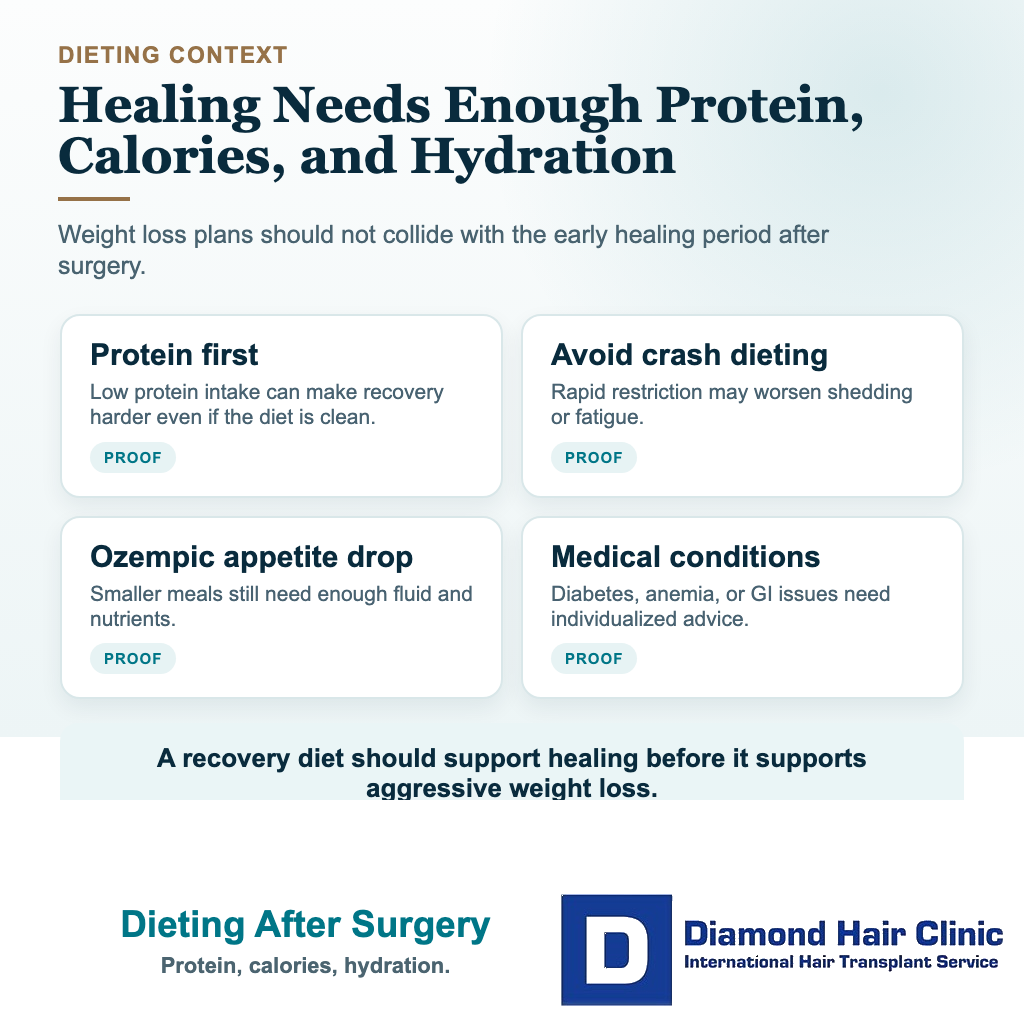
Some people are using GLP 1 medicines such as Ozempic, Wegovy, or similar treatments. The medicine itself does not by itself rule out surgery, but nausea, vomiting, dehydration, rapid weight loss, low protein intake, diabetes, and active shedding all change the plan. Hair transplant while taking Ozempic needs a separate medical decision, not only a food list.
If weight is still dropping quickly, it is better to slow down and understand the hair loss pattern before using donor grafts. Hair shedding from nutritional stress can overlap with genetic hair loss. Operating before that distinction is clear can lead to poor planning, even if the surgery is technically possible.
Coffee, alcohol, and smoking are different from food
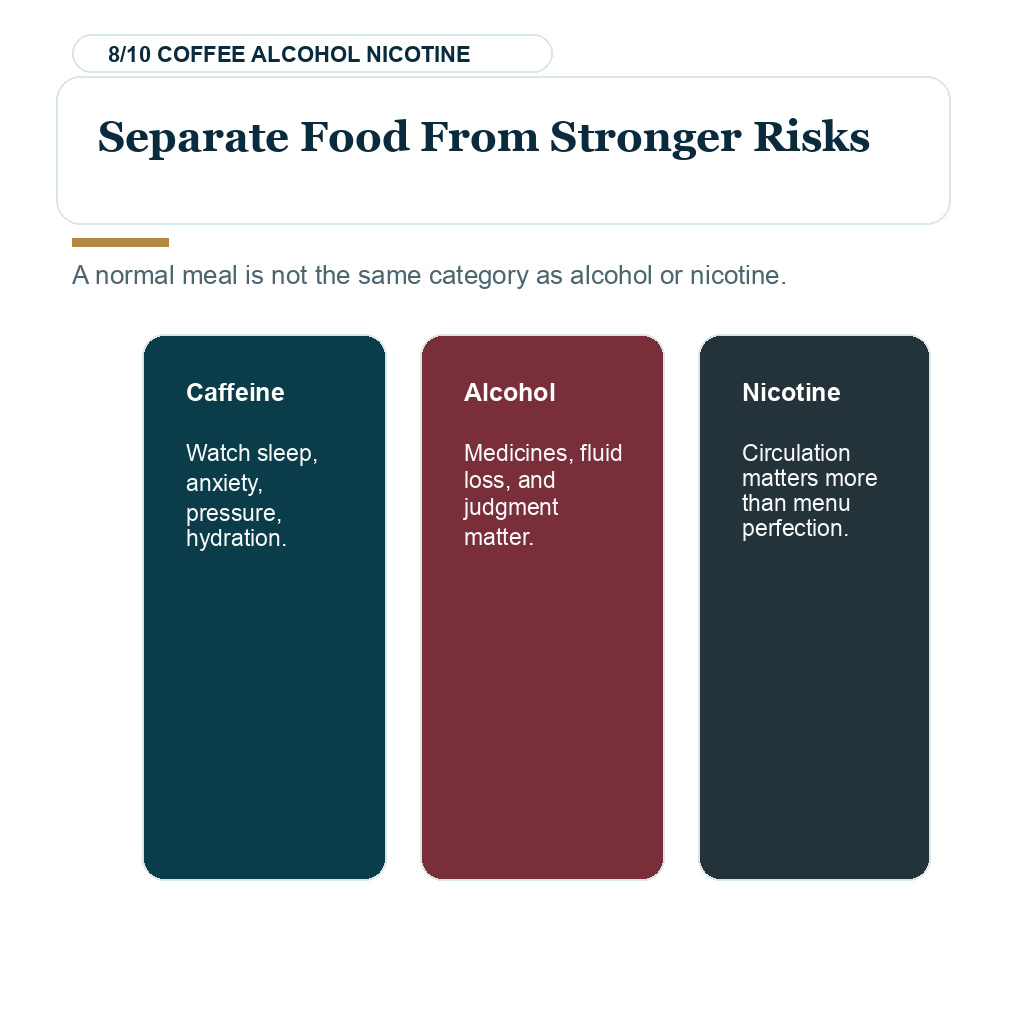
Coffee, alcohol, and smoking deserve separate judgment because they affect recovery in different ways. A normal meal is usually not the same risk category as alcohol, nicotine, or heavy caffeine during the early healing period.
Caffeine can affect sleep, anxiety, heart rate, blood pressure, and hydration habits in some people. One normal coffee after the operation is usually not a disaster, but the first 24 to 48 hours should stay quiet, especially if there is bleeding, dizziness, swelling, or uncontrolled blood pressure. If you are unsure, read the more specific guidance on coffee after a hair transplant.
Alcohol is a bigger concern in early recovery because it can interact with medication, worsen dehydration, weaken judgment, disturb sleep, and make smoking, sweating, vomiting, or rubbing more likely. I separate ordinary food questions from alcohol after a hair transplant because the recovery risk is different.
Smoking and nicotine are different again because they can affect circulation and wound healing. If you are serious about protecting the result, diet should not be used as a distraction from the stronger issue of smoking after a hair transplant. A healthy plate does not cancel repeated nicotine exposure during the protected early period.
Medical conditions can change food advice
Medical background changes diet advice. A healthy person who needs ordinary recovery food is different from someone with anemia, diabetes, kidney disease, gastric surgery, eating restriction, or a history of poor wound healing. In those situations, nutrition is part of medical safety, not just comfort.
Low ferritin or anemia can matter because the body is already dealing with a reduced reserve. If the anemia is significant, unexplained, symptomatic, or connected with active shedding, it is better to understand and correct it before treating the hair transplant as a routine cosmetic plan. That decision is part of low ferritin or anemia before hair transplant.
Diabetes also changes the recovery discussion. Food choices, blood sugar stability, infection risk, wound healing, travel, and medication timing all become more important. A person whose diabetes is controlled may still be a candidate, but unstable blood sugar or poor healing history needs careful medical review. Hair transplant with diabetes should be planned openly instead of hidden or treated casually.
Diet promises from clinics that should make you careful
Be skeptical when a clinic sells food, vitamins, PRP, exosomes, or a supplement package as if it guarantees growth. Recovery support is not the same as a guarantee. If the graft number is excessive, the donor area is poorly judged, the hairline is planned too low, or the surgery is rushed, no nutrition plan can repair those decisions afterward.
A clinic should be able to explain the surgical plan first. Food guidance should then support healing in a reasonable way. If the conversation spends more time selling add ons than examining your donor area, hair loss pattern, medical history, and long term plan, be careful.
The most useful diet advice after surgery is usually not dramatic. Eat enough, drink water, avoid alcohol and smoking, keep the recovery period steady, correct real deficiencies, and ask the clinic if a medical condition or medication changes the plan. That may sound less exciting than a supplement package, but it is more reliable medically and more useful in real recovery.
Food choices should keep the first days steady
Before surgery, make the first meals easy to manage. Plain protein, rice, potatoes, vegetables, yogurt, fruit, soup, and enough water usually help more than a complicated recovery diet.
At home, prepare food before the operation. In a hotel, choose meals that do not make you bend over low tables, carry heavy bags, cook in a rush, or stay out late when the scalp needs quiet.
Food cannot fix warning signs. Nausea that does not settle, dizziness, fever, swelling that worsens, or trouble drinking needs medical review rather than another meal plan. The aim is steady recovery, not a perfect menu.
Read this review excerpt
First wash completed and visual instructions given to my daughter.