


Low Ferritin, Anemia, and Hair Transplant Surgery
A hair transplant may still be possible with low ferritin or anemia, but I do not treat it as a small detail. I look at how low the blood results are, why they are low, whether the patient is actively shedding, whether treatment has started, and whether the patient feels medically well enough for surgery. If anemia is significant, unexplained, symptomatic, or connected with heavy shedding, I correct the medical problem before using donor grafts or setting a density target. Bowel disease can add another reason for review, so patients should also read about Crohn’s disease or ulcerative colitis before a hair transplant. Low ferritin can also confuse the picture in menopause related hair loss before transplant surgery, so it should not be skipped.
That point does not mean every low ferritin result automatically rules out surgery. It means the result has to be understood. A hair transplant is performed under local anesthesia, but it is still surgery. The scalp must heal, the body must recover, and the thinning pattern must be clear enough to separate surgical hair loss from medical shedding. I use that medical review before deciding whether PCOS related hair loss is ready for surgery.
Low ferritin should be visible in the plan, even when you are afraid surgery will be delayed. Delay is easier to accept than using grafts while the cause of shedding or anemia is still unclear. If the body needs treatment first, that time is not wasted. It can make the diagnosis clearer and the hair transplant plan safer. When low ferritin or anemia follows a recent blood or plasma donation before FUE, I want that history visible before donor grafts are used.
Low ferritin matters before a hair transplant
Ferritin reflects stored iron. When ferritin is low, the body may not have enough reserve to support normal hair cycling in a stable way. In some patients, this can contribute to diffuse shedding, reduced hair quality, slow recovery from shedding, or hair that looks thinner than the permanent genetic pattern alone would suggest.
The transplant plan depends on reading the scalp correctly. If the hair is temporarily shedding from low iron stores, illness, weight loss, postpartum recovery, methotrexate related shedding concerns, or another medical stress, the donor and recipient planning can become misleading. The patient may look more bald than the permanent pattern really is, or the native hair may look unstable in a way that changes after treatment. A calorie cut during recovery can make that history harder to read, so dieting during hair transplant recovery belongs in the medical timeline when shedding begins.
I try not to transplant into uncertainty. If the thinning is partly medical and partly genetic, those two pieces must be separated before decisions about the hairline, density, graft distribution, and whether the crown should be touched. Surgery can move grafts, but it cannot correct an untreated medical trigger for shedding.
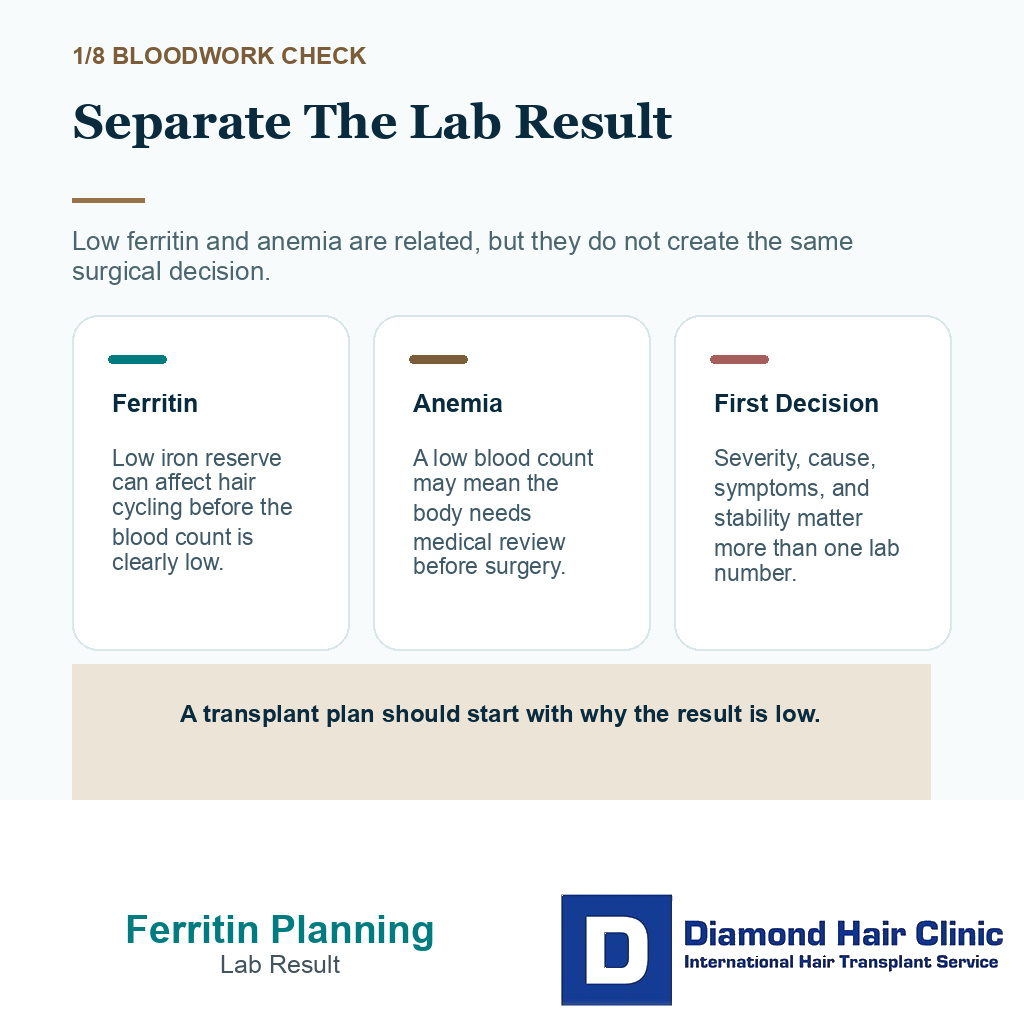
Low ferritin and anemia are different problems
Low ferritin, anemia, low platelets, and low white blood cells before surgery are all blood test concerns, but they are not the same thing. A patient can have low ferritin before the hemoglobin becomes clearly low. Another patient may already have anemia, which means the blood count is affected enough that oxygen carrying capacity and general health need proper medical attention.
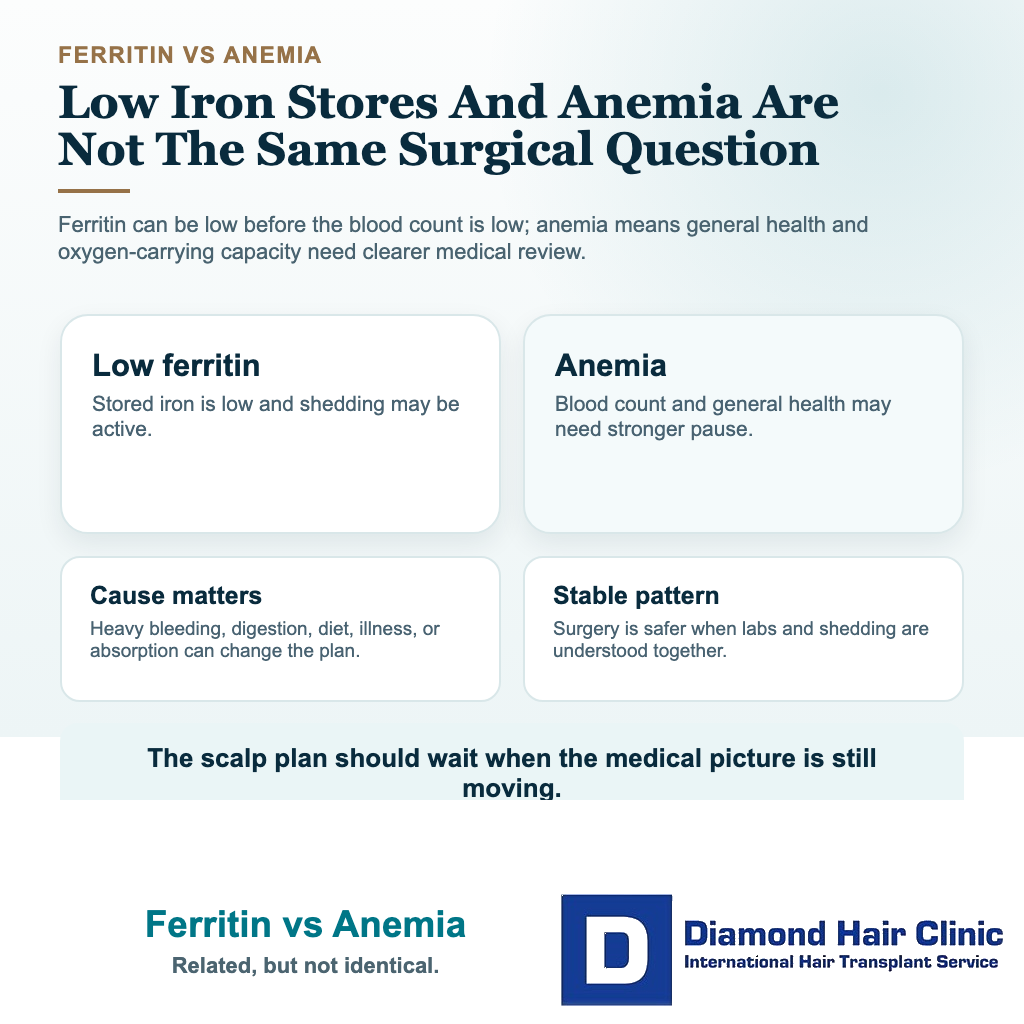
For hair transplant planning, this distinction matters. Low ferritin without symptoms may still require treatment and observation, especially if shedding is active. Anemia may require a stronger pause, because the issue is no longer only about hair. It can involve fatigue, shortness of breath, dizziness, heavy period bleeding before a hair transplant, digestive problems, poor absorption, recent surgery, or another medical cause that must be investigated.
I do not decide this from one number alone. I look at the complete blood count, ferritin, iron studies when available, symptoms, medical history, and the reason the test was done. The patient’s own doctor should manage the iron deficiency or anemia. My responsibility is to decide whether surgery is wise while that condition is present.
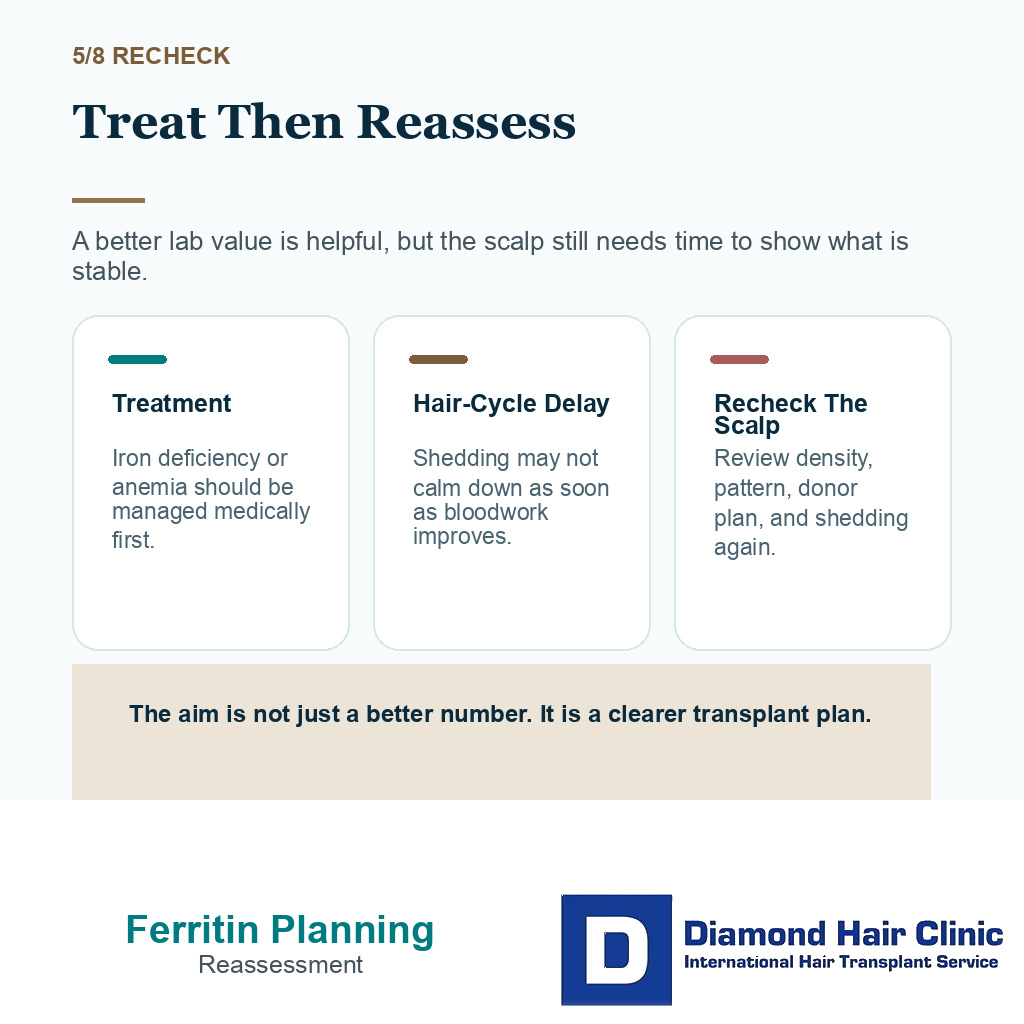
Patients sometimes arrive with one ferritin target they have found online. I do not use that number alone to clear surgery. I separate a better lab value from a scalp pattern that is stable enough to map surgically. Hair often reacts with a delay, so a better ferritin number is not necessarily the same as a stable scalp picture. If the patient is still shedding heavily, I check whether the cause has been treated, whether symptoms are improving, and whether the scalp pattern is stable enough to plan responsibly. A ferritin screenshot without the date, unit, and reference range is easy to misread. The consultation is stronger when the result is tied to symptoms, treatment, and whether shedding has actually slowed.
Delaying surgery is safer when results are unstable
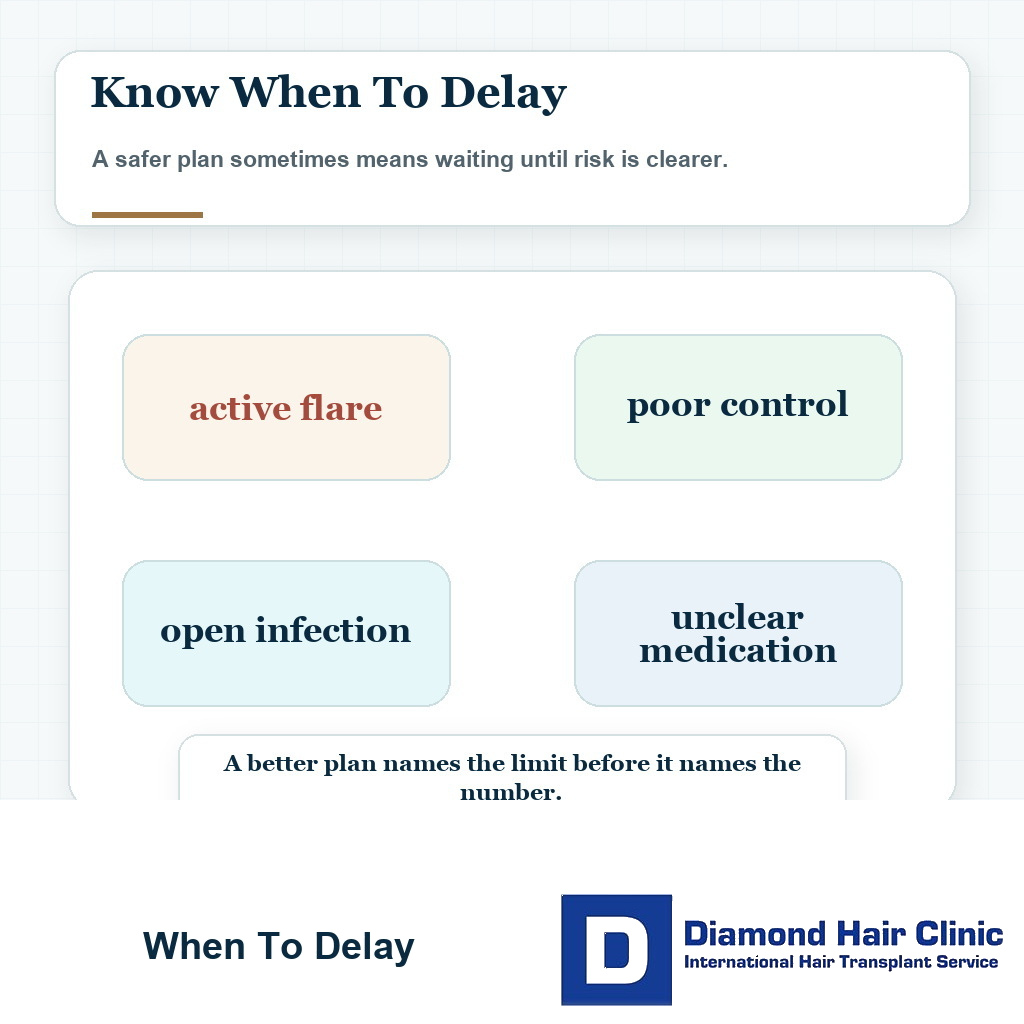
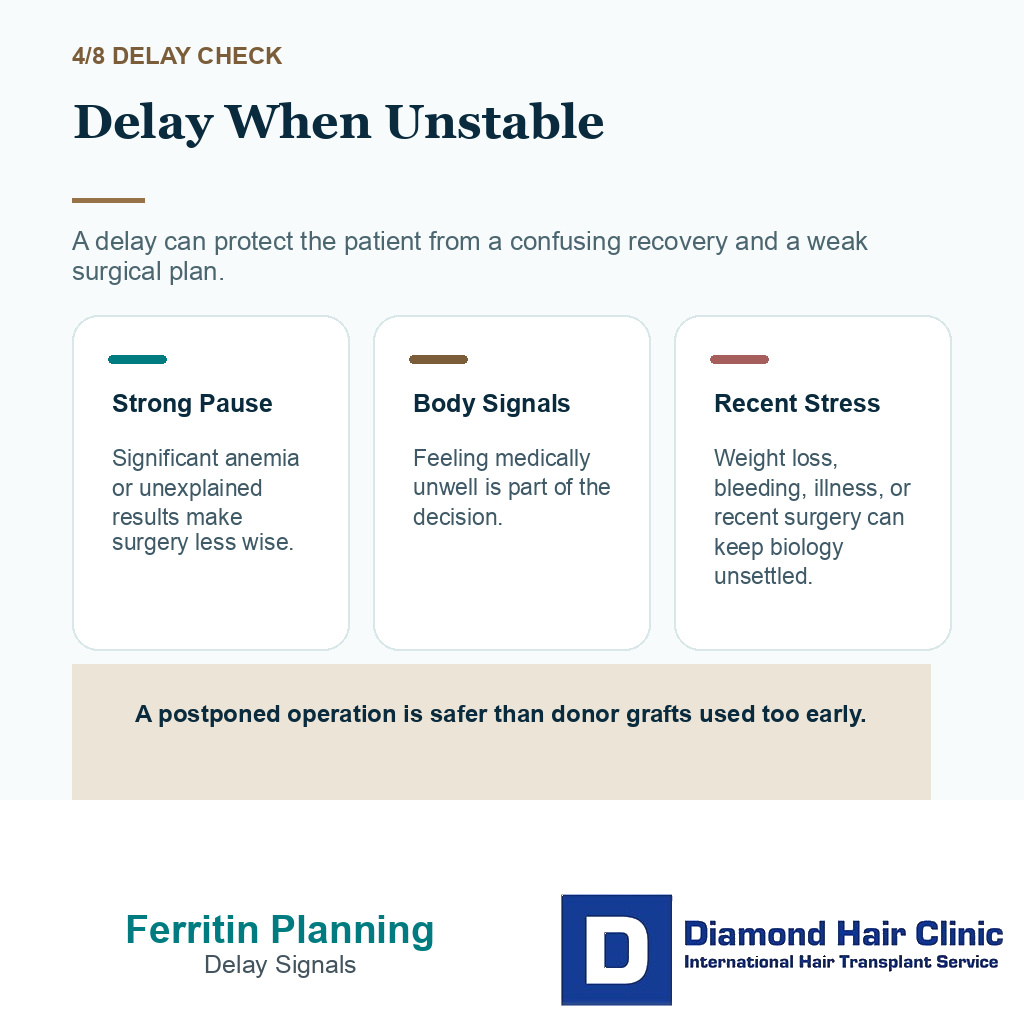
Surgery needs to wait when anemia is significant, when ferritin is very low and the cause is unknown, when the patient is actively shedding heavily, or when the patient feels medically unwell. I also pause if the low ferritin followed major weight loss, heavy bleeding, digestive symptoms, recent illness, or a recent operation that has not been medically stabilized.
Blood work is not bureaucracy. That same clarity matters when a patient uses biotin before FUE, because supplement timing can affect some lab interpretation. A proper review of blood tests before a hair transplant can prevent a patient from using donor grafts before the real reason for shedding is understood.
I pay even closer attention after major weight loss surgery, because ferritin, protein intake, vitamins, and shedding can keep changing during recovery. If several medical factors are moving together, a hair transplant should not be planned as if the scalp is already stable.
Low ferritin does not usually damage grafts directly
Low ferritin usually does not directly destroy transplanted grafts. The bigger question is whether the patient is medically ready, whether the scalp and native hair are in a stable enough phase, and whether the final density will be interpreted fairly if untreated shedding continues.
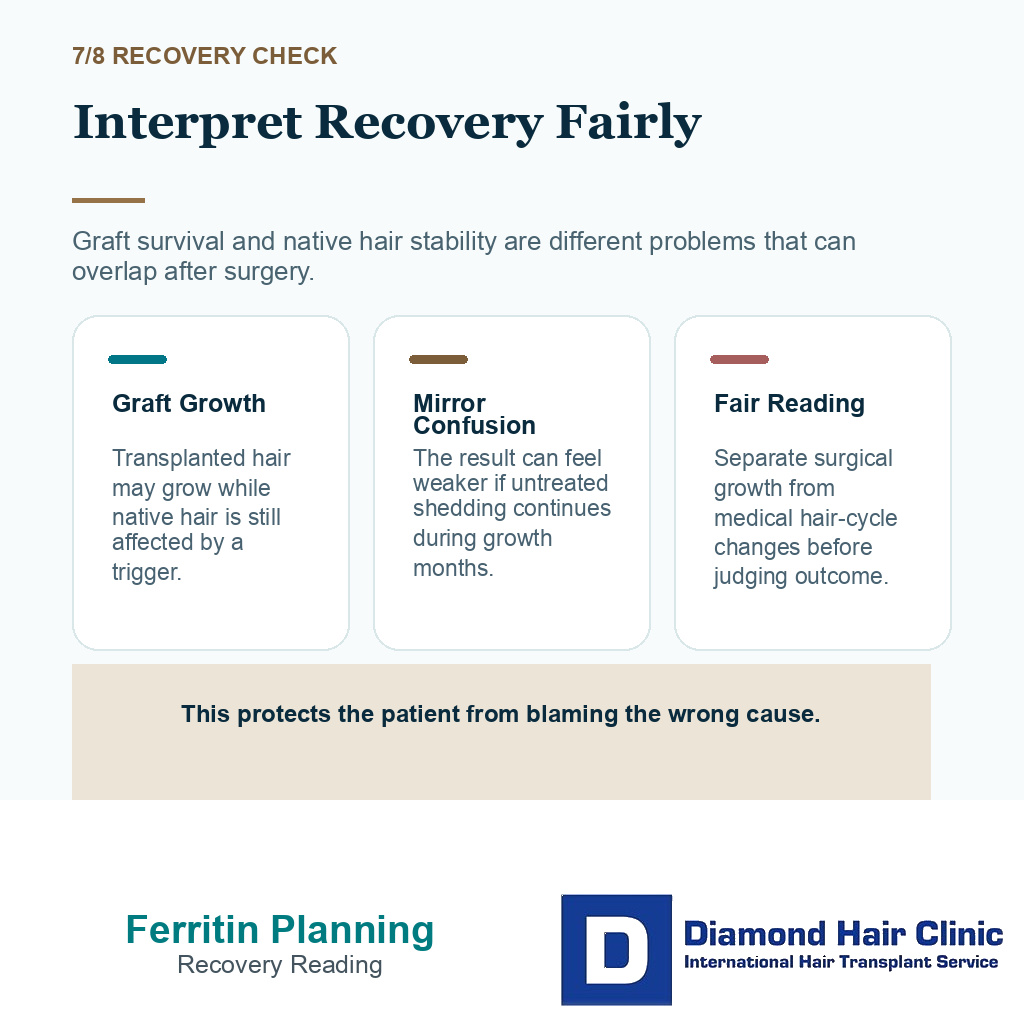
A technically good hair transplant can still feel disappointing if the surrounding native hair keeps shedding during recovery. The transplanted hairs may grow, but the patient may look in the mirror and see less overall coverage because the native hair is still changing. That does not always mean the grafts failed.
I separate graft survival from the hair cycle of the remaining native hair. The operation can be performed well, and the medical hair loss problem can still continue. These are different problems, and they need different explanations.
Low ferritin can confuse the hair loss diagnosis
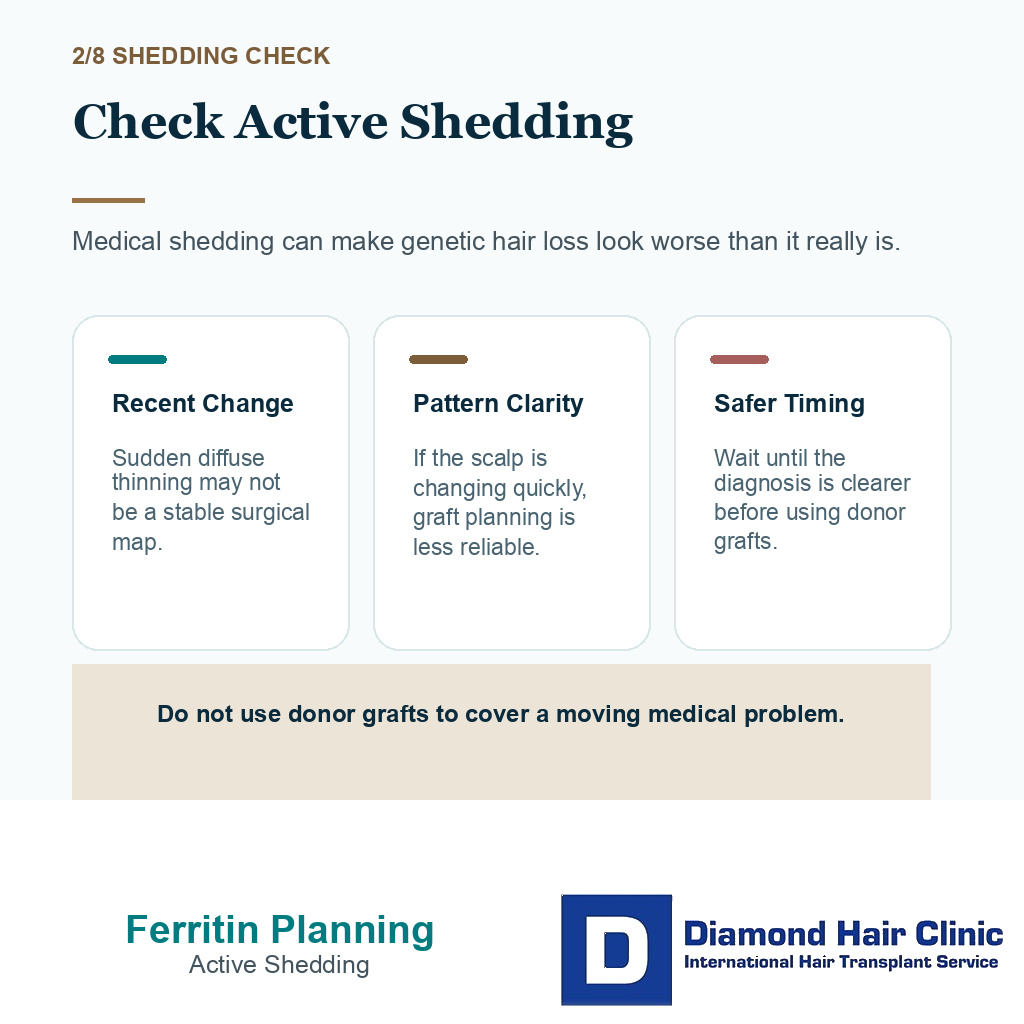
Low ferritin can create diffuse shedding that does not behave like classic male pattern hair loss. The patient may see more hair in the shower, less fullness across the whole scalp, or sudden thinning that does not respect the usual pattern. If I ignore that and only draw a hairline, the plan may look neat on paper but unstable in reality.
I first check whether the hair loss is stable, whether the shedding is recent, and whether the blood result explains part of the picture. A good transplant plan begins with the correct diagnosis. If the diagnosis is unclear, adding grafts can hide the question for a while, but it does not answer it.
Fast weight loss or appetite changing medication can shift nutrition at the same time the patient is trying to plan surgery. If the hair is actively shedding during weight change, the right timing may be different. I use the same timing judgment when a patient is considering a hair transplant while taking Ozempic.
Shedding can continue after a technically good transplant
A transplant moves donor hair into a thinning area, but it does not correct iron deficiency, anemia, thyroid imbalance, illness, or a nutritional trigger. If those triggers remain active, the native hair can keep shedding around the transplanted grafts.
This same distinction matters after chemotherapy, after major illness, and after rapid body changes. A hair transplant after chemotherapy also needs this separation between recovery, temporary shedding, and permanent hair loss. Before planning surgery, I need to know what is temporary, what is permanent, and what surgery can improve.
A patient may think the transplant failed when the real issue is that the surrounding hair continued to change. I try to separate graft growth from native hair instability before surgery, because this affects the expectation of density and the timing of the operation.
Medical causes to review first
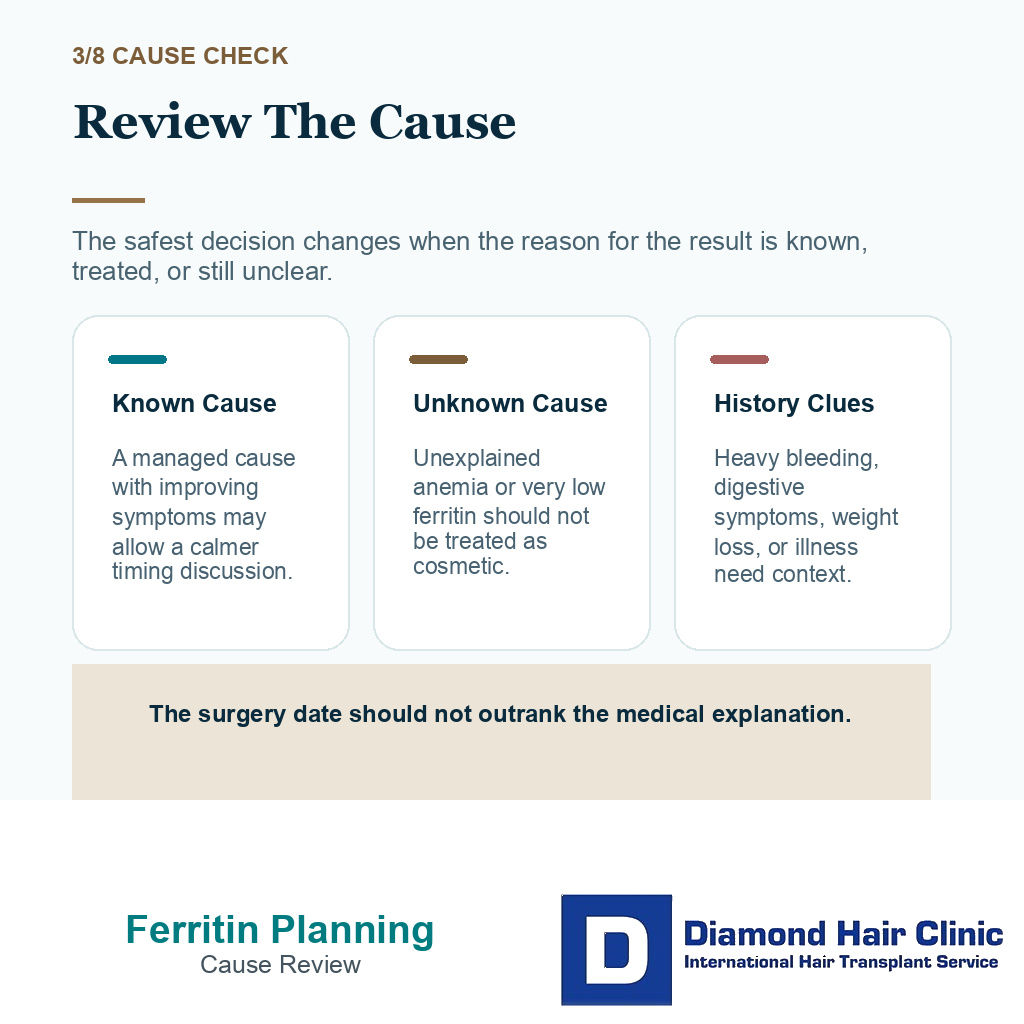
Low ferritin can come from poor intake or restrictive dieting, heavy menstrual bleeding, digestive blood loss, poor absorption, bariatric surgery, chronic inflammation, recent illness, or other medical conditions. A hair transplant surgeon should not guess the cause. If the cause is unknown, the patient needs review by the appropriate doctor before surgery is treated as a cosmetic step.
Unexplained anemia deserves particular caution. In that case, the priority is not keeping the transplant date. The priority is finding the reason for the low blood count, because the cause may matter more than the hair plan.
I ask whether the patient has low vitamin B12, low vitamin D before hair transplant, thyroid disease, poor protein intake, or medication changes. These factors do not all mean surgery is impossible, but they can change the diagnosis and the recovery expectation.
Several triggers at once make the timing less reliable. If the patient is shedding from low ferritin, thyroid imbalance, stress, and rapid weight loss at the same time, the transplant plan should wait until the biology is more stable. Otherwise, the operation may be blamed for a shedding process that was already active.
Ferritin affects hairline and density planning
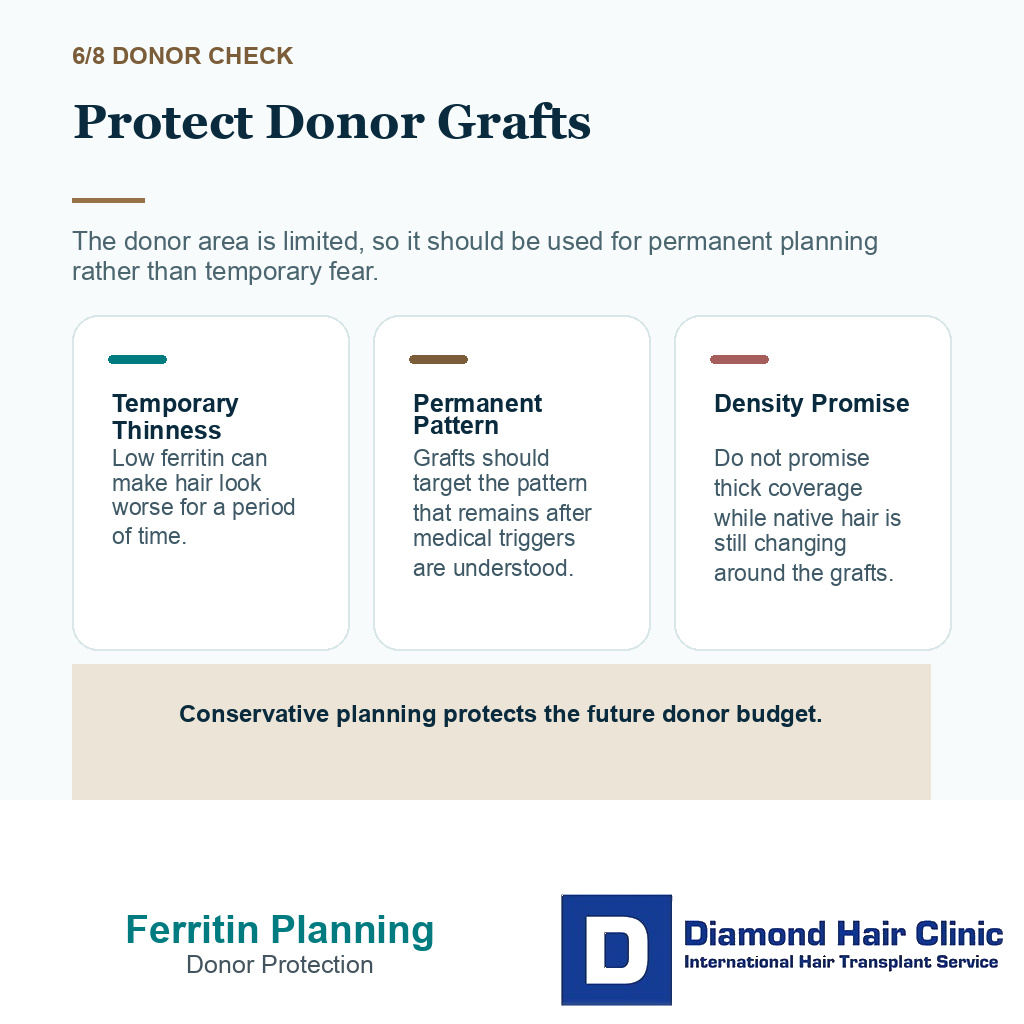
When ferritin or anemia is part of the story, I plan more cautiously around density promises. The transplanted hair may grow, but the surrounding native hair may continue to shed until the underlying issue is corrected. If I promise thick coverage without respecting this, the patient may be disappointed even if the grafts survive.
I also avoid using donor grafts to chase temporary thinning. If a medical problem is making the hair look worse for a period of time, filling every temporarily thin area immediately can waste grafts. The donor area is limited, and it should be used for permanent planning, not panic coverage.
Candidacy matters here. A patient can have visible hair loss and still need medical stabilization before surgery. Being a good candidate for a hair transplant depends on timing, diagnosis, donor capacity, and expectations, not only on whether the patient wants more hair.
Wanting surgery before ferritin improves
Sometimes a patient understands the blood result but still wants surgery quickly. I understand the emotion behind that. Hair loss can feel urgent, especially when the patient has already chosen a date, arranged travel, or waited a long time. But the body does not follow the clinic calendar.
I look at severity, symptoms, the cause, and whether shedding is active. A low number on paper is not the only factor, but it cannot be ignored. If the patient is tired, pale, short of breath, heavily shedding, or medically unstable, surgery should wait. If the issue is mild, explained, already treated, and the hair pattern is stable, surgery may still be considered with proper medical clearance.
Do not start iron on your own just to keep a surgery date. Too much iron can be harmful, so treatment should be guided medically. First find out why ferritin or the blood count is low, treat that cause properly, and then reassess the hair pattern with a clearer medical picture.
The next 8 slides keep iron levels, anemia history, shedding risk, and surgery timing in one place. Swipe across the image, use an arrow, or pick a number below the carousel.
Planning surgery feels reasonable when blood results are stable
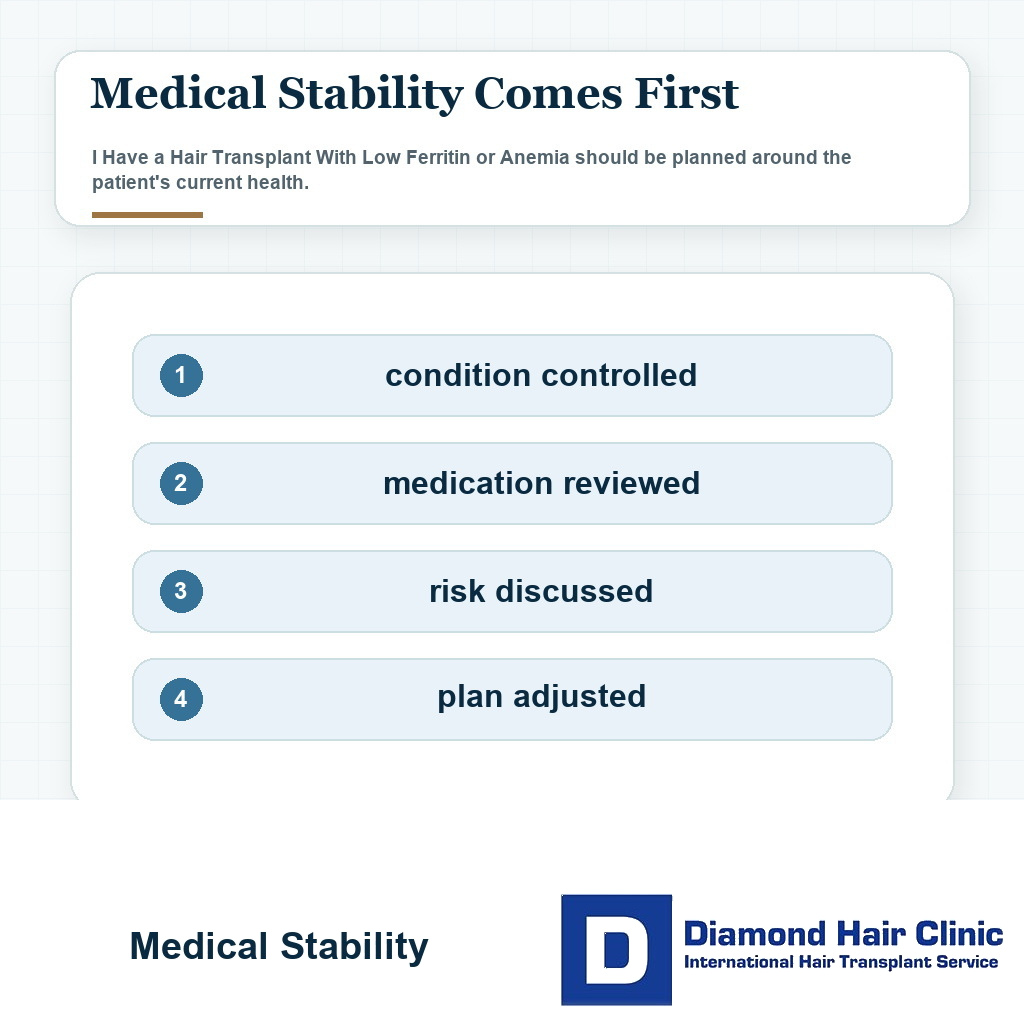
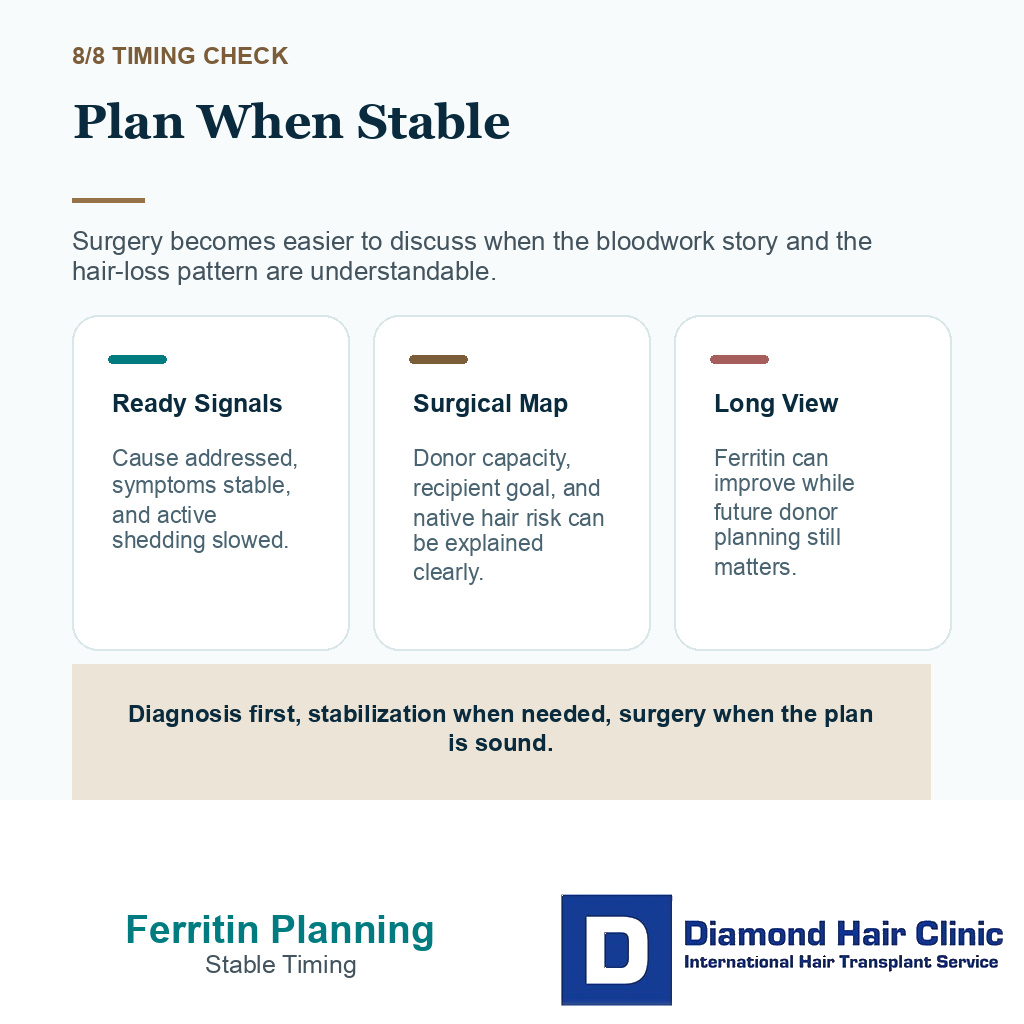
I am more comfortable planning surgery when the cause of anemia or low ferritin has been addressed, the patient is medically stable, active shedding has slowed, and the hair loss pattern is easier to read. The situation does not need to be perfect, but it does need to make sense medically. When clinics disagree, the answer that preserves the appointment is not enough. Resolve the reason for the disagreement, keep treatment with the appropriate doctor, and agree on the evidence needed before surgery can proceed.
If the donor area is strong, the recipient goal is realistic, the medical issue is being managed, and the patient understands that surgery will not correct every shedding trigger, then surgery can become reasonable again. The order is diagnosis first, stabilization when needed, and surgery only when the plan is sound.
The longer view matters as well. Native hair may continue to change even after ferritin improves, so the plan has to leave donor grafts for the future. Low ferritin and androgenetic hair loss can exist together, and the surgical plan should account for both.
My approach to low ferritin or anemia
Bring the blood results and the timeline behind them. A mild, already managed result may only need a straightforward review. A significant or unexplained result may change the plan until the cause is treated.
If iron treatment has started, include the planned recheck date with the result. That shows whether the low ferritin is being followed, not only noticed.
Waiting is better than using donor grafts while the diagnosis is unclear. It protects the patient from a poor plan, a confusing recovery, and density expectations that the body cannot support yet.
With low ferritin or anemia, I want the medical picture to make sense before moving hair. When the cause is clearer and the shedding pattern is easier to read, surgery becomes a more useful decision.
Read this review excerpt
He was very thorough in every little detail and I never felt pressure to do anything I wasn’t sure of.