


Postpartum Hair Loss Needs Stability Before Surgery
Hair transplant surgery is usually premature while postpartum shedding is still active. After pregnancy, many hairs can shift into the shedding phase together. The first problem is usually hair cycle timing, not a lack of donor grafts.
Surgery may become reasonable later, but only after the shedding has settled, the diagnosis is clear, breastfeeding and medication questions have been reviewed safely, and the remaining loss is a stable pattern that grafts can actually improve. For many women, the decision is measured in months, not weeks.
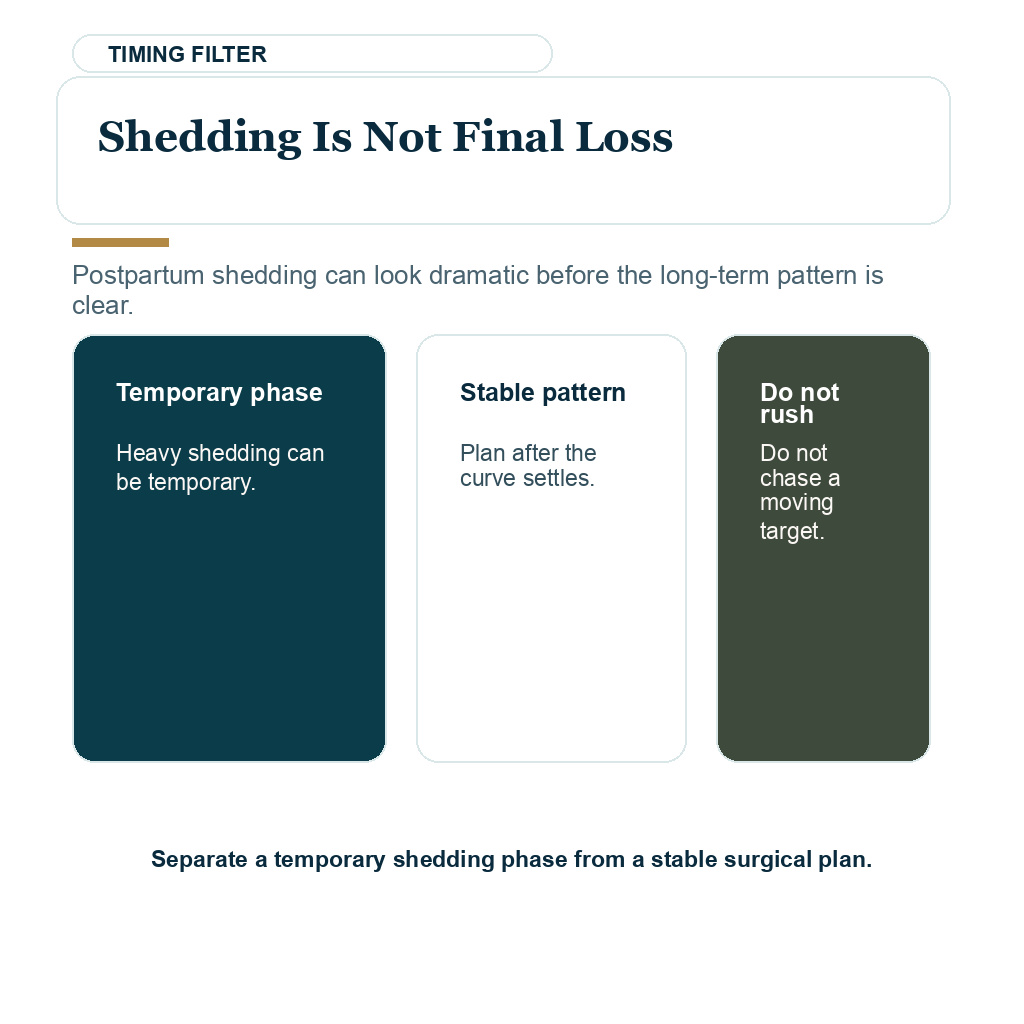
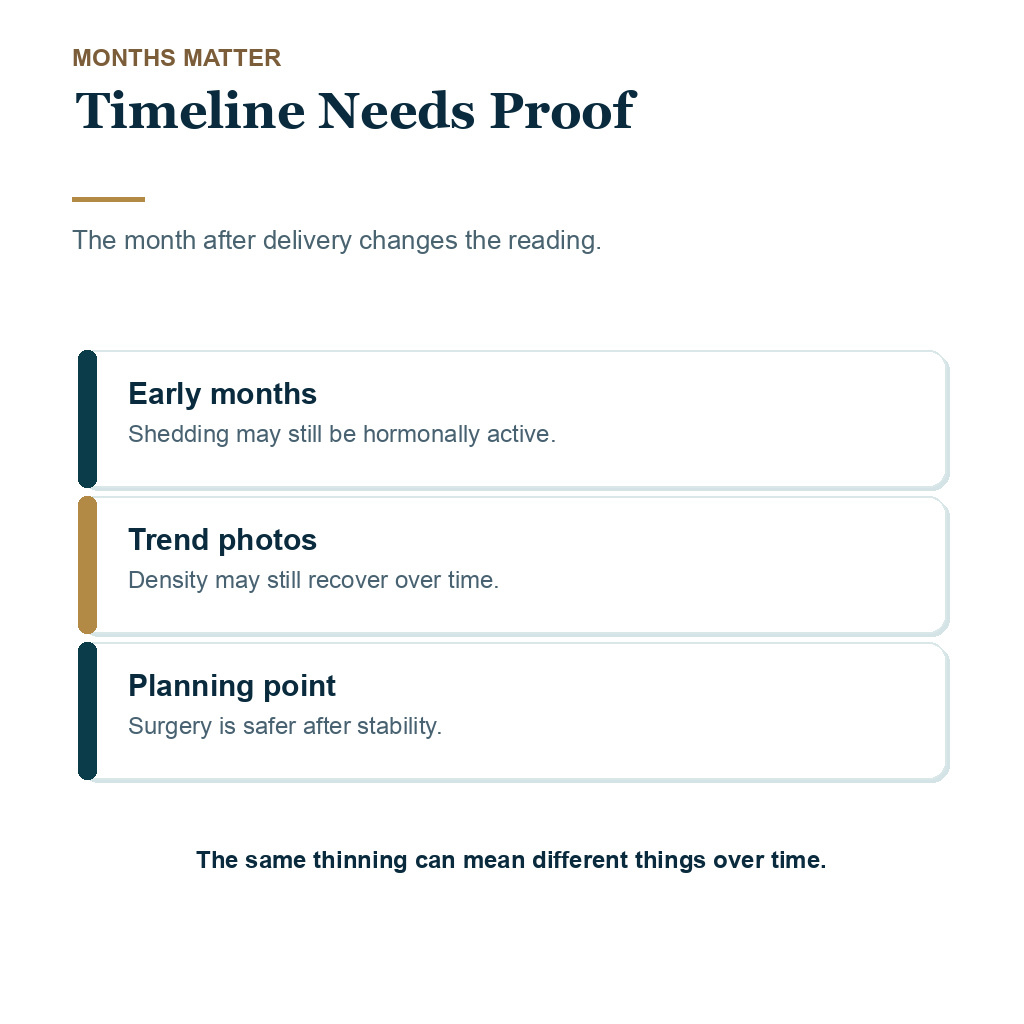
One difficult shedding day should not decide the pattern. After pregnancy, I compare photos across several months to see whether the loss is still moving, returning, or settling into something surgery can improve.
I understand why this feels urgent. Hair in the shower, a wider part, thin temples, or a weaker hairline can make you feel that you are losing the chance to fix it. The safer first step is to separate temporary postpartum telogen effluvium from female pattern hair loss, thyroid or iron problems, PCOS, medication interruption, or a mixture of several causes.
After childbirth, ponytail thinning can be frightening without becoming a surgical target. The important detail is whether the temples, part line, or front frame stay weak after the shedding has settled. That pattern is different from the stress of the worst shedding month.
Postpartum hair loss is different from ordinary hair loss
Postpartum hair loss can be sudden, dramatic, and emotionally heavy, while still being temporary. During pregnancy, higher hormone levels can keep more hairs in the growing phase. After delivery, many of those hairs can move into the shedding phase together. Shedding often becomes noticeable a few months after birth and may look worst around the fourth month.
That timing can look frightening because the change is visible before the recovery is obvious. Short new hairs may appear later around the hairline or part line, but early on you may only see the loss. This is one reason I do not judge the need for surgery from the peak shedding months.
Some cases still need proper review. A woman may already have female pattern thinning, PCOS related shedding, thyroid disease, low ferritin, anemia, autoimmune hair loss, or diffuse thinning before pregnancy. Postpartum shedding can reveal those problems more clearly and make the hairline or part look worse before recovery becomes visible.
Design comes after diagnosis. Female hairline transplant planning is about shape and suitability, while a postpartum case first needs timing, medical context, and stability. If the hair is changing every month, the surgical plan is not reliable yet.
Pregnancy and early postpartum are not surgery windows
An elective hair transplant is not appropriate during pregnancy. It is not an urgent procedure, and pregnancy changes the way the body responds to surgery, medication, swelling, fatigue, and stress. If you are trying to conceive, planning fertility treatment, breastfeeding, or limited by medication safety, review pregnancy, IVF, and hair transplant timing before treating the surgical date as fixed. The safer path is to wait until after delivery, then assess the scalp and general health when the body is no longer in the pregnancy state.
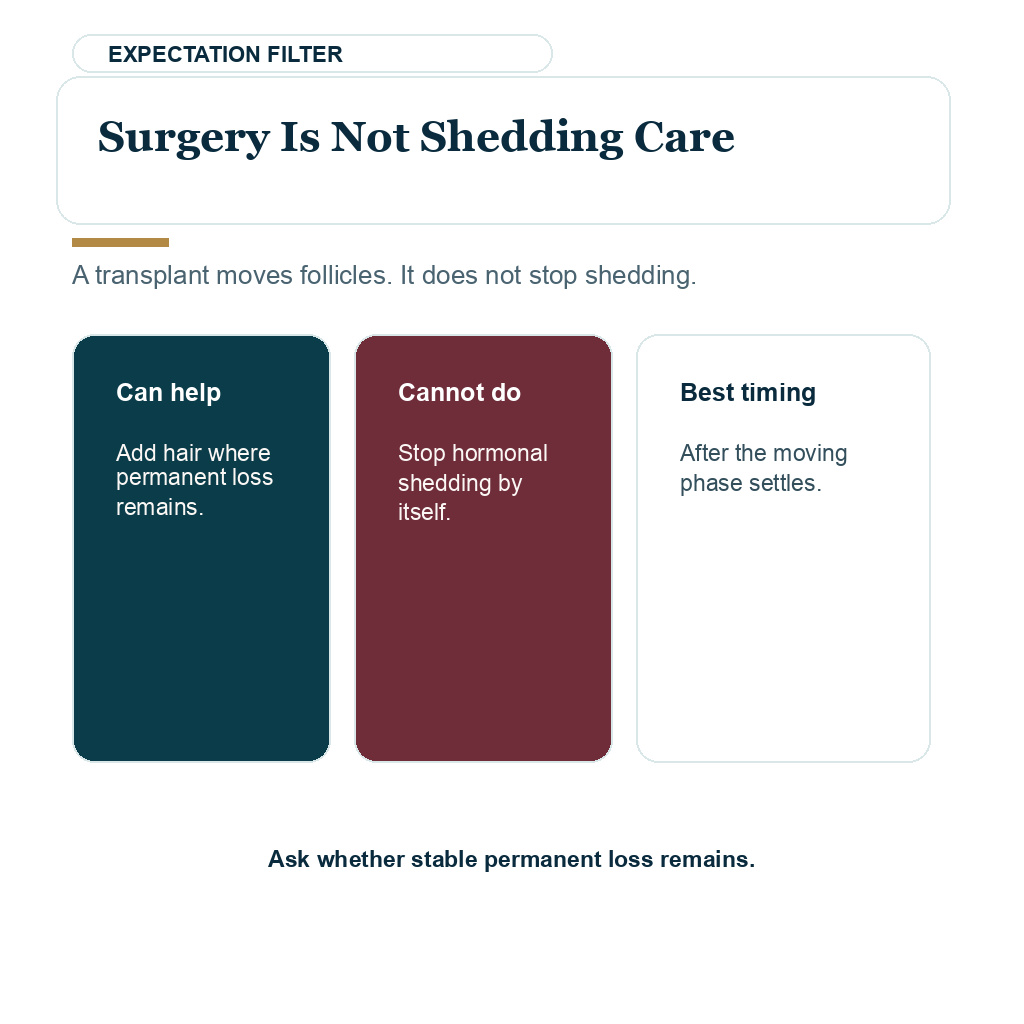
Surgery also needs to wait in the early postpartum months if the shedding is active, diffuse, or unexplained. A transplant moves donor hair into areas that need stable planning. It cannot stop postpartum telogen effluvium, and it cannot make active diffuse shedding predictable. It also cannot replace blood results, medical history, medication review, and a clear diagnosis.
If you are still losing large amounts of hair, the part is changing quickly, or the thinning is spread across the whole scalp, the case belongs closer to diffuse thinning before a hair transplant. Diffuse unstable loss can make surgery look weaker because the native hair around the grafts may continue to change.
Timing depends on shedding stability, not only the calendar
There is no single date that fits every woman, but the shedding needs to settle first and the hair pattern needs to stay stable for several months before graft placement is planned. In many postpartum cases, a serious surgical assessment makes more sense closer to 9 to 12 months after delivery than in the first few months.
Some women need longer. Breastfeeding, sleep deprivation, low ferritin, thyroid imbalance, restrictive dieting, illness, or medication changes can keep the picture unsettled. If the scalp is still changing, waiting is not passive delay. It is how we avoid operating on a moving target.
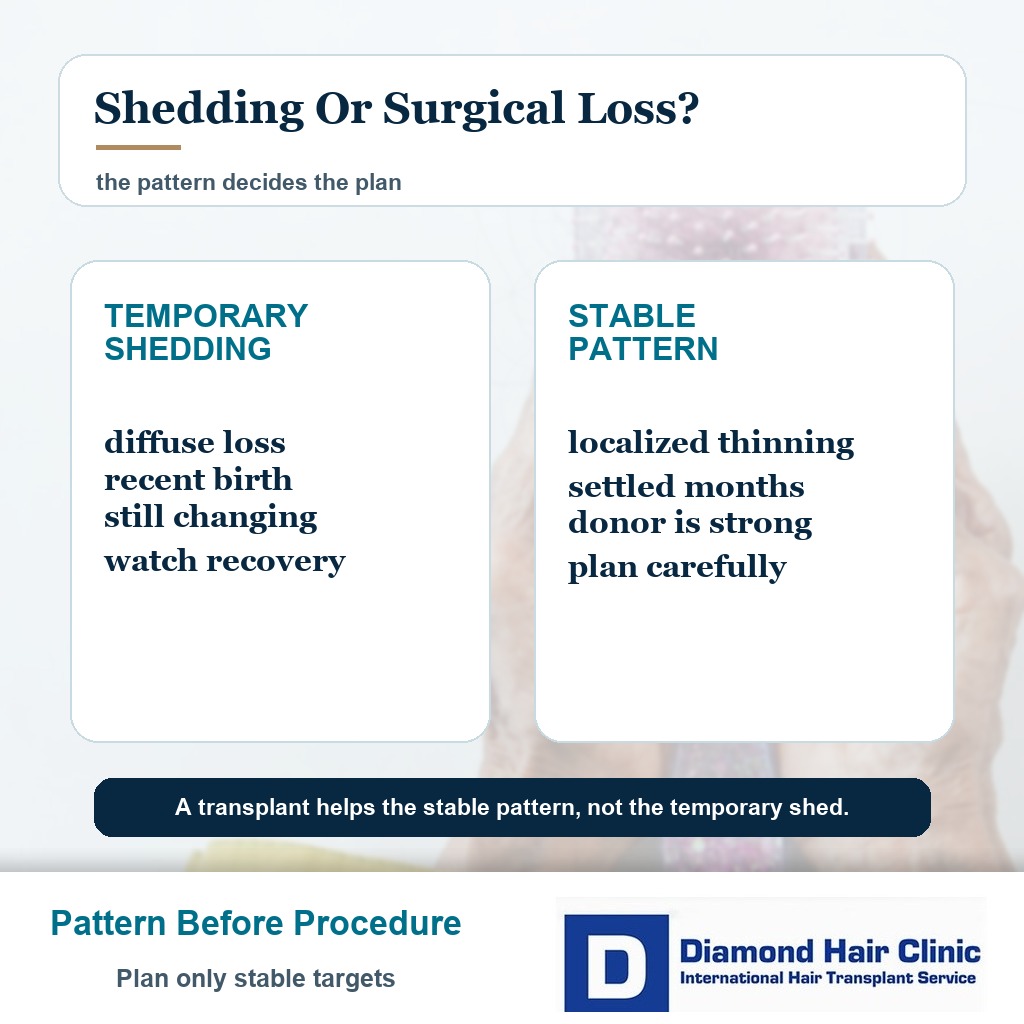
Early shedding is different from stable leftover loss. Early shedding can make the whole scalp look temporarily weaker. Stable leftover loss is different. If, after the shedding settles, the temples, frontal frame, or part line still show a consistent pattern, then the case can be assessed as a possible surgical problem.
Readiness comes from the actual case rather than the calendar alone. The case is more convincing when shedding has slowed, short regrowing hairs are visible, and repeated photographs show a stable part. Blood results, diagnosis, donor strength, and the size of the remaining cosmetic problem must also support surgery.
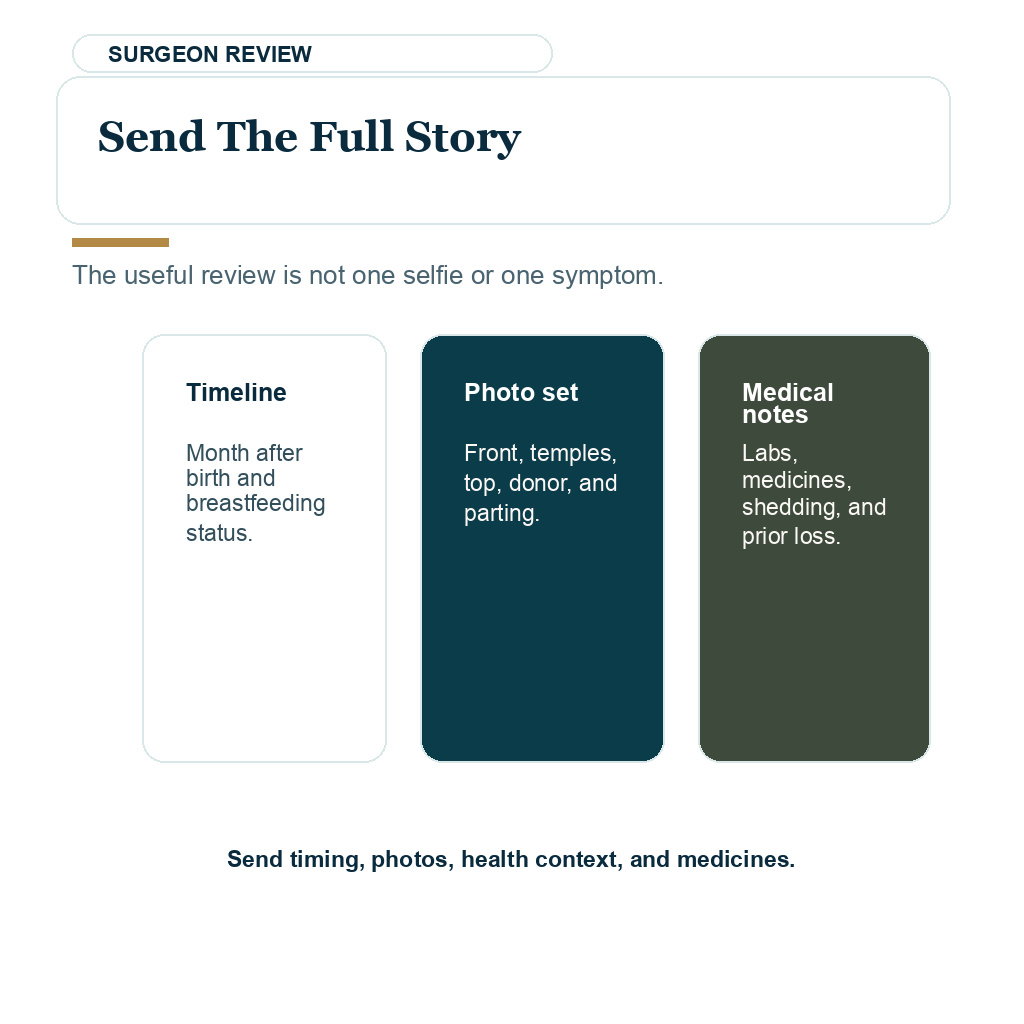
Make those repeated photographs useful. Take front, temples, part line, crown, sides, and donor photos in the same light, with similar hair length and styling when possible. A wet hair panic photo can exaggerate thinning. A consistent monthly set shows whether the part and hairline are truly stabilizing.
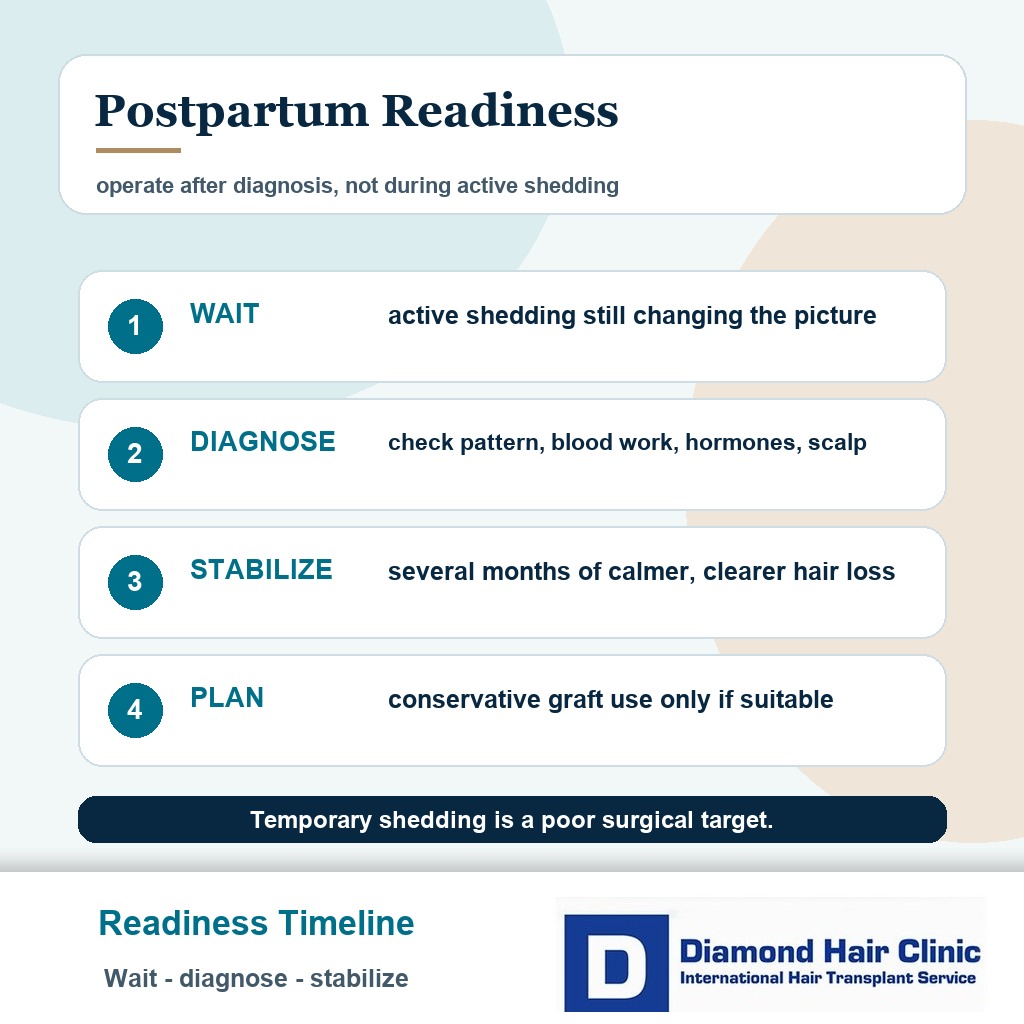
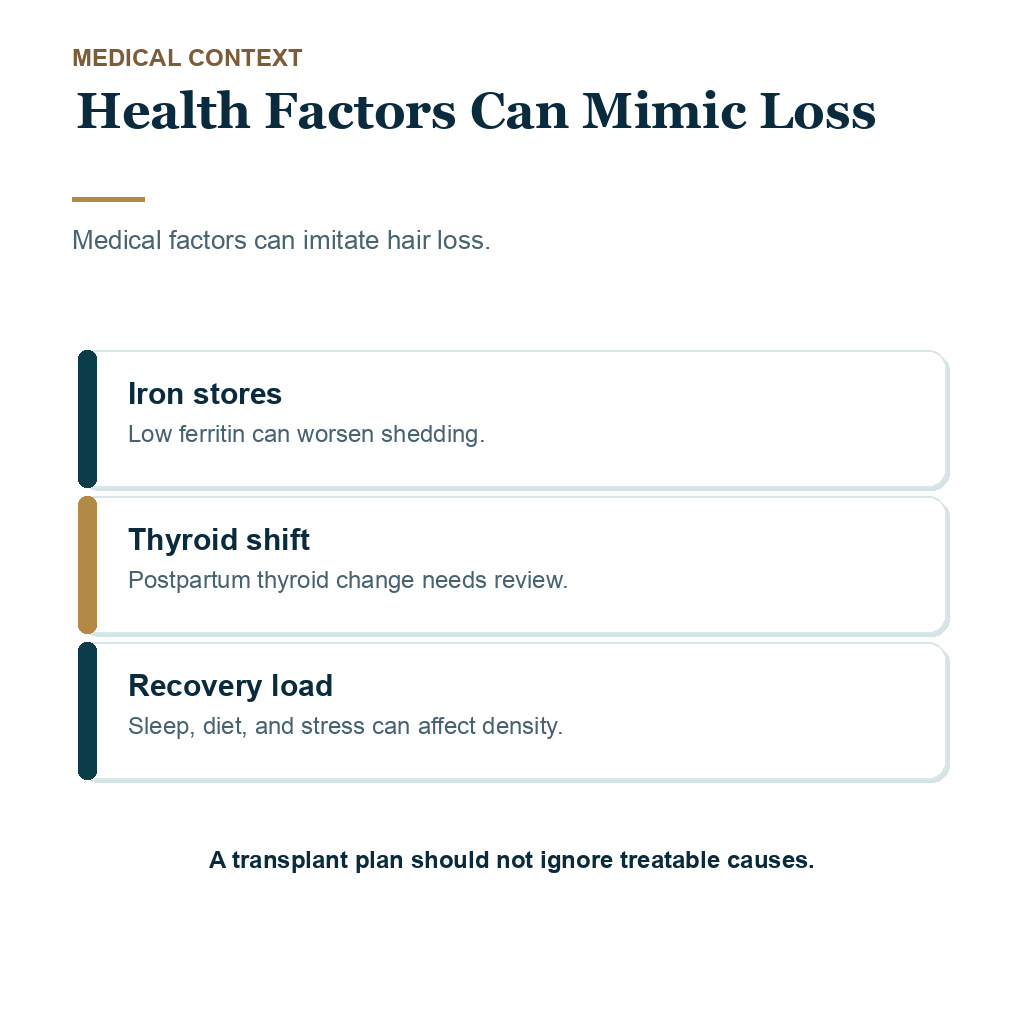
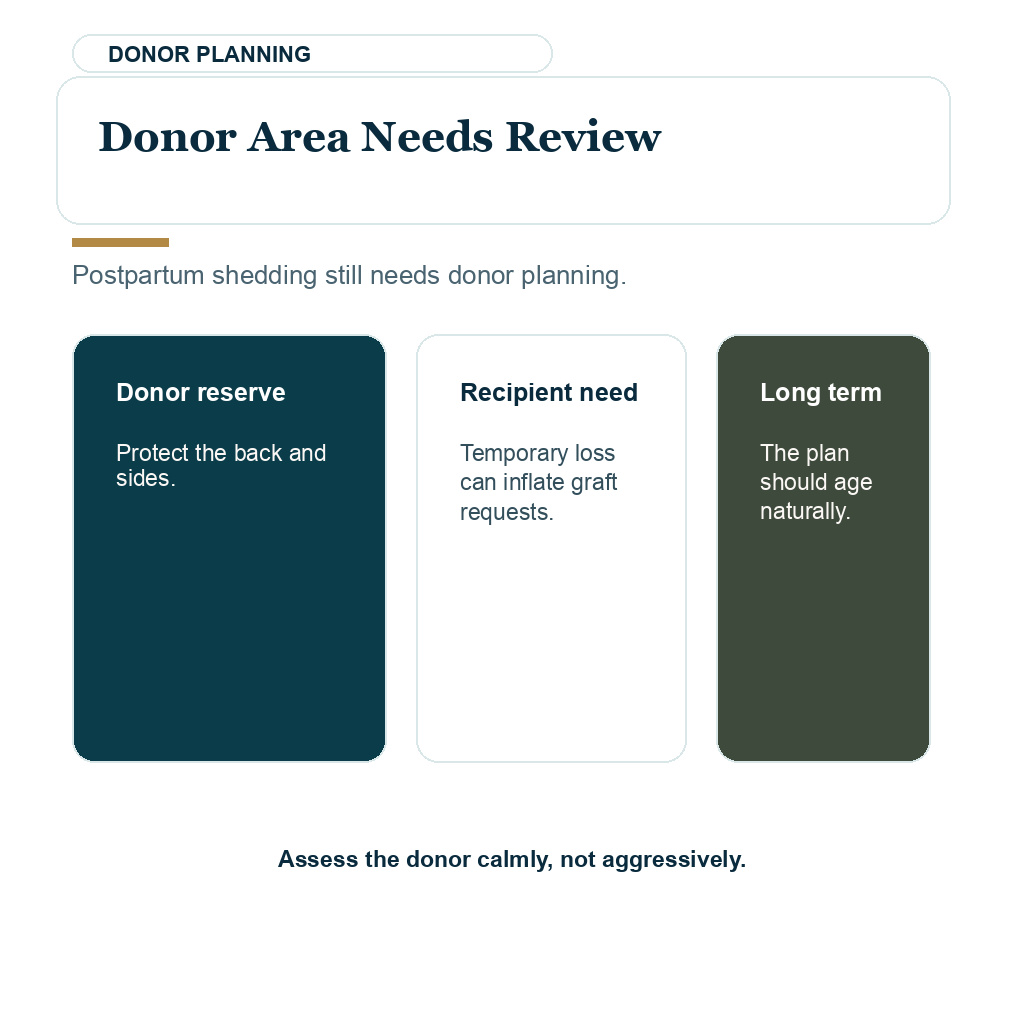
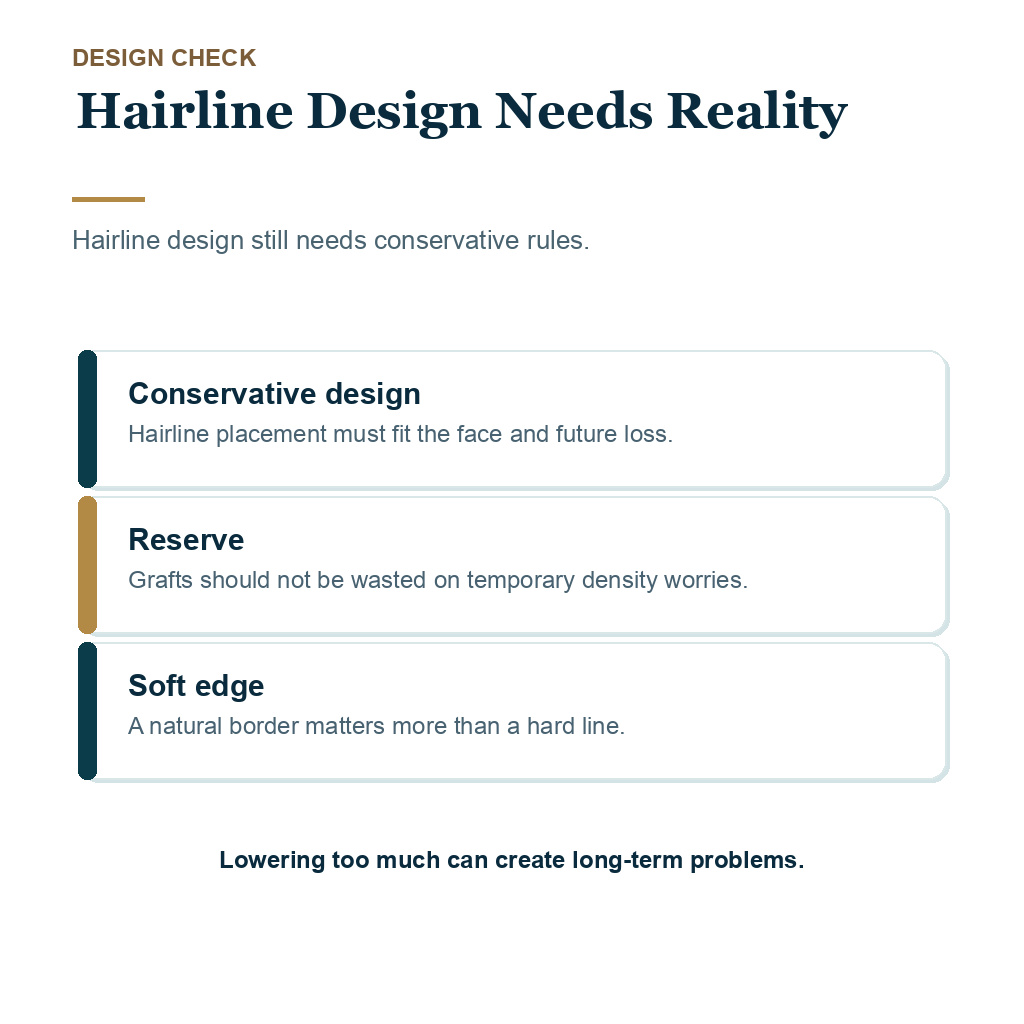
These 10 slides explain why postpartum hair loss needs a stable pattern before a hair transplant decision, including timing, photos, health factors, breastfeeding or medicine context, donor planning, hairline design, and when surgery should wait. Swipe sideways, use the arrows one slide at a time, or choose a number below the image.



Breastfeeding changes the recovery and medication plan
Breastfeeding changes the discussion because surgery is not only about the local anesthetic. Some local anesthetics may be compatible with breastfeeding in many medical contexts, but a hair transplant also involves a long procedure, aftercare products, pain control, possible antibiotics, sleep disruption, travel, and the practical needs of the baby. That full picture should be reviewed, not reduced to one medicine.
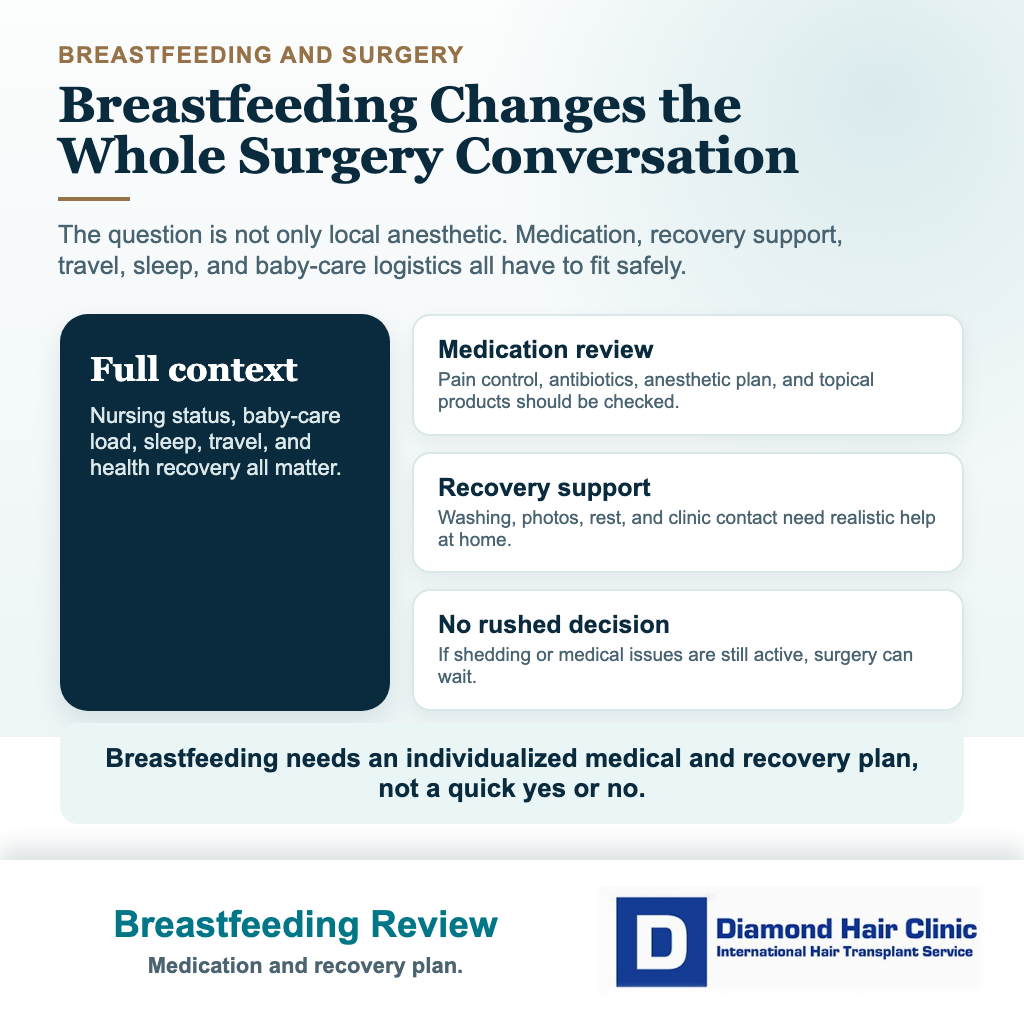
Recovery also needs practical protection. The plan should leave room for rest, help with the baby during the first days, feeding positions that avoid pressure or repeated bending over the grafts, and follow-up that does not feel rushed. Medication questions should involve the obstetrician, pediatrician, or prescribing doctor when relevant.
Breastfeeding can also make the medication conversation feel trapped. Some women cannot restart the treatment they used before pregnancy, or they are unsure what is safe. That concern is real, but do not let it push you into premature surgery. Medication timing can be discussed separately in pages such as minoxidil after a hair transplant or having a hair transplant without finasteride. The postpartum surgical decision still depends on diagnosis and stability.
Another planned pregnancy belongs in the timing discussion even after the current shedding has settled. Pregnancy can change treatment options and bring another period of diffuse shedding, so a patient who expects to conceive soon may prefer to delay a permanent hairline decision. The choice should reflect the diagnosis, family plans, and how stable the pattern has been between pregnancies.
Do not start minoxidil, finasteride, dutasteride, hormone related treatment, or strong supplements during breastfeeding without medical guidance from the doctors responsible for you and the baby. If a treatment was started, stopped, or avoided because of breastfeeding, write down the date and reason so the shedding timeline is not misunderstood.
A partner using topical minoxidil also needs to prevent the baby’s contact with treated skin and residue, even when the breastfeeding parent uses none.
Permanent hair loss needs medical and pattern review
Before calling postpartum loss permanent, the story of the hair loss needs to be clear. The review includes pregnancy timeline, delivery date, breastfeeding status, menstrual changes, medication stops and starts, family history, previous female pattern thinning, weight change, recent illness, surgery, stress, diet, iron status, thyroid status, and any autoimmune or scalp disease history.
The pattern matters too. Heavy shedding from the whole scalp, a widening part, temple recession, and a weak hairline before pregnancy do not point to the same decision. Old photographs are useful here because they show whether the hairline, part, or temples were already changing before pregnancy.
Blood work can matter. Low ferritin, anemia, thyroid changes, vitamin D deficiency, and other medical issues can contribute to shedding or delay recovery. These findings do not rule surgery out by themselves, but they need to be understood before donor grafts are used. Untreated iron deficiency or unstable thyroid levels can make transplant planning less reliable.
Send full blood test reports with dates and reference ranges, not only one screenshot. CBC, ferritin or iron status, thyroid markers, vitamin D if checked, and any result linked to heavy bleeding, fatigue, restrictive dieting, or breastfeeding nutrition can change the timing discussion.
A postpartum hair loss plan is safer after medical causes such as low ferritin or anemia and thyroid disease have been separated from a pattern that can be improved surgically.
Female pattern hair loss can be unmasked after pregnancy
If there was already a widening part, temple thinning, weak frontal density, or a family history of female pattern hair loss before pregnancy, postpartum shedding may reveal the older problem more clearly. Pregnancy can temporarily make the hair feel fuller, then the postpartum shed can expose thinning that was already developing underneath.
In this situation, the final transplant plan is not reliable during the peak shedding months. The decisive issue is what remains after the temporary shedding settles. If the remaining loss is stable and localized, a conservative transplant may help. If the thinning is still diffuse, rapidly changing, or dependent on medication decisions that are not yet settled, surgery needs to wait.
Thin temples or hairline after one year need diagnosis first
If the temples, frontal hairline, or part still look thin around one year after delivery, I no longer treat the question as ordinary early postpartum shedding alone. At that stage, comparison photos, scalp examination, donor assessment, and diagnosis have to come first. Grafts only make sense if those findings show a stable, localized problem.
The key distinction is pattern. A localized temple or frontal hairline weakness that stayed stable after the shedding settled may be suitable for surgery. A whole scalp that still sheds heavily, a widening part that keeps changing, or a donor area that looks weak is a different problem.
Temple thinning also needs a traction and breakage check. Tight buns, extensions, postpartum styling changes, aggressive brushing, and repeated tension around the hairline can mimic or worsen temple loss. If the hairline has broken short hairs, soreness, scaling, or traction marks, the treatment plan should not jump straight to graft placement.
For women, the design must stay soft and conservative. A transplant must not create a heavy artificial border to compensate for diffuse thinning behind it. If surgery becomes reasonable, the plan needs to fit the face, hair caliber, part line, and future thinning risk. In that decision, natural hairline design matters more than simply adding density.
Transplant can help only after shedding has settled
A hair transplant can help when the temporary shedding has ended and the remaining problem is stable, localized, and suitable for surgery. This may be a weakened frontal hairline, temples that did not recover, a visible female pattern recession, or a defined area where donor grafts can improve framing without creating an artificial border.
The plan needs to stay conservative. Female hairline work needs softness, irregularity, correct hair direction, and respect for facial proportions. It must not copy a male hairline design. It cannot chase the lowest possible line. It must not use grafts in a way that ignores future thinning behind the transplanted area.
Density expectations also need careful judgment. If the existing hair is fine, miniaturized, or diffusely thinning, grafts may improve the appearance but cannot make the entire scalp immune to future change. The donor area has a limit, and grafts should be used where they can create the most natural long term value.
Surgery is weak when the diagnosis is unstable
Surgery can give a poor result if it is done while shedding is still active, if the diagnosis is wrong, or if diffuse loss makes the donor area unreliable. It can also disappoint when the visible thinning is mostly temporary postpartum telogen effluvium, because the hair may have improved without using grafts.
A weak plan may fill the wrong area. If the part looks wide during active shedding, placing grafts into that area too early can miss the real future pattern. If the front looks thin because the whole scalp is shedding, building a new hairline can create contrast later if the hair behind it continues to thin.
Some cases need medical treatment, observation, or a second diagnosis before surgery. If the first consultation feels rushed or the clinic does not examine the donor area, diffuse thinning, postpartum timeline, and medical history, a second opinion before a hair transplant can protect the donor area and avoid a premature decision.
Female donor area needs careful checking after pregnancy
Everything depends on the donor area, but in women it cannot be judged only by how dense it looks at first glance. The examination needs to check miniaturization, diffuse thinning, instability, hair caliber, scalp coverage, and whether the donor hair is truly strong enough to create a natural improvement elsewhere.
Postpartum shedding can make this judgment harder. The donor area may appear thinner during a temporary shedding phase. If that change later recovers, early surgery may have underestimated the donor. If the donor is truly miniaturizing, early surgery may have overestimated it. Both mistakes can damage planning.
The broader candidacy question belongs with female hair transplant candidacy. In a postpartum case, candidacy means you are medically well enough, the shedding pattern is stable enough, the donor is reliable enough, and the expected improvement is worth the grafts.
Waiting time should be used for evidence and medical review
Waiting does not mean doing nothing. It means using the time to make the later decision safer. Take clear monthly photographs in the same light. Record when shedding started, whether it is slowing, and where thinning is most visible. Ask your doctor about blood work if shedding is severe, prolonged, or accompanied by fatigue, heavy bleeding, dietary restriction, thyroid symptoms, or other health changes.
Do not start or stop hair loss medication during pregnancy or breastfeeding without medical guidance. Products that are routine for one person may not be right for another during this period. If treatment is needed, coordinate it with the doctors responsible for the pregnancy, breastfeeding, and general health picture.
Be gentle with the hair while the diagnosis becomes clearer. Tight hairstyles, aggressive brushing, repeated scalp massage, harsh styling, and panic supplement stacking are not the same as treatment. They can add breakage, irritation, or confusion while the hair cycle is already unsettled.
Some women also have PCOS, autoimmune disease, or previous treatment interruptions that shape the decision. With PCOS and hair transplant planning, hormonal pattern and stability matter before grafts are considered. After chemotherapy, finishing the major medical event is still different from being ready for surgery.
Postpartum surgery should be chosen from stability, not fear
The postpartum period can make hair loss feel urgent, but urgency is not the same as readiness. A transplant is valuable when it is planned for the right diagnosis at the right time. It is a poor use of donor hair when it is used to chase temporary shedding, unclear diffuse thinning, or a pattern that is still changing.
If your shedding is new, heavy, and only a few months after delivery, start with diagnosis, photographs, medical review, and time. If the shedding has settled and a stable hairline or pattern problem remains, then surgery can be discussed with better judgment. This respects the distress while protecting your donor hair from a procedure that may not solve the real cause of thinning.
A postpartum hair transplant decision needs to be medically clear, not rushed by fear. Readiness is not measured only by whether grafts can be placed. The body, diagnosis, donor area, breastfeeding plan, and future hair loss pattern all need to support a surgical plan that will still make sense years later.

Read this review excerpt
Every single one of my questions was answered and they made sure I had all the details I needed to make an informed decision.