


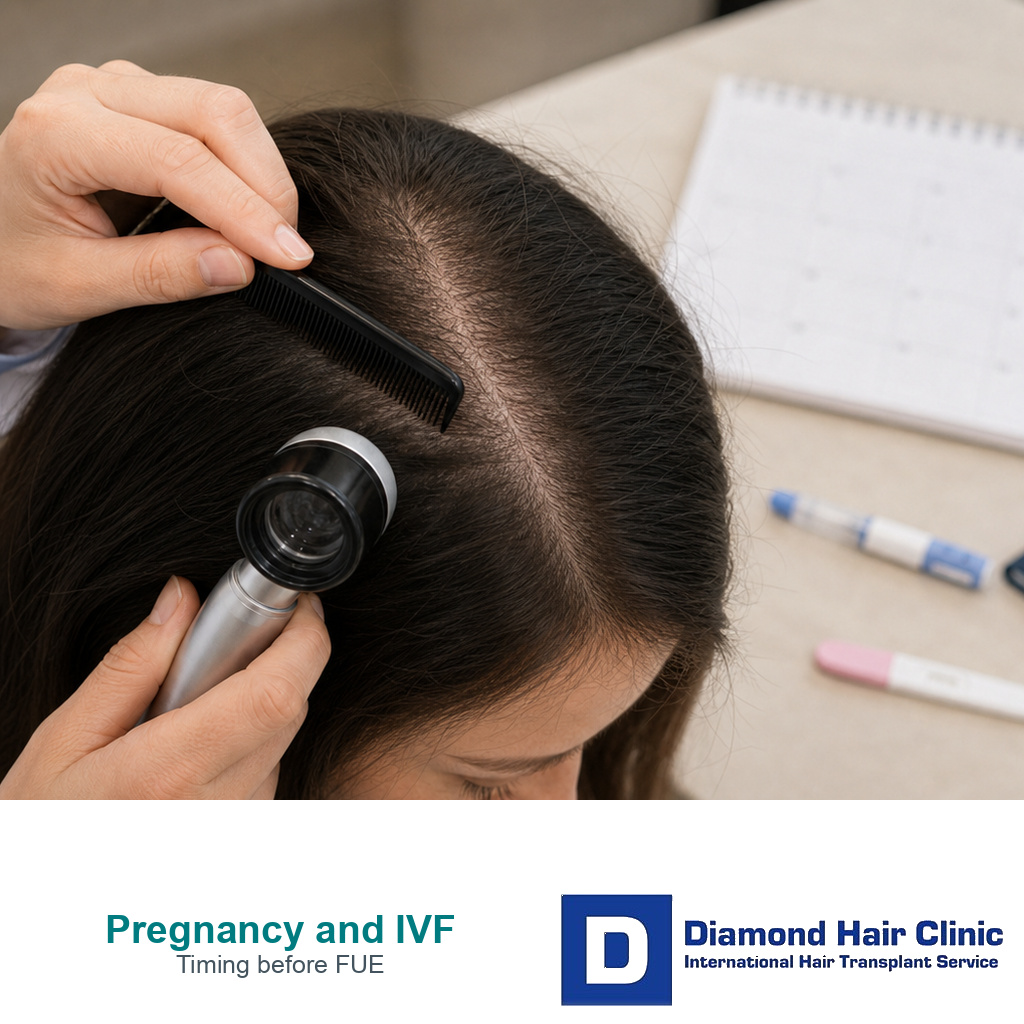

Diagnosis comes before grafts
Female hair loss can look straightforward in a mirror photo and still be medically complex. A wider part, thinner temples, reduced ponytail volume, or a weaker frontal frame can come from female pattern hair loss, postpartum telogen effluvium, PCOS, thyroid disease, low ferritin, menopause related change, medication shifts, traction, or a mixture of several causes.
A transplant moves donor hair. It does not treat every cause of shedding. If the hair is falling because the hair cycle has been disturbed by childbirth, fertility treatment, illness, low iron, thyroid imbalance, dieting, or medication changes, grafts can be placed into a scalp that is still changing. That is how a technically clean surgery can still answer the wrong problem.
Using grafts before the diagnosis is clear can spend permanent donor capacity on a temporary or unstable problem. I treat PCOS and hair transplant planning, menopause hair loss, and telogen effluvium before surgery as diagnosis first problems.
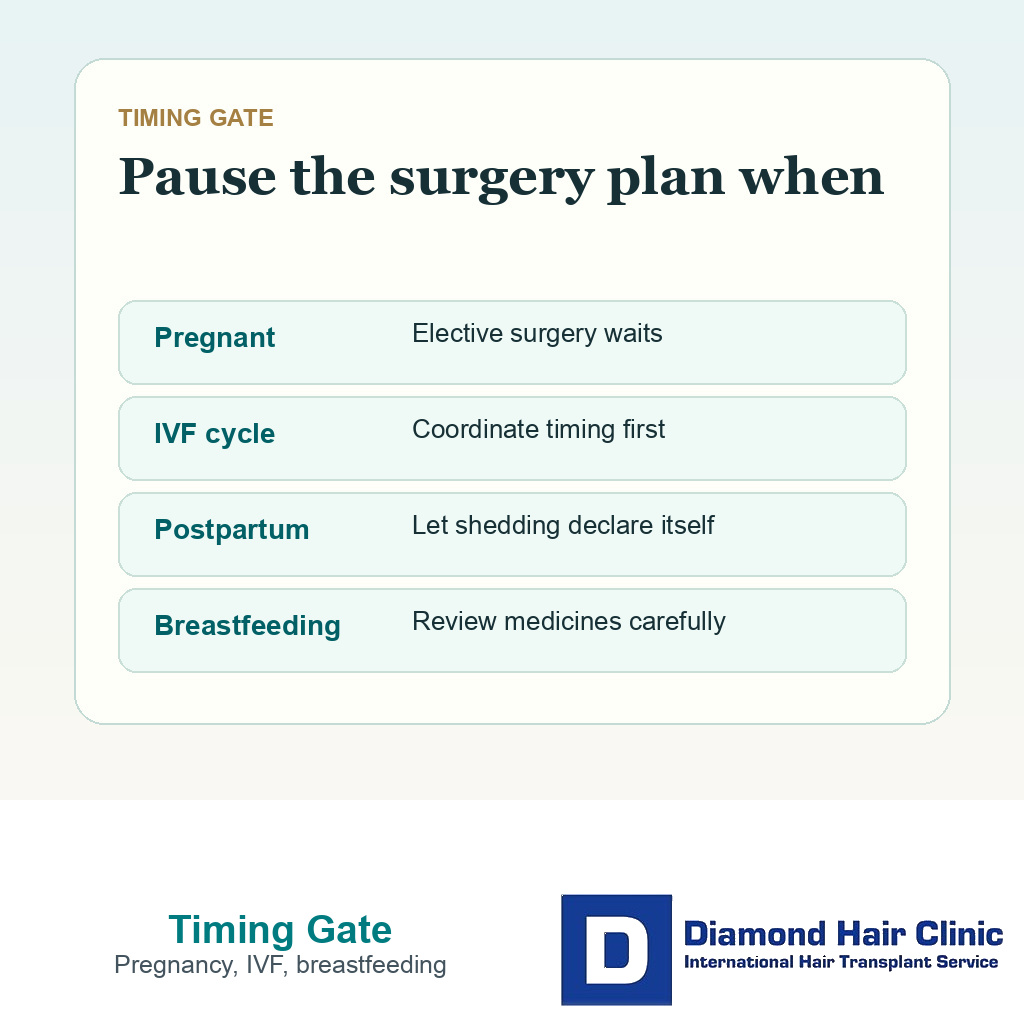
The timing decision changes if the patient is pregnant, preparing for IVF, breastfeeding, or still shedding after delivery.
Postpartum shedding and the picture
Postpartum shedding can look frightening. Hair in the shower, hair on the pillow, a thinner part, or weaker temples can make a woman feel that she needs to act quickly. But heavy shedding after delivery is often a hair cycle event before it is a surgical target.
The peak shedding months are not the same as the final baseline. Many women notice shedding months after delivery, not immediately, and the peak can feel more dramatic than the stable pattern that remains later. If surgery is planned during that low point, the plan can become too aggressive, or it can target an area that may partially recover.
When the shedding follows delivery, hair transplant after postpartum hair loss needs its own timing discussion. This pregnancy and IVF page is broader because it includes trying to conceive, fertility treatment, pregnancy, breastfeeding, medication limits, and the diagnosis that comes before the surgical decision.
Medication questions that need to be settled first
Medication is one of the main reasons this is not a simple booking question. Minoxidil, oral minoxidil, finasteride, dutasteride, anti androgen treatment, hormonal contraception, fertility medications, thyroid medicine, iron treatment, and supplements can all affect the timeline or the interpretation of shedding.
Some medicines are useful for the right person at the right time. That does not make them suitable during pregnancy, while trying to conceive, during IVF, or while breastfeeding. Do not start, stop, or restart minoxidil, finasteride, dutasteride, spironolactone, or any anti androgen treatment in panic. The fertility doctor, obstetric doctor, pediatric doctor when breastfeeding, or prescribing physician needs to be part of that decision.
Sperm, partner pregnancy, and IVF timing still need a medical conversation when finasteride or dutasteride is part of the hair plan. The prescribing doctor and fertility team should know what you use, why you use it, and whether stopping it would change your hair loss stability before a surgery plan is built.
The transplant side includes medication before hair transplant surgery, minoxidil after a hair transplant, oral minoxidil before or after surgery, and finasteride before or after a hair transplant. Pregnancy, IVF, and breastfeeding add another medical layer.
Blood tests and medical details that should be reviewed
The medical story comes before the graft number. For many women, that means reviewing complete blood count, ferritin or iron status, thyroid status, vitamin or nutrition concerns when relevant, menstrual bleeding history, recent delivery, breastfeeding, fertility treatment, weight change, illness, and medication changes.
Low ferritin and anemia can make hair shedding harder to interpret. Thyroid imbalance can do the same. If the hair is temporarily shedding because the body is under medical stress, the surgical map becomes unreliable. Technical surgery is not enough. The visible thinning also needs to be a stable target.
I review low ferritin and anemia before hair transplant surgery and hair transplant planning with thyroid disease before treating the scalp picture as stable. The blood result alone does not design the hairline, but it can tell us that the scalp picture is not ready yet.
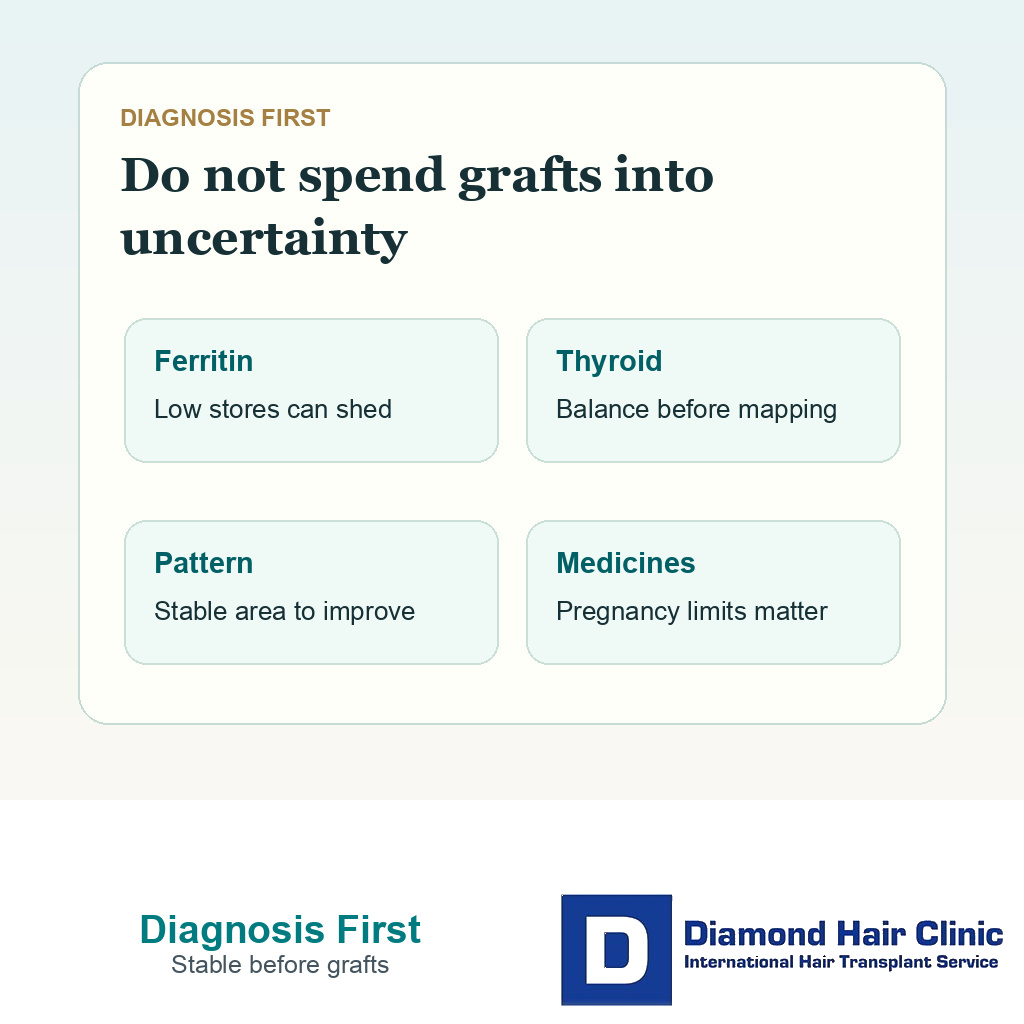
Diagnosis, blood work, medication limits, and stable photos matter before donor grafts are used.
Future surgery discussion timing
A future transplant discussion becomes more reasonable when the pregnancy status or IVF timing is clear, breastfeeding and medication questions have been reviewed, shedding has calmed, the diagnosis is understood, and the remaining thinning is a stable pattern that grafts can realistically improve.
Stability matters more than an exact calendar promise. In one woman, several months of reduced shedding and consistent photos may be enough to discuss surgery. In another, persistent postpartum shedding, low ferritin, thyroid adjustment, PCOS related instability, or medication changes may require a longer observation period.
Waiting is useful when it turns uncertainty into a defined surgical map. It is not useful when it becomes avoidance without diagnosis. If the hair remains unstable, medical review and follow up photos matter more than a larger graft quote.
Photos and consultation details are useful
Clear photos make the consultation more useful. Send front, temples, hairline, part line, crown, donor area, and side views in consistent lighting. Add older photos if you have them, especially before pregnancy, before IVF treatment, before delivery, and during peak shedding. The change over time is often more useful than one dramatic close image. A fertility timeline is part of the hair timeline. Medicine changes, blood tests, and transfer dates can make one dramatic photo less reliable for surgery planning.
Also send the medical timeline. When did you deliver? Are you breastfeeding? Are you trying to conceive? Is IVF planned or already underway? If relevant, include the egg retrieval date, embryo transfer date, beta hCG test date, last period, and whether pregnancy status is still uncertain. Which medicines were started, stopped, or changed? Was there heavy bleeding, anemia, thyroid disease, PCOS, rapid weight loss, illness, fever, or a major stressor?
If the fertility plan changes after booking, update the clinic before travel instead of waiting for the consultation chair. A late period, new medicine, or changed transfer date can move the safest surgery decision.
A surgeon cannot responsibly separate stable hair loss from temporary shedding if the timeline is missing. In a woman, a beautiful hairline design is only useful when the diagnosis, donor area, and future pattern support it.
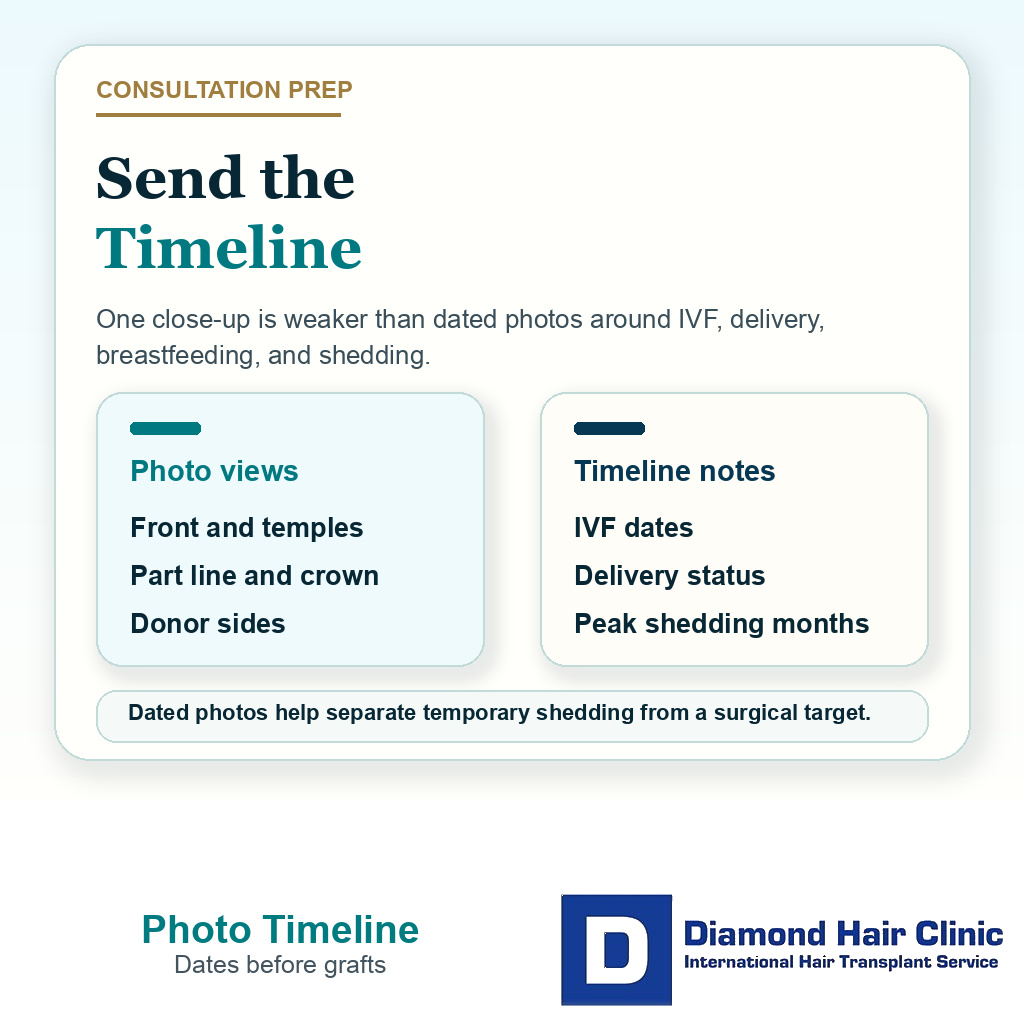
Dated photos and a clear pregnancy, IVF, breastfeeding, and shedding timeline help separate temporary shedding from a stable surgical target.
Pregnancy changes the order of care
Pregnancy puts the transplant on hold. IVF, trying to conceive, breastfeeding, and uncertain pregnancy status all need timing clarified before an elective surgery date is treated as fixed.
Postpartum shedding can also mislead the consultation. I first separate temporary telogen effluvium from female pattern hair loss, medication limits, and the practical strain of recovery.
Many women become good candidates later. The better operation is the one planned after the body, medicines, shedding pattern, and family timing have stopped moving in different directions.

Read this review excerpt
Every single one of my questions was answered and they made sure I had all the details I needed to make an informed decision.