



Hair Transplant Consultation Fees and Graft Quotes
Paying for a hair transplant consultation is not, by itself, a warning sign. A free consultation is not proof of weak planning either. In my own clinic, the online consultation is free, but the fee is not the real measure. I look at what the consultation gives you before you book surgery, pay a deposit, or accept a graft number. If the meeting only produces a price and a date, it has not done enough. The consultation fee is not the main issue. What matters is whether a doctor has looked at your donor area, hair loss pattern, medical history, expectations, and limits over time before anyone asks you to commit.
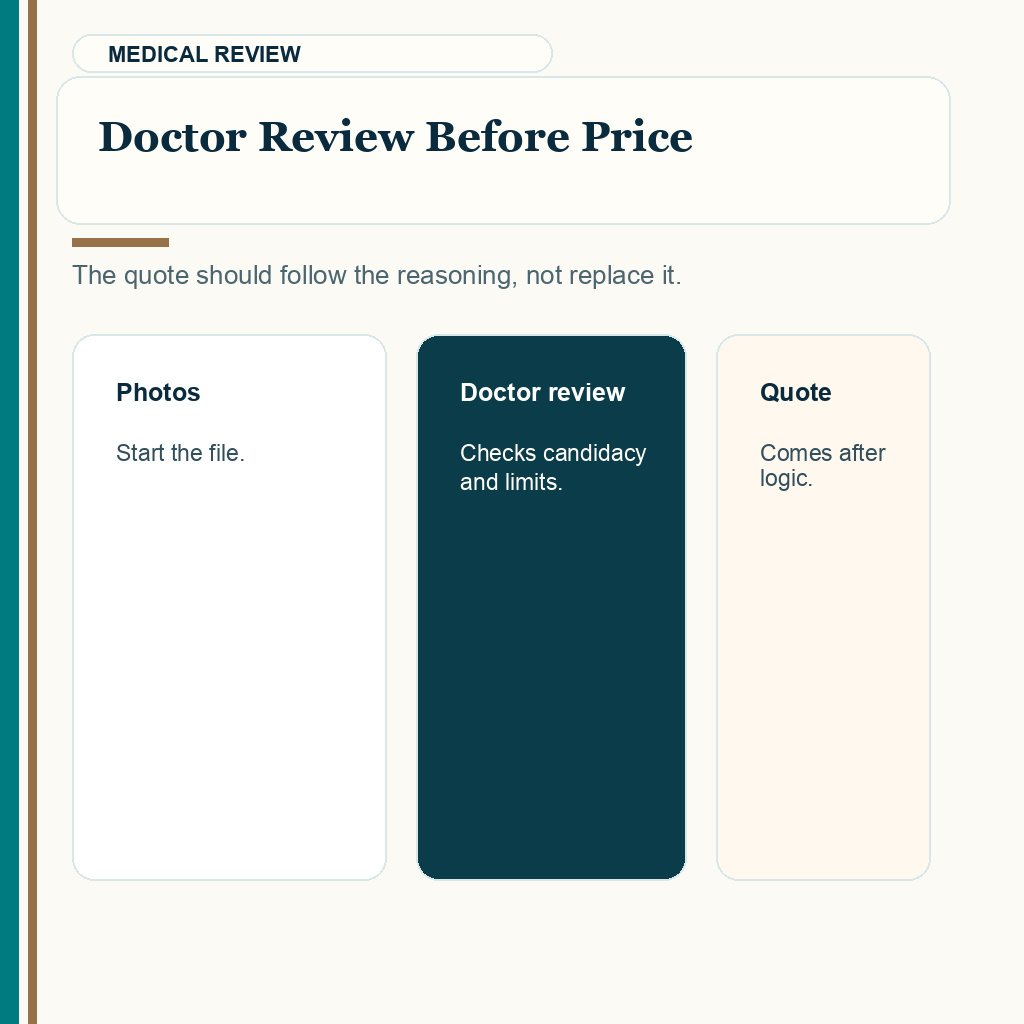
Fees, packages, and deposits feel concrete, so it is natural to focus on them first. But weak hair transplant planning rarely fails because the consultation was free or paid. It fails when the medical discussion is too thin. Someone receives a graft quote, sees a calendar opening, and feels the process has already moved from decision making to payment. That order is wrong. The medical plan must come before the sales step, even when the quote feels concrete.
A useful consultation slows the decision down long enough for the real questions to surface. It should help you understand whether surgery is appropriate now, what can realistically be improved, what should be left alone, how much donor capacity you have, who will perform the surgical steps, and what support exists after you return home. It also protects decisions made from pressure or from a temporary trigger, such as a frightening shaved head reaction, postpartum shedding, or trying to conceive before hair transplant surgery.
Paid consultation can be reasonable
A fee may buy educational advice to help you understand options and shortlist clinics, a doctor’s clinical opinion, or an assessment by the surgeon proposed for your operation. These services have different limits. Education can help you prepare, but it is not a medical assessment. Another doctor’s opinion can be useful without confirming how the operating surgeon would plan your case. The provider’s qualifications, role, clinic relationships, and any referral payment should be clear, along with whether you receive a written opinion, a direct examination, or only help choosing a clinic. A paid appointment is worthwhile when that is the service you wanted, not merely because money changed hands.
Consultation value depends on the plan a patient can inspect before payment pressure starts. Donor limits, hairline boundaries, graft range, and surgical roles should be clear.
Fast payment pressure after only a few photos and a high graft estimate needs careful attention. A deposit paid before the medical plan is clear changes the psychology of the decision. After money is paid, many people start defending the choice instead of testing it.
Questions the consultation must answer before booking
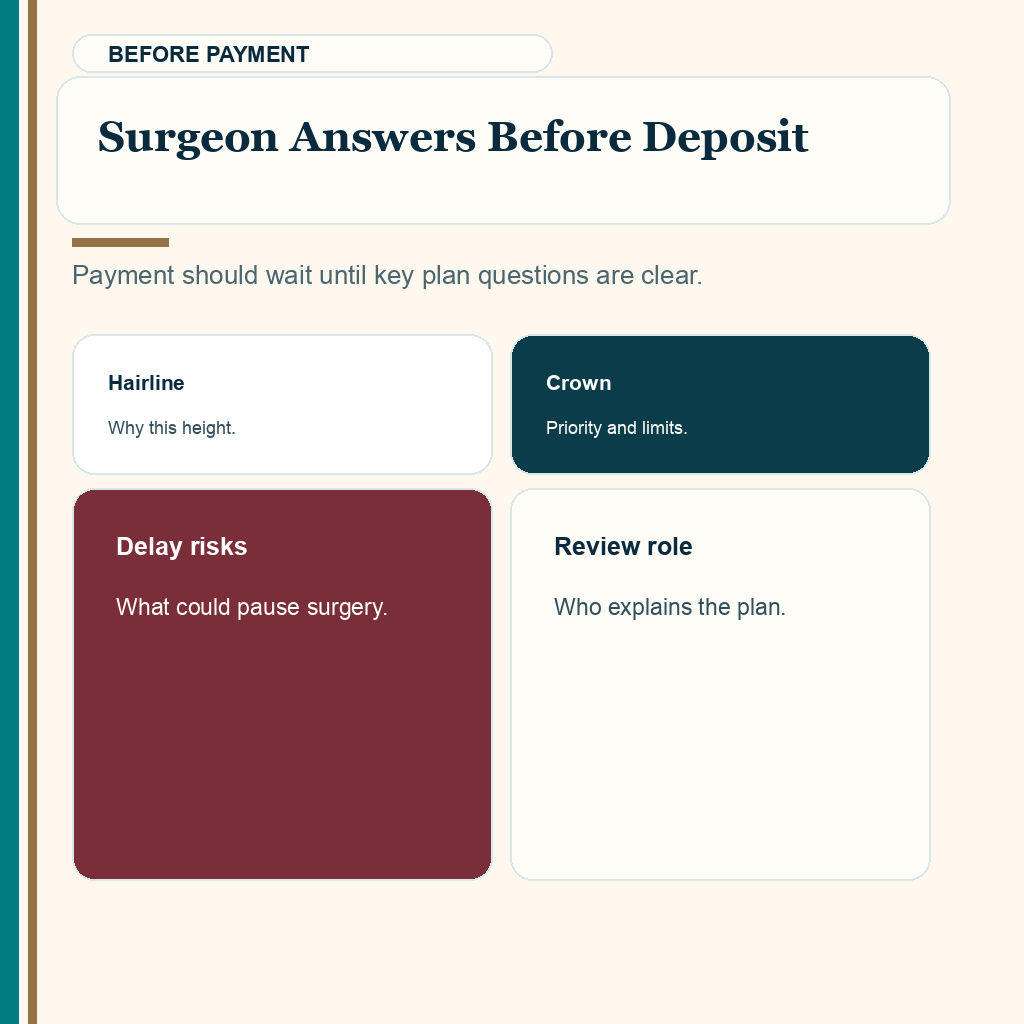
Before a date or deposit is accepted, the consultation needs to answer the questions that affect the result years later, not only the questions that help schedule the operation. You should leave with a clear idea of the donor area, recipient area, hairline plan, crown strategy if relevant, graft logic, risk factors, and the limits of the first surgery. It should also ask about medications, previous procedures, scalp problems, smoking, medical conditions, and family hair loss, because those details can change whether the quoted plan is sensible.
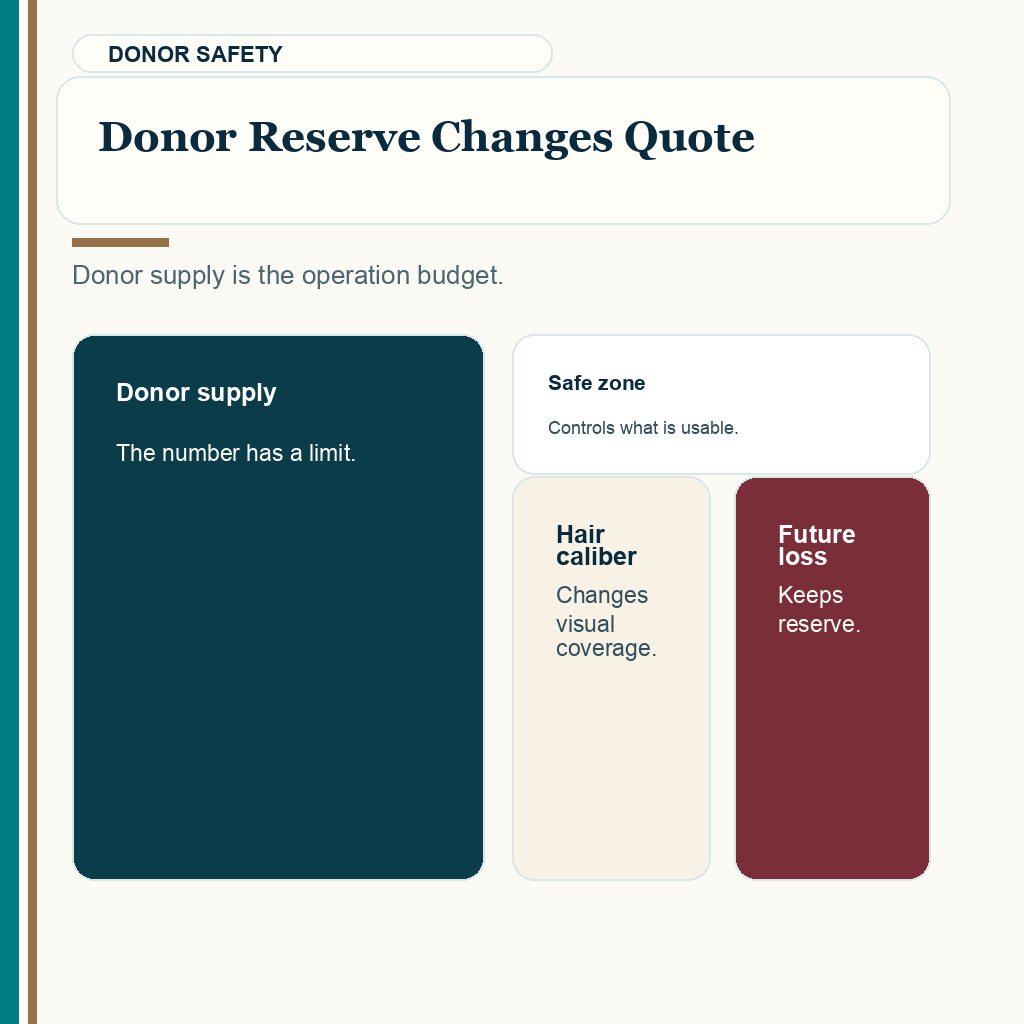
The consultation also needs to explain what is being protected. In hair transplantation, donor supply is finite. Once grafts are removed, they cannot be returned. A plan that uses grafts aggressively in the wrong area may look attractive on a quote, but it can leave fewer options later. Donor limits need direct discussion before graft numbers become final.
If the consultation avoids the donor area and focuses mainly on the front line or the advertised package, the plan is incomplete. A natural hairline is important, but donor preservation decides how safely the patient can handle future needs. The first operation should respect lifetime hair transplant grafts rather than spend the future without a reason.
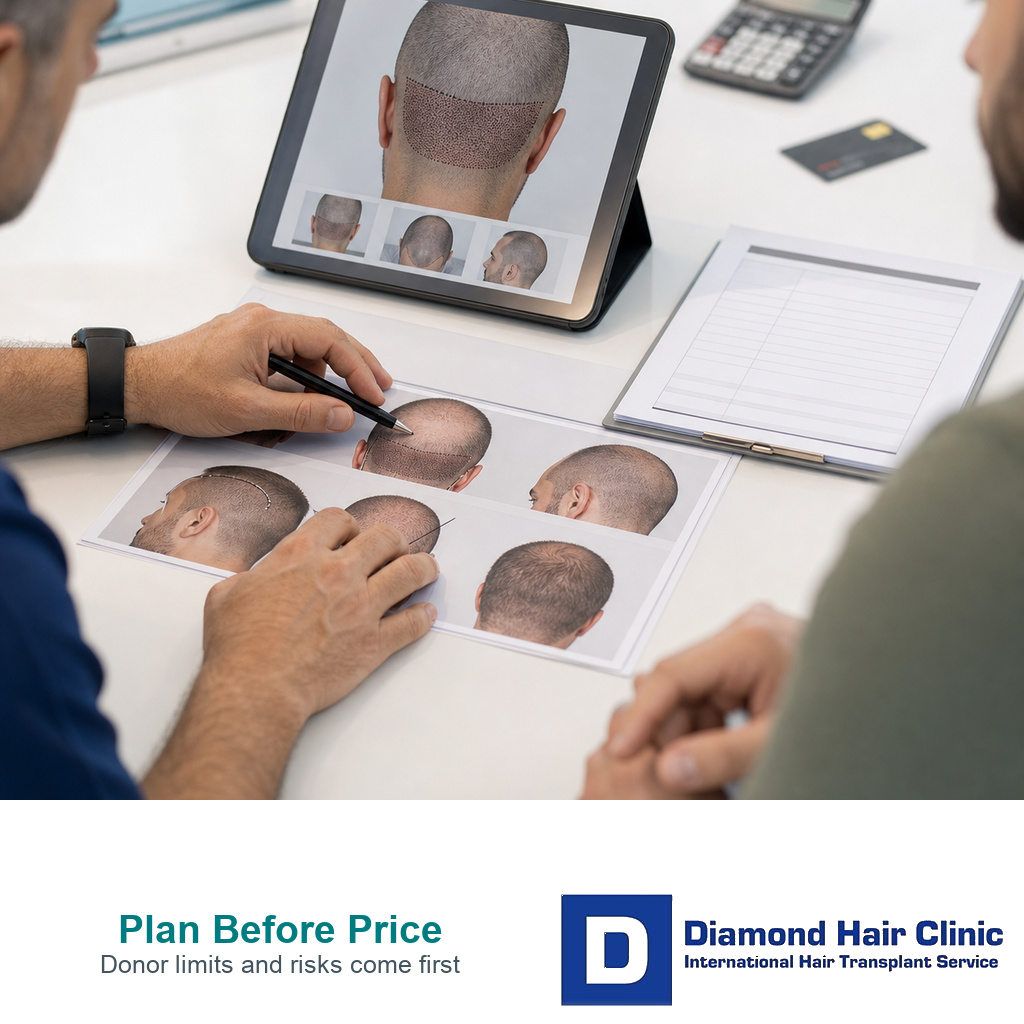
A graft price helps only after the donor area, recipient area, surgeon role, and long term plan have been reviewed.
Consultation proof before a graft quote
A clinical consultation should explain the medical reasoning behind the proposed plan. Whether the consultation is free or paid, the patient needs more than a graft number.
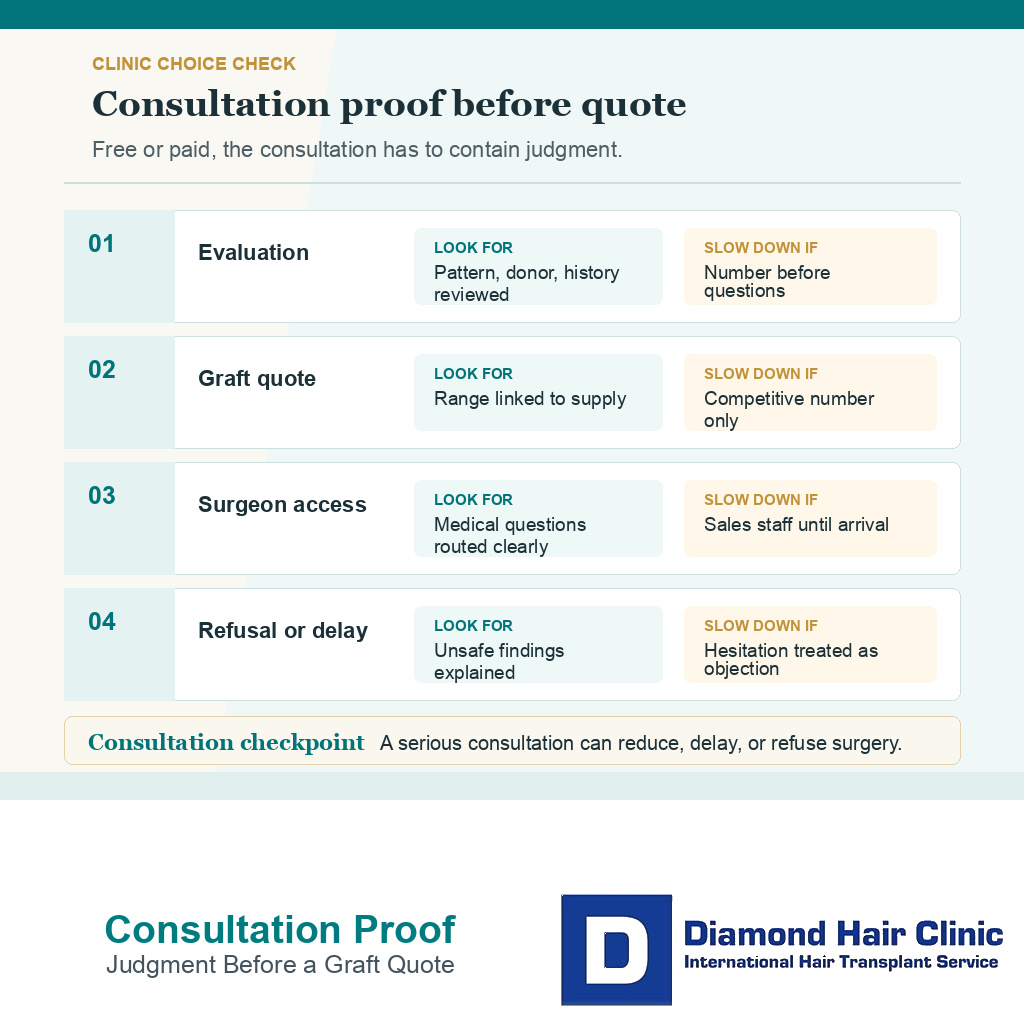
The useful consultation is the one that can slow the patient down for a medical reason. That is what separates a real opinion from a paid quote.
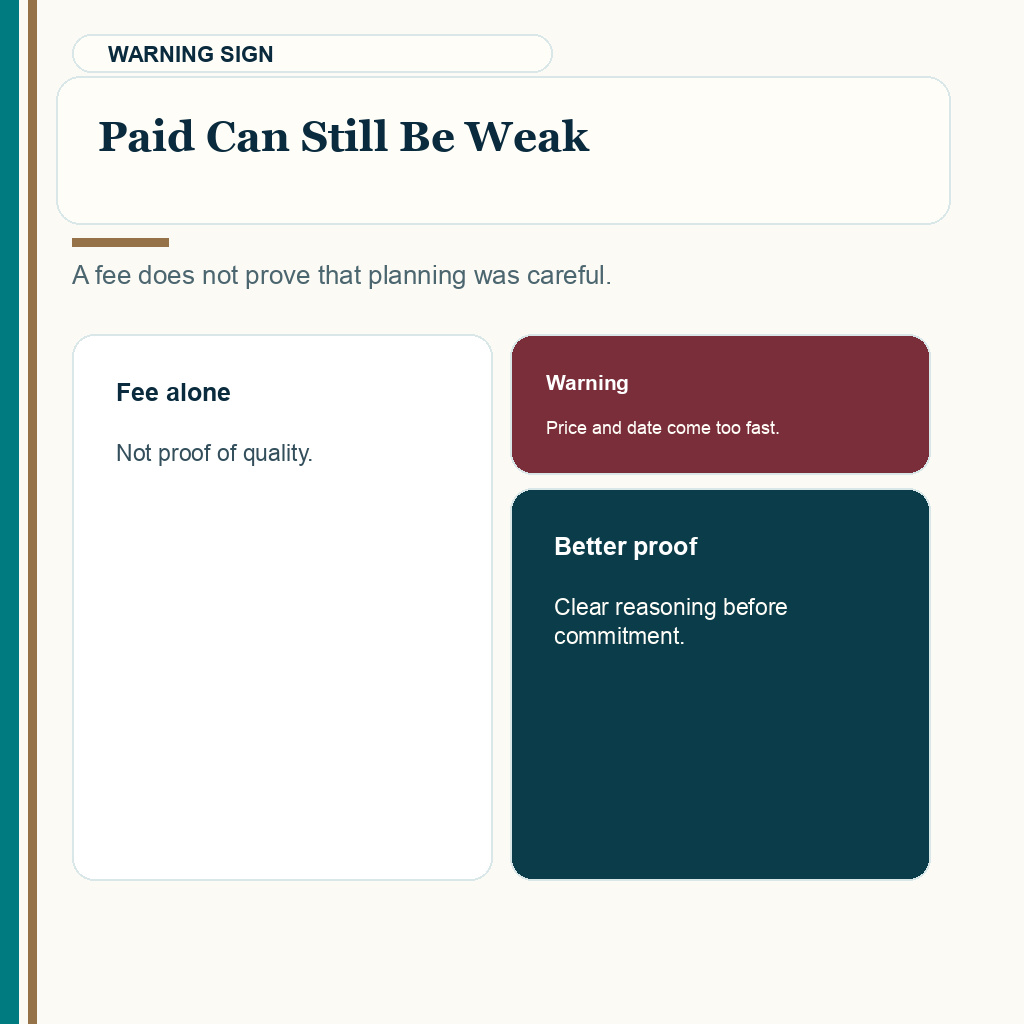
That proof card should slow the quote down before the next check. A fee or free review only helps when the consultation can name the donor concern, the recipient goal, the uncertainty, and the reason a graft number may need to change.

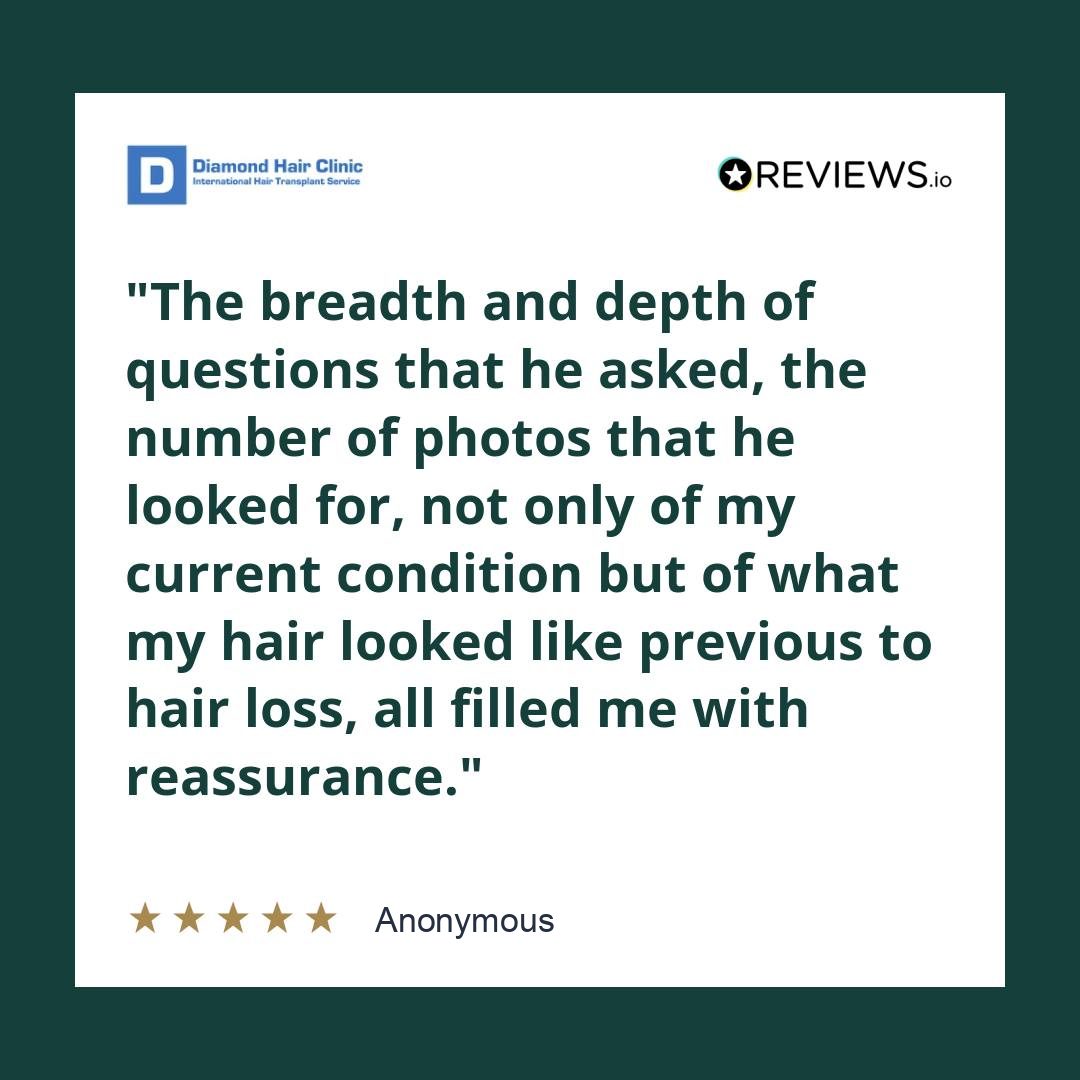
Graft quote is not the same as a surgical plan
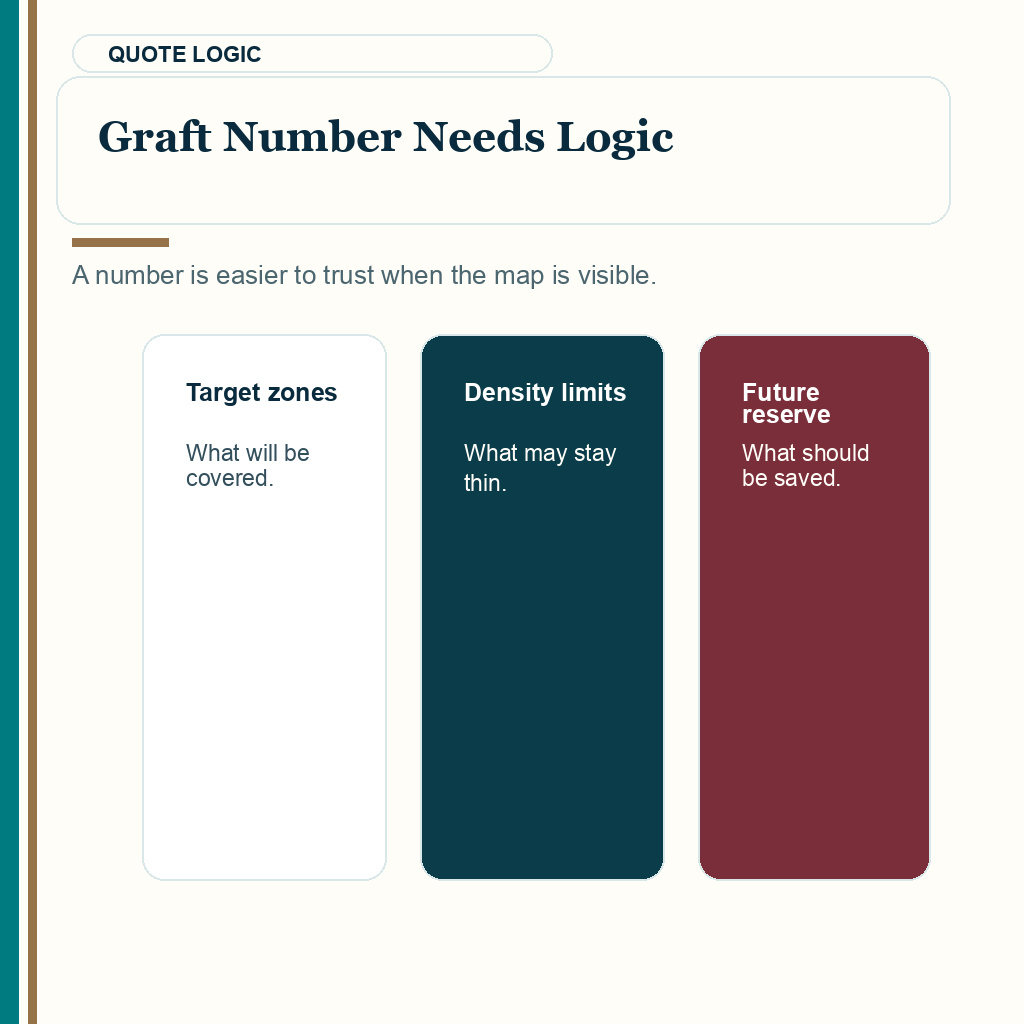
A graft quote is only a number. A surgical plan shows why that number is being used, where those grafts will go, what density is realistic, what will be left untreated, and how the plan fits the patient’s likely future hair loss. A quote is not a plan unless the reasoning behind it is visible.
Two clinics can quote different graft numbers for the same patient and both may sound confident. The difference may come from different hairline positions, crown promises, donor assumptions, density targets, or tolerance for risk. Without an explanation, the patient cannot judge whether the higher number is stronger planning or more aggressive selling.
The consultation needs to connect the graft number to visible clinical details. That connection should be more than a quick visual impression. I look at hair caliber, recipient area size, crown stability, treatment history, donor density, safe extraction zones, and whether there is miniaturization in the donor area. When the review is remote, the number should stay provisional until these points can be checked directly. The reasoning behind the number matters as much as the number itself, so how surgeons calculate graft numbers belongs in the discussion.
Remote consultations can miss important details
Remote consultation can be useful, especially for international patients. Photos and videos can show the hairline, temples, mid scalp, crown, donor area, and donor length. They can help decide whether surgery is worth discussing before travel. But remote review has limits. Lighting, hair length, styling products, camera angle, and wet or dry hair can change the impression.
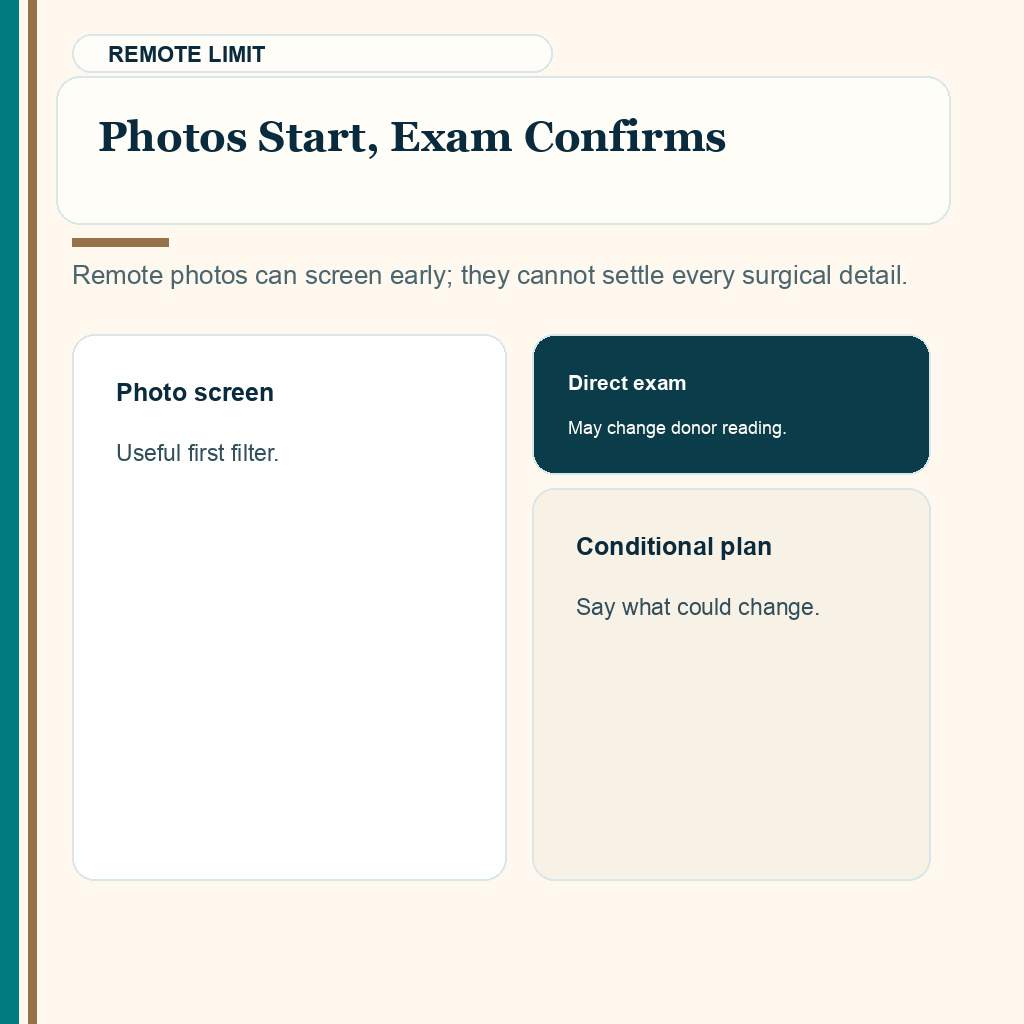
A remote consultation therefore needs to be clear about what is provisional. It can estimate the plan, but the final surgical decision still needs live examination. The donor area needs close inspection. The scalp needs to be checked. The hairline should be marked with the face in front of the surgeon, not only over a messaging app. Photo planning is a screening tool, not a substitute for final examination. The consultation should name the parts that may change after examination, such as final hairline height, exact density, crown priority, or the safe graft ceiling.
This matters most when the patient has diffuse thinning, a weak donor area, a complex crown, previous surgery, or unrealistic density goals. A photo based plan can miss texture, miniaturization, scalp laxity, scarring, and the way hair behaves when handled. A remote hair transplant plan from photos should stay provisional until the case can be checked properly.
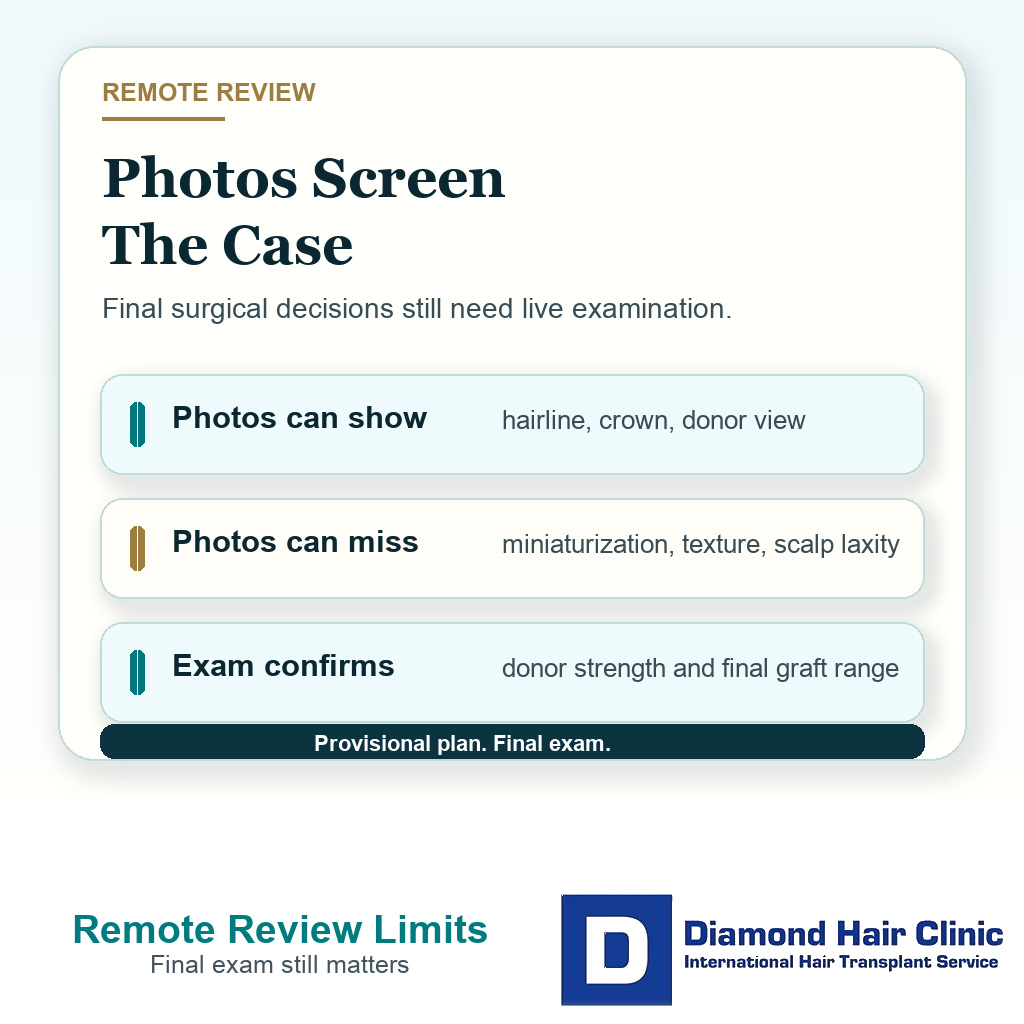
Remote photos can screen a hair transplant case, but live examination is still needed before the final graft range and surgical plan are confirmed.
These 10 slides show how to judge a consultation before trusting a graft quote, fee, or deposit. Swipe sideways, use the arrows, or choose a number below the image.


Free consultations can still be useful
A free consultation can still be useful if it is medically structured. The absence of a fee does not make the discussion weak. What matters is who reviews the case, what is assessed, how the plan is explained, and whether you can leave without pressure.
A free consultation may be enough for an early screening call, especially if you only need to know whether surgery is worth considering. It can also help the clinic request better photos or identify obvious reasons to wait. But if the free consultation becomes a fast route to a deposit, pause before paying. The value of the consultation is measured by clarity, not by price.
When the word “free” hides a rushed process, I treat that as a warning sign. If the consultation is free but every answer points toward booking immediately, then it is not a medical consultation in the real sense. It is a sales funnel. Patients who feel this pressure may find it useful to compare the experience with the warning signs in hair transplant booking pressure.
Consultation fees that should make you pause
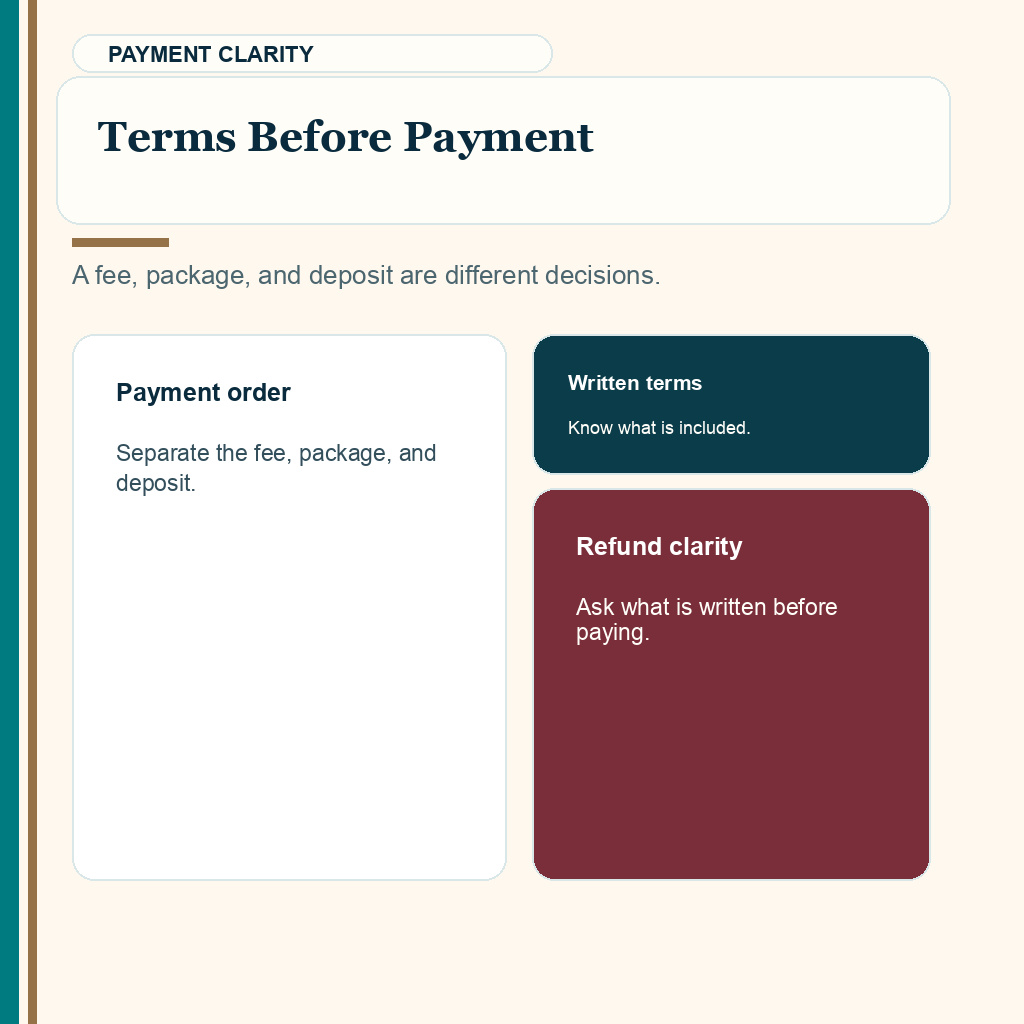
A fee should make you pause when the clinic cannot clearly explain what it includes. The answer needs to be specific enough to cover surgeon review, a written plan rather than only a price, donor limitations, medication, future hair loss, and whether follow up questions are allowed before payment. A consultation fee should support review, not pressure. Ask whether the fee is separate from the surgery price, credited later, refundable if the surgeon advises against surgery, and what written summary you receive after the review.
A fee also deserves caution when it is paired with urgency. “Pay the consultation fee now, then pay the deposit today to keep this price” is not thoughtful planning. Hair transplantation is elective surgery. You need room to think.
A fee becomes less useful when it only gives access to a coordinator, while the surgeon remains vague or absent. Coordinators can be helpful. They can organize photos, travel, scheduling, and general information. But the surgical plan needs medical responsibility. If the coordinator is effectively making the medical plan, coordinator led hair transplant planning needs careful review before that structure is accepted.
Deposits and booking dates come after the plan
A deposit and booking date belong after you understand the plan. They should not create the feeling that the decision is already made. Before a deposit, you need to know the approximate graft range, target areas, hairline philosophy, surgeon role, recovery expectations, and what might change after in person assessment. The patient also needs to know what happens if the live examination lowers the graft range, changes the hairline, postpones surgery, or shows that donor supply is not suitable for the plan quoted remotely.
If the clinic says the date is available only today, or the price will disappear if you do not pay immediately, take that as information about the process. A clinic can have limited surgical dates. That is normal. But limited dates must not remove medical discussion. Surgery must not begin as a countdown.
I also separate travel excitement from medical confidence. Flights, hotels, and a calendar slot can make the plan feel real before the details are secure. If doubt appears later, those costs can make it harder to walk away. For some people, a second opinion before a hair transplant is worth more than keeping a fast booking date.
Questions the surgeon should answer directly
The surgeon needs to answer the questions that decide the medical direction of the case. That means candidacy, timing, donor strength, hairline safety, crown priority, and realistic density without damaging the donor area. If those points are vague, the consultation is not ready to become a booking decision.
The surgeon also needs to explain who is responsible for each surgical step. In many clinics, different people may be involved in extraction, channel opening, graft placement, anesthesia, photography, washing, and follow up. You have the right to know how the team works. The purpose is not to find the most dramatic answer. The purpose is to understand responsibility before surgery begins, including who has authority to change or stop the plan if the in person examination does not match the remote estimate.
If the answers are unclear, ask again. If they remain unclear, that is part of your decision. Surgeon involvement in hair transplant surgery matters because responsibility shapes the surgical steps that determine the result.
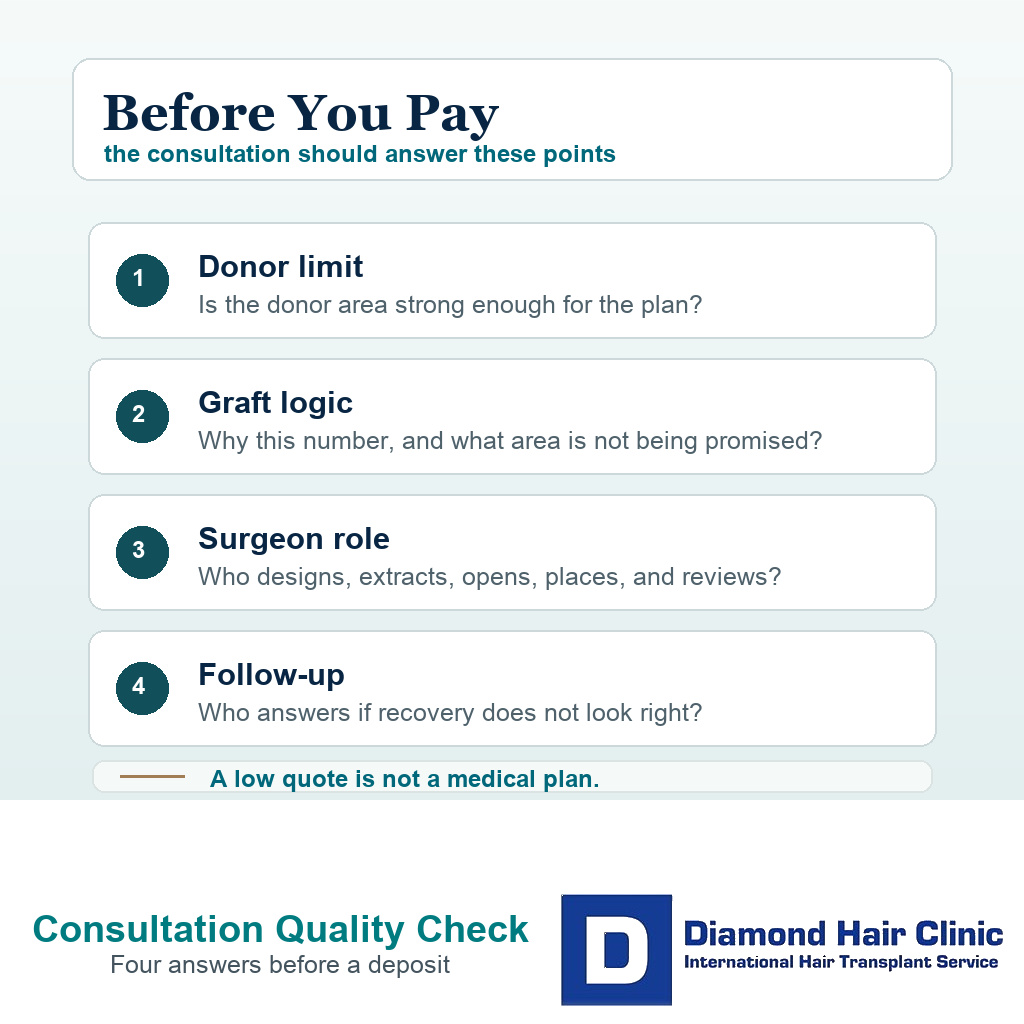
Before money is paid, the consultation should explain donor limits, graft logic, surgeon role, and later review.
When does a quote need to stay conditional?
Remote photos can start a consultation, but they cannot finish every surgical decision. I still need to know whether the donor supply, scalp condition, hairline request, crown expectation, age, family pattern, and medical history fit the number being discussed.
A serious quote can give a range. It also needs to say what could change after direct examination. Weak donor findings, diffuse thinning, inflammation, a lower safe density, or a hairline request that spends too much reserve can make the operation smaller, delayed, staged, or refused.
This protects the patient from treating the first number as a promise. The useful consultation is the one that explains why the number may need to change, not the one that gives the fastest yes.
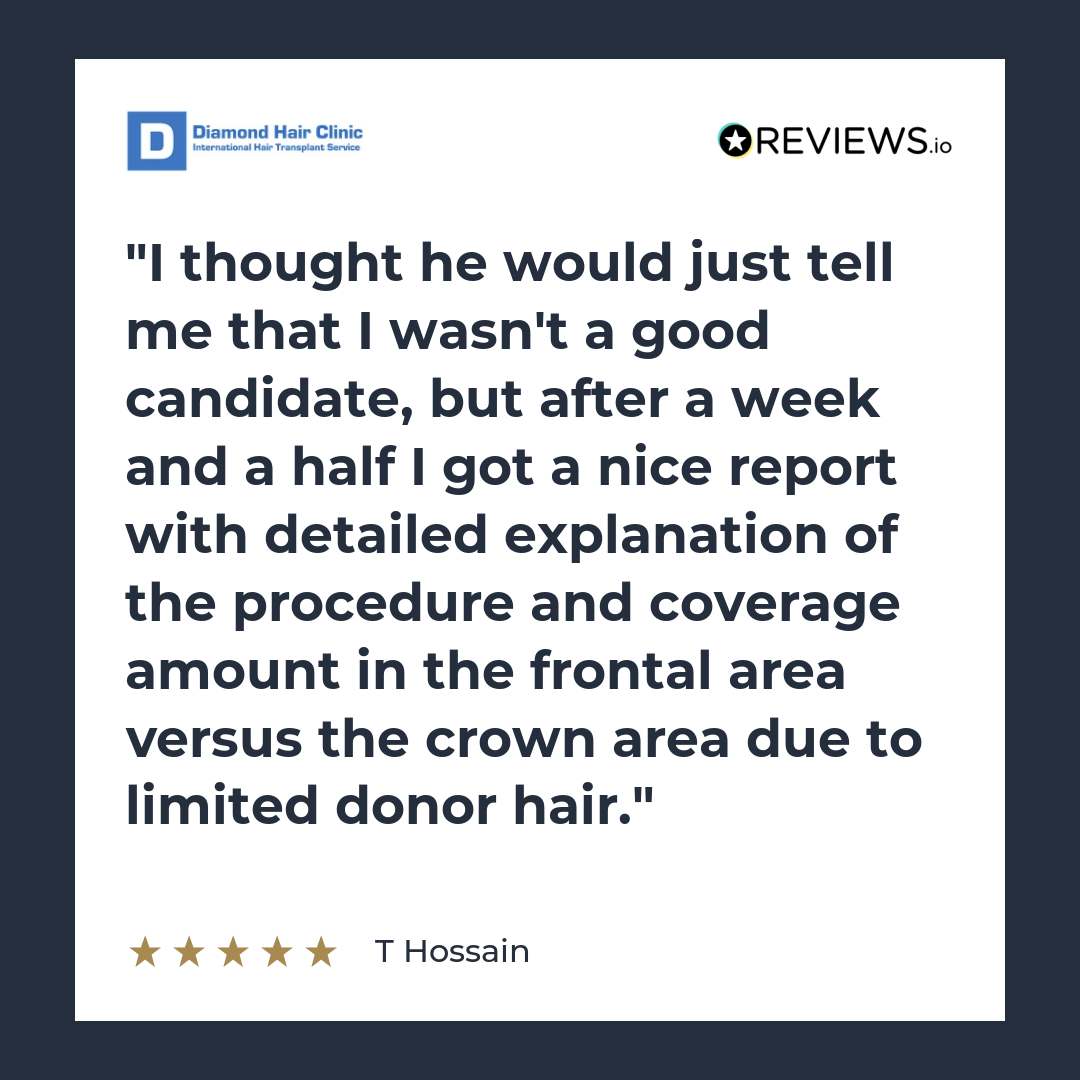
Read this review excerpt
I thought he would just tell me that I wasn't a good candidate, but after a week and a half I got a nice report with detailed explanation of the procedure and coverage amount in the frontal area versus the crown area due to limited donor hair.
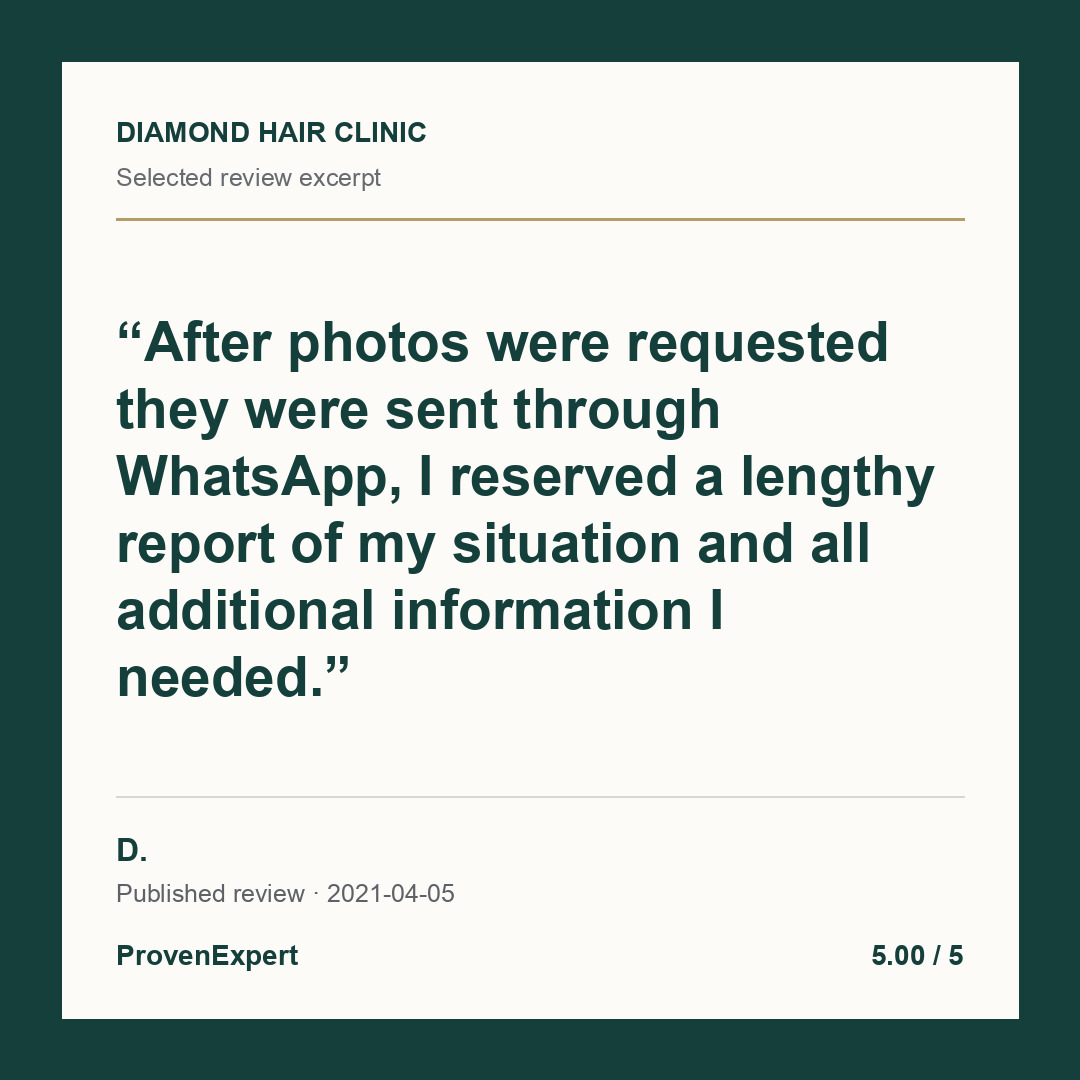
Read this review excerpt
After photos were requested they were sent through WhatsApp, I reserved a lengthy report of my situation and all additional information I needed.
Different graft numbers need explanation
Different graft numbers are common. One clinic may quote 2,500 grafts and another may quote 4,000. The higher number may sound more complete, but it may also mean a lower hairline, wider crown coverage, or heavier donor use. The lower number may be conservative, but it may also under treat an area that matters to the patient. The number alone does not show which plan is better. Take one written question list into every consultation, then record the answers in the same order. You will see differences in graft logic, hairline priorities, and donor limits more clearly.
Ask each clinic to explain the map and, if possible, send the summary back to you in writing. A useful summary names the target areas, provisional graft range, donor concerns, areas intentionally left untreated, and the points that may change after examination. It should show where the grafts will go, what density is intended, which area is being left thin by design, how future hair loss will be managed, what happens if the crown expands, and what the donor area may look like after extraction. A clear explanation is more valuable than a confident number, especially when you are comparing offers days later.
I pay attention to whether the consultation protects future hair loss. A young patient with active thinning may need a different plan from an older patient with a stable pattern. Fine hair also needs different expectations from thick, wavy hair. Looking at hair transplant results with hair like yours can help, but the consultation still needs to translate those examples into your own limits.
Consent after the consultation
Consent should not feel like paperwork added after the decision has already been sold. You need to understand the nature of the procedure, realistic benefits, possible risks, limits, alternatives, and follow up responsibilities. Signing a form is not enough if the plan remains unclear.
Hair transplantation is elective. You are not choosing between surgery and an emergency. There is time to ask questions, compare options, and decide whether the timing is right. If someone feels embarrassed to ask basic questions before signing, the process has failed.
Consent also connects to pricing. Costs, what is included, and what is not included should be documented before payment changes the pressure. Do not pay because the clinic used confident language. Pay only when the plan is understood and accepted. Hair transplant consent before surgery belongs before payment pressure, not after it.
Judging the consultation before choosing the clinic
After the consultation, you should understand your case better, not just know the price. The explanation should cover why the graft number was chosen and how donor limits affect the proposed coverage. You also need to know who will perform the surgery, rather than only who handles the booking.
Also notice how the clinic responds to hesitation. A clinic that respects the patient’s decision making time is easier to trust than one that treats hesitation as a problem. Do not pay to be rushed. If the plan is good today, it should still make sense after you have had time to think.
Some patients also compare consultation quality against package structure. This can be useful, but only if the package details are read carefully. A package can include transfer, hotel, medication, washing, and recovery instructions, yet still leave surgical responsibility unclear. If pricing is part of your decision, compare it with the practical details in hair transplant packages in Turkey, and keep the wider question of choosing a hair transplant clinic in Turkey separate from package convenience.
A consultation should not end at a date and a graft number. I want the donor limit, hairline reason, surgical role, and what happens if the plan changes written down before travel.
Think before paying or booking
Free or paid is not the main issue in a consultation. The important question is whether you receive a real medical assessment before money creates momentum. After the consultation, you should understand more, not feel pushed further into commitment.
Before you pay, you should be able to explain the plan in plain language. You should know whether surgery is suitable, what the operation is trying to achieve, what it is deliberately not trying to achieve, how the donor area will be protected, and who is responsible for the surgical decisions. You should also know what follow up looks like if swelling, shedding, redness, shock loss, or slow growth worries you after returning home. If you cannot repeat the plan without clinic language, or if you cannot explain what would happen if the surgeon changes the plan on surgery day, the consultation has probably not translated the medical decision clearly enough.
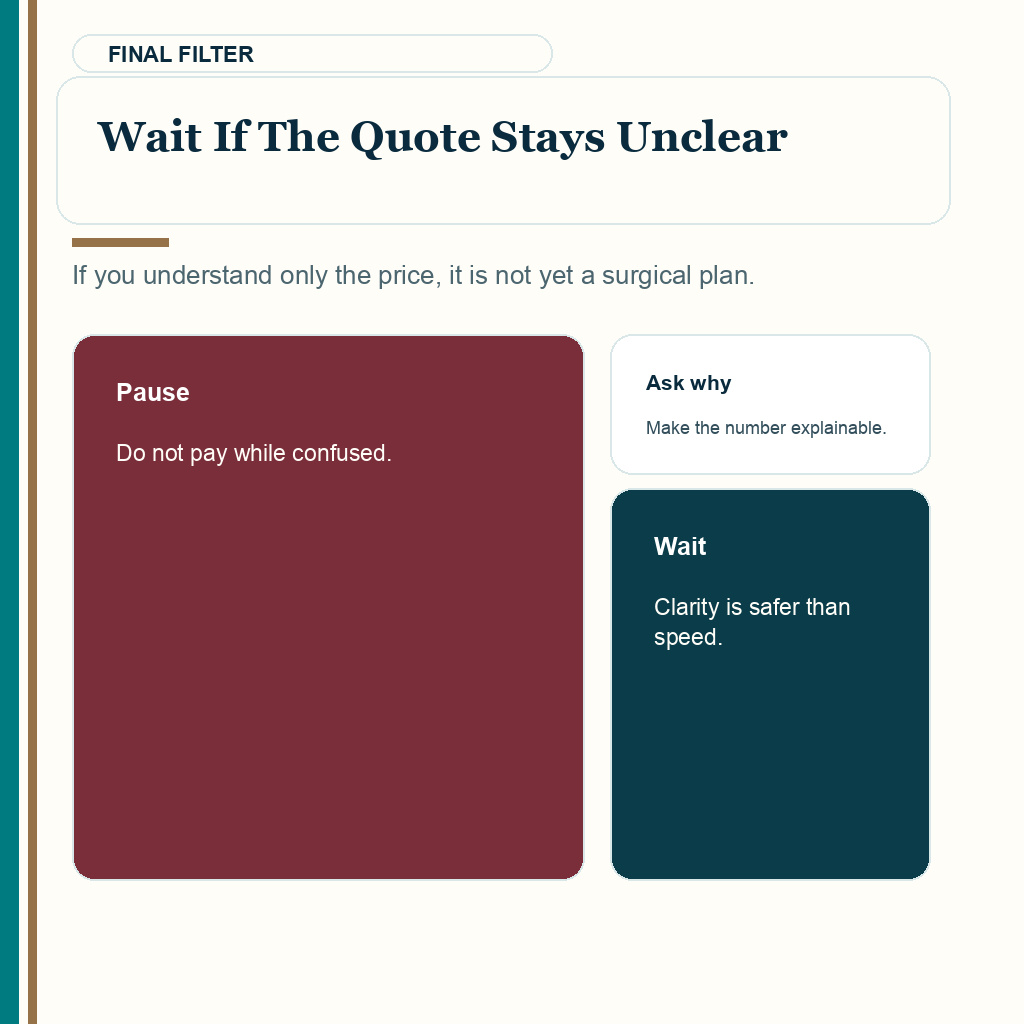
The consultation that protects you is not the one that offers the most exciting graft number. It is the one that makes the limits clear enough for a deliberate decision. If the plan is vague, rushed, or built mainly around payment, wait. In elective surgery, the ability to wait can protect the donor area, the hairline, and the decision itself.