



Second Thoughts Need Careful Review Before Surgery
A booked operation does not make a doubt irrelevant. First separate ordinary surgical nerves from a specific problem in the plan. If the doubt appears in the final days before a hair transplant, the date should not be allowed to answer for the plan. Fear of injections, swelling, travel, or the first wash is different from doubt about the donor area, hairline design, graft number, medication plan, surgeon involvement, medical stability, or pressure to continue.
A specific doubt deserves review before grafts are moved. A booked date, flight, deposit, or hotel plan should not become stronger than the surgical decision. It is easier to slow the decision before surgery than try to repair a rushed plan later. A deposit is a cost, not clinical evidence that the plan, donor limit, or hairline is right.
Second thoughts do not always mean cancellation. Some people proceed safely after one clear conversation because the plan is already sound. Others may need to postpone, reduce the plan, ask for a second opinion, or walk away from the clinic. The difference is whether the review gives you a steadier decision you can explain in your own words. If the doubt points to a real surgical limit, the booked date cannot be the deciding factor. That is the same judgment behind cases where I say no to a hair transplant.
Before surgery review map
Choose what the doubt is really testing
Second thoughts become useful when they point to the part of the plan that needs review. Choose the concern that fits before a deposit, flight, or booked date starts making the decision for you. Write the exact reason for the doubt in one sentence. If you cannot name it, the conversation should start there.
Normal nerves check
Fear is different when the surgical plan is clear
Injection fear, swelling worry, first wash anxiety, travel stress, or fear of looking different for a while.
The treated area, graft range, hairline logic, donor limits, surgeon role, and recovery instructions.
The fear hides a real missing answer about the plan, not only discomfort about the procedure.
Normal nerves can settle after a clear conversation. Missing clinical answers should not be treated as nerves.
Name the doubt before pressure takes over
Many people feel embarrassed when doubt appears after a deposit, flight plan, or booked date. They think certainty should arrive just because the surgery is already scheduled. That is not how surgical decisions always feel. A hair transplant changes your appearance, uses a limited donor supply, and can affect future options. It is reasonable to stop and ask whether the plan still makes sense.
Name the doubt in plain words. Procedure fear concerns injections, travel, swelling, or the first days. Missing information concerns the surgeon’s role, recipient area incisions, or how the graft range was chosen. Design doubt concerns the hairline or donor plan. Medical changes, medication questions, and pressure from a date or payment need their own review. These are different problems and do not share one answer.
A useful pause should leave you with a clearer decision. It should not become endless online searching. The aim is to review the exact issue with the right person and decide whether to proceed, postpone, change the plan, or cancel before surgery begins.
Unclear plans deserve a pause
A hair transplant cannot feel like a mystery package. Before surgery, you need to know the planned area, approximate graft range, donor limitations, hairline approach, medication discussion, and who is responsible for surgical decisions. If these points are vague, the doubt is not only anxiety. It is missing information.
Some people are told only that the clinic will decide on the day. A small adjustment on surgery day can be normal because the donor area and scalp must be checked directly. A completely unclear plan is different. The day of surgery is there to confirm and refine the plan, not replace proper planning.
A real consultation has value because it makes donor limits, design, timing, alternatives, and informed consent before surgery clearer, not just the date. If you are still guessing what you are accepting, pause before the operation moves forward.
Donor and future hair loss concerns need review
The donor area is not unlimited. If your doubt is about a large graft number, dense coverage promise, or a plan that ignores future loss, take that doubt seriously. Surgery cannot use grafts as if the future will never matter. A young person, someone with active thinning, or someone with a weak donor area needs a plan that protects later options.
It is natural to focus on the bald area because that is what you see in the mirror. I look at the donor area before I accept the ambition of the recipient plan. A strong first year is not enough if the donor is damaged or the native hair keeps thinning without a strategy.
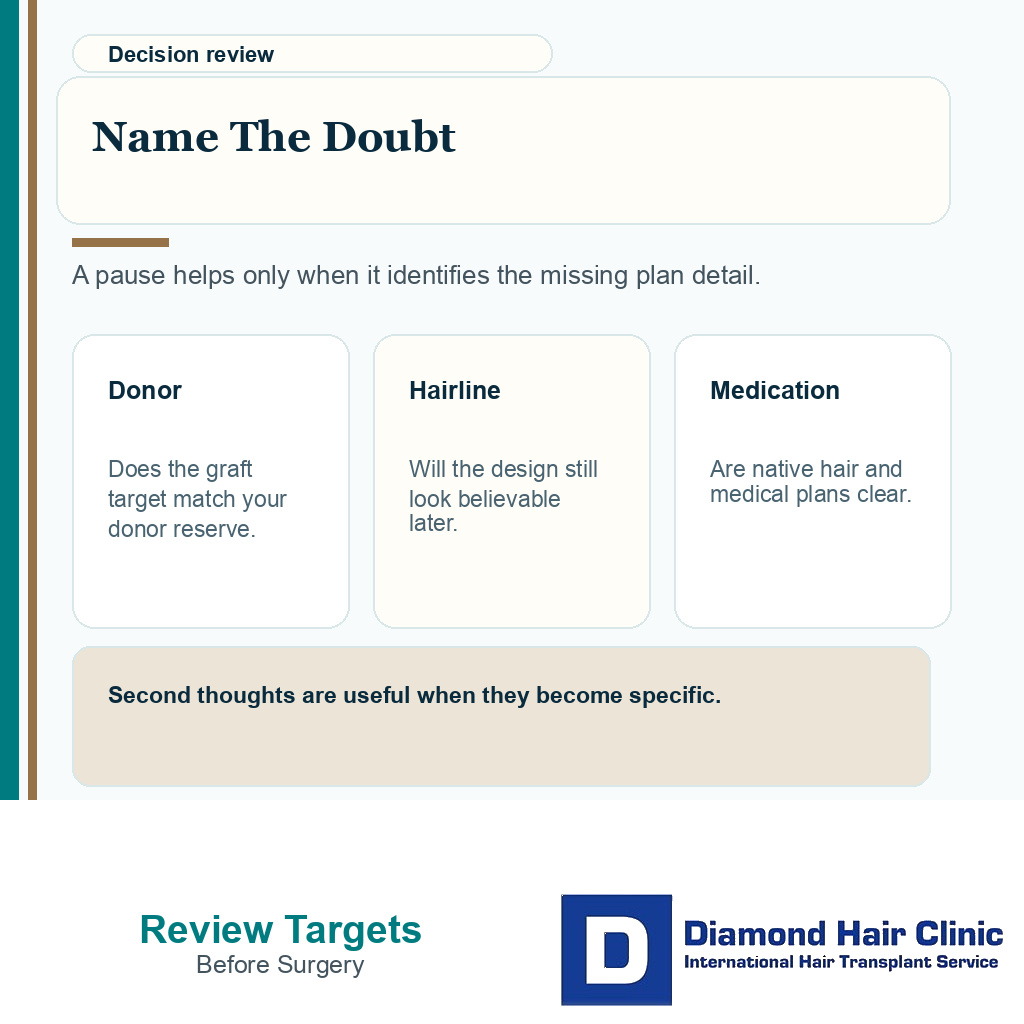
If your age is part of the concern, read the separate discussion about being too young for a hair transplant. If your hair is still changing quickly, active hair loss can make surgery too early for reasons that need a more specific timing review. The decision here is whether the current date can proceed before those concerns are settled.
Donor safety has to be clearer than the sales promise. If the plan depends mainly on a large number and not on your donor condition, future loss pattern, and long-term design, slowing down is reasonable.
Settle medication questions before surgery
Medication uncertainty is a common source of second thoughts. You may want surgery but still feel unsure about finasteride, dutasteride, minoxidil, or another treatment after the procedure. You may also worry about side effects and feel pushed toward surgery before native hair loss has been discussed properly.
Medication is not the same as graft survival. Transplanted grafts and native hair do not behave in exactly the same way. The medication discussion is mainly about protecting surrounding native hair, slowing future loss when appropriate, and making the long-term plan more realistic. If you are choosing hair transplant without finasteride, that choice needs to be direct and planned, not hidden until after surgery.
Medication changes in the days before surgery need clinical review. Blood thinners, blood pressure medicines, sedatives, antidepressants, diabetes medicines, hair loss medicines, and supplements may all need review depending on the case. If a medical or medication change happens after booking, report it before surgery. Even a late change may affect whether the operation can proceed as planned, which is why medical changes after booking need review before the date is treated as fixed.
The hairline has to make sense years from now
A very low or very straight hairline can look attractive in a filtered photo and still be wrong for your face, donor supply, and future hair loss. If your second thoughts are about the hairline, do not dismiss them. Hairline design has to fit age, facial structure, donor strength, hair caliber, future loss, and the natural transition from the frontal zone to the temples.
People often regret the part of the plan that was too aggressive, not the part that was too careful. Lowering the hairline beyond the safe zone can consume grafts, create an artificial frame, and make future thinning harder to manage. Repairing a poor hairline can require removal, camouflage, or staged correction. It is much better to question the design before grafts are placed.
In this decision, hairline design in hair transplant means asking whether the proposed line still looks reasonable when you imagine yourself older, with possible future thinning behind it. A natural hairline protects tomorrow, not only the photo today.
Ask what happens if the hair behind the front keeps thinning
Second thoughts should test how the plan will age, not only whether you want more hair now. A strong transplanted front can help the face in the first years, but it can become difficult to manage if native hair keeps thinning behind it. Before I agree to a frontal plan, I want age, family pattern, crown risk, donor reserve, medication tolerance, and the haircut a patient may want later to make sense together.
If you already shave or wear your hair very short, the fallback plan also matters. FUE is not scarless, FUT usually leaves a linear scar, and SMP can camouflage selected marks but does not create new hair. Bring photos of the way you normally wear your hair, not only the hairline you want from the front. The design should fit your face today and still look reasonable if you later choose a buzz cut, need a second session, or decide that more surgery is not worth it.
Normal nerves and unsafe plans are different
Nerves can appear even when the plan is good. You may worry about injections, travel, swelling, the first wash, the ugly duckling phase, or whether friends will notice. Those fears deserve explanation, but they do not always mean surgery is wrong. Being anxious before hair transplant surgery can be normal when the plan is clear, medically safe, and understood.
The warning signs are different. I worry when you cannot explain the plan, when the graft number feels like a slogan, when the hairline has not been discussed properly, when the surgeon role is unclear, when medical details are hidden, or when the main reason to continue is that travel and payment already happened.
Body image distress also needs care. If the worry has become obsessive, if every mirror check causes panic, or if no reasonable design feels acceptable, surgery may not solve the real problem. When body dysmorphia and hair transplant decisions are part of the picture, emotional readiness matters. A transplant cannot be used as an emergency answer to a crisis state.
Pressure to proceed is a warning sign
Pressure can come from the clinic, the calendar, money already spent, travel plans, or your own impatience. The feeling is similar. You sense that asking more questions will make you difficult, or that slowing down means you wasted the opportunity. That is the wrong environment for an elective surgical decision.
A clinic needs to explain the plan without making you feel trapped. It cannot treat reasonable questions about the surgeon, graft number, donor safety, medication, or design as an insult. It also needs to say when surgery has to wait. If every concern is answered with confidence but no detail, the confidence may not be useful.
Hair transplant booking pressure becomes clinically important when it makes a patient ignore a concern that still has no clear answer. Many regrets begin before surgery, at the moment when doubt appeared and was pushed aside. The risk of regret after surgery is easier to understand when you see how much simpler it is to review the decision before grafts are moved.
The 10 review slides below separate normal nerves, vague plans, donor math, hairline design, medication questions, new health details, pressure, second opinion, and confidence on surgery day. Use the arrows one slide at a time.

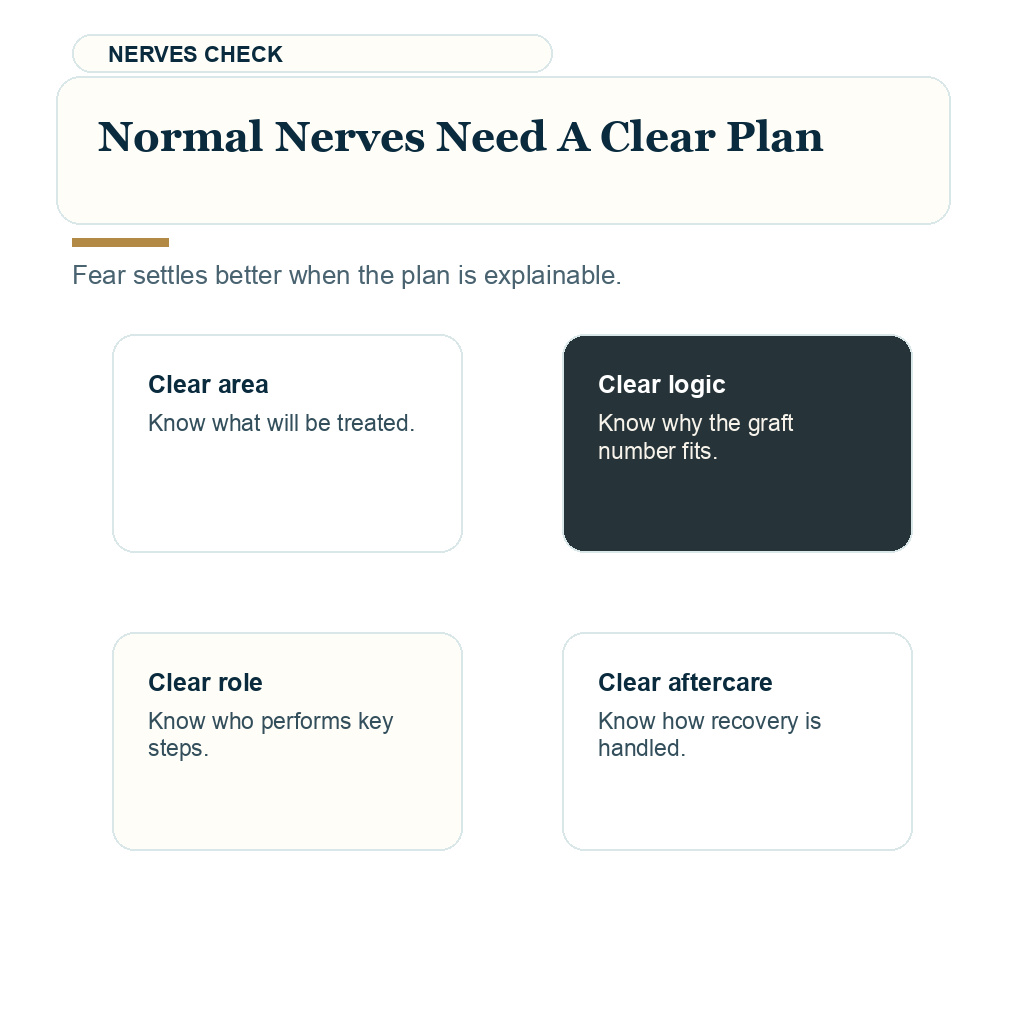
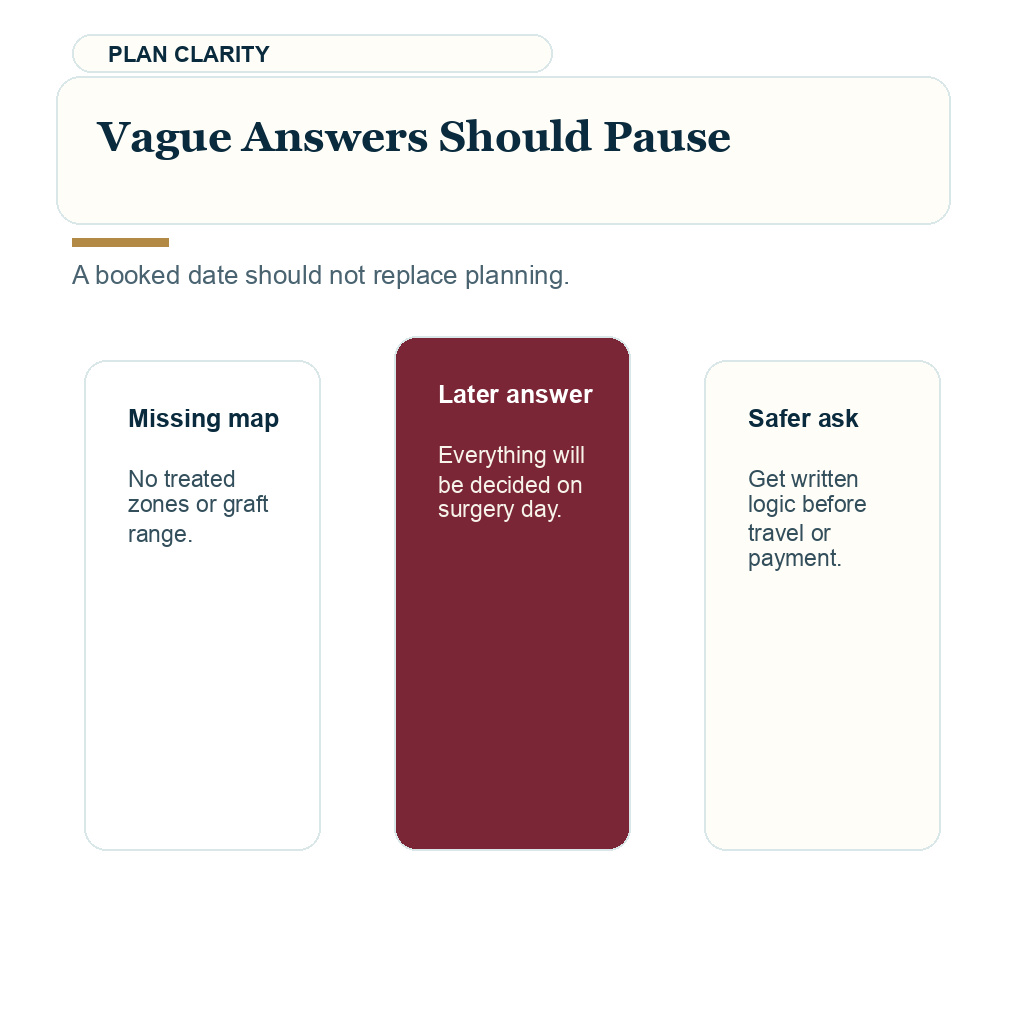
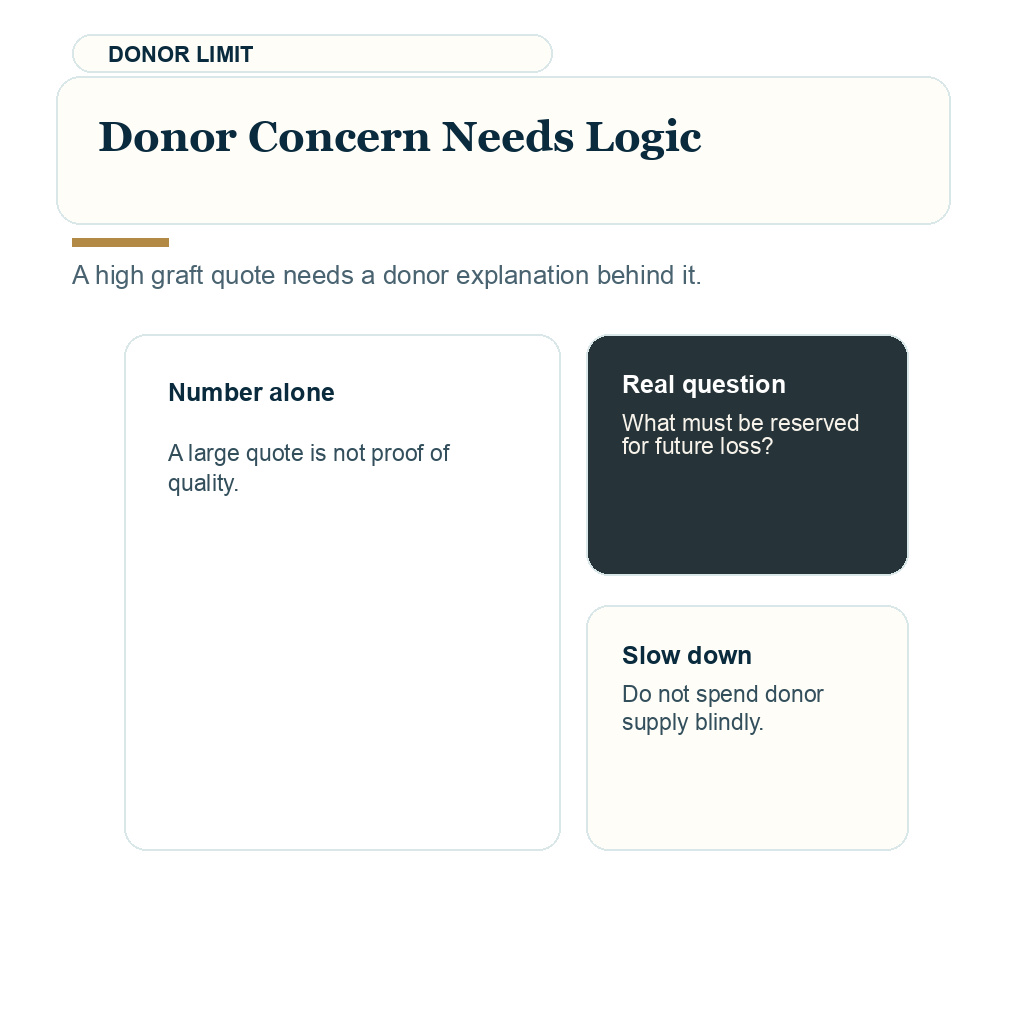
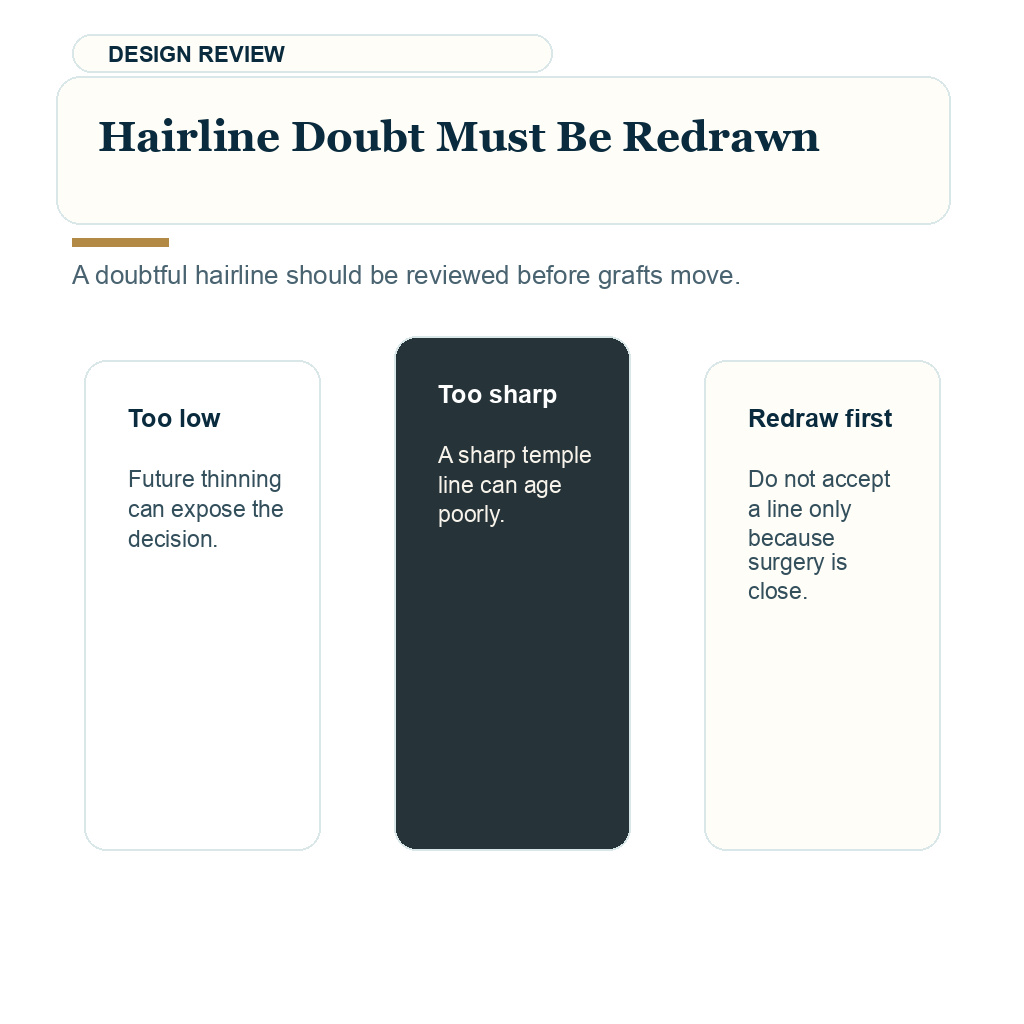
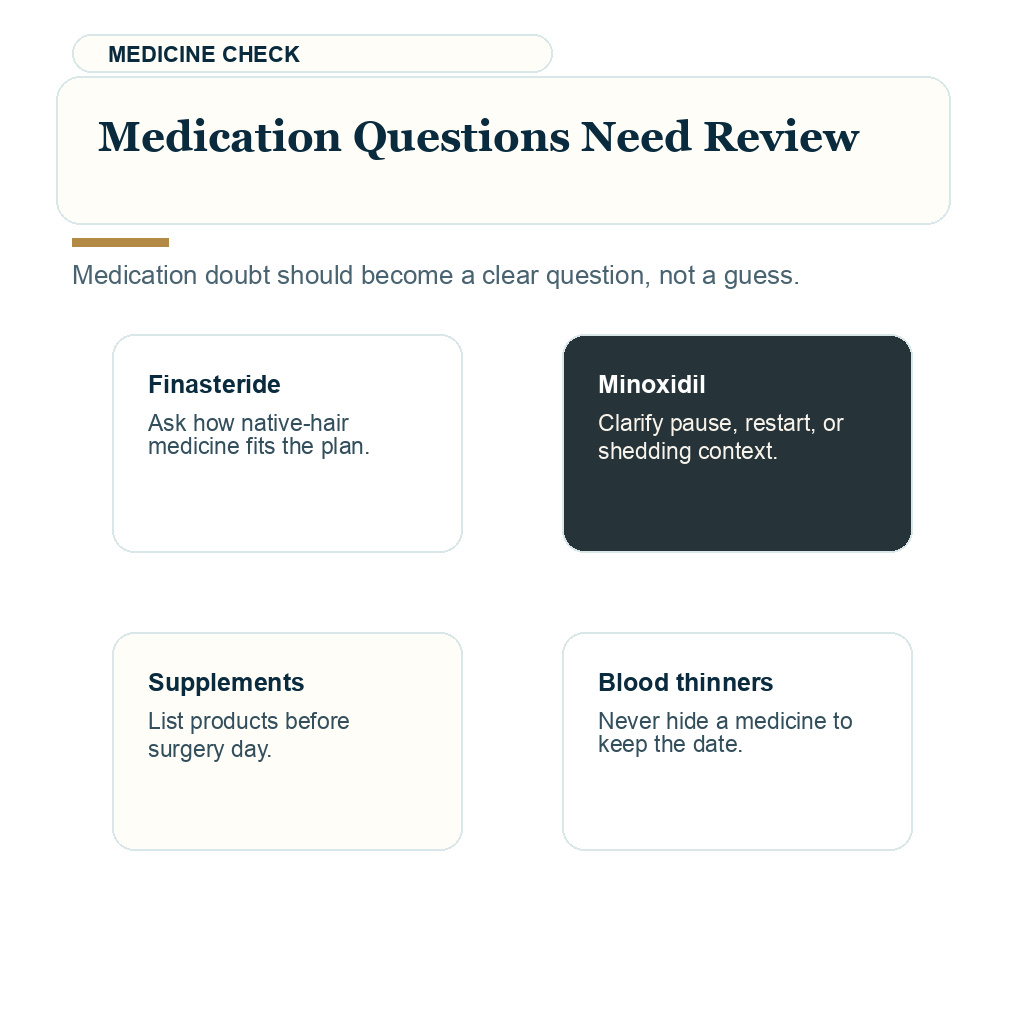
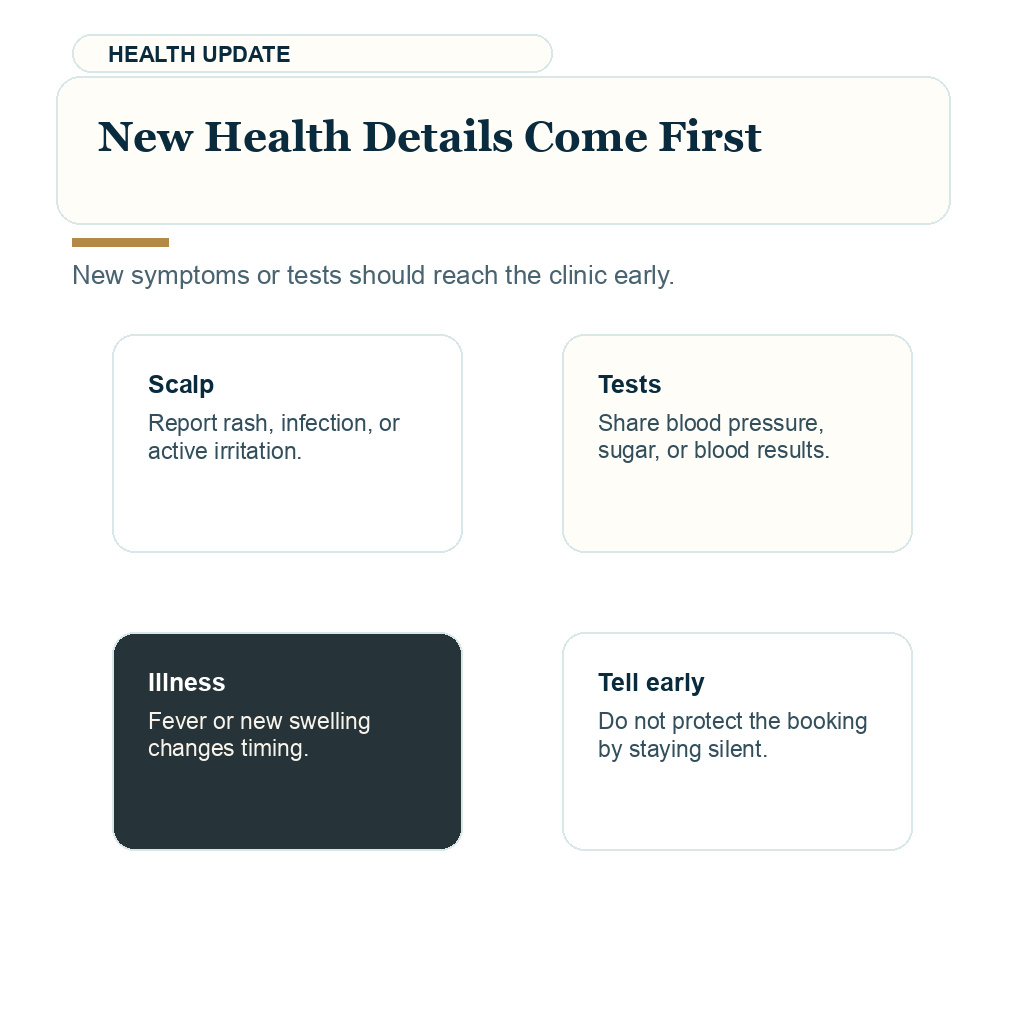
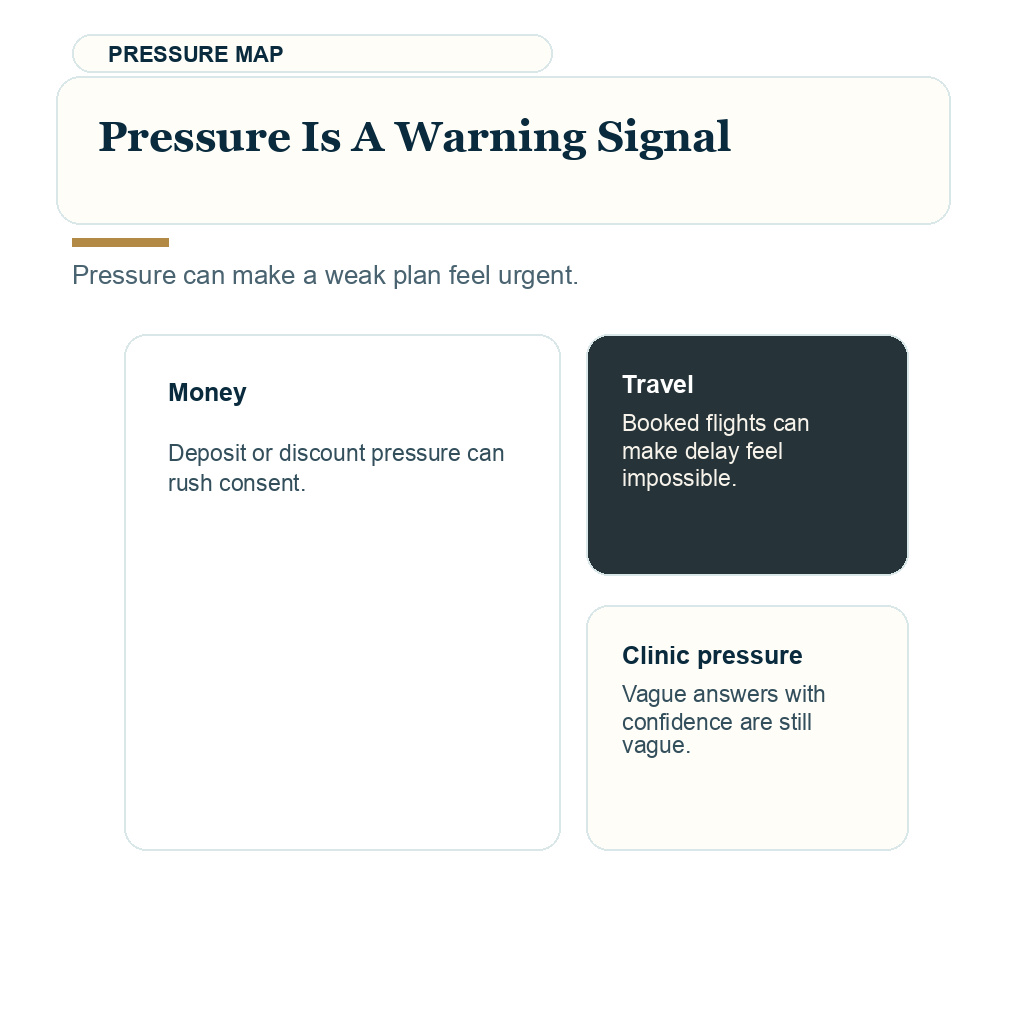
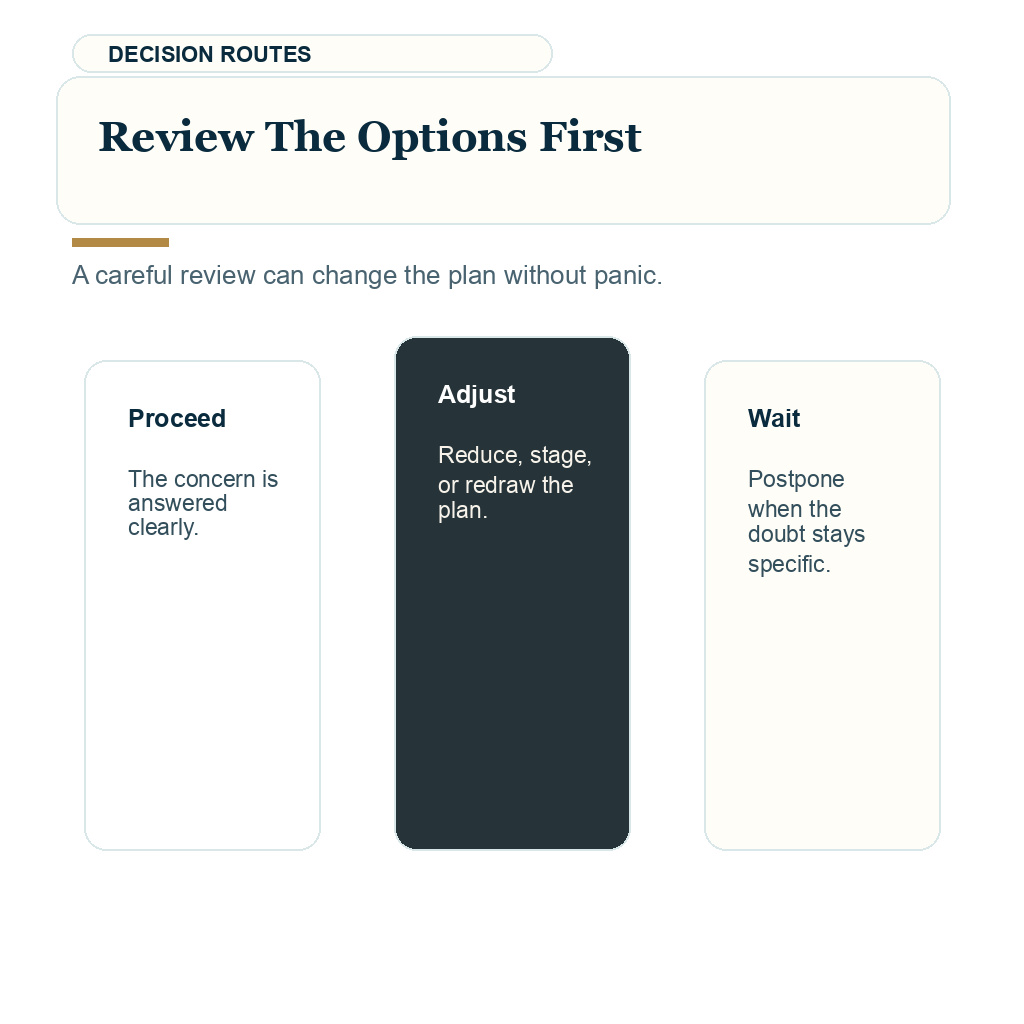
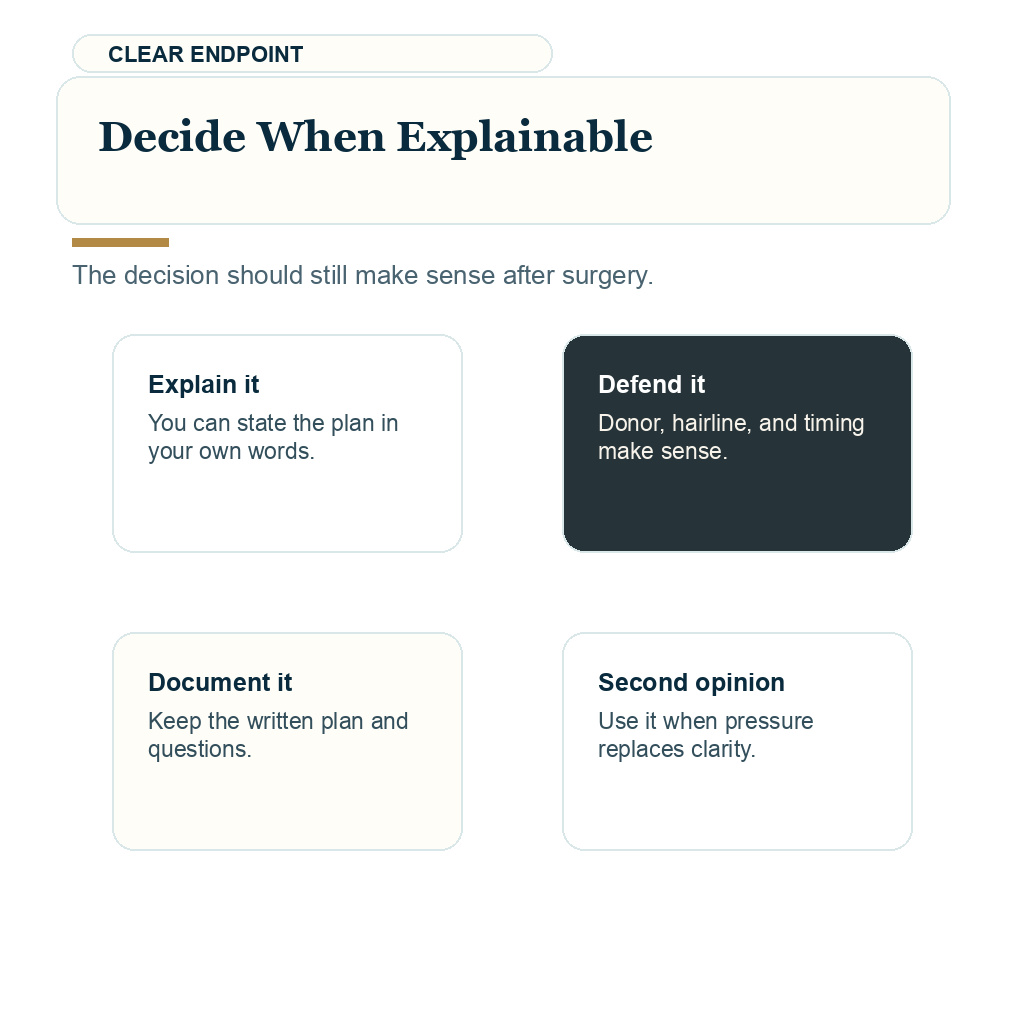
Before a booked date starts carrying the decision, these checks should be answered plainly. Fear of the procedure may settle after one clear conversation. If the doubt is about donor supply, hairline design, medication, health, surgeon role, or pressure, the surgery should wait until the answer is clear.
Postponing can be safer than continuing
Postponing can be safer when the hairline is still changing, the donor plan is unclear, active hair loss has not been addressed, new medical symptoms appear, medication changes are unresolved, scalp disease is active, blood tests need review, or you are in a crisis state. It can also be safer when the clinic cannot answer direct planning questions before travel.
A pause has several possible outcomes. Sometimes the answer is to proceed with the same date after the concern is reviewed. Sometimes it is to reduce the graft target, change the hairline, stabilize the scalp, involve another doctor, wait for medication review, or choose a staged plan. Sometimes the safer decision is to cancel that clinic or that operation entirely.
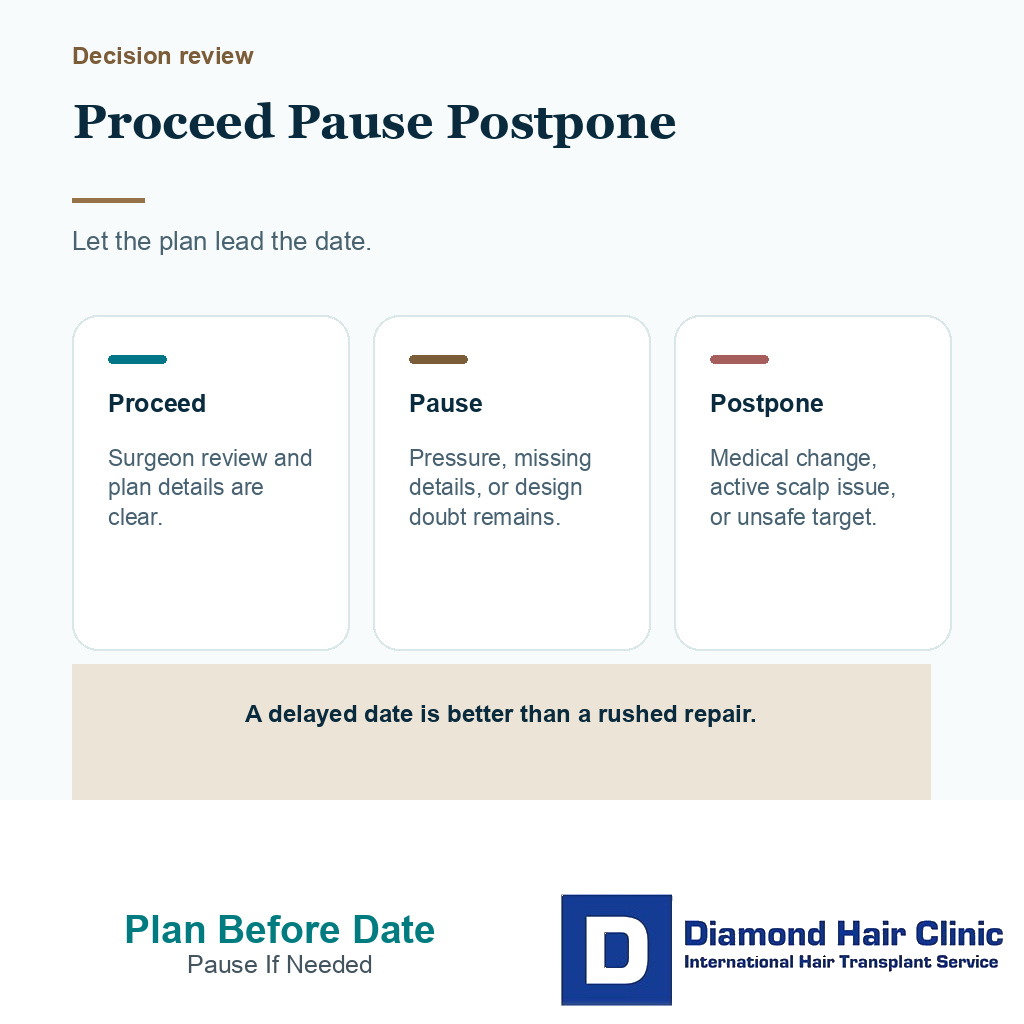
The donor area also matters here. If the graft plan risks donor area overharvesting, pausing is not weakness. It is donor protection. Once too many grafts are removed or placed in the wrong design, the repair options become narrower.
Details to settle before travel
Before you travel for surgery, the plan should be specific enough to explain back in plain language. You should know the areas being treated, the reason for the hairline height, the realistic graft range, the donor limits, the approach to future loss, the medicines or medical details that need review, and the circumstances that would postpone surgery.
The surgery also has clear limits. A transplant cannot freeze future hair loss, create unlimited density, correct every emotional worry, or make an aggressive design safe just because you want a dramatic change. The plan still has to make sense after the excitement settles.
Missing details need direct answers. Pressure is a reason to slow the decision, while a medical change needs to be reported before surgery. Hairline or donor concerns belong in the design review before any graft is moved. If the explanation still does not settle the concern, obtain a second opinion before hair transplant surgery before deciding whether to keep the date.
Before booking, the plan needs a fallback
Before you book, the plan should still make sense in the less exciting version of the future. Native hair may keep thinning, donor scarring or thinning may matter if you wear the hair very short, medication may not be tolerated or continued, and the shaved or buzzed fallback belongs in the plan before you choose a date.
Recovery also has to be emotionally realistic. If swelling, shedding, social attention, travel pressure, or a deposit would make you accept an answer you cannot explain in your own words, slow the booking until the concern is clear.
A clear decision does not depend on momentum
A sound plan remains coherent under scrutiny. The indication for surgery, donor capacity, hairline, graft number, and medical and emotional readiness should support the same decision. If one of those parts remains unexplained, the booked date is premature.
Clear answers usually reduce ordinary surgical nerves. An unresolved contradiction is different. It deserves review before grafts are moved, when the plan can still be changed without creating a repair problem.

Read this review excerpt
First wash completed and visual instructions given to my daughter.