



When Would I Say No to a Hair Transplant?
I may delay, reduce, stage, or refuse a hair transplant when operating now would spend limited donor hair badly, create a design that will not age well, ignore an active scalp or medical issue, or ask future hair loss to carry a promise it cannot carry.
No can mean a condition needs to change first. It may mean delaying the date, reducing the graft plan, staging the work, treating the scalp first, stabilizing the loss, or choosing no surgery for now. That can feel disappointing in a consultation, especially when you expected a number, a date, and a promise. My responsibility is to decide whether surgery protects you, not whether it keeps the booking easy or the graft number impressive.
A safer yes needs a real condition to change first. That may mean better donor measurement, calmer skin, a smaller first goal, or more stable loss, not a vague invitation to try again later.
A careful no can protect the future result
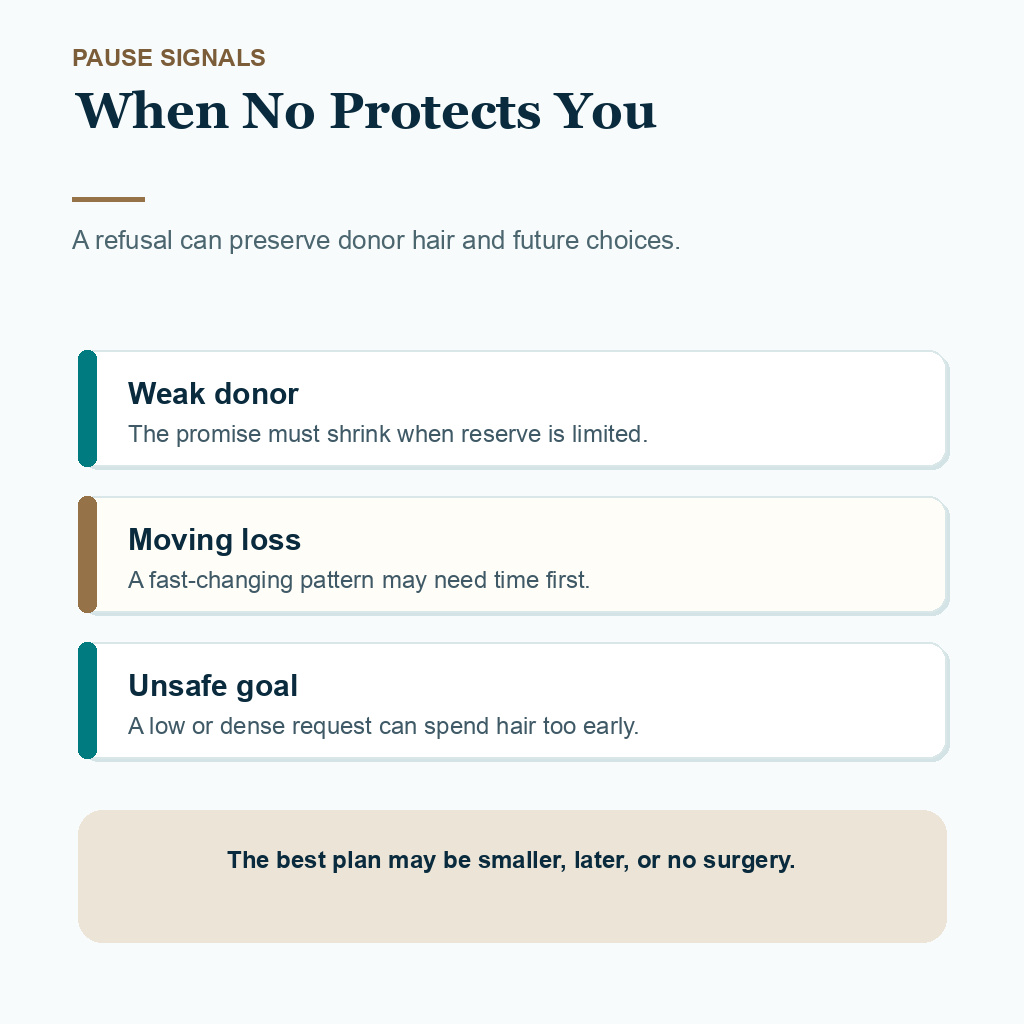
Hair transplant surgery is not only about moving grafts into empty spaces. It is a lifetime budgeting decision. The donor area is limited, native hair can keep changing, and a hairline that looks exciting on the day of drawing can become a problem if it ignores age, donor supply, and future loss.
When I say no, I am usually choosing one of four more precise paths. We may wait, reduce, stage, or decide not to operate. Each answer has a different reason. Waiting may mean the hair loss pattern is still changing. Reducing may mean the donor can support a smaller goal, not the requested goal. Staging may mean the first surgery should solve the area with the highest value and leave reserve. Refusing means the likely harm is greater than the likely benefit.
A good consultation should make that distinction clear. Someone who is a strong candidate for hair transplant surgery usually has enough donor reserve, a stable enough pattern, realistic goals, and a plan that can still make sense years later. If one of those pillars is missing, the answer may not be yes.
Which pause signal matters most?
Choose the signal that worries you most. This is not a diagnosis, but it shows why I may delay, reduce, stage, or refuse an operation before any grafts are moved.
Donor reserve may set a hard limit
If the donor area is thin, miniaturized, scarred, or already overused, a high graft promise can be harmful. The plan has to start with the donor limit, not the desired number.
- The decision may be to reduce the graft number or refuse surgery.
- I review donor density and safe zone limits first.
Moving loss may need time first
Fast change, young age, or no stabilization plan can make today’s hairline look wrong later. Waiting can make the first operation more accurate.
- The decision may be to delay or stage the work.
- I review photos, medication history, and timing first.
Medical timing can change the date
Inflamed scalp, uncontrolled illness, unsafe medication timing, or unclear skin disease can turn a possible operation into a waiting plan. The right sequence is to make you medically safe before making surgery convenient.
- The decision may be to treat, coordinate, or postpone.
- Medical clearance or scalp diagnosis comes before a surgery decision.
The goal may spend donor hair too early
A very low dense hairline, unrealistic crown coverage, or a single session promise can use future reserve before the pattern is known. A measured design may preserve choices you will need later.
- The decision may be to redesign, stage, or refuse the requested plan.
- Draw a target that fits the patient age and donor supply.
Pressure is a clinical warning sign
If you feel pushed, confused, or unable to explain the plan back clearly, the process should slow down. Consent is stronger when the limits are written and understood.
- The decision may be to pause the booking conversation.
- Use a second review with photos and written limits.
Weak donor hair can make the plan unsafe
The donor area is the first place I look when a plan sounds too ambitious. If donor density is weak, if the safe zone is narrow, if the hair is very fine, or if there are signs of donor miniaturization, I cannot treat the donor like an unlimited supply. A high graft number may look impressive on paper while quietly creating a future repair problem.
I separate the wish from the donor’s capacity. You may want the front, midscalp, and crown covered in one operation. The donor may only support a limited frontal restoration, or it may not support surgery at all. At that point, the plan needs to protect the next ten years, not only the next ten months.
I reduce or refuse the plan if the donor is already patchy, overharvested, miniaturized, heavily scarred, or clearly mismatched with the requested coverage. Very different graft quotes should make you especially careful. A weak donor with very high graft quotes needs slower review because the quote and the donor capacity may be telling different stories.
A weak donor does not always mean no surgery forever. It may mean a smaller operation, a staged frontal plan, medical treatment instead of surgery, or a repair discussion. But if the donor cannot pay for the promise, the promise should be changed before surgery starts. This is the same donor capacity problem behind weak donor area hair transplant planning.
If shaving the head already feels acceptable, I include that in the consultation. Surgery should offer enough real value to justify the donor cost, recovery, and permanent extraction pattern.
Young patients with moving loss may need more time
Age alone does not decide everything, but young age with fast moving hair loss needs caution. The danger is not that surgery cannot grow. The danger is that the transplanted area may look isolated later if native hair keeps thinning behind it. A low aggressive hairline in an unstable pattern can create a result that looks good briefly and awkward later.
In these cases I look at family history, speed of change, medication history, donor strength, and whether you understand the future tradeoff. If the pattern is still declaring itself, I may ask for time, better photos, medical treatment review, or a smaller first step. The answer is not punishment. It is a way to avoid spending donor hair before the full pattern is visible.
I am more comfortable saying yes when the goal is modest and you understand that a second stage may be needed. I am less comfortable when the goal is a dense low hairline, full crown coverage, and no acceptance of future thinning. A staged plan is often wiser than a dramatic single session promise.
Scalp and medical timing can change the decision
Sometimes the reason to delay is not donor supply. It is timing. Active scalp inflammation, possible scarring alopecia, uncontrolled dermatitis, infection risk, recent medication changes, blood thinning questions, or unclear medical history can all change the date. The operation may still be possible, but not until the risk is understood.
A surgeon-led process matters in that moment. A clinic should not ignore a red scalp, unusual shedding, painful lesions, or a medical detail just because you have already traveled. If the skin is not ready, the plan is not ready. If medication timing is unsafe, the date should move. If a medicine could change the surgery date, I review medication timing before hair transplant before confirming the plan.
I also pause when the diagnosis is uncertain. For example, donor miniaturization is not just a cosmetic detail. It can change whether the safe zone is truly safe enough to use. Donor miniaturization and safe zone decisions need direct review before graft planning.
The requested hairline still has to age well
One of the hardest no decisions is about design. You may bring a photo of a very low, straight, dense hairline. The request can be understandable. But if that design is wrong for age, donor capacity, facial proportions, or future hair loss, I should not draw it just to make the consultation feel positive.
A hairline is not a decoration placed on the forehead. It is a long-term frame for the face. It needs irregularity, mature placement, and enough donor reserve behind it. If the requested line uses too many grafts or traps you into future surgeries, redesigning before surgery is better than explaining the problem years later.
This is also where guarantees become dangerous. No surgeon can guarantee how every native hair will behave over time. A strong plan can improve the odds, but it cannot remove biology. Be careful with any clinic that turns a complex lifetime decision into a simple promise. This is the problem behind hair transplant guarantees that sound more certain than biology allows.

Read this review excerpt
The second day the driver took me to the clinic and I met with the doctor and his staff. We talked about the procedure, the expectations and the outcomes.

Read this review excerpt
Doctor designed my new hairline with discussing me and asked several questions about my health and allergy history.
Are high graft numbers ever the wrong answer?
A large graft number can sound reassuring because it feels like more coverage. In reality, a high graft quote is not a safety plan. The number only helps if the donor can safely provide it, the recipient area can use it, and the future pattern has been respected.
I worry when someone has been quoted thousands of grafts after only a quick look, without donor density measurement, safe zone discussion, medication history, or a clear explanation of priorities. I also worry when the same person has been refused elsewhere and then receives a very confident high quote from another clinic. The difference may be philosophy, but it may also be a sign that someone is ignoring limits.
The right plan may be smaller than you hoped. That is not a failure. It can be the difference between a controlled result and an overharvested donor. If the donor has already been damaged, overharvested donor area repair becomes a different conversation, with repair, camouflage, and expectation control at the center.
A smaller or later plan may protect you
The best alternative to a no is not always yes. It may be a smaller operation. It may be medication first. It may be a frontal only stage. It may be waiting six to twelve months with standardized photos. Often, delay is a treatment decision, not a failure.
Refusal is not a dramatic word for me. It is a planning tool. You deserve to know whether the concern is temporary, adjustable, or permanent. If the issue is active dermatitis, delay may solve it. If the issue is an unsafe hairline goal, redesign may solve it. If the issue is donor exhaustion, the answer may remain no.

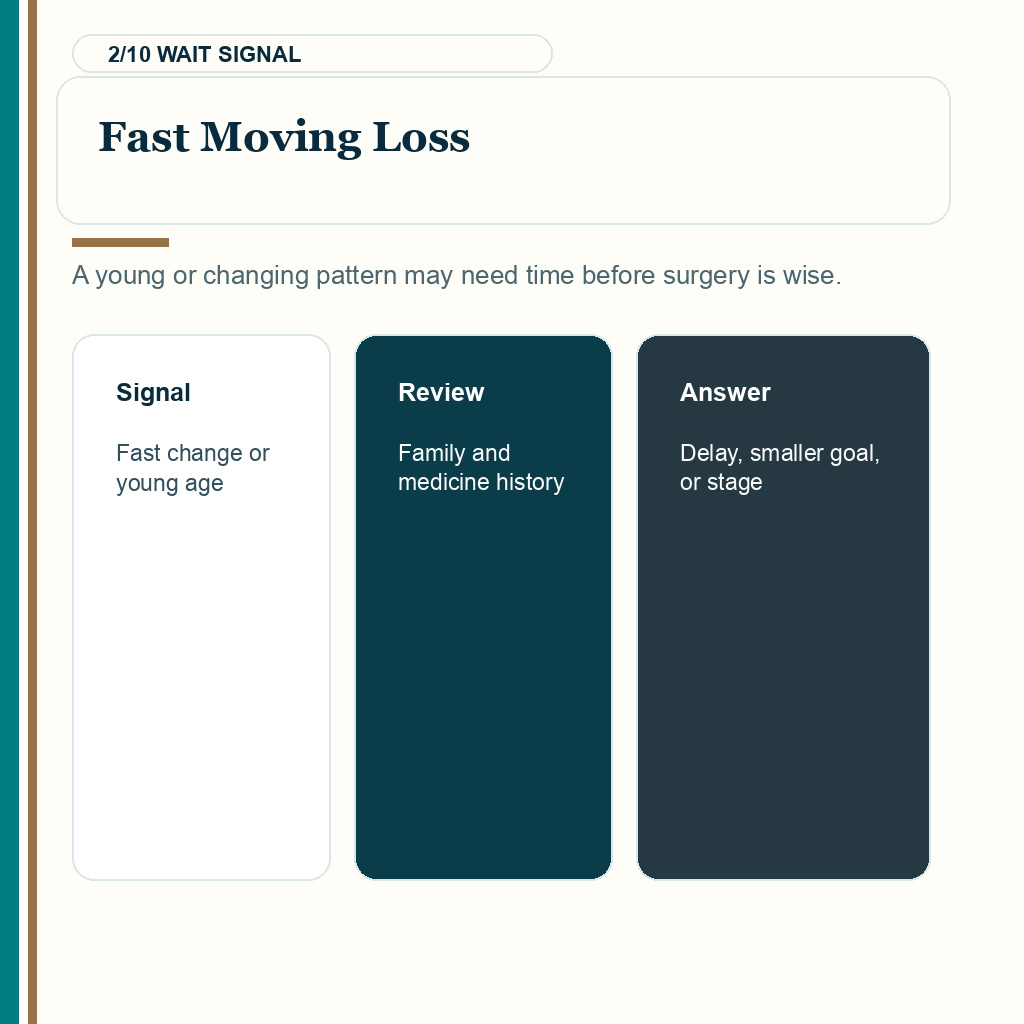
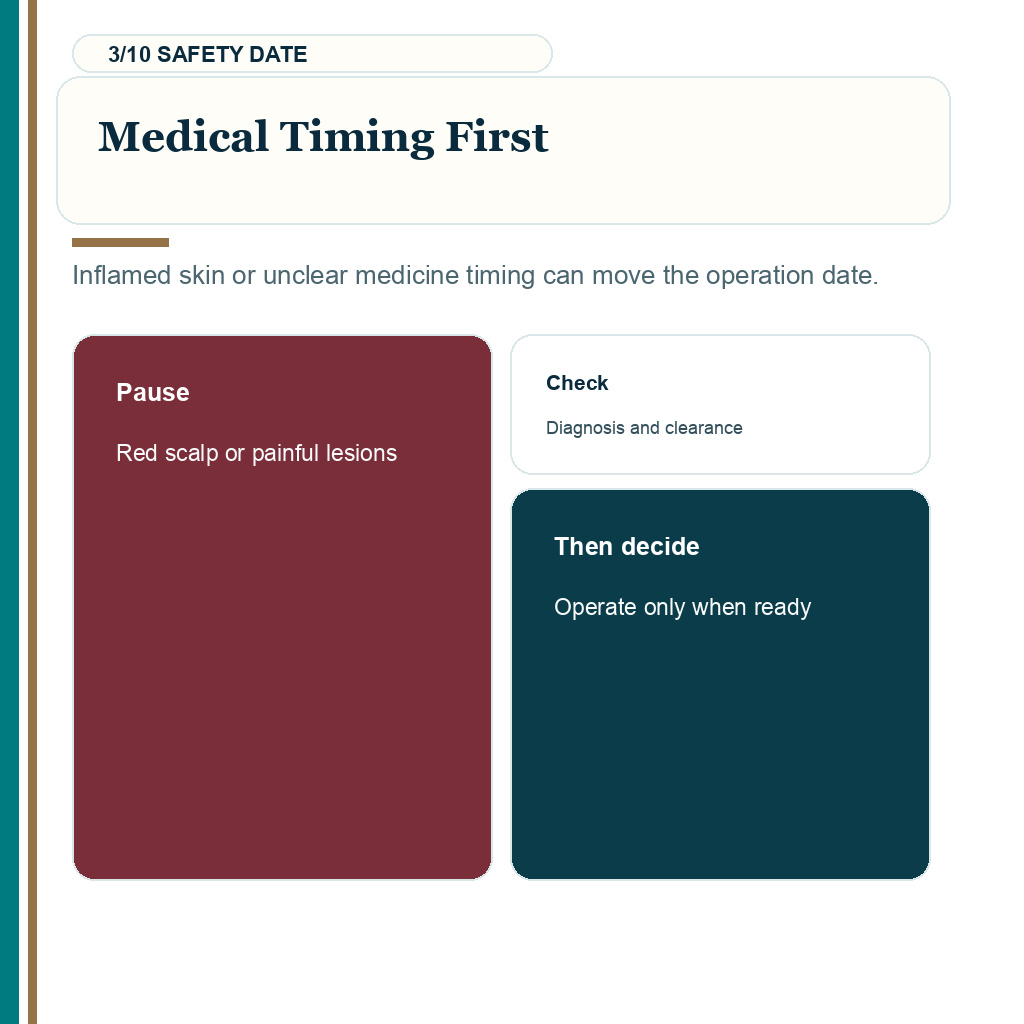
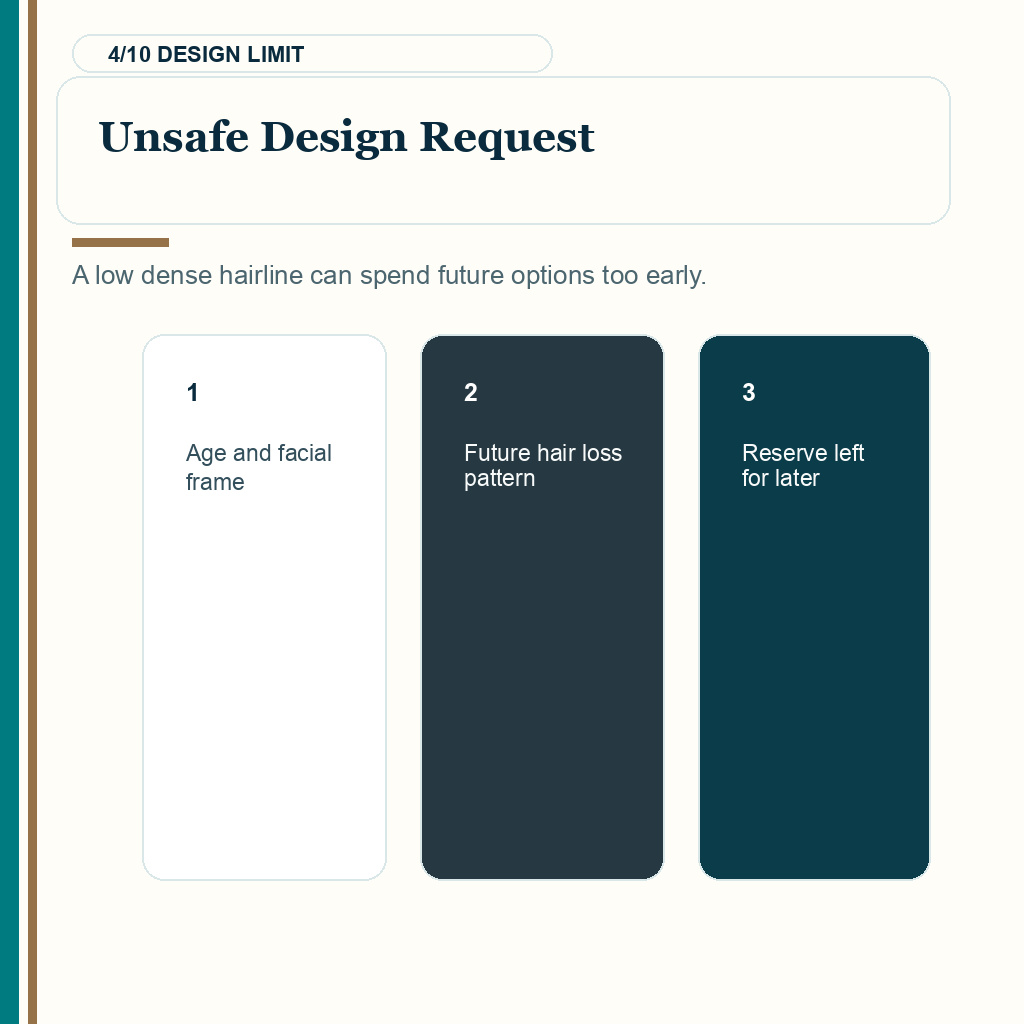


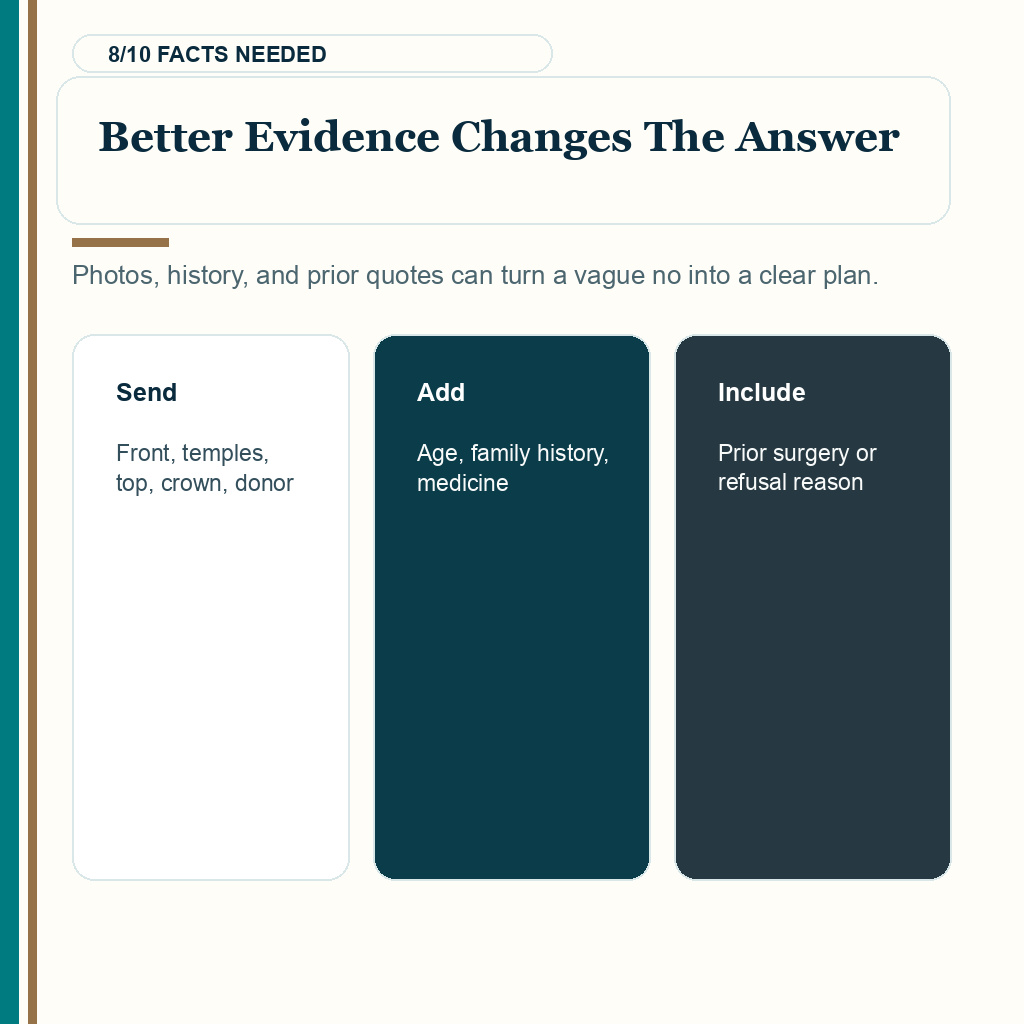
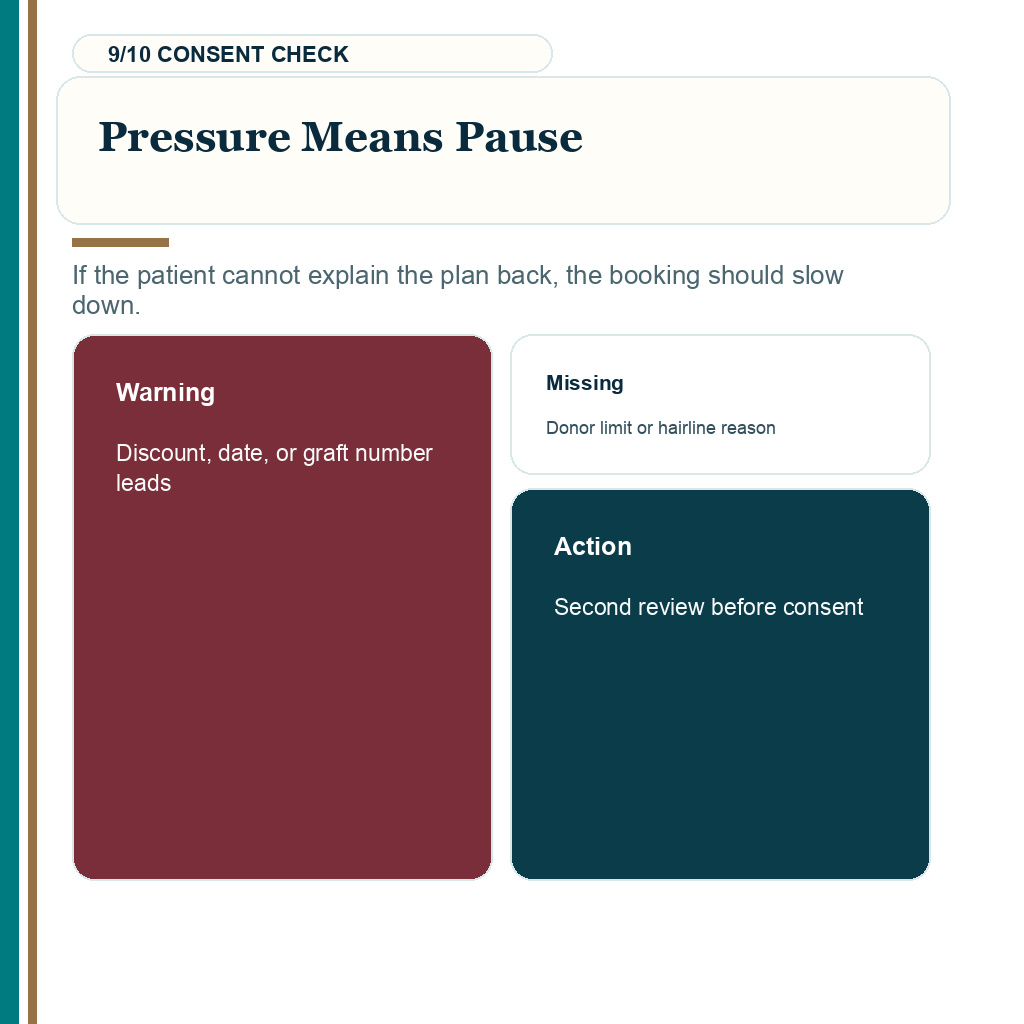
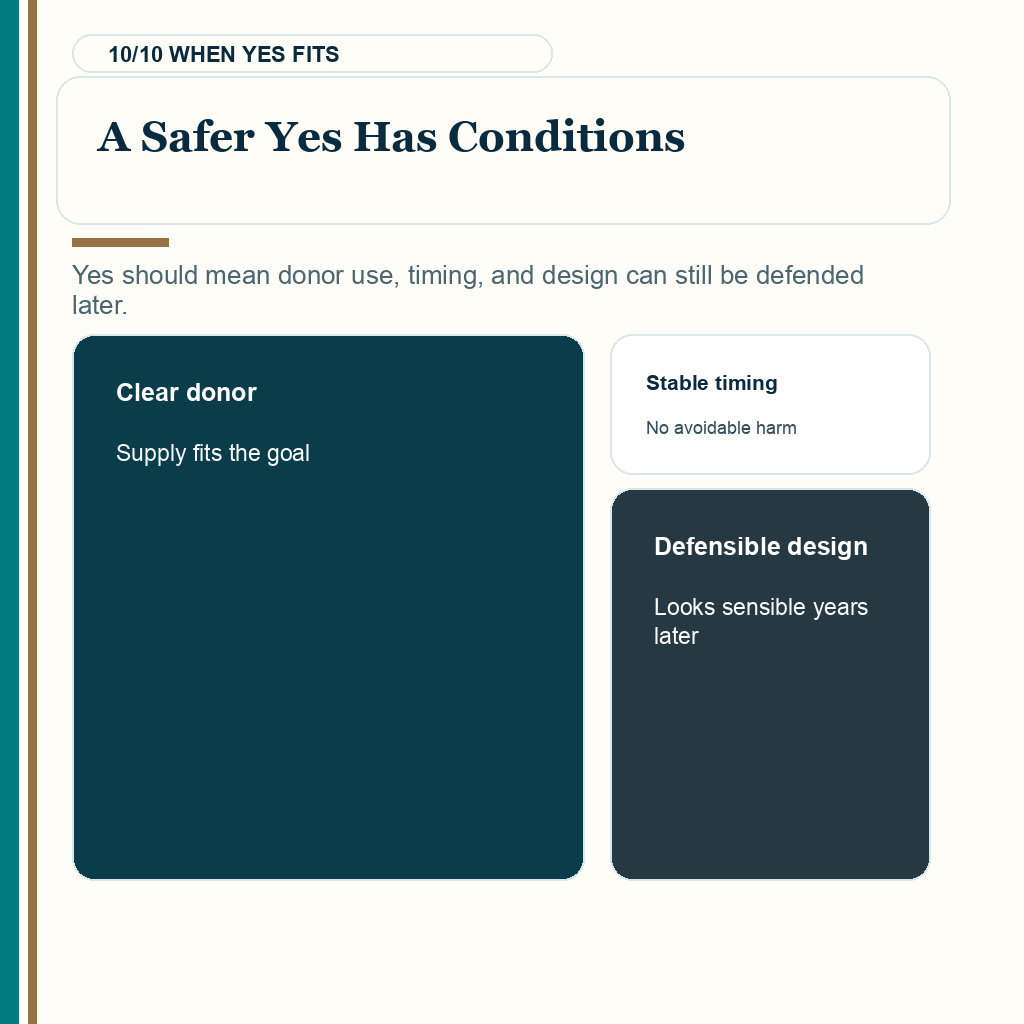
The signal tool above separates donor reserve, fast moving loss, medical timing, unsafe design, high graft promises, reducing, staging, evidence, pressure, and the point where a safer yes becomes possible. Use it as a decision check before accepting a date, deposit, or graft number.
A no should be explained without pressure
A consultation should not leave you feeling blamed. If I say no, I explain the reason in plain language and show what would need to change for the answer to become yes. If the answer is reduce, I explain what a smaller graft budget can realistically do. If the answer is stage, I explain what the first stage should and should not promise.
I also encourage you to slow down if you have second thoughts. Doubt before surgery is not always fear. Sometimes it is your mind noticing that the plan has not been explained clearly enough. Second thoughts before hair transplant surgery deserve review rather than pressure.
High pressure sales behavior in hair transplantation makes me slow down. You should be able to describe the donor limit, hairline reason, likely stages, and the worst possible tradeoff before agreeing. If the clinic cannot slow down enough to make that clear, slow down for them.
What should you send before I decide?
A remote review is only as good as the information behind it. I usually need clear photos from the front, both temples, top, crown, and donor area. I need to know age, family history, speed of hair loss, previous surgery, current medicines, and what result you expect. A short video in natural light can be more useful than a set of filtered photos.
If another clinic has already given a graft quote, send it with the reason they gave. If a clinic refused you, send that explanation too. Refusal from one clinic does not decide the answer everywhere by itself, but it should trigger a careful donor and diagnosis review. The question is not who is more optimistic. The question is who is respecting the real limit.
Hiding details because you fear being refused can make the consultation less safe. Prior surgery, medication changes, scalp disease, and donor concerns are exactly the details that make surgery safer when disclosed. If you want a clear yes, give the surgeon the facts that could lead to a clear no.
Red flags that make me slow the process
I slow down when the plan is based mainly on a graft number, a discount, or a travel date. I slow down when you cannot explain why the hairline is placed where it is, when the donor looks weaker than the proposed coverage, or when the clinic language sounds more certain than biology allows.
Some red flags are about the clinic, not you. A very high pressure consultation, a guarantee that ignores future loss, a refusal to discuss donor limits, or the same hairline for every case should make you pause. These are red flags of Turkish hair transplant clinics, not normal medical caution.
A careful clinic can still be positive. The concern is positivity without limits. In hair restoration, the limit is often the part that protects you.
A good no should still help you
When I decline a hair transplant, I do not want the patient to leave with only a closed door. The reason should give you something concrete to work with, such as unstable loss, weak donor area, unsafe hairline request, active scalp disease, unrealistic density goal, or a medical issue that needs attention first.
The important point is accountability. If I cannot defend the donor use, timing, design, or risk years from now, accepting the case would be easier for the clinic and worse for the patient.
A useful no should explain what has to change. That may be monitoring with consistent photos, treating the scalp, adjusting medication with the right doctor, reducing the hairline goal, staging the work, or choosing a non-surgical route. Saying no is sometimes the clearest way to protect the patient from a result that would be hard to repair.
Read this review excerpt
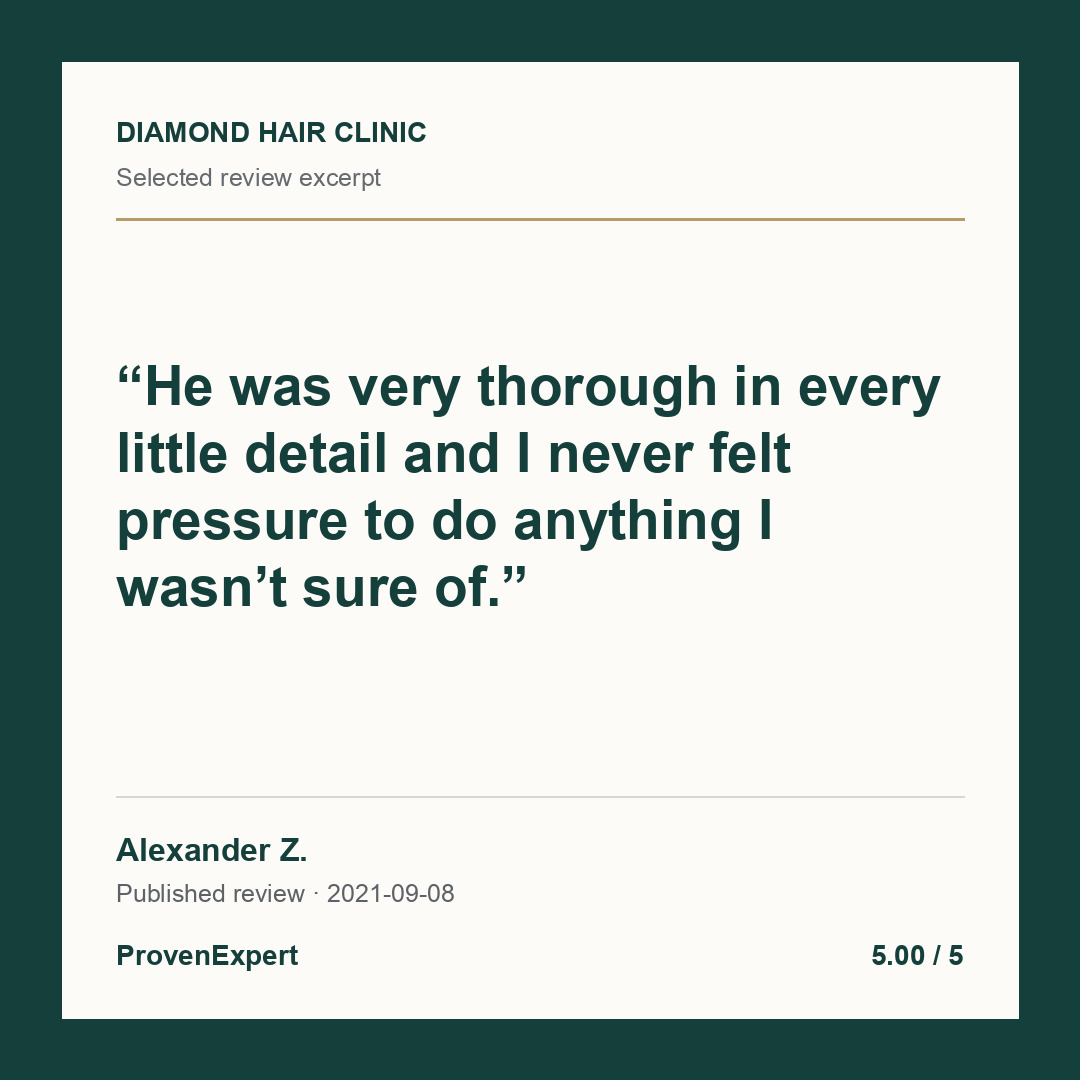
He was very thorough in every little detail and I never felt pressure to do anything I wasn’t sure of.
Read this review excerpt
I had a specific idea of where I wanted my new hairline, but Dr. Mehmet disagreed. We actually had about a 15 minute argument over it. In the end, we came to a compromise.