


Surgery Refusal Can Protect Donor Safety
A careful no can feel like rejection, but medically it is often protection. The answer may be no for now because donor reserve is weak, the hair loss pattern is still moving, the diagnosis is unclear, the timing is too risky, or the result you want would spend grafts that may be needed later.
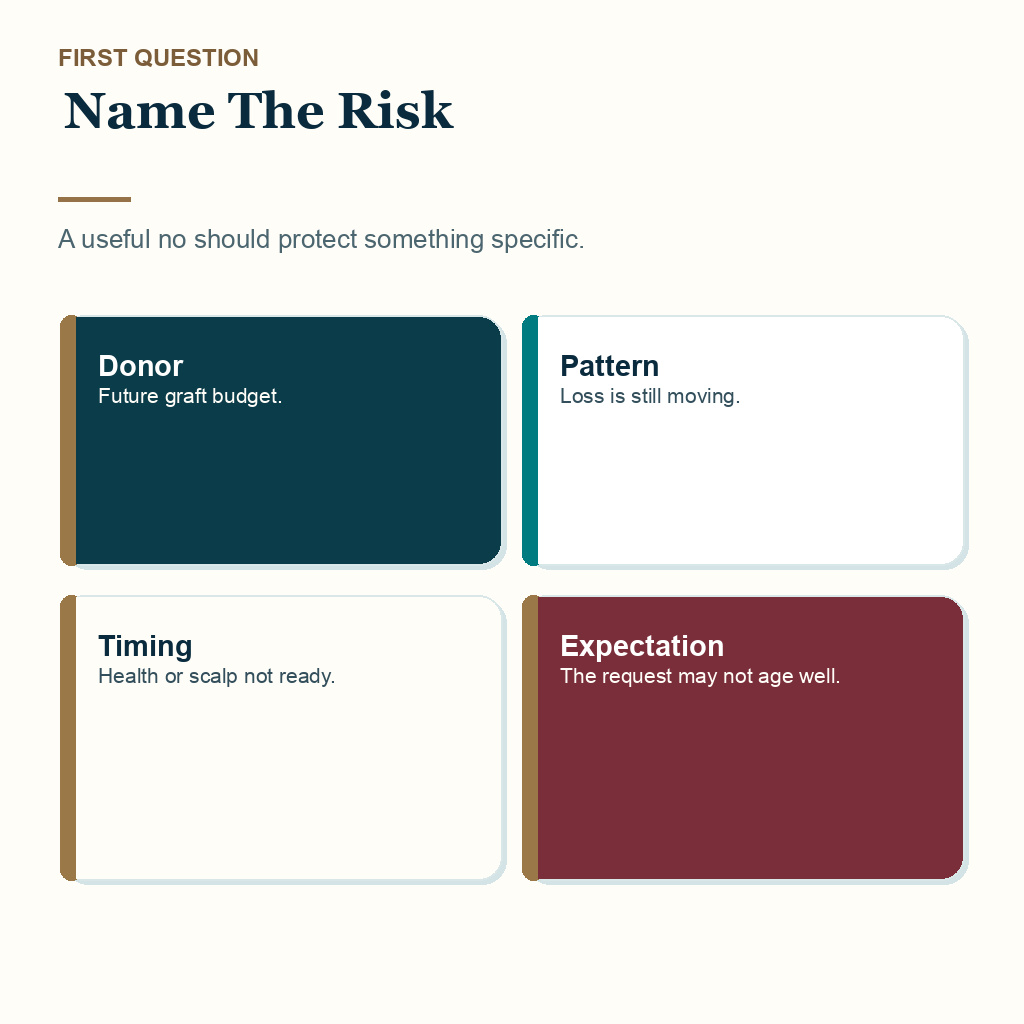
A refusal is not always the end of the discussion. The useful question is what the surgeon is protecting, and whether that problem can change with time, treatment, better diagnosis, or a smaller plan.
Before looking for another yes, the refusal reason has to be clear. A no with a real finding is more useful than an approval that ignores weak donor supply, unstable loss, or an unrealistic goal.
The unsafe response is to keep collecting approvals until someone says yes. Hair transplantation uses a limited donor supply. Once grafts are removed, they cannot be put back into the donor area. If the first no was correct, a faster yes from another clinic can turn a solvable delay into a permanent donor problem.
Family pressure, low prices, or a clinic that says yes quickly should not override a weak donor warning. If the safe answer is no surgery now, that answer is still medical care because it protects the donor area from a problem that may be harder to repair later.
How do I explain a no to a patient?
When I decline or delay a case, I try to name the exact risk. It may be weak donor supply, unstable hair loss, unclear diagnosis, medical timing, unrealistic density, or a hairline request that would create a repair problem later. I do not want a patient to leave only with the word no. The useful point is what needs to change before surgery can become reasonable.
Sometimes the next step is treatment, better photos, blood or scalp evaluation, waiting for stability, or a smaller design. Sometimes the medically responsible answer stays no. That distinction matters most for patients traveling from another country and comparing several easy approvals. The next opinion should explain the reason for the first no, not only give a different answer.
Why would a surgeon decline surgery?
I decline or delay surgery when the operation would not solve the real problem, or when doing it now would spend too much donor reserve for the years ahead. Someone can look suitable in a few front photos and still be a poor surgical candidate after the donor area, hair loss pattern, scalp condition, age, medication history, and expectations are reviewed.
A good candidate for hair transplant surgery is not simply someone with visible thinning. The plan has to match the donor supply, the recipient area size, the likely future loss, and your emotional readiness. If those pieces do not fit, the responsible answer may be delay, medical treatment, diagnosis first, a smaller goal, or sometimes no surgery.
When is being declined a useful warning?
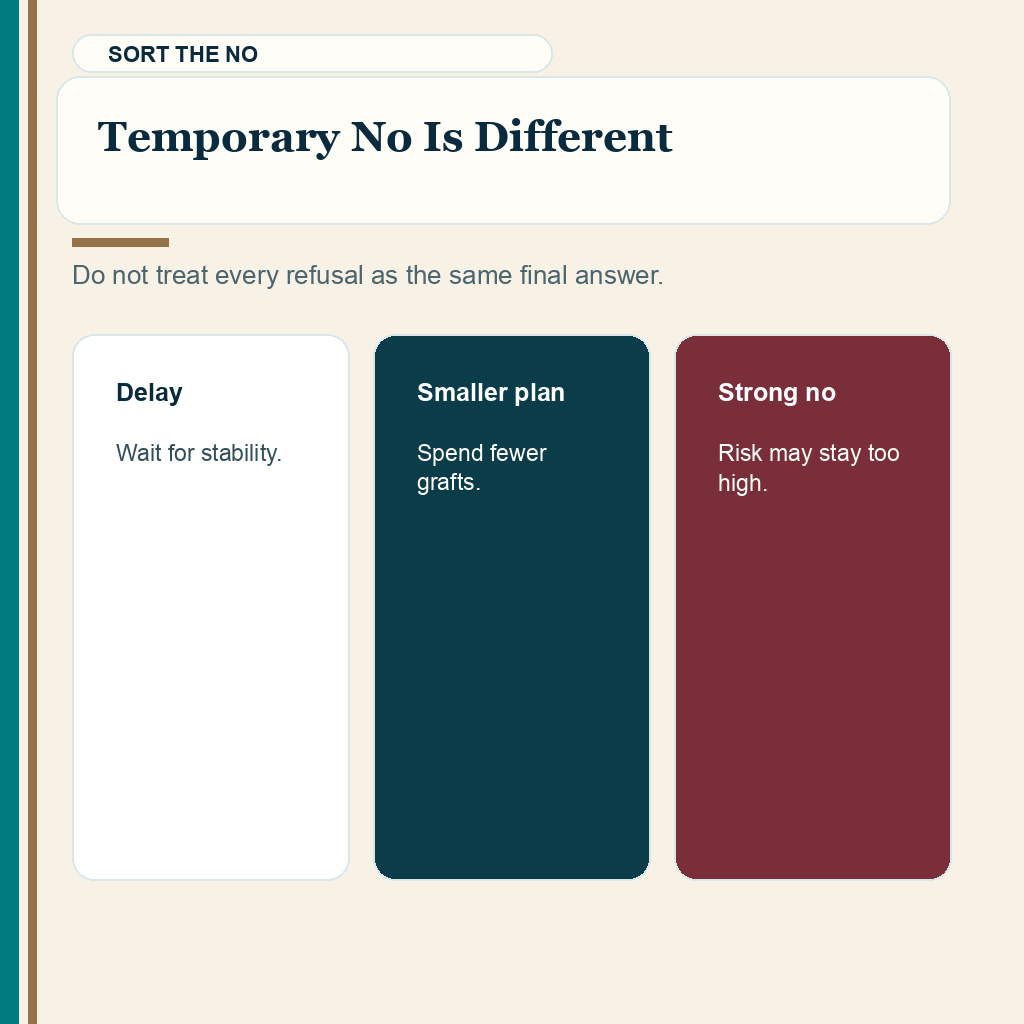
It depends on the reason. Being declined because of a temporary issue, such as active shedding, unstable medication, scalp inflammation, or incomplete photos, may only mean the timing is wrong. Being declined because donor reserve is too weak, the loss is diffuse, or the expectation is impossible is a stronger warning.
The most useful question is not who will say yes. It is whether the no was based on a real surgical limit. A temporary no, a no that requires a smaller plan, and a no that should stay no are different situations. The next consultation should test that limit carefully instead of trying to talk around it.
If two clinics disagree after a refusal, do not average the answers. Compare the examination behind each answer, including donor magnification, diagnosis, treated zones, and the result each clinic would refuse to promise.
Which donor area limits can make surgery unsafe?
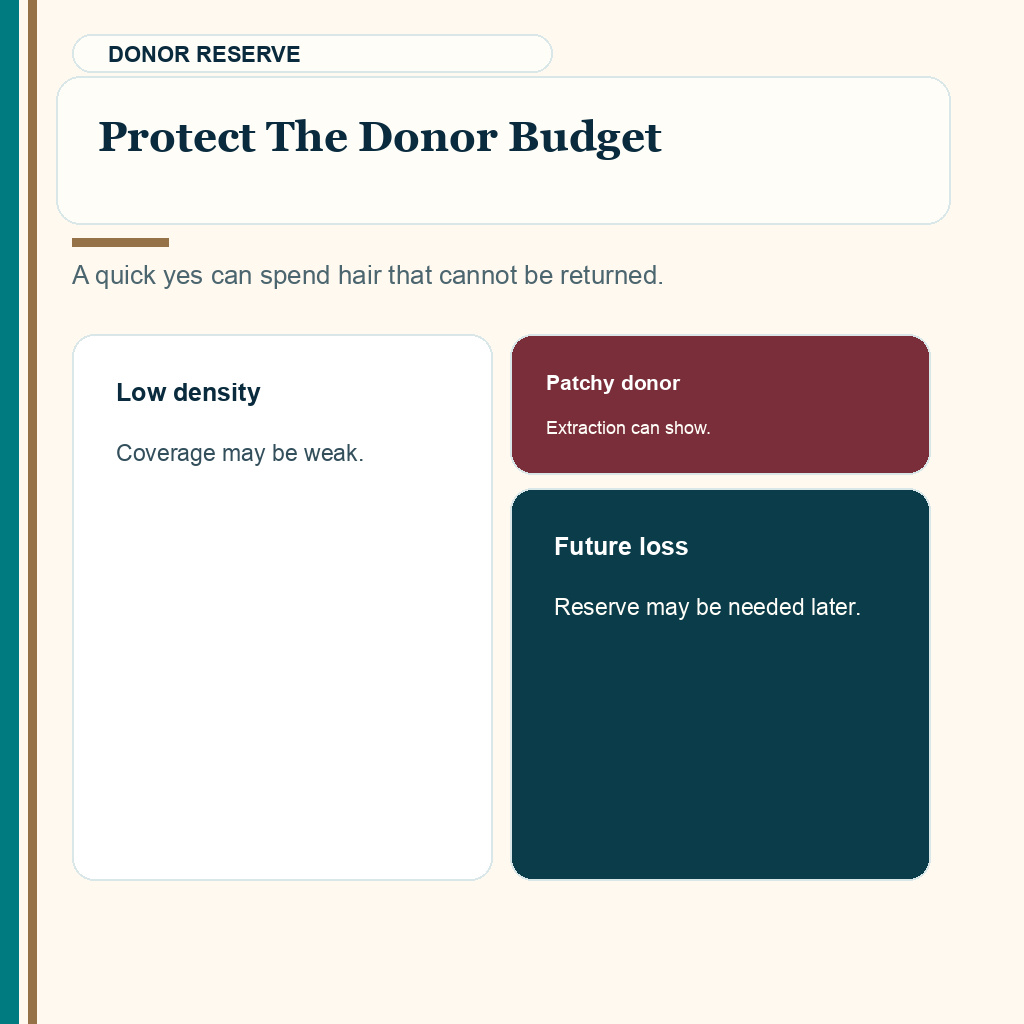
Donor reserve is the first thing I check when I am unsure about candidacy. A weak donor area may have low density, fine hair, patchy miniaturization, retrograde thinning, visible old extraction damage, or a safe donor zone that is smaller than expected. In that setting, moving hair can improve one area while making the donor look worse permanently.
A weak donor area hair transplant plan must be conservative for this exact reason. Some people are refused because the requested graft number would create overharvesting risk. Others are refused because even a smaller session would not give enough visible improvement to justify the donor cost. Donor protection is not pessimism. It is the budget for every future decision. A refusal may also be appropriate when someone asks for FUT after FUE but the remaining donor cannot cover another scar safely.
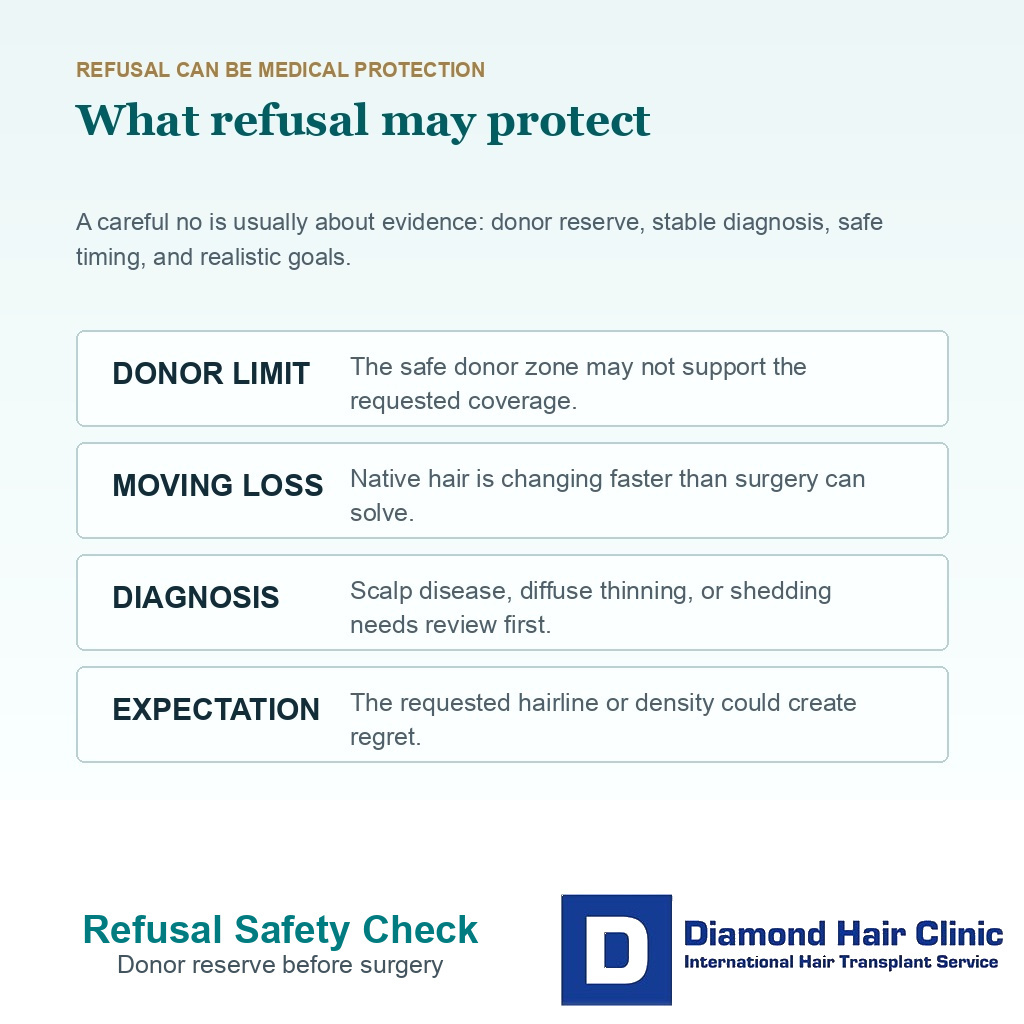
A surgeon’s refusal should identify the specific limit being protected, not leave the patient guessing.
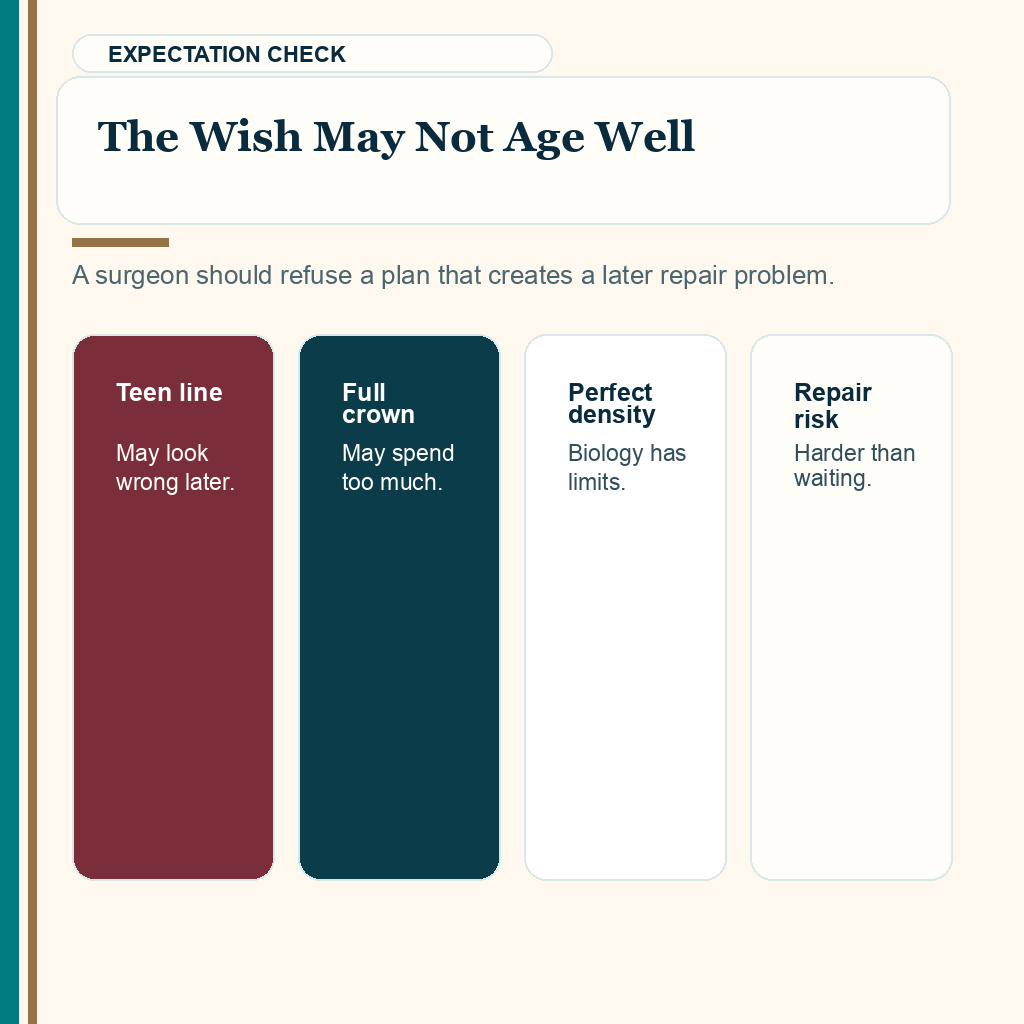
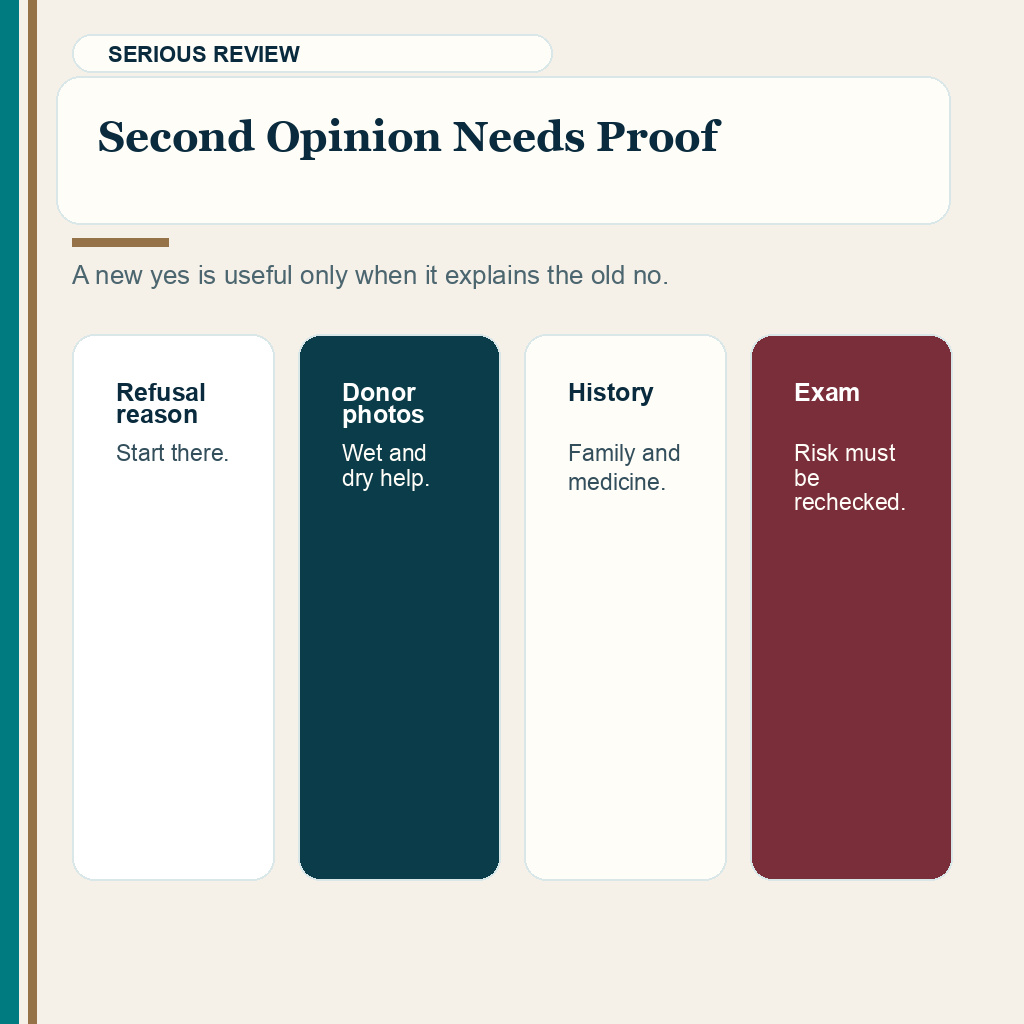
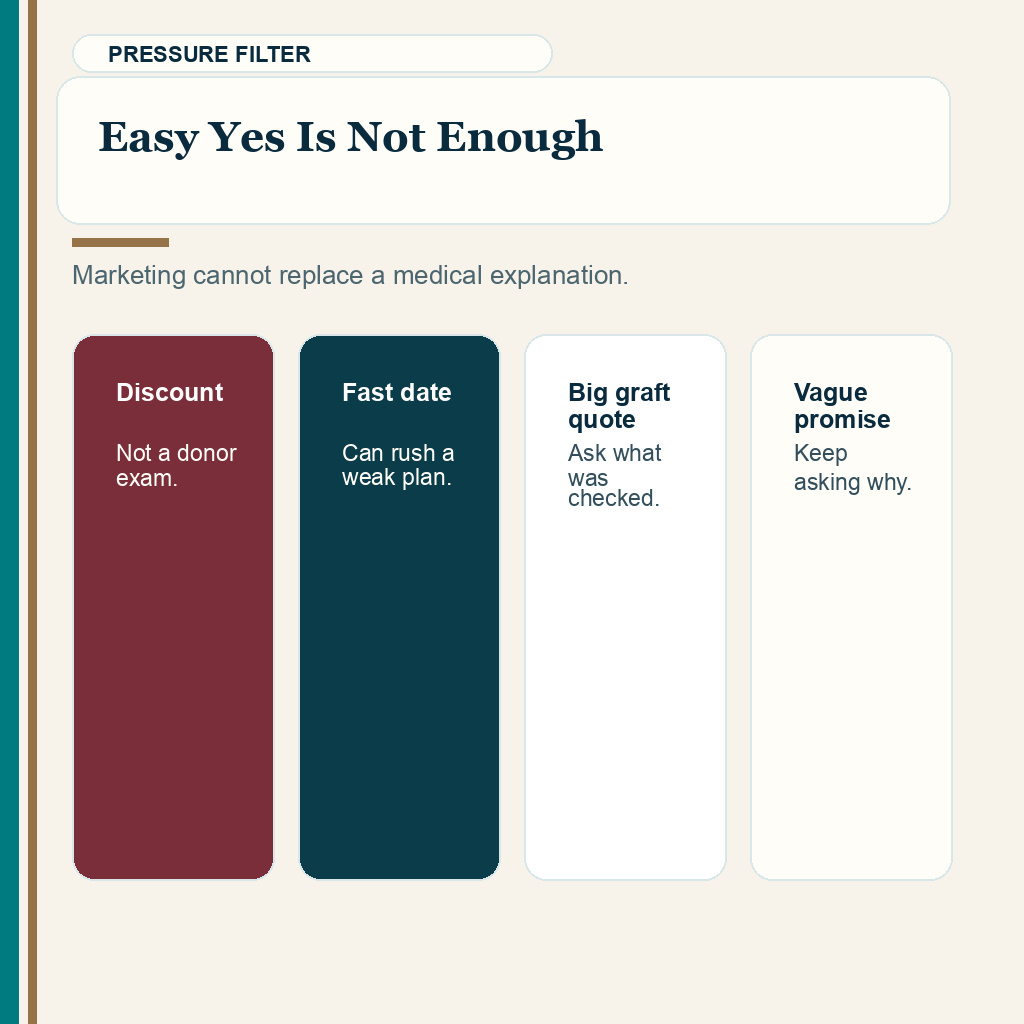
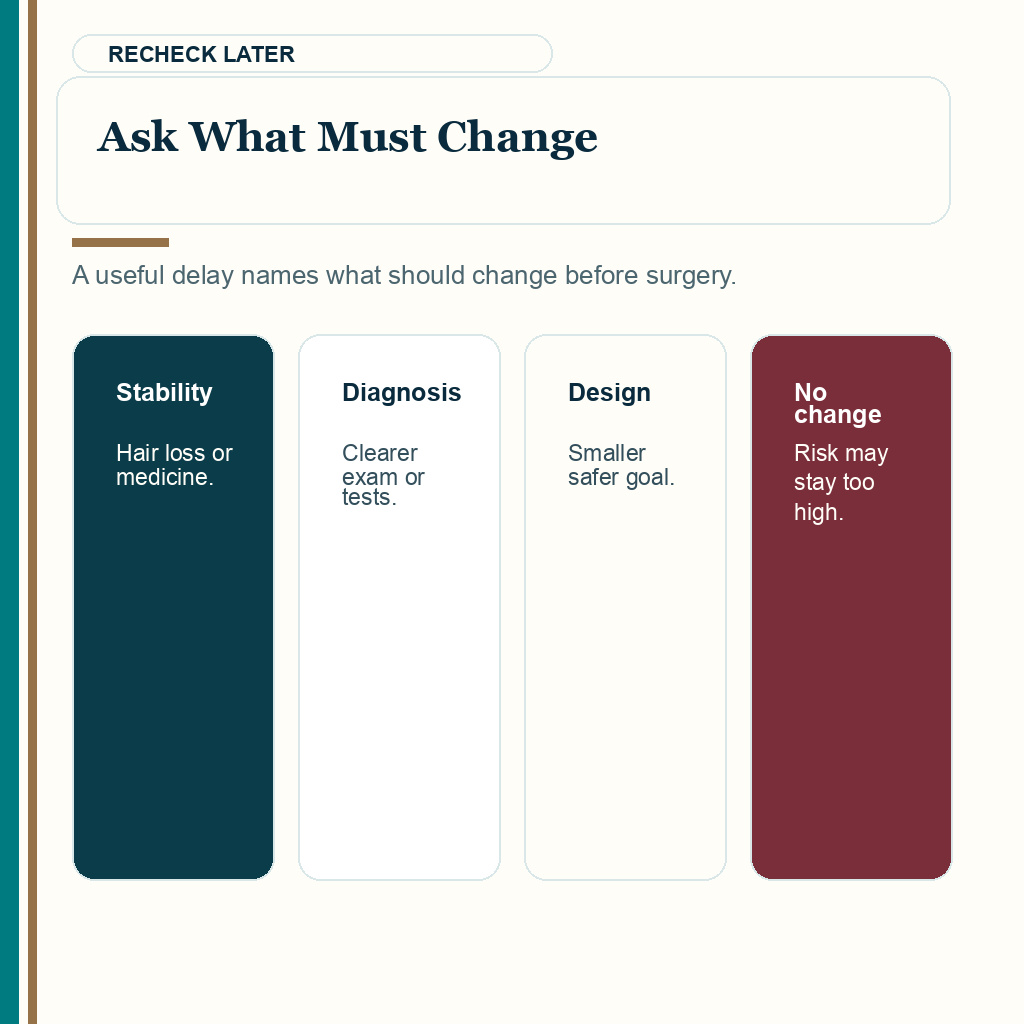
These 10 refusal review slides separate temporary delay, donor reserve, moving diagnosis, younger age planning, medical timing, expectation limits, second opinion evidence, easy yes pressure, and what must change before surgery becomes safer. Swipe sideways, use the arrows, or choose a number below the image.
Active hair loss or diffuse thinning changes the decision
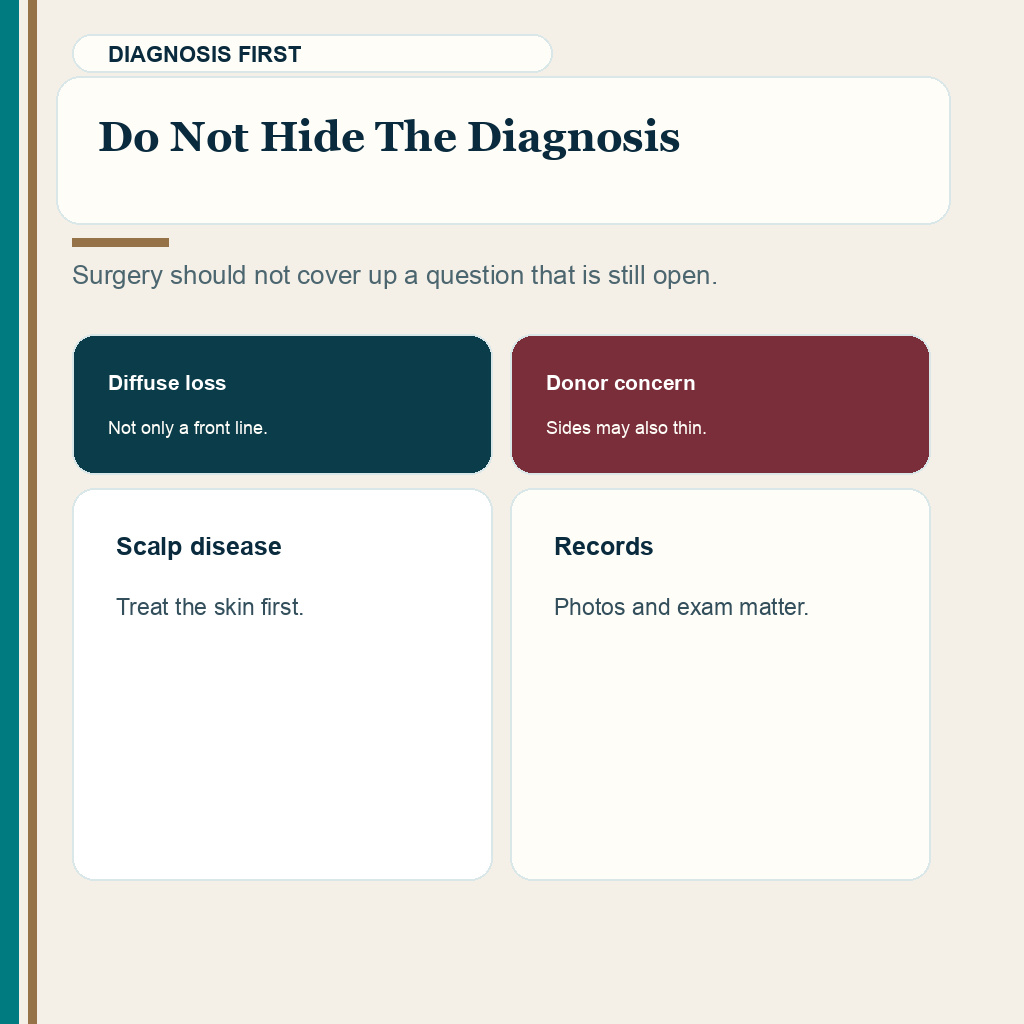
Transplant surgery works best when the surgeon can separate permanent pattern loss from temporary shedding or diffuse miniaturization. If hair is thinning across the top, sides, or donor region, the problem may not be a simple frontal recession. A transplant can be aimed at the wrong problem if the diagnosis is still moving.
When diffuse thinning is part of hair transplant planning, I slow the decision down more than I would for a stable hairline case. The same is true when signs point toward retrograde alopecia or DUPA, because donor reliability itself may be in question. Surgery should not be used to hide a diagnosis that has not been understood.
Young age can make the plan too risky
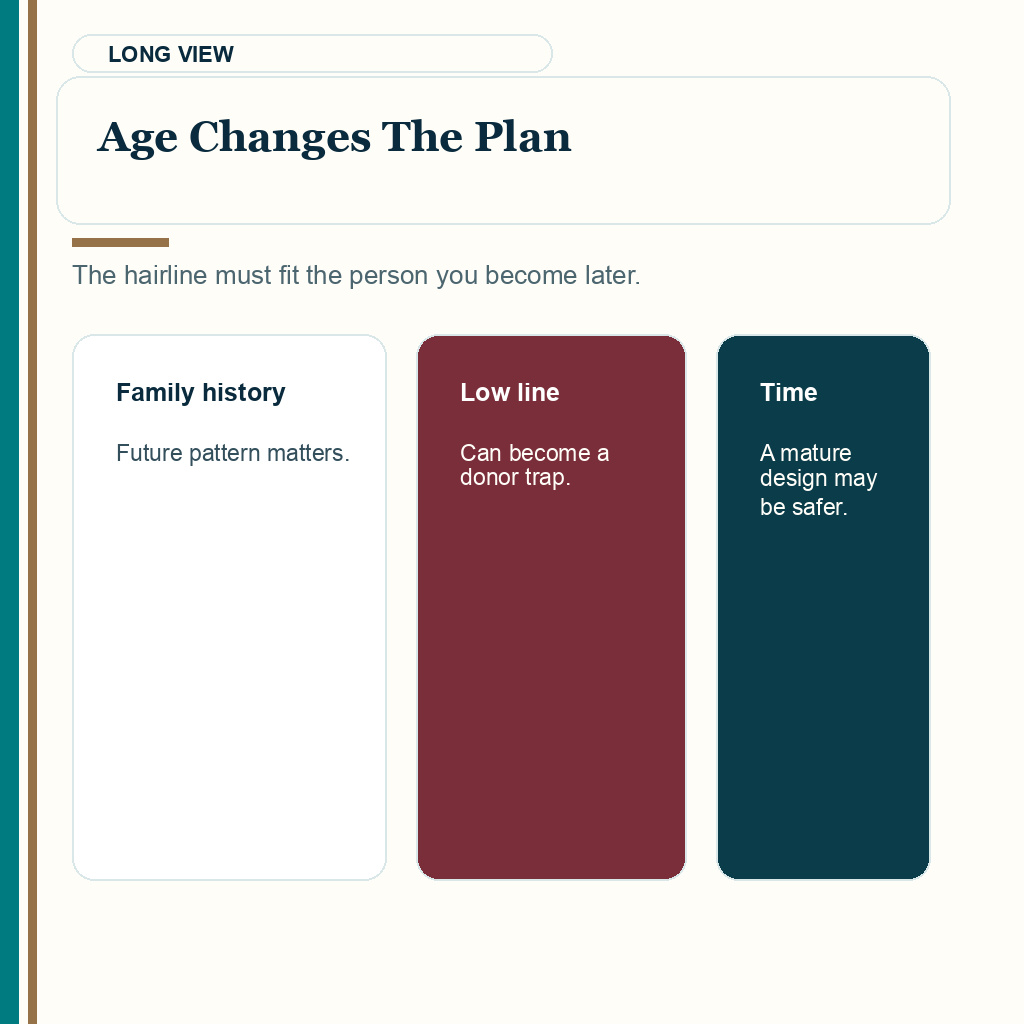
Young age alone does not make surgery impossible, but it raises the risk of planning from an incomplete picture. A low hairline that looks attractive at 22 can become a donor trap if the patient later progresses toward advanced hair loss. The earlier the surgery, the more important the future pattern becomes.
For a young patient, my review starts with family history, current Norwood pattern, miniaturization, medication tolerance, and the maturity of the requested hairline. Some people need time, treatment, or a more conservative design before grafts are spent, especially when the concerns in young hair transplant planning are present.
Medical or scalp conditions that should settle first
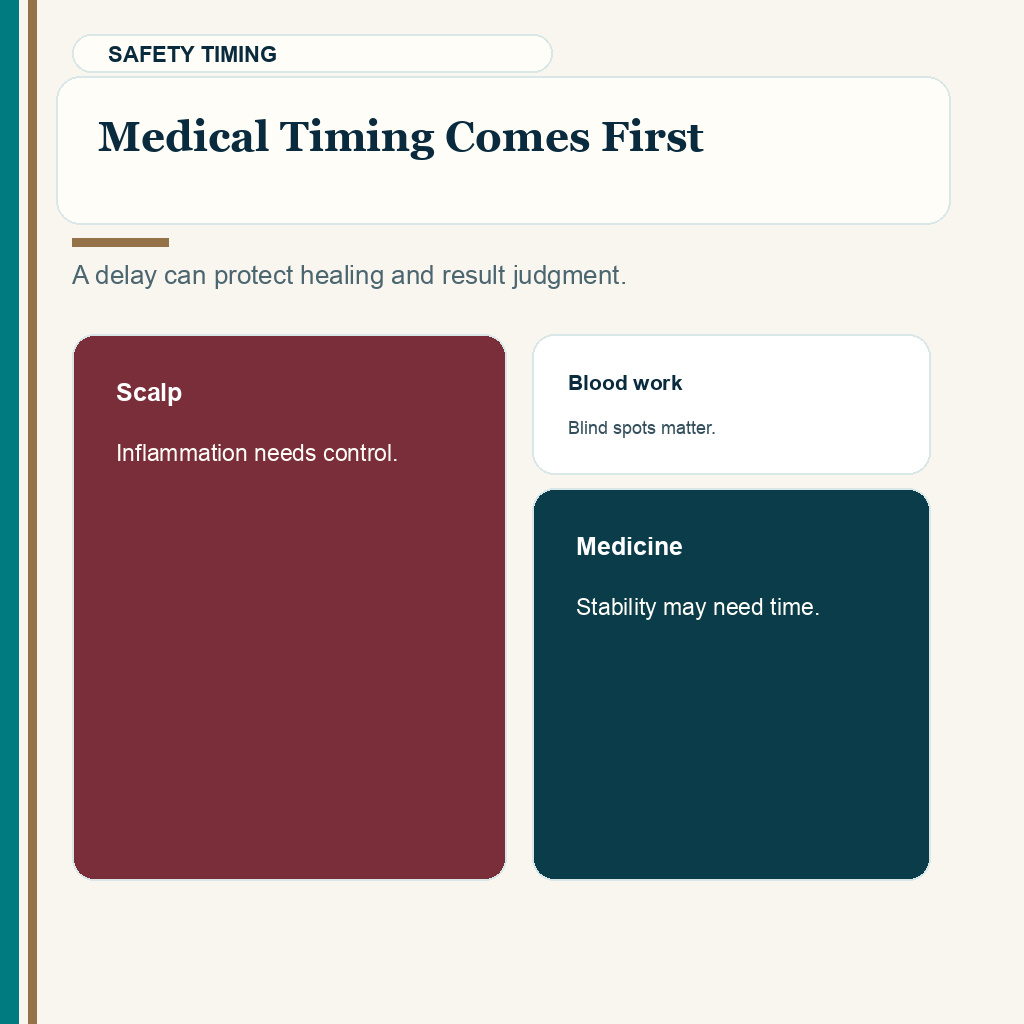
A refusal can also come from medical timing. Scalp psoriasis, seborrheic dermatitis, folliculitis, scarring alopecia, recent telogen effluvium, medication changes, abnormal blood tests, or uncontrolled health problems can make surgery a poor decision at that moment. These are not small cosmetic details. They affect diagnosis, healing, infection risk, and whether the result can be judged fairly.
A dermatology diagnosis, blood work, medication stabilization, or a scalp biopsy may need to come before transplant planning. Female patients especially need careful diagnosis before grafts, because female hair transplant candidacy can depend on iron status, thyroid disease, PCOS, postpartum shedding, traction, medication history, and pattern stability.
Expectations should be tested before another consultation
Some refusals happen because the requested result would not age safely. You may want teenage hairline lowering, very high density, full crown coverage, or a transformation in one operation with limited donor hair. The surgeon’s job is not to match the wish if the wish creates a visible problem years later.
I test expectations by moving the result out of perfect clinic photos. What would you accept under harsh light, wet hair, wind, future loss, and shorter haircuts? I also ask whether you understand that transplanted hair can last for many years when donor hair is stable, but native hair may continue thinning. If the only acceptable outcome is a perfect one, surgery may become emotionally unsafe even when the scalp looks technically possible.
Getting a second opinion after being refused
A second opinion can help, but it should be a serious medical review, not a search for agreement. Bring the refusal reason, clear donor photos, wet and dry photos, medication history, family history, previous diagnoses, and any blood test or scalp findings. Ask the second surgeon to explain whether the first concern was valid.
Also clarify whether the refusal is about the findings in your case or about the type of case that surgeon usually accepts. Being outside one surgeon’s usual work is not proof that surgery is suitable elsewhere. Take the same donor findings, diagnosis, and coverage goal into the next review.
A second opinion before hair transplant surgery is most useful when it becomes more specific than the first answer. If one clinic says no because of donor miniaturization and another clinic says yes without checking the donor under magnification, that yes should not comfort you. A second opinion is useful when it explains the no better, not when it simply replaces it with a yes.
Repeated refusals should slow the decision down. A later opinion has to deal with the same donor limit, miniaturization risk, and coverage goal, because a quick yes can spend grafts that cautious reviews were trying to protect. When the new answer ignores the reason for refusal, it is not yet a stronger answer.
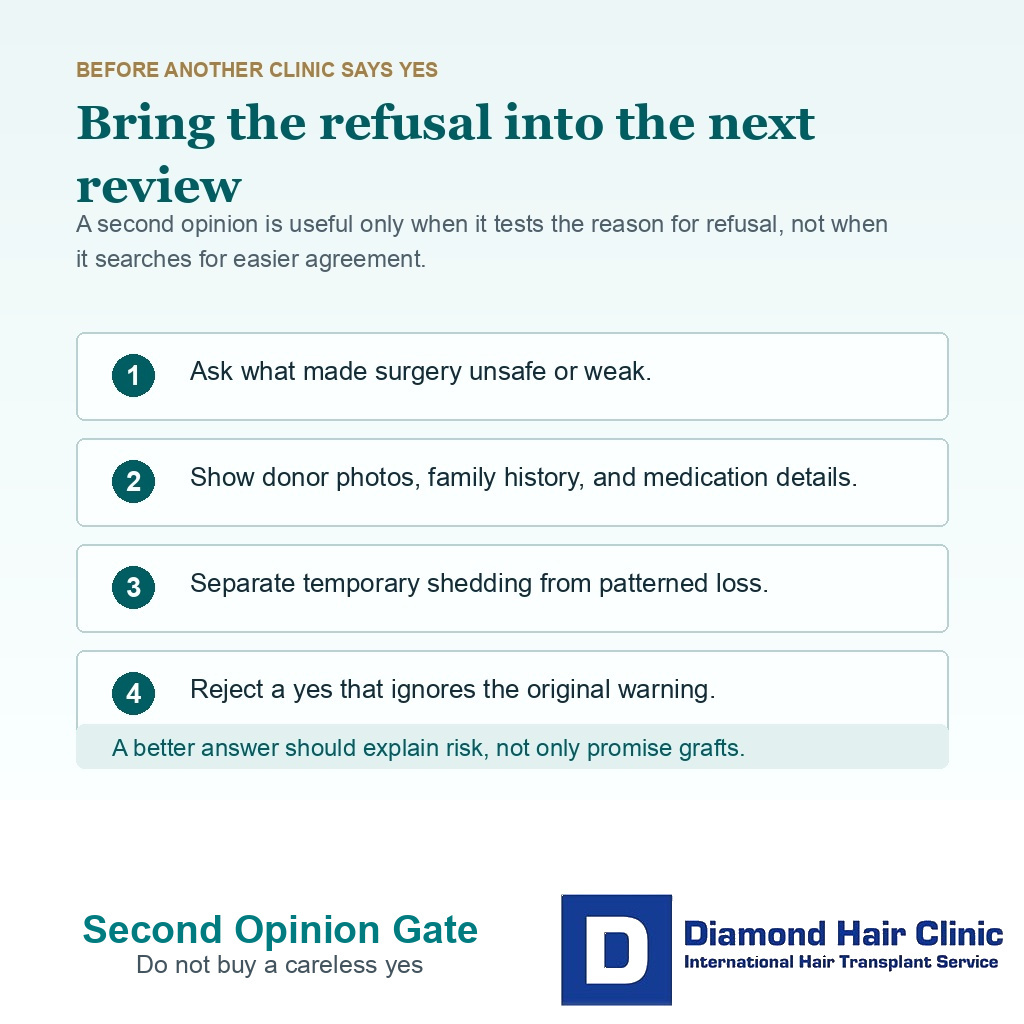
After a refusal, the next consultation should examine the reason for the no before discussing graft numbers, travel dates, or a deposit.
Read this review excerpt
Diamond Hair Clinic was thorough in their review of my headshots, I felt they answered my questions earnestly and had strong long term reviews.
Read this review excerpt
After whatsapp video consultation with doctor, I figured out Dr.Demircioglu working style so different than other hair transplant clinics.
Waiting still can be useful
Waiting does not mean doing nothing. If the issue is active hair loss, medication planning may help stabilize native hair. If the issue is scalp inflammation, treatment can settle the skin. If the issue is unclear diagnosis, the right examination can prevent a wrong surgery. If the issue is emotional pressure, time can separate a stable decision from panic.
Some people need a period of medical treatment, photo tracking, or donor reassessment. Some need to understand the tradeoffs of early surgery during active hair loss. Others need to speak openly about anxiety, mirror checking, or body dysmorphia and hair transplant decisions before surgery becomes a healthy choice.
Refusal review map
Test a new yes against the original no
A second opinion helps only when it explains the original refusal, checks the same risk again, keeps safer choices open, and removes booking pressure from the decision.
First check
A useful no names the risk being protected
Several refusals versus one fast yes
| Pattern | What it may mean | What must be clear before travel |
|---|---|---|
| Several clinics refuse surgery | The donor area, diagnosis, or expectation may be unsafe for surgery now. | The refusal reason should be specific enough to test in a serious second opinion. |
| One clinic accepts quickly | The clinic may see a route, or it may be skipping the same risk. | The approval should show donor reserve, untreated areas, and the stopping rule. |
| The answer changes after photos only | Photo review may have missed miniaturization, scalp disease, or donor weakness. | An in person examination should be able to make the plan smaller, delayed, or rejected. |
The safest yes is the one that answers the original no. Weak donor planning and a serious second opinion belong in the same decision.
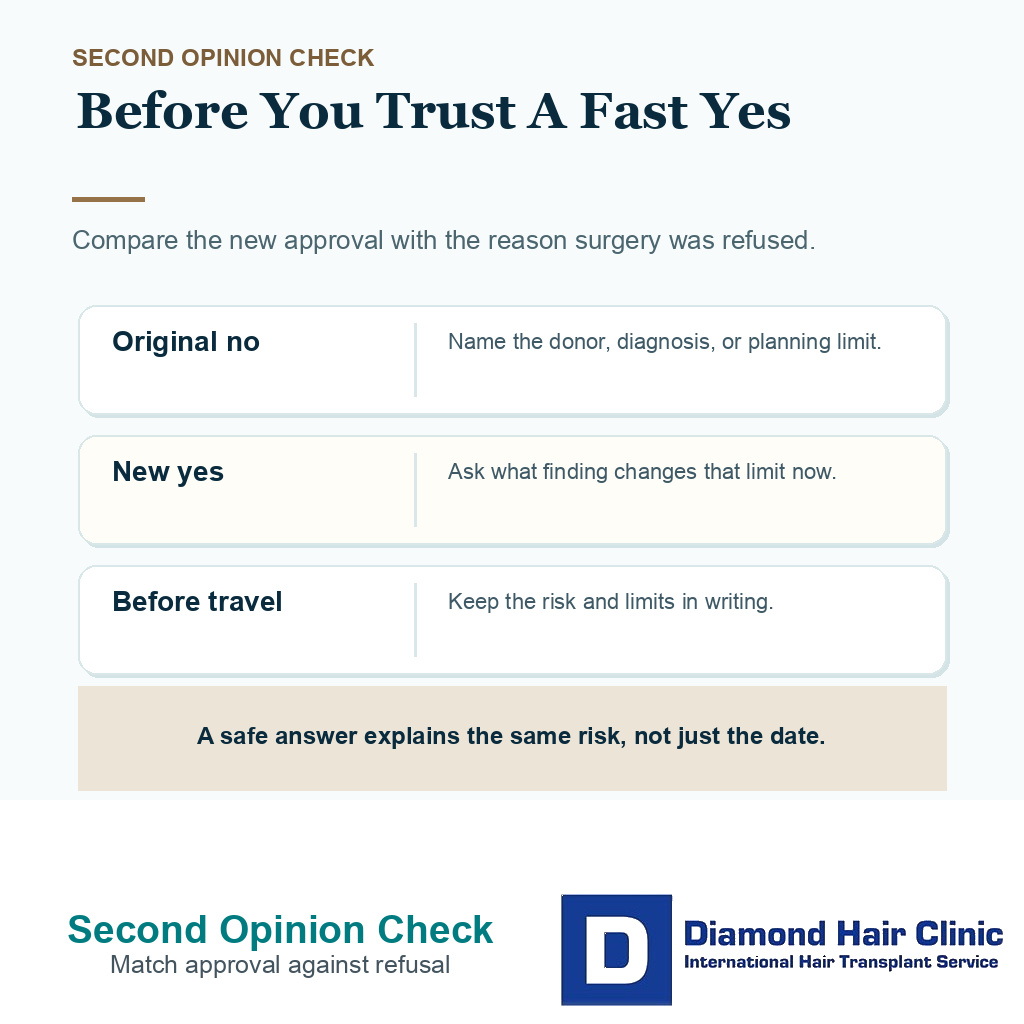
What should you check before trusting an easy yes?
Slow down when a clinic answers a refusal with a discount, a quick graft number, or a promise that the previous surgeon was too conservative. Ask who examined the donor area, who designs the hairline, who decides the graft number, and what happens if the plan changes on surgery day. A useful yes explains the no first. If the answer stays vague, the approval may be marketing, not medical judgment.
Be careful when an easy yes arrives through hair transplant booking pressure or planning from photos alone. That kind of approval can feel reassuring, but it may skip the donor, diagnosis, and long-term risk checks that led to the first refusal.
Before you trust it, the clinic should explain donor limits, future hair loss, diagnosis, hairline design, repair risk, and whether it can show results from hair like yours. If it cannot explain those points, the yes is weak.
Can follow-up change the answer after a no?
A refusal is not always permanent. I may want follow-up photos, medication response, blood test review, scalp treatment, or more time before I decide whether surgery can become reasonable later.
What matters is whether the reason for the no has changed. If active hair loss slows, the scalp condition settles, expectations become realistic, or the donor looks more reliable after review, the answer can be reconsidered. If the same risk remains, saying yes would not be more responsible simply because time has passed.
When can surgery become reasonable later?
Surgery can become reasonable later when the reason for refusal has changed or has been clarified. Active shedding may settle. Scalp disease may come under control. Medical treatment may stabilize native hair. Better photos or direct donor examination may show that the first assessment was incomplete. A mature hairline design may replace an unsafe low design. That is a no today, not necessarily a no forever.
But some reasons do not change enough. A depleted donor area, advanced diffuse donor miniaturization, unrealistic density expectation, or severe emotional fixation may still make surgery unwise. A careful review should not turn every no into yes. It should show whether a safer, smaller, staged, or delayed plan can genuinely help.
What should be documented before a patient pays or travels?
A refusal or delay has to be useful, not vague. I write down whether the reason is weak donor reserve, unstable loss, unclear diagnosis, scalp inflammation, unrealistic density request, hairline risk, or a repair plan that would spend too much for too little benefit.
If the answer might change later, the record needs to name what has to change. That may be medication stability, clearer photos, blood or scalp review, a smaller design, or enough time to prove the hair loss pattern is stable.
This matters before a deposit or flight because a rushed yes can remove the patient’s last safe option. A careful no is not a rejection when it protects the donor, the hairline, and future choices.
A refusal should leave a useful reason
Being declined for a transplant is frustrating, but the reason matters. Weak donor supply, unstable loss, diffuse thinning, unrealistic goals, medical risk, or poor timing all lead to different next steps.
A careful refusal should explain what would need to change, what should stay avoided, and whether treatment, observation, or a smaller target could make sense later.
No surgery today can be protective when the alternative is spending donor hair into a result that will not age well.
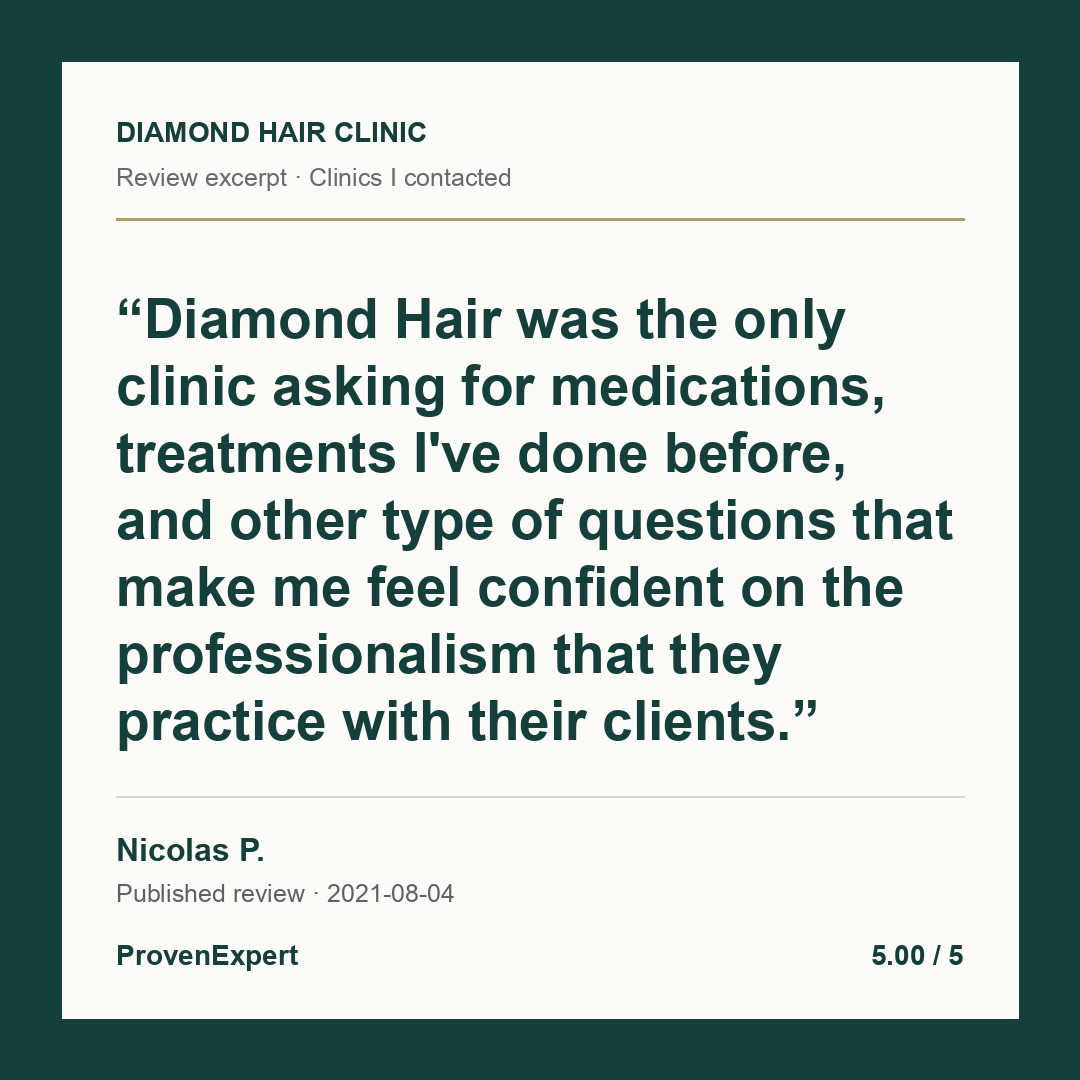
Read this review excerpt
Diamond Hair was the only clinic asking for medications, treatments I've done before, and other type of questions that make me feel confident on the professionalism that they practice with their clients.
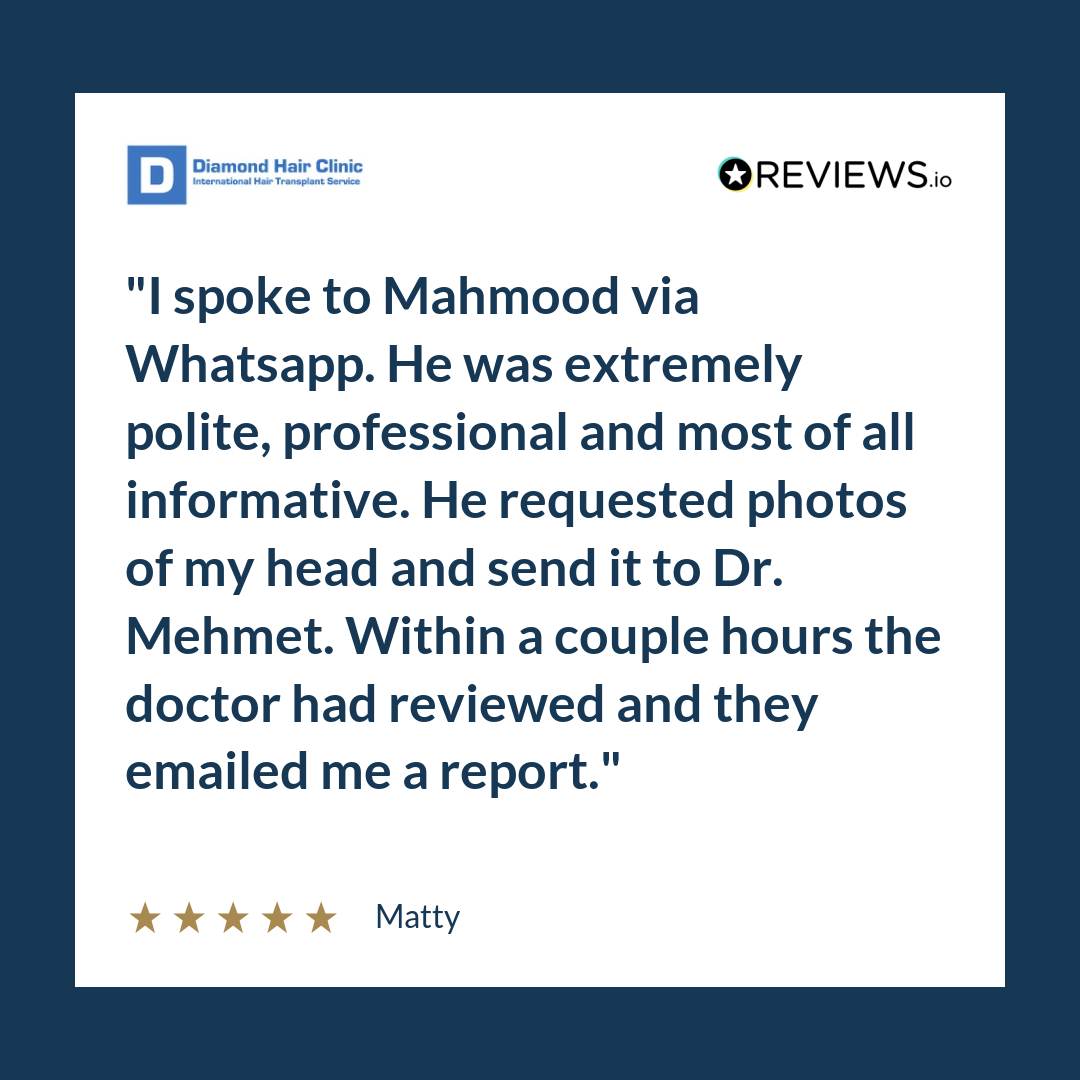
Read this review excerpt
I spoke to Mahmood via Whatsapp. He was extremely polite, professional and most of all informative. He requested photos of my head and send it to Dr. Mehmet. Within a couple hours the doctor had reviewed and they emailed me a report.