





FUT can still be a reasonable second step in selected cases
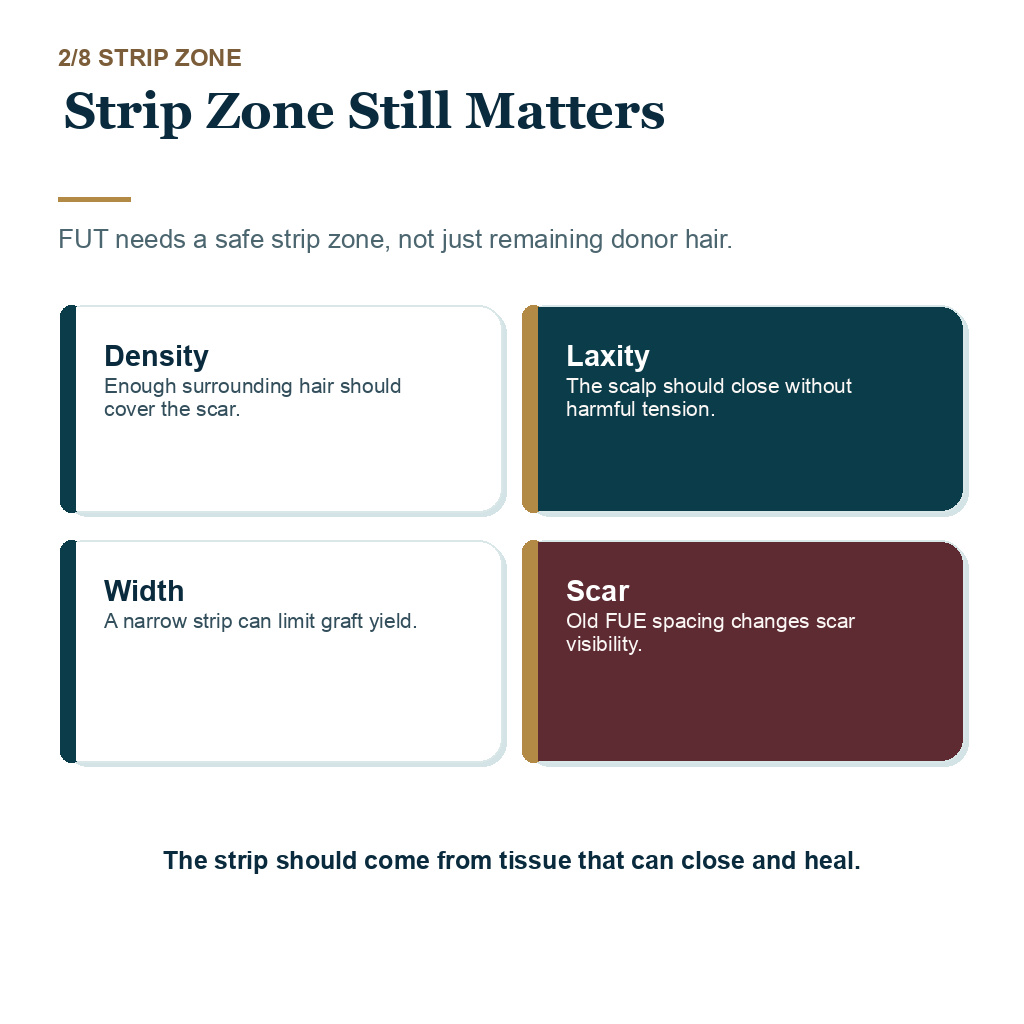
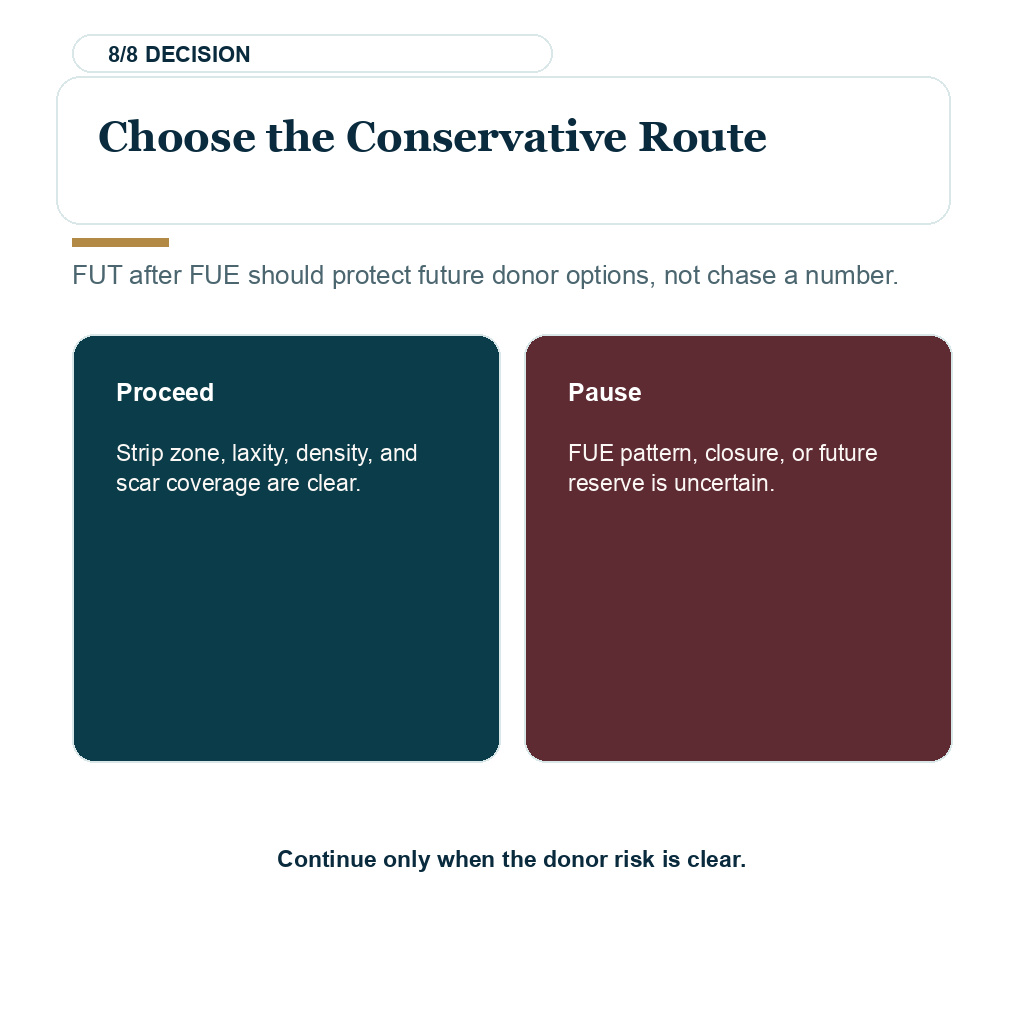
FUT after FUE becomes more reasonable when the previous FUE was modest, the donor area still has good density, the extraction pattern is not patchy, the scalp has enough laxity, and the person accepts the possibility of a linear scar. Laxity means the scalp can close without being pulled too tightly. High tension can make a strip scar harder to control.
The target matters just as much as the method. A small or moderate second session for a clearly defined area is very different from trying to rebuild the whole scalp with a donor area that has already been heavily used.
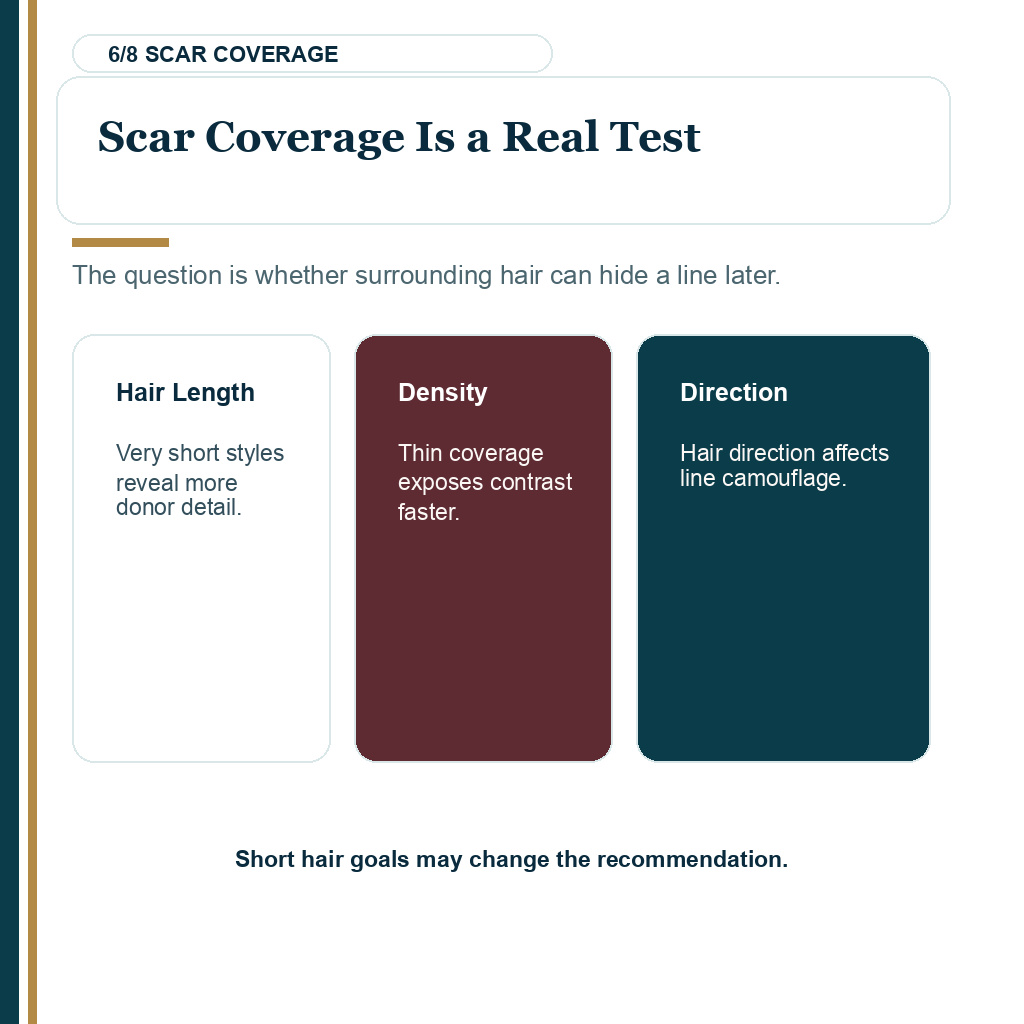
Hair length preference matters. If you want a very short fade or a shaved donor area, FUT may be a poor match because the line can show. If you normally keep the back and sides longer, have good donor coverage, and understand the tradeoff, FUT may still be part of the plan. When I review short hair after FUE donor scars, I ask the same haircut question. Will the donor still look acceptable at the length you actually wear?
FUT is not a hidden reserve that appears after FUE is finished. It is another harvest from the same limited donor bank. The method may change how grafts are taken, but it does not create unlimited donor hair.

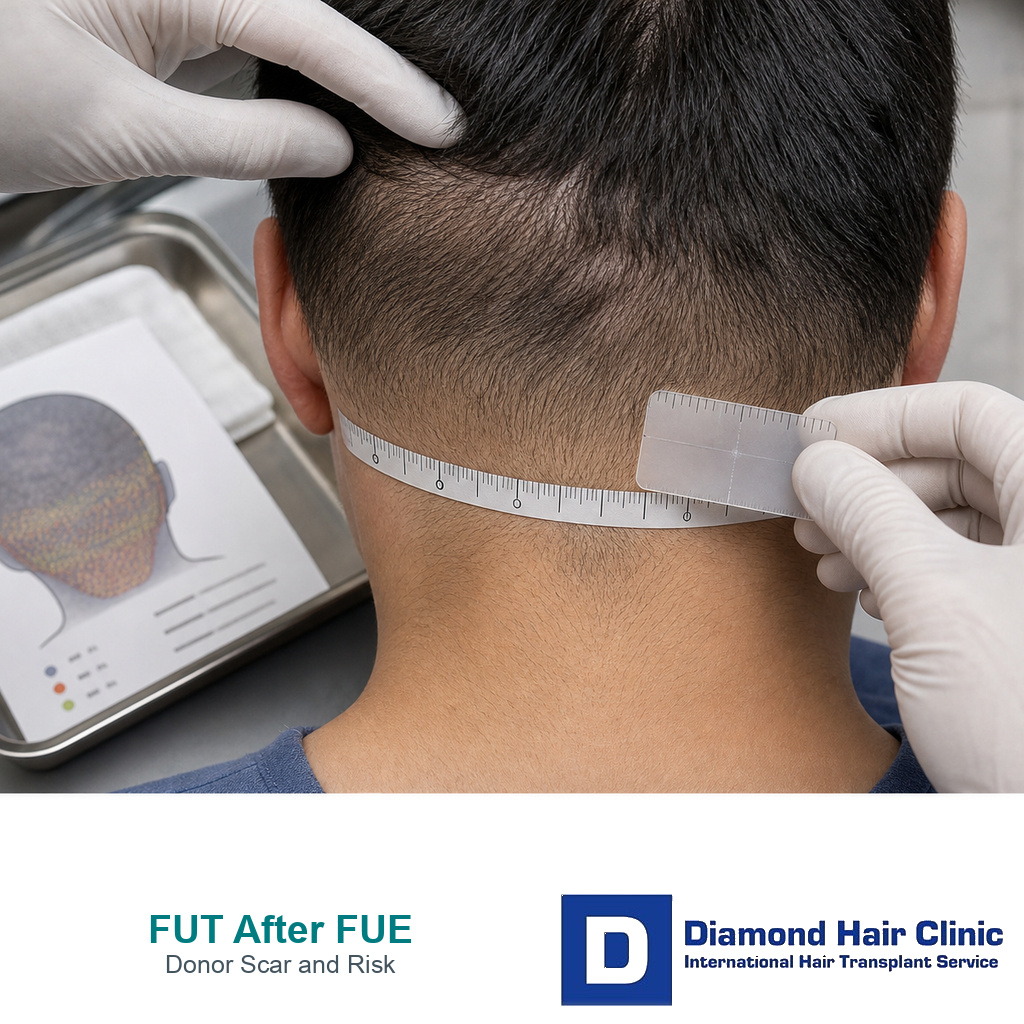
A strip plan after previous FUE starts with donor density, scalp laxity, and realistic scar visibility.
Prior FUE can make FUT riskier
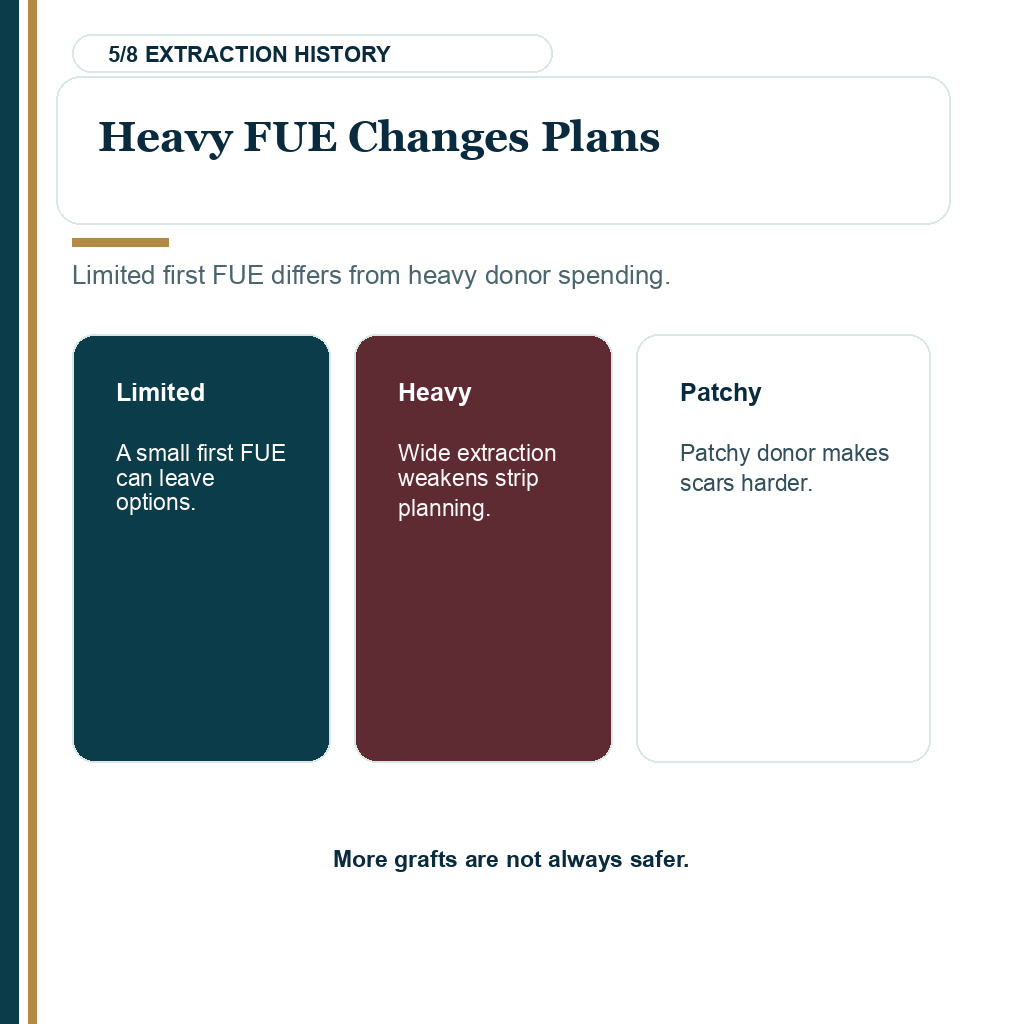
The warning sign is not only a donor area that looks bad. A donor can look acceptable under long hair and still have poor remaining density when parted, photographed in bright light, or examined closely. If earlier FUE concentrated punches in the central safe zone, a strip may pass through an already weakened area. In that setting, a linear scar can become more visible when FUE has already thinned the surrounding donor hair.
Prior FUE also makes FUT risky when the donor already looks patchy, the remaining density is low, the scalp is tight, scar history is poor, or the expected graft number is unrealistic. If the donor already looks uneven, any new harvest has to account for patchy donor area after hair transplant, not just the next graft target.
The weakest plan is trying to fix a disappointing first result by simply choosing another technique. If the first result was weak because the donor was poor, the recipient area was too large, or the plan chased too much coverage, FUT may repeat the same mistake under a different name.
The linear scar is not the only question
Many people focus only on whether FUT leaves a line. That is a real issue, but it is not the whole decision. A strip scar is covered by the hair around it, not by the technique name. If the surrounding donor hair has been overused by FUE, it may not cover the line well. If the scalp is tight, the closure may be under more tension. If you want very short hairstyles, even a technically acceptable scar may still bother you.
The punch scars from previous FUE do not disappear because FUT is chosen later. They remain part of the donor background. A future strip line may sit inside a donor area that already has thousands of small extraction changes. I review both methods together rather than pretending each surgery starts with a fresh donor area.
For anyone already concerned about visible donor depletion, donor area overharvesting is usually closer to the real issue than a debate about FUT versus FUE based only on method.
The order matters in donor planning
Some surgeons prefer FUT first and FUE later for selected cases because the strip can be planned before the donor is peppered with many FUE extractions. FUE can then be used later around the remaining donor area or for smaller strategic needs. That does not mean every person needs FUT first. It means the order affects what options remain.
The reverse order, FUE first and FUT later, is more delicate. It can still work in selected cases, but it needs more proof. The strip area may already have been harvested. The donor density may already be lower. The person may already have concerns at short hair lengths. At that point, I ask what the first surgery preserved, not only how many grafts it moved.
This is the opposite of FUE after FUT hair transplant, where the question is whether FUE can add grafts after a strip scar already exists. Here, the question is whether a strip can still be planned after FUE has already changed the donor area.
My review before considering FUT after FUE
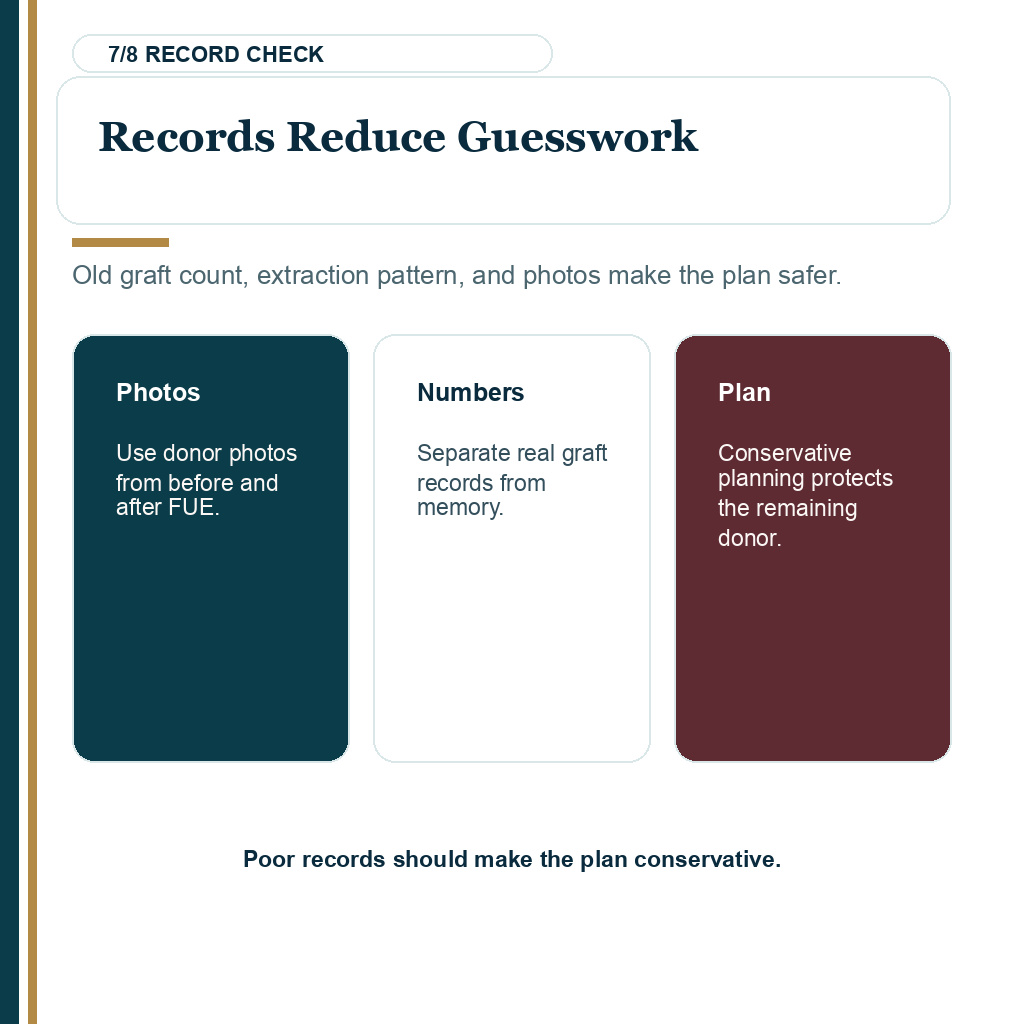
I need clear donor photographs under normal and bright light, including the back and both sides. I want to see the hair lifted, not only styled to cover the area. If old operative records, graft counts, graft placement areas, and donor photos from the first procedure are available, they help. If records are missing, I narrow the plan instead of stretching it.
I then look at donor density, miniaturization, extraction spread, scalp laxity, scar history, haircut habit, age, future hair loss risk, and the real target of the second session. Second hair transplant planning has to protect long-term options, not only fill one area today.
Sometimes the better medical decision is not another procedure. If the donor has become too weak, saying no can protect the person from a worse problem. When being declined for a hair transplant is the medical answer, refusal can be a donor protection decision, not a lack of interest in helping.
A thin donor changes the answer
A thin donor after FUE changes the consultation. A strip will not hide donor depletion by itself. It may add grafts, but it can also leave a scar that needs surrounding hair to cover it. If that surrounding hair is already sparse, the tradeoff becomes poor.
If the donor already looks depleted, one more harvest can make the problem harder to repair. In repair cases, the donor area is often the limiting factor, not the surgeon’s willingness. Overharvested donor area repair is usually more limited than prevention because lost donor density cannot be recreated freely.
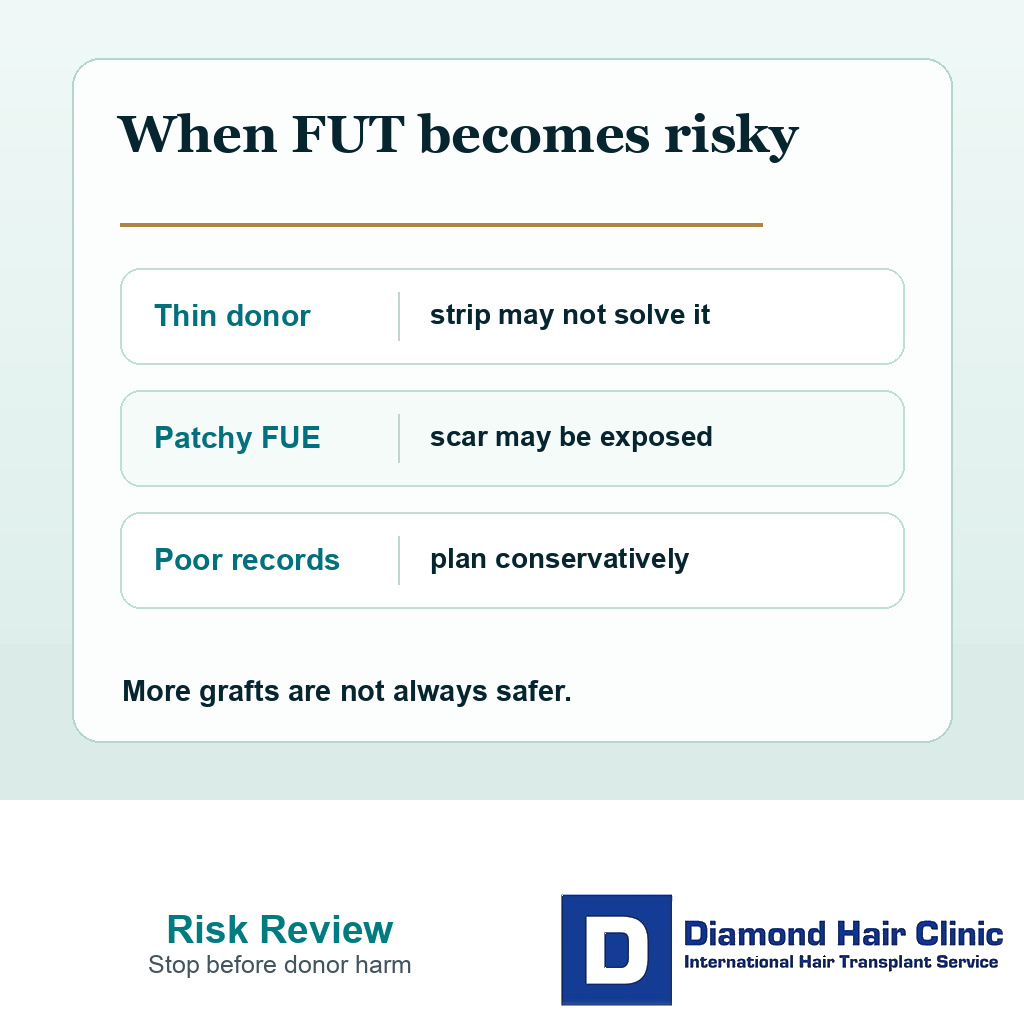
When the donor is already thin or patchy, more grafts can create more damage.
FUE punch size and old scars change the answer
Previous FUE is not one uniform category. A small FUE spread evenly with evenly spaced punches leaves a different donor story than a large extraction done close together. Larger punches, dense extraction zones, poor distribution, or visible white dot scarring reduce the comfort of any future harvest. FUE punch size and donor scarring change the FUT after FUE discussion because punch diameter, extraction spacing, and visible white dot scarring all affect the remaining donor plan.
I also look for scar behavior. If you form thick, stretched, or wide scars, FUT deserves extra caution. A strong strip closure is not only a surgical line. It depends on tissue tension, healing, and how the donor hair is worn afterward.
Third session thinking is stricter
FUT after FUE is often discussed when the plan is already moving beyond one operation. That raises the standard for the decision. If FUE has already been used and FUT is now being considered, I also ask what happens if native hair continues thinning later. The donor area has to support the current need and leave some room for future reality.
Young people and high Norwood patterns need special caution here. A plan that seems attractive at session two can become limiting by session three. The remaining donor bank needs protection more than today’s density target. Third hair transplant safety and weak donor area planning both come back to donor reserve. The second session should not make the third session problem worse.
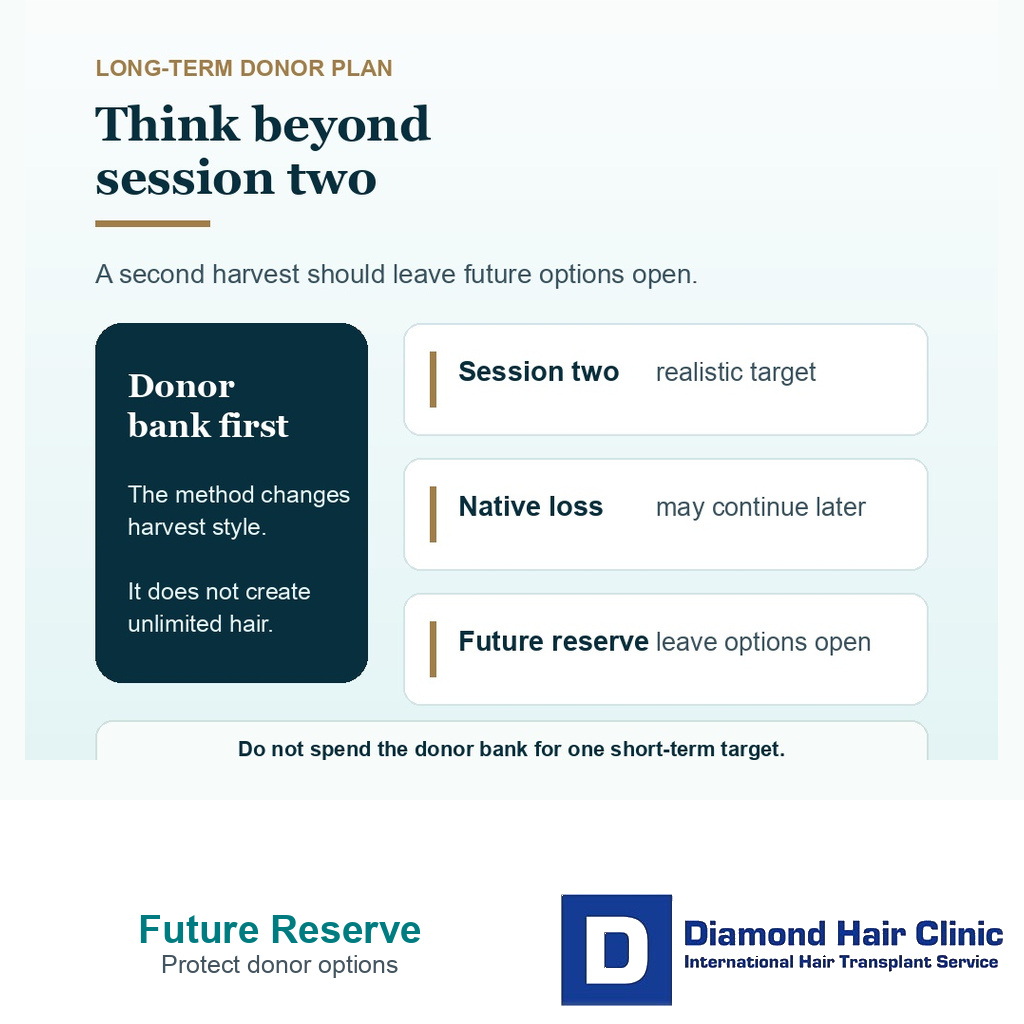
A second harvest should protect future donor reserve, not only chase the next graft target.
After FUE, FUT only helps if the donor can still carry it
Do not decide FUT after FUE from a graft number promise or a clinic message that says one method is always better. The answer needs donor photographs, a proper examination, realistic hair length expectations, and a direct review of the first surgery. The question is not only whether FUT can be done. It is whether it improves the result without creating a donor problem that will be visible for years.
Ask for a donor area review before asking for a technique. If the donor is still strong, the scalp has enough laxity, the first FUE was limited, and the target is realistic, FUT after FUE may remain an option. If the donor is already thin, patchy, overused, or poorly documented, the method choice has to protect the remaining donor area. Sometimes that means a smaller operation. Sometimes it means medical maintenance, camouflage, or no further harvest. The plan also has to leave the donor area usable if hair loss continues later.

Read this review excerpt
Absolutely everything regarding logistics was conveyed in a clear and timely manner via WhatsApp by Dr. Mehmet’s office.