


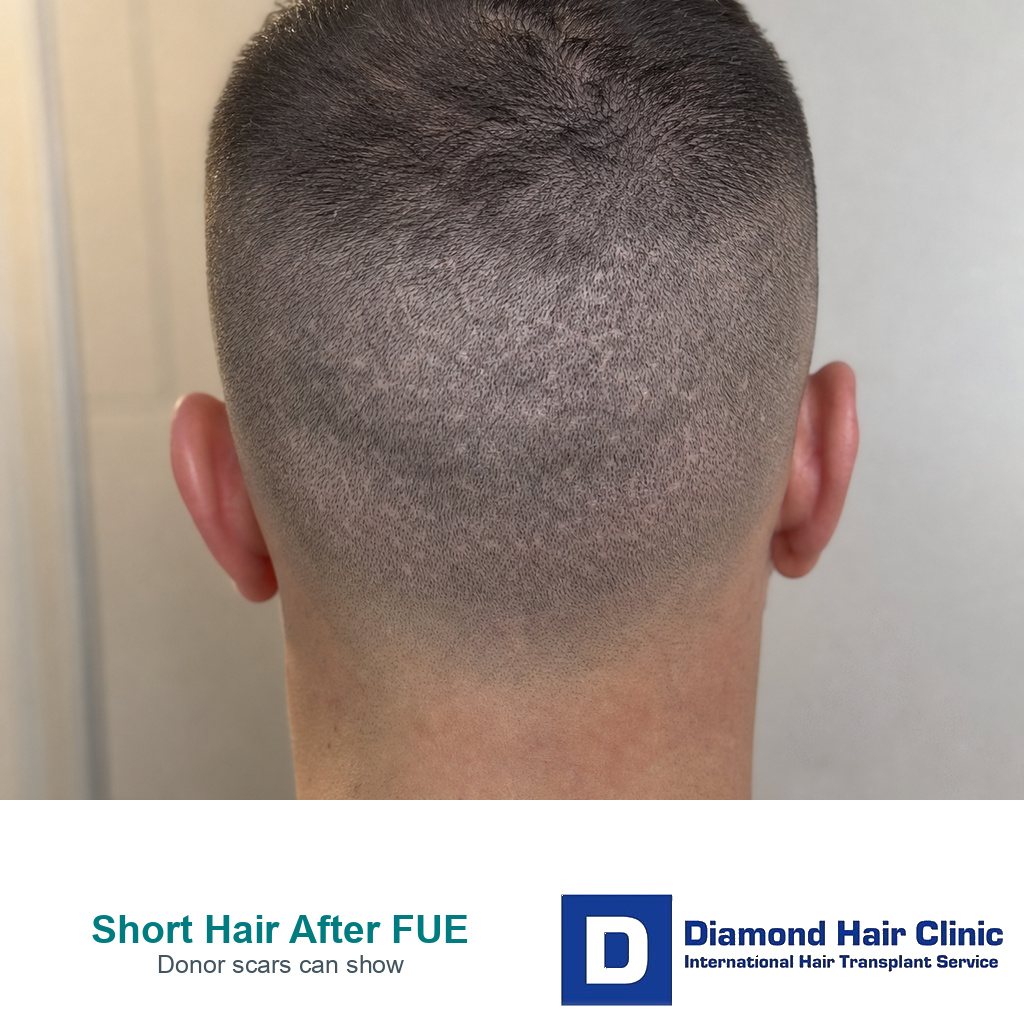
Short Hair Needs Donor Scar Planning
If you wear your hair very short, I need to know that before extraction starts. FUE avoids the long linear scar of strip surgery. It can still leave tiny round marks. If too many grafts are taken, or if they are taken in the wrong pattern, donor area overharvesting can make the back and sides look thin or see through with a low fade. If those marks first appear as pale dots after a short cut, the clinical distinction is covered in white spots after FUE. This concern also appears when a plan assumes donor hair will grow back after FUE. Short hair gives the donor area less room to hide over extraction.
A cream cannot be counted on to make a skin fade safe, so I treat topical metformin after FUE donor scar claims as research context rather than haircut planning.
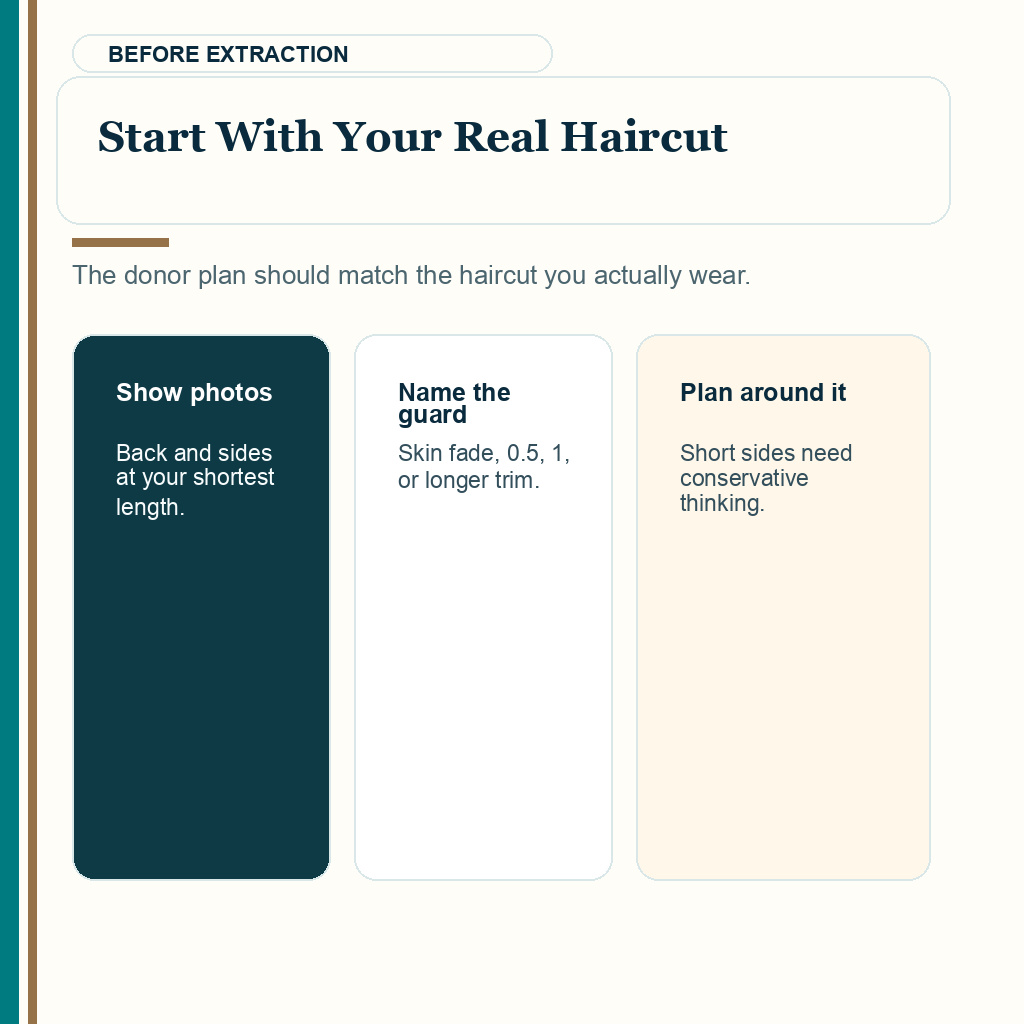
If you usually wear a skin fade, a 0.5 guard, or a very short buzz cut, make your pre surgery haircut part of the surgical discussion. Testing a shorter style before surgery can show how you feel with less coverage before grafts are removed. The donor plan still has to match your real haircut, because a style you dislike before surgery will not become easier after the donor has been used.
Name the haircut you want to protect before grafts are removed, especially if very short sides matter to you. A surgeon can be more conservative with extraction spacing when the real goal is a low guard or skin fade, not just a good front view.
Shortest safe donor haircut after FUE
After the donor area has healed, you may be able to use clippers and keep the back and sides fairly short. The exact length is individual. A grade 3 or 4 cut, a 1 guard, a 0.5 guard, and a skin fade are not the same visual test for the donor. Some donor areas tolerate a short guard well because the hair is dense, coarse, wavy, and low contrast against the skin. You may need more length if the hair is fine, the skin is pale under dark hair, or the extraction pattern becomes visible when the hair is too short. The same donor area can look quiet at one guard length and obvious at the next, so decide the shortest acceptable cut before the graft number is chosen.
Do not use a skin fade as the first test of a donor area that already worries you. Leave enough length to see whether coverage improves, then step down gradually in normal daylight. If each shorter guard exposes the same thin pattern, the issue is no longer only styling. It needs a donor pattern review before SMP or another procedure is considered.
Timing and appearance need separate answers. The normal haircut guidance decides when cutting is safe after surgery. This page deals with how short the donor can be worn without revealing extraction marks or thinning.
You may be technically healed and still dislike how the donor looks at a very low guard. Healing and camouflage are different. Short hair gives the donor area less coverage, so every difference in density, color, scar reflection, and extraction spacing becomes easier to see. If pigment is later considered for these extraction dots, scalp micropigmentation after hair transplant should be timed around mature skin and realistic camouflage limits. When pigment is considered for that situation, I compare donor SMP as camouflage with the haircut length the patient actually wants to wear.
FUE can still leave visible marks
FUE removes individual follicular units from the donor area with small circular punches, which is why FUE punch size and donor scarring need discussion before surgery. Each extraction is small, but a transplant may require thousands of these small wounds. They often heal as tiny dot shaped marks rather than a long line. When the surgery is measured well and the hair is not cut too close, those marks may be difficult to notice. When the hair is shaved very short, the dots can become more visible.
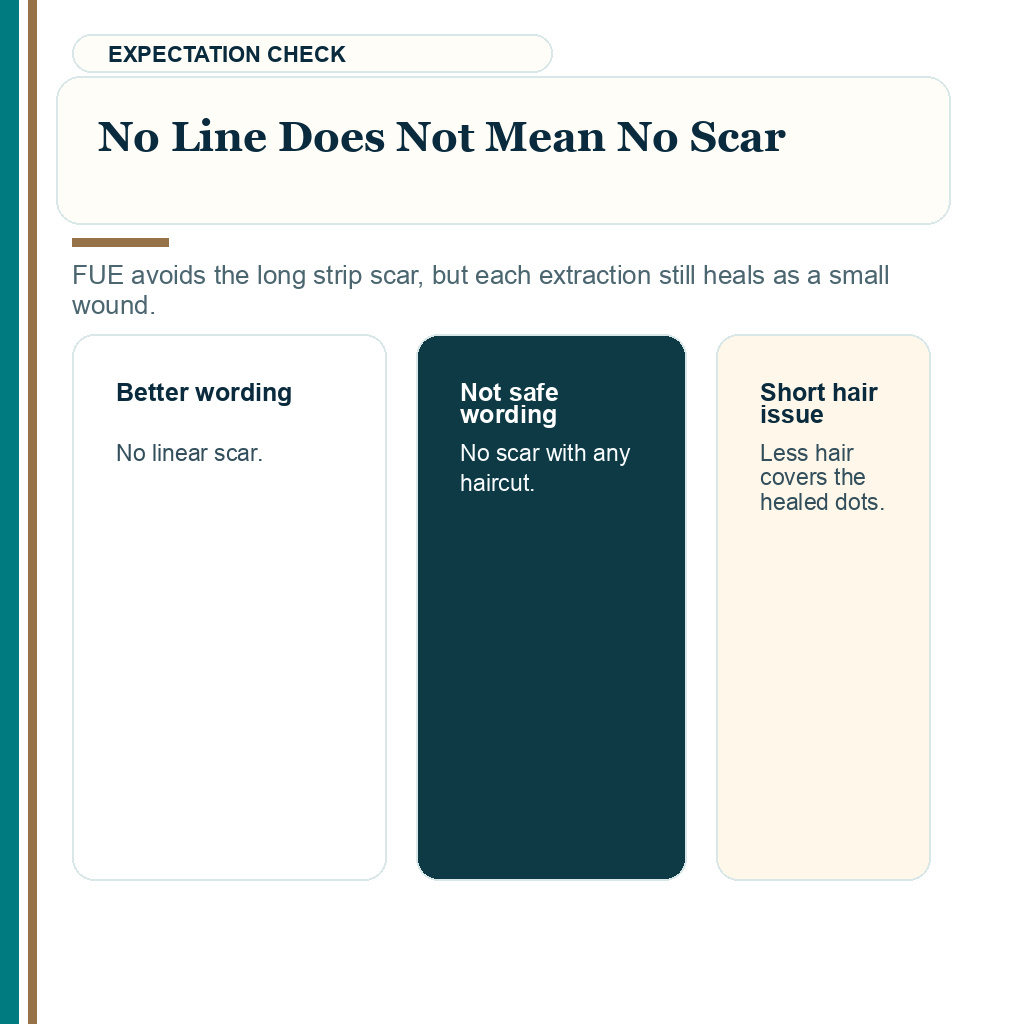
Marketing language can mislead here. FUE is often promoted as “no scar” surgery. That wording creates the wrong expectation. FUE usually means no linear scar, not no scar at all. This needs to be clear before choosing the method, especially if short sides are part of your long term hairstyle. Patients who may later consider FUT after FUE also need to understand how a future linear scar fits their normal haircut.
The broader FUE decision is explained on the clinic page about FUE hair transplant. If you wear short hair, the donor area deserves even more attention because the back of the head becomes part of the final visible result.
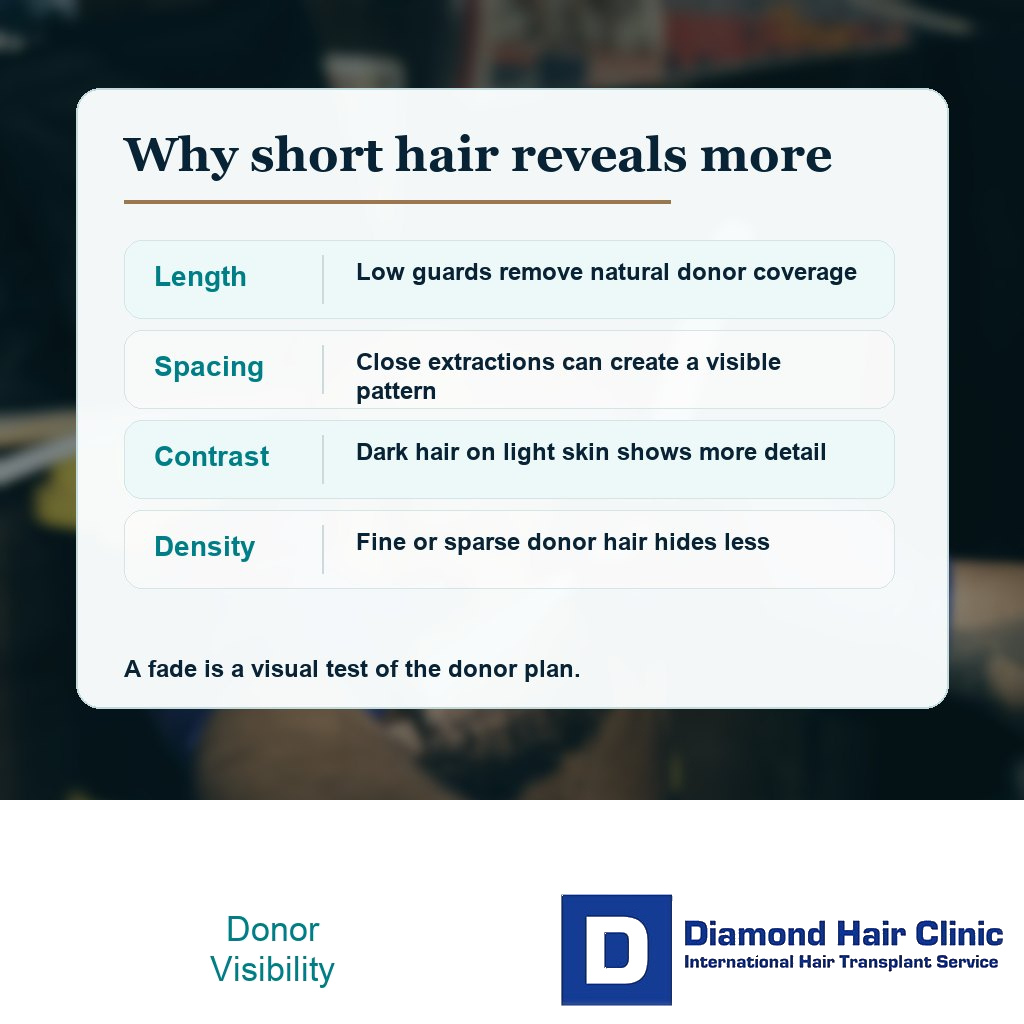
Short hair can reveal donor changes that stay hidden when the hair is longer.
Fade length and donor area risk
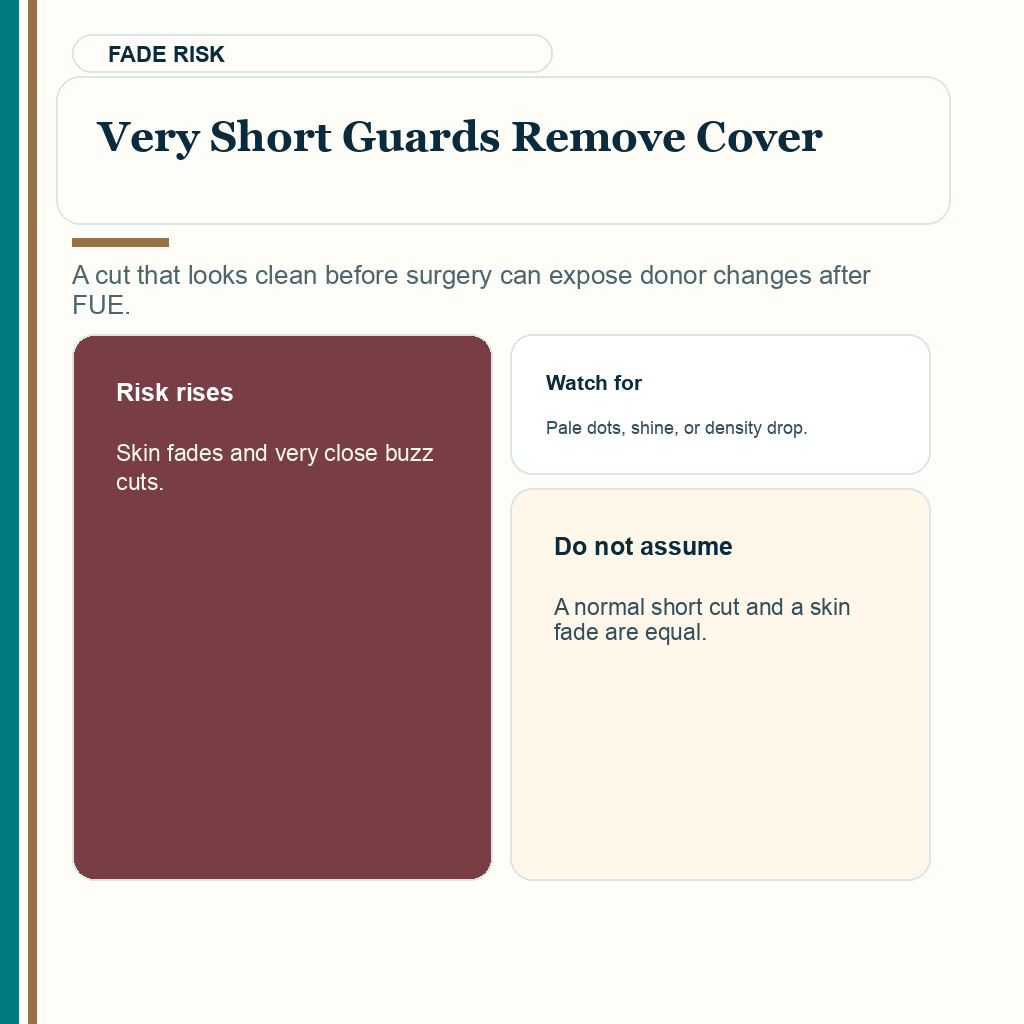
A fade becomes risky when it removes the hair length that was hiding the extraction pattern. A low taper with some hair left over the donor may look fine. A skin fade or very close buzz can expose tiny pale dots, red marks, shine, or density loss. The risk increases when the extraction was concentrated in one band, too many grafts were taken, or you have a high contrast between dark hair and light skin.
If you wear very short sides, be clear about your style before surgery. A 0, 0.5, or 1 guard is not a small detail. It changes the donor conversation. A donor pattern that looks acceptable at 6 to 8 mm may become visible with a skin fade. If that haircut is not negotiable, the safer surgical answer may be fewer grafts, wider spacing, or no surgery until the tradeoff is acceptable. The same haircut discussion matters when acne keloidalis nuchae flares after close nape shaving.
Treat the shortest haircut as part of the design before surgery, not a problem to solve after healing. If you will not give up a skin fade, the donor plan may need fewer grafts than a longer hairstyle would allow.

Read this review excerpt
Because of that, I asked the doctor to mainly focus on restoring the temples and hairline, while leaving areas with strong existing hair untouched. This would preserve more donor hair for potential future procedures and also make it easier to wear my hair short on the sides and back.
Some people think they can simply shave the head later if the transplant does not satisfy them. That choice is not always simple after FUE. Shaving your head after hair transplant has a timing side, but short hair also reveals the donor visibility issue. Very short hair can show both the recipient design and the donor harvest pattern. If you are considering a buzz cut mainly to get through the ugly duckling phase, the timing question is different because temporary shedding, recipient redness, and donor visibility need to be judged together.
Shaving later may feel emotionally relieving, but it should not be sold as a guaranteed escape from donor visibility. The extraction pattern needs to match the shortest haircut you might accept. The recipient hairline also needs to be judged at that length, because a dense regular front can stand out more when the surrounding hair is buzzed.
That match includes the edge of the harvested field. Extraction should taper into untouched hair instead of ending as a hard band, because an abrupt boundary may show under a short cut even when the middle of the donor area looks even.
Testing a shorter haircut after healing
Do not jump from a longer donor length to a skin fade in one appointment just to see what happens. After the donor has healed and the clinic has cleared normal haircutting, reduce the clipper length in stages. Take photos at each guard length before going shorter, and ask the barber not to take the extraction zone to skin on the first test. A more forgiving short guard should come before a lower fade, and the donor needs to be checked in normal daylight, not only under flattering indoor light.
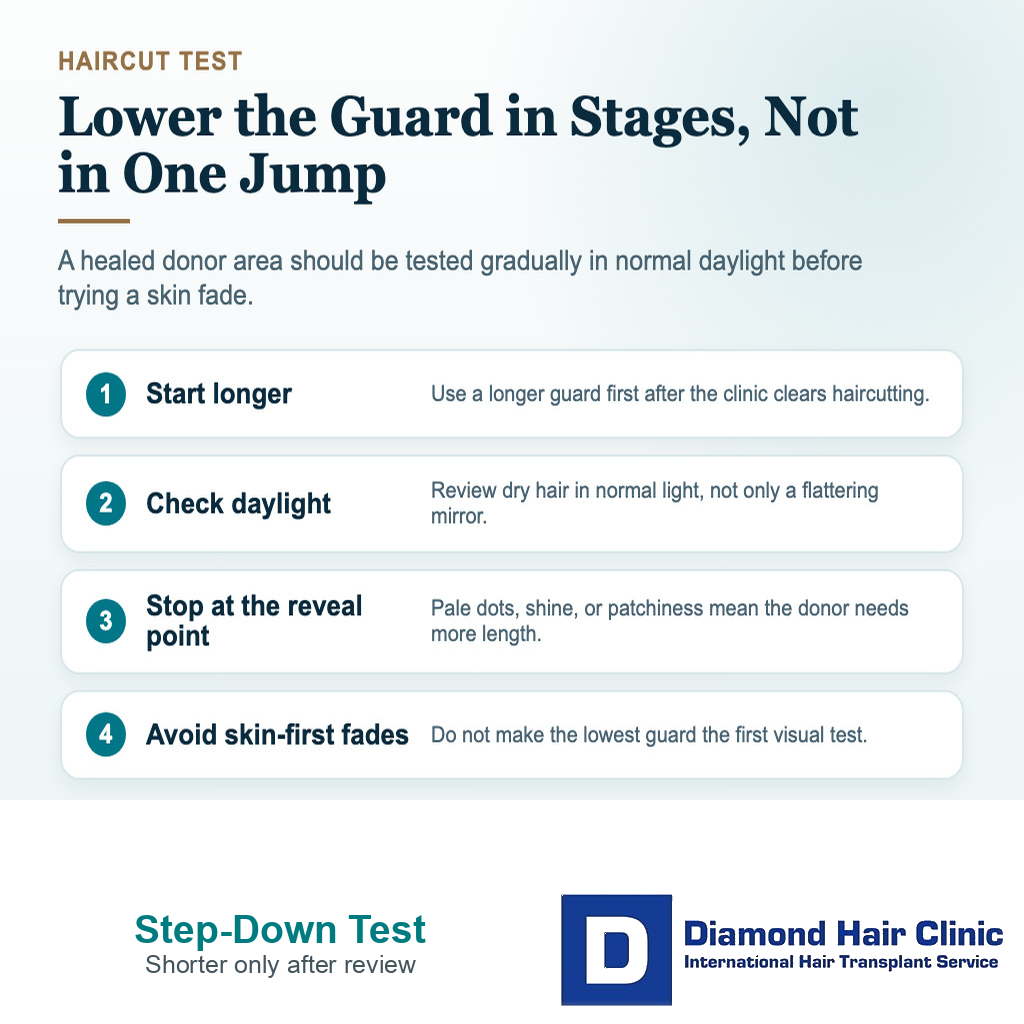
Ask the barber to avoid taking the extraction zone to skin on the first attempt. If pale dots, redness, shine, or a patchy extraction pattern appears at a certain length, stop there and let the hair grow before trying shorter again. A short haircut test should protect your options. It should not create panic before the donor area has had enough time to settle.
Details that make donor scars easier to see
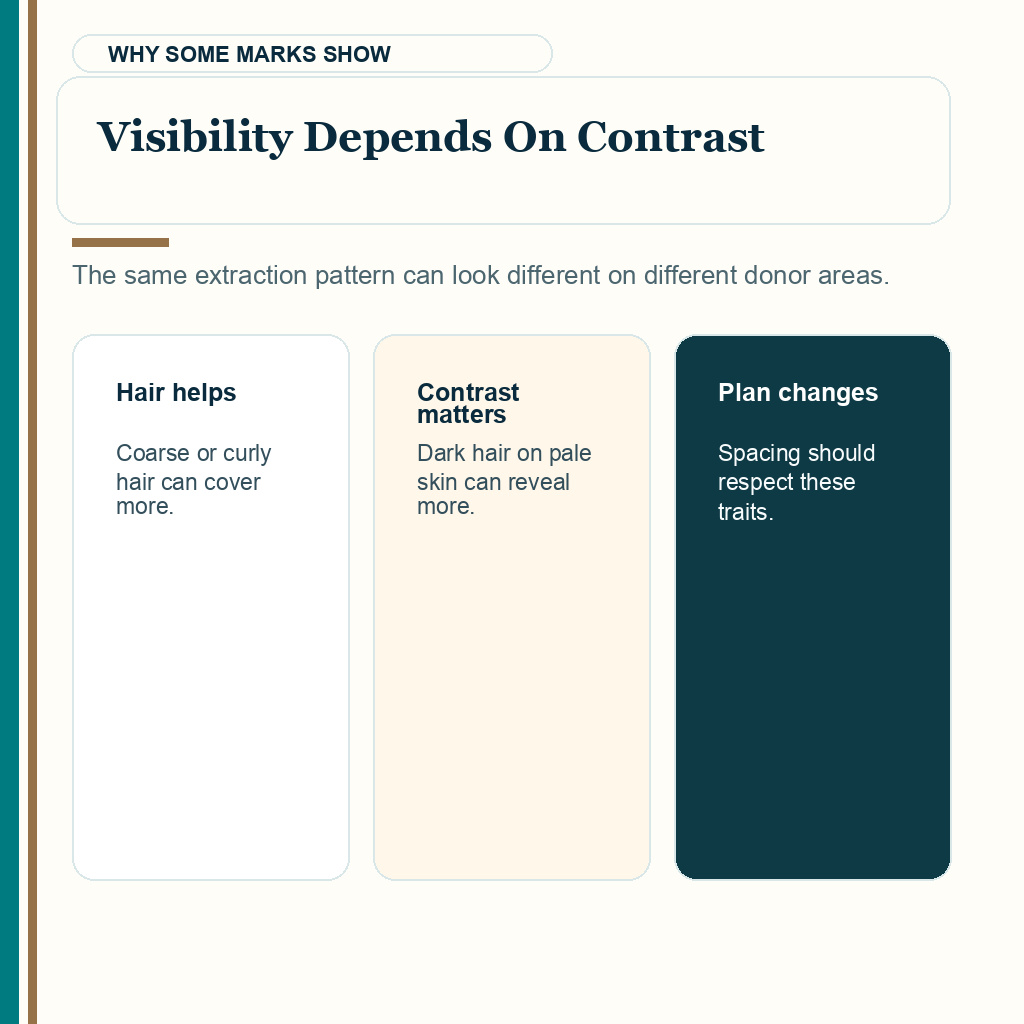
Several details decide whether FUE marks are easy or difficult to notice. Hair caliber matters. Thick hair covers more than fine hair. Curl can help because the hair bends over the skin. Low contrast between hair and skin hides more than black hair against pale skin. Donor density matters because the remaining hair must still cover the extraction zones.
The surgical pattern matters as much as your hair and skin characteristics. If grafts are removed too close together, too high, too low, or in an obvious patch, the donor can look patchy when the hair is short. Extraction too low toward the nape or outside the safer donor zone can also become visible as future thinning continues. The punch size, angle, spacing, extraction depth, and distribution all influence how the area heals and how it reflects light.
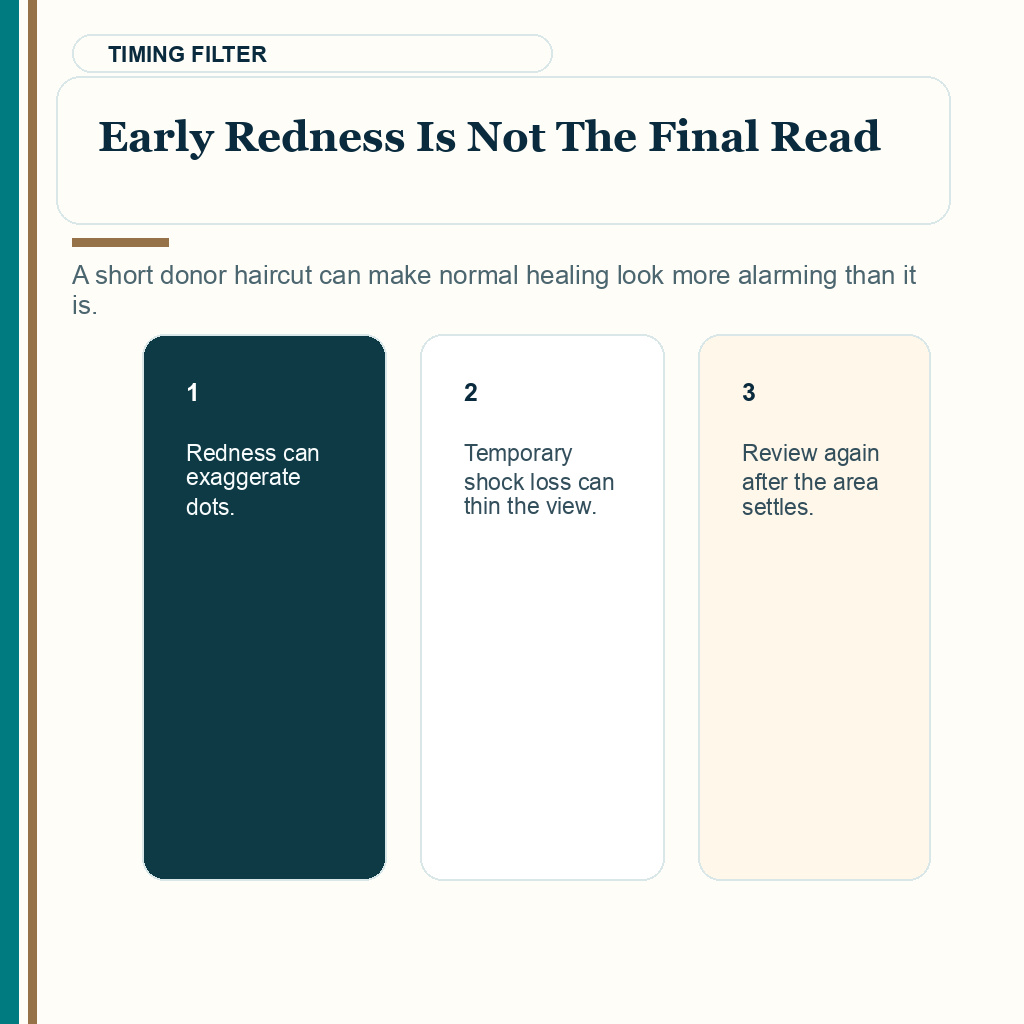
Early redness can also exaggerate the problem. A donor area at 10 days, 4 weeks, or 3 months may look worse than it will later because the skin is still healing or because temporary donor shock loss is present. That distinction matters. Do not rush SMP, scar treatment, or repair decisions while redness and temporary shedding are still changing, unless there is a medical warning sign that needs review. Early patchiness is not the same as permanent overharvesting, but it should not be dismissed when the pattern is obvious or worsening.
Graft number and short hair risk
The larger the extraction demand, the more carefully the donor must be measured. A small frontal refinement may leave the donor looking strong even with a shorter haircut. A large session that tries to cover the front, mid scalp, and crown can spend much more of the donor area. If the number is pushed beyond what the donor can safely give, short hair exposes the cost.
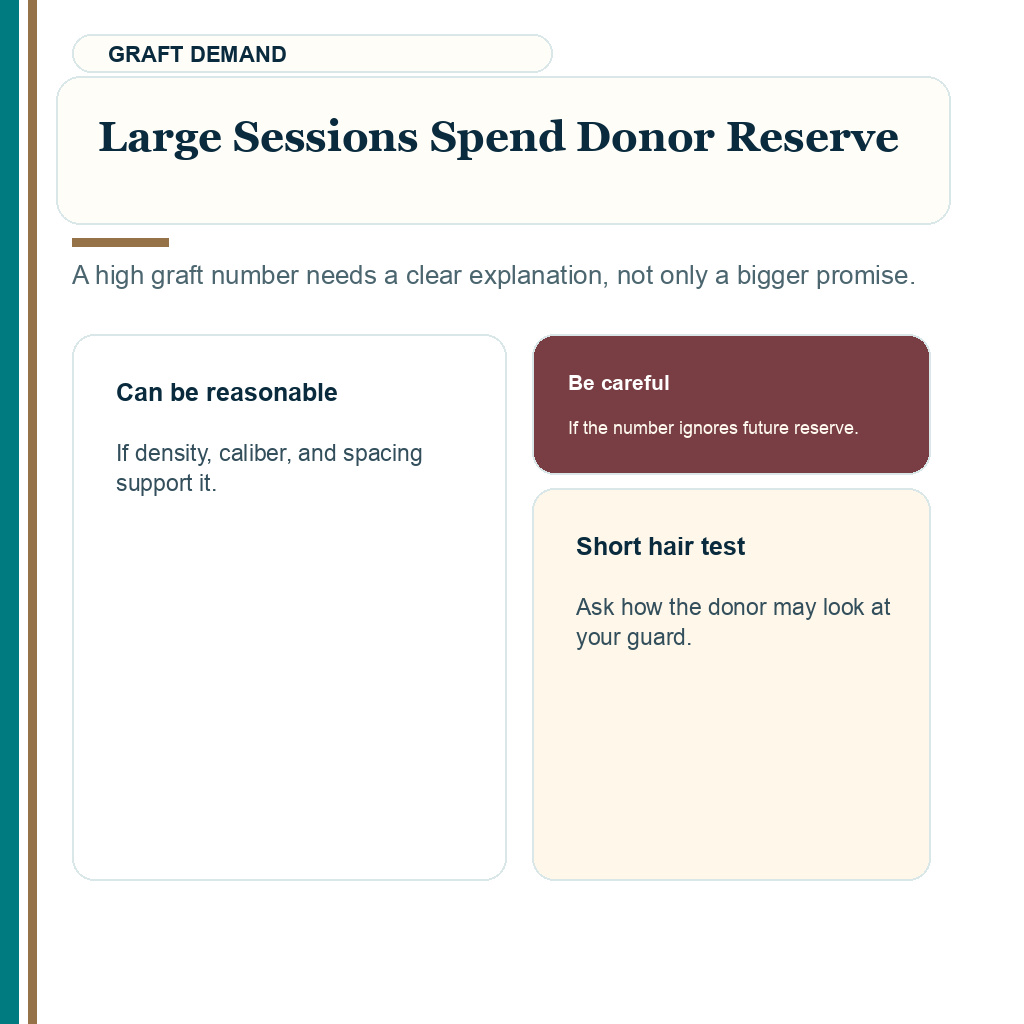
A large session is not wrong by itself. A high graft number can be reasonable when donor density is strong, hair caliber helps coverage, spacing is careful, and the long term plan is realistic. Risk rises when the number sounds impressive but the donor reserve and future haircut limit are not clarified.
Before surgery, the graft number needs an explanation, because hair transplant graft count verification can clarify what you can and cannot know about graft numbers. The same is true for lifetime graft planning and donor limits, because the donor is a finite reserve, not a supply to empty in one operation.
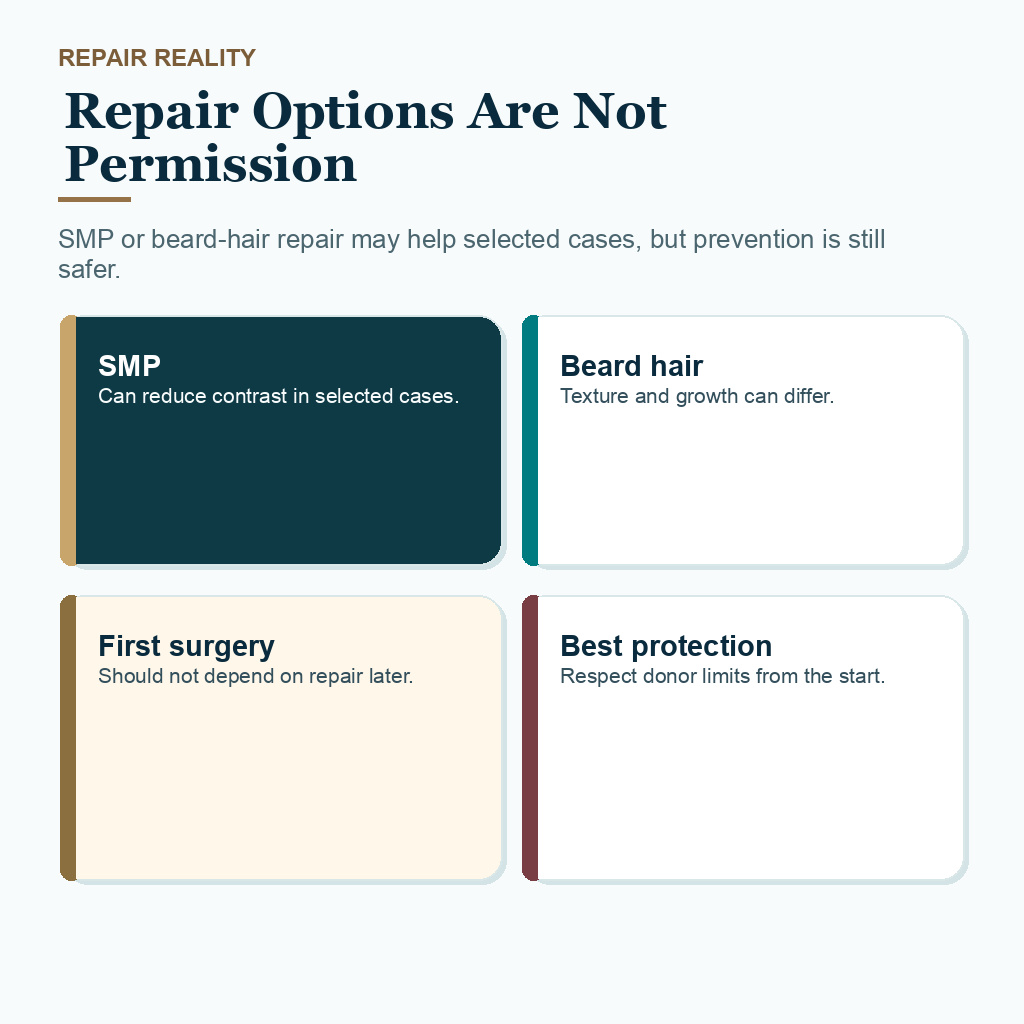
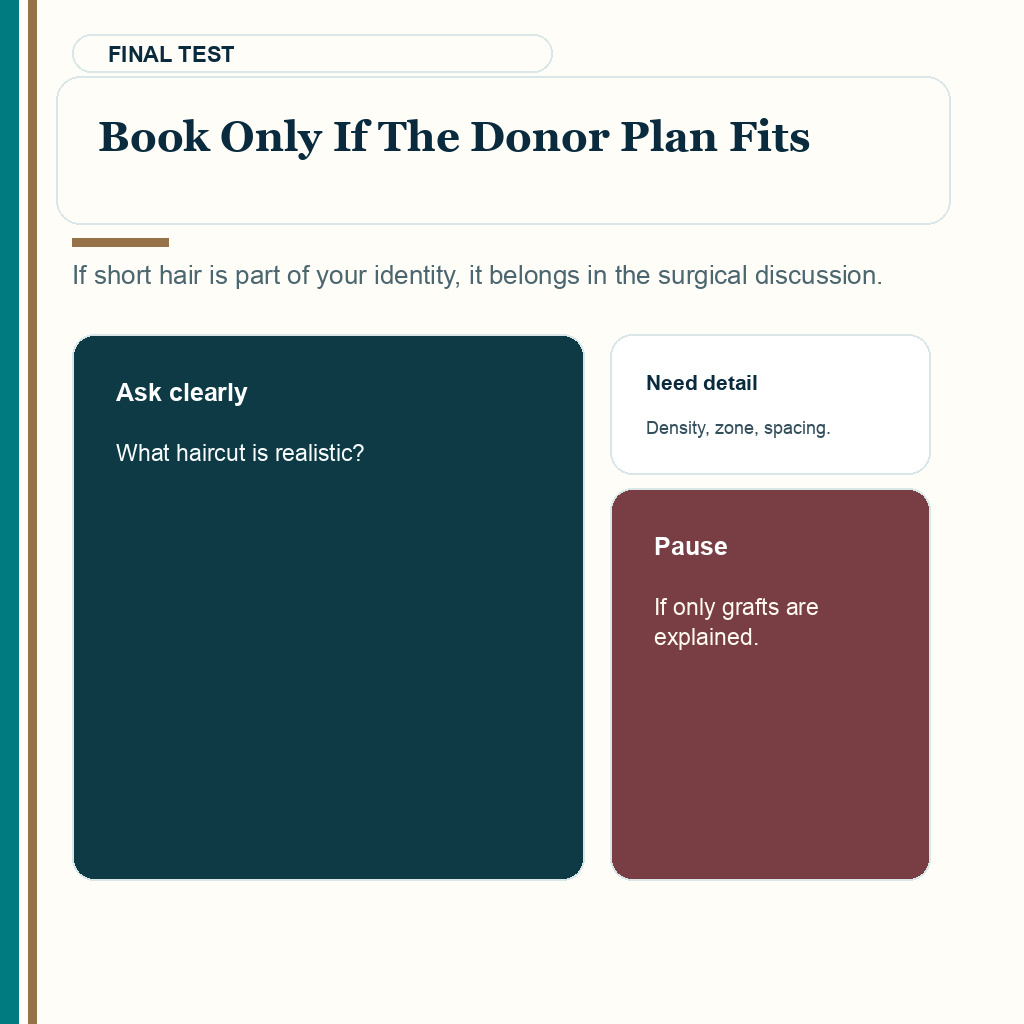
Short hair makes donor scarring easier to see, and these 10 donor planning slides separate haircut length, FUE dot marks, extraction spacing, healing timing, donor contrast, graft demand, patchiness review, repair limits, and the final test before booking. Swipe sideways, use the arrows one slide at a time, or choose a number below the image.


No surgeon can promise an invisible donor area
No responsible surgeon can guarantee an invisible donor area with every haircut. The surgeon can plan carefully, distribute extractions, respect donor limits, use appropriate tools, and avoid unnecessary graft demand. The surgeon cannot change your skin contrast, hair caliber, future hair loss, scarring tendency, or the visual effect of a skin fade.
I can often give a realistic expectation. For example, I may tell you that a conservative FUE plan is likely to look natural with a normal short haircut but that a skin fade could still reveal dot marks. Someone with low donor density may need to keep more length after surgery. That is not pessimism. It is the point of the consultation.
Be careful with clinics that promise scarless surgery or say any haircut will be possible afterward. If you wear short hair, you need a donor plan, not only a graft quote. If the clinic cannot explain donor density, safe zone, extraction spacing, and future reserve, the short haircut question has not been answered.
Patchy donor area that needs review
First, look at the timing. In the first weeks, donor redness, crusting, short hair, swelling, and temporary shock loss can make the area look patchy. A frightening photo taken under strong bathroom light may not represent the final donor result. Review the donor with consistent lighting, dry hair, comparable hair length, and enough time for the skin to settle.

The concern becomes stronger when patchiness persists after the hair has grown, when the extraction pattern is sharply visible, when one zone looks carved out, or when the donor remains see through in normal light. Pain, discharge, spreading redness, fever, open wounds, or worsening symptoms need medical review earlier.
When reviewing a patchy donor area after hair transplant, I separate temporary healing changes from overharvesting. If you wear short hair, I am even more careful because a pattern that is barely visible at longer length may become very obvious after a fade.
SMP, beard hair, and repair options for donor marks
Sometimes they can help, but they are not magic solutions. Scalp micropigmentation can reduce contrast in selected cases, especially when dot scarring or thin looking donor skin is the main issue. It cannot change raised or indented skin texture, and it can look artificial when the color, density, or pattern is wrong. It must be planned around hair length, skin tone, and the real extraction pattern.
Beard or body hair may help selected repair cases, but it does not behave like normal scalp donor hair. The texture, curl, growth cycle, and visibility can be different. I do not use repair language to make you comfortable with an aggressive first surgery. Repair should be the backup discussion, not the reason to accept a risky donor plan.
With donor damage already present, read the clinic’s guidance on overharvested donor area repair and scalp micropigmentation for a thin hair transplant. Prevention is still easier than repair because lost donor density cannot simply be put back.
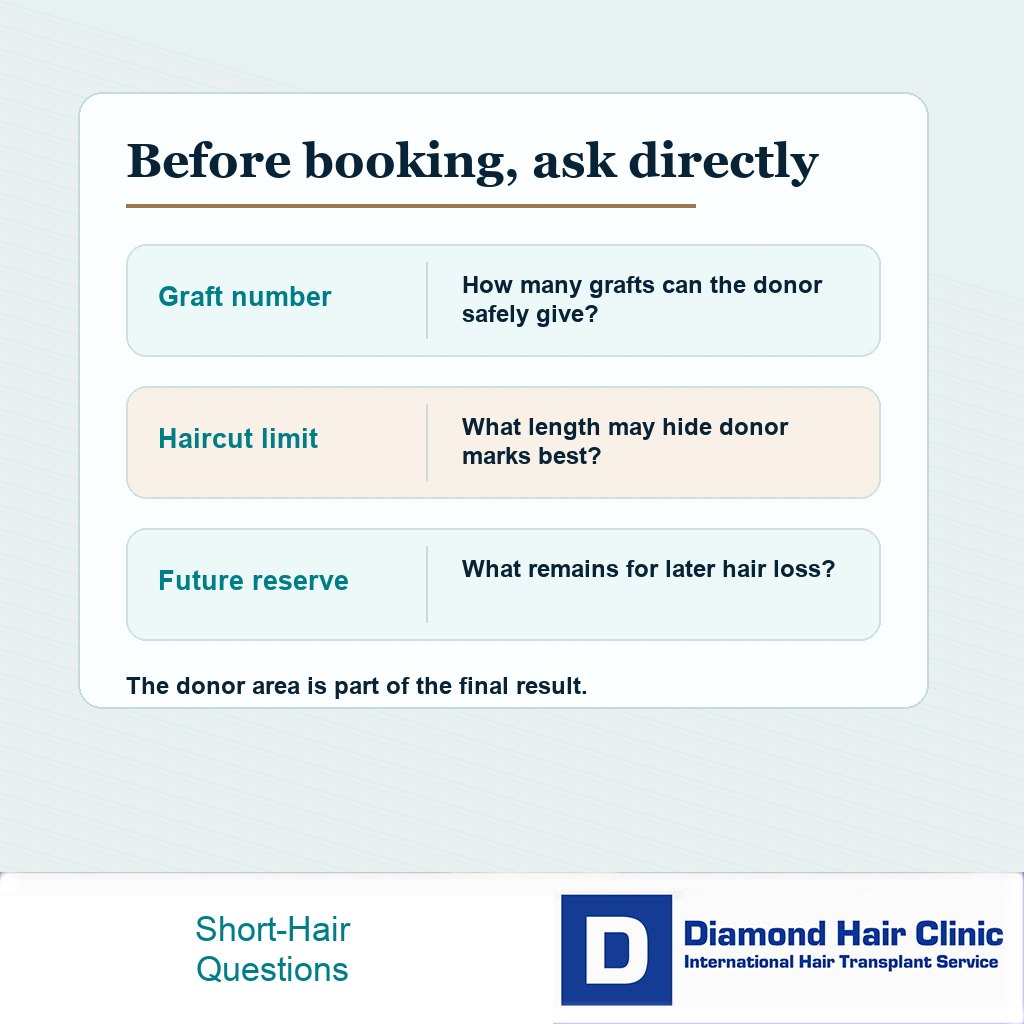
If you wear a fade, donor planning should include the haircut itself.
Questions to ask before booking with short hair
Use photographs of the back and sides at the shortest length you normally wear. The plan should state whether that haircut remains realistic, how many grafts can be removed safely, which donor zones will be protected, and how extraction will be distributed. A donor map gives a clearer answer than a promise that the scars will be tiny.
Ask the clinic to show healed donor areas from the back and both sides, with the hair cut as short as you normally wear it. Photos taken only from the front or with longer donor hair do not show the extraction pattern at that length.
Ask who evaluates the donor area, who designs the extraction plan, and who performs the surgical steps that affect scarring. General before surgery booking checks still matter. For this topic, add one more question. “What is the shortest haircut you would expect my donor area to tolerate after this plan?”
Price and convenience should not overpower that answer. Some people travel because cost differences are real, and medical tourism can work when the process is medically responsible. The danger appears when the package sells a large graft number without enough donor measurement. A cheap hair transplant abroad can become more expensive later if repair costs and donor damage enter the picture.
The fade length has to match the donor marks
If short hair is part of your identity, treat it as part of the surgical plan. Do not hide it because you fear the surgeon will recommend fewer grafts. A conservative answer before surgery is much better than discovering after surgery that your usual fade exposes the donor area. A fade may still be possible, but only if the planned extraction leaves enough surrounding hair for that fade to look acceptable. The right plan should protect both the front view and the haircut you actually live with.
The decision should balance the front, the crown, the donor, and the future. Sometimes the right plan is a slightly smaller first session. Sometimes it is keeping more donor length after FUE, avoiding a skin fade, or waiting until the donor area and hair loss pattern are clearer. The correct plan is the one that improves the visible problem without creating a second visible problem at the back of the head.
I am strict about this planning because, if you wear short hair, the donor area is part of the result. A transplant should not only look good from the front in clinic photos. It should also respect how you live, how you cut your hair, and what options you may need years later.