


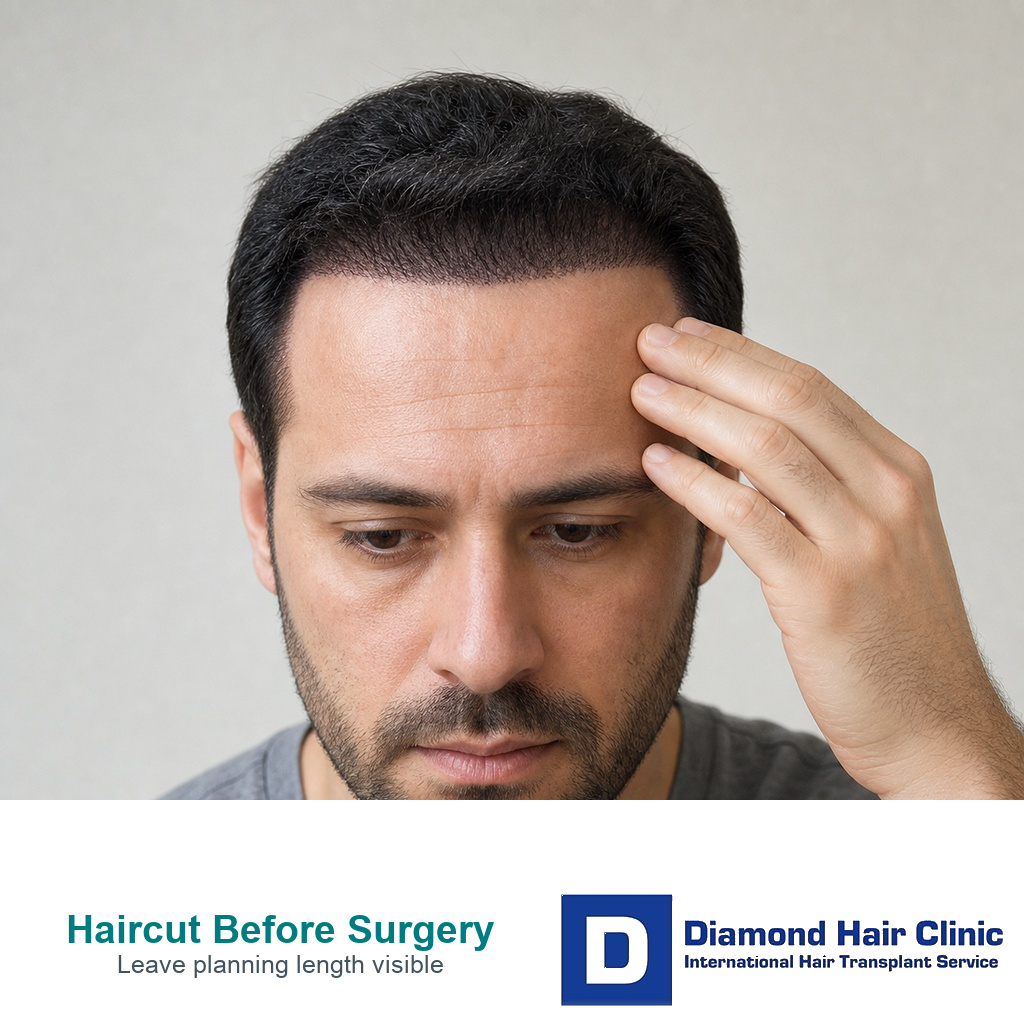
Keep Hair Long Enough Before Final Planning
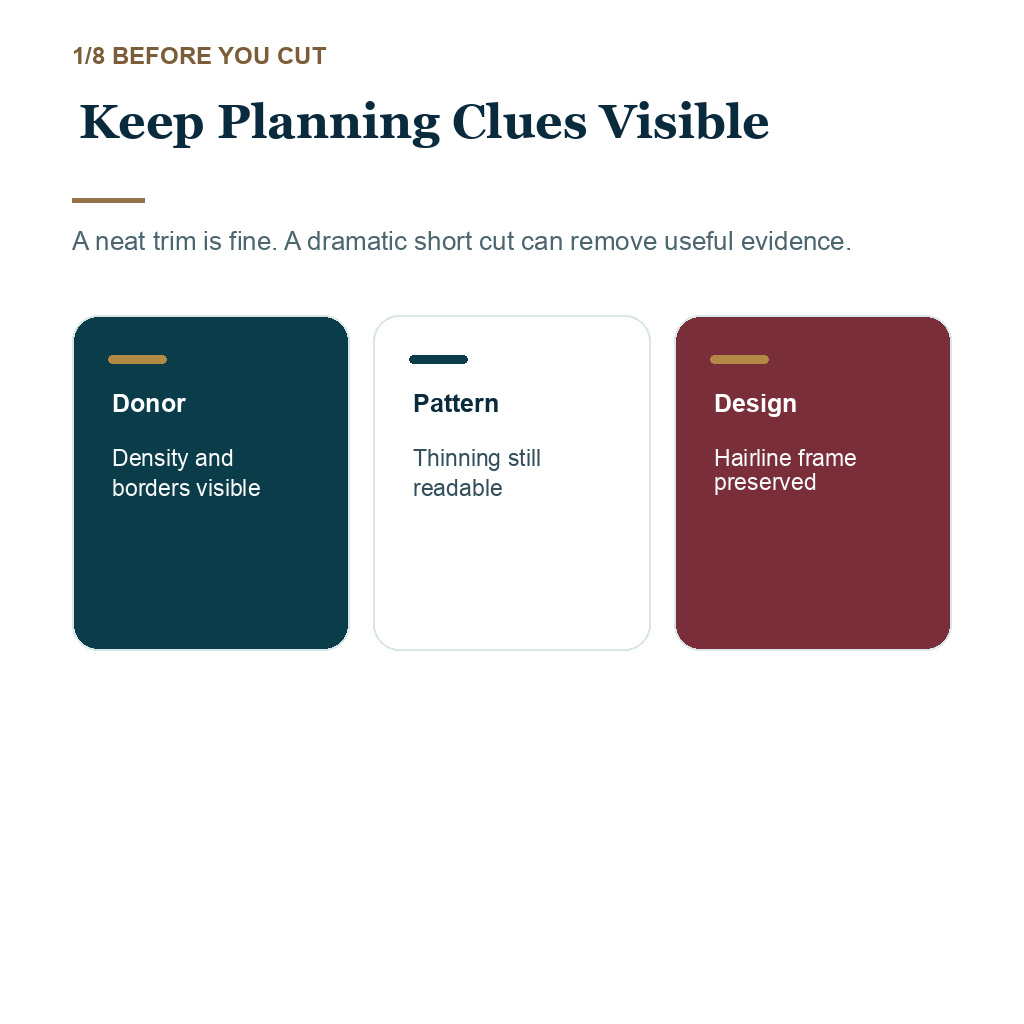
If your clinic has not asked for a specific length, do not make a dramatic short cut, skin fade, zero guard shave, or freshly shaved donor area right before final planning. A neat trim is fine. A cut that removes donor density, thinning pattern, hair direction, or the way your hair normally sits can make the plan less reliable.
You do not need to grow your hair long or avoid every haircut. The practical distinction is visibility, not perfect hair length. Tidy the hair if needed, but leave enough visible length for the donor area, recipient area, crown, temples, and hairline frame to be seen clearly. The clinic can do the exact trimming or shaving needed for surgery after the plan is clear.
Planning from travel photos makes this more important. A careful hair transplant plan from photos depends on seeing the front, temples, crown, donor area, and side profiles clearly. Removing too much hair first can make the plan look more certain than it really is. When a haircut is already booked, send the photo set first or confirm the length the clinic wants preserved.
Bring current styled photos before any clinic trim if your normal haircut hides the corners, crown, or donor area. After the hair is shortened, those everyday reference points are harder to recreate. If you already had the cut, send older photos too so the planning file still shows your usual coverage and donor appearance.
Hair length matters before the final plan
Hair length shows me how your hair behaves. It shows how it exits the scalp, how it layers, how it separates under light, where it collapses, and where the donor area begins to look thinner. A very short cut can flatten those clues. It can make a weak donor look more even, make diffuse thinning less obvious, and hide the way a mature hairline blends into the existing temple hair.
In hair transplant planning, I am not only drawing a line. I am judging density, caliber, contrast, curl, coverage, and the long term donor budget. Graft numbers are not a cosmetic guess. They should come from the real scalp in front of us, the likely future loss pattern, and the safe donor area. The way I calculate graft numbers for a hair transplant depends on those visible clinical details.
A tidy haircut can help if it only cleans the ends. If it is too short, it can make the scalp look simpler than the case really is. I am trying to plan from real hair behavior, not from the neatest version of the scalp.
Hair that is too short before consultation or surgery
I avoid giving one universal clipper guard because hair behaves differently from one patient to another. Fine straight hair, thick dark hair, curly hair, gray hair, and light hair all reveal the scalp in different ways. A length that is readable in one patient may hide important detail in another. If gray or very light hair changes visibility, hair dye before hair transplant can be discussed separately without creating a scalp reaction close to surgery.
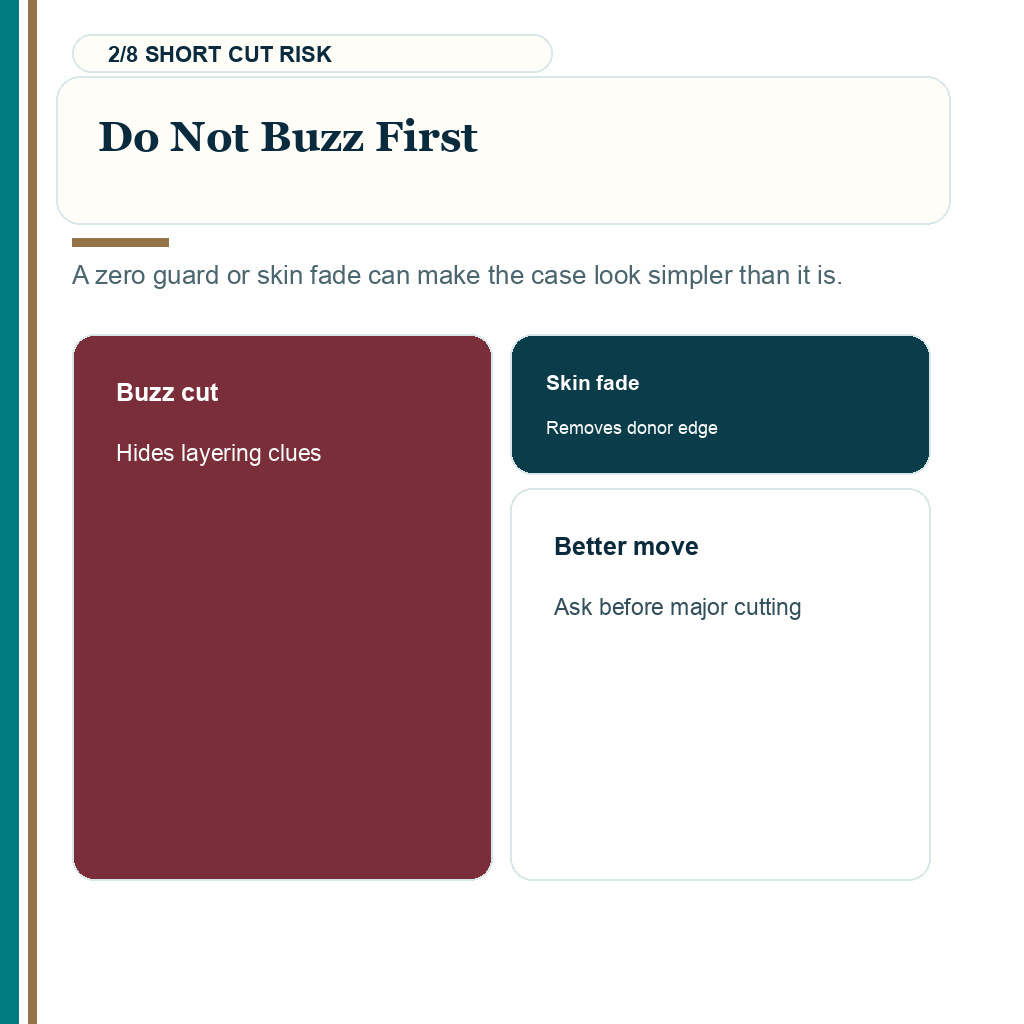
As a general rule, avoid an aggressive fade, razor shave, hard undercut line, or very short buzz cut all over immediately before consultation, photo review, or final design unless the clinic specifically asked for it. Do not ask the barber to clean the nape and sides down to skin right before planning, because that can remove the edge information I need from the donor zone. If a trim is unavoidable, keep the nape, the area above the ears, the crown edge, and the back donor area readable.
For hair that is normally short, leave a little more length than your tightest cut. For medium length hair, avoid a dramatic change right before the appointment. Before review, avoid chasing a fixed clipper number. Check what the clinic needs to see. When there is no time to confirm, leave the hair as it is and share clear photos.
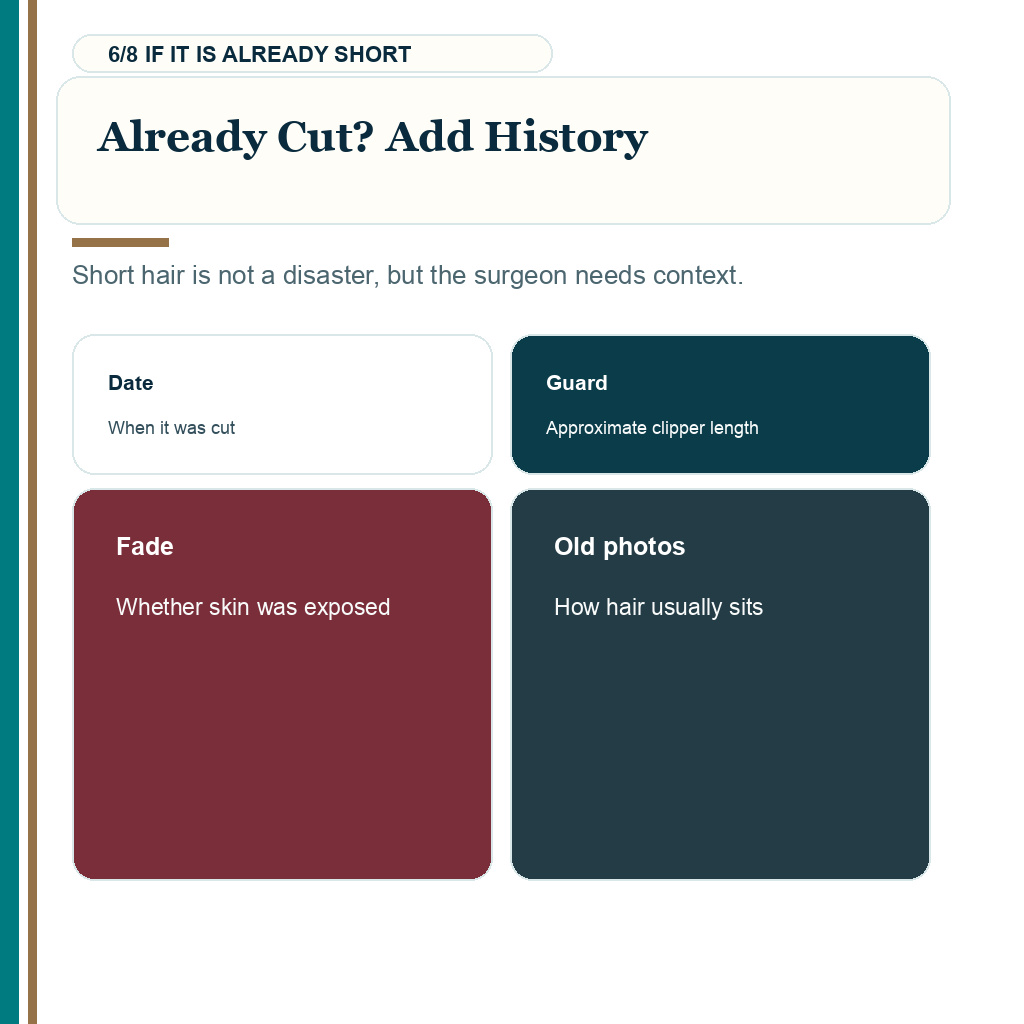
If you already cut it, include the date of the haircut, the approximate clipper guard, whether the nape or sides were faded to skin, and whether any dye, fibers, or concealer were used. The surgical team can always cut hair shorter. It is harder to rebuild the information removed by a very close cut.
The clinic should do the final shave instead of the barber
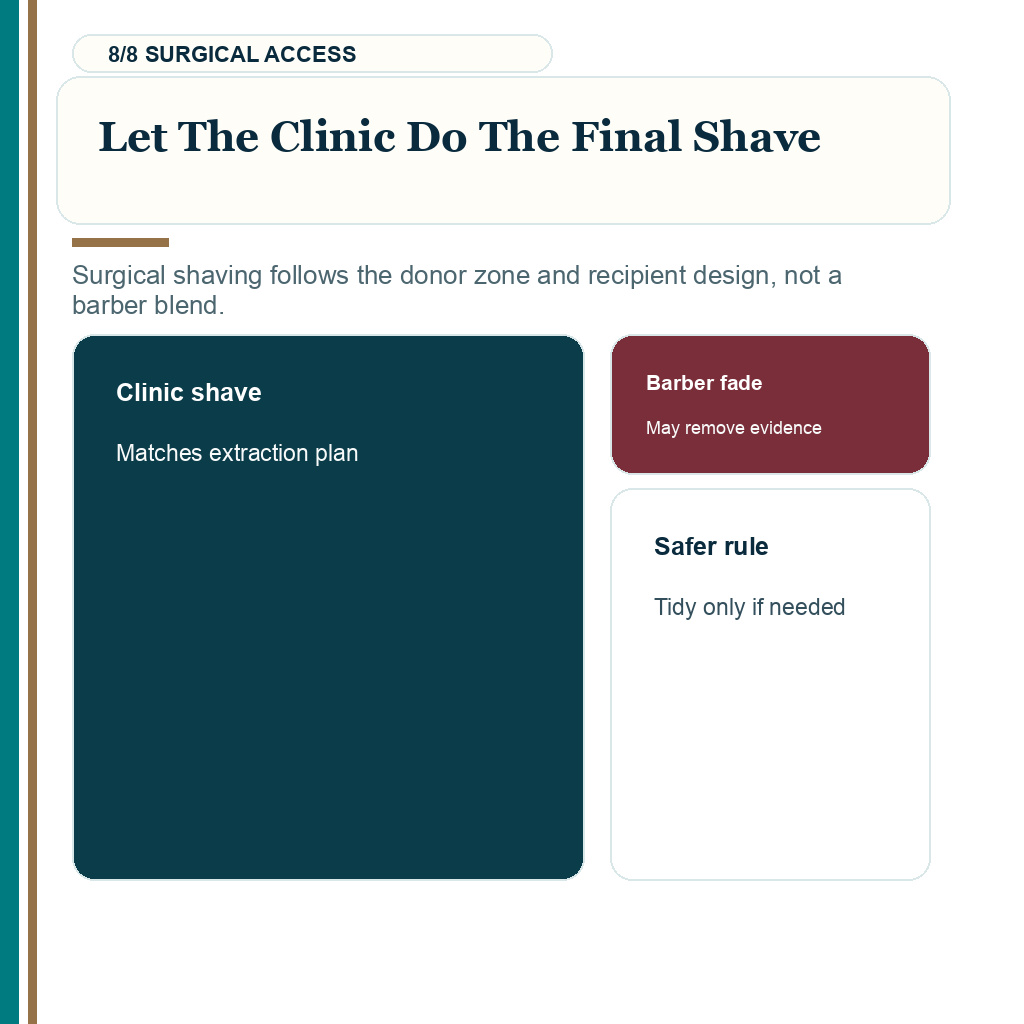
In most cases, yes. The clinic should do the final shave or trimming needed for the operation because surgical shaving is not the same as a normal haircut. The donor shave has to match the extraction zone. The recipient area has to match the design. The borders matter, especially when we are protecting the safe donor area and avoiding unnecessary extraction from weaker zones.
Keeping hair long for assessment does not mean the donor and recipient areas will be handled the same way during surgery. The final plan should state which donor areas will be shaved or selectively trimmed, whether the existing recipient hair will stay long, be sectioned aside, or be shortened, and why that choice fits the area being treated. Techniques that keep donor or recipient hair long are technical options, not a promise that every strand can remain untouched.
A barber is thinking about shape, blend, and cosmetic finish. A surgical team is thinking about access, graft angle, donor spacing, hair direction, and the recipient plan. Those are different jobs. I do not blame the barber if a fade looks good cosmetically but removes information that would have helped surgical planning. A very close razor pass can also leave redness, small cuts, or clipper irritation right before a surgical assessment.
If the clinic wants a shaved recipient or donor area, let the clinic do it. The useful order is assessment first, design second, surgical trimming third. If the clinic is considering a limited shave or no shave option, the decision should come from the surgical plan, not from a last minute haircut. A no shave hair transplant is a separate planning choice with its own limits, not just a decision to keep hair long.
Buzz cuts and skin fades change the plan
Many men live with a close buzz cut before surgery because it makes thinning less noticeable. If that is your normal look, I want to know that. Your usual haircut tells me how you expect to wear the result and how much scalp visibility you already accept.
If you are trying to make the change less noticeable at work, mention that when you send your planning photos. Do not cut the hair very short until I have reviewed the donor and recipient areas. After that, shortening it in stages may make the change feel less abrupt, but it cannot guarantee that the procedure will go unnoticed. A shaved donor area, redness, and different hair lengths may still be visible after surgery.
Your usual style still may not be the best style for final assessment. If you normally shave to zero, grow it slightly before the final planning photos if you can. I do not need it long. I need enough length to see density changes, miniaturization, direction, and the edge between safe and weaker donor hair.
Keeping a short hairstyle after surgery needs its own discussion. Some patients can wear short hair comfortably after FUE, while others need to understand donor dot visibility, contrast, and scarring risk. The short hair after FUE donor scars question is different from the before surgery planning question.
A fresh haircut can hide donor weakness
It can. A very fresh cut can make the donor area look more uniform for a few days. It may hide subtle miniaturization above the ears, in the nape, or around the edges of the traditional donor zone. That transition zone helps me separate strong donor hair from weaker edge hair. A skin fade can erase that border at exactly the wrong moment. It may also make diffuse thinning more difficult to assess because all the hair is sitting at the same short length.
Two clinics can give different graft estimates because they may be seeing different evidence. One may be judging from longer photos, another from a short cut, and another from a video where the lighting is flattering. Different inputs can produce different plans, which is one reason hair transplant graft numbers differ between clinics or photo reviews.
Missed donor weakness can lead to more grafts than the donor can safely give. Missed recipient thinning can push the new hairline too aggressively for the future pattern. A haircut is not the only factor, but it can influence what the surgeon can see and how safely the plan can be built.
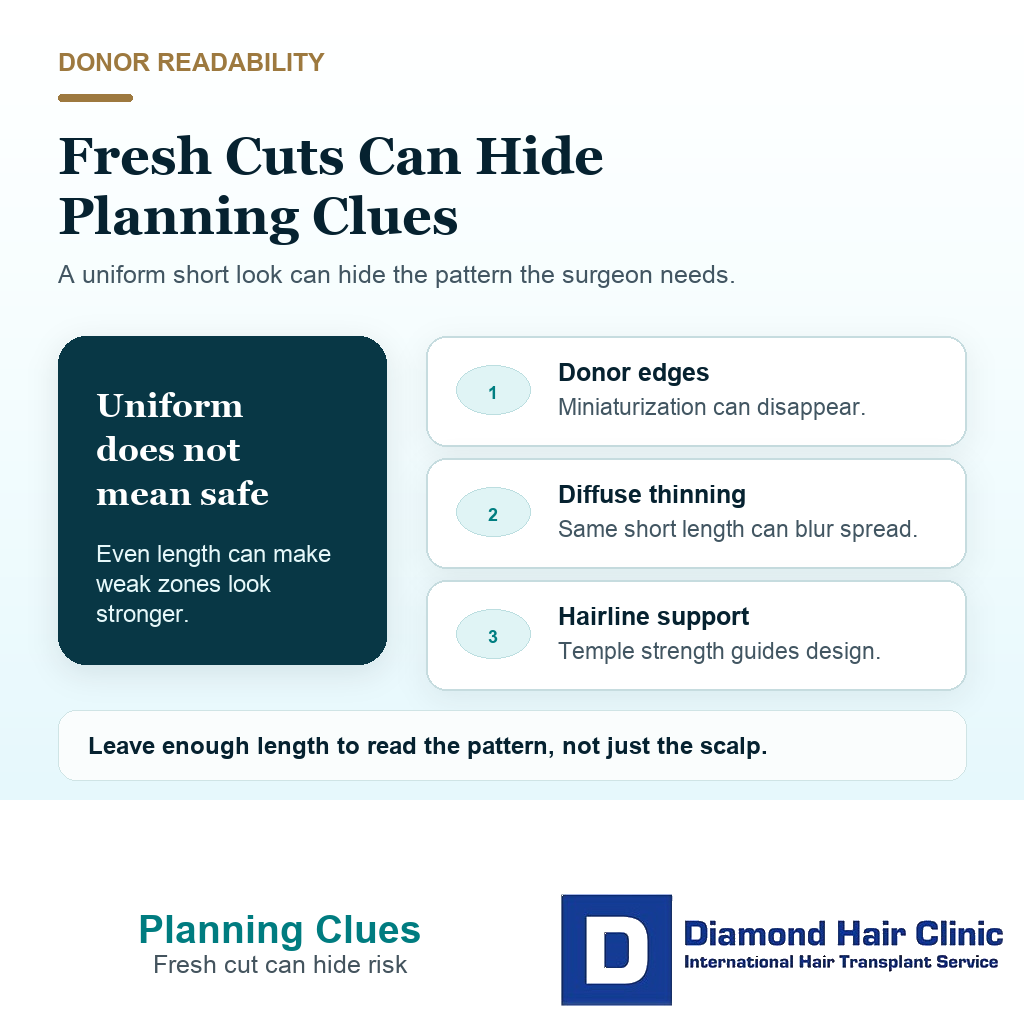
Hair length and hairline design
It can influence the design because hairline design is not only a line on the forehead. The frontal hairline must connect to existing temple hair, frontal density, hair direction, face shape, and future loss risk. If the surrounding hair has been cut extremely short, I may not see how it normally frames the face.
For example, a man with thick dark hair and strong temple points may tolerate a different design from a man with fine hair, weaker temple support, or early diffuse thinning. Curly hair may need different visual planning from straight, low caliber hair. Hair length helps those differences show themselves.
A natural result depends on proportion and careful planning. My approach to hairline design in hair transplant is based on proportion, donor limits, and future loss risk. I design from real behavior, not from a scalp that has been freshly stripped of clues.
Photos to send before cutting anything
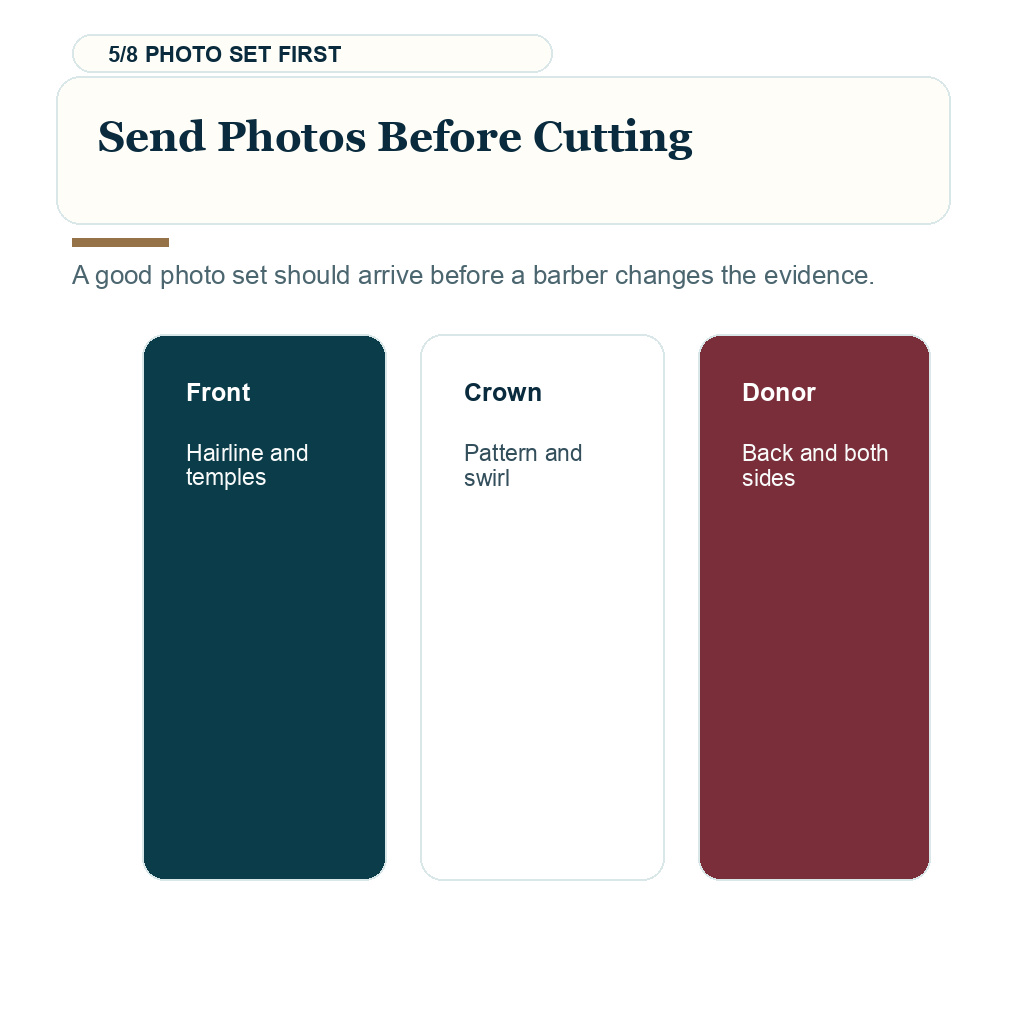
Before you cut your hair, take photos in clear neutral light. I want to see the front, both temples, crown, mid scalp, donor area from the back, donor area from both sides, and a normal styling view if you usually cover or part the hair in a certain way. Include at least one set with the hair dry and unstyled, and another where you gently lift or separate the hair so the scalp pattern can be seen. A short comb through video can help when still photos hide direction or density changes.
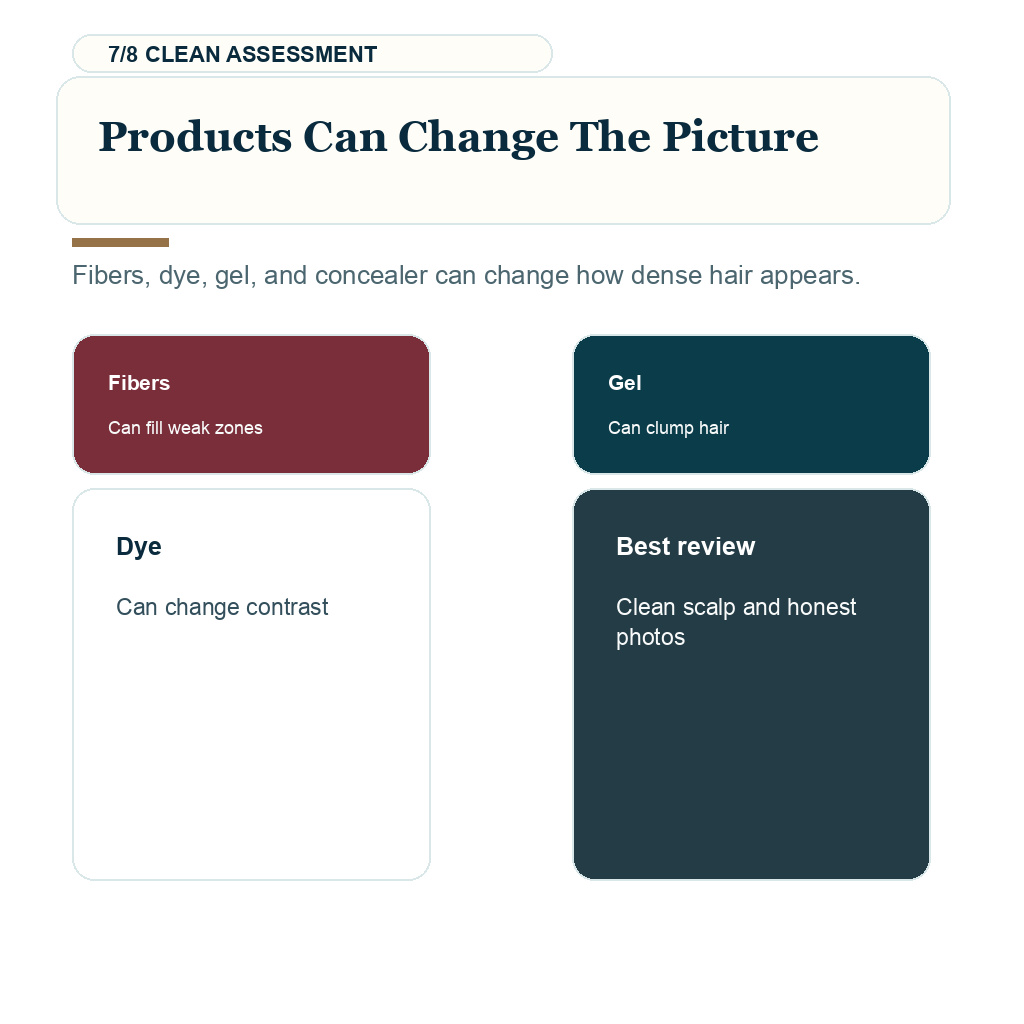
If your hair is curly, show it both settled and gently lifted. If your hair is gray or very light, use daylight when possible because flash can hide contrast. Current photos matter more than a tidy haircut. Do not use hair fibers, concealer, heavy gel, wax, or spray for the planning photos. If you normally use fibers, send one normal styling photo for context, but also send clean photos without fibers. Hair fibers before hair transplant can distort assessment because concealer changes how density, scalp contrast, and thinning look in photos.

Before you cut, send current photos, keep donor length visible, and let the clinic decide final trimming.
Keep older photos with longer hair when you have them. They can show the pattern in a way that very short current photos cannot. Older photos are not a substitute for current assessment, but they can help me understand how the hair behaves when it has length. The order is simple. Photo first, haircut second, clinic shave last.
These 8 haircut planning slides explain why hair length, donor visibility, hairline context, photo angles, haircut history, product use, and the final shave controlled by the clinic matter before surgery. Swipe sideways, use the arrows one slide at a time, or choose a number below the image.


If hair is already cut too short
A short haircut does not mean the plan is ruined. It only means I may need more context before I trust the final design. Send clear current photos anyway. Then add older photos from different lengths, especially photos that show the donor, crown, temples, and usual styling.
Hair that is too short to judge donor quality may need a waiting period and new photos after some growth. That is not a punishment. It is a way to avoid planning from incomplete information. During that wait, avoid correcting the problem with another fade, dye, fiber session, or razor cleanup. In a serious surgical plan, accurate planning beats neat styling.
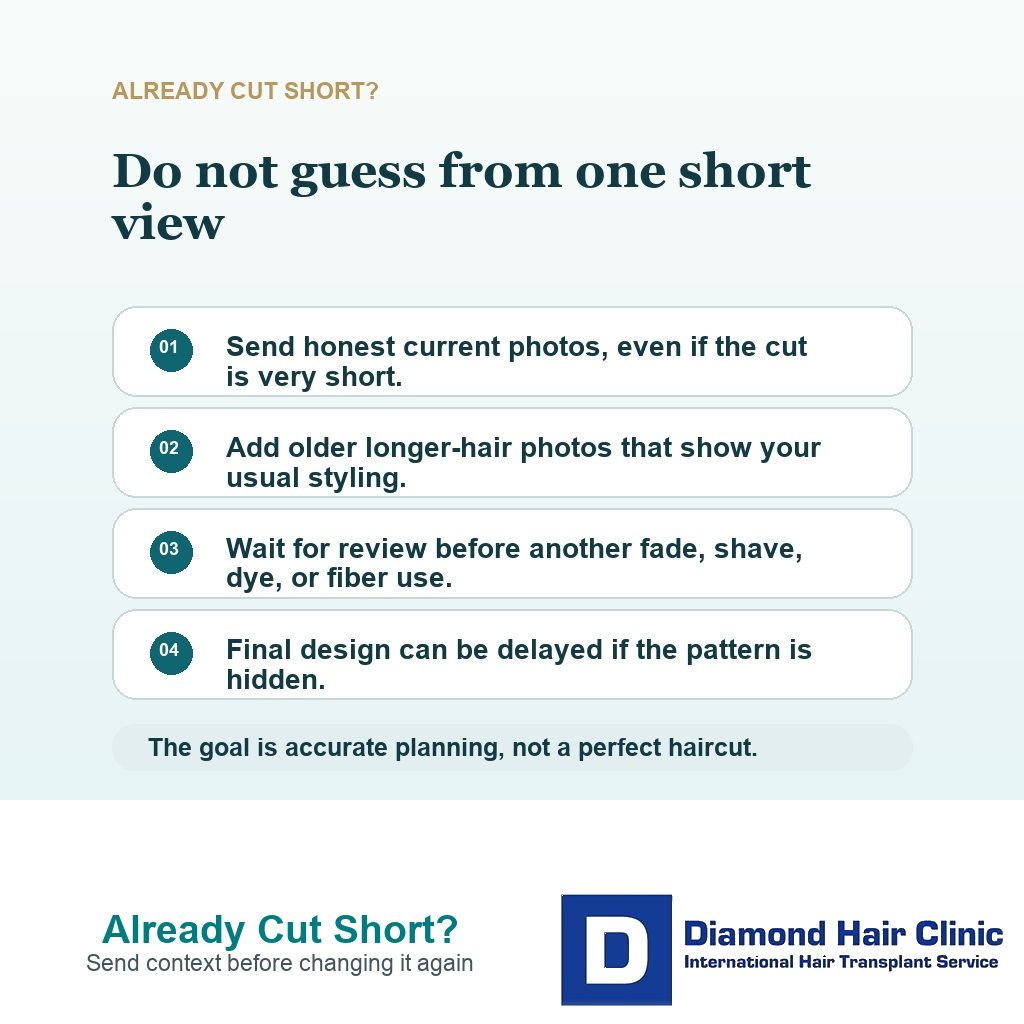
If you already cut your hair short, send current and older photos before cutting again.
The worst response is to keep changing the haircut because you feel anxious about the photos. Send the current short hair photos, send older photos if you have them, and then stop altering the hair until the clinic reviews what you have. Give the planning team unfiltered information first.
Haircut rules before and after surgery are different
A haircut before surgery is a planning issue. The first haircut after surgery is a healing issue. Before surgery, the pattern needs to be visible so the plan can be built. After surgery, we are protecting grafts, skin, donor healing, and the recipient area.
Haircut timing after surgery should not decide what to do before surgery. They are different decisions. Questions about clippers, scissors, donor shaving, or timing after the operation belong under haircut after hair transplant timing, which follows a healing decision rather than a planning decision.
Before surgery, preserve information. After surgery, protect healing. Mixing those two rules creates confusion.
Hair fibers, gel, dye, or scalp products matter
For planning photos and final assessment, keep the scalp clean. Heavy gel, wax, spray, fibers, and concealer can change how dense the hair appears. They can also make the hair clump, hide scalp contrast, or make the donor look different from reality. If a product changes the way the hair separates, shines, or sits against the scalp, do not use it for assessment photos.
If you use hair dye, say that clearly. Very dark dye on pale skin can exaggerate contrast. Very light or gray hair can make thinning harder to see in some lighting. Neither is a problem by itself. The risk starts when the surgeon cannot tell what is natural and what is cosmetic. Patients with gray or white hair may also benefit from the hair transplant with gray hair article.
Curly and Afro textured hair also needs careful visual judgment because curl can create coverage differently from straight hair. Do not straighten, heavily oil, or compress the hair just to make photos look cleaner. If your hair is curly, Afro and curly hair transplant planning depends on curl pattern, hair exit angle, and how coverage changes at different lengths.
Giving the surgeon the clearest information
My rule is simple. Let the surgeon see the real starting point before a barber changes it. Show the hair as it is now, show how you normally wear it, and ask before making a major change. If the clinic wants a certain length, follow that instruction. If you are not sure, leave more information visible rather than less. If a barber asks what to do, the safest instruction is simple. Tidy the ends if needed, but do not skin fade, shave the donor area, carve hard lines, or change the hairline frame before the clinic reviews it.
Arrive clean, with no fibers or heavy styling products. Bring or send older photos if your current haircut is unusually short. Mention whether you recently dyed the hair, had a fade, shaved the donor, carved a hard line, used a razor on the nape, or changed your usual style. The haircut history becomes part of the planning record because it explains what the surgeon can and cannot see on the day of review.
A hair transplant is not improved by hiding the starting point. It is improved by judging the starting point clearly. That is how we protect the donor area, design a hairline that still makes sense later, and avoid using grafts in a way that looks tidy for one appointment but creates problems after the haircut grows out.

Read this review excerpt
Every single one of my questions was answered and they made sure I had all the details I needed to make an informed decision.