





Body dysmorphia changes the consultation
In a normal consultation, I measure the hair loss pattern, donor strength, hair caliber, skin contrast, age, medication history, and your long term plan. When body dysmorphia is part of the story, I also listen to how you talk about the defect. The words, the urgency, and the emotional weight often tell me whether the surgical request is proportionate.
Someone may have genuine recession and still describe themselves as destroyed. Another person may have mild asymmetry and ask for an aggressive juvenile hairline because any mature shape feels unbearable. Another may bring dozens of edited photos, ask for exact millimeter symmetry, or keep rejecting age appropriate designs that would look natural. I do not read these signs as vanity. I read them as risk signals, because they change whether surgery can help safely.
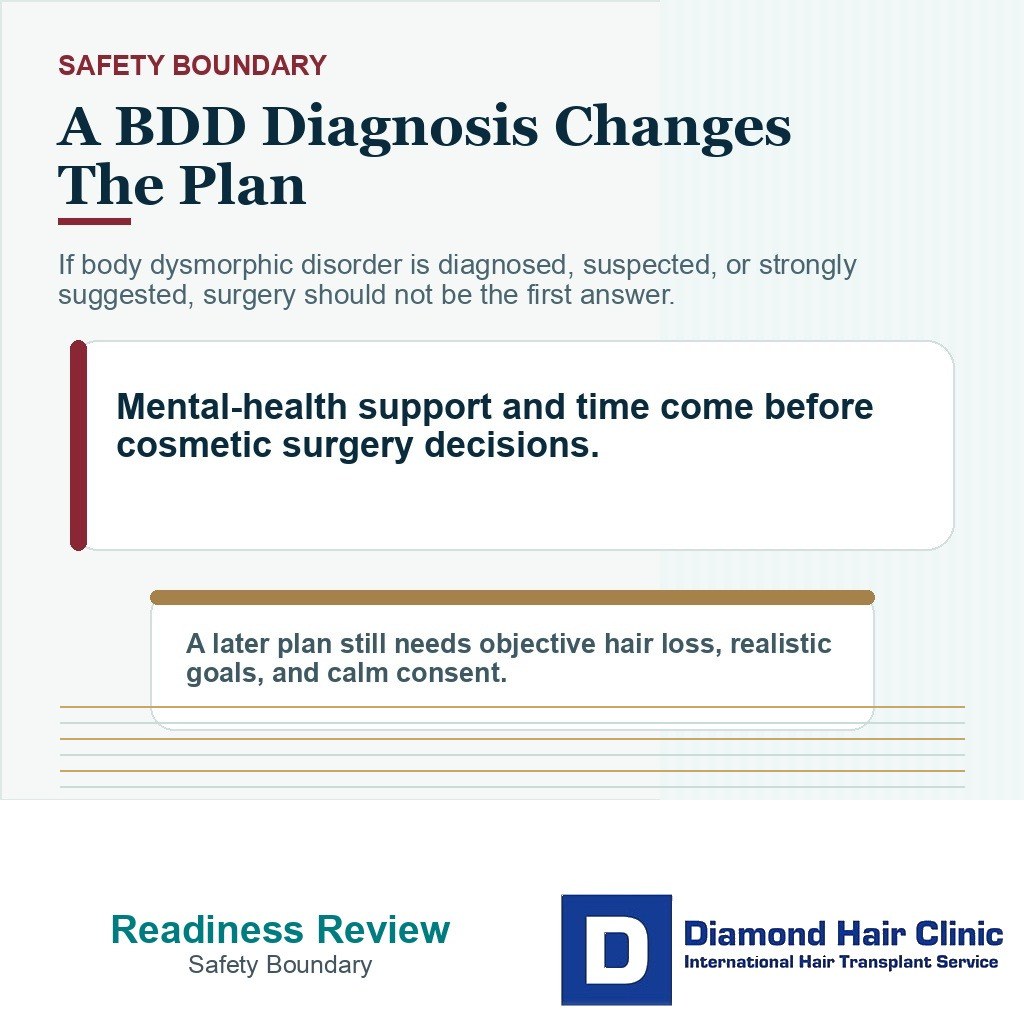
A hair transplant consultation is not a mental health diagnosis. I can recognize when a surgical request is disproportionate or unsafe, but a formal body dysmorphic disorder diagnosis and treatment plan belongs with a qualified mental health professional. My role is not to label you or dismiss you. It is to avoid using donor hair as reassurance when reassurance has already stopped working.
No graft number diagnoses body dysmorphic disorder or decides whether surgery is appropriate. The graft estimate belongs to donor and recipient planning. Distress, repeated checking, functional impact and qualified mental health assessment are a separate part of readiness.
The safer point is not to obey panic. The principles in hairline design in hair transplant surgery become even more important because a low, flat, too dense, or overly symmetrical hairline can satisfy anxiety for a short time and still become a longer range mistake.

Mirror checking can distort recovery
Recovery already tests patience. Shedding, redness, uneven early growth, harsh lighting, wet hair, and monthly changes can worry even a stable person. When obsessive mirror checking is already present before surgery, the recovery months can become emotionally exhausting.
You may judge the result every morning, compare the left and right side under different lights, zoom into first day photos, and treat normal uneven early growth as failure. The same recovery anxiety seen in the emotional crash during hair transplant recovery becomes more dangerous when the pattern is already present before surgery. You need to be able to pass through a slow recovery period without turning every normal variation into an emergency.
Obsessive checking can make a healing scalp feel like a failed result. A clinic can explain the timeline, review photos, and look for warning signs. It cannot make daily reassurance work if you are already unable to leave the mirror, sleep normally, work normally, or accept any uncertainty.
Technically good result can still feel wrong
A technically good hair transplant is judged by hairline design, graft survival, direction, density planning, donor management, and natural integration with existing hair. You may judge it by a narrower detail, such as a shadow under one light, a small asymmetry, a camera angle, a comparison with a celebrity, or a childhood memory of a hairline that no adult scalp can safely reproduce.
At that point, body dysmorphia can make surgery unfair to you and to the donor area. Even if the grafts grow, the target may move. You may then ask for more grafts, laser removal, electrolysis, lowering, raising, softening, temple work, or another repair before the first result has even matured.
Objective result and subjective distress are not the same thing. If the result is objectively unnatural, pluggy, too low, or poorly planned, repair may be appropriate. If the result is acceptable but you feel unable to live with any visible difference, the next step may need psychological support before more surgery. The difference protects both you and the remaining donor supply.
When regret appears soon after surgery, do not make the next appearance decision while swelling, shedding, and panic are still changing the mirror. The safer first step is to name what feels unbearable, check whether the plan is still healing, and involve a mental health professional if the distress is taking over daily life.
Warning signs that make me pause the plan
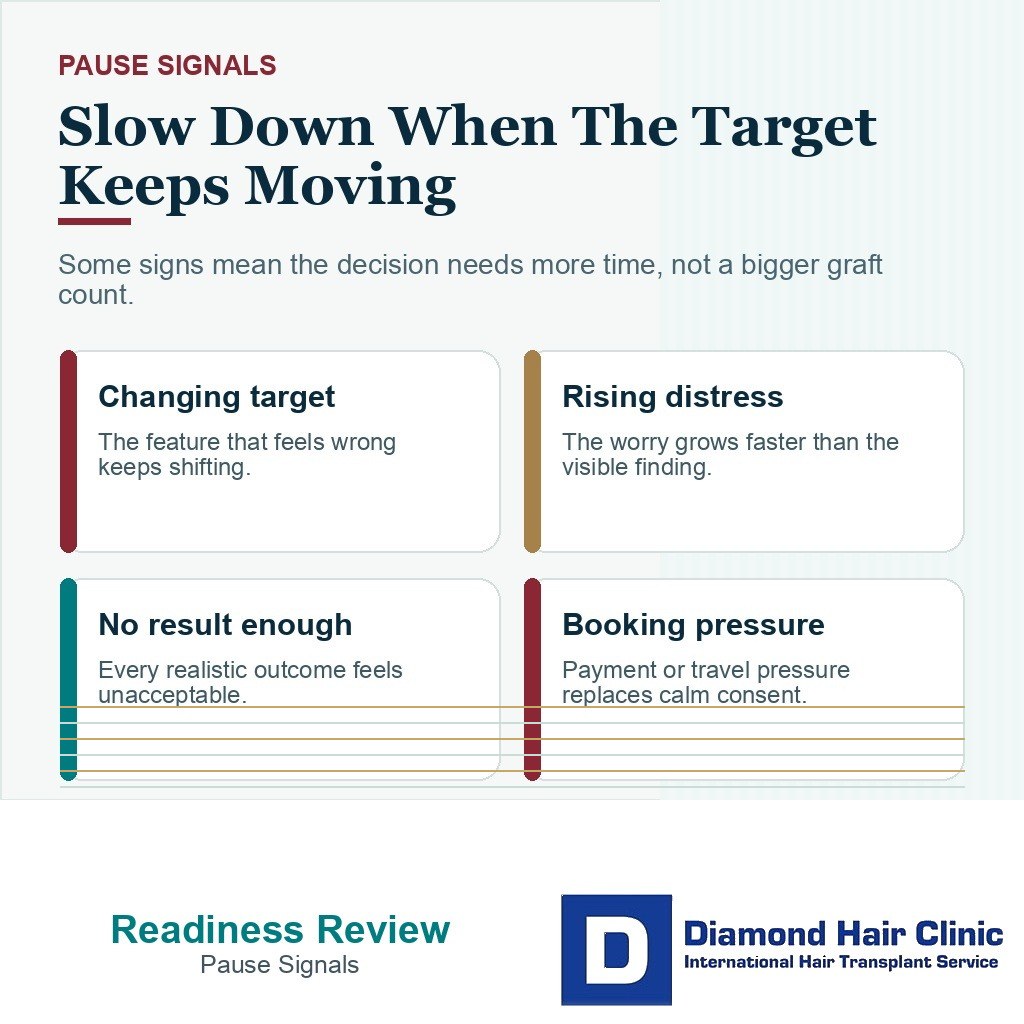
I pause the plan when the requested change is medically possible but emotionally unsafe. Warning signs include repeated requests for an extremely low hairline, intense distress over a barely visible issue, anger when a natural design is suggested, inability to accept donor limits, obsession with exact symmetry, or a history of multiple cosmetic procedures that never produced lasting relief.
Urgency that does not match the medical situation deserves caution. If you feel you must book immediately because you cannot tolerate another week with the current hairline, I treat that urgency with the level of caution I use for hair transplant booking pressure. A rushed emotional decision is a poor foundation for a permanent surgical change.
The most serious warning sign is safety. If you talk about harming yourself, feel unable to function, or describe the hair problem as the only reason to continue living, surgery is not the immediate answer. Mental health safety comes first. The next step is urgent local emergency or crisis support, not a surgical consultation. A hair clinic should never treat that level of distress as a sales opportunity.
Younger patients need extra caution
Younger men often feel hair loss more sharply because identity, dating, social life, and photos all feel urgent. That does not make the distress fake. It does mean the surgical plan has to be more conservative. Native hair may continue thinning, medication response may still be uncertain, and a low hairline chosen at 19 or 20 can become a donor planning problem later.
Age, stability, and medication response already matter when deciding whether someone is too young for a hair transplant. Body dysmorphia adds another layer. I have to ask whether the request is coming from stable judgment or from a desperate attempt to stop social withdrawal, panic, or compulsive comparison.
Donor hair is finite. If you are young and use too many grafts too early for a hairline that is too low, future hair loss may expose the mistake. When emotional distress is high, you may underestimate that future cost because the present fear feels louder than the long term plan.
Stability before surgery becomes reasonable
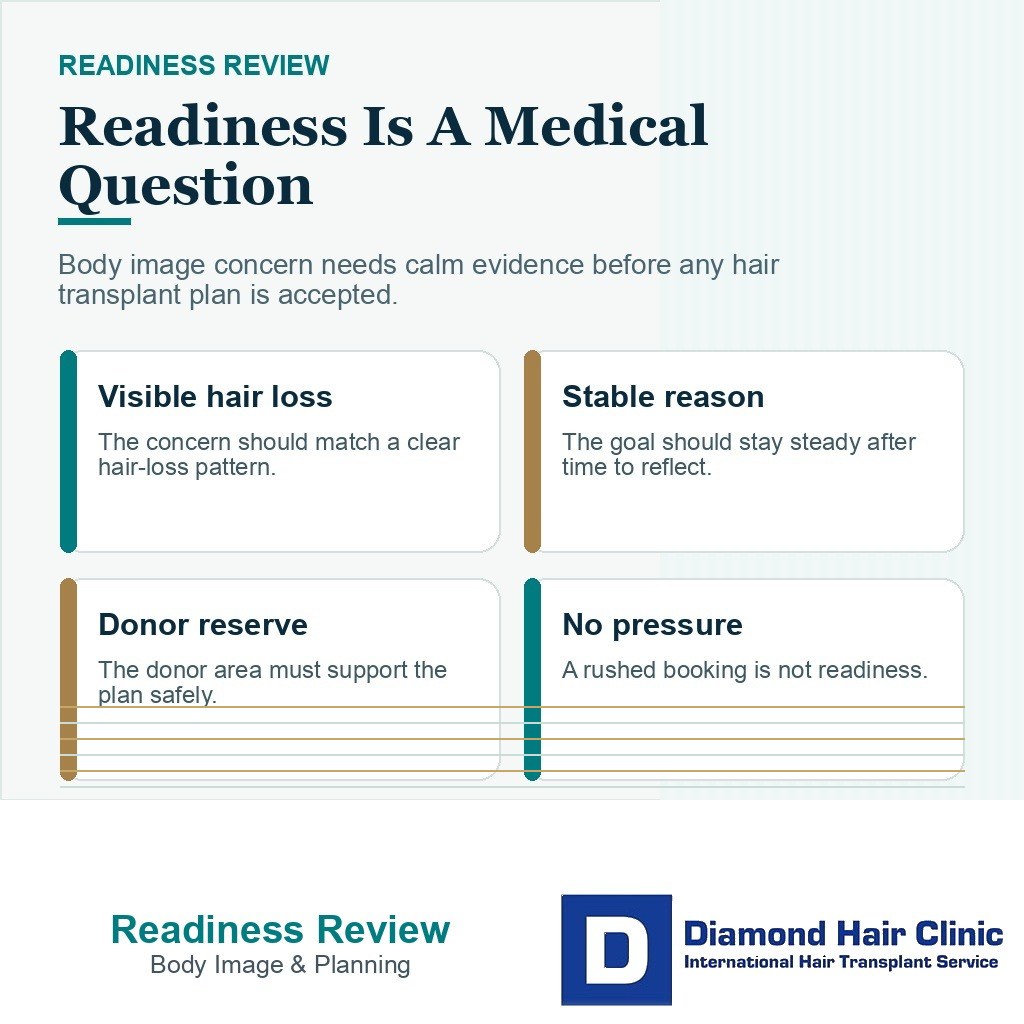
Before surgery becomes reasonable, I need a stable diagnosis of the hair problem, a realistic surgical area, a conservative hairline design, and enough ability to tolerate uncertainty. I also need to know whether mental health support is already involved, whether body dysmorphic disorder has been diagnosed, and whether the wish for surgery has stayed stable over time.
A photo review can be useful, but it can also feed the obsession. A useful review compares real hair loss patterns under fair lighting and consistent angles. A harmful photo habit searches for a new defect every day. Here, planning a hair transplant from photos and judging before and after photos matter because distorted comparisons can push you toward the wrong operation.
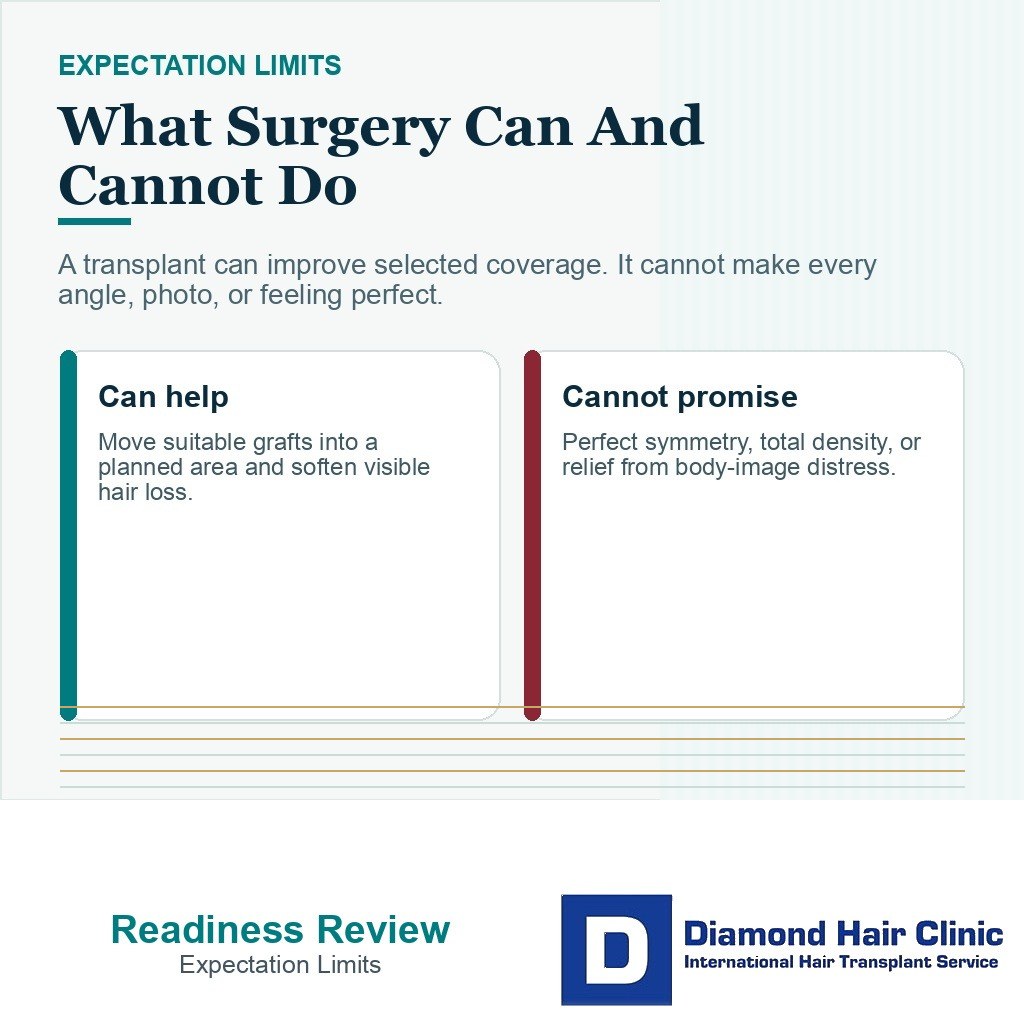
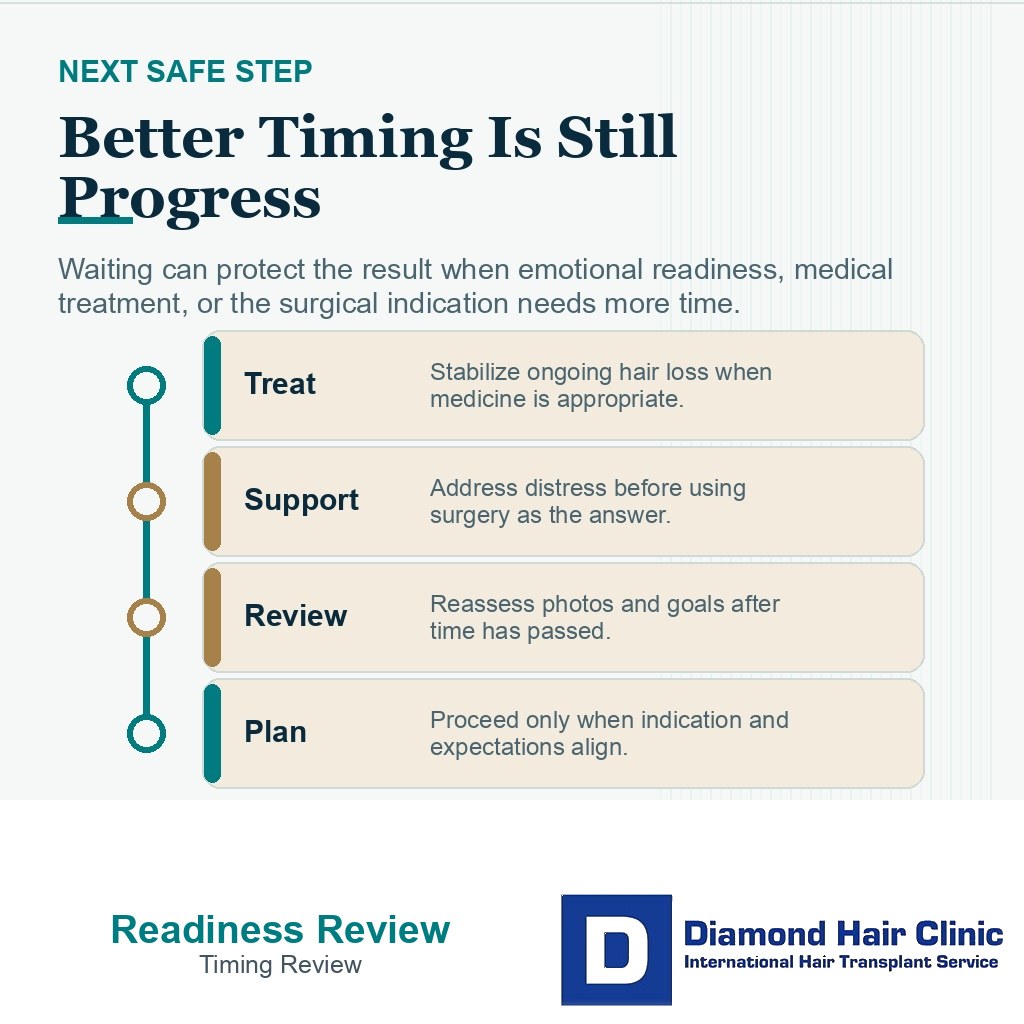
If body dysmorphia is active, the better sequence may be mental health support first, medication or non surgical hair loss stabilization when appropriate, time to cool off, and then a surgical review only if the request remains realistic. Surgery should enter the plan when you can accept limits, not when panic is dictating the design.
Surgery becomes more reasonable when you can describe a limited, stable goal without needing perfect symmetry or immediate emotional rescue. Any mental health treatment plan should continue on its own terms. The transplant date should not replace that support.
Repair surgery helps only when the finding is objective
Repair surgery can help when the finding is real and correctable. A hairline that is too low, pluggy, straight, built with grafts that have several hairs in the front, poorly angled, or badly integrated may need a repair plan. In cases such as transplanted hairline too low or bad hair transplant repair, technical diagnosis has to come before any new surgical move.
But repair surgery has even less room for emotional chasing. The donor area has already been used. Scar tissue, old graft direction, skin changes, and limited remaining grafts all reduce flexibility. If you already feel trapped in a cycle of checking and correcting, repair can become more psychologically loaded than the first operation. A technically possible repair still needs a stable target, not only a stronger feeling that the result must be corrected again.
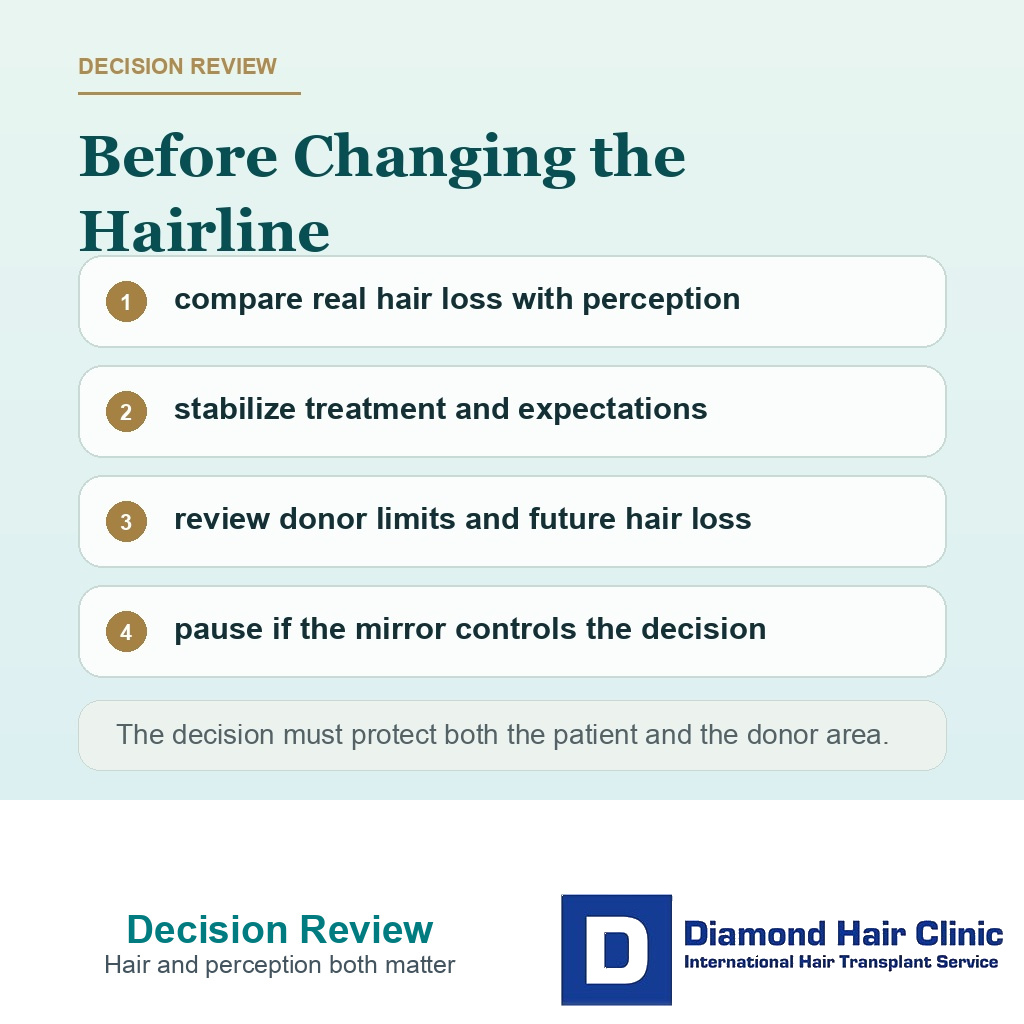
Before another graft is moved, I separate the surgical finding from the emotional state. The finding has to be objective, and the patient has to be stable enough to accept a realistic improvement rather than a perfect reset. If the surgical issue is real but the emotional target is still unstable, waiting may protect the patient better than another operation.
Using photos and second opinions
A second opinion can protect you when the first plan seems too aggressive, sales led, or vague. It can also protect you from unnecessary surgery when the concern is disproportionate to the visible hair loss. The value of a second opinion before hair transplant surgery is not only getting another graft number. It is hearing whether the plan makes surgical and psychological sense.
Photos should be used as evidence, not punishment. Good photos show the hairline, donor area, frontal density, crown, and styling conditions without manipulation. Bad photo habits create a courtroom against you, where every angle becomes proof that something is unacceptable.
A small planned set of photos can help us compare the same areas under similar lighting. Repeated selfies, flash checks, wet hair checks, and zoomed screenshots usually do the opposite. They keep changing the evidence until anxiety finds the worst frame.
If every new photo increases distress, you may need to reduce checking rather than gather more images. If the photos show real progression, then medical stabilization, donor planning, and a conservative design can be reviewed without rushing. The same tool can either clarify the decision or feed the fear.
Photo rules matter before and after surgery. If surgery eventually proceeds, agree on a limited photo schedule and consistent lighting. Daily zooming, mirror checking, and hunting for new angles can make a normal recovery feel like failure.

Photos should clarify the hair loss pattern. If they increase distress, checking may need to reduce before surgery is reconsidered.
Surgery should wait when the target keeps moving
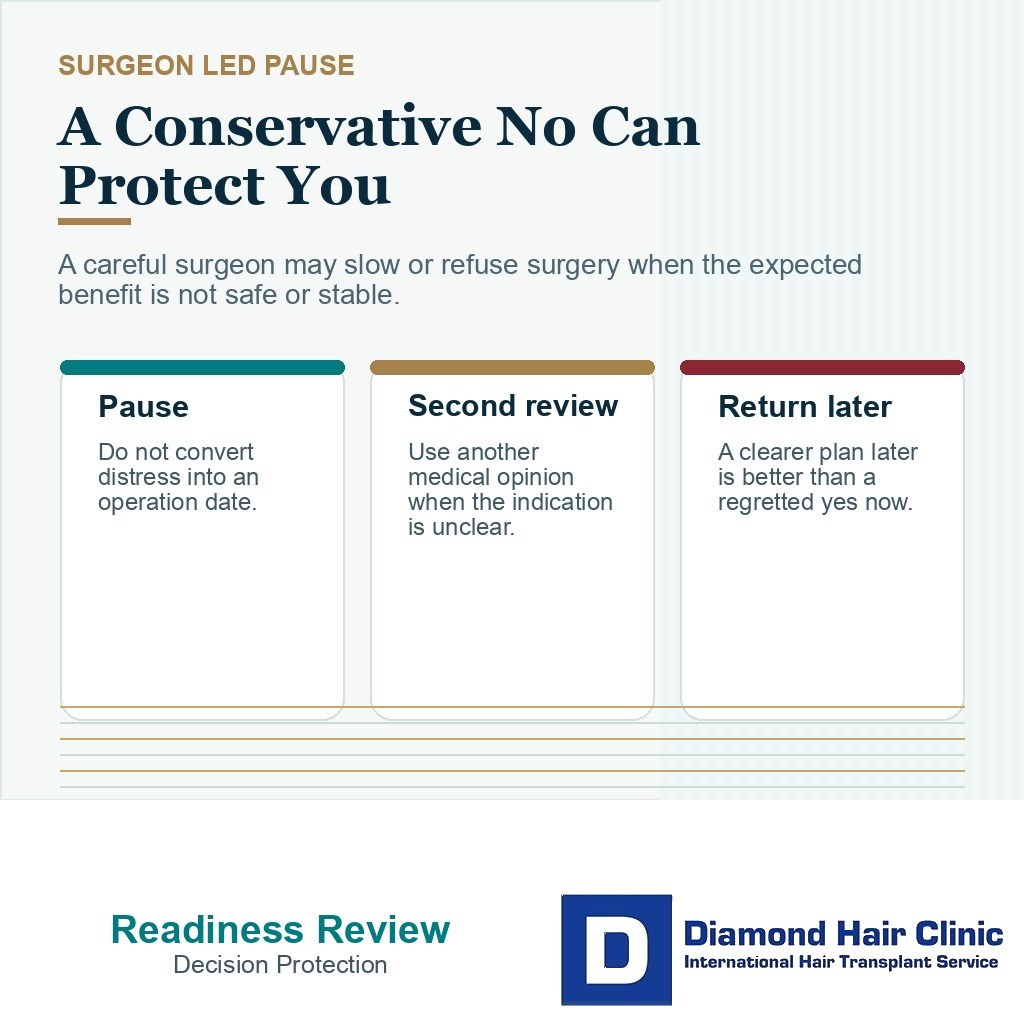
My threshold becomes no, or at least not now, when the operation is unlikely to give you emotional peace. That can happen even when you can pay, even when the hairline could technically be moved, and even when another clinic would agree to operate. A surgeon led clinic has to protect you from the wrong surgery, not only perform the requested surgery.
The threshold is crossed when the requested design damages long range donor planning, when your standard is impossible, when the distress needs mental health support first, or when you cannot accept the limits of natural hairline work. Do not chase relief with another operation if the deeper problem is that no visible result feels safe enough.
At Diamond Hair Clinic, the consultation has to respect real hair loss and real emotional suffering at the same time. Some people are helped by a careful transplant. Others are better protected by medication, time, counseling, or a second review later. The most protective decision is the one that preserves donor hair, avoids hair transplant regret, and does not pretend that surgery can solve every mirror problem.
Read this review excerpt
He was very thorough in every little detail and I never felt pressure to do anything I wasn’t sure of.