



Birth Control Changes and Female FUE Timing
Starting, stopping, or switching birth control can affect when I feel comfortable planning female FUE, especially if shedding is active or the medication story is still changing. I do not judge the plan from one bad shedding week. I first need to know whether the hair loss diagnosis is stable, or whether a contraceptive change is still triggering, masking, or confusing the pattern.
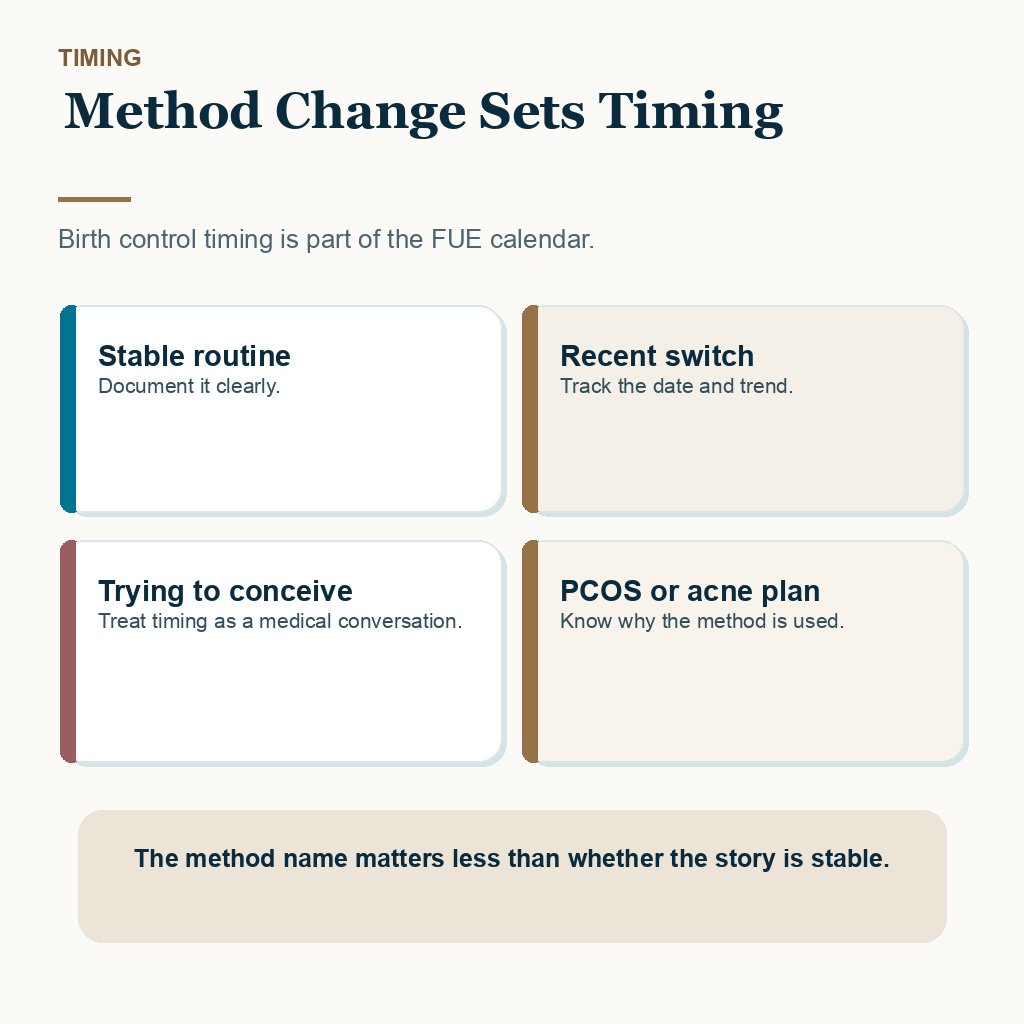
There is no single birth control waiting period that fits every woman, because diagnosis, shedding trend, and prescriber plan change the timing. A stable routine for years is different from a pill changed last month, stopping contraception to try for pregnancy, or changing hormonal treatment for PCOS. If the part line is changing, shedding is still increasing, or the medical plan is still moving, I document the pattern first. Donor grafts should not be used to chase a moving hormonal pattern.
If shedding began after a pill change, the first decision is whether the pattern has settled. A stable part line needs a different plan from a whole scalp shed that is still moving.
Bring the dates of the last three cycle changes with the hair shedding timeline. That timeline helps separate a stable female pattern from a hormone shift that is still moving.
Birth control matters before FUE
Birth control matters before FUE because it can sit between contraception, hormone related hair loss, and transplant timing. You may be using it only to prevent pregnancy, or you may be using it as part of treatment for acne, painful periods, PCOS symptoms, endometriosis symptoms, heavy bleeding, or cycle timing around FUE. Those reasons change how I read the hair loss story and how quickly surgery should be considered.
A hair transplant can improve a defined area when the donor area is safe and the target is stable. It cannot diagnose a hormonal shedding episode. The female hair transplant candidacy decision starts with diagnosis before grafts, not with the number of grafts requested.
The timing and the method both give context. Starting a new pill three weeks ago, stopping a long term pill four months ago, and changing contraception during IVF planning are not the same surgical situation. A combined pill, patch, or ring, a progestin only pill, an implant, an injection, a hormonal IUD, and a non hormonal copper IUD do not carry the same hair, bleeding, pregnancy, or clot risk questions.
Shedding after stopping birth control can mimic surgical hair loss
It can. Stopping or changing hormonal contraception can be part of a shedding story in susceptible women. It may not be the only cause, and it may not explain every case, but the timeline matters before I decide that the thin area is a stable transplant target. The same photo can mean different things if it was taken soon after a hormone change or two years into a stable routine.
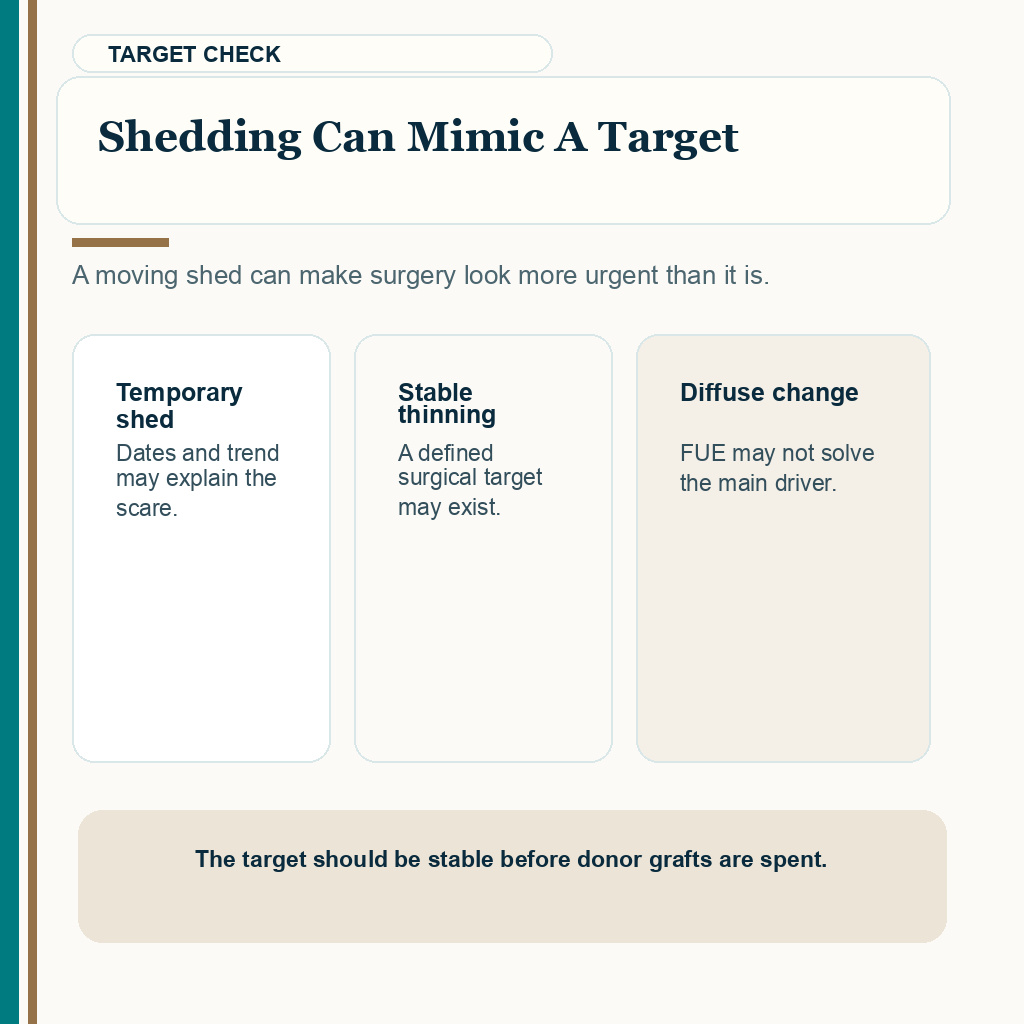
Active shedding can make the scalp look worse than the final baseline. You may see more hair in the shower, a wider part, less ponytail volume, and a weaker frontal line, then feel pushed toward surgery. If the trigger is still active or recent, the transplant plan can become inaccurate because the target has not settled yet.
A temporary shedding wave, as in telogen effluvium and hair transplant timing, can make a real hair loss pattern look larger. Surgery cannot stop that shedding process, and a shed can lag behind the trigger, so the dates matter.
Stopping birth control before a hair transplant needs medical review
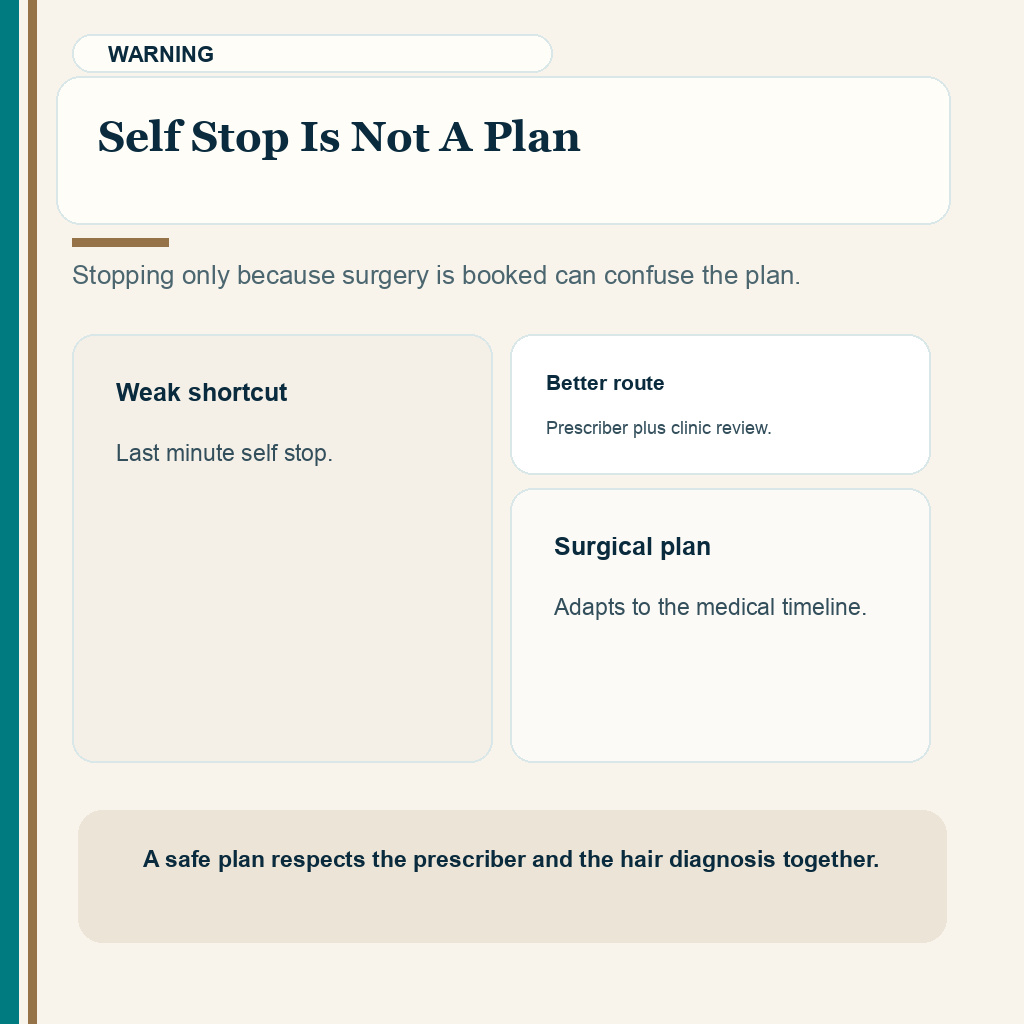
Do not stop birth control only because surgery is booked. Stopping can create pregnancy risk, cycle changes, acne flares, mood changes, heavier bleeding, or a shedding trigger. Stopping because your prescriber has a medical reason is different from stopping because a surgery date is close. Do not restart an old pill or switch brands just to reduce shedding without the prescribing gynecologist or doctor. If there is a medical reason to stop or change contraception, that decision belongs with the prescriber, then the hair transplant plan should adapt to the new timeline.
If the method contains estrogen, such as a combined pill, patch, or ring, I also need to know about clot history, migraine with aura, smoking, high blood pressure, recent pregnancy, long immobility, or a long travel plan. FUE is usually not the same as major surgery with prolonged immobilization, but estrogen related risk factors still belong in the medical review rather than in a last minute self stop decision. The answer may be simply to document the risk, or it may be to involve the prescriber before travel.
For many women, continuing a stable contraceptive routine is less confusing than changing it close to surgery. The pill name alone is not the main issue. The risky part is making a major hormone change, traveling, sleeping poorly, having surgery, and then trying to interpret shedding all at once.
Birth control belongs in the same medication before hair transplant planning review as other drugs and supplements, even if the patient does not think of it as a “hair medicine.”
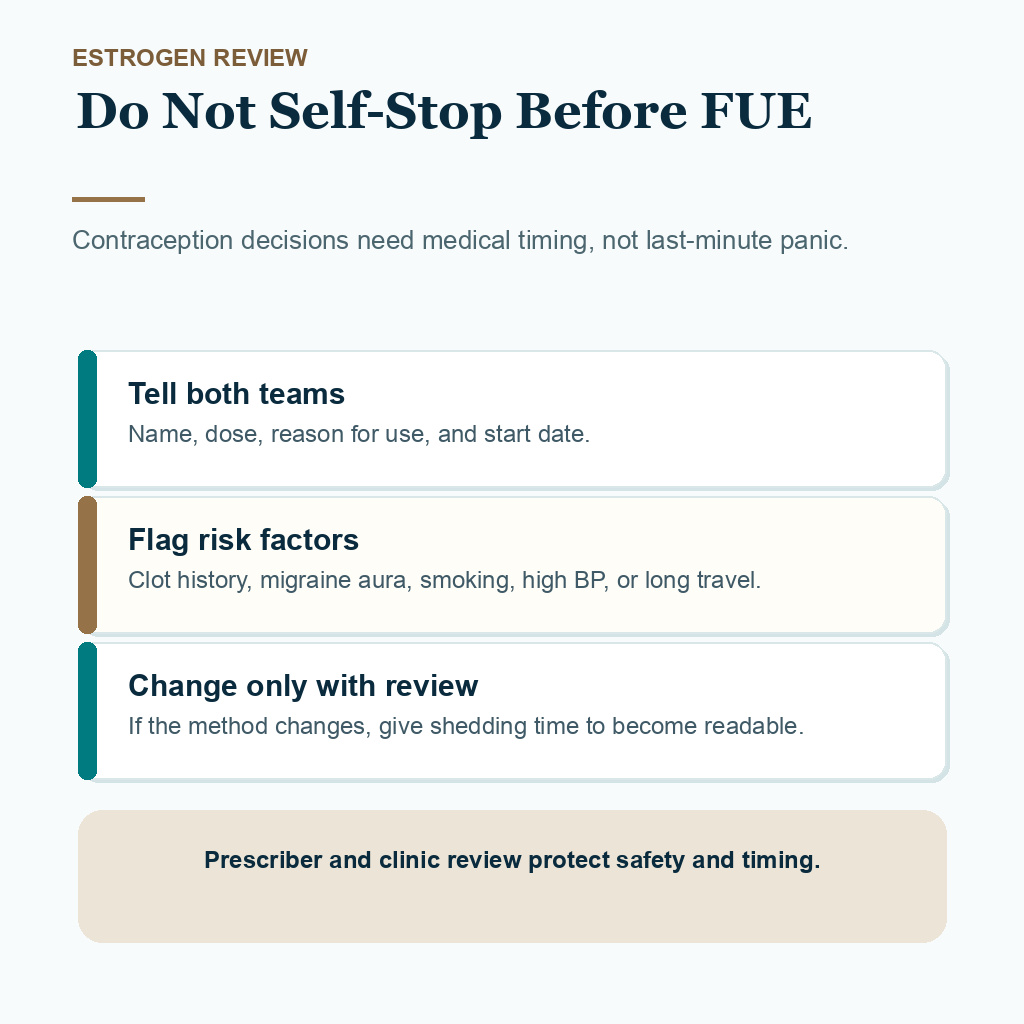
If birth control contains estrogen or the medical story includes clot risk factors, the lower risk approach is prescriber and clinic review rather than a last minute self stop decision.
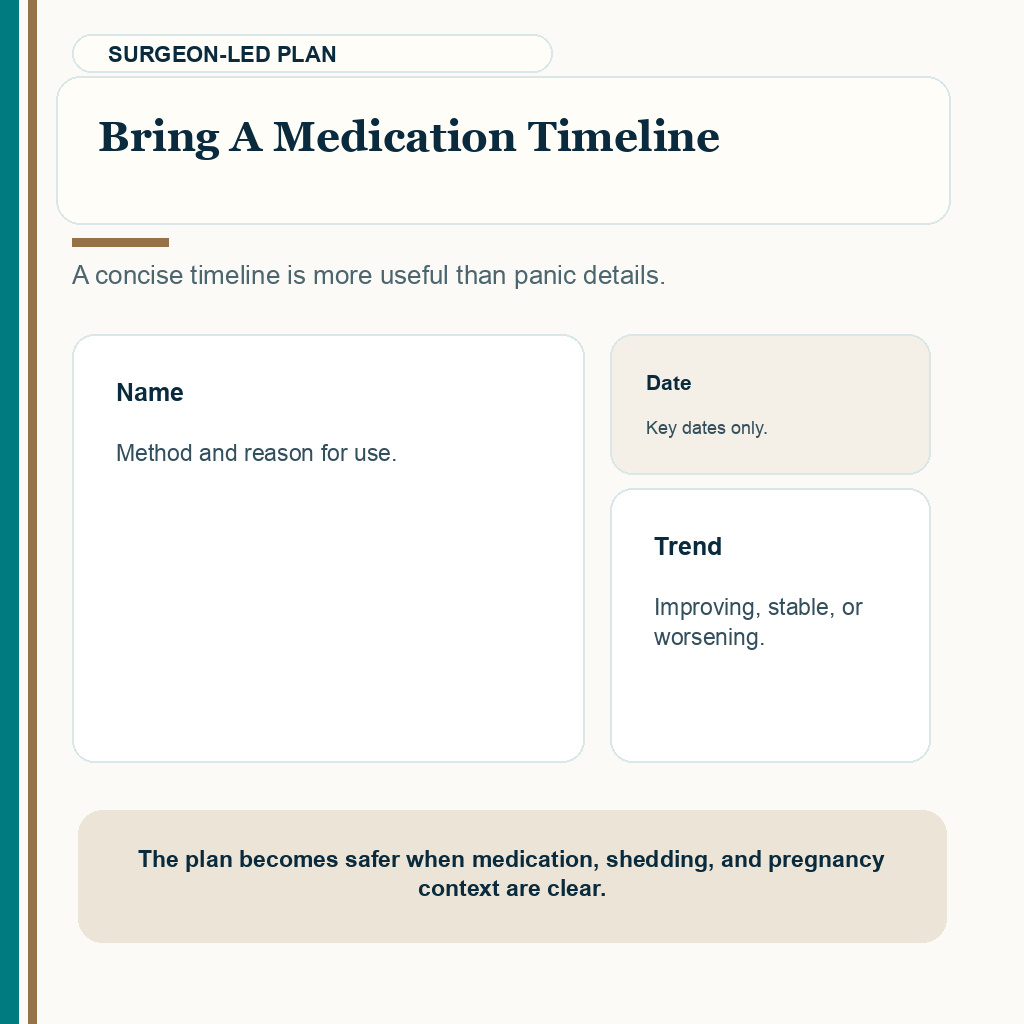
These 8 birth control planning slides separate contraceptive timing, shedding dates, prescriber review, estrogen risk factors, PCOS, pregnancy planning, FUE limits, and the medication timeline. Swipe sideways, use the arrows one slide at a time, or choose a number below the image.




Shedding after a pill change
If the shed started after a pill change, the first step is not to count grafts. I want the date of the change, the old and new medication names, why it changed, whether any other medicine changed, and whether the shedding is improving, stable, or still increasing. Shedding can lag behind the trigger, so the date of the contraceptive change and the date the shedding actually started both matter.
A single bad wash day is not enough evidence for a surgical plan. Comparable photos, a pull test or dermatologist review when appropriate, and blood test context are more useful than panic measurements. A one day scare is different from a steady trend over repeated photos.
If you also started oral minoxidil, stopped topical minoxidil, changed spironolactone, lost weight, had fever, or had heavy stress, the story becomes more complex. Several moving variables make surgery harder to plan when you are still losing hair on medication before a hair transplant.

The timing matters. I look at when the pill changed, when shedding began, and whether the pattern has settled.
PCOS can change timing
PCOS can make contraceptive timing more important because birth control may be part of hormonal symptom control, not only pregnancy prevention. If a woman stops or switches contraception, acne, cycle irregularity, androgen symptoms, weight change, and shedding may change together. That can make the hair transplant target harder to read.
In PCOS, I separate the diagnosis from the surgery. A woman may have PCOS and still be a good candidate if the donor area is strong and the thinning target is stable. A different patient may have active diffuse shedding where grafts would not solve the main problem yet. The diagnosis alone does not approve or block FUE. The stability of the pattern does.
With PCOS and hair transplant planning, I separate hormonal control from surgical target selection. A stable medical plan can support surgery, but it does not create a surgical target by itself.
Trying to conceive soon
If pregnancy is possible soon, birth control planning and hair transplant timing become the same conversation. A woman who has stopped contraception because she is trying to conceive is not in the same situation as a woman who simply changed pill brands for side effects.
Hair transplantation is elective. If pregnancy, IVF, a pending pregnancy test, or breastfeeding may overlap with surgery or early recovery, I do not treat the calendar as ordinary. Medication limits, anesthesia decisions, swelling, nausea, travel, and postoperative instructions all become less predictable.
The pregnancy, IVF, and hair transplant timing question needs to be clear before an elective operation. If the medical and fertility timeline is still moving, waiting is usually safer than forcing surgery into an unstable period.
FUE has limits when hormones drive shedding
FUE can improve a localized area where hair has been permanently reduced and the donor area is safe. It cannot switch off hormone related shedding, correct a medication trigger, or make active diffuse thinning disappear. A transplant can fill a stable target. It cannot turn a moving shed into a fixed border. That distinction protects donor hair.
If the part is widening because of female pattern hair loss, surgery may be considered only when the target is realistic. If the whole top of the scalp is changing every month, graft placement can become guesswork. If the donor area is also miniaturizing, the risk is even higher.
Hormonal stages such as menopause hair loss create similar planning problems. The scalp photo shows thinning, but it does not prove stability by itself.
Medication details the clinic needs
I need the medication name, dose, start date, stop date, change date, reason for use, side effects, and whether a doctor prescribed it. If you know the hormone names, include them too, such as ethinyl estradiol, drospirenone, levonorgestrel, desogestrel, norethindrone, etonogestrel, medroxyprogesterone, or another progestin. If you do not know them, send a clear photo of the box or prescription. It also helps to know whether contraception is being used for PCOS, acne, heavy periods, painful periods, endometriosis, pregnancy prevention, or cycle control.
Tell me if there is migraine with aura, clot history, smoking, high blood pressure, liver disease, recent pregnancy, breastfeeding, planned IVF, or a recent emergency contraceptive use. These details do not mean FUE is impossible. They mean the medical story cannot be reduced to a hairline photo.
If spironolactone is part of the same plan, the details in spironolactone and FUE planning for female hair loss depend on stability, tolerance, pregnancy planning, blood pressure, and blood test context.

A useful consultation file includes the pill name, change date, shedding trend, pregnancy plans, and related blood test issues.
Other checks before surgery
Birth control is one part of the diagnosis, not the whole diagnosis. I also look for iron deficiency, thyroid imbalance, postpartum timing, weight change, crash dieting, scalp inflammation, family history, traction, medication changes, and androgen pattern miniaturization.
Low ferritin can make shedding worse or make a woman feel that surgery is the only option. I check for that because low ferritin and anemia before hair transplant planning can change the decision. Thyroid imbalance can also change hair density and shedding, so thyroid problems before hair transplant surgery cannot be ignored.
Diagnosis comes before grafts. If several reversible or unstable factors are present, the better work is medical clarification, photographs, and follow up before using donor hair.
Hair stability before FUE
I usually want several months of stable information before planning grafts around a recent birth control change. That does not mean every woman waits the same number of months. It means there should be enough time to see whether the shed is settling, whether the part line is stable, and whether the medication plan is likely to remain the same.
If the change was minor and the hair pattern has been stable for a long time, the delay may be shorter. If shedding is heavy, the part is widening, pregnancy is possible, or several treatments changed together, the delay may be longer. Surgery is easier to plan when the target is not moving.
With oral minoxidil before or after hair transplant surgery, timing needs to stay readable. New tablets, new contraception, and surgery in the same short window make cause and effect harder to read.
Tracking before the consultation
Track the birth control name, the change date, the shedding start date, the heaviest shedding period, the current trend, cycle changes, acne changes, missed periods or pregnancy test timing when relevant, pregnancy plans, and any other medicine or supplement changes. Use the same lighting for monthly photos. Include the part line, temples, frontal hairline, crown, donor area, and a note about whether the shed is improving, stable, or getting worse.
Do not bring only one dramatic shower photo. A hair transplant consultation needs a pattern over time. The surgeon needs to know whether the donor area is stable, whether the thinning area is still changing, and whether the planned grafts would solve the right problem.
A concise timeline is more useful than a long message written in panic. It lets me separate stable female pattern loss from a recent shedding trigger and helps prevent unnecessary graft use.
Birth control history changes the hair loss workup
I plan FUE only after the contraceptive story, shedding pattern, diagnosis, and pregnancy timeline make sense together. If the hair loss is localized, the donor area is strong, the medication routine is stable, and the goal is realistic, surgery may be useful. If the shed is active or the hormone plan is changing, documentation and medical review come first.
This is not delay for the sake of delay. It is how I avoid using limited donor grafts on a target that may change before the result can even be judged. A careful plan may prevent wasted grafts, unnatural density choices, and disappointment when native hair changes behind the transplant.
A stable hair loss story makes the FUE plan more reliable. Birth control does not need to be feared, hidden, or stopped without advice. It needs to be placed correctly inside the diagnosis so surgery answers the right problem, not the most frightening week of shedding.

Read this review excerpt
He was very thorough in every little detail and I never felt pressure to do anything I wasn’t sure of.