Blood Clot History Changes Hair Transplant Planning
If you have had a deep vein thrombosis, a pulmonary embolism, or another serious blood clot, a hair transplant should not be treated like a simple date on a calendar. The answer is that surgery may still be possible, but only after the clot history, medication plan, sitting time, and travel plan have been reviewed together.
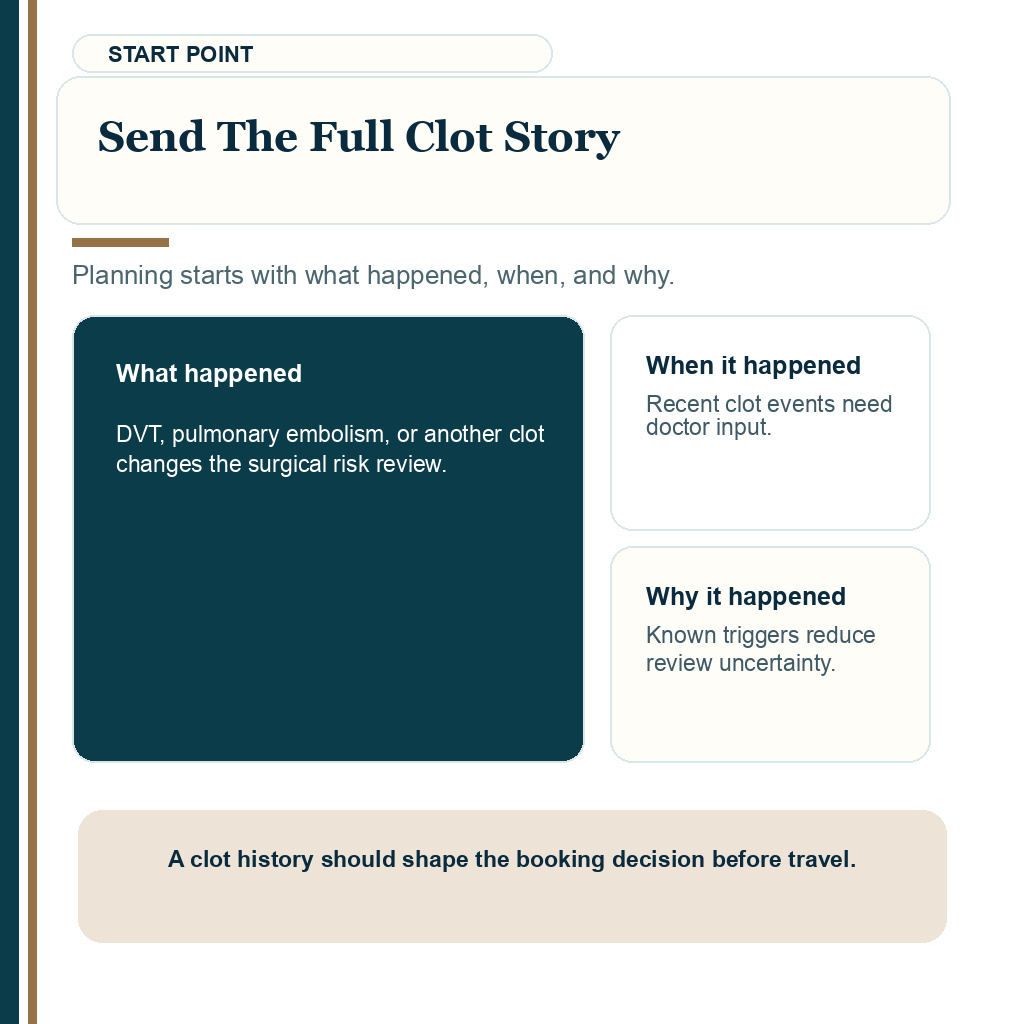
The question is not only whether bleeding can be controlled during surgery. It is whether the plan keeps you protected from another clot while still allowing safe graft work, local anesthesia, long sitting, and early recovery. I need to know why the clot happened, when it happened, whether you still take an anticoagulant, who manages that medicine, and whether your travel plan adds extra risk. If there is new one sided leg swelling, calf pain, chest pain, breathing difficulty, fainting, or coughing blood, this is not a booking question. Medical care comes first, and the hair transplant discussion can wait.
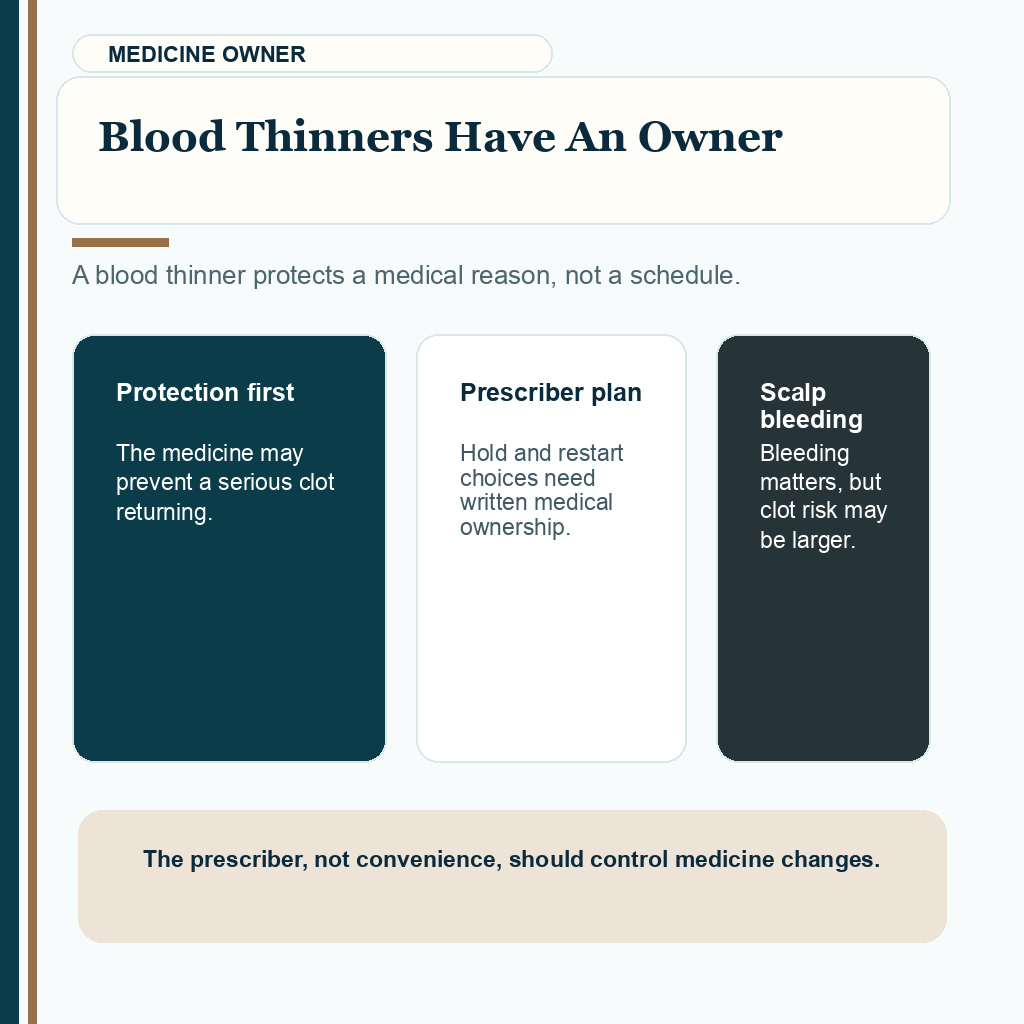
The medication plan has to come from the medical reason for the clot, not from clinic convenience alone. A hair transplant clinic can judge graft planning and bleeding in the scalp. The doctor who prescribed apixaban, rivaroxaban, warfarin, heparin, aspirin, clopidogrel, or another clot medicine must be part of the decision when interruption is being considered.
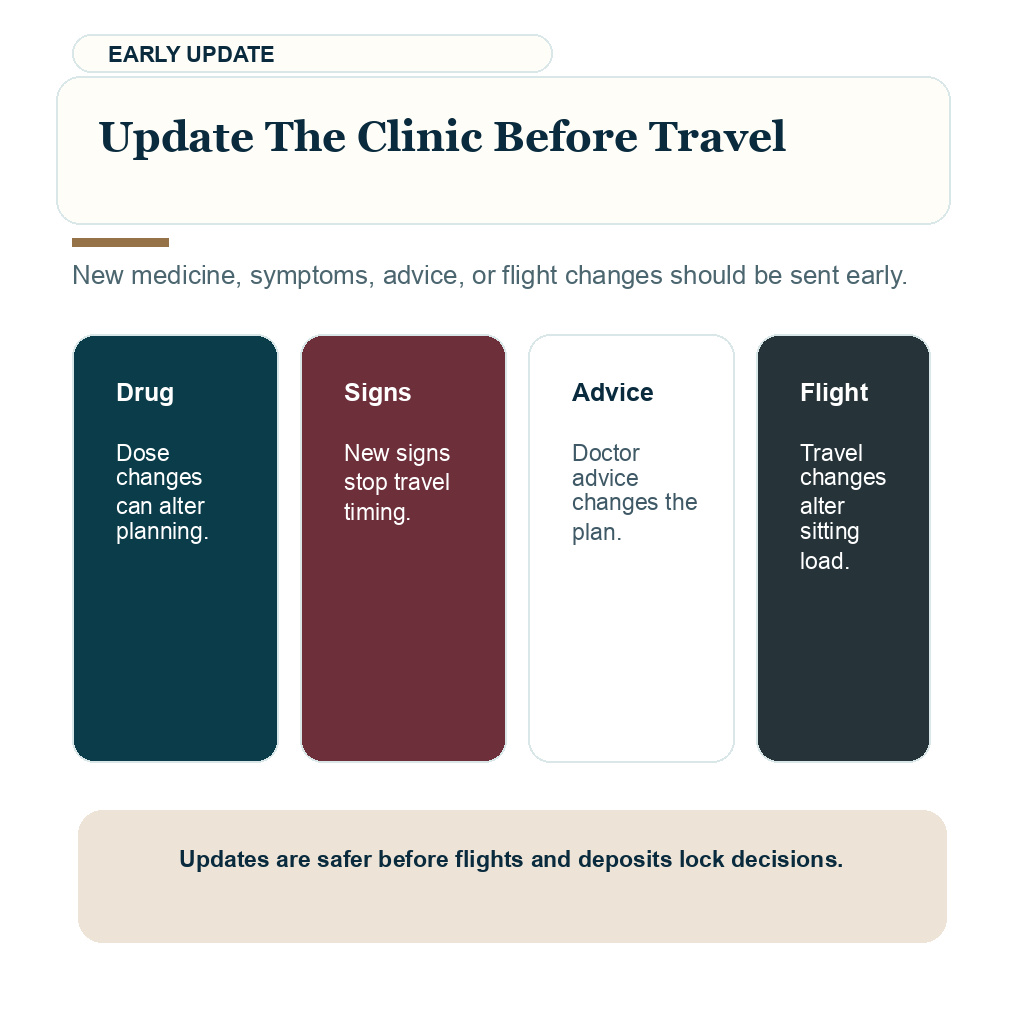
Bring the clot date, the suspected trigger, any recurrence, your current blood thinner plan, and the flight duration into the same review. The travel plan and medicine plan should not be decided separately.
Do not arrive with your own pause plan. When the prescribing doctor says a blood thinner can change, the last dose, restart timing, and travel warning signs should be written down before flights are fixed.
With a significant clot history, session length belongs in the medical plan. Staging can be safer than forcing every graft into one trip when travel, medicines, and operative time add risk.
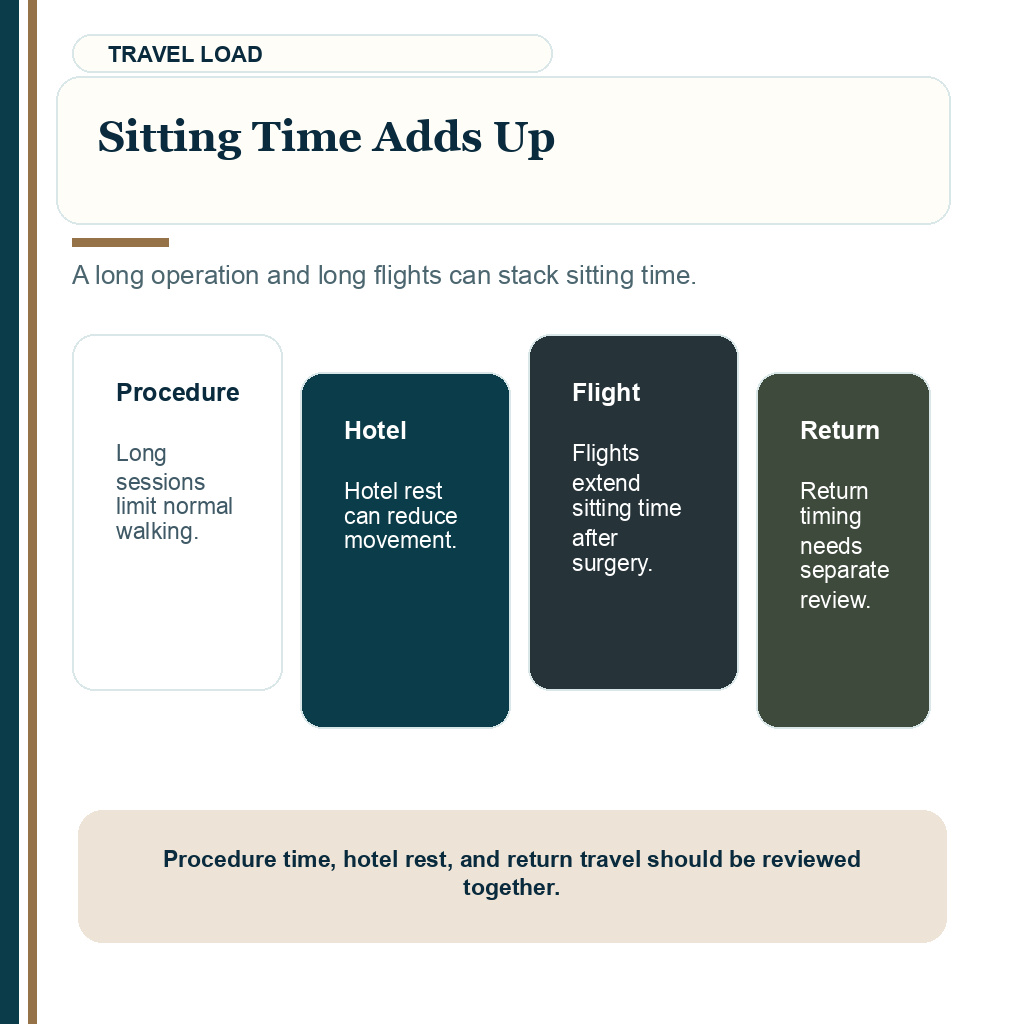
A long session, hotel rest, and long flight can matter after DVT or pulmonary embolism. Travel timing, movement, hydration, and compression advice belong in the medical plan.

A previous clot changes the safety conversation
Many patients think the only issue is whether blood thinners make the scalp bleed more. That is important, but it is only half of the conversation. The other half is why you were given the medicine in the first place. A patient with a previous DVT or pulmonary embolism may have a very different risk profile from someone who takes occasional aspirin without a clot history. Hair transplant surgery is usually performed under local anesthesia, but it still involves thousands of small wounds, several hours of sitting, swelling, recovery limits, and sometimes long haul travel. Those details matter when someone has a history of abnormal clotting. The surgical plan should reduce scalp bleeding without casually removing medical protection against another clot. I separate this topic from blood thinners and hair transplant planning because a real clot history raises a wider readiness question. The medicine category matters, but the full decision also includes long sitting, travel, recurrence risk, and whether the treating doctor agrees that the timing is reasonable.The first question is why the clot happened
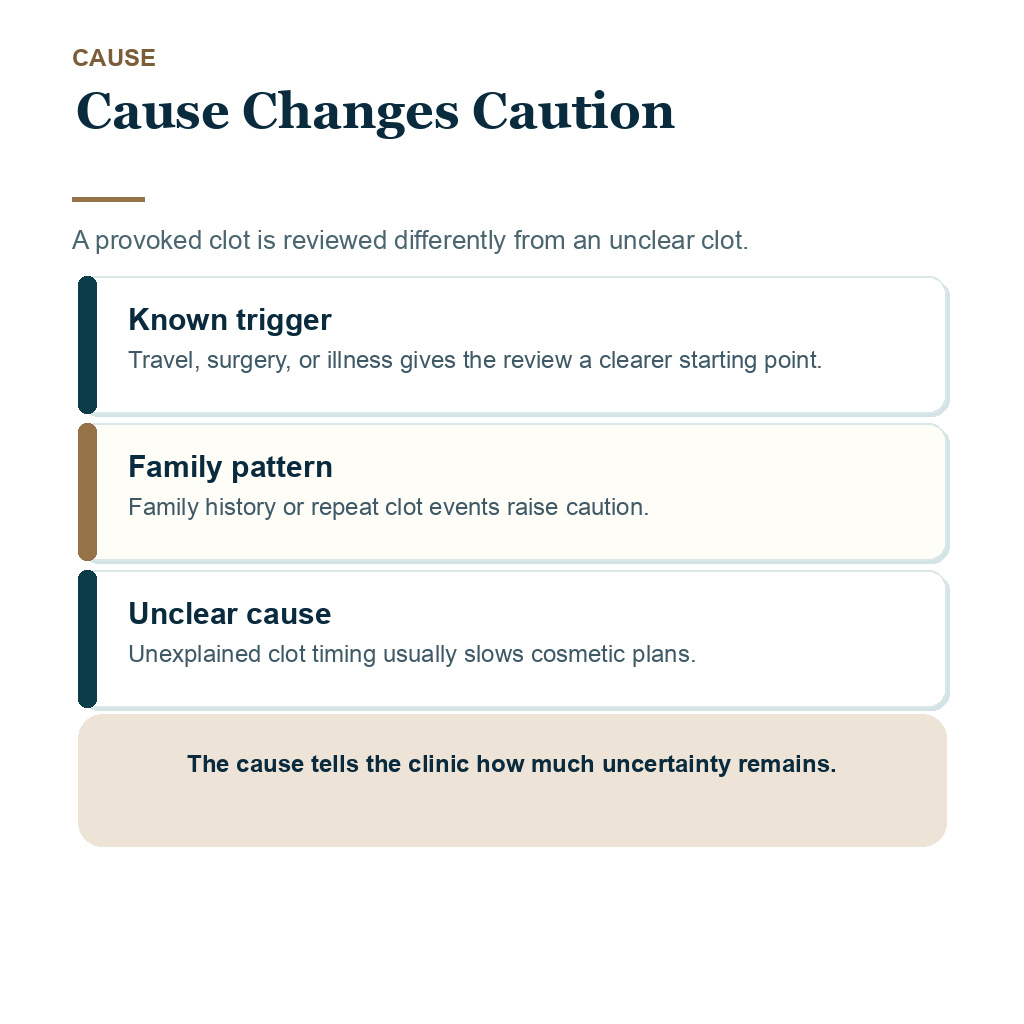
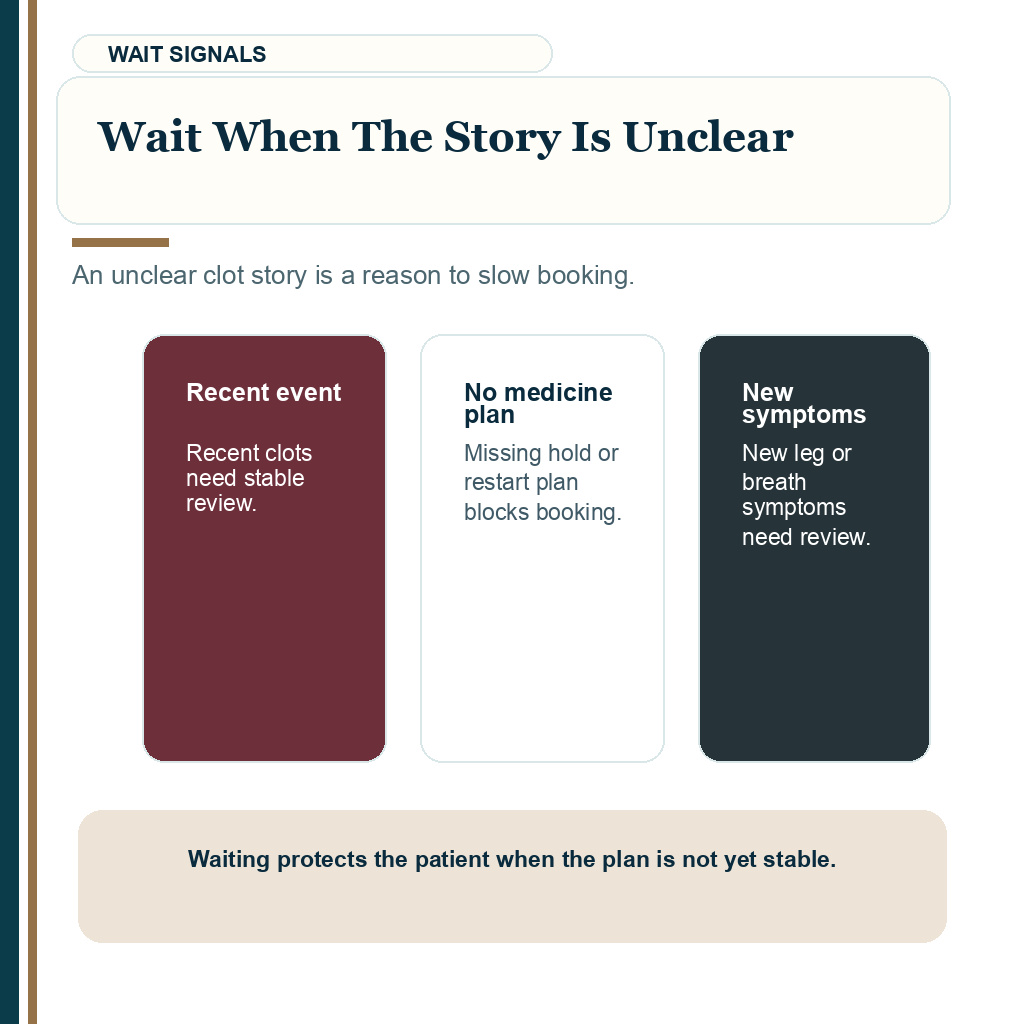
A blood clot after surgery, injury, long immobilization, pregnancy, hormone treatment, cancer treatment, a known clotting disorder, or a long flight is not the same as an unexplained repeated clot. The timing also matters. A clot many years ago with completed treatment is different from a clot diagnosed recently or a patient still being investigated. In practical terms, I separate a remote provoked clot, a recent clot still under treatment, and recurrent or unexplained clotting. Those are not the same booking route. Before I accept a case, I want a clear summary. I need the clot type, the date, where it happened, whether there was a known trigger, whether it happened more than once, which doctor follows you, and whether you take medicine every day to prevent another clot. If those answers are vague, the case should slow down. Vague medical history is not a small administrative problem. It can lead to a poor decision about stopping medicine, sitting too long, flying too soon, or accepting a patient who should be reviewed elsewhere first.Blood thinners are medical protection, not a cosmetic detail
Anticoagulants are used because the clot risk can be serious. They can also increase bleeding during or after surgery. That is the conflict. A clinic may worry about oozing, graft visibility, swelling, and post-operative bleeding. The prescribing doctor may worry about stroke, pulmonary embolism, recurrent DVT, stent risk, atrial fibrillation, or another reason the medicine was started. A casual message that says stop it for a few days is not enough. The correct plan depends on the medication, kidney function, clot history, procedure bleeding risk, and the reason the medicine is prescribed. Some patients need no interruption. Some need a short interruption. Some should not have elective surgery until their treating doctor agrees that the timing is reasonable. Do not make that pause alone. If aspirin is part of the history, the decision is also individual. Aspirin before hair transplant is discussed separately in the guide to aspirin and hair transplant surgery. Aspirin used for pain or habit is not the same as aspirin used because a cardiologist prescribed it after a vascular event.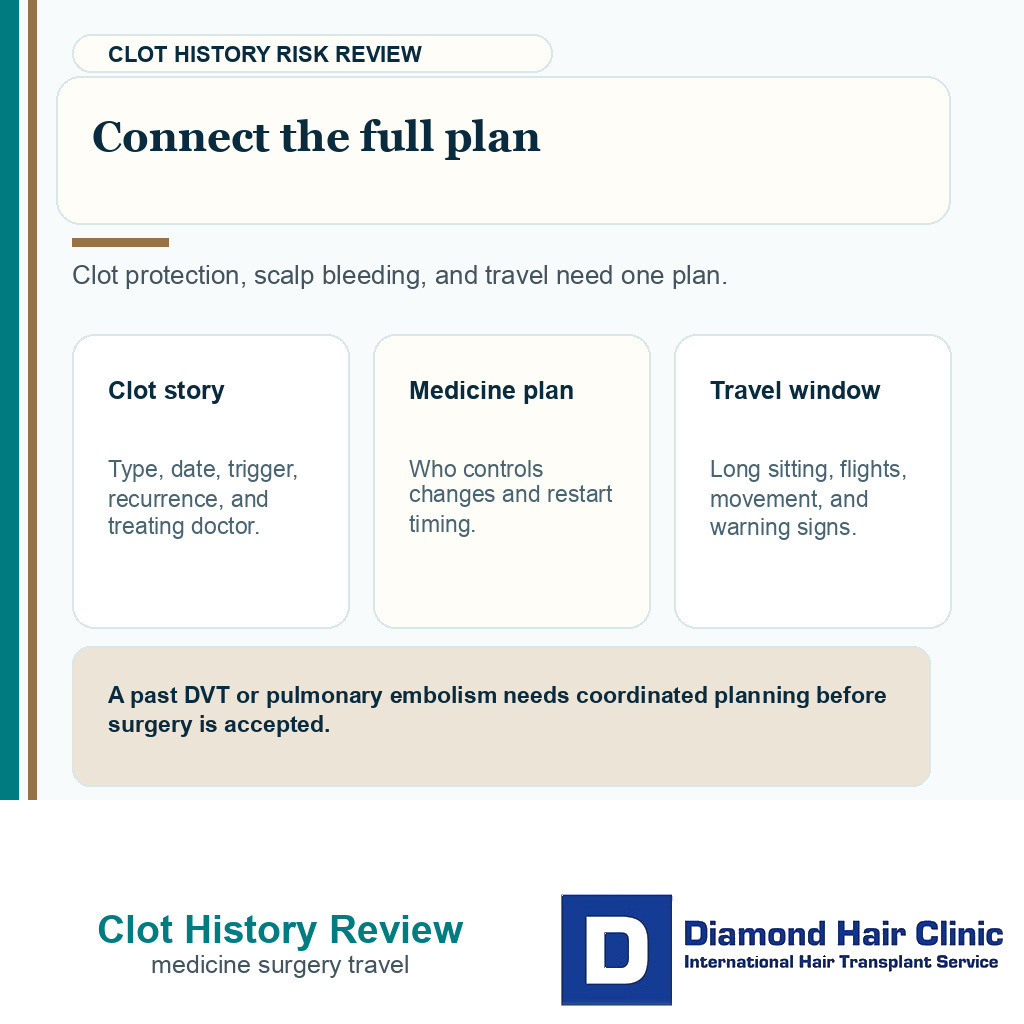
Why do long surgery time and long flights need the same review?
Hair transplant patients often travel to Istanbul, sit through a long hair transplant session, rest in a hotel, and fly home within a short window. For a lower risk patient, that can be manageable with normal planning. For someone with previous DVT or pulmonary embolism, long immobility and long haul flights deserve more attention. This is not a reason to panic, but it is a reason to plan before flights are paid for. The patient may need aisle seat movement, calf exercises, hydration, properly advised compression stockings, a safer return flight schedule, or a delay if symptoms or medical risk are not settled. These details should come from medical advice, not from a clinic trying to keep a surgery slot filled. For the general travel side, I also look at air travel during graft recovery and jet lag and long flights before surgery. A patient with clot history needs those travel details plus medical clearance for clot prevention.The clinic needs a clear medical timeline
Before surgery, send the clot type and date, what seemed to trigger it, whether it happened more than once, the current medicine and dose, the prescribing doctor, the last follow-up, any clearance letter, and the travel itinerary. If the clot was recent, recurrent, unexplained, or connected to another serious illness, say that clearly. Do not reduce the history to one sentence such as I had a clot once. I also want to know about blood pressure, heart disease, stents, rhythm problems, smoking, obesity, cancer history, hormone treatment, and recent surgery. These details do not by themselves disqualify a patient, but they change the risk conversation. The pages on heart disease and stents before hair transplant and high blood pressure during hair transplant planning are useful when those issues overlap. If the patient has no recent blood work or medical review, I may request tests or outside clearance before any booking becomes firm. Basic readiness checks are covered in blood tests before hair transplant and ECG and chest X ray before FUE, but clot history may need a more specific treating doctor opinion.Delay surgery when safety is not settled
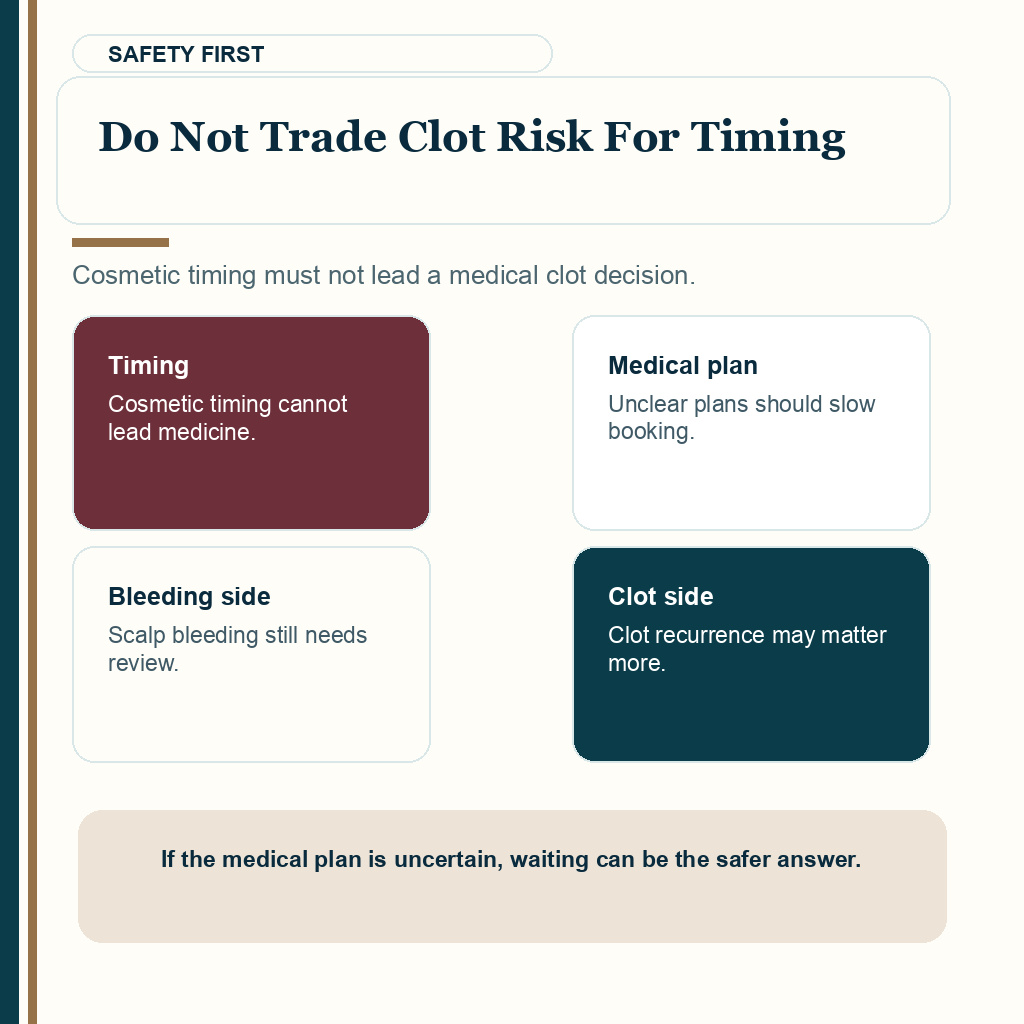
Surgery should wait if the clot was very recent, if symptoms are ongoing, if the anticoagulant plan is uncertain, if the prescribing doctor has not agreed to the timing, if the patient is hiding medication, or if travel adds avoidable risk. I also delay if the patient cannot explain why the medicine was prescribed. Another reason to delay is pressure from the booking process. Some patients feel they must keep the date because flights are paid, hotel nights are booked, or a clinic has already taken a deposit. Medical readiness should come first. A cancelled or delayed hair transplant is frustrating, but a preventable clot complication can be much more serious. I use the same logic around wider medical events. If another operation, hospitalization, or new diagnosis is close to the hair transplant date, the timing should be reviewed. The guidance on major surgery around hair transplant timing uses the same scheduling principle.Clearance should give a medication plan
A useful clearance note should not simply say fit for hair transplant. It should tell the clinic whether the patient may proceed with elective minor surgery under local anesthesia, whether the anticoagulant or antiplatelet medicine should continue or pause, who is responsible for the pause, when it may restart, and whether long travel needs extra precautions. The note should also mention any red lines. For example, no interruption of medicine, no same week long haul flight, no surgery until a follow-up scan or blood test, or no elective procedure during a defined treatment window. A clear no is safer than a vague yes. The clinic should not rewrite a treating doctor recommendation to make the surgery fit the calendar. If the medical plan says delay, the case should delay. If the medical plan allows surgery with conditions, those conditions should be documented and followed.