


Major Surgery Timing Around FUE Needs Medical Review
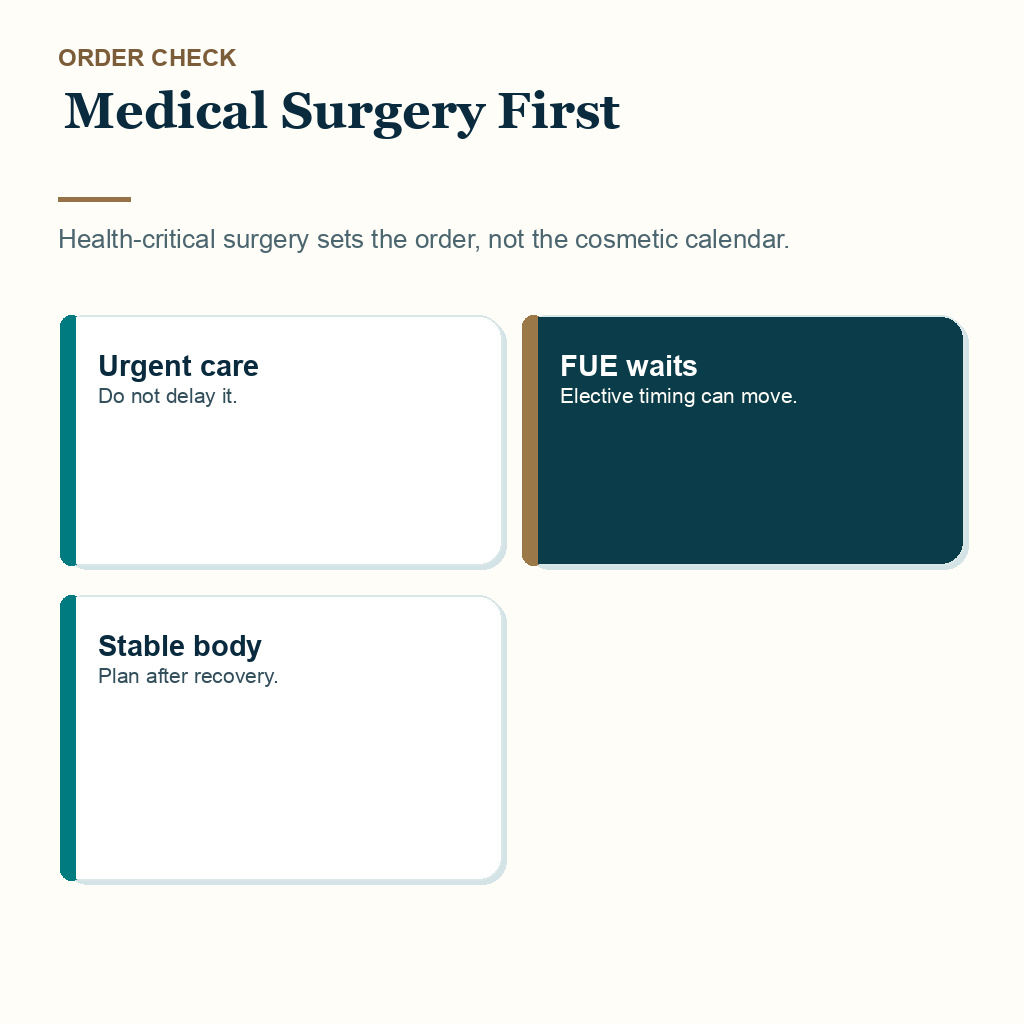
If the other operation is urgent, medically necessary, or likely to change your general health, it should come first. FUE is elective. It can wait until your body, medication plan, other surgery recovery, and scalp care routine are stable enough to protect the scalp.
A major elective operation is different from a simple calendar gap. Blood thinners, a hospital stay, difficult sleeping position, fever or infection risk, slow nutrition, or strong pain medicine can all make the hair transplant timing weaker.
If FUE has already been done, another operation after the first 10 to 14 days is less likely to physically dislodge healed grafts, but that does not make close timing a good plan. I still look at whether you can wash the scalp, sleep in the correct position, attend follow up, avoid pressure, and understand any shedding that may appear months later. Do not schedule the two operations close together just because both teams say their part is technically possible. A nose operation is one of the cases where I review rhinoplasty and hair transplant timing separately instead of trusting a tight calendar gap.
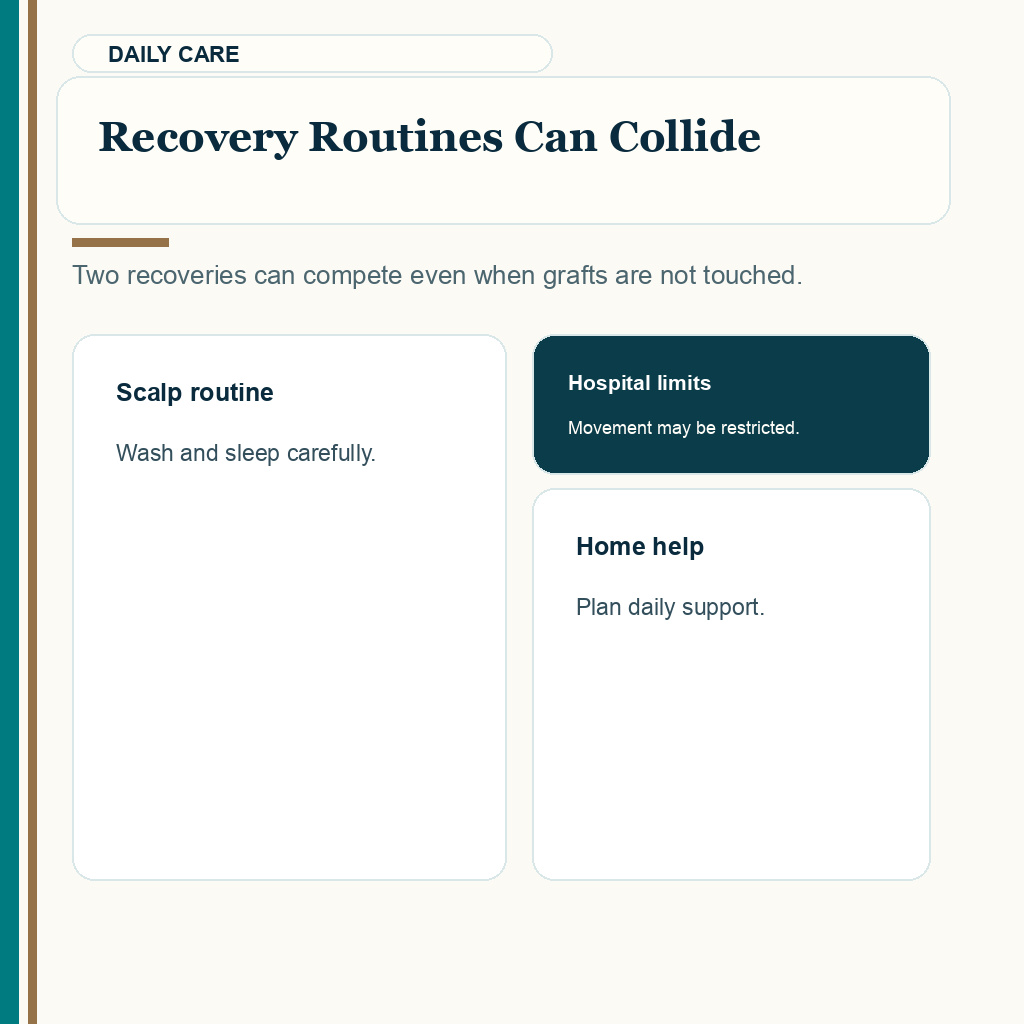
Treat recovery logistics as part of the timing decision when another operation changes sleep, showering, eating, or pain medicine. The scalp may be stable, but the first week still needs a patient who can follow care.
Calendar is not enough
This question usually appears because there is one block of leave from work, one travel window, or one period when family can help. That pressure is real. A hair transplant may feel small compared with orthopedic, spinal, abdominal, cardiac, or facial surgery, but it still creates thousands of tiny skin wounds and a recovery routine that needs attention every day.
The mistake is treating the decision as a fixed number of weeks. One person may tolerate FUE and a separate procedure several months apart without difficulty. Another may need to wait longer because the second operation requires anticoagulants, strong pain medicine, limited mobility, difficult head positioning, or a period of poor appetite. The right order depends on the whole recovery burden, not on the hair transplant alone.
I separate the timing into three layers. First, is the scalp stable enough for hair transplant surgery? Second, will the other operation interrupt early graft instructions? Third, could the other operation create later hair shedding that will confuse the result? Those answers tell me more than one fixed rule.
Graft security and body stress are different
In the first days after FUE, the practical concern is direct graft disturbance. Rubbing, scratching, pressure, poor washing, or trauma to the recipient area can matter. This is the same reason I am strict about the first washing period, sleep position, and avoiding pressure from helmets or tight headwear.
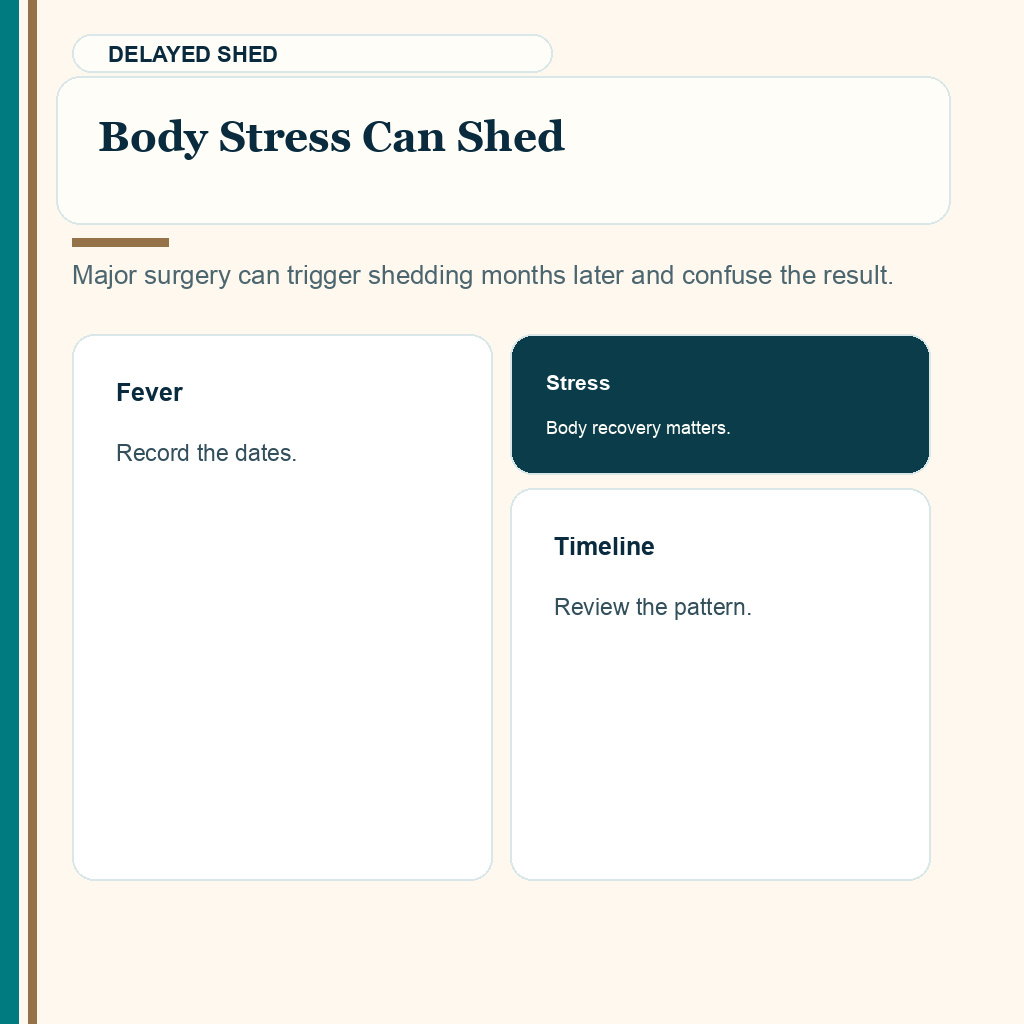
After the early anchoring period, the concern changes. A separate major operation is less about knocking grafts out of the skin and more about the body being under stress. Fever, infection, major surgery, blood loss, crash dieting, poor protein intake, and sudden medication changes can all push hair into a shedding phase. That shedding usually appears later, often two to four months after the trigger, so you may wrongly blame the hair transplant or think the grafts failed.
The distinction matters. Graft loss from direct trauma is an early local event, while telogen effluvium is a delayed whole body shedding reaction. If those two are confused, the reassurance can be too soft or the warning can be aimed at the wrong problem.
Anesthesia is not usually the whole issue
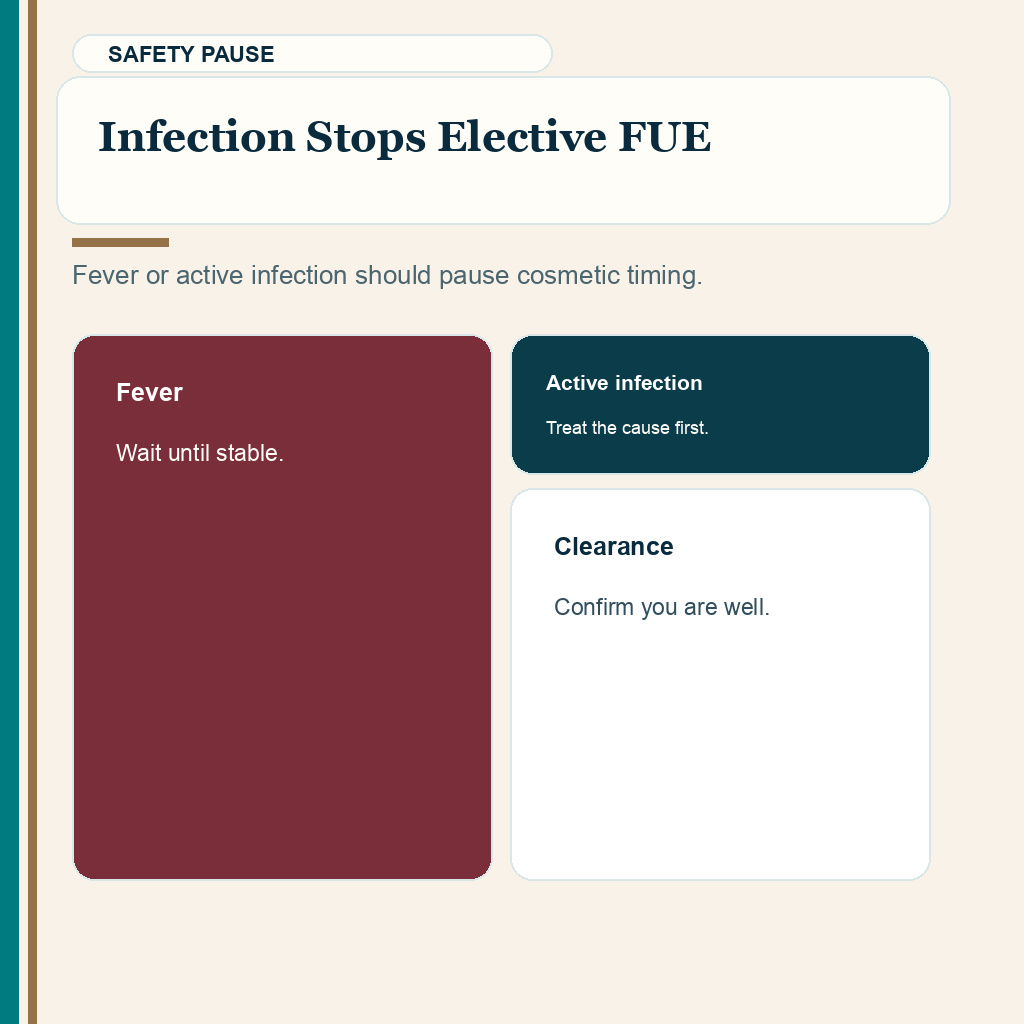
Many people focus on general anesthesia because it sounds like the biggest danger. They ask whether the anesthetic itself will kill grafts or damage transplanted hair. For a healed scalp, general anesthesia is usually not the main issue by itself. The larger question is what the operation does to the body and recovery routine. I look at the length of the operation, expected blood loss, fever or infection risk, medication changes, and how difficult recovery will be.
A hair transplant is usually performed with local anesthesia, sometimes with selected premedication, and it has a different recovery profile from major hospital surgery. That does not make it meaningless. It means the hair transplant team and the other surgical team are protecting different risks. One team may be thinking about graft placement and donor safety. The other may be thinking about anesthesia, blood clots, wound healing, mobility, pain control, and infection prevention. If clot prevention or anticoagulants are part of the other operation, blood clot history and hair transplant planning should be reviewed before FUE timing is accepted.
If another operation is being planned, those medical facts decide where FUE belongs in the sequence. The other team should also say whether aspirin, anticoagulants, antibiotics, steroids, or a long period of limited movement is expected. If those details are unknown, the timing is not ready. If the other operation was an organ transplant, organ transplant history before FUE also needs written clearance from the transplant team, stable medicines, recent blood tests, and a plan for infection concerns after surgery.
The other surgeon should know the transplant plan too. A hair transplant can change sleep position, wound care, washing, and pain medicine needs, so both recovery plans should fit on the same calendar.
FUE before another operation can make sense in selected cases
FUE before another operation may be reasonable when the other procedure is not urgent, the gap is comfortable, your health is stable, and the recovery routines do not collide. A small hair transplant followed months later by a clearly planned operation is a different situation from a large FUE session followed a few weeks later by spinal surgery, cardiac surgery, or a long hospital stay. When the other operation is a year away, I still map both recoveries first and check whether FUE healing, washing, photo follow-up, and early shedding anxiety can finish before the larger operation changes medicines or body stress.
I am more comfortable when you can complete the sensitive early hair transplant period first. That means the scalp has been washed properly, scabs are gone, swelling has settled, the donor area is calm, and you can send useful follow up photographs. Graft security is only part of the decision. You also need enough mental and physical space to follow the instructions that reduce avoidable risk.
When the second operation is still far away, I also look at donor planning. If the hair transplant is large and a second session may be needed later, I do not want a rushed first surgery just because another medical date is coming. The graft number, donor capacity, and long term hair loss plan still have to make sense. The same medical readiness logic behind blood tests before hair transplant applies here. Testing should support planning, not function as an administrative formality.
Medically important surgery comes first
If the other operation is urgent, medically important, or likely to change your general health, it normally comes first. Hair transplant surgery must not compete with a spine operation, cancer treatment, heart procedure, severe infection, or any operation your main doctor considers time sensitive. If the other medical team needs imaging near the FUE recovery period, that should be coordinated with the same timing mindset.
The major operation may also change whether hair transplant planning is sensible. Recovery can affect weight, nutrition, iron stores, medication lists, sleep, stress, and general stamina. Temporary shedding can appear after a major operation. Blood thinners may be needed. Sleeping upright or avoiding pressure around the head may be impossible for a while. In some recoveries, there is simply not enough energy to follow two sets of instructions well.
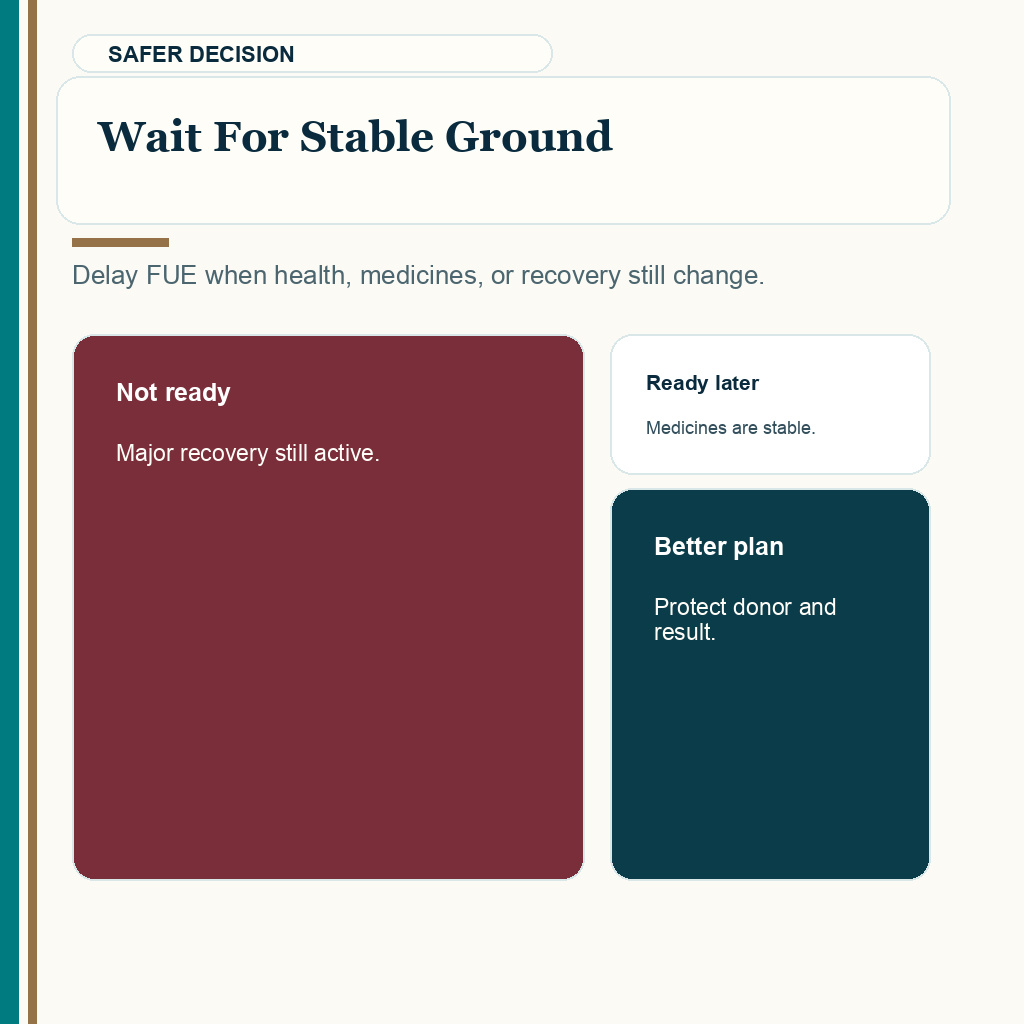
When those factors are present, delaying FUE is not failure. It is surgical judgment. The donor area is limited, and a hair transplant is elective. I get better surgical information from clear photos, stable medicines, and realistic recovery capacity than from a body still recovering from something bigger.
Delayed shedding can confuse the result
One of the most confusing parts is timing. If a major operation happens after a hair transplant, shedding may appear months later. That does not prove the grafts were physically damaged during the operation. It may be telogen effluvium, especially when shedding is diffuse, sudden, and linked to fever, illness, surgery, major stress, nutritional strain, or medication change.
At the same time, I do not label every new shed as harmless. You may also have ongoing androgenetic hair loss, active telogen effluvium before hair transplant, thyroid disease, anemia, low ferritin, poor protein intake, scalp inflammation, or a transplant plan that did not protect native hair. The timeline helps, but it does not replace examination.
A delayed shed after major surgery needs review, not panic and not blind reassurance. I ask for clear photos, the dates of both operations, fever or infection history, medicines used, blood work when relevant, and whether the shedding is diffuse or limited to the transplanted zone.
Facts the other surgical team should confirm
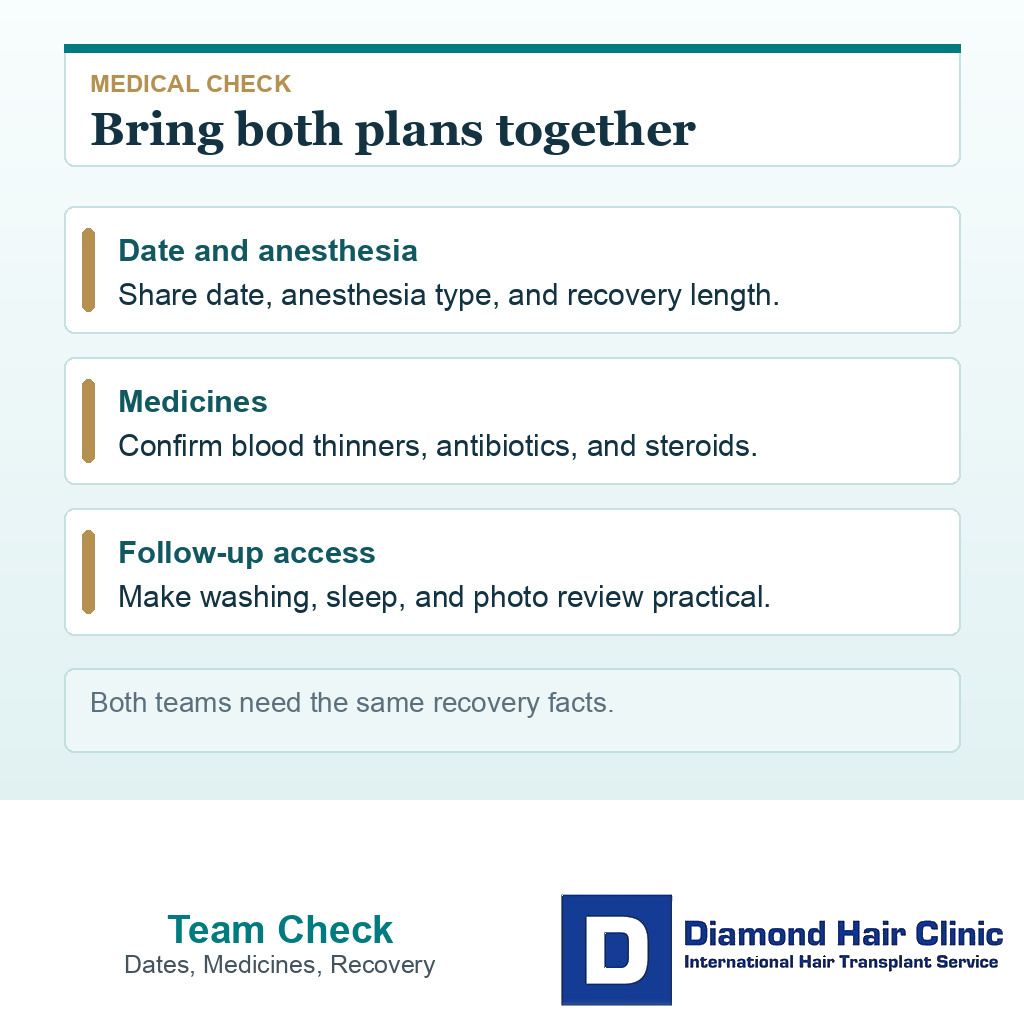
Both surgical teams need the same timing, medicine, and recovery facts before FUE is scheduled.
Before timing is accepted, bring practical information from the other surgeon or medical team. You do not need to translate medical decisions alone. A note that only says “fit for surgery” is weaker than a note that explains the recovery limits, medicine plan, and warning issues. The timing decision should follow that medical reality.
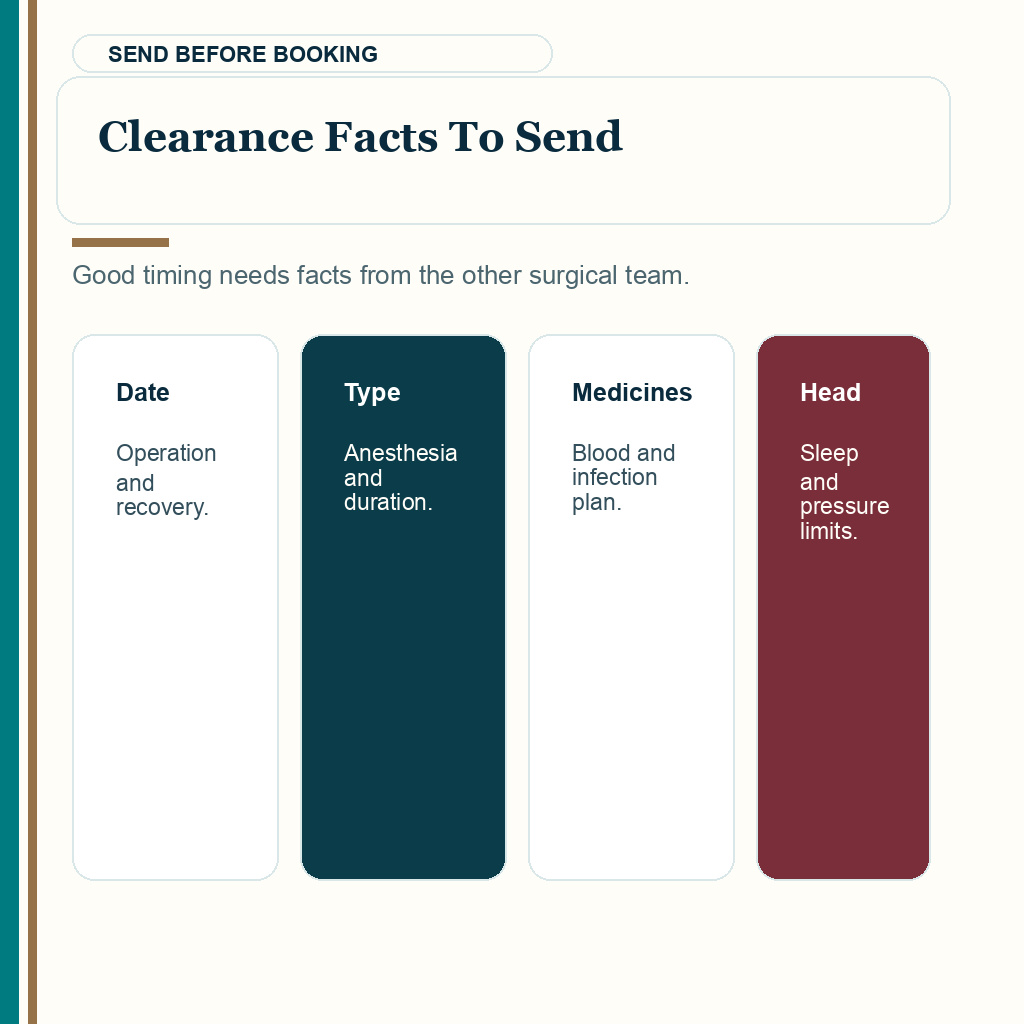
The other team should clarify the planned date, expected recovery length, anesthesia type, bleeding risk, wound healing concerns, infection risk, and whether blood thinners, aspirin, steroids, or antibiotics will be needed. If the other operation involves the head, face, neck, jaw, spine, or prolonged pressure near the scalp, that matters even more.
Hair transplant planning may also need the other team to confirm whether there are restrictions on travel, sleep position, washing, or physical activity. If you are flying for surgery, travel insurance for hair transplant abroad deserves a separate check because a second medical event can complicate responsibility, costs, and follow up access.
Blood thinners, antibiotics, and wound risk change timing
Medication changes are one of the strongest reasons to slow down. Some operations require blood thinners or aspirin for safety. Some infections need antibiotics. Some inflammatory conditions need steroids or other medicines. None of these decisions should be changed just to fit a hair transplant.

Medicine plans can move the FUE date when bleeding, infection, steroid use, or wound healing risk is involved.
If the other surgery requires anticoagulant treatment, the first priority is the medical reason for that treatment. Before FUE, the bleeding risk review described in blood thinners and hair transplant has to come before cosmetic scheduling. Someone with a stent, clot risk, or cardiac history may also need the kind of review described in our heart disease and stent safety article.
Antibiotics create a different question. If antibiotics are being used because there is an active infection, I do not treat that as a routine medication detail. First I want the reason for the antibiotic, whether fever is present, and whether you are clinically well. That distinction is central to our antibiotics before hair transplant guidance.
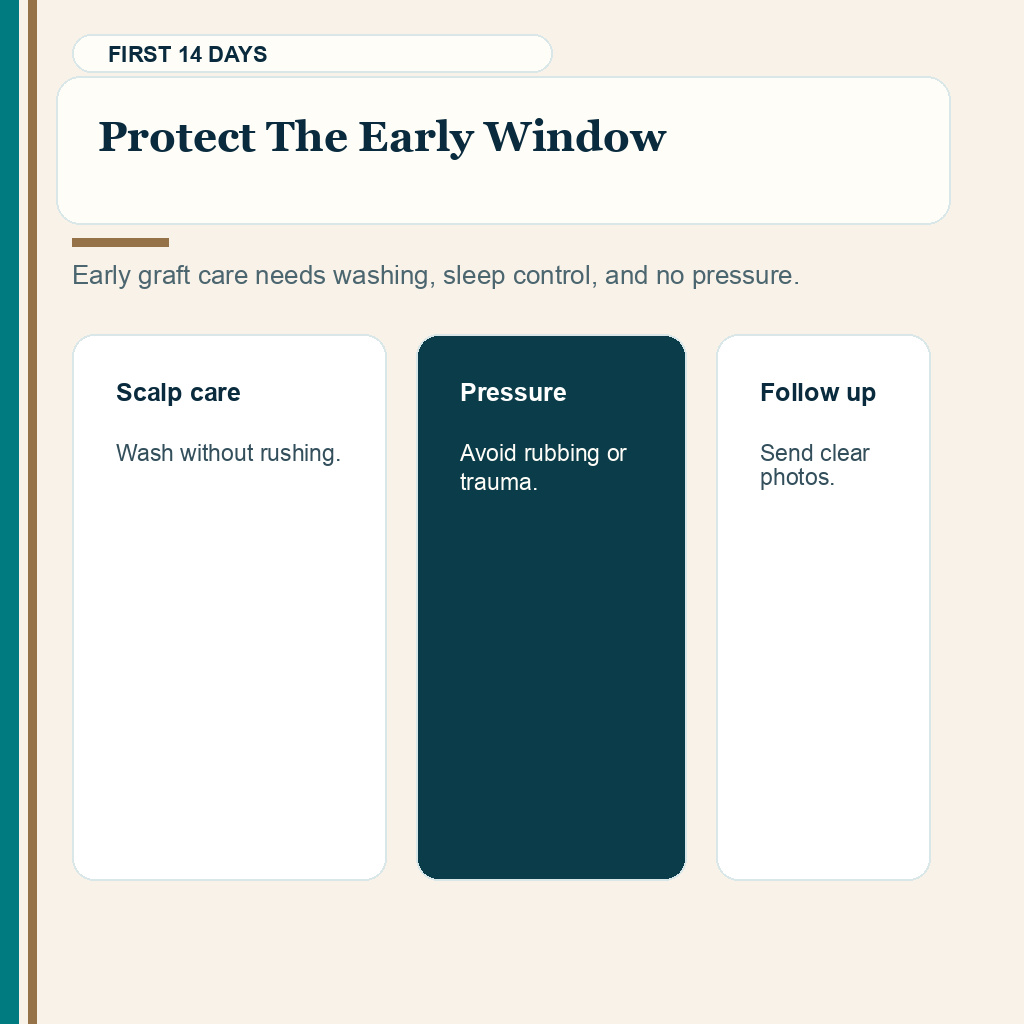
These 10 slides separate medical urgency, graft protection, body stress, medicines, infection risk, travel, and clearance facts before you choose a surgery order. Use the numbered controls below the image to move through the timing points.


Motivation cannot replace recovery capacity
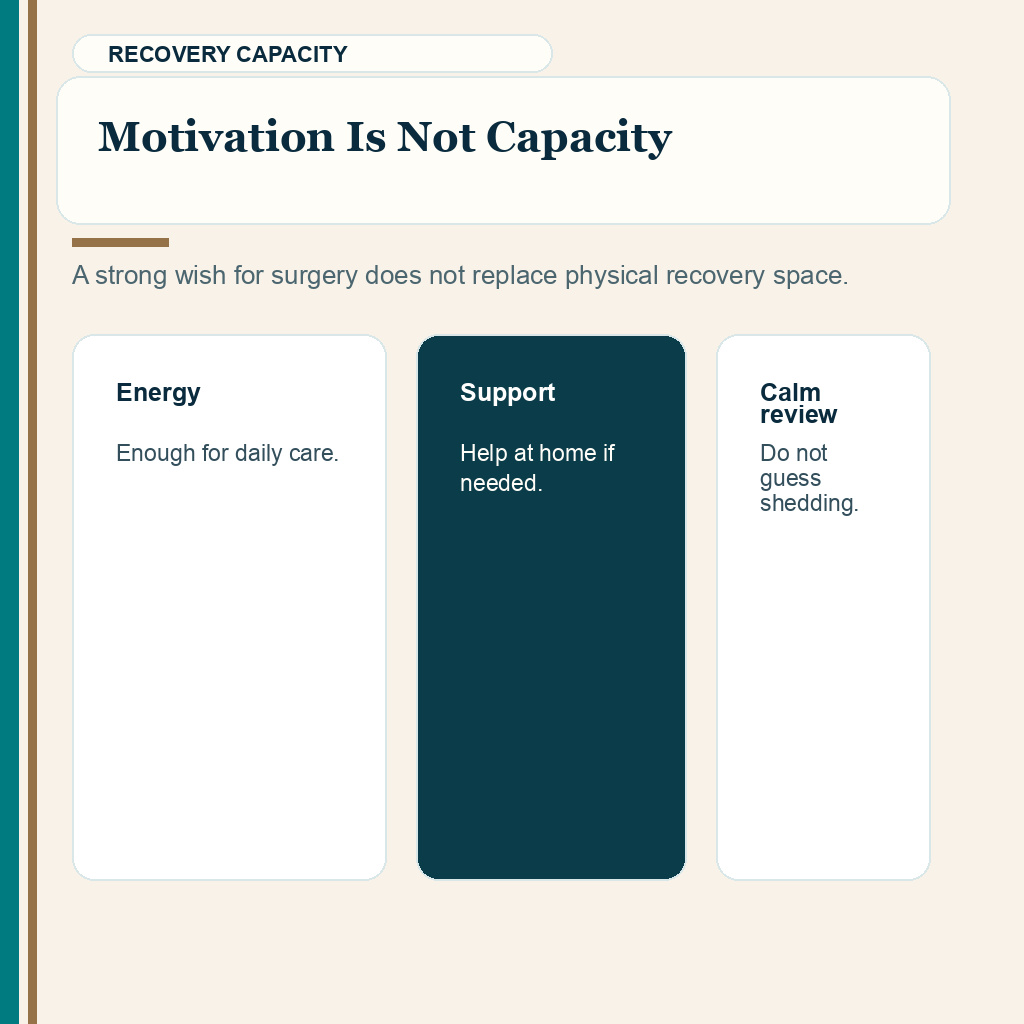
Motivation helps, but it does not replace physical recovery capacity. After FUE, you still have to wash correctly, sleep carefully, avoid avoidable friction, protect the scalp from sun and sweat, send follow up photos, and stay calm during shedding.
After a major operation, you may need pain medicine, assistance at home, physiotherapy, wound checks, a special sleeping position, or hospital review. If that recovery will make hair transplant instructions difficult to follow, the timing is weak. A calendar can look convenient and still be a poor plan if you cannot follow both recovery routines.
I also ask about emotional bandwidth. The first month after FUE can already be stressful. Shedding, redness, swelling, and mirror checking can make you feel uncertain. Adding another major operation to the same period can make normal recovery signs harder to interpret. At that point, hair transplant follow up after surgery becomes practical, especially when you are recovering away from Istanbul.
Spacing depends on the other operation

Recovery timing should separate early graft protection from the demands of another major operation.
If another major operation is already scheduled, I first ask whether that operation can medically wait. If it cannot, FUE waits. If it can wait, I look for a spacing window that lets both recoveries be clearly separated.
In consultation, I avoid placing a major operation in the first few weeks after FUE unless the operation is medically necessary. The first 10 to 14 days are the most sensitive for graft handling, washing, swelling, scabs, and sleeping. After that, direct graft dislodgement becomes less likely, but you may still be dealing with tenderness, redness, donor healing, travel fatigue, and early shedding anxiety.
For elective major surgery after FUE, I usually want a wider buffer than the early graft security window. The exact interval depends on the operation, your health, and the medicines involved. A small low risk operation is different from major orthopedic, abdominal, cardiac, facial, or spinal surgery. If the other team expects blood thinners, difficult positioning, infection risk, or a long hospital stay, the spacing needs to be more conservative.
If the major operation happened first, I wait until you are medically stable, eating well, sleeping reasonably, off temporary medicines that affect bleeding or healing when medically appropriate, and able to attend follow up. If the operation caused heavy shedding, I also want to separate temporary shedding from permanent pattern hair loss before committing donor grafts. The same nutrition and stability concerns seen after hair transplant after weight loss surgery can matter after any larger medical event.
Readiness checks before FUE
With a complex surgical history or another operation nearby, before surgery checks become more meaningful. The point is not to collect tests for appearance. The point is to identify problems that could make FUE riskier or make recovery harder to interpret.
Sometimes an ECG, chest imaging, or specialist clearance is useful. Sometimes it is not needed. The decision depends on age, symptoms, medical history, and the operation being planned. The heart and chest checks before FUE article follows that same case by case logic. If you recently had COVID, flu, fever, or chest symptoms, hair transplant after COVID may be more relevant than a calendar rule.
I also review sedation expectations. FUE normally does not need to be treated like a major operation under full anesthesia. This concern also applies to sedation during hair transplant. Routine sedation can add risk instead of solving the real problem.
The larger operation sets the FUE timing
If you are planning FUE and another major operation, do not decide from a quick online answer or a free week in your calendar. Bring both dates, both medication lists, the reason for the other operation, expected recovery, and any blood thinner or infection risk plan to the consultation. If the other operation appears after you already booked FUE, treat it as a medical change after booking your hair transplant, not as a small admin update.
The most important question is not whether the grafts will be knocked out by anesthesia. In a healed scalp, that is usually the wrong fear. I look instead at whether your body, your medicines, your sleep, your follow up access, and your mental clarity can support two recoveries without confusion.
My planning is conservative here because the donor area is finite and the first transplant decision can affect many years of hair planning. If the other operation is medically important, stabilize that first. If the hair transplant is elective, it can wait until the timing is clean.
Read this review excerpt
I asked two questions at all the clinics: how many patients will you take in a day and how much of the work will be done by the doctor.