


Rhinoplasty and Hair Transplant Timing Needs Separation
Rhinoplasty and FUE should not be planned only by counting days on a calendar. The safer gap depends on breathing, sleep position, swelling, medication, anesthesia, travel, and whether you can protect the scalp without compromising the nose. Planning both in the same week is usually the weakest choice because both recoveries are most demanding at the same time.
If rhinoplasty or septoplasty is medically important, that operation may need to come first. If both procedures are elective, stacking two recovery plans just to save one travel week is usually a weak tradeoff. A hair transplant still needs stable health, clear consent, gentle washing, and reliable follow up. Nose surgery needs its own protection, especially when breathing, bruising, splints, or general anesthesia are involved.
The real distinction is same trip versus same recovery window. One trip can look efficient. One combined recovery plan has to account for both surgical sites, not just the shared travel dates.
Calendar fit is only the first question. You also need enough breathing comfort, sleep stability, graft washing, and review access so one recovery does not hide problems in the other.
Timing separation gate
Which schedule needs more separation?
Use this before turning two procedures into one fragile recovery window.
Let the rhinoplasty or septoplasty plan stabilize first. If breathing, splints, swelling, or anesthesia recovery are still active concerns, elective FUE should not compete for the same early recovery window.
The useful order is medical priority, breathing and sleep stability, medication review, contact points, travel margin, and clear follow up before a date is chosen.
Rhinoplasty and FUE recoveries compete
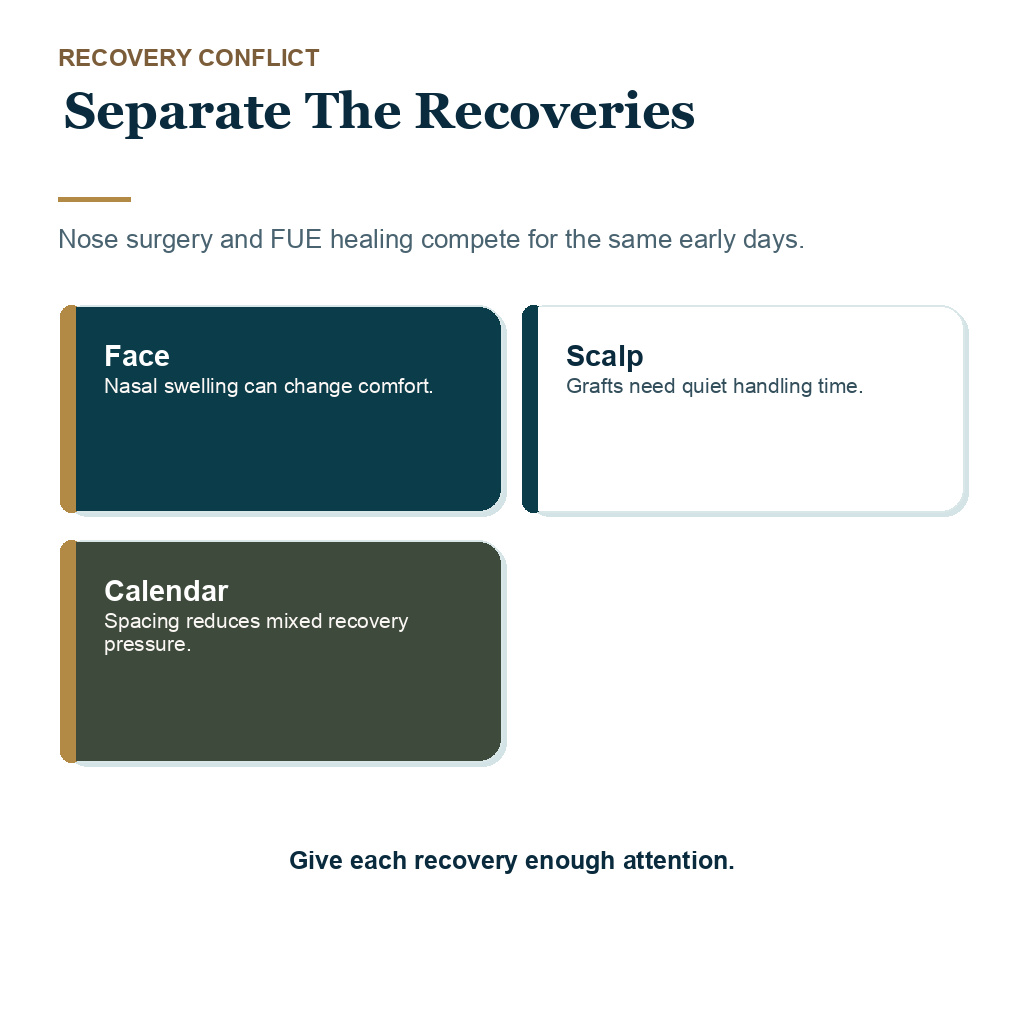
FUE recovery asks you to protect thousands of small skin openings, keep the grafted area clean, sleep without rubbing the recipient area, avoid unnecessary pressure, and contact the clinic if bleeding, fever, unusual swelling, or infection signs appear. Rhinoplasty asks for a different kind of protection. The nose may be blocked, swollen, tender, taped, splinted, or sensitive to pressure. You may also be told not to blow the nose, bend forward, lift heavily, or strain.
Those instructions are not impossible to combine, but they can compete. Poor nasal breathing can disturb sleep. Poor sleep can make you turn, touch the scalp, miss gentle washing, or feel unsure about normal symptoms. Facial bruising and swelling can also make it harder to know whether forehead swelling is ordinary FUE swelling, nose surgery swelling, allergy, infection, or a medication effect.
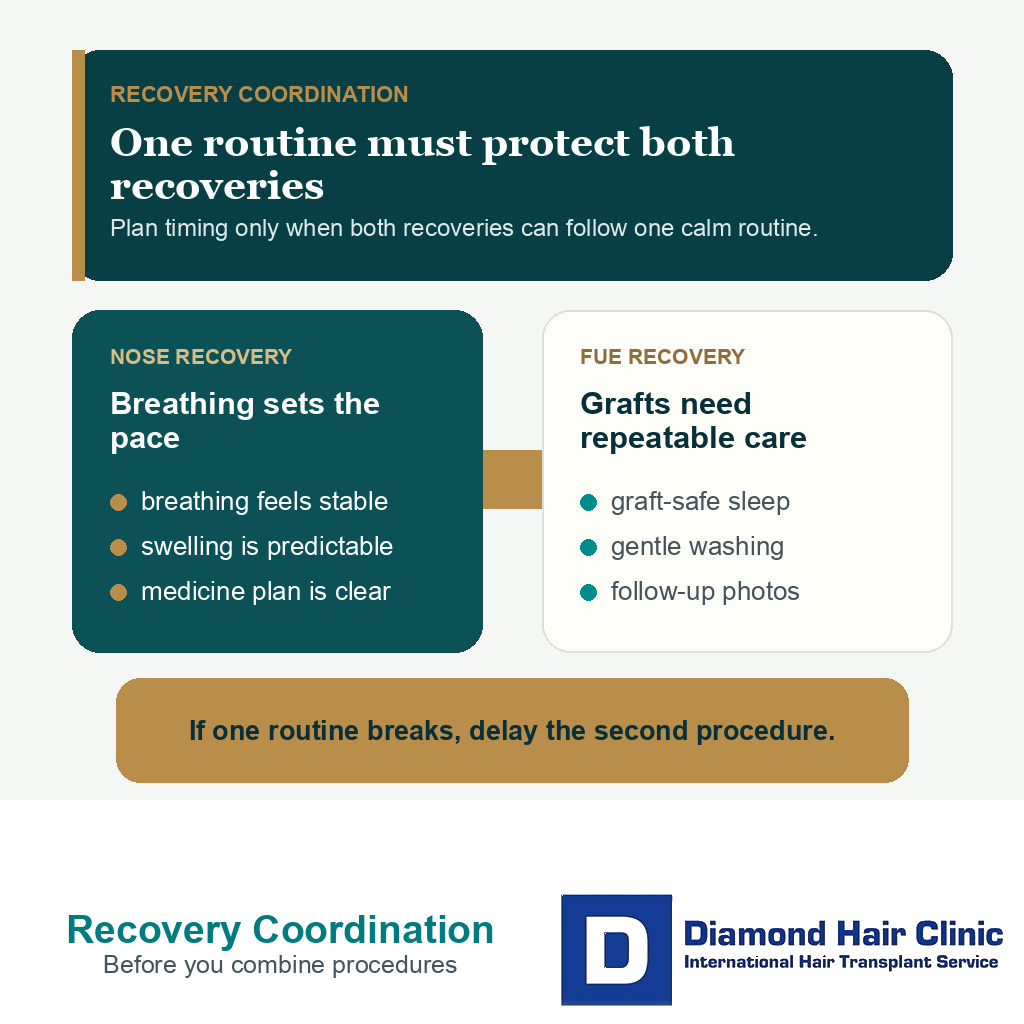
Days on a calendar are not the only test. Combined recovery is too tight when it would cause confusion, missed instructions, poor sleep, or pressure on either fresh surgical area. When rhinoplasty is one part of a larger facial surgery plan, the transplant date has to fit the whole recovery rather than the nose operation alone.
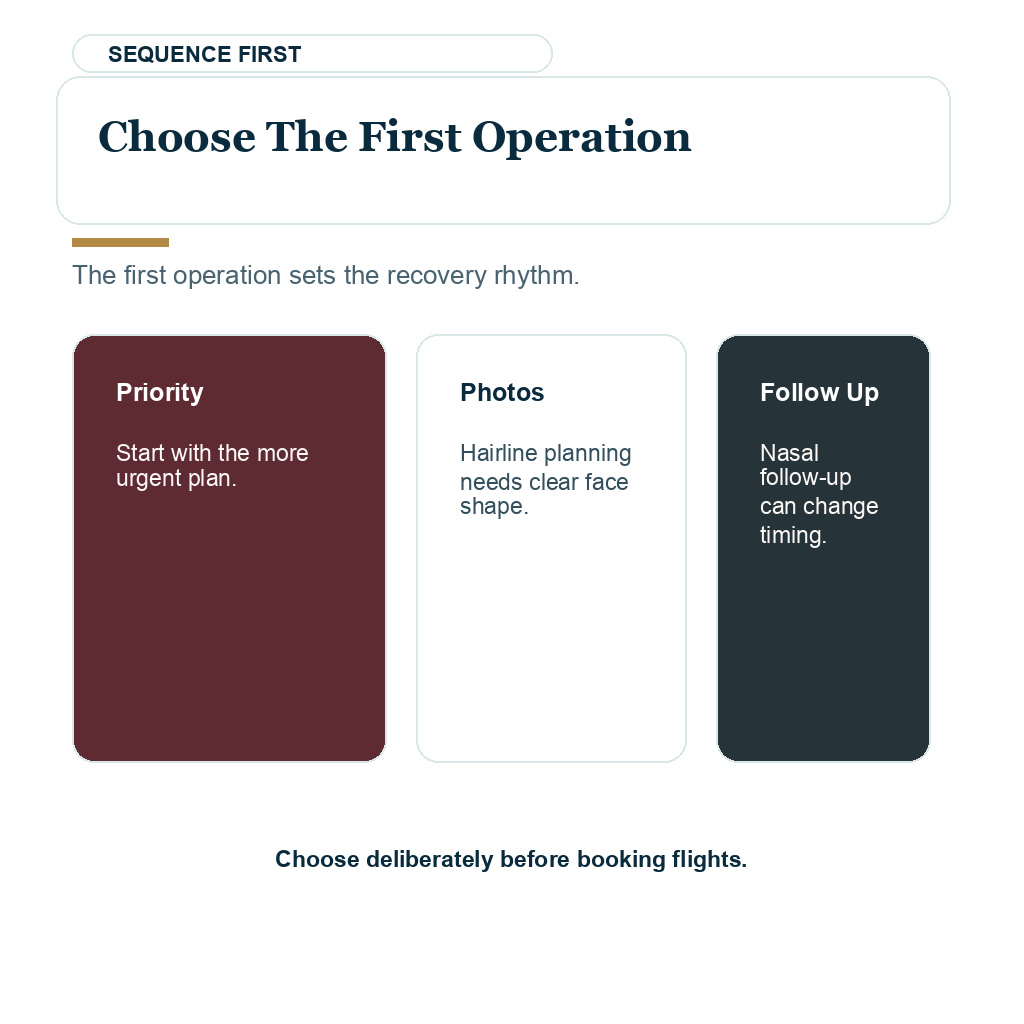
The first operation should be chosen deliberately
If the nose operation is functional, medically important, or likely to improve breathing, I usually want that plan stabilized before elective FUE. Someone who cannot sleep or breathe well may not be in the best condition for a hair transplant. If the rhinoplasty surgeon expects a longer recovery, visible swelling, revision risk, or a strong medication plan, I respect that first.
If the hair transplant is the priority and the nose procedure is a future cosmetic plan, FUE can come first when your health is stable and rhinoplasty is not already scheduled close behind it. The second procedure should not interrupt the first recovery routine. If it will make you miss washing instructions, follow up photos, safe sleep, or clear symptom monitoring, the gap is too short. If rhinoplasty has already been done, I also want the donor harvesting position, head support, and long procedure time checked with the nose surgeon before FUE is confirmed.
This is similar to the broader decision around major surgery around hair transplant, but nose surgery has a special problem. It affects breathing, face swelling, sleep comfort, and glasses or splint pressure in a way that a distant body operation may not.
There is also a design reason to settle the sequence. Rhinoplasty can change how the nose, temples, and hairline balance in front view and profile. If nose surgery is already planned, I do not want to finalize temple point or hairline detail as if the facial frame will stay exactly the same.
More spacing is usually more sensible
I do not give everyone one fixed interval. The sensible spacing depends on how invasive the rhinoplasty is, whether septoplasty is included, whether general anesthesia is used, how much swelling is expected, how easily you sleep, and how far you need to travel.
For many cases, I want the first recovery settled enough that sleep, washing, meals, travel, follow up photos, and symptom tracking are manageable. That may mean several weeks. In some cases it can mean a few months. Revision rhinoplasty, functional nasal work, difficult breathing, high swelling risk, or a history of slow healing can push the safer gap longer.
The number matters less than your condition at the time. If you still need strong pain medicine, cannot sleep as instructed, cannot breathe comfortably, or still have bruising that worries your nose surgeon, adding FUE is not a strong plan.
Planning one trip needs extra caution
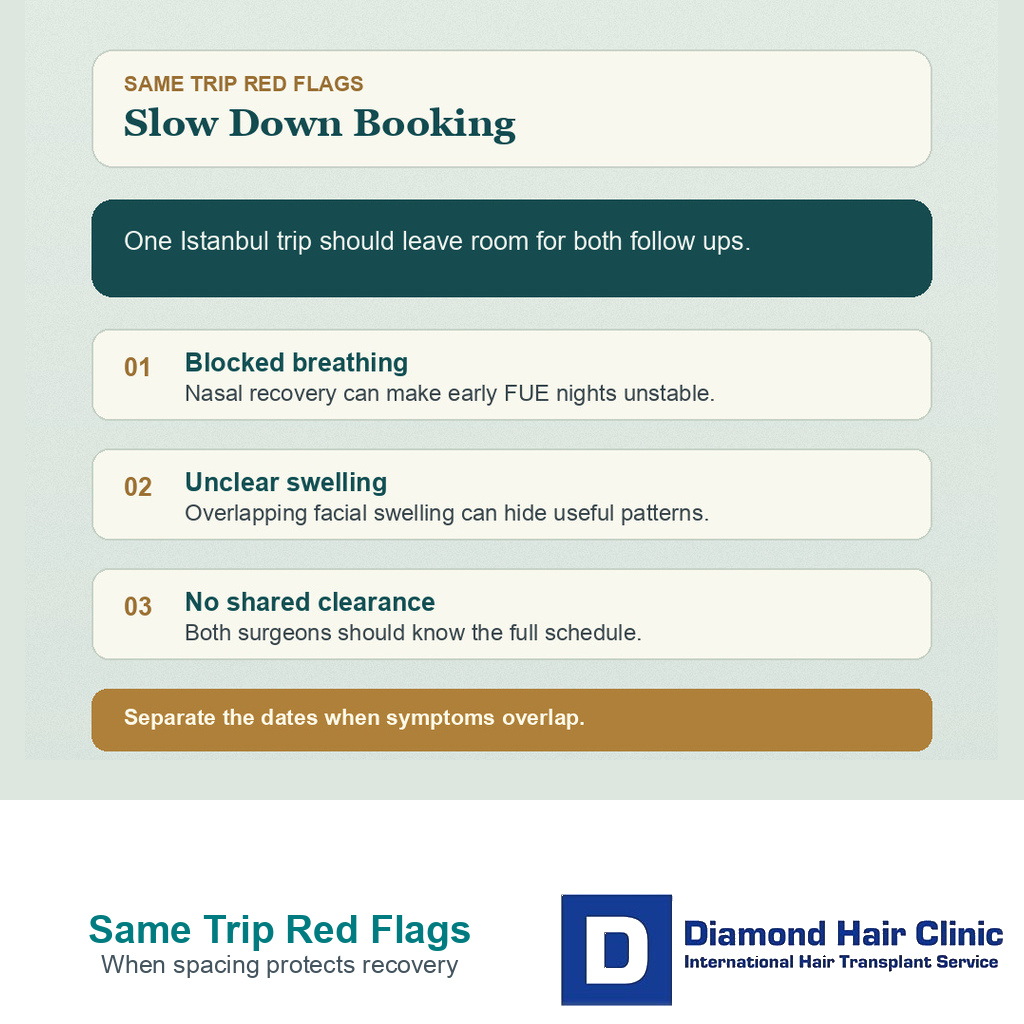
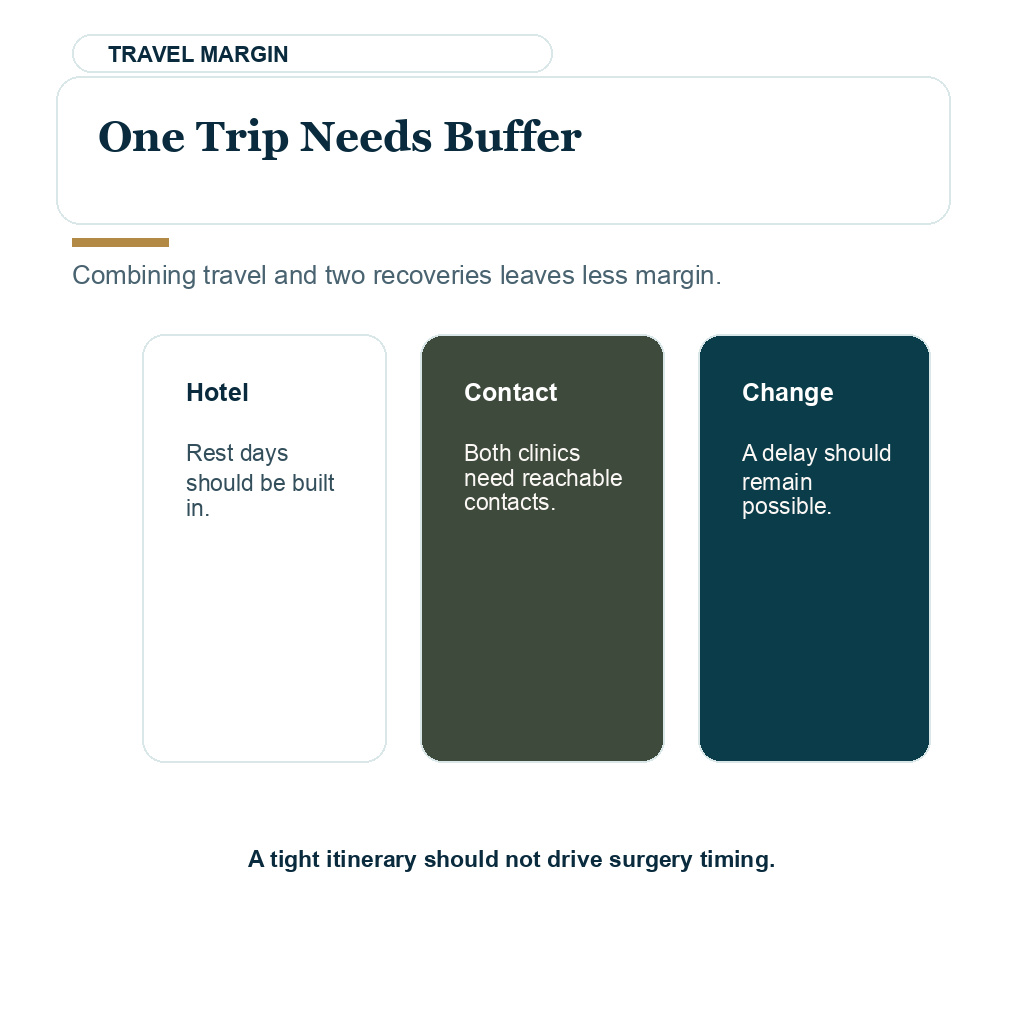
Many people ask this because they are traveling to Istanbul and want to use one block of time. I understand the logic. Flights, hotels, time away from work, and family support all matter. But one travel plan is not proof that two recoveries can share the same fragile week.
The risk is that two teams focus on their own procedure while you are left to manage the combined burden. One clinic may say the nose will be fine. Another may say the scalp will be fine. Clearance from one side is not the same as a combined recovery plan. A single travel block still does not prove that you can sleep, wash, eat, travel, and attend follow up without one plan interfering with the other.
If you are planning international travel, flight timing also matters. A simple FUE flight plan is different from flying after hair transplant while you also have facial swelling, nasal blockage, bruising, medication changes, and a scalp that still needs gentle handling.
Sleep position matters a lot
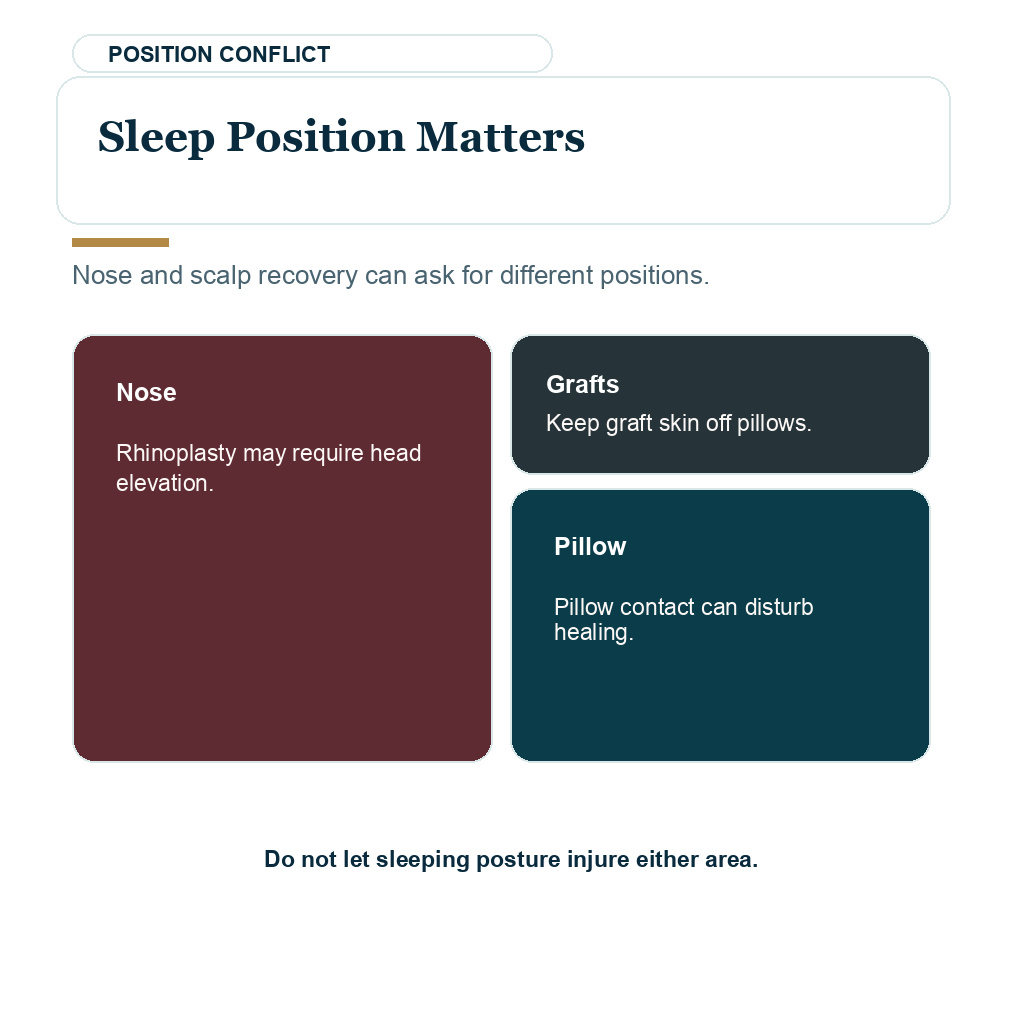
Sleep is one of the practical reasons I dislike close timing. After FUE, the first nights are about keeping the grafted area safe and avoiding pressure or rubbing. After rhinoplasty or septoplasty, sleep may be affected by nasal blockage, swelling, splints, mouth breathing, and a need to keep the head elevated. These instructions may sound compatible until you are exhausted.
A tired person is more likely to roll, pull at dressings, touch the recipient area, or wake in a position that was not planned. Most early graft worries are judged by timing, bleeding, visible graft movement, and the exact contact point. Still, prevention is better than a night of avoidable anxiety.
I connect this decision to the practical details in the first night after hair transplant. The first nights do not need drama. They need a simple routine you can actually follow.
Swelling can confuse both teams
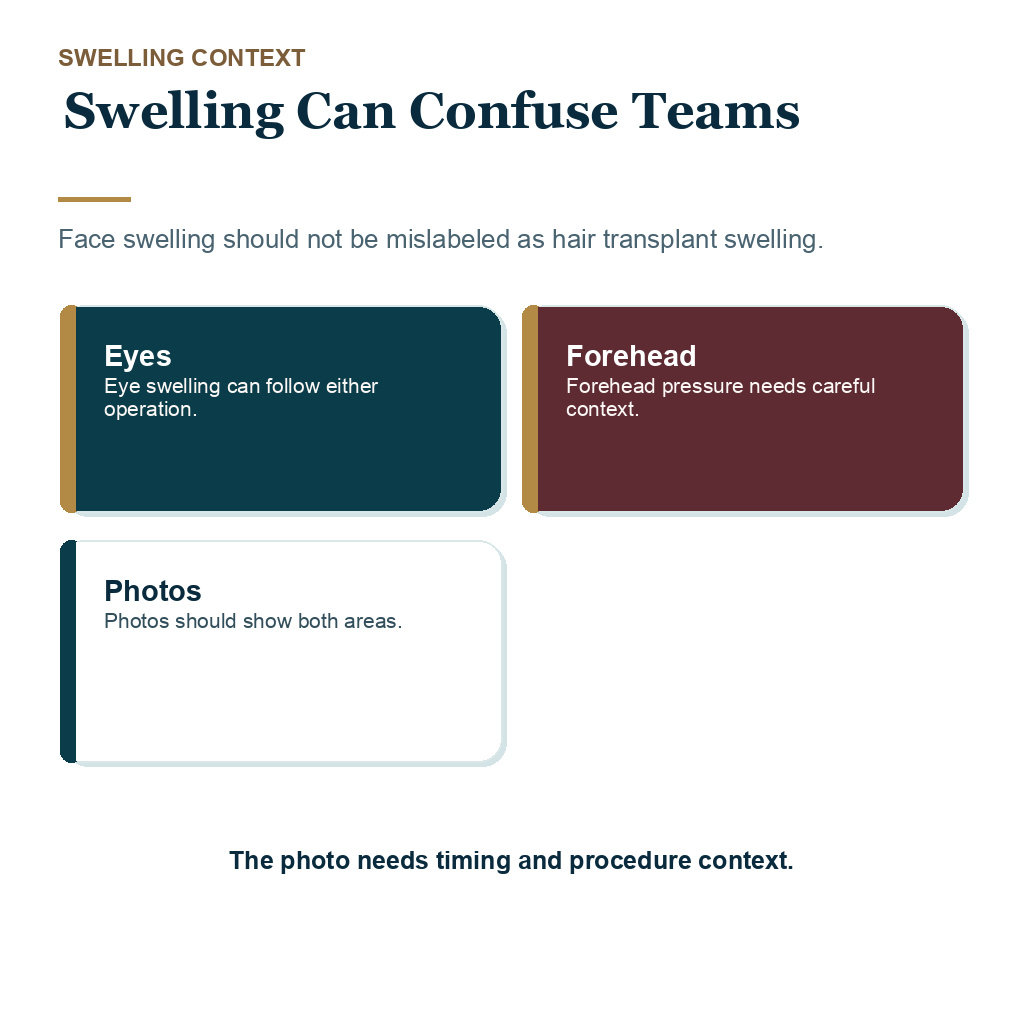
Forehead and eyelid swelling can happen after a hair transplant. Bruising and swelling around the eyes and nose can happen after rhinoplasty. When these are separate events, the pattern is easier to interpret. When they happen together, it can be unclear which clinic should review which symptom. The same separation principle applies to LASIK and hair transplant timing, especially when eye comfort, drops, swelling, and follow-up visits may overlap.
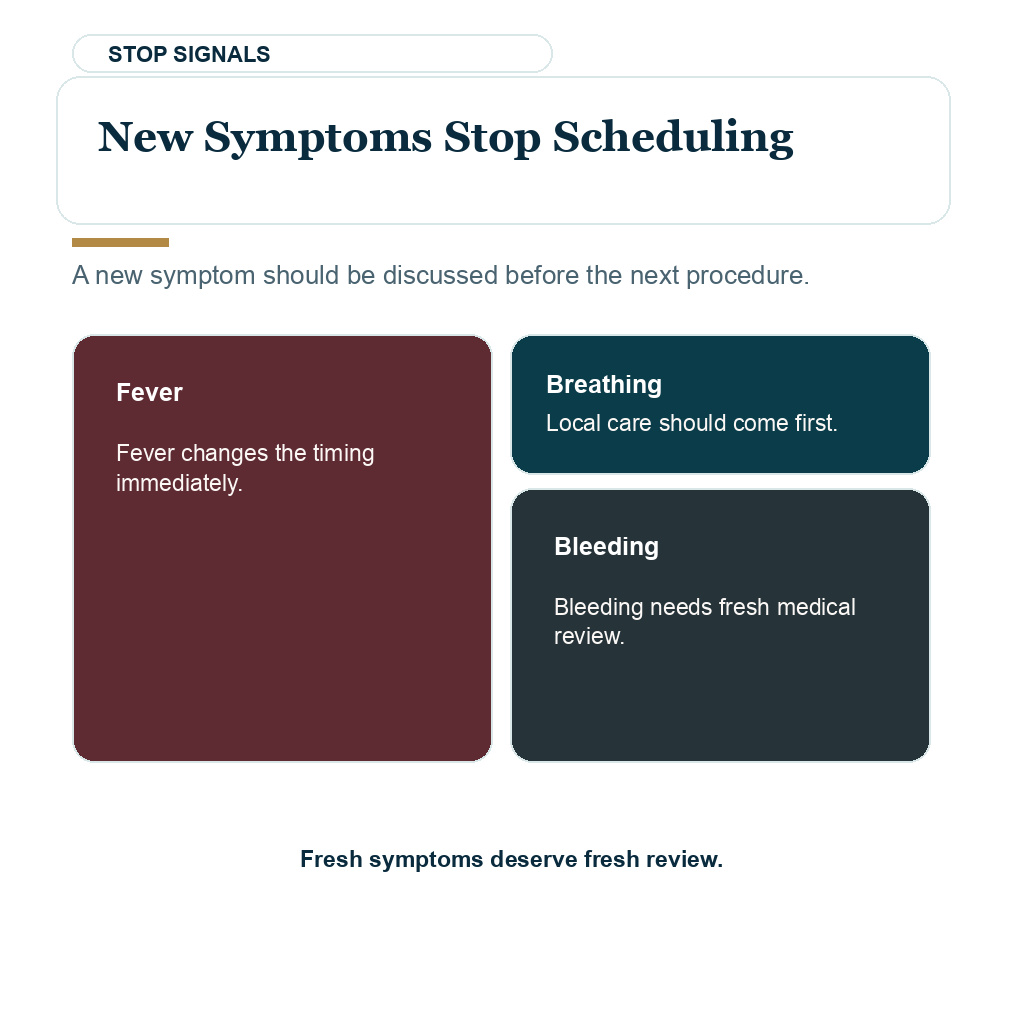
I look at direction, timing, pain, redness, heat, fever, breathing symptoms, and whether swelling is improving. Ordinary swelling that moves with gravity and settles is different from swelling that is painful, hot, one sided, or getting worse. With nose surgery added, that judgment becomes harder because the face already looks changed.
For the FUE side, I judge forehead swelling after hair transplant by pattern rather than fear. With rhinoplasty close by, both clinics should agree on warning signs before you travel.
Medication and anesthesia should be coordinated
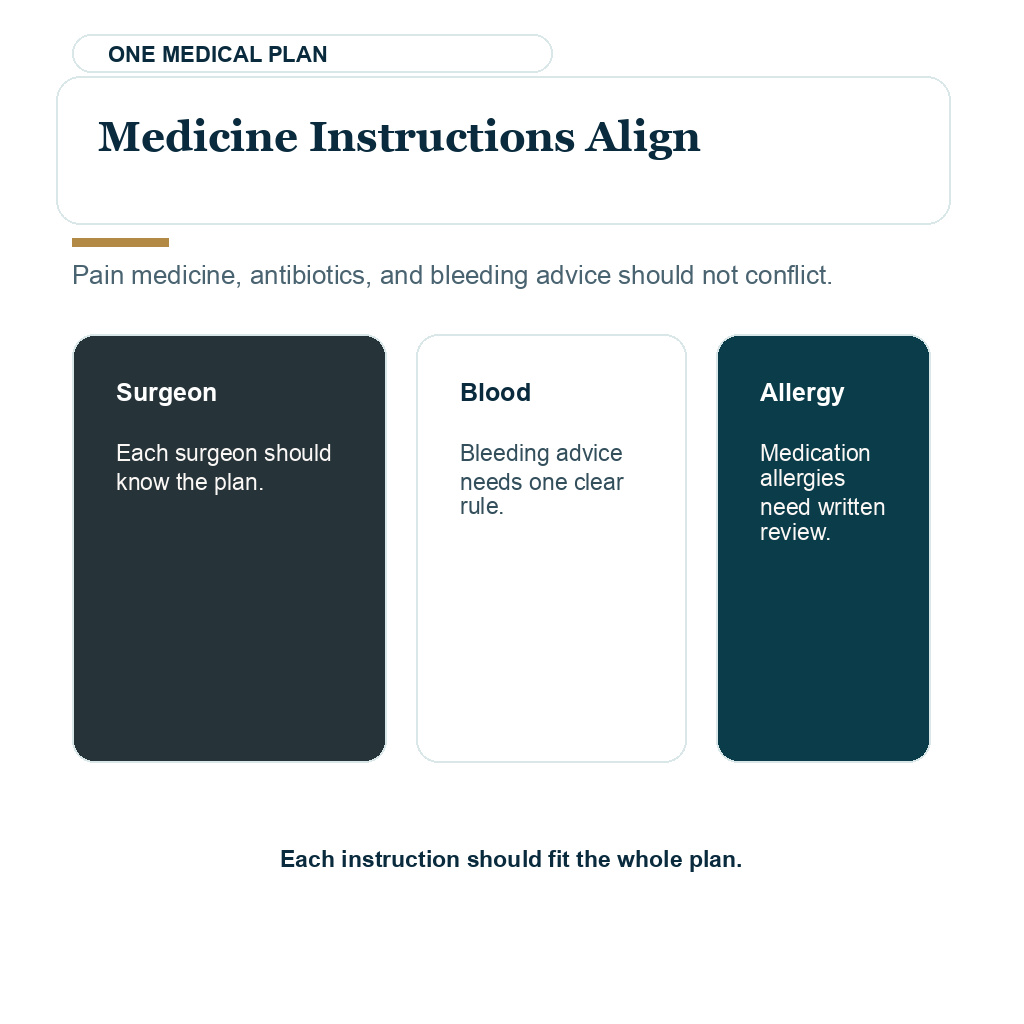
Rhinoplasty may involve general anesthesia or intravenous sedation. It may also involve antibiotics, pain medicine, nausea medicine, decongestant advice, or instructions about bleeding risk. FUE is commonly done with local anesthesia, and sedation during hair transplant needs separate medical review if it is requested or planned. Blood pressure, bleeding tendency, allergies, nausea risk, smoking, supplements, and recent illness still matter.
A medication can be acceptable in one plan and still need review when two procedures are close together. I want the rhinoplasty medicine list and the FUE medicine list placed side by side before the second date is confirmed. Names and doses matter, especially for anything that affects bleeding, sleep, blood pressure, nausea, or stomach tolerance.
If something changes after booking, disclose it. That includes new prescriptions, antibiotics, fever, planned nasal surgery, bruising, breathing difficulty, or a postponed operation. I cover that disclosure step in medical changes after booking a hair transplant. A late surprise can turn a controllable timing issue into a problem on surgery day.
The eight slides below focus on the places where rhinoplasty and FUE recovery collide, including operation order, pressure to use one travel week, sleep position, swelling, medicine coordination, travel buffer, and new symptoms. Swipe sideways, use the arrows one slide at a time, or choose a number below the image.

Glasses, splints, and temple grafts can cause practical problems
Some rhinoplasty cases need nasal splints or pressure avoidance around the nose. Some hair transplant plans include temple work, sideburn work, or a lowered frontal hairline where glasses arms, sunglasses, or tight frames can matter. These details look small until fresh grafts or nasal structures are healing.
Before combining plans, ask where frames, tape, masks, and splints will sit. Loose glasses that avoid grafted skin are different from a tight frame crossing fresh temple grafts. A nasal splint is different from ordinary sunglasses. The contact point principle in glasses and sunglasses after hair transplant matters even more when a fresh nose and fresh temple grafts are healing at the same time. With rhinoplasty, both surgeons need to agree on those contact points.
Calendar rules are incomplete here. Two people can be on the same day after surgery and still have different risk because the graft location, nasal splint, frame fit, and swelling pattern are different.
Details I need before both dates are booked
Before I judge timing, I need more than a preferred date. Include current photos, the planned rhinoplasty or septoplasty date, whether it is cosmetic, functional, or both, the expected anesthesia type, whether splints or packing are planned, the expected follow up schedule, and the medication instructions already given by the nose surgeon.
For the hair transplant side, I also need donor photos, hairline photos, crown photos if relevant, medical history, current medications, and any previous surgery or anesthesia problem. The final plan should be clear enough that you understand what each operation needs from you. If the two plans cannot be explained together, they should not be forced together.
This belongs inside real consent. A signature is not enough if you do not understand the combined recovery burden. Hair transplant consent and final plan review should include timing, roles, recovery, and reasons to pause.
The hair transplant should sometimes be delayed
I delay FUE if the nose operation is still unstable, breathing is poor, sleep is badly disturbed, strong medication is still needed, swelling or bruising is confusing, the travel plan is too tight, or the nose surgeon has not cleared another elective procedure. I also delay when both procedures are being pushed close together only because a package sounds convenient.
Delay is not failure. In disciplined planning, delay can be the decision that protects the result. Donor hair is limited. The scalp has one chance to be treated gently in the early days. A rushed calendar can create stress, missed instructions, unclear symptoms, and poor follow up.
Sometimes the responsible answer is no for now. That should come with a reason, not a vague rejection. If the issue is medical timing, unstable health, unrealistic expectations, or poor recovery logistics, the safer path is to fix that first. My page on why a surgeon may decline or delay a hair transplant explains why protection can look like refusal.
Two operations need breathing room
Rhinoplasty recovery and hair transplant recovery ask the face and scalp to do different jobs at the same time. The nose needs breathing, swelling, splints, and facial healing protected. The scalp needs washing, sleep position, donor healing, graft protection, and follow-up that the patient can actually follow.
When both operations are on the table, I want the two surgeons’ instructions to fit together. A good schedule leaves enough margin for swelling, travel, sleep, and review, even if that means a longer trip or separate dates.

Read this review excerpt
Every single one of my questions was answered and they made sure I had all the details I needed to make an informed decision.