


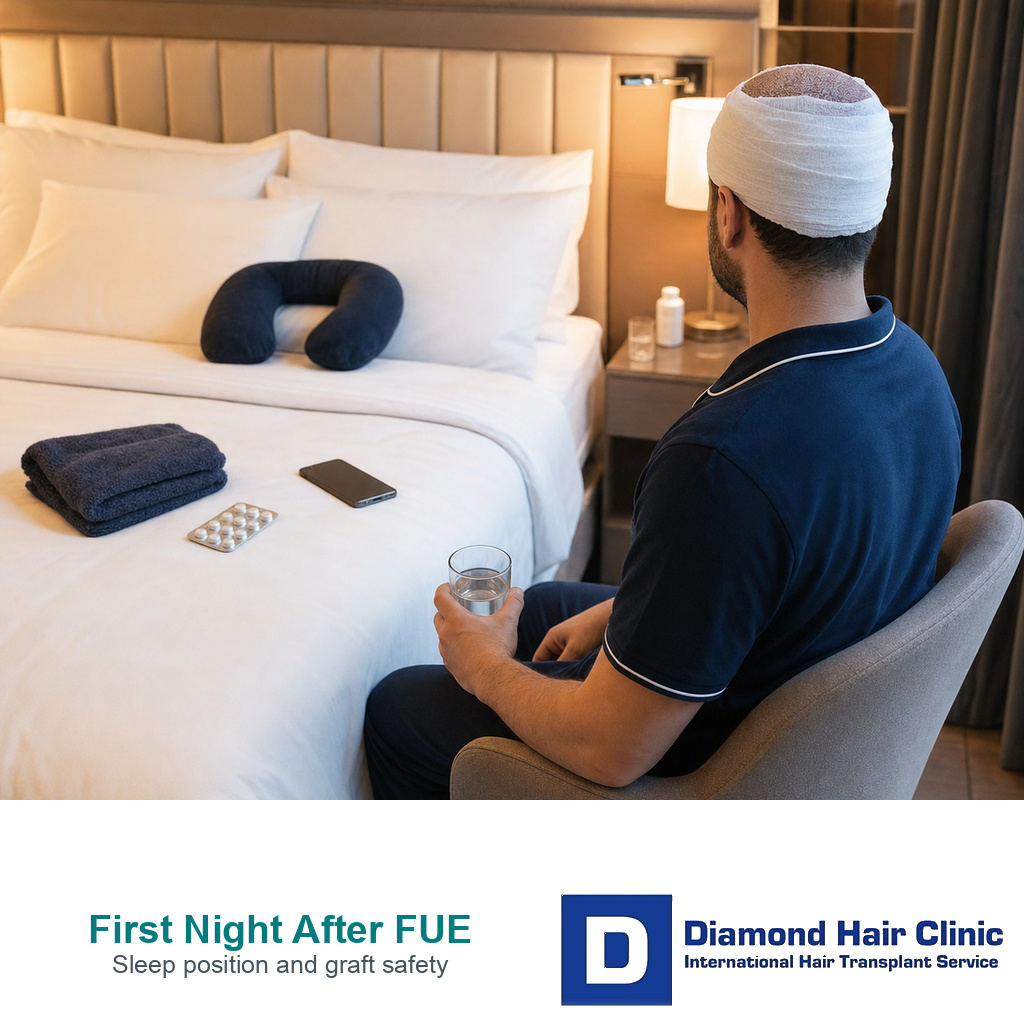
Night One FUE Recovery and Graft Safety
The first night after a hair transplant does not need to be perfect. It needs to be controlled. Keep the recipient area away from pressure and rubbing, rest with the upper body elevated if your clinic advised it, use the neck pillow or pillow barriers you were given, take only approved medication, and keep water and clinic contact details within reach.
Poor sleep for one night is usually less important than unsafe sleep. The risk I am trying to prevent is not being awake. It is rolling onto the grafts, rubbing the scalp, standing up dizzy in the dark, adding unapproved sedatives, or repeatedly checking the area until anxiety creates contact. A neck pillow may feel awkward, but the recipient area still comes first. Comfort matters, but pressure, rubbing, and adjustments while half awake matter more on night one.
If your first protected nights lead straight into overnight work, treat the schedule as night shift work after a hair transplant, not ordinary insomnia, and protect the grafts with a planned sleep block and warning sign check.
Solo recovery works better when the room is prepared before surgery. Keep water, a phone, prescribed medicine, a clean pillow barrier, and clinic contact details within reach. Arrange one scheduled call from the clinic, hotel reception, or a nearby companion, so help is available without turning the night into constant scalp inspection.
Before sleep, move towels, hoodie strings, scarf edges, and charging cables away from the pillow. Anything loose can brush the grafts when you turn half awake.
If bleeding, swelling, dizziness, vomiting, or pain is changing instead of settling, send the clinic a clear photo and a short message. If nothing has changed and the grafted area has not been rubbed or pressed, return to the safe position and let the night stay simple.
Many people find the first night harder than the surgery itself. The procedure is finished, the adrenaline drops, the hotel room is quiet, and every small sensation can feel important. A simple plan before you leave the clinic prevents that quiet hotel room panic from turning into touching or overchecking.
Before leaving the clinic, the essential sleep rules should be separated from comfort supports. If a pillow setup feels awkward, the grafts are protected by the rules that prevent pressure, rubbing, and accidental touching. If the support presses painfully on the donor area, adjust it while you are awake instead of waiting until you turn half asleep.
Night one safety sorter
First night warning signs to report
Open the pattern that matches the hotel room moment. The goal is to protect grafts without turning normal anxiety into touching.
This sorter does not replace the clinic’s aftercare instructions. It helps you decide whether to stay calm, send a useful message, or seek help.
First night priorities
The main job is to protect the recipient area from rubbing, pressure, and accidental contact while the body starts to settle. I am less worried about perfect sleep and more worried about half asleep behavior, such as touching the grafts, checking repeatedly, rolling onto the transplanted area without a barrier, or trying to fix the scalp with your fingers. If children are sleeping nearby, make that barrier part of a broader childcare recovery plan after hair transplant surgery, not a decision made late at night.
The first night is also when swelling prevention starts. Head elevation does not make swelling impossible, but it helps gravity work in the right direction. The same position logic sits behind my wider advice on sleep after a hair transplant.
If the clinic gave a different instruction for your case, follow that instruction. A crown case, a frontal hairline case, a very large session, blood pressure issues, or faintness after surgery can change the emphasis.
Set up the bed before you are tired
Set up the room before you become tired, and use the same preparation mindset for the hotel transfer after FUE. Put water, prescribed medicine, tissues or clean gauze if supplied, your phone charger, clinic contact details, and the hotel address within easy reach. Keep the route to the bathroom clear, and use a dim light or phone light before standing. Remove anything that makes you bend, twist, or search in the dark.
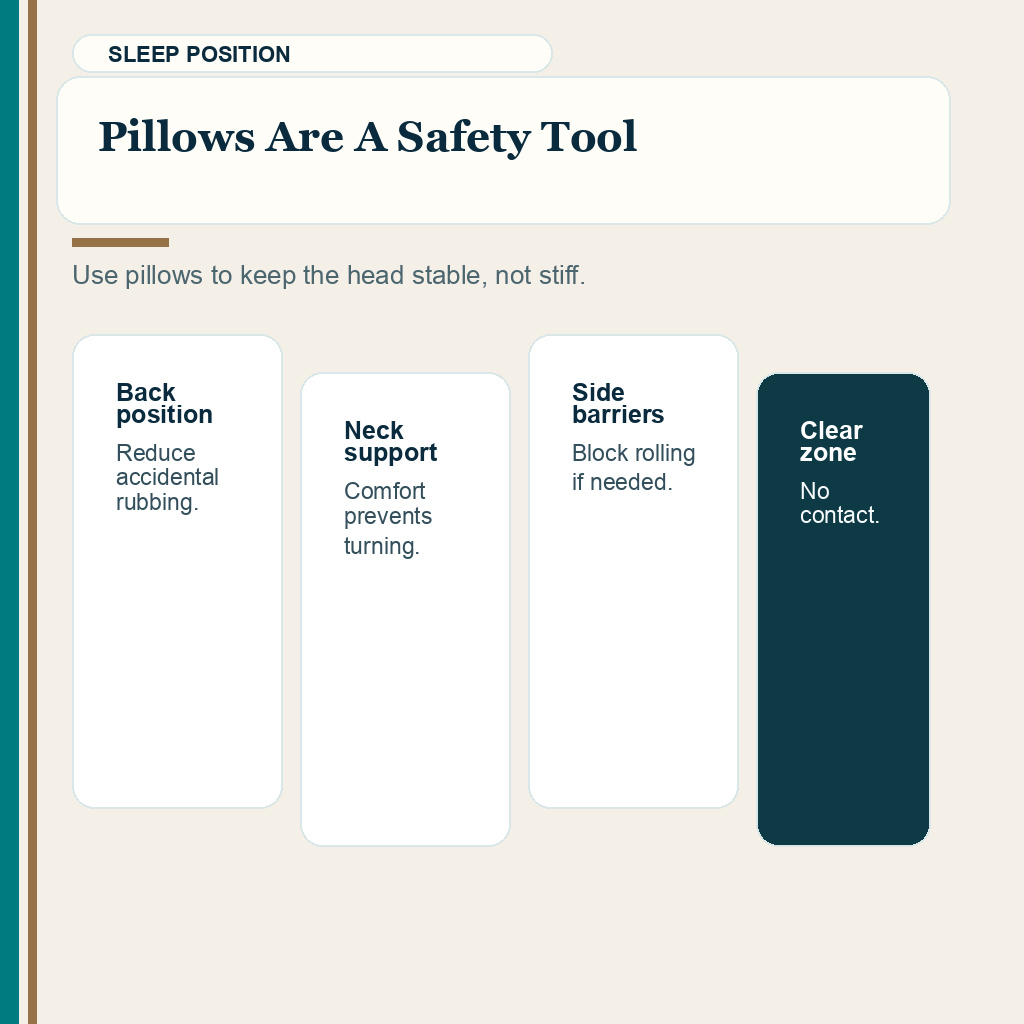
For sleep, I usually want the upper body elevated and the head kept steady. Some patients use a recliner, some use stacked pillows, and some use a neck pillow with side barriers. The pillow setup should support the shoulders and neck without pushing the grafts forward or forcing the chin down. The exact tool matters less than the result. The grafted area should not rub the pillow. If nasal surgery is planned close to FUE, rhinoplasty and hair transplant timing should be checked before the sleep setup is trusted.
If a neck pillow was advised, the practical details in when to stop using the neck pillow help later, but the first night is usually too early to test normal sleeping.
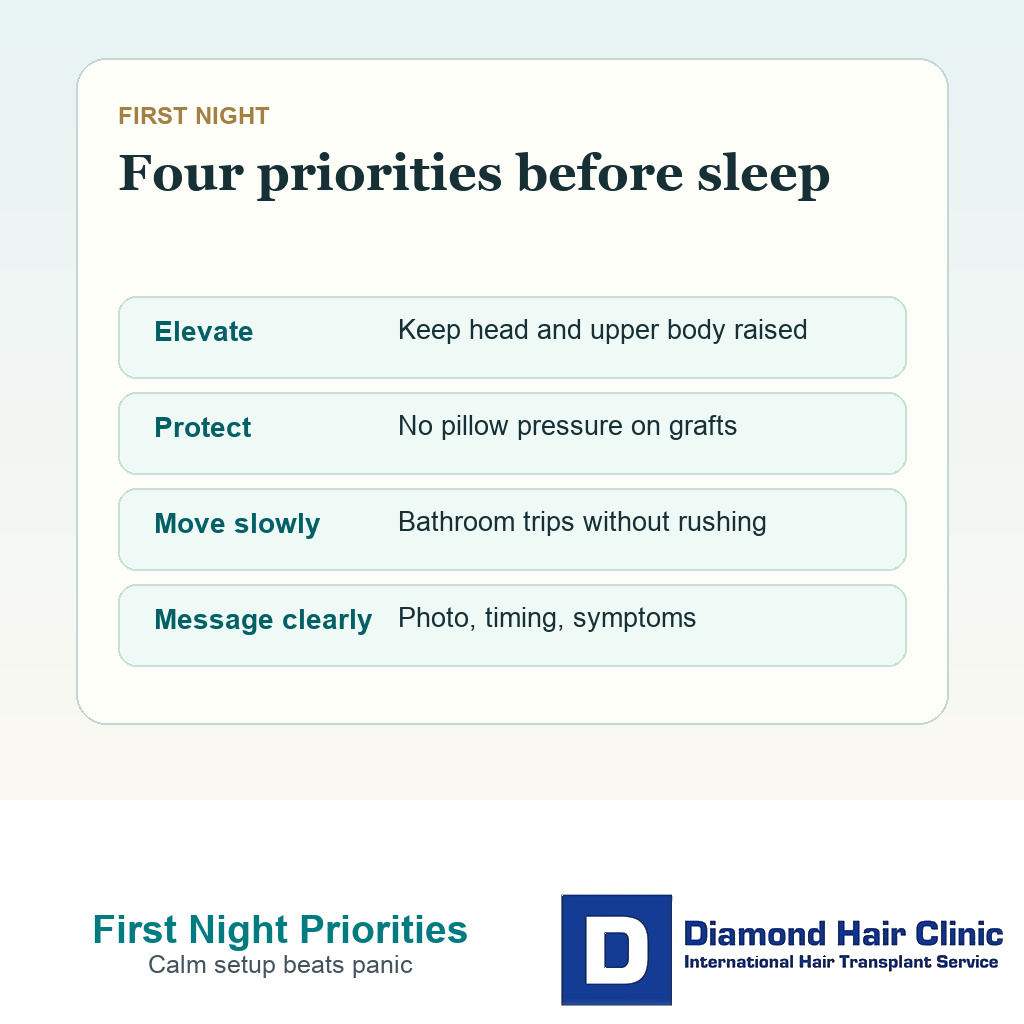
A controlled first night reduces rubbing, swelling anxiety, and unnecessary panic.
Unsafe sleep is the bigger risk
Poor sleep on the first night is frustrating, but it is common. Do not solve it by adding sleeping pills after a hair transplant, alcohol, extra sedatives, or medicines that were not approved for you. After a long procedure, your blood pressure, hydration, food intake, anesthesia exposure, and anxiety are already part of the first night picture.
If you cannot sleep, rest in the safe position. A few broken hours of light sleep are acceptable. Sedating yourself into heavy sleep is not the goal if it makes you more likely to roll, rub, miss dizziness, or press the grafts into the pillow.
One short, careful night is better than several hours of accidental rubbing.
If pain is the reason you cannot rest, use the prescribed plan and do not mix tablets casually. My separate guidance on painkillers after a hair transplant explains why medicine choice matters after a transplant.
Small blood spotting versus active bleeding
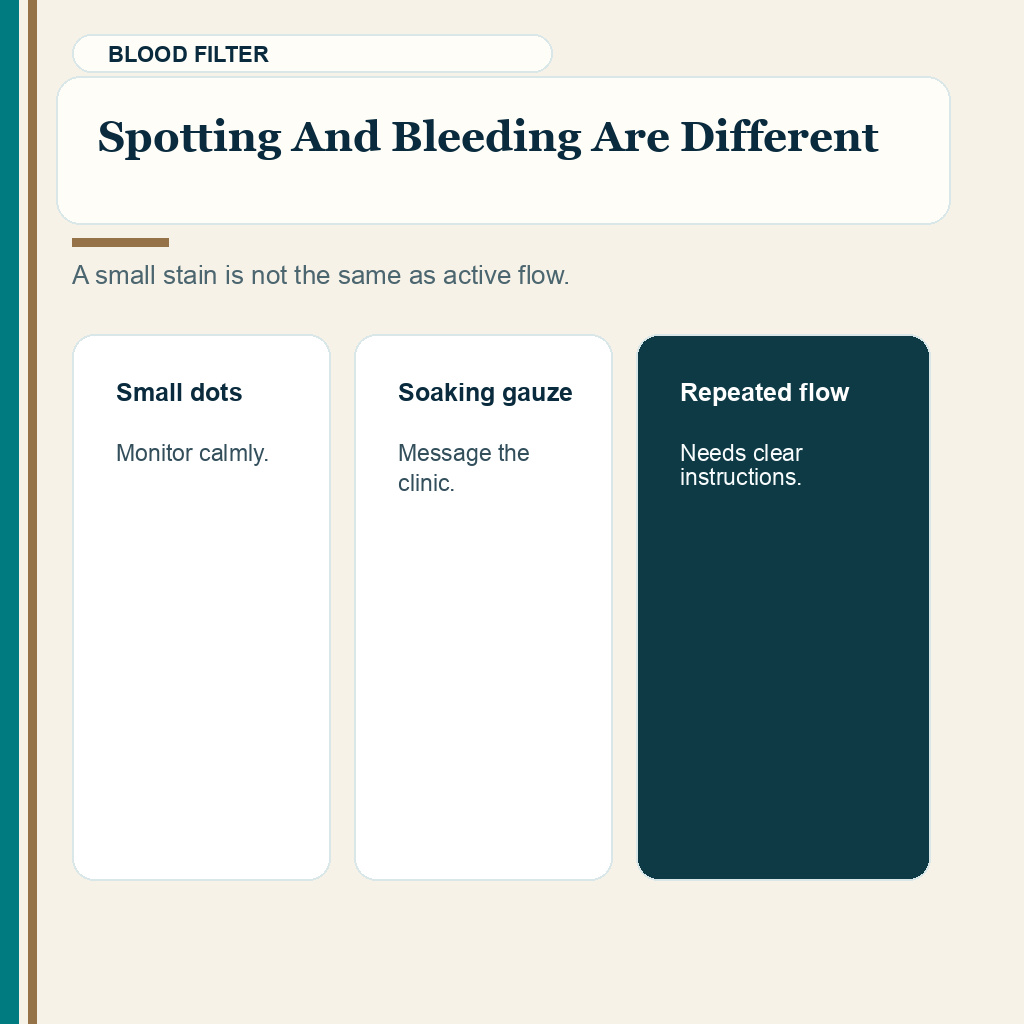
A small dry spot of blood can happen after FUE, especially from the donor area or a small contact point. I separate a small dry spot that stops from bleeding that keeps soaking, spreads, returns repeatedly, looks fresh and wet, or follows a clear bump or scratch.
If the clinic has given specific pressure instructions, follow them. Do not press directly on fresh grafts unless your own clinic has told you exactly how to handle that situation. Do not scrape or pick a clot because it looks untidy.
For sleep related marks, start with blood on the pillow after a hair transplant. If bleeding is active, heavier, or linked to graft trauma, use the more urgent frame in post transplant bleeding.
Swelling does not always mean the first night went wrong
Forehead swelling often becomes more visible after the first night rather than immediately at bedtime. That does not mean the night went badly. Still, the first night can influence how fluid moves. Keep the head elevated, avoid sleeping flat unless your clinic gave that instruction, and rise slowly if you feel lightheaded. Do not bend forward repeatedly to check the mirror, pack luggage, or pick something up from the floor.
Soft swelling that is not painful, hot, rapidly worsening, or linked to fever may fit the early recovery pattern. Swelling that is one sided, tense, painful, hot, quickly worsening, or linked with drainage or bad smell deserves stronger attention. Swelling plus fever, increasing pain, or spreading redness is not a cosmetic issue.
The more detailed distinction is in swelling after a hair transplant. On the first night, your job is to avoid making swelling worse and to notice warning signs early.
Dizziness or nausea change the plan
Dizziness, nausea, and weakness need practical handling before you walk. Sit on the edge of the bed before standing, turn on a light, do not walk alone to the bathroom if you feel faint, avoid sudden standing, and message the clinic if symptoms persist, worsen, or come with bleeding, chest symptoms, shortness of breath, repeated vomiting, fainting, or unusual confusion.
Some symptoms on the first night are caused by fatigue, long procedure time, not eating normally, travel, anxiety, or medication. That does not mean they should be ignored. A fainting episode can cause head trauma, and a fall can create more risk than the original symptom.
If dizziness is part of the first night, compare it with the warning pattern in fainting and dizziness around hair transplant surgery. If vomiting is the main issue, vomiting after a hair transplant is more useful.
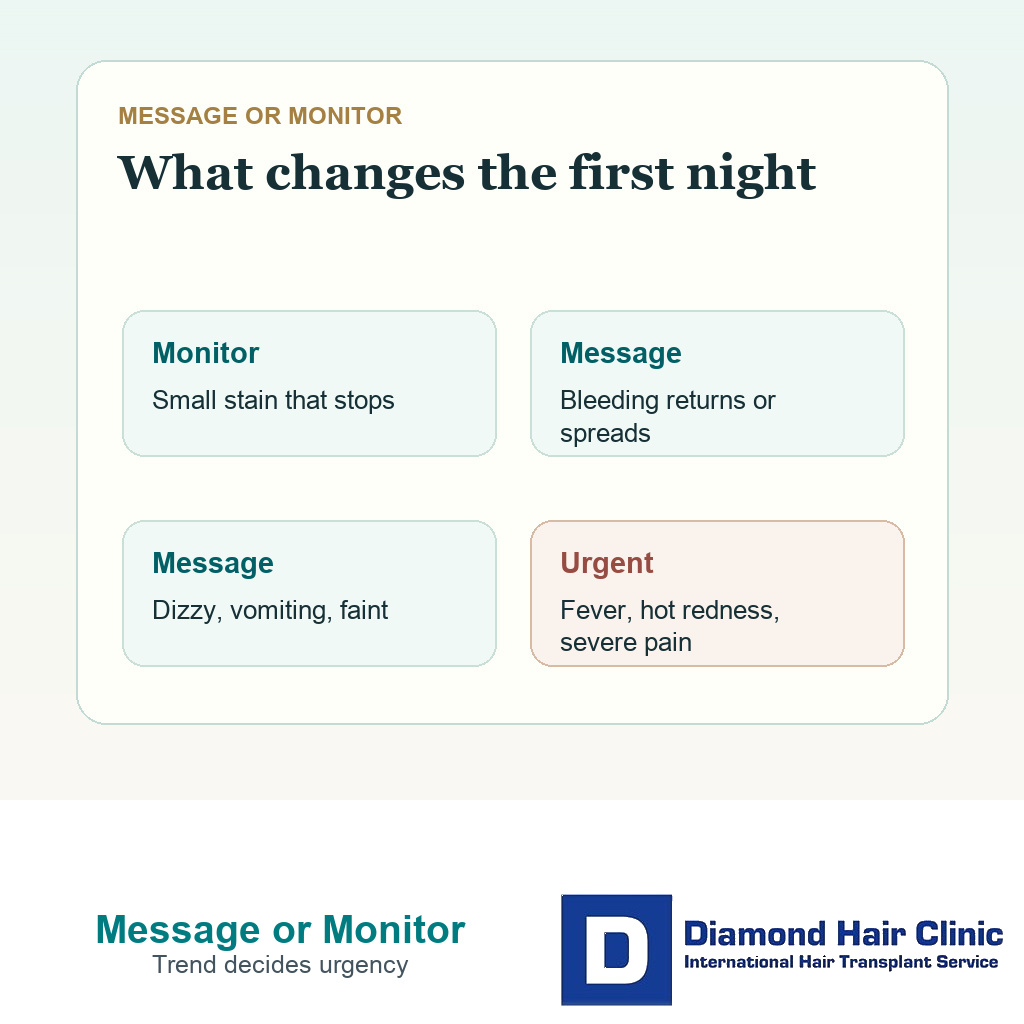
A photo message is useful when the symptom pattern is changing, not only because anxiety is high.
Graft checking frequency
Check only when there is a reason. Repeated mirror checking, touching, flashlight inspection, and close image photo taking can turn anxiety into contact. The grafts do not benefit from being inspected every hour.
A useful check is different. If you wake up worried after a small movement, first look for fresh bleeding, an open area, a visible gap, or pain that is clearly increasing. If you see active bleeding, a new wet mark, swelling that is changing quickly, severe pain, or something that looks clearly different from when you left the clinic, take one clean photo in good light and send it with a short timeline. Do not keep parting, pressing, or flashing the grafts every few minutes.
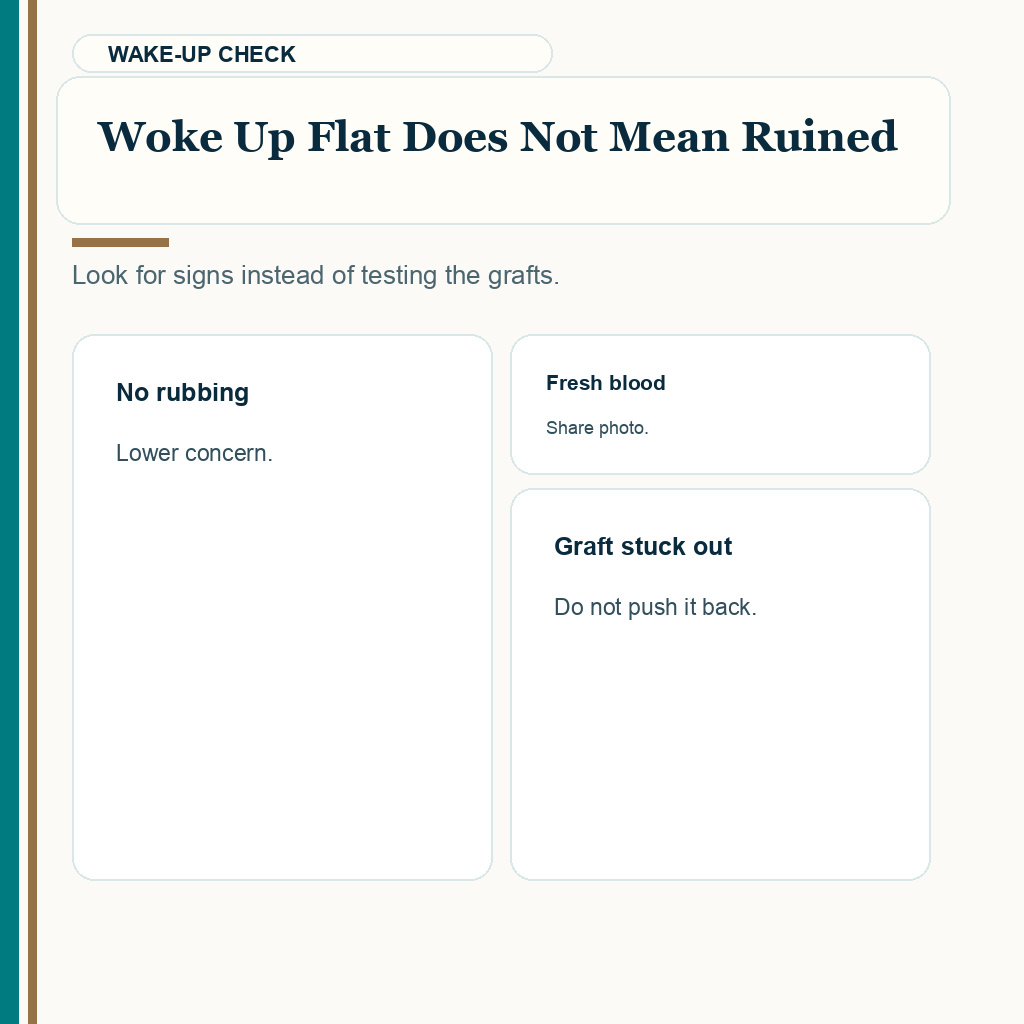
If you wake up flat, partly on your side, or with the neck pillow moved, do not start rubbing the grafts to check them. Sit up, restore the safe position, and look only for clear changes. If there is no fresh bleeding, no new wet mark, no open area, and no obvious trauma, one imperfect position usually does not mean the night is ruined. If you think you actually pressed or rubbed the grafts, use the same photo logic I explain in slept on grafts after hair transplant.
The first night is not the right time to judge density, spacing, or the final result. Early photos can mislead, which is why day one hair transplant photos should not be treated like a result review.
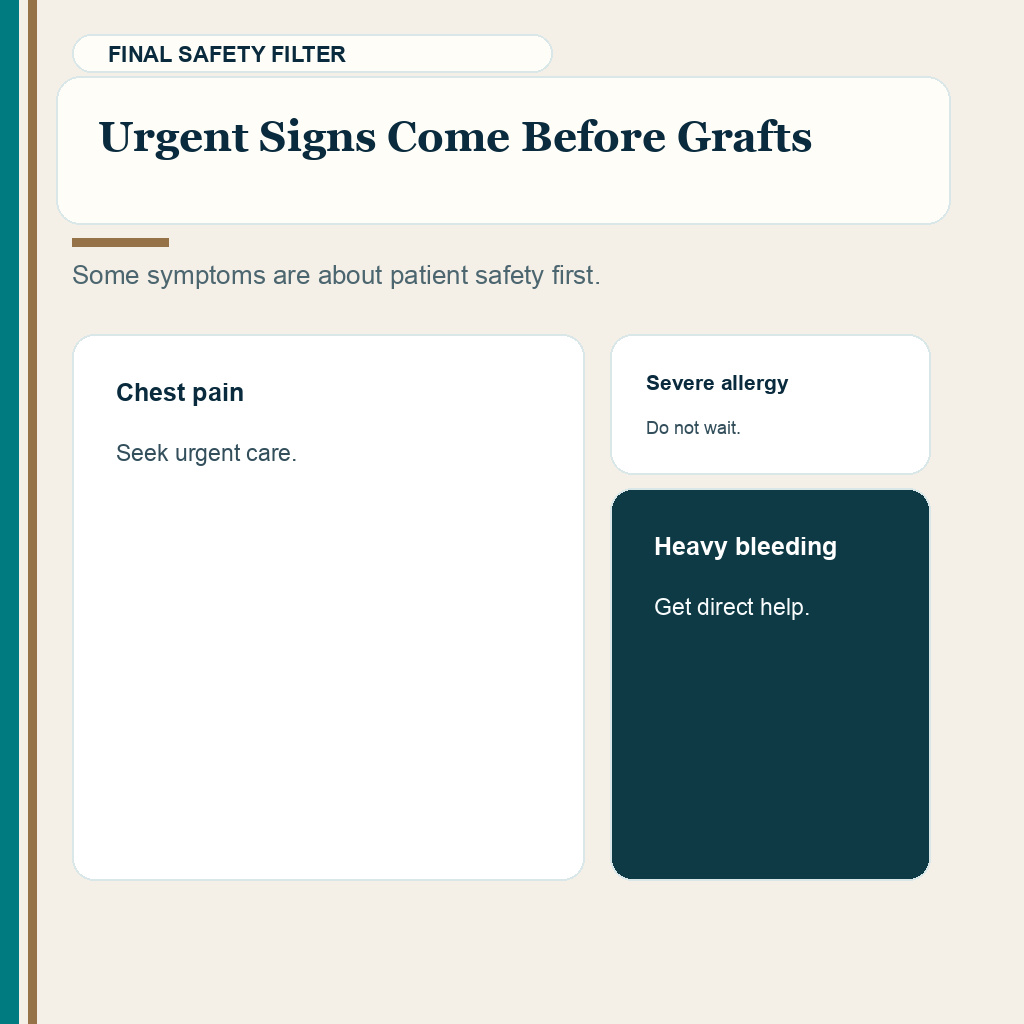
The 10 first night recovery slides below separate sleep setup, pillow position, waking up flat, spotting, swelling, dizziness or nausea, graft checks, clinic messages, hotel room changes, and urgent safety signs. Swipe sideways, use the arrows one slide at a time, or choose a number below the image.



Messaging the clinic on the first night
A useful message is short and specific. Say how many hours after surgery you are, where the symptom is, whether it is donor or recipient area, whether it is improving or worsening, what medicines you took, whether you have fever, dizziness, vomiting, strong pain, or active bleeding, and attach one wider photo plus one closer photo.
A message that says “I am scared” is understandable, but it gives the clinic little medical information. A message that says “first night, donor area, small blood spot on neck pillow, stopped after 10 minutes, no dizziness, no fever, pain 2 out of 10” gives a much clearer decision frame.
Send the pattern, not only the close up. A wider photo series helps me judge whether the issue is position, bleeding, swelling, medicine, dizziness, or something local that needs help near you.
Adding anything new in the hotel room
Do not wash earlier than instructed. Do not add creams, oils, sprays, antibiotic ointment, minoxidil, alcohol, cannabis, or sleeping pills unless your clinic has approved them for your case. Do not remove crusts. Do not wear tight fabric over the grafts. Do not bend repeatedly to repack luggage. Do not panic over every small stain.
Also avoid asking several online strangers to diagnose a photo while ignoring the clinic that performed the surgery. Public comments may sound reassuring or frightening, but they do not know your graft plan, medical history, blood pressure, medication list, or what was seen at the end of surgery.
The first night rules are part of the larger hair transplant aftercare plan. If your clinic’s instructions are clear and medically responsible, stay with them instead of creating a new routine in the hotel room.
Urgent signs about patient safety
Treat the situation as urgent if bleeding does not stop with the clinic’s advised steps, swelling is rapidly worsening, pain is severe or increasing, the scalp is hot with spreading redness, there is pus or bad smelling drainage, fever appears, vomiting repeats or fluids cannot stay down, fainting or loss of consciousness occurs, chest symptoms appear, breathing feels difficult, unusual confusion appears, or you hit your head.
Those signs are not about cosmetic perfection. They are safety signals. Ask for clinic review and seek local medical help when the pattern is severe, especially if you are alone in a hotel, far from the clinic, or worried you may faint again.
Some symptoms are not emergencies but still deserve a clinic message. These include a new blood spot, increasing swelling, uncontrolled discomfort, uncertainty about medication, or any incident where the grafts may have been rubbed.
Night one needs controlled protection
A controlled first night protects the result by reducing avoidable contact. It also protects you from unnecessary decisions made while tired. Most problems on night one come from rubbing, pressure, repeated checking, bending, medication improvisation, or panic after a small stain.
Before you sleep, set up the room, elevate the head, protect the recipient area, use only prescribed medication, walk slowly with light, keep the phone nearby, and message the clinic if the pattern changes. One imperfect but controlled night is enough. You do not need to turn the hotel room into an operating room.
By the next day, the clinic can review the scalp, the first wash plan becomes clearer, and you usually know whether the night was routine or needs a specific answer. The first night does not need to be comfortable. It needs to be safe, steady, and medically sensible.
Read this review excerpt
Upon arriving home, I sent 4 photos (of each side of head) after every washing process to doctor for checking where I was given personal advice for how to take care of my healing head.