


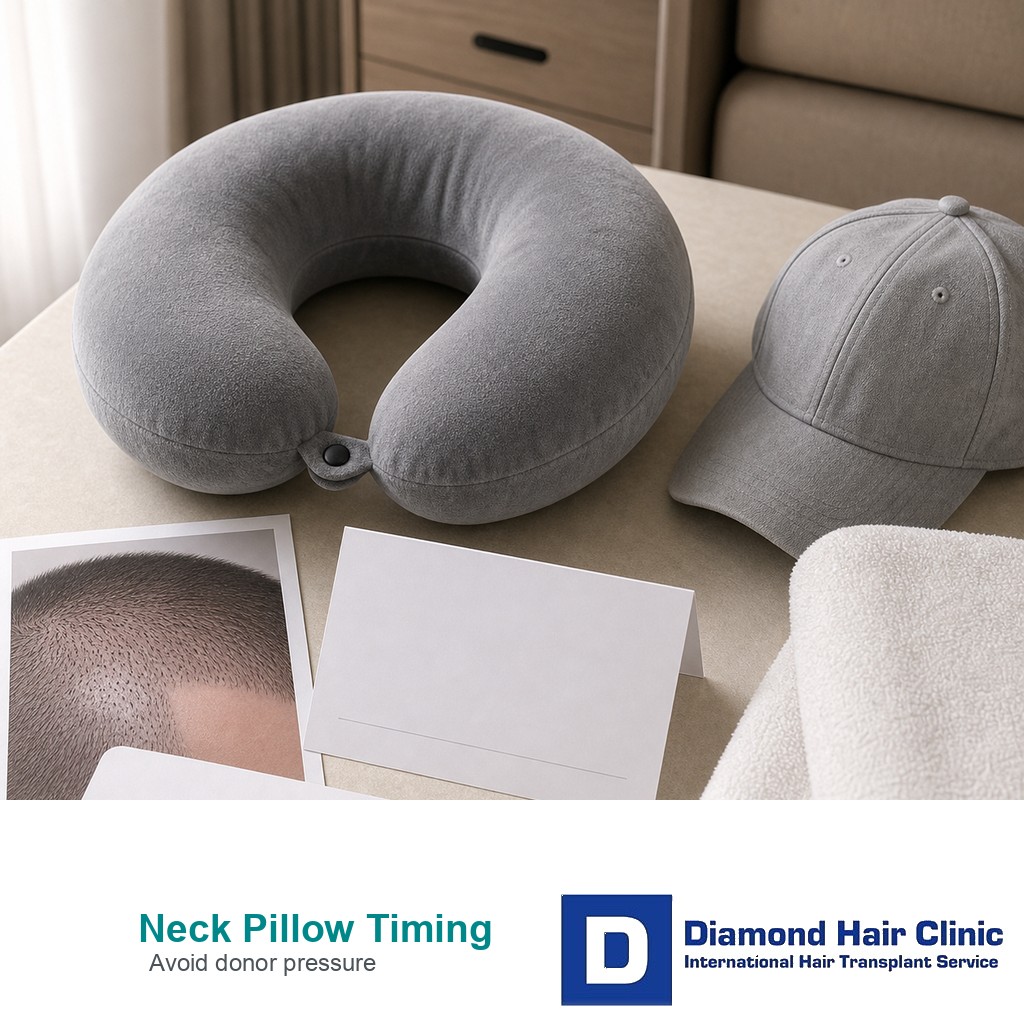
Neck Pillow Timing Depends on Contact and Donor Comfort
Most people use the neck pillow for the first 7 to 10 nights. If healing looks normal, the scabs are settling, and the recipient area is not rubbing against anything, you can often start reducing it around day 8 to day 10. If you had crown grafts, active swelling, donor area soreness, or restless sleep, I stay more cautious and often keep a protective setup until day 10 to 14.
If facial swelling reaches the eyelids while you are trying to sleep elevated, the headband after hair transplant for eye swelling guide can help you separate posture, band fit, and review signs.
The neck pillow is not a guarantee. It is only one part of the sleep setup. Its job is to reduce turning and keep the grafted area away from pressure or friction. Elevation can come from the pillow, a wedge, a recliner, or upper body support. The decision to stop should be based on contact, graft location, donor comfort, swelling, and your real sleep behavior, not only the calendar. If a pet normally sleeps beside your head, keep that barrier during FUE recovery. If the pillow failed one night, use the slept on the grafts warning checks before you keep adjusting the scalp.
Sleep after a hair transplant gives the broader position rules, but the neck pillow itself can help or harm. It helps when it keeps the grafts away from contact. It becomes a problem when it presses on the donor area, pushes the head into a bad angle, or keeps you awake. If the pillow protects the grafts but ruins rest, read sleepless nights after FUE as part of the same decision instead of forcing a setup that keeps you awake.
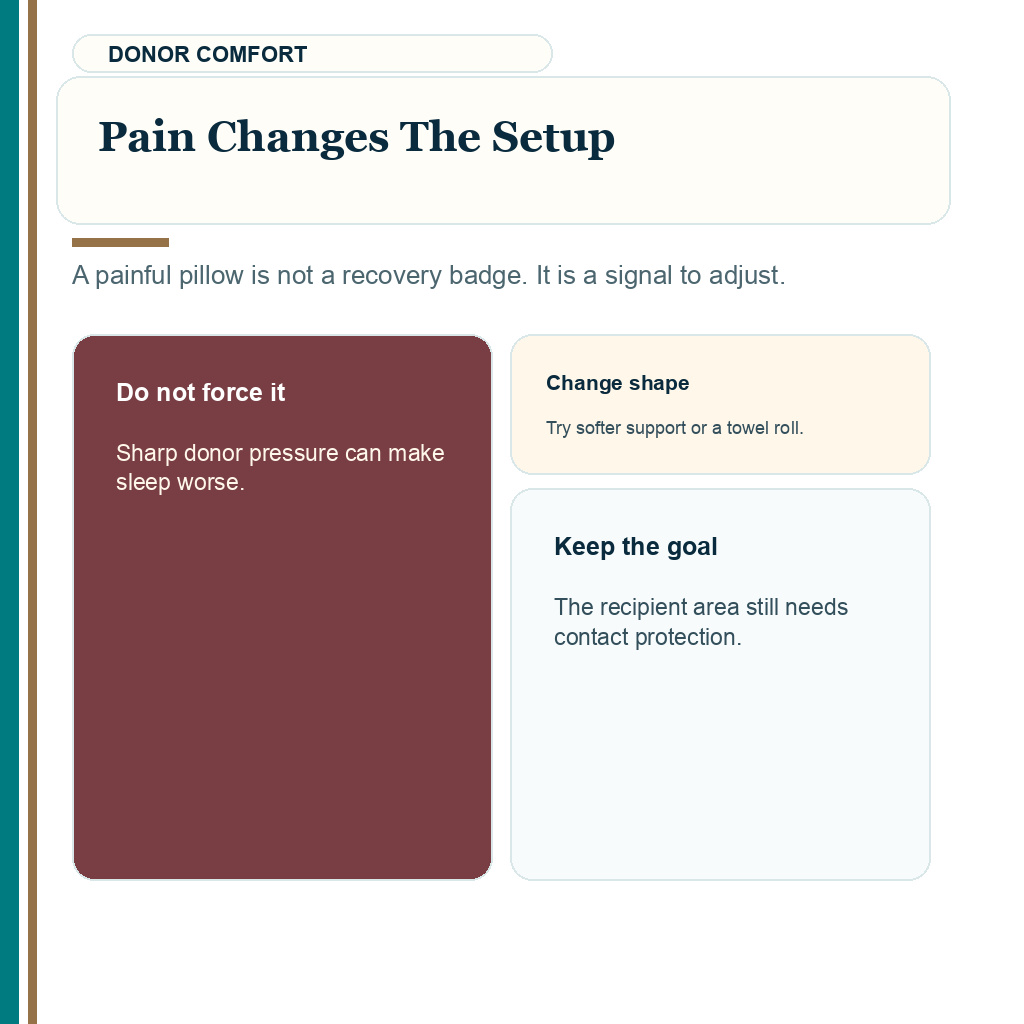
A neck pillow should stop turning without pressing hard on the donor area. If a towel, travel pillow, or wedge makes the back of the scalp burn, change the contact surface and height while you are still awake. The aim is a setup you can actually sleep in, not a painful position you force until morning.
Test the pillow while awake before surgery night. If it pushes your chin down, slides your head sideways, or touches the donor area firmly, the first night will not be the right time to discover that fit problem.
Why clinics use a neck pillow after surgery?
Clinics give a neck pillow because the first nights are awkward. You are tired, the scalp feels tight, the donor area may be tender, and the sleeping position feels unnatural. A travel pillow can reduce careless turning and make back sleeping easier. The first night setup matters because the pillow is only one part of position, room layout, and graft protection.
The main purpose is control. The recipient area should stay away from direct pressure, rubbing, scratching, and sudden contact. If the pillow helps you stay still without pressing the scalp, it is doing its job.
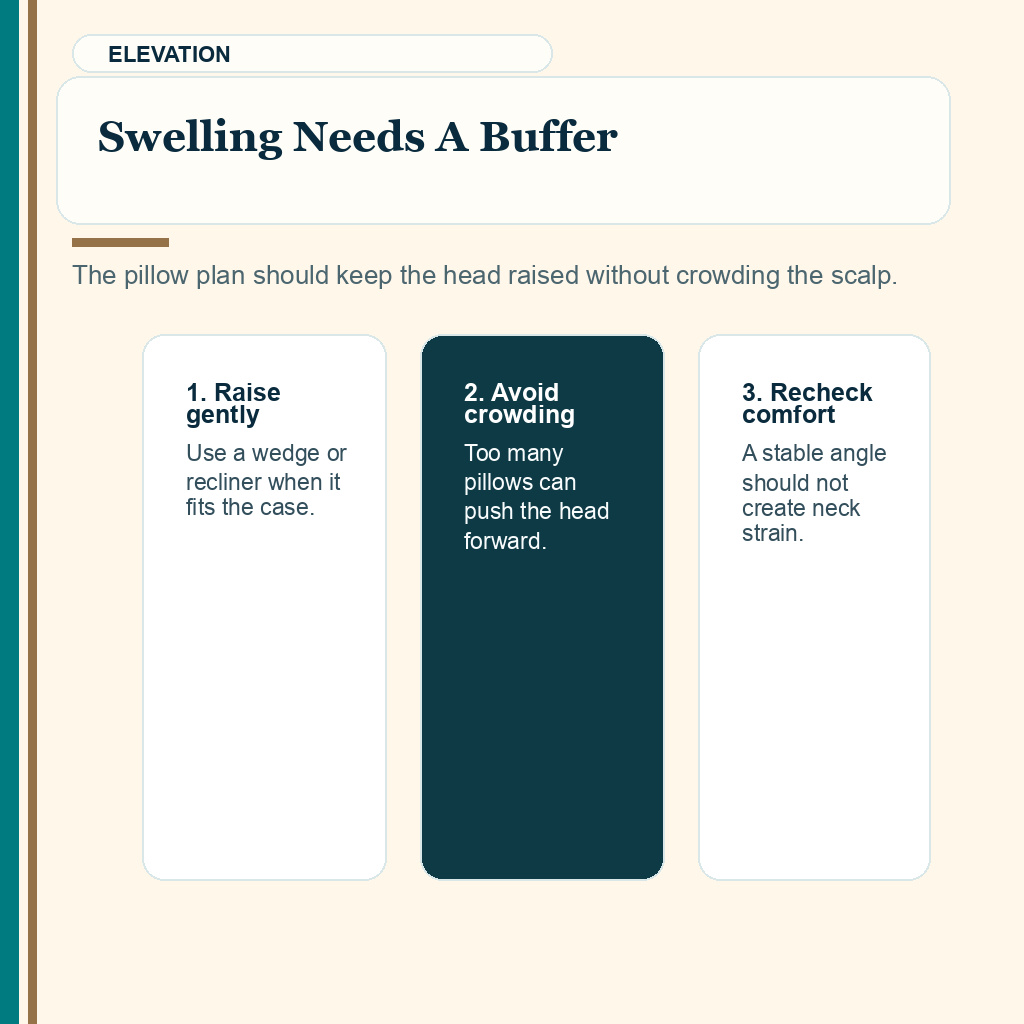
The pillow may also help with elevation, but elevation and neck support are not the same thing. A slightly raised head can make early swelling easier, especially after frontal work. A neck pillow mainly helps stop turning. If it locks your head into a painful position all night, the setup needs adjusting rather than more willpower.
Some people treat the pillow like a guarantee. It is not. A neck pillow does not make careless sleep safe, and it does not replace careful movement, a planned room setup, or the clinic instructions.
The pillow should also keep the neck in a neutral position, just as headrest position during the car ride after FUE should avoid pushing the head into an awkward angle. If it pushes the chin toward the chest, twists the head, worsens snoring, or makes breathing feel restricted, the setup is wrong even if the grafts are not touching the bed.
The pillow protects graft contact and donor comfort differently
It can protect both, but in different ways. The grafts are in the recipient area. They need protection from pressure and friction while the skin closes around them. The donor area is where grafts were taken, usually from the back and sides of the scalp. It may be sore, bandaged early, or sensitive when pressed.
When I talk about when hair transplant grafts are secure, day 10 is a useful practical milestone in uncomplicated healing. But secure does not mean ready for rubbing. It means the grafts are harder to dislodge with light ordinary contact.
A neck pillow helps most when it keeps the recipient area away from the main pillow and stops you from rolling into pressure. It helps least when it digs into the donor area, pushes the head forward, or makes the neck tense enough that you keep adjusting it.
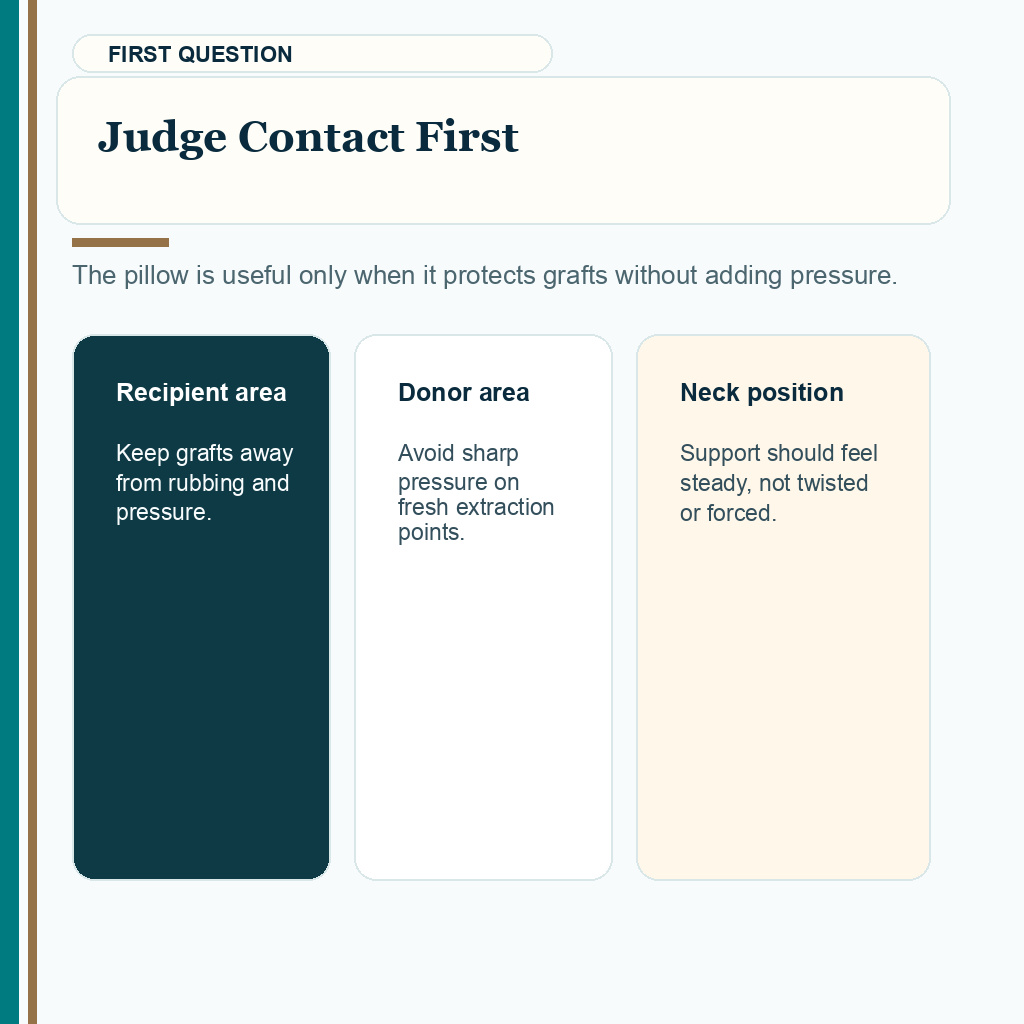
I judge pillow use by contact. If the grafted area is untouched and the donor area is comfortable, the pillow is useful. If the pillow creates a new pressure point, the setup needs to change.
Usual timing for neck pillow use after surgery
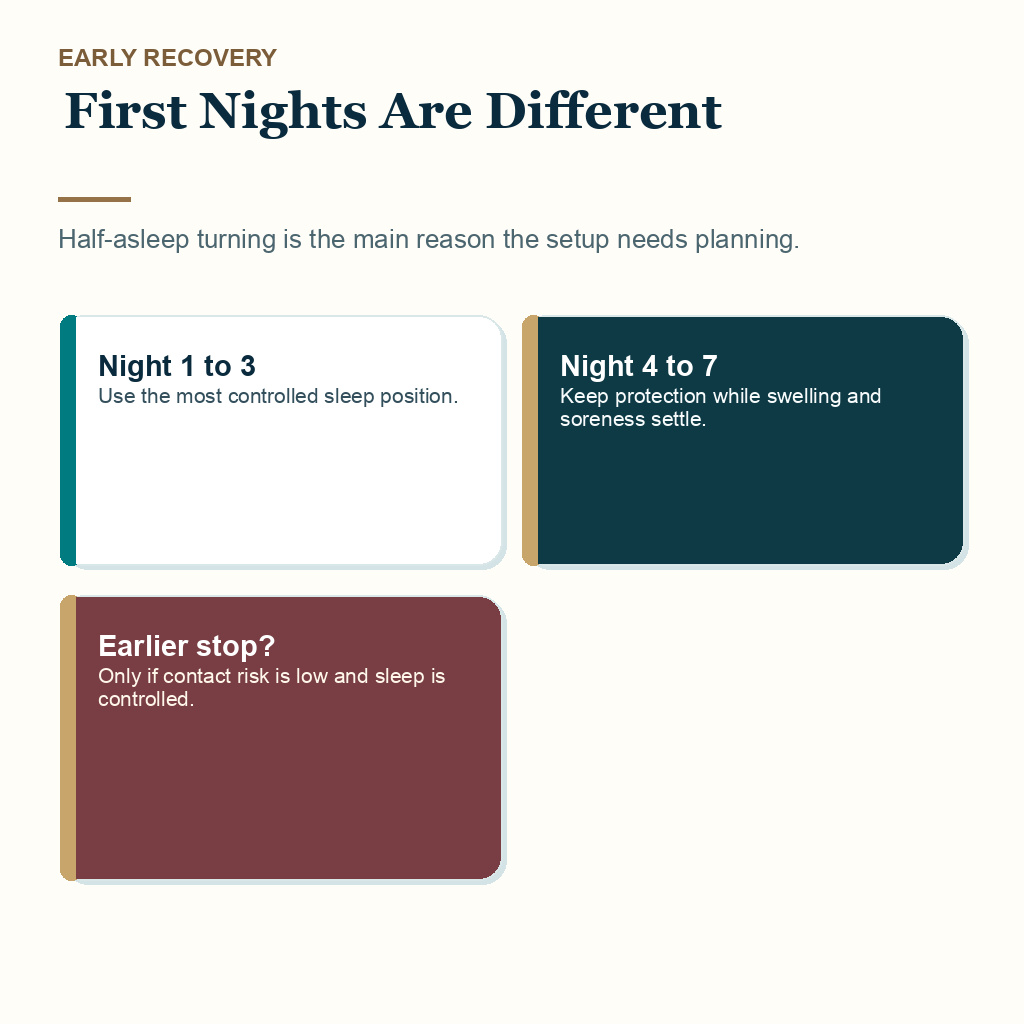
For most uncomplicated cases, 7 to 10 nights is a sensible range. The first week deserves protection because accidental turning, rubbing, and half asleep scratching create the most anxiety during this period. By day 8 to day 10, many people can begin testing a gentler setup if the scalp is settling well.
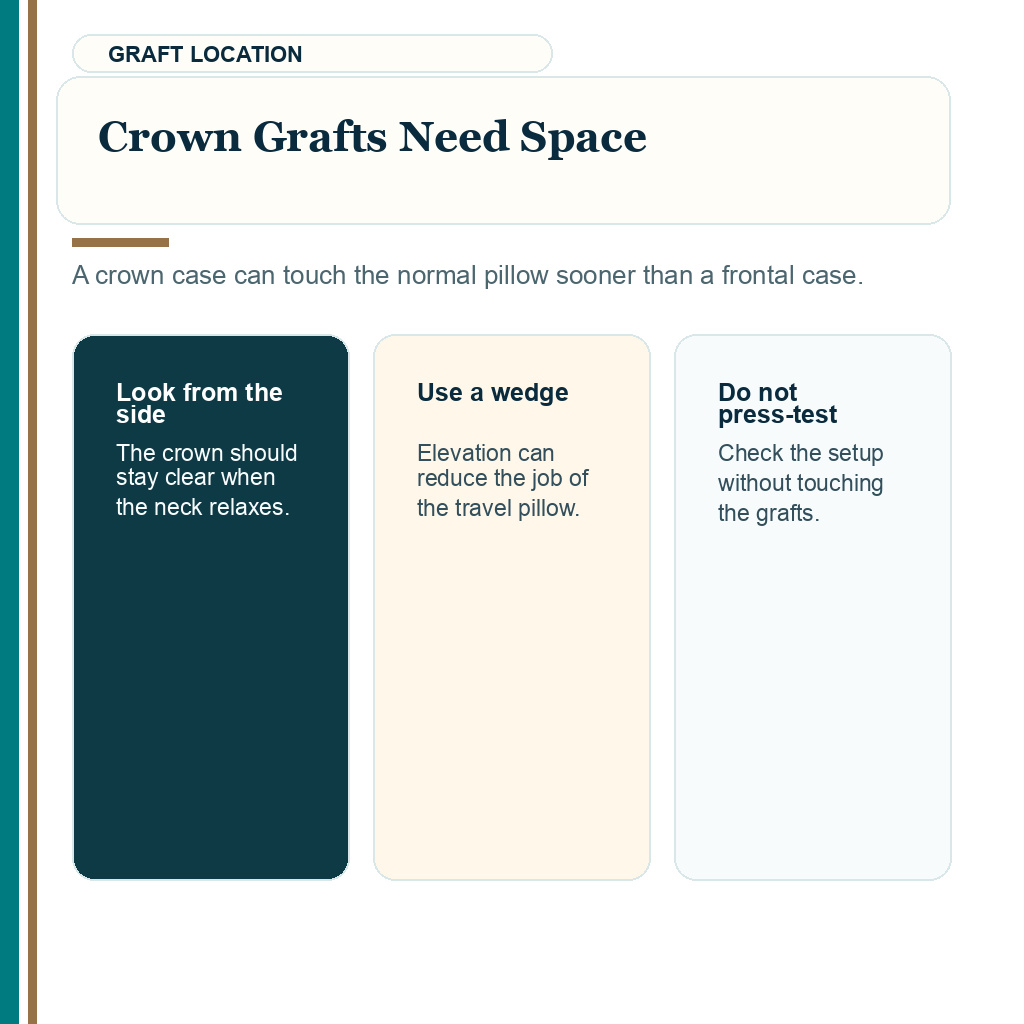
If grafts were placed in the frontal hairline only, and you sleep on your back without turning, the neck pillow may become less necessary earlier than in a crown case. If grafts were placed in the crown, the back of the head needs stricter protection because a normal pillow can press directly against the recipient area.
The first 3 nights are the strictest. From day 4 to day 7, controlled sleep still makes sense because swelling, crusts, and donor tenderness are still active. After day 10, the answer is usually more about comfort and avoiding rubbing than about fear of one small movement.
Do not choose the pillow by the calendar alone. Choose the setup you can keep for several hours without rubbing the recipient area or pressing a sore donor area.
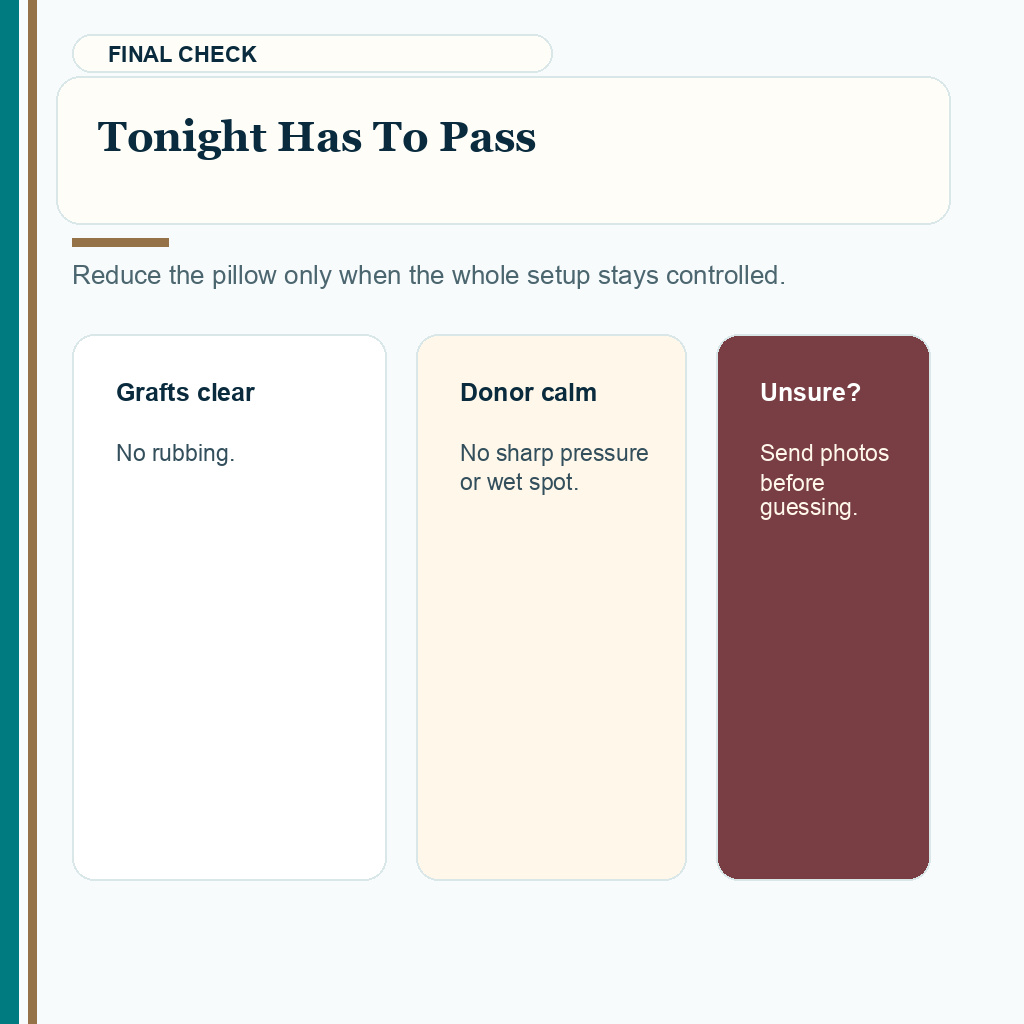
Before sleeping, lie down for 5 to 10 minutes in the exact position you plan to use. Stay there long enough to notice whether the pillow slides, the crown drops back, or the donor area starts to burn. A side view or a photo taken from normal distance can show whether the grafts, donor area, neck angle, pillow seams, collar, or headboard are in contact before you are too tired to notice them.
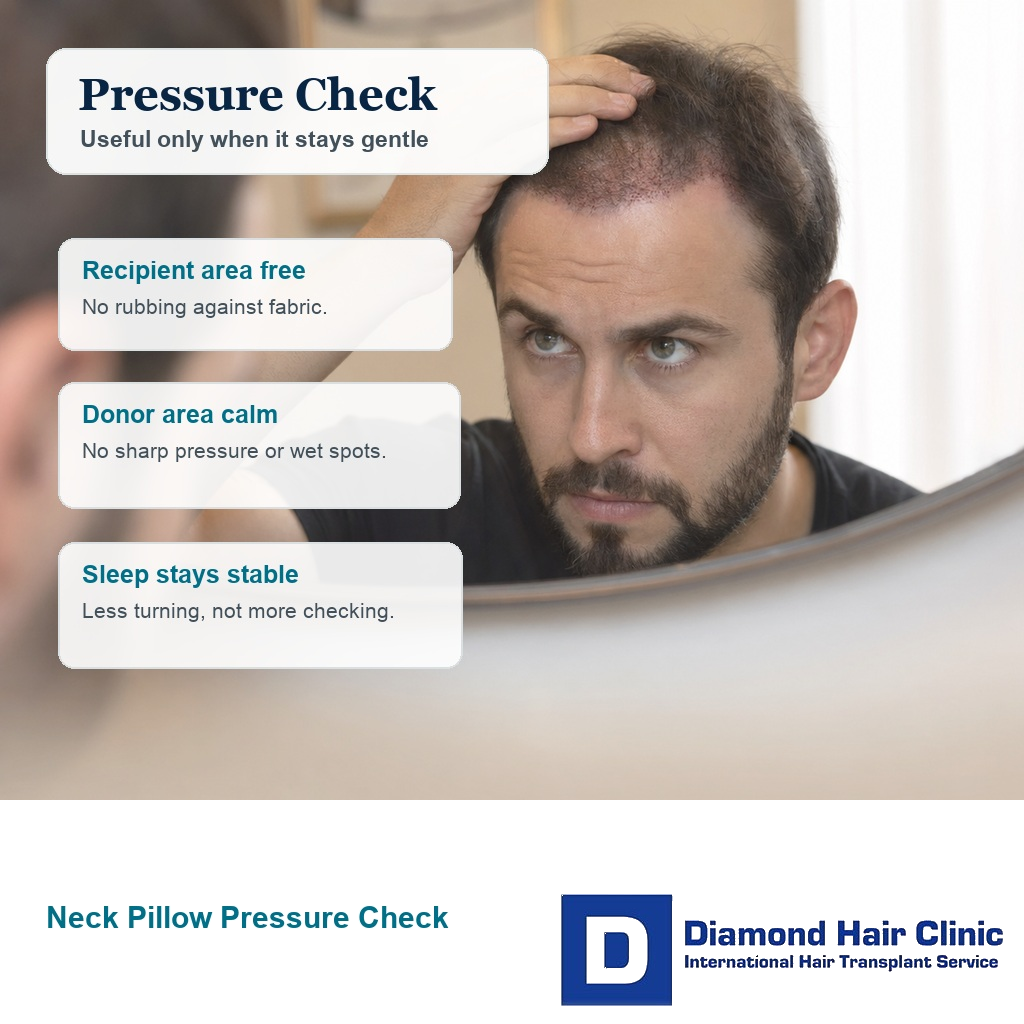
Choose the setup that protects the recipient area without creating a new pressure point in the donor area.
The 10 neck pillow slides below separate graft contact, donor pressure, crown grafts, swelling, hotel setup, painful pillow adjustments, waking without the pillow, normal pillow timing, and the final tonight check. Swipe sideways, use the arrows one slide at a time, or choose a number below the image.


Waking up without the neck pillow once
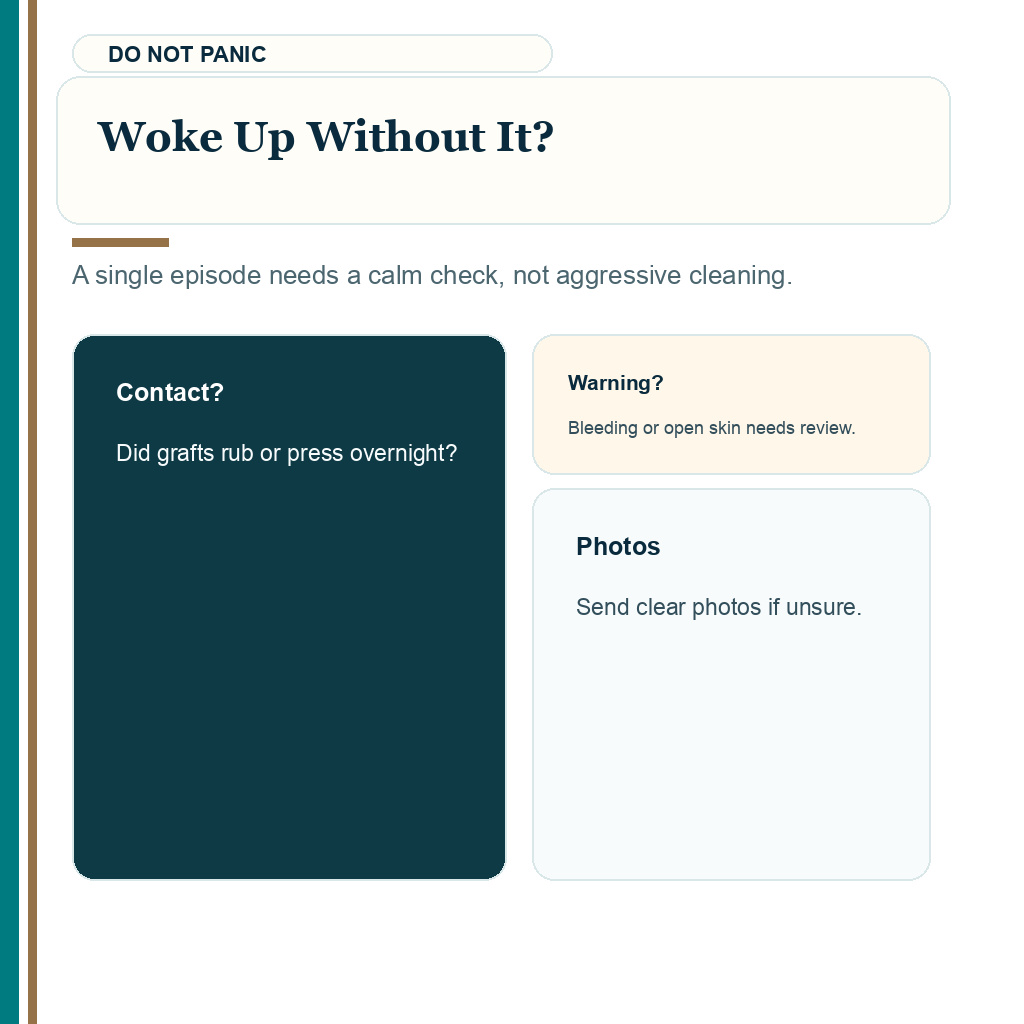
If you wake up once without the neck pillow, do not panic. Sit up calmly, check whether the recipient area touched the pillow, look for fresh bleeding, an open spot, graft material, stronger pain, or scabs that seem pulled, and contact the clinic with clear photos if anything looks different.
One short episode is usually less concerning than repeated friction every night. The risk is higher if crown grafts, temple grafts, or a lowered hairline were rubbing against the pillow while the grafts were still fresh. If there is no bleeding, no open area, and no visible change, return to a safer sleeping position and focus on preventing the same movement again.
The neck pillow should help the recovery, not turn sleep into a fight. If it causes enough neck pain that you keep removing it unconsciously, a wedge pillow, recliner position, towel support, or a different pillow shape may be safer than forcing the same setup. Controlled sleep is the goal, not forcing one pillow shape after it has started creating new contact problems. Once the grafts are more stable, the decision becomes less about fear and more about sensible friction control.
Stopping around day 6 or day 7 needs a low risk setup
If the neck pillow hurts, do not force it aggressively into the donor area. Pain is information. The answer may be a softer pillow, a different shape, a towel roll under the neck, a wedge pillow, or a recliner position that keeps the grafted area away from pressure.
You are not choosing between a painful pillow and no protection. At day 6 or day 7, I first look for an adjusted form of protection. Where are the grafts? Are scabs still attached? Is there bleeding? Do you turn in sleep? Could the recipient area touch the pillow once you relax? Test the setup before you are exhausted, not after you wake up worried at 3 a.m.
Stopping completely at day 6 or day 7 can be reasonable in selected low risk situations, but I do not make that decision only because the pillow is annoying. Some people sleep worse with the neck pillow than without it, and poor sleep can lead to more movement, more checking, and more irritation. In that case, a modified setup may be safer than a strict looking but painful setup.
If the concern is a light accidental touch, review touching grafts after a hair transplant with the clinic’s instructions. A small brush is different from repeated pressure, scraping, or sleeping with the recipient area pressed into fabric.
Donor area pressure changes the pillow plan
A neck pillow that presses directly on a fresh donor area may be uncomfortable and can irritate the healing skin. This is especially true during the first nights, when extraction points are fresh and the bandage or dressing may still influence how the back of the head feels.
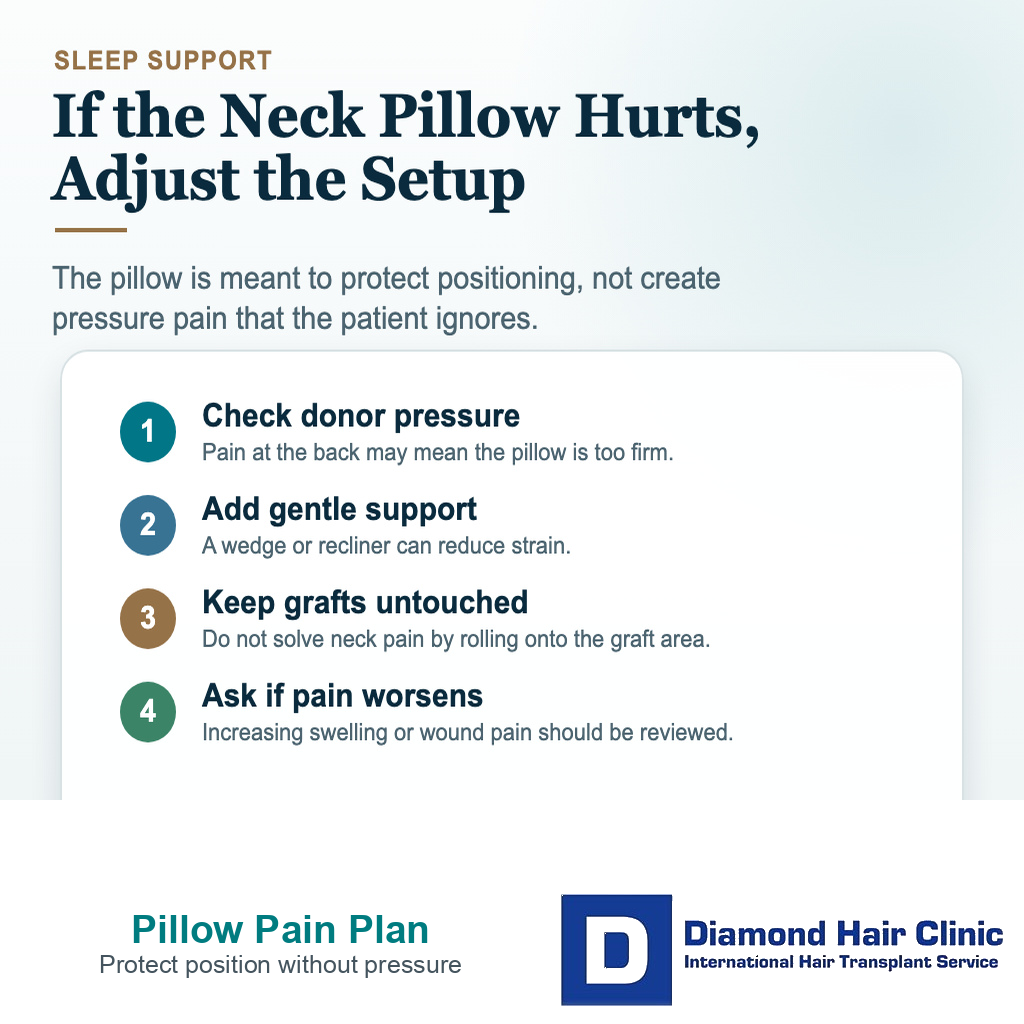
The donor area is not the same as the recipient area, but it still deserves gentle handling. If pressure creates sharp pain, fresh bleeding, increasing soreness, or a wet area on the pillow, do not ignore it. Change the setup and ask the clinic to review clear photos if you are unsure.
With removing the bandage after a hair transplant, donor protection is part of early recovery. The bandage, pillow, collar, and headrest can all matter because they touch the back of the scalp. Donor area pressure is not the same risk as rubbing fresh grafts, but it can still make healing more painful than it needs to be.
Start with the simplest adjustment first. Place the neck pillow lower around the neck instead of high on the donor area. Use a softer travel pillow. Use a wedge to elevate the upper body so the neck pillow does less work. Avoid hard seams, tight collars, and towels that bunch under the extraction area. If donor pain, redness, pressure marks, or swelling increases, send photos to the clinic instead of forcing the same pillow setup.
Crown grafts need extra contact protection
Crown grafts change the pillow decision because the recipient area may be close to the area that naturally meets a normal pillow. A frontal hairline case can often avoid pressure more easily. A crown case needs more planning because back sleeping may still put pressure on transplanted grafts.
If the crown was transplanted, I am more cautious about stopping the neck pillow early. You may need a wedge pillow, a recliner, or a setup that supports the neck while leaving the crown free. A single answer for every patient is not reliable.
The visual check is practical. If the crown grafts touch the pillow when you relax, the setup is not ready. If the neck pillow keeps the crown away from pressure without hurting the donor area, continue it a little longer.
Do not test this by pressing the grafts. Lie still, let someone look from the side if possible, or take a normal distance photo of the setup. The scalp should be protected without repeated touching.
Wedge pillows and recliners can be useful alternatives
A wedge pillow or recliner can be better for some people because it supports the upper body instead of squeezing the neck. The best setup is the one that keeps the recipient area free from pressure and lets you sleep without repeated adjustments.
A travel pillow is small and easy for hotel use. It can stop turning. But if it is too firm, too high, or shaped badly for your donor area, it can create pressure in the wrong place. A wedge may distribute support more gently.
Breathing issues need extra thought. If you use CPAP or have sleep apnea and CPAP after a hair transplant, do not force a sleeping position that makes breathing worse. Graft protection and breathing safety must be planned together.
Stability matters more than a complicated pillow arrangement. A recliner that lets you sleep safely is better than a pillow tower that collapses after one hour. A soft towel roll can help, but it should not push into the grafts or donor area.
Normal pillows usually return after scabs are stable
Many patients can move back toward a normal pillow once the scalp has settled and the recipient area is not rubbing. Scab removal or shedding does not mean the scalp is ready for aggressive pressure. It means one stage of surface healing has moved forward.
The transition often happens around day 10 to day 14. A gradual transition is safer. Start with back sleeping, a clean pillowcase, no pressure on the recipient area, and no turning into the grafts. If the setup stays controlled, the neck pillow becomes less necessary.
The final stop test is based on contact, not only the date. Relax in the planned sleeping position and confirm that no recipient zone touches the mattress, pillow, seam, or headboard. A case involving only frontal grafts may pass that check sooner than a crown or side case. If the graft map still meets the pillow, keep the protective setup and ask the clinic before making the transition.
Do not treat the first night on a normal pillow as a full return to normal sleep. Try a short rest or the first part of the night with the new setup, then reassess in the morning. If you see fresh tenderness, disturbed scabs, new bleeding, or donor area soreness from pressure, return to a more protective setup and ask for photo review if needed.
If swelling after a hair transplant is still active, keep elevation in mind. In the first nights, raising the head can make fluid movement less dramatic.
If poor sleep is becoming the main problem, do not jump straight to medication. A sleep aid decision should consider alertness, breathing, and aftercare behavior, especially when judging sleeping pills after a hair transplant.

Stopping the neck pillow is a gradual comfort and graft protection decision, not a single calendar test.
Warning signs that make pillow pain important
Most pillow discomfort is mechanical and can be improved by changing the setup. But some signs should not be treated as simple discomfort. Fresh bleeding, spreading redness, pus, fever, worsening pain, a bad smell, or swelling that becomes more severe should be reviewed.
If the donor area has one painful spot that is getting worse, or if the pillow is wet with fluid or blood, contact the clinic. Do not keep pressing the same area and hope it adapts. Healing skin does not benefit from stubborn pressure.
If you wake and worry that grafts rubbed against the pillow, do one controlled check in good light. Look for bleeding, an open spot, obvious displacement, or strong pain. Do not scrape crusts or touch the grafts to test them.
Adjust comfort early, but do not ignore worsening symptoms. A pillow problem should become easier when pressure is removed. If it does not, the clinic should see photos and decide what is happening.
Hotel night setup before lying down
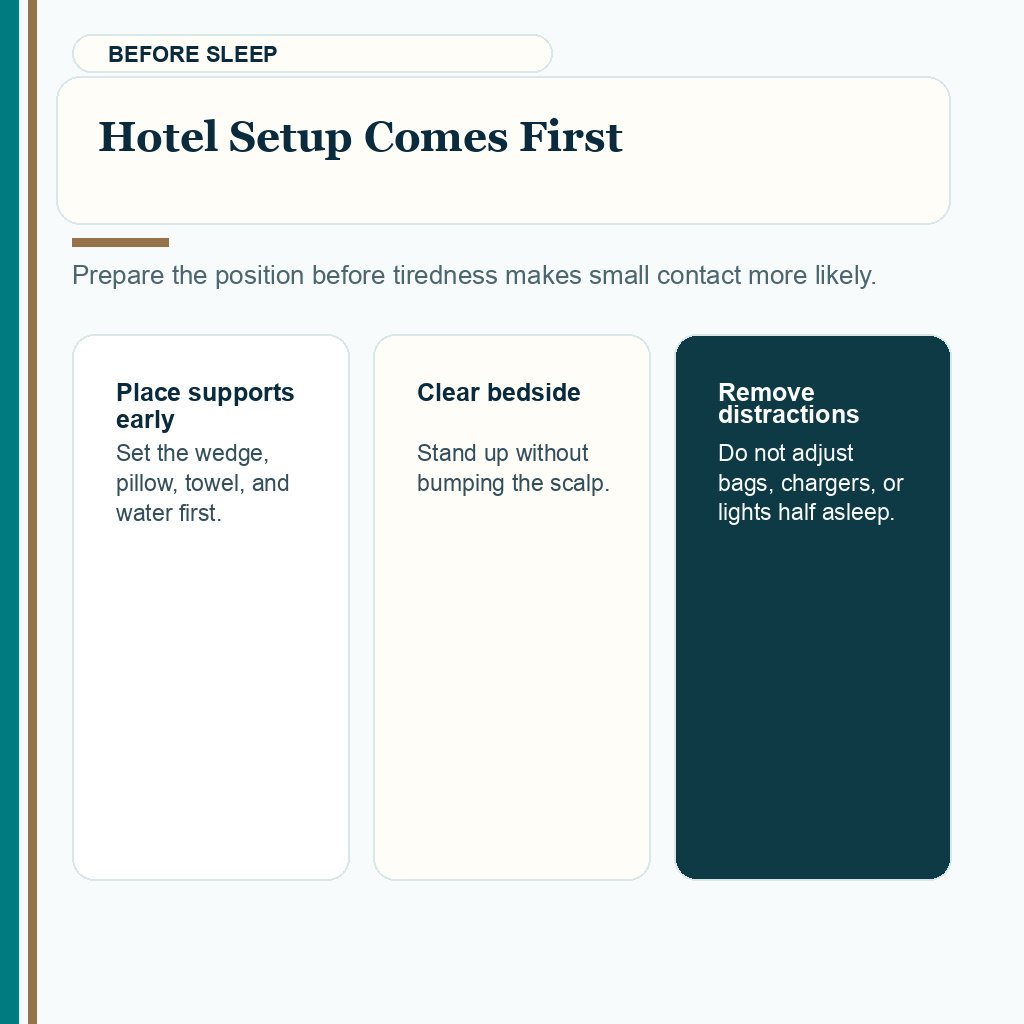
Before surgery, ask what pillow setup the clinic recommends and what will be available in the hotel. This is different from surgical face down positioning, where face support, stillness, and break timing are planned for the procedure itself. For international patients, the first nights should be planned before the operation, not improvised when you are tired.
Read this review excerpt
The doctor also spent time with me after my surgery carefully going over what my post-op procedures needed to be, how to sleep, how to wear the pillow he provided, medicines and shampoos, vitamins, etc (also provided).
A boring setup is best here. Use a clean pillowcase, keep water nearby, place the phone and charger where you do not need to twist, remove hard collars or hoodies, and check the bed position before surgery if possible. Keep the room cool enough that you are not sweating and moving all night.
In a hotel, avoid decorative pillows, rough cushion covers, and anything with buttons, seams, perfume, or visible dust near the scalp. Keep a spare clean pillowcase or soft towel available so you can replace the surface if there is sweat, blood, ointment, or drainage on it.
The travel plan also matters. If you are flying after a hair transplant, avoid leaning the grafted area into the airplane seat, window, or headrest. If you are judging how many days to stay in Turkey after a hair transplant, remember that rest, first wash, and final checks are part of the medical plan.
The same pressure logic applies in the car. During driving after a hair transplant, a headrest can create unwanted pressure. The neck pillow may help, but only if it supports the neck without pushing on grafts or sore donor skin.
The neck pillow should lower pressure
Start with the contact points. If grafts, crusts, swelling, or a sore donor area are still exposed to rubbing, keep support in place. If the neck pillow presses the donor area hard, change the height or shape instead of forcing it.
A stable back sleeping setup is better than a tower of pillows that slides once you are asleep. Keep the setup low, stable, and easy to repeat while the grafts are vulnerable. The real test is whether the setup still protects you after you fall asleep, not how secure it felt when you arranged it.
Reduce the neck pillow when you can sleep without recipient area contact or donor pain. Return to normal sleep gradually, not because the pillow became annoying.