



Pets and Early FUE Recovery
Pets can usually stay in the home after FUE, but the first nights need a clear boundary around the operated scalp. A calm dog or cat in the room is not the concern by itself. What matters is uncontrolled contact while the grafts and skin are still healing, especially licking, scratching, sudden jumping, paws near the scalp, fur on bedding, or a pet pressing against your head while you are half asleep.
In most cases, you do not need to remove a pet from the home or feel guilty for keeping distance for a short time. You need control. Use clean bedding, wash your hands after animal contact, and do not allow licking, scratching, rough play, or pet sleeping against the donor or recipient area. The first 7 to 10 nights deserve the strictest separation.
If a pet jumps near your head, stop touching the area first. Look for bleeding, an open spot, increasing pain, or visible graft movement, then send a clear photo if something looks different.
Set the bedroom boundary before the sleepy part of the evening. Closing the door after a pet has already jumped onto the pillow is harder than preparing the room before the first recovery night.
Pet boundary map
Choose the boundary by contact risk
The question is not whether a pet is loved or banned from the home. The decision is what can touch the scalp while the grafts and skin are still settling.
Room check
A calm pet can stay nearby when the scalp is protected
Distance from the scalp, clean hands, clean bedding, and whether the pet can jump suddenly.
Keep the pet below the scalp zone and prepare the room boundary before surgery.
Do not let a calm routine turn into paw, nose, or pillow contact while you are distracted.
The home can stay normal when the operated scalp stays boring and protected.
Pets matter after FUE
After FUE, the scalp is not just hair. It is a healing surgical skin surface with thousands of small recipient and donor points. Early grafts are vulnerable to friction and trauma, and the skin barrier is still recovering. A pet can create contact you cannot fully control during sleep, especially when pain, tiredness, swelling, or medicine changes how you move.
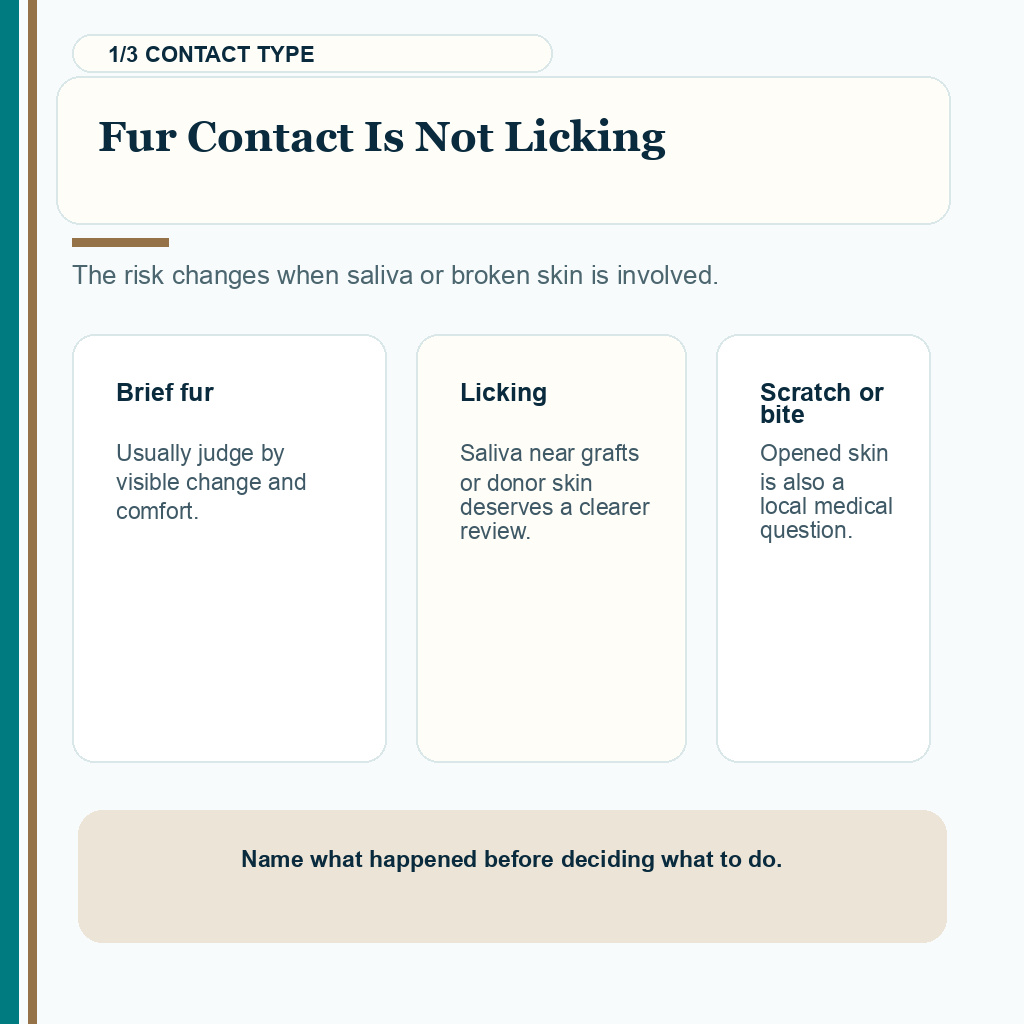
Pet fur is usually less serious than claws, saliva, or pressure, but it still changes the hygiene picture. A few hairs on a blanket are not the same as a pet walking across the pillow, licking the donor area, or pressing a paw into fresh grafts. I judge the event by the type of contact, the day after surgery, and whether the skin changes afterward.
Loose pet hair caught in the recipient area should not be pinched out or brushed away. Use only the spray or rinse method already approved for that stage of recovery. Continued contact, bleeding, or a visible change needs clinic review. Pulling harder is not the answer.
The logic is similar for touching grafts after a hair transplant. A brief accidental brush is different from rubbing, scratching, or dragging something across the recipient area.
Dog or cat contact and graft safety
A pet does not dislodge grafts by being in the room. Risk starts when a paw, claw, nose, tongue, or sudden jump reaches the recipient area, especially in the first days. A heavy pet sleeping against the head can also create pressure or friction while you are not awake enough to react.
If a pet briefly touched your hair or shoulder without touching the grafts, that is different from a scratch across the recipient area. If there was fresh bleeding, visible tissue, a missing graft, a clear scratch line, or new tenderness in the exact area, take one clear photo and ask for clinic review instead of testing the area with your fingers.
Timing also matters. Use the guide to when grafts become secure to understand why the first days and the end of the first 10 days are not the same. Do not test graft security with pet contact.
Keeping pets out of the bed after FUE
Keep pets separated in the first recovery nights. This is not because every pet is unsafe. It is because sleep removes control. A pet that normally curls beside your head can press on the pillow, step near the scalp, lick dried fluid, or wake you suddenly. That is exactly when people roll, scratch, or move before thinking.
For the first 7 to 10 nights, use a closed bedroom door, a separate pet bed, or another room. Set this boundary before surgery, not when you are tired after the procedure. If that is impossible, keep the pet below the waist, use clean bedding, keep the neck pillow in place, and do not let the animal rest near the scalp.
For sleep position itself, use the guidance on sleeping normally after a hair transplant and neck pillow timing. Pet boundaries should support those instructions, not replace them.

The first nights are mainly about clean bedding, no licking, no scratching, and avoiding accidental pressure while asleep.
Pet licking the donor or recipient area
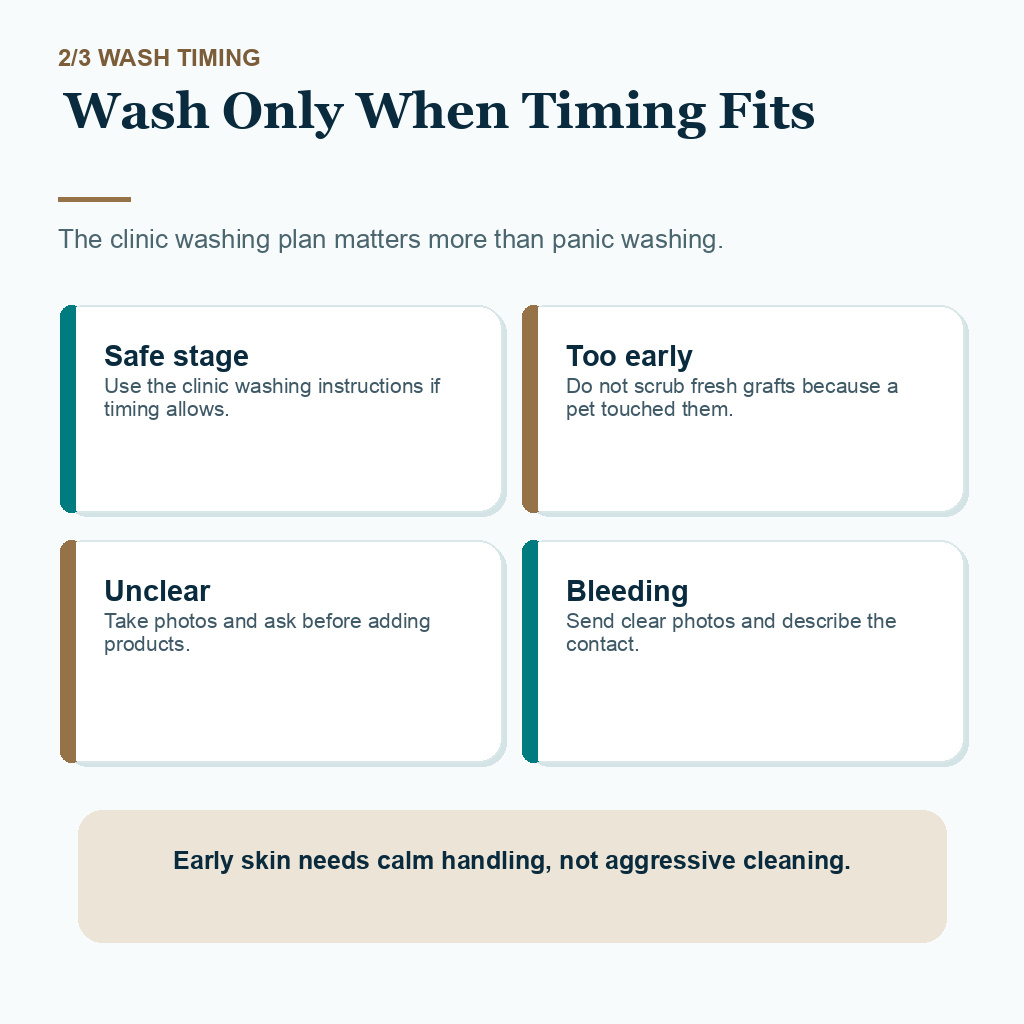
Licking is different from fur contact. Saliva on intact hair away from the operated scalp is one thing. Saliva on the donor area, recipient area, crusted skin, open skin, or a tender point is different. Do not scrub aggressively because panic cleaning can create more trauma than the original contact. Do not put alcohol, hydrogen peroxide, hand sanitizer, perfume, essential oils, or unapproved antiseptic on the grafts because a pet licked the area.
Use the clinic’s washing instructions if the area is safe to wash at that stage. If it is too early, if the area is actively bleeding, or if you are unsure whether a graft was disturbed, take clear photos and message the clinic. Include the day after surgery, the location, whether it was donor or recipient area, whether the pet was vaccinated and well, whether it was an unfamiliar animal, and whether there is pain, redness, heat, swelling, drainage, smell, or fever.
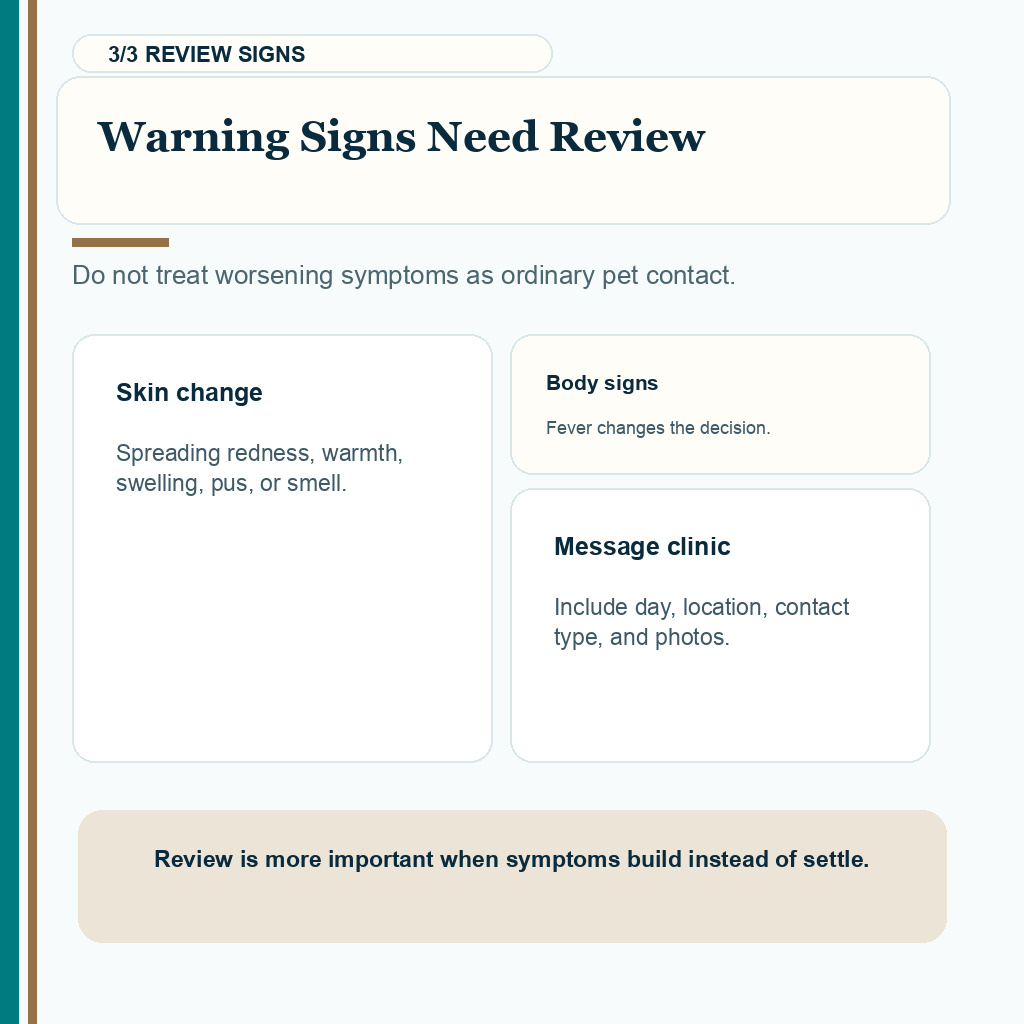
Licking plus worsening redness, warmth, pain, pus, or fever needs review. Those warning signs are the same reason the infection page separates ordinary healing from an infected hair transplant.
Around pets, these 3 slides keep the focus on clean bedding, scratching risk, and the first recovery days. Swipe sideways, use the arrows, or choose a number below the image.
Pet scratches or bumps that need review
A scratch or bump is judged by force, location, timing, bleeding, and visible change. A light paw touch through hair at three weeks is not the same as a claw mark across grafts on the second night. A scratch can break skin. A bump can create swelling or bleeding. Both deserve a photo record. If your pet has sharp claws, trim them before surgery or avoid lap and pillow contact until the early graft protection window has passed.
If there is active bleeding, do not rub. Follow the clinic’s instructions for gentle pressure if applicable, then photograph the area for review. If the scratch is deep, dirty, painful, hot, swollen, draining, or worsening, local medical review may be needed because animal scratches and bites carry infection risk.
A known clean household pet and an unfamiliar, outdoor, sick animal, or an animal with fleas are not the same risk. If the contact came from an animal you do not know well, or if the wound was a bite rather than a light touch, I take the event more seriously.
If a bite breaks the skin, a claw scratch opens the skin, or the animal may be unvaccinated, do not treat it as only a hair transplant question. Share photos for review, but also arrange prompt local medical review. Animal saliva and scratches can introduce bacteria, and depending on the country and animal history, tetanus or rabies advice may also be relevant.
After a cat scratch or bite, fever, a pustule near the scratch, or a tender lymph node in the next weeks also needs review. That may be a wound or infection question rather than a graft question.
I judge a contact event involving a pet case by case, as I do with bumped head after a hair transplant. I do not judge the event only by fear. I judge what touched the scalp, what changed, and what the skin looks like afterward.
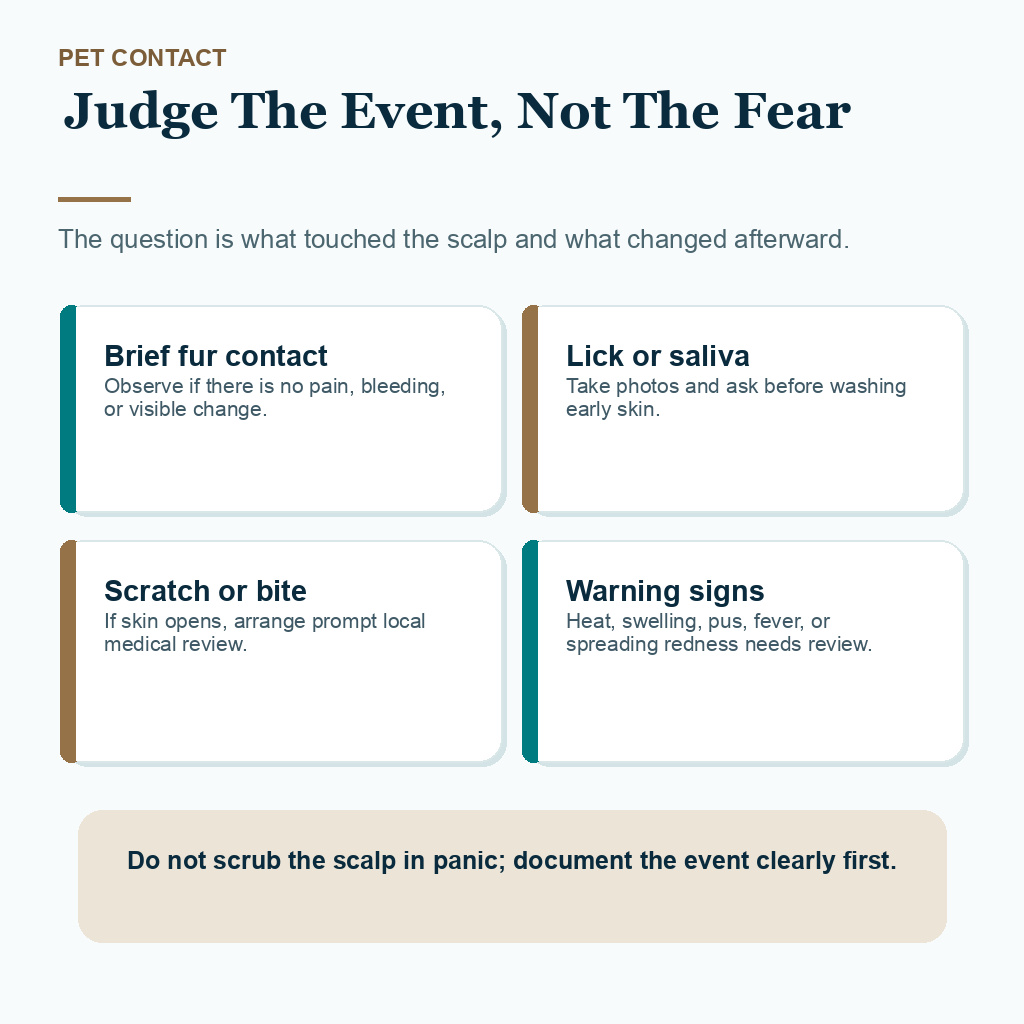
After pet contact, the decision depends on timing, visible skin change, symptoms, and whether the event was a lick, scratch, bite, or brief touch.
Pet fur on a pillow and infection risk
Pet fur on a pillow does not by itself mean infection. The pillow matters because it is part of the healing environment. If the pillowcase is covered in fur, saliva, outdoor dust, litter dust, or old stains, it is no longer a clean surface for the donor and recipient areas.
Use a fresh pillowcase, keep towels clean, and wash hands before touching anything near the scalp. A lint roller can help, but it is not a substitute for clean bedding. If a pet has fleas, visible skin disease, diarrhea, open wounds, or heavy shedding, keep that pet away from the recovery bed.
Hand hygiene matters most when your hands go from the pet to the scalp. After feeding a pet, cleaning litter, touching toys, handling waste, or stroking an animal, wash your hands before spraying, washing, checking, or photographing the grafts. If possible, let someone else handle litter trays, waste bags, cages, or outdoor cleaning for the first few days.
If itching begins because of fur, dust, or allergy, do not scratch the grafts. Use the guidance on itching after a hair transplant because the response to the itch often creates more risk than the itch itself.
Pet allergies and recovery
Pet allergy does not usually damage grafts directly. The risk comes from rubbing, watery eyes, sneezing, touching the scalp, poor sleep, and irritated skin. Someone who is sneezing, wiping the forehead, and scratching the scalp all night has a different recovery risk from someone who is sleeping quietly.
If antihistamines were already part of the plan, follow your surgeon’s medication advice rather than adding tablets on your own. If the reaction includes widespread hives, facial swelling, breathing difficulty, wheezing, dizziness, or a rapidly worsening rash, it is no longer a simple pet fur question.
For rash and allergy patterns after surgery, the guide to allergy signs in hair transplant recovery helps separate mild irritation from symptoms that need faster review.
Minoxidil pet safety as a separate issue
Minoxidil pet safety is a separate issue. Topical minoxidil can be dangerous to pets, especially cats, if they lick residue or contact contaminated skin, pillows, towels, drops, or applicators. That question is about protecting the animal from medicine exposure.
Here, the focus is protecting the healing scalp from pet contact. Minoxidil adds another direction of risk. There is medicine residue for the pet, and there is pet contact for the grafts. Keep those two risks separate, because the instructions are not the same.
If minoxidil is in the home, follow minoxidil pet safety for hair transplant patients as carefully as scalp protection rules. Do not let a cat or dog lick treated skin, sleep on contaminated pillows, touch towels with product residue, or reach a spill, bottle, applicator, or used tissue.
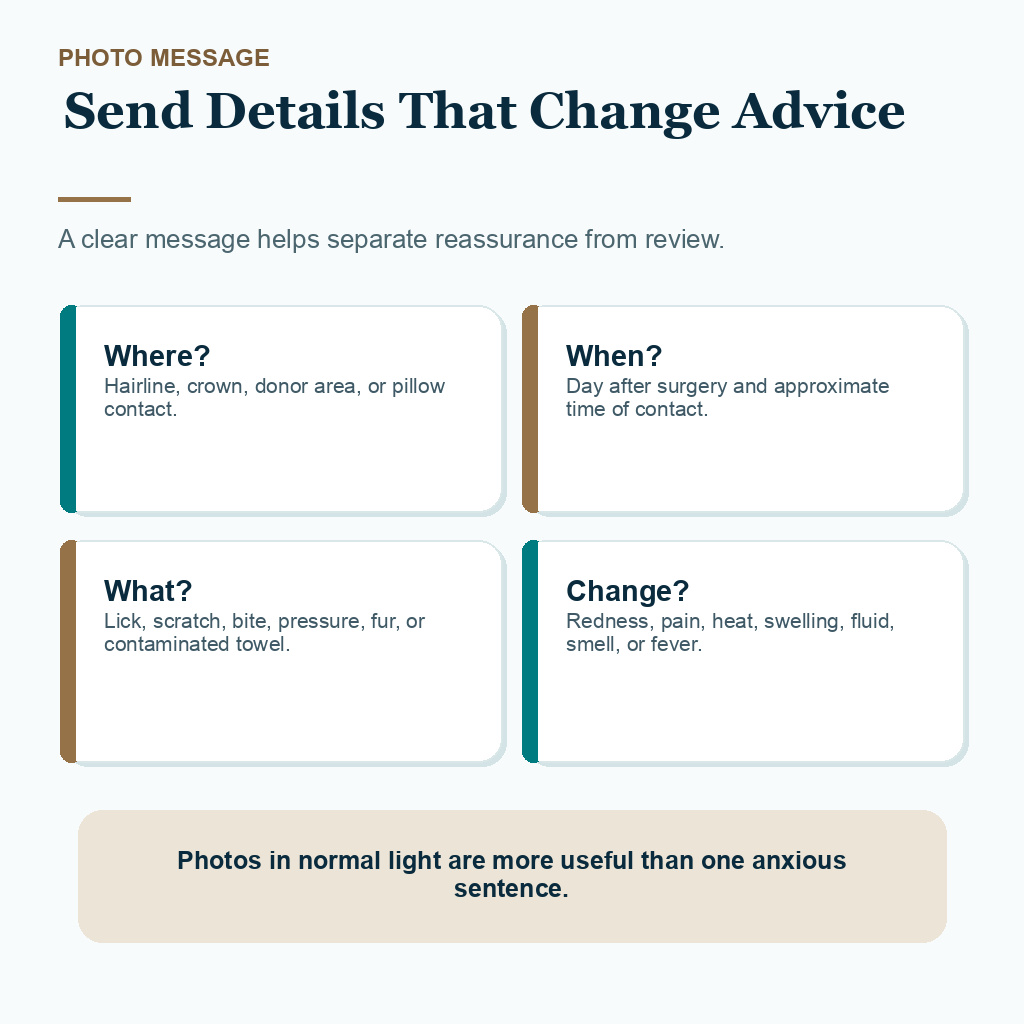
If a pet touches, scratches, licks, or sleeps against the scalp, the useful message is location, timing, skin change, and symptoms.
Details to send after pet contact
Send one close photo and one wider photo. Say the day after surgery, the exact location, what happened, whether there was licking, scratching, bleeding, pressure, or fur contact, and whether the skin looks different from before. Also mention pain, heat, redness, swelling, drainage, smell, fever, tenderness, or a spreading scratch line.
Keep the message short and concrete. For example, “day three, cat paw touched right hairline, no bleeding, no pain, no redness, washed hands, no further contact.” Or, “day two, dog licked donor area, mild redness, no fever, photo attached.” That gives the clinic something to judge.
Hair transplant follow up after surgery is more useful when the message contains the event, the timing, the photos, and the symptom trend. A vague panic message makes it harder to separate reassurance from review.
Relaxing pet boundaries after the first nights
The strictest period is usually the first 7 to 10 nights, when accidental contact can matter more and you are still learning how to sleep, wash, and move. After that, many people can relax the rules gradually, but I still do not want scratching, licking, dirty bedding, or rough play near the scalp.
By two weeks, normal life is often easier, but the skin may still be sensitive, itchy, or crusted. If the donor area is irritated or the recipient area still has scabs, keep the boundaries longer. The recovery stage matters more than the calendar alone.
If you already slept on your grafts or had accidental pressure, do not add another uncontrolled variable by letting a pet sleep against the scalp while you are anxious and half awake.
Practical pet rules after FUE
Keep the pet loved, but keep the healing scalp boring. Clean bedding, washed hands after animal contact, a separate sleep space, no licking, no scratching, no pet on the pillow, and no sudden play near the head are enough for most homes. Prepare the pet bed, food, litter, leash, and room boundary before surgery so the first night is not improvised. You do not need fear. You need a routine that removes the obvious risks.
If your dog pulls on the leash or jumps toward your head, arrange help with walks during early recovery.
If contact happens, do not panic clean the area, do not scrape, and do not ask strangers to diagnose a close photo without the timeline. Look at the event, the day after surgery, the location, and the skin response.
The aim is a recovery room that protects the grafts, not a life without pets. Once the early healing window has passed and the skin is quiet, pets can return closer to normal routines without turning every hair or paw touch into an emergency.
Read this review excerpt
First wash completed and visual instructions given to my daughter.