


Minoxidil Around Pets Needs Strict Residue Control
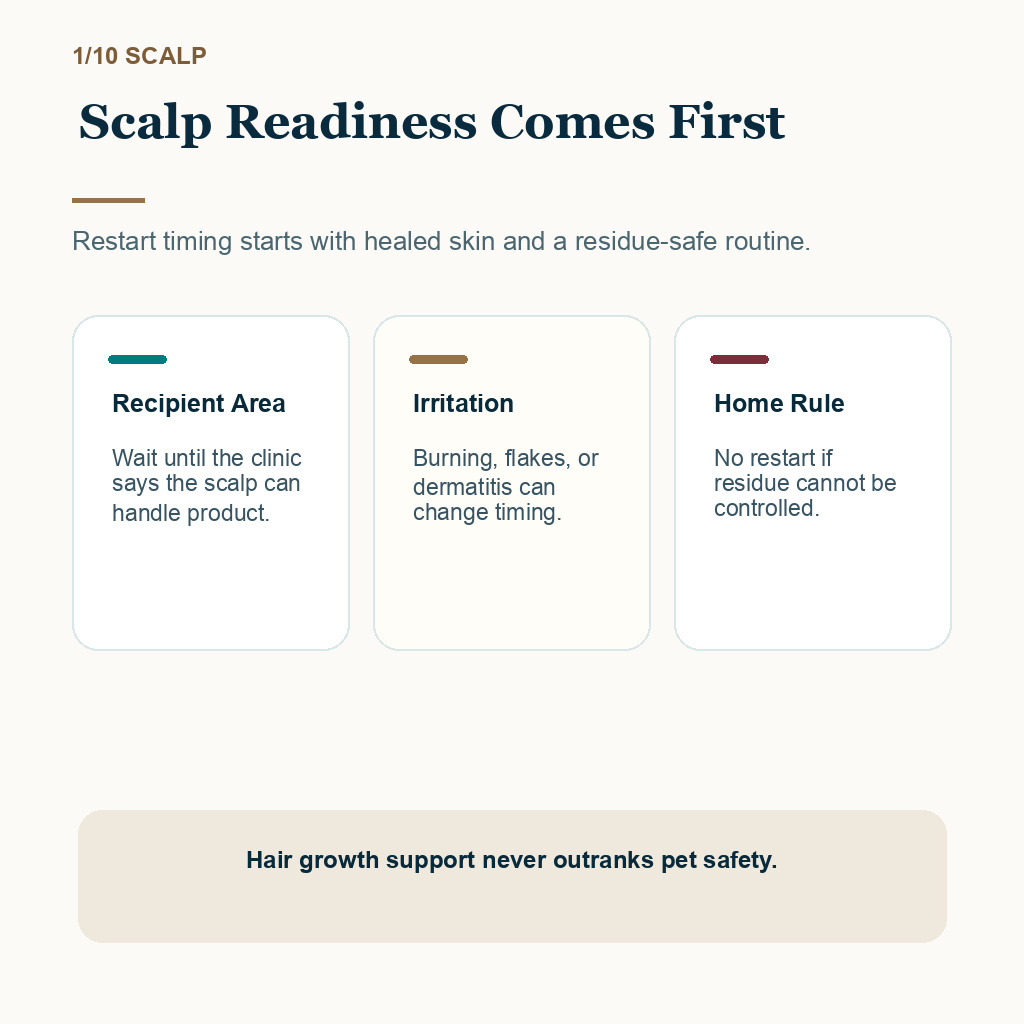
You can use topical minoxidil after a hair transplant only when two things are true. The recipient area must be ready for the product, and your home routine must keep the medicine away from pets every time. If either part is not controlled, I delay topical minoxidil rather than accepting a preventable poisoning risk.
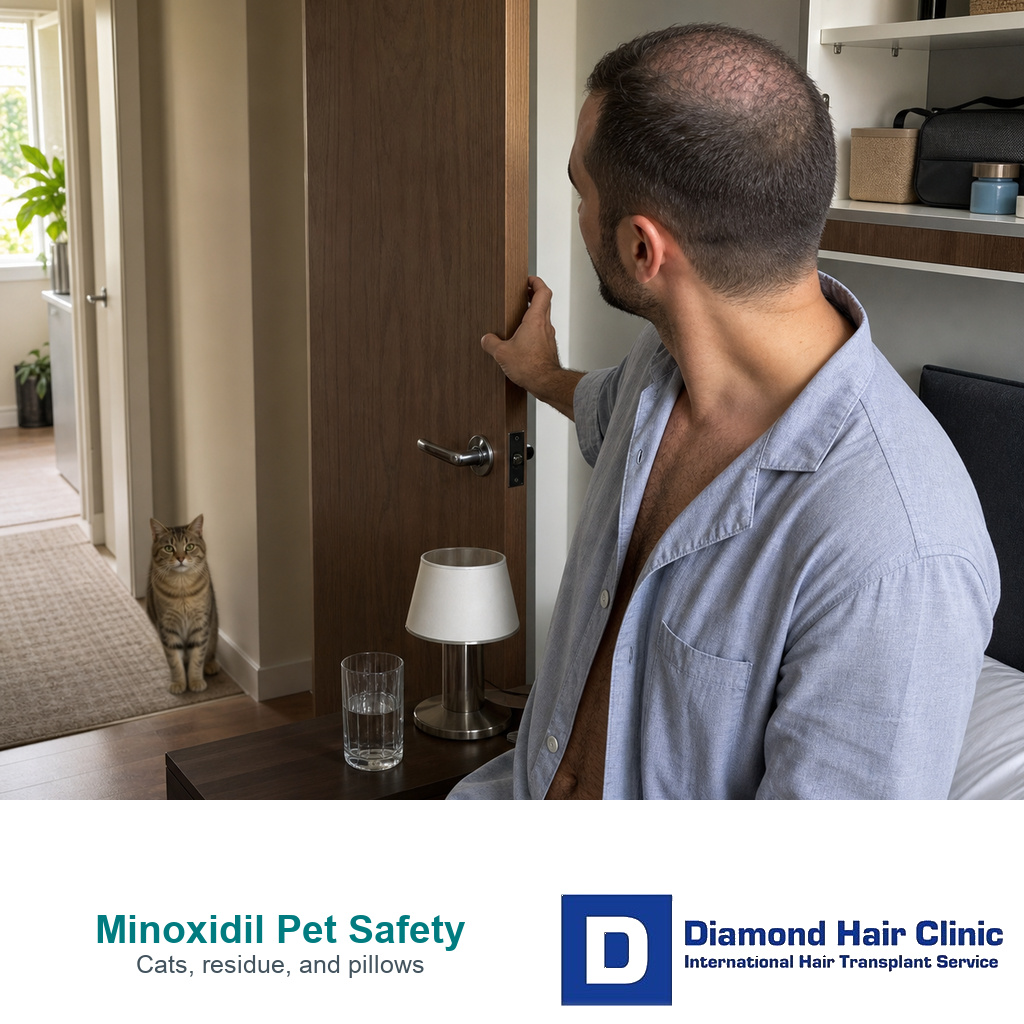
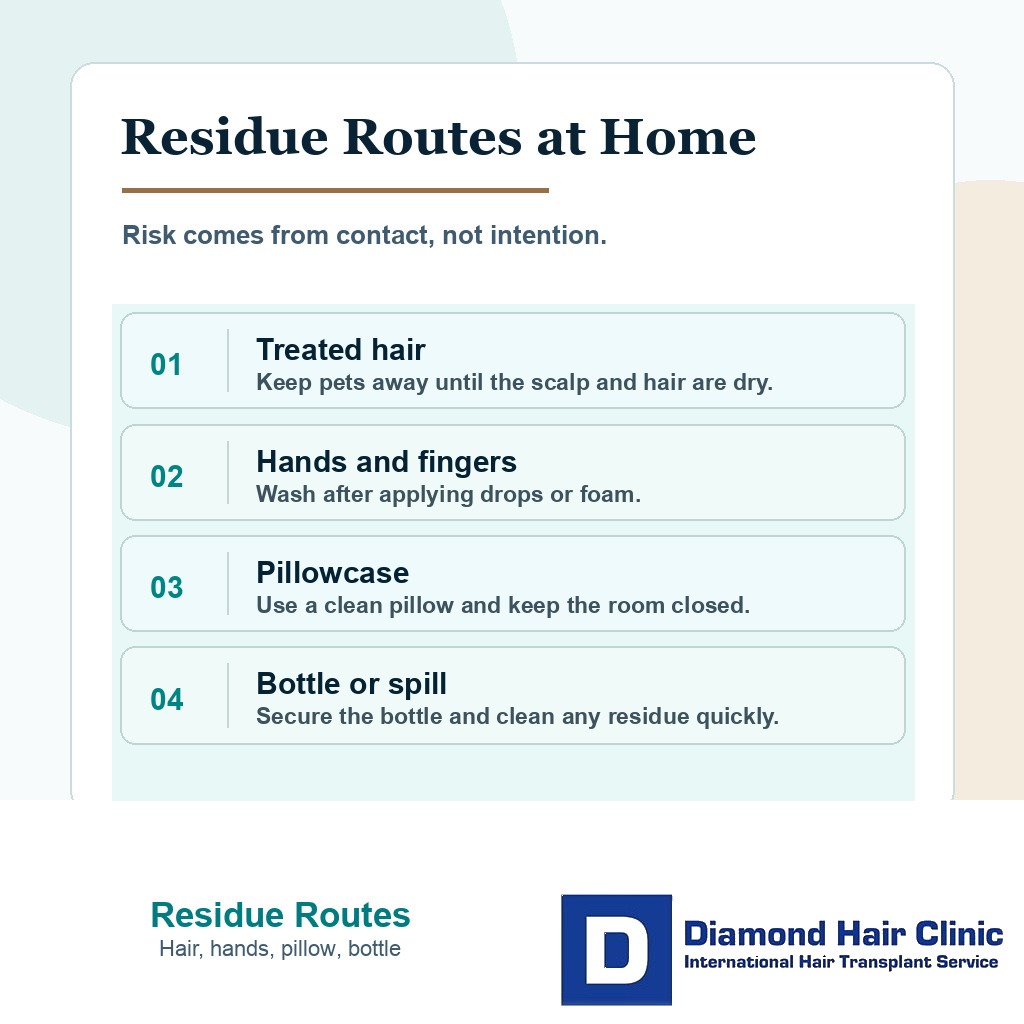
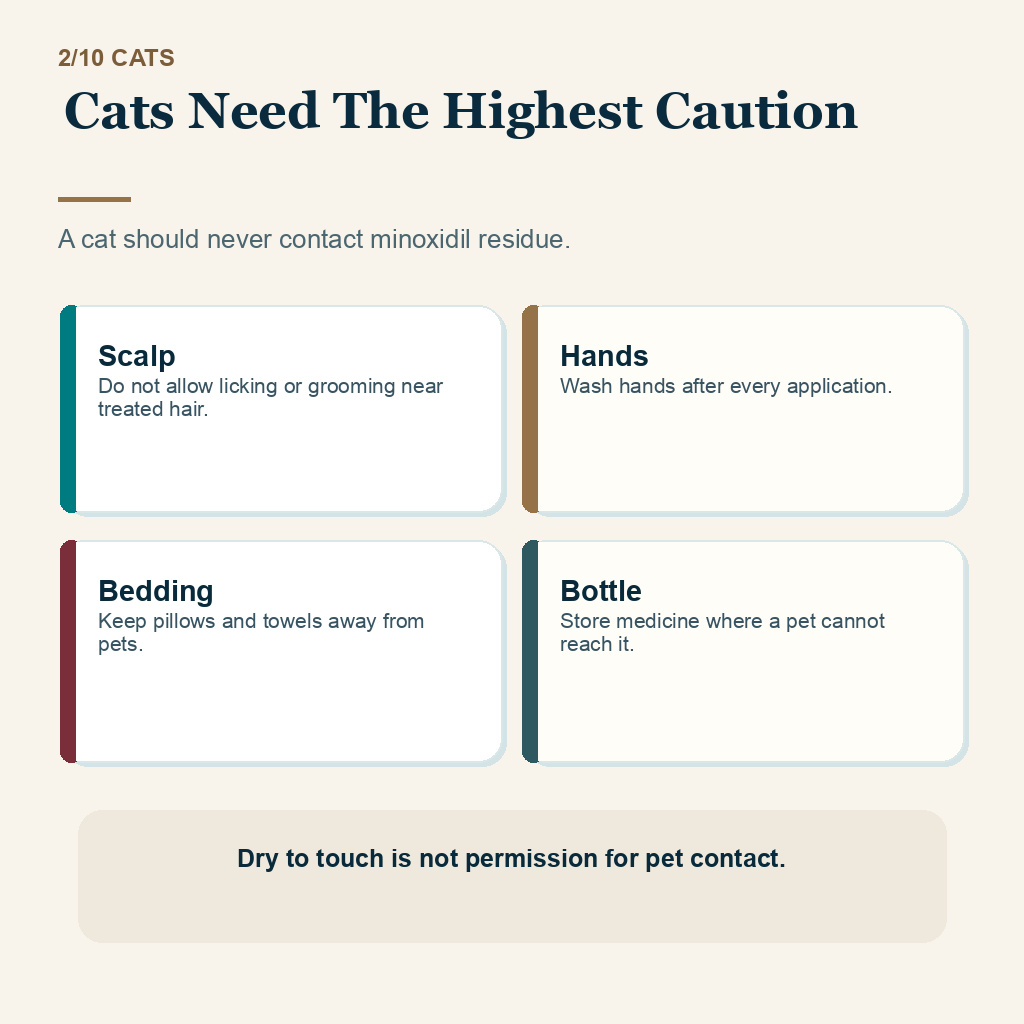
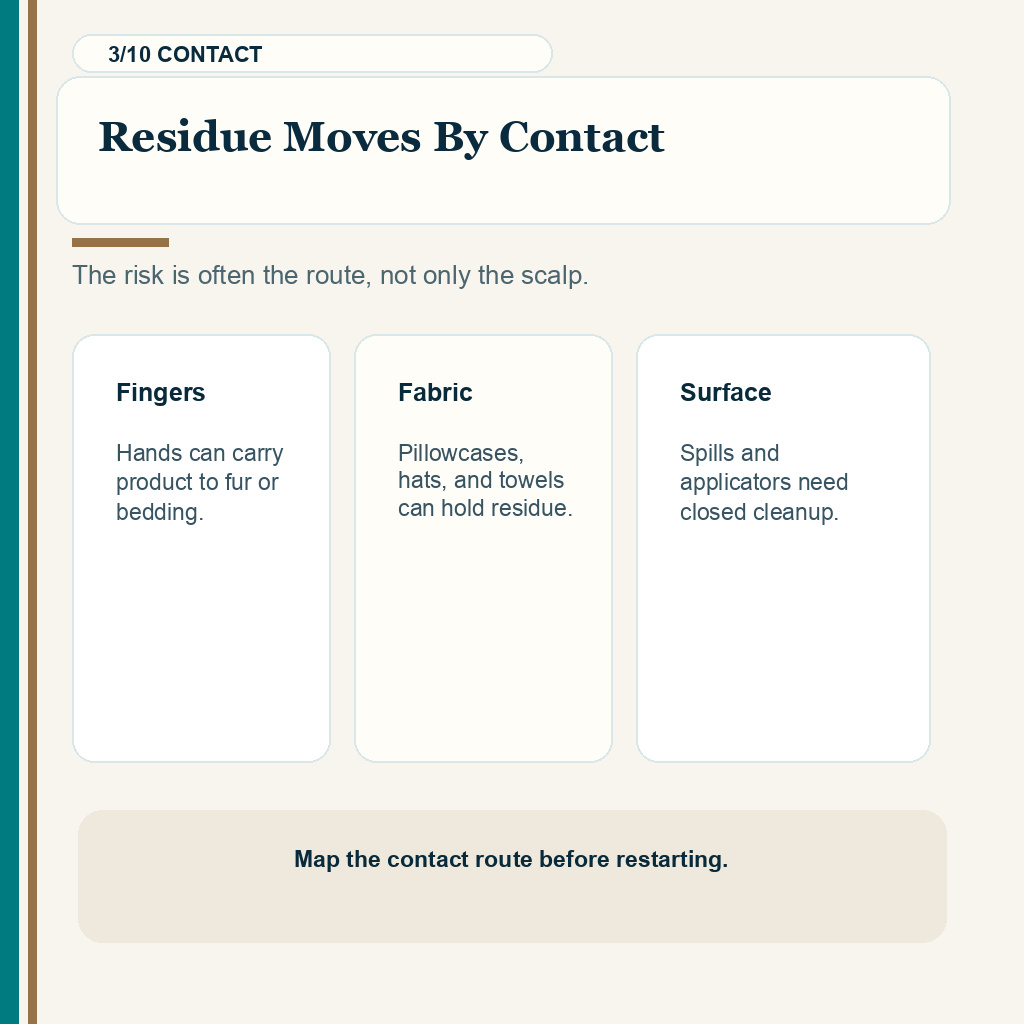
Cats need the strictest caution. Minoxidil residue can reach a cat or dog through treated hair, damp scalp, fingers, pillowcases, hats, towels, bathroom surfaces, spills, applicators, or a pet licking and grooming its own fur after contact. Dry to the touch is not the same as safe pet contact.
If your cat or dog sleeps where your head rests, solve that routine before the first application. Bedding, towels, hands, caps, and bathroom counters can carry residue even when the scalp feels dry.
Plan the first applications around where the pet actually sleeps and walks. Keep treated hair, pillowcases, towels, hands, caps, and bathroom counters out of reach before you restart the routine.
Minoxidil may be useful for native hair in selected cases, but it is not more important than pet safety. I judge restart timing from scalp healing, the exact product, how it is applied, whether the pet has access to your head or bedding, and whether an oral or different medical plan needs review.
Topical minoxidil needs a pet safety plan
After surgery, the scalp is already under strict rules. The recipient area must not be rubbed, scratched, contaminated, or covered with unnecessary products too early. The same early recovery period also changes how you sleep, wash, use pillows, touch your scalp, and share a room with animals. Separate from medication residue, pets after FUE also need graft contact and clean bedding boundaries.
Topical minoxidil is not only a hair growth medicine in this setting. A liquid or foam placed on the scalp can remain on hair and skin while it dries, then move to hands, towels, pillowcases, sinks, counters, floor drops, bins, and laundry. If a cat licks treated hair or walks through a spill, the situation is no longer only scalp care. It becomes a veterinary emergency question.
The general timing of minoxidil after hair transplant still matters. The scalp must be healed enough for the product, and the clinic must know when you restarted it. Pet safety adds one more condition. The product has to stay controlled inside the home.
Cats need the highest caution
Cats are the main concern because topical minoxidil exposure can cause severe poisoning. Dogs can also be affected, but cats appear especially sensitive. Warning signs may involve weakness, vomiting, breathing difficulty, collapse, bluish gums, low body temperature, heart or blood pressure changes, and fluid around the lungs. A hair transplant clinic does not treat animals, so any suspected exposure belongs with a veterinarian or animal poison control service immediately, even if the cat still looks normal.
This needs plain wording because cat owners often hear two opposite stories. One person says his cat slept near him for years without a problem. Another describes a frightening exposure after licking, rubbing, or a pillowcase contact. The first story does not prove safety. It only means the contact route, dose, timing, grooming behavior, and luck were different.
Treat topical minoxidil as a medicine that must not reach the animal. That means treated hair and bedding, not only the open bottle.
Contact points that can expose a cat or dog
The obvious route is a cat or dog licking the scalp soon after application. The less obvious routes are the ones people miss. A cat may rub against the side of the head, chew hair, lick fingers, sleep on the pillow, touch a towel, or walk through a bathroom spill and then groom its paws. A dog may lick your face or hands, chew packaging, search the trash, lick a bathroom floor, or find a dropped tablet.
Residue control has to include the bathroom surface, pillowcase, towel basket, laundry bag, floor, and bin. Topical minoxidil instructions often mention scalp only use, hand washing, and allowing the product to dry before lying down. With pets in the home, those instructions become a safety boundary. Damp residue on a pillow is not a small detail if a cat sleeps there.
The article about blood on the pillow after a hair transplant is relevant for the recovery environment. Pillows are not only about pressure or bleeding. They can also carry medicine residue if topical treatment is used too close to sleep.
Restarting topical minoxidil when you have pets
The scalp question comes first. I do not want topical minoxidil placed on fresh grafts, open skin, heavy scabs, active irritation, or a recipient area that is still being washed very gently. The timing depends on the operation, healing speed, and the clinic protocol. A planned pause and restart are part of stopping minoxidil before a hair transplant, because random timing can confuse shedding, irritation, and recovery.
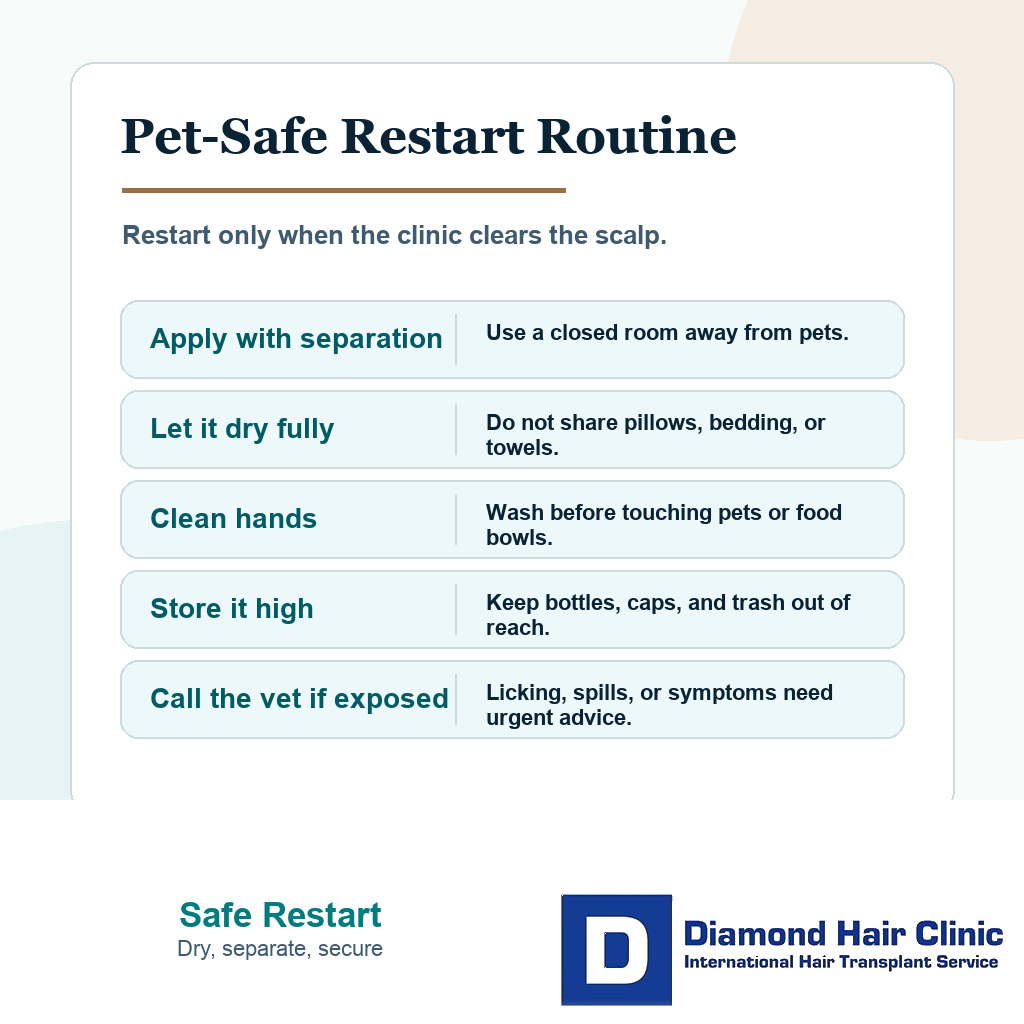
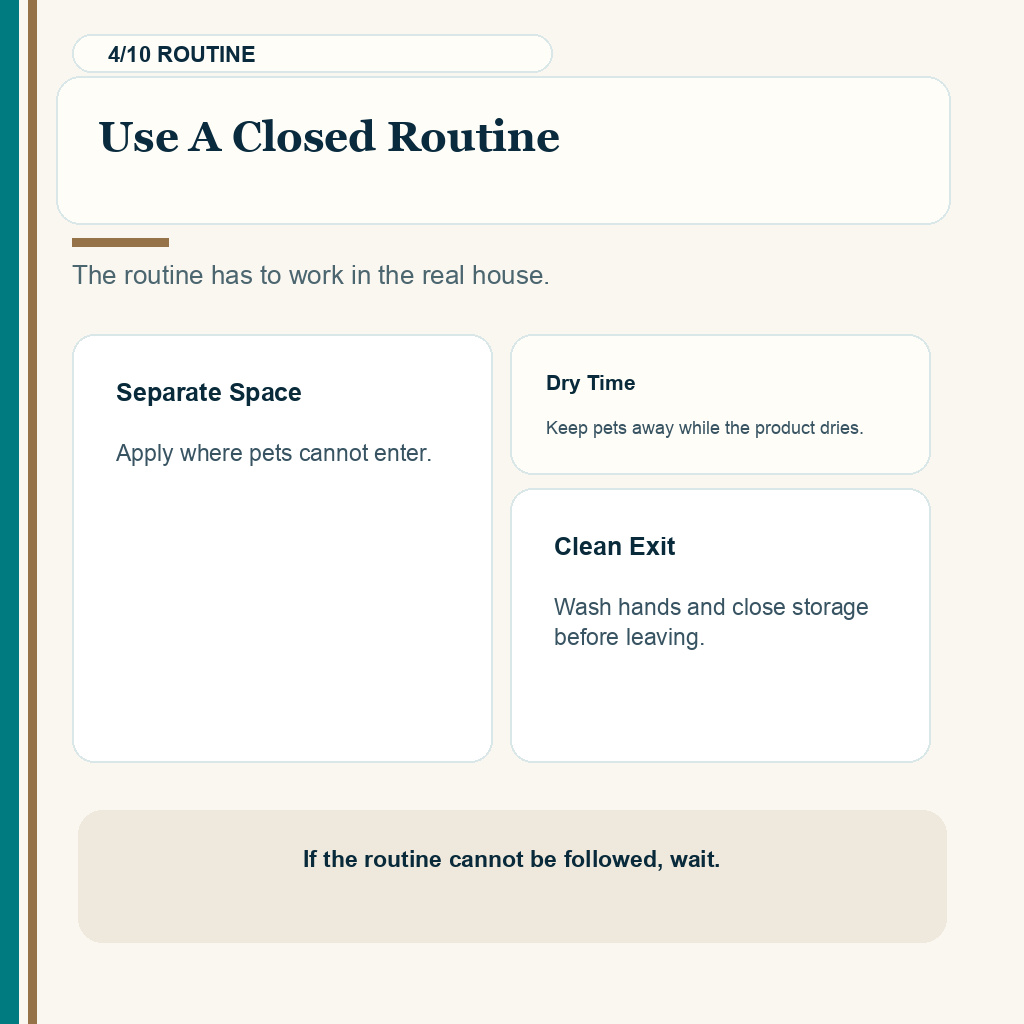
Restarting topical minoxidil safely in a home with a cat requires a closed application room, careful hand washing, and no pet contact with the treated scalp while it dries. Keep residue away from pillows, towels, sinks, counters, floors, bins, and laundry, and store the bottle and applicator in a closed cabinet.
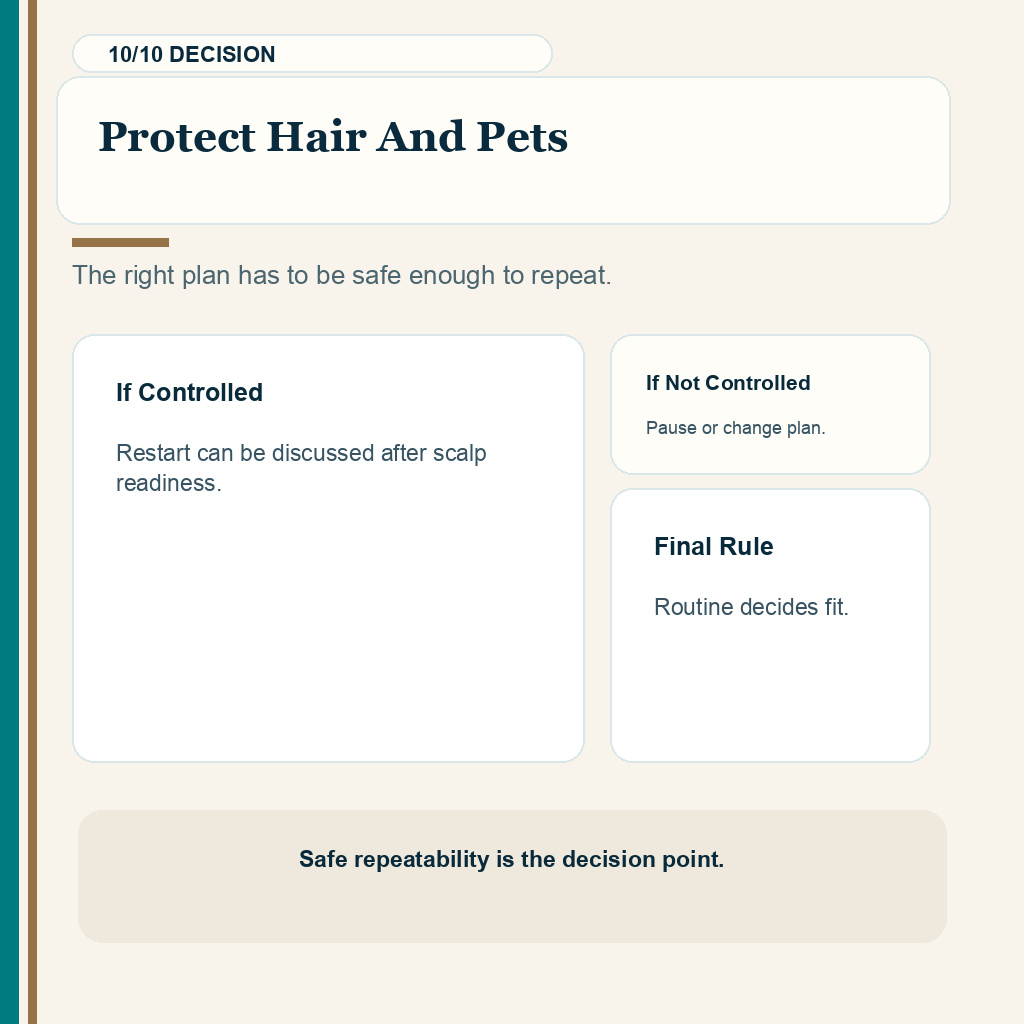
If that routine is not realistic yet, restarting topical minoxidil may need to wait even if the scalp is technically ready. The restart date is not safe until both the scalp and the household routine are ready.
Routine that lowers risk before the first application
Build the routine before the first application. Apply the product with the pet outside the room. Use only the amount your doctor has advised. Keep the product on the scalp, not dripping down the forehead, temples, pillow, neck, or donor area. If the product sprays, mists, or drips easily, control overspray before it reaches the sink, mirror, counter, floor, or towel.
Wash your hands with soap and water immediately. Close the bottle tightly and store it in a closed cabinet. Clean any spill at once. Put applicators, cotton pads, tissues, and packaging into a closed bin or sealed bag before a pet can reach them.
Drying time matters, but drying time alone is not enough. If you apply topical minoxidil at night and then lie down while it is damp, the pillow becomes part of the exposure route. If a cat sleeps near your head, night application may be a poor fit unless the animal stays out of the bedroom, the pillowcase is changed or protected, and treated hair is not available for licking. A loose cap or bonnet can help some people later, but it must not press or rub fresh grafts.
The same practical thinking appears in washing normally after a hair transplant and sleeping normally after a hair transplant. Early recovery is not only a list of rules. It is a routine that protects the grafts, the scalp, and in this case the animals in the home.
Oral minoxidil and pet owners
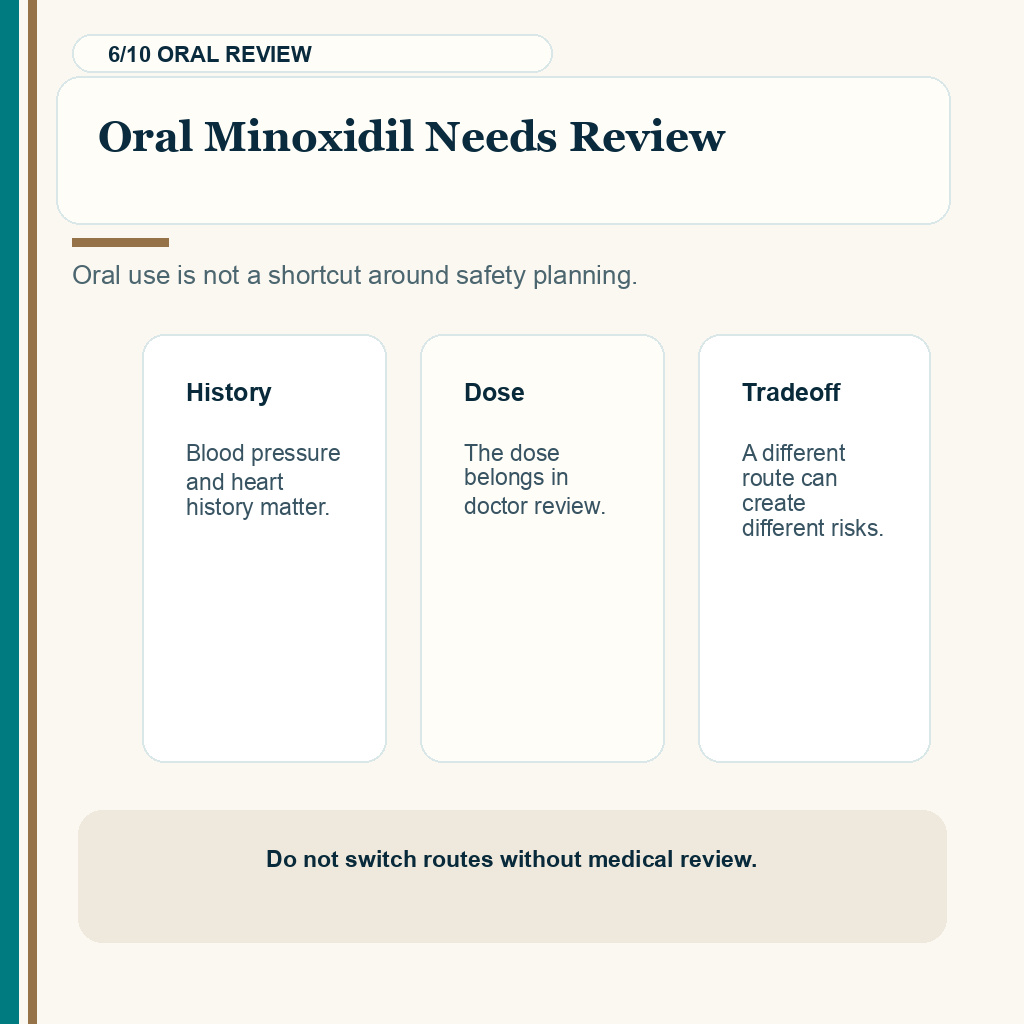
Oral minoxidil removes the wet scalp residue problem, but it is not a casual substitute. It can affect blood pressure, heart rate, swelling, dizziness, and unwanted body hair in some people. It needs proper medical review, especially with blood pressure issues, heart history, fainting, other medications, surgery day anxiety, or previous palpitations.
From the pet side, tablets still need closed storage. A chewed or dropped tablet is also a poison control question, not a harmless household accident. For a cat owner who cannot safely control topical residue, a doctor reviewed oral option may be worth discussing, but switching is not a self directed decision.
Oral minoxidil before or after hair transplant still needs dose selection, monitoring, and medical history review. I also want to know about faintness, ankle swelling, chest discomfort, palpitations, and other medicines before oral treatment is used as the pet safety workaround. Do not trade one safety problem for another.
If a pet may have been exposed
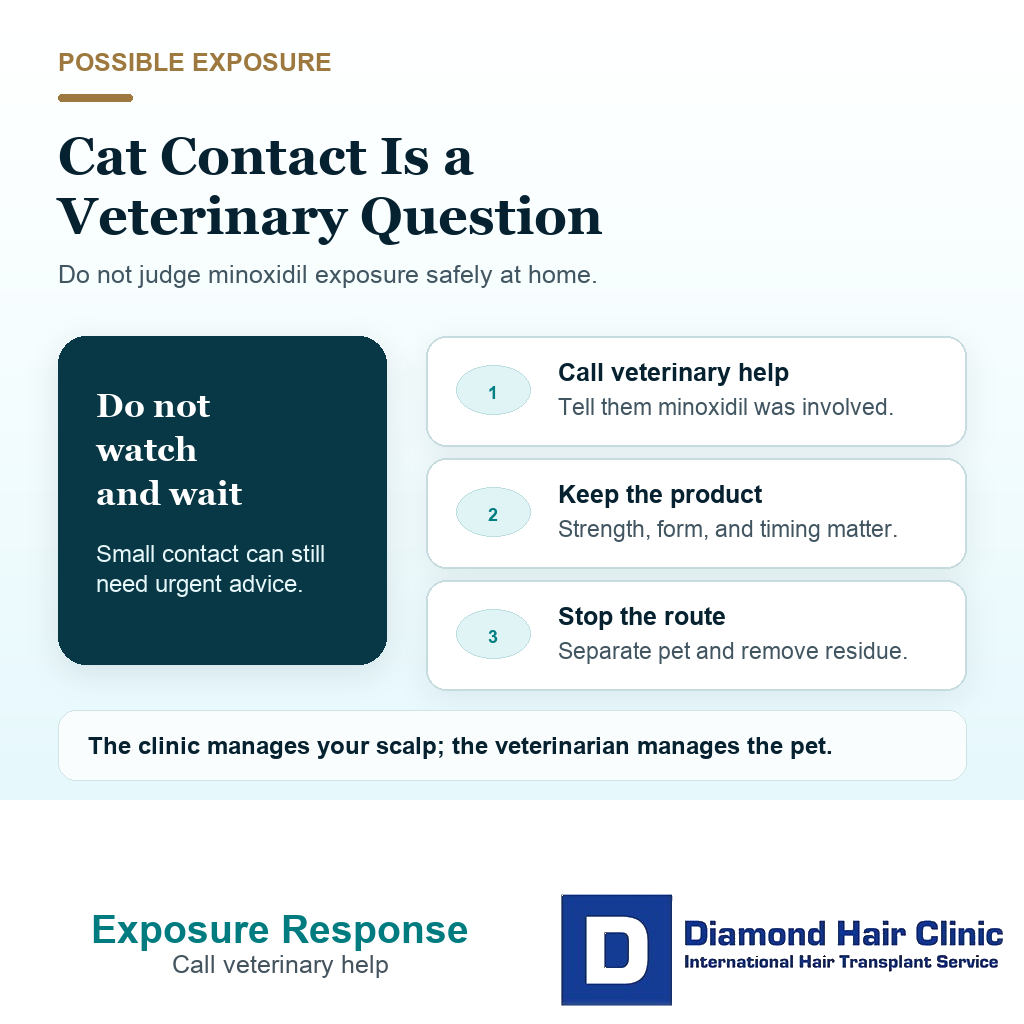
If a cat or dog may have touched, licked, or swallowed topical minoxidil, do not wait to see whether everything looks fine. Contact a veterinarian, emergency veterinary clinic, or animal poison control service immediately. Tell them the active ingredient, strength, form, amount if known, timing, and how the exposure may have happened. Mention any vomiting, unusual weakness, breathing difficulty, bluish gums, collapse, sudden quietness, or contact with a pillowcase, spill, applicator, bottle, or chewed packaging.
The hair transplant clinic can help you decide what to do with your own scalp routine after the incident, but it cannot judge whether a pet needs monitoring or treatment. That part belongs to veterinary professionals. Keep the product packaging available because the concentration and ingredients matter.
Stop the exposure path, but do not try to treat the pet at home unless a veterinarian tells you to do so. Do not induce vomiting, give home remedies, or delay veterinary advice while trying to clean the animal yourself. Remove the pet from the room, cover or remove contaminated bedding, wash skin that has residue if your transplant stage allows it, and avoid applying more minoxidil until the clinic and the veterinarian have each given the right instructions for their part of the problem.
Dogs need the same residue control
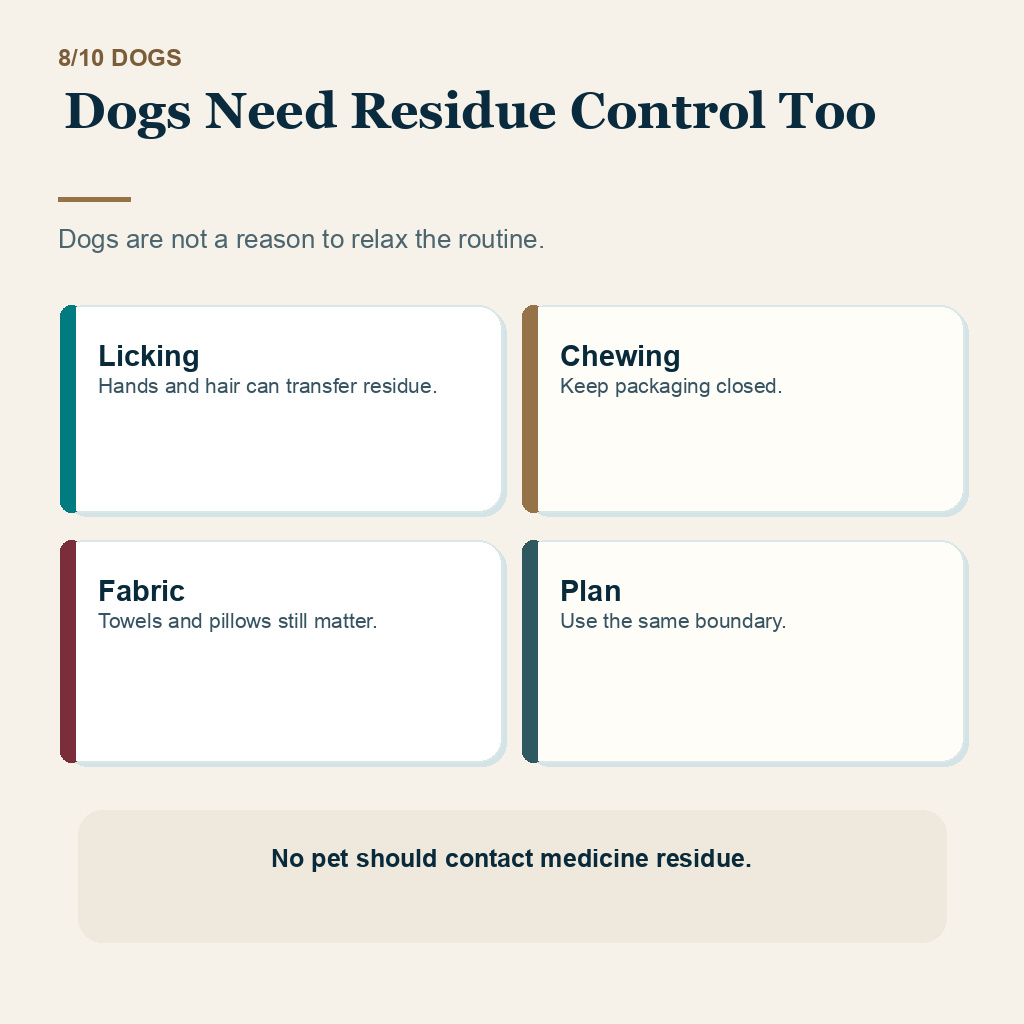
Dogs are usually discussed with less alarm than cats, but a dog still should not lick topical minoxidil from a scalp, hand, pillow, towel, or spilled bottle. Dog behavior can create different exposure routes. A dog may lick your face or hands, chew packaging, search the trash, lick a bathroom floor, or find a dropped tablet if oral medication is stored carelessly.
The practical boundary is the same. No pet should have access to the medicine, applicator, wet scalp, treated hair, contaminated pillowcases, towels, or residue. Cats deserve special caution because of sensitivity, but dogs are not a reason to relax the rules.
If any pet in the home licks, chews, sleeps near your head, or enters the bathroom during your routine, plan before restarting. The recovery plan should fit the real house, not an ideal version of it.
Details the clinic should know before minoxidil restarts
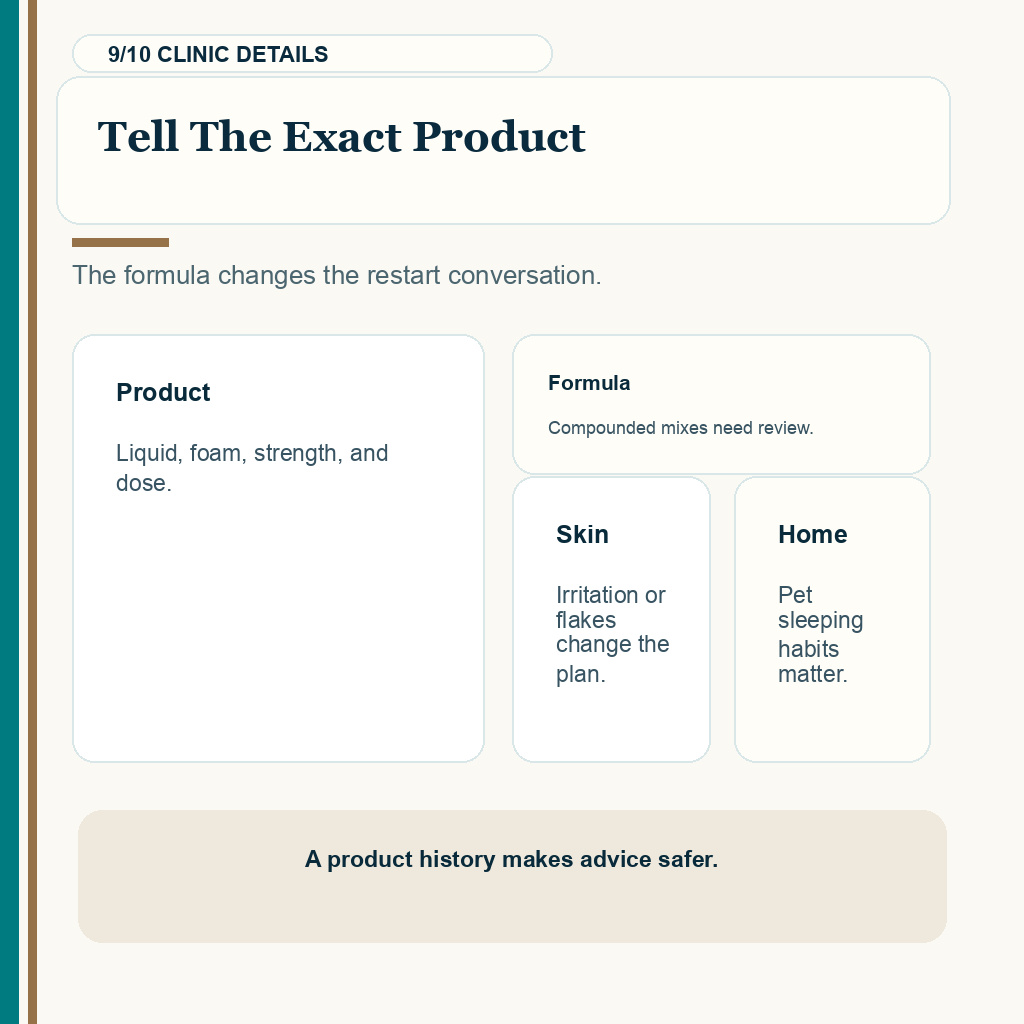
Share which minoxidil product you use, whether it is liquid or foam, the strength, the dose, the usual application time, and whether a pet sleeps in the bedroom or has contact with your hair. Also mention scalp irritation, itching, dandruff, eczema, or any product that makes the scalp burn. Those details sit inside the same safety logic as medication before a hair transplant, even when treatment feels routine.
If the product is high strength, compounded, mixed with finasteride, dutasteride, tretinoin, or bought through an online service, bring the exact formula. Bring that same history when reviewing online hair loss topicals before FUE, because strength, vehicle, irritation, and residue handling can all change the surgical timing conversation.
After surgery, also share that with the clinic if you are using antibiotics, pain medicine, sleeping tablets, blood pressure medicine, or other treatments. Medications after a hair transplant matter too, but minoxidil has its own household exposure issue.
If you had a heavy shed after stopping minoxidil, mention that too. Heavy shedding can overlap with minoxidil shed and transplant timing, so the clinic needs to separate medication shedding from transplant growth anxiety while still protecting the home from residue exposure.
These 10 slides keep minoxidil use around pets tied to scalp readiness, cat exposure, contact points, restart routine, oral minoxidil review, emergency steps, and clinic review. Swipe sideways, use the arrows, or choose a number below the image.


Cats make residue control non negotiable
Topical minoxidil around a cat only works when the routine is realistic every day. Application timing, dry scalp, hand washing, closed storage, clean pillows, laundry control, and pet separation all matter.
If that routine cannot be followed, pause the topical product and discuss another medical route. Native hair support is important, but it cannot depend on exposing a pet to residue.
In the early recovery period, hair transplant aftercare still comes first. Restart topical minoxidil only when the scalp is healed enough and the medicine can stay away from the animal every time.

Read this review excerpt
Diamond Hair was the only clinic asking for medications, treatments I've done before, and other type of questions that make me feel confident on the professionalism that they practice with their clients.