


Minoxidil Timing Needs a Clear Surgical Plan
Do not stop or restart minoxidil around a hair transplant without a clear plan. For topical minoxidil, I usually want a short pause before surgery so the scalp is clean, dry, and not irritated. Oral minoxidil is different because it is a systemic medication, not a scalp product. Any change close to surgery should involve the prescribing doctor and the operating surgeon.
One bottle or one tablet is not enough information for this decision. I need to know why you use minoxidil, how long you have used it, whether it helped, whether it caused shedding or irritation, and whether you can realistically continue it after surgery.
Name the form before timing the pause. Foam, liquid, compounded mixes, and oral tablets can lead to different instructions, and the restart plan should be written down before the surgery date.
If oral minoxidil is missing from a clinic message, do not read the omission as a decision to continue or stop it. Have the operating surgeon review the exact tablet and dose, and involve the prescriber before anything changes. A coordinator can collect your medicine list, but that is not the same as the clinician responsible for the decision reviewing it.
A short planned pause is very different from stopping for months out of fear. A short pause protects the scalp around surgery day. A long stop can sometimes create unnecessary shedding, more anxiety, and a less stable view of your native hair.
Minoxidil can support hair growth, but it does not stop genetic hair loss by itself. A hair transplant moves stronger donor hair into thinning areas. It does not freeze the future of the native hair around those grafts.
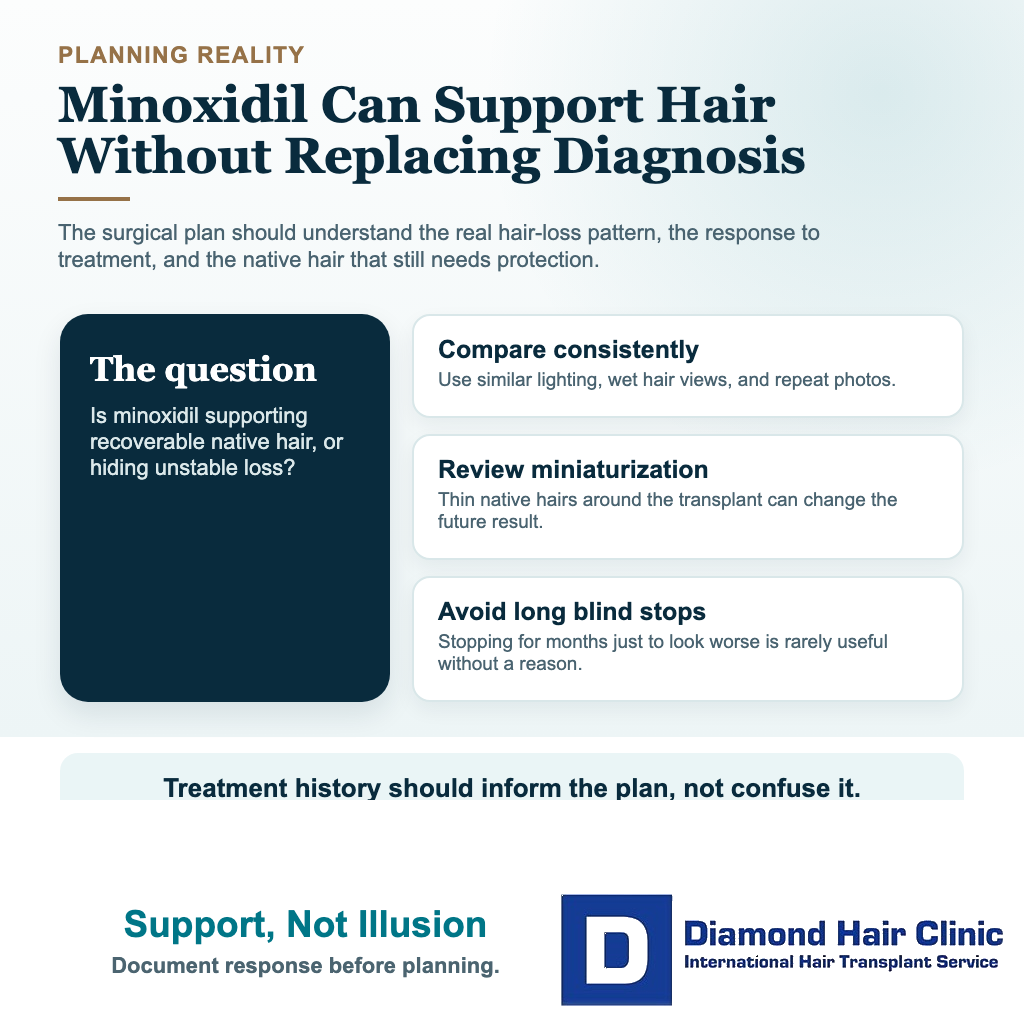
Topical and oral minoxidil need different handling
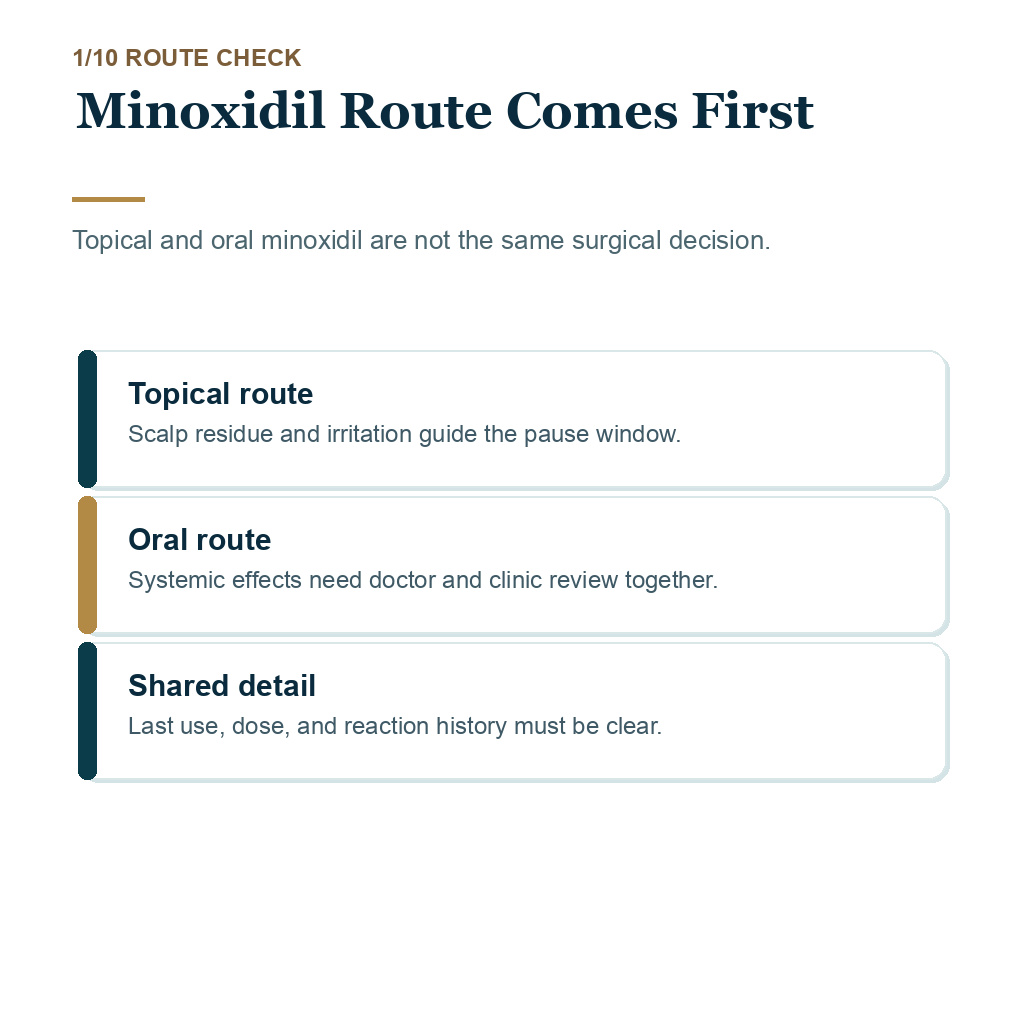
Yes. Topical and oral minoxidil should not be treated as the same surgical decision.
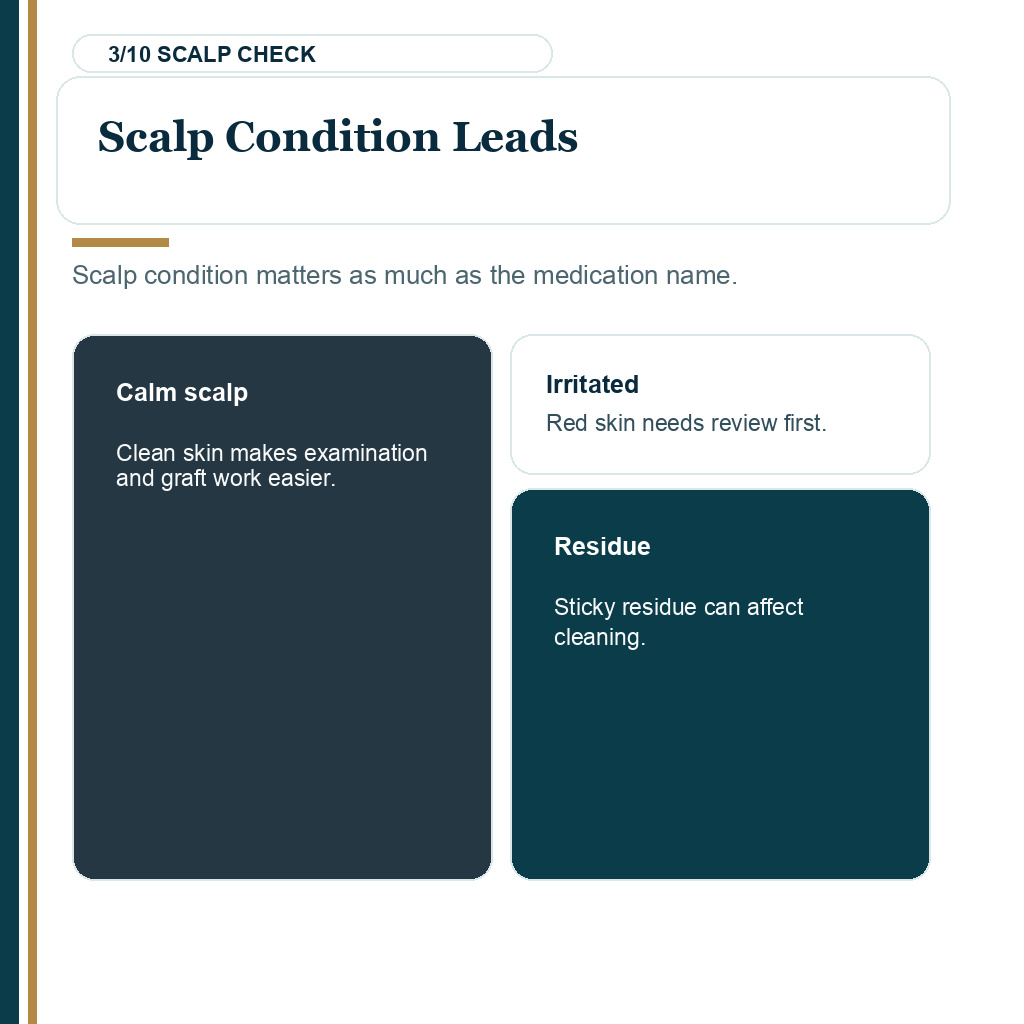
Topical minoxidil is mainly a scalp condition and timing issue. It can leave residue, dryness, flakes, stickiness, or irritation. Before surgery, I want the scalp easy to examine and comfortable to work on, so a planned pause can make sense.
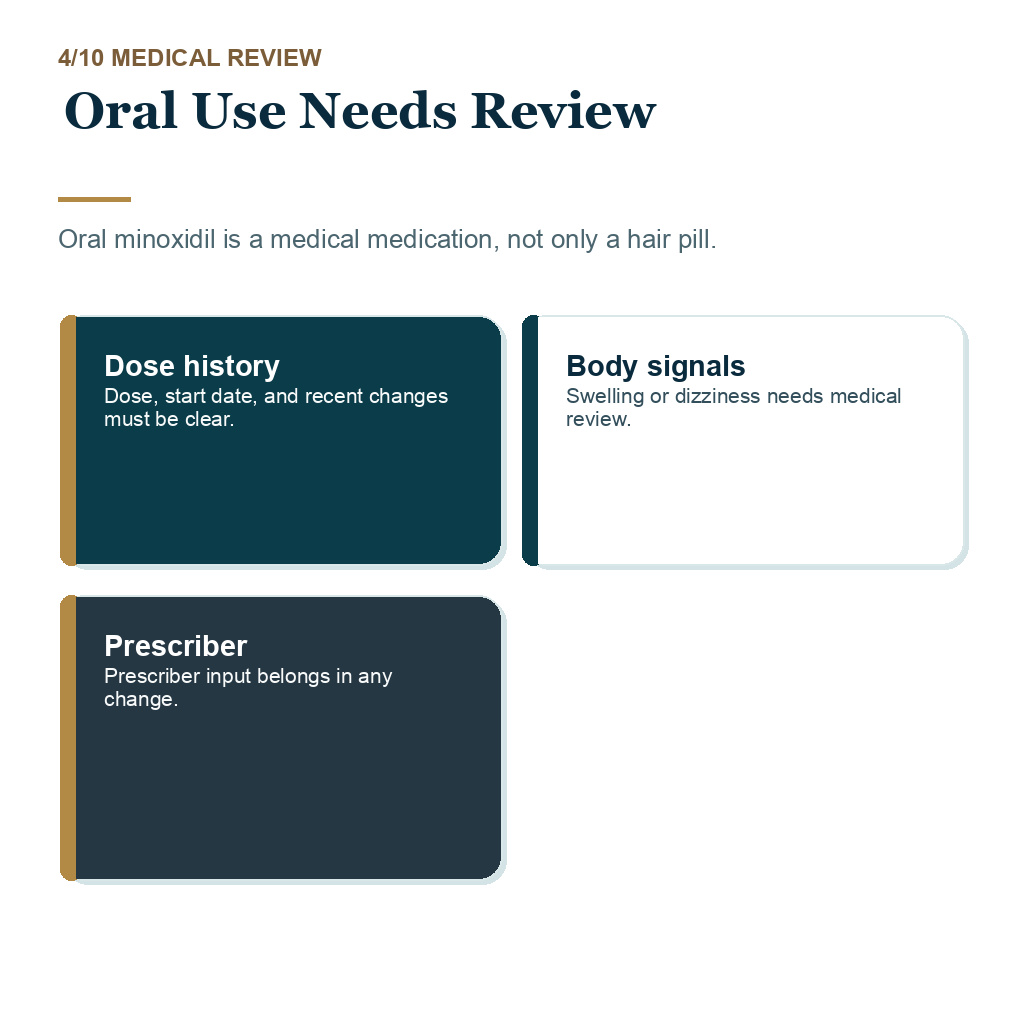
Oral minoxidil is different because the tablet can affect the whole body. In low doses many people tolerate it, but it can still affect blood pressure, heart rate, dizziness, swelling, and fluid balance in some cases. A stable dose used for months is not the same as a new tablet started just before travel and surgery.
If you take oral minoxidil, do not hide it because you think it is only a hair pill. I need the dose, start date, recent dose changes, blood pressure history, heart history, swelling history, and the name of the doctor who prescribed it.
Stopping minoxidil before surgery can make shedding worse
It can, especially if the stop is long or if your hair was depending on minoxidil support. That does not mean you must apply topical minoxidil until the morning of surgery. It means the pause should be planned, not emotional.
A successful taper in one person does not make stopping minoxidil safe for everyone. Finasteride and native hair protection can still matter, but finasteride and minoxidil support hair through different mechanisms. Hair that became minoxidil dependent can shed after minoxidil is stopped even if finasteride continues.
Someone who has never used minoxidil should not start or stop products around surgery just to copy another routine. The medication discussion should fit diagnosis, skin tolerance, heart or blood pressure history, and the transplant plan.
Do not borrow another patient’s minoxidil stop schedule. The same advice can be reasonable for one scalp and wrong for another if the product, irritation, shedding history, or oral dose is different.
If a stop is needed, the timing should be planned around the surgical date, the scalp condition, and the prescribing doctor. A clear record of when minoxidil changed, how the shedding behaved, and whether the photos show temporary cycling or a lower baseline is more useful than guessing after the scalp looks thinner.
If you have used minoxidil for months and it clearly helped, stopping for many months just to see a worse version of the scalp is rarely useful. Good photos, wet hair views, donor examination, magnified assessment, and a truthful medication history usually give more useful planning information than forcing a long break.
Here is the practical distinction. A short pause for a clean scalp is about surgery day. A long stop can change the hair cycle and make the surgical map more unstable. If you are already in unnecessary shedding just before surgery, I may want to understand whether the visible pattern is stable enough before graft numbers are fixed.
The recipient map does not become more accurate just because minoxidil is stopped suddenly. If the medicine was supporting weak native hair, a forced break can make the scalp look emptier without proving which hairs are permanently gone. The cleaner route is a short planned pause when the surgeon needs one, with the treatment history still included in the graft plan.
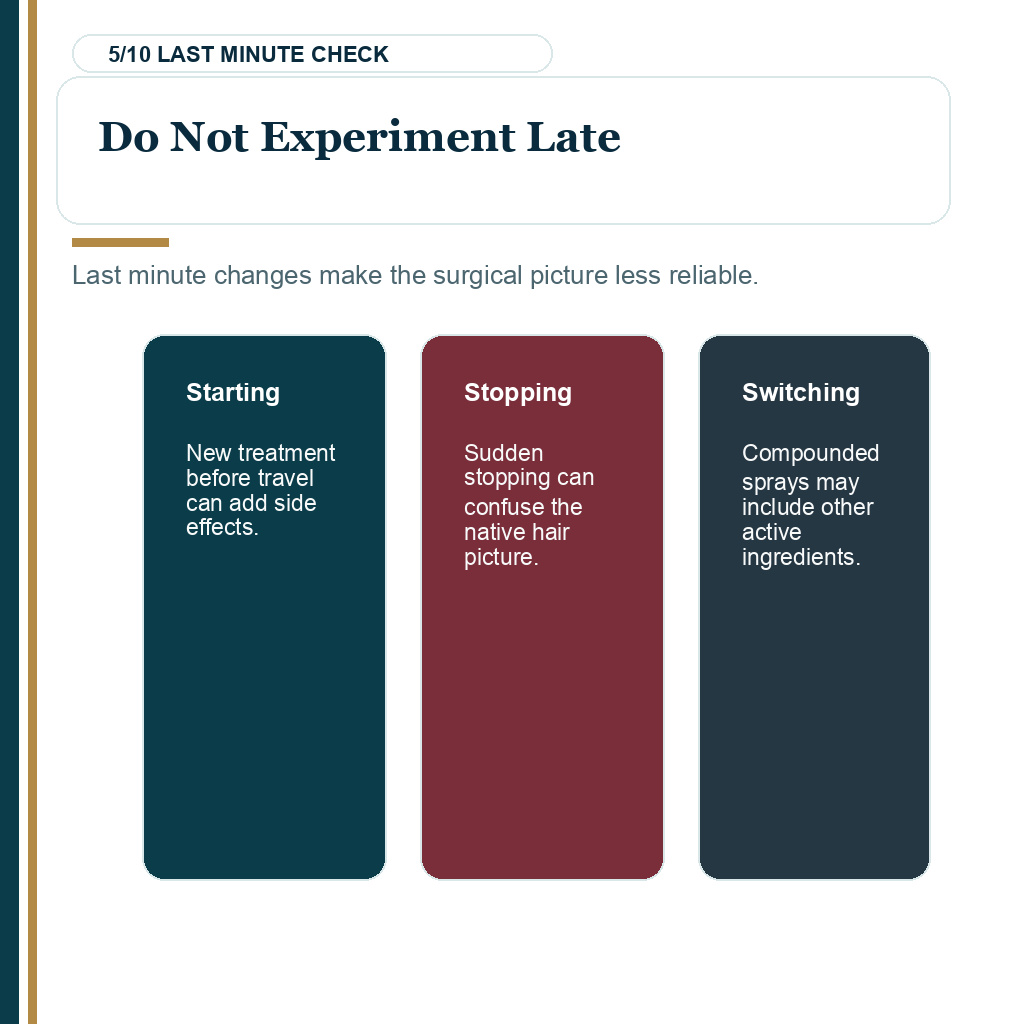
Last minute experiments create the wrong kind of uncertainty. Starting, stopping, doubling, or switching products shortly before surgery can make it harder to know what the scalp is really doing.
Minoxidil can hide the real hair loss pattern
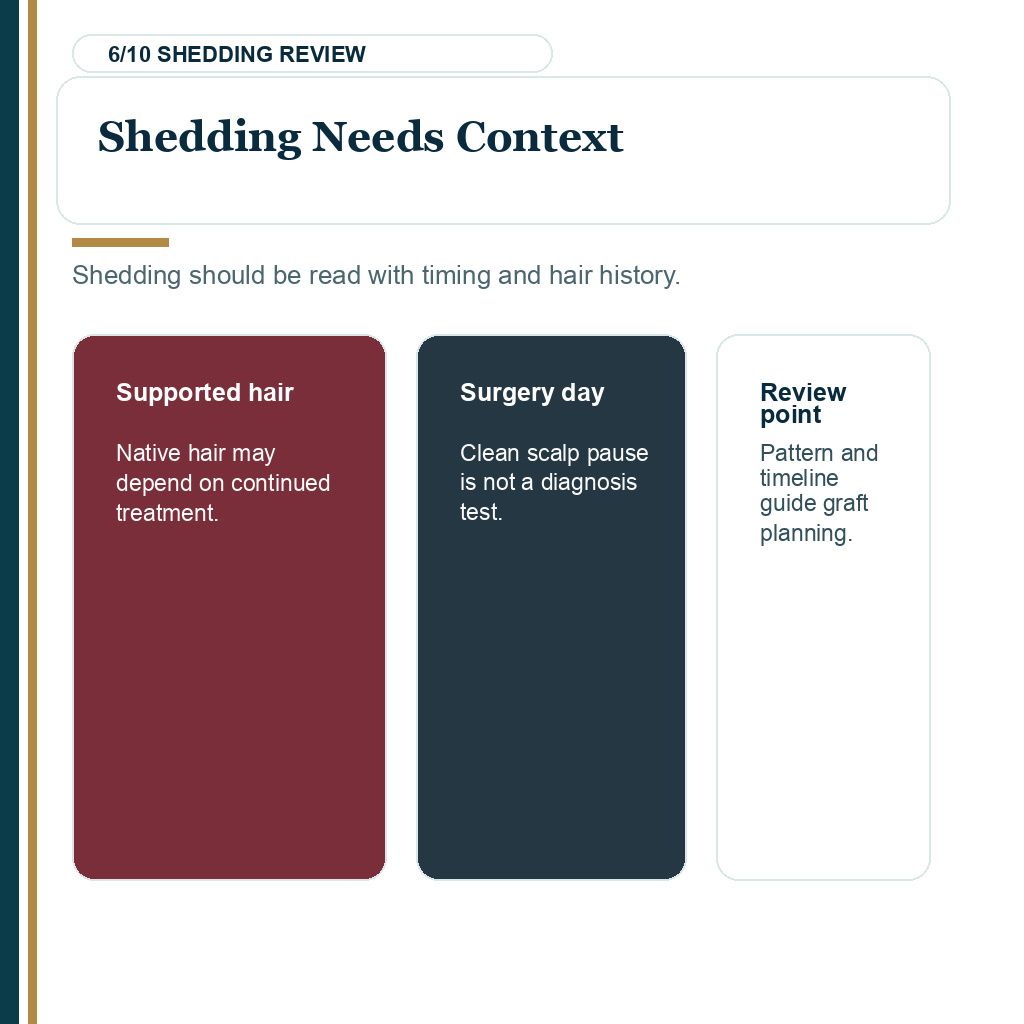
Minoxidil can improve hair caliber and support the growth cycle in hairs that are still alive. That supported hair is real, but it may depend on continued treatment.
Minoxidil can be part of the history, but it should not hide the diagnosis. When I examine someone for surgery, I look at age, family history, donor quality, miniaturization, hair caliber, scalp contrast, crown risk, and future hair loss pattern. Minoxidil use sits inside that judgment.
If minoxidil has made the crown or mid scalp look stronger, that matters. It may mean some native hair can still be supported. It may also mean the transplant plan should protect future options rather than use grafts aggressively in areas that medication is still helping. In crown work, medication response could delay or reduce crown grafts before the graft count is locked.
Medication before a hair transplant is useful only when it changes the planning conversation. It does not replace donor assessment, hairline design, or long-term thinking.
Topical minoxidil usually needs a pause before hair transplant
There is no single number I apply to every scalp, because irritation, dose, and surgery timing change the pause decision. The timing depends on the product, the application area, irritation, dandruff, dermatitis, alcohol content, stickiness, and the clinic protocol.
For many topical users, the goal is a short window where the scalp is clean and settled. If the scalp is quiet, the pause may be straightforward. If there is burning, redness, flaking, heavy dandruff, or dermatitis, I may want more time and a plan that settles the skin before surgery.
Residue and inflammation are separate problems. A product can be easy to stop for a few days but still leave an irritated scalp if it has been causing dermatitis. Redness, dermatitis, dandruff, or irritation should be reviewed before the operation, not discovered on surgery morning.
When minoxidil irritates the skin
For topical minoxidil, I separate a simple pause from a scalp that is still reacting to the liquid, foam, alcohol base, or added actives. If redness, flaking, burning, or residue remains, the product history belongs in the product irritation before FUE timing review.
The exact product also matters. Plain pharmacy minoxidil is different from a compounded spray that includes finasteride, dutasteride, tretinoin, stronger minoxidil, or other active ingredients. I review online hair loss topicals before FUE because the label can change shedding, irritation, side effects, and restart timing.
Follow your clinic’s instructions before a hair transplant. If the instruction is unclear, ask before changing the routine by yourself.
Minoxidil restart timing depends on healing
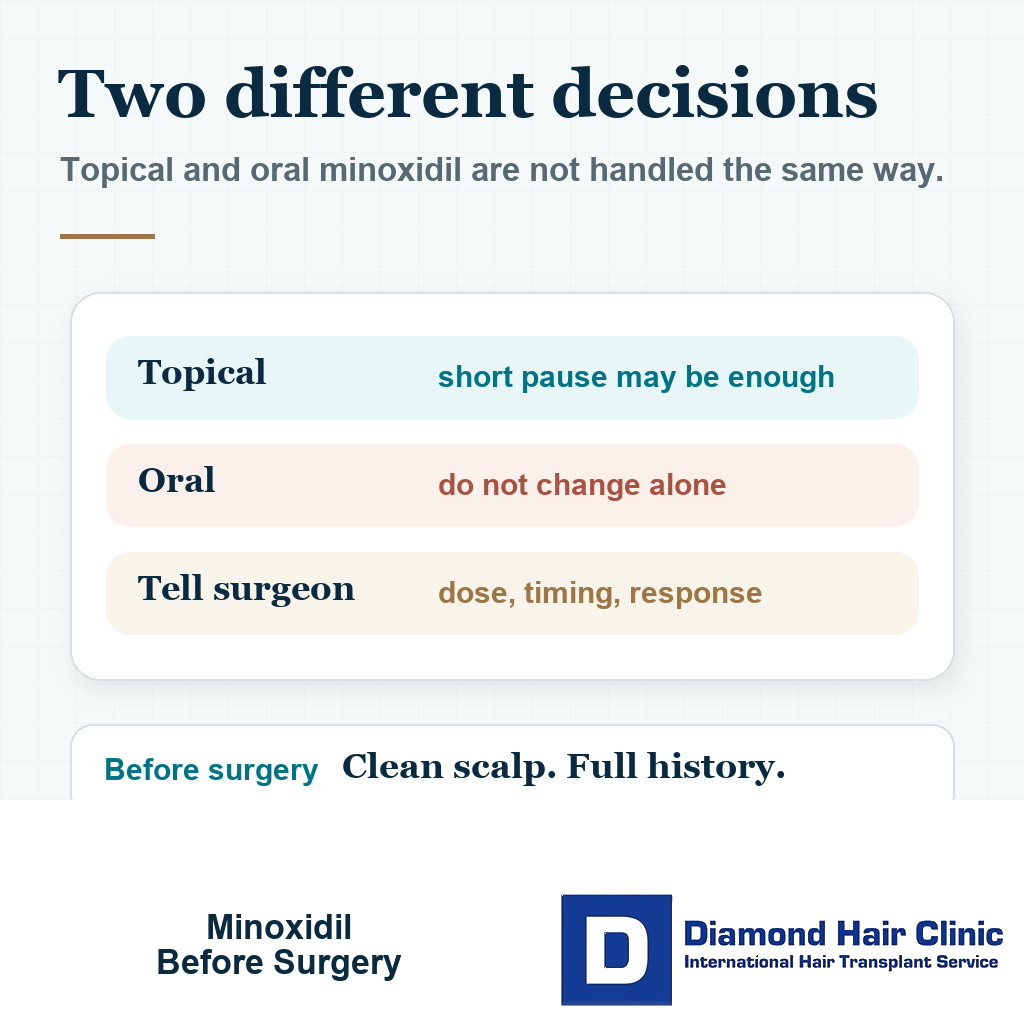
Restart depends on healing, not anxiety. In the first days after surgery, the priority is protecting the grafts, washing correctly, avoiding rubbing, and letting the skin close. A fresh recipient area does not need extra product just because you are nervous about shedding.
I become more comfortable with topical restart when crusts are gone or nearly gone, washing is easy, the skin is not open, and there is no meaningful burning, pain, swelling, discharge, or worsening redness. If topical minoxidil burns on fresh skin, it can create more irritation and more checking in the mirror.
Minoxidil after a hair transplant should be part of maintenance, not an emergency rescue. It can support vulnerable native hair in the right person, but it does not make a poorly handled graft survive and it cannot repair bad angles, overharvesting, or an unnatural hairline.
If you have cats or dogs at home, topical restart has one more condition. The medicine must stay away from pets, pillows, towels, hands, and bathroom surfaces. Review a minoxidil pet safety routine before the product returns to your bedroom or bathroom.
Minoxidil cannot reliably prevent shock loss after surgery
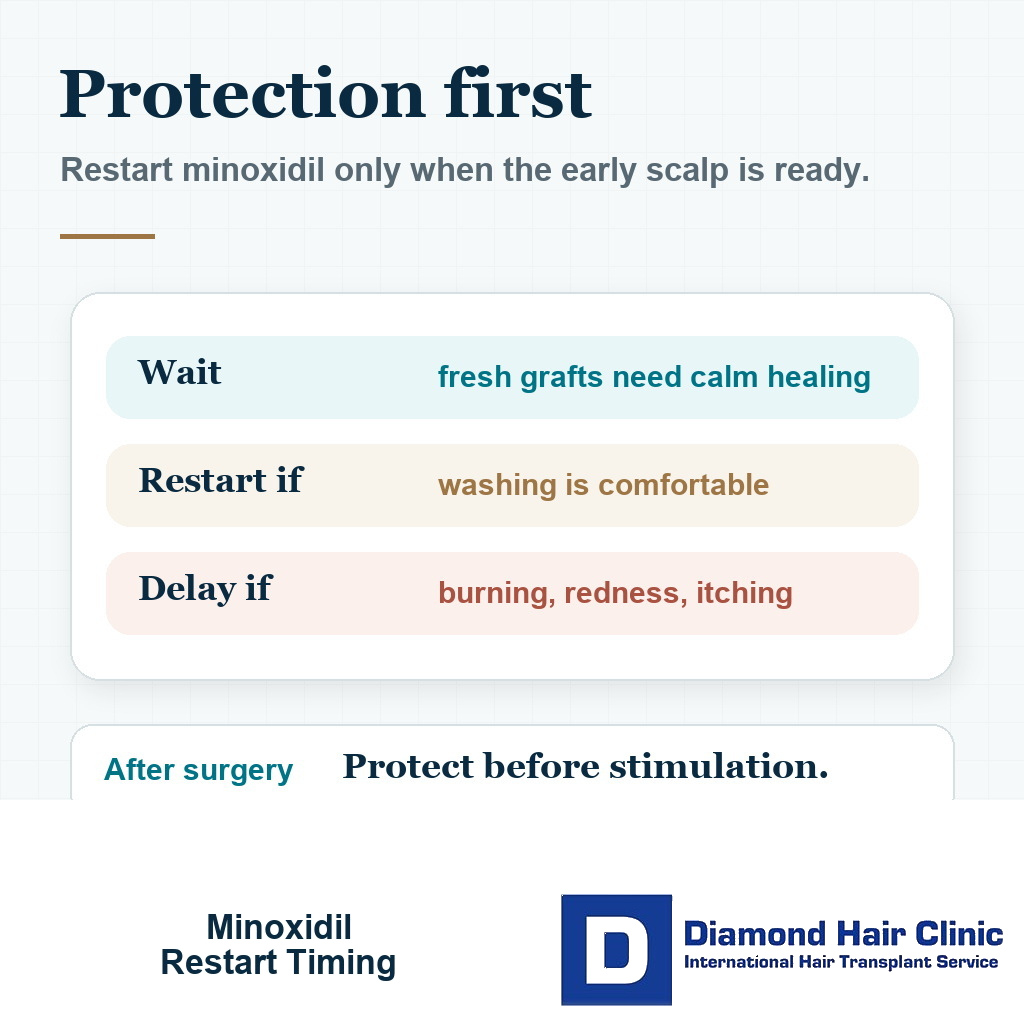
Not reliably. Minoxidil may support some native hair, but it should not be sold as a guarantee against shedding after a hair transplant.
Transplanted hairs often shed in the early months while the follicle remains under the skin. Native hairs around the transplanted area can also shed from surgical stress, especially if they were already miniaturized. These are different problems, and they need different explanations.
If shedding happens after surgery, the question is not only whether you restarted minoxidil. I look at timing, scalp condition, native hair strength before surgery, medication changes, surgical density, and whether the area is improving month by month.
I separate medications after a hair transplant from graft survival. Medication can help the long-term plan in selected cases. It is not a substitute for correct graft handling, recipient area planning, or donor management.
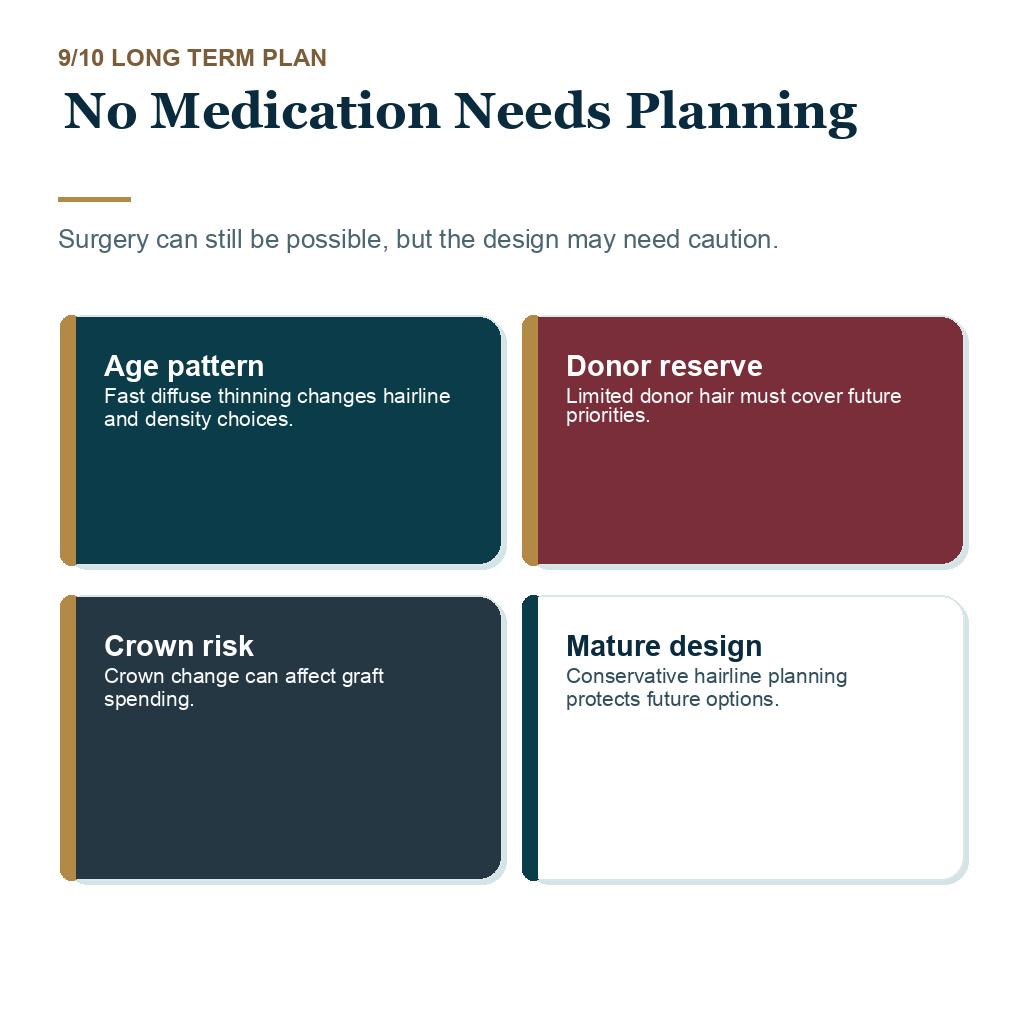
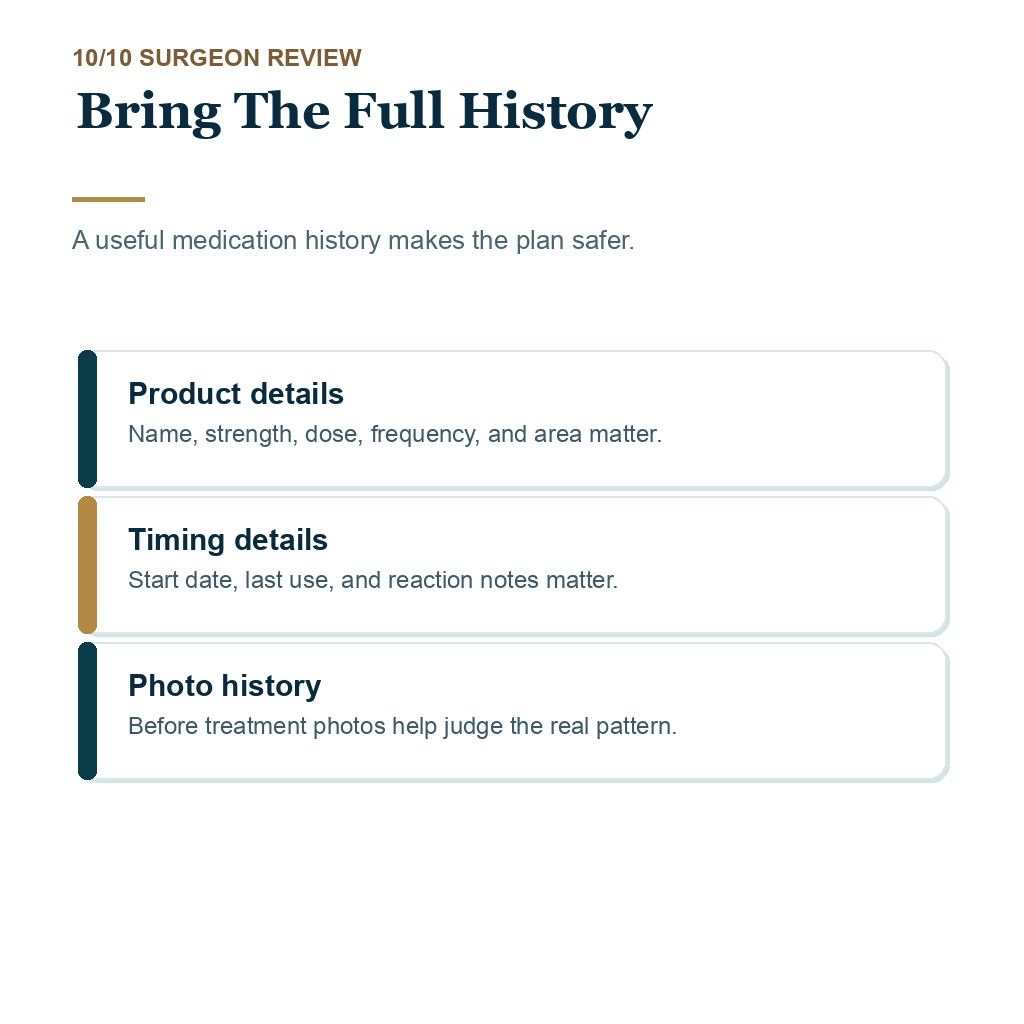
Use the 10 minoxidil timing slides below to separate topical and oral handling, short pause versus long stop, scalp irritation, oral medication review, last minute product changes, shedding context, surgical limits, restart timing, no medication planning, and the history the surgeon needs. Swipe the carousel, use the arrows one step at a time, or choose a number below the image to jump to that point.



Minoxidil alone may not be enough without finasteride
For many men with androgenetic alopecia, minoxidil and finasteride do different jobs. Minoxidil mainly supports growth and hair cycling. Finasteride works on the DHT pathway that drives male pattern hair loss in susceptible native follicles.
Minoxidil does not replace a DHT blocker in a typical progressive male pattern case. It may still be useful, but it does not answer the same biological problem.
This does not mean every man must take finasteride. Side effect concerns, fertility questions, mood concerns, sexual side effect worries, breast tenderness, and medical history deserve a serious conversation. I do not pressure someone into a medicine they cannot accept.
If you want a hair transplant without finasteride, the surgery may still be possible in selected cases, but the plan has to respect future native hair loss. A lower, denser, more aggressive hairline can become a problem later if the surrounding hair keeps thinning.
No minoxidil use needs a clear long term plan
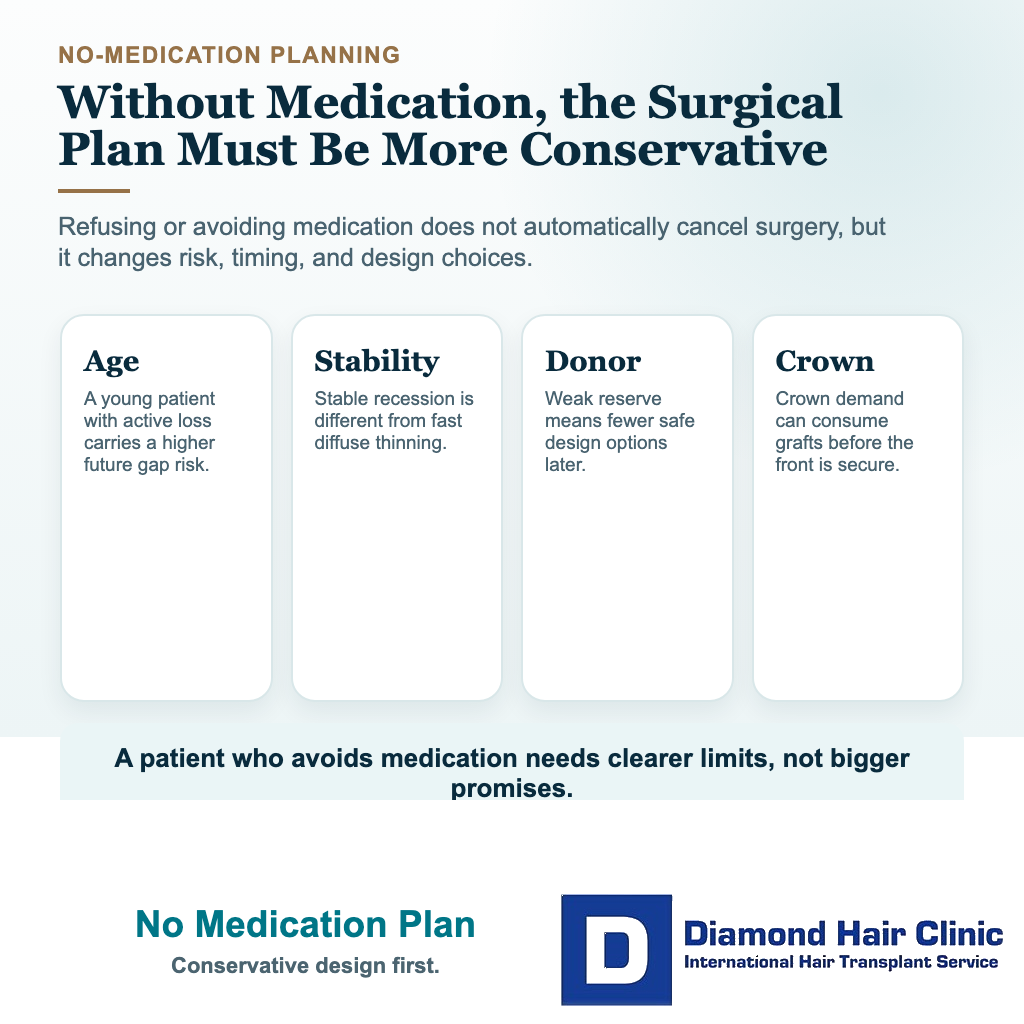
You may still be a candidate for surgery, but the plan may need more caution. I do not plan the same hairline, density, or graft distribution for every person.
A stable person in their 40s with limited frontal recession is different from a young person with fast diffuse thinning, crown change, and no realistic maintenance plan. Both may ask for surgery. They are not the same surgical case.
If no medication is part of the plan, I think more carefully about donor reserve, future thinning, crown risk, and how mature the hairline should be. The donor area is a limited lifetime resource. Surgery should not create a short period of happiness followed by years of regret.
This is also why some hair transplant results look thin even when grafts grew. Sometimes the transplanted hair is present, but the native hair around it has weakened, the density promise was unrealistic, or the first design did not respect future hair loss.
Bring the minoxidil details to the consultation
Bring the product name, form, strength, dose, frequency, application area, start date, last use, and any irritation or shedding. Foam, liquid, spray, tablets, compounded formulas, and topical blends can create different planning questions.
Photos from before minoxidil help separate treatment response from ongoing loss. I also want to know whether you are willing to continue medical treatment after surgery, because graft planning and native hair planning are connected.
A short pause is easier to manage when the diagnosis, donor evaluation, scalp condition, and medication history are clear. When those pieces are unclear, changing products again is less useful than reviewing whether surgery is ready.

Read this review excerpt
It was a very long day which you have to prepare yourself for which is probably why I found it challenging. I was constantly being asked if I was alright and could request toilet breaks (thank goodness).