




Nodes near the ear or upper neck react
The scalp drains toward lymph node groups around the ear, the back of the head, and the neck. During FUE, both the donor and recipient areas create a temporary healing signal. The skin barrier has been opened, crusts form, small inflammatory cells arrive, and the local lymph system clears fluid and debris as healing progresses.
That reaction can be stronger if the donor area is irritated, if there are many scabs, if washing has been too rough or too timid, or if small pimples form around transplanted or donor follicles. It can also happen when the body is fighting something separate, such as a sore throat, dental issue, ear irritation, acne flare, or viral infection.
The location helps. A node just behind the ear or high in the neck often matches scalp and donor area drainage. A node under the jaw, lower in the neck, above the collarbone, or in several separate body areas needs broader thinking, because it may have little to do with the hair transplant. Dental pain, sore throat, ear pain, mouth sores, cough, or a cold on the same side should be mentioned in the message, not hidden because the transplant feels like the obvious cause.
With those symptoms, your transplant clinic can still review scalp photos, but a local doctor may be needed for causes outside the scalp. The surgical team can judge the donor and recipient areas. It cannot examine your throat, teeth, ear, or general body symptoms through a scalp photo alone.
Swollen nodes that are less urgent
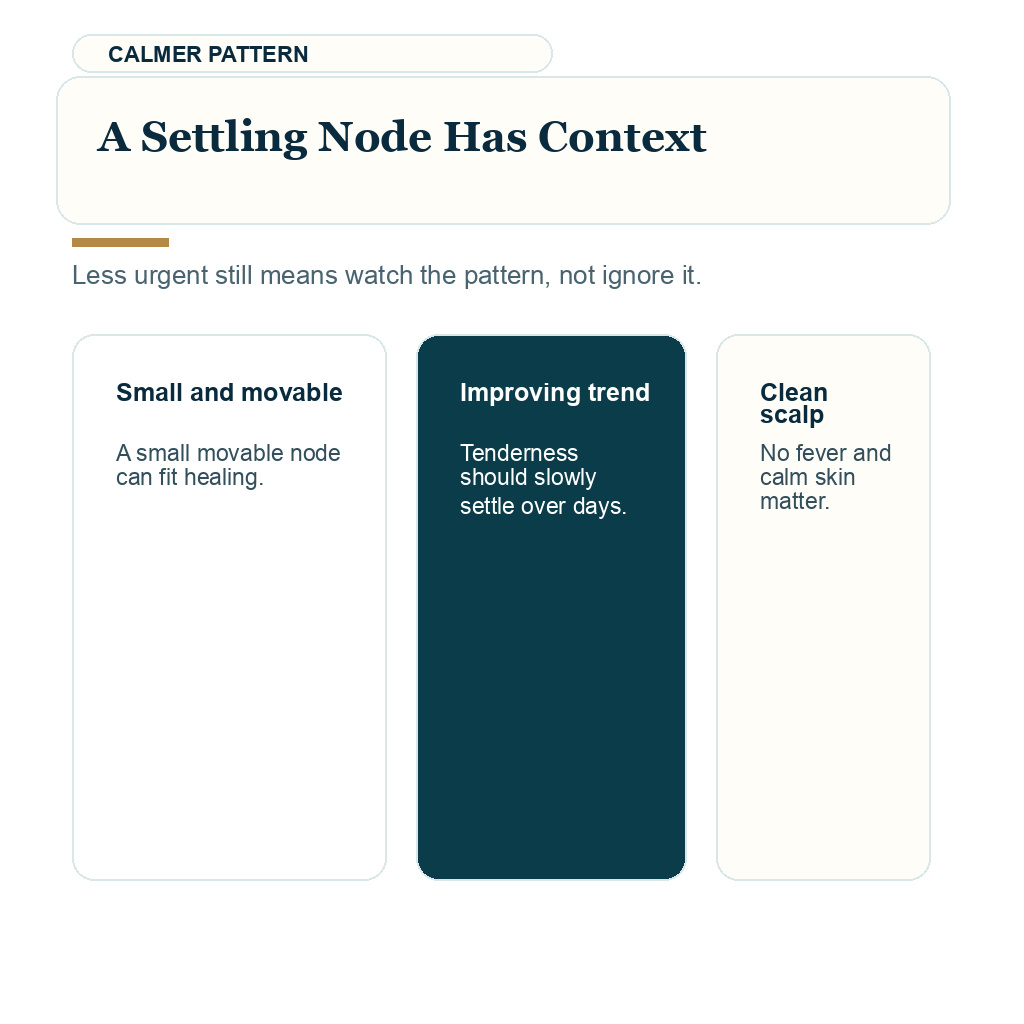
A small, mildly tender, movable node that appears early and then slowly improves is often less urgent, especially when the scalp looks clean. It may be sore when pressed, but the pain should not be increasing each day. The skin over the node should not be hot, red, or tight. You should not feel feverish or unwell.
The donor area may still feel numb, tight, itchy, or sensitive at the same time. That can happen during healing and nerve recovery. If the recipient area is scabbed but clean, and the node is not enlarging, the clinic may ask you to keep washing as instructed, avoid pressing the lump repeatedly, and send follow up photos if the trend changes.
The key is trend. The trend matters more than the word normal. If the node is smaller after a few days, the scalp is settling, and there are no body symptoms, the situation is less concerning than a node that is becoming larger, harder, hotter, or more painful. Check it once a day with the same simple comparison, such as pea, bean, or grape, instead of pressing it every hour and making it sore.
Swollen nodes that need photo review
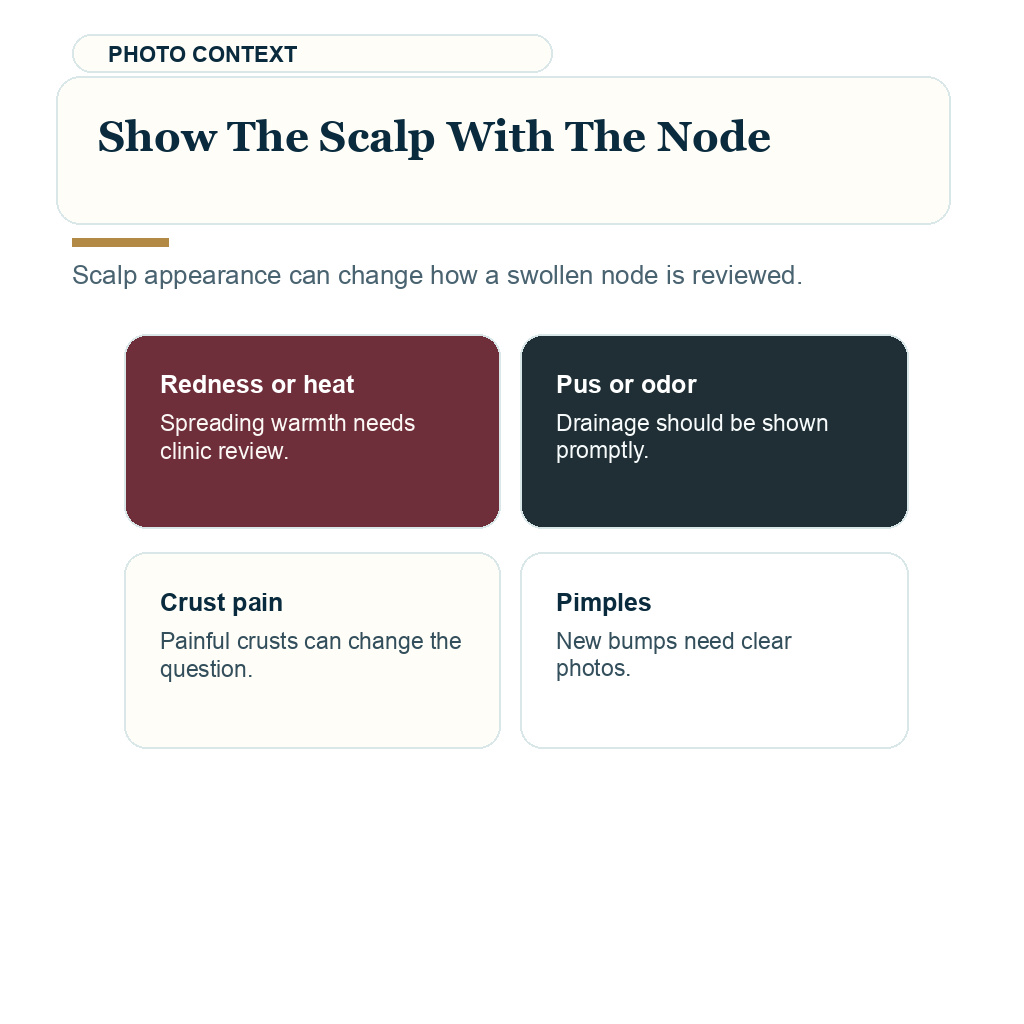
Contact your clinic with photos if the node is growing, very painful, hot, or clearly on one side with scalp changes on the same side. I need to see the donor area, the recipient area, and the skin over or near the node. A photo of the lump alone is rarely enough, because the scalp may show the reason for the reaction.
Photo review becomes more important if you also have new redness, warmth, pustules, yellow or cloudy drainage, bad smell, increasing scab pain, or bleeding that does not match the normal early recovery pattern. If you are unsure whether the fluid is expected serum or something more concerning, compare the situation with the warning signs in yellow fluid after hair transplant and ask the clinic to check your photos.
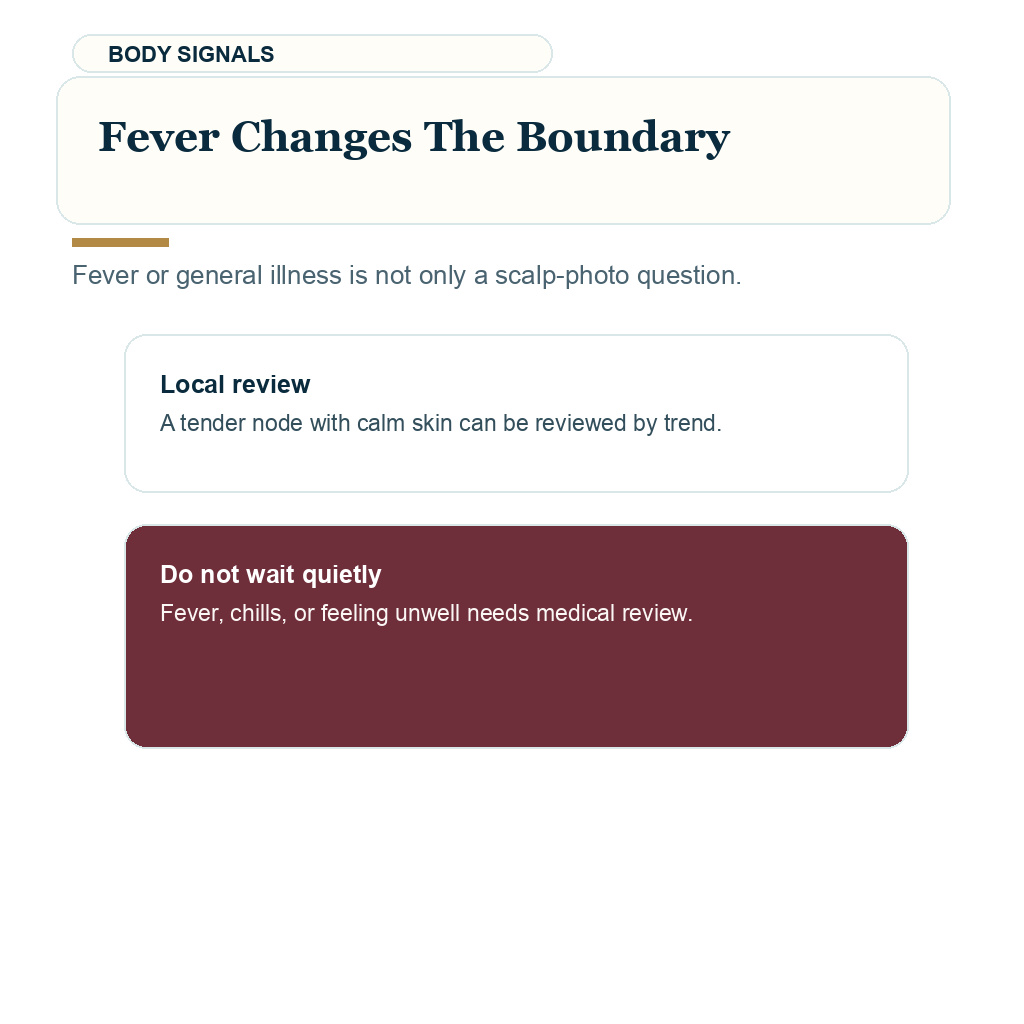
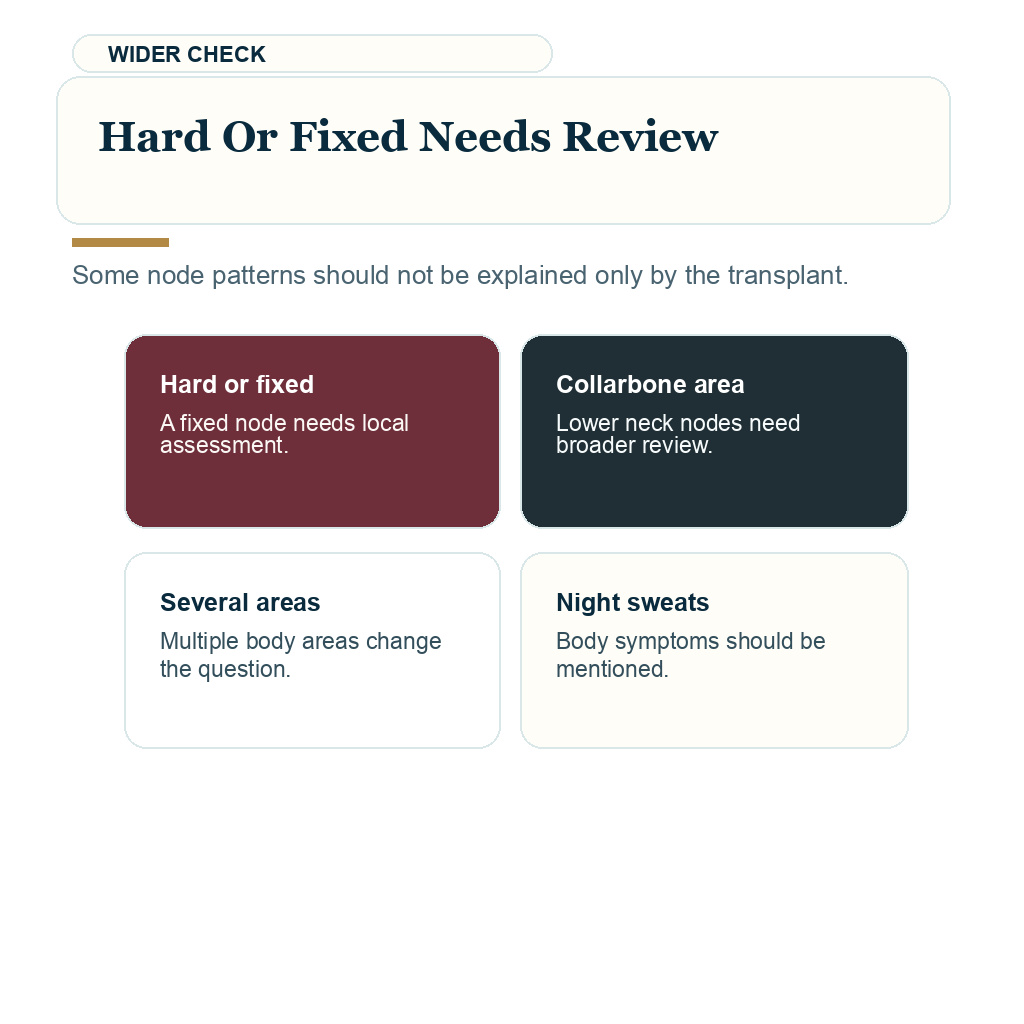
Fever, chills, feeling generally ill, rapidly spreading redness, severe headache, neck stiffness, difficulty breathing or swallowing, night sweats, unexplained weight loss, several swollen nodes in different areas, a node near the collarbone, or a node that becomes large, hard, fixed, or rapidly enlarging should not wait for routine clinic messaging. Those symptoms need prompt local medical assessment, especially if you are already back home after travelling.
Lymph node is different from fluid swelling
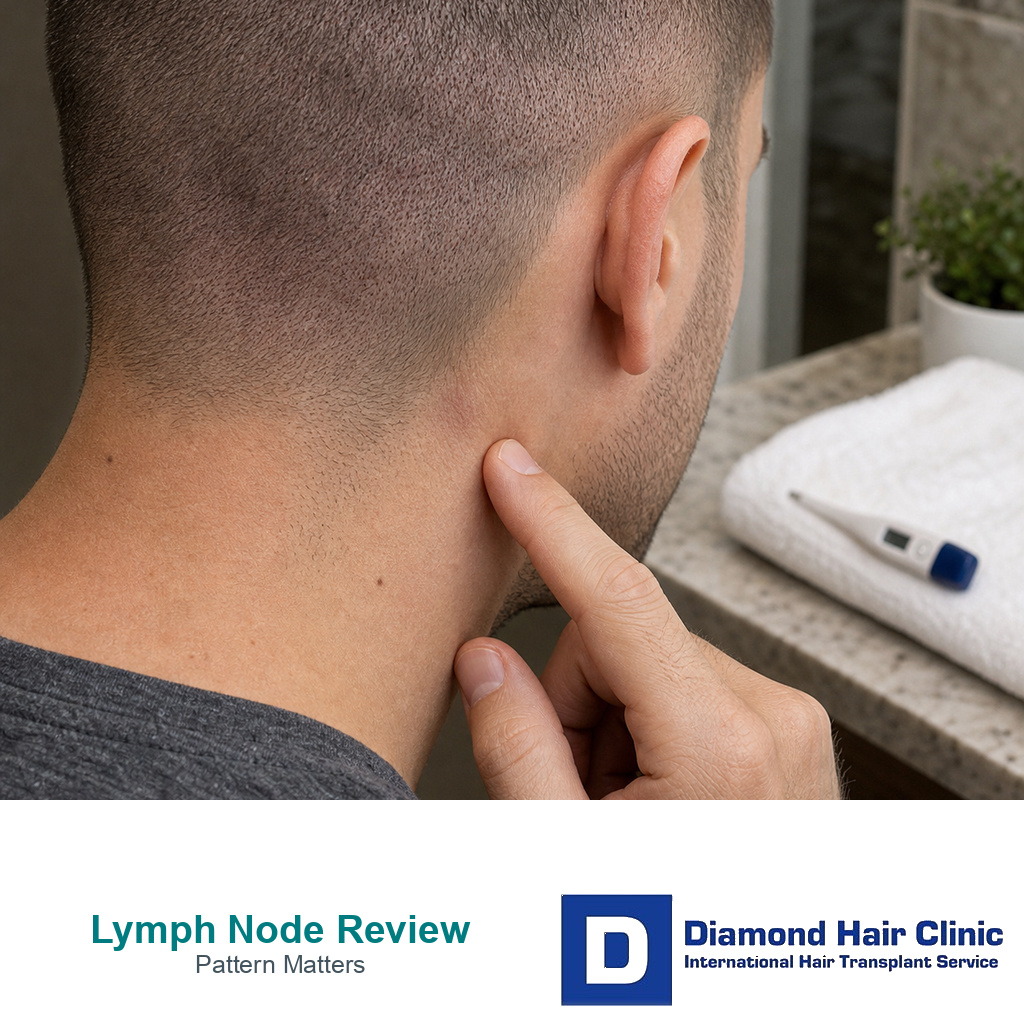
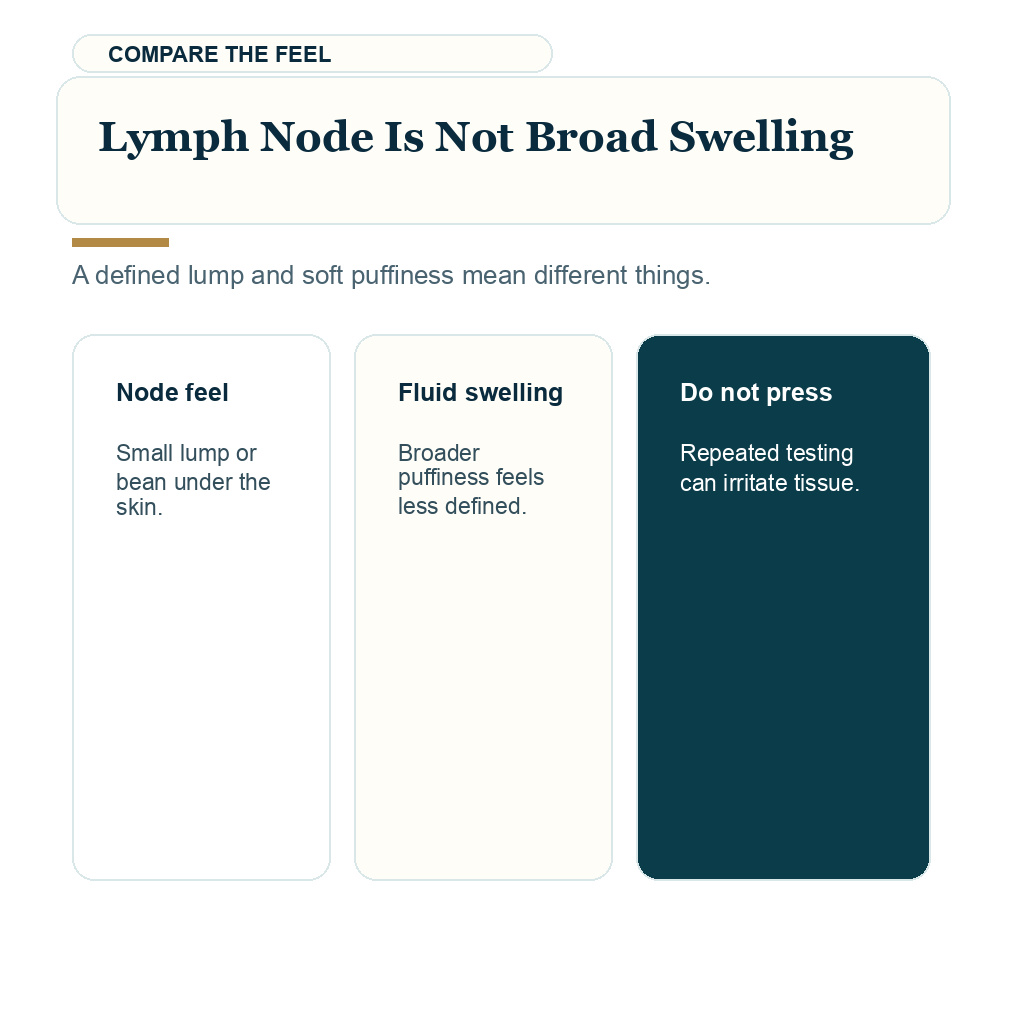
Swelling after surgery usually feels wide and soft. It may move from the forehead toward the eyelids and cheeks as gravity pulls fluid down. A lymph node is more localized. It usually feels like a defined lump under the skin, often behind the ear, at the hairline, or in the upper neck.
Both can happen in the same recovery period. You can have forehead swelling from surgical fluid and also notice a tender node near the donor area. The management is different. Broad swelling is judged by eye swelling, facial tightness, and whether the fluid is moving down. A lymph node is judged by size, tenderness, skin heat, scalp infection signs, and whether it improves or worsens.
If bruising or swelling is moving around the eyes, the better comparison is black eye and bruising after hair transplant. If the concern is a specific lump in the neck, focus on the scalp and node details instead of treating it like ordinary forehead swelling.
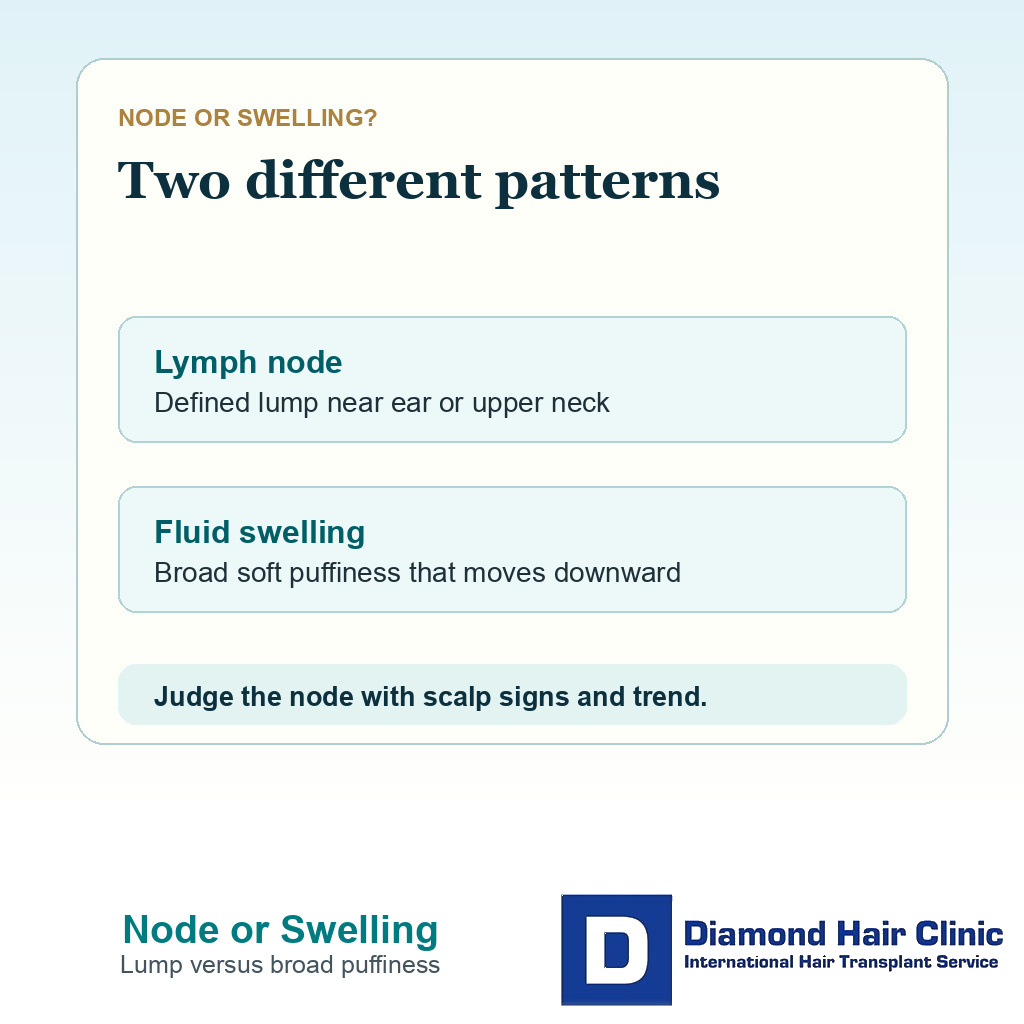
A lymph node usually feels like a defined lump, while ordinary fluid swelling is broader and softer.
Photos and details to send
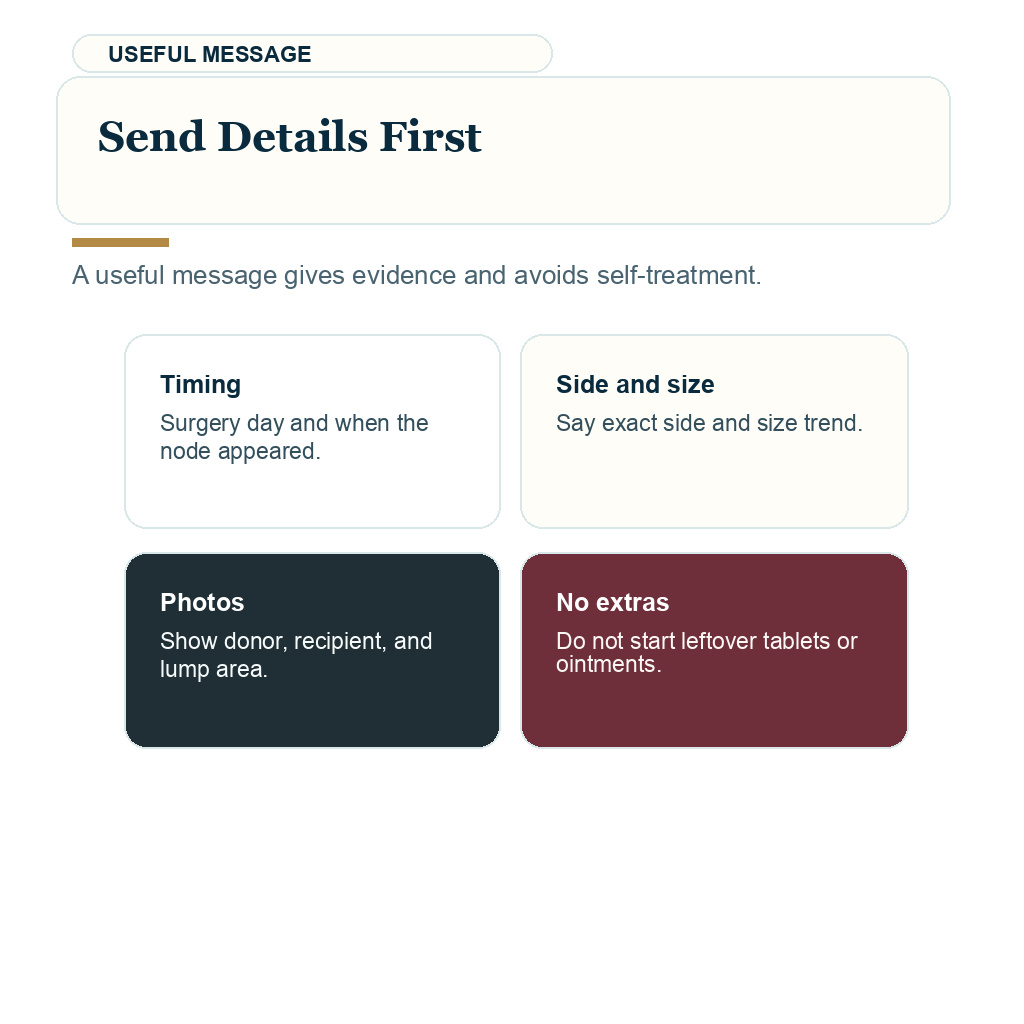
Write a short, organized message rather than several separate photos without context. I need the surgery day, the exact side, when the node appeared, whether it is getting larger or smaller, whether it is painful without touching, and whether you have fever or drainage. Also describe whether it feels movable or fixed, soft or hard, and estimate the size with a familiar comparison such as a pea, bean, or grape.
Mention diabetes, medicines that suppress immunity, corticosteroids, smoking, recent dental symptoms, ear symptoms, throat symptoms, cough, or recent illness, because those details change the risk picture. Include clear photos of the donor area, recipient area, and the neck area where you feel the node. If the lump is not visible, point near the place with a clean finger without pressing on it.
If there are pimples, crusts, redness, or fluid, take photos in good light without flash glare. Do not squeeze the area to make the photo more dramatic. Take photos before you press or squeeze the area. Pressing a tender node repeatedly can make it more sore, and squeezing pimples or scabs can create a new skin problem.
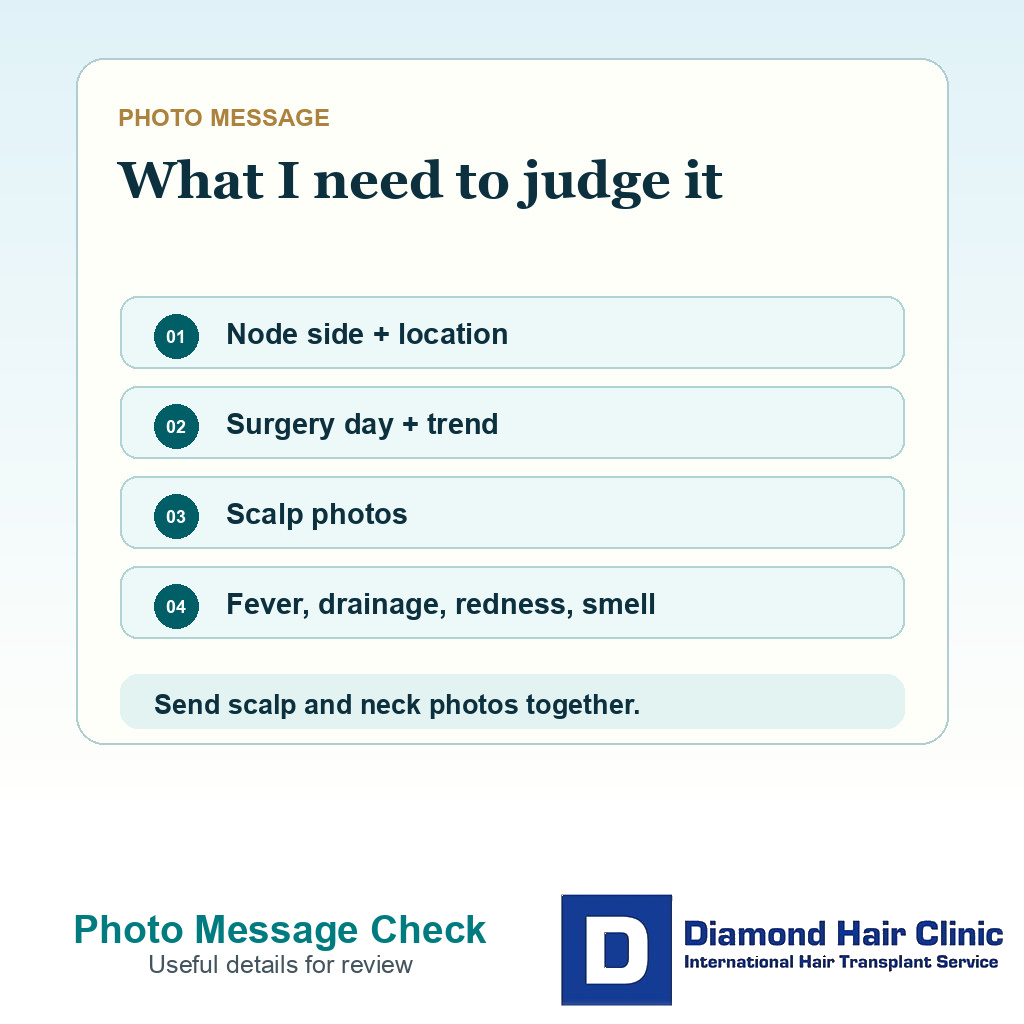
Useful photo review includes the node location, surgery day, scalp symptoms, fever, drainage, and whether the node is improving.
For Diamond Hair Clinic patients, follow up photos are part of the recovery process. If you travelled home, I can still help separate expected healing from a problem that needs local examination. The process works best when your message is precise and includes photos from the same day. A useful message tells me more than a single sentence saying “my neck is swollen.”
Folliculitis or infection can cause swollen nodes
Folliculitis, pustules, infected scabs, or an irritated donor area can make nearby lymph nodes react. The scalp may show small pimples, redness around follicles, tenderness, warmth, or discharge. A few small pimples can appear in many recoveries, but a cluster that is painful, spreading, or draining needs review. A skin pimple or abscess tends to sit in the skin and may point, drain, or show a red center. A lymph node sits deeper under the skin and is judged together with the scalp drainage area.
If the scalp has bumps that look like pimples, read folliculitis after hair transplant and redness, scabs, and pimples after hair transplant. Those details are often more useful than focusing only on the neck node. The node may simply be the drainage system responding to what is happening on the scalp.
An infection after hair transplant is uncommon, but it is important to catch early. Warning signs include increasing redness, heat, pus, bad smell, worsening pain, fever, or a scalp area that looks worse instead of settling. If those signs are present, the relevant comparison is infected hair transplant, and the clinic or a local doctor needs to assess you.
Starting antibiotics or ointment because of a node
Not because of the node alone. Antibiotics and ointments should be used for a clear reason, not because a lymph node is frightening. A tender node alone does not mean you need antibiotics. If the scalp is clean and the node is improving, medicine may not be needed. If there are infection signs, treatment may be needed, but I should see photos first whenever possible.
Using antibiotics without guidance can blur the clinical picture, cause side effects, or fail to treat the real issue. If your doctor prescribed medication, follow that plan. If you are thinking of starting leftover antibiotics, stop and let the clinic review photos first unless you have urgent symptoms that need local assessment. The same applies to topical products. Ointment can help in selected situations, but too much product on grafts or scabs can irritate the skin or make assessment harder. For product decisions around grafts, antibiotic ointment and hair graft healing is the closest comparison.
If you were given antibiotics after surgery, the timing and reason matter. A preventive course is different from treatment for a suspected infection. For medication questions, use antibiotics after hair transplant as a starting point, then ask the clinic how it applies to your specific recovery.
Blood tests or local medical review
Most questions about swollen nodes after a transplant are handled by history, scalp photos, and trend. Blood tests are not needed for every small tender node. They become more relevant when there is fever, feeling unwell, a node that keeps enlarging, multiple swollen nodes, unusual fatigue, night sweats, unexplained weight loss, repeated infections, or symptoms that do not match the scalp picture.
If the node is far from the scalp drainage area, has no relation to the donor or recipient area, appears above the collarbone, feels hard or fixed, or continues without improvement, a local physician should examine it. Do not wait weeks when the node is growing, fixed, severe, linked with body symptoms, or appears in several separate body areas.
I can judge the scalp, but I cannot diagnose every neck, throat, ear, dental, or systemic cause remotely. If a medical examination or tests are needed, the same careful thinking used for blood tests before hair transplant applies after surgery. Tests are useful when they answer a clinical question, not when they are done for anxiety alone.
Steps to take while waiting for a reply
Leave the lymph node and nearby skin alone while you monitor the trend. Avoid massage, squeezing, repeated pressing, picking scabs, opening pimples, aggressive warm compresses, lymphatic massage, and leftover topical products when the skin is red, hot, painful, or draining. Keep washing according to your after surgery instructions, keep the scalp clean, and avoid adding new products unless your clinic advised them. If there is bleeding, treat it according to the bleeding instructions rather than rubbing the area. Bleeding after a hair transplant is a separate issue from lymph node swelling.
Take a temperature if you feel warm or unwell. Write down the day after surgery, when the node appeared, and whether it is larger, smaller, or unchanged. If you are flying home or already in another country, keep your photos and clinic messages organized. Hair transplant follow up after surgery is meant for exactly these recovery questions.
Fever, pus, spreading redness, or feeling unwell changes the decision. If fever is part of the picture, judge it through the wider fever after FUE surgery pathway, not from the lymph node alone. The same applies to difficulty breathing or swallowing, a hard fixed node, a lump above the collarbone, or a node that keeps enlarging. If those signs appear, do not wait only for a routine follow up reply. Ask for clinic review and arrange local medical assessment if symptoms are significant or progressing.
Judging a swollen node after FUE
A swollen neck lymph node after hair transplant surgery does not by itself mean something dangerous has happened, but it is specific enough to take seriously. A small tender node that appears early, stays mild, and improves while the scalp looks clean is different from a hot, growing, very painful node with pus, fever, spreading redness, or worsening donor area symptoms.
Judge the node together with the scalp, not in isolation. Share clear photos with the timing, and watch the trend. Clean scalp, improving node, and no fever is a different picture from worsening pain, drainage, and feeling unwell. That difference guides whether remote follow up is enough or whether local medical assessment should happen at the same time as clinic contact.
Read this review excerpt
He was very thorough in every little detail and I never felt pressure to do anything I wasn’t sure of.