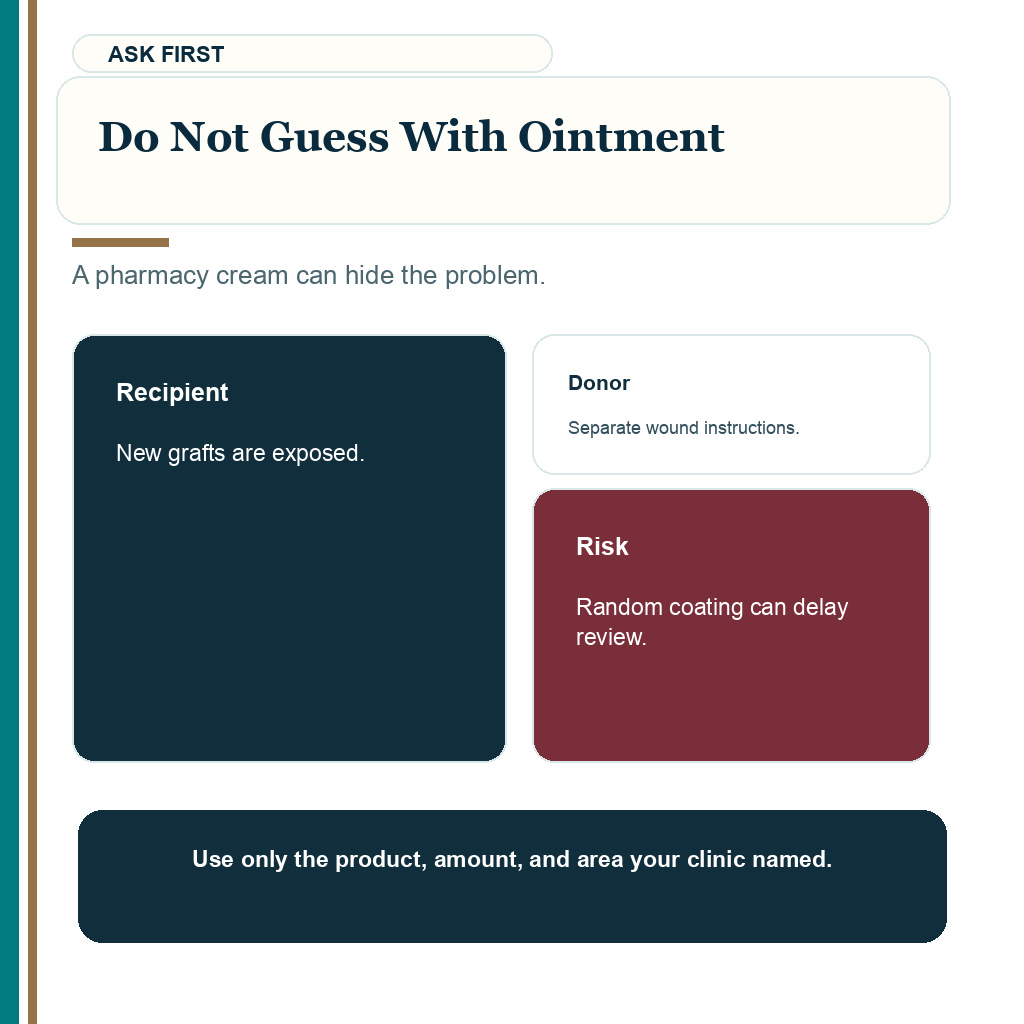
Keep antibiotic ointment off the transplanted area unless your clinic has told you to use that exact product there. A thin film on a small donor wound is very different from covering the recipient area with a pharmacy cream because the grafts look dry, white, yellow, red, or crusted.
Treat ointment as a medical instruction, not ordinary first aid. The recipient area contains newly placed grafts. The donor area contains many small extraction wounds. A cream, ointment, antiseptic foam, moisturizer, or home remedy can help in the right situation, but it can also trap moisture, soften scabs too much, irritate the skin, hide infection signs, or delay proper review if it is used randomly.
If you were already given an ointment, send the product name, the area where you used it, and how often you applied it before changing the routine. Adding a second cream can make redness, residue, and itching harder to interpret.
I do not start with “which cream can I buy?” I first check whether this exact scalp needs a prescribed topical product, better washing instructions, photo review, medication, or an examination instead of another layer of cream.
Ointment guidance safety map
Decide by product, area, and symptoms
Match the exact product and application area to the clinic’s instructions, then use the symptom pattern to judge whether routine care or prompt review is needed.
Instruction match The product, dose, and application site should match written instructions, so the focus stays on gentle, clean application rather than experimenting with extra products.
Use it as prescribed Follow the prescribed schedule and share photos if the area changes. Do not add another cream because healing looks slower than expected.
Why it is uncertain The name, strength, or reason for use is not confirmed by the clinic.
How to classify it This is a medication safety question, not a routine aftercare step.
Before application Confirm it with the clinic before applying it to grafts, the donor area, or irritated skin.
Recipient area limit Do not test antibiotics on the recipient area without guidance.
Urgency signs These changes may need direct review rather than another layer of ointment.
What review needs Photos and symptom details matter before any topical decision.
Report the pattern Send clear photos and describe pain, fever, smell, and timing.
Do not mask it Do not cover a worsening area with ointment to delay review.
Possible reaction The product itself may be irritating or unsuitable.
First response Report the reaction instead of applying more.
Until you hear back Pause the product until the clinic reviews the reaction.
Avoid more exposure Do not keep applying a product that seems to make the skin worse.
A product label, the treated area, a symptom timeline, and clear photos give the clinical team the evidence needed to review the problem.
Ointment can feel tempting after surgery
The first reason is visual anxiety. A transplanted scalp can look dry, crusted, shiny, white, yellow, or uneven in the first days. The donor area can feel rough or tight. It is natural to want to soften everything and make the scalp look cleaner.
The second reason is fear of infection. If you see a red spot, a small pimple, or a wet looking crust, it is easy to assume antibiotic ointment will protect the area. A surface cream cannot replace clean technique, correct washing, the right medicine when needed, or direct medical review when the pattern is worsening.
The third reason is mixed instructions. Some clinics prescribe a specific ointment for a specific number of days. Some use a foam or moisturizer to soften scabs before washing. Some prefer saline and gentle shampoo. Some advise nothing on the recipient area except the planned washing routine. When these protocols are mixed together online, the instruction becomes confusing.
A fixed aftercare answer is weak here. Hair transplant aftercare should come from the team that knows the surgery details, graft placement, donor area condition, and medication plan.
Antibiotic ointment can be reasonable in specific situations
Antibiotic ointment may be reasonable when your surgeon has given a specific instruction that includes the product name, the area, the amount, the number of days, and the reason. A clinic may advise a small amount on part of the donor area, around a localized irritation point, or on a small wound that needs brief surface protection. The dose is usually a thin film, not a visible greasy coat.
The key word is specific. “Use this ointment here once or twice daily for this many days” is different from “I found an antibiotic cream at home, so I will apply it over the whole scalp.” The first is a medical instruction. The second is guessing.
Ointment should have a target. If the target is not clear, leave it off until the plan is clarified. This matters most in the recipient area, where heavy product can sit between grafts, collect debris, and obscure whether the surface is settling or becoming irritated.
When cream has already touched the recipient area, do not scrub to undo it. Write down the product name, where it touched, how long it stayed on, and whether burning, swelling, or fresh bleeding appeared.
If you were given a small tube or pot after surgery and it is running out, do not replace it blindly with a different brand. Send the clinic a photo of the product, ask whether a substitute is acceptable, and ask whether you still need it. Sometimes a product is continued longer than necessary because stopping feels unsafe.
Do not use a leftover tube or someone else’s ointment because a photo looks similar. The label, strength, area, and reason for using it still need to match your clinic’s instructions.
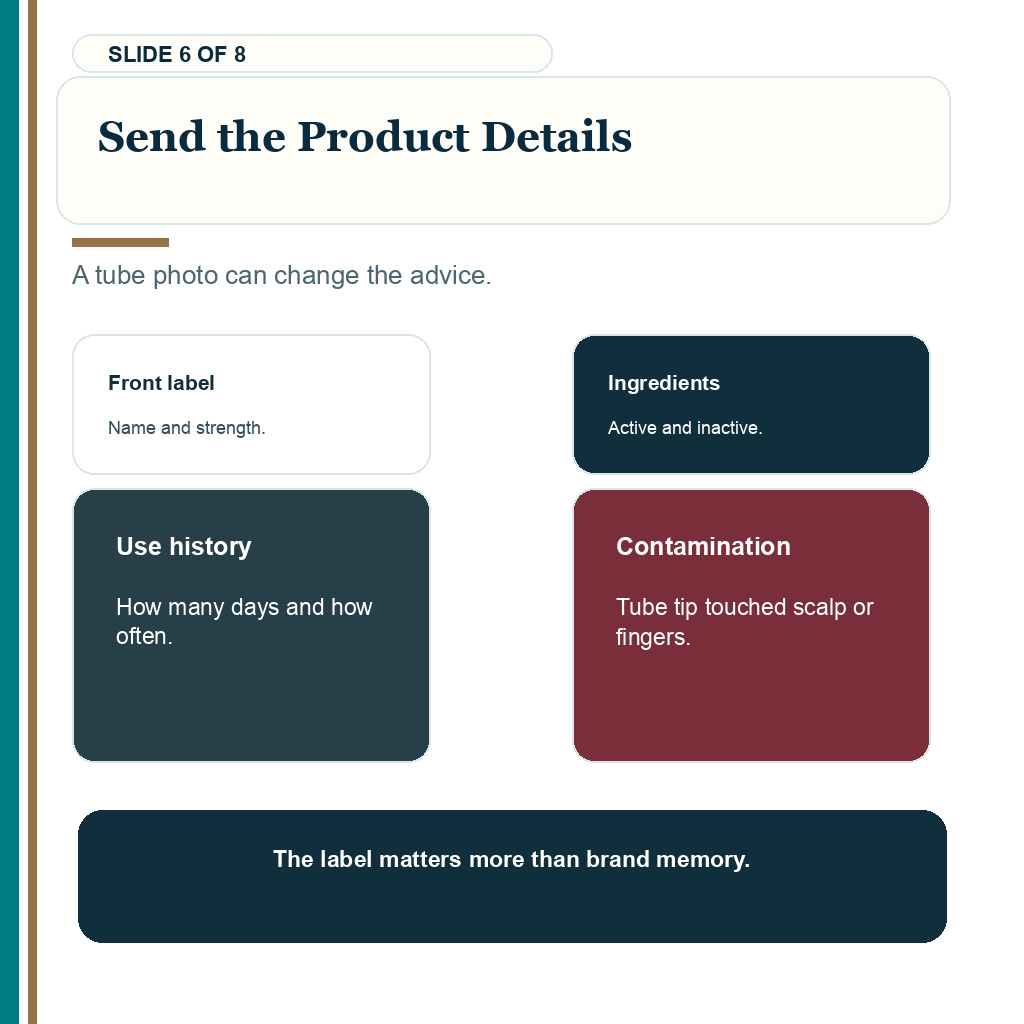
Also check the ingredient list before assuming two products are the same. Many pharmacy antibiotic ointments contain combinations such as neomycin, bacitracin, or polymyxin. Some people react to one ingredient even if the product is sold as a simple first aid cream. The active ingredient matters more than the front label or brand name. Around grafts, a wrong substitute can turn a small aftercare question into redness, itching, swelling, and confusion.
Topical products after surgery should have a clear area, dose, duration, and reason.
Random ointment can create healing problems
Random ointment can create several problems. The first is irritation. Some topical antibiotics and antiseptic products can irritate sensitive skin or trigger allergic contact dermatitis. Triple antibiotic products can cause redness, itching, swelling, irritation, or allergic contact dermatitis in susceptible people. That reaction can look like the transplant is becoming infected, when the product itself may be part of the irritation.
A product reaction often looks different from normal dryness. New itching, a rash where the ointment was placed, small blisters, hives, or redness that spreads after starting a product should be reported instead of covered with more ointment. If there is facial swelling, trouble breathing, or trouble swallowing, that is urgent medical help, not a hair transplant aftercare question.
The second problem is moisture. A thick ointment layer can keep scabs soft and sticky. In the wrong timing or amount, that can make the surface messy and harder to clean. A small amount in one instructed donor area may be fine when prescribed. Smearing a heavy layer across the grafted zone is a different risk.
The third problem is false reassurance. If there is increasing pain, warmth, spreading redness, pus, bad smell, fever, or a wound that is opening, ointment alone is not enough. Covering the area may make you feel that you have done something while the real issue still needs medical review.
The fourth problem is product mismatch. A moisturizer, antibiotic ointment, antiseptic cleanser, steroid cream, hair oil, rosemary oil, aloe vera, and saline spray are not the same thing. They have different purposes. Using the wrong product at the wrong time can make a small issue more confusing.
For example, saline spray after a hair transplant is usually about gentle moisture and comfort. Aloe vera or moisturizer is a later skin comfort question. Antibiotics after a hair transplant are a medical decision. These products should not be mixed together as if they are interchangeable.
White or yellow residue is not always infection
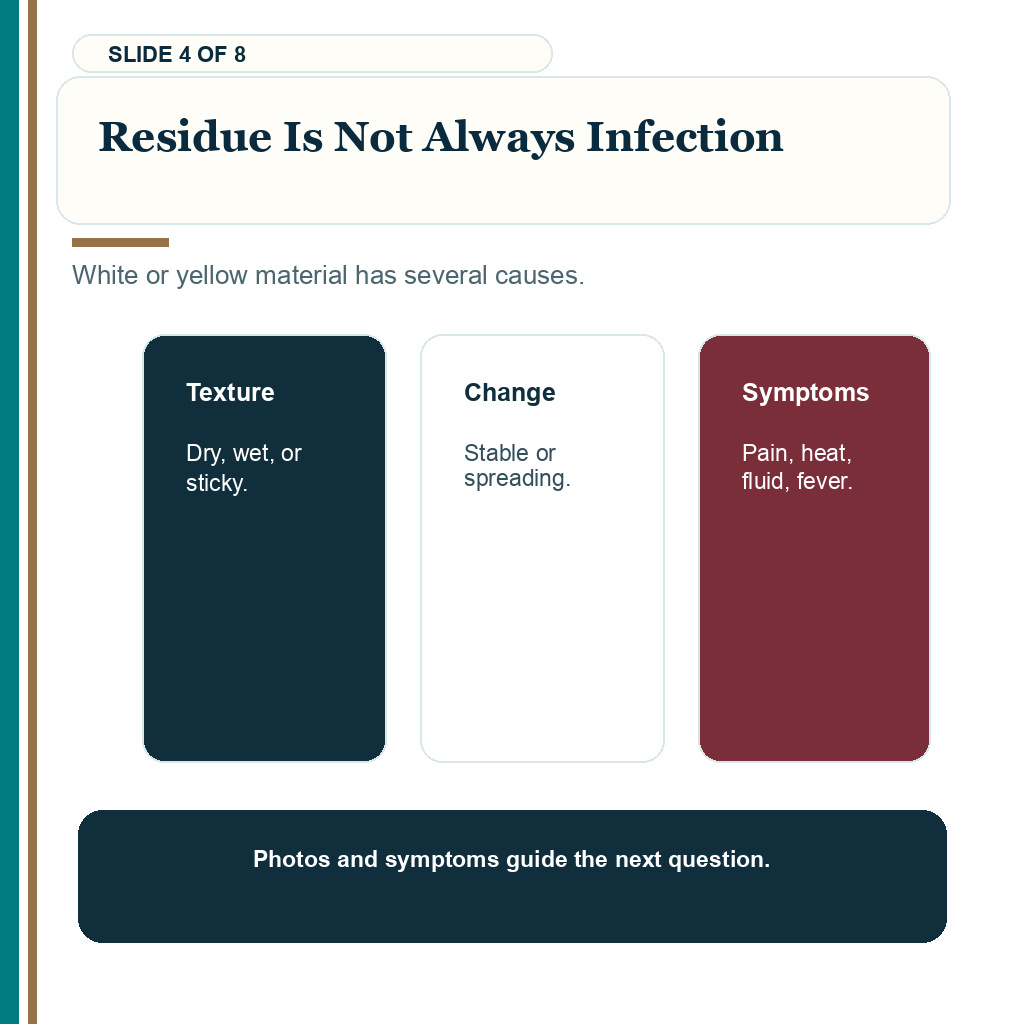
No. White or yellow looking material can come from dried serum, softened scab material, leftover foam, moisturizer, ointment residue, or product caught between short hairs. The appearance alone is not enough.
I judge the material together with the surrounding skin and the way symptoms are changing. Mild discomfort that is settling is different from increasing pain, spreading redness, heat, a bad smell, thick or cloudy fluid, pus, fever, or daily worsening.
Color is less important than behavior. A pale film that appears after applying a clinic product is different from thick discharge from a painful, hot, red wound. One may need correct washing advice. The other may need medical treatment.
Scabs can also come away with small hairs attached, and that does not always mean a graft was lost. When you are worried about scabs coming off after a hair transplant, look for bleeding, tissue attached to the hair, an open spot, or worsening skin changes. If scabs are wet underneath, painful, smell bad, or surrounded by worsening redness, the issue is no longer only hair transplant graft security. It becomes a wound healing question.
The recipient area needs extra caution early on
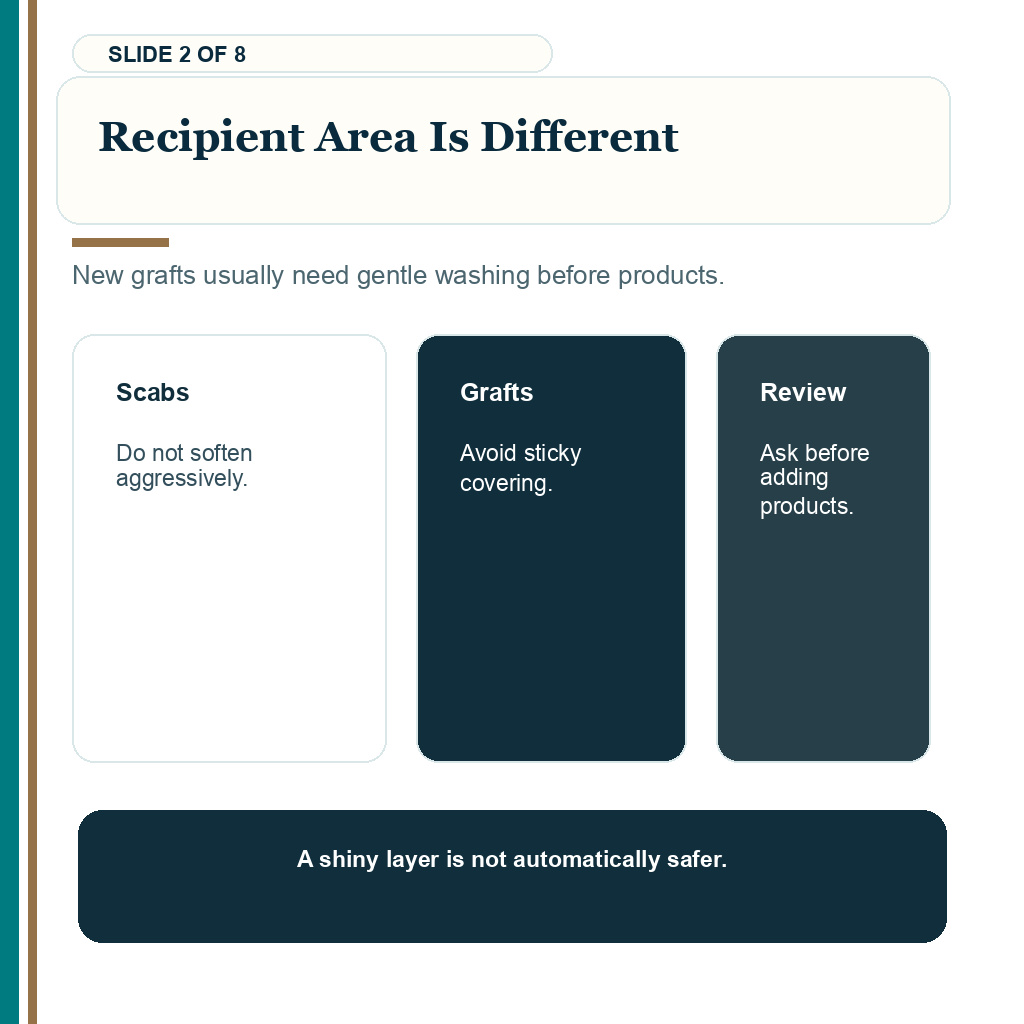
The recipient area should remain free of ointment unless your clinic has instructed you to use it there. Newly placed grafts make this the most sensitive part of early recovery. Heavy rubbing, thick product, scratching, and repeated checking can all create unnecessary trauma.
The recipient area often needs the clinic’s washing routine more than it needs extra products. Gentle washing helps soften and remove crusts at the right stage. Technique matters. Too much pressure can irritate the skin. Too little cleaning can leave thick crusts longer than advised.
Antibiotic ointment should not be used as a scab softener. A greasy layer can make dry crust look sticky or yellow, and it can hide whether the skin underneath is settling or becoming irritated. If crusts are the concern, washing technique and photo review are usually safer starting points than adding another ointment layer.
Clear instructions are safer than improvisation. If the grafted area looks too dry, too white, too sticky, or too crusted, send photos before changing the routine. The answer may be adjusted washing, soaking time, shampoo, foam, or a moisturizer approved by the clinic. It may also be no extra product at all. Do not add antibiotic cream simply because the surface looks unpleasant.
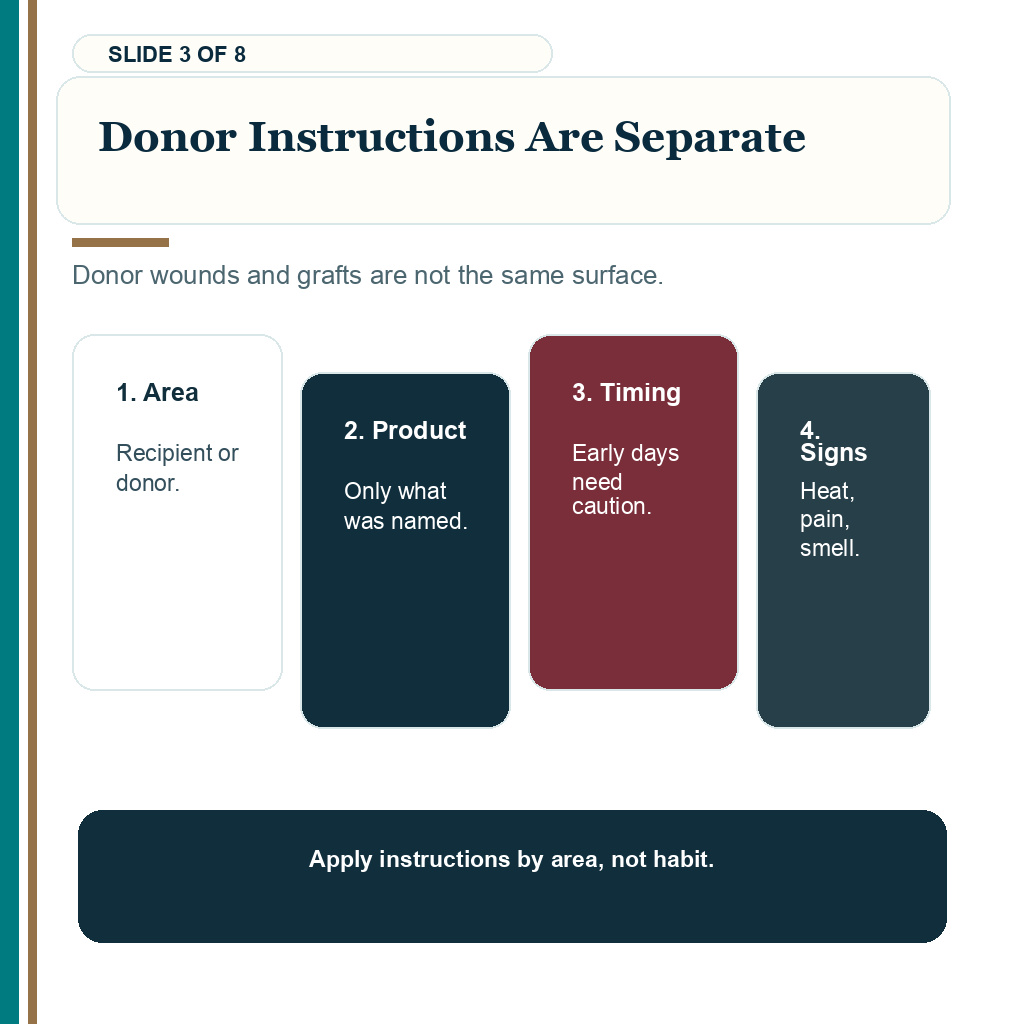
Donor and recipient areas need separate instructions
The donor area has its own healing pattern, and it still should not be treated carelessly. FUE leaves many tiny extraction points. Early roughness, tightness, itching, and scabbing can be normal, but the donor area also needs to stay clean and should improve with time.
Some surgeons may use a topical product on the donor area if there is irritation or a localized wound. That can be reasonable when it is specific. But applying a thick ointment over the whole donor area without instruction can keep residue in the short hair, make the area greasy, and make it harder to see whether redness is settling or spreading.
If the donor area looks patchy, that is a different question from whether it needs ointment. A patchy donor area after a hair transplant needs review of healing pattern, lighting, hair length, and symptoms, not coverage with product. If the donor area is painful, hot, wet, has a bad smell, or becomes more inflamed each day, the priority is review, not camouflage with product.
Itching is also common during recovery, but itching does not mean you should scratch or coat the scalp with random creams. When itching after a hair transplant overlaps with healing irritation, photos and symptom timing are more useful than guessing with another cream.
Warning signs to check before adding more product
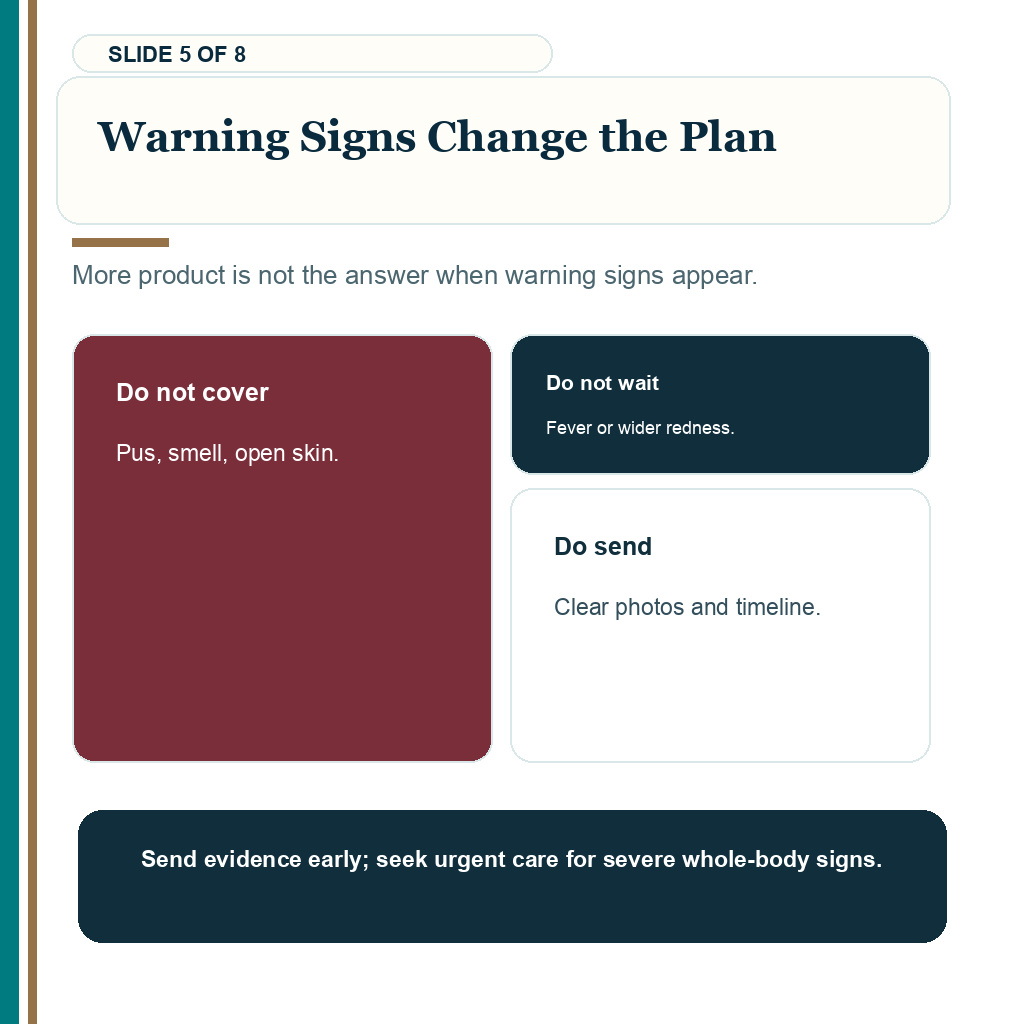
Before adding product, document the area if pain is increasing, redness is spreading, the scalp feels hot, or swelling is getting worse. Also report pus, bad smell, fever, chills, an open wound, black or grey tissue, or a wet scab that looks worse rather than better. Do the same if a new rash or intense itching appears after starting an ointment. Do not cover that reaction with a second cream. Include the product label and the timeline of when symptoms began.
Covering a worsening wound is not treatment. A topical product may belong in the plan, but first I need to understand what is happening. The response may involve different washing instructions, an oral antibiotic, or local medical assessment, especially after you have traveled home.
Keeping a delayed wound moist can make it look less crusted for a while, but that does not prove the wound is closing. If the same spot keeps reopening, bleeding, staying wet, or forming a hard scab again, medical review comes before more product. The question is not how to keep the surface shiny. The question is whether the skin underneath is healing safely.
If the concern is a pimple or repeated bumps, the decision is not simply ointment or no ointment. Small bumps can happen, but bumps that become painful, spread, or drain pus need better judgment. Compare the pattern with folliculitis and hair transplant surgery and infected hair transplant warning signs, and treat worsening symptoms as a reason for medical assessment.
For black, deep, or worsening scabbing, do not wait quietly. Read the warning pattern in necrosis warning signs after hair transplant, and arrange prompt clinical or local medical assessment if those signs fit.
Worsening pain, heat, spreading redness, pus, fever, smell, or open skin should be reviewed before adding topical products.
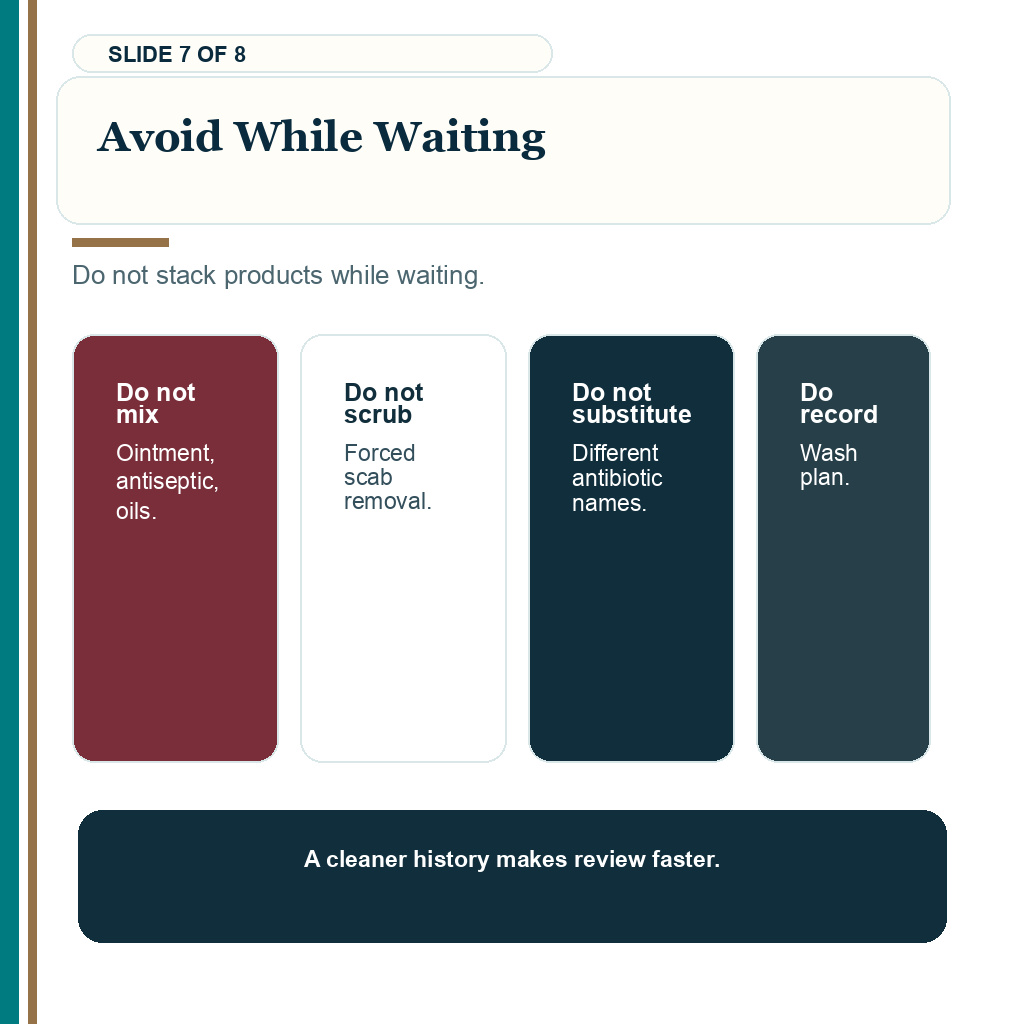
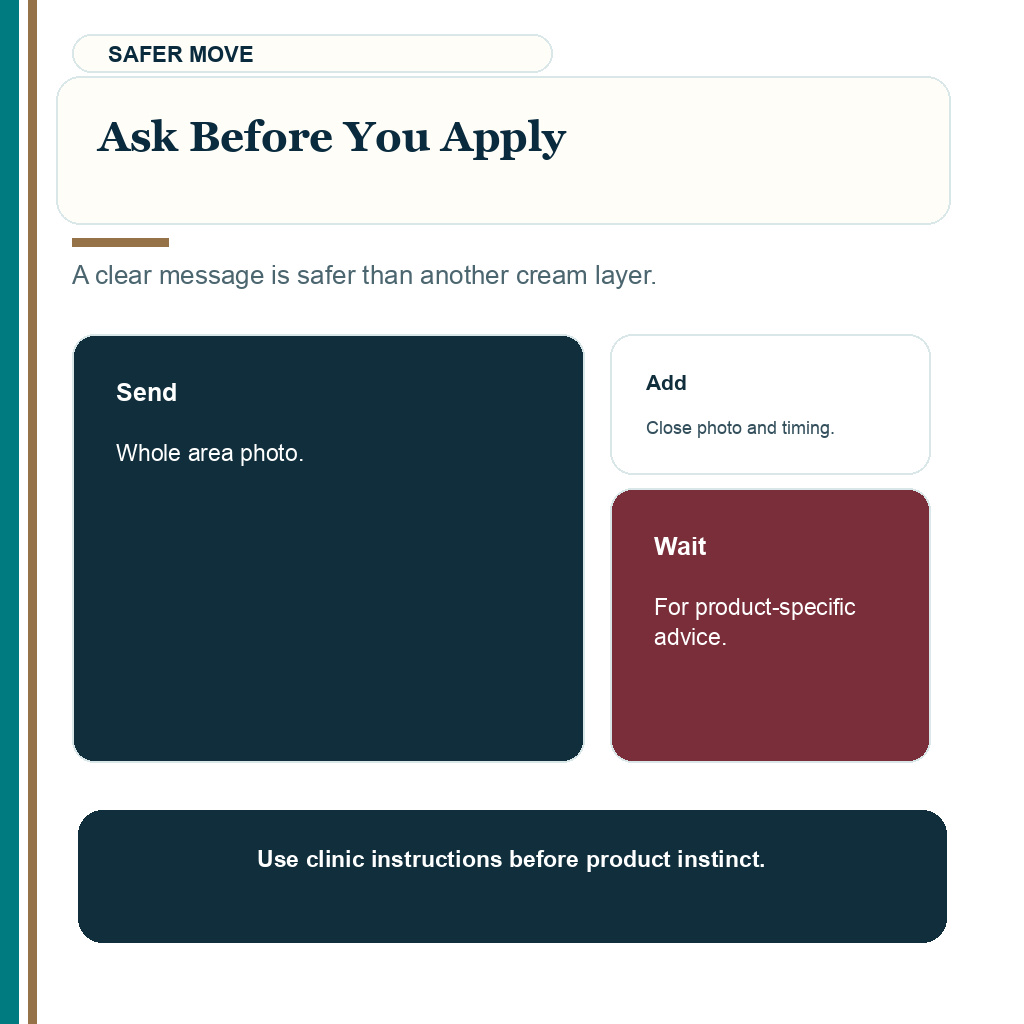
Use these 8 ointment guidance slides to compare recipient versus donor area caution, residue versus infection, warning signs, product label details, what to avoid, and when to pause before applying anything. Swipe sideways, use the arrows one slide at a time, or choose a number below the image.
Do not guess with ointment.
Recipient area is different.
Donor instructions are separate.
Residue is not always infection.
Warning signs change the plan.
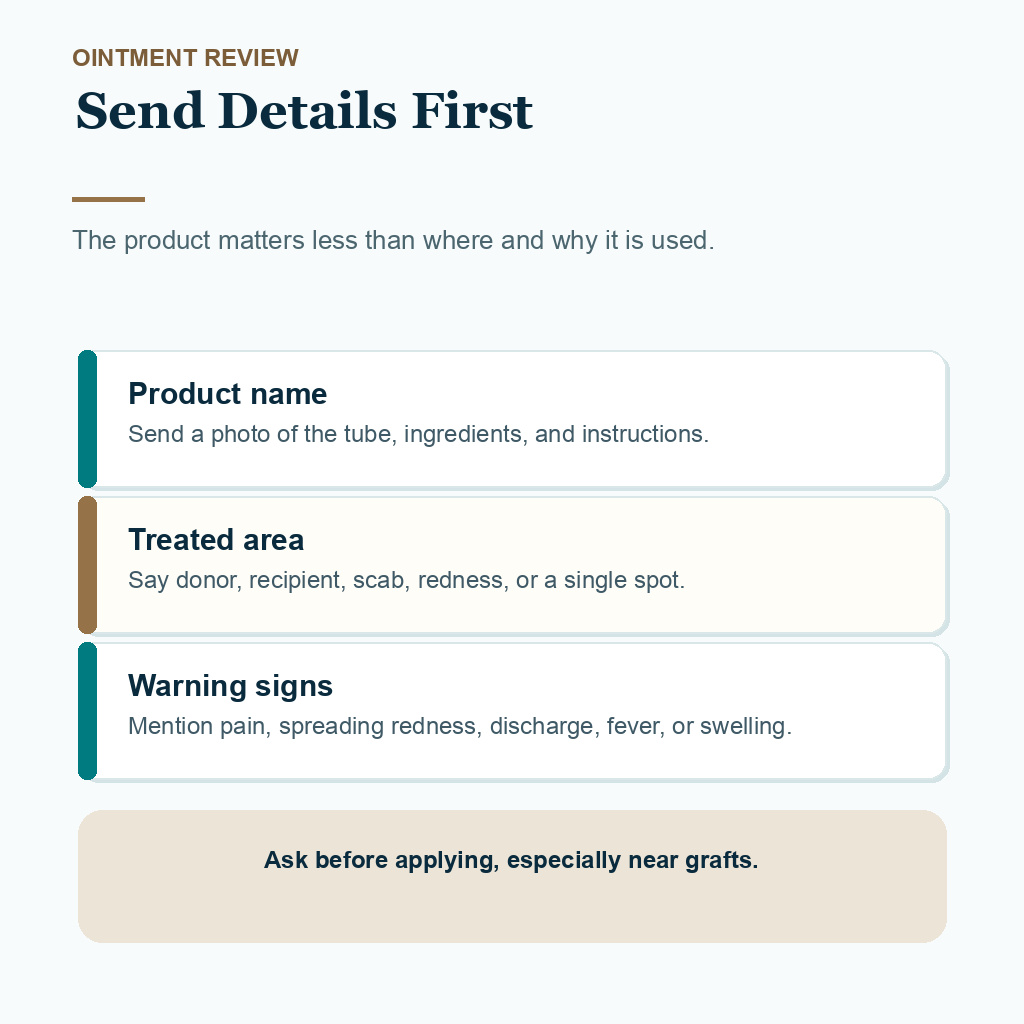
Send the product details.
Avoid while waiting.
Ask before you apply.
Photos and product details to send for review
Use the product review slides before looking at the support card. The point is to gather the right details, not to add more ointment quickly. A clear photo, product name, treated area, and warning sign description make the clinic’s advice safer.
Before using ointment, send the product, treated area, photos, and warning signs for clinic review.
Send one clear photo of the whole recipient or donor area first. Then send one closer photo of the exact concern. Use normal room light or daylight near a window. Avoid extreme flash, heavy zoom, wet hair, filters, or dramatic bathroom lighting.
Tell the clinic the surgery date, the day after surgery, the products you have already used, how often you wash, whether pain is increasing, whether there is smell or fluid, whether fever is present, and whether the area is spreading or improving. A photo without timing and symptoms is less useful.
If you were given an ointment, include a photo of the label or container. If you are about to buy a substitute, send the product name and ingredient list before using it. Also mention the expiry date, how many days you have used it, and whether the tube tip touched the scalp, fingers, or hair. Brand names and ingredients differ across countries, and a similar product may not be the same.
If the question is a possible reaction, send one photo before washing and one after the area is dry. That helps separate leftover ointment, softened scab material, and true skin redness. Mention exactly when you first applied the product and when the itching, rash, burning, or swelling began.
Follow up after hair transplant surgery matters because you should not be left alone to guess between infection, residue, crust, irritation, and normal healing.
Things to avoid while waiting for advice
Leave scabs and bumps alone rather than scratching, picking, scraping, or squeezing them. Avoid layering products. Steroid cream, antiseptic cleanser, antibiotic ointment, topical minoxidil, hair oil, and moisturizer should stay off the grafted area until the clinic clears them for your stage of healing.
Anxiety is not a reason to increase the amount. With topical products, location matters as much as dose. A thin layer in one instructed area carries much less risk than coating the whole scalp. Use the smallest directed amount with a clean method, wash your hands before and after, and keep the tube tip away from the scalp, grafts, fingers, and hair to reduce contamination.
Prescribed medicine should not be stopped, and antibiotics should not be started, without medical guidance. Follow the oral medication plan unless it is reviewed and changed. Report reactions, worsening symptoms, or stomach problems rather than adjusting doses silently. Leftover or borrowed antibiotics can delay the right treatment, cause side effects, and contribute to unnecessary antibiotic use. Combination products with steroid, numbing, or pain relief ingredients also need specific clearance.
Keep the scalp clean according to the washing plan. The guide to washing hair after a hair transplant explains the general technique, while your own clinic should confirm any difference in timing. Technique matters more than internet confidence.
Ointment should answer a specific need
Use a topical product only when there is a clear reason for that exact product on that exact area. Follow the prescribed amount and duration. A scalp that looks dry, crusted, white, yellow, red, or uncomfortable in a close photo is not enough reason to invent a treatment.
Start with whether this exact area needs ointment, better washing, photo review, medication, examination, or simply less product. Each route solves a different problem, so one cream recommendation cannot cover them all.
Clear photos can help separate surface residue from a reaction or a wound that is getting worse. Ointment should not hide pain, heat, spreading redness, discharge, or open skin while those signs still need assessment.
The product needs a defined job. Use the correct product on the correct area, in the prescribed amount, for a stated duration. If the skin worsens, stop treating the ointment as routine aftercare and have the reaction reviewed.