


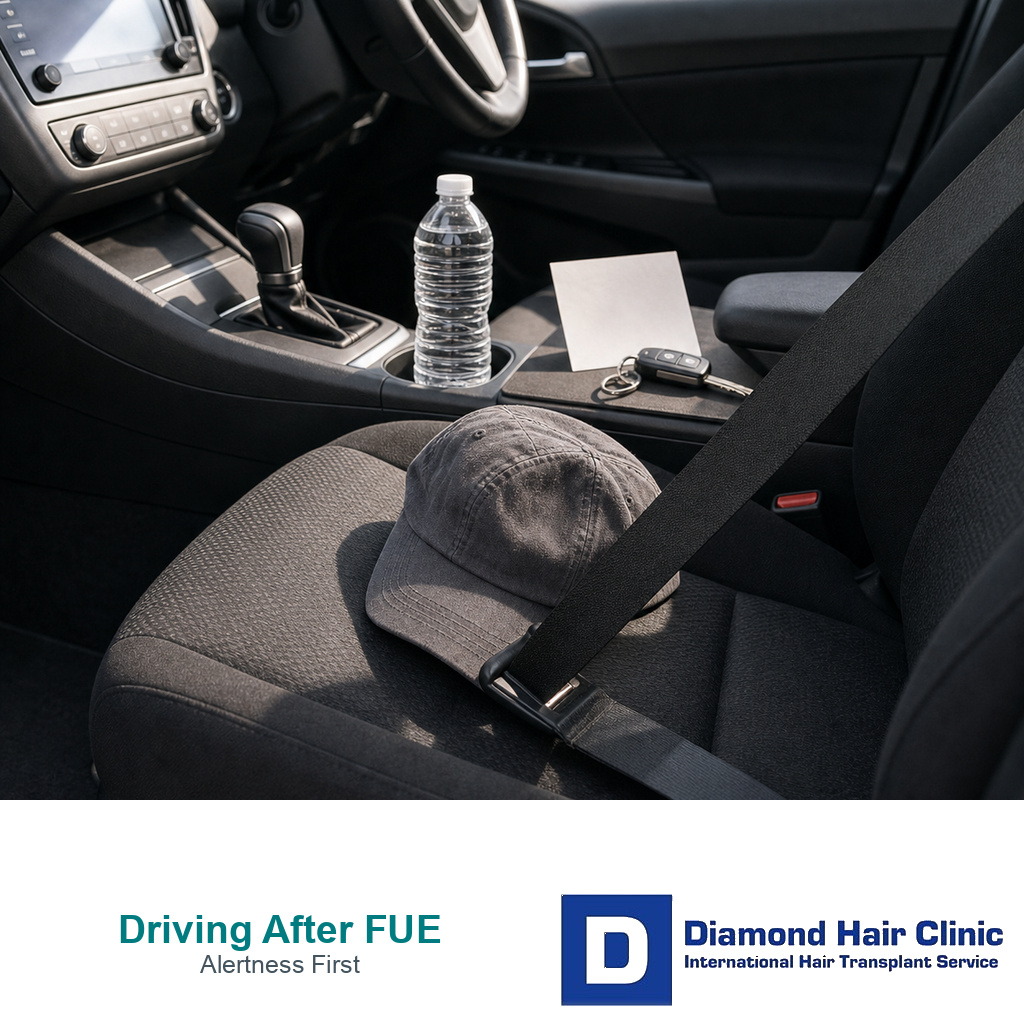
Safe Driving Depends on Alertness and Scalp Protection
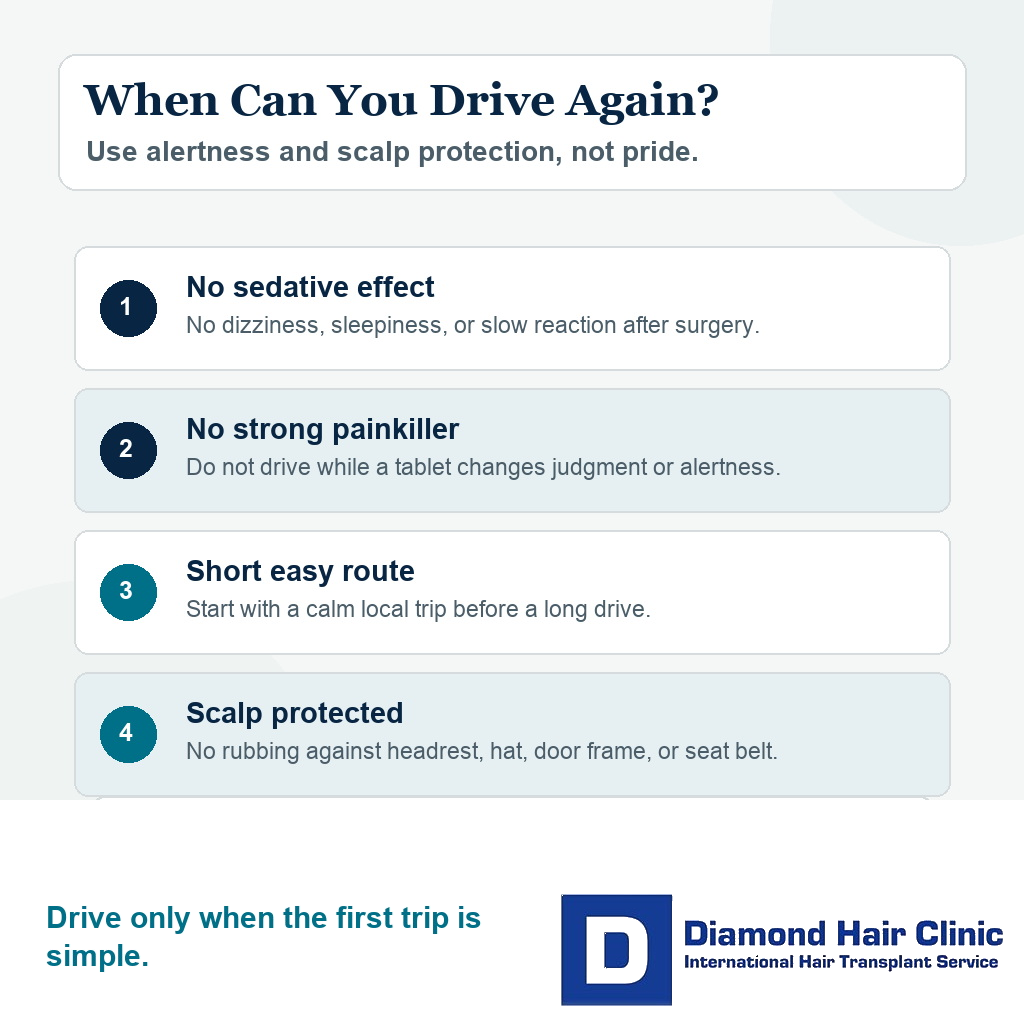
For most people, driving should wait on the day of a hair transplant. If you received a sedative, feel dizzy, feel unusually tired, took a strong painkiller, or had a long procedure, arrange a driver or clinic transfer and wait at least 24 hours before driving yourself. A short, familiar drive the next day may be reasonable only if you are fully alert, your vision is clear, pain is controlled without sedating medication, and you can protect the scalp from rubbing or bumps.
The car itself is not usually the danger. The risk is slower judgment, delayed reaction, head pressure against the seat, opening the car door carelessly, or trying to drive while the body is still processing surgery. This is not about being brave. It is a road safety and graft protection decision.
I separate confidence from readiness. You may feel relieved after surgery and want to return to normal life quickly. That feeling is understandable, but early recovery is not the moment to test independence. A safer first trip is quiet, planned, and uneventful.
Plan the first car trip before surgery day. Decide who drives, where your head will rest, and how you will get in and out without bumping the recipient area.
Driving readiness gate
Which driving route is safe enough after surgery?
Choose the closest situation before deciding whether to drive, ride as a passenger, or delay the trip.
Do not drive yourself. Arrange a transfer or driver, keep the head stable, and treat the first trip as part of aftercare rather than a test of independence.
Do not test yourself in traffic. Choose the boring transport plan and message the clinic with the surgery date, medication, symptoms, and route you need to take.
Driving usually waits on surgery day
Surgery day is a long day for the body, even when the operation is performed under local anesthesia. You may have been lying still for many hours, your scalp has been injected, the donor area has been worked on, and the recipient area is fresh. You may feel mentally clear, but reaction time and attention can still be lower than usual.
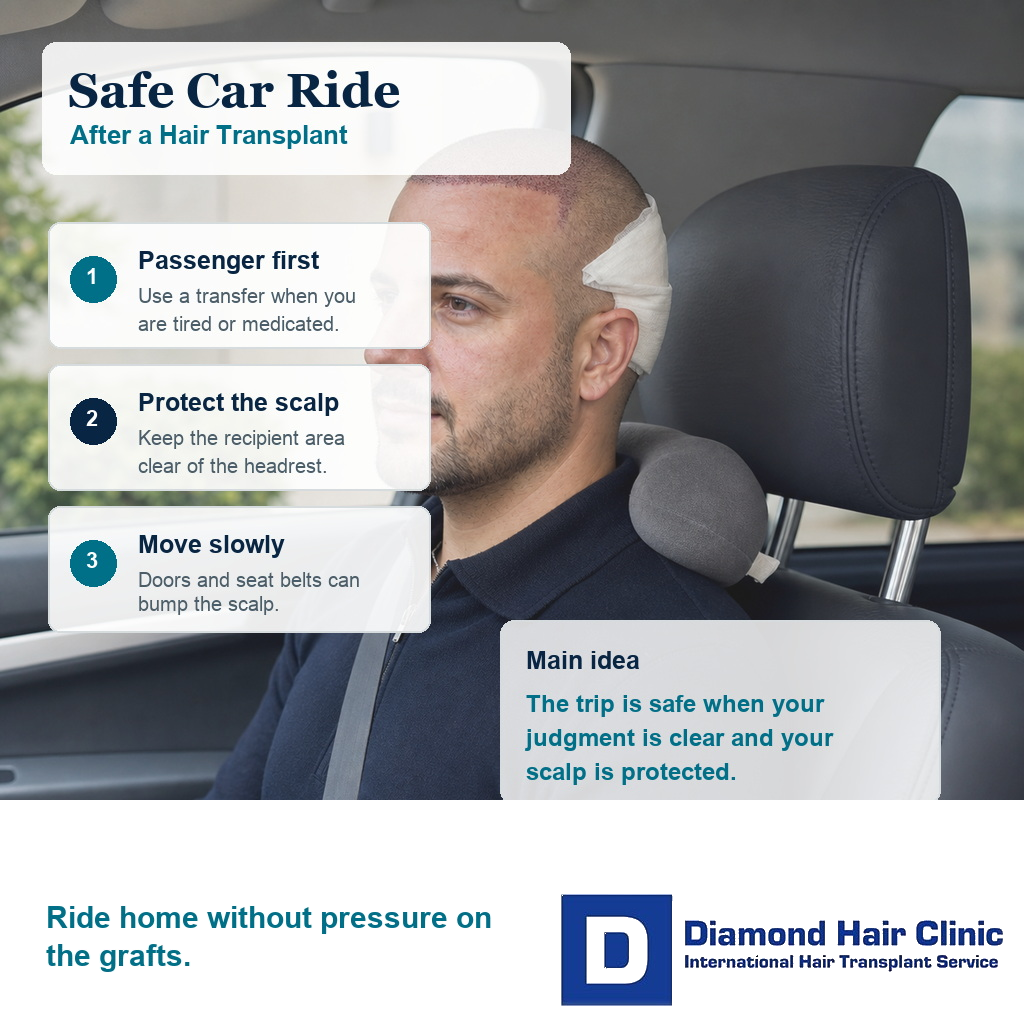
Leaving the clinic, entering traffic, checking mirrors, reacting to sudden braking, and managing a fresh scalp at the same time is a poor combination. The first trip after surgery should be quiet and predictable, with the same seatbelt and headrest positioning after FUE used for hotel transfers. Sitting as a passenger with the head protected is different from driving yourself through traffic while tired.
This is also part of proper hair transplant aftercare. Aftercare is not only washing and medication. It includes how you move, how you sleep, how you travel, and how you avoid small accidents during the first days.
Factors that change the driving answer after surgery
The answer changes most with medication, procedure length, tiredness, swelling, pain, anxiety, and the type of drive. A short quiet route with another person nearby is not the same as a long drive alone at night. Someone who took only an approved mild painkiller is not in the same situation as someone who feels sleepy after medication.
Decide the ride home before the procedure starts. It is harder to judge driving clearly after a long operation, medication, and travel fatigue.
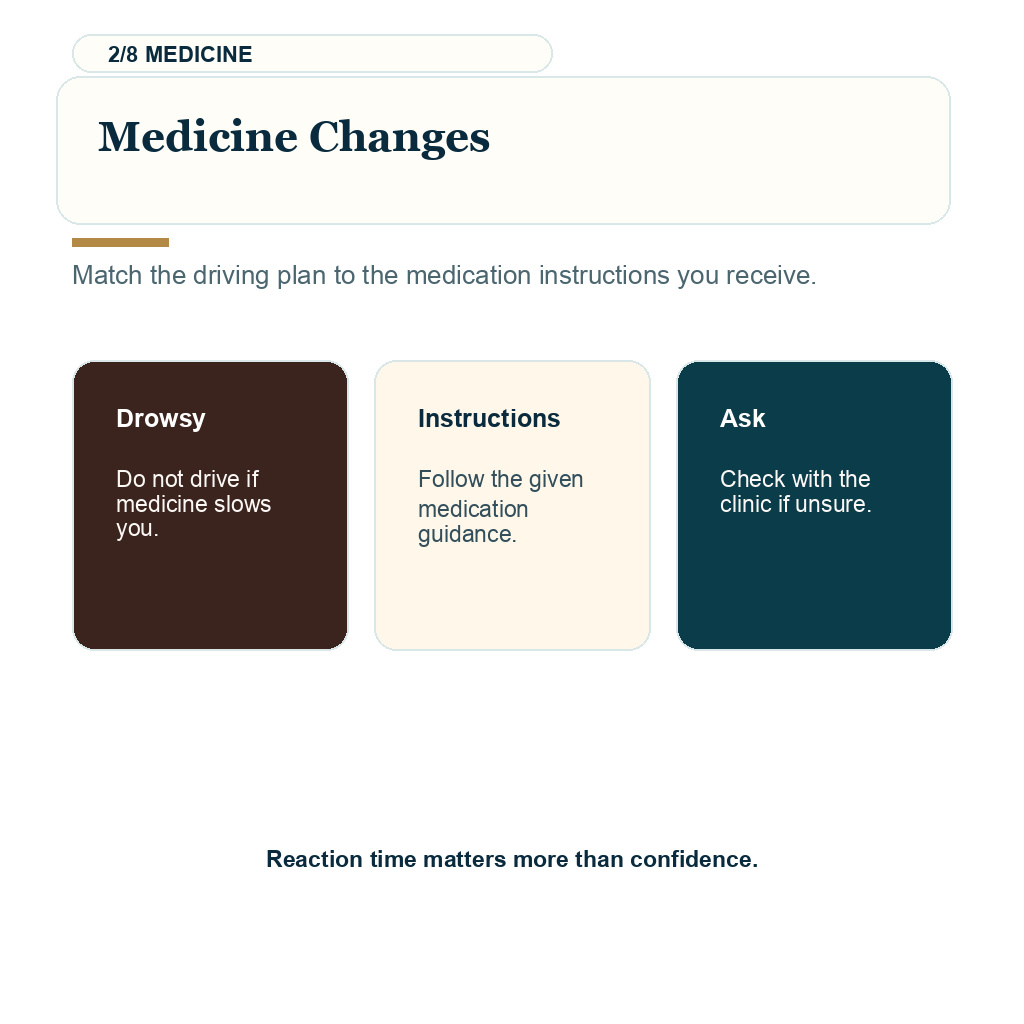
If a tablet affects alertness, balance, vision, or reaction time, do not drive. That includes stronger pain medication, sleeping tablets, anxiety medication, and any medicine that makes you feel slow. If the medication label, pharmacist, or clinic says not to drive, do not treat feeling awake as permission. Keep pain control and driving separate. Painkillers should make recovery safer, not make you test traffic while your judgment is slower. Keep that in mind with painkillers after a hair transplant.
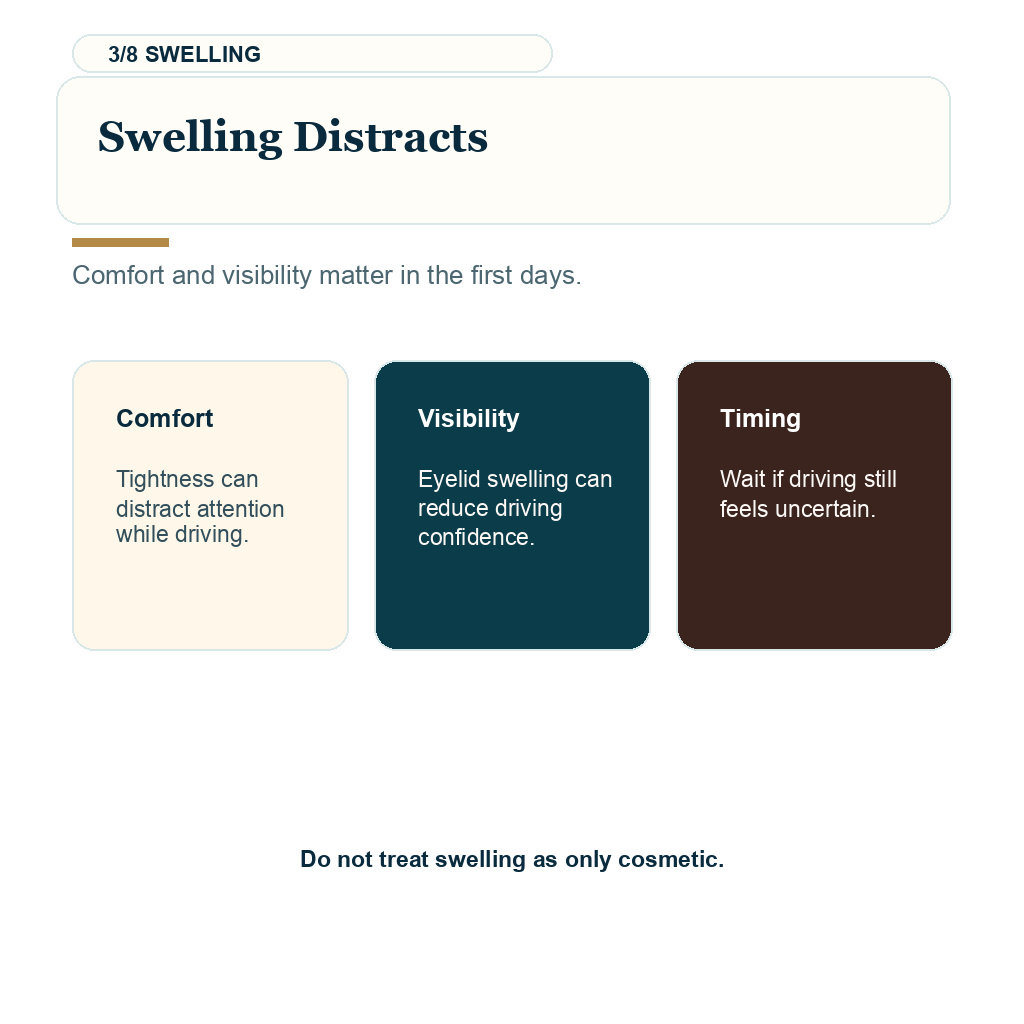
Your general condition matters too. If there is unusual bleeding, strong headache, faintness, chest symptoms, high blood pressure concerns, swelling after a hair transplant that affects comfort or vision, or a feeling that something is not right, driving should wait. With those signs, the priority is clinical review, not getting home quickly.
There is another detail people often miss. The first night can be uncomfortable because sleeping position, mild tightness, and worry about the grafts all affect rest. If you slept poorly, even a normal medication plan can feel heavier the next morning. Delaying the drive is safer than combining poor sleep, a fresh scalp, and traffic.
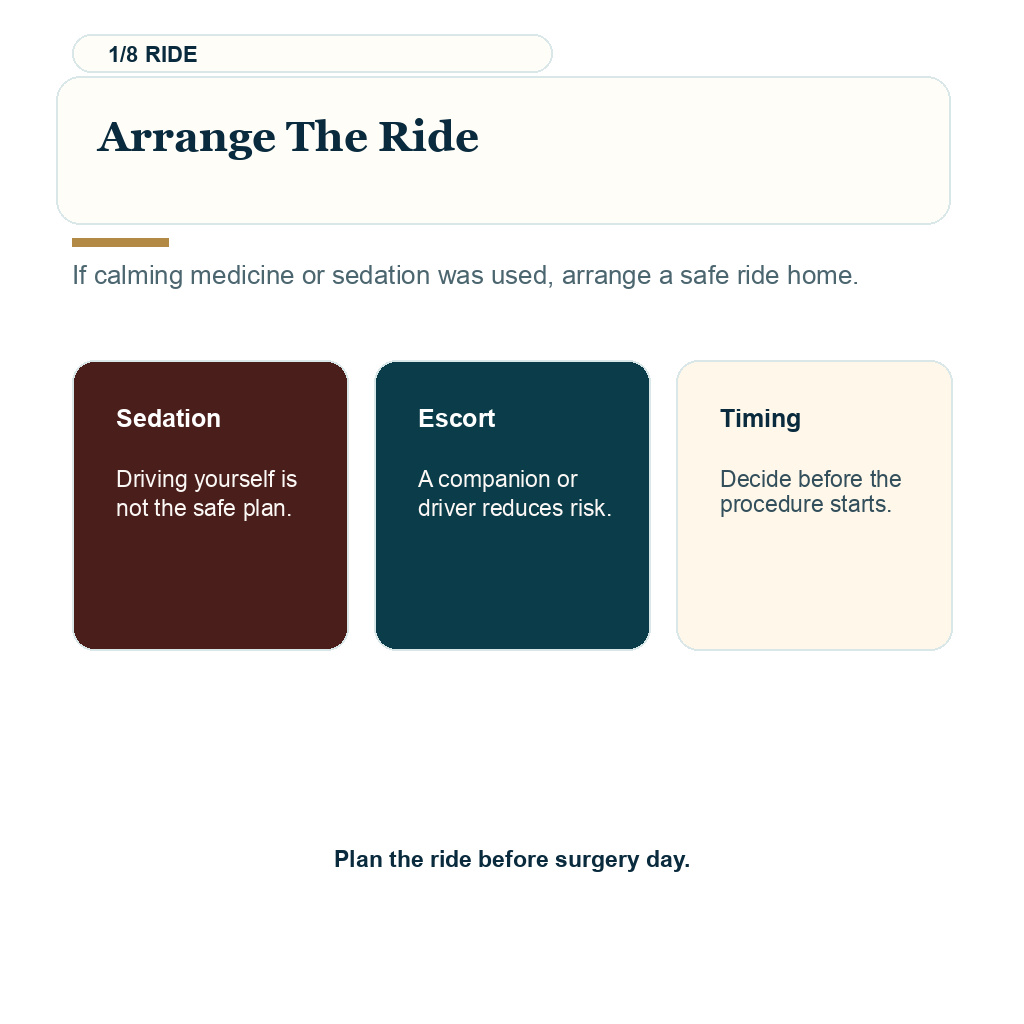
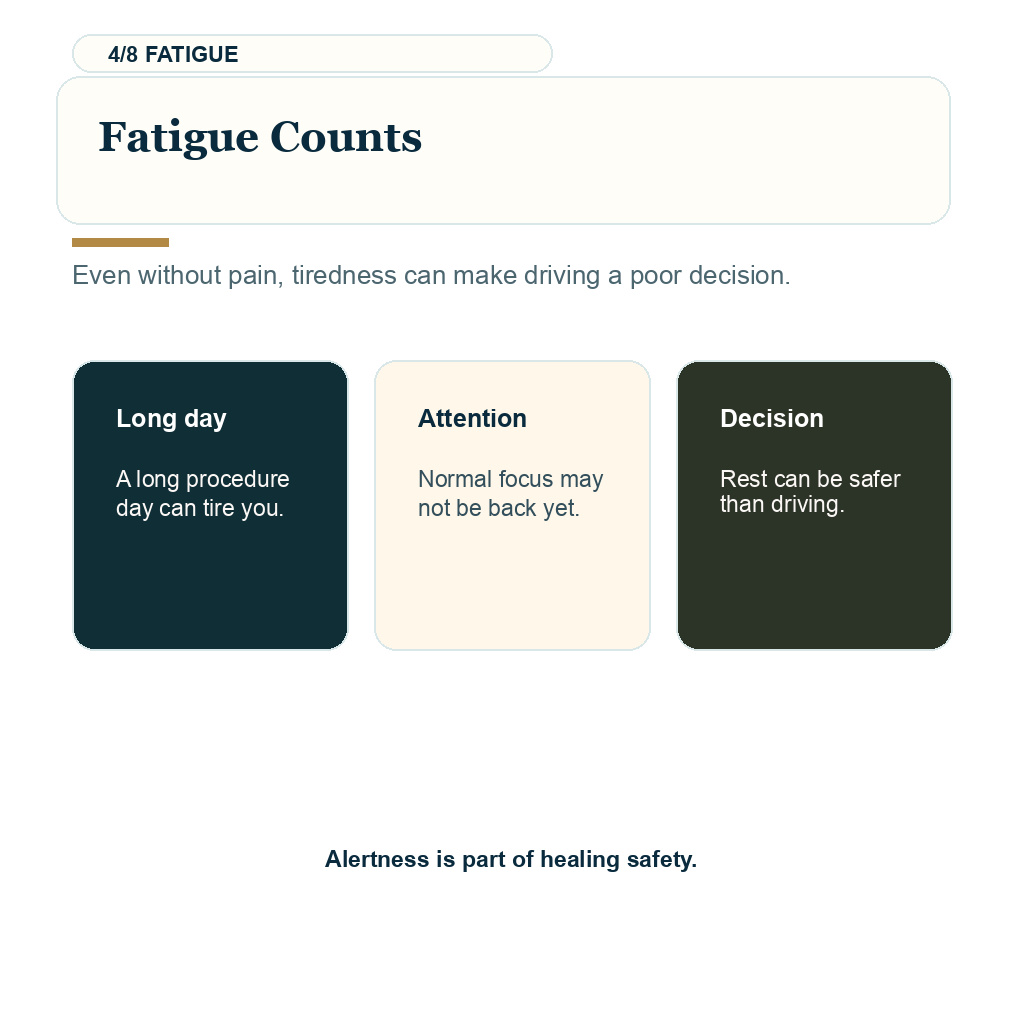
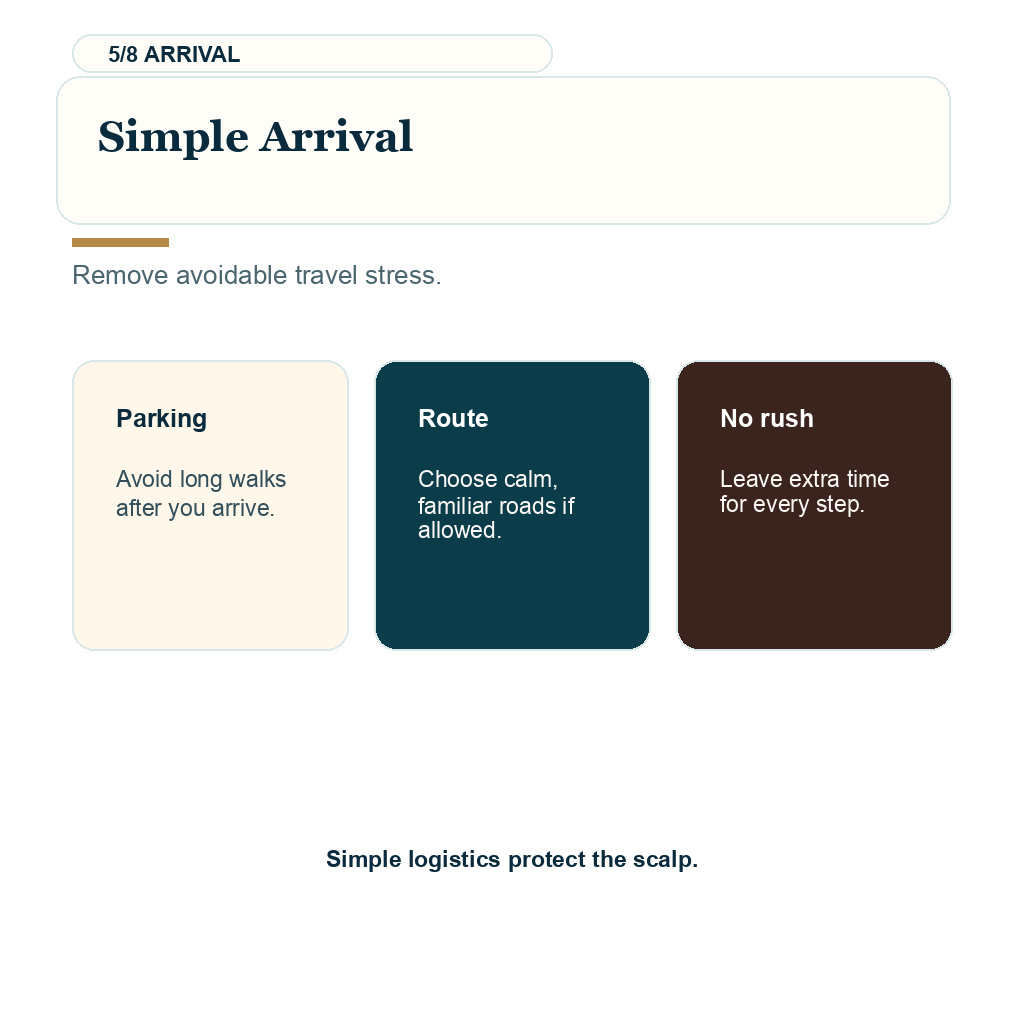
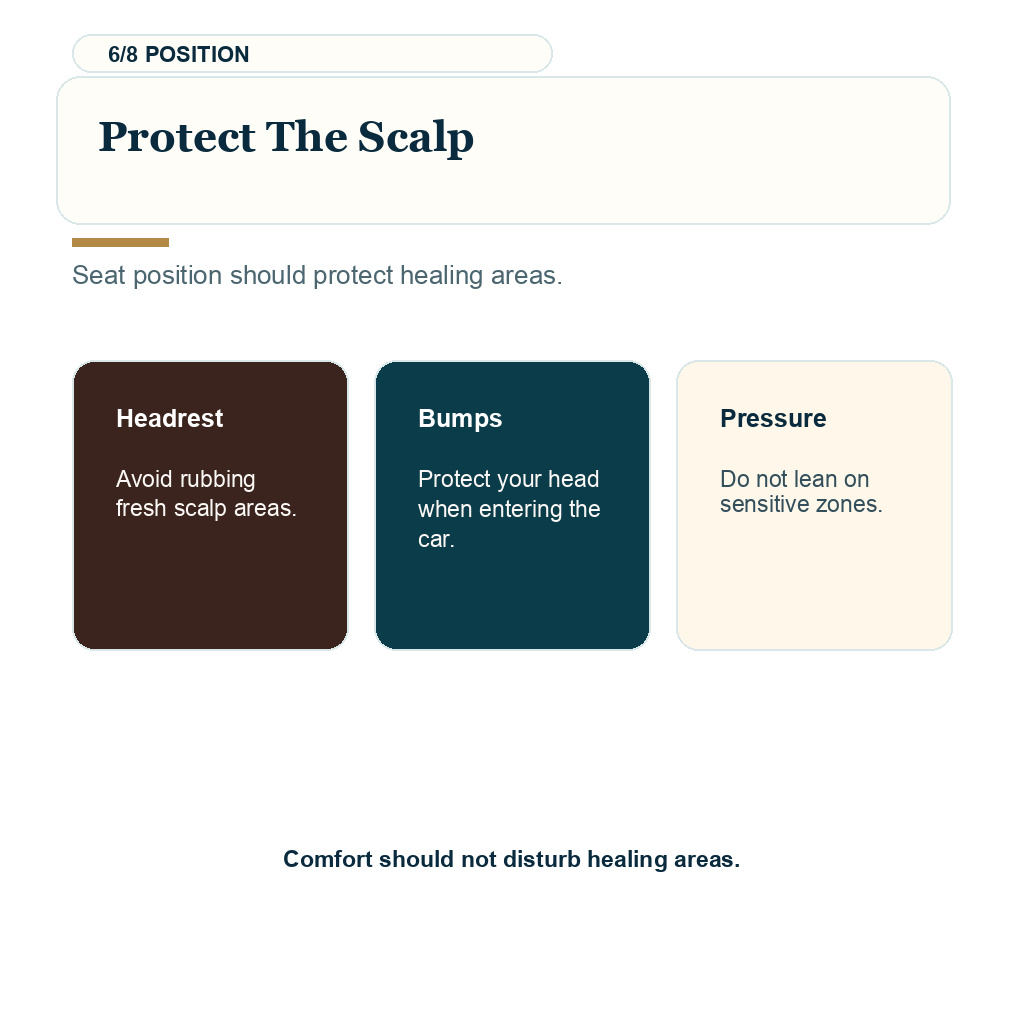
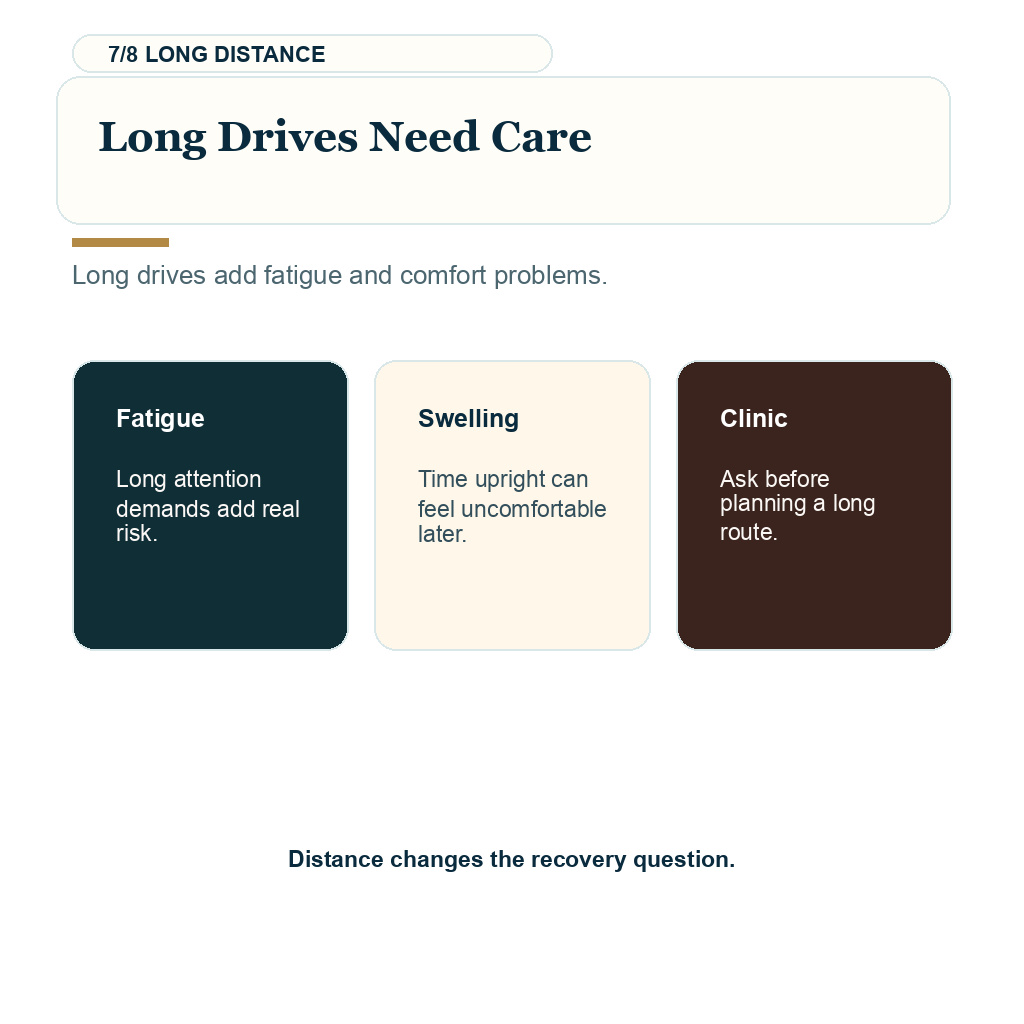
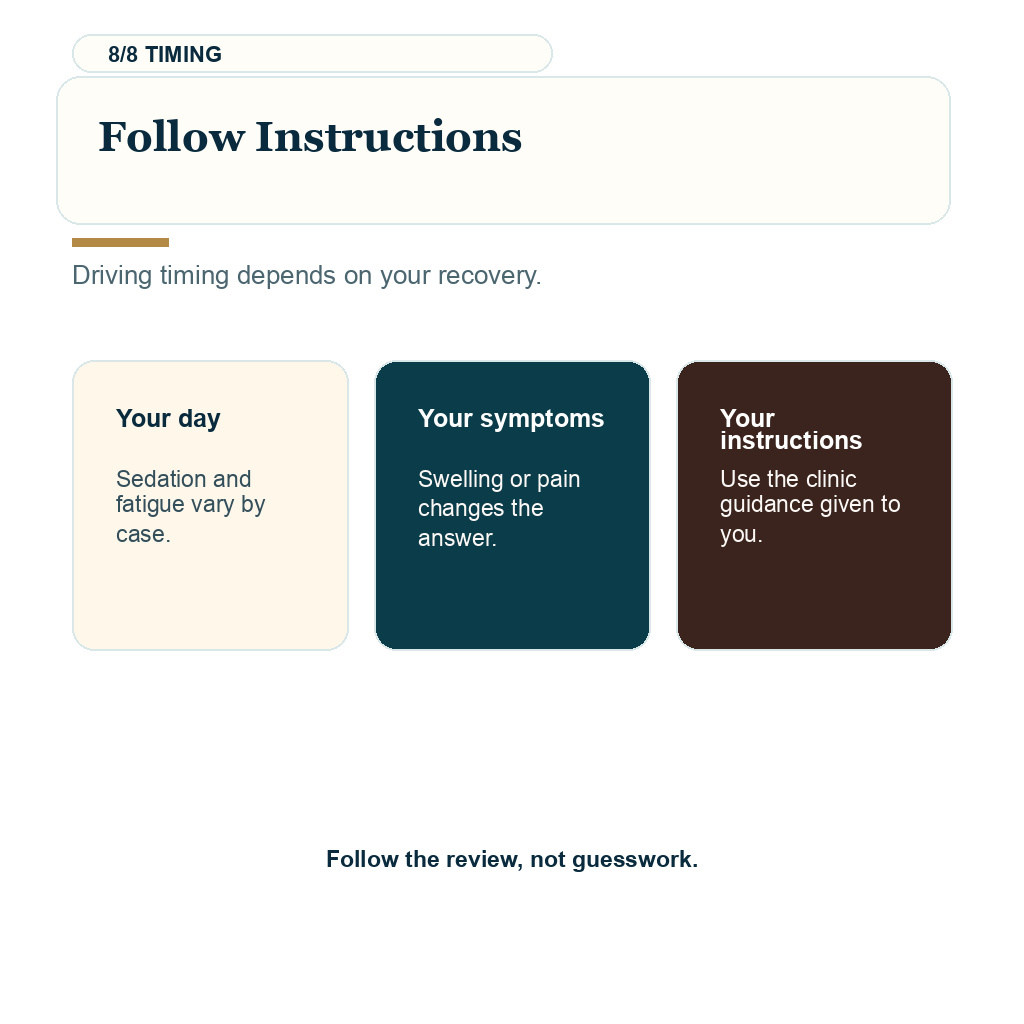
Use the 8 driving safety slides below to separate sedation, medicine effects, swelling, fatigue, arrival logistics, scalp protection, long distance travel, and clinic instructions. Swipe sideways, use the arrows, or choose a number below the image.
Can local anesthesia still affect driving readiness?
Local anesthesia usually does not create the same driving restriction as general anesthesia, but the overall surgical day still matters. Some people feel lightheaded after a long session. Some feel a temporary adrenaline effect. Some feel drained because they slept badly before surgery or became anxious during the day.
Hair transplant anesthesia is normally controlled and well tolerated, but it still belongs in the driving discussion. If your heart feels unusually fast, your blood pressure has been difficult, or you feel shaky after the procedure, driving is not a good test of confidence. If that is happening, let someone else handle the road.
The medical side is covered more fully in the article about local anesthesia and adrenaline in hair transplant surgery. For driving, use a practical test instead. You should feel steady, alert, and able to respond normally without shaking, rushing, or doubting your reactions.
If a clinic uses any sedative or anxiety tablet, the instruction needs to be clear. Do not drive, and arrange transport before the operation starts. Vague advice after medication has already been given is not fair to the patient, because that is not the best moment to judge the risk alone.
Is a short drive different from a long drive?
Yes. A short, familiar drive the day after surgery may be reasonable for some people if recovery is stable and no sedating medication is being used. A long drive is a different decision. Long driving increases fatigue, neck stiffness, scalp pressure, dehydration, and the chance that you will touch or adjust the head without thinking.
A long drive also makes it harder to stop and ask for help if swelling, pain, bleeding, or dizziness appears. If you live far away, arrange a driver, use clinic transport, or break the trip into a more controlled plan. The first recovery day should not become a test of endurance.
People sometimes compare driving with flying after a hair transplant. The principle is similar. Travel itself is not always dangerous. Tired behavior, pressure, poor sleep, heavy bags, low car doors, and sudden contact are the real problems.
For a long route, small practical details matter. Can you stop without rushing? Can someone else carry bags? Is the route smooth enough to avoid repeated sudden braking? Is there a comfortable seat position that does not press the grafted area? These details decide whether travel stays controlled or becomes risky.
Taxis, transfers, and travelling alone
A transfer or taxi is usually better than driving yourself on surgery day, but it still needs attention. Enter the car slowly. Do not lean the recipient area against the door frame. Avoid pushing the grafted area into the headrest. Keep the seat belt comfortable and avoid rubbing the scalp while adjusting your position.
If you are travelling alone, the clinic system matters more. A tired person should not have to negotiate transport, carry heavy bags, search for directions, or manage everything while protecting fresh grafts. Solo travel needs a clearer plan than people often expect.
The broader article about whether it is safe to travel alone to Turkey for a hair transplant covers this in more detail. The driving question sits inside the same problem. A patient without help needs fewer moving parts, not more pressure.
Sitting in the car after FUE
Sit upright, move slowly, and keep the recipient area away from direct pressure. If the grafts are in the front, do not bend forward suddenly into the dashboard or door frame. If the grafts extend into the crown, be careful with the headrest. A soft neck pillow can help some patients, but it should support the neck without pressing the grafted area.
During the 10 to 14 day protection window, rubbing, scratching, pressure, and sudden impact matter more than many people realize. If a car headrest, hoodie, pillow, towel, or hat touches the grafts repeatedly, it can become a source of friction even if it does not feel dramatic.
For that reason, car travel is also about contact control. Many early worries come from ordinary contact, not from the transplant failing by itself.
Motorcycles, scooters, and bicycles need more caution
Motorcycles, scooters, and bicycles need more restraint than a normal car. They require balance, faster reactions, more exposure to wind and dust, and often a helmet or tight head covering. Those details matter after a hair transplant.
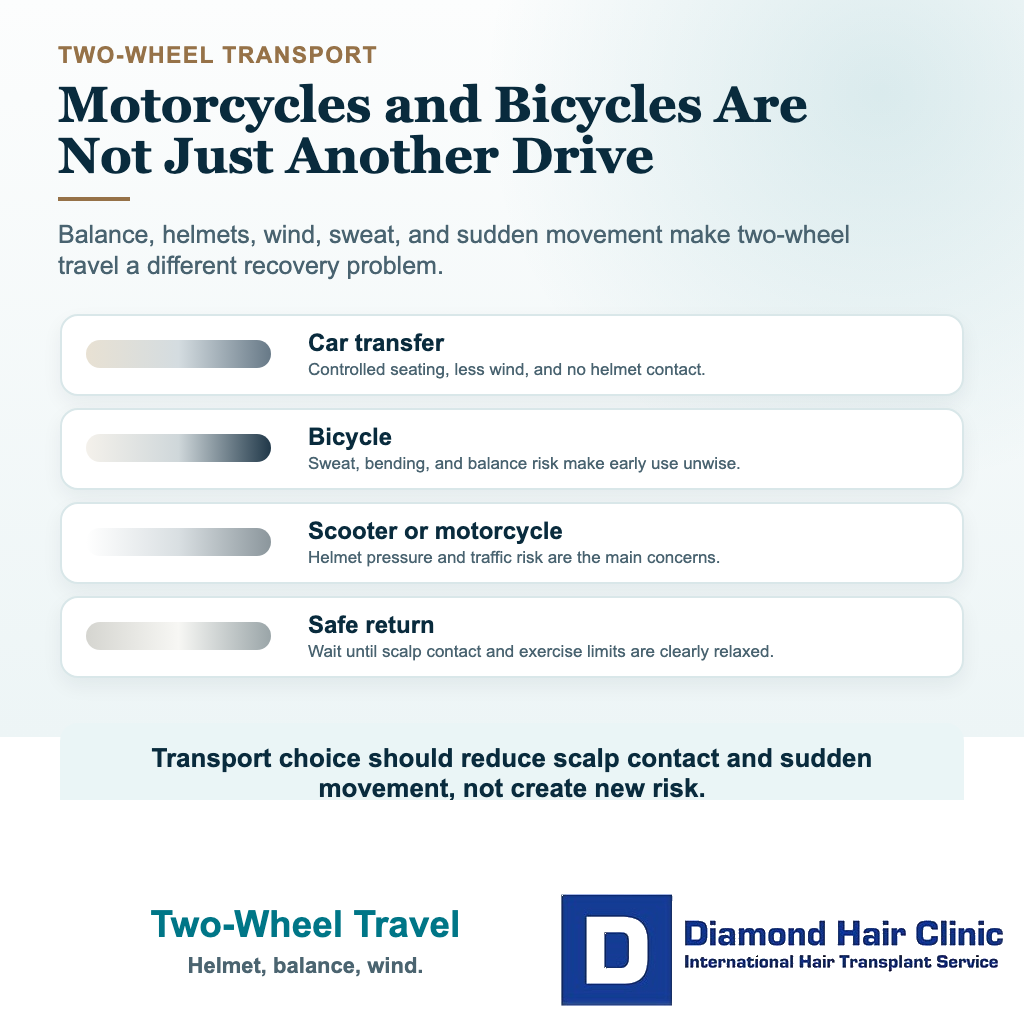
A helmet can press or rub the recipient area, especially if grafts are near the front or crown. Even if the helmet does not feel painful, repeated pressure and movement are not useful during the early graft protection period. Tight caps create a smaller version of the same problem, so the timing of a hat after a hair transplant should be handled carefully.
A motorcycle, scooter, or bicycle should not be the first return to normal activity. If transport is needed soon after surgery, a planned car transfer is safer. Save anything that needs a helmet, balance, or sudden road reactions until the scalp is more settled and your clinic has cleared the timing for your own case.
When is it reasonable to drive again?
Many people can consider a short drive after 24 hours if they are fully alert, not taking medication that affects driving, sleeping reasonably, and not experiencing dizziness, heavy swelling, or strong pain. The first drive should be short and familiar. Do not make the first test a long route, heavy traffic, night driving, or a stressful highway trip.
If the procedure was large, the session was long, you are very swollen, or the trip is far, waiting longer is sensible. Some people feel technically capable of driving but still move like someone in recovery. That is not the time to prove independence.
This timing also matters for international patients deciding how many days to stay in Turkey after a hair transplant. The stay should leave room for rest, a first wash, early review, and an organized route home, instead of making the patient choose between a flight schedule and a calm recovery.
Can driving damage the grafts?
Driving does not damage grafts by vibration alone in a normal car. The grafts are more likely to be disturbed by direct contact, rubbing, scratching, impact, or careless movements while getting in and out of the vehicle. If you bump the recipient area against the car frame in the first days, treat it seriously, especially if there is bleeding or an open spot.
A light brush without bleeding usually does not mean everything is ruined. A harder hit, fresh bleeding, visible tissue, strong pain, or a clear gap in the recipient area deserves photo review by the clinic. Do not start rubbing or cleaning aggressively because you are worried.
If the recipient area hits the car frame, treat it like the separate situation explained in bumped your head after a hair transplant. With driving, the best protection is prevention. Move slower than usual, ask for help with bags, and do not rush into a low car while distracted.
Judging clinic instructions about driving
A clinic’s instruction about driving should match the operation and the patient, not only a generic aftercare sheet. I would expect the clinic to ask whether you are travelling alone, how far you need to go, what medication you received, whether you feel sleepy, and whether a transfer is arranged.
A blanket instruction that everyone can drive immediately should make you slow down and ask more questions. Some people may be fine the next day. That is different from treating driving as irrelevant. A careful surgical plan respects the small recovery details because those details shape patient safety.
Driving advice is also part of judging a surgeon-led procedure. A clinic that plans the hairline but ignores the first trip home has not finished the practical plan. Recovery planning belongs before surgery day, especially for international patients who need transport, hotel recovery, and a return route.
Some clinics make the answer sound too easy because easy answers help sell surgery. A serious answer usually has conditions. What medication will be used? How long is the session? Who checks the patient before leaving? How far is the hotel or home? You need a plan, not only a one word answer.
The ride home is part of recovery safety
Arrange the ride while you are still thinking clearly. After a long procedure, pain medicine, swelling, poor sleep, or travel fatigue can make a patient overconfident. The first car door, headrest, luggage lift, or wrong turn can become the problem.
Leaving as a passenger keeps the first trip simpler. Sit upright, move slowly, and keep the grafted area away from pressure. Driving can wait until alertness, balance, scalp comfort, and medication effects are no longer in question. Being able to answer messages is not the same as being ready to drive.
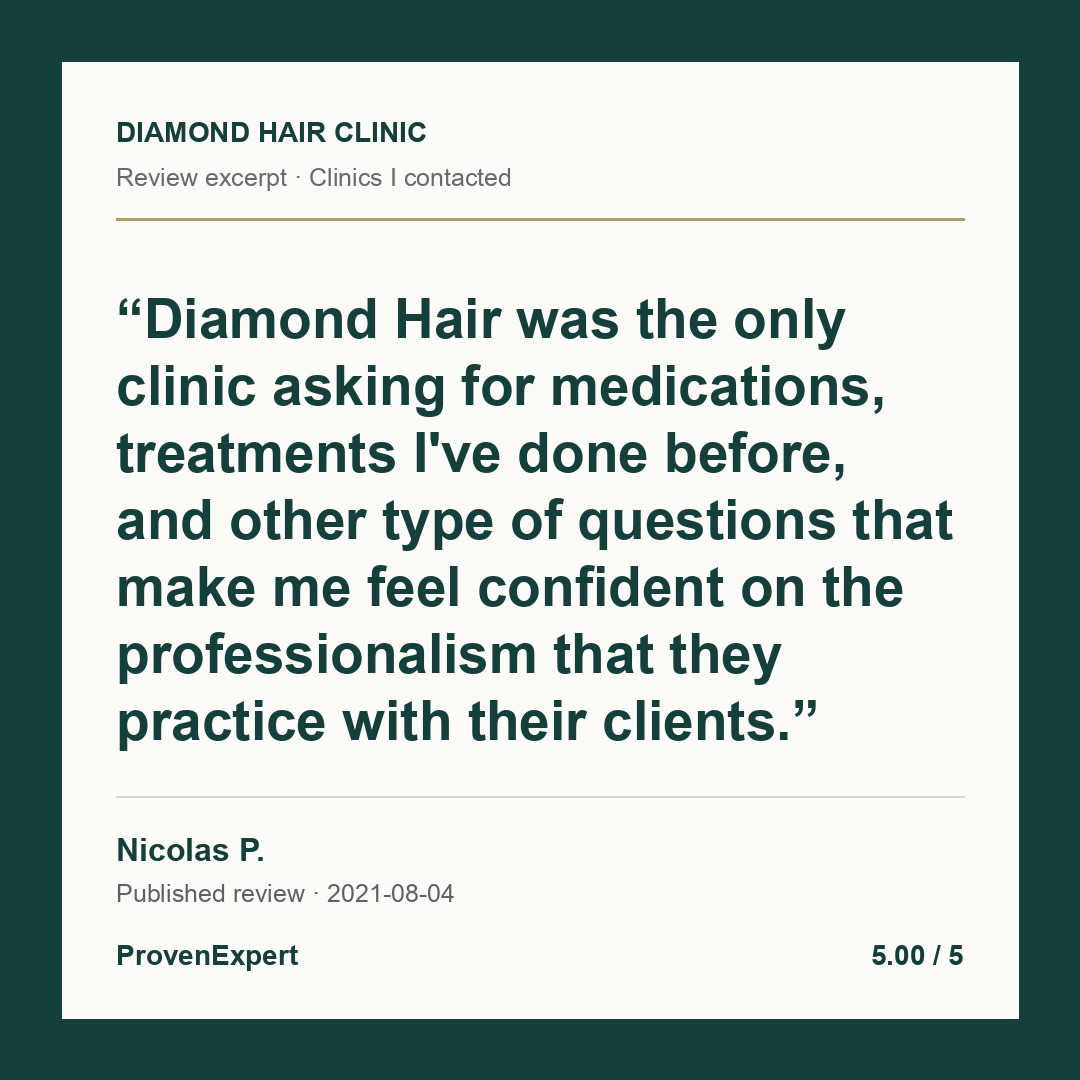
Read this review excerpt
Diamond Hair was the only clinic asking for medications, treatments I've done before, and other type of questions that make me feel confident on the professionalism that they practice with their clients.