


Did I Damage My Hair Transplant by Lifting Something Heavy?
If you lifted something heavy once after a hair transplant, you probably did not damage your grafts if there was no fresh bleeding, no open spot, no direct hit to the recipient area, and no sudden worsening of swelling or pain. Stop lifting now, protect the scalp again, and share clear photos with your clinic if anything on the scalp looks different.
I take the first 10 to 14 days seriously because the grafts, scabs, donor area, swelling, and skin are still settling. Heavy lifting is not only about muscle effort. It can involve straining, holding the breath, head pressure, sweat, bending, accidental impact, and the temptation to keep checking the grafts with your fingers.
A single accidental lift is different from repeated heavy work, a gym session, or carrying luggage all day. The important detail is what happened to the scalp during and after the lift. If the skin stayed closed and settled, the risk is usually much lower than it feels in that first worried moment. Repeated lifting on a dusty site, especially with heat or a helmet, belongs in construction work after a hair transplant planning rather than isolated lifting triage.
When the heavy task is part of work, the next shift should change instead of testing the scalp again. Luggage, boxes, pets, and gym equipment should stay outside the routine until repeated effort is cleared.
Carrying a suitcase, moving box, or child can create the same bracing, bending, sweating, and accidental contact risk as a gym lift.
The lift itself is only one detail. Breath holding, bending, sweat, carrying luggage, and bumping the head can make a task that looks light harder on early healing.
First checks after lifting something heavy
First, sit down and look at the recipient area in good light. Do not rub the scalp, press the grafts, or scratch away a scab to see whether everything is still there. That kind of checking can create more trauma than the lift itself.
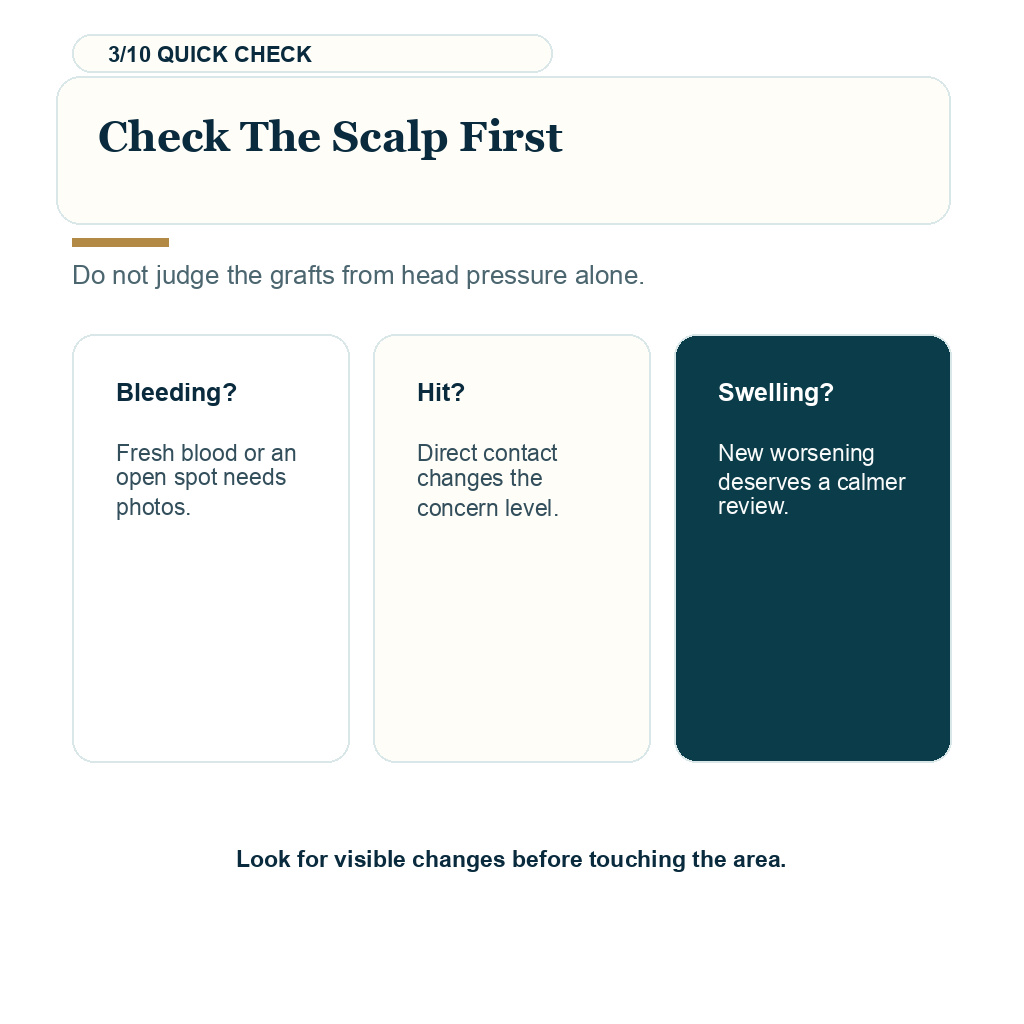
Look for fresh bleeding, a wet open point, a scab that has been forced away, a piece of tissue, increasing pain, or swelling that is suddenly worse than before. If none of those are present, take one clear photo, rest, and return to your normal instructions.
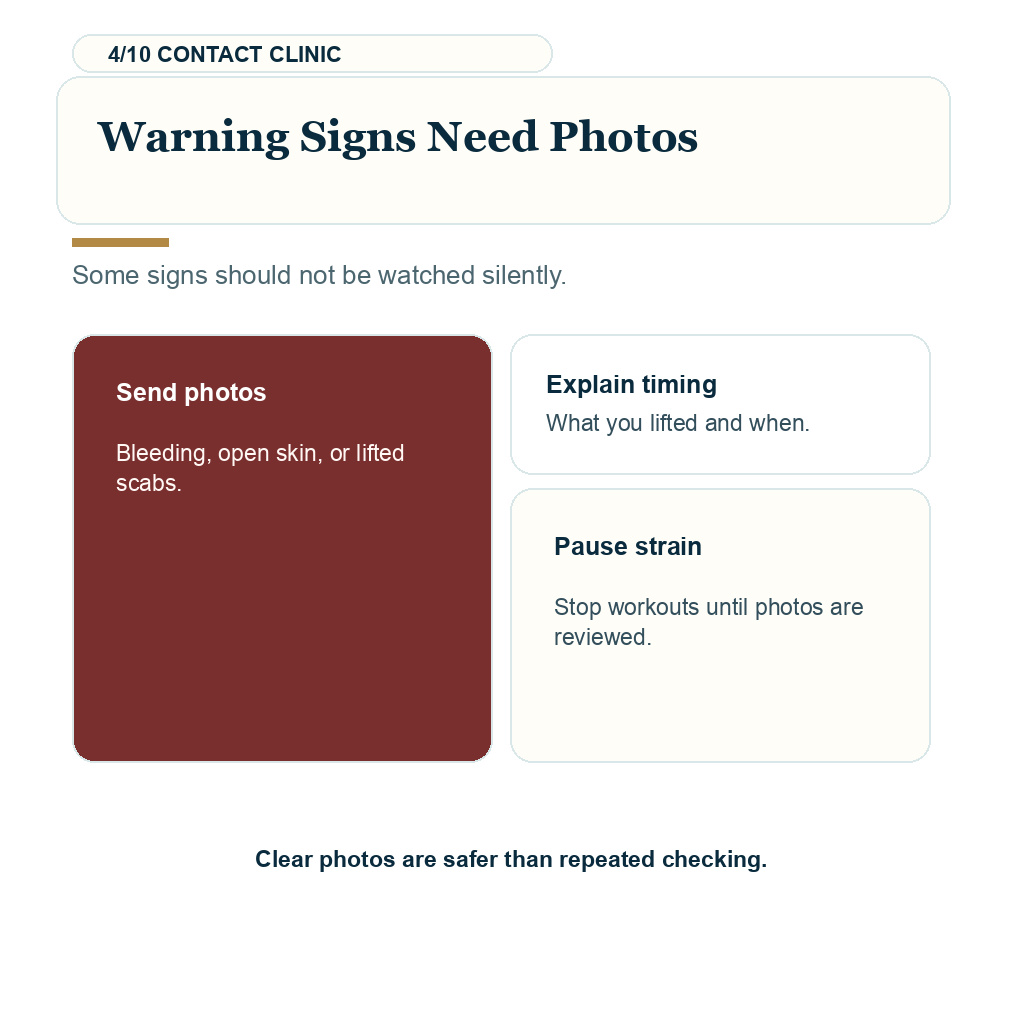
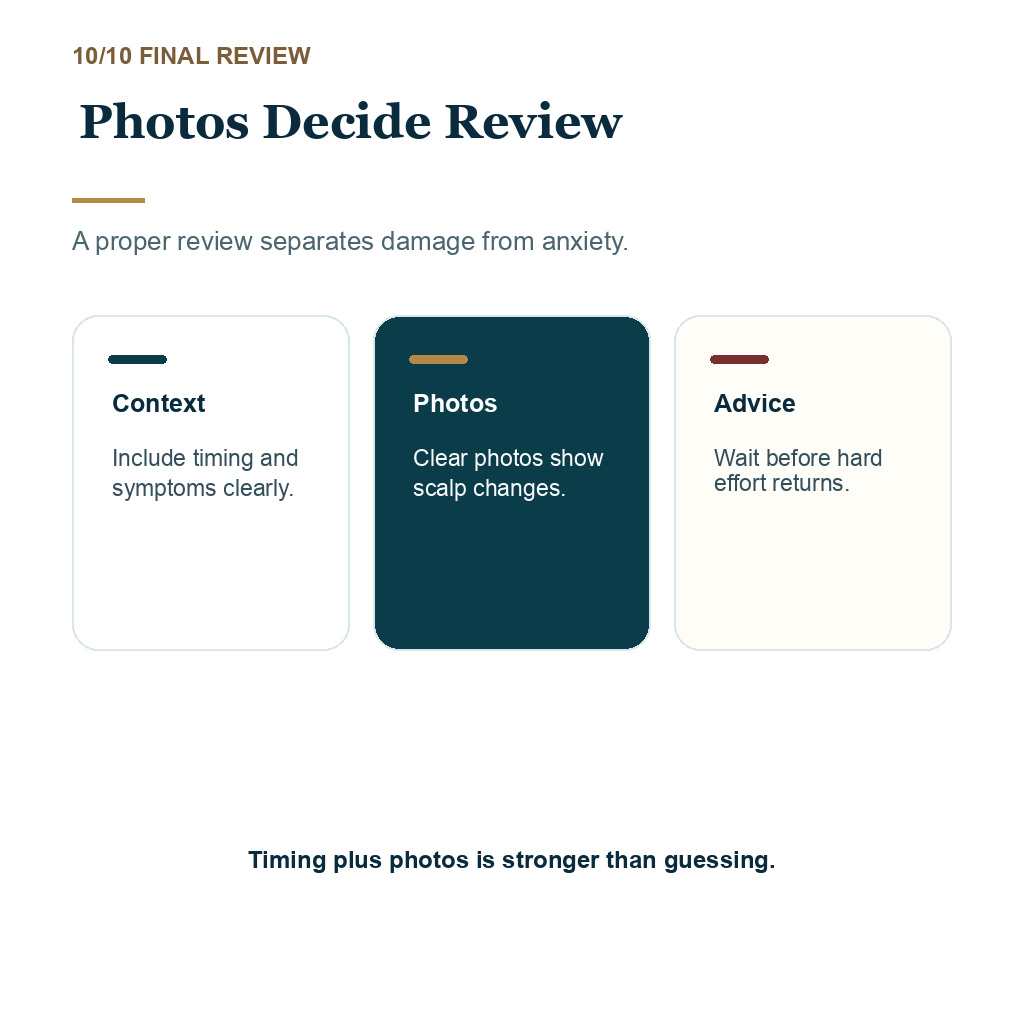
If you are not sure what you are seeing, share the photo with the clinic. Timing and clear images usually tell me more than a frightened description. Say what you lifted, how many days after surgery it happened, whether you strained hard, and whether anything touched the grafted area.
Keep the message factual. Rechecking the same spot again and again can become the real risk. The scalp needs gentle handling and one useful photo, not repeated inspection after every lift.
Timing changes the level of concern
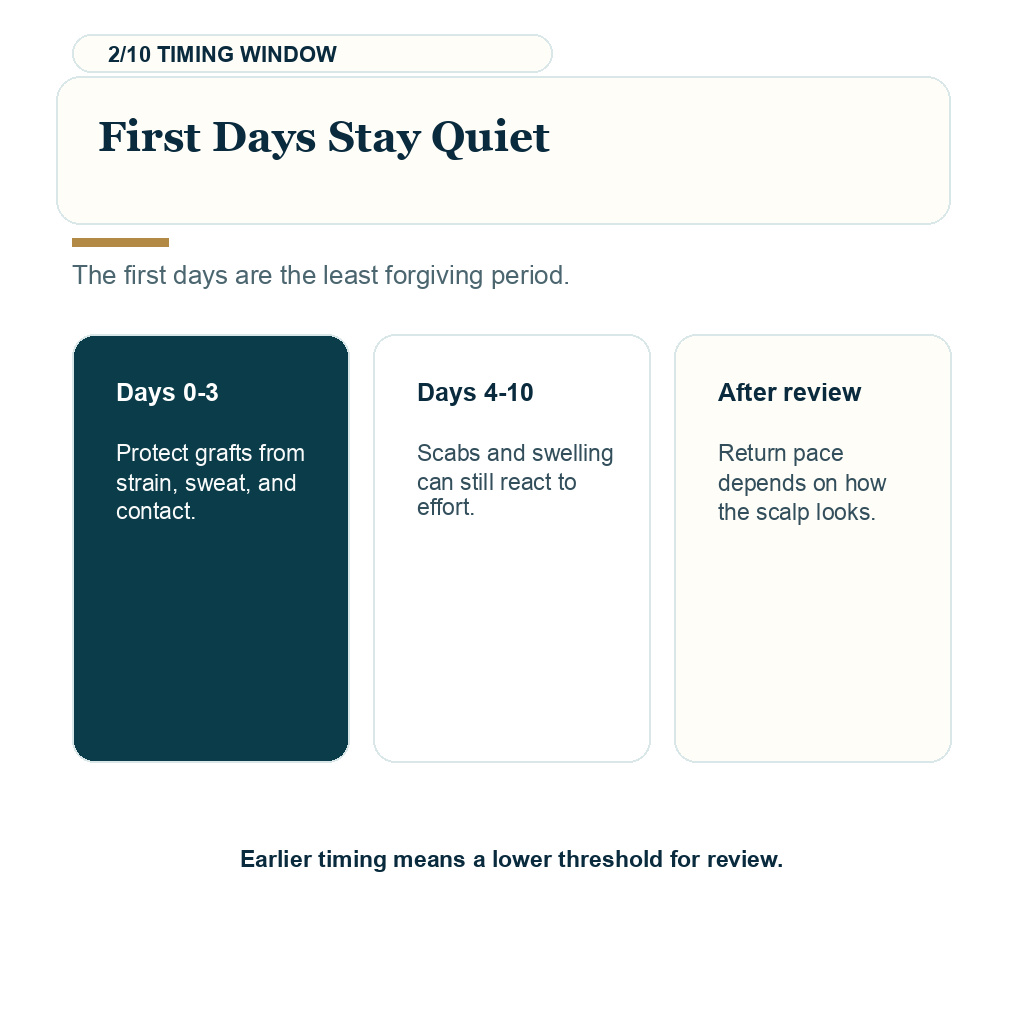
Lifting something heavy on the first night or in the first few days deserves more caution than lifting after the scabs have cleared and the grafts are already stable. Early lifting can raise pressure, increase swelling, trigger sweating, or lead to accidental bending and impact at the exact time when the scalp is most sensitive.
After day 10 to day 14, the same mistake is usually less concerning if there is no bleeding, no open spot, and no direct trauma to the recipient area. Do not read that as permission for heavy training. It means the risk is judged differently. I look at timing, symptoms, and photos together rather than treating every accidental lift as a ruined result.
Heavy lifting can raise pressure, sweat, and contact risk
Heavy lifting can raise heart rate, increase pressure in the head and face, create sweating, and make you bend or brace without noticing. In the early days, those details can make swelling, bleeding, irritation, and scalp rubbing more likely.
A dumbbell or suitcase does not magically pull every graft out. The real issue is the chain around the lift. You may lift, sweat, wipe the forehead, adjust a hat, bend forward, then touch the recipient area because it feels tight.
Daily movement and heavy load are separate decisions. Slow walking in the hotel corridor is different from carrying luggage, moving furniture, deadlifting, squatting, pushing to failure, or lifting while holding the breath. A clean lift with no scalp contact is also different from lifting while bending forward, sweating, wiping the scalp, or bumping the recipient area.
A heavy lift can create pressure, sweat, and anxiety early after surgery, but that is different from asking whether weight training causes hair loss around a hair transplant. I keep those questions separate so recovery advice does not become a long term DHT claim.
Planned exercise after a hair transplant should still return in stages. After one accidental lift, I first ask whether the scalp changed and how to prevent the next risky moment.
One heavy lift and actual graft loss
One heavy lift usually does not pull grafts out if the recipient area was not rubbed, hit, scratched, or opened. Graft loss is more closely linked to direct mechanical trauma, forced scab removal, bleeding from the grafted spot, or repeated rough contact.
During the first two days, I am much more cautious because the grafts are still newly placed. Around one week, anchoring is stronger, but crusts and scabs can still matter. By 10 to 14 days, the risk from ordinary handling is usually much lower, but heavy training can still be a poor choice because the skin may not be fully settled. I separate football, boxing, basketball, and other contact sports after a hair transplant from ordinary lifting because direct impact is part of the activity.
If the lift happened on day 7 and nothing looks dislodged, the result is not always ruined. If the lift happened on day 1 with bleeding or a scalp hit, ask for prompt review with clear photos. The same action has a different meaning depending on timing and what the scalp shows afterward.
Do not test graft security by touching the area. After a scare, protect the scalp, watch for real warning signs, and let the clinic review anything unclear.
Head pressure is not the same as graft damage
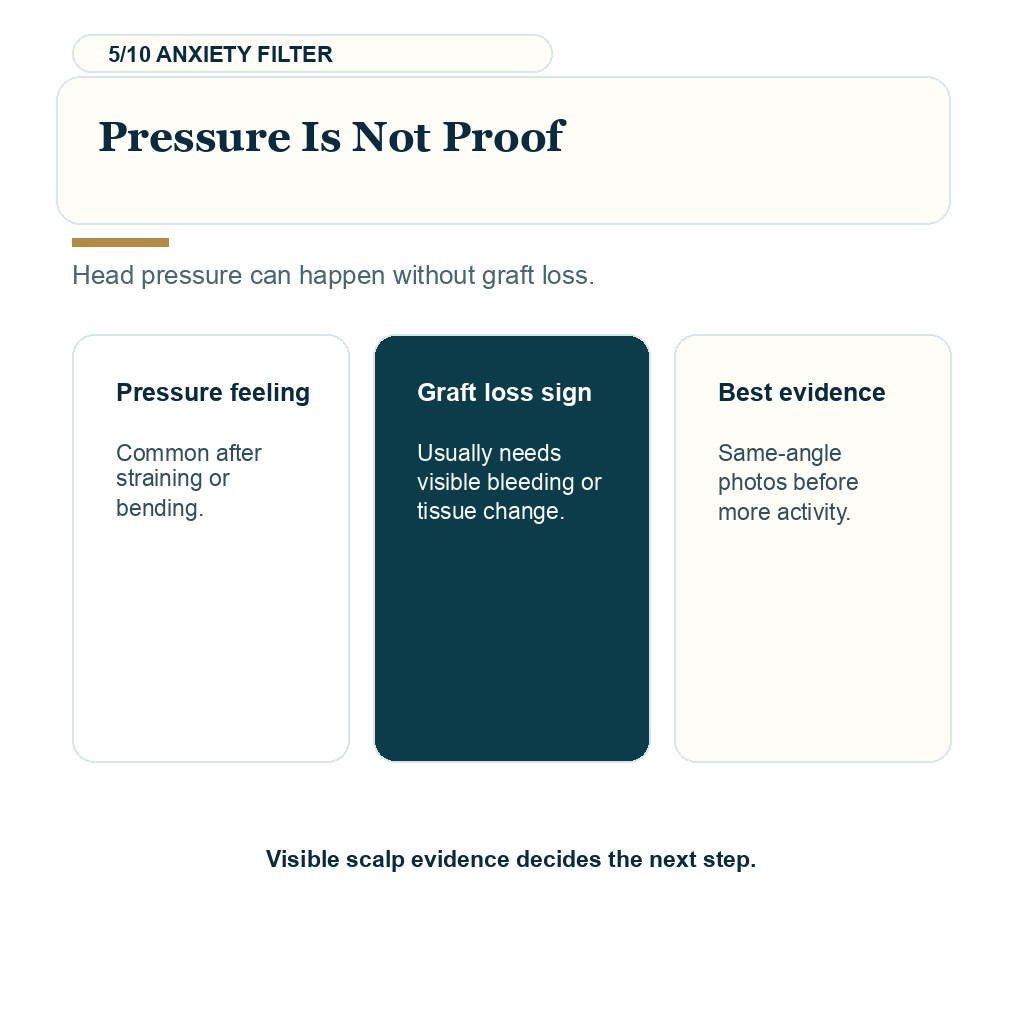
Head pressure after lifting is not the same as graft damage. It often comes from straining, holding the breath, bending, or raising pressure in the head and face. It can feel alarming, but pressure alone does not prove that grafts moved.
What matters is whether pressure came with visible scalp changes. Fresh bleeding, a new open point, strong worsening pain, spreading hot redness, or sudden swelling that does not behave like normal recovery deserves clinic review. Pressure that settles after rest, with no visible change, is usually less concerning.
This connects closely with bending over after a hair transplant. Many heavy lifts start with the head down and the body straining. That position can increase swelling around the forehead and eyes, even when no graft has been lost.
Patients with known pressure issues need extra caution. If you have a history of hypertension, the broader discussion about high blood pressure and hair transplant planning matters because the scalp is still part of the whole body.
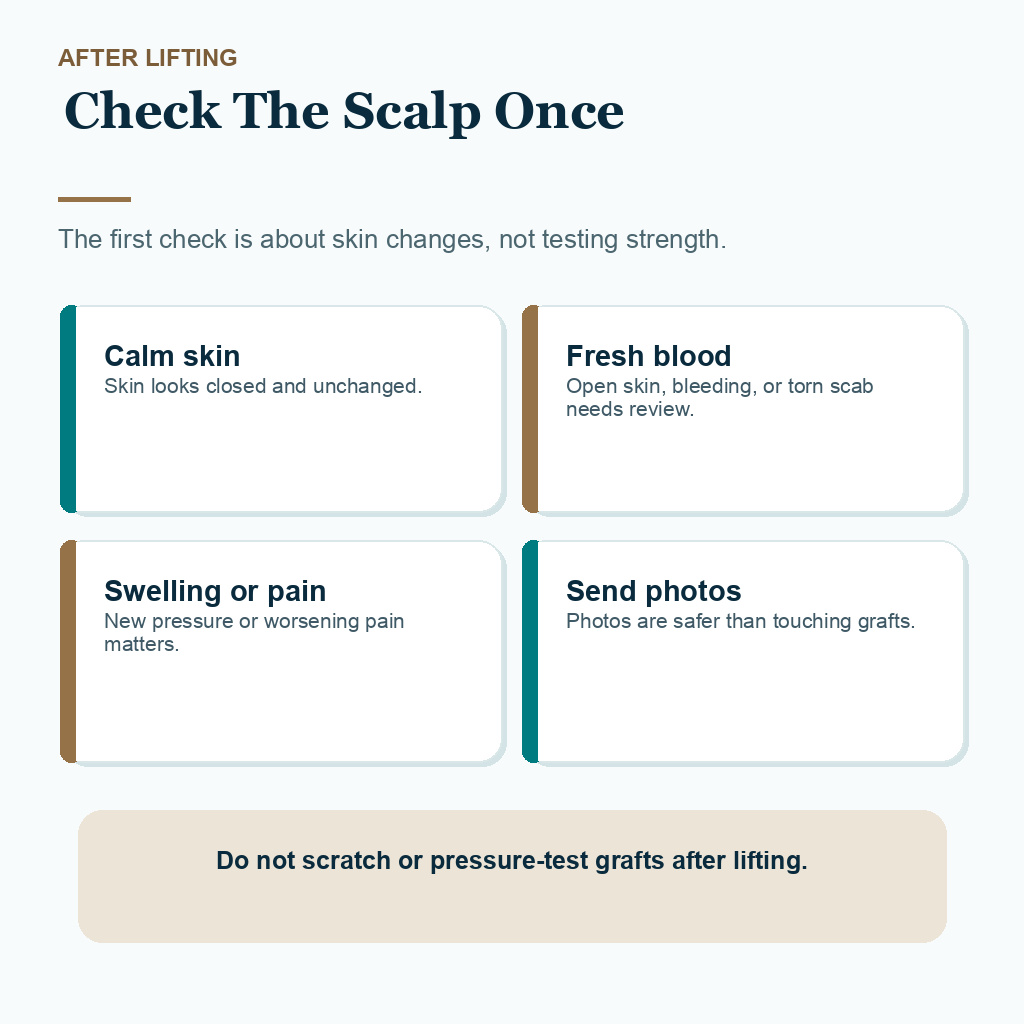
The sign after lifting matters more than the feeling. Bleeding, an open spot, or worsening swelling deserves review.
Warning signs that need clinic review
Fresh bleeding in the recipient area after heavy lifting should be reviewed by the clinic. A visible gap, wet open spot, torn scab, tissue that looks like a graft, worsening pain, hot spreading redness, pus, bad smell, fever, or unusual swelling also needs review.

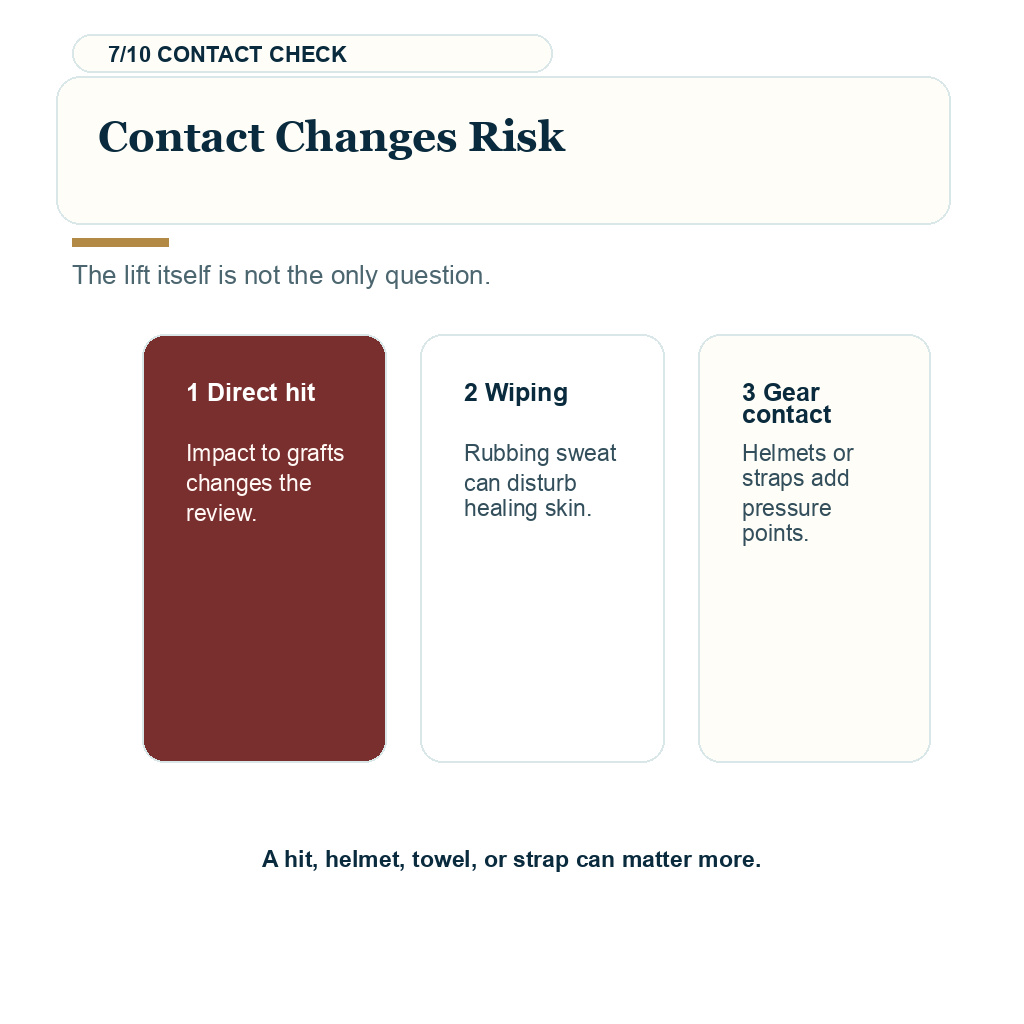
A direct hit to the grafts also changes the situation. A suitcase handle, car door, gym bar, cupboard, or box edge touching the recipient area means the issue is impact, not only lifting.
Ordinary swelling after a hair transplant can move down the forehead and around the eyes during the first days. Heavy lifting can make swelling feel more obvious. Worsening, painful, hot swelling on one side, or medically unusual swelling should not be dismissed.
If photos are requested, take them before washing aggressively. One full view and one close view are usually more useful than ten blurry close up photos. Keep the scalp dry and protected unless your clinic gives a specific cleaning instruction.
Sweat risk after lifting
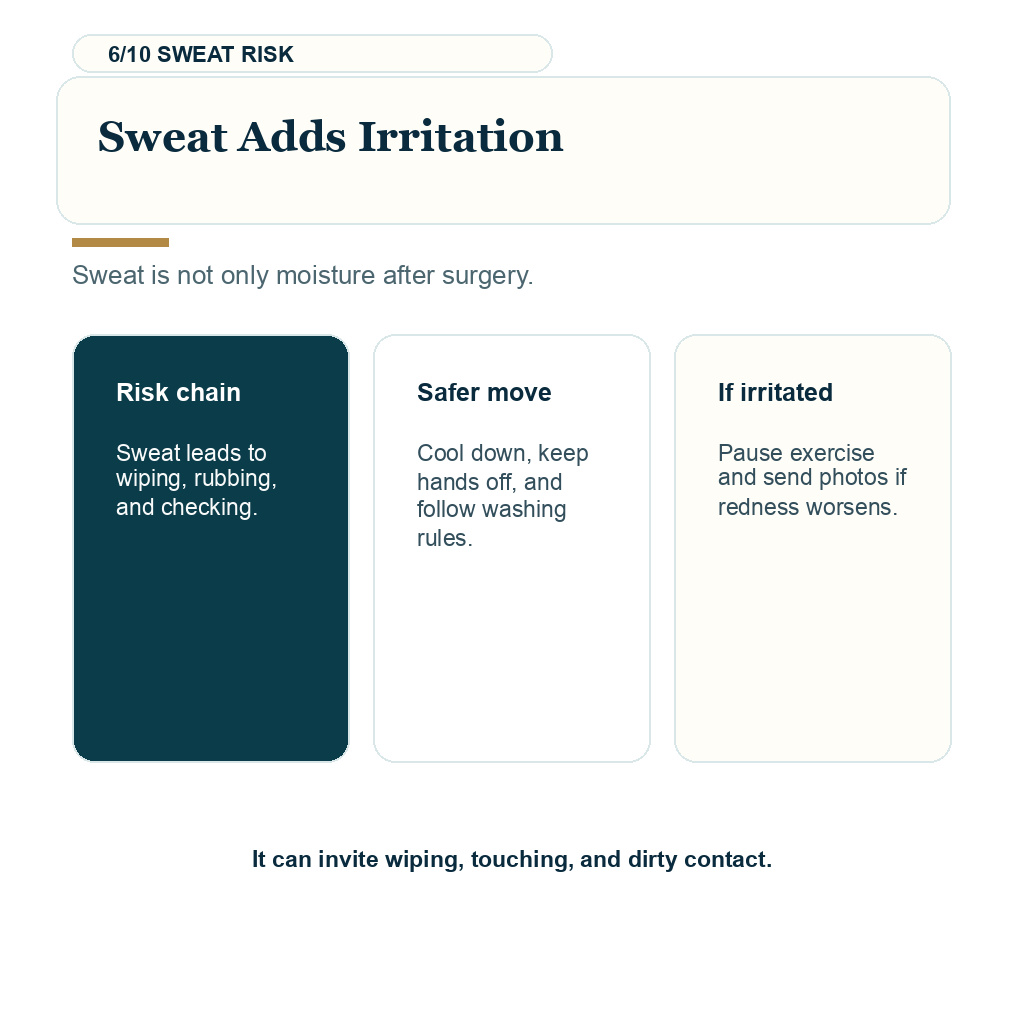
A small amount of sweat does not simply destroy grafts. The concern is what comes with sweat, especially heat, friction, trapped moisture, dirty gym equipment, wiping, and delayed washing when the scalp is still healing.
Early sweating after a hair transplant should be avoided when it is avoidable. A few drops from anxiety or a warm room are different from a heavy gym session, carrying bags through an airport, or lifting until the face becomes flushed.
After sweating, do not scrub the grafts. Follow the washing stage your clinic has given you. If you are still in the very early days and have not started proper washing, ask before using products or forceful water pressure.
Sweat is rarely the only issue in these cases. The risk rises when the lift leads to bending too low, straining too hard, wiping the scalp, or touching the recipient area because it feels uncomfortable. That chain of behavior is what I try to prevent.
Heavy lifting after the protected period
For the first 14 days, avoid heavy lifting, hard gym work, intense cardio, training to failure, carrying heavy luggage, and any activity that creates sweat, pressure, or friction on the scalp. Light walking and normal gentle movement are different from heavy load.
After day 15, the conversation changes only if the scabs are gone, washing is normal, swelling has settled, there is no bleeding, and the scalp looks stable. This is still not the same as full training. Controlled light activity may come first, while hard lifting and training to failure should return later and gradually.
Travel is part of the surgery plan, so luggage deserves practical planning. If you are flying after a hair transplant, airport movement, overhead bags, fatigue, and accidental contact can all matter. Use a rolling suitcase, ask for help with overhead storage, and avoid lifting a bag above the head during the protected period.
The same judgment applies to daily tasks. If you are tired, dizzy, swollen, or taking medication that affects alertness, even driving after a hair transplant or carrying bags can be handled too casually. Recovery decisions should match your actual state, not only the number of days.
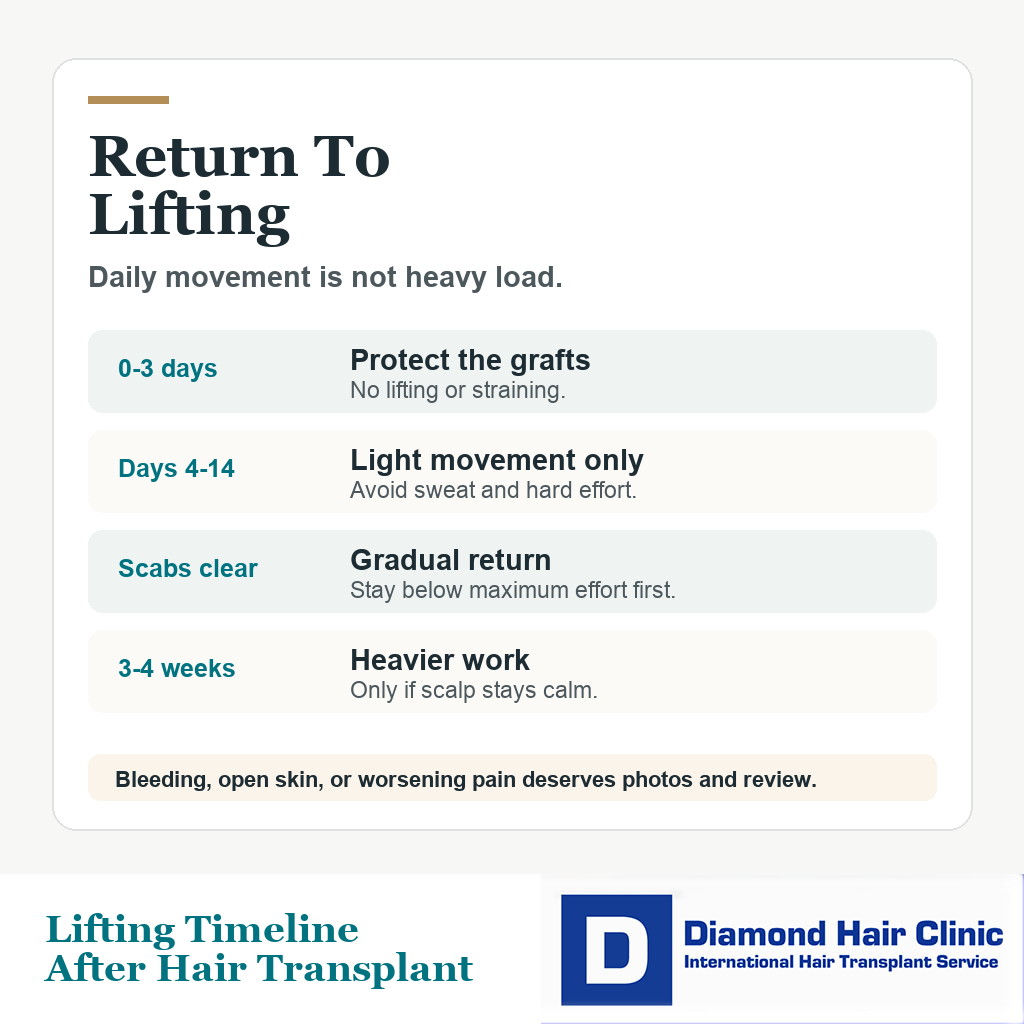
Daily movement and heavy lifting are not the same. The scalp needs a gradual return, especially during the first 14 days.
Returning to the gym without scalp risk
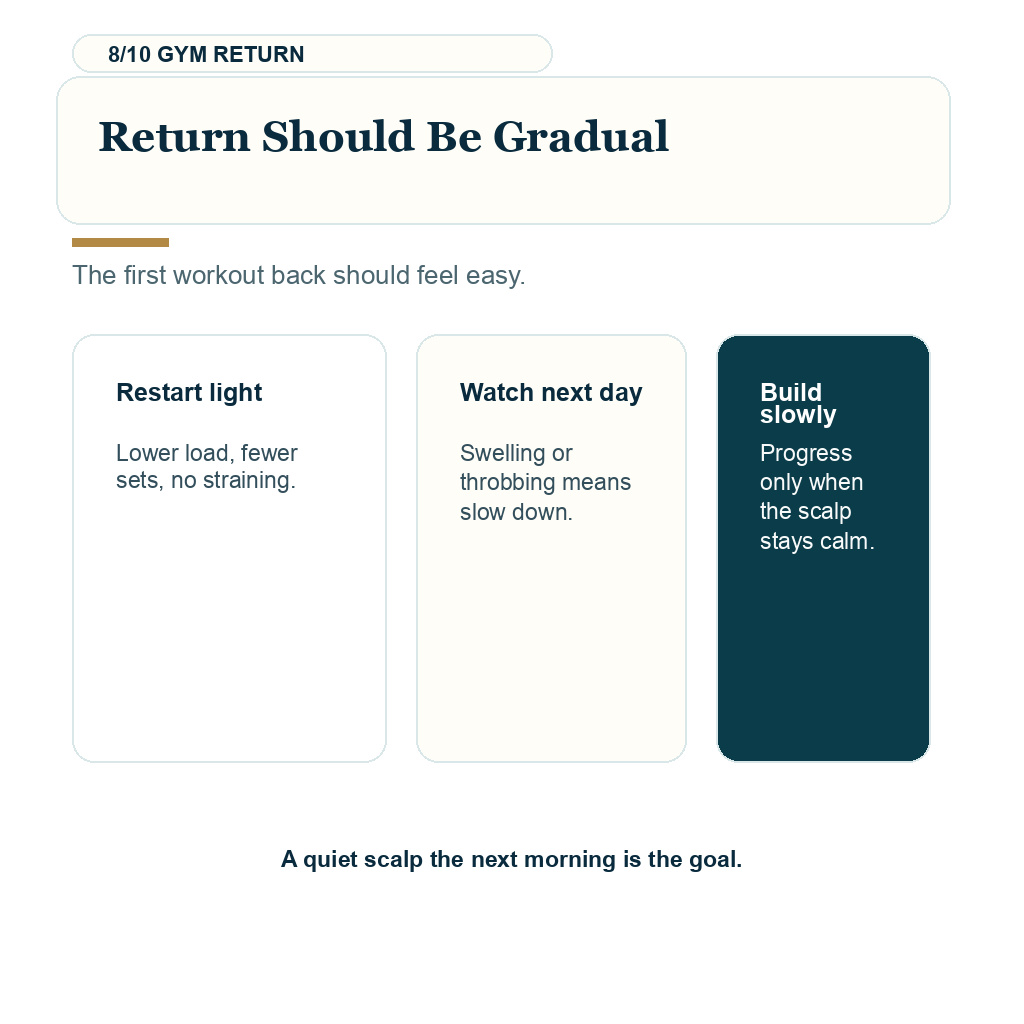
Return as if the scalp still deserves protection, not as if the calendar alone has cleared you. Start lighter than normal, avoid training to failure, avoid heavy compound lifts at first, breathe normally instead of bracing hard, and stop if head pressure, throbbing, swelling, bleeding, or scalp discomfort increases.
Deadlifts, squats, heavy presses, overhead work, loaded carries, and anything where a bar, cable, rack, or helmet could contact the head need extra caution. The risk is not only inside the body. The gym environment itself can create accidental impact.
Supplements should not push you back before the scalp is ready. If pre workout after a hair transplant makes you train harder, sweat more, sleep worse, or feel palpitations, it is not a harmless detail.
The first sessions should feel almost too easy. That is not weakness. It is a short period of protecting the surgery, the donor area already used, and the recipient area that still needs quiet healing.
A useful return is gradual enough that the scalp looks the same the next morning. If the forehead becomes more swollen, the recipient area throbs, or you feel pressure during every set, reduce the load and wait. Progress after surgery is not measured by the first workout back. It is measured by whether you can resume normal life without creating avoidable irritation.
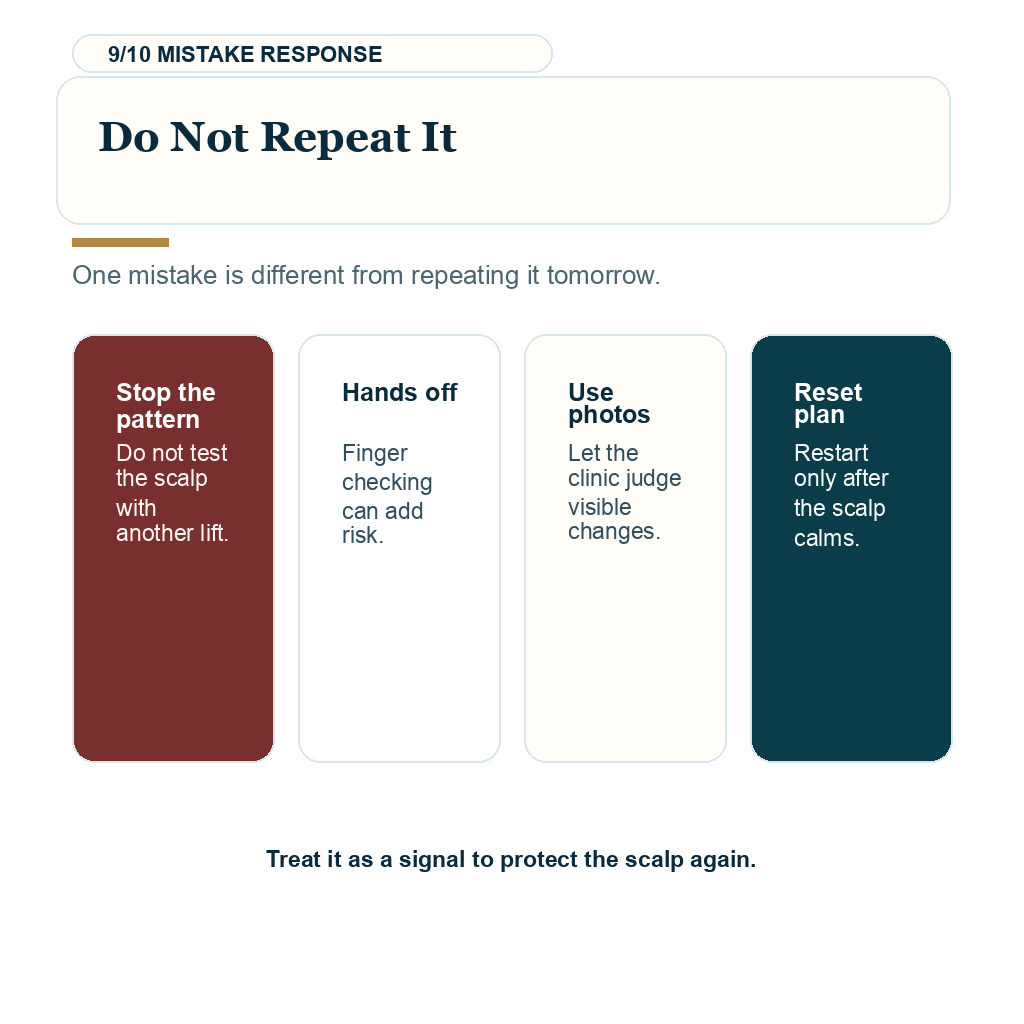
Use the 10 heavy lifting review slides below to separate one brief strain, timing, scalp checks, warning signs, head pressure, sweat, contact, gym return, repeated mistakes, and photo review. Swipe sideways, use the arrows, or choose a number below the image.
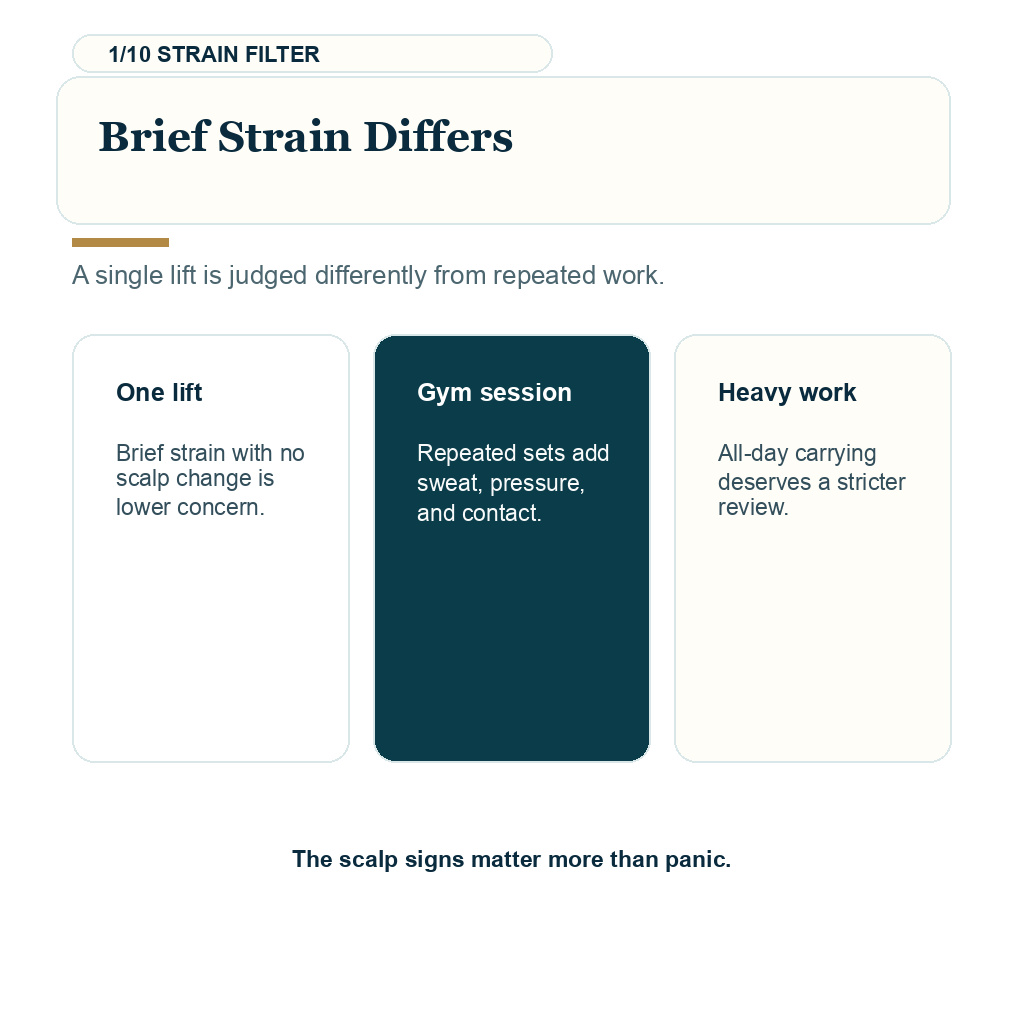
Repeated lifting is different from one mistake
Avoid repeating the lift because the first one seemed fine. The scalp may tolerate one careless moment, then become irritated after repeated strain, sweat, wiping, or poor sleep. Treat the mistake as a warning to slow down.
Avoid checking the grafts with your fingers. Anxiety often makes you touch the exact area you are trying to protect. If you need guidance, photos are safer than repeated contact. The same judgment applies to touching the grafts after a hair transplant.
Avoid alcohol, sauna, steam, hot showers, hard exercise, tight hats, helmets, and dirty gym contact during the protected period. Each of these adds another stress to skin that is already healing.
Most of all, avoid making the decision alone if there is bleeding or a visible change. Guessing from other people’s recovery photos is weak evidence. Your own timing, grafted area, scab pattern, and surgeon’s protocol matter more.
After heavy lifting, the skin surface tells the story
The review should ask what was lifted, when it happened, whether you bent forward, whether the recipient area was touched, whether there was bleeding, and what the area looks like now. A generic answer is not enough when someone is frightened after surgery.
The advice should separate graft loss from swelling, sweat, pressure, and anxiety. These are not the same problem. Closed, unchanged skin needs a return to protection and observation. An open bleeding point needs faster review.
At Diamond Hair Clinic, early hair transplant aftercare is treated as part of the operation, not an afterthought. Surgery is not finished when the grafts are placed. The first days decide how safely the patient protects the work.
If you lifted something heavy and the scalp stayed closed, the most likely answer is that you have not ruined the transplant. Stop lifting, protect the recipient area, follow your instructions, and send photos if there is bleeding, a visible gap, worsening pain, or swelling that no longer fits normal recovery.

Read this review excerpt
told me the quality of my donor hair and what he could take out and advised me what will the be best outcome with what donor hair I had.