

LASIK and FUE Need Separate Timing
LASIK and a hair transplant can both fit into the same life plan, but booking them close together just to save travel time is usually a weak plan. The safer approach is to let the eye recovery settle first, then plan FUE when eye drops, rubbing restrictions, dry eyes, follow-up visits, travel, sleep, washing, and graft protection are not competing with each other.
Two recovery routines can crowd each other even when neither procedure feels dramatic. Eye drops, light sensitivity, face washing, sleep position, sunglasses, and eye rubbing precautions all have to fit with graft protection. Leaving space between the operations is usually cleaner unless both surgeons have cleared a combined travel plan.
The main issue is usually not that FUE pressure will damage a properly healed LASIK eye. The practical risk is that the first week becomes crowded with drops, shields, washing, sleep rules, travel, dry eyes, and follow-up appointments at the same time that new grafts need clean hands, careful sleep, gentle washing, and no rubbing or pressure. That is where timing matters.
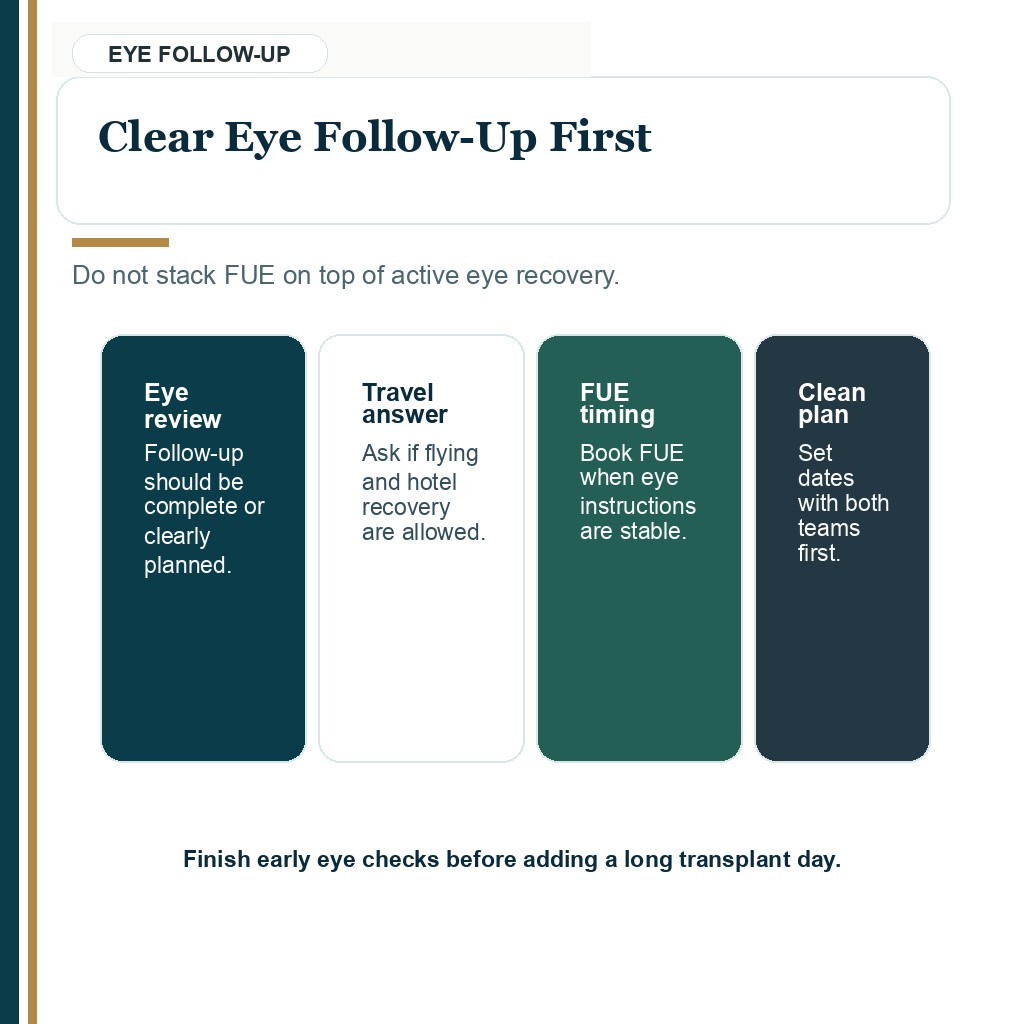
A calendar shortcut is not enough here. Before FUE, the eye routine needs to be stable, the eye surgeon should be comfortable with travel and recovery, and the routine for protecting the grafts should be easy to follow. If one of those points is unclear, separating the dates is the cleanest timing choice.
Keeping the two recoveries separate
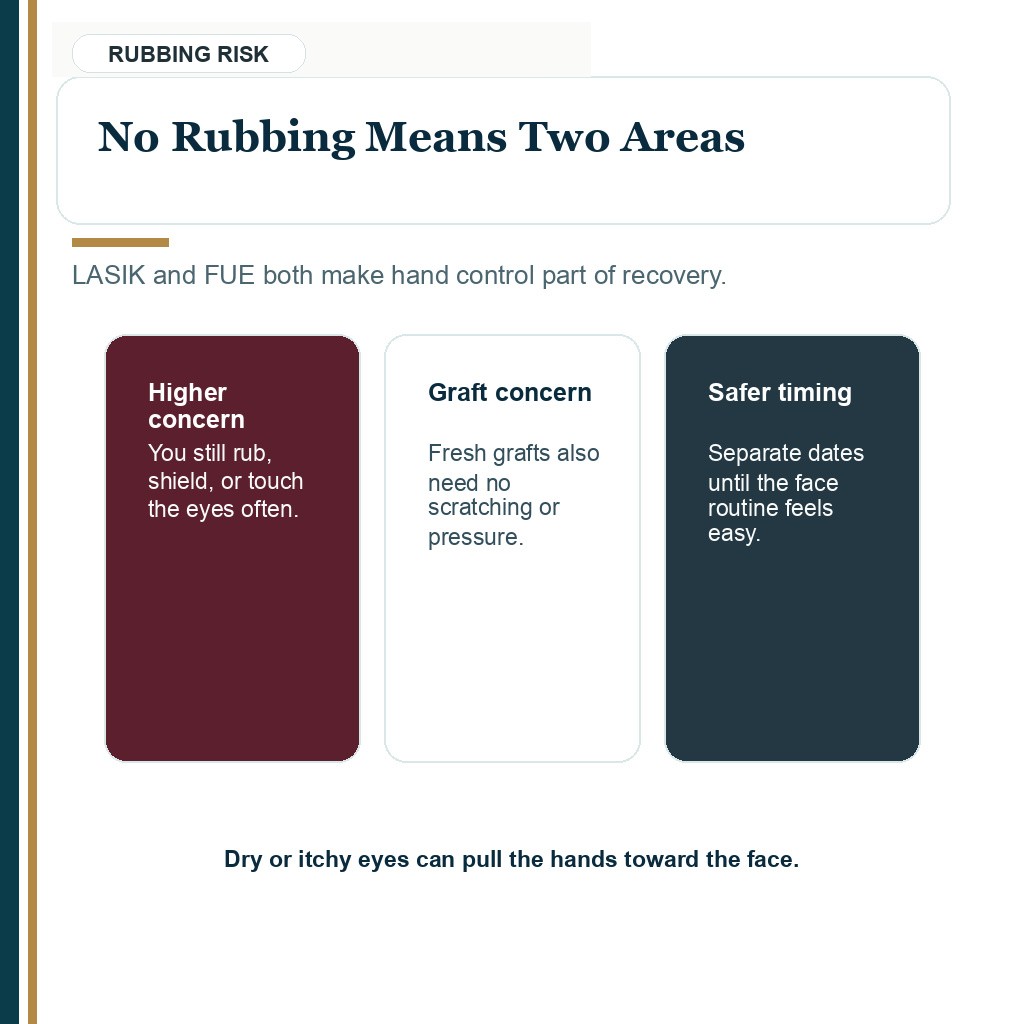
After LASIK, the eyes usually need prescribed drops, protection, no rubbing, and follow-up with the eye surgeon. After FUE, the transplanted grafts need the recipient area protected from pressure, scratching, and rough washing. Both recoveries make your hands and face part of the safety plan.
If your eyes are still uncomfortable, light sensitive, very dry, or hard to leave alone, I keep the transplant date separate. Hair transplant recovery is already detailed enough. A second set of eye instructions can make the first week feel messy, and messy routines are where preventable mistakes happen.
How does LASIK timing change the FUE plan?
LASIK is an eye operation. FUE is scalp surgery. They are not operating in the same tissue, but the aftercare overlaps on the face. You may need to avoid rubbing the eyes while also avoiding the transplanted area. You may have blurred vision, night glare, dryness, or light sensitivity while trying to travel for surgery. You may also be tired from eye follow-up visits when you need to understand transplant aftercare clearly.
I treat the timing as a coordination problem. The transplant team needs the eye procedure date, the exact procedure name, the current drops, any discomfort, and whether the eye surgeon has restricted travel, exercise, water exposure, sleep position, or face pressure. The eye surgeon should also know if you are planning a long clinic day and international travel for FUE. Tell both teams which eye drops you are using, because the eye plan and the scalp plan should not depend on memory.
Write the eye drops, shields, and follow up visit beside the FUE washing plan before you book. If two routines collide, the calendar is too tight. A comfortable gap is one that leaves both routines simple, not one borrowed from another person’s calendar.
This question often appears after someone has already read about contact lenses after hair transplant or glasses and sunglasses after hair transplant. LASIK is a different decision. Contacts and glasses are objects used during normal days. LASIK is an elective procedure with its own healing calendar.
There is not one safe gap between LASIK and FUE
There is no one universal gap because LASIK recovery is not identical for every person. PRK, SMILE, ICL, retreatment, a bandage lens, or a complicated eye recovery can follow different rules. Comfortable eyes, stable vision, no infection concern, no intense dryness, and completed early follow-up are different from ongoing pain, halos, redness, discharge, frequent drops, or an eye surgeon who still wants close review.
The timing is sensible only if you can follow both sets of instructions without confusion. If the answer is no, the date is too close. If you still need frequent eye drops, still wear protective shields at night, still avoid water near the eyes, or still feel an urge to rub, the transplant should wait.
The same reasoning applies to other elective procedures around FUE. I use a cautious frame in major surgery around hair transplant because the body can only pay attention to so many recovery tasks at once. LASIK is usually smaller than major surgery, but the eye instructions are strict enough to deserve respect.
Signs that mean the hair transplant should wait
The transplant should wait if the eye is painful, very dry, red, light sensitive, infected, worsening, or not yet cleared by the ophthalmologist. I also wait if vision is too unstable for travel, if you are nervous about touching your face, or if the eye surgeon wants you nearby for more follow-up.
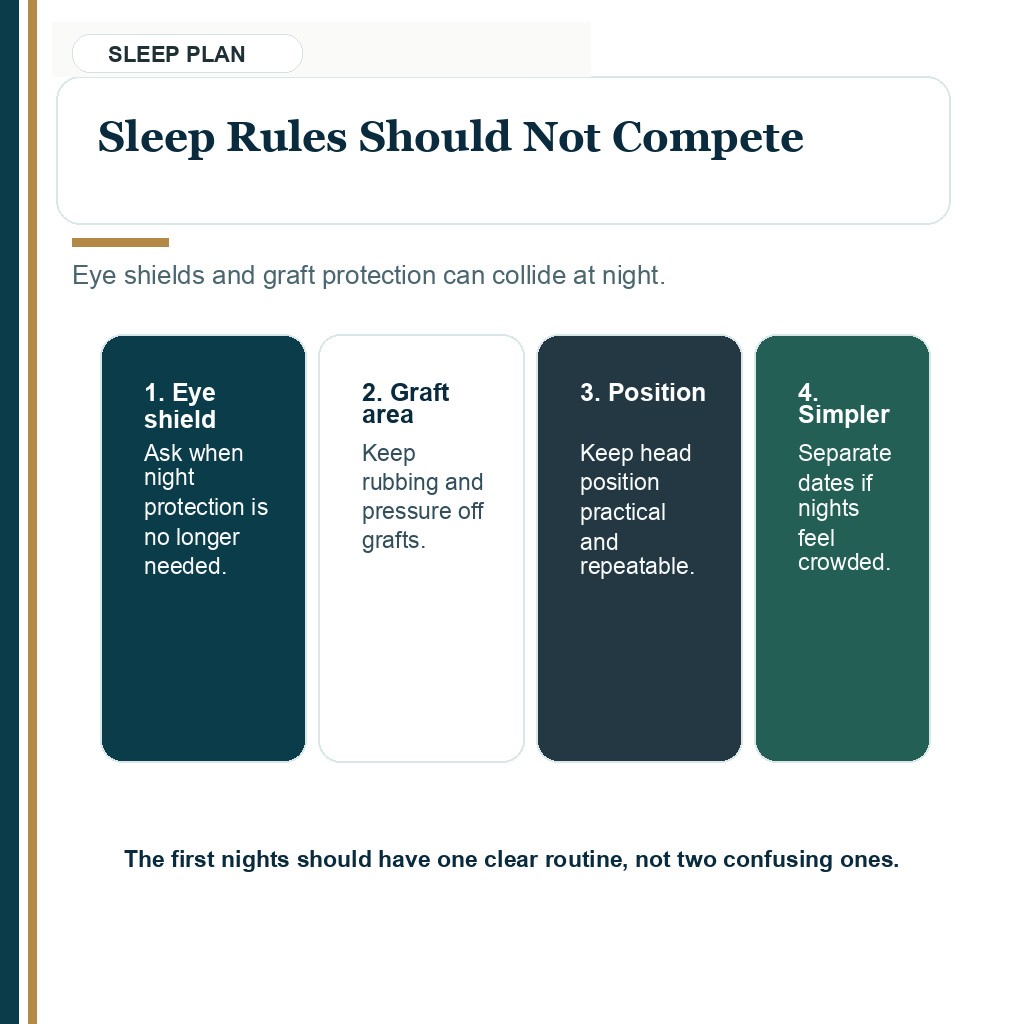
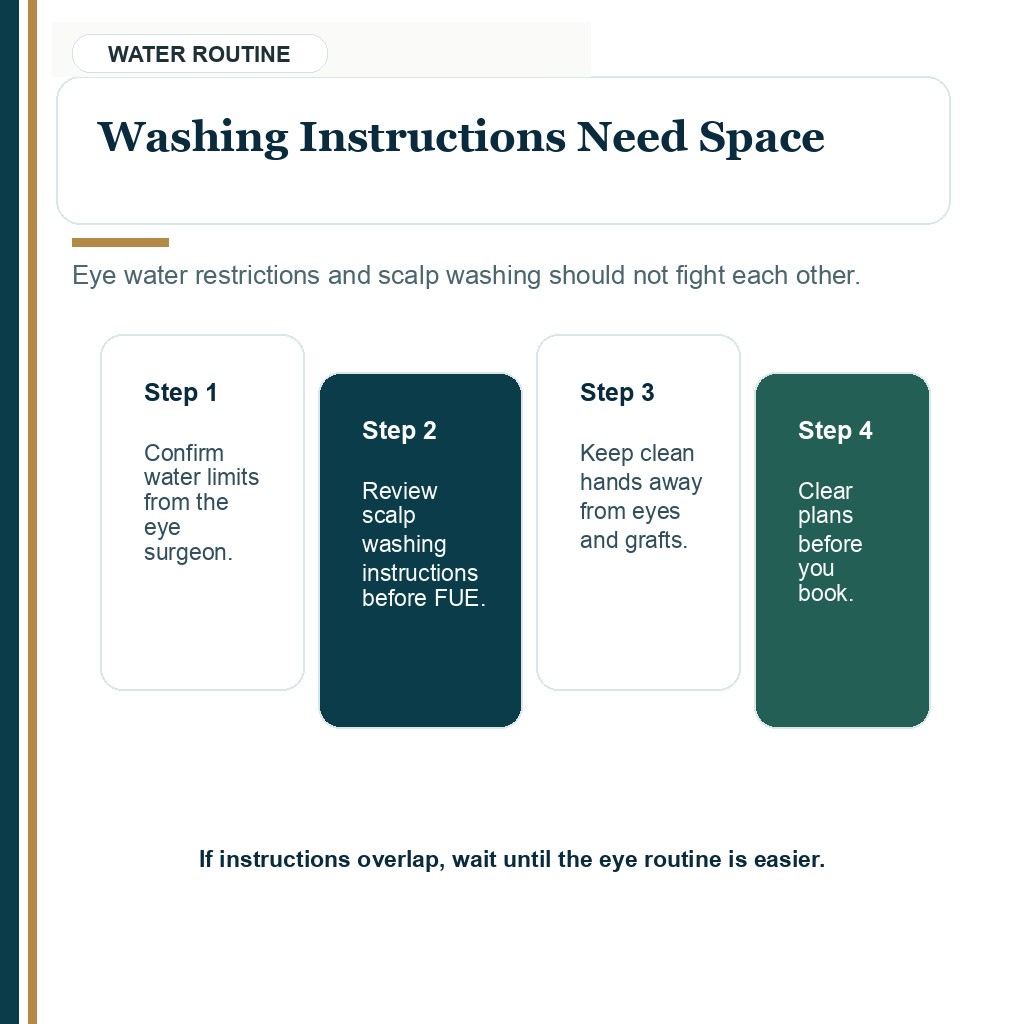
There is also a practical conflict. You may need to sleep with eye protection while we ask you to sleep in a way that avoids rubbing the grafts. You may be managing drops while the scalp is tender. You may be asked not to swim or expose the eyes to water, while we are giving detailed washing instructions for the transplant. None of this is impossible, but it is unnecessary friction when the procedures are elective.
If there is bruising or swelling around the eyes after FUE, it is usually managed as part of the transplant recovery. But recent eye surgery changes how worrying the same swelling can feel. My black eye bruising after hair transplant guidance separates expected swelling from warning signs. Recent LASIK adds another reason to communicate before surgery, not after panic begins.
Facial swelling and eye comfort need separate judgment
Forehead or eyelid swelling after a hair transplant is not the same as an eye complication. Still, the area is close enough that someone who recently had LASIK may worry more. I do not want you guessing whether discomfort belongs to the eye recovery or the scalp recovery, so the dates should stay separated until the eye feels ordinary again.
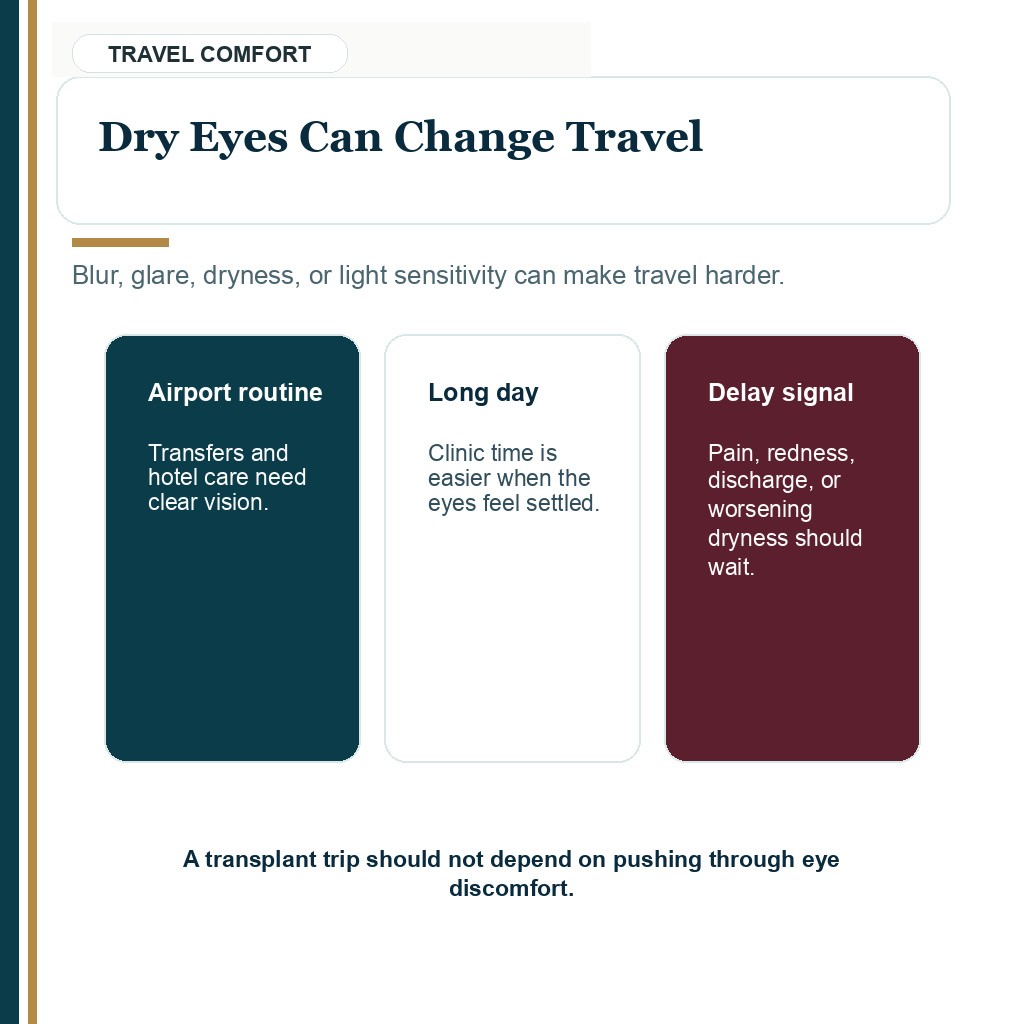
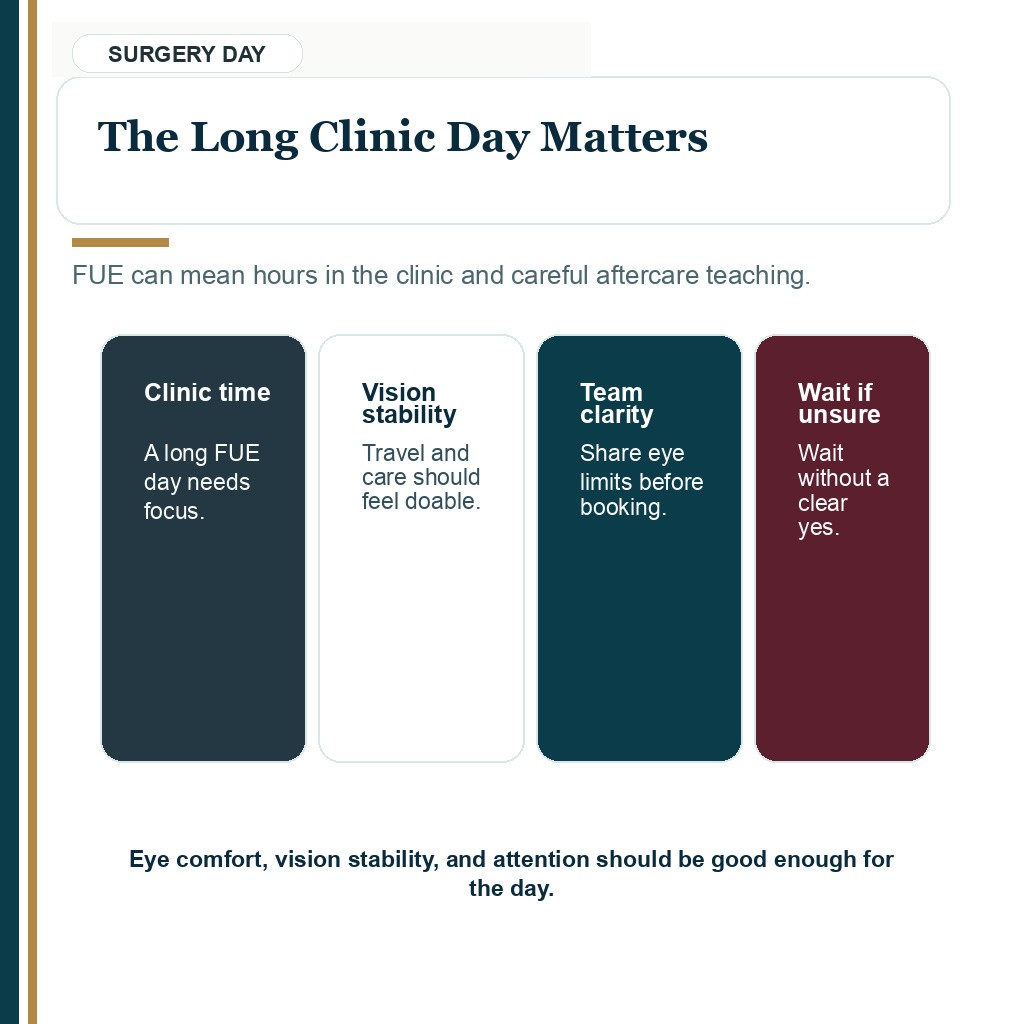
The transplant day itself can also be long. You may lie in different positions, keep the head still, and stay in the clinic for hours. If your eyes are dry or irritated, that can make the day harder. If your vision is fluctuating, the travel and hotel routine can feel less secure. A good surgery plan should not depend on pushing through avoidable discomfort.
When we plan with enough space, both priorities stay clear. The eye surgeon keeps control of the eye recovery, and the hair transplant team keeps control of graft protection, donor management, washing, sleeping, and follow-up.
Eye drops, medicines, and routines to share
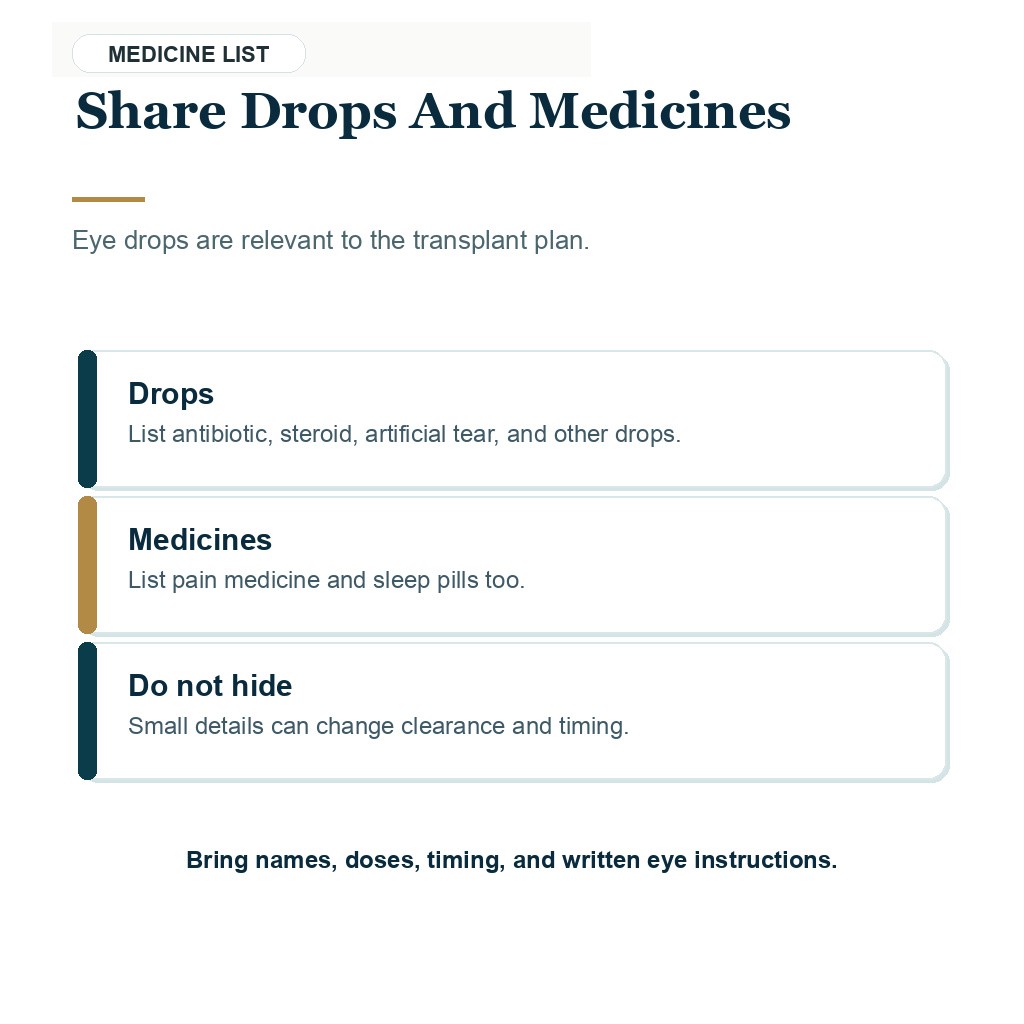
Before FUE, tell us about every eye drop, antibiotic, steroid or other drop used to reduce inflammation, artificial tear, sedative, pain medicine, or supplement you are using after LASIK. Do not stop prescribed eye treatment because of the hair transplant. Do not hide it because it feels unrelated. It helps us understand your recovery status and avoid conflicting advice.
The same disclosure principle is why I ask for exact products on the medication before hair transplant page. A vague sentence like “I use eye drops” is less useful than the name, dose, timing, and why it was prescribed. If the eye surgeon gave a written instruction sheet, bring it. If you are flying, keep the drops and the written instructions in hand luggage, not in a checked bag.
Contact lenses are another detail. Many people choose LASIK because they want to stop using lenses, but some still use a bandage lens or have special instructions after PRK or another eye procedure. Do not improvise. The eye team decides the eye plan. We decide the scalp plan. You should not be trapped between two unclear routines.
The slower recovery should set the date
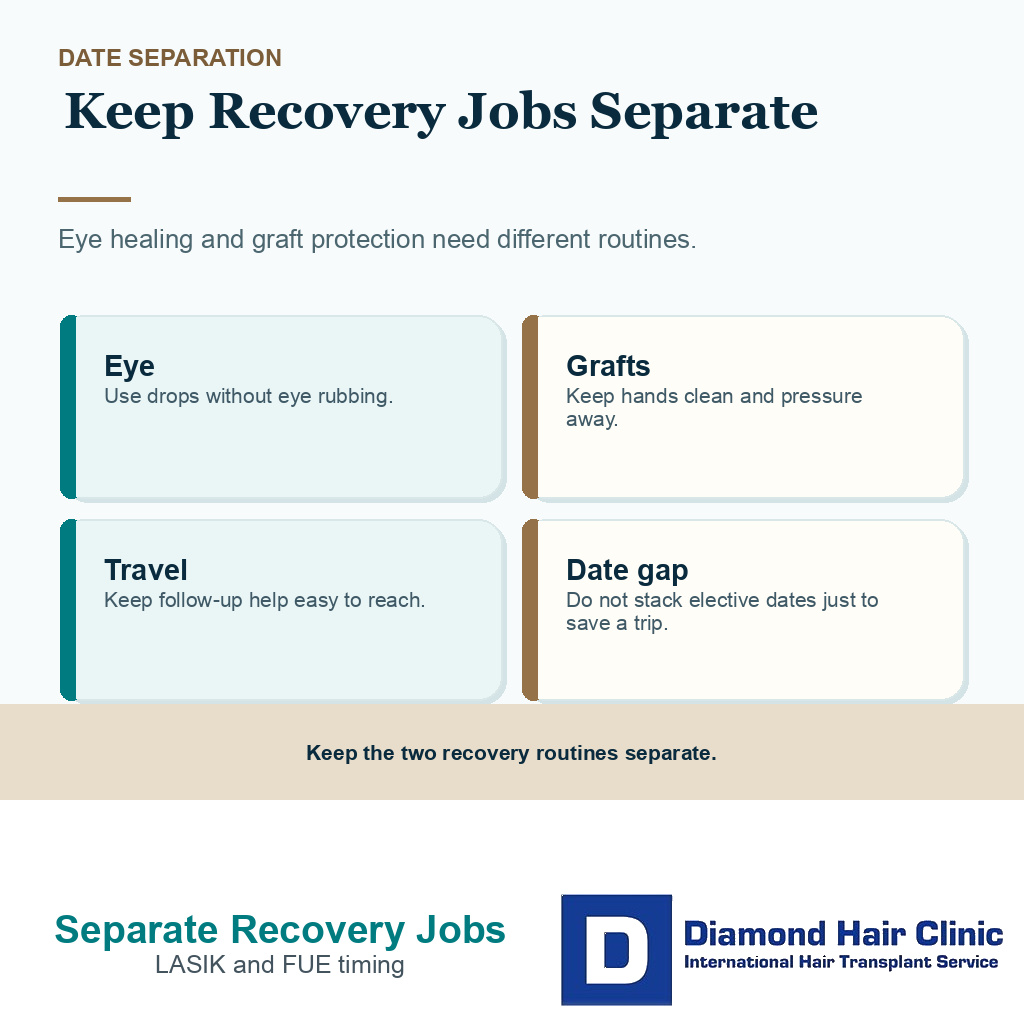
Split the dates by the recovery job
Choose the situation that best matches your eye recovery. The timing call changes when eye healing, graft protection, travel, or medical clearance is the limiting factor.
What to coordinate before booking flights?
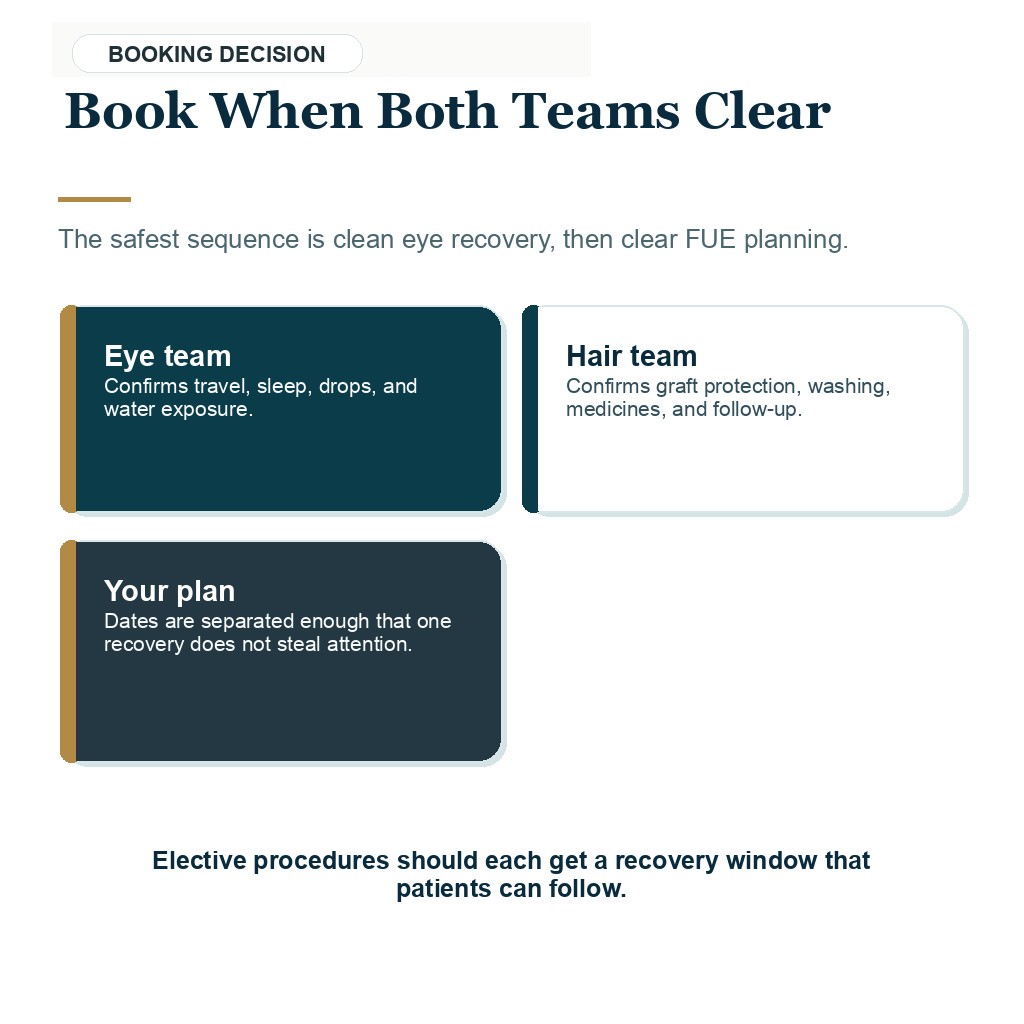
If you are traveling to Istanbul, do not treat LASIK as a small personal detail. Tell us the procedure date, the exact eye procedure, the drops, the follow-up schedule, whether you can fly, and whether your eye surgeon has any face, sleep, exercise, water, or rubbing restrictions. If you are still in the active eye recovery window, moving the transplant is usually cleaner than trying to manage both.
Coming alone makes the travel calendar less forgiving. The travel alone for a hair transplant in Turkey page explains why transfers, hotel support, first wash, and aftercare access need to be predictable. Recent eye surgery adds one more reason to avoid a rushed travel calendar.
Use the 8 LASIK and hair transplant timing slides below to separate eye follow-up, no rubbing overlap, drops and medicines, dry eyes and travel, sleep rules, washing routines, clinic day comfort, and final clearance before booking. Swipe the carousel, use the arrows one step at a time, or choose a number below the image to jump to that point.