



Medical Clearance Comes First After Organ Transplant
A hair transplant may be possible after an organ transplant, but only when the transplanted organ is stable and your transplant team has cleared elective scalp surgery. I would not treat this as a normal cosmetic booking. Timing depends on organ function, medicines that prevent rejection, recent rejection or infection, blood tests, wound healing risk, and who will review you if symptoms appear after surgery.
Stable for years on unchanged medicines is different from a recent transplant, recent rejection treatment, a new infection, changing doses, stronger immunosuppression, or unexplained blood results. I need those details before I look at graft numbers or hairline design.
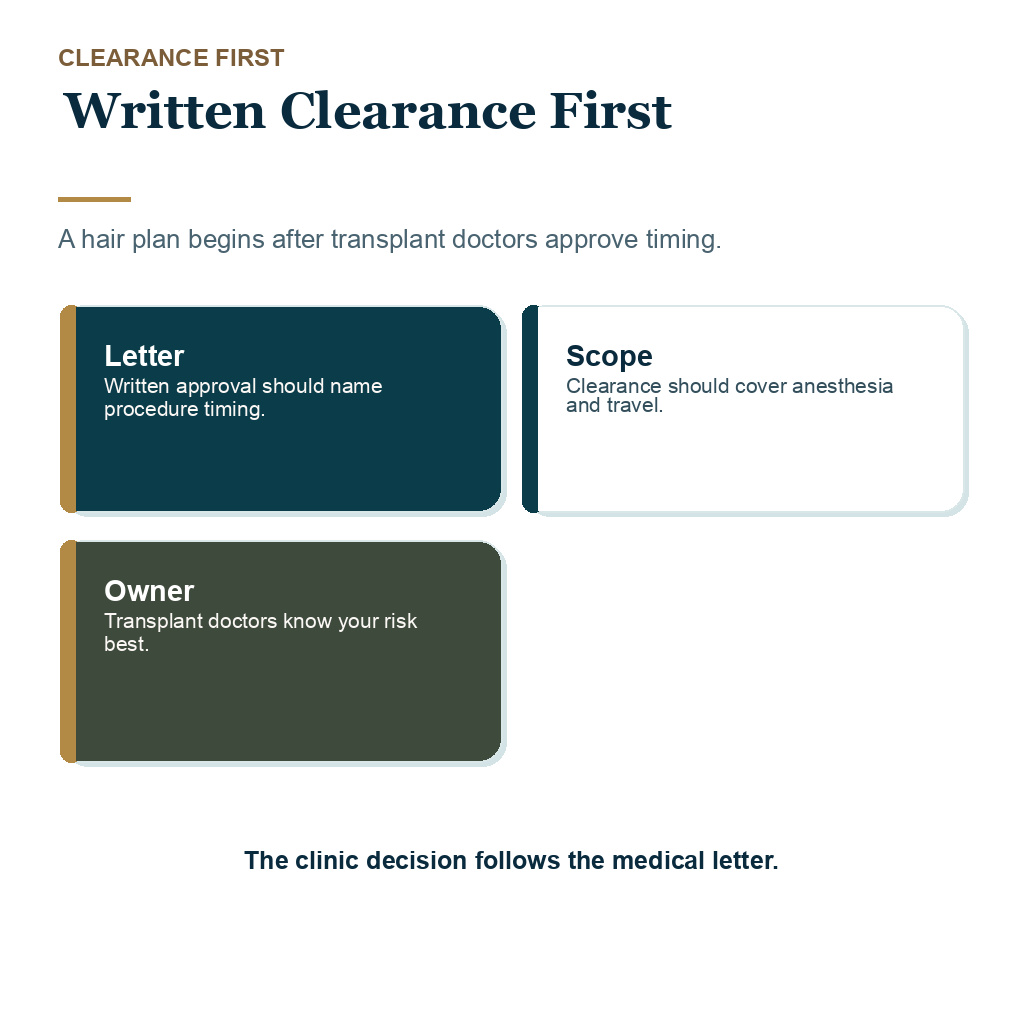
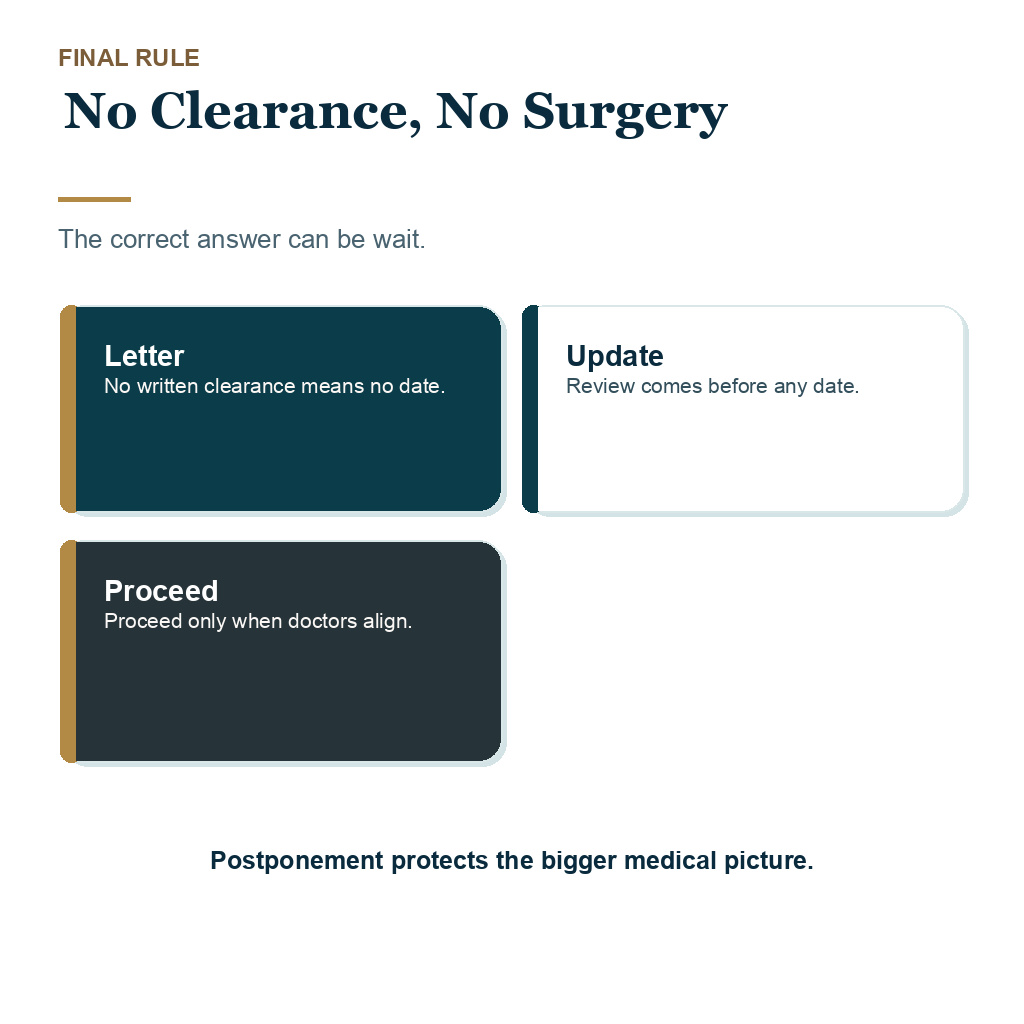
Written clearance from your transplant team is the starting point, not a formality. A routine transplant follow-up that says you are doing well is not the same as clearance for elective scalp surgery. A hair transplant is elective. It should wait if organ function is unstable, if the immunosuppression plan is changing, if blood counts are low, if infection is active, or if your transplant doctor wants the timing adjusted.
The clearance should answer the operation, not only general wellness. The transplant team needs to know this is elective scalp surgery with many small wounds, local anesthesia, and a washing routine during recovery.
General health clearance is not enough for an organ transplant patient. The transplant team needs to judge whether elective scalp surgery with many small wounds, local anesthesia, travel, and early washing is acceptable for the current medicines and blood results.
Organ transplant history changes the decision
Many organ transplant recipients live well for many years. The difference is that the body is being managed with a medical balance that must not be disturbed casually. Medicines that protect the organ can also affect infection risk, wound healing, kidney function, blood pressure, blood sugar, platelet count, white blood cell count, and drug interactions.
FUE creates thousands of tiny extraction and implantation openings. In a medically stable person, these usually heal in a predictable way. In a transplant recipient, I respect the same small wounds more because infection signs may be quieter, healing may be slower, and antibiotic or pain medicine choices may be narrower.
I separate technical possibility from medical timing. Hair transplantation may be possible after an organ transplant, but the current clearance, medicines, infection history, blood results, and travel plan decide whether this is the right moment.
Someone else’s hair is not a routine shortcut
Organ transplant medicine is different from an ordinary cosmetic hair transplant. When patients ask about sibling follicles or follicles from another person, someone else’s donor hair for a hair transplant is not a normal donor option. The immune risk question belongs to transplant medicine, not routine FUE booking.
Clearance before travel should come from the right doctors
Before travelling for FUE, ask your transplant physician or treating specialist whether you are stable enough for an elective outpatient scalp procedure under local anesthesia with adrenaline. The question is not only whether you can travel or return to normal life. It is whether this surgery is safe at this time. Ask for that answer in writing, and make sure it covers organ function, current medicines, recent blood tests, infection history, and whether any antibiotic, steroid, or monitoring plan is needed.
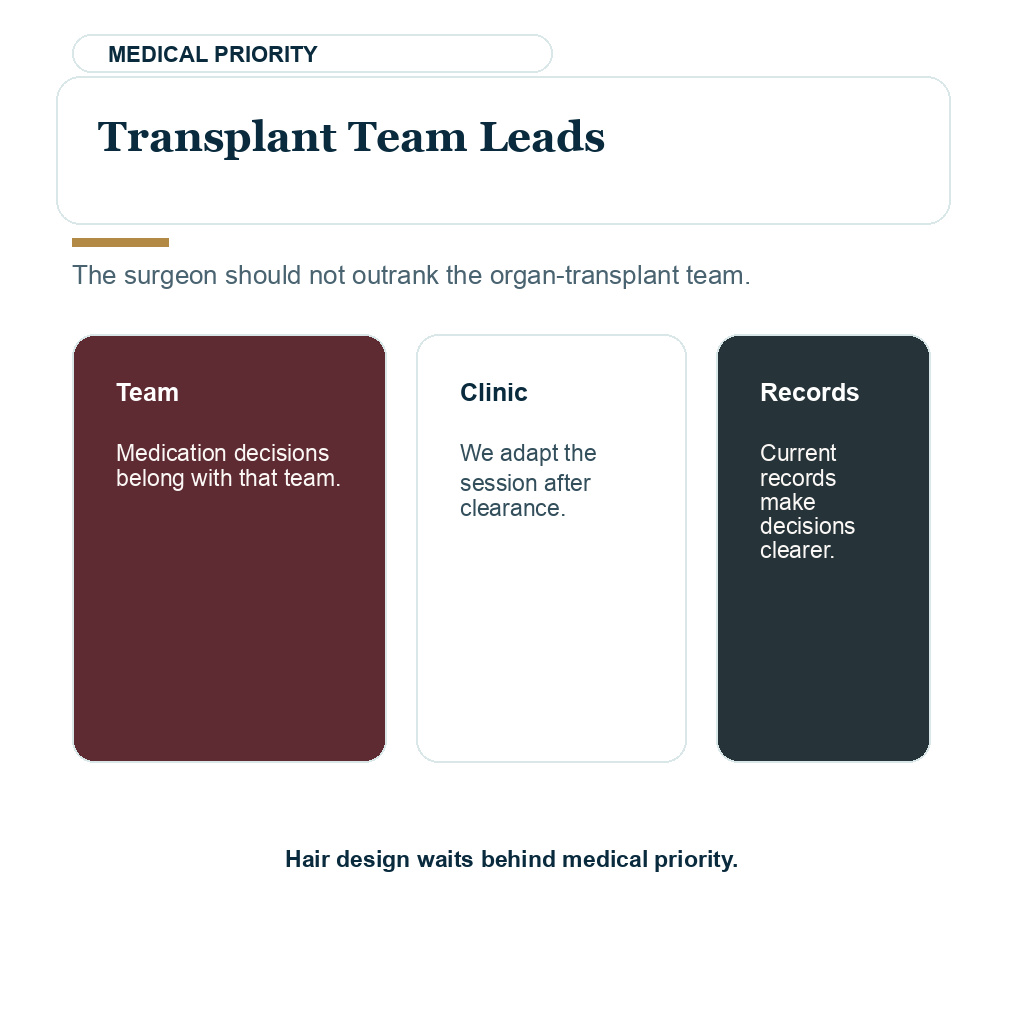
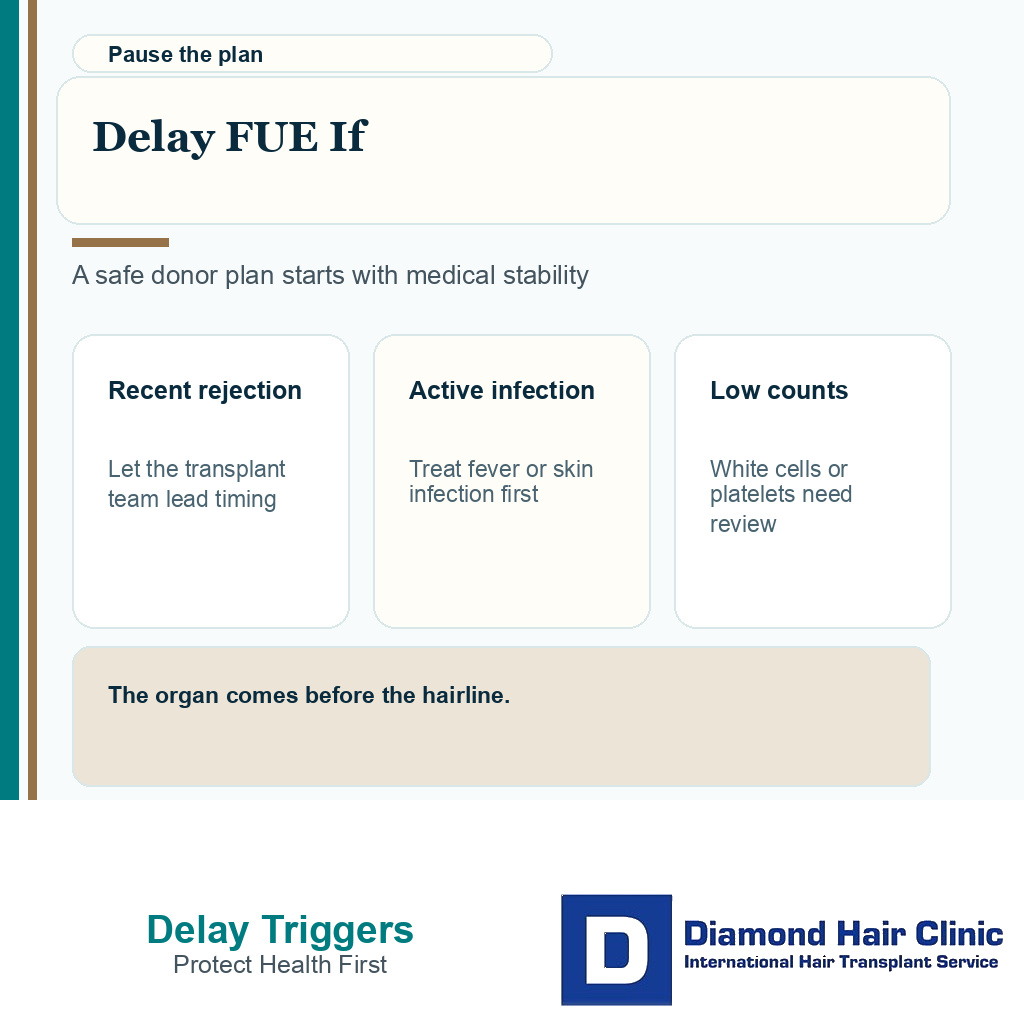
The clearance should also say who is allowed to adjust transplant medicines if a change is needed. A hair clinic should not tell you to skip tacrolimus, cyclosporine, mycophenolate, sirolimus, everolimus, azathioprine, steroids, or any other medicine that protects the organ. The organ comes before the hairline.
Some transplant medicines need extra coordination around elective procedures. For example, the transplant team may want blood level monitoring for some medicines, may want certain antibiotics or antifungals avoided, or may want a steroid plan. Medicines such as sirolimus or everolimus can also raise wound healing questions in some surgical settings, so I do not guess from the medicine name alone.
If kidney function is part of your transplant history, I review hair transplant with kidney disease before surgery because medicine choice and kidney safety may change the plan. The organ transplant question is wider, but kidney safety is often part of it.
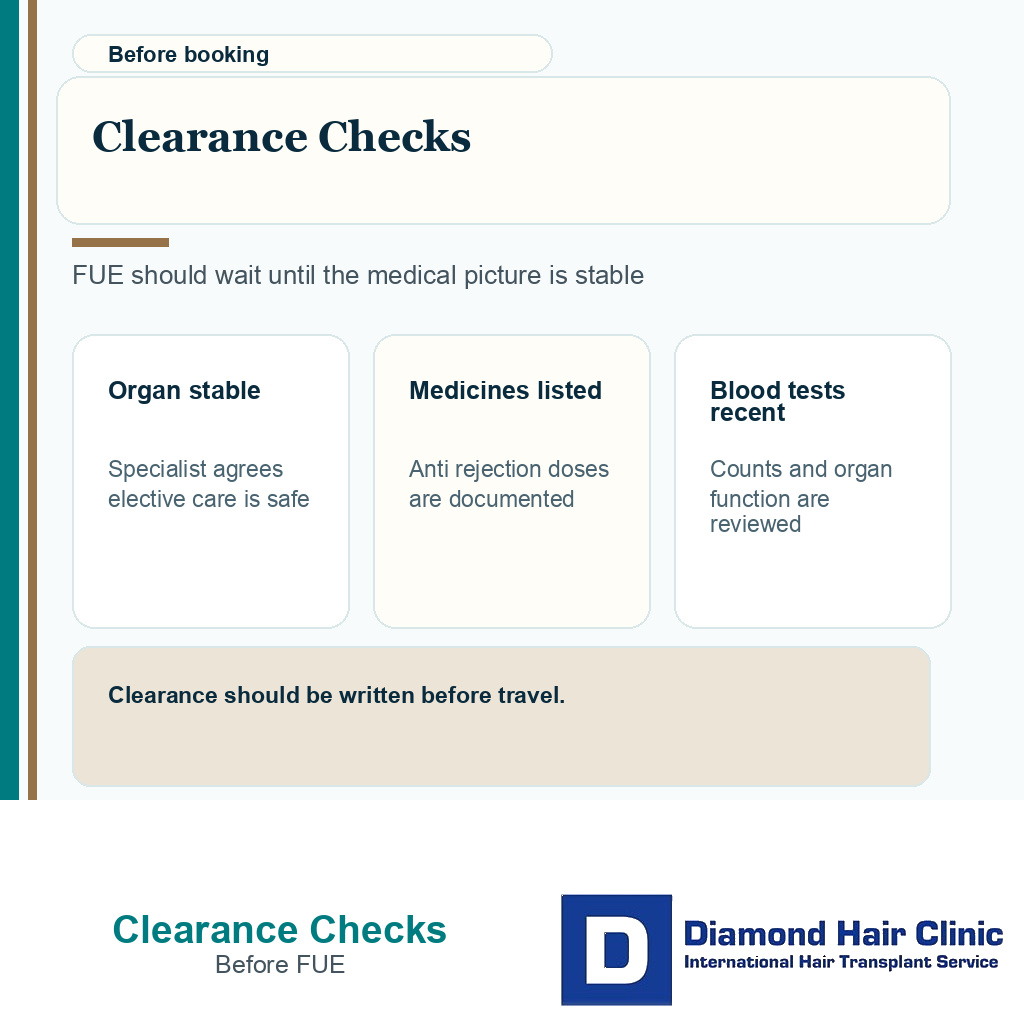
The clearance question should be specific to your organ, medicine list, blood tests, and infection history.
Medicines need extra review
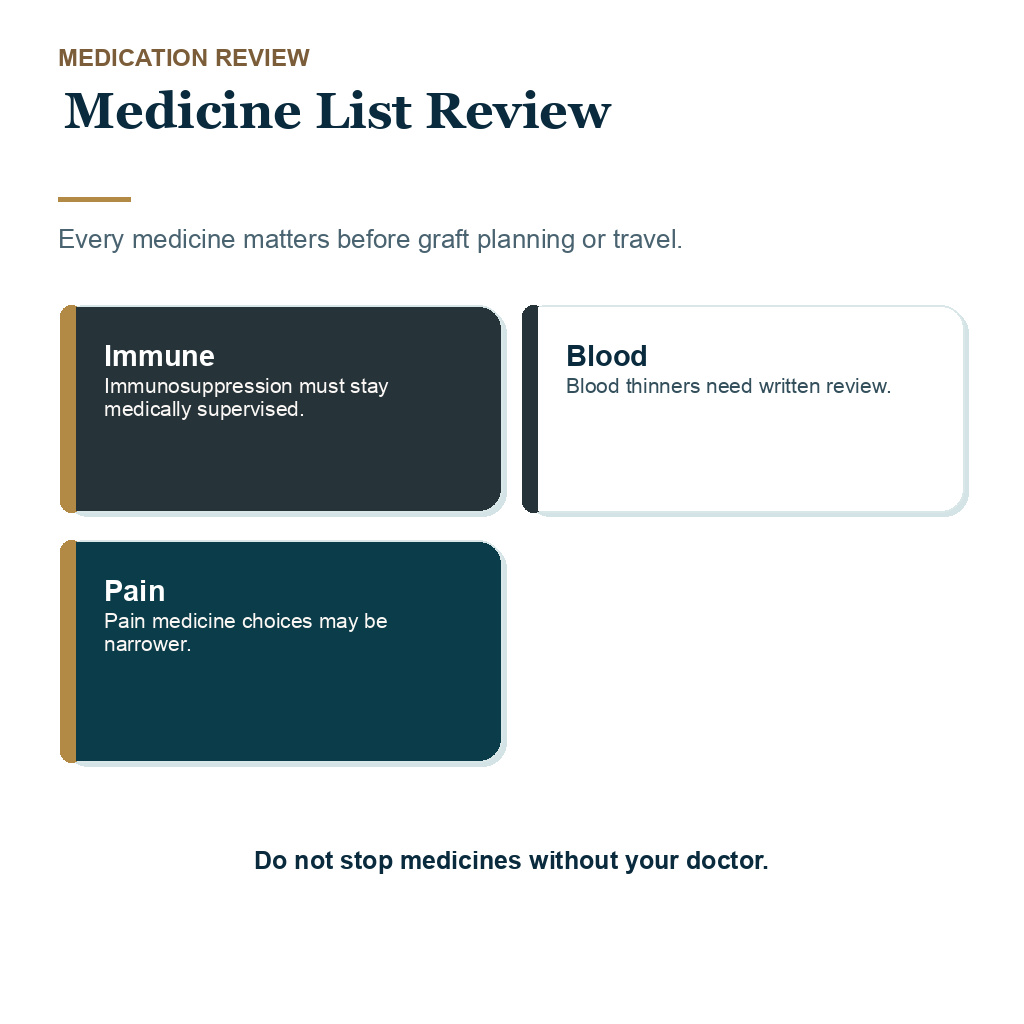
I need your exact medicine list, not a rough summary. Transplant medicines can interact with antibiotics, antifungal medicines, painkillers used for inflammation, sedatives, blood pressure medicines, and supplements. A safe plan depends on names, doses, timing, recent laboratory results, and advice from the team that protects the transplanted organ.
Some people use biologic or immune modifying medicines for other conditions. When I review biologics and FUE planning, I separate general immune treatment from the medicine plan that protects a transplanted organ. The transplant regimen is more critical because the organ depends on it.
Long-term steroid use also changes planning. If prednisone or another steroid is part of your regimen, prednisone and hair transplant timing should be reviewed for dose, duration, adrenal suppression, blood sugar, infection risk, and wound healing before an elective procedure.
Blood tests matter before FUE
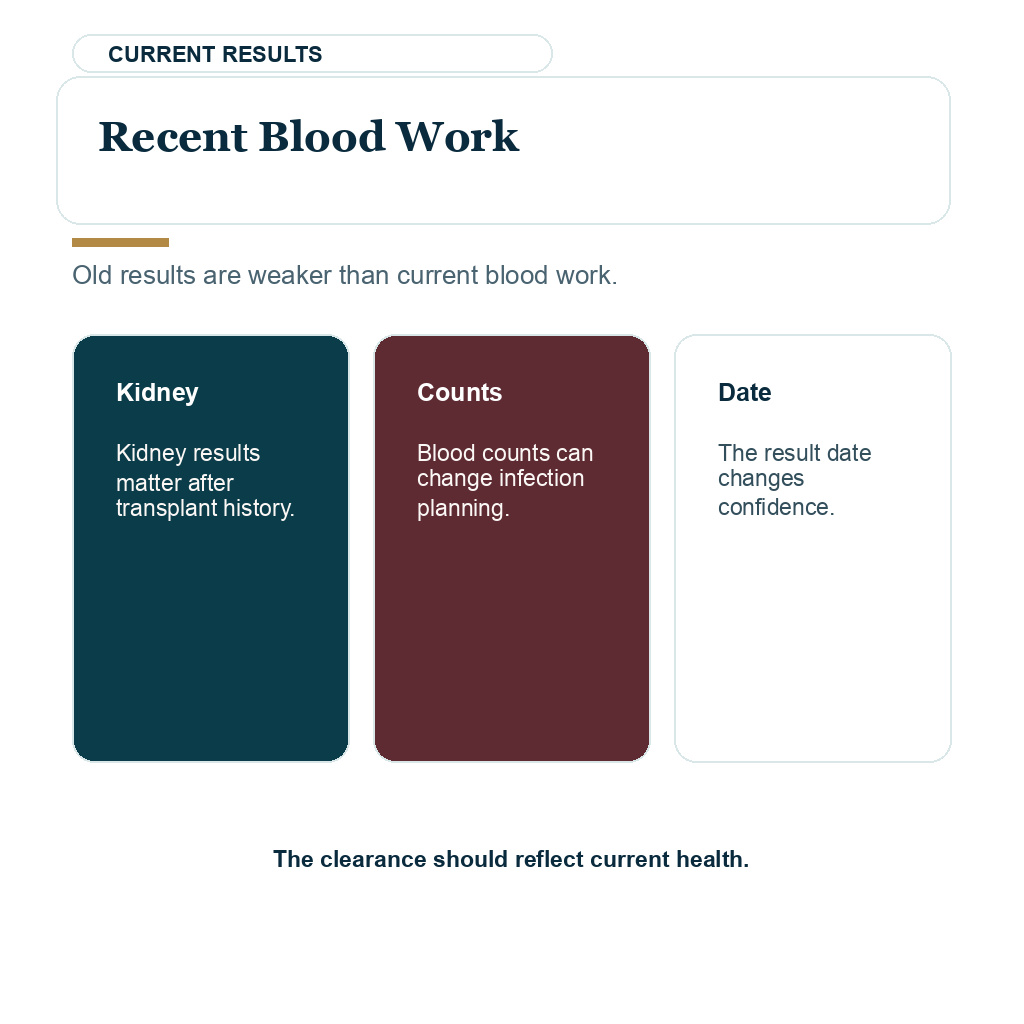
A recent blood test is not paperwork for this group. It helps show whether the immune, clotting, kidney, liver, and glucose picture is steady enough for small surgical wounds. Depending on the organ and medicines, the transplant team may ask for a CBC with differential, neutrophil count, platelet count, hemoglobin, kidney function, liver function, glucose, and drug trough levels.
No universal checklist can be interpreted safely by every transplant recipient alone. A number that looks acceptable for one person may need specialist interpretation in a transplant recipient, especially if there has been recent rejection treatment, infection, a dose change, or a hospital admission.
If white blood cells or neutrophils are low, infection risk changes. I treat low white blood cells and FUE timing as a reason to slow the plan down, because the immune response may not be strong enough for elective surgery. If platelets are low or bleeding risk is unusual, I review low platelets and FUE safety before graft planning.
A blood test review before hair transplant still matters, but organ transplant history means the result should be read with the transplant history, not separately from it.
Reasons to delay the hair transplant
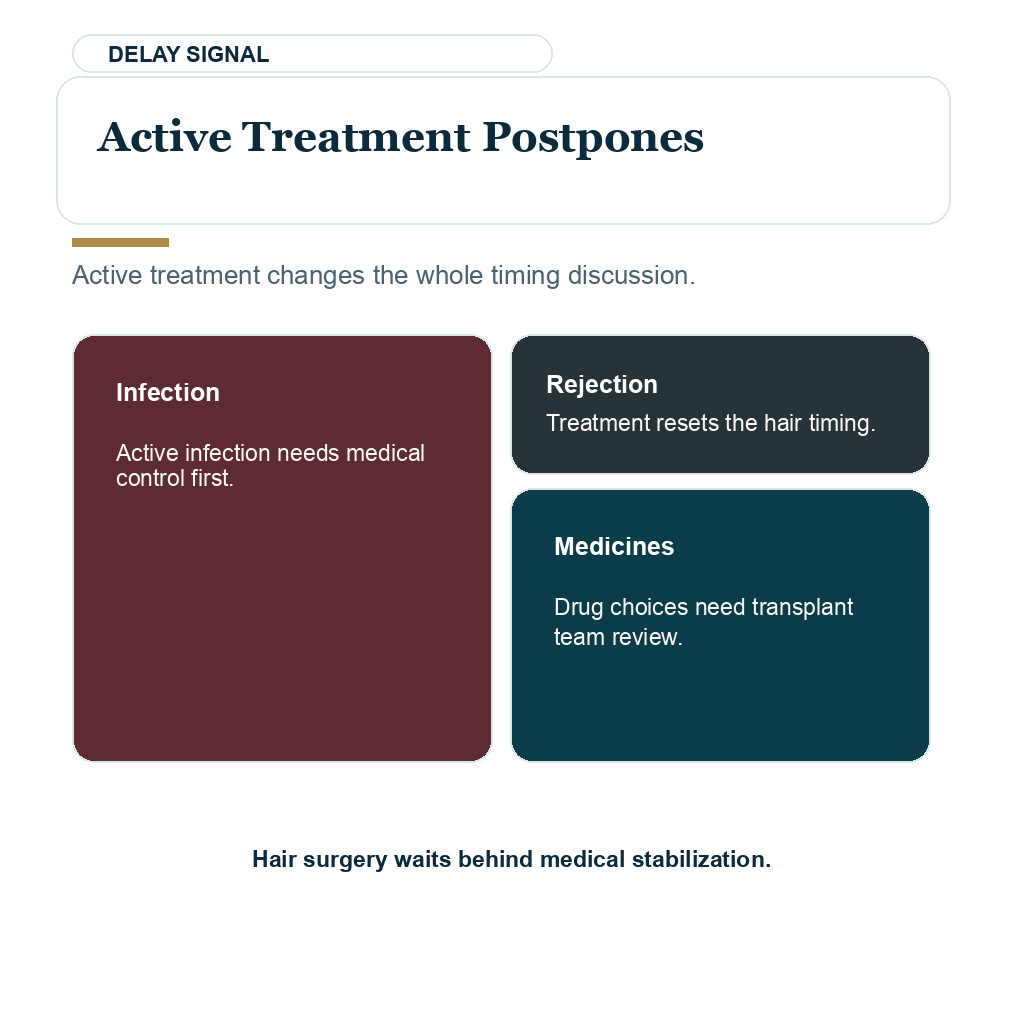
Delay the procedure if your transplant team has not cleared elective surgery, if organ function has recently worsened, if medicine that prevents rejection is being changed, if you recently had rejection treatment, if you had a serious infection, or if blood tests are not stable. Fever, open skin infection, active shingles, uncontrolled diabetes, low white cells, low platelets, or unexplained fatigue also change the timing discussion.
Another reason to pause is recent major surgery or hospitalization. I use the timing logic from major surgery around hair transplant timing, because the body should not be pushed through stacked elective procedures. Organ transplant recipients need even more caution before adding elective scalp surgery.
A delayed hair transplant is easier to fix than a rushed elective surgery in a medically unstable person. If the transplant physician says wait, the responsible answer is to wait.
Hair loss after organ transplant is not always pattern hair loss
Hair loss after an organ transplant is not always classic male or female pattern loss. Major illness, surgery, anemia, nutritional shifts, stress, thyroid changes, and some medicines can contribute to shedding or diffuse thinning. Certain transplant medicines have also been associated with hair changes in some people.
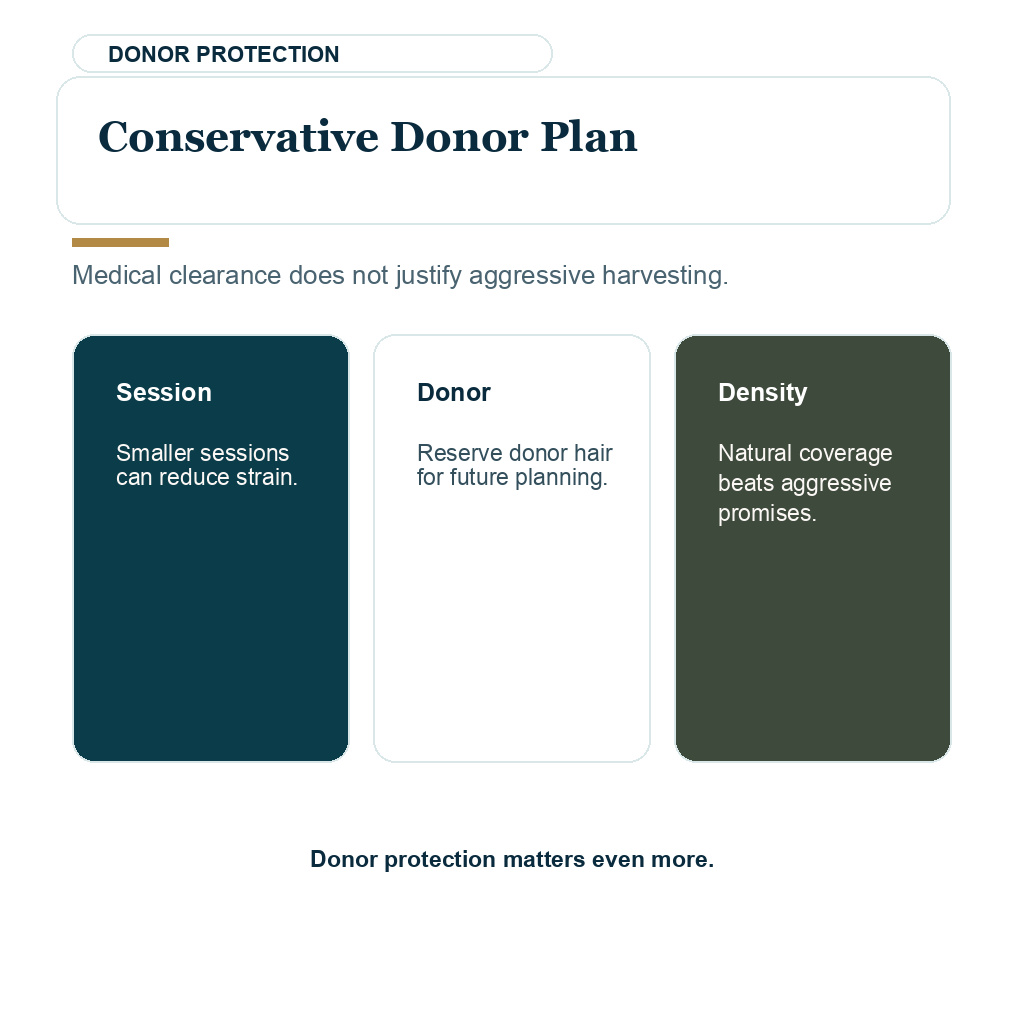
The diagnosis matters because a hair transplant only moves donor follicles. It does not treat active shedding, diffuse thinning related to medicine, scarring scalp disease, or unstable medical hair loss. I do not want to spend donor grafts on a temporary medical shed or on a diagnosis that has not settled.
Autoimmune or inflammatory background conditions may also need scalp stability reviewed. I approach autoimmune disease and hair transplant planning with the diagnosis and current scalp activity in mind. The scalp should be quiet and the diagnosis should be clear before graft placement.
Infection risk needs a written contact plan
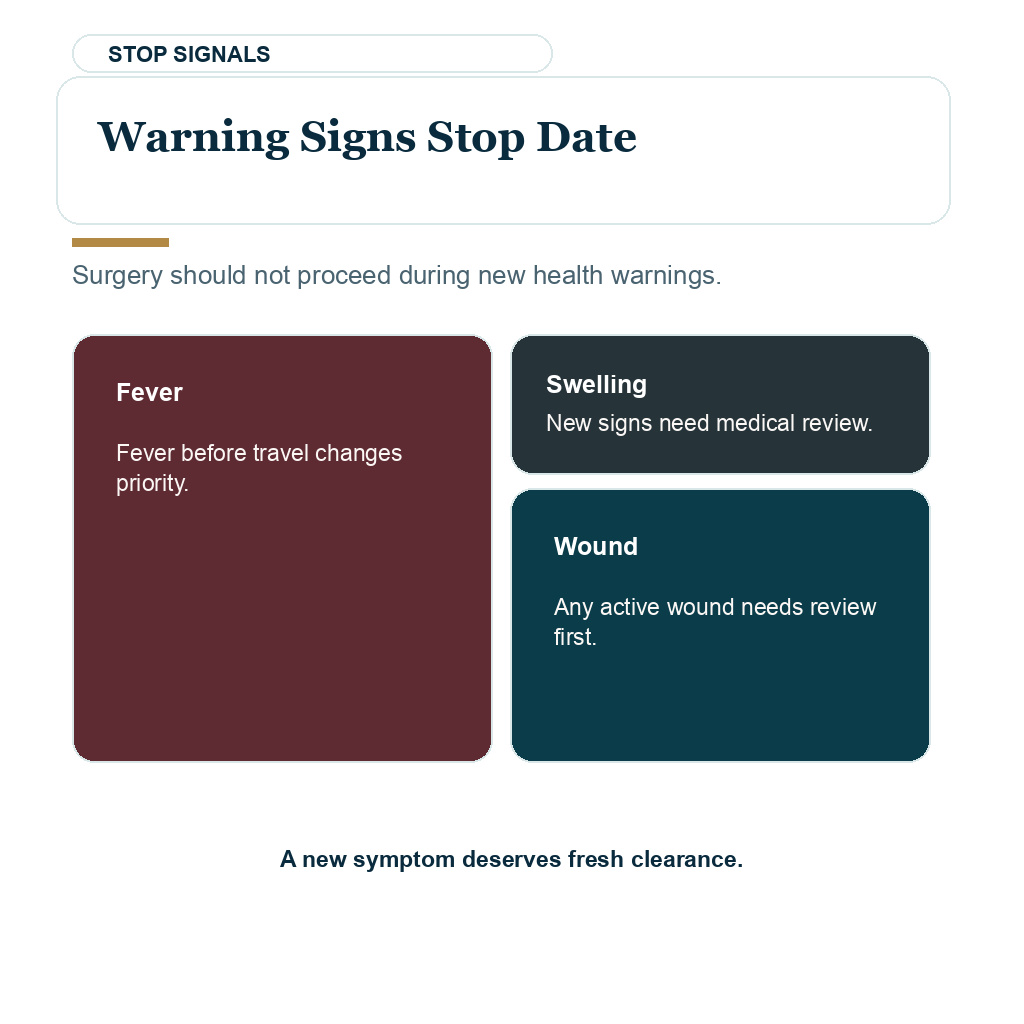
This is not meant to frighten you. It is meant to avoid casual planning for a patient whose immune system is being suppressed. A transplant recipient may need a more careful hygiene plan, medication check, and contact plan after surgery. Before surgery, it should be clear who you contact first if fever, spreading redness, increasing pain, drainage, unusual swelling, or feeling generally unwell develops after the procedure.
Antibiotic decisions should not be improvised. Some antibiotics may interact with transplant medicines or affect kidney and liver function. When I review antibiotics before hair transplant, I look at infection history, allergy history, and medicine interactions before writing the plan.
Photos can help after surgery, but they are not enough if you have fever, worsening illness, fast spreading redness, drainage, or symptoms that feel systemic. If concerns appear after you return home, recovery concerns after flying home may need local medical care as well as communication with the hair clinic and transplant team.
Records to send before booking
Send a clear medical summary before paying a deposit or arranging flights. Include the organ transplanted, transplant date, current transplant doctor or center, the date of the last specialist review, your medicine list, recent blood tests, recent infections, rejection history, allergies, and any written restrictions from your transplant team.
Allergy history matters, especially if antibiotics may be needed. A history of antibiotic allergy before FUE should be shared early, not discovered when the medication plan is being written.
If medical changes after booking a hair transplant happen, update the clinic before surgery day. New medicines, abnormal tests, infections, hospital visits, or new advice from the transplant team can change the safe plan.
The message does not need to be dramatic. It needs to be complete enough for a surgeon to say whether the case is ready, whether more specialist clearance is needed, or whether the case should be delayed.
These 10 organ transplant clearance slides explain why the hair plan stays behind written medical clearance, medicine stability, recent blood work, infection or rejection treatment, travel timing, donor planning, warning signs, and the final pause until clearance rule. Swipe sideways, use the arrows one slide at a time, or choose a number below the image.


Organ transplant history needs medical clearance before FUE
I treat organ transplant history as a planning factor, not as a secret and not as an automatic rejection. Some stable transplant recipients may be reasonable candidates after proper clearance. Others should wait, and some should avoid elective surgery if the medical risk is too high.
The donor area still has to be protected. The hairline still has to be planned carefully. Native hair loss still has to be diagnosed correctly. But before all of that, you have to be medically steady enough for the procedure.
The transplanted organ matters more than the hair being transplanted. If the medical plan is stable, written, and coordinated, a hair transplant can be discussed carefully. If it is not stable, the responsible plan is to pause and protect your health first.
Moving the surgery date is safer than moving grafts on a medically unclear day.

Read this review excerpt
He was very thorough in every little detail and I never felt pressure to do anything I wasn’t sure of.