


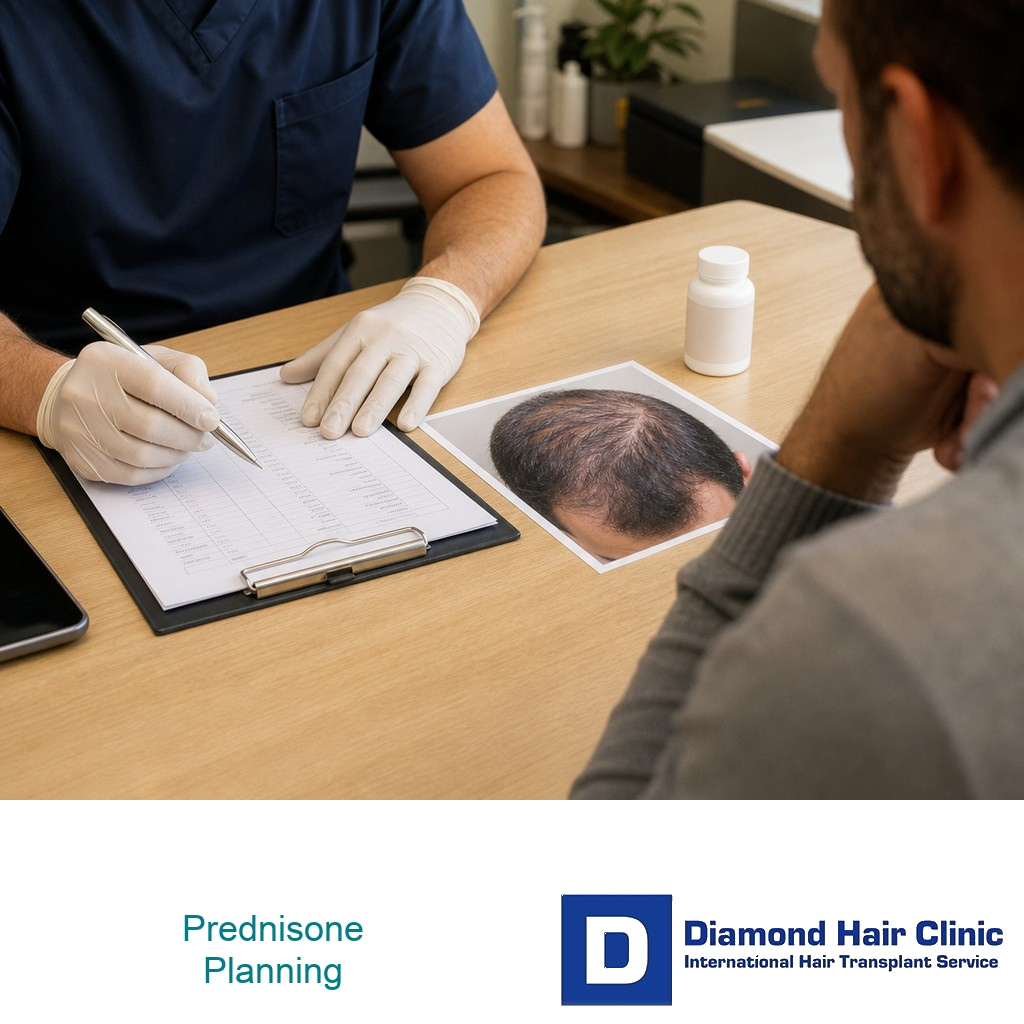
Prednisone Dose Timing and FUE Safety
A hair transplant may still be possible while taking prednisone, prednisolone, methylprednisolone, or another prescribed corticosteroid, but the dose, duration, and reason for treatment decide how cautious we need to be. A short, settled course is different from daily treatment for weeks or months, a recent dose increase, an active flare, infection, uncontrolled diabetes, unstable blood pressure, or slow wound healing.
Do not stop prednisone suddenly just to look suitable for surgery. If you have been taking it for more than a short temporary course, your body may need a taper or specific medical instructions. A flare, adrenal problem, or infection around surgery can create more risk than moving the transplant date.
A brief, stable course for a controlled problem is different from ongoing, high dose, recently increased, or tapering steroid treatment for an active disease. The hair transplant plan should fit the medical plan, not pressure you into changing medicine alone. The diagnosis behind the steroid is part of the surgery decision, not a side note. Medication used briefly for swelling is not the same issue as steroid treatment for another condition.
Prednisone does not always delay hair transplant surgery
Prednisone alone does not prove that hair transplant surgery must be cancelled. A few days of treatment for allergy, asthma, inflammation, or swelling is not the same as long term daily prednisone for lupus, inflammatory bowel disease, severe skin disease, or another active inflammatory condition.
The full medical picture decides the timing. A small temporary course after a stable condition may be manageable. A recent high dose course because the underlying disease is active is different. Hair transplant surgery is elective, so the operation should be planned when the body is stable enough to heal, not only when the travel date is convenient.
I also need to know whether the medicine is still changing. A tapering course that is nearly finished has a different meaning from a dose increased last week. A stable dose taken for a known condition gives more room to plan. A changing dose often means the medical condition is still being adjusted, and the transplant should not become the priority.
For that reason, prednisone should be reviewed together with the broader medication before a hair transplant. The real reason for the medicine matters, not only the drug name.
Prednisone details to review before surgery
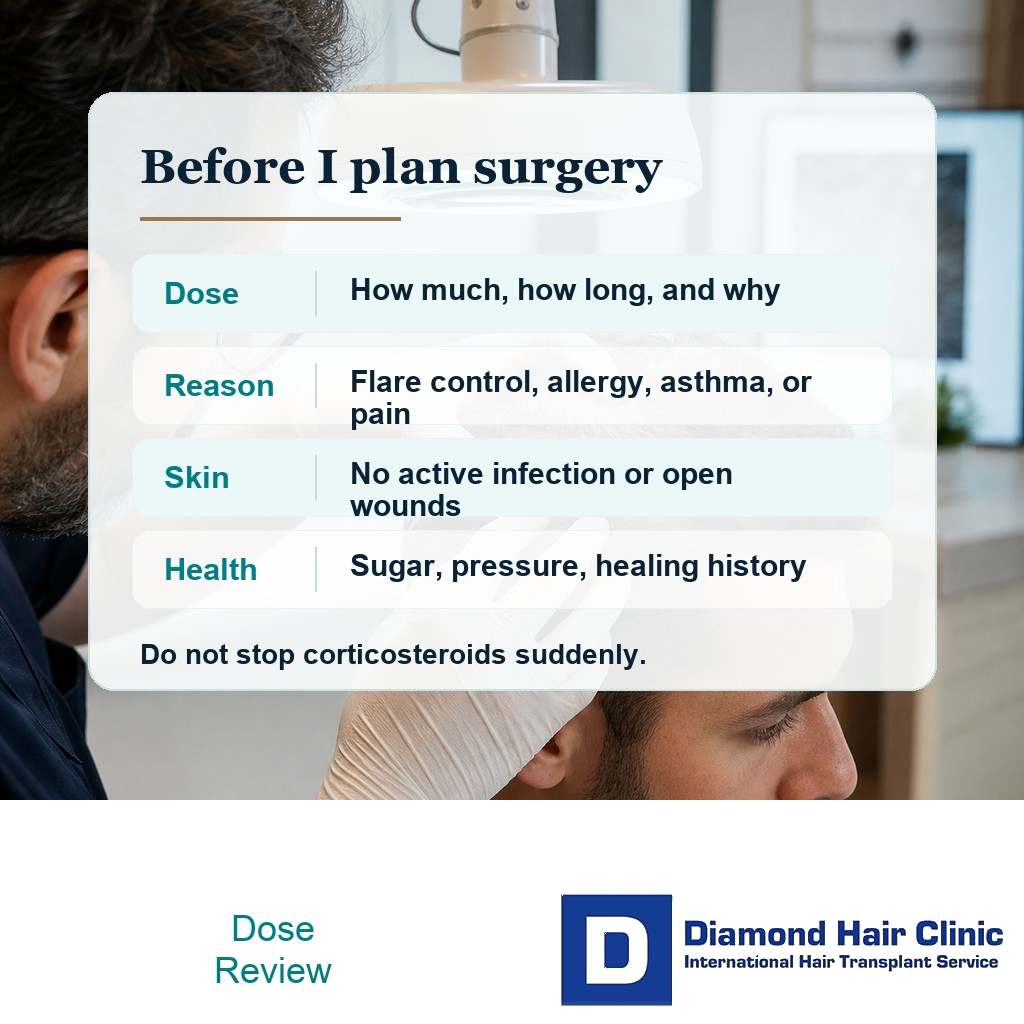
Send the exact medication name, daily dose, start date, planned stop date, taper schedule if there is one, and the reason for treatment before the surgery date is fixed. Prednisone for a severe asthma flare, a skin flare, lupus, Crohn disease, ulcerative colitis, or joint inflammation creates different concerns.
The useful information is practical. When did the illness flare? Is the dose increasing or decreasing? Was there fever, infection, open skin, delayed healing, uncontrolled blood sugar, high blood pressure, or a recent hospital visit? Is another immune medicine, such as methotrexate, Humira or another biologic, being used with it? Has the prescribing doctor said the condition is stable enough for an elective procedure?
A photo of the medication box is not enough for prednisone planning. Write the daily dose and timing in plain words. If you take the tablet every morning, say that. If you are tapering over several weeks, send the schedule. If you had an injection or intravenous steroid recently, include that date too. These details separate a small temporary issue from a treatment plan that may change healing, infection risk, blood sugar, blood pressure, or adrenal safety.
Also explain why the steroid was prescribed. The same tablet can mean a short settled problem or an active flare that still controls the surgery timing.
Include the current dose in milligrams, the highest recent dose, the date of the last dose change, and whether the medicine is oral, injected, inhaled, topical, or intravenous. If you carry a steroid card, sick day rules, or emergency steroid instructions, send a photo of that guidance too. That information helps the clinic understand whether a long surgical day needs extra medical planning from your prescribing doctor.
Prednisone often belongs to a larger diagnosis, so I do not judge the tablet alone. A broad immune flare may overlap with autoimmune disease and hair transplant planning. Lupus, Crohn disease, or ulcerative colitis can each change timing for different reasons, including disease activity, infection risk, blood results, bowel symptoms, or medicine stability.
If bowel disease is the reason for steroids, Crohn disease or ulcerative colitis before a hair transplant needs its own review. The medicine is one part of the assessment. The disease activity behind it may matter even more.
Changing prednisone doses need extra caution
A changing dose usually means the medical condition is still moving. If the dose was recently increased, if a taper has just started, or if symptoms return when the dose goes down, I do not treat the transplant date as fixed. The disease activity and the reason for the dose change matter as much as the tablet itself.
Do not taper prednisone quickly to make the chart look better before surgery. A flare after an aggressive taper can create more risk than postponing the transplant. The safer sequence is to stabilize the medical condition first, confirm the plan with the prescribing doctor when needed, then decide whether the scalp and general health are ready for elective surgery.
A taper that makes you feel worse needs fresh medical attention. New fever, worsening asthma symptoms, severe fatigue, dizziness, vomiting, diarrhea, infected skin, or a sudden return of the original disease symptoms should be reported before travel. That is not a minor schedule issue. It may mean the body is not ready for a long surgical day.
If the taper plan changes after your consultation, update the clinic rather than assuming the old answer still applies. A dose that was stable two weeks ago can become a different surgical decision if symptoms return, antibiotics are started, blood sugar rises, or the prescribing doctor changes the taper speed.
Prednisone can make surgery wait in higher risk situations
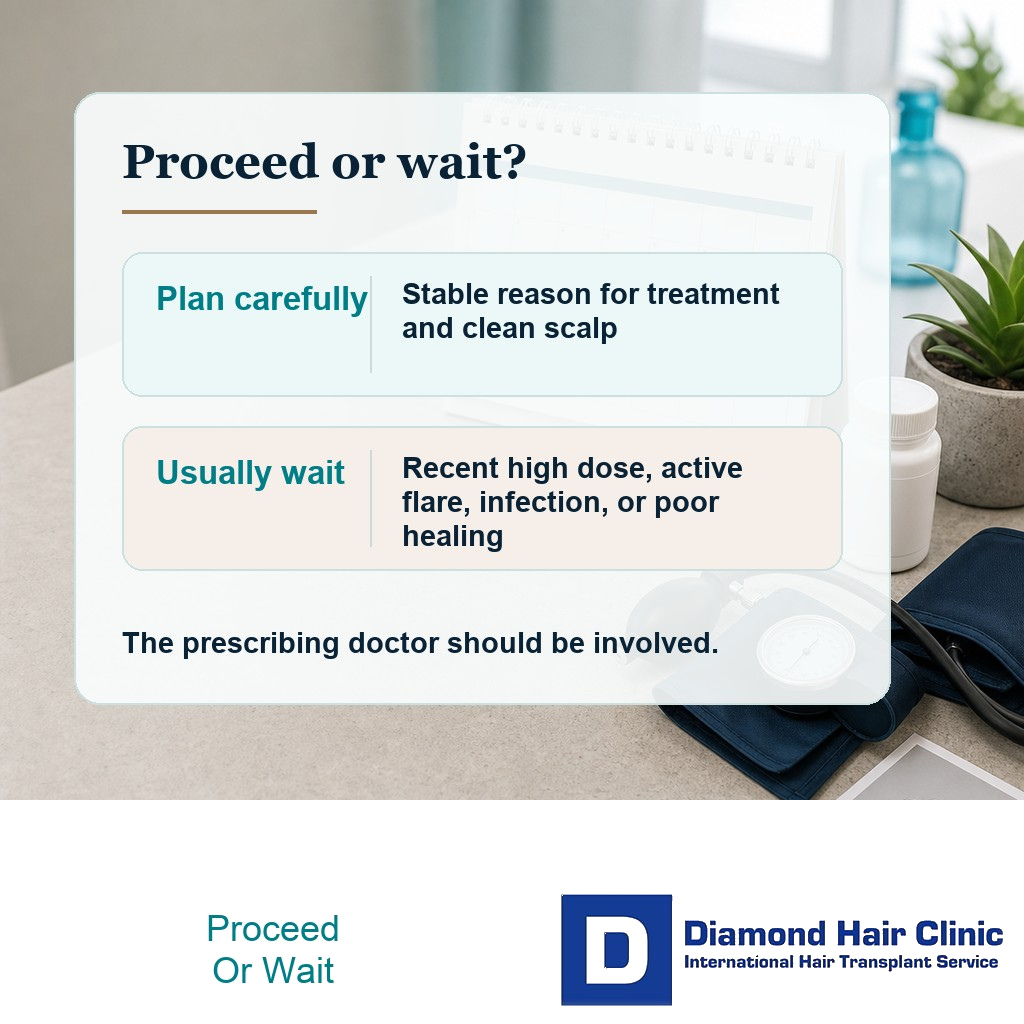
I delay more often when prednisone was recently started for an unstable medical problem, the dose is high, the course has continued beyond a short temporary period, or there is still active inflammation, fever, open skin, or infection.
Waiting is also safer when diabetes is not well controlled, blood pressure is unstable, the scalp is inflamed, or previous cuts healed slowly. Prednisone can sit at the center of these problems because it can affect immune response, blood sugar, blood pressure, skin quality, bruising, and wound healing.
That is especially relevant when the same person already needs planning for diabetes and hair transplant surgery or high blood pressure before a hair transplant. Responsible timing may come after the prescribing doctor confirms that the condition is stable and the steroid plan is clear.
The scalp itself also matters. Surgery should wait if there are sores, crusting from active inflammation, pus, painful bumps, spreading redness, or scratching wounds in the donor or recipient area. Those are not small cosmetic details. Hair transplant surgery creates many tiny skin openings, so the starting condition of the skin matters.
Delay can feel frustrating, especially after travel is booked. Still, postponing before grafts are taken is much easier than trying to repair a problem after surgery. A short delay to settle the medical issue can protect the grafts, the donor area, and the final result.
Short steroid course differs from long term prednisone
Some clinics prescribe a short steroid course for swelling control after a hair transplant. That is not the same situation as someone already taking long term prednisone for another medical condition. Do not borrow a steroid plan from another patient to manage swelling because the reason for swelling and your own dose history matter.
A short course after surgery may be used to reduce swelling in selected cases. Long term oral corticosteroid treatment raises a different question because there may be active disease, immune suppression, adrenal suppression risk, blood sugar changes, blood pressure changes, thinner skin, bruising, or slower wound healing. If steroid treatment is part of transplant care, hair transplant after an organ transplant also needs transplant team clearance and medicine review. The same word, steroid, can describe very different medical situations.
With longer or higher dose steroid use, the body may also need time to recover its own cortisol response. The decision has two parts. First, does prednisone change healing, infection, sugar, pressure, or skin risk? Second, does the prescribing doctor expect a taper, a steroid card, or extra instructions if you become unwell around the operation?
Do not interpret this as a reason to invent your own stress dose plan. If there is any adrenal suppression concern, the useful step is a written instruction from the doctor who manages the steroid treatment. I need to know the plan, but the plan should not be guessed on the surgery morning.
If your clinic prescribes a short course after surgery, take it only as instructed. Do not add extra tablets because swelling looks uncomfortable. Do not skip prescribed medicine because you read that steroids can have side effects. The decision has to respect your health history, other medication, and the reason the medicine was prescribed. An uncomfortable reaction to a short swelling course still needs instructions from the doctor who prescribed it, not a private decision to stop or double tablets.
Separate this from anabolic steroids after a hair transplant. Anabolic androgenic steroids are used for performance or physique and can worsen androgen driven hair loss in susceptible people. Prednisone and prednisolone are prescribed corticosteroids. The planning questions are different.
Prednisone related shedding should be diagnosed first
Sometimes the hair problem belongs more to the illness than to the scalp pattern. A flare, fever, weight change, low iron, poor nutrition, stress on the body, surgery, or a medication change can trigger temporary shedding. Prednisone may appear in the same period, so the tablet gets blamed even when the real cause is mixed.
Before using donor grafts, the hair loss pattern should be separated from temporary shedding. A transplant can help when there is stable male or female pattern hair loss with a clear recipient area. It is a poor use of donor hair if the main problem is active shedding that may improve after the medical issue settles.
Diffuse shedding after illness can make the whole scalp look thinner. A hair transplant cannot chase every temporary change. If the donor area is used while the diagnosis is still unclear, grafts may be placed into a scalp that later changes again. That can leave a result looking thinner than expected, not because the grafts were useless, but because the original diagnosis was incomplete.
That distinction is the same reason telogen effluvium and hair transplant timing needs careful diagnosis. Surgery moves hair. It does not treat the trigger that is making native hair shed.
Prednisone can affect infection, blood sugar, and healing
Prednisone can reduce inflammation, but it can also change how the body responds to stress, infection, and healing. In hair transplant surgery, I take this seriously because the scalp has many tiny recipient openings and many small donor area extractions. Clean technique is essential, but the body still has to do the healing.

The practical concerns are infection, delayed wound healing, high blood sugar, high blood pressure, bruising, and warning signs that are harder to interpret. A short steroid course for a settled problem is different from a higher dose or long term course for active disease. If antibiotics are needed near the surgery date, the reason for the prescription also belongs in the review.
Blood sugar deserves special attention. Corticosteroids can raise blood sugar, and high blood sugar can weaken healing. If you have diabetes, prediabetes, or unexplained thirst and frequent urination while using prednisone, those details should be reviewed before the operation. A hair transplant is not the moment to discover uncontrolled glucose after the scalp has already been opened.
If you monitor glucose at home, send recent readings and the time of day they were taken. If you have diabetes or prediabetes, send recent HbA1c or glucose results when available and say whether prednisone changed your usual medication plan. The question is not only the steroid dose. It is whether the body is stable enough to heal after many small skin openings.
Blood pressure also has practical consequences. High blood pressure can make bleeding control harder and may make the day of surgery less predictable. If prednisone is causing fluid retention, swelling, poor sleep, or blood pressure changes, the surgical plan should not ignore that information.
After surgery, corticosteroid use should make warning signs easier to report, not easier to ignore. Fresh pus, spreading redness, heat, worsening pain, fever, open wounds, or symptoms that worsen instead of settling should be reported. The pages on infection after a hair transplant and antibiotics after a hair transplant explain how medication history and warning signs should be handled.
Send the full prednisone context before travel
Share any corticosteroid use before the trip if you are taking prednisone, prednisolone, methylprednisolone, dexamethasone, hydrocortisone, or another corticosteroid tablet or injection. Include inhaled, injected, and topical steroid use as well, even if the main concern is stronger with oral or injected treatment.
Bring the medication list, dose schedule, diagnosis, recent blood test results if available, and the name of the prescribing doctor. If the medicine was started for a recent flare, infection, breathing problem, allergic reaction, or hospital episode, share that early. A hair transplant team should not first learn about prednisone on the morning of surgery.
Ask the prescribing doctor for a clear note when the case is more than a short settled course. The note should say whether elective skin surgery under local anesthesia is reasonable, whether the dose should stay the same or taper, whether steroid card or sick day instructions apply, and which warning signs should delay the procedure.
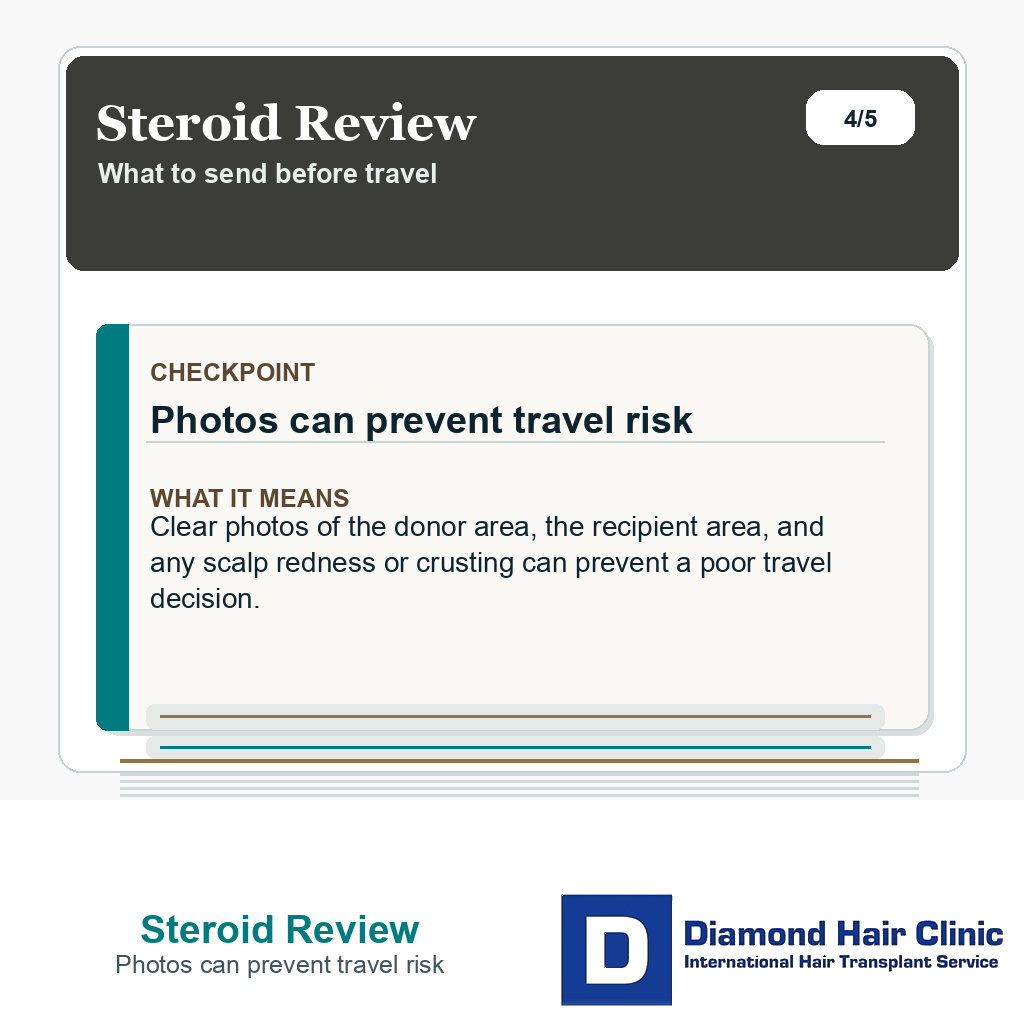
Photos are useful too. Clear photos of the donor area, the recipient area, and any scalp redness or crusting can prevent a poor travel decision. If the scalp is not ready, that needs to be clear before you fly to Istanbul, not after you are already in the chair.
Blood tests may be needed when the history suggests anemia, inflammation, diabetes, infection risk, low white blood cells, or another medical issue. Blood tests before a hair transplant can move the discussion from guesswork to safer planning.
In these 5 slides, prednisone timing is judged through dose, reason for use, adrenal safety, and wound healing risk. Swipe sideways, use the arrows, or choose a number below the image.



Prednisone timing needs the prescribing doctor involved
Prednisone is not a small detail before elective surgery. The reason for treatment, dose, duration, taper timing, infection risk, blood sugar, blood pressure, skin condition, and scalp diagnosis all change the decision.
The prescribing doctor needs to confirm that surgery is reasonable, and the hair transplant plan has to respect that medical judgment. A stable lower risk situation is different from a flare, a rising dose, fever, infected skin, or an uncertain taper.
When the medical picture is calm, FUE may still be possible with clear instructions. When it is not calm, waiting keeps the donor area intact and avoids turning a timing problem into a healing problem.

Read this review excerpt
Every single one of my questions was answered and they made sure I had all the details I needed to make an informed decision.