



Methotrexate Needs Stable Blood Tests Before FUE
You may be able to have a hair transplant while taking methotrexate, especially if you are on a stable weekly dose, your monitoring blood tests are acceptable, and the illness being treated is quiet. The medicine name alone is not enough. I need to understand the diagnosis, dose, recent changes, blood count, liver tests, scalp condition, infection history, and whether the hair loss is stable pattern loss rather than temporary shedding.
Do not stop methotrexate on your own before surgery or travel. For some people, missing a dose can trigger a flare. For others, a temporary hold may be advised because the blood tests, infection risk, kidney function, or wound healing picture is different. That decision belongs with the prescribing doctor and the surgical team, not with online advice or fear.
A missed or delayed weekly dose, or a dose held by the patient, belongs in the timeline because it can change how stable the disease and medicine plan really are.
I separate stable weekly maintenance treatment at a low dose from a recent start, dose increase, switch to injections, abnormal blood count or liver test, mouth ulcers with fever, active infection, or disease flare. The first situation can sometimes be planned around. The second needs medical review before grafts are taken.
Blood counts, liver results, infection history, and disease control are not visible in a scalp photo, so bring the prescriber’s latest review into the transplant discussion before travel is fixed.
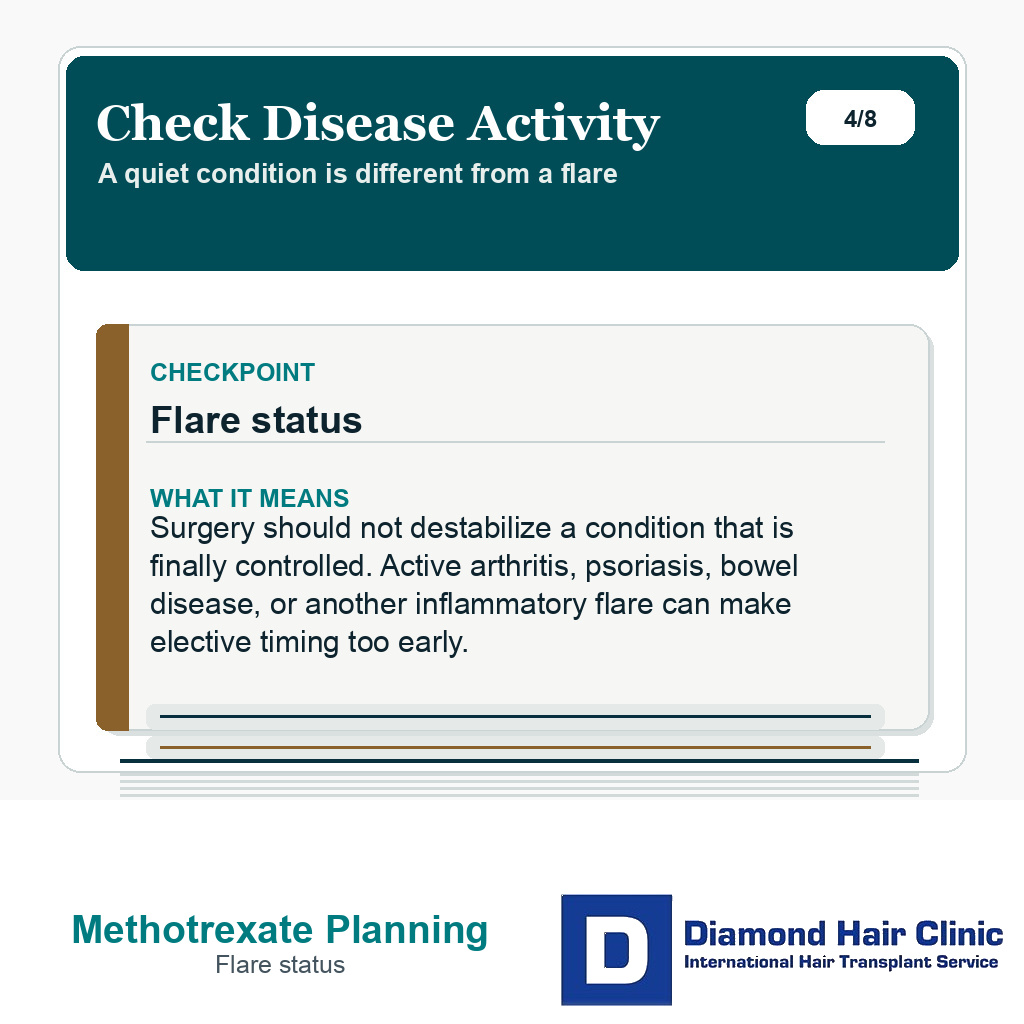
A quiet disease matters as much as a stable dose. If the condition is flaring, the same weekly medicine can belong to a different surgical conversation.
Methotrexate does not always delay surgery
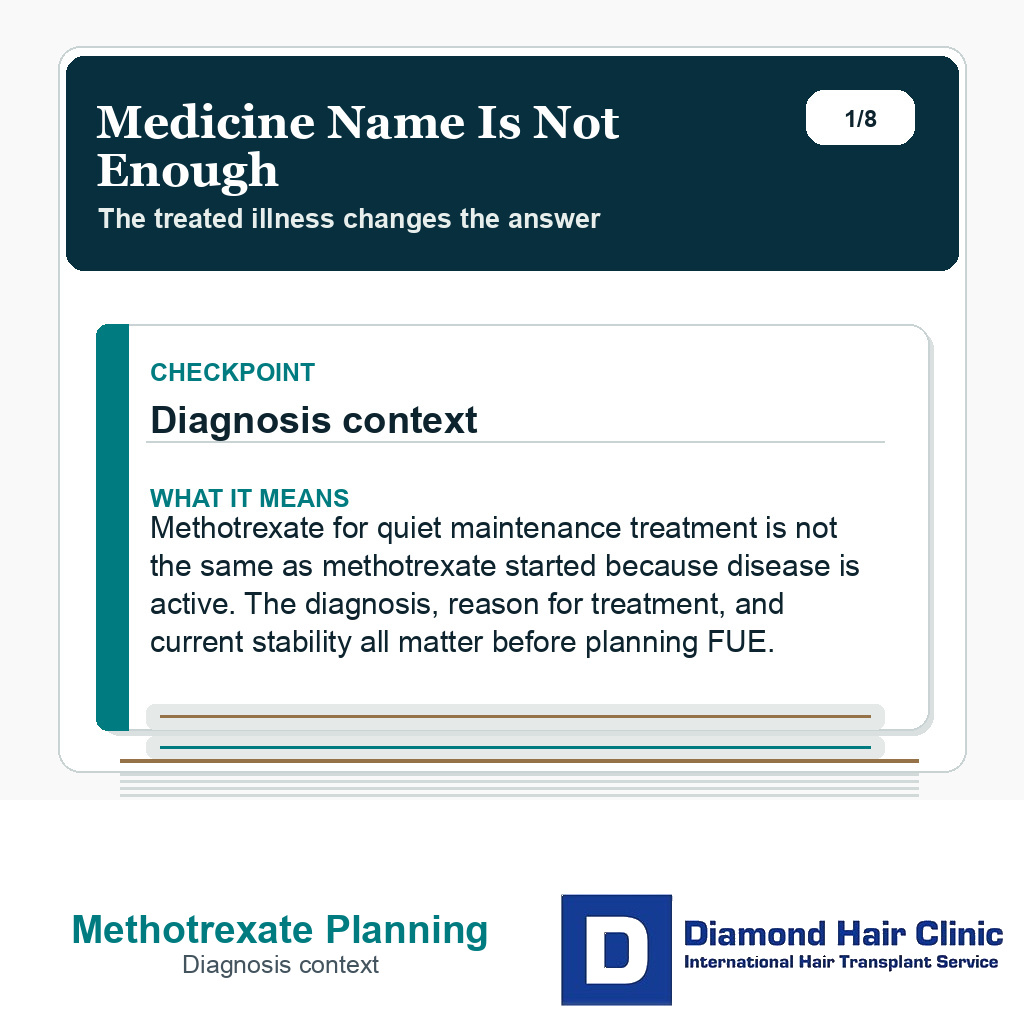
Methotrexate alone does not cancel hair transplant surgery. Someone taking a stable weekly dose for controlled rheumatoid arthritis, psoriasis, inflammatory bowel disease, or another inflammatory condition is in a different position from someone who recently started treatment because the disease is active.
Hair transplant surgery is elective, so I judge timing by medical stability rather than by the calendar alone. The scalp, donor area, blood count, platelet count, liver tests, infection history, and medication plan should all make sense before grafts are taken.
Broader medication before a hair transplant review works only when the exact medicine, dose, schedule, and reason for treatment are known. A vague answer such as “I take something for inflammation” is not enough for surgical planning.
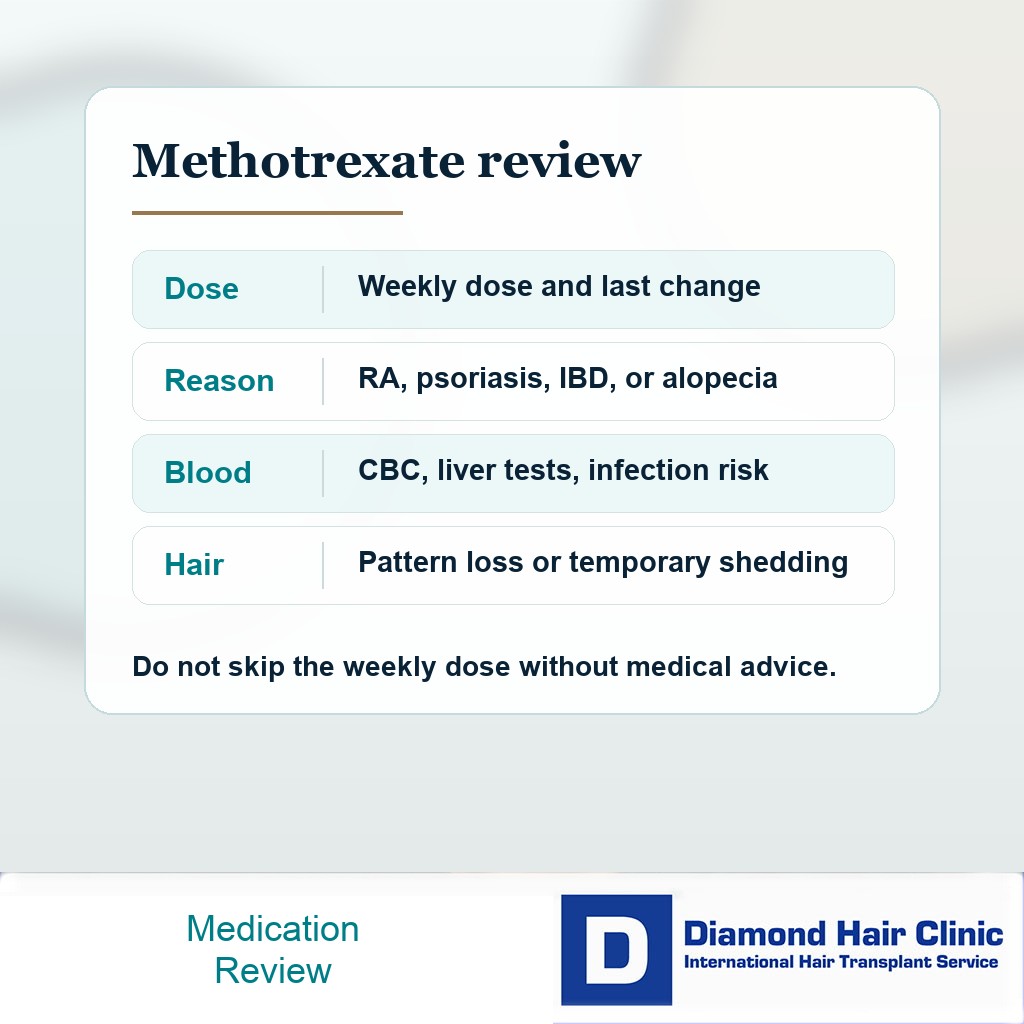
Methotrexate is usually a weekly medicine in these inflammatory disease settings, so the exact day matters. Write it as a weekly dose and schedule, not as a number that looks like a daily dose. If there was any confusion about taking it daily by mistake, a missed weekly dose, or a recent switch from tablets to injection, say that clearly before surgery is planned.
Methotrexate also sits inside the wider category of autoimmune disease and hair transplant surgery. The diagnosis name may matter, but disease activity usually matters more.
Methotrexate details to review before surgery
Send the exact weekly dose, the day you take it, whether it is a tablet or injection, how long you have used it, whether the dose was recently changed, and whether you take folic acid or folinic acid with it. Also send the reason for treatment. Methotrexate used for rheumatoid arthritis is not the same clinical story as methotrexate used for psoriasis, Crohn’s disease, ulcerative colitis, or another inflammatory disease.
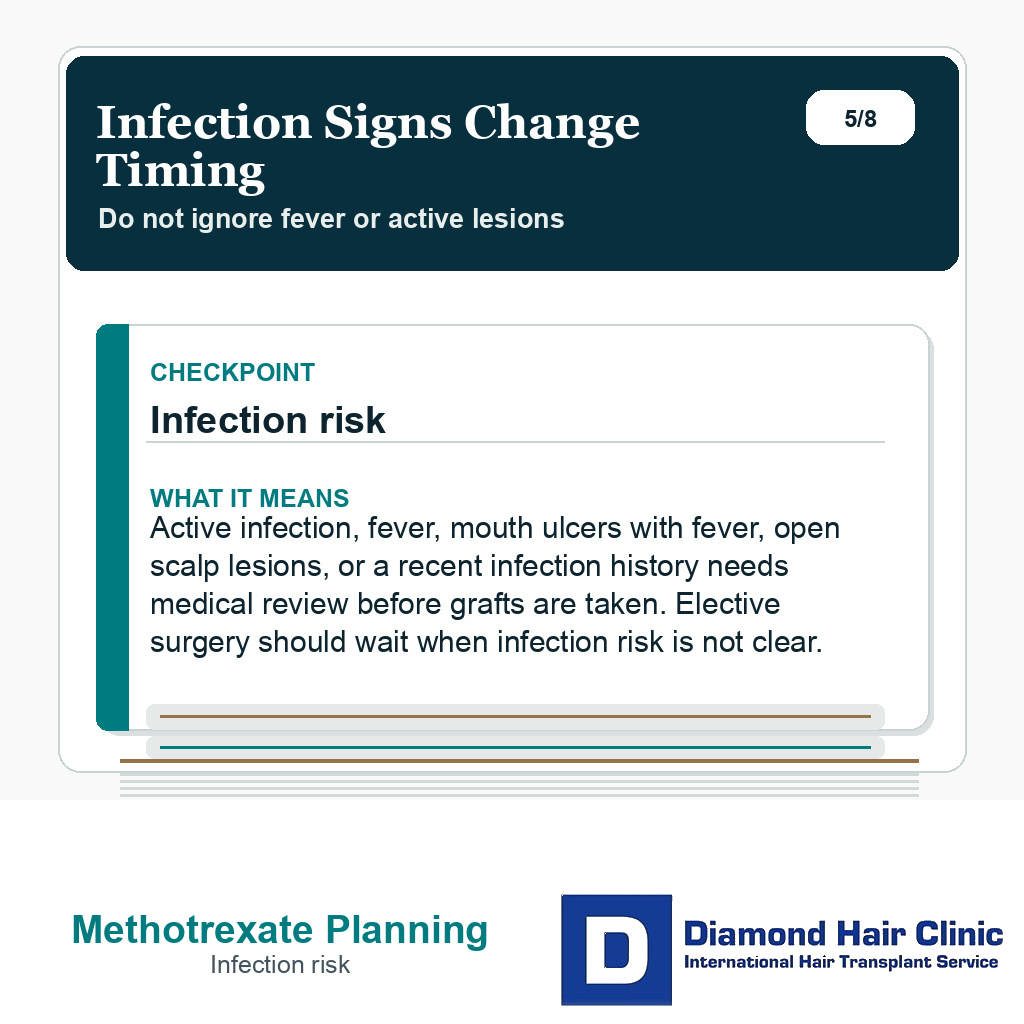
The recent medical history matters more than a clean medicine list. A settled side effect is different from fever, repeated mouth ulcers, severe sore throat, new cough or breathlessness, active infection, open skin, unexplained bruising, unusual fatigue, or a recent flare. Those symptoms can change the safety review because they may point to infection, blood count problems, lung irritation, or disease activity.
Recent blood tests are useful because methotrexate can affect blood count and liver tests in some people, and kidney function can matter when the body clears the medicine. Blood tests before a hair transplant can move the decision away from guessing. I am not looking for perfect numbers. I am looking for a body that can heal predictably after many small donor and recipient area openings.
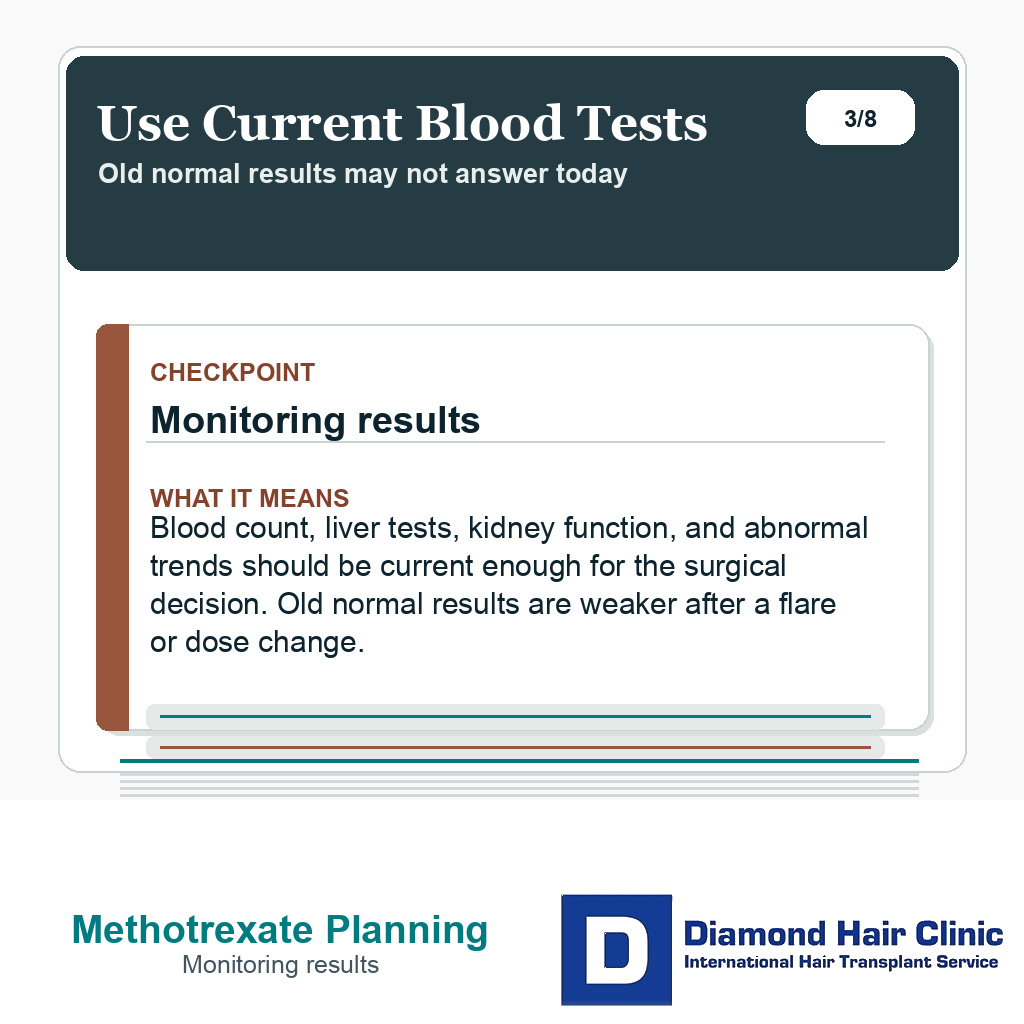
For monitoring, send the actual recent results with dates. Include CBC with white cells, neutrophils, hemoglobin and platelets, liver enzymes such as AST and ALT, kidney function such as creatinine or eGFR, and any abnormal trend your doctor is following. A normal test from many months ago is less useful than a current result after a dose change, infection, or flare.
If the prescription was given by a rheumatologist, dermatologist, gastroenterologist, or another specialist, that doctor’s view matters. A hair transplant should not destabilize a condition that is finally under control.
Methotrexate shedding should be diagnosed before surgery
Sometimes. Methotrexate can be associated with hair thinning or shedding, but it is not the only possible explanation. The illness being treated, inflammation, low iron, low ferritin, blood loss, poor nutrition, fever, surgery, stress, steroid changes, and other medication changes can all affect shedding.

If shedding began after starting methotrexate, increasing the dose, changing from tablets to injection, or changing folic acid use, the prescribing doctor should review the medication plan and recent blood results before donor grafts are treated as the answer. Do not adjust folic acid, leucovorin, or the methotrexate dose on your own to protect hair.
Folic acid or folinic acid details belong in the same message as the methotrexate dose. Send the dose, schedule, and any recent change. If nausea, mouth ulcers, sore throat, fever, unusual bruising, or severe fatigue appeared after a change, that is not only a hair loss detail. It is part of the surgical safety review.
That distinction matters because surgery is not a treatment for every type of hair loss. A hair transplant can help when there is a stable male or female pattern with a clear recipient area and a safe donor plan. It is a poor use of donor grafts if the main problem is temporary shedding that may improve after the body settles.
In people with inflammatory disease, genetic pattern loss has to be separated from telogen effluvium and hair transplant timing. If the whole scalp became thinner after a flare, infection, weight loss, or medication change, the first step is diagnosis, not graft placement.
Iron status also matters. Someone taking methotrexate for an inflammatory disease may also have anemia, poor intake, or blood loss depending on the condition. Low ferritin or anemia before a hair transplant can make the hair loss picture less clear and may need treatment before surgery is planned.
Recent methotrexate changes make timing less clear
If methotrexate was started recently, increased recently, changed from tablets to injection, or combined with another immune medicine, I slow the decision down. This is not because surgery is impossible. It is because the baseline is moving.
The first months after a medicine change can be difficult to interpret. The disease, the medicine, blood tests, side effects, and shedding pattern may all be changing at the same time. Timing is clearer after the treating doctor has seen whether the medicine is working, whether the dose is tolerated, whether blood count and liver tests remain acceptable, and whether the hair shedding is slowing or continuing.
If the hair loss began soon after a dose change, the transplant question should wait behind diagnosis. There may still be permanent male or female pattern loss underneath, but donor grafts belong in the plan only after temporary shedding, medication effects, inflammation, anemia, and scalp disease have been separated as much as possible.
Rheumatoid arthritis, psoriasis, or IBD change the decision
Methotrexate is only one part of the picture. The reason behind the prescription can change surgical timing more than the tablet itself. Rheumatoid arthritis may raise questions about general inflammation, other immune medicines, pain control, hand or neck comfort during a long surgical day, and whether the disease is stable enough for travel and recovery.
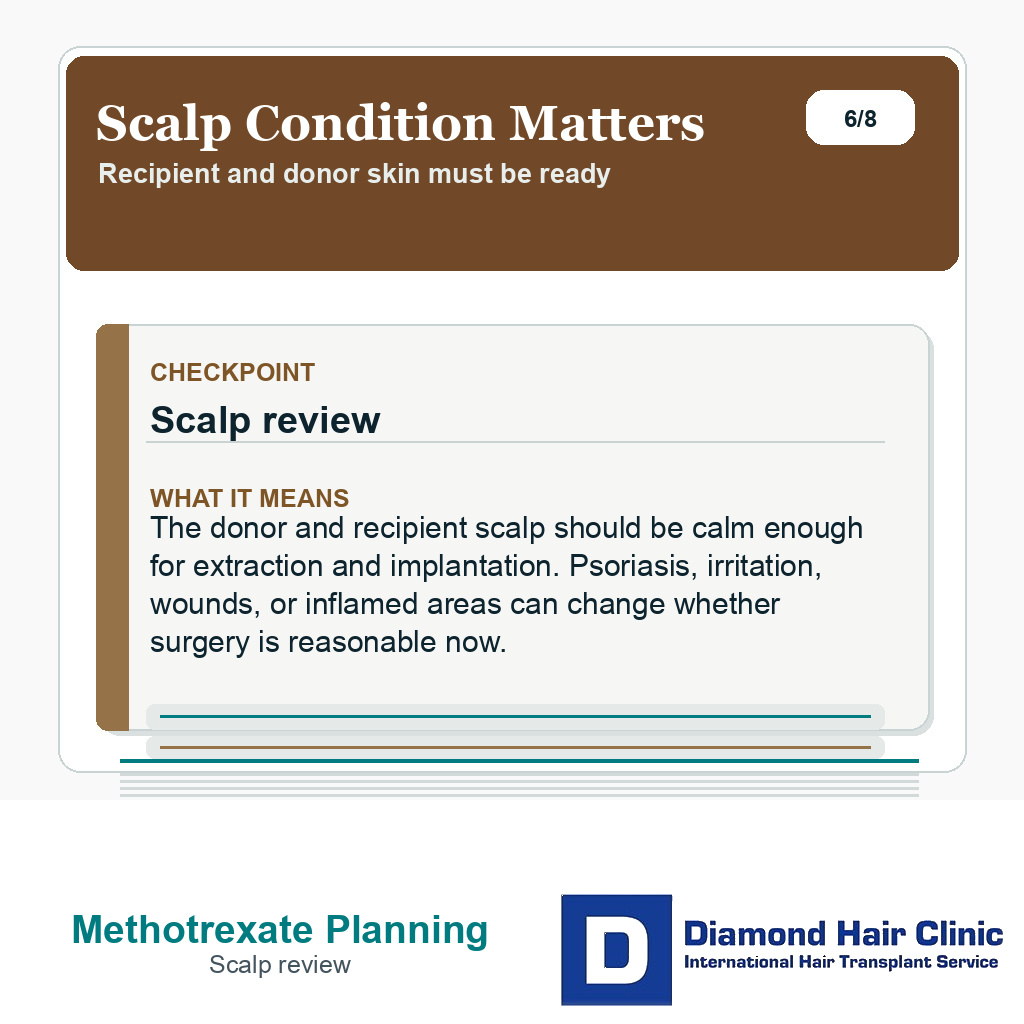
Psoriasis adds a scalp question. If the recipient or donor area has active plaques, scratching wounds, bleeding scale, or irritated skin, surgery should wait until the skin is calmer. The starting condition of the skin matters in scalp psoriasis and hair transplant planning.
Inflammatory bowel disease adds nutrition, anemia, hydration, flare control, and medication timing questions. When methotrexate is used for IBD, the decision also has to account for Crohn’s disease or ulcerative colitis before a hair transplant, not only the medication name.
Some people take methotrexate together with steroids, Humira or other biologics, JAK inhibitors, or other immune treatments. If corticosteroids are part of the current plan, prednisone before a hair transplant should be reviewed separately because dose, duration, blood sugar, blood pressure, and healing history may change the timing.
Methotrexate should not be stopped without medical advice
Do not stop it without medical advice. In many surgical settings, stable weekly methotrexate at a low dose is not treated the same way as some biologic medicines, but that does not mean every hair transplant case is cleared by default. The answer has to respect both sides of the risk. Continuing treatment may raise infection or healing questions in some situations. Stopping it may trigger a flare in others.
A universal stop date for methotrexate would be unsafe in a hair transplant article. The dose, diagnosis, blood results, kidney function, infection history, other medicines, and prescribing doctor’s plan matter.
If the treating doctor says the weekly dose should continue, tell the transplant clinic clearly. If the treating doctor wants the dose held around surgery, the timing should be written down before travel. Do not make the decision from online advice, a friend’s operation, or fear that the clinic will refuse surgery.
A useful written plan should state whether methotrexate continues, pauses, or moves. The last dose date. The next planned dose date. Who decides restart if it is paused. And which symptoms should stop the plan. This is especially important if the dose is due during the first recovery week, when the scalp is still healing even if it looks quiet.
The transplant team also needs to know when you last took the medicine and when the next weekly dose is due. A planned dose during the first recovery days is not something to decide from a hotel room after surgery.
Methotrexate is different from biologic medicines
Methotrexate, biologic injections, JAK inhibitors, corticosteroids, and other immune medicines are not one single category for surgical planning. They may be used for similar diseases, but the infection, timing, blood test, flare control, and wound healing questions are different.
Copying another person’s advice is a common mistake. One person may take weekly methotrexate only. Another may take methotrexate with a biologic injection. Another may be tapering steroids after a flare. Those are different surgical conversations.
For a hair transplant, the medicine list needs to be written clearly rather than summarized as “immune medicine.” Include injections, tablets, creams, recent antibiotic courses, painkillers, supplements, and any medicine that was stopped recently. A medicine stopped last month may still explain why the disease is unstable or why shedding started.
The decision becomes safer when the transplant clinic and the prescribing doctor understand the same timeline. If a medicine needs to be timed around surgery, that timing should protect both healing and disease control. A clean surgical plan should not create a medical flare that could have been avoided.
Waiting is wiser when blood tests or disease activity are unstable
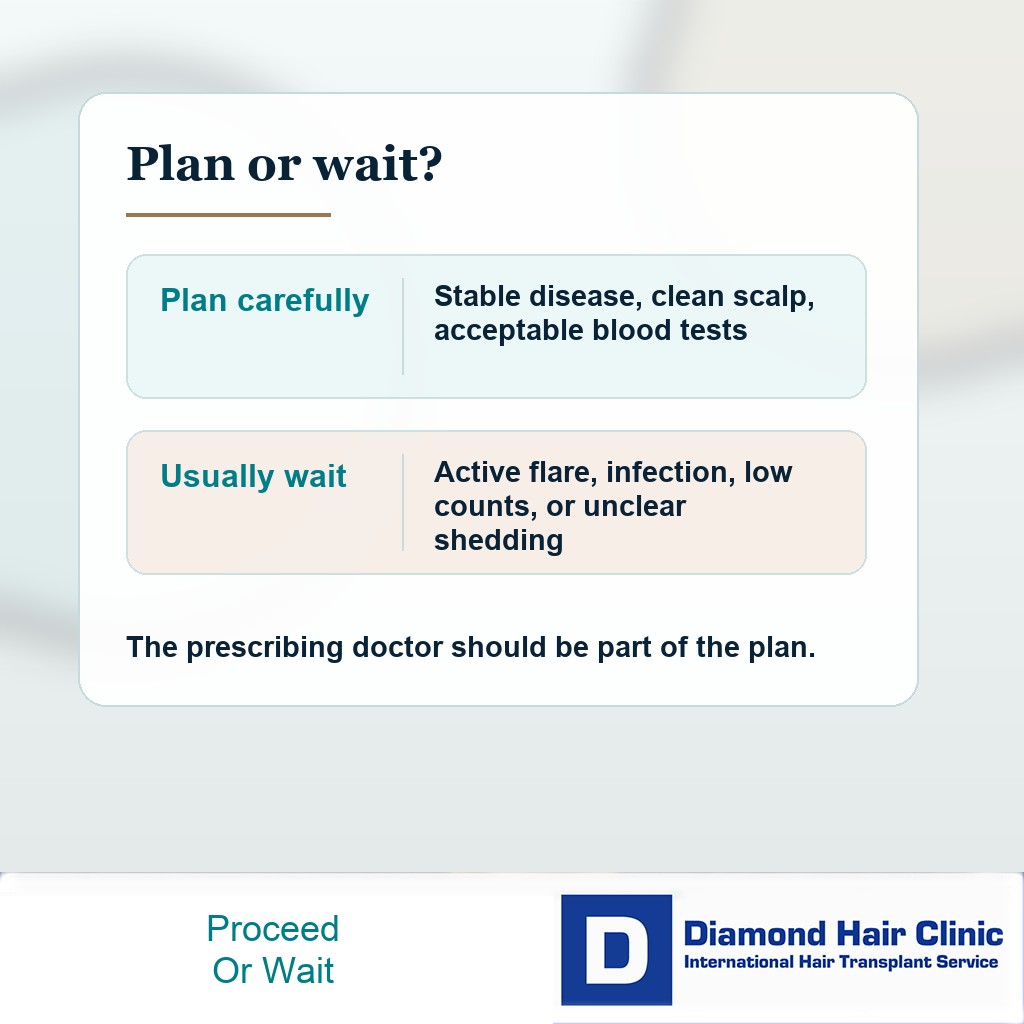
Waiting is wiser when the underlying disease is active, the dose was recently increased, blood tests are not acceptable, there is an active infection, the scalp has open or inflamed skin, or another immune medicine has just been added.
I also pause if the hair loss looks like active shedding rather than stable pattern loss. A transplant should not be used to chase a moving target. Donor hair is limited, and grafts should be placed only when the diagnosis is clear enough to protect the long term plan.
Low white blood cells, low platelets, abnormal liver tests, fever, repeated mouth ulcers, severe sore throat, new cough or breathlessness, unexplained bruising, poor healing, or repeated infections deserve attention before surgery. These are not small paperwork details. They affect whether the skin can heal normally and whether infection signs might be missed or delayed.
A recent flare of lupus, psoriasis, IBD, rheumatoid arthritis, or another inflammatory disease also changes the surgical discussion. Lupus and hair transplant timing is related context here because stable disease supports a cleaner surgery plan. Active disease often deserves patience.
Infection and healing concerns depend on the whole case
Methotrexate does not mean every person heals badly. Many do not. The review is whether this person’s medical situation is stable enough today for an elective operation that creates many small donor and recipient area openings.
The practical concern is the full setting. Are blood counts acceptable? Are liver tests stable? Is kidney function safe? Is there an active infection? Is the scalp clean? Is diabetes controlled if present? Is another immune medicine being used? Has there been slow healing, repeated infection, or recent antibiotic treatment?
If warning signs appear after surgery, they should be reported early. Increasing pain, spreading hot redness, pus, fever, open wounds, bad smell, or symptoms that worsen instead of settling should not be hidden or waited out. The pages on infection after a hair transplant and antibiotics after a hair transplant explain why medication history and symptom timing matter.
Antibiotics are not a substitute for proper timing. If surgery is poorly timed during an active medical problem, an antibiotic cannot make the decision automatically safe. The better protection is to choose the right moment before the scalp is opened.
Details to send before travel
Tell the clinic that you take methotrexate before the surgery date is fixed. Send the dose, weekly schedule, next planned dose date, start date, last dose change, folic acid or folinic acid use, reason for treatment, other immune medicines, recent steroid use, recent infections, and recent blood test results if available.
A medication name and one blood test screenshot do not give enough context. Send the methotrexate route, tablet or injection strength, weekly total dose, dosing day, folic acid schedule, current specialist instructions, and the full monitoring report with reference ranges. That is the information needed to judge timing rather than guess from a partial message.
Clear scalp photos are useful. Show the donor area, the recipient area, and any redness, scaling, plaques, sores, scratching marks, or crusting. I need to know about scalp inflammation before the ticket is bought or time off work is arranged.
Tell the clinic if you recently had fever, antibiotics, dental infection, skin infection, chest infection, hospital admission, weight loss, diarrhea flare, joint flare, mouth ulcers, unusual bruising, severe fatigue, or a new medicine. Small details can change the timing when methotrexate or another immune medication is involved.
If your weekly dose is due during travel or early recovery, get the plan in writing before surgery. Bring the medicine list, monitoring blood results, and prescribing doctor’s instructions. The hair transplant date should fit the medical plan, not force the medical plan to be improvised around the trip.
Also explain what you expect from surgery. If the hair loss is diffuse after illness or medication changes, the first discussion should be diagnosis. If the hair loss is stable pattern loss, the conversation can move toward donor capacity, recipient area size, hairline design, and realistic graft planning.
These 8 methotrexate slides keep blood tests, infection risk, disease control, dose timing, and doctor coordination in the same review. Swipe sideways, use the arrows, or choose a number below the image.



Stable blood tests matter more than a date
A reasonable plan needs stable disease, a stable methotrexate schedule, acceptable blood tests when needed, clean scalp skin, no active infection, a clear permanent hair loss pattern, and agreement from the prescribing doctor when medicine timing is uncertain.
If those pieces are present, methotrexate may be a planning factor rather than a reason to refuse surgery. The surgical team can prepare the day with the medication history in mind and give aftercare instructions that match the risk profile.
If those pieces are missing, waiting protects both health and donor grafts. It is better to postpone before grafts are removed than to force surgery through an active flare, unclear shedding episode, abnormal blood result, or infected scalp.
I do not see methotrexate as a secret disqualifier. I see it as a reason to read the medical story properly before operating. When the dose, diagnosis, disease control, blood results, scalp condition, infection history, other medicines, and hair loss pattern are stable enough, surgery may still be possible. When they are not stable, the responsible decision is to make the medical situation clearer first.

Read this review excerpt
Diamond Hair was the only clinic asking for medications, treatments I've done before, and other type of questions that make me feel confident on the professionalism that they practice with their clients.