


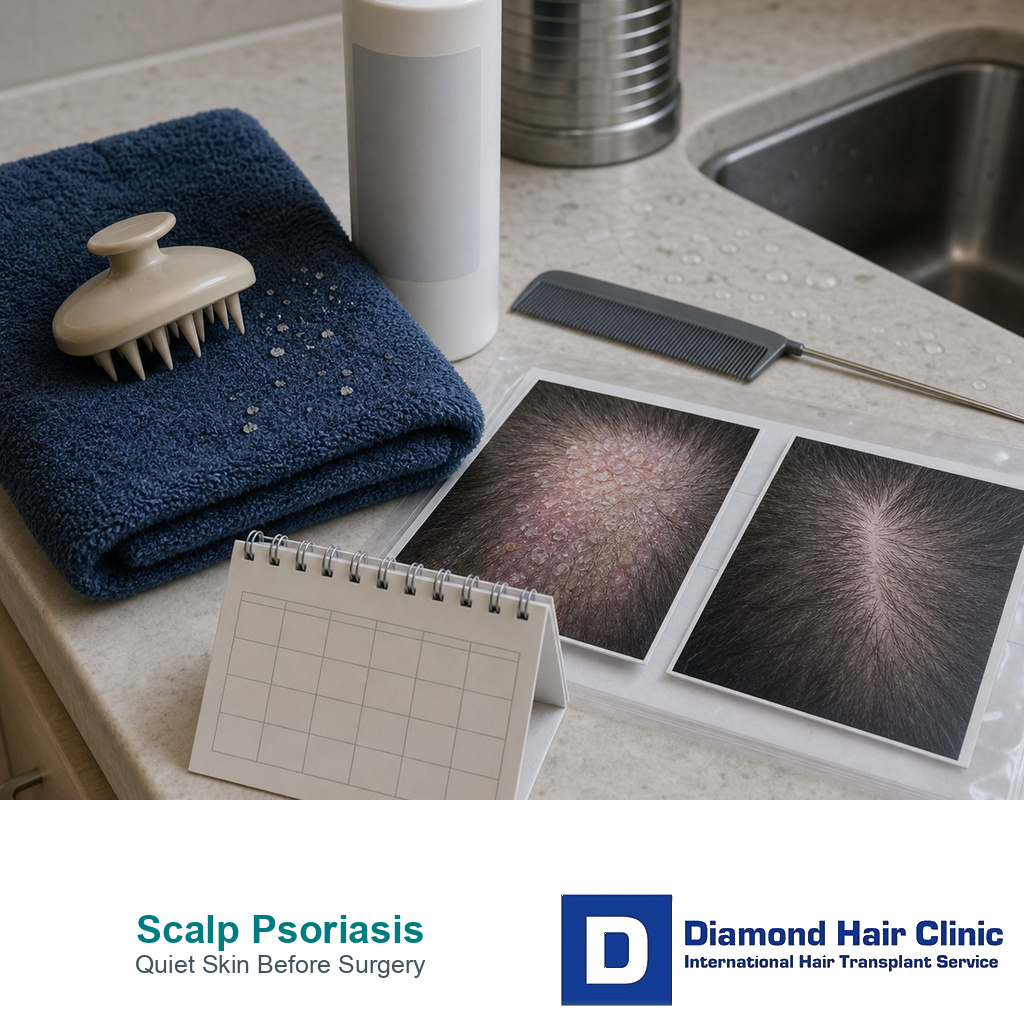
Plaque Control Comes Before Graft Planning
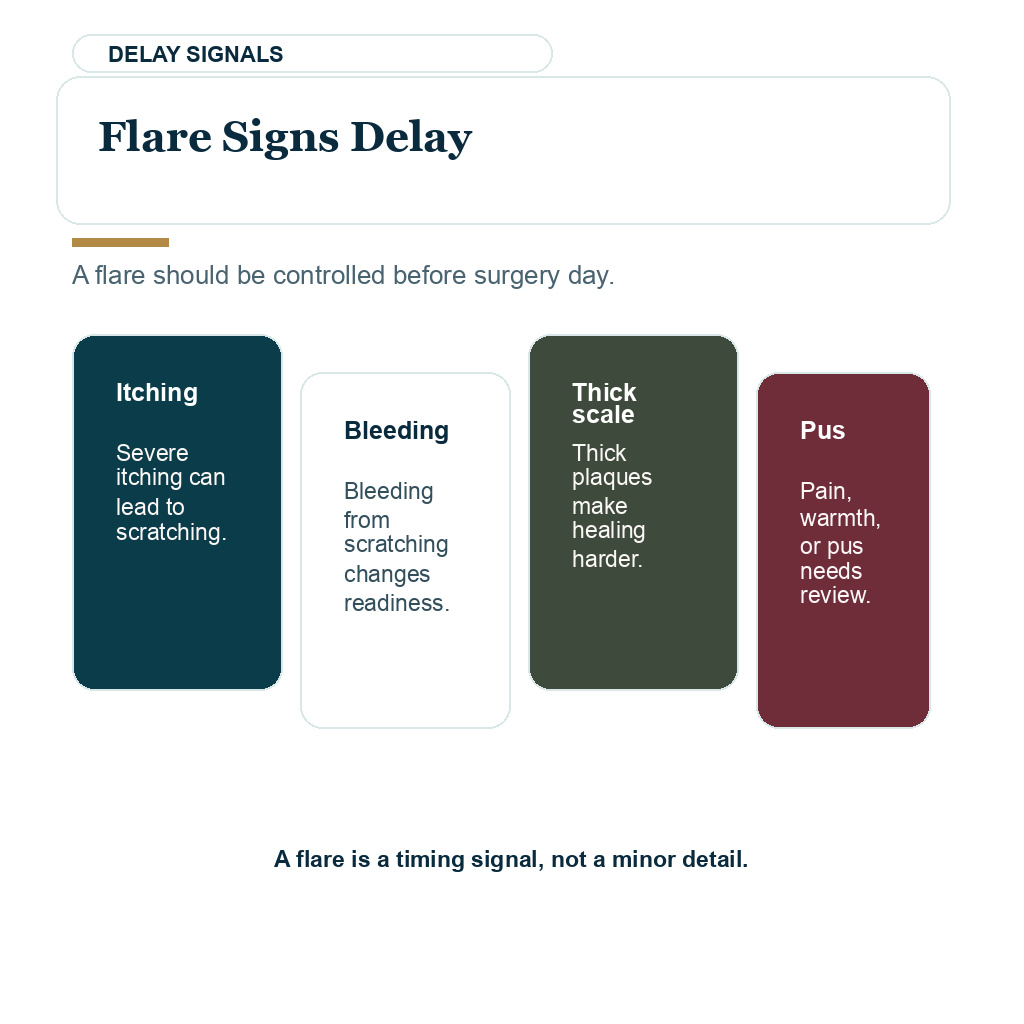
With psoriasis, I first look for control. I want quiet skin, stable treatment, and no active plaques in the surgical zones. Mild flaking is different from active thick scale, open irritation, intense itching, bleeding from scratching, infection, or uncontrolled flares. This is not only about whether grafts can technically be placed. The decision depends on whether the donor and recipient areas are ready to heal.
Stable and well controlled scalp psoriasis may be compatible with hair transplant surgery. Active, inflamed, unstable psoriasis should usually be treated before operating. A hair transplant is elective, so I do not operate through active plaques just to keep a travel date or chase density. If another diagnosis is possible, the timing decision should come after the skin has been properly assessed.
Do not send only the cleanest scalp photo. Send the flare history, current treatment, trigger pattern, and any dermatologist advice, so the timing is judged from the skin pattern rather than one calm day. The photo set should include the usual problem area as well as the best looking area, because surgery is planned from the real scalp pattern, not the cleanest angle. One calm day may not show whether the surgical zones are stable.
Mention scratching or scraping before photos, because bleeding and irritation may matter more than how much scale is visible.
If treatment was increased just to calm the scalp for photos, say that clearly. A quiet picture after a medicine change is different from a stable pattern that has stayed quiet.
Scalp psoriasis matters because the skin must be calm
The reason I take scalp psoriasis seriously is that hair transplant surgery depends on the condition of the skin. During FUE hair transplant surgery, we make many tiny openings in the donor area and recipient area. Even when the work is delicate, the scalp still has to tolerate extraction, incision creation, graft placement, washing, crust formation, and early healing.
If the scalp is settled, this process is usually much easier to manage. If the scalp is actively inflamed, covered with thick plaques, intensely itchy, or already irritated from scratching, the surgical field becomes less predictable. The patient may also struggle more during recovery because itching and scaling can lead to too much touching, rubbing, or picking.
Psoriasis is not an automatic rejection. It is a condition that must be judged. Some patients have small, quiet patches that are well controlled. Others have severe disease that flares easily and affects large areas. Those two patients should not receive the same answer.
This is part of candidacy, not a separate detail. Being a good candidate for hair transplant surgery is not only about the donor area and the bald area. It also depends on whether the skin can accept surgery at the right time.
The skin is not just the surface we work on. It is part of the surgical environment. If the skin is controlled, the surgeon can see clearly, design more accurately, and guide recovery more confidently. If the environment is inflamed, the patient may spend the first weeks wondering whether every flake, red patch, or itch means failure.
That is the confusion I try to prevent. A hair transplant already requires patience. Adding uncontrolled scalp disease to the early recovery period can make a normal healing process feel frightening and difficult to judge.
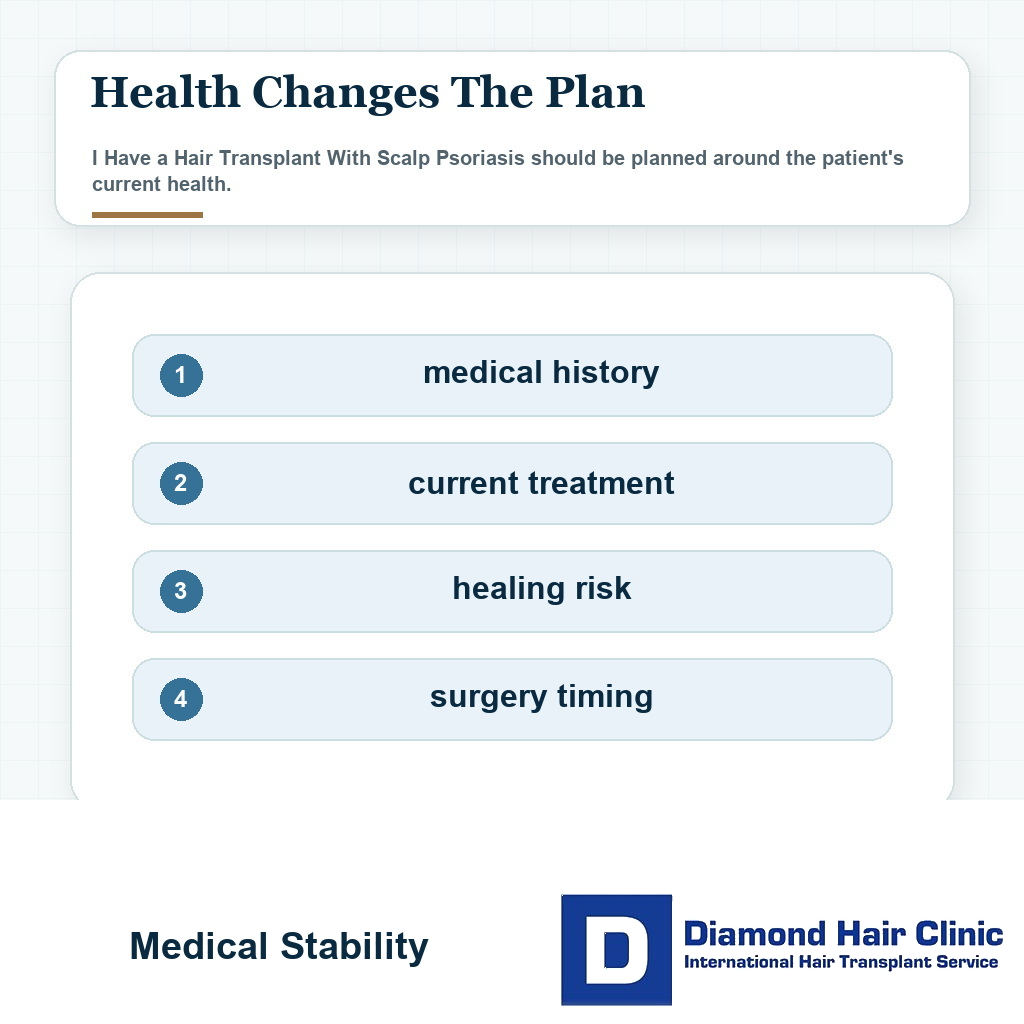
The level of scalp quiet needed before surgery
The patient does not need to pretend they have never had psoriasis. I need the skin we will operate on to be settled enough for careful surgery and predictable healing. Controlled does not mean there is never a flake. It means the donor and recipient areas are not covered with thick active plaques, bleeding from scratching, open, suspicious for infection, or so itchy that the patient cannot leave them alone.
I also want to know whether that quiet state is stable, not just improved for one photograph. A scalp that looks calmer for a day or two after strong treatment may still be too reactive for travel and surgery. A consistent trend tells me more than a single clean photo.
The treatment plan should also be stable. If the patient has just started a new cream, shampoo, injection, or tablet and the scalp is still changing every week, it is often better to wait and see how the skin settles. Surgery should not be planned on top of a moving skin situation.
Some patients only flare in one small area. Others flare across the hairline, temples, crown, and donor zone. The location matters. A quiet patch behind the ear is not the same risk as thick scale across the exact hairline where incisions will be made. I judge the actual surgical areas, not only the label of psoriasis.
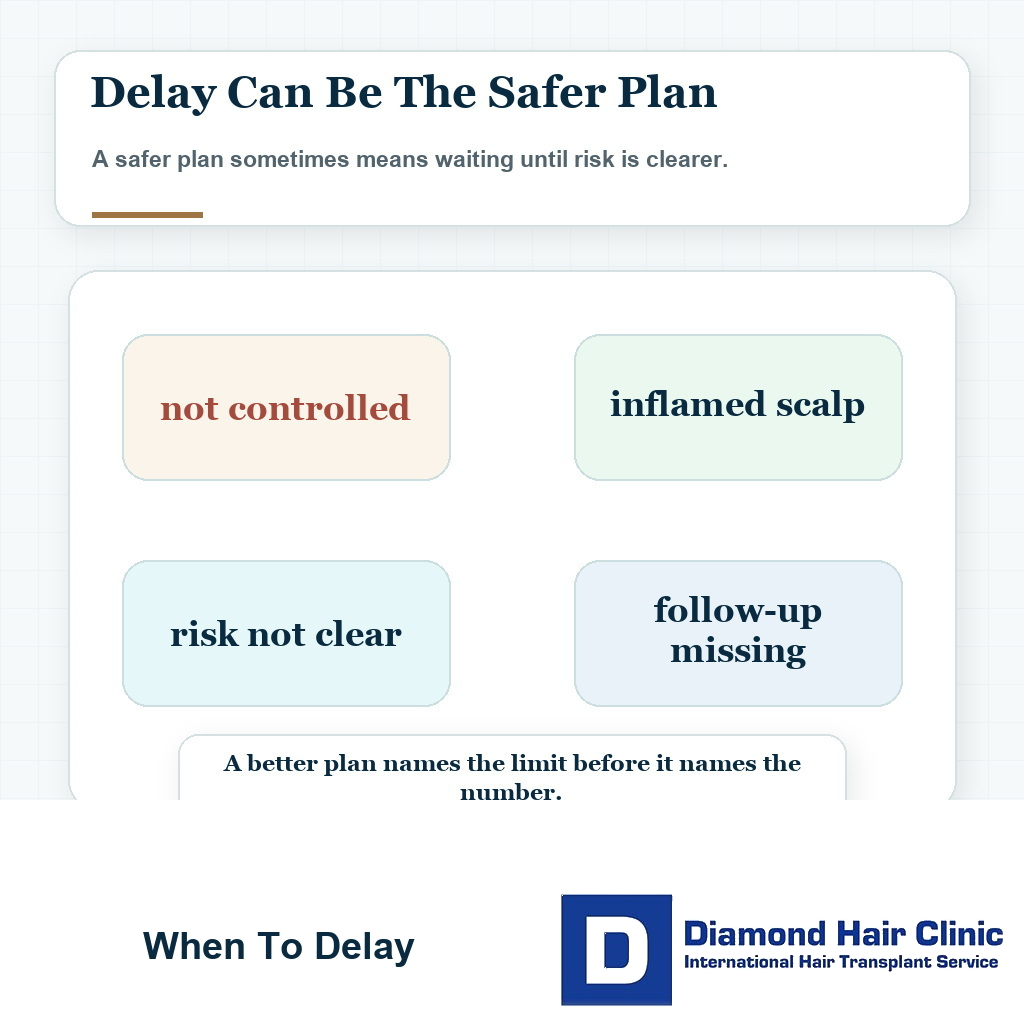
Reasons psoriasis should delay surgery
Psoriasis should delay surgery when the scalp is actively flaring or when plaques affect the donor or recipient area. Scratching wounds, bleeding, suspected infection, or an uncertain diagnosis such as dissecting cellulitis all make surgery less predictable.
This concern also appears when a broader autoimmune disease hair transplant concern, methotrexate timing before surgery, or an unclear treatment plan needs coordination. If pustules, crusting, tufted hairs, or permanent patchy loss are part of the history, folliculitis decalvans hair transplant planning needs its own diagnosis and stability review.
A patient may think, “It is only flaky skin.” Sometimes it is not only flaky skin. The scalp may be inflamed, sensitive, and reactive. Operating through that kind of skin can make the day harder and the recovery more stressful.
If dermatology support is needed to bring the scalp under control first, that happens before surgery. A quieter scalp later is safer than forcing surgery through active inflammation now. Delaying for skin control is not weakness. It is the correct order of treatment.
Patients often fear that delay means they are not candidates. That is not necessarily true. Sometimes the answer is not “no.” Sometimes the answer is “not while the scalp looks like this.” That distinction matters because it protects hope while still respecting medical reality.
I delay as well when the patient is relying only on home remedies without a diagnosis. Oils, harsh shampoos, scrubbing, and frequent product changes can irritate the scalp further. If the patient is constantly changing treatments because they are desperate to reduce the flakes, surgery should wait until the skin is more stable and the treatment plan is clearer.
Another reason to wait is uncertainty about the donor area. Some patients only look at the bald frontal area, but the donor scalp carries the operation. If the donor area has active plaques, bleeding from scratching, or thick scale, extraction can become more difficult and healing may be less predictable.
Telling psoriasis from other scalp conditions
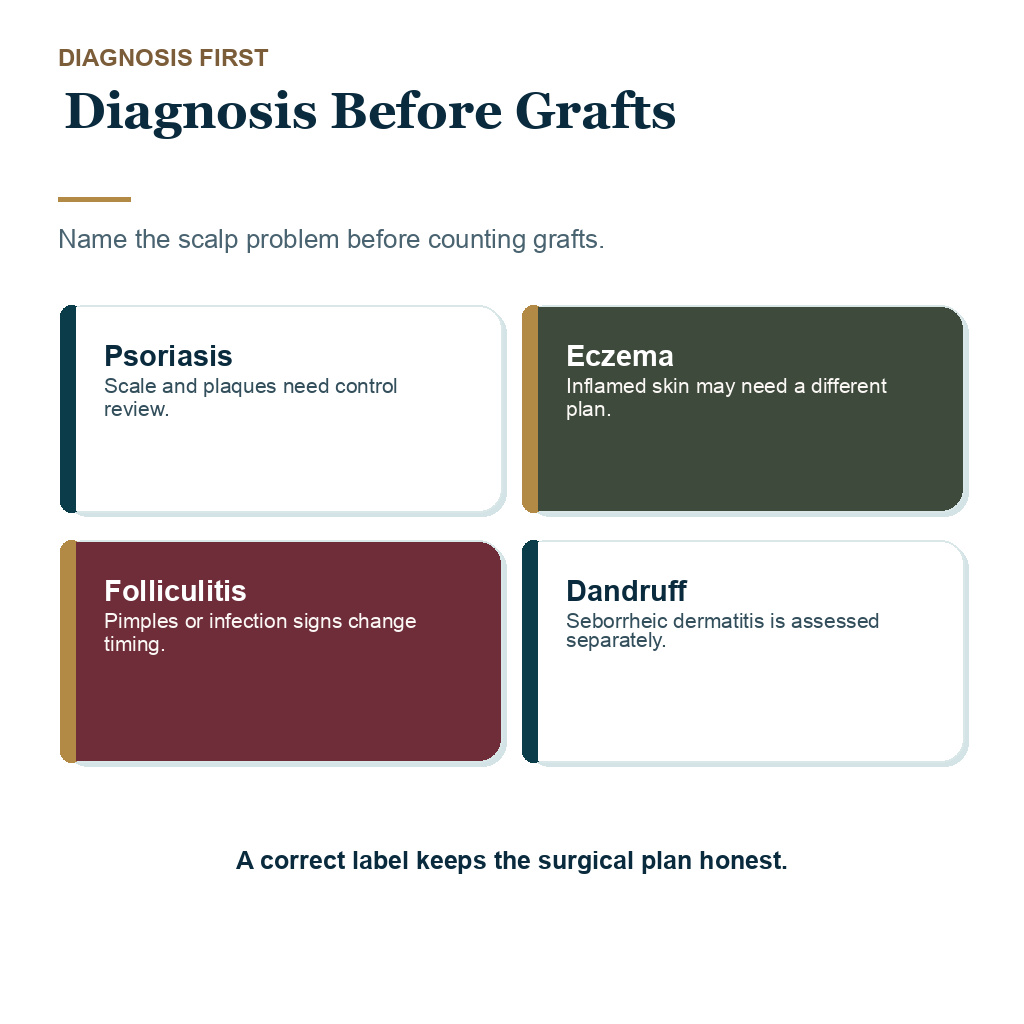
A flaky or itchy scalp is not always psoriasis. It may be seborrheic dermatitis, contact irritation, folliculitis, an allergic reaction, dry scalp, product irritation, or another inflammatory scalp condition. These conditions can look similar to the patient but require different management. The practical first step is often to document scalp itching before hair transplant surgery with clear photos so the timing decision is based on the skin, not the label.
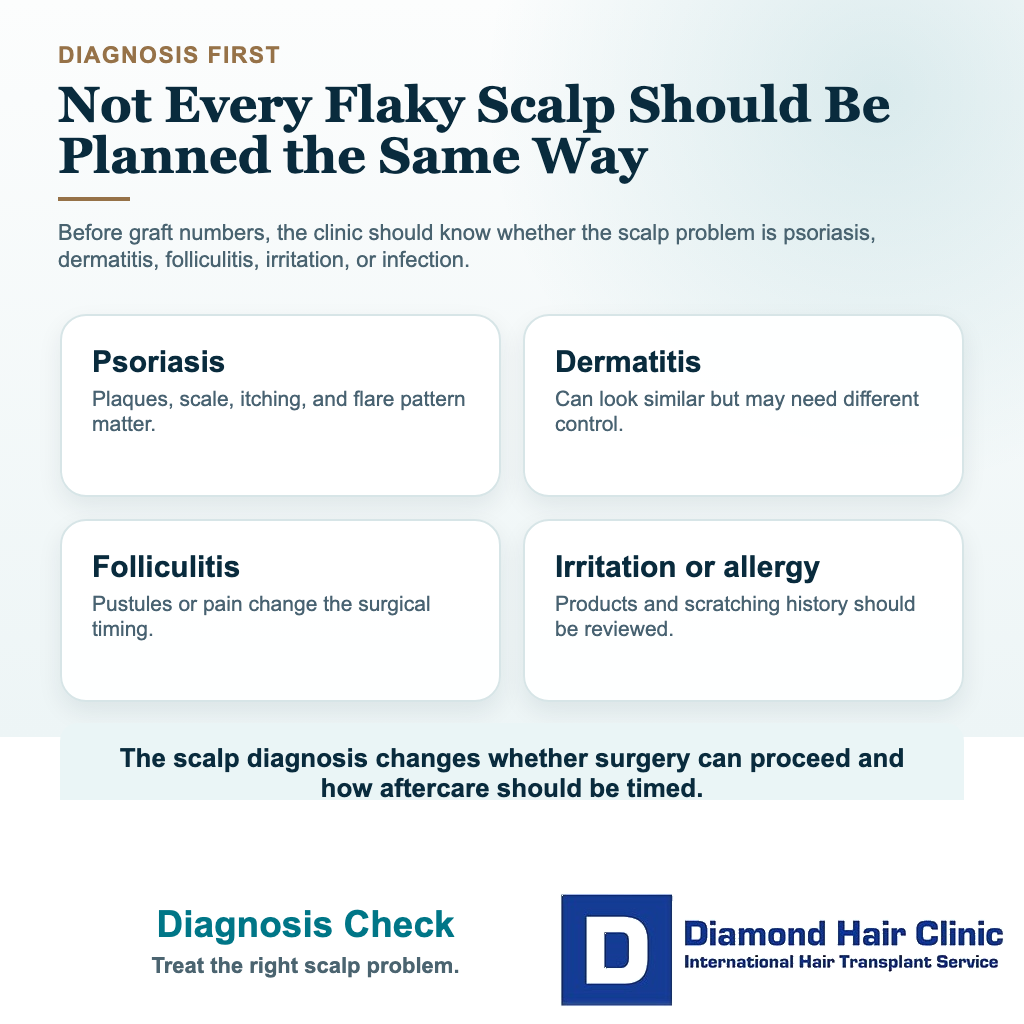
Diagnosis comes before surgery. If the scalp is red, itchy, scaly, painful, or repeatedly forming crusts, graft numbers are not the first question. A separate firm lump also needs scalp cyst mapping before hair transplant before it is treated as a routine skin label. The first question is whether the scalp should be examined or treated before surgery. My article on seborrheic dermatitis and hair transplant surgery explains a related but different scalp condition that can also affect timing.
Wrong diagnosis can create wrong decisions. If a patient thinks they have ordinary dandruff but actually has active psoriasis, they may underestimate the need for treatment. If every flake is treated as dangerous psoriasis, anxiety can become worse than the skin problem itself. A proper diagnosis makes the decision clearer.
If there is pain, scarring, patchy loss, or loss of visible follicle openings, the question becomes different. Conditions such as scarring alopecia or lupus related scalp inflammation need separate medical judgment before any transplant plan is trusted.
When I plan surgery, the scalp has to be quiet enough to examine clearly. Thick scale can hide redness, small wounds, follicle inflammation, or skin quality. When the surface is too active, the plan becomes less precise.
I am also careful with patients who diagnose themselves from photographs. A photo may show flakes, but it cannot always show the real cause. It may not show whether the scalp is tender, whether the scale lifts easily, whether there are open areas, or whether there is follicle inflammation underneath.
A correct diagnosis may change the timing of surgery. It may also change which products are safe before and after the operation. The purpose is not to label the condition for academic interest. The purpose is to choose the right timing and aftercare.
Scalp psoriasis and transplanted graft healing
Psoriasis does not necessarily mean grafts will fail. The transplanted follicle is placed into the skin, and many patients with controlled scalp conditions can still heal and grow. But patients should not hear this and become careless. The concern is not only whether the graft can survive. The concern is the environment around the graft during early healing.
If the patient scratches, picks scales, rubs the recipient area, or applies inappropriate products too early, they can disturb healing. If inflammation is strong, the recovery may become more uncomfortable and harder to interpret. The patient may panic over redness, crusting, flaking, or shedding and may start experimenting with oils, shampoos, or steroid products without guidance.
A clear plan has to say what psoriasis treatment is allowed, when normal scalp treatment can restart, and what must stay away from fresh grafts. General advice is not enough for every psoriasis patient.
Write down the exact treatment, the area it normally touches, and the next scheduled dose or wash. The clinic and dermatologist can then decide which products can continue away from the grafts, which should pause, and what skin changes must be seen before treatment returns to the recipient area.
For recovery concerns, patients need to know the normal healing pattern as well. The first days are about protecting the scalp, not testing how much irritation it can tolerate, especially when judging aftercare after hair transplant surgery.
Transplanted hair growth is also slow. If a psoriasis patient sees shedding, flakes, or temporary uneven growth, they may connect every change to psoriasis. Sometimes the concern is simply normal transplant timing. Sometimes the skin disease is truly active. The clinic must help the patient separate these possibilities instead of leaving them to guess alone.
The habit I worry about most is picking. Picking scales near the recipient area can disturb healing skin and create more inflammation. Even if the grafts are not easily lost after the early days, repeated trauma to the scalp is never helpful.
Flare risk after surgery
Some psoriasis patients worry that surgery could trigger new plaques or worsen existing ones. That concern is understandable. Skin trauma can sometimes provoke psoriasis activity in susceptible people, so timing and control matter before surgery. I do not present this as a guarantee that it will happen, but it is a risk that needs review before surgery.
This reaction after skin trauma is sometimes called the Koebner phenomenon. You do not need to remember the name, but you should understand the practical meaning. Incisions, scratching, aggressive washing, and irritation can matter more in a reactive psoriasis patient than in a patient with quiet skin.
Real life reactivity matters in psoriasis planning. A scalp that flares after scratches, stress, illness, or product irritation needs more caution than a scalp that stays quiet with treatment. This history helps me judge timing and aftercare.
A patient with a stable scalp and clear instructions is different from a patient who flares badly after minor irritation. If the history suggests strong reactivity, dermatology support and a careful timing plan become more important. The aim is to operate when the skin is least likely to react badly.
I also avoid dramatic promises. A clinic should not say, “Psoriasis does not matter.” It may matter. It may not stop surgery, but it should change the conversation.
This is also why patients should not become hopeless. A history of psoriasis is not the same as an active flare. If the scalp is quiet, the patient is under proper management, and the surgical plan is reasonable, surgery may still be possible. The goal is control, not perfection.
Stress also matters. Surgery, travel, and worry can all affect the body. If a patient knows stress triggers their psoriasis, that information belongs in the plan. A less pressured schedule, clearer instructions, and realistic expectations can reduce unnecessary pressure around the operation.
Psoriasis details the clinic should know before booking
Before committing, tell the clinic about the psoriasis as early as possible. I check where it appears, how severe it becomes, when the last flare happened, whether plaques reach the donor area, which treatments you use, and whether scratching ever causes bleeding or open skin.
Photos can help when they show both sides of the story. Send the scalp during a flare and also when it is settled. I also have to see the donor area clearly, because donor inflammation can change the safety of extraction. If the diagnosis is uncertain, a dermatologist should confirm it before surgery is planned.
The timing of treatment matters too. Some patients need medication or shampoo adjustments before surgery, and some need to restart treatment after the early healing period. If the scalp is actively inflamed, delaying surgery often protects healing better.
Psoriasis exactly where the grafts need to go
If active psoriasis sits exactly in the planned recipient area, I usually want that skin treated before incisions are made. A hairline or crown plan depends on seeing the skin clearly and placing grafts at the right angle, depth, and spacing. Thick scale and active redness make that judgment harder.
There are times when the design can be adjusted slightly, but I avoid using design adjustment to avoid proper medical treatment. If the best hairline position is inflamed today, the better answer is often to bring the scalp under control and return to the plan later.
This also matters for the donor area. If plaques sit in the area where grafts would be extracted, the surgeon must think about visibility, comfort, bleeding, irritation, and healing. My approach to the donor area is always protective because once grafts are used, they cannot be put back into the donor bank.
Surgical plan changes when psoriasis is present
The surgical plan should be adapted to the scalp, not forced onto it. If psoriasis affects the recipient area, that area should be settled before incisions are made. If it affects the donor area, I need to understand whether extraction will be comfortable, clean, and safe. If the disease is widespread, the patient may need treatment before any final decision.
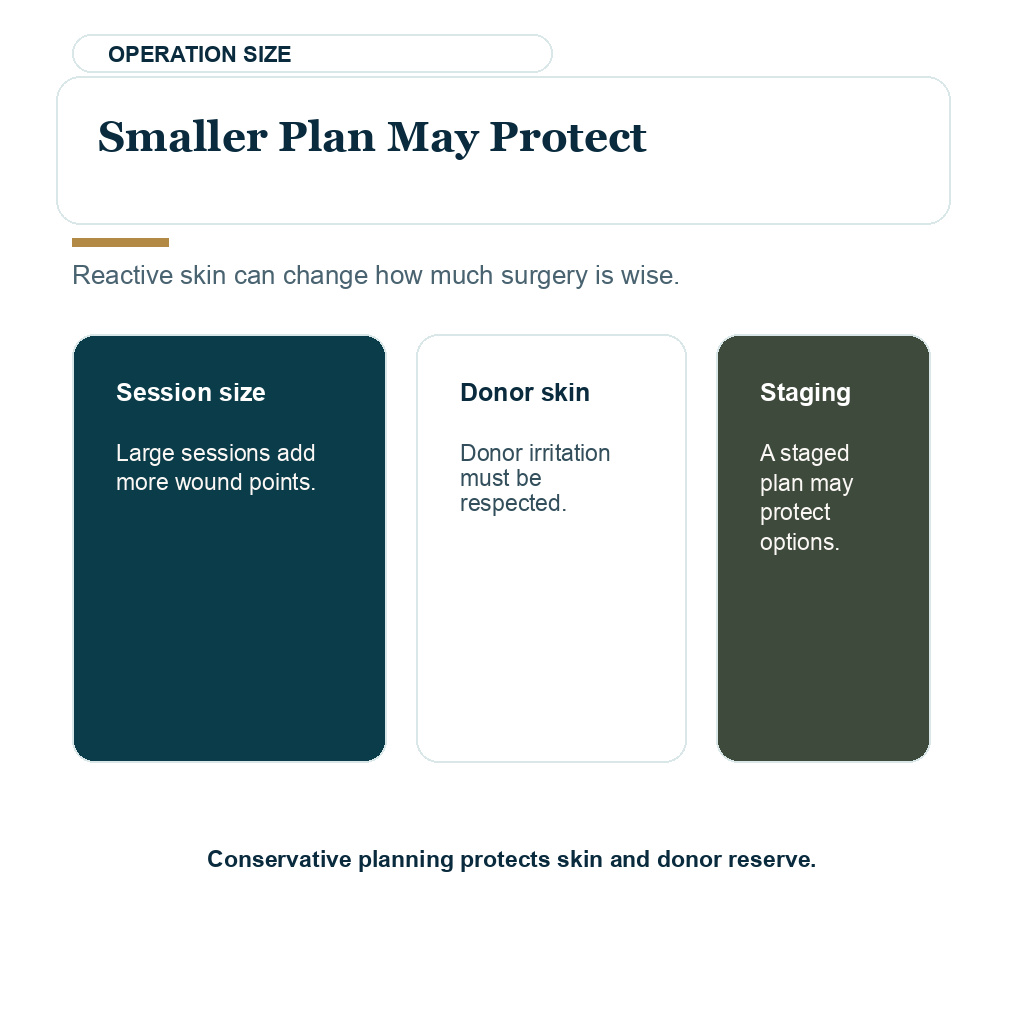
Sometimes the operation size should be more moderate, especially if the scalp has a history of reacting strongly after irritation. A patient with a reactive scalp may not be the best candidate for a very long, aggressive session. A smaller and more focused operation can sometimes be safer, easier to heal, and more realistic.
Communication needs to be planned as carefully as the surgery. A psoriasis patient may see flaking after surgery and assume the transplant is failing. They may see redness and think something is wrong. They may itch and become afraid to wash properly. I want these concerns discussed before surgery so the patient knows what requires attention and what belongs to normal healing.
A serious surgical plan should also make the medical responsibility clear. I explain this in who performs the hair transplant surgery, because scalp disease requires judgment, not only technical graft placement.
I consider where not to place grafts. If a certain patch is actively inflamed, forcing incisions into that area may not be wise. Sometimes the plan should wait. Sometimes the design should be adjusted. Sometimes the surgeon should ask for dermatology control before making the decision whether that area should be transplanted at all.
The donor area deserves the same respect. A patient may have enough donor density on paper, but if the donor skin is irritated and reactive, extraction should not be treated as routine. The surgeon must protect both the grafts and the skin they come from.
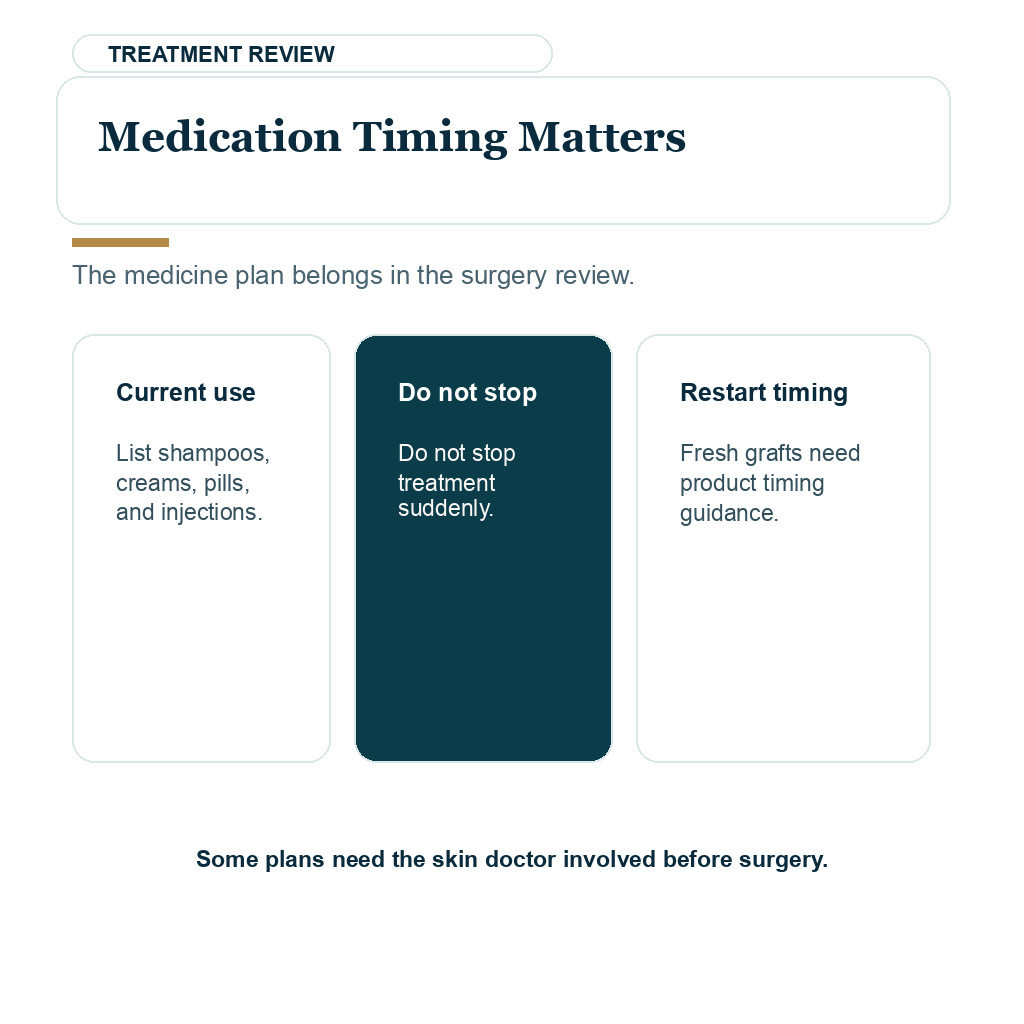
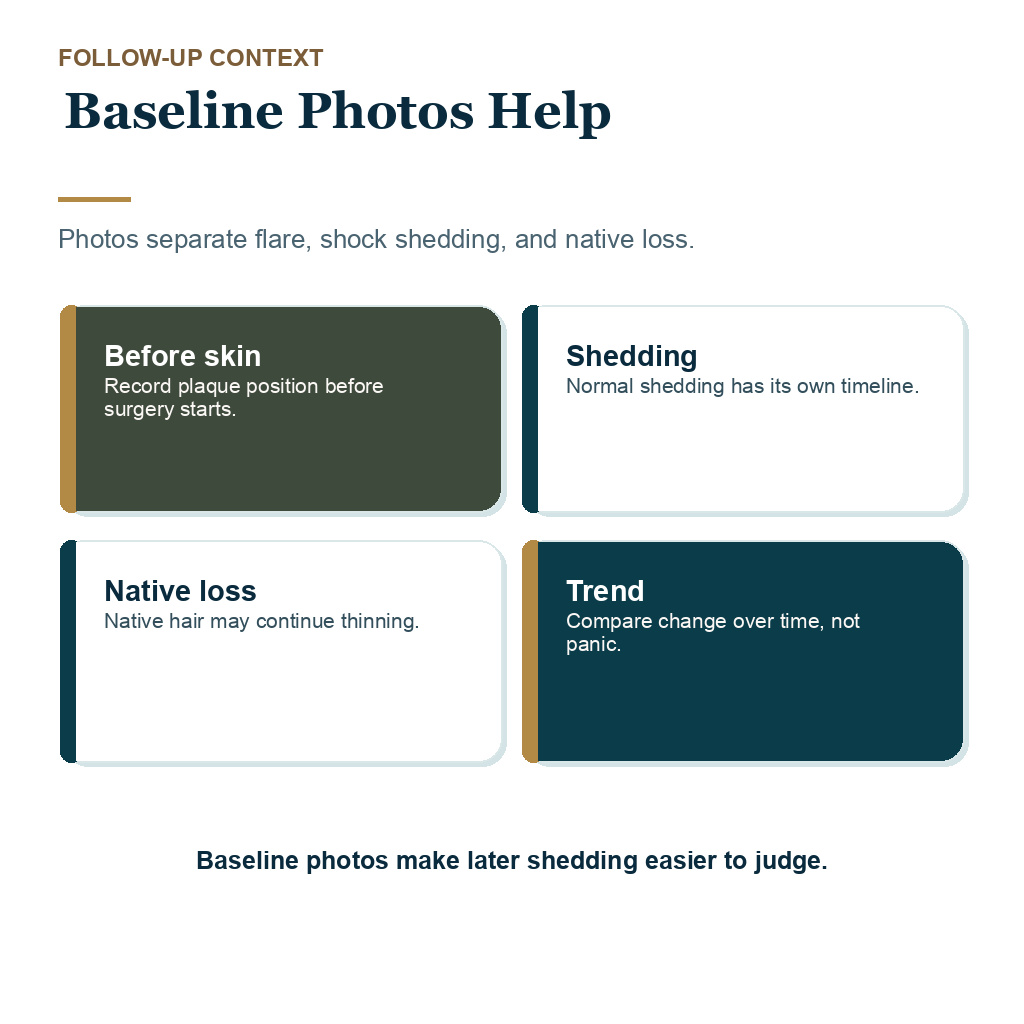
Use the carousel below as a planning check for psoriasis. Before surgery, I want the scalp to be quiet, the plaque locations documented, flare signs understood, and medication timing, operation size, aftercare, and baseline photographs planned clearly.



Psoriasis shedding can be confused with transplant failure
Diagnosis and baseline photographs matter after surgery too. Psoriasis can cause inflammation, itching, scratching, and temporary shedding. Hair transplant surgery also has its own normal shedding phase. Male pattern hair loss may still continue. These three stories can overlap and confuse the patient.
If a patient sees shedding after surgery, the answer should not be guessed from fear. I check where the shedding is happening, whether the skin is red or scaly, whether the donor area is involved, whether the transplanted hairs are shedding on schedule, and whether native hair is thinning in a pattern that suggests ongoing genetic loss.
Clear communication before surgery is part of safety. A psoriasis patient needs to know which changes belong to normal recovery, which signs suggest a skin flare, and when to contact the clinic. Not every later change is caused by the operation itself. That same limit applies to hair loss can continue after a hair transplant.
Aftercare differences when psoriasis is present
Aftercare needs more precision when psoriasis is present because the patient already has a tendency toward irritation, scaling, or itching. The aim is to protect the grafts while also preventing the scalp disease from becoming uncontrolled.
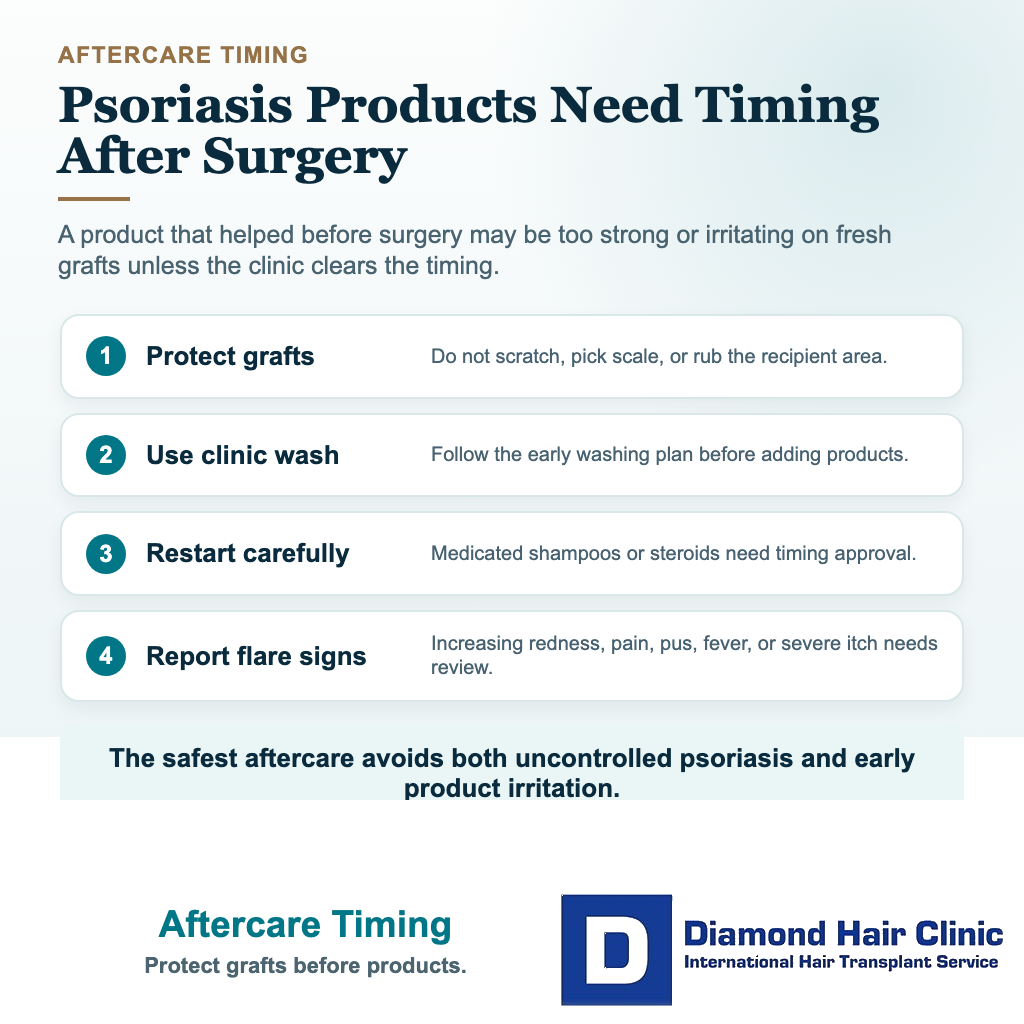
After surgery, the recipient area should not be scratched, picked, covered with unapproved oils, or exposed to strong medicated products too early without guidance. Even if a product helped psoriasis before surgery, it may not be appropriate on a fresh recipient area. Timing matters.
Redness, bumps, pimples, and itching can be confusing after a transplant. In a psoriasis patient, confusion can be even greater because symptoms may overlap. It helps to understand the difference between redness, scabs, and pimples after hair transplant surgery, itching after a hair transplant, and bumps or ridges after a hair transplant before every change becomes an emotional alarm.
Do not experiment with oils, scrubbing, harsh shampoos, or strong medicines on fresh grafts without guidance. If the scalp becomes more inflamed, more painful, more scaly, or more itchy than expected, contact the clinic and dermatologist. Guessing can create more irritation.
Avoid comparing your recovery too closely with people who do not have psoriasis. A patient with settled skin and no skin disease may look different in the first weeks. That comparison can create unnecessary fear. The better comparison is your own trend. Is the scalp settling, or is it becoming more inflamed?
If it is settling, patience is often the correct answer. If it is becoming more inflamed, ask for help rather than scratch, scrub, or add products. The scalp needs clear guidance, not panic.
Psoriasis medication before a hair transplant
Do not stop psoriasis treatment suddenly just to look ready for surgery. Topical steroids, medicated shampoos, vitamin D creams, biologic injections before a hair transplant, tablets, and other treatments all need individual judgment. Some treatments make surgery safer by calming the scalp. Others may need timing review because of irritation, infection risk, immune effects, or healing concerns.
The correct answer depends on the medication, the severity of psoriasis, the timing of the operation, and the advice of the prescribing dermatologist when systemic treatment is involved. Some products may be useful before surgery but too irritating on fresh grafts if restarted too early. This should be coordinated, not improvised.
I check exactly what the patient uses and how often they use it because medication before a hair transplant can change surgical timing, bleeding, infection risk, skin irritation, and aftercare.
Judging whether a clinic is careful enough for this case
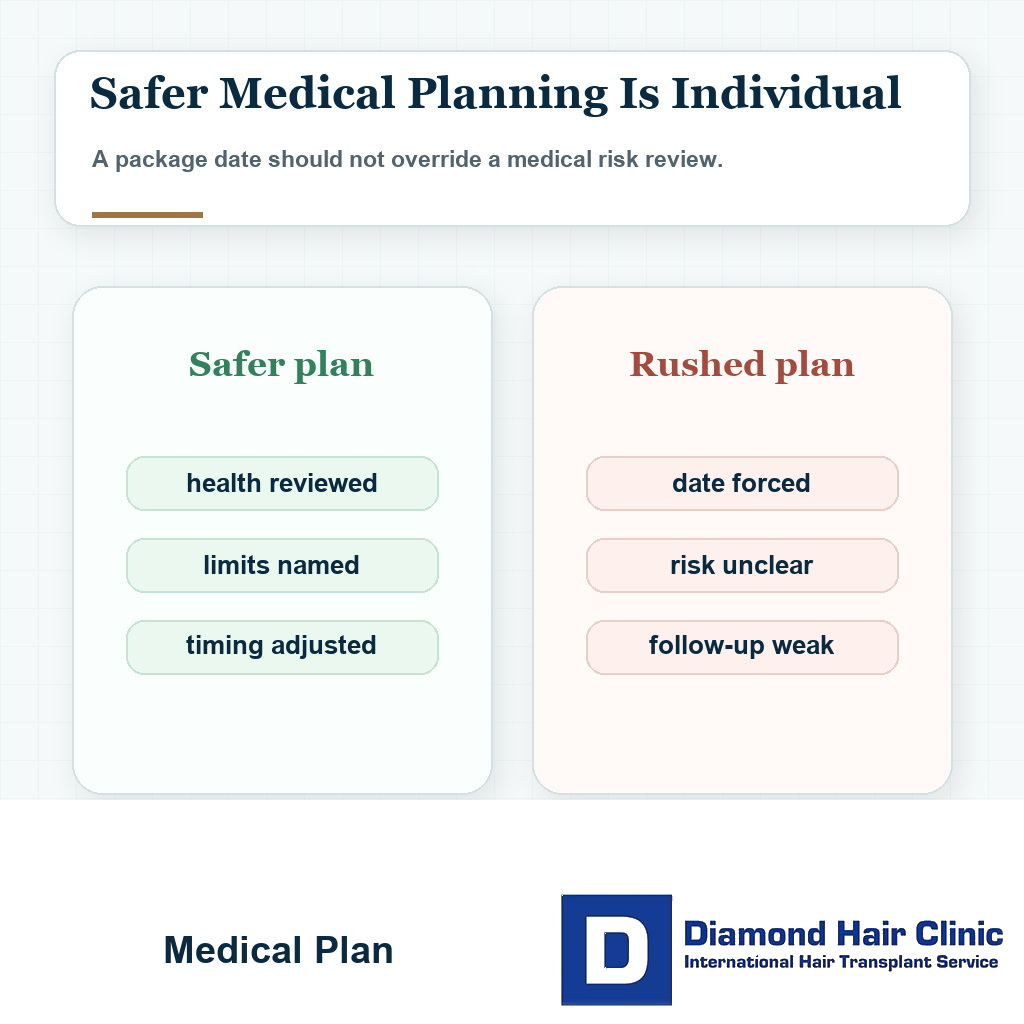
The clinic should understand the scalp before saying yes. It should not only request baldness photos and send a graft number. I check whether psoriasis is active, whether a dermatologist is involved, whether the donor or recipient area is affected, and whether treatment should control the skin before surgery.
Be careful if a clinic dismisses the condition too quickly. “No problem, we do it every day,” may sound comforting, but it is not a medical assessment. Be just as careful if the clinic uses fear to sell unnecessary extras. Good medical judgment is specific, clear, and willing to slow down.
When comparing clinics, patients often focus on price and graft number. With scalp psoriasis, the quality of evaluation matters more. Choosing a hair transplant clinic in Turkey should include asking how the clinic handles scalp conditions that are not routine.
A safe clinic must be willing to delay surgery if the scalp is not ready. A clinic that cannot say “not today” is not protecting the patient properly.
I am also cautious if a clinic promises that psoriasis will not affect anything without seeing the scalp. A statement like that may be easy to hear, but it is not specific enough. The surgeon should know whether the disease is active, where it is located, and how the patient has responded to treatment before giving an opinion.
Good communication should make the patient feel clearer, not simply excited. If the consultation only increases urgency, that is a reason to slow down. Scalp psoriasis is exactly the kind of condition where a rushed yes can become a difficult recovery.
Quiet scalp skin comes first
Waiting is wiser when the skin is active, the diagnosis is uncertain, treatment has just changed, or thick plaques cover the areas we need to use. I also slow down when a clinic cannot explain how psoriasis will be managed before and after surgery.
Waiting can also be wiser when the patient is emotionally rushing. Scalp psoriasis can make hair loss feel even more distressing. The patient may feel embarrassed by flakes, thinning, redness, or itching. I understand that. But operating too early on unstable skin can create more anxiety, not less.
A useful delay has a purpose. Control the scalp. Confirm the diagnosis. Coordinate treatment. Let the surgeon evaluate the skin when it is closer to the condition it should be in on surgery day. Then the hair transplant plan can be judged more fairly.
When the scalp becomes stable, the conversation becomes more positive. Then I can look at hairline design, graft number, donor management, and the natural result without the active skin disease dominating the decision. That is the position where the decision becomes safer.
Psoriasis may still need long term management after surgery. A transplant does not cure it. Surgery may improve the appearance of hair loss, but the scalp condition still needs attention. When the patient understands that, expectations become more realistic.
I judge it directly. If scalp psoriasis is controlled and the skin is quiet, hair transplant surgery may be possible. If the scalp is inflamed, unstable, or poorly understood, the better decision is to treat first and operate later. My aim is not only to move grafts. I want those grafts placed into a controlled, healthy scalp where healing can be judged clearly.

Read this review excerpt
told me the quality of my donor hair and what he could take out and advised me what will the be best outcome with what donor hair I had.