



Asthma, Inhalers, and Hair Transplant Surgery
Many people with well controlled asthma can still be considered for a hair transplant, but the asthma has to be stable enough for a long procedure under local anesthesia. Regular prescribed inhaler use is very different from wheezing, chest tightness, a recent asthma attack, a chest infection, or needing the rescue inhaler more than your normal pattern.
The diagnosis name only starts the review. I look at how your breathing feels now, which inhalers or tablets are actually being used, any recent emergency care or oral steroid use, and anything that may affect the first nights after surgery, such as coughing, anxiety, sleep position, or sedatives.
Asthma medicine belongs in the review before surgery, not in a private decision to stop or start treatment. During your medication before a hair transplant review, list every inhaler, tablet, allergy medicine, recent breathing symptom, and any steroid course before a hair transplant. A stable daily medicine plan is very different from unstable asthma during the week of surgery.
If you use a written asthma action plan, peak flow monitoring, a spacer, a steroid card, or a recent prescription change, mention that early. I do not need to take over your asthma treatment, but I do need enough information to know whether surgery day is a stable day or a flare up day.
Keep your rescue inhaler easy to reach on travel and surgery day, not buried in a suitcase. If you needed it more often than usual in the days before surgery, say that early because the pattern can change the comfort plan.
Asthma in hair transplant planning
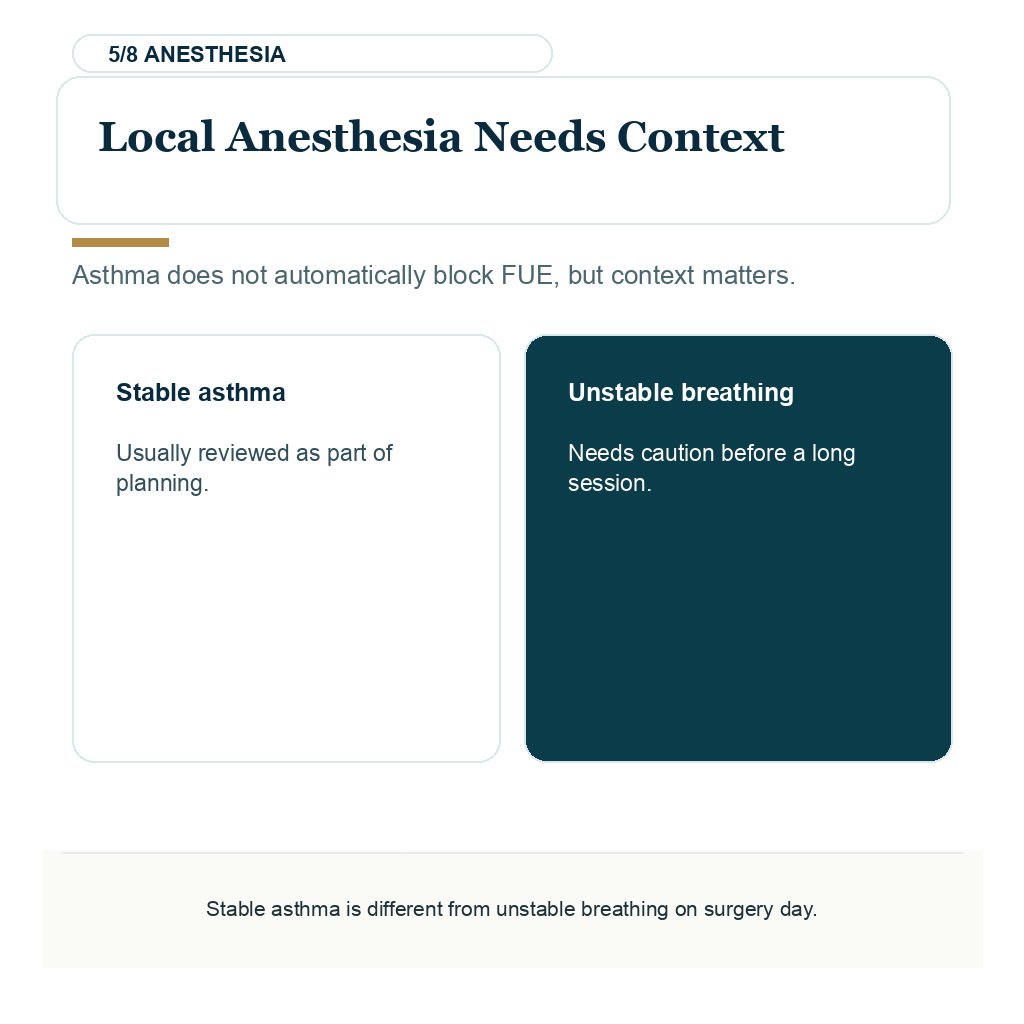
Because a hair transplant is normally done under local anesthesia, asthma can look irrelevant at first. I do not judge it that way. The procedure can still be long, you may lie in one position for many hours, adrenaline may be part of the anesthetic plan, and anxiety can make breathing feel harder.
Asthma also changes the meaning of coughing. A brief dry cough is not the same as repeated chest tightness, wheezing, or a respiratory flare. During surgery, sudden coughing can disturb stillness. After surgery, repeated hard coughing can make swelling, sleep, and anxiety harder to manage even if one cough by itself does not mean grafts were lost. If the cough is active before the operation, the FUE cough surgery day plan helps separate asthma review from a minor throat tickle.
The medical question is not whether asthma exists somewhere in your history. I check whether your breathing is predictable enough for the operation day and the first recovery period. Symptoms, triggers, recent attacks, inhaler frequency, steroid use, allergies, smoking exposure, and sleep breathing all matter.
So the consultation cannot be only about graft numbers. Asthma does not change the need for donor protection, hairline design, and long term planning, but it adds a medical readiness question that has to be answered before surgery is treated as routine.
Unstable asthma can delay surgery
Elective hair transplant surgery needs review if asthma is currently uncontrolled. Warning signs include wheezing at rest, chest tightness, breathlessness, night symptoms, needing a rescue inhaler much more often than usual, a recent emergency visit, a recent oral steroid course, or a chest infection that has not settled.
A cold can be a small inconvenience for one person and a real asthma trigger for another. If recent COVID or another respiratory infection is causing coughing, phlegm, fever, shortness of breath, or wheezing, use the timing guidance in cold or flu before a hair transplant. The timing decision should protect breathing first.
With those signs present, delay becomes part of donor protection. A technically possible operation can still be the wrong day if breathing is unstable. The grafts are limited, and the procedure deserves a predictable medical environment.
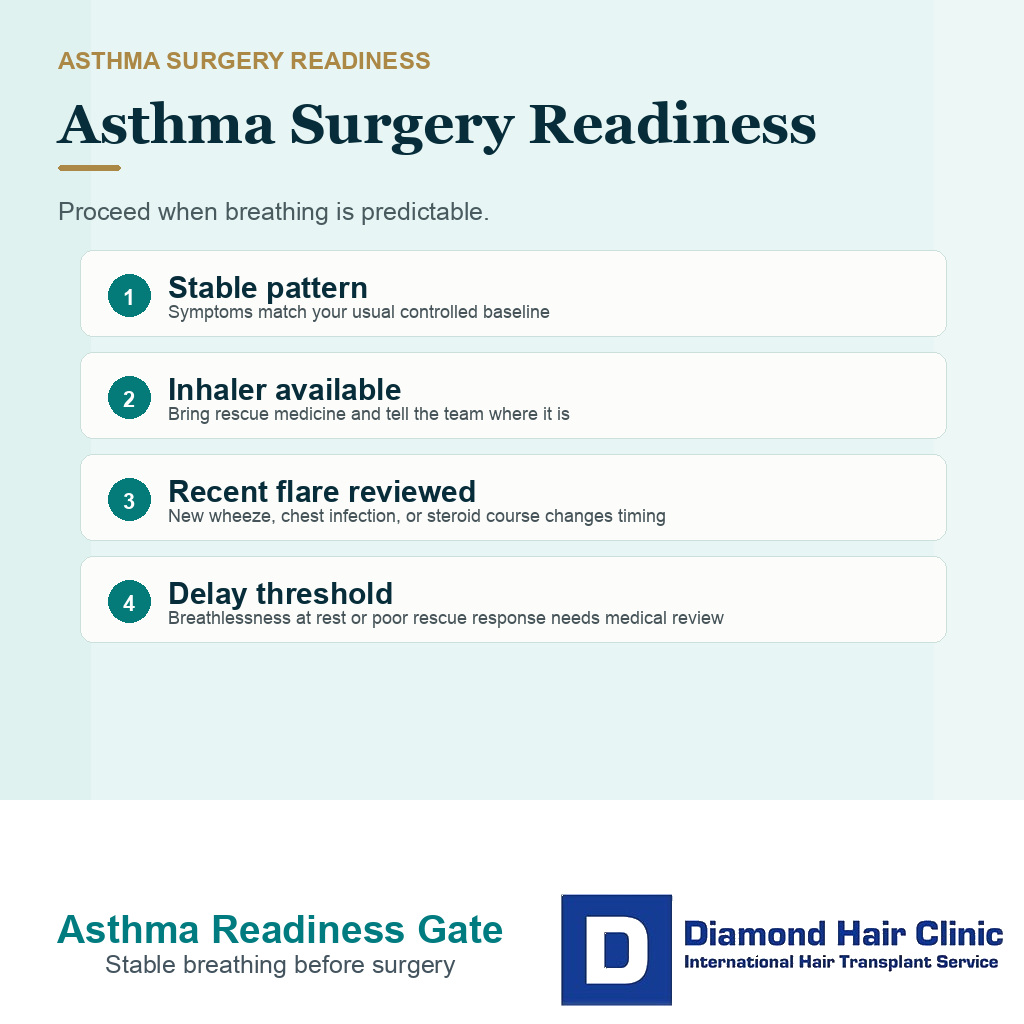
Asthma is not judged by the diagnosis name alone. Current symptoms, inhaler use, recent attacks, and infection timing change the decision.
Stable asthma before surgery
Stable asthma means you are breathing at your normal baseline, not waking at night with symptoms, not needing your rescue inhaler more than your usual pattern, not recovering from a chest infection, and not feeling tight or wheezy when you lie down or become anxious. It also means your usual asthma medicines are being taken as prescribed.
The asthma does not need to be hidden. I need it to be predictable. A long procedure, local anesthesia, adrenaline, lying still, travel, and the first recovery nights are easier to manage when breathing is already controlled. If your asthma has changed recently, the medical assessment should be updated before donor grafts are used.
Bringing your inhaler on surgery day
If you are prescribed a rescue inhaler, bring it on surgery day and make sure the clinic knows where it is. If you use a controller inhaler every day, the clinic should know that too. This prevents surprises. It is not a test where you have to prove that asthma is dangerous.
Use your inhalers on the schedule your prescribing doctor gave you, including the morning of surgery unless that doctor tells you otherwise. Do not take extra rescue inhaler puffs just to look safer for surgery. If you need more reliever medicine than usual, that is useful medical information, not something to hide.
On the morning of surgery, the rescue inhaler history matters in plain terms. I ask whether you used it, whether it helped, and whether your breathing feels normal for you. If breathing already feels difficult before we begin, the responsible choice is to stop and review rather than pretend nothing has changed.
Hidden inhaler use creates the bigger risk, even when the fear is cancellation. Clear information gives the surgeon room to plan. If asthma is stable, disclosure usually helps the day run safely. If asthma is unstable, postponing may be the right medical decision.
Local anesthesia, adrenaline, and asthma
Local anesthesia is one reason many stable asthma cases can still be considered for hair transplant surgery. You are not usually put fully to sleep. Still, local anesthesia is not a reason to ignore the medical history.
Pulse, blood pressure, anxiety, and medication history matter. Bring the full medical history into the conversation about local anesthesia and adrenaline in hair transplant surgery. With asthma, I also think about breathing comfort, inhaler use, allergy history, and whether any sedative is being considered.
Some rescue inhalers can cause tremor or a faster heartbeat. Adrenaline in local anesthetic can also make the pulse feel more noticeable. That does not make the combination unsafe by itself, but it does mean the team should know your baseline before the operation starts.
If you also have high blood pressure, heart disease, panic symptoms, sleep apnea, or stimulant medication use, the plan becomes more individual. The operation should be built around the person in front of me, not around a standard reassurance.
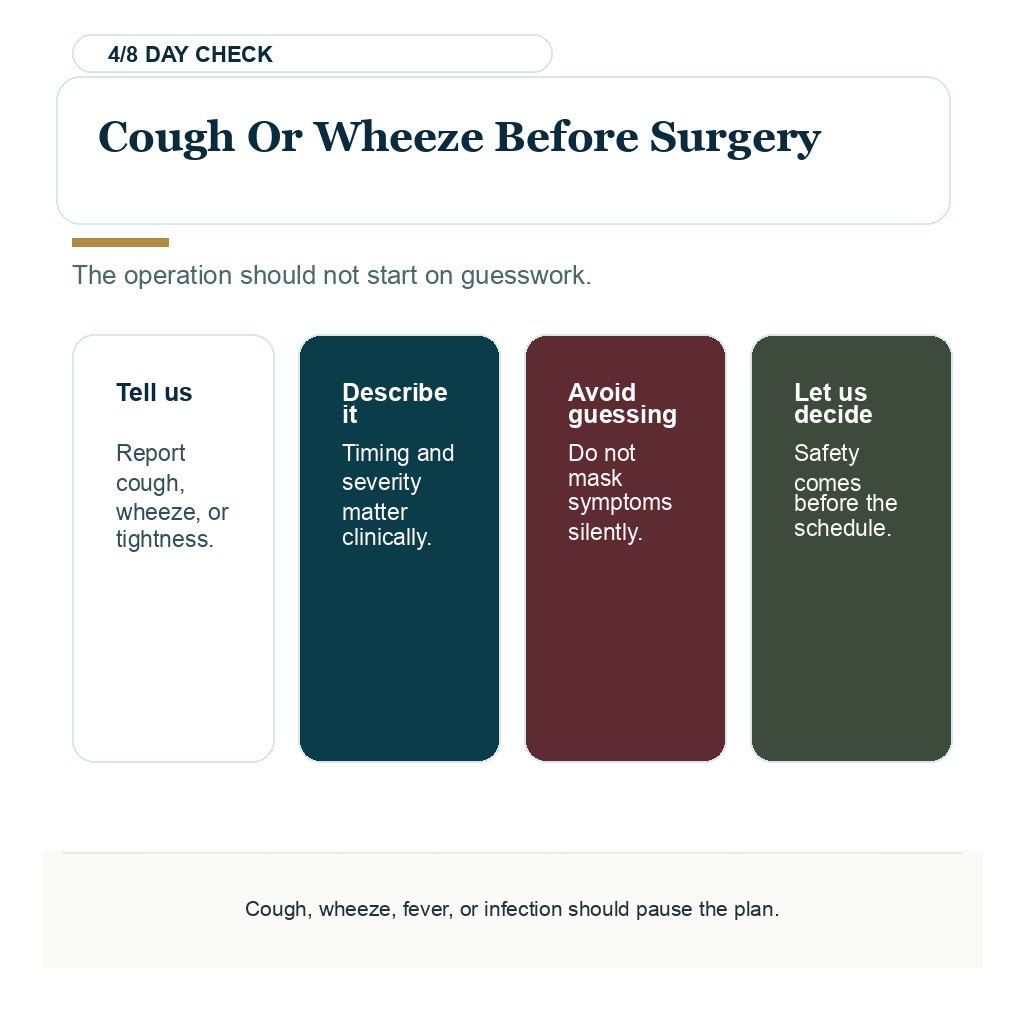
Coughing or wheezing before the operation
Say this before the procedure starts. Do not wait until you are lying on the operating chair. A dry throat from travel is different from chest wheezing, but the team cannot judge that difference if you stay silent.
If coughing is mild, brief, and clearly not from an active chest problem, surgery may still be possible. If coughing is repeated, deep, linked with wheezing, or part of a current infection, the decision changes. Postponing is safer than operating while you are fighting for comfortable breathing.
Describe the cough in ordinary words. A throat tickle after travel, chest tightness with wheeze, and coughing after a new medicine are not the same planning problem.
If the symptom appears after booking, after travel, or on the morning of surgery, report it as a medical change before the procedure. Sometimes simple observation is enough. In other cases, a doctor review, asthma adjustment, or postponement is safer. That call should be made before donor grafts are used, not while you are trying to breathe comfortably in the chair.
One cough after surgery is rarely the right fear by itself. The bigger issue is repeated uncontrolled coughing, rubbing, bleeding, poor sleep, or a missed medical problem that should have been handled earlier.
Asthma medicine, healing, and graft growth
Most ordinary inhaler use does not mean transplanted grafts cannot grow. A prescribed inhaler is not a graft poison. The more important question is why the medicine is needed and whether the asthma is controlled.
Inhaled controller medicine, rescue inhalers, allergy medicine, and occasional steroid plans are not all the same. Long or repeated oral steroid courses may matter for infection risk, skin healing, blood sugar, and immune response. Recent medication changes can also make the surgery harder to interpret.
Keep asthma treatment decisions with your prescribing doctor or treating team. Poor breathing is not safer than a prescribed inhaler. Fear before a cosmetic operation should not drive a private medicine change.
The hair transplant itself still depends on diagnosis, donor quality, graft handling, recipient area design, and aftercare. Asthma medicine cannot rescue a weak surgical plan, and a good surgical plan should not require someone to abandon necessary asthma treatment.
Steroids, antihistamines, and sleeping pills
These medicines deserve separate thinking. A short steroid plan for asthma is different from chronic high dose steroid use. Allergy tablets are different from sedating antihistamines. A familiar prescribed sleep medicine is different from taking a new sedative in a hotel room after surgery.
If hay fever or itching is part of the problem, the plan must do more than stop the itch. Drowsiness, mixing medicines, and masking symptoms matter. This is also important with antihistamines after a hair transplant. Allergy control can help an asthma patient, but sedation still has to be handled carefully.
Be careful with sleeping pills after a hair transplant. A sedated patient may sleep harder, breathe differently, wake confused, rub the scalp, or fail to notice symptoms. This is especially important with nighttime asthma, heavy snoring, or sleep apnea and CPAP after a hair transplant.
Alcohol, sedatives, strong painkillers, antihistamines, and asthma symptoms are a poor mix without medical guidance. A crowded medication night is harder to interpret if breathing becomes uncomfortable.
Painkillers also need an asthma question. If aspirin, ibuprofen, naproxen, or another medicine in that family has ever triggered wheezing, chest tightness, nasal swelling, or an asthma flare, make that clear before taking routine aftercare pain medicine. Do not test a new medicine in that family after surgery in a hotel room. Use only the pain plan agreed by the treating clinicians.
Sleep after surgery with asthma
Some people with asthma find the early sleeping position difficult. Sleeping on the back with the head elevated may feel tight in the chest, especially if you usually sleep on the side or if nighttime asthma is part of your pattern.
For graft protection, sleep after a hair transplant gives the basic position framework. Asthma adds one more practical test. You need to breathe comfortably in the recommended position without panicking, coughing repeatedly, or reaching for unapproved sedatives.
If the answer is no, this needs planning before surgery. Sometimes the solution is pillow adjustment, a more gradual position, a clear inhaler plan, or better asthma control before the operation date. Sometimes it means postponing.
At midnight, you should not have to choose between breathing and graft protection. The sleeping plan should protect both.
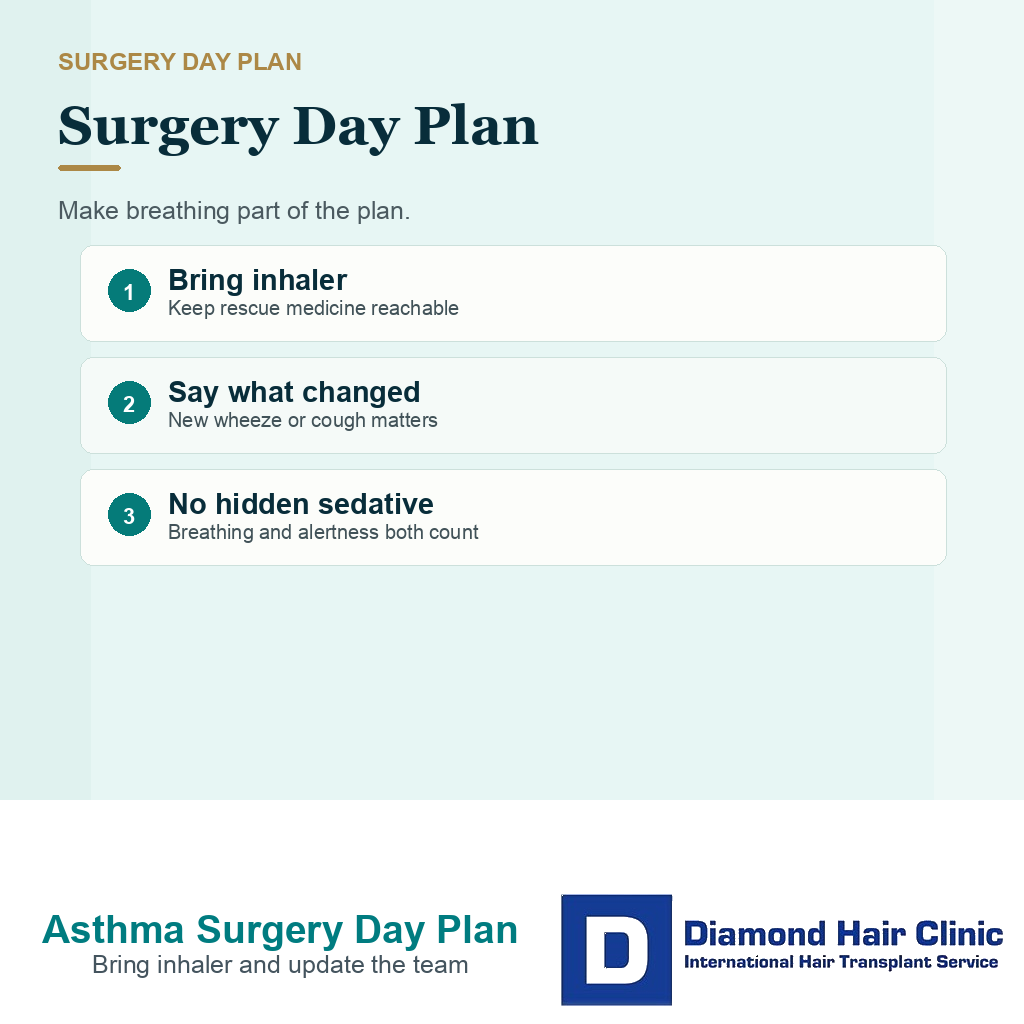
A safer surgery day starts with the inhaler available, symptoms disclosed, and no hidden sedatives or medicine changes.
Travel to Turkey with asthma
Travel can expose you to dry cabin air, poor sleep, stress, hotel dust, fragrance, weather changes, infection risk, and a different routine. None of these prevent surgery by themselves, but they can turn mild asthma into an unstable week for some people.
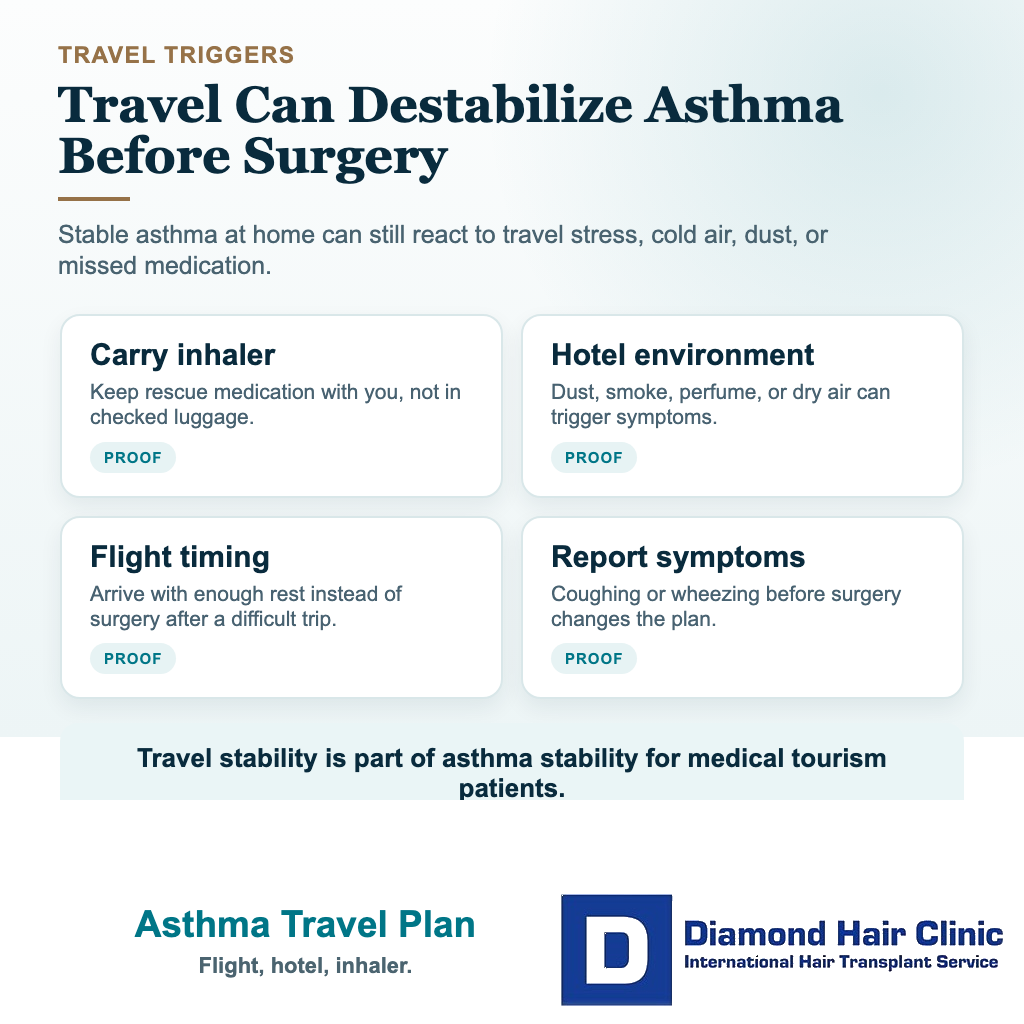
If you are flying for surgery, keep inhalers in hand luggage, not only in checked baggage. Bring enough medicine for the trip, know your triggers, and let the medical team know if symptoms change after arrival. For recovery travel after the operation, flying after a hair transplant is useful too.
I am cautious when someone arrives after a long flight with a new cough, fever, or wheeze and wants to continue because the hotel is booked. The calendar should not overrule breathing safety. A postponed operation is frustrating, but a medically unstable operation is worse.
Increased rescue inhaler use after arrival
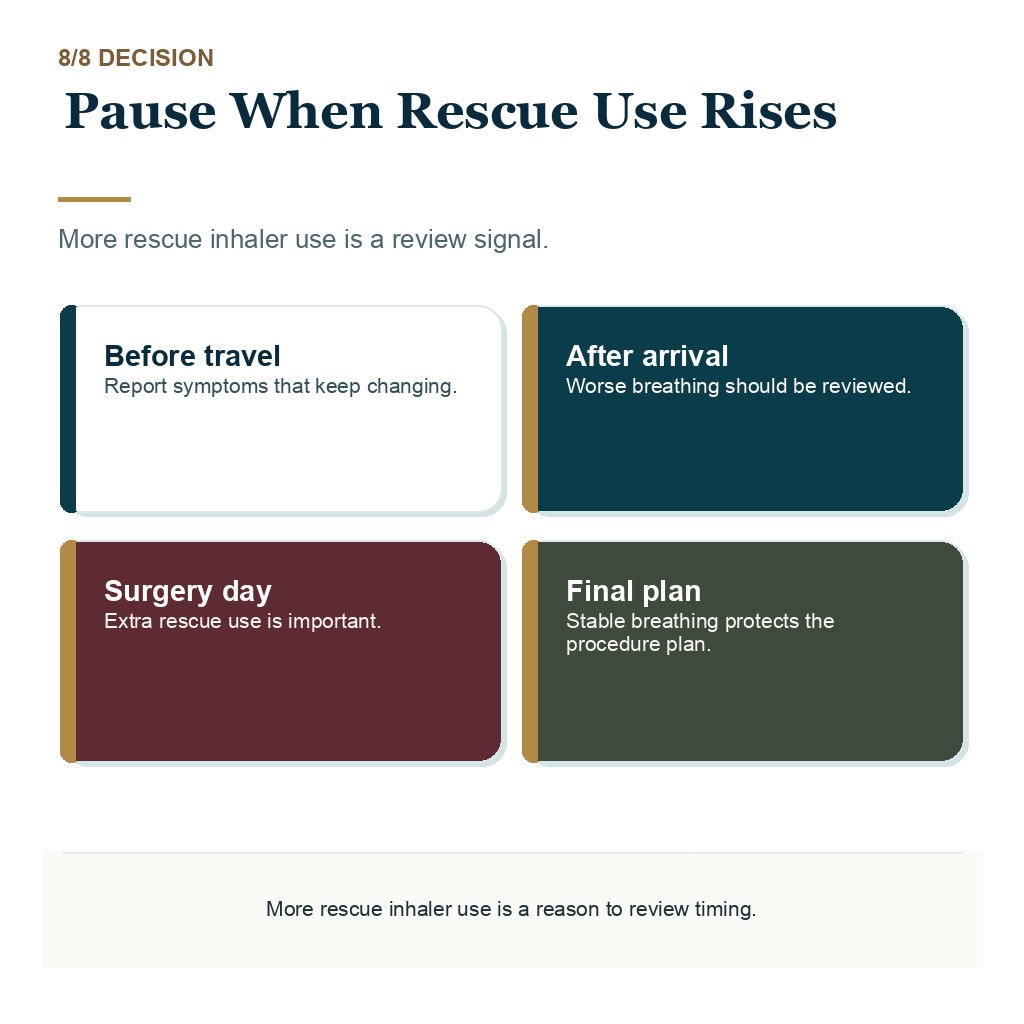
If you need your rescue inhaler more often after travel, raise this before the operation rather than trying to push through the day. More frequent inhaler use can mean the airway is irritated, the asthma is less stable, or a respiratory infection or allergy flare is starting.
Cancellation is not the only outcome, but the review changes. Tell us the timing, number of puffs, triggers, chest tightness, wheezing, cough, fever, and whether symptoms settle after the inhaler. A long elective procedure should not begin while breathing status is unclear.
Contacting the clinic after surgery
Contact the clinic if breathing becomes difficult, wheezing worsens, chest tightness appears, or your rescue inhaler is not helping as expected. These are asthma concerns first, not hair transplant concerns, and they should be handled with proper medical urgency.
Some breathing symptoms should bypass routine clinic messaging. Severe breathlessness at rest, trouble speaking full sentences, blue or grey lips, chest pain, fainting, confusion, drowsiness, or a reliever inhaler that does not work after your action plan steps needs urgent medical help. Hair transplant photos can wait when breathing is the emergency.
Also contact the clinic for fresh bleeding, open skin, worsening pain, discharge, pus, fever, spreading redness, severe swelling, repeated vomiting, or any symptom that is getting worse instead of settling. Asthma does not explain away warning signs on the scalp.
The basic hair transplant aftercare rules still matter for the scalp, but they should not delay medical review when breathing is the problem. A scalp question and a breathing question may need different responses.
Take routine photos in good light. Urgent asthma symptoms are different, so do not wait for a hair transplant message reply. Follow your asthma action plan and seek urgent medical attention when symptoms require it.
These 8 asthma planning slides separate breathing stability, inhaler details, recent flares, cough or wheeze, anesthesia context, medication combinations, travel and sleep triggers, and rescue inhaler review signals. Swipe sideways, use the arrows one slide at a time, or choose a number below the image.


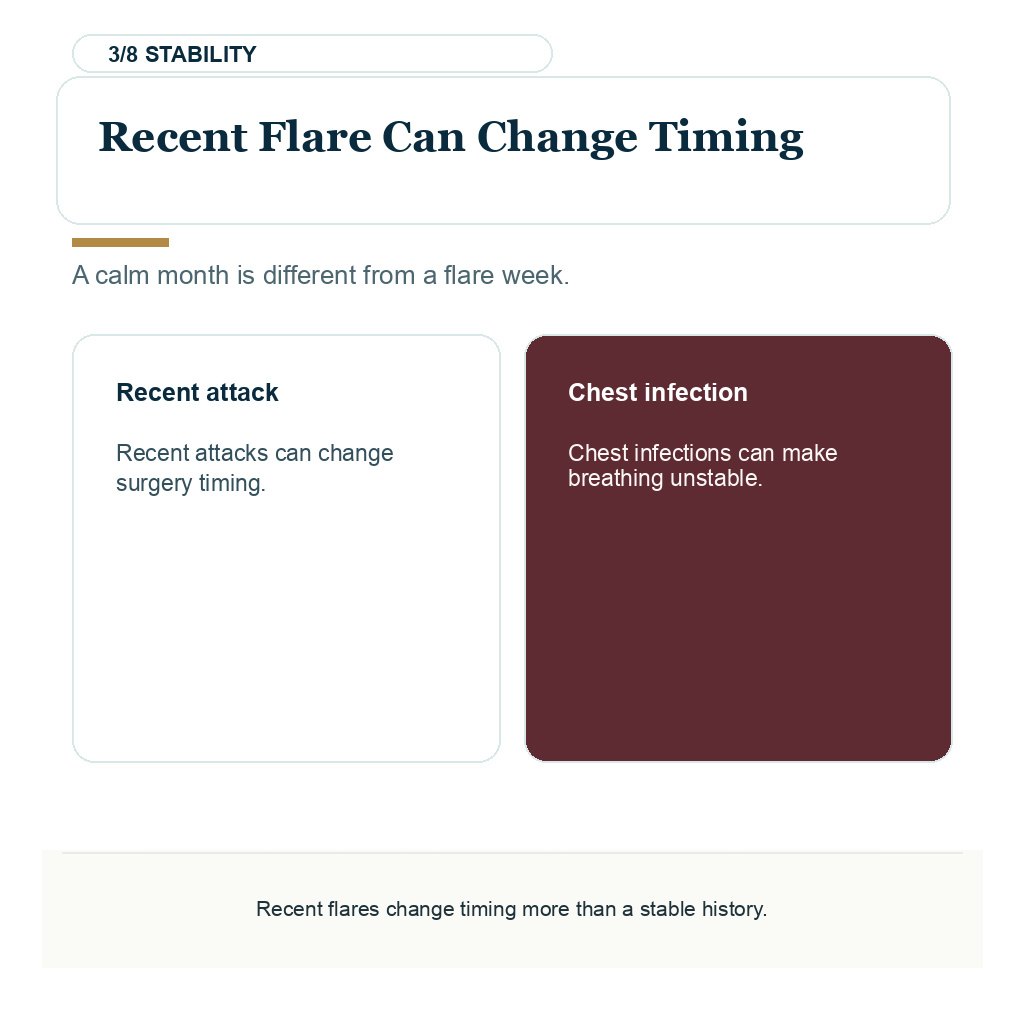


Asthma stability matters on surgery day
The decision is based on control, not only on the diagnosis label. A hair transplant with asthma is reasonable only when breathing is controlled enough that surgery does not become a breathing problem. The donor area should not be used while you are in a flare, guessing with medicine, or hiding symptoms.
Stable asthma usually means your symptoms are predictable, your prescribed medicine plan is clear, rescue inhaler use is not suddenly increasing, there has been no recent serious attack, and there is no active chest infection. If these points are not true, the safer decision may be to treat and stabilize first.
The plan has to protect breathing, careful graft placement, and a recovery routine the patient can follow without breathing fear, repeated coughing, or unsafe sedative use.
That is the standard I use in consultation. Asthma does not close the door to surgery by itself, but it requires transparent communication, preparation, and enough medical stability to make the operation worth doing.

Read this review excerpt
Every single one of my questions was answered and they made sure I had all the details I needed to make an informed decision.