



Can You Have a Hair Transplant With Kidney Disease?
Sometimes, yes. A hair transplant can be possible with kidney disease, but only when the kidney condition is stable enough for an elective procedure and the treating doctor is comfortable with the plan. I review current kidney function, dialysis status if relevant, transplant history, medicines, blood pressure, anemia, infection history, and wound healing risk.
Kidney disease is not an automatic rejection, but it is never a detail to hide. The scalp is where I work, but the whole body has to tolerate a long surgical day, local anesthesia, small wounds, aftercare, and the medicines used around surgery.
The operation moves hair follicles. It does not treat kidney disease, anemia, medication related shedding, or temporary shedding after illness or major surgery. The first decision is whether the body is ready. The second decision is whether the hair loss is truly a surgical problem.
Kidney disease changes the transplant decision
Hair transplantation creates many small openings in the donor area and recipient area. Even with local anesthesia, the body still has to control bleeding, keep blood pressure stable, heal cleanly, and handle the medicine plan around surgery.
Kidney disease can sit next to other issues that matter in surgery. These may include anemia, high blood pressure, diabetes, high cholesterol, heart disease, blood thinner use, fluid balance problems, or transplant medicines that reduce immune activity. One issue may be manageable. Several together can change the decision completely.
I do not begin with a graft number. I begin with stability. Recent blood tests before a hair transplant, a proper medication review, and clear kidney team input matter more than a quick estimate from scalp photos.
If the thinning is mainly temporary shedding from illness, dialysis stress, anemia, a recent kidney transplant, or a medication change, surgery may be the wrong answer at that moment. Waiting for diagnosis and stability can protect both health and donor hair.
Hair transplant surgery may be possible after medical clearance
Surgery becomes more reasonable when kidney function is stable, the treating doctor agrees that an elective scalp procedure under local anesthesia is acceptable, recent blood results are understood, blood pressure is controlled, and the medicine plan is clear. The donor area must also be strong enough, the hair loss pattern must be suitable, and expectations must be realistic.
A person with mild stable kidney disease is not the same as someone with advanced kidney failure, dialysis complications, recent hospitalization, changing medicines, or repeated infection. The diagnosis name matters less than the current medical picture. A living kidney donor with one stable kidney is a different situation again. The donor still needs to share current kidney results, blood pressure, regular medicines, and follow-up advice before an elective surgical day is planned. A small graft count does not replace that review.
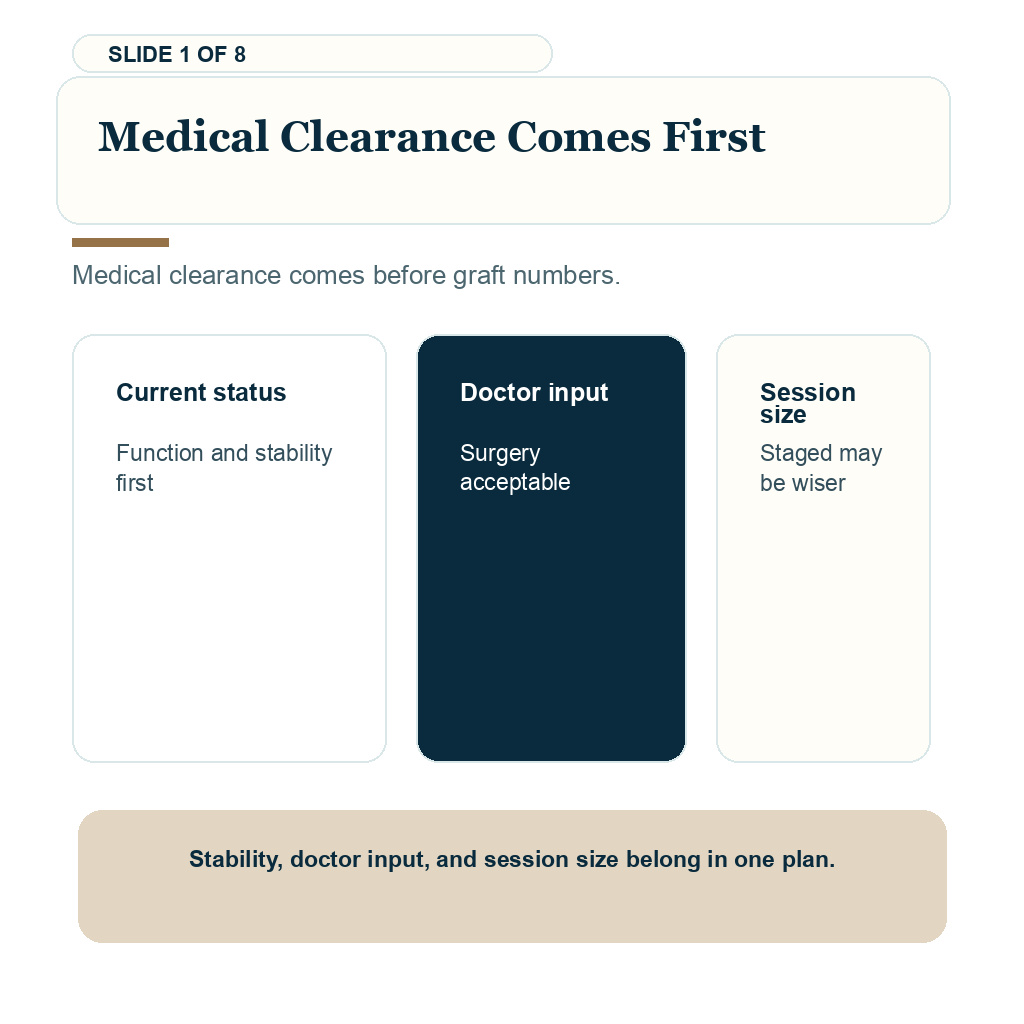
The size of the operation also matters. A shorter, staged, carefully planned session may be safer than a long session with the highest possible graft number in a medically complex case. Travel pressure or disappointment should not push the body harder than it should be pushed.
That is a candidacy decision, not a loss of hope. You can strongly want restoration and still need a delay. You can also have kidney disease and still be a good candidate for a hair transplant if the medical and surgical conditions line up properly.
Surgery should wait when kidney health or healing risk is unstable
I delay surgery when kidney function is changing, dialysis is not well tolerated, blood pressure is uncontrolled, anemia is significant, electrolytes are unstable, there is an active infection, or current medical information is missing. I also delay when a kidney transplant is recent or transplant medicines have recently changed.
The reason is not fear. A hair transplant is elective. It should be done when the body is stable enough to heal, not when the calendar, flight, deposit, or clinic schedule creates pressure.
Some people feel well and are surprised when I ask for more information. Feeling well helps, but kidney disease can still affect blood pressure, anemia, fluid balance, medication choices, and infection risk. A video consultation cannot replace current blood results and medical clearance in this group.
Graft numbers become useful only after medical stability is clear. If a delay gives time for better blood pressure control, updated kidney blood tests, medication clearance, anemia treatment, or safer dialysis timing, the delay is part of good planning.
Dialysis makes planning more delicate
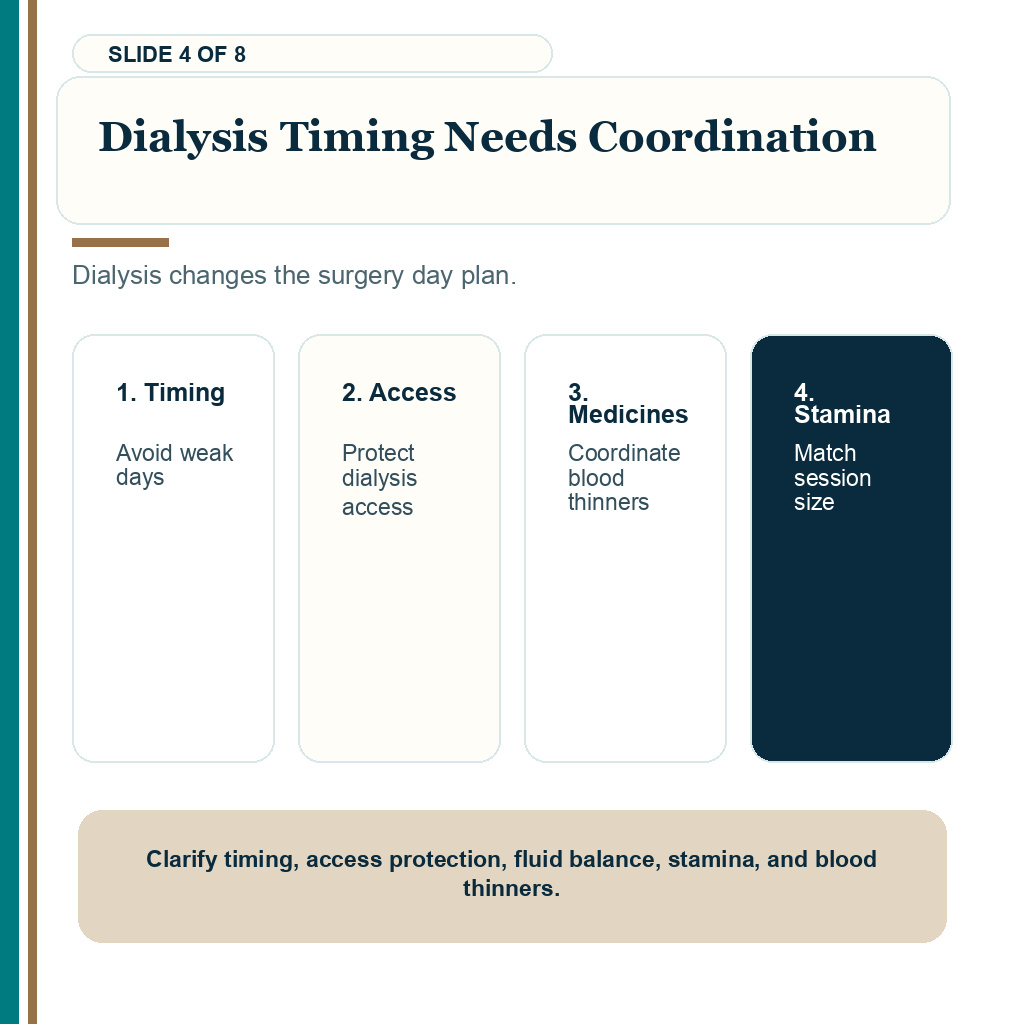
Dialysis does not always make hair transplant surgery impossible, but it makes the plan more delicate. The dialysis schedule, fluid balance, blood pressure pattern, anticoagulation during dialysis, anemia, fatigue, infection risk, and general strength all matter.
This case should not be planned from scalp photographs alone. The kidney team should confirm whether elective surgery is reasonable, which timing window fits dialysis, and whether potassium, fluid status, blood pressure pattern, fatigue, dialysis anticoagulation, or another medicine issue changes the surgical day.
A dialysis day, the day after dialysis, and a day when the person is tired or fluid overloaded are not the same situation. A long procedure can be more demanding than expected. The graft number must fit medical capacity, not only the size of the bald area.
Dialysis access also needs respect. I need to know where the access is, whether that arm should be protected, and whether pressure, positioning, or routine monitoring equipment could create a problem during a long procedure. These details are not visible in hairline photos.
Kidney transplant history changes the discussion
After a kidney transplant, the discussion changes again. I need to understand kidney function stability, transplant medicines, infection history, wound healing, blood pressure, diabetes risk, and whether the transplant team is comfortable with elective surgery. When the history involves another transplanted organ as well, hair transplant after an organ transplant belongs in the same safety discussion because specialist clearance, medicine that prevents rejection, and infection risk still shape the plan.
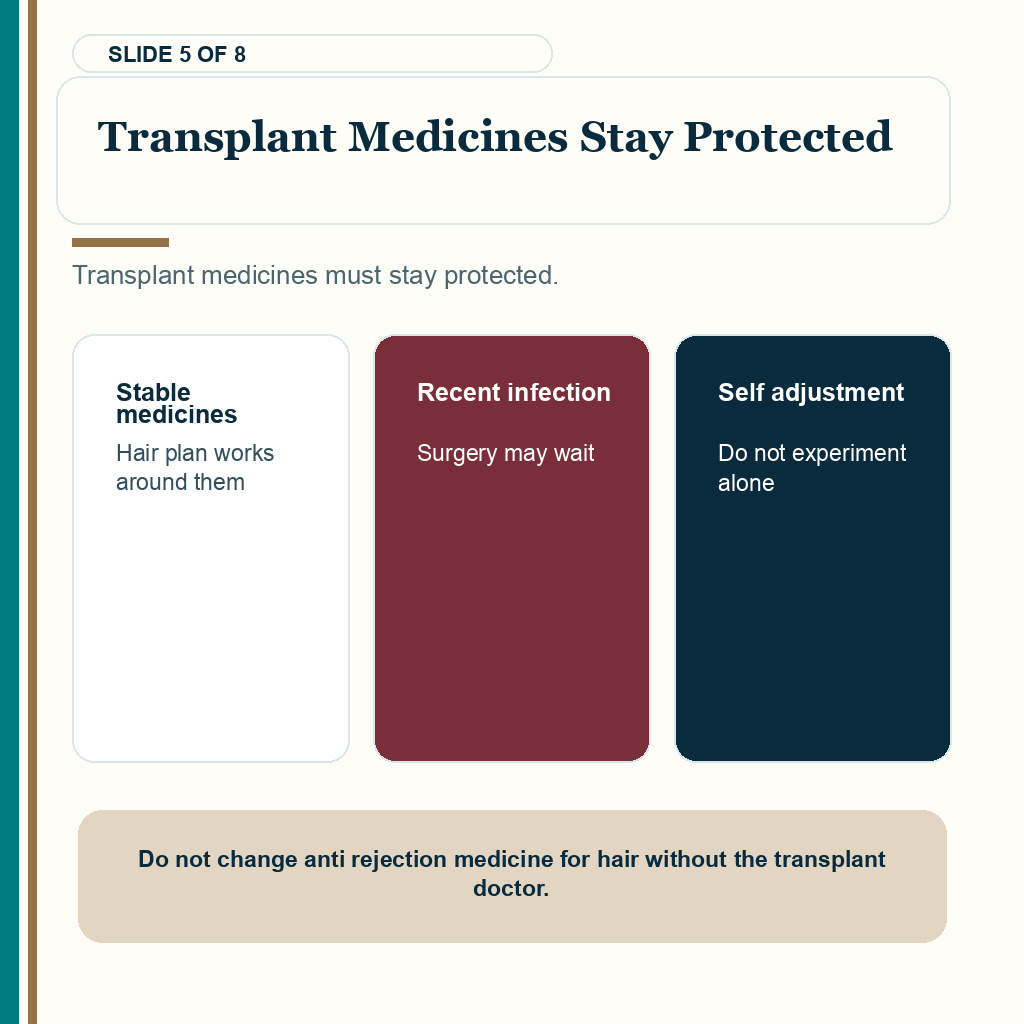
Medicines that prevent rejection or reduce immune activity should never be stopped or changed for a hair transplant unless the transplant doctor is involved. The kidney is more important than the hairline. These medicines can also change infection risk, so tell the clinic and transplant team early if you notice fever, drainage, worsening wound pain, urinary symptoms, or a general feeling that you are becoming unwell after surgery. If a medicine may be contributing to shedding, the answer is still not to experiment alone.
Hair loss after kidney transplant can have several causes. The physical stress of major surgery, illness, anemia, medication changes, tacrolimus or other transplant medicines, and ordinary pattern hair loss can overlap. Those causes need to be separated before grafts are discussed.
Stable means more than feeling recovered. The review includes timing after transplant, current kidney function, infection history, medicine stability, and whether the transplant physician sees any reason to avoid elective procedures.
The kidney doctor should confirm surgical safety
A useful clearance is not a vague note saying the person is fit. It should answer practical questions. Is the kidney condition stable enough for a long elective procedure under local anesthesia? Are blood pressure, anemia, electrolytes, fluid balance, and infection history acceptable? Are there medicines that must be continued, avoided, adjusted, or timed carefully?
For dialysis, I want the dialysis team to comment on timing around treatment, anticoagulation, access protection, fatigue, and recent access infection. For a transplant recipient, I want the transplant doctor to confirm that kidney function and transplant medicines are stable and that there has not been a recent rejection episode or infection that makes elective surgery unwise.
This protects the patient from a last minute argument on surgery morning. It also lets me choose the right surgical size in advance. The plan can be smaller, staged, or postponed before the patient travels or becomes emotionally committed to a graft number.
Blood tests and clearances matter before surgery
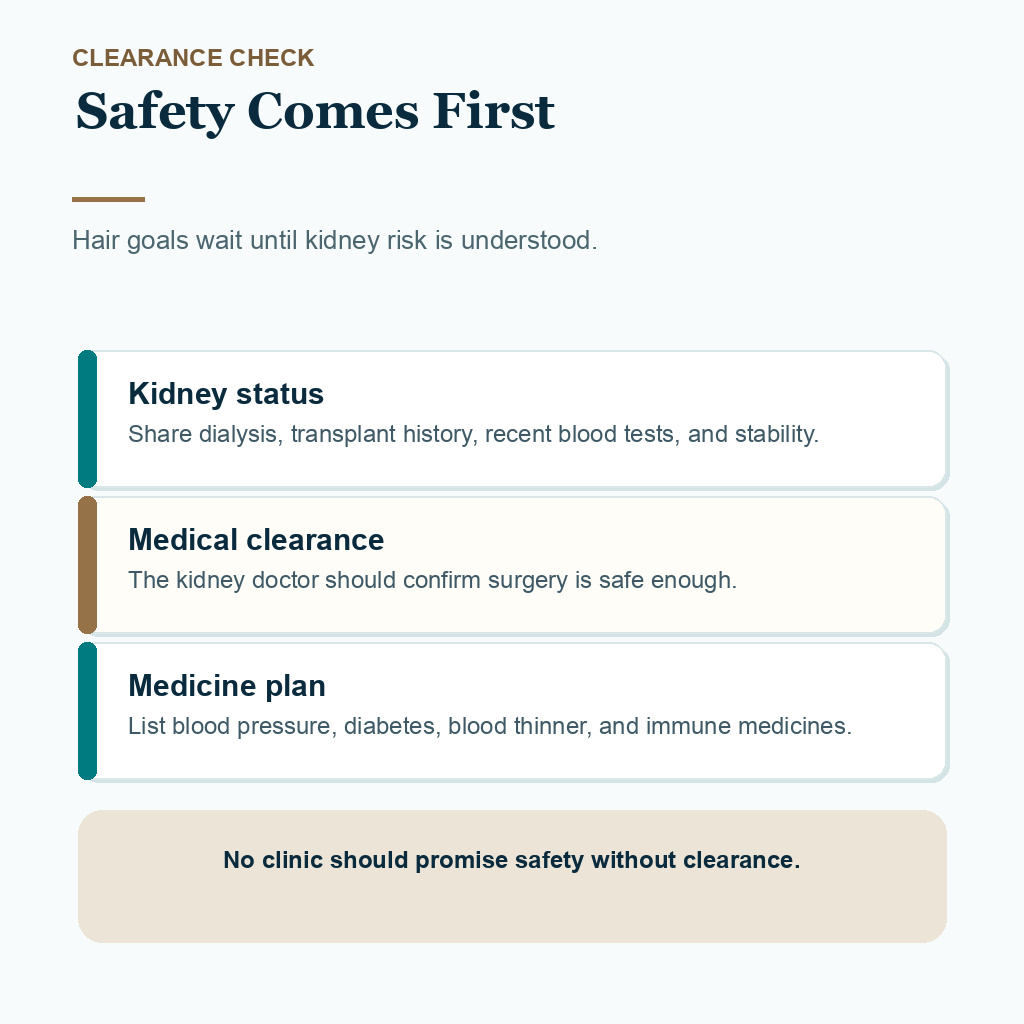
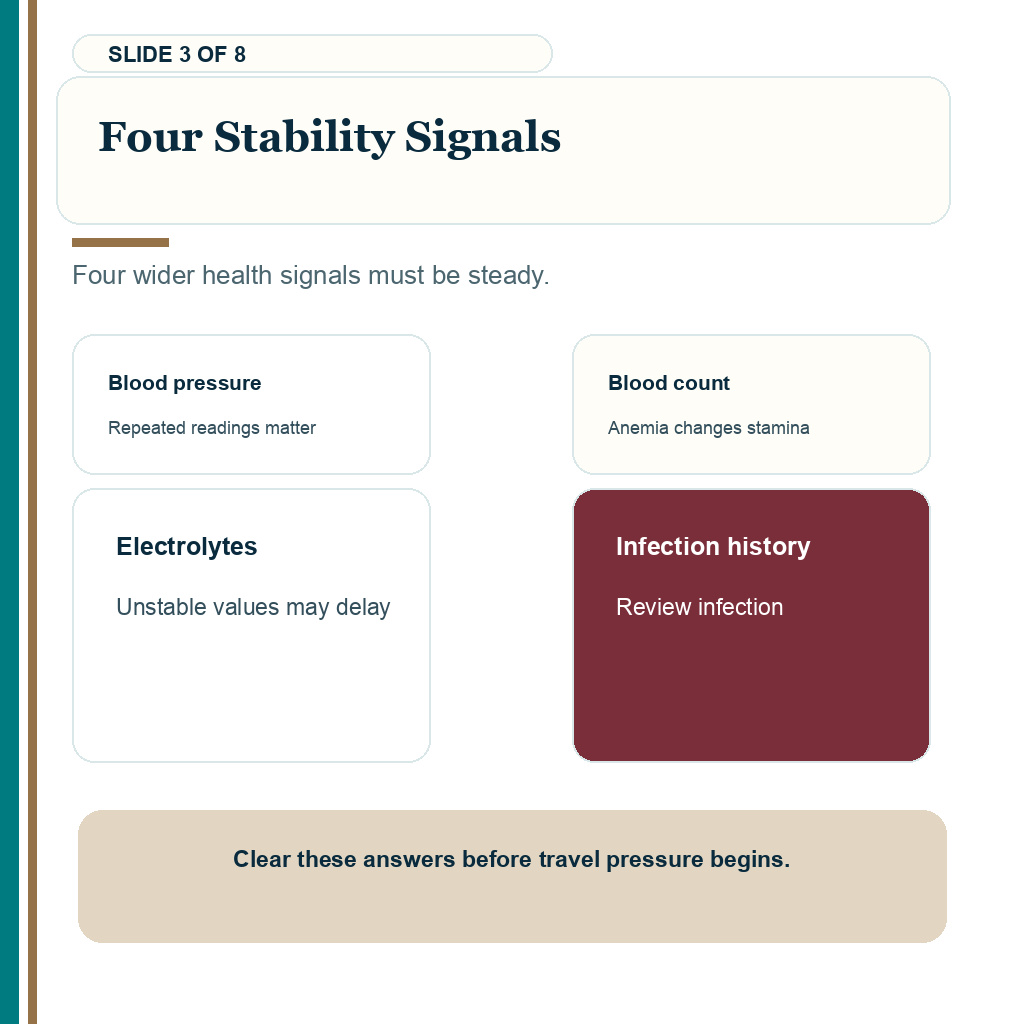
The exact review depends on the case, but planning for kidney disease often needs recent kidney function, electrolyte status, blood count, infection history, blood pressure information, medication list, and sometimes written clearance from the treating doctor. Dialysis and transplant history usually need more coordination than ordinary male pattern hair loss.
Blood count matters because anemia can affect how someone tolerates a long surgical day. It can also be part of the shedding story. When iron or anemia is part of the picture, the discussion may overlap with low ferritin or anemia before a hair transplant, but anemia linked to kidney disease still needs the kidney doctor’s input.
Kidney function and electrolytes matter because they can influence medicine choices, hydration decisions, and whether surgery should be postponed. Blood pressure matters because uncontrolled readings can make bleeding, swelling, comfort, and anesthesia planning less predictable.
Medicines that affect bleeding or clotting also need review. If you take aspirin, warfarin, apixaban, rivaroxaban, clopidogrel, or another anticoagulant or antiplatelet medicine, the decision belongs in a coordinated medical plan. Blood thinners before a hair transplant should not be stopped without proper medical coordination.
Local anesthesia is another reason to review the case properly. In someone with kidney disease, adrenaline in hair transplant anesthesia should be planned around the wider medical history, not only surgical habit.
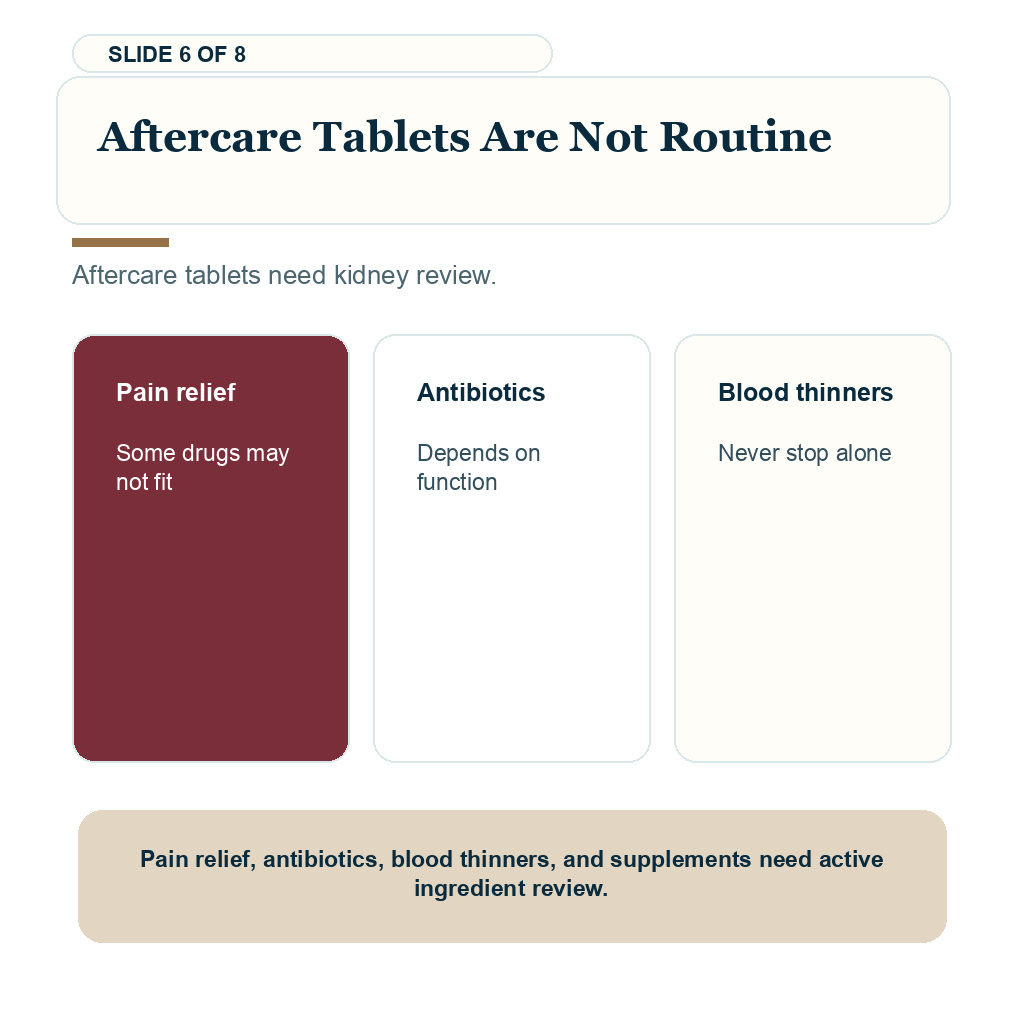
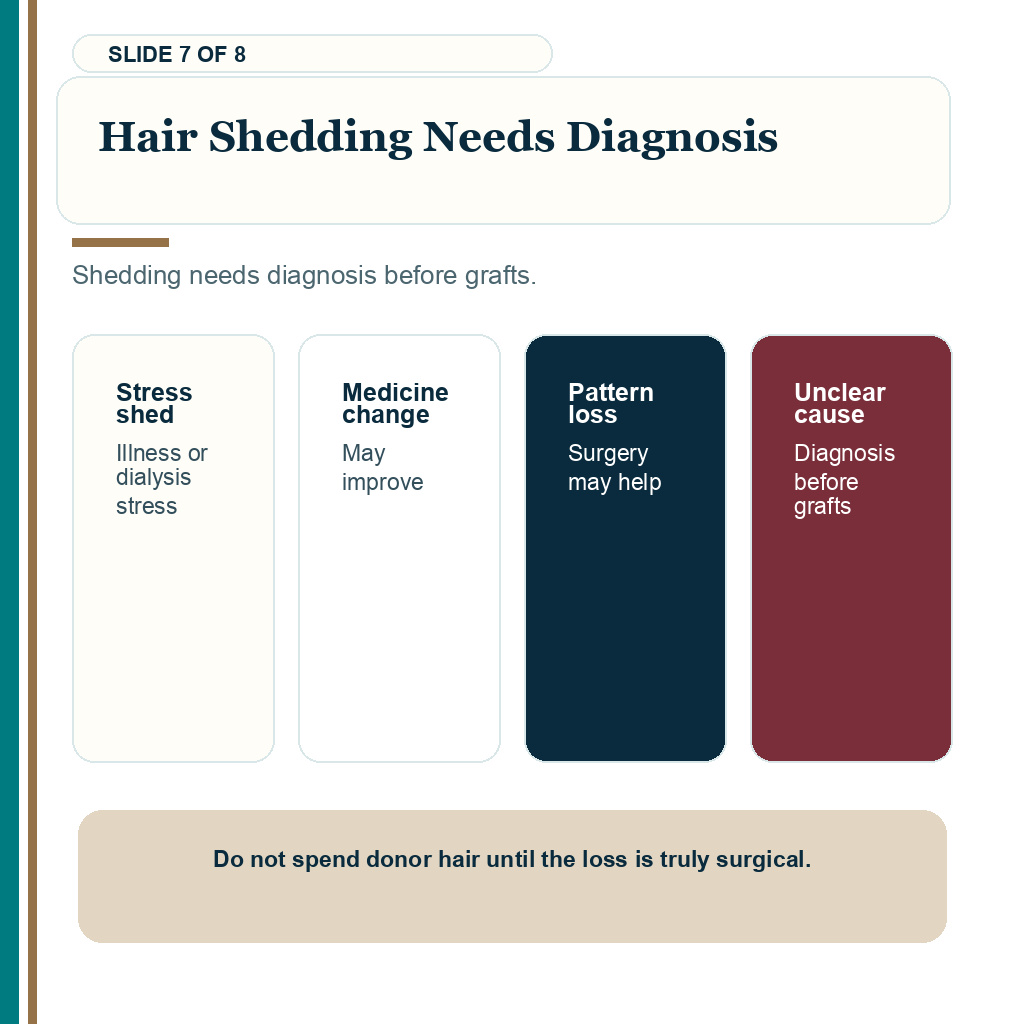
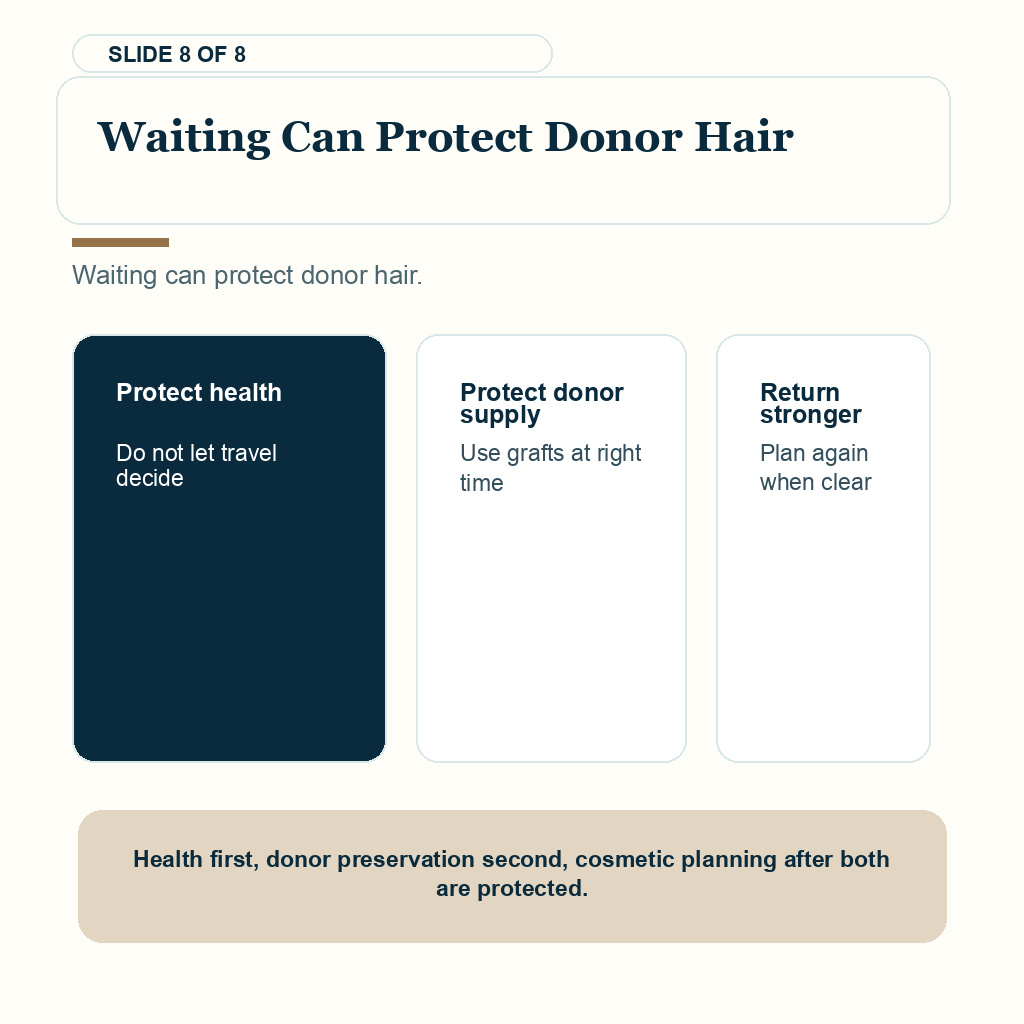
These 8 kidney clearance slides separate medical clearance, current results, stability signals, dialysis timing, transplant medicines, aftercare medicines, shedding diagnosis, and when waiting protects donor hair. Swipe sideways, use the arrows one slide at a time, or choose a number below the image.

Kidney disease may be part of the shedding story
Yes. Kidney disease, dialysis stress, major illness, anemia, nutritional stress, medication changes, and a recent kidney transplant can all contribute to diffuse shedding. That kind of shedding is not the same as permanent male pattern hair loss.
Surgery treats missing or miniaturized follicles in a stable pattern. It does not treat temporary shedding from illness, medication change, or medical instability. If the hair is actively shedding because the body is under stress, the better plan may be diagnosis, stabilization, and time.
I understand why this feels emotionally heavy, especially after a kidney transplant or during dialysis. Hair loss can feel like one more thing taken away. Still, the donor area should not be spent before the diagnosis is clear. If the shedding may improve, waiting can prevent an unnecessary or poorly timed operation.
Medication choices also need care. Minoxidil, finasteride, vitamins, supplements, and online products should not be added casually when kidney disease, dialysis, or transplant medicines are involved. The treating doctor should know what is being used.
Blood pressure, diabetes, and heart history can change the plan
Kidney disease often travels with other medical issues. High blood pressure can be both a cause and consequence of kidney problems. Diabetes can affect kidney function, healing, infection risk, and hair loss. Heart disease or a stent can bring blood thinners and anesthesia concerns into the same case.
When high blood pressure and hair transplant planning overlap, stable readings matter. One acceptable reading in the clinic is not enough if home readings are repeatedly high, medicines are changing, or symptoms are present.
Diabetes and hair transplant surgery require careful control before a kidney disease case is planned. Diabetes with kidney disease may still be considered when control is good and medical review is reassuring. Poor control, slow healing, repeated infection, or unclear medication instructions can make postponement safer.
A coronary stent, rhythm problem, heart failure, or blood thinner plan cannot be separated from the transplant discussion. Hair transplant with heart disease or a stent requires stability and medical clearance before cosmetic timing.
Medicine and aftercare details need extra care
Kidney disease can change medication choices around surgery. Some antibiotics, painkillers, supplements, and other medicines may need a different dose, a longer interval, or avoidance depending on the kidney function level and the wider medical history. A routine package of tablets should not be used until the kidney history, current blood results, and medication list have been checked.
Painkillers that reduce inflammation often need kidney team approval in kidney disease. Medicines such as ibuprofen before a hair transplant, diclofenac, naproxen, or higher dose aspirin can feel ordinary in daily life but be wrong for someone with reduced kidney function, blood pressure problems, blood thinner use, or dialysis. This is different from aspirin that has been prescribed for heart or stent protection, which should not be stopped casually.
Painkillers after a hair transplant should be chosen by active ingredient and medical history, not brand name. Medication before a hair transplant also needs review of regular medicines, supplements, blood pressure tablets, and blood thinners.
Antibiotics after a hair transplant need early review when allergy, kidney disease, liver disease, infection signs, or medicine interactions are part of the case. No one with kidney disease should have to guess whether an antibiotic, painkiller, or supplement is safe.
Aftercare deserves stricter attention. Clean hands, gentle washing, avoiding scratching, avoiding dirty hats or pillows, and reporting fever, pus, spreading redness, worsening pain, or an open wound all matter. Kidney disease does not make every small recovery sign dangerous. It means warning signs should be reviewed with less guesswork.
A clinic should never promise safety without medical clearance
A careful clinic can promise proper evaluation, clear communication, and a plan that respects the medical condition. It should not promise that kidney disease is irrelevant, that dialysis never matters, that transplant medicines can be ignored, or that a large graft number will solve shedding caused by illness or medication.
The weak consultation pattern is easy to recognize. A clinic asks for photos, replies with a graft number, offers a package, and leaves the medical history until arrival. That is not enough with kidney disease. The medical plan should be clear before travel, not discovered under pressure on surgery morning.
Another weak promise is full coverage in one session without discussing donor capacity, medical stamina, and healing risk. A medically complex person may need a smaller session, a staged plan, or no surgery at that time.
Health comes first, then donor preservation, then cosmetic planning. If those are protected, the hair discussion becomes clearer. If they are ignored, even a technically possible operation can become a poor decision.
A real consultation balances kidney safety and hair goals
I start with the kidney history before the hairline. The first distinction is whether the disease is mild, advanced, managed with dialysis, or after a kidney transplant. I also review current blood tests, blood pressure control, anemia, diabetes, heart disease, blood thinner use, recent infection, transplant medicines, and whether the treating doctor has cleared elective surgery.
Bring the kidney team into the timing question before flights are fixed. The date is stronger when blood pressure, anemia, fluid balance, and medicine instructions are already aligned.
Then I judge the hair loss. The diagnosis may be male pattern hair loss, female pattern thinning, diffuse shedding after illness, medication related shedding, traction, scarring, or a mixture. If the diagnosis is unclear, surgery waits. Grafts should not be placed into a moving medical problem just because someone wants a permanent answer.
If the kidney condition is stable and the hair loss is truly surgical, I plan with more discipline. The donor area is a limited lifetime resource. A medically complex person does not need a rushed maximum session. The plan should be natural, medically sensible, and still make sense years later.
Kidney disease does not always close the door to hair transplant surgery. Superficial planning does. The right decision depends on stability, medical coordination, diagnosis, medication safety, donor strength, and the ability to heal. When those pieces are clear, surgery may be possible. When they are not clear, waiting is good medical judgment.

Read this review excerpt
Diamond Hair was the only clinic asking for medications, treatments I've done before, and other type of questions that make me feel confident on the professionalism that they practice with their clients.