


HIV and Hepatitis Hair Transplant Safety
A hair transplant with HIV, hepatitis B, or hepatitis C may be possible in patients whose case fits, but I do not treat these diagnoses as one fixed label. The decision depends on current medical control, recent blood tests, liver and immune status, medication safety, and whether the doctor managing the condition agrees with the plan.
The diagnosis by itself does not mean that a patient can never have a hair transplant, but it also should not be ignored. A hair transplant is usually performed under local anesthesia, but it is still a surgical procedure. It creates many small wounds in the donor area and the recipient area, and that means healing, bleeding tendency, infection risk, medication safety, and general health must be taken seriously.
Safe planning starts with disclosure before booking, not on surgery day. Recent viral load, treatment status, liver tests, immune markers, and clinic protocol all have to be known early.
If HIV viral control is unclear, the CD4 count is very low, there is an active opportunistic infection, hepatitis is active with abnormal liver function, clotting status is uncertain, or the patient is withholding medical information, I delay surgery.
I do not want to frighten a patient with HIV, hepatitis B, or hepatitis C. The decision has to be specific and safe. Some patients can be considered after proper review. Some patients should wait. The clinic must know the difference before a surgery date is booked.
The main risk is booking surgery while the medical picture is still unclear. Disclosure, current tests, treatment status, and the doctor managing the condition matter before travel is arranged.
Different decisions for HIV, hepatitis B, and hepatitis C
Every patient cannot be judged by the same label. HIV, hepatitis B, and hepatitis C are different medical conditions, and I do not evaluate them with one label. HIV negative patients using PrEP or Truvada need a separate medication disclosure review, not the same discussion as a positive HIV diagnosis.
For a patient with HIV, I assess whether the infection is medically controlled, whether the patient is taking treatment regularly, whether the viral load is suppressed, and whether the CD4 count shows acceptable immune status for elective surgery. A patient with well controlled HIV may be a very different surgical candidate from a patient with uncontrolled viral load, very low CD4 count, repeated infections, or unclear treatment history.
For hepatitis B, I check whether the infection is chronic, whether it is being monitored, whether antiviral treatment is needed, and whether there is any liver inflammation, cirrhosis, bleeding risk, or abnormal liver function.
For hepatitis C, I check whether the infection is active or already treated and cleared. Modern hepatitis C treatment can clear the virus in many patients, so the timing of surgery may change depending on whether treatment has already been completed or is still needed.
The diagnosis matters, but the control of the condition matters more. I do not decide from the name of the disease alone. Current medical information is needed before surgery can be judged reasonable.
HIV may still allow surgery in stable cases
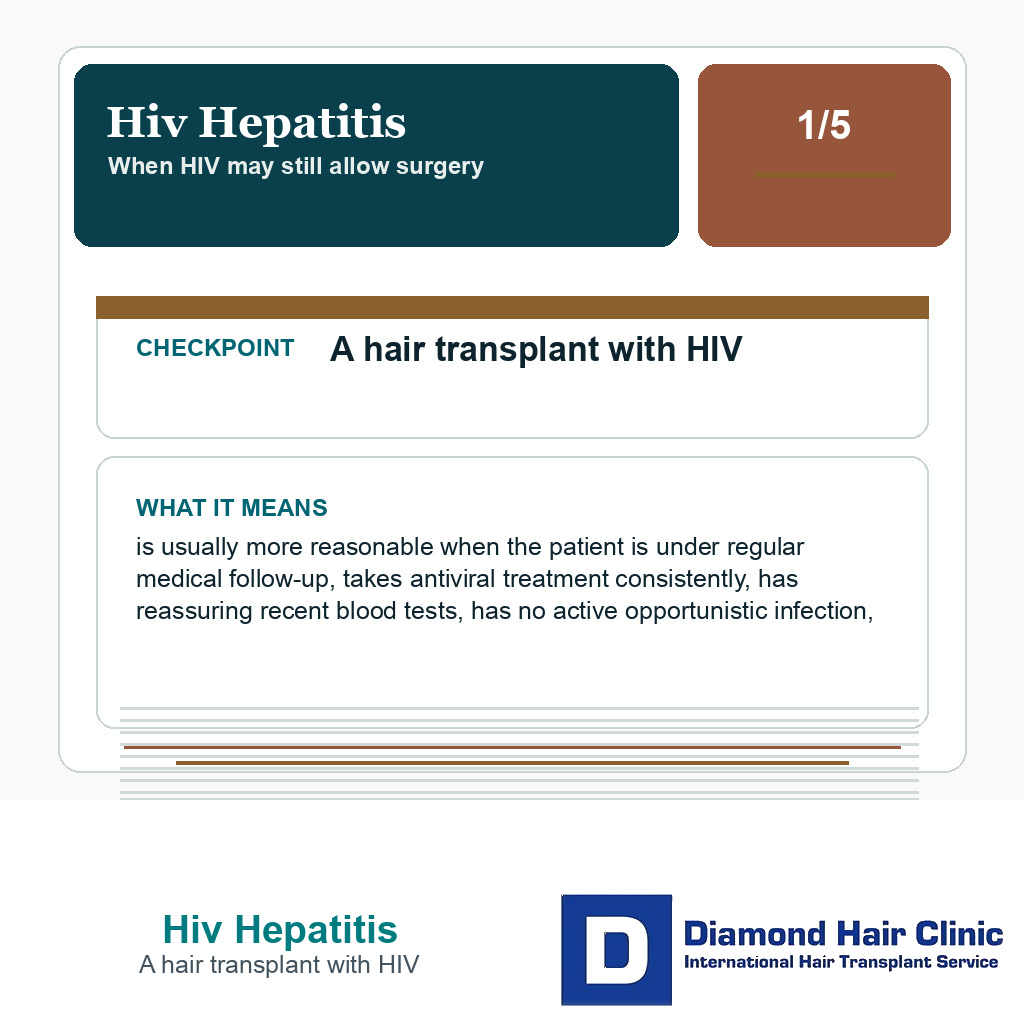
A hair transplant with HIV is usually more reasonable when the patient is under regular medical follow-up, takes antiviral treatment consistently, has reassuring recent blood tests, has no active opportunistic infection, and can provide medical information before travel.
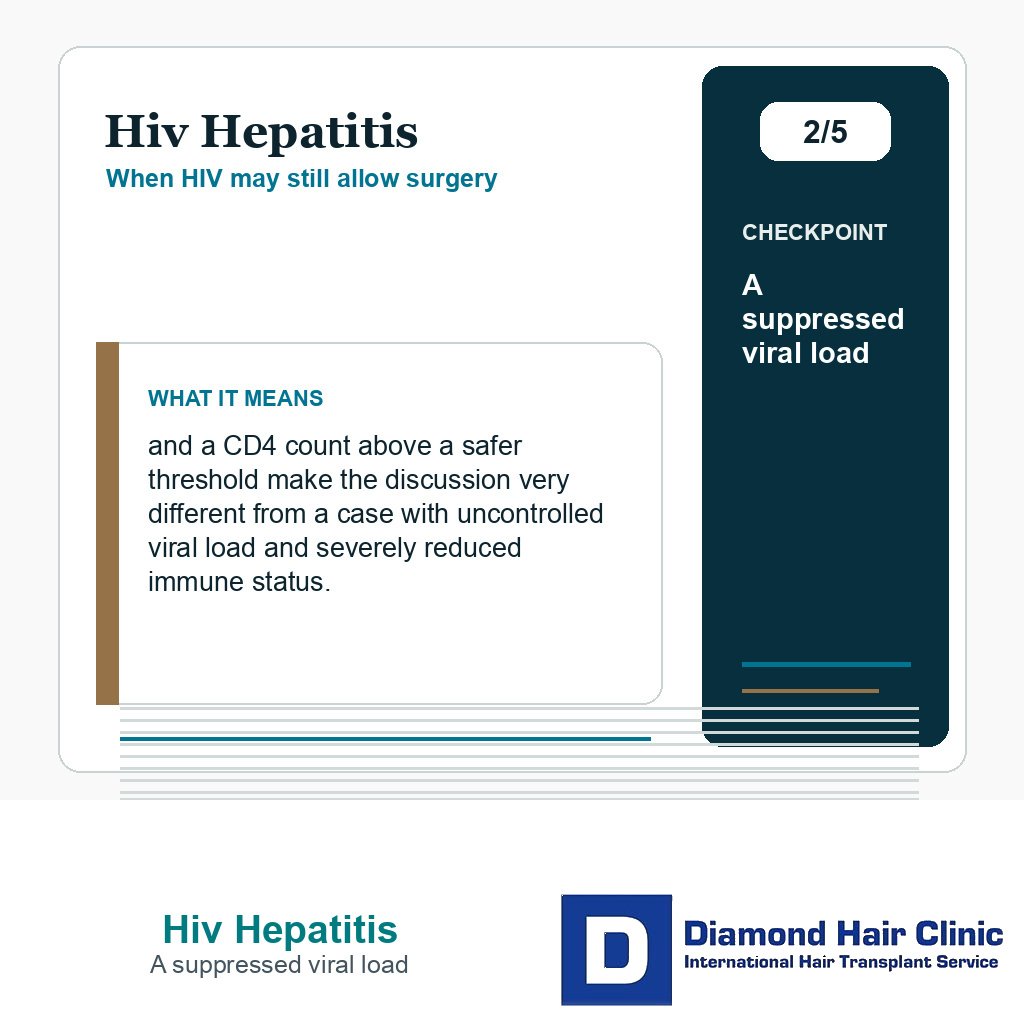
Recent HIV viral load and CD4 count information are important. A suppressed viral load and a CD4 count above a safer threshold make the discussion very different from a case with uncontrolled viral load and severely reduced immune status. A common practical reference point is an HIV viral load below 200 copies per mL and a CD4 count above 200 cells per cubic millimeter, but I do not use numbers mechanically. I still involve the patient’s treating doctor when the history is complex.
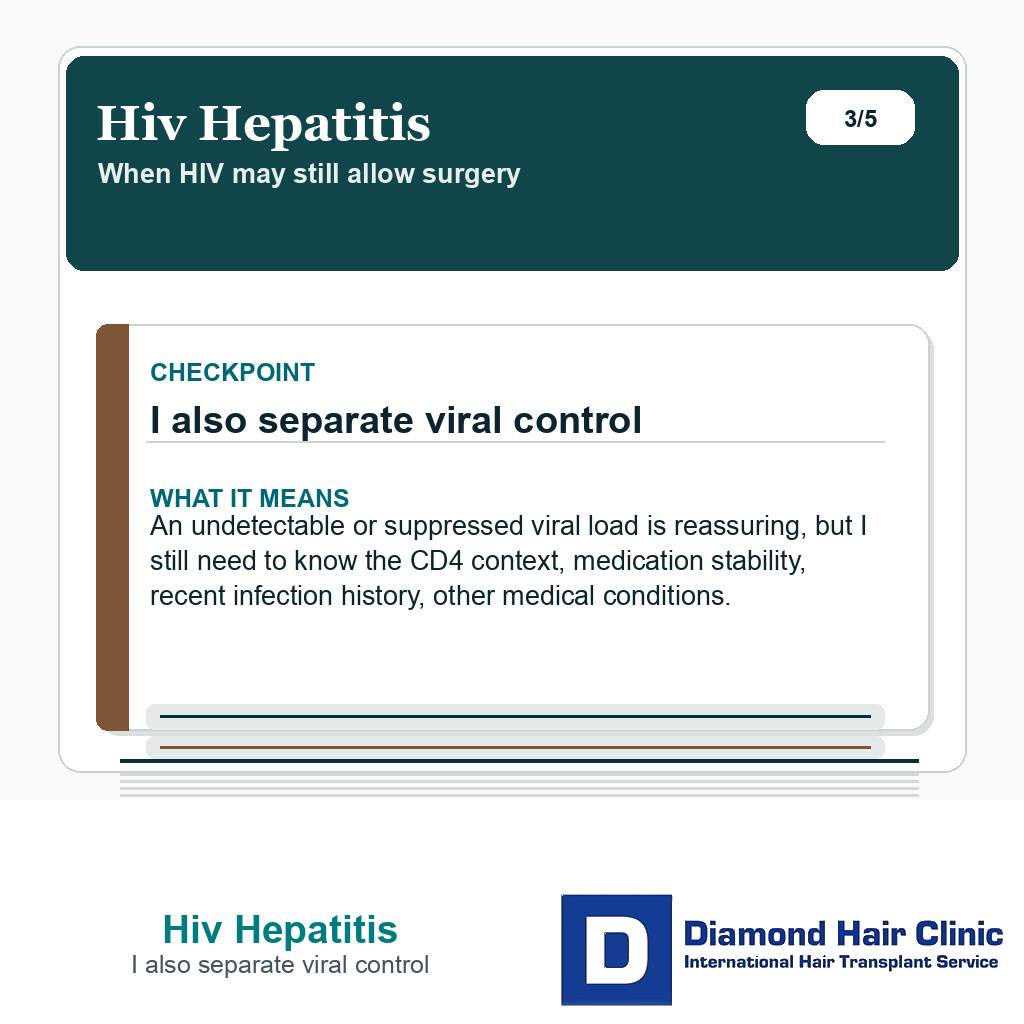
I also separate viral control from complete surgical clearance. An undetectable or suppressed viral load is reassuring, but I still need to know the CD4 context, medication stability, recent infection history, other medical conditions, and whether the result is current enough to plan travel and surgery. A result from last year is not the same as a recent preoperative review.
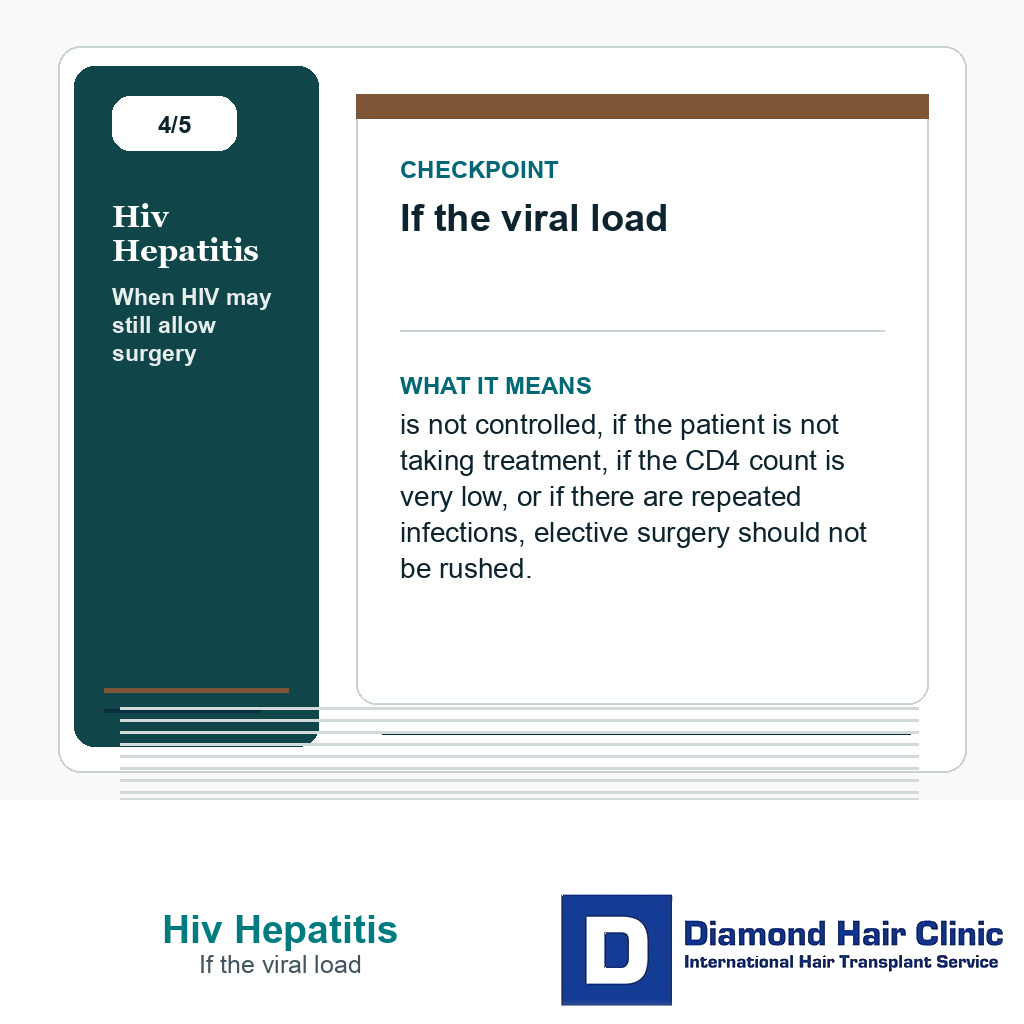
If the viral load is not controlled, if the patient is not taking treatment, if the CD4 count is very low, or if there are repeated infections, elective surgery should not be rushed. The right decision is usually to improve medical stability first.
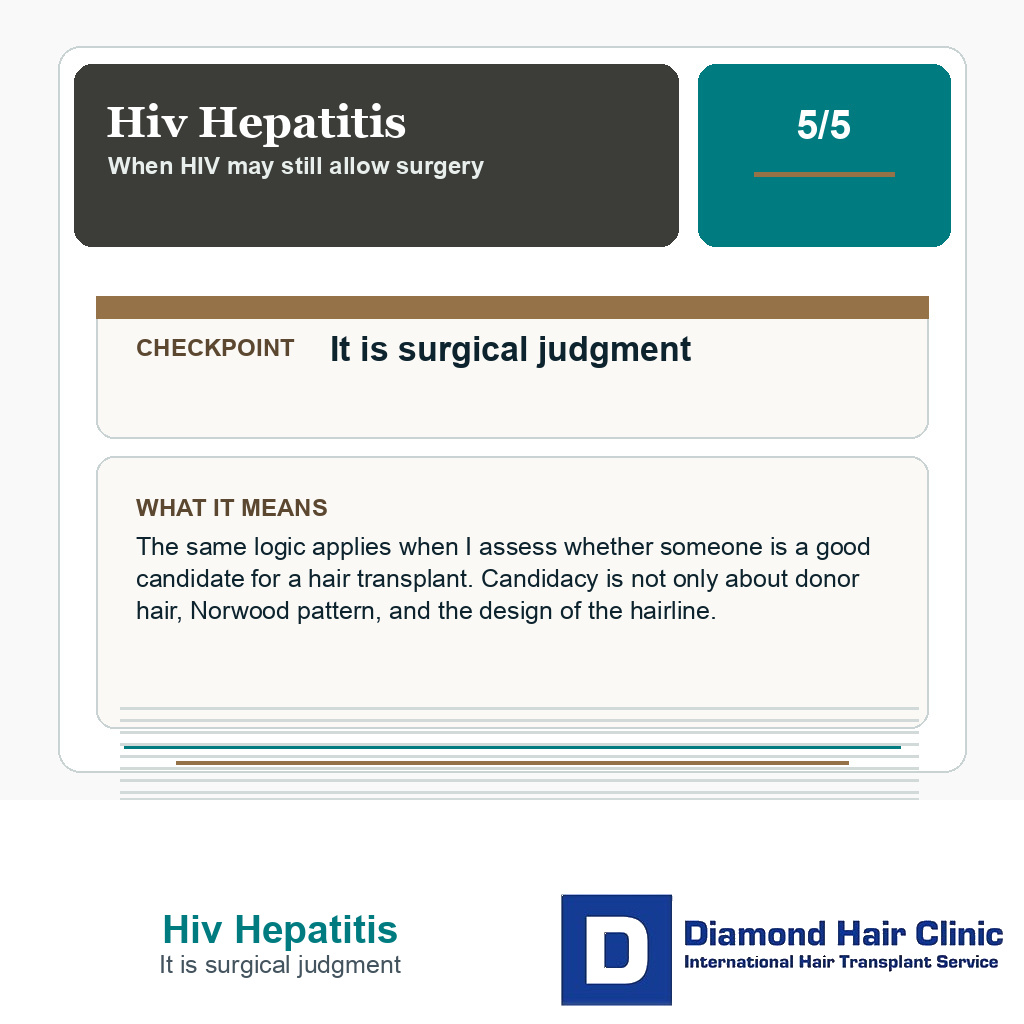
This is not discrimination. It is surgical judgment. When I assess whether someone is a good candidate for a hair transplant, candidacy is not only about donor hair, Norwood pattern, and the design of the hairline. It also includes general health, healing capacity, medication safety, and whether the operation can be performed without unnecessary risk.
A patient with controlled HIV does not have to be rejected. A patient with uncontrolled HIV should not be treated casually. Both extremes are wrong.
The 5 slides here focus on medical stability, blood safety, medication review, and clear clinic planning. Swipe sideways, use the arrows, or choose a number below the image.
Hepatitis B differs from hepatitis C in planning
Hepatitis B and hepatitis C should not be treated as the same condition. They both involve the liver, but the medical logic can be different.
With hepatitis B, I check whether the patient has a past resolved infection, chronic hepatitis B, active viral replication, liver inflammation, or any sign of liver damage. Some patients with chronic hepatitis B live normally under medical monitoring. Some need antiviral treatment. Some have risk related to the liver that must be reviewed before any elective procedure.
With hepatitis C, I check whether the virus is still active or whether it has already been treated and cleared. If hepatitis C is active, it may be wiser to complete treatment first before planning an elective hair transplant, especially if there are liver function concerns.
The liver matters because it affects more than one part of surgery. It may affect bleeding tendency, medication processing, platelet count, general healing, and the safety of using certain medicines before and after the operation.
The word hepatitis is not enough for a surgical decision. I review the current liver condition. If liver function, clotting, platelet count, or general health is not reassuring, delaying surgery is safer than turning an elective hair transplant into an avoidable medical risk.
Surgery should wait when control is unsafe
I usually delay surgery if the patient has uncontrolled HIV, very low CD4 count, active opportunistic infection, untreated or active hepatitis with abnormal liver function, unexplained fever, active infection, severe anemia, abnormal clotting, very low platelet count, poor general health, or a medication plan that has not been reviewed.
I also delay if the patient cannot provide current medical information but wants to travel quickly. A patient who says everything is fine but has no recent blood tests, no treating doctor report, and no clear medication list is not giving the surgeon enough information to make a safe decision.
Elective surgery should not be used to test whether the body can cope. If there is uncertainty about immune function, liver function, clotting, medication safety, or current treatment, it is better to wait than to create wounds that may heal poorly or bleed more than expected.
The same surgical judgment applies to when medication can delay a hair transplant. Delay is not a punishment. In the right patient, delay is part of safe planning. It protects the result and protects the patient.
Waiting can feel disappointing. I understand that. But if the medical background is not clear, pushing ahead because flights are booked or because the patient has already arranged time off work is not serious medicine.
Blood tests matter before surgery
Blood tests matter because they turn vague reassurance into practical information. Before surgery, I check whether there is a bleeding concern, infection concern, liver concern, uncontrolled medical condition, or medication issue that changes the plan.
For a patient with HIV, the medical review may include viral load, CD4 count, complete blood count, low white blood cell results, general chemistry, and other tests depending on the patient’s history. For a patient with hepatitis B or hepatitis C, the review may include liver enzymes, viral markers, viral load when needed, platelet count, clotting tests, and a treating doctor’s opinion if there is chronic liver disease.
The exact test panel depends on the case. I do not want this judged from memory. I need documents, dates, and current information.
The broader principle behind blood tests before a hair transplant is practical. Tests do not make the procedure more complicated for no reason. They help us decide whether surgery is safe now, whether it should be adjusted, or whether it should be postponed.
Other medical factors may exist at the same time. A patient with hepatitis may also have anemia. A patient with HIV may also have another medication or healing concern. A patient with a long medical history may also need review similar to high blood pressure and hair transplant planning, where the diagnosis is manageable only when it is controlled.
Telling the clinic before travel
Tell the clinic before travel, not on the morning of surgery.
If a patient tells me about HIV or hepatitis only after arriving in Istanbul, it becomes much harder to assess safely. Medical documents may be missing. The treating doctor may not be reachable. Extra blood tests may be needed. The patient may already have paid for flights and hotel, which creates emotional pressure to continue even when waiting would be safer.
I know why some patients hesitate. They may fear embarrassment, rejection, judgment, or privacy problems. Medical information should be handled professionally and confidentially. But privacy and secrecy are different. The surgical team needs accurate information to protect the patient, the staff, and the surgical plan.
The question of what should be clear before committing to a hair transplant includes the medical review, not only the price and the date. If a clinic is willing to take a deposit before asking about relevant medical history, that is not a good sign. Medical review belongs inside the plan, not as an inconvenience.
The same clarity applies to practical instructions before surgery. If a clinic gives medication before a hair transplant advice without knowing about antiviral therapy, liver disease, immune status, or other treatment, the advice may be incomplete.
Privacy must be protected. Secrecy before surgery is unsafe.
Privacy without hiding the diagnosis
Privacy matters. A patient with HIV, hepatitis B, or hepatitis C should not feel shamed or exposed because they are asking about a hair transplant. Medical information should be handled professionally, quietly, and only by the people who need it for safe planning.
Medical confidentiality should limit access to the people involved in safe surgery, while the diagnosis still belongs inside the review.
But privacy is not the same as secrecy. The surgeon and medical team need accurate information before they create wounds, choose medication, plan anesthesia, or decide whether travel is reasonable. If a clinic makes you feel embarrassed for telling the truth, that is not the right environment. If a clinic acts as if the information does not matter at all, that is also not safe.
The balance is practical. Share the diagnosis early, ask how the clinic protects medical privacy, and make sure the decision is based on current tests and medical control rather than fear or assumptions.
Medicines and hepatitis treatment can change the plan
Most patients should not stop HIV medicines or hepatitis treatment because of a hair transplant unless the doctor managing that condition specifically says so. Stopping treatment casually can be far more dangerous than delaying surgery.
The name of the medicine is not enough. I check whether the patient is stable on it, whether there are side effects, whether liver function is affected, whether any other medicine increases bleeding, and whether the treating doctor sees a reason to adjust timing.
For HIV treatment, missed doses can be a serious issue. Surgery timing, travel, hotel stay, and recovery should not interrupt antiviral treatment. If the patient also has hepatitis B, stopping certain antiviral medicines can be especially risky because hepatitis B can flare when treatment is interrupted.
If the patient uses aspirin, anticoagulants, or another medicine that affects clotting, the decision becomes more sensitive. That is when the principles in blood thinners before a hair transplant become relevant. A protective medicine should never be stopped alone just to make a cosmetic surgery easier.
In patients with liver disease, medication planning also matters because the liver helps process many medicines. Careful coordination is safer than discovering a problem during or after the operation.
Do not stop antiviral treatment, blood pressure medicine, blood thinners, or any ongoing medical treatment by yourself. The right decision should be made medically, not emotionally.
HIV or hepatitis does not decide graft growth by itself
The diagnosis alone does not mean grafts will fail. Graft growth depends on many factors, including surgical technique, tissue handling, blood supply, donor quality, recipient area condition, aftercare, and general healing.
But I do not ignore the medical background. If the immune system is severely weakened, if there is active infection, if liver disease affects clotting, or if nutrition and general health are poor, the body may not be in the right condition for elective surgery.
I think about diabetes and hair transplant planning in a similar way. Controlled disease can often be managed. Poorly controlled disease changes wound healing and infection risk. The diagnosis matters, but control matters more.
Good graft growth also needs proper recovery behavior. Even when the surgery is technically successful, the patient still needs clean washing, proper medication use, no unnecessary trauma to the grafts, and structured follow-up. The medical decision has to connect with hair transplant aftercare, not only the operation day.
I avoid promising growth as if medicine has no role. A good transplant plan respects the biology of the patient. If the body is not ready, the best surgical move may be to wait.
Infection control must already be strict
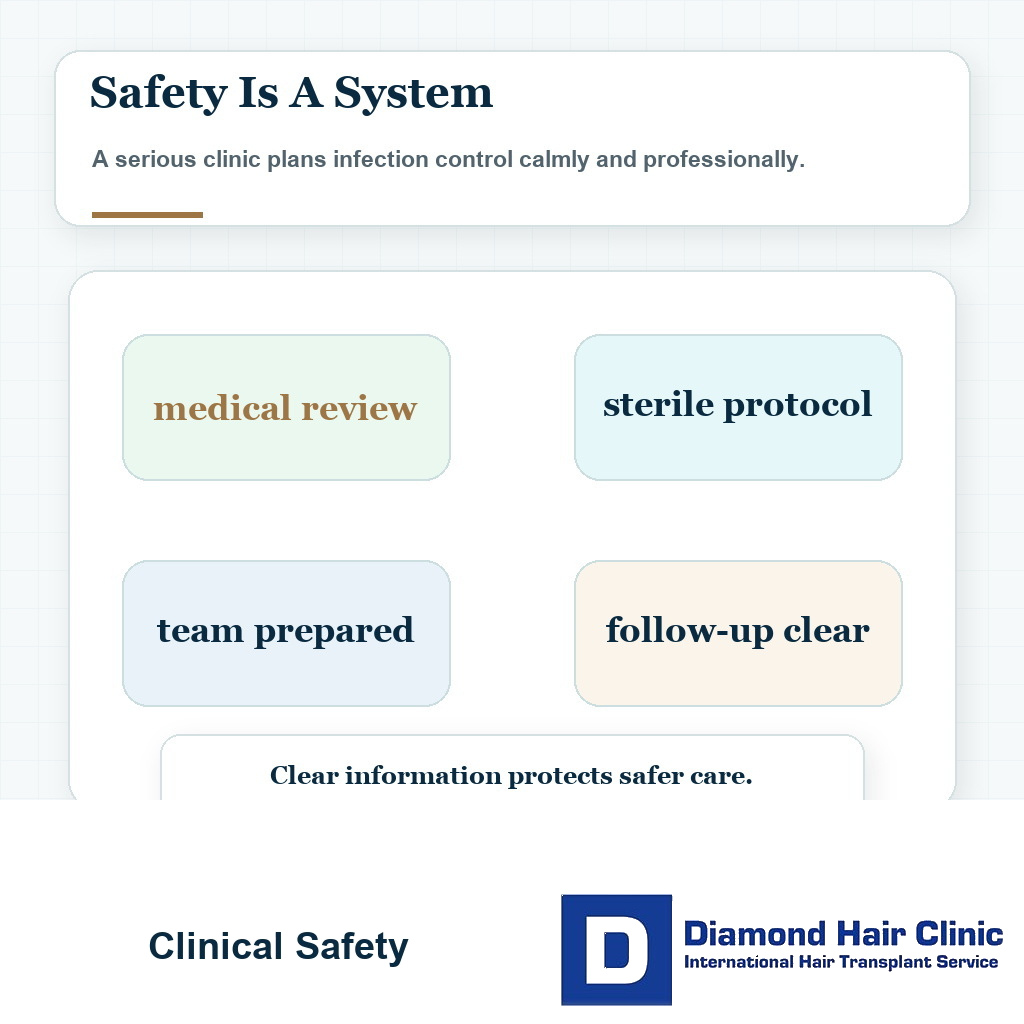
Strict infection control should already be standard for every patient. The team should not suddenly become careful only when a patient declares HIV or hepatitis. In any surgical procedure, blood exposure is possible, and not every bloodborne infection is known before surgery. The clinic should behave as if every case requires professional infection control.
This means proper sterilization, disposable materials where appropriate, protective equipment, safe sharps handling, clean workflow, and a surgical team that understands medical responsibility. These precautions protect the patient, the staff, and every other patient treated in the same medical environment.
Infection control should not depend on fear, stigma, or assumptions. It should depend on routine medical discipline.
Still, disclosure matters. Standard infection control protects the clinic environment, but the patient’s medical history also affects surgical planning, blood tests, medication review, anesthesia decisions, bleeding risk, healing risk, and whether medical clearance is needed.
Medical history also affects local anesthesia planning. A patient with HIV or hepatitis may be perfectly stable, but heart disease, blood pressure problems, anxiety, stimulant sensitivity, or complex medication use can change how adrenaline in hair transplant anesthesia is planned.
Good infection control protects everyone, including the patient. It also protects the quality of the surgical environment. A procedure led by the surgeon, with a controlled operating rhythm, is safer than rushed high-volume surgery.
Clinic answers that deserve caution
An instant yes is not enough if a clinic has not asked for blood tests, medical history, medications, viral status, liver status, or treating doctor information. An instant no is also too shallow when no one has tried to understand the patient’s actual condition.
A proper answer is usually more thoughtful. It may say that surgery could be possible, but only after medical documents are reviewed. It may say that the operation should be smaller, that timing should change, or that the patient needs to speak first with the doctor managing HIV or hepatitis.
The same judgment belongs in choosing a hair transplant clinic in Turkey. A clinic that treats every medical question as a sales obstacle is not doing the patient a service. A clinic that uses fear without explanation is not doing the patient a service either.
The right clinic should leave you clearer, not more pressured. You should understand why you can proceed, why you should wait, or why more information is needed.
A clinic should not make you feel ashamed of your diagnosis, and it should not ignore the diagnosis either. Both reactions are unprofessional.
Stable health still shapes the surgical plan
If the medical review is reassuring, I still plan carefully. I avoid turning a medically sensitive case into an unnecessarily long or aggressive session. The goal should be a safe operation with a clear aesthetic purpose, not a dramatic graft number chosen to impress the patient.
Donor management, the size of the recipient area, surgical time, bleeding tendency, aftercare reliability, travel timing, and communication after surgery all matter. If the case is stable but complex, moderation is often safer than trying to solve every cosmetic concern at once.
I also compare the case with other chronic conditions. A stable patient with controlled HIV or hepatitis is not necessarily a poor candidate, just as a stable patient with controlled blood pressure or diabetes is not necessarily excluded. But the planning must match the medical reality.
Careful planning matters even more here. If the patient needs a conservative hairline and limited graft use, I should not pretend that more grafts make the medical side irrelevant.
A medically sensitive patient does not need rushed surgery. They need controlled, carefully planned surgery.
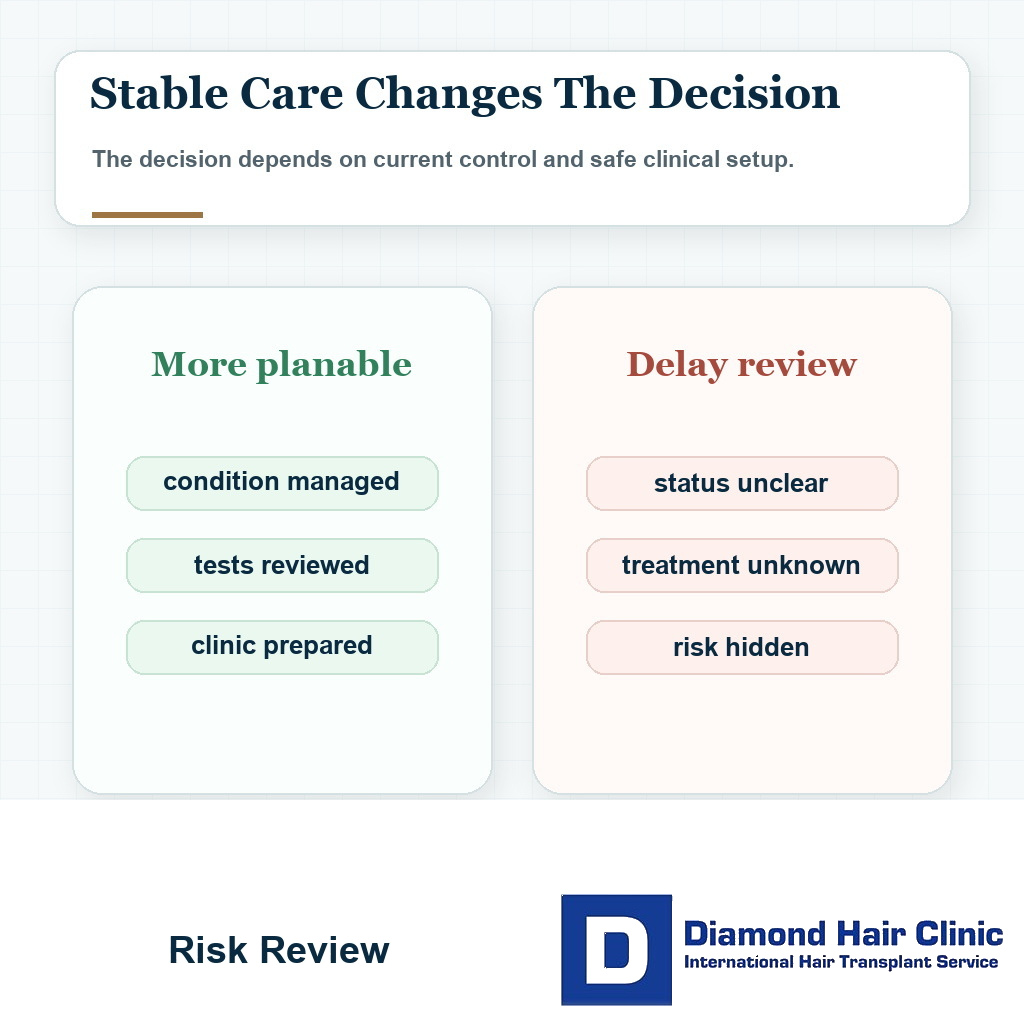
Cleared hepatitis C still needs document review
If hepatitis C was treated and cleared, the situation may be much more reassuring, but I still need to understand the history. Clearing the virus is not always the same as having a completely normal liver.
Some patients had hepatitis C for a short period and have no meaningful liver damage. Others had chronic infection for many years before treatment, and their liver may still need monitoring. That difference matters before elective surgery.
If the patient has documents showing that hepatitis C has been cleared, liver function is normal, platelet count is normal, and there is no cirrhosis or clotting concern, the discussion becomes more comfortable. If there was advanced liver disease before treatment, I would need medical clearance before surgery.
A positive hepatitis C antibody history alone is not enough for planning, because the antibody can remain positive after past infection. I want to know whether there is current detectable HCV RNA and whether the liver is healthy enough for surgery, medication, and recovery.
A cleared virus is reassuring, but a clear liver assessment is still needed before I treat the case as safe for elective surgery.
Stable chronic hepatitis B still needs review
Chronic hepatitis B does not by itself exclude a patient from hair transplant surgery. Some patients live normally with monitoring and treatment when needed. But the condition must be understood clearly before surgery.
I check whether the patient is being followed by a doctor, whether liver enzymes are stable, whether antiviral treatment is being used, whether viral replication is controlled, and whether there are any signs of cirrhosis, low platelets, abnormal clotting, or complications related to the liver.
If chronic hepatitis B is stable and the treating doctor has no concern, surgery may be considered in patients whose case fits. If the disease is active, if liver tests are abnormal, or if the patient has not been monitored, I delay and ask for proper medical review.
Hepatitis B also matters when a patient is using certain antiviral medicines for HIV, because some medicines can affect both HIV and hepatitis B control. This is another reason I avoid patients stopping or changing medication without the doctor who manages the infection.
Stable chronic hepatitis B may be manageable. Unclear chronic hepatitis B should not be ignored.
Documents to review before surgery
I usually need recent blood test results, the diagnosis history, current medication list, and a short medical report or clearance note from the doctor managing HIV, hepatitis B, or hepatitis C. The exact documents depend on the patient, but the principle is always the same. I need current medical facts, not vague reassurance.
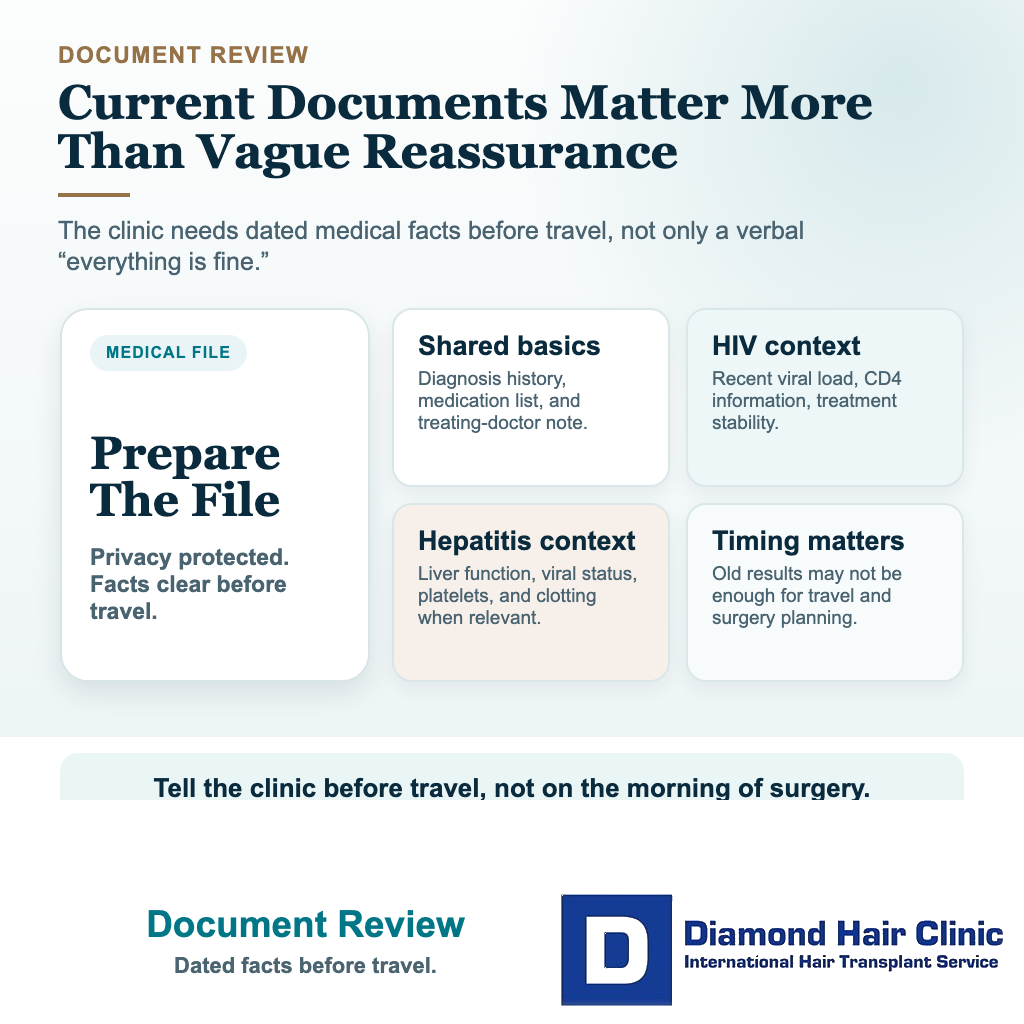
For HIV, recent viral load and CD4 information are useful when available. I check whether treatment is stable and whether there have been opportunistic infections or recent hospitalizations.
For hepatitis B or hepatitis C, I need liver function results, viral status when relevant, platelet count, clotting information if there is liver disease concern, and any previous diagnosis of cirrhosis or advanced liver damage.
Other conditions also matter. High blood pressure, diabetes, blood thinners, heart disease, anemia, kidney disease, immune problems, and psychiatric medication can all change the way surgery needs planning.
A known medical condition does not always mean a complicated hospital assessment. It means that when there is a known medical condition, the decision should be based on documents and judgment, not assumptions.
Disclosure keeps surgery controlled
Be direct from the beginning. Tell the clinic your diagnosis, current medicines, recent test results, treating doctor details, and any history of liver disease, low immunity, bleeding problems, or poor healing.
Then let the decision be medical before it becomes aesthetic. If the documents are reassuring, surgery may be considered. If the documents are incomplete or concerning, waiting is the responsible choice.
Do not hide HIV or hepatitis. Do not stop medicine by yourself. Do not accept an instant answer from a clinic that has not reviewed your medical situation. Do not confuse privacy with secrecy, because secrecy makes surgery less safe.
A hair transplant should only move forward when the patient, the surgeon, and the medical facts are all pointing in the same direction. When that is true, the decision becomes clearer. When it is not true yet, waiting is not failure. It is good surgical judgment.
The responsible answer is not automatic acceptance and not automatic rejection. It is proper medical review, full disclosure, controlled surgery, and a plan that protects the patient before it tries to improve the hair.

Read this review excerpt
Every single one of my questions was answered and they made sure I had all the details I needed to make an informed decision.