



High Cholesterol, Statins, and Hair Transplant Safety
High cholesterol alone rarely stops a hair transplant. I do not decide from the cholesterol number by itself. I look at the wider cardiovascular picture, including LDL and triglyceride levels, blood pressure, diabetes, heart disease, stent history, smoking, chest symptoms, and medicines such as statins, aspirin, clopidogrel, anticoagulants, or fibrates.
A stable person on a clear statin plan is different from someone with new chest pressure, recent heart treatment, uncontrolled diabetes or blood pressure, unexplained abnormal tests, or an unreviewed blood thinner plan.
A normal looking scalp photo does not answer a cardiovascular question. Before travel, the decision depends on whether your own doctor would consider elective outpatient surgery reasonable now.
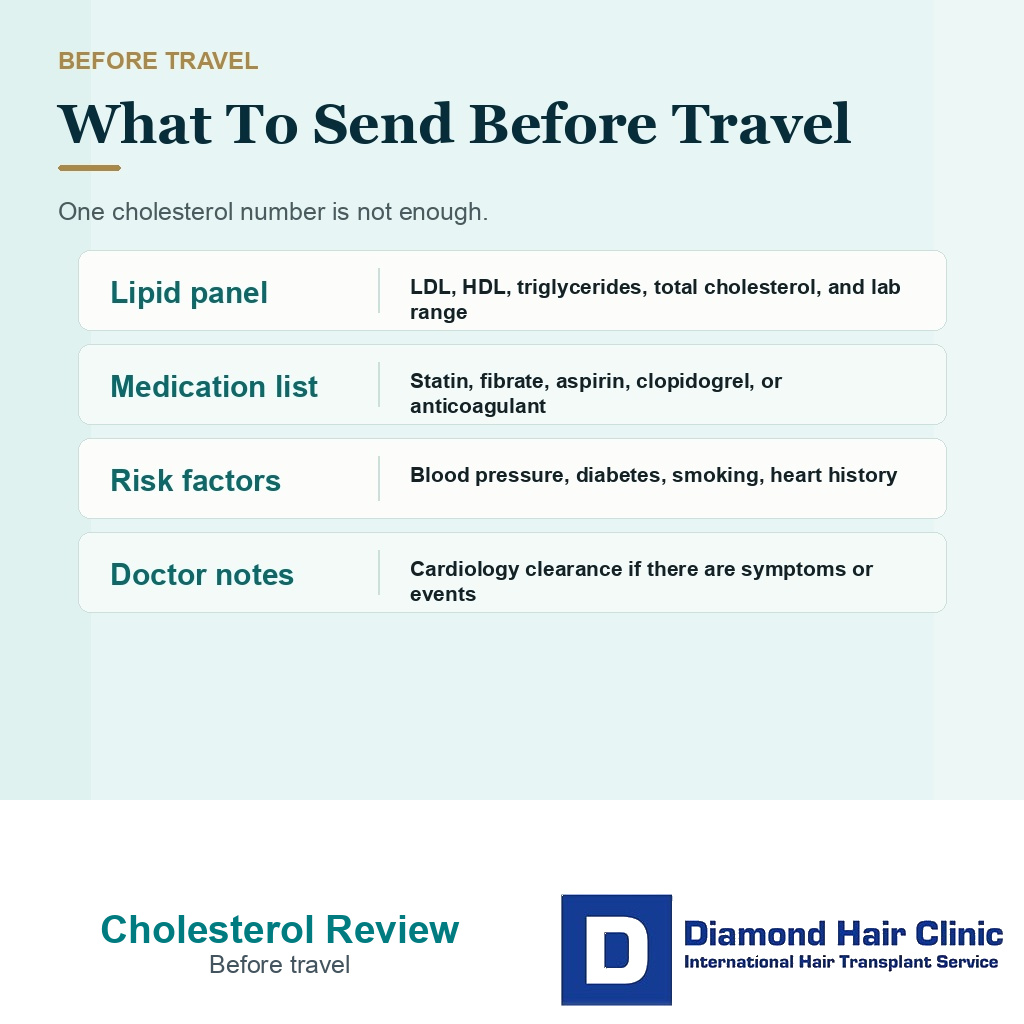
Cholesterol medicine, aspirin, clopidogrel, anticoagulants, and heart medicine should stay on the medical plan unless the prescribing doctor changes them. Send your lipid panel, current medication list, cardiology notes if you have them, and the usual blood tests before a hair transplant before travel is fixed.
If chest pressure, fainting, new breathlessness, or a new irregular heartbeat is happening now, the first step is local medical care, not protecting a hair transplant date.
A useful message also says when the lipid panel was taken, whether you were fasting, whether treatment was recently changed, and whether you have muscle symptoms, dark urine, jaundice, chest symptoms, or abnormal liver tests. Those details make the difference between routine cholesterol history and a safety issue that needs review.
Cholesterol matters before surgery
High cholesterol matters because it can point to wider cardiovascular risk. The number on the blood report is only one part of the decision. High LDL with no heart symptoms and stable medicine is not the same as high cholesterol together with chest pain, a recent stent, uncontrolled blood pressure, diabetes, smoking, or a blood thinner plan that nobody has reviewed.
A hair transplant is usually performed under local anesthesia, but it is still a long medical procedure. There are small wounds, anesthesia that may contain adrenaline, bleeding control, medication decisions, travel, and recovery. High cholesterol by itself does not make those steps unsafe. It tells me to check whether the whole medical picture is stable enough for an elective surgical day.
Hair transplant with heart disease or a stent is the higher risk cardiac discussion. Here, I separate high LDL, high triglycerides, statins, and the review before travel so the cholesterol question does not hide a bigger heart risk question.
Cholesterol is usually an indirect graft risk
A single cholesterol number is not usually how I predict graft survival. I look at whether it belongs to a wider vascular, smoking, diabetes, or healing risk picture. Graft survival still depends more on careful extraction, graft handling, recipient area creation, blood supply in the scalp, avoiding trauma after surgery, infection prevention, smoking status, diabetes control, and the quality of aftercare.
The concern is indirect. If high cholesterol belongs to a larger pattern of vascular disease, uncontrolled diabetes, smoking, severe obesity, heart disease, or poor general health, the operation needs more caution. The scalp may still heal well, but the medical background becomes part of the surgical plan.
I also want the hair loss diagnosis to be clear before surgery. High cholesterol and hair loss do not prove simple male pattern or female pattern hair loss. Shedding can also come from thyroid disease, low ferritin, inflammatory disease, medication change, illness, stress, or telogen effluvium. A transplant should not be used to cover shedding that has not been understood.
High cholesterol is safer to plan around when the clinic sees the full cardiovascular context, not only one lipid value.
Surgery can still be reasonable when cholesterol is managed
Surgery can still be reasonable when high cholesterol is known, stable, and medically managed. If you take a statin regularly, have no chest pain, no recent heart attack, no recent stent, no unstable rhythm symptoms, and no unreviewed blood thinner issue, the case can often be reviewed as one part of the medical history.
The surrounding risk factors decide how much caution I use. When high cholesterol sits with high blood pressure before a hair transplant, readings need control. When it sits with diabetes and hair transplant planning, blood sugar control and healing history matter. With kidney disease before a hair transplant, medicine choice and blood test interpretation can change.
The hair plan also has to make sense. Medical stability does not make someone a good candidate if donor supply is weak, the hair loss is diffuse and unstable, expectations are unrealistic, or the requested graft number would damage future donor management. Cholesterol review does not replace surgical judgment.
Lowering cholesterol is not always required first
You do not always need to wait until cholesterol is perfect before a hair transplant. If high cholesterol is a known continuing issue, you feel well, there are no cardiac symptoms, and your prescribing doctor is satisfied with the plan, surgery may still be reviewed.
A new or very high result deserves a slower decision. Very high triglycerides need the prescribing doctor’s interpretation, especially when untreated diabetes, chest symptoms, abnormal liver enzymes, recent medication changes, or a new cardiology warning are also present. In that setting, the cholesterol result is not a cosmetic detail. It is a signal to check stability.
A new cholesterol medicine or a stopped medicine should not be rushed to fit the transplant date. If your doctor has just started or changed treatment, send the reason, dose, date of change, and follow up blood test plan. The operation date should fit the medical plan, not disturb it.
I do not want transplant week to become the trial period for a new statin, fibrate, dose increase, or medication combination. It is better to know first whether the medicine is tolerated, whether liver tests need follow-up, and whether muscle symptoms are developing.
Delaying is safer when the medical picture is unstable
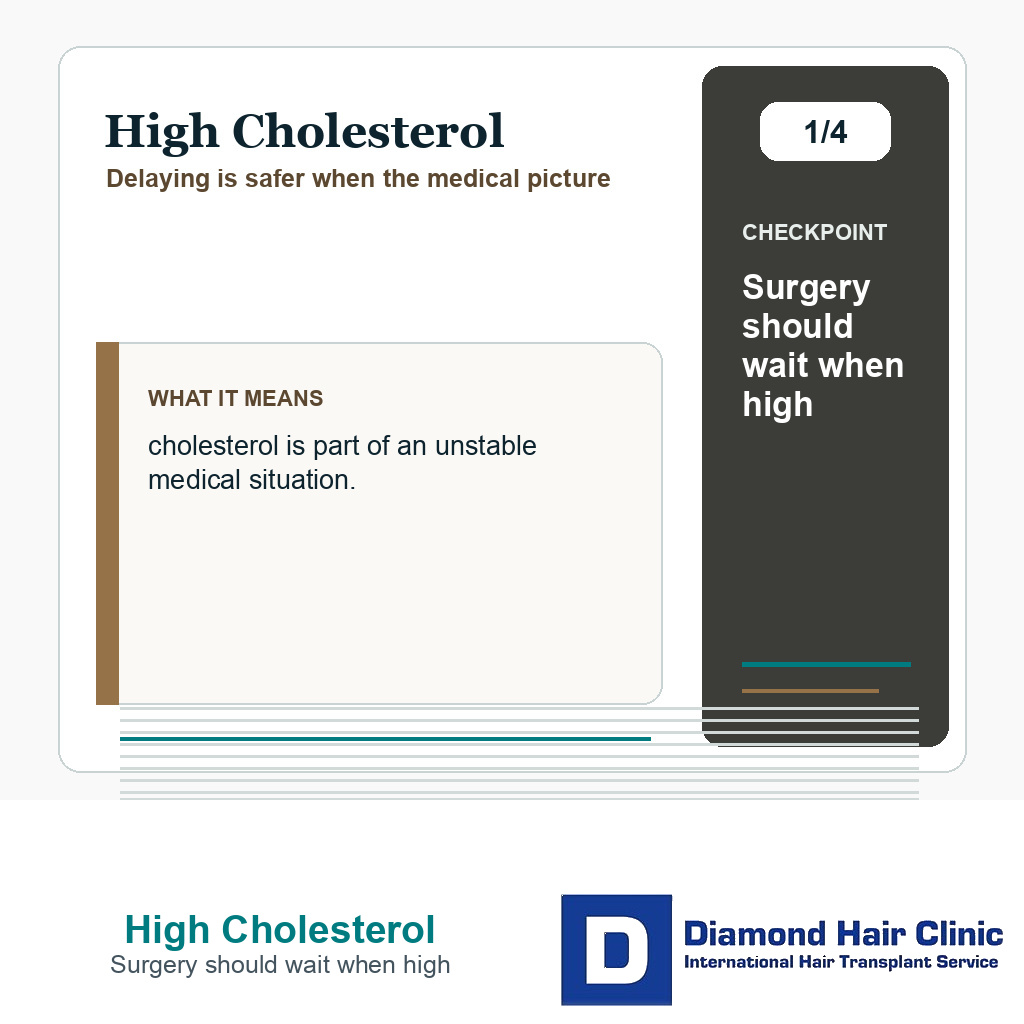
Surgery should wait when high cholesterol is part of an unstable medical situation. Recent chest pain, shortness of breath with mild activity, recent heart attack, recent stent, unstable rhythm symptoms, uncontrolled blood pressure, poor diabetes control, active infection, or no cardiology clearance can make elective surgery too early.
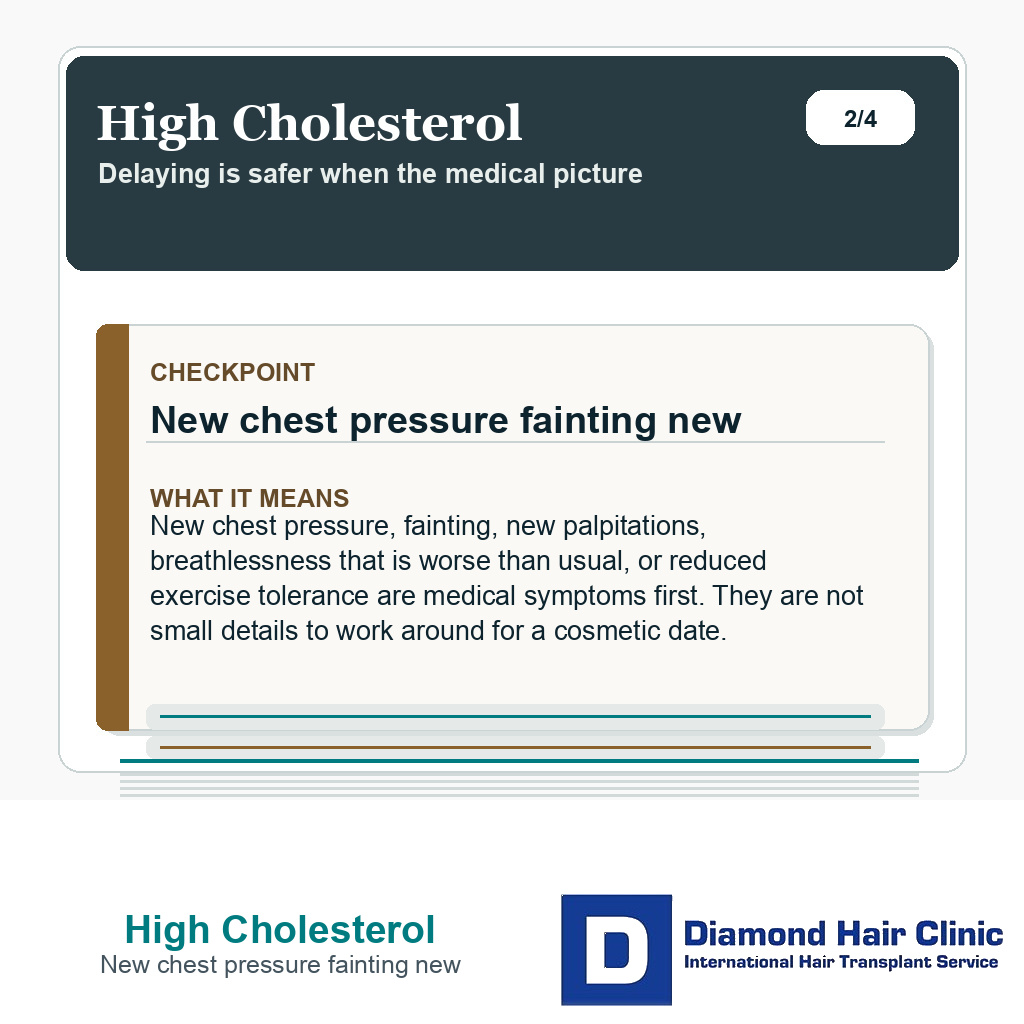
New chest pressure, fainting, new palpitations, breathlessness that is worse than usual, or reduced exercise tolerance are medical symptoms first. They are not small details to work around for a cosmetic date. Medical review needs to come before travel.
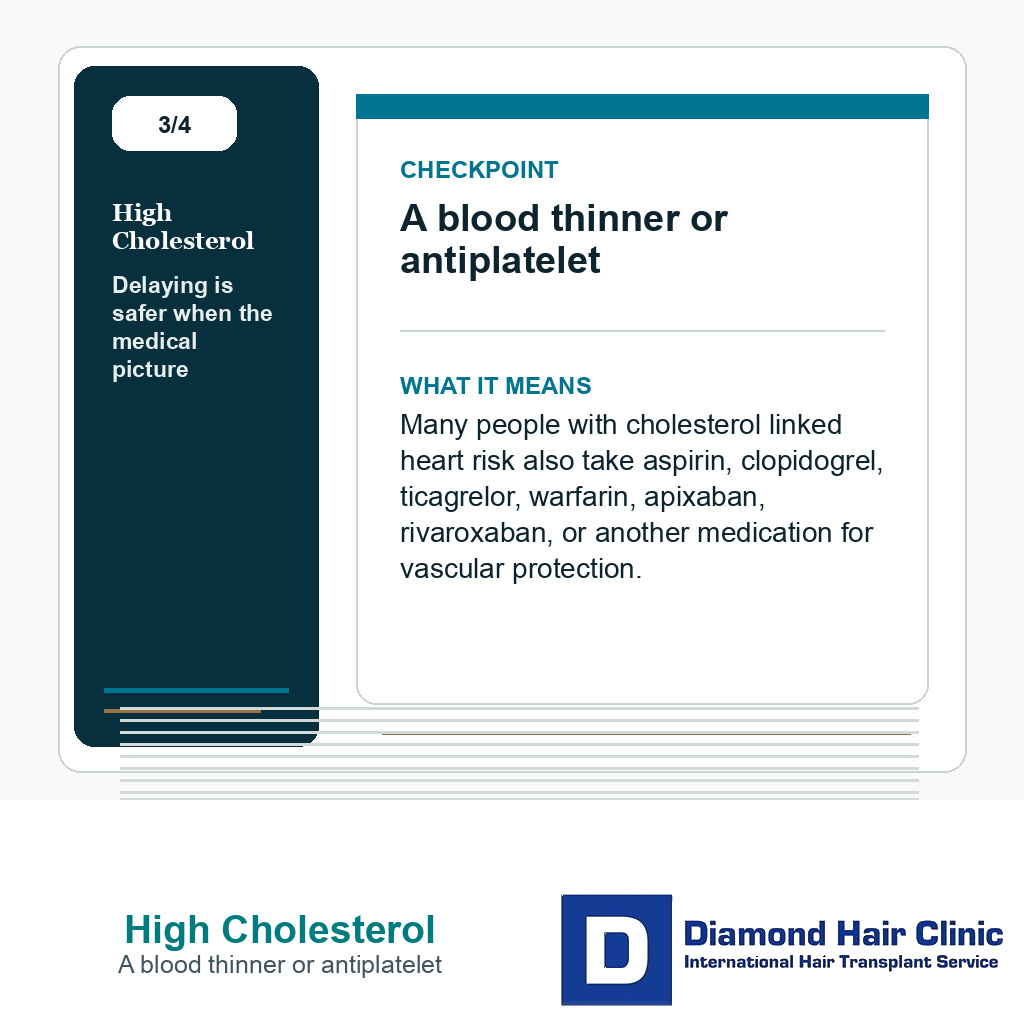
A blood thinner or antiplatelet plan can also delay the case. Many people with cholesterol linked heart risk also take aspirin, clopidogrel, ticagrelor, warfarin, apixaban, rivaroxaban, or another medication for vascular protection. Hair transplant while taking blood thinners needs a clear decision from the prescribing doctor about whether to stop or continue, not from a clinic trying to fit a schedule.
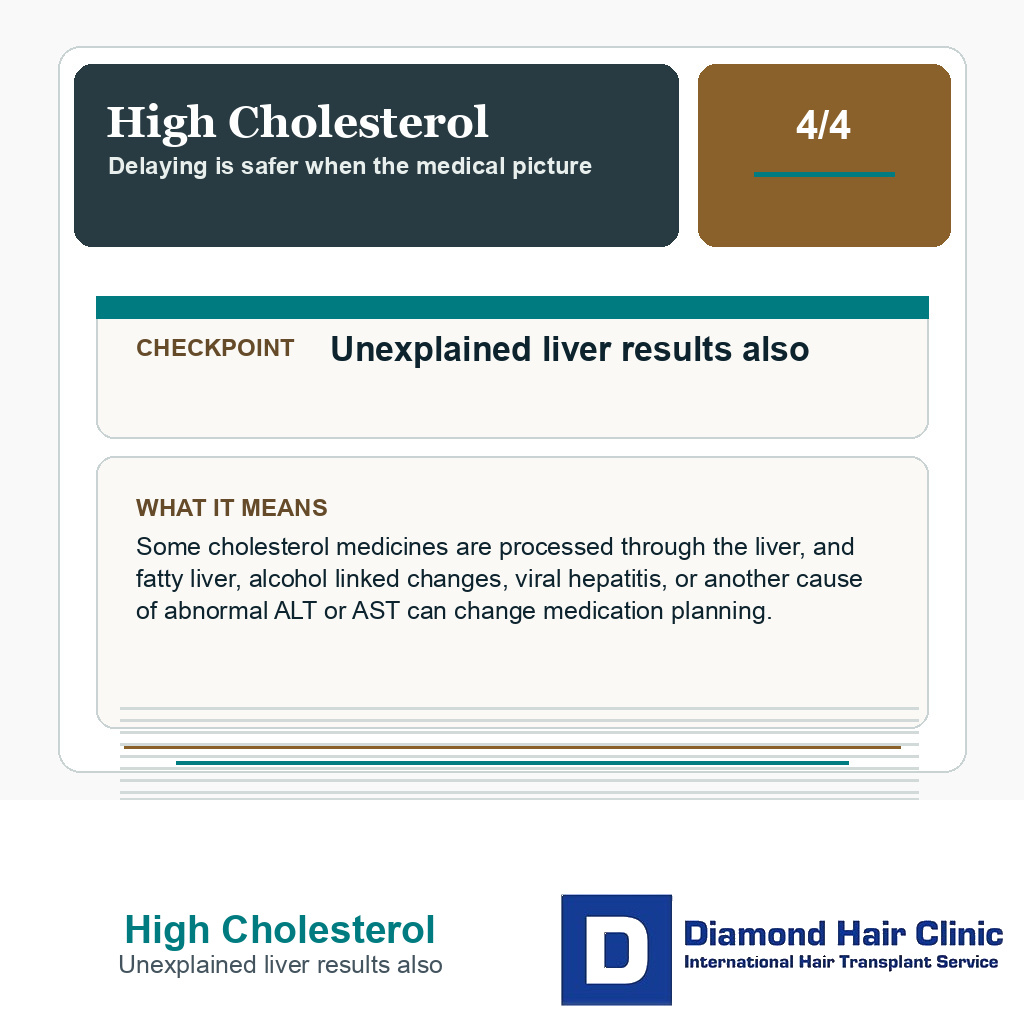
Unexplained liver results also need caution. Some cholesterol medicines are processed through the liver, and fatty liver, alcohol linked changes, viral hepatitis, or another cause of abnormal ALT or AST can change medication planning. If your report shows high liver enzymes before a hair transplant, the result should be understood before travel, especially if surgery will require medicine afterward.
The carousel below keeps the main pause signals in one place, including unstable symptoms, blood thinner questions, heart history, and unexplained liver results that should be reviewed before travel.
Statins should not be stopped without medical advice
A statin should not be stopped on your own before a hair transplant. Atorvastatin, rosuvastatin, simvastatin, pravastatin, and similar medicines are prescribed to reduce cardiovascular risk. Stopping them just to make a cosmetic procedure feel simpler puts the wrong issue first.
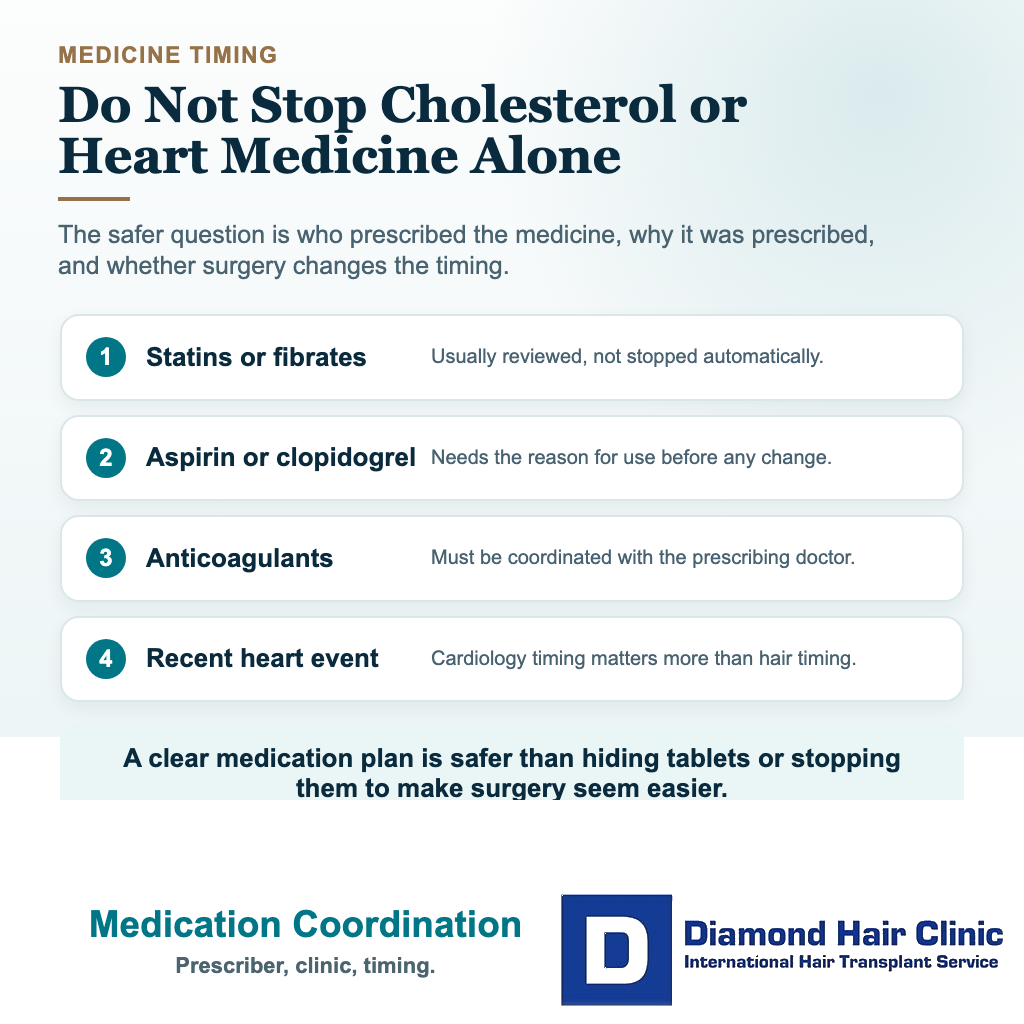
For most stable cases, the statin itself is not the problem. The question is whether the prescribing doctor wants you to continue it, whether liver enzymes or muscle symptoms need review, and whether the medication list is complete. Tell the clinic the exact medicine name, dose, timing, and whether it was recently started or changed.
If you take a statin with a fibrate, or if you have muscle pain or weakness, dark urine, jaundice, severe fatigue, or a recent abnormal liver test, tell the prescribing doctor and the clinic before travel. If these symptoms are active or severe, seek medical advice urgently instead of waiting for the transplant date to decide the issue.
Tell the clinic if you recently used antibiotics, antifungal medicine, HIV or hepatitis C medicine, immune medicine, or any new tablet from another doctor. Some combinations can change how the prescribing doctor thinks about statin side effects, liver tests, or muscle symptoms. Do not solve that by stopping the statin alone.
Blood thinners are a separate safety decision
A statin is not a blood thinner. Aspirin, clopidogrel, ticagrelor, warfarin, apixaban, rivaroxaban, dabigatran, and similar medicines are a separate decision from cholesterol treatment. Some are used after a stent, heart attack, stroke risk, atrial fibrillation, valve disease, or clotting history. Stopping them without medical approval can be dangerous.
From the surgical side, these medicines may increase bleeding or change how comfortable the operation is. From the medical side, stopping them may create a bigger danger than extra bleeding in the scalp. That balance belongs with the prescribing doctor or cardiologist.
The clearest cardiology note is specific. It should say why the antiplatelet or anticoagulant is used, the stent date if there is one, whether the medicine should continue, pause, or restart, whether elective surgery under local anesthesia is acceptable, and whether procedure length, local anesthetic with adrenaline, or blood pressure control creates any limit.
The phrase “I only have high cholesterol” is not enough medical detail for surgery planning. Aspirin, clopidogrel, or anticoagulants move the case from a cholesterol question into medication safety planning. The operation can sometimes be modified, postponed, or refused depending on the medical advice and the size of the planned transplant.
Blood results to send before travel
Send the lipid panel if it is available, but do not send only the cholesterol number. A useful review before travel includes LDL, HDL, triglycerides, total cholesterol, the test date, whether you were fasting, whether the result changed after a recent medication change, a complete blood count, liver enzymes, kidney function, blood sugar or HbA1c when relevant, and any cardiology note if you have heart disease, a stent, chest symptoms, or abnormal exercise tolerance.
If triglycerides are very high, if diabetes is uncontrolled, or if liver enzymes are abnormal, send the doctor comment rather than only the lab screenshot. I need to know whether the result is known and stable, newly discovered, being treated, or still waiting for medical interpretation.
The medication list is as useful as the lab report. Include cholesterol medicine, blood pressure medicine, diabetes medicine, aspirin, clopidogrel, anticoagulants, pain medicine, supplements, testosterone, hair loss medication, and anything recently started or stopped. The same list can affect antibiotics, painkillers, and aftercare medicines, so medications after a hair transplant should stay connected to the review before travel. If omega 3 or fish oil is part of a triglyceride plan, fish oil before hair transplant surgery should be reviewed as part of that medication list.
When treatment changed recently, include the medicine name, dose, start or stop date, reason for change, and any heart symptoms instead of sending only the latest lipid number.
If you are travelling to Turkey, this information should be reviewed before flights and hotels are fixed. The operation morning is the wrong time to discover that a blood thinner, cardiac symptom, or unexplained abnormal result has changed the plan.

A safer decision comes from stability, medication review, and the presence or absence of active cardiac symptoms.
Combined health risks change the decision
High cholesterol often travels with other metabolic or vascular problems. High LDL alone is different from high LDL with diabetes, high blood pressure, smoking, sleep apnea, kidney disease, previous stroke or TIA, peripheral vascular disease, family history of early heart disease, or reduced exercise tolerance. The more combined risks there are, the more careful the plan becomes.
Diabetes can change wound healing and infection risk. High blood pressure can change safety on the operation day. Heart disease or a stent can change anesthesia and medication planning. Kidney or liver problems can change which medicines are suitable after surgery. None of these details should be hidden because you want the operation to go ahead.
In a surgeon led plan, the medical review protects you and the result. If the safer decision is to wait, adjust medication with the prescribing doctor, reduce the planned graft count, or choose a shorter operation, that is not a failure. It is better than pushing ahead with a large elective surgery when the medical picture is unstable.
Cholesterol medicine is not always the cause of shedding
Some people worry that statins caused their hair loss. Medicine can be part of a shedding story in some individuals, but it is not responsible to blame every change in density on a cholesterol tablet. Male pattern hair loss, female pattern hair loss, telogen effluvium, thyroid disease, iron deficiency, weight change, illness, stress, and thinning with age may all be involved.
If shedding began soon after a medication change, involve the prescribing doctor before making any decision. Do not stop a statin to test a theory without medical advice. Heart and stroke prevention may matter more than the cosmetic question.
For the transplant decision, the diagnosis matters. If the pattern is stable androgenetic hair loss, donor reserve is suitable, and the future plan is clear, surgery may be useful. If shedding is active across the scalp because of illness, medication change, low iron, thyroid imbalance, or another temporary trigger, surgery may need to wait until the pattern is clearer. Hair loss medicines such as finasteride before or after a hair transplant or topical finasteride after a hair transplant should also be reviewed in the full medication context.
Anesthesia and recovery depend on the wider picture
High cholesterol itself usually does not change local anesthesia. The anesthesia concern appears when cholesterol is connected to heart disease, stent history, rhythm symptoms, uncontrolled blood pressure, or a cardiologist warning. When that connection exists, local anesthesia containing adrenaline, procedure length, anxiety, and blood pressure response become part of the preoperative discussion.
Recovery planning also depends on the wider picture. If you drink heavily, have high triglycerides, fatty liver, or abnormal liver enzymes, then alcohol after a hair transplant deserves stricter caution. If you smoke, have diabetes, or have vascular disease, wound healing and infection risk deserve more attention. If you take several medicines, the painkiller and antibiotic plan after surgery should avoid unnecessary risk.
I want the medication list before surgery, not after the pharmacy has already dispensed recovery tablets. A statin, fibrate, blood thinner, diabetes medicine, stomach medicine, antibiotic, or painkiller may be ordinary alone but important in combination.
The operation can also be smaller if that makes the medical and surgical balance safer. A smaller session may reduce procedure time and make recovery simpler, but it must still make cosmetic sense. A small unsafe plan is not good, and a large plan should not be used to ignore medical caution.
Fix the date only when the medical picture is stable
I start with the lipid values, but I do not stop there. Age, smoking history, blood pressure, diabetes status, heart or stent history, exercise tolerance, current medicines, blood thinner use, liver enzymes, kidney function, and the real diagnosis behind the hair loss all decide whether the date is safe to fix.
If the situation is stable, surgery may be possible. If there are active cardiac symptoms, recent heart treatment, uncontrolled metabolic disease, unexplained abnormal blood results, or a medication plan that nobody has reviewed, delaying is better than pretending hair surgery is separate from the rest of the body.
The transplant date should not be protected by changing heart or cholesterol medicine alone. High cholesterol by itself rarely cancels surgery, but it should make the clinic read the whole medical picture carefully. A good plan protects the donor area, the hairline, and your general health at the same time. If those three things do not fit together, the date should wait.

Read this review excerpt
Diamond Hair was the only clinic asking for medications, treatments I've done before, and other type of questions that make me feel confident on the professionalism that they practice with their clients.